건축의 진정한 아름다움은 그 공간이 사람의 삶에 얼마나 유연하게 반응하는가에 달려 있다. - 프랭크 로이드 라이트
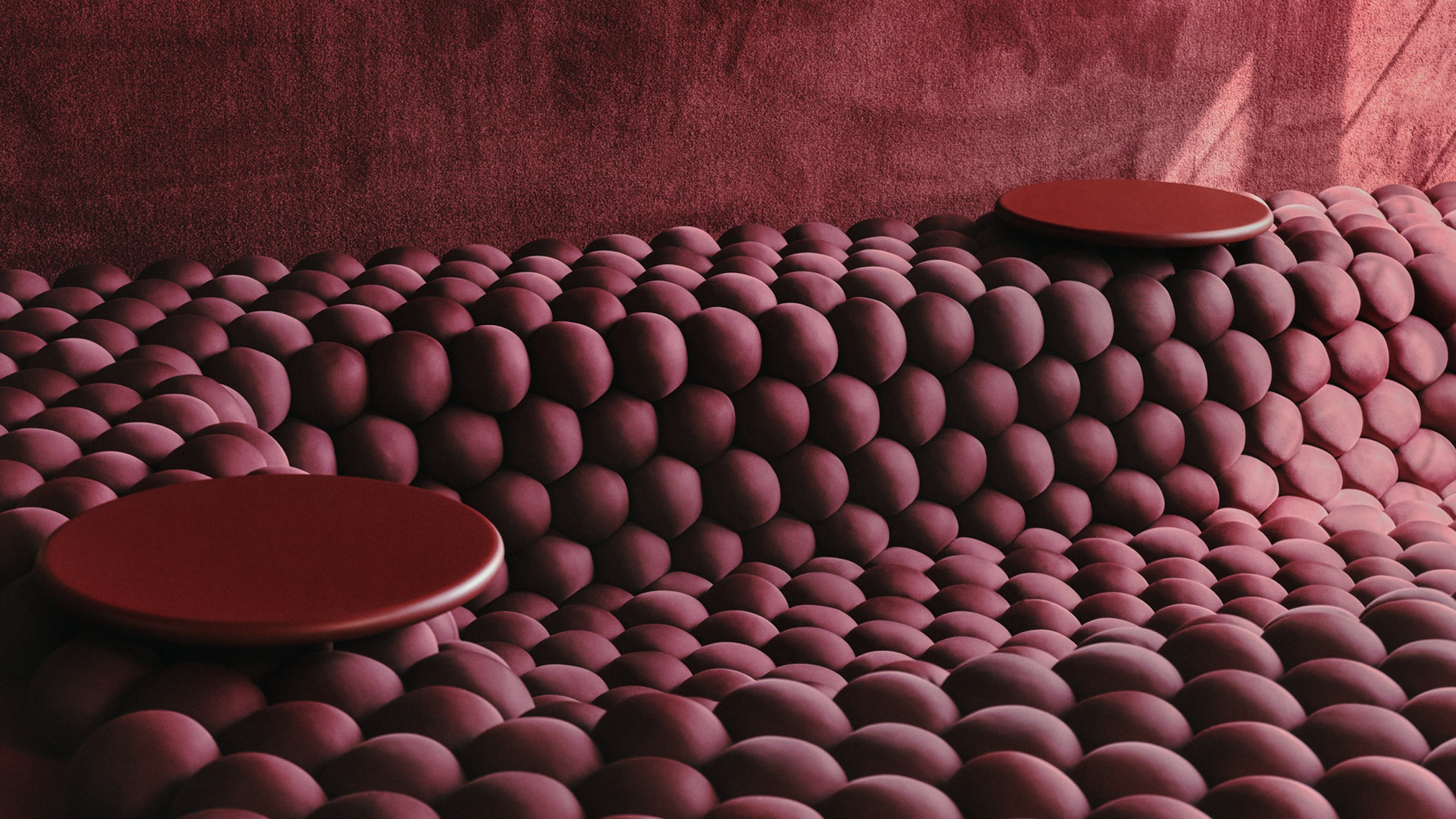
Hundreds of squishy balls combine to form Golem's Amoreba furniture system
미시적 관점에서 출발한 유기적 디자인
건축 및 디자인 스튜디오 골렘은 수백 개의 푹신한 구체들로 이루어진 독특한 모듈형 가구 시스템인 아모레바를 선보였습니다. 파리에 기반을 둔 이들은 획일화된 현대 주거 공간에 생기를 불어넣을 파격적인 대안을 고민해 왔습니다. 골렘은 아모레바를 일종의 표면 마감재로 정의합니다. 이 구체들은 딱딱하고 직각으로 굳어버린 실내 공간에 부드럽게 퍼져나갑니다. 그리고 자유로운 현대인의 라이프스타일에 맞춰 공간의 틀을 완전히 탈바꿈시킵니다. 시스템 특유의 유기적인 형태와 푹신한 촉감은 버섯 군락의 미세한 돌기에서 영감을 얻었습니다. 설립자 아리엘 앙드레는 이를 아주 작은 생명체의 시선에서 재현하고자 했습니다. 눈에 띄지 않는 미시적인 존재들의 관점을 빌려올 때 우리의 일상을 더욱 풍요롭게 만드는 새로운 형태와 공간을 창조할 수 있다고 그는 강조합니다.
형태의 경계를 허무는 푹신한 구체들
아모레바 시스템은 맞춤형 소프트웨어를 활용해 3차원 표면을 모델링합니다. 덕분에 평범한 바닥은 물론이고 기하학적이거나 곡선으로 이루어진 표면까지 거침없이 덮어버립니다. 사용자가 상상하는 어떤 공간이나 상황에도 유연하게 형태를 맞출 수 있습니다. 각각의 요소는 한 손에 쏙 들어오는 크기로 만들어졌습니다. 내부에는 특수 섬유 혼합물을 넉넉히 채워 넣어 손으로 쥐거나 발로 밟았을 때 기분 좋은 탄성을 선사합니다.
브뤼셀 저택에 구현된 대화형 라운지
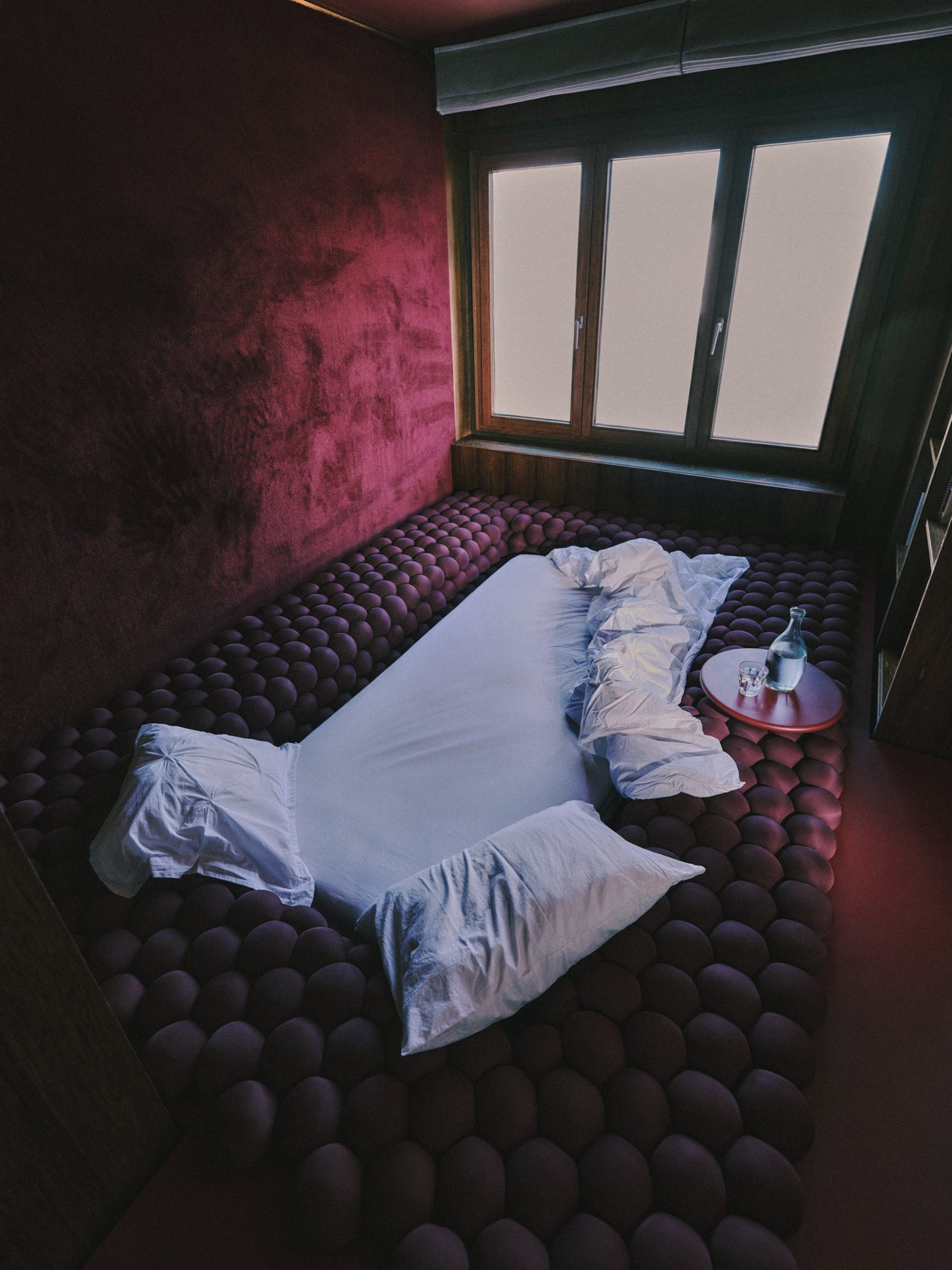
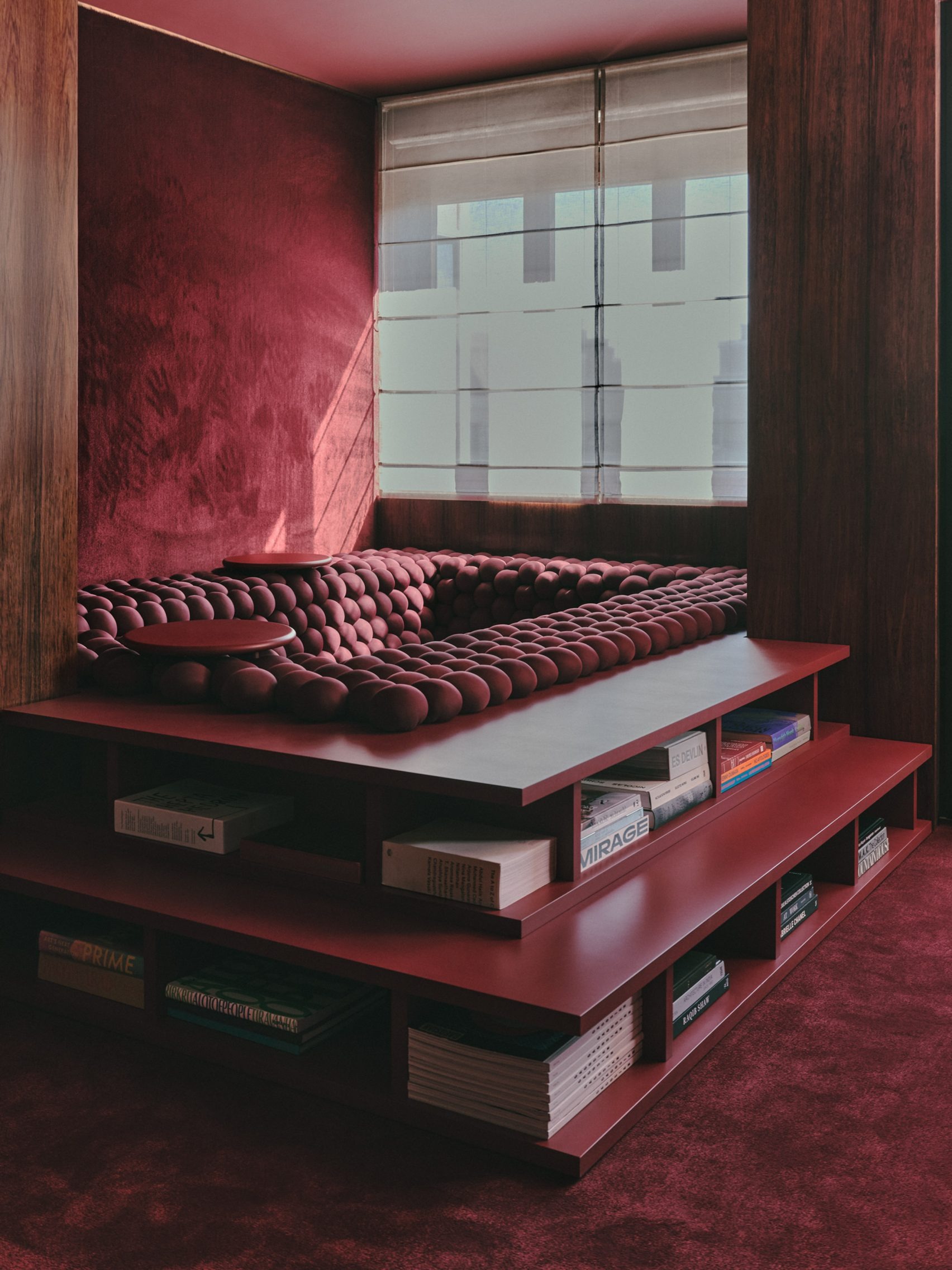
골렘은 2024년 뉴욕 콜렉터블 디자인 페어에서 암체어 형태의 아모레바를 처음 공개했습니다. 이후 큐레이터 다이애나 캠벨의 브뤼셀 자택에 이 시스템을 성공적으로 적용했습니다. 캠벨은 평범한 침실을 지인들과 둘러앉아 대화를 나눌 수 있는 편안한 라운지로 바꾸고 싶어 했습니다. 새롭게 꾸며진 이 공간은 필요할 때 손님용 침실이 되기도 하고 벽면을 따라 책장을 짜 넣은 넉넉한 데이베드로도 쓰입니다. 디자이너들은 이곳을 아이디어를 나누고 독서를 즐기며 깊은 대화에 빠져들 수 있는 아늑한 공용 공간으로 완성했습니다.
시각적 조화와 지속가능한 디자인 철학
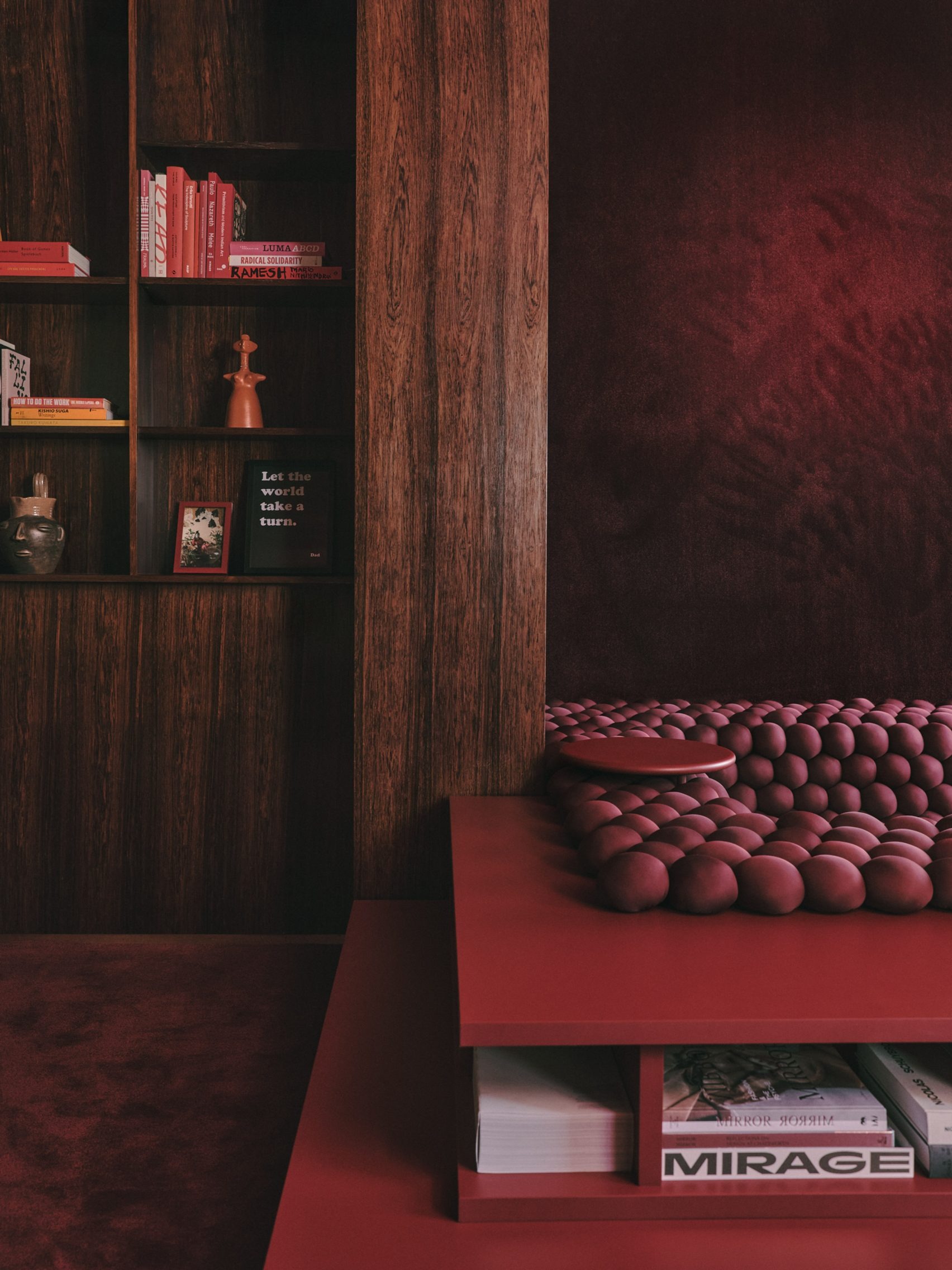
브뤼셀 프로젝트에서 가장 눈길을 끄는 것은 깊은 붉은색으로 물든 구체들입니다. 이 강렬한 색감은 벨벳으로 마감된 벽면은 물론이고 디자이너 쥘 바브가 남긴 미드센추리 모던 인테리어의 섬세한 목공 디테일과 완벽하게 어우러집니다. 아모레바 시스템은 색상을 자유롭게 바꿀 수 있어 주변 환경에 자연스럽게 스며들거나 반대로 경쾌한 대비를 이끌어냅니다. 또한 골렘은 지역에서 구한 직물과 섬유를 사용해 이 모든 과정을 프랑스 현지에서 생산합니다. 이들은 기획 단계부터 지속가능성을 깊게 고민했습니다. 그 결과 부품을 쉽게 해체하고 모든 소재를 온전히 재활용할 수 있는 시스템을 만들어냈습니다. 2021년에 스튜디오를 세운 앙드레는 유희적이면서도 무한히 모습을 바꾸는 공간을 창조하겠다는 철학을 바탕으로 오늘날에도 공간을 다루는 새로운 방식을 끊임없이 탐구하고 있습니다.
Write by Gemini & Jean Browwn

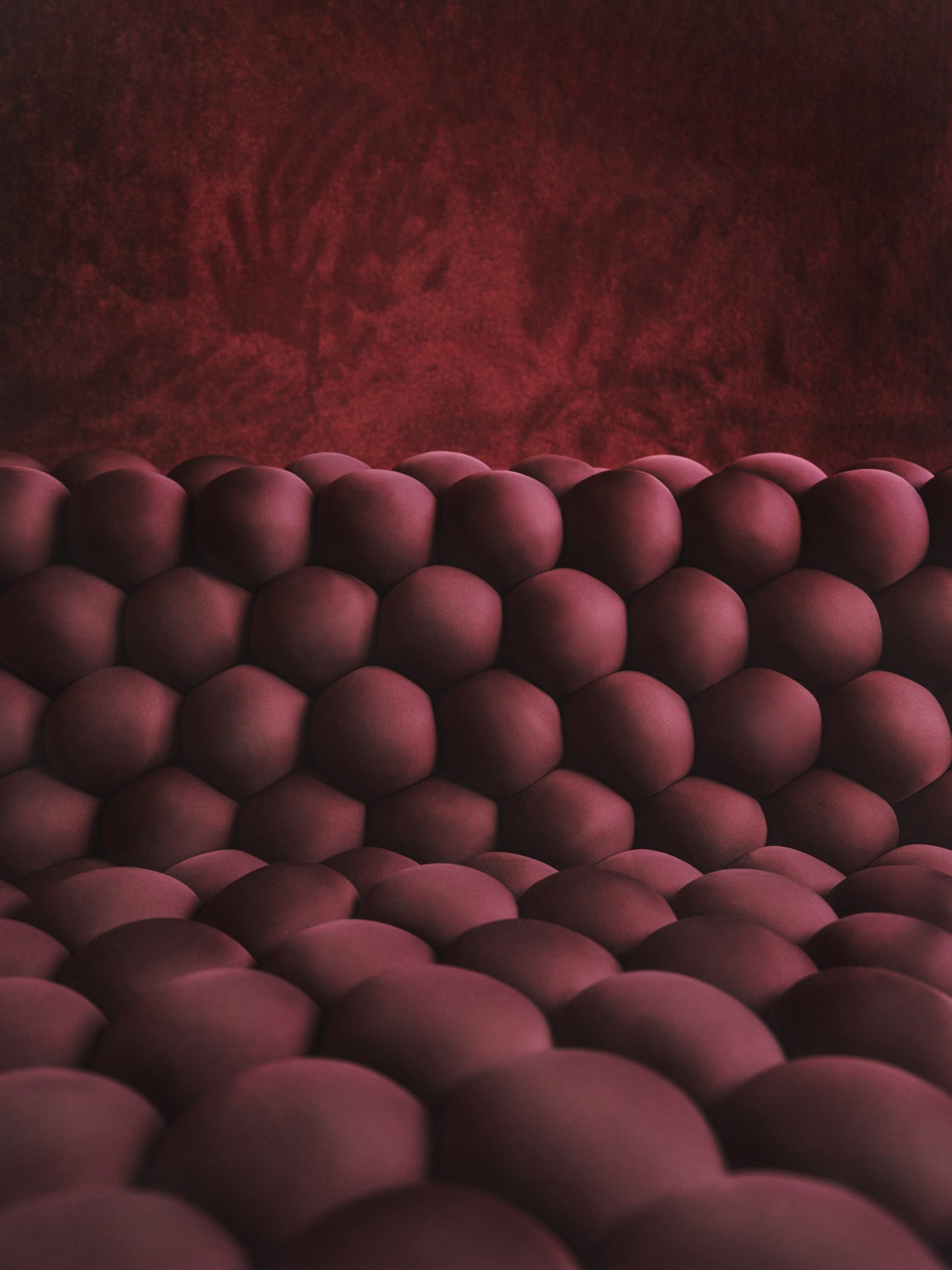
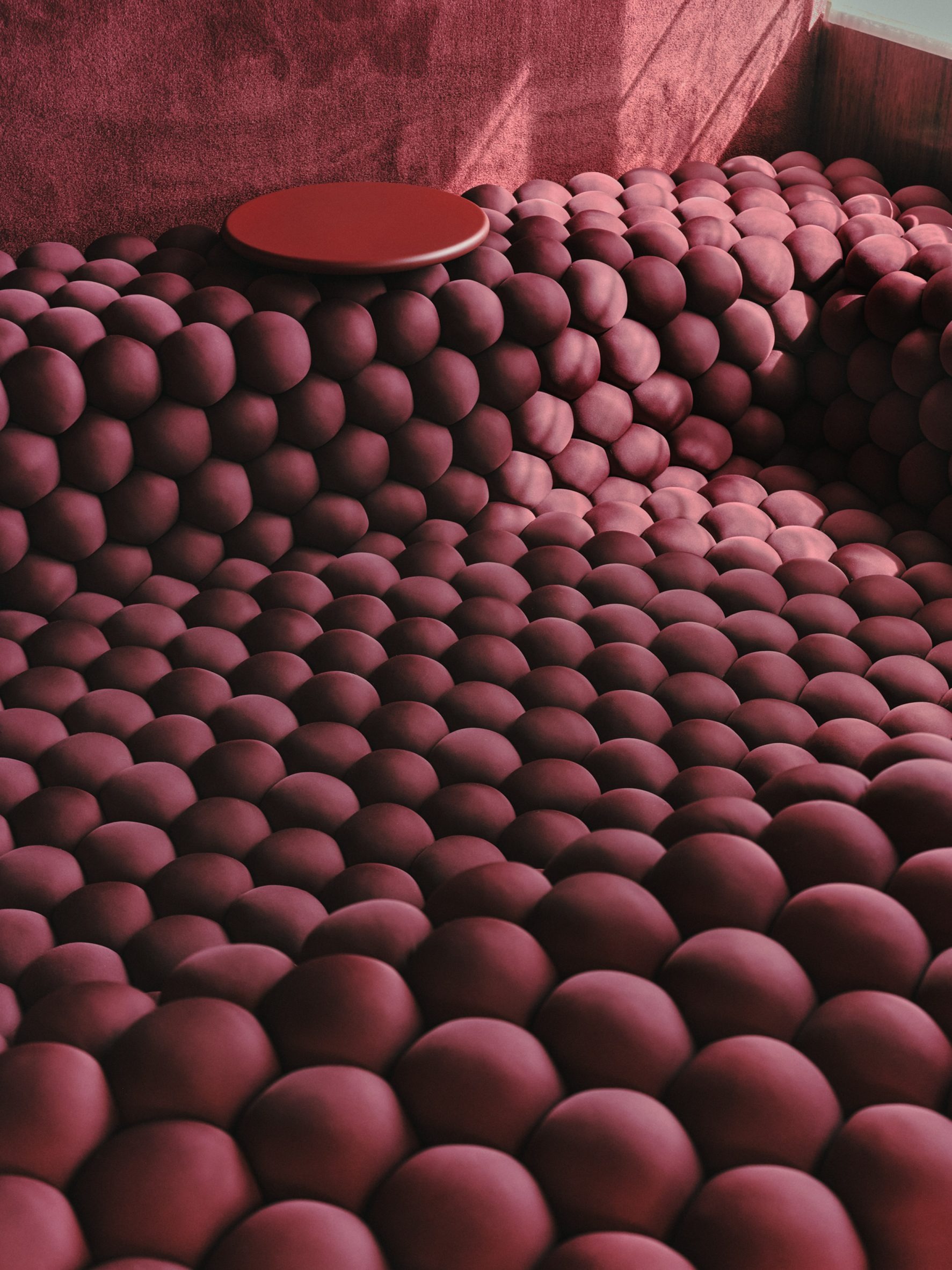
Architecture and design studio Golem has developed a modular furniture system made up of upholstered balls that can be used to create organically shaped furniture and interior spaces.
The Amoreba system emerged from the Paris based studio's research into ways of creating unconventional solutions for modern living spaces.
"Amoreba is a surface treatment that can seamlessly spread across rigid orthogonal interiors, transforming them into spaces tailored to contemporary, non-conformist lifestyles," said Golem.
The product consists of upholstered balls that can be combined in a wide range of configurations, using custom-designed software to model three-dimensional surfaces.
The system's organic forms and squishy texture reference the microscopic bumps of a mushroom colony, which Golem's founder Ariel André claimed he wanted to recreate from the perspective of a tiny creature.
"Starting from the standpoint of those usually overlooked – here, the microscopic beings –allows us to create new forms and spaces that enrich the experience of life for everyone," said André.
The balls can be used to cover geometric or curved forms, enabling the studio to adapt the shape to suit different spaces and scenarios envisaged by the user.
Each element is sized to fit in the palm of a hand and is filled with a blend of fibres that gives a satisfying bounciness when the balls are squeezed or stepped on.
Golem presented the Amoreba system at the New York edition of the Collectible design fair in 2024, in the form of an armchair, and has also used it in the Brussels home of curator Diana Campbell.
Campbell wanted to transform an existing bedroom into a conversation pit for socialising with friends that can also function as a guest bedroom or a daybed lined with built-in bookshelves.
"The Curator's pit has been designed as a comfortable, communal space for sharing ideas, reading and engaging in conversation," the designers said.
The Brussels project features balls upholstered in a deep-red hue that complements the velvet covered walls and the joinery of the mid-century interior designed by Jules Wabbes.
The system can be adapted to suit any space by altering the colour so it blends in or contrasts with the surroundings.
Amoreba is produced entirely in France using locally sourced fabrics and fibres. Sustainability was a key consideration for the material choices and manufacturing methods, which enable disassembly and recycling.
André founded his studio in 2021 with the objective of exploring alternative approaches to creating spaces and objects that are inherently playful and transformative.