"건축은 풍경이 다른 방식으로 이어지는 것이다."— 엔릭 미라예스 (Enric Miralles)
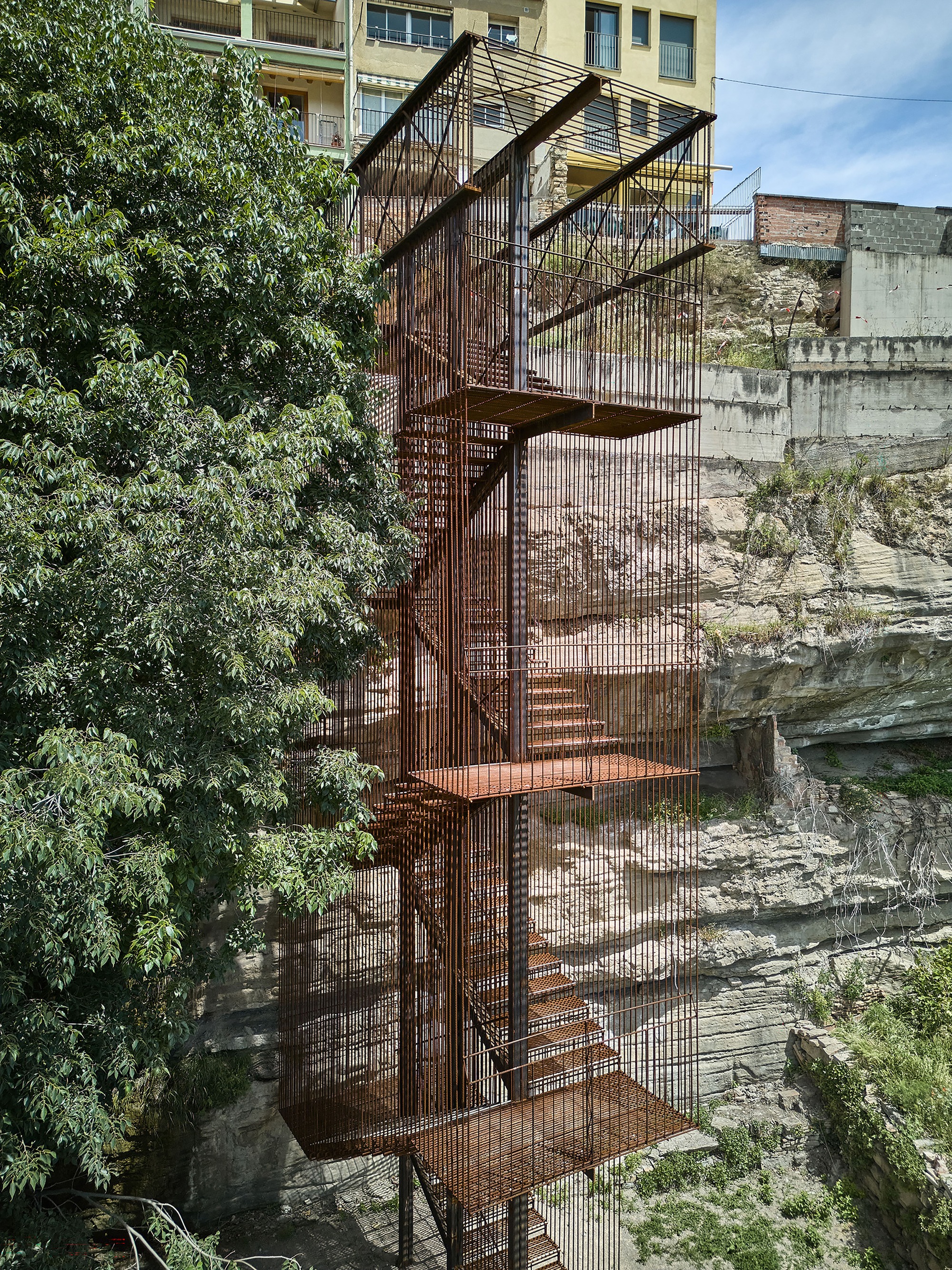
Comas-Pont arquitectes-Landscape Staircase in the Vall del Pardís
사라진 길의 기억
스페인 카탈루냐 만레사(Manresa), 카르데네르강(Cardener River)이 굽어 보이는 절벽 위에는 한때 사람들이 오가던 오솔길이 있었다. 1522년, 이냐시오 데 로욜라(Ignatius of Loyola)는 이 길을 걸으며 훗날 영신수련(Spiritual Exercises)의 씨앗이 될 사유를 키웠다. 도시 레스 에스코디네스(Les Escodines) 구역의 여성들은 이 길을 따라 카르데네르강으로 내려갔다. 폰트 벨(Pont Vell)과 크레우 델 토르트(Creu del Tort)를 포우 데 룸(Pou de Llum)과 이어주던 이 역사적 연결로는 세월 속에서 서서히 끊어졌다. 가파른 지형 앞에 사람의 발길이 멈추었고, 절벽은 도시와 강 사이의 단절을 굳혀갔다.
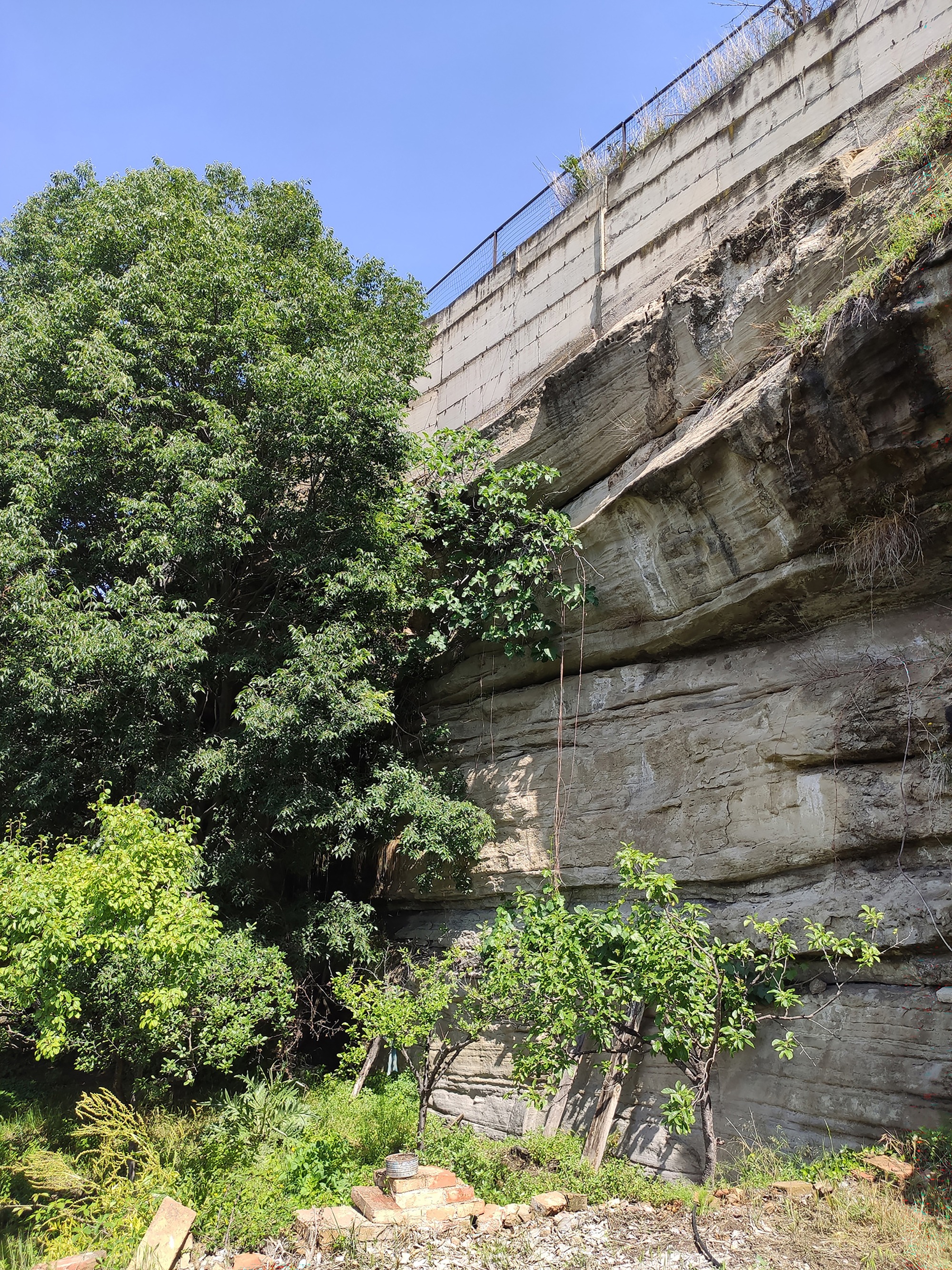
코마스-폰트 아르키텍테스(Comas-Pont arquitectes)는 이 사라진 길의 복원을 건축의 과제로 삼았다. 개입 이전, 크레우 델 토르트와 폰트 데 판스(Font de Fans) 사이의 가장 가파른 구간은 접근 자체가 불가능한 상태였다. 설계팀이 마주한 것은 단순히 오르내릴 수 있는 통로의 부재가 아니었다. 도시와 자연, 현재와 역사 사이를 가로막고 있는 13미터 높이의 단절이었다.
절벽 앞에 선 구조물
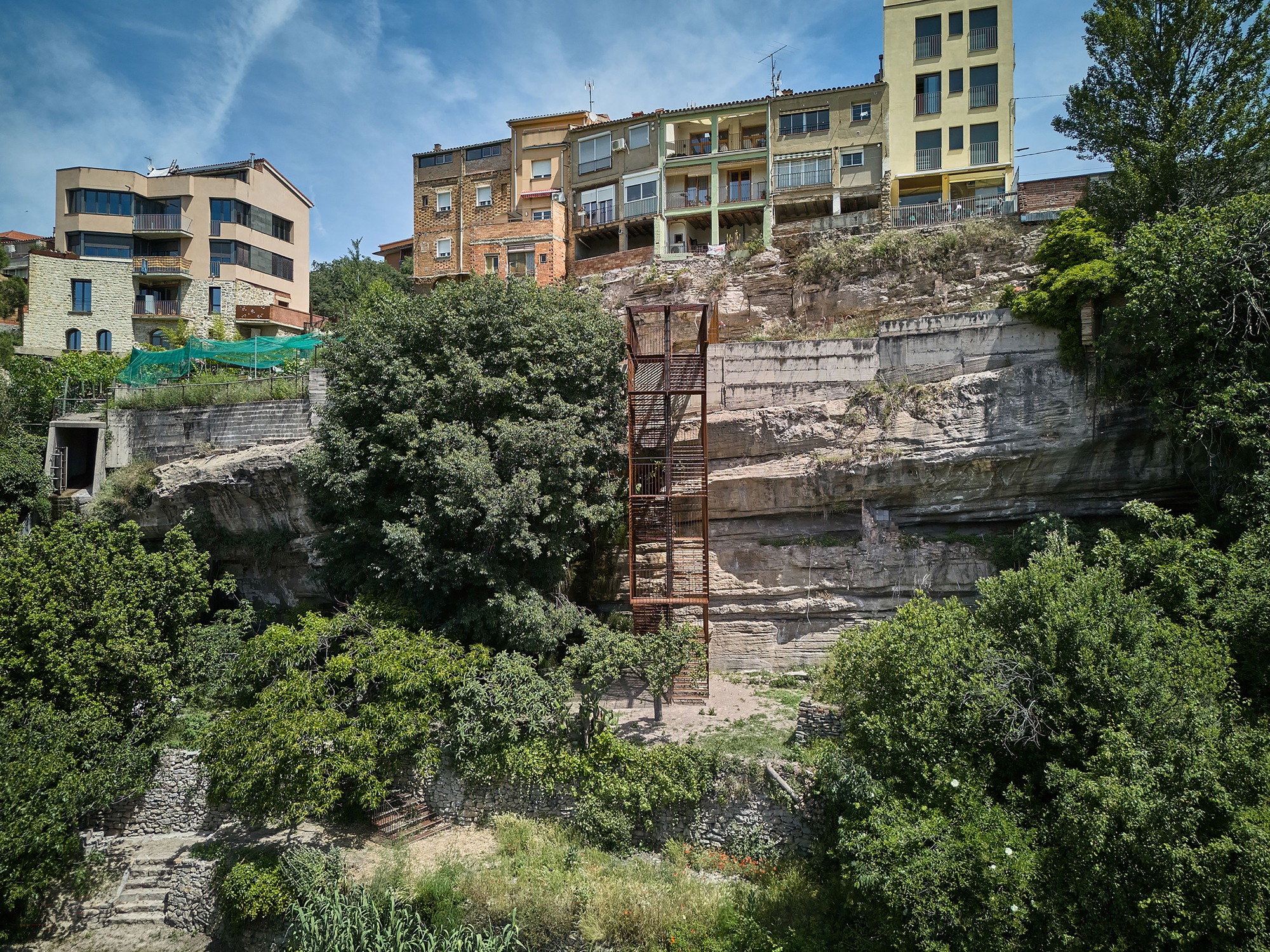
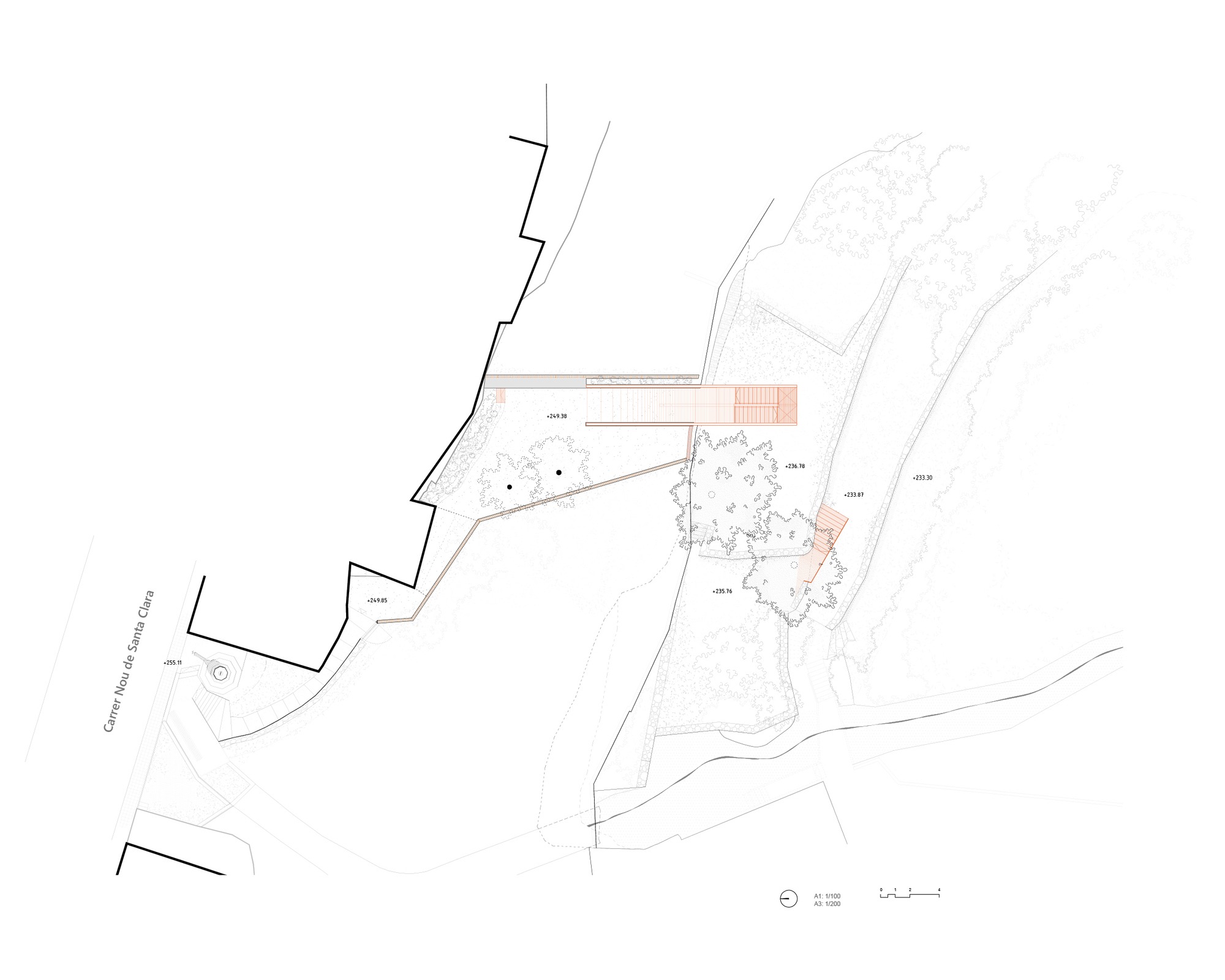
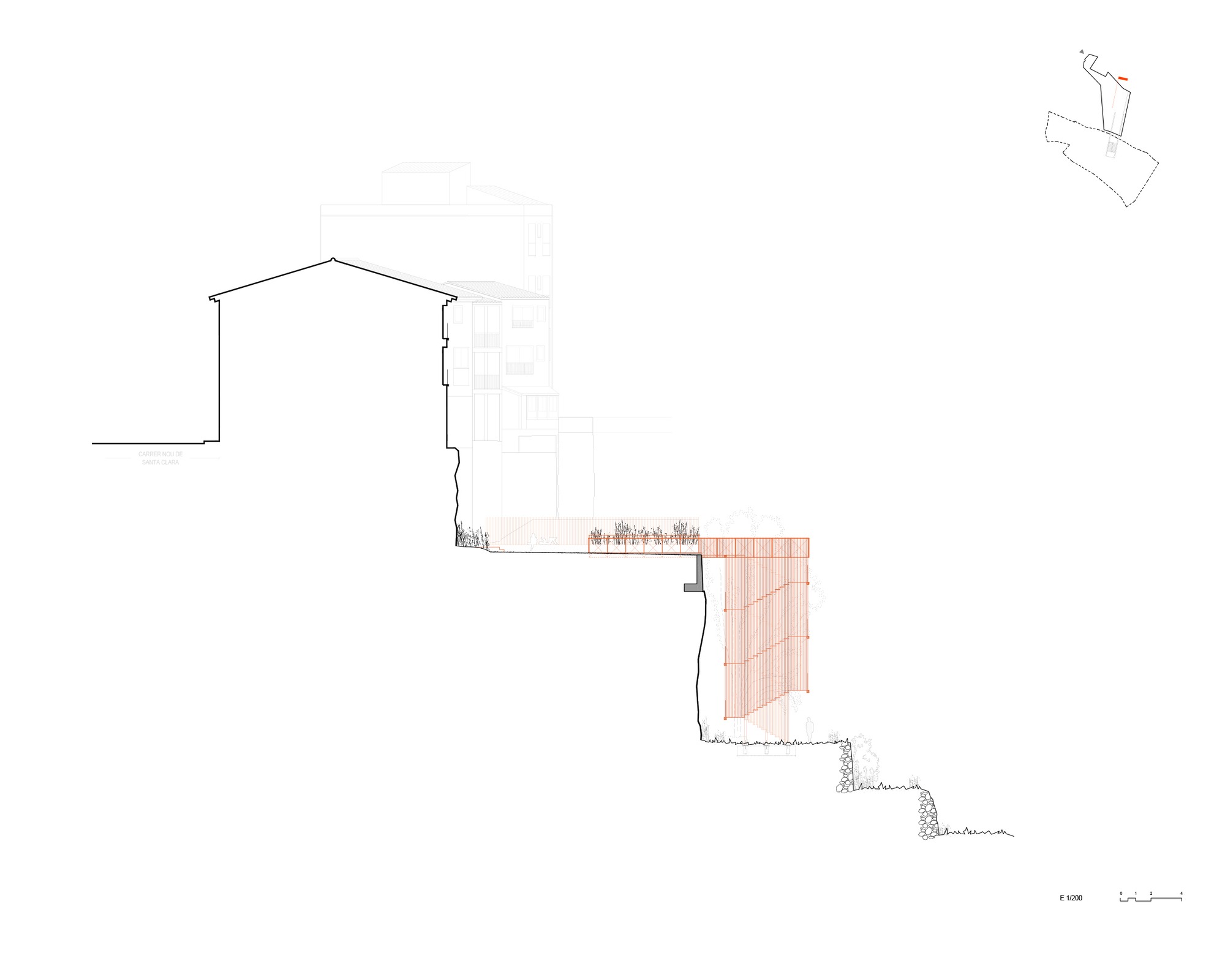
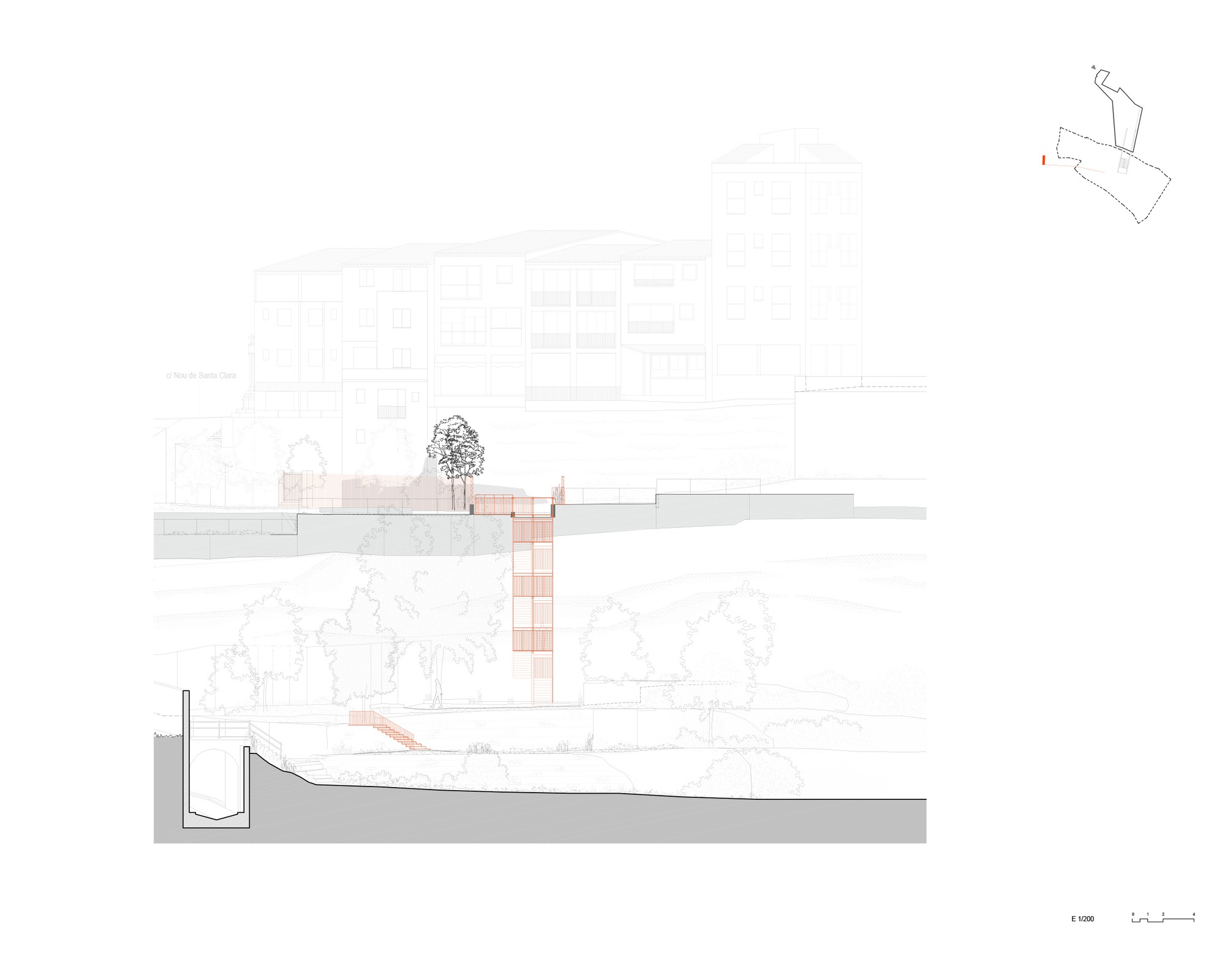
발 델 파라디스 풍경 계단(Landscape Staircase in the Vall del Paradís)은 두 개의 테라스 사이, 13미터의 높이차를 가로지르는 구조물이다. 이 계단은 단순한 수직 이동 장치가 아니다. 카르데네르강과 몬세라트(Montserrat)를 향해 열린 전망대이자, 암석과 식생과 하늘이 교차하는 감각적 여정의 무대다.
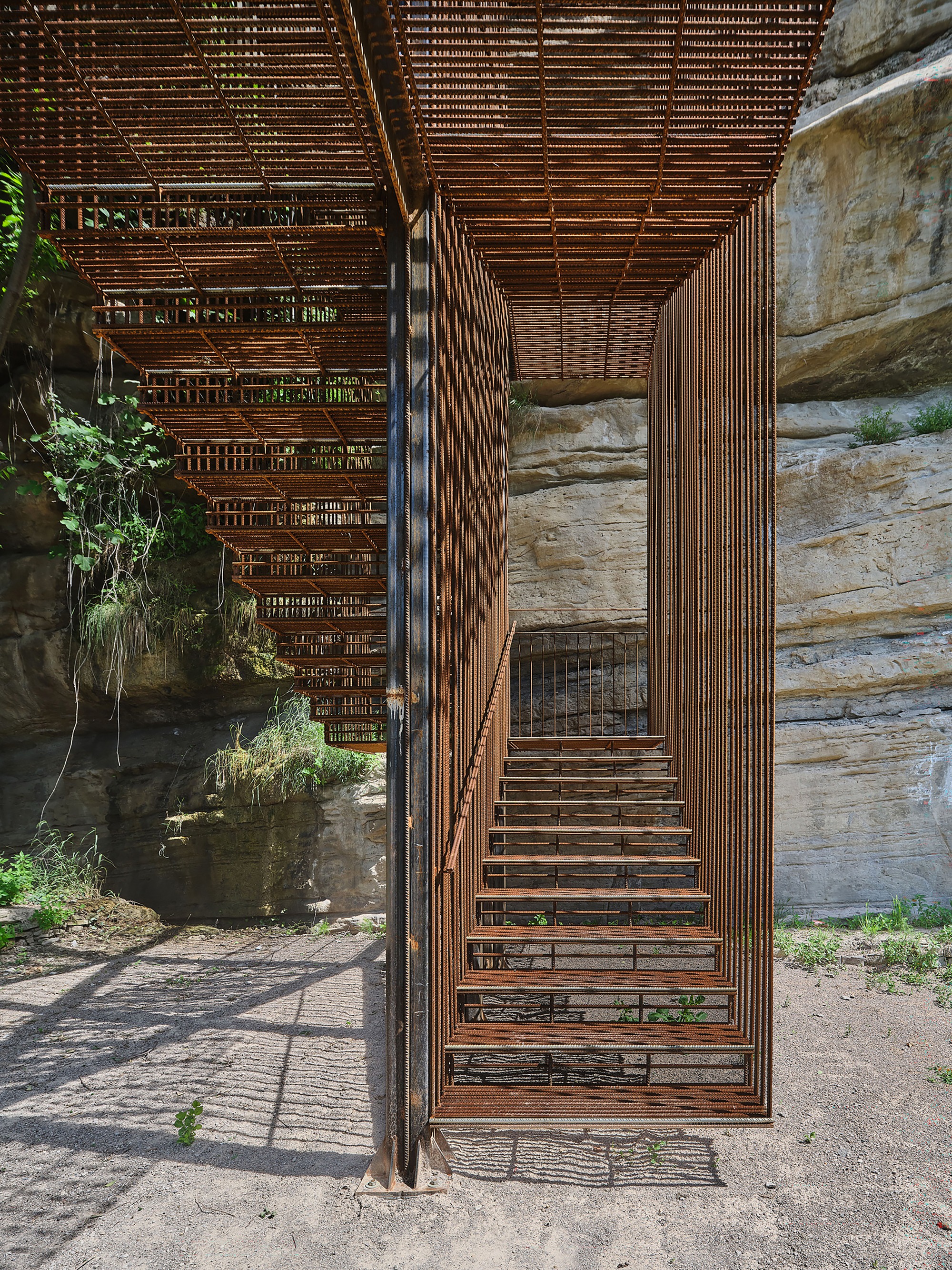
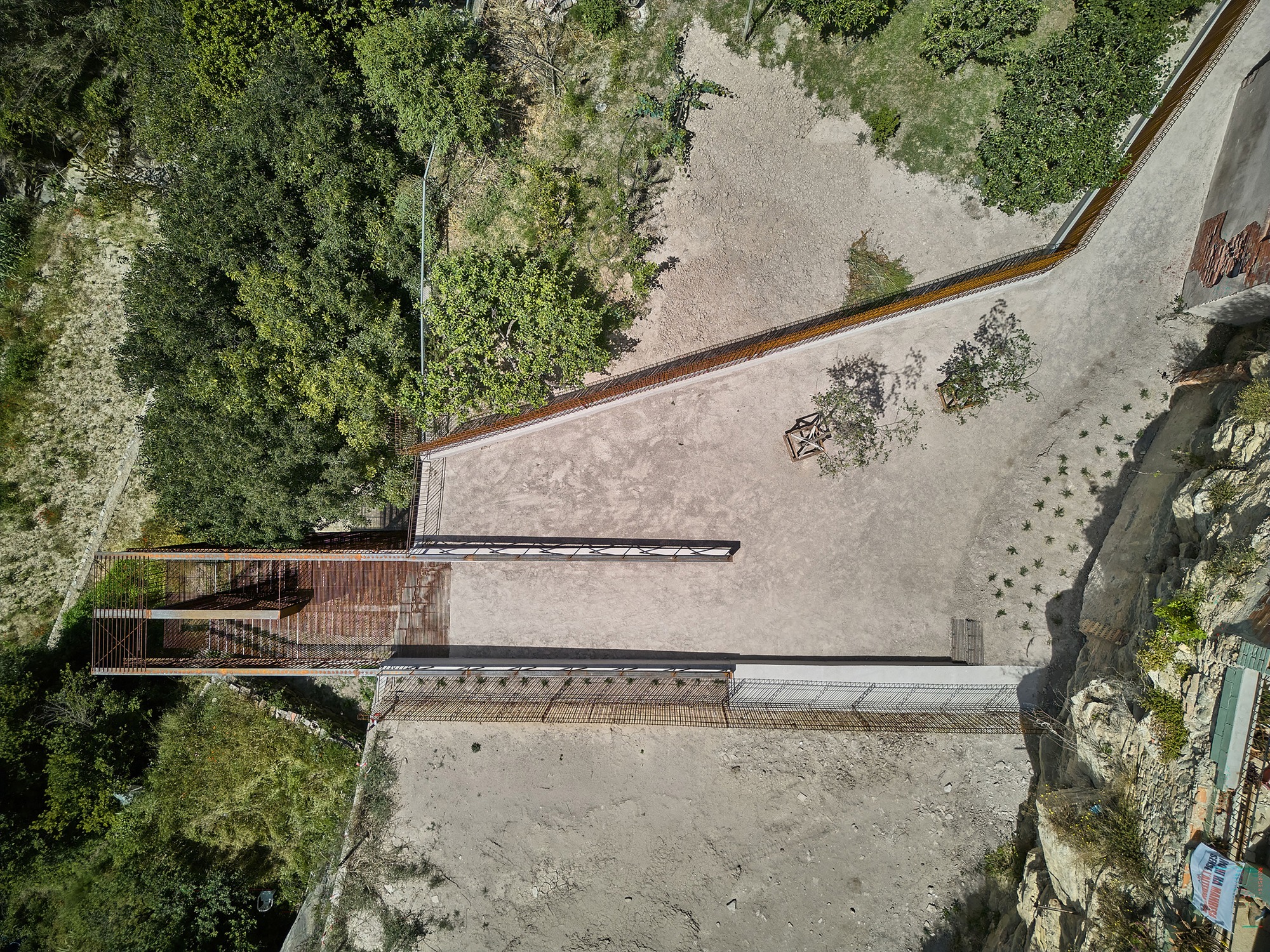
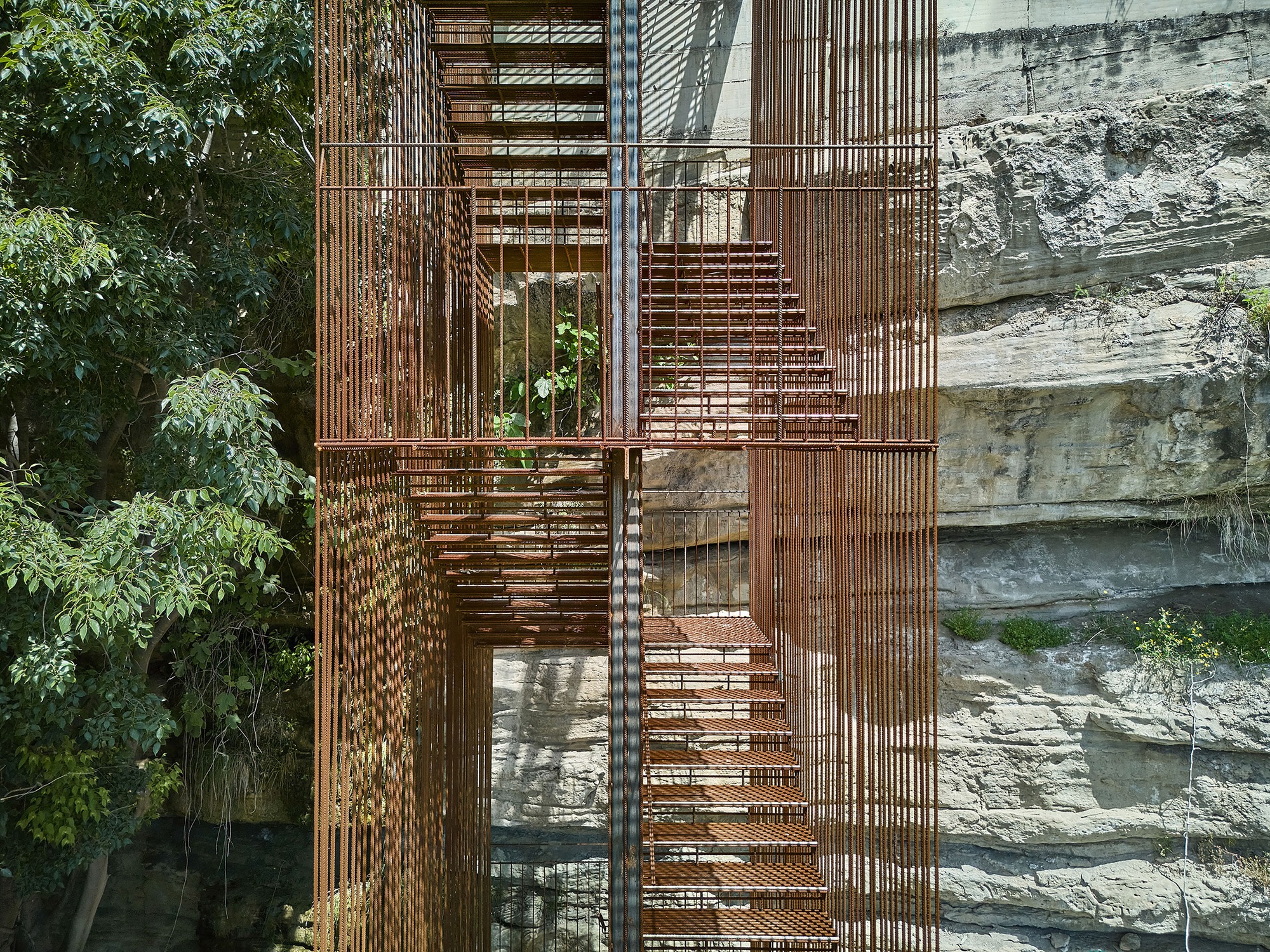
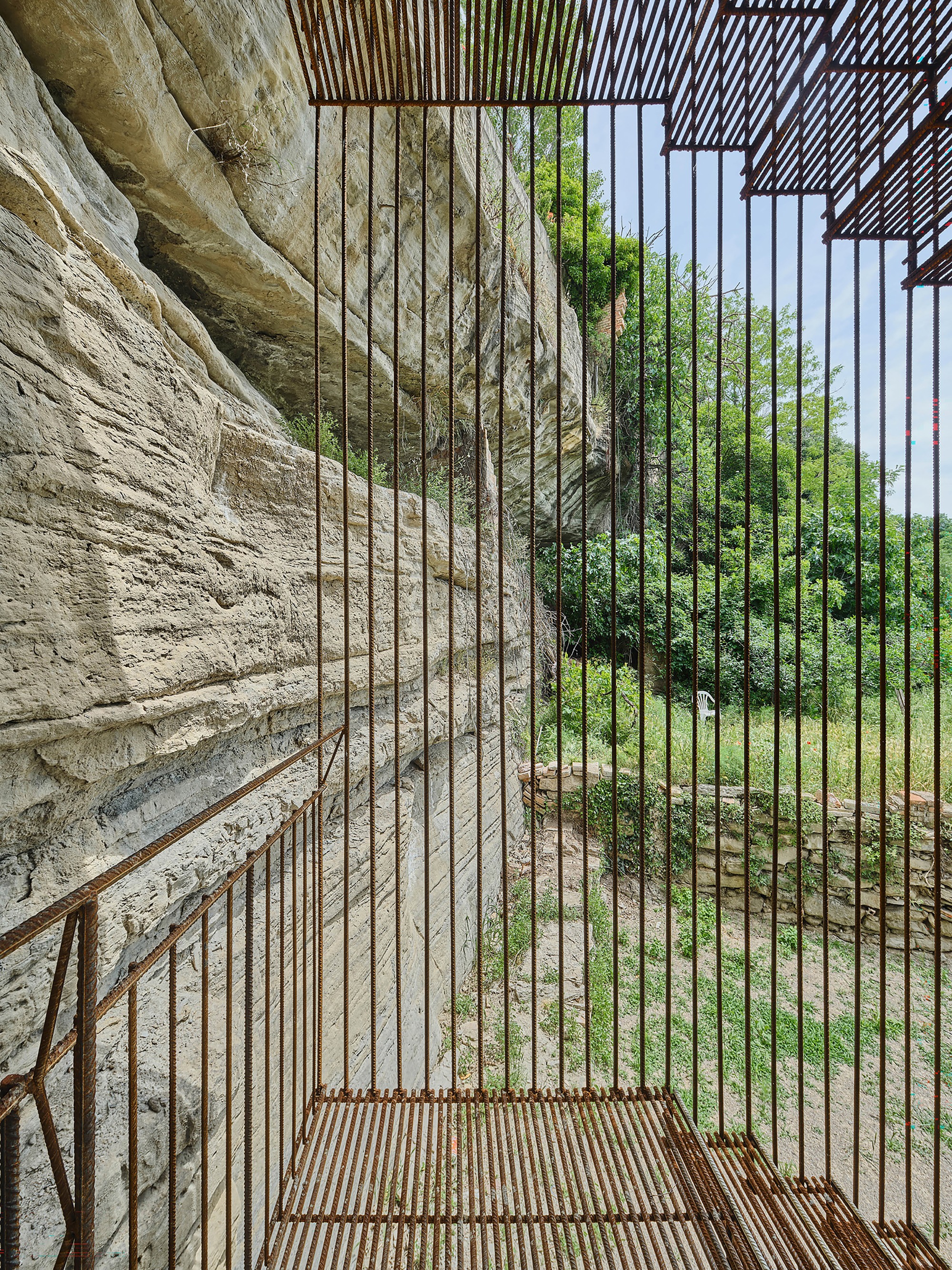
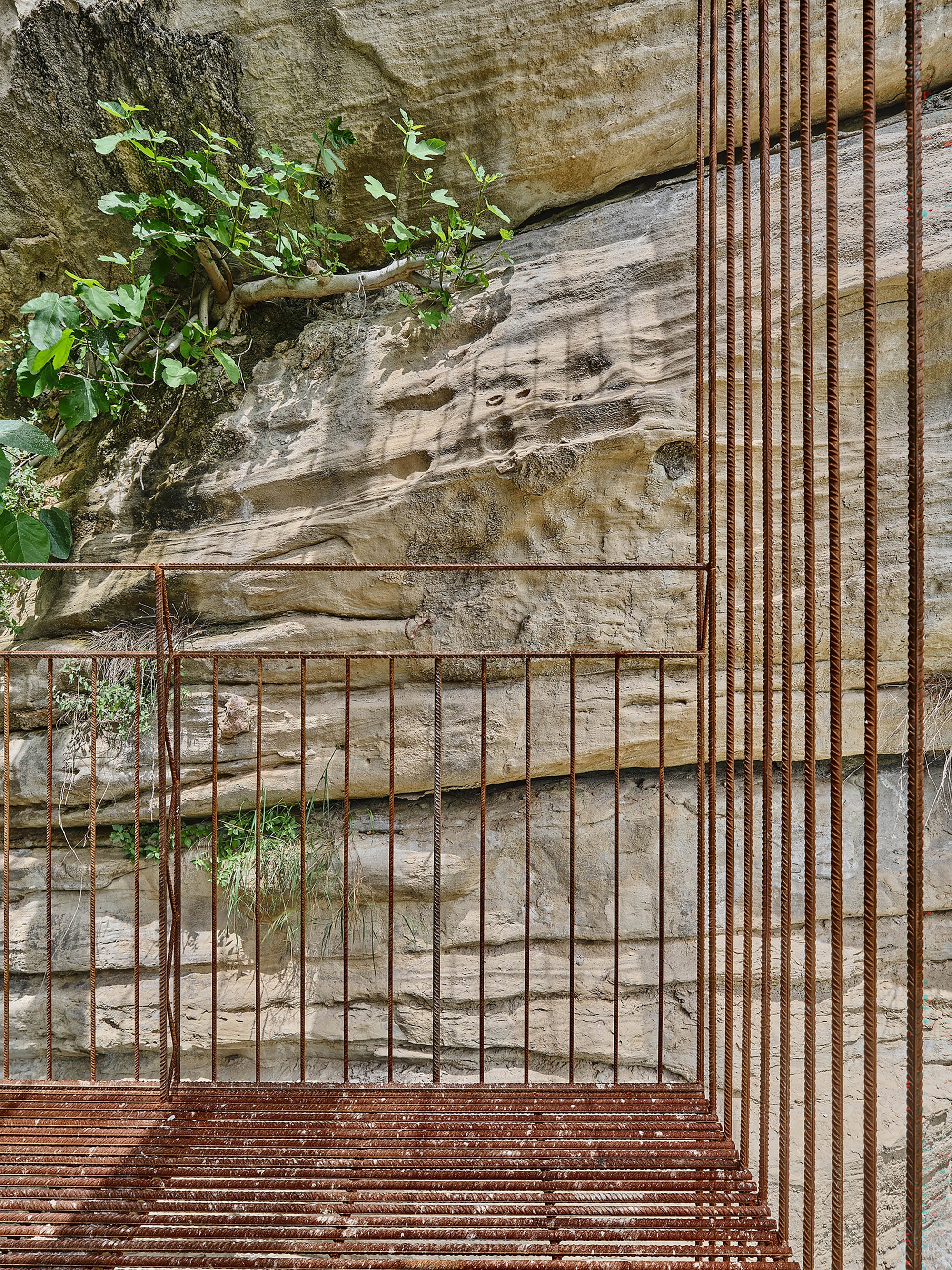
설계의 핵심은 절벽과의 분리에 있다. 계단은 암석 표면에 닿지 않는다. 상부 테라스의 콘크리트 벽에 고정된 금속 트러스가 캔틸레버(cantilever) 방식으로 뻗어 나와 계단 전체를 공중에 매달아 놓는다. 이 구조적 선택은 곧 시각적 경험으로 이어진다. 계단은 지형 위에 가볍게 떠 있고, 바위의 켜와 계단의 격자 사이로 발 델 파라디스의 풍경이 층층이 열린다.
이형철근이라는 단일 언어
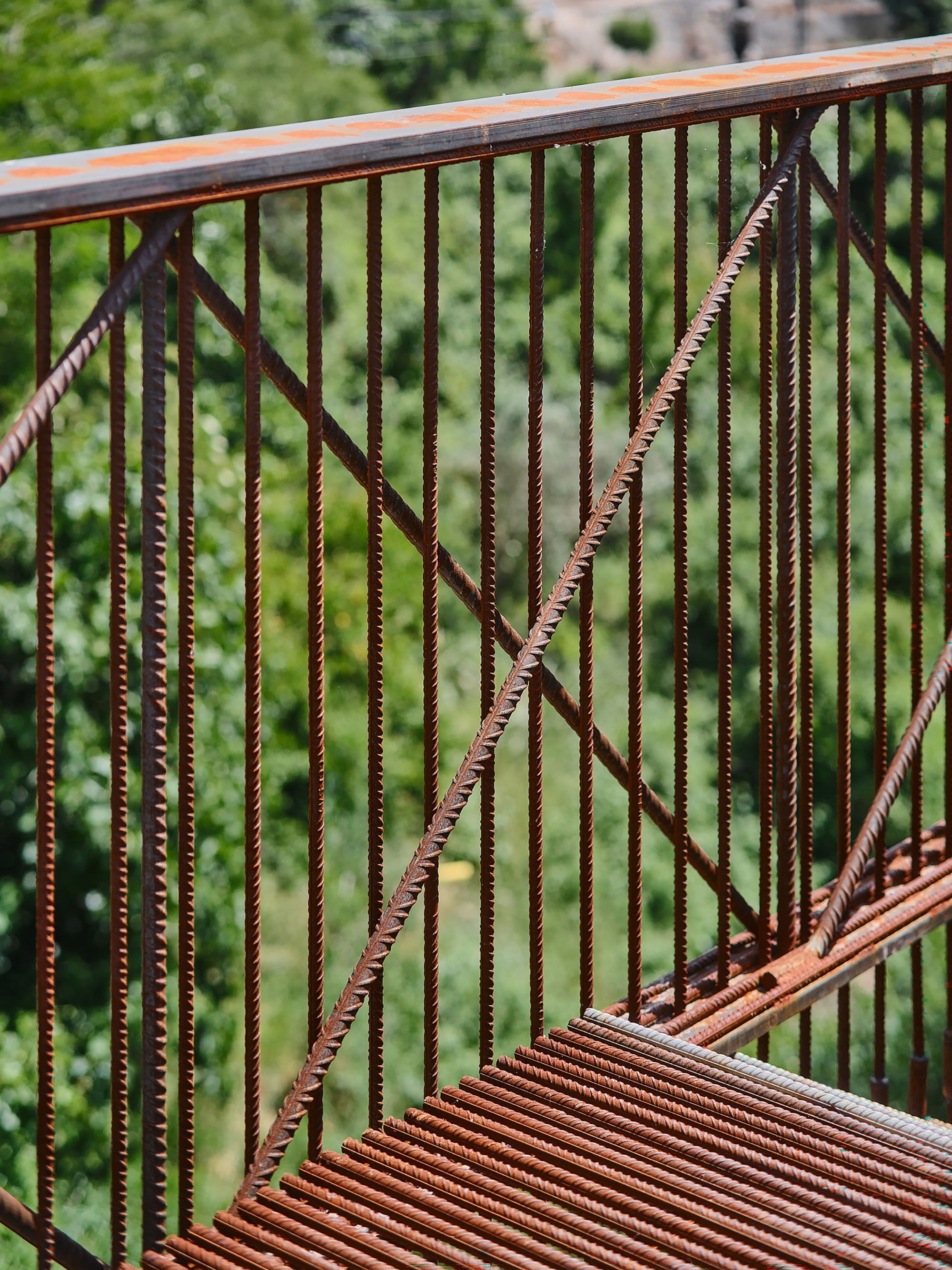
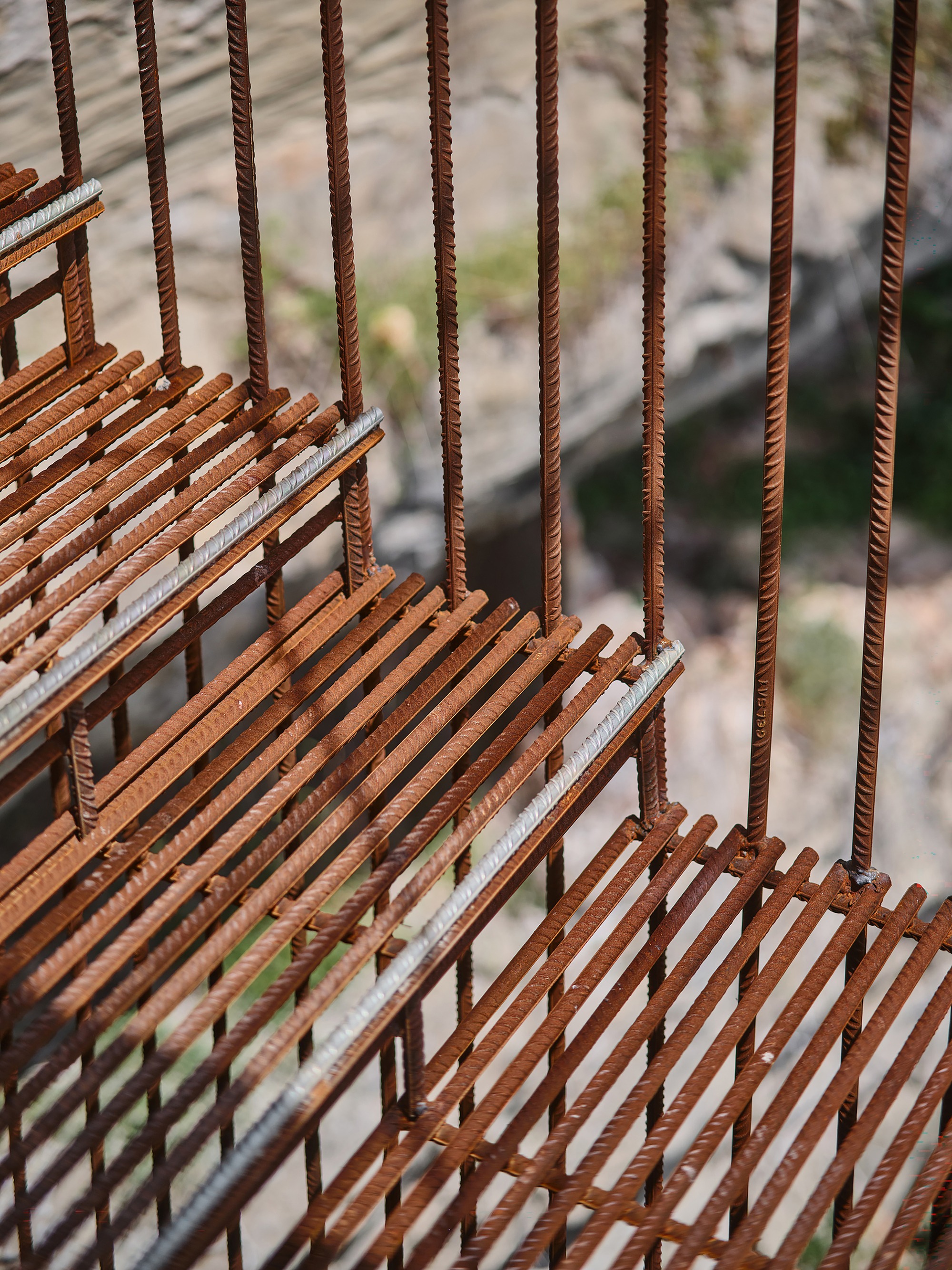
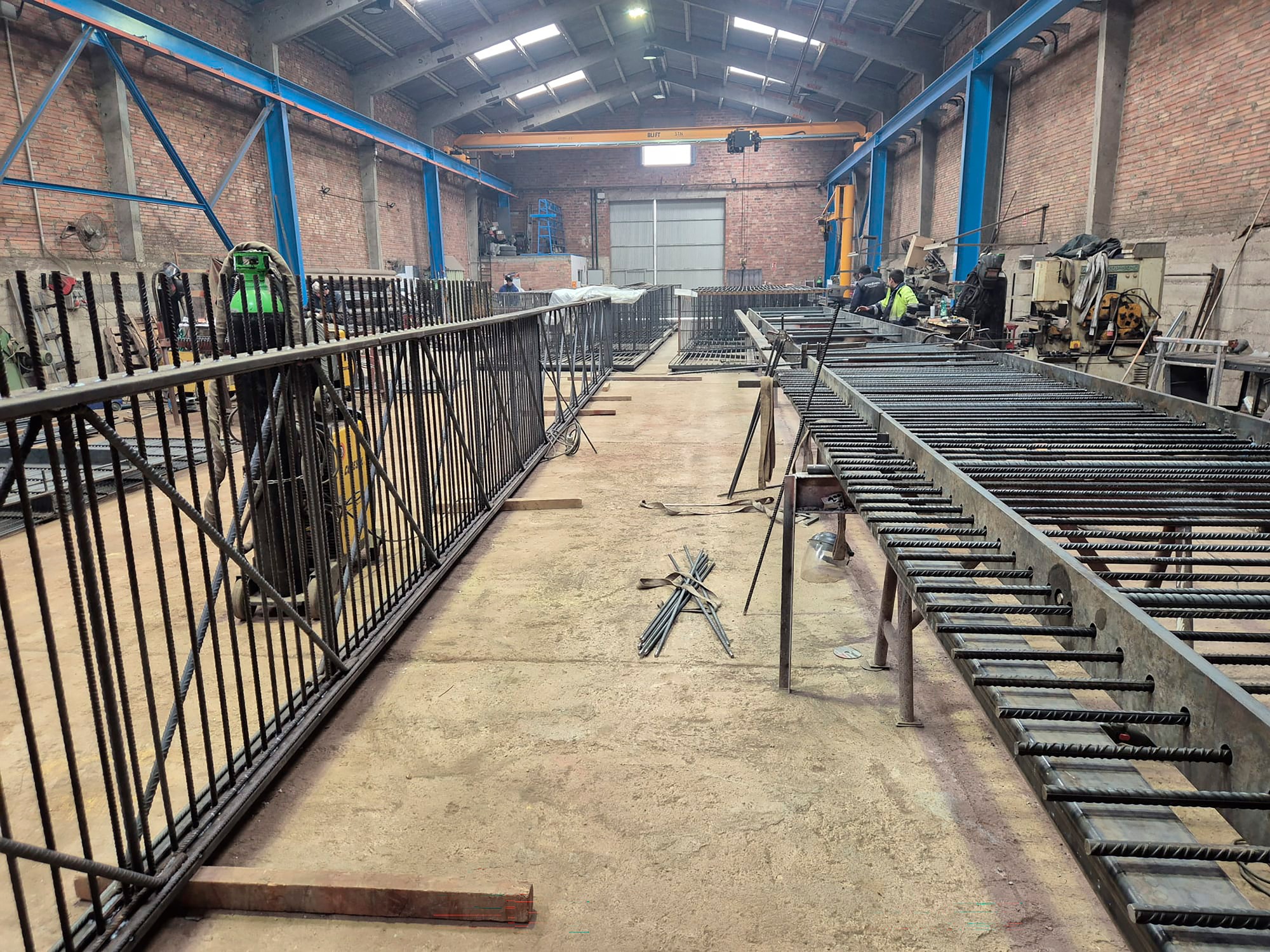
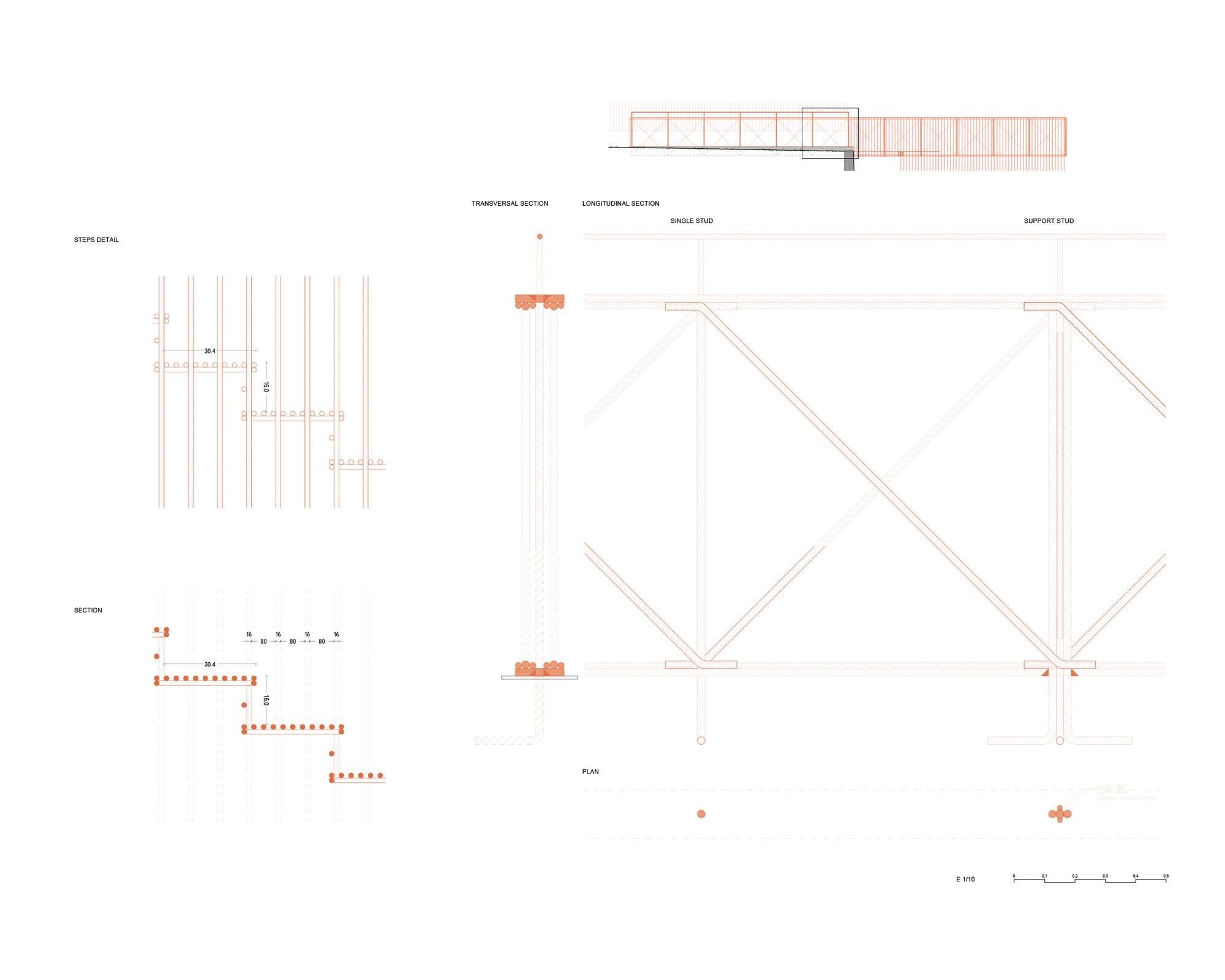
이 프로젝트의 재료 언어는 하나다. 직경 16밀리미터의 이형철근(Ø16mm corrugated steel bars). 통상 콘크리트 속에 파묻히는 건설 현장의 재료를 건축의 주역으로 끌어낸 이 선택은 단순한 미적 판단이 아니다. 필요한 것만 쓴다는 절제의 윤리가 물성으로 구현된 결과다.
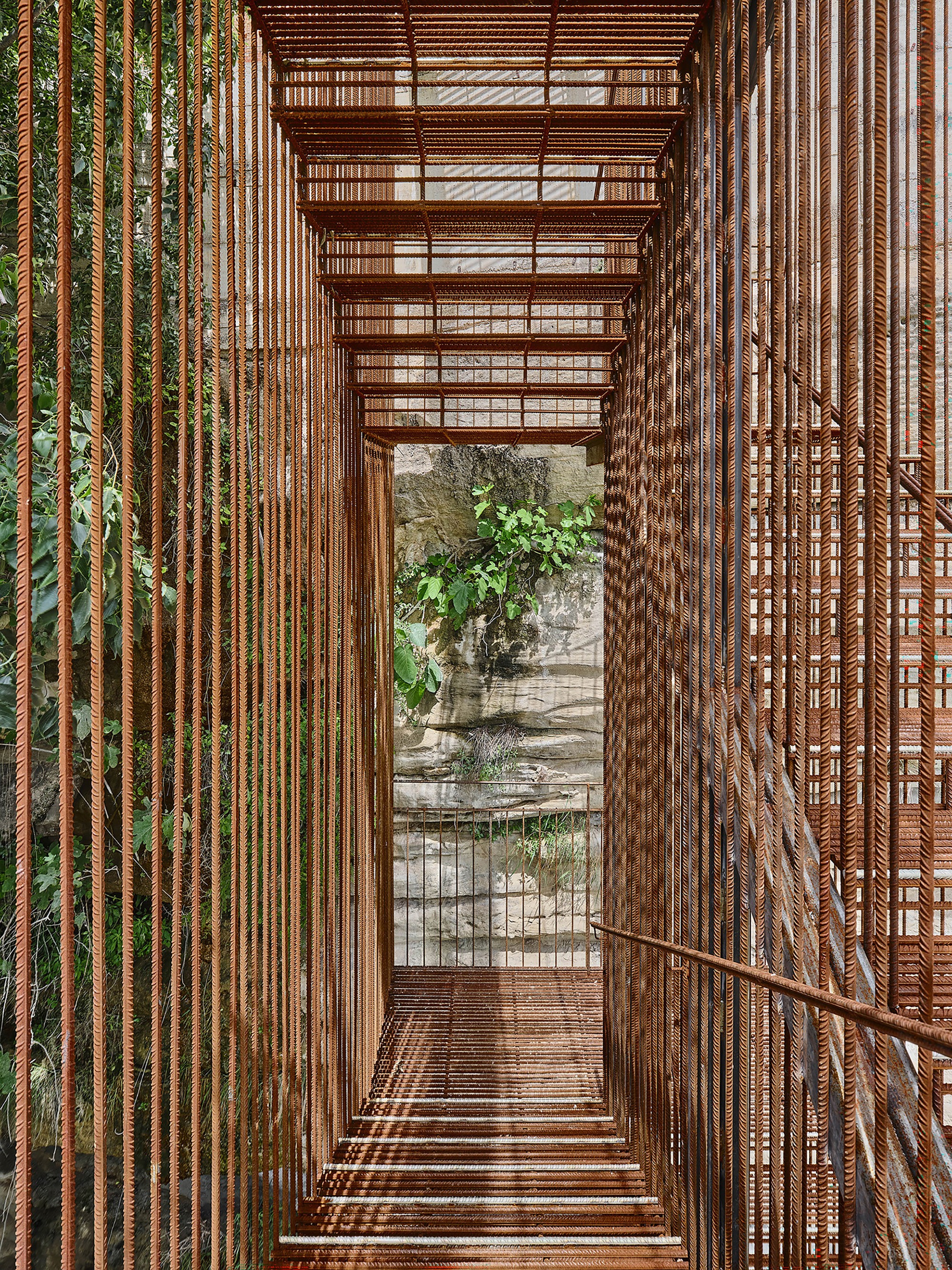
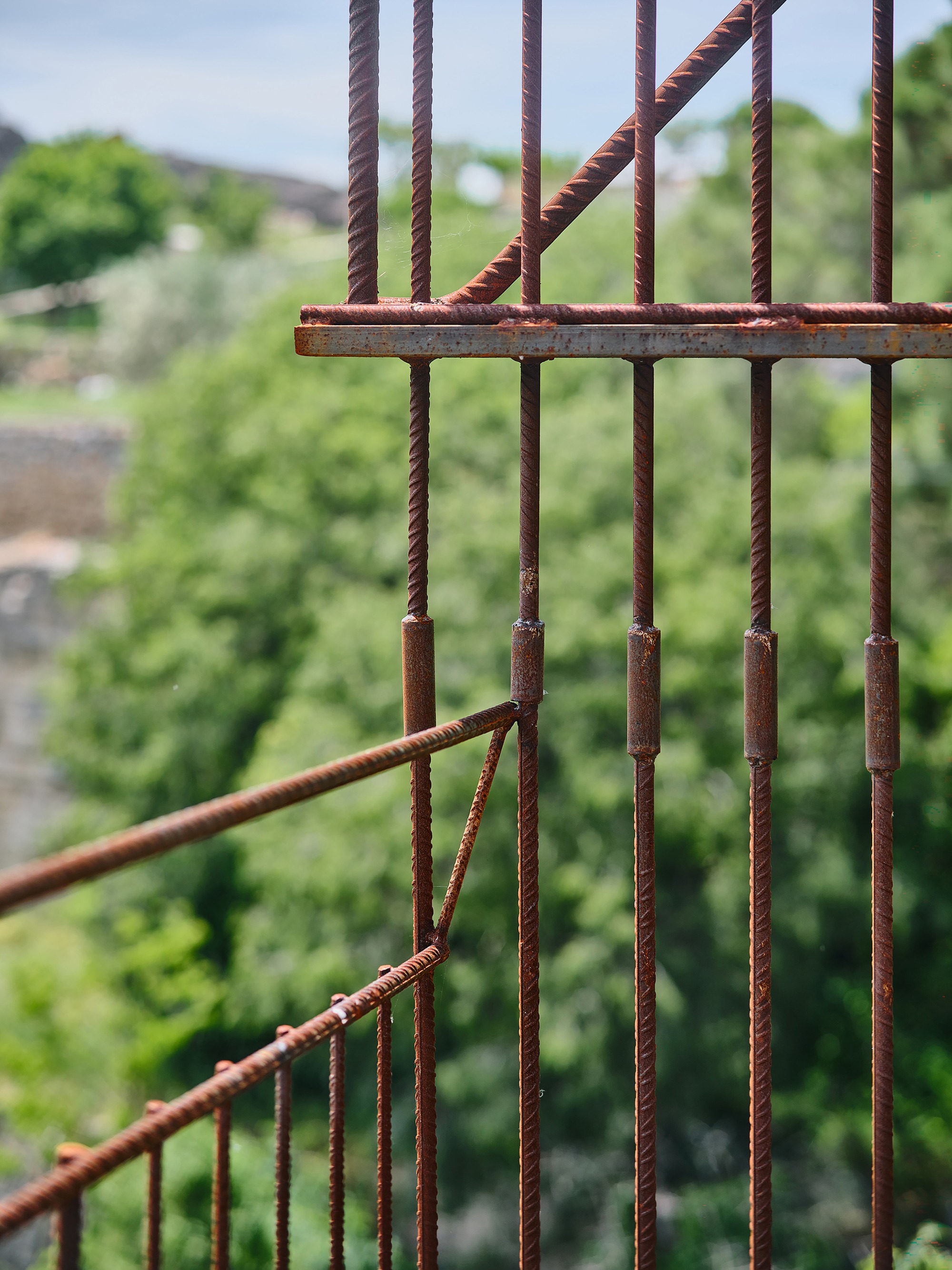
이형철근의 반복이 계단 전체를 구성한다. 수직으로 세워진 철근들은 커튼처럼 늘어서며 풍경을 거르되 차단하지 않는다. 보는 사람은 철근의 리듬 사이로 절벽의 질감과 나뭇잎의 흔들림, 강 건너 능선을 동시에 품는다. 바닥판도 같은 이형철근으로 짜여 있어 빗물이 자연스럽게 빠져나가고, 땅은 그 아래에서 계속 숨 쉰다. 세월이 더할수록 녹의 색조가 짙어지며 주변 사암 절벽의 빛깔과 닮아간다. 구조물이 풍경 속에 천천히 뿌리내리는 것처럼.
땅과 하늘 사이, 몸의 경험
계단을 오르는 동안 몸의 경험은 끊임없이 바뀐다. 가까이에는 거친 사암의 표면이 손 닿을 듯 다가오고, 멀리에는 카르데네르강 너머 몬세라트 산괴가 펼쳐진다. 가장 좁은 구간에서는 절벽이 등을 감싸 안고, 그다음 순간 시야가 탁 트이며 발 델 파라디스 계곡 전체가 눈 아래로 드러난다. 설계팀이 의도한 것은 바로 이 교차다. 땅과 하늘, 암석과 공기 사이를 오가는 리듬. 몸이 그 사이를 통과하면서 가장 가까운 것과 가장 먼 것을 동시에 감지하는 순간들.
이 감각의 교차는 자연스럽게 역사의 기억으로 이어진다. 한때 순례자와 이웃 주민들이 걷던 이 길의 물리적 감각—바위의 냄새, 강의 소리, 햇볕이 계단 철근 위에 만드는 그림자—을 현대의 몸이 다시 경험하도록 설계되었다.
도시와 자연을 다시 잇다
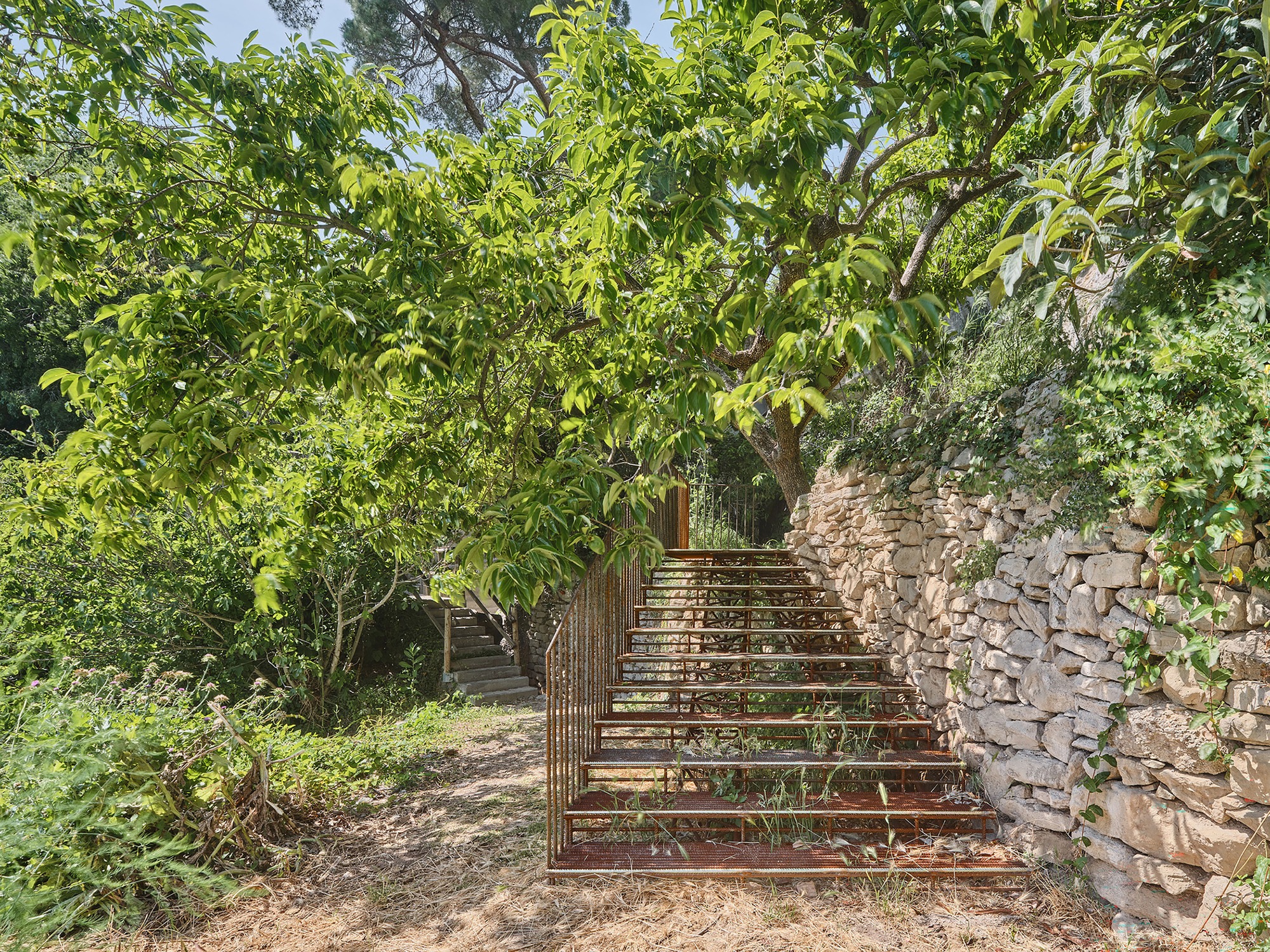
코마스-폰트 아르키텍테스의 이 개입은 건축적 최소주의의 성취이자 장소에 대한 겸손한 응답이다. 계단은 기존의 농업 환경과 돌담, 자연 식생을 건드리지 않는다. 그저 끊어진 두 지점 사이를 연결하는 가장 정직한 방법을 택한다.
결과적으로 사라졌던 길이 되살아났다. 지형으로 단절되어 있던 도시의 두 부분이 다시 이어졌고, 방치되어 있던 절벽 지대는 시민들이 걸을 수 있는 공공 공간으로 바뀌었다. 발 델 파라디스 풍경 계단은 기능적 통로이자 사회적 장소이며, 계곡의 아름다움을 새롭게 발견하게 하는 시점(視點)이다. 이형철근 한 가닥이 반복되며 만들어낸 이 가벼운 구조물은, 오백 년 전 한 순례자가 걷던 길 위에 조용히 내려앉아 장소의 기억을 현재로 불러온다.
Write by Claude & Jean Browwn
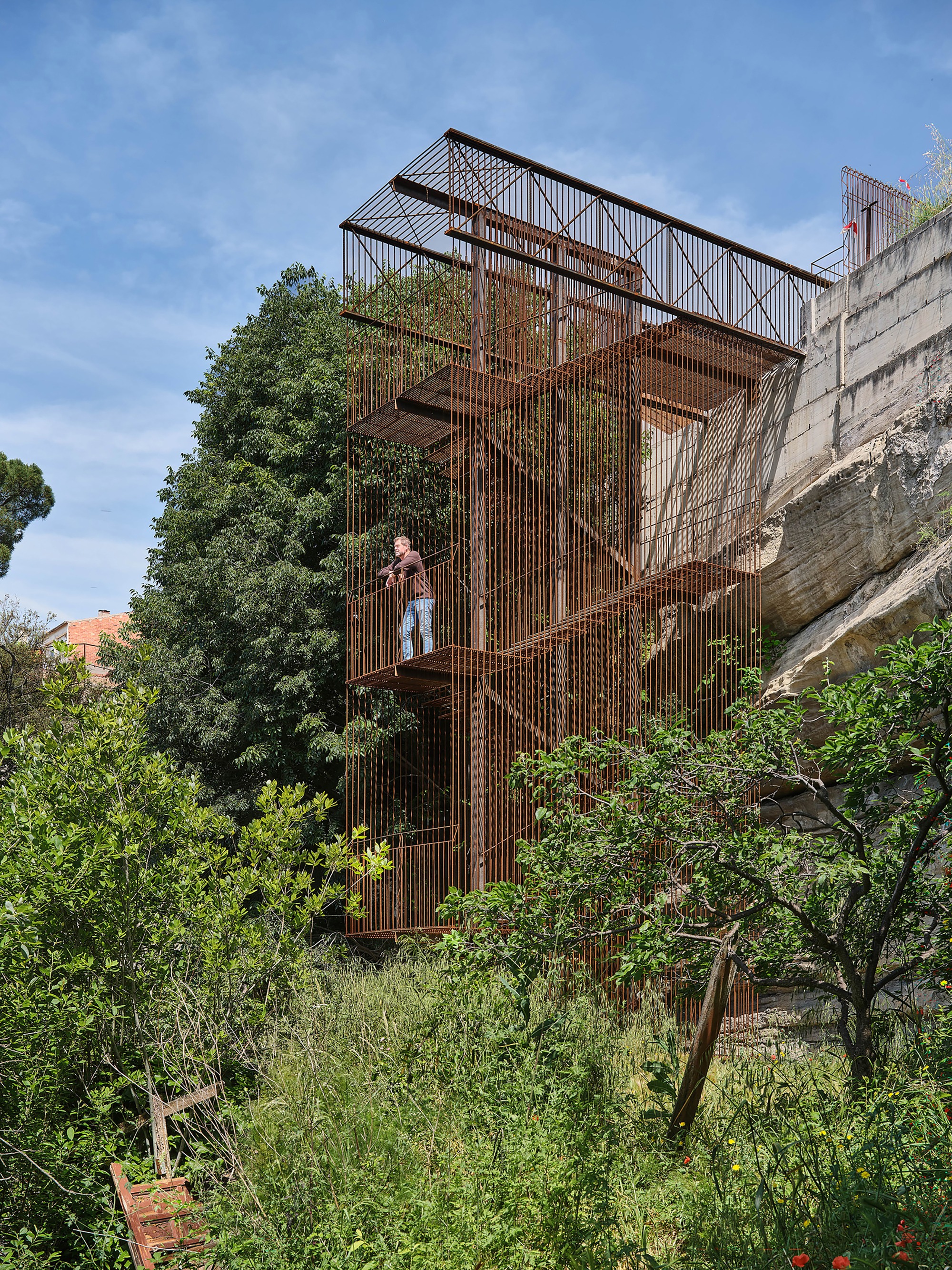
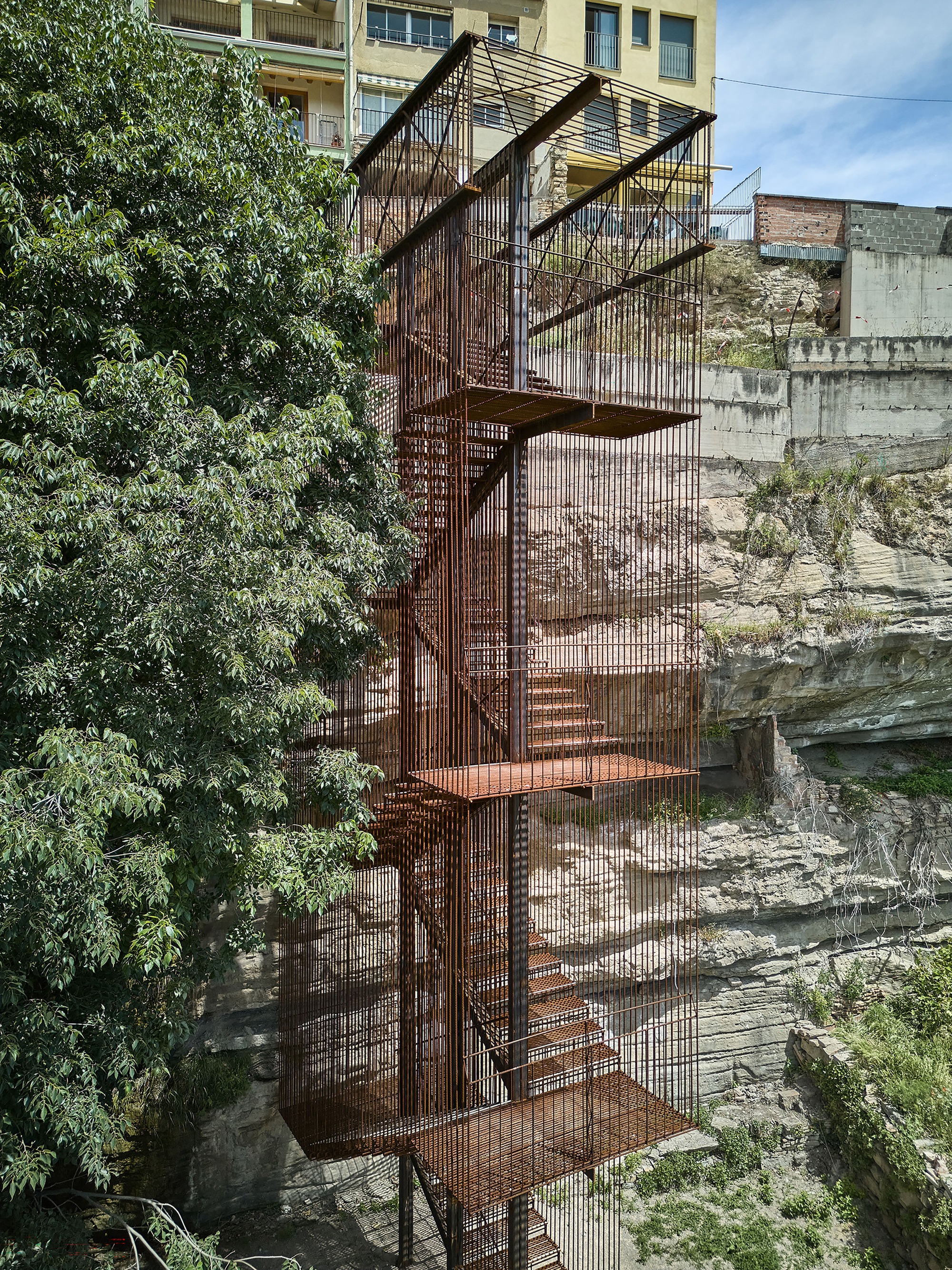
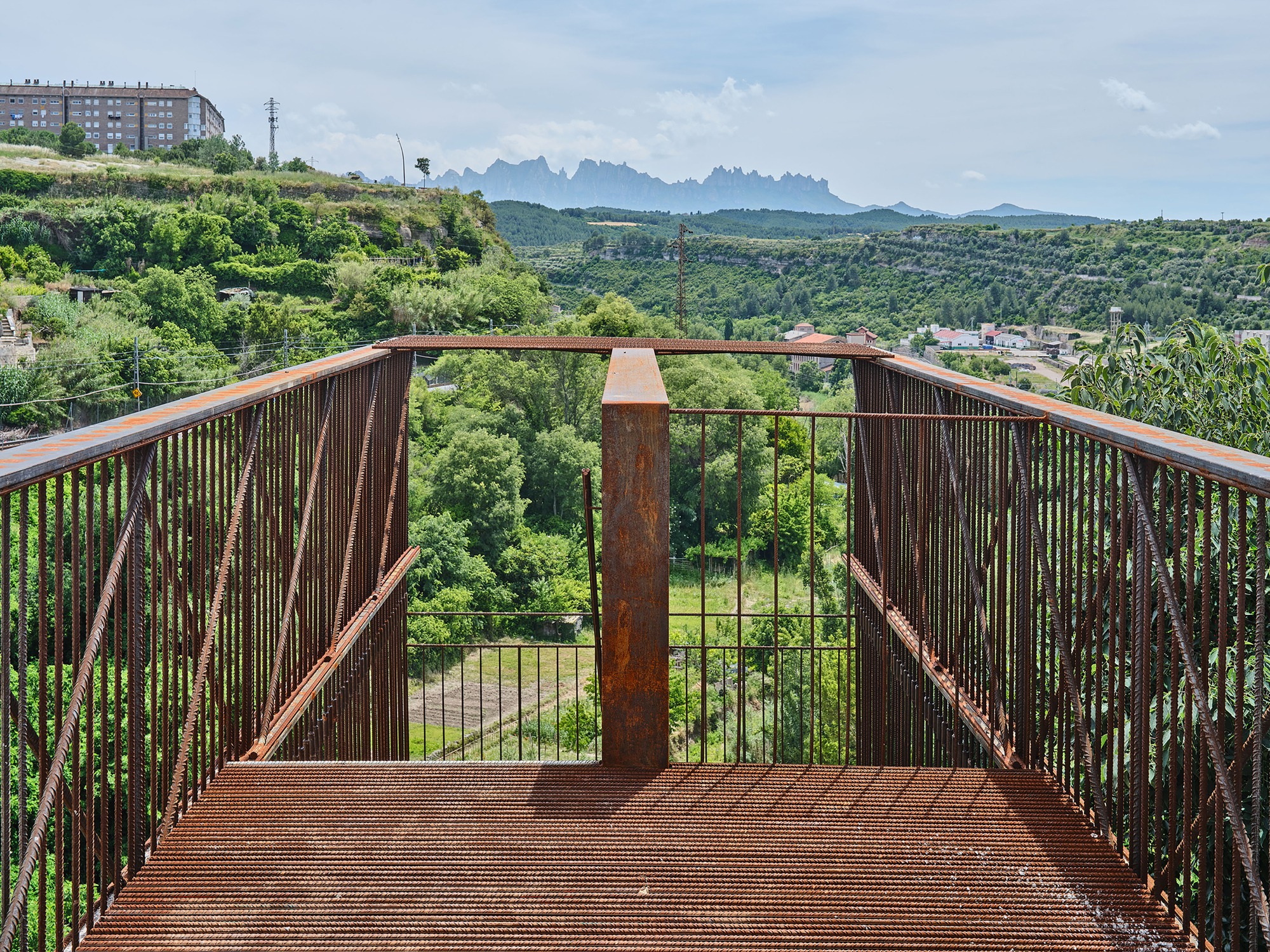
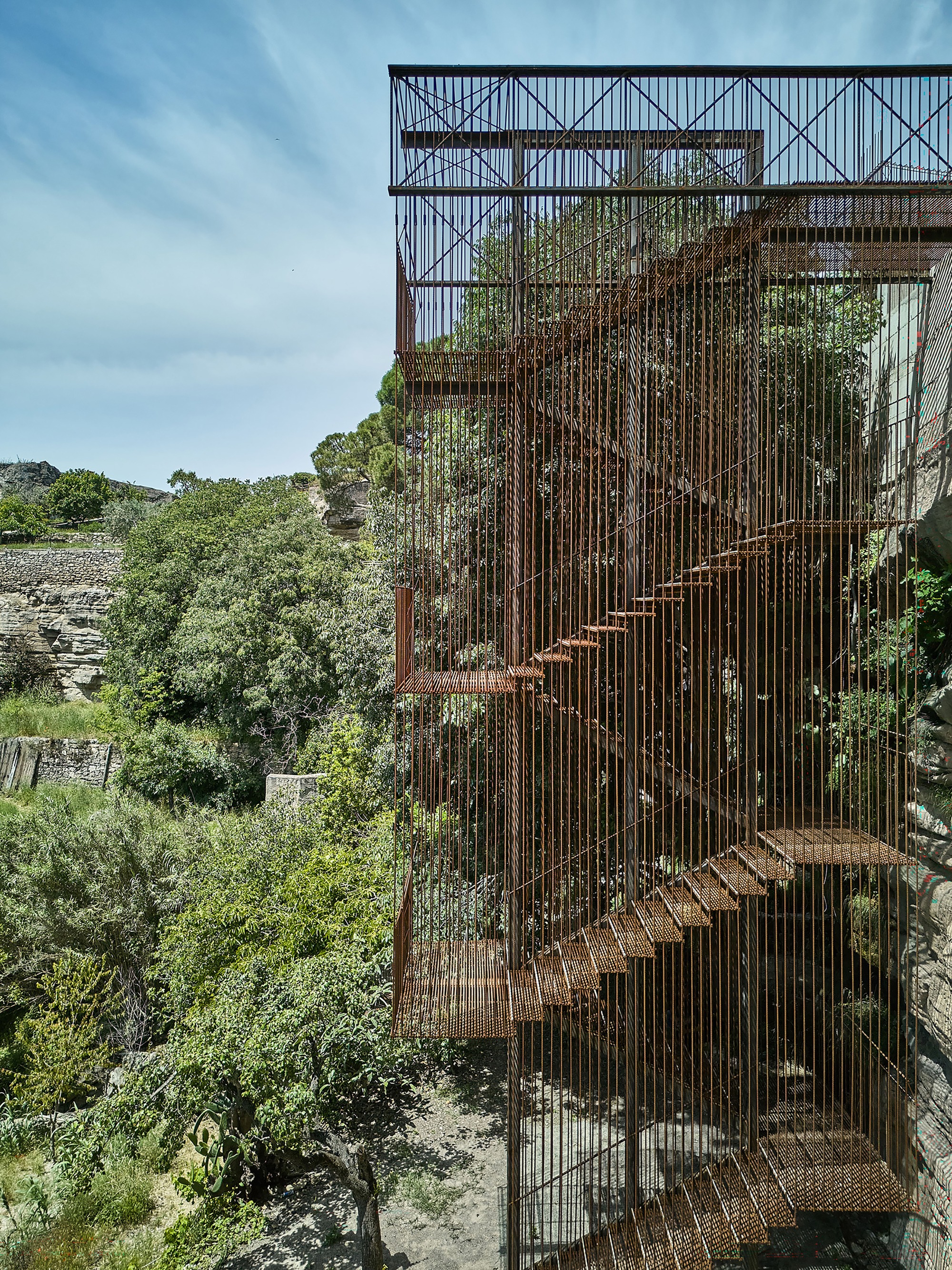
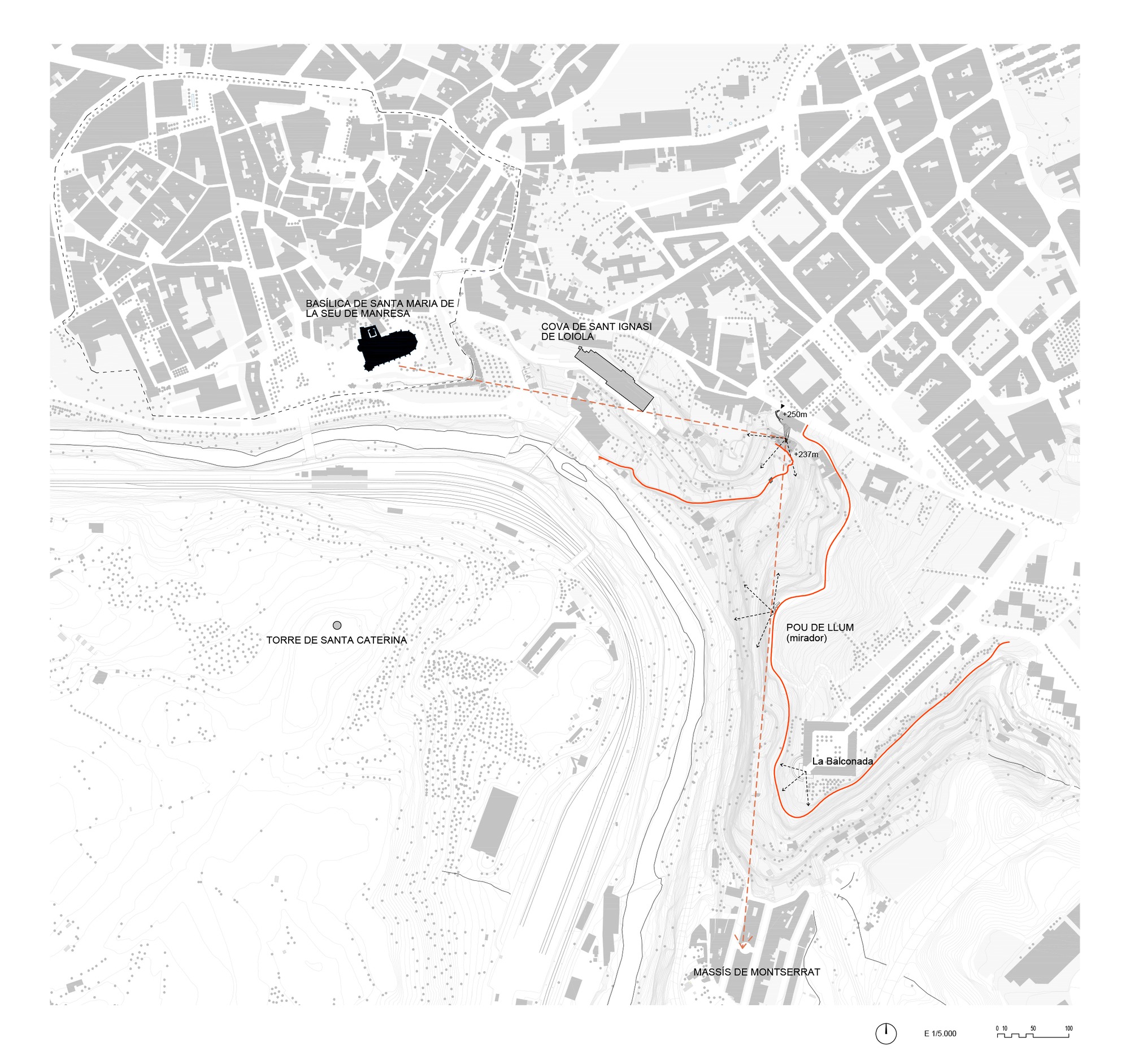
The Landscape Staircase in the Vall del Paradís is an intervention that recovers a lost section of the Camino de Ignacio de Loyola in Manresa. The project reconnects Pont Vell and Creu del Tort with the Pou de Llum, restoring part of the historic path where Ignatius of Loyola walked in 1522, during his stay in the city when he wrote the Spiritual Exercises. This path was also traditionally used by residents of the Les Escodines neighbourhood, especially women, to reach the Cardener River.
Before the intervention, the most significant part of the route had disappeared due to the difficult terrain, particularly the steep section between Creu del Tort and Font de Fans. The project aims to restore this historical and human connection with the landscape of the Cardener River while respecting the agricultural environment, existing vegetation, and dry-stone walls.
The staircase bridges a 13 metre difference in height between two terraces, creating a new viewpoint over the Vall del Paradís, the Cardener River, and Montserrat. It is conceived as both a functional path and a sensory experience. As users move along the staircase, their perception alternates between proximity to the rock and openness to the landscape, generating a sequence between earth and air that connects the individual with both the nearest and farthest surroundings.
The structure is separated from the rock and designed as a permeable element, allowing views through it. A curtain of corrugated steel filters the landscape without blocking it, creating a balance between protection and contemplation. Structurally, the staircase is anchored to the upper terrace with concrete walls, from which metal trusses extend in cantilever to support the suspended staircase.
The project uses a single material language: steel. The repetition of Ø16 mm corrugated steel bars forms the entire structure, achieving transparency and responding to an ethic of moderation by using only what is necessary. The pavement, also made of corrugated steel, is placed over the existing ground, allowing natural drainage and enabling the ground to breathe.
The intervention transforms the route into a bodily experience and provides new perspectives of the city and Montserrat. It reconnects two parts of the city separated by topography and turns an abandoned area into a functional, social, and landscape space, enhancing the natural beauty of the valley.
from archdaily