"나는 건물을 지우고 싶다. 풍경이 건축보다 더 강하게 말하도록."— 구마 겐고 (隈 研吾)
 |
 |
 |
CSWADI-Main Pavilion of the International Horticultural Exhibition 2024 Chengdu
땅과 물이 만나는 자리
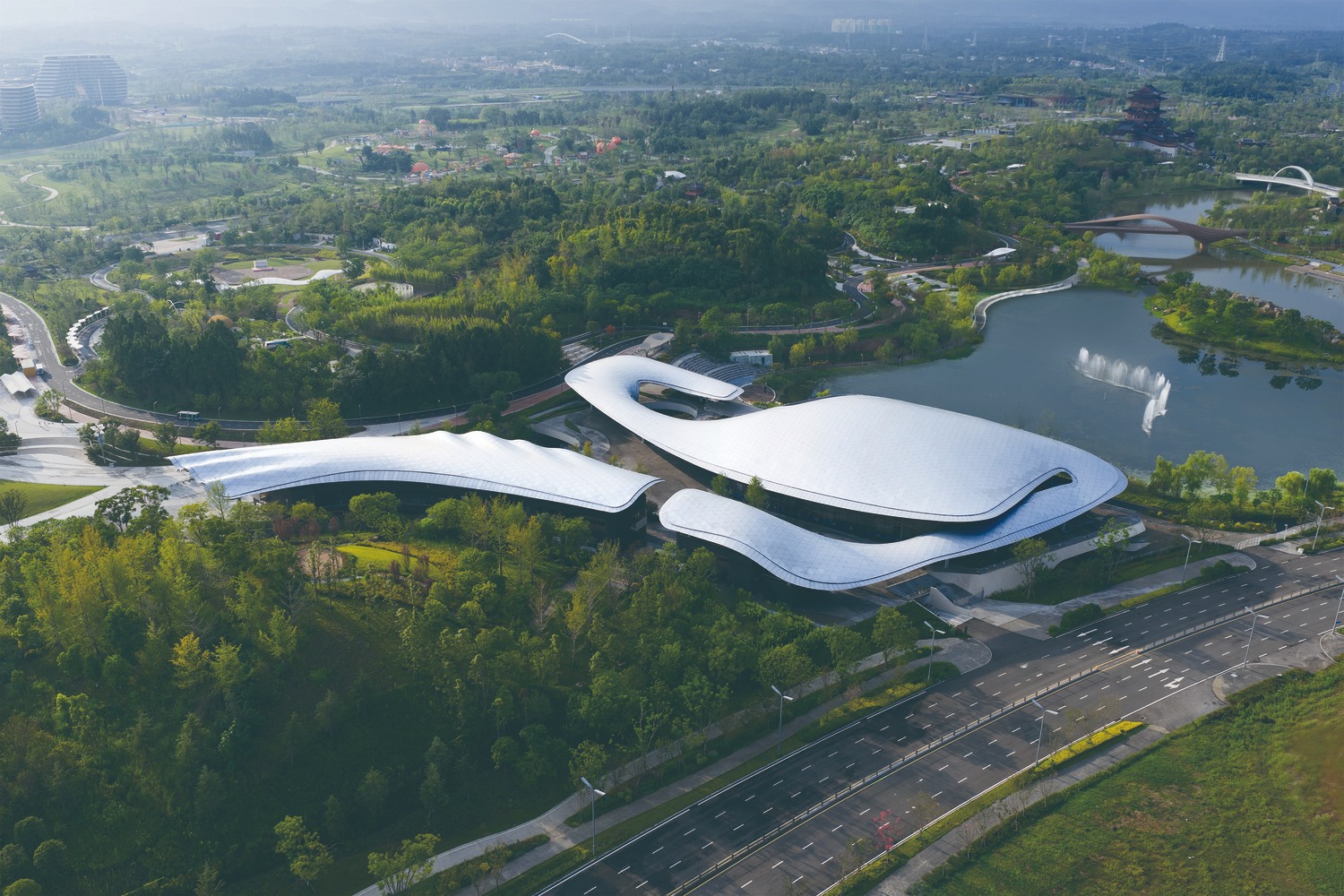
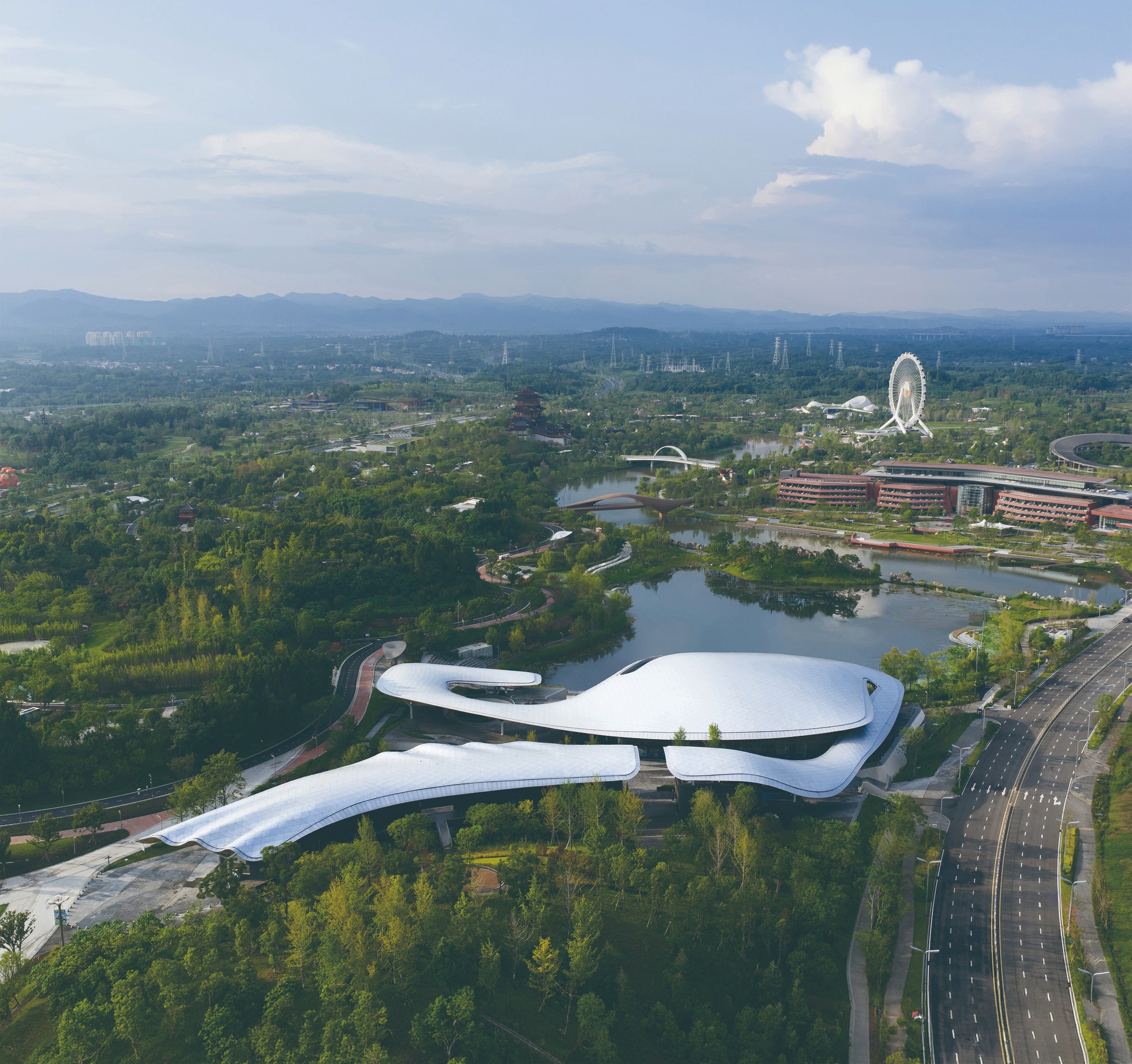
중국 청두 동부 신구, 강샤호(錦霞湖)를 끼고 완만하게 펼쳐진 구릉지에 2024 청두 국제원예박람회의 심장부가 자리한다. 중국서남건축설계연구원(CSWADI)이 설계한 주관 파빌리온은 연면적 2만 3천 제곱미터에 달하는 대형 공공건축으로, 박람회 폐막식과 국제 화훼 경연, 국제 포럼을 아우르는 핵심 무대가 되었다. 행사가 끝난 뒤에는 시민 문화 센터로 전환되어 일상 속으로 조용히 스며들 예정이다. 설계의 출발점은 하나의 질문이었다. 사천(四川)의 자연과 인문 환경 안에서, 현대의 대형 공공건축이 어떻게 그 땅과 화해할 수 있는가.
형태를 지운다는 것
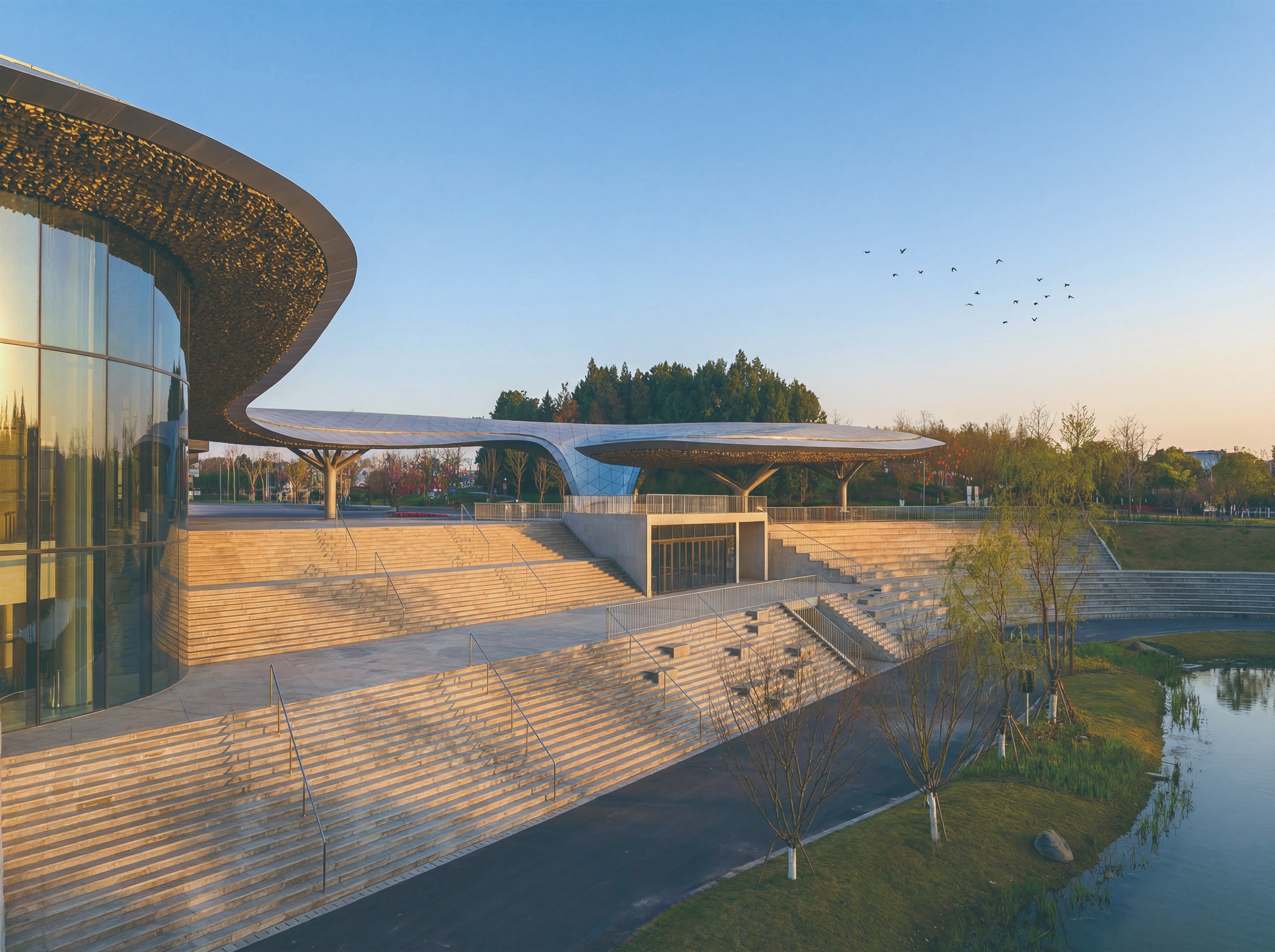
강샤호 북쪽 수변을 따라 구릉이 낮게 가라앉는 지점, 설계진은 건물이 풍경 위로 솟아오르는 대신 땅속으로 스며들도록 했다. 건물 기능의 절반가량에 해당하는 1만 2천 제곱미터를 북쪽 수변 지형 안으로 매립하듯 배치함으로써, 대규모 토공 없이 자연 지형의 고저차를 활용한 다층 조망 플랫폼을 얻어냈다. 동쪽으로는 이중 지반층 진입부를 구성해 도시의 다양한 교통 흐름을 자연스럽게 받아들인다. 거대한 구조물로 군림하기를 의도적으로 거부한 이 건물은, 오히려 그 겸손함이 더 깊게 기억하게 만든다.
흐르는 공간, 지워진 경계
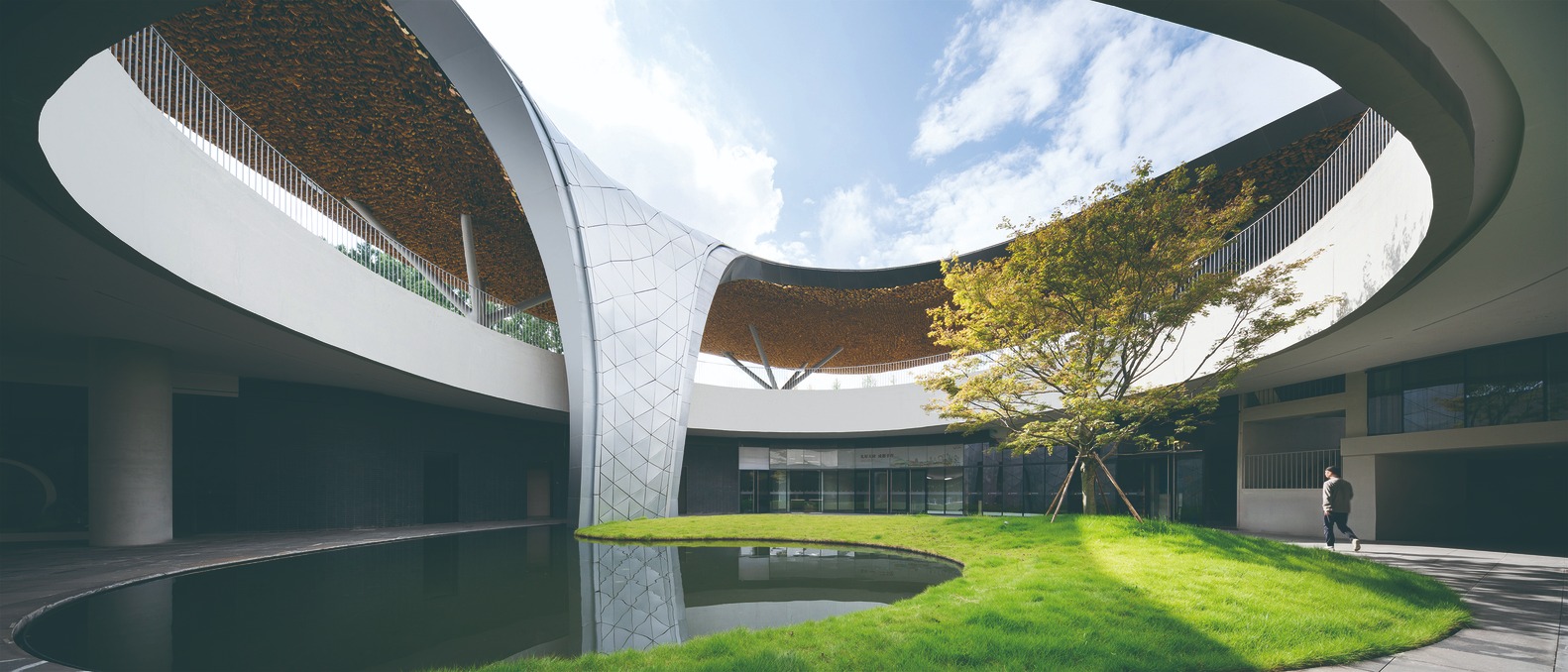
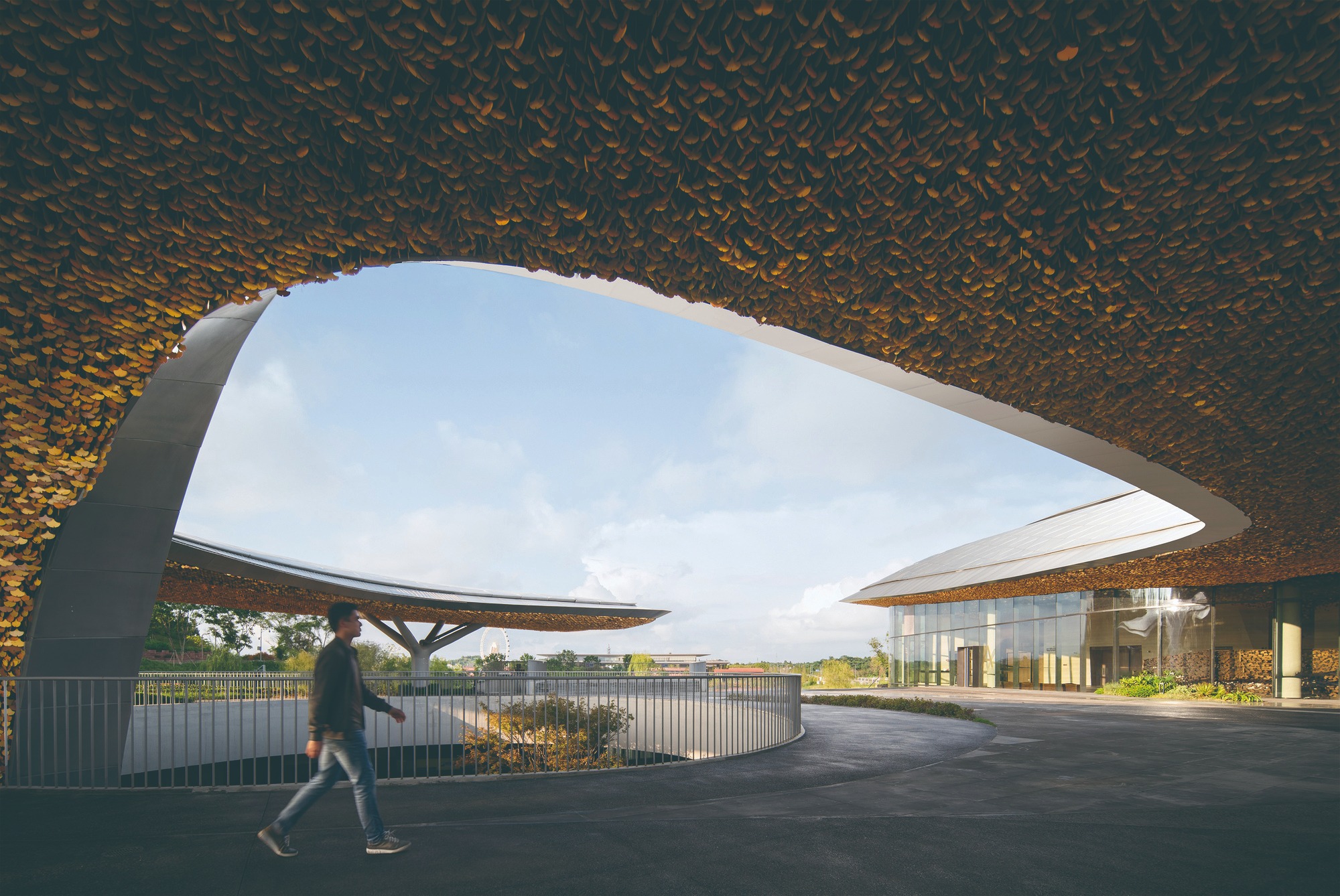
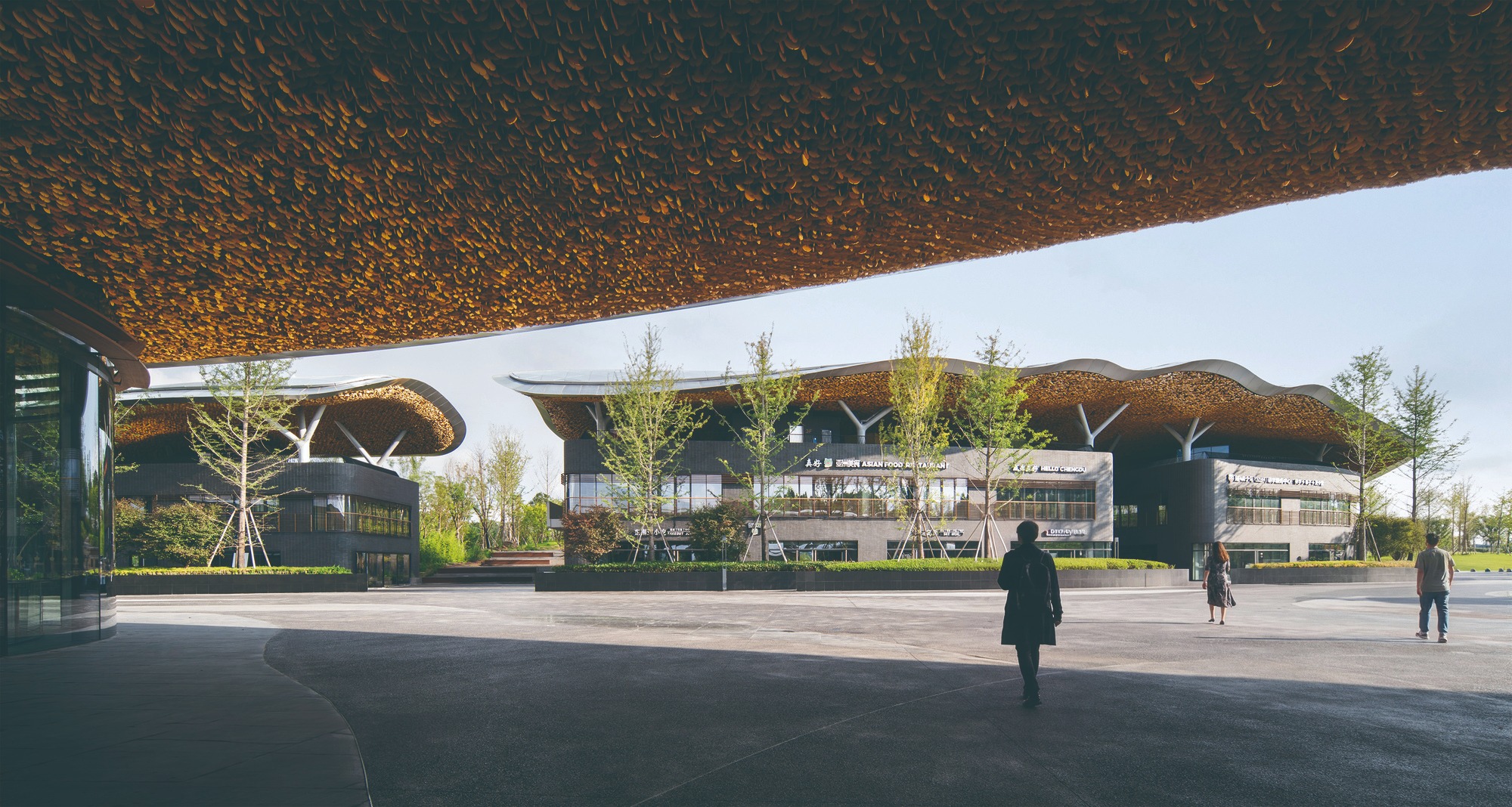
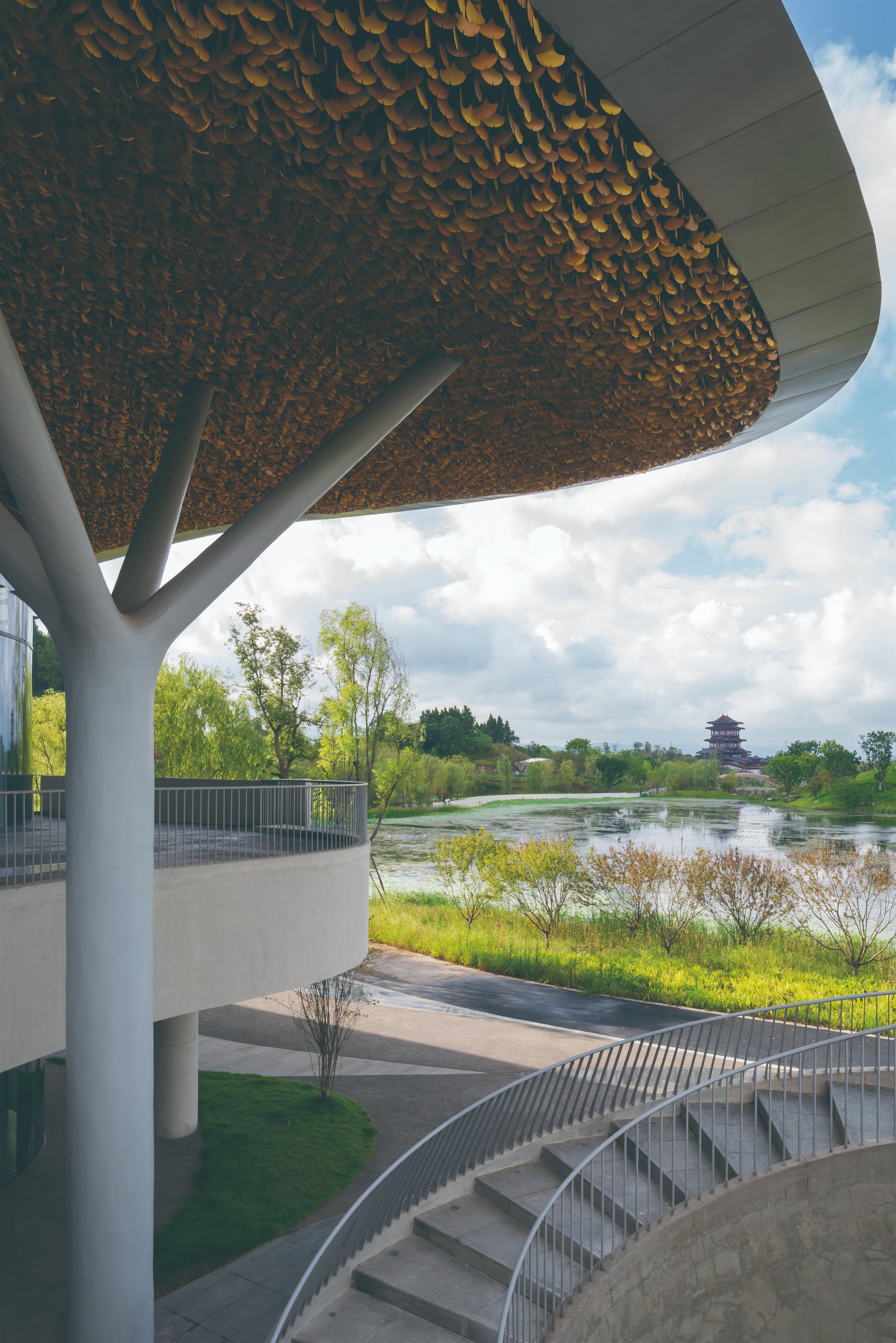
지붕은 건물 전체를 수평으로 아우르며 물결처럼 흐른다. 사천의 전통 민가가 마당과 처마, 안과 밖을 한 호흡으로 연결하듯, 이 파빌리온도 지붕 아래 전략적으로 배치된 개구부들을 통해 실내외의 경계를 지워나간다. 유기적으로 굽이치는 지붕면은 시선을 주변의 산과 호수 쪽으로 자연스럽게 이끈다. 방문자는 어느 지점에 서더라도 건물 안에 있으면서 동시에 자연 속에 있다는 감각을 얻는다.
삼성퇴의 신조(神鳥)와 은행나무 캐노피
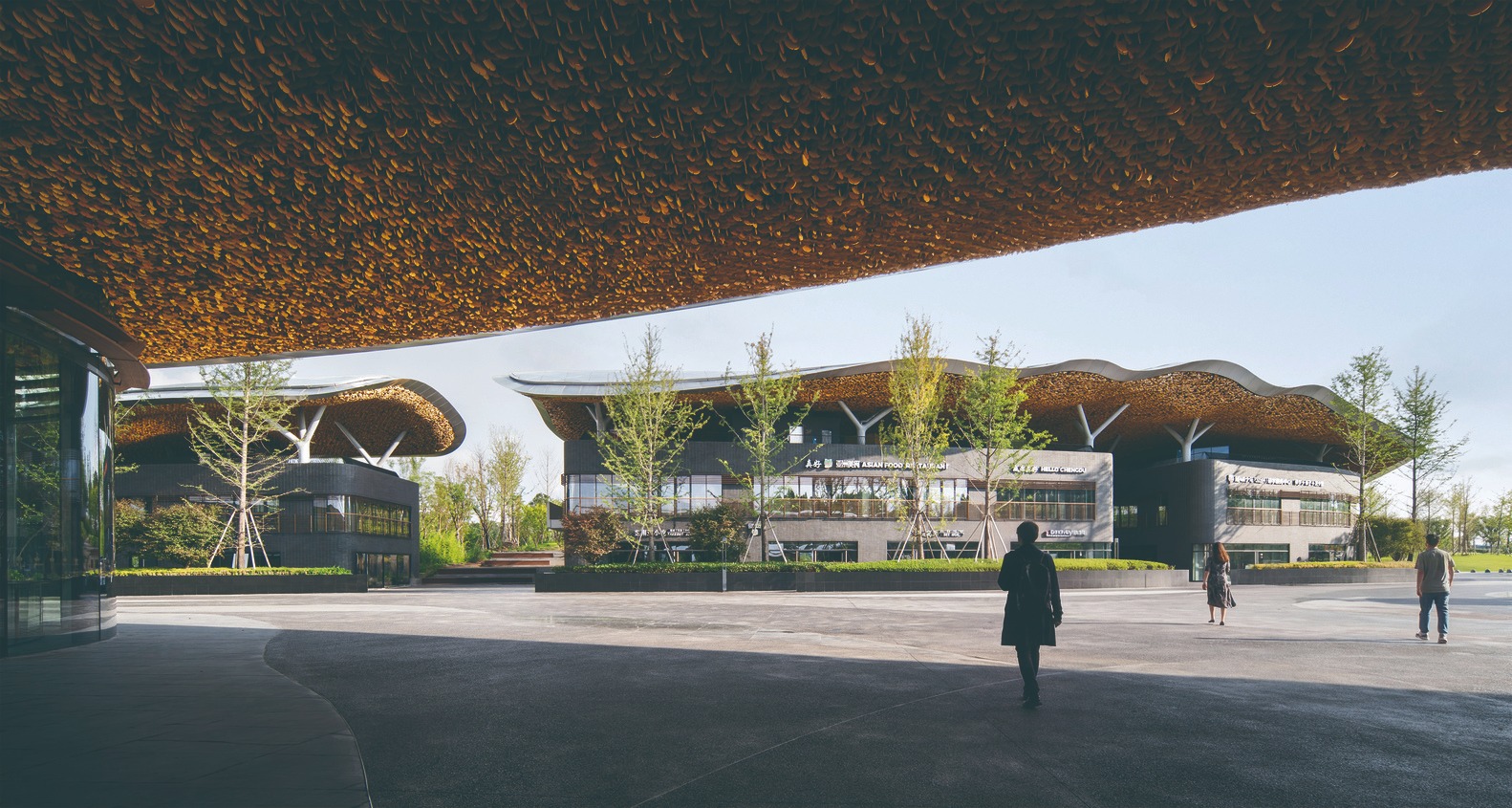
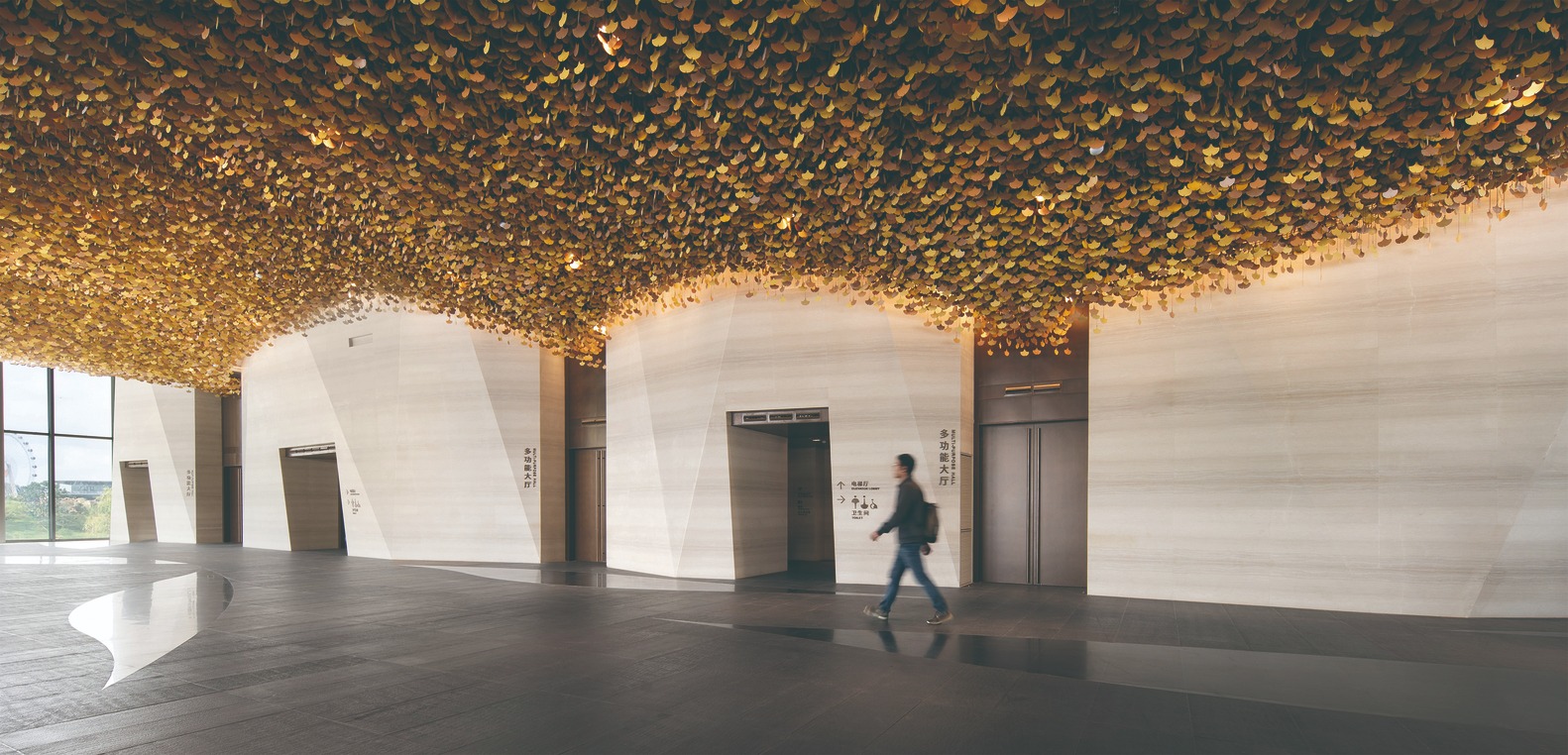
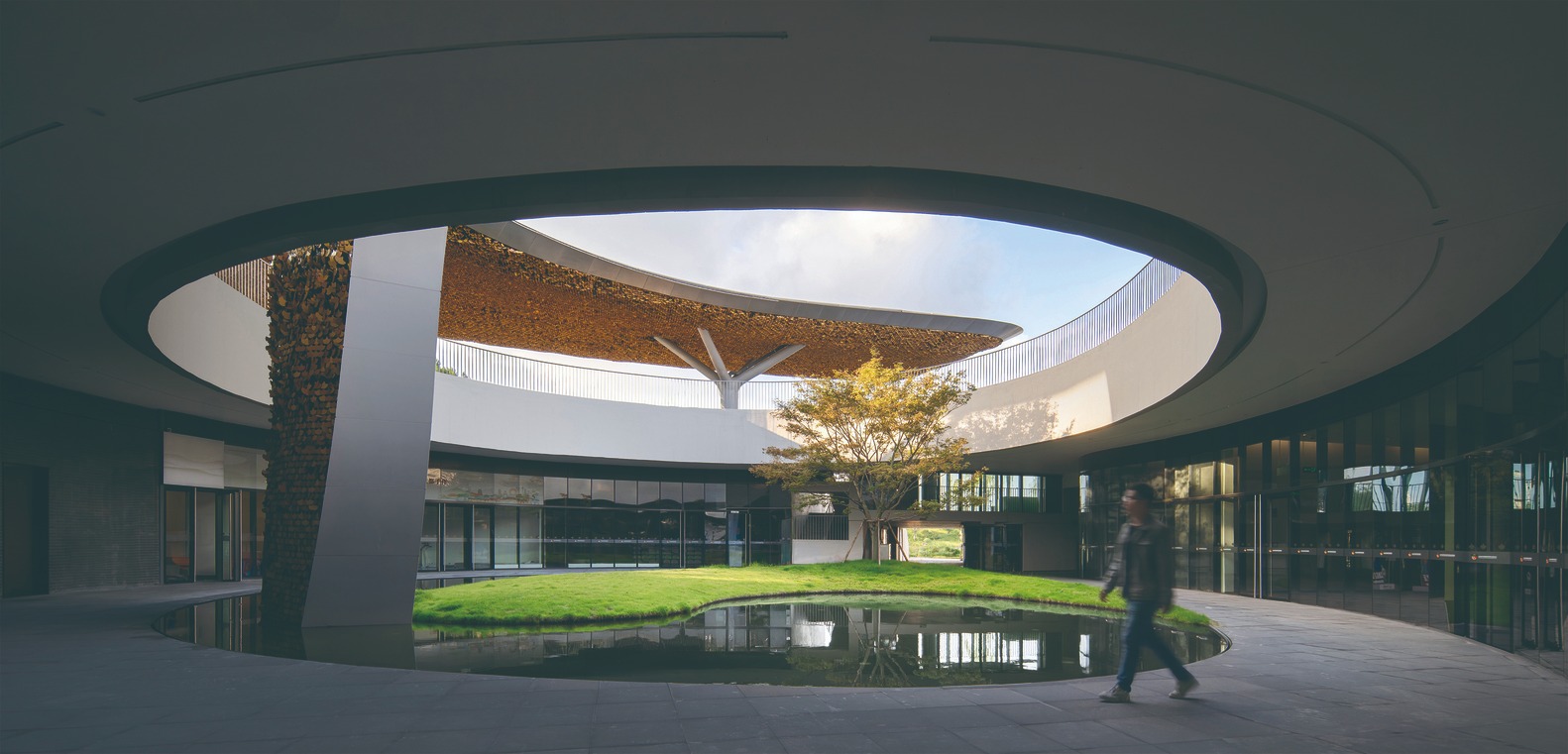
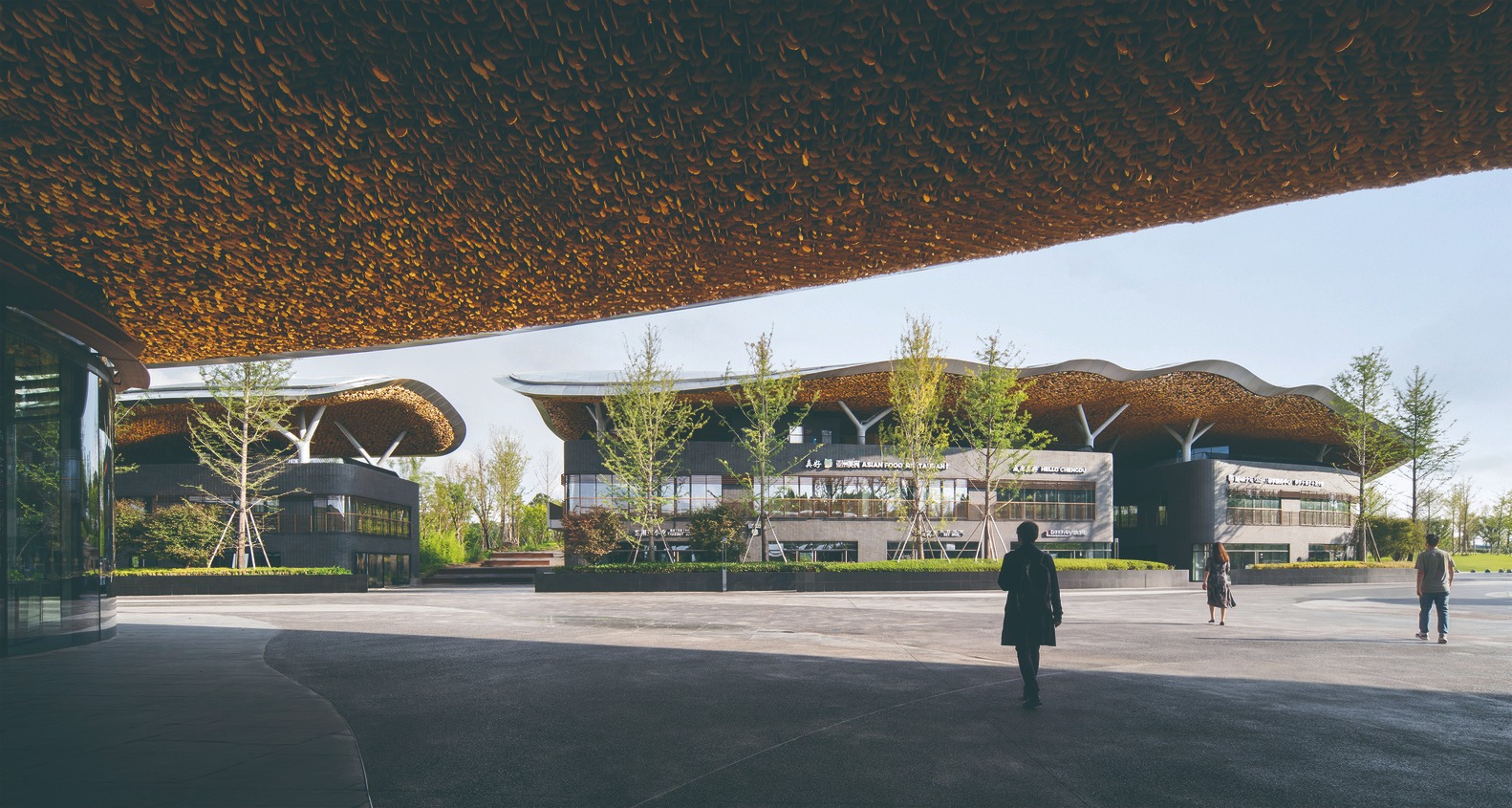
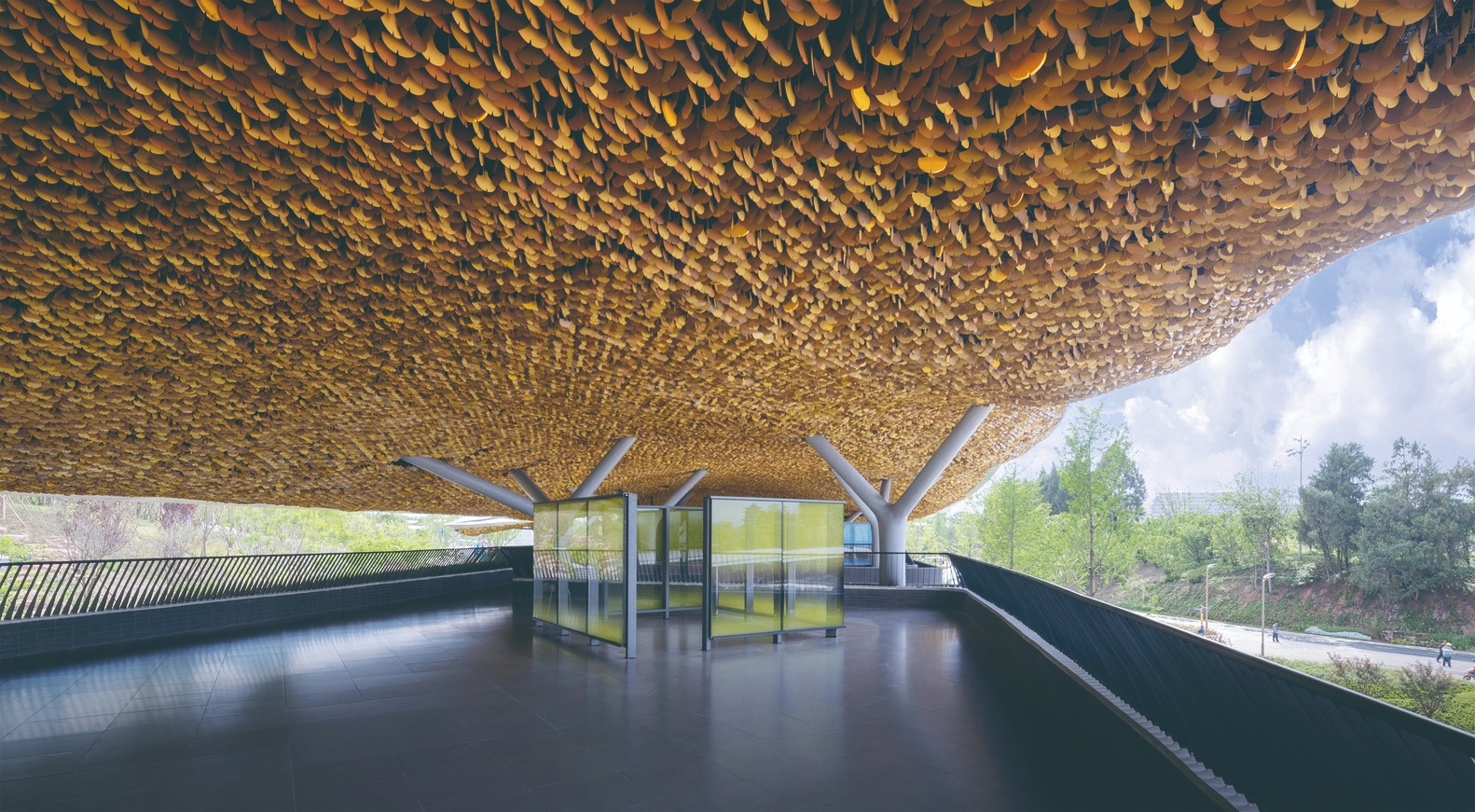
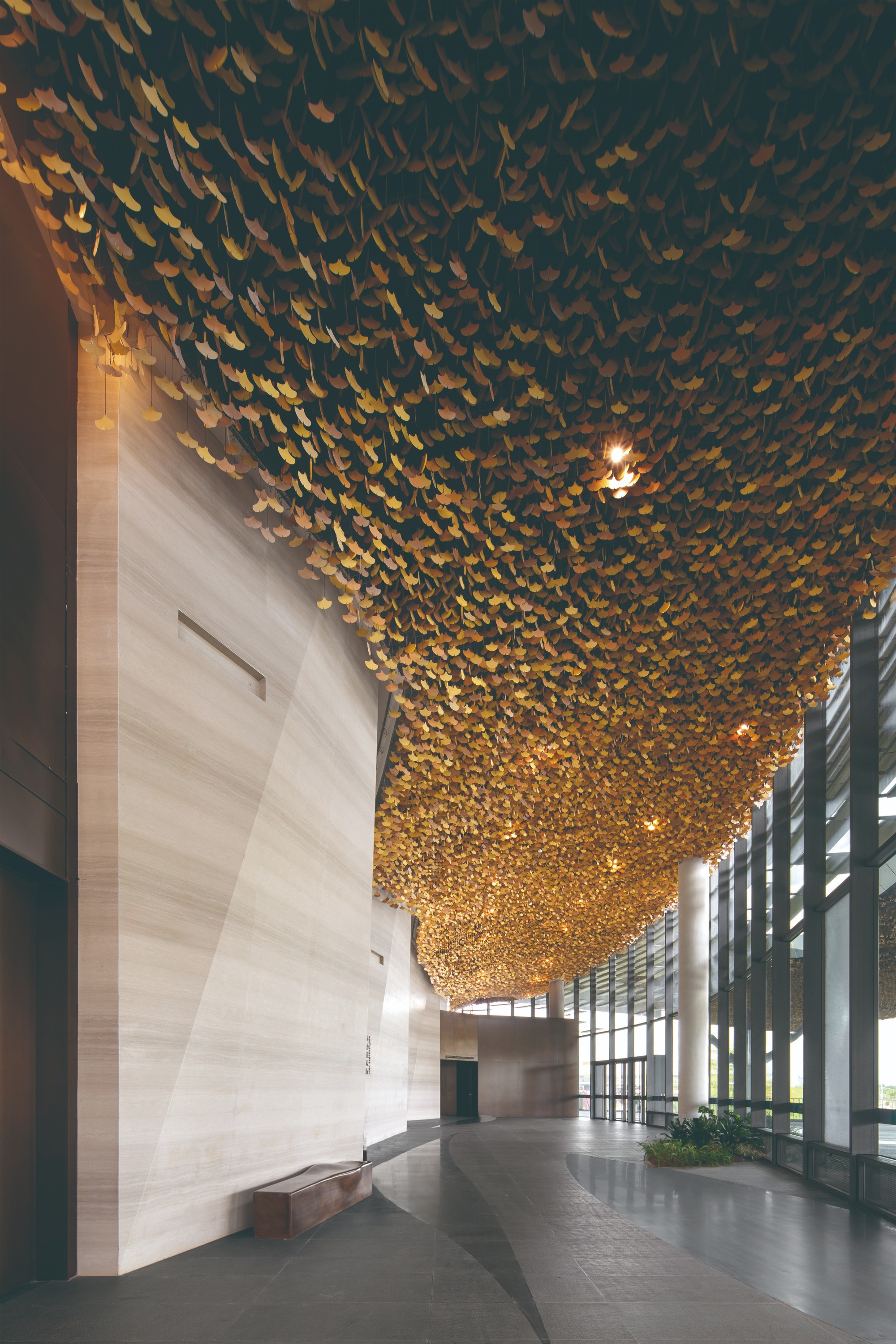
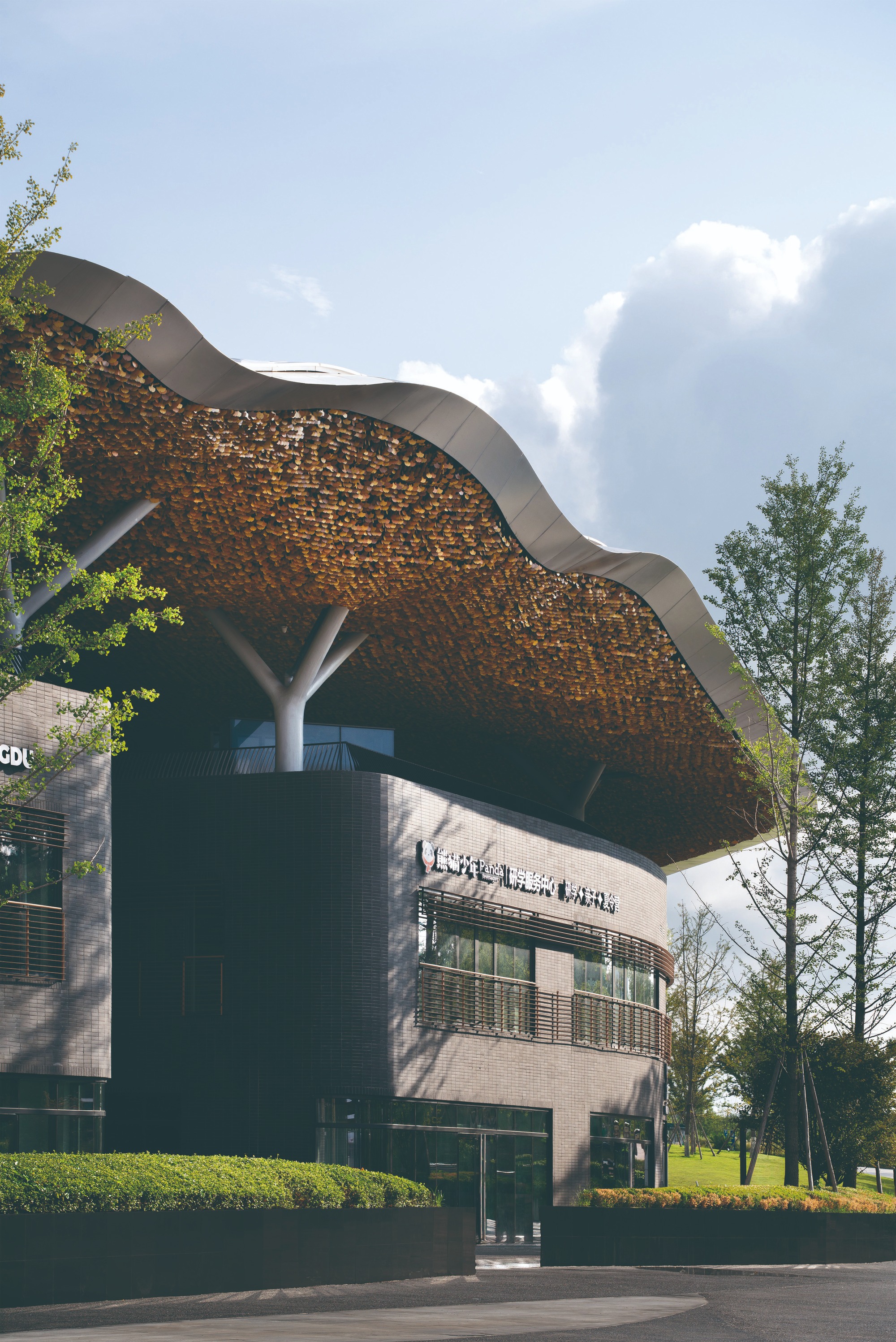
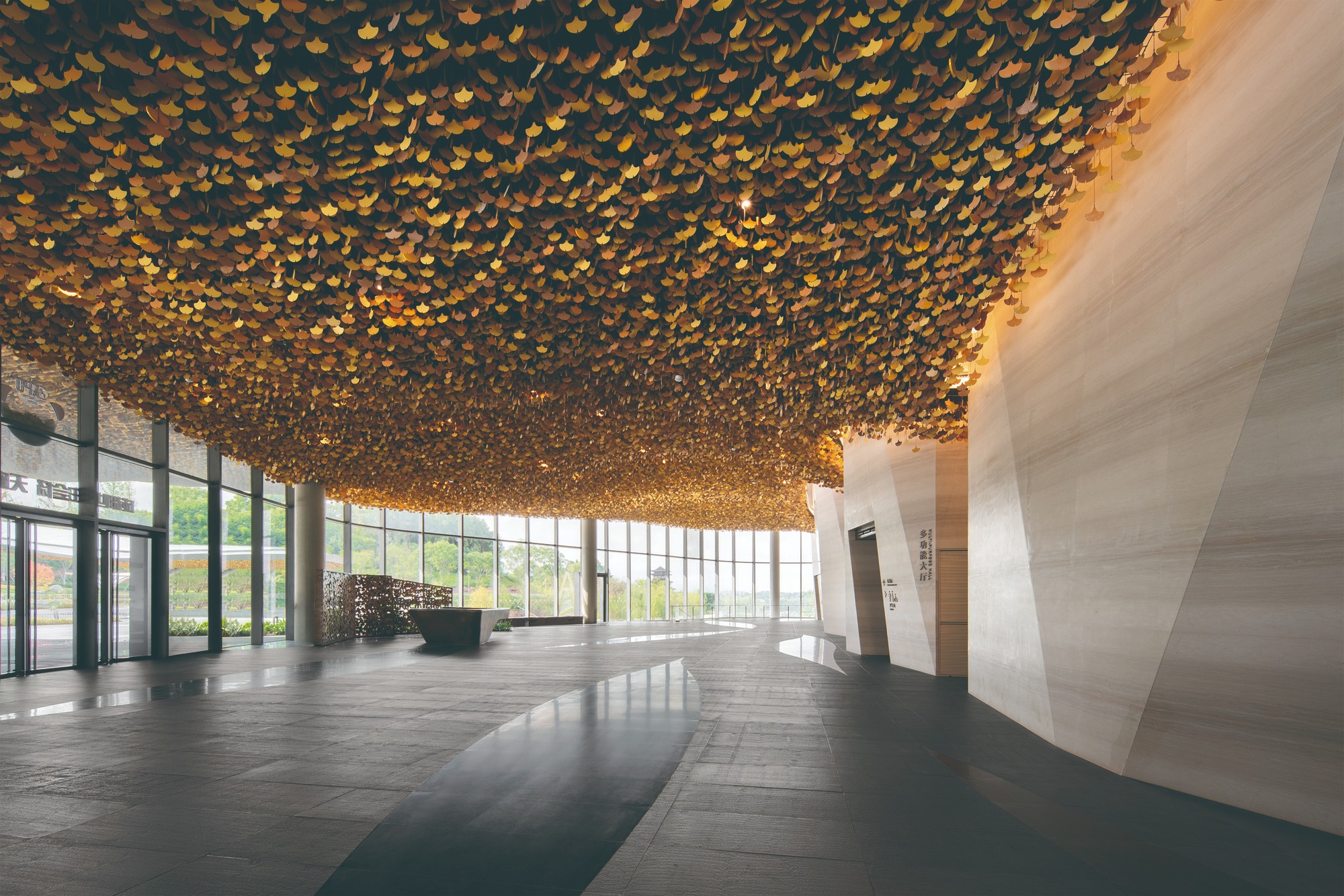
이 건물이 가장 공을 들인 부분은 광범위한 지역주의가 아닌, 이 땅에 뿌리내린 구체적인 문화다. 완만하고 군더더기 없는 지붕의 곡선은 삼성퇴(三星堆) 유물에 새겨진 신조(神鳥)의 형상에서 영감을 받았다. 고대 촉나라의 신화적 새가 현대 건축의 지붕선으로 다시 태어난 셈이다. 실내외를 연속으로 가로지르는 은행나무 캐노피는 청두의 시목(市木)인 은행나무에 바치는 헌정이다. 수천 개의 금속 은행잎이 천장에서 흔들리듯 내려오는 광경은 가을 은행나무 아래 서 있는 듯한 착각을 불러일으키며, 자연과 인간의 경험 사이에 따뜻한 대화를 만들어낸다. 입장 라운지에서 올려다본 그 풍경은 이 건물에서 가장 먼저 기억에 새겨지는 장면이 될 것이다.
수형 기둥, 선큰 정원, 그리고 패시브 기법
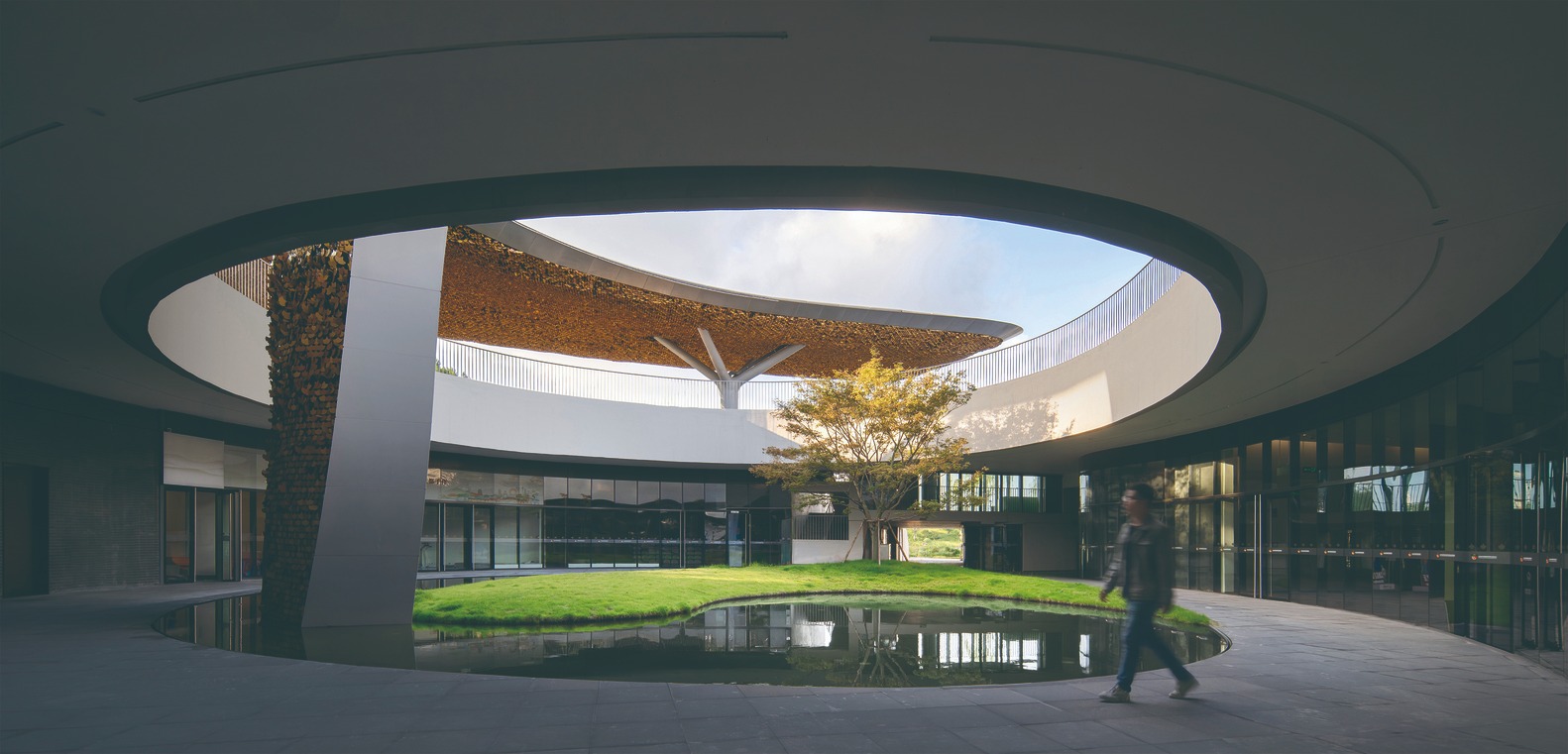
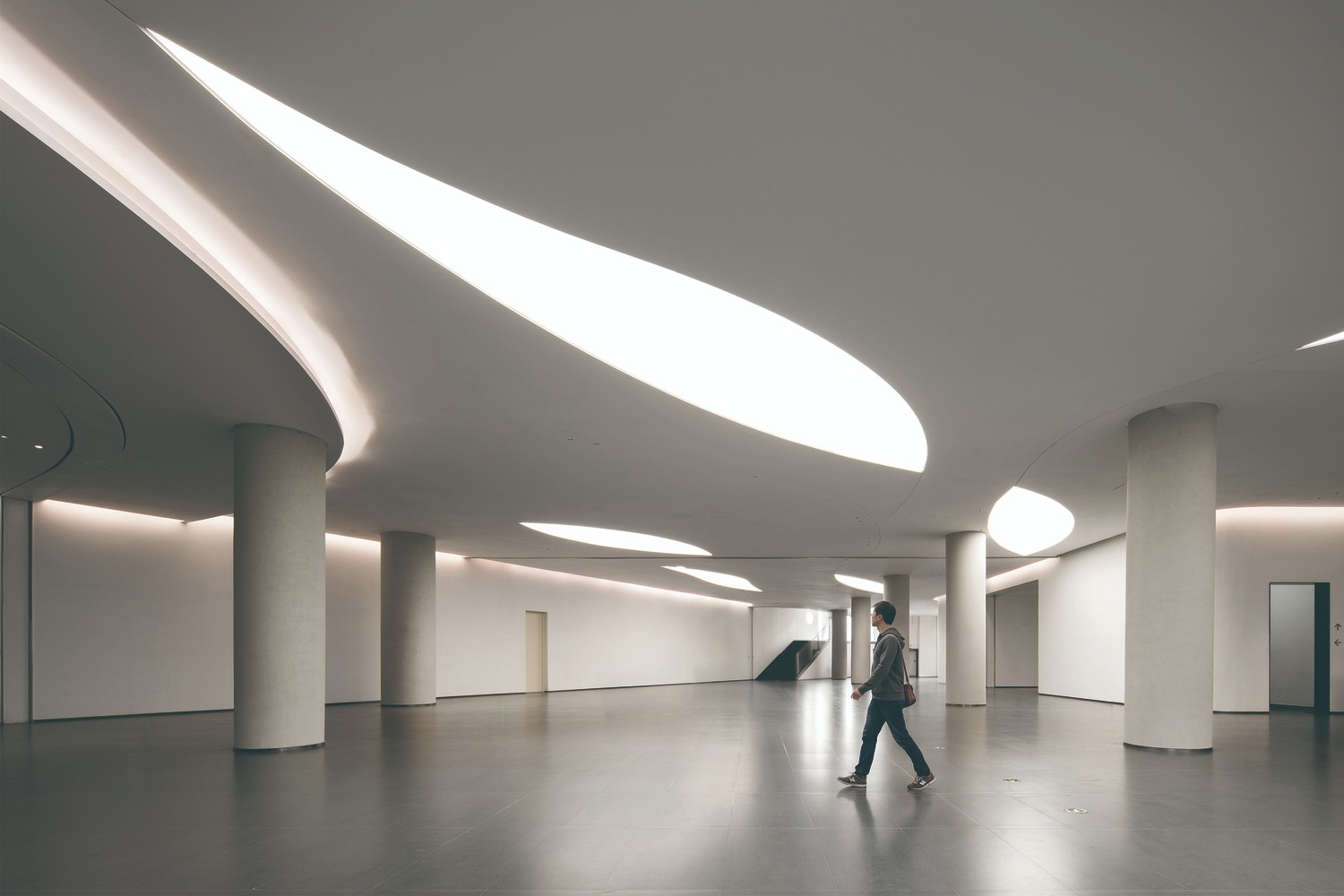
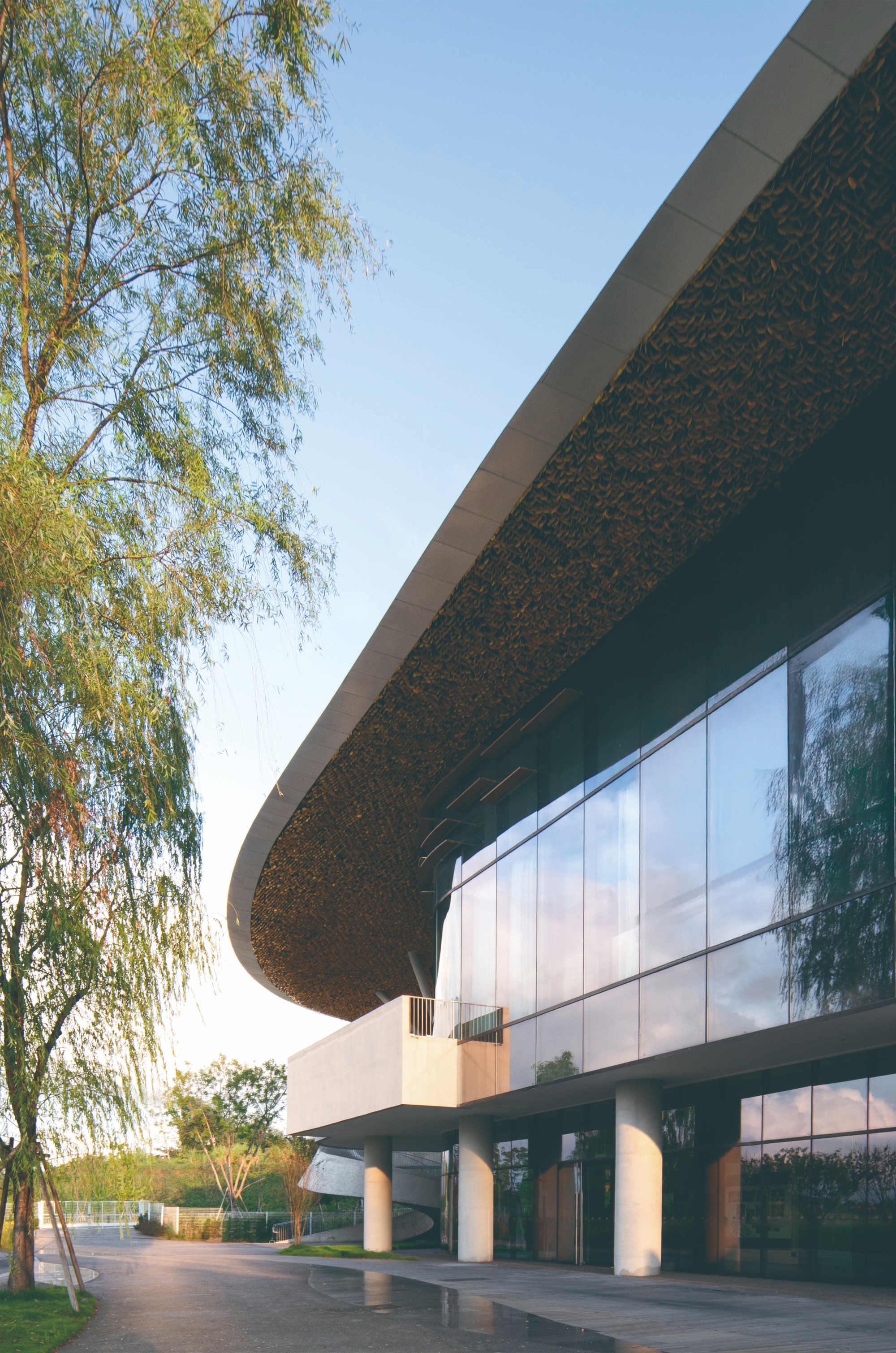
건물을 지탱하는 기둥들은 나무가 가지를 뻗듯 여러 갈래로 갈라지며 캐노피를 받쳐 든다. 구조는 곧 자연의 형태 언어가 되고, 그 아래 서면 숲 속에 들어선 기분이 든다. 선큰 정원은 지붕과 지붕 사이에 하늘을 열어두어, 하루 6시간 이상의 자연 채광이 연면적의 60퍼센트에 이르는 공간에 고루 닿도록 한다. 강 쪽에서 불어오는 북풍은 호수 위를 지나며 자연스럽게 식혀진 뒤 내부로 유입되고, 전동 환기창과 패시브 단열 외피가 이 흐름을 보조한다. 투수성 콘크리트로 마감된 광장과 입체적인 조경은 건물 주변의 미기후를 조율하며, 거대한 냉난방 설비에 의존하지 않고도 쾌적한 실내 환경을 유지한다. 알루미늄 패널로 조각한 복잡한 곡면 지붕 위에 정밀하게 교정된 금속 은행잎을 수놓은 것도 같은 맥락이다. 기술은 아름다움을 위해 복무하고, 아름다움은 자연의 논리를 따른다.
박람회 이후, 일상 속으로
행사가 끝나도 이 건물은 사라지지 않는다. 시민 문화 센터로 전환된 뒤에도 파빌리온은 강샤호의 수면과 사천의 하늘을 배경으로 계속해서 성장할 것이다. 땅과 물과 식물과 건축이 한데 어우러진 이 풍경은, 시간이 지날수록 도시의 자연과 문화가 쌓인 결로써 청두 사람들의 일상에 자리 잡아갈 것이다. 형태를 지우겠다는 첫 번째 결심은, 결국 가장 오래 남는 건축을 만들어내는 방법이었다.
Write by Claude & Jean Browwn
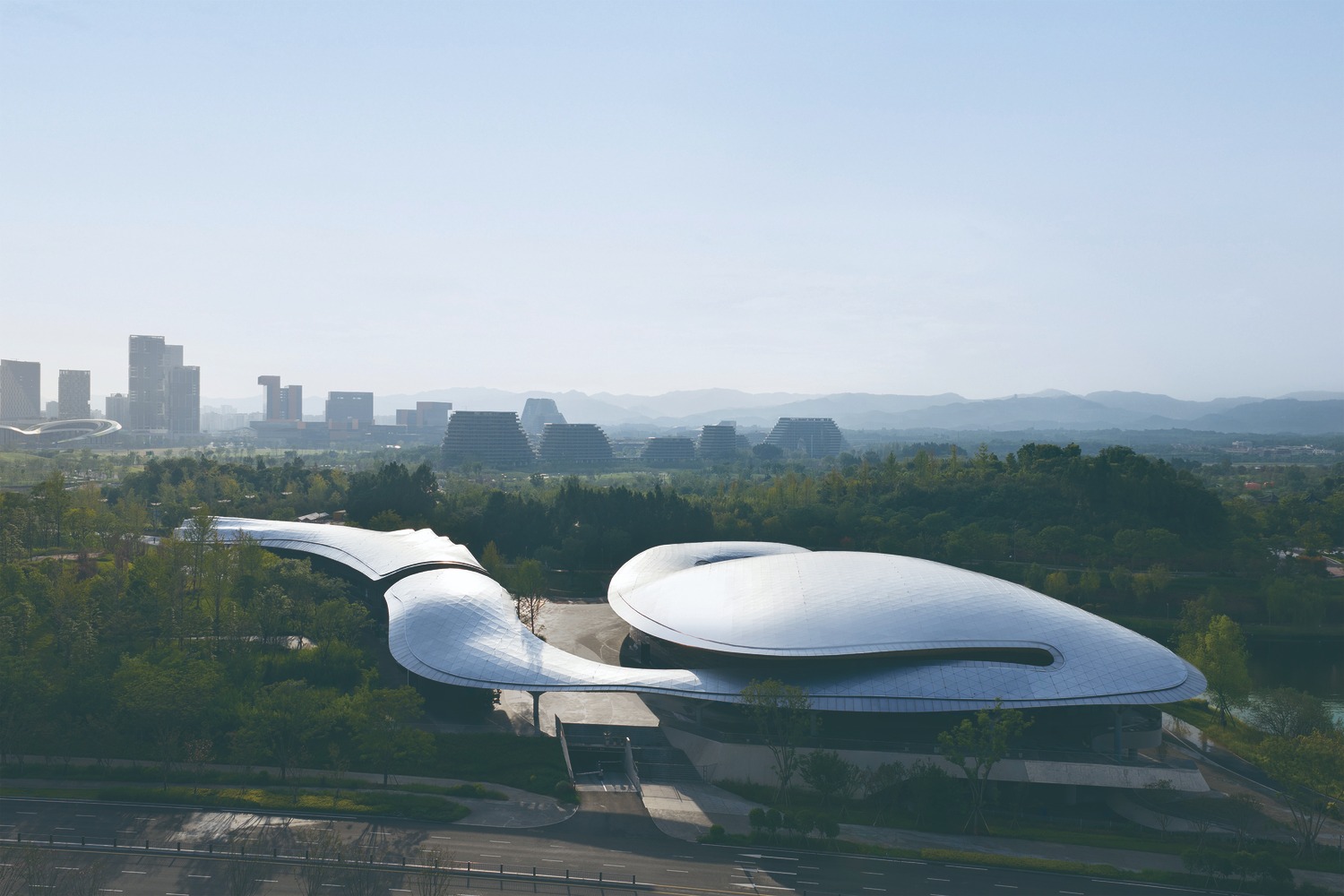



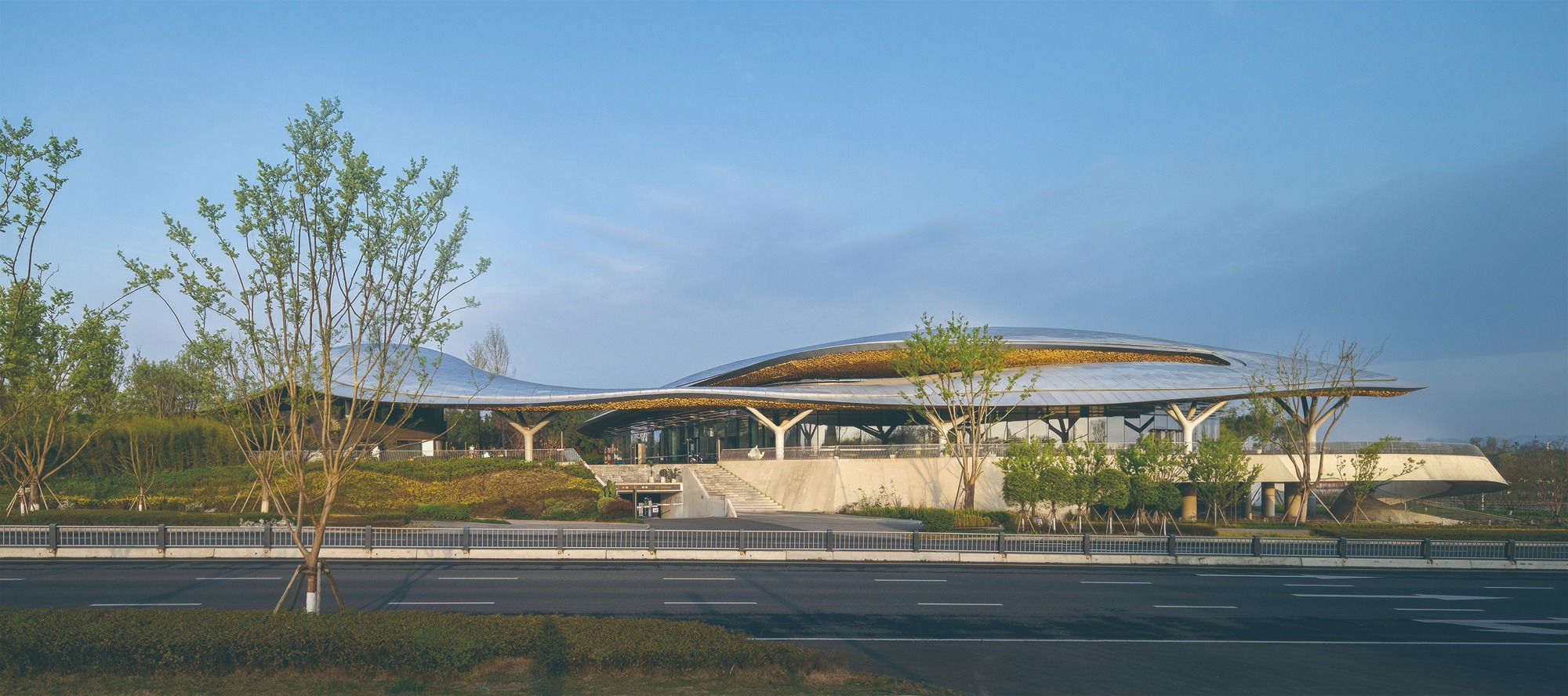
Located in the Chengdu Eastern New Area, the 23,000-square meter Main Pavilion is the exposition's core building, programmed to host the closing ceremony, international flower competitions, and forums. Following the event, it will transition into a civic cultural center. The design deeply respects the natural context, seamlessly integrating modern public architecture with Sichuan's natural and humanistic environments.
Dissolving Form: Embedding into Nature -Situated in a shallow hilly valley near Jiangxia Lake, the design deliberately avoids becoming an overwhelming "megastructure". By strategically embedding 12,000 square meters of facilities along the northern waterfront, the design minimizes earthwork and creates multi-tiered viewing platforms. Additionally, an eastern "double ground floor" entrance integrates with the topography to support diverse urban traffic flow.
Blurring Boundaries: Spatial Fluidity Inspired by the spatial fluidity of traditional Sichuan residences, the pavilion bridges indoor and outdoor spaces through strategic punctures. A dynamically flowing roof unifies the building volumes horizontally, directing the visual experience seamlessly toward the surrounding mountains and waters.
Humanities Writing: Localized Cultural Symbols - The architecture emphasizes site specific cultural integration rather than broad regionalism. The graceful, unadorned curves of the roof are inspired by the Sanxingdui "Divine Bird". Meanwhile, an expansive "Ginkgo Canopy"—honoring Chengdu's city tree—spreads across indoor and outdoor spaces, fostering an organic dialogue between nature and the human experience.
Mastering Techniques: Engineering and Green Design The pavilion utilizes intelligent green building strategies, prioritizing passive technologies such as natural ventilation, daylighting, and earthwork balance.The prevailing northern wind is cooled by the lake to enhance interior comfort, while a sunken courtyard ensures that 60% of usable spaces receive over six hours of natural light daily. Aluminum panels are expertly used to sculpt the complex curved roof, which is adorned with carefully calibrated "metal ginkgo leaves" to create a harmonious cultural landscape.The design incorporates a downsized, flexibly controlled HVAC system, electrically operated ventilation windows, and a permeable concrete plaza with three-dimensional landscaping to ensure micro-environmental resilience.
Following the exposition, this dynamically designed building will return to daily life as a civic cultural center. It will continue to grow in communion with its environment, remaining an indispensable part of the city's nature and culture.
from archdaily