"건축은 공간, 빛, 그리고 질서다." — 르 코르뷔지에 (Le Corbusier)
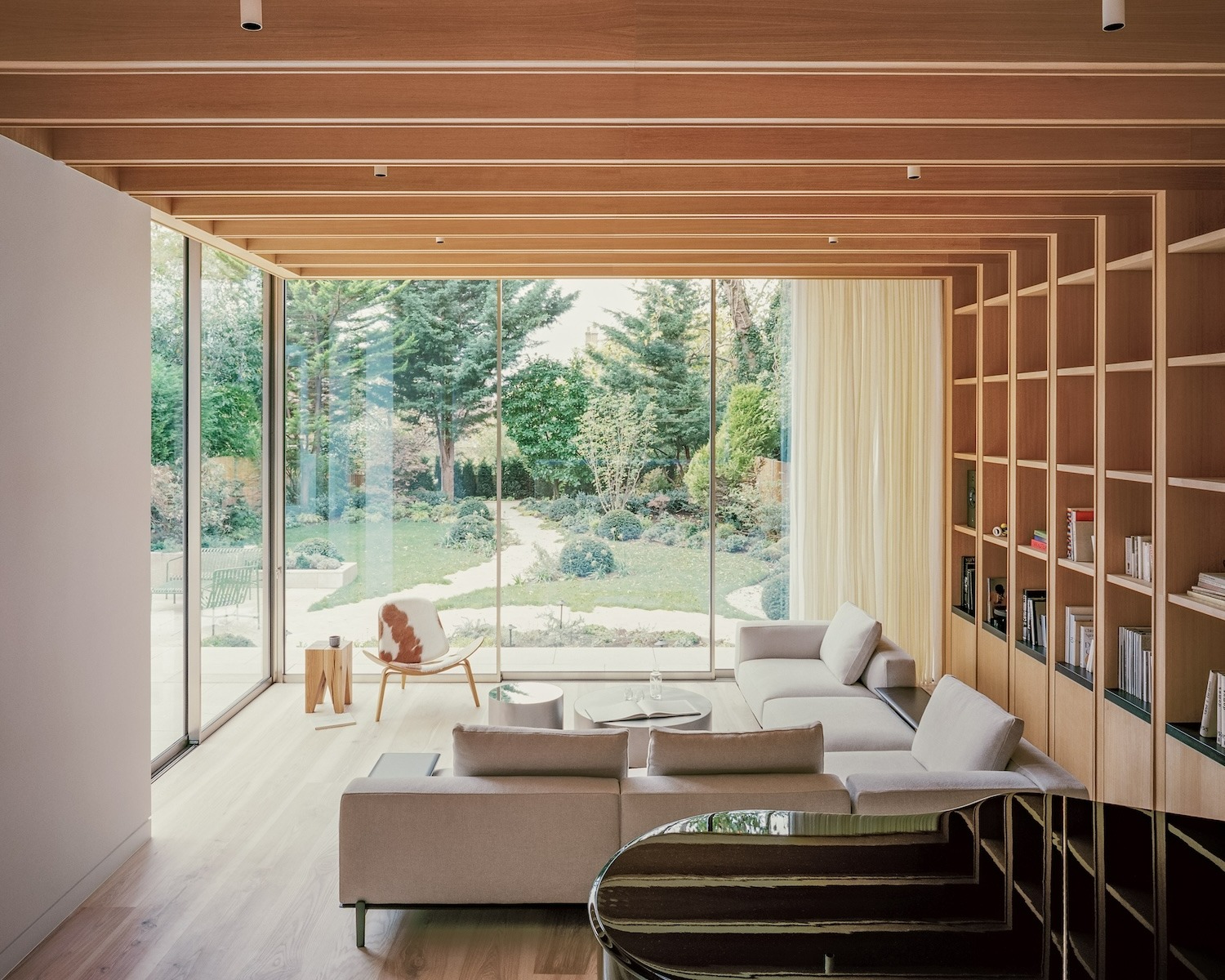
MATA Architects-Panoramic House
정원으로 내려서다
런던 햄스테드(Hampstead)의 레딩턴 & 프로그널 보존 구역(Reddington and Frognal Conservation Area). 이 오래된 동네의 한 가족은 오랫동안 역설 속에 살았다. 집의 지상층 창밖으로는 남향의 넉넉한 정원이 펼쳐져 있었지만, 그 정원은 언제나 1.5미터 아래에 있었다. 긴 계단을 통해서만 닿을 수 있는 거리. 십대 자녀들과 함께 정원에 더 가까이 살고 싶었던 이 가족에게, 그 단차는 단순한 불편함이 아니었다. 기존 주택의 구조로는 해결할 수 없는 단절이었다.
MATA Architects는 지면 아래 증축 공간을 '덧붙임'이 아닌 '내려섬'으로 설계했다. 새로운 생활 공간이 그것이 섬겨야 할 풍경 속으로 자연스럽게 흘러내려가도록 했다.
경사가 설계를 낳다
대지의 자연스러운 경사는 설계의 출발점이자 생성 조건이 되었다. 건축가들은 증축 공간의 바닥을 원래 지면보다 약 1미터 낮추면서도 천장 높이는 일정하게 유지했다. 이 단 하나의 결정이 두 가지를 동시에 만들어냈다. 내부에 충분한 층고를 확보하는 것, 그리고 거실이 정원과 눈높이로 만나는 경계의 장소를 만드는 것. 몸의 감각으로 정원과 이어지는 높이가 비로소 완성된 것이다.
이 조작은 하나의 열린 공간처럼 읽히는 내부에 미묘한 공간 위계도 함께 만들어냈다. 이런 유형의 증축에서 흔히 나타나는 평면적 단조로움을 피한 것이다.
제약이 빚어낸 특수성
주변 성숙한 수목들의 뿌리 보호 구역은 건물의 형태와 레벨 모두에 실질적인 규율을 부여했다. MATA Architects는 수목 전문가(arboriculturists)와 긴밀히 협업하며 건물의 경계를 조율했고, 그 결과 이 집의 형태에는 그 대화의 흔적이 새겨져 있다. 타협이 아닌 특수성을 만들어내는 제약. 잘 다루어진 제약이란 바로 이런 것이다.
정원의 편을 들다
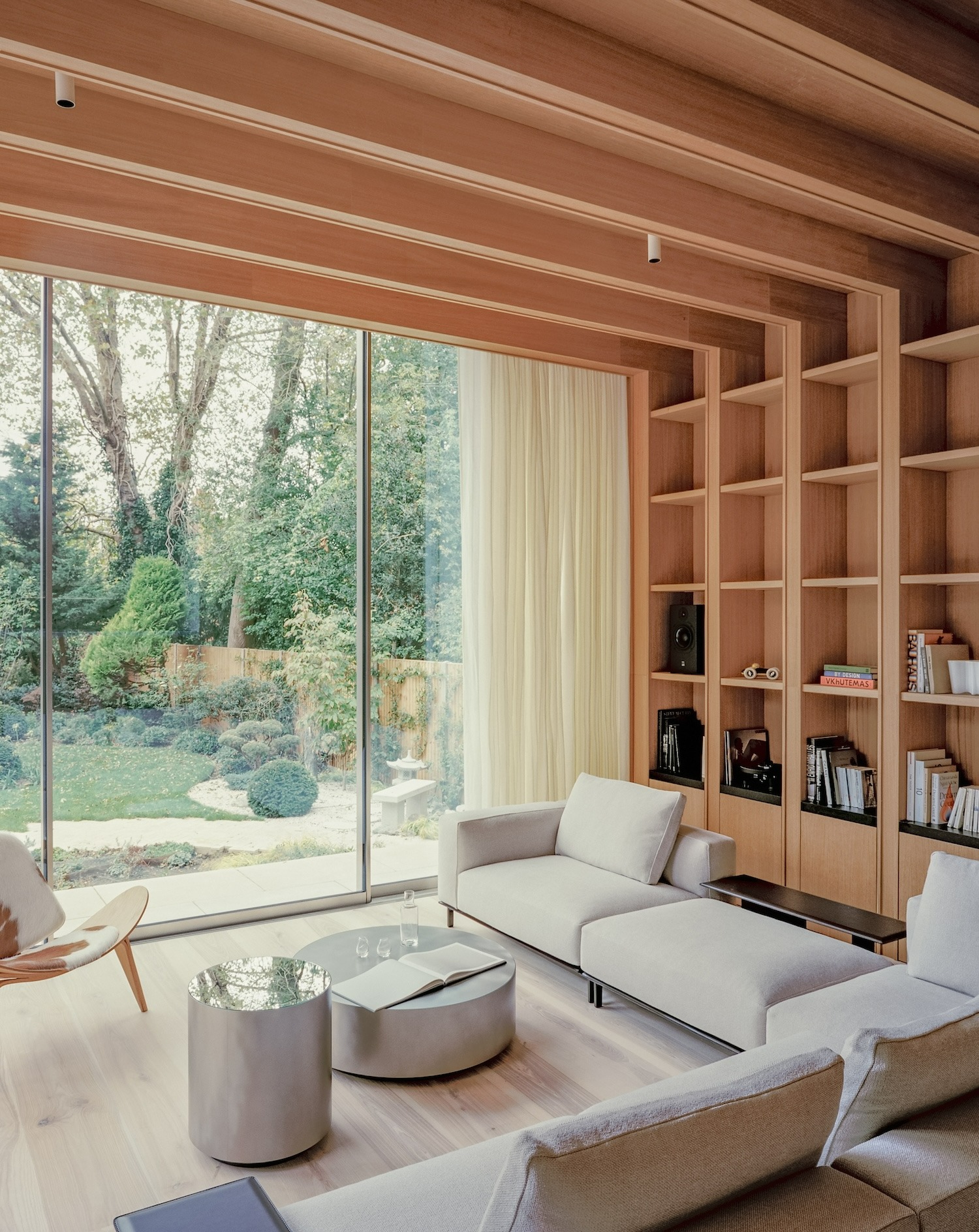
이 프로젝트의 핵심 제스처는 유리 코너 개구부다. 구조적 단절 없이 증축 공간을 정원을 향해 완전히 열어젖히는 이 장치는 Maxlight의 대형 슬라이딩 패널로 구현되었다. 패널들은 코너에서 만나고, 완전히 열렸을 때 실내와 풍경 사이의 경계를 지운다. 공기가 들어오고, 빛이 쏟아지고, 정원의 기척이 집 안 깊숙이 스며드는 순간이다.
이 장면은 하나의 오래된 건축적 계보와 맞닿아 있다. 미스 반 데어 로에의 파른스워스 하우스(Farnsworth House)에서 크레이그 엘우드(Craig Ellwood)의 케이스 스터디 실험들까지, 지붕을 유지하면서 벽을 지우는 일—건축이 오래도록 씨름해온 물음이다. MATA Architects는 그 물음에 분명한 답을 내린다. 파노라믹 조망을 공간 구성의 구심점으로 삼으며, 정원의 편을 든다.
Write by Claude & Jean Browwn
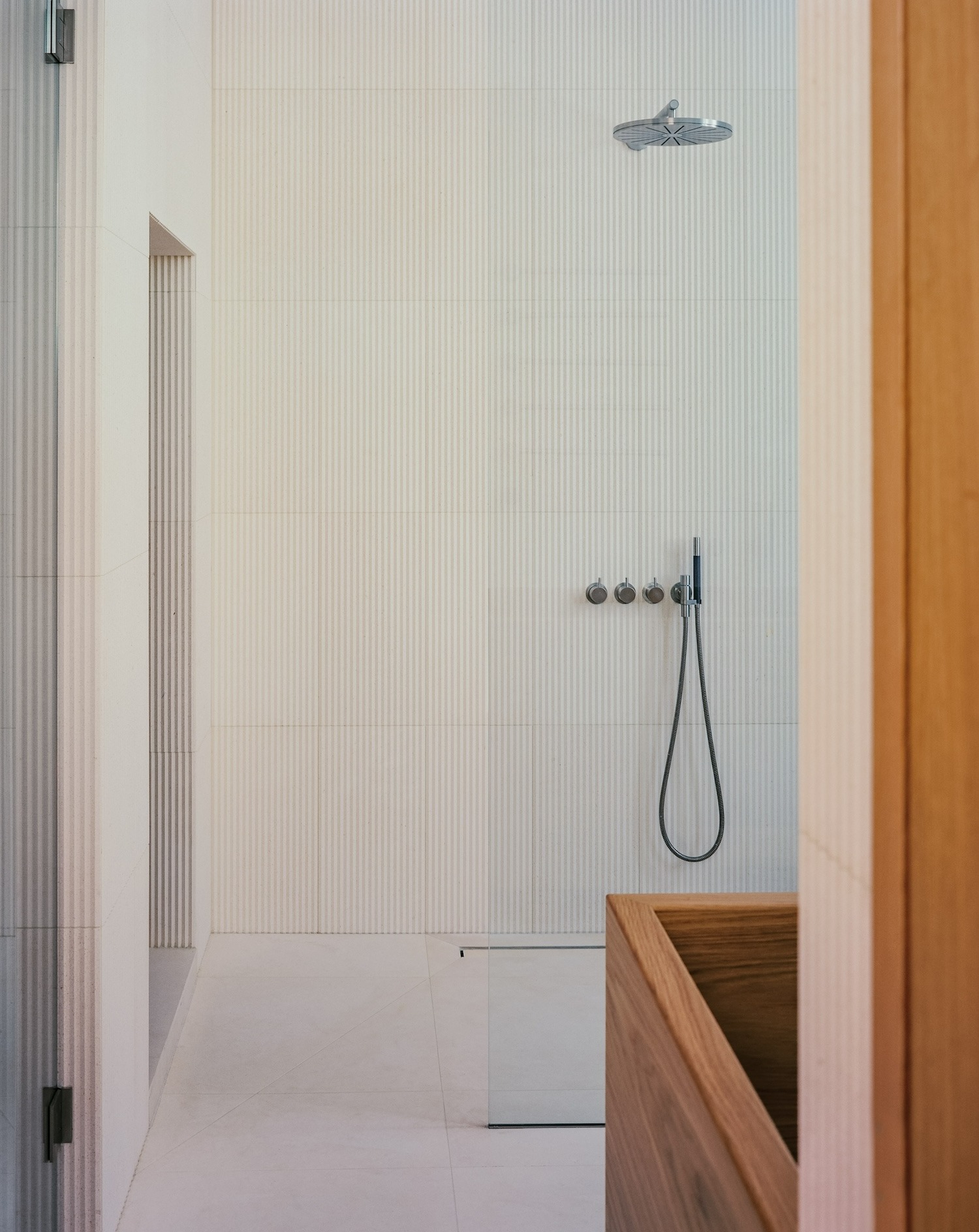
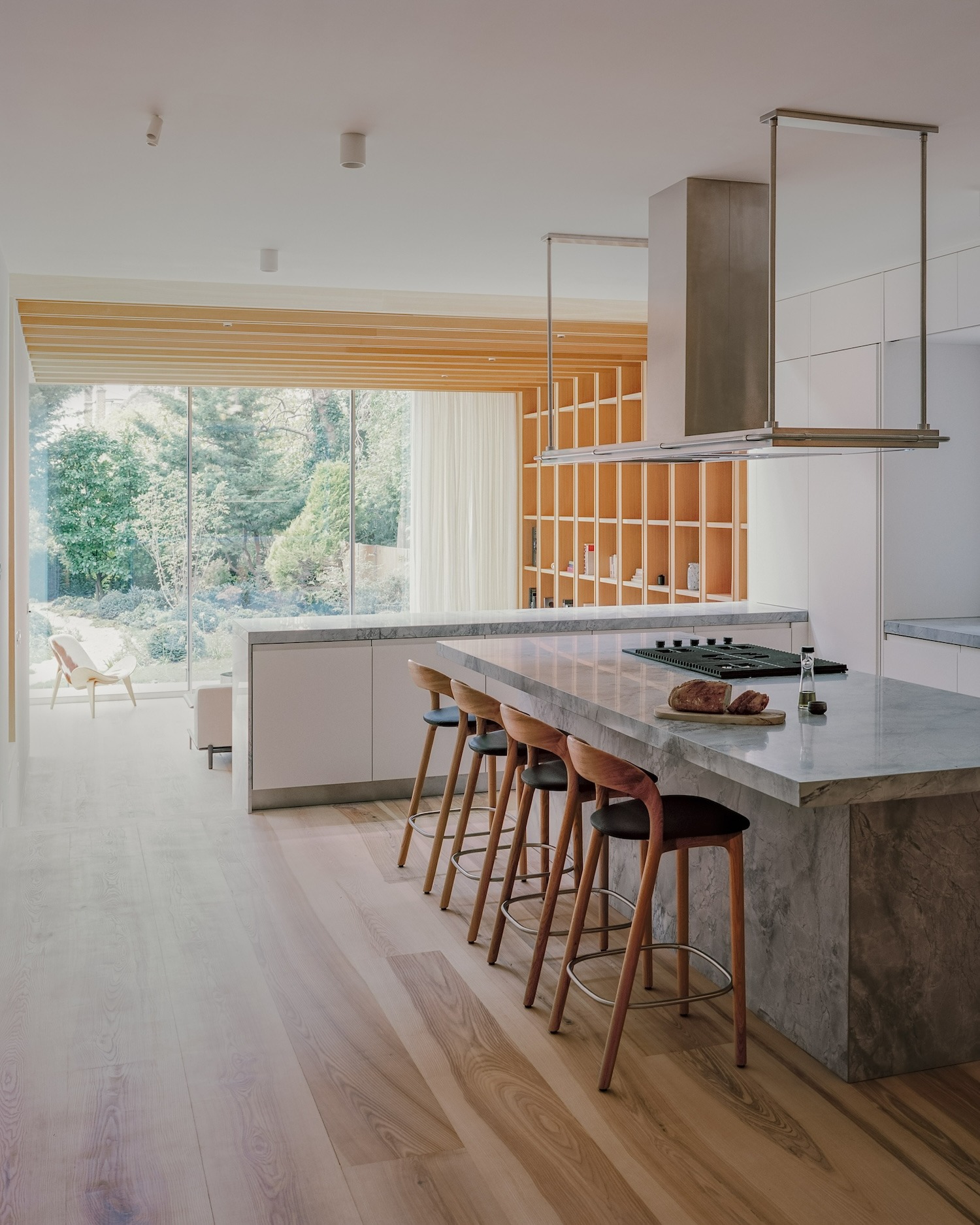
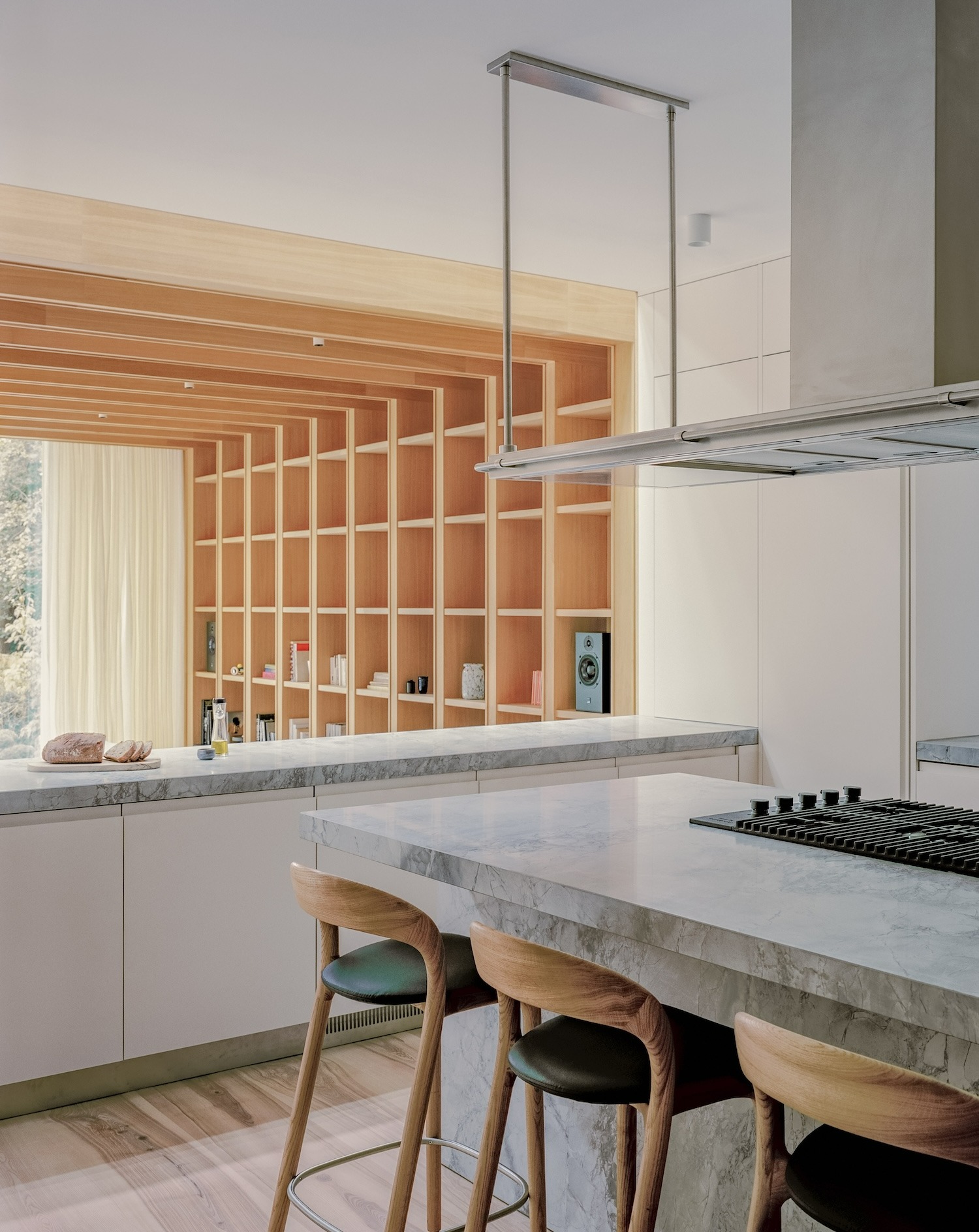
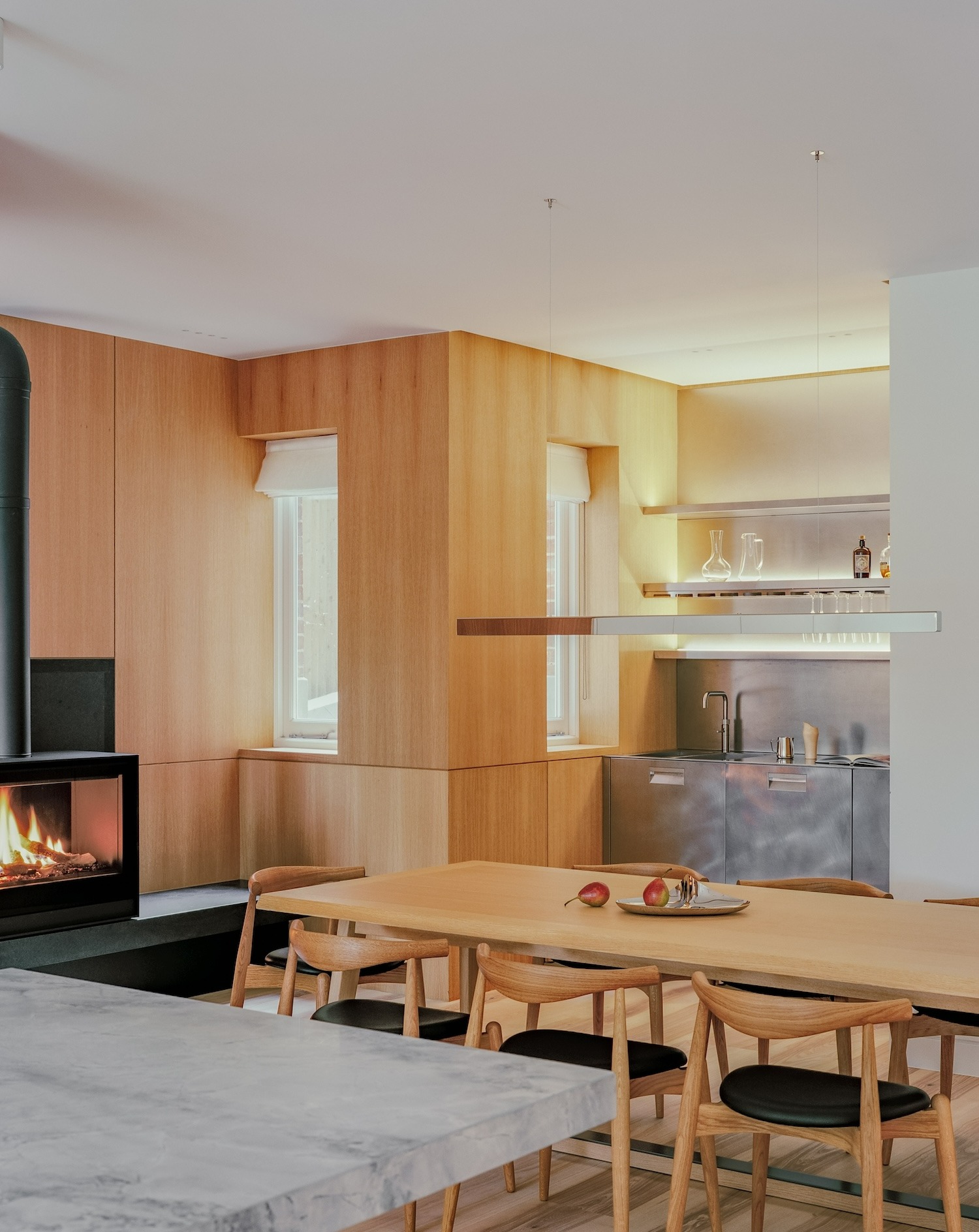
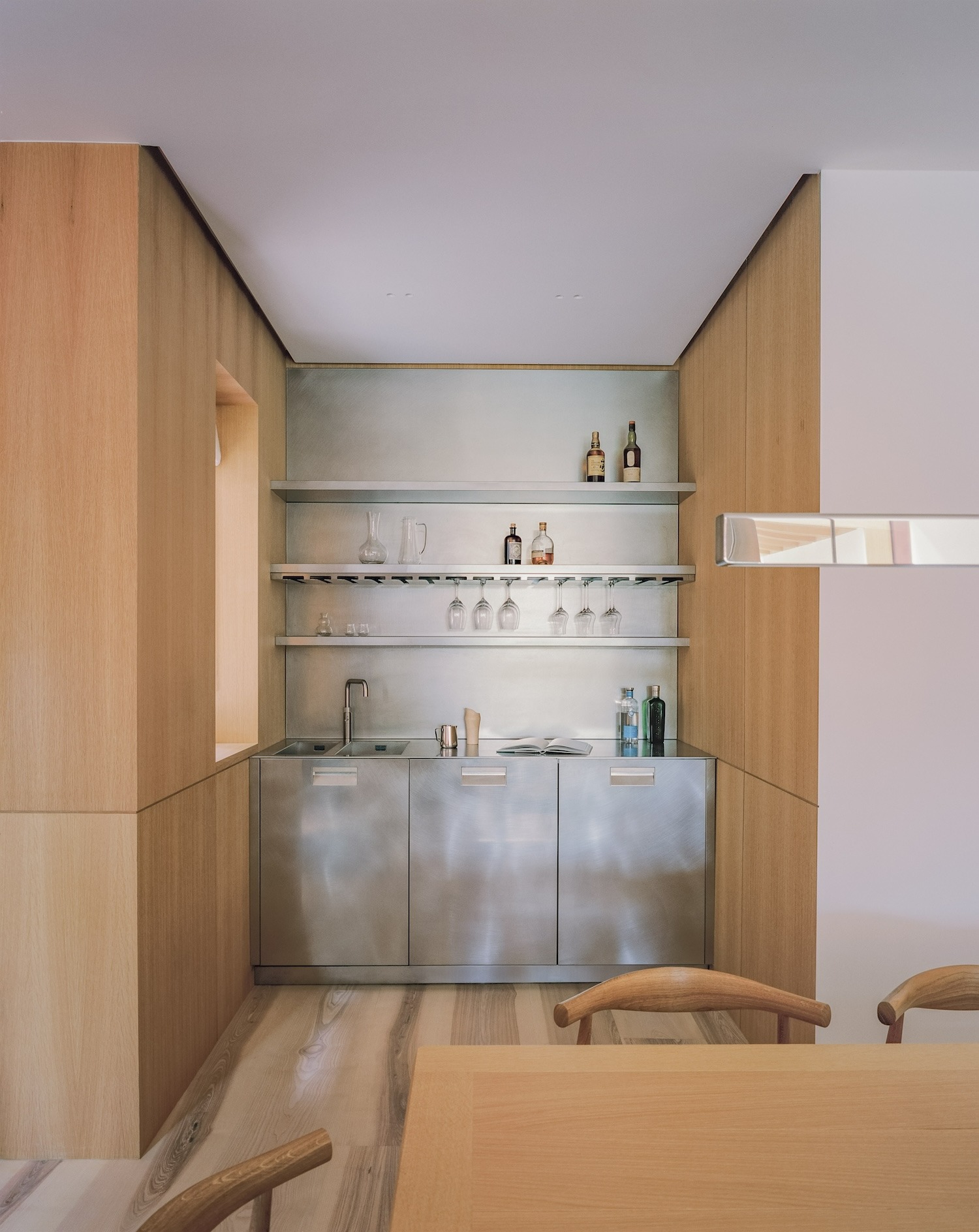
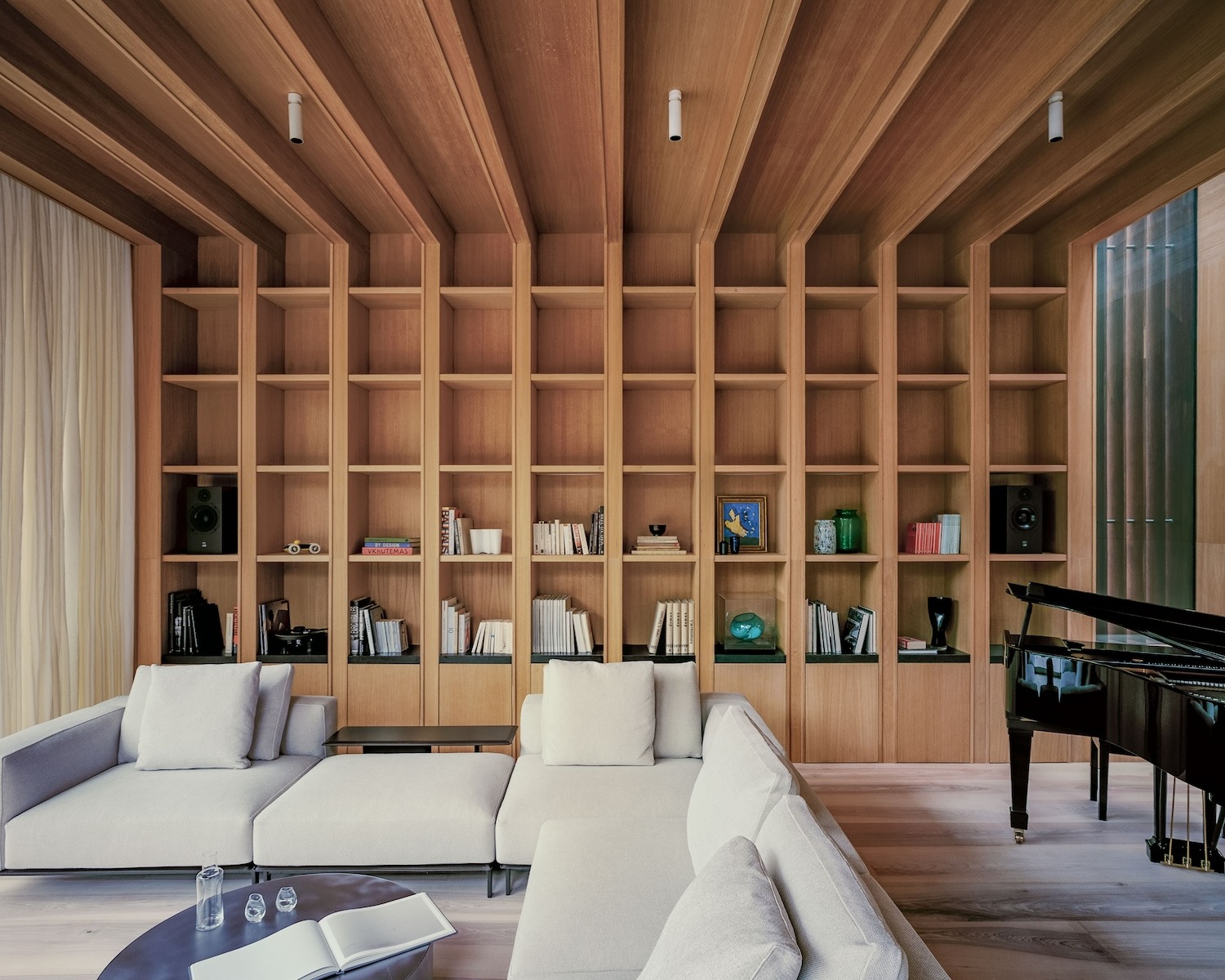
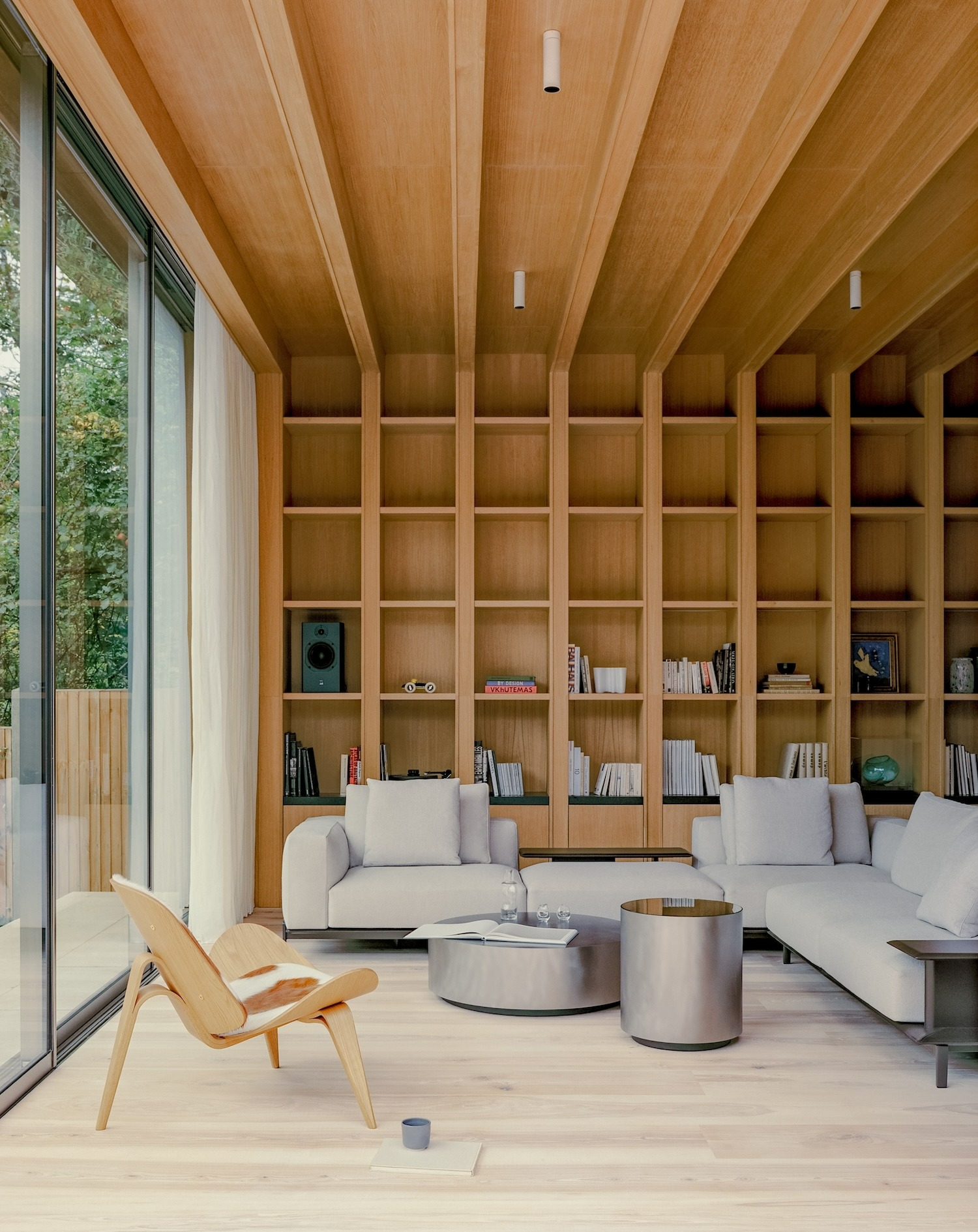

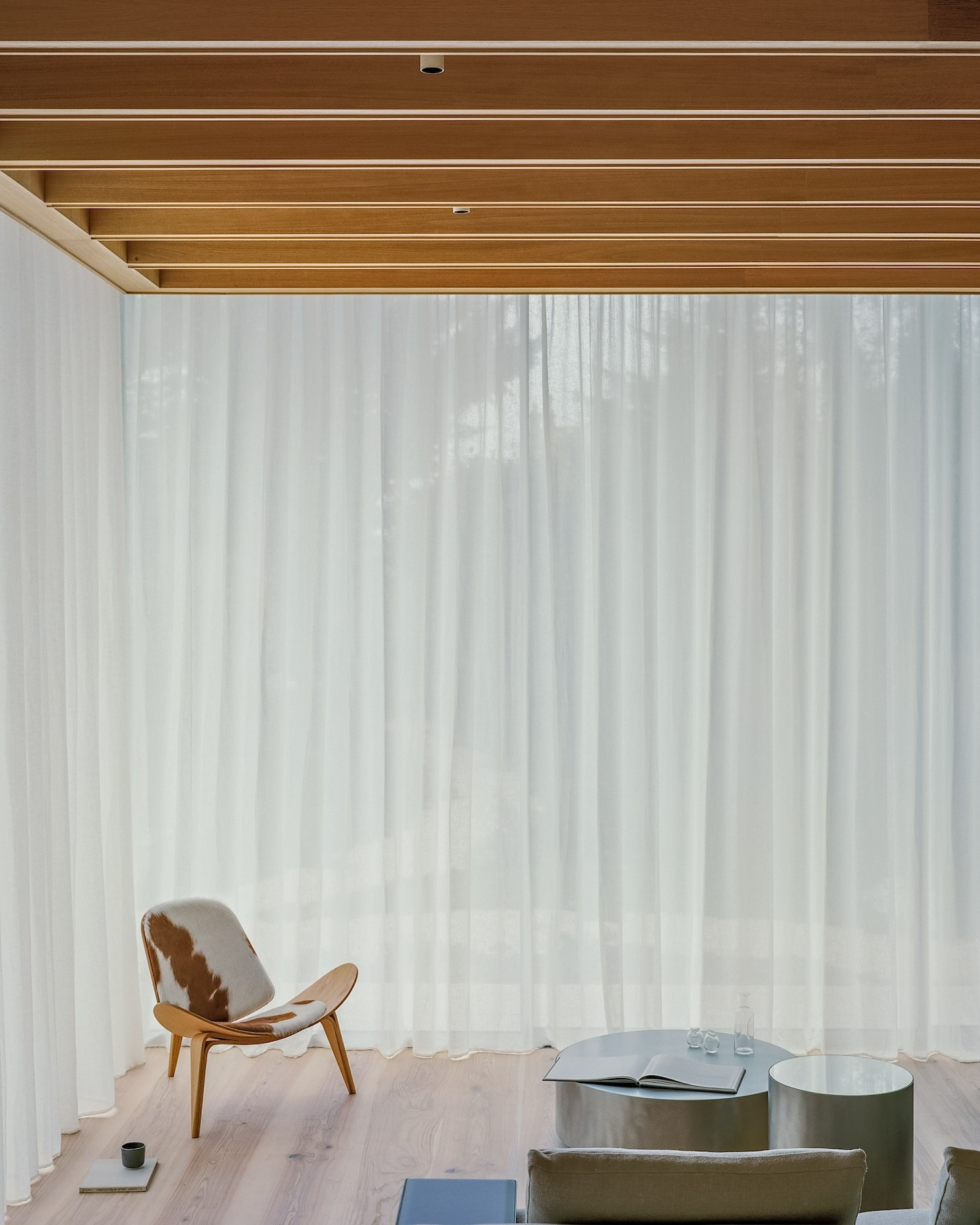

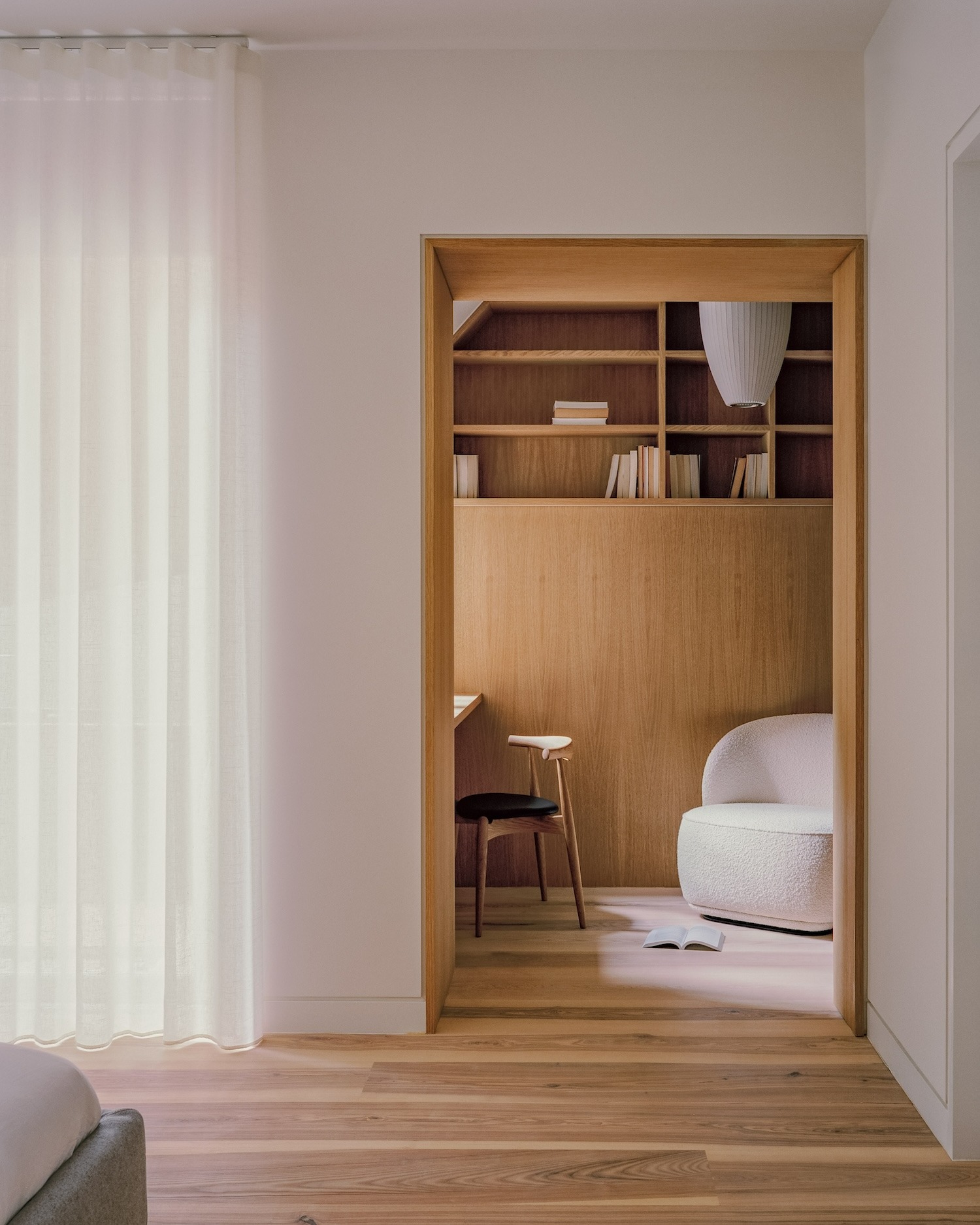
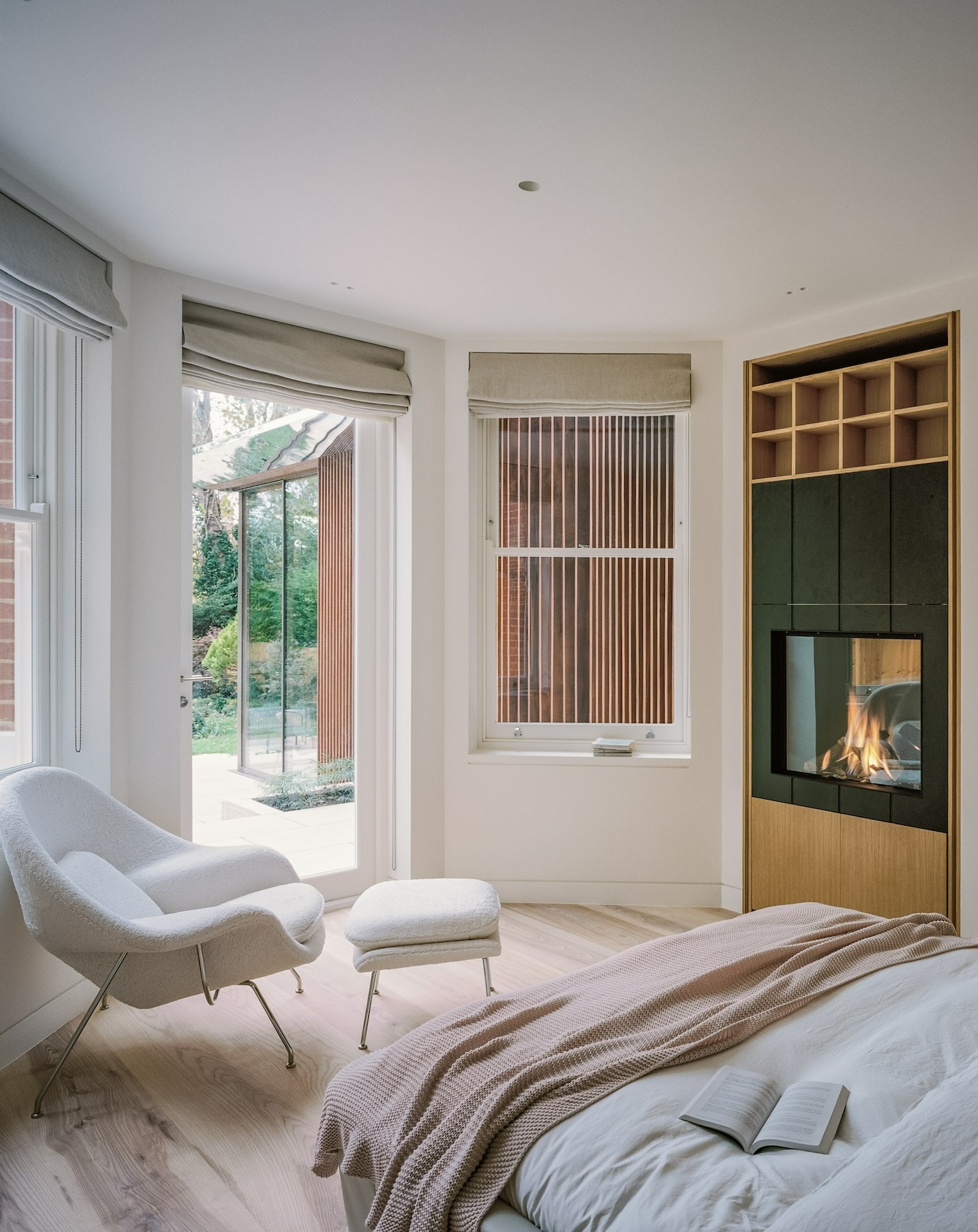
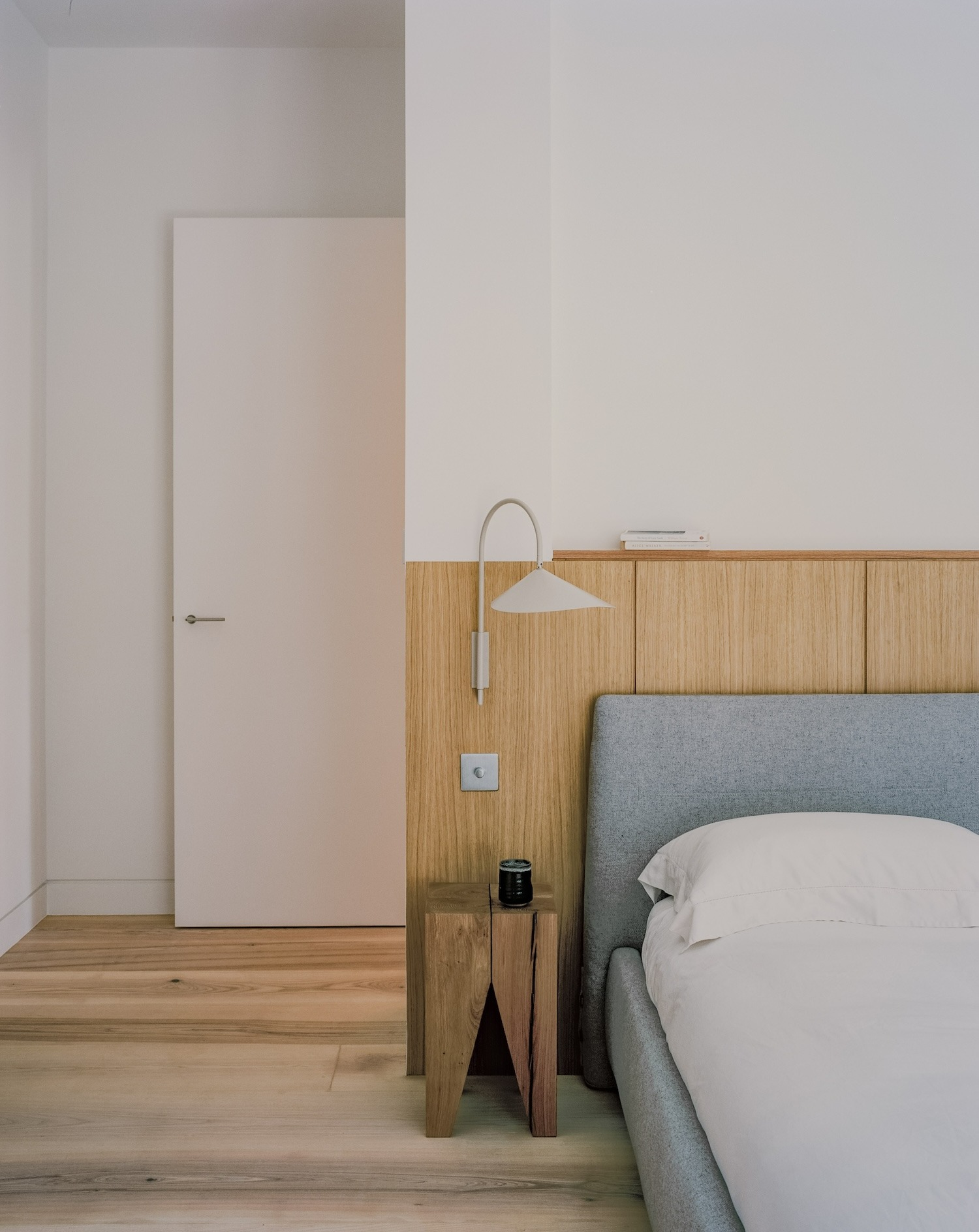
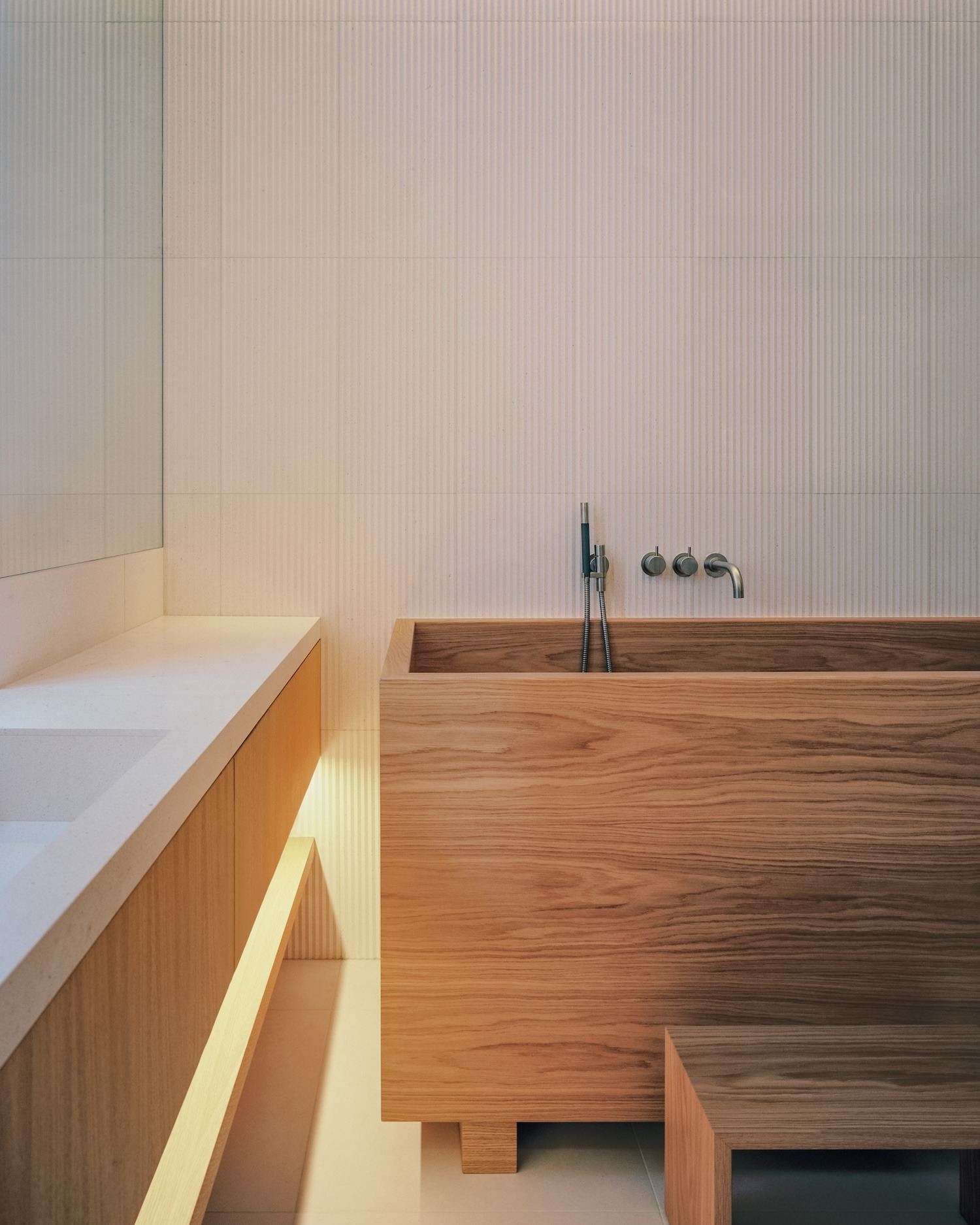
Panoramic House is a minimalist residence located in London, United Kingdom, designed by MATA Architects. Set within the Reddington and Frognal conservation area of Hampstead, the project began with a spatial paradox familiar to anyone who has inherited a period London home: a ground floor that looked out onto a generous south-facing garden while remaining stranded nearly 1.5 metres above it, accessed only by a long flight of stairs. For a family with teenage children seeking a closer relationship with their outdoor space, this elevation was not simply inconvenient, it was a disconnection that the existing house could not resolve on its own terms. MATA Architects treated the lower ground extension less as an addition and more as an act of descent, allowing the new living volume to cascade down into the landscape it was meant to serve.
The site’s natural slope became the generative condition of the design. By dropping the extension floor almost a metre below the original ground level while maintaining a consistent ceiling height, the architects achieved two things simultaneously: increased internal headroom and a threshold condition where the living space meets the garden at an intimate, inhabited scale. This single move also produced subtle spatial zoning within what reads as a single open plan volume, avoiding the flat monotony that often afflicts extensions of this type.
Working within the root protection zones of mature surrounding trees imposed genuine discipline on both footprint and levels. The architects collaborated with arboriculturists to calibrate the building’s reach, and the resulting geometry carries the imprint of that negotiation. It is the kind of constraint that, handled well, produces specificity rather than compromise.
The defining gesture is a glazed corner that opens the extension toward the garden without structural interruption. Large format sliding panels from Maxlight meet at the corner, and in their open position dissolve the boundary between interior and landscape entirely. This is where the project engages a lineage stretching from Mies van der Rohe’s Farnsworth House through Craig Ellwood’s Case Study experiments, the ongoing question of how to hold up a roof while making the wall disappear. MATA resolves it in favour of the garden, using the panoramic view as both spatial device and organising principle.
from dezeen
'House' 카테고리의 다른 글
| * 코쿤과 비상, 그 사이의 집 [ Mohamed Amine Siana ] Villa Butterfly (0) | 2026.06.01 |
|---|---|
| * 숲이 기억하는 불의 자리 [ Mimosa Architects ] River Rock Fire House (0) | 2026.05.21 |
| * 불과 땅 사이, 침묵하는 집 [ Faulkner Architects ] Pine Flat Residence (0) | 2026.05.15 |
| * 나무처럼 솟은 집 [ Cukrowicz Nachbaur Architekten ] Eugen-Bolz Studentenwohnheim (0) | 2026.05.05 |
| * 잊혀진 구조, 되살아난 장소 [ NOFORMA ] Atami House (0) | 2026.04.28 |