"나는 건축이 환경 속으로 스며들기를 원한다. 두드러지는 것이 아니라, 사라지는 것처럼."— 구마 겐고 (隈 研吾)
NOFORMA-Atami House
발견의 도시, 아타미
에도와 교토를 잇던 고대 가도, 도카이도를 따라 자리한 도시 아타미. 도쿄에서 신칸센으로 불과 사십 분 거리에 있는 이 도시의 이름은 '뜨거운 바다'를 뜻한다. 해저에서 끊임없이 솟아오르는 온천수가 바다를 데운다는 데서 유래한 이름이다. 아타미는 역사와 지질이 한 지점에서 만나는 도시다. NOFORMA는 바로 이 언덕 위 바닷가에 자리한 오래된 일본 가옥의 개보수 작업을 맡으면서, 뜻하지 않은 발견과 마주쳤다.
숨겨진 뼈대를 찾다
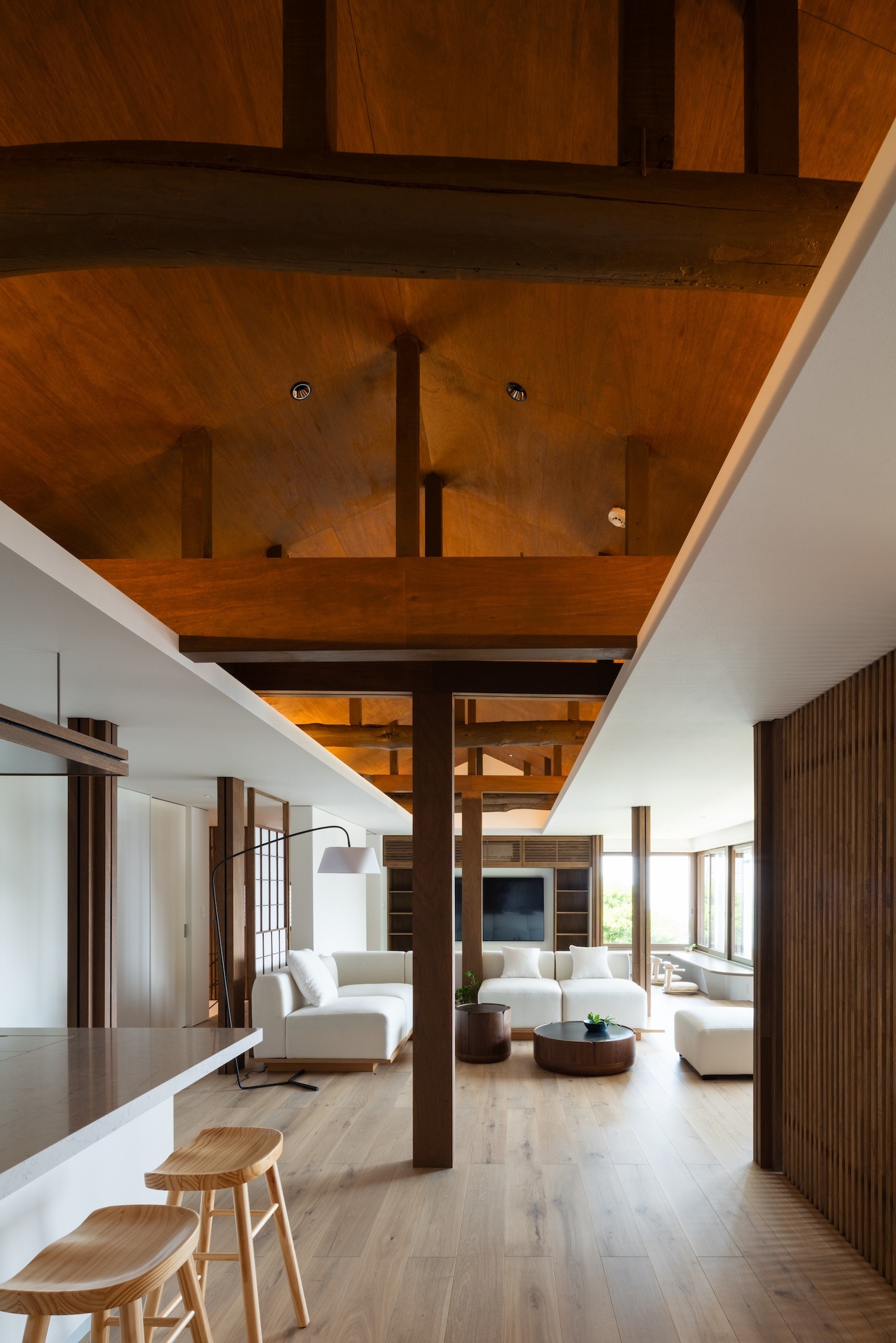
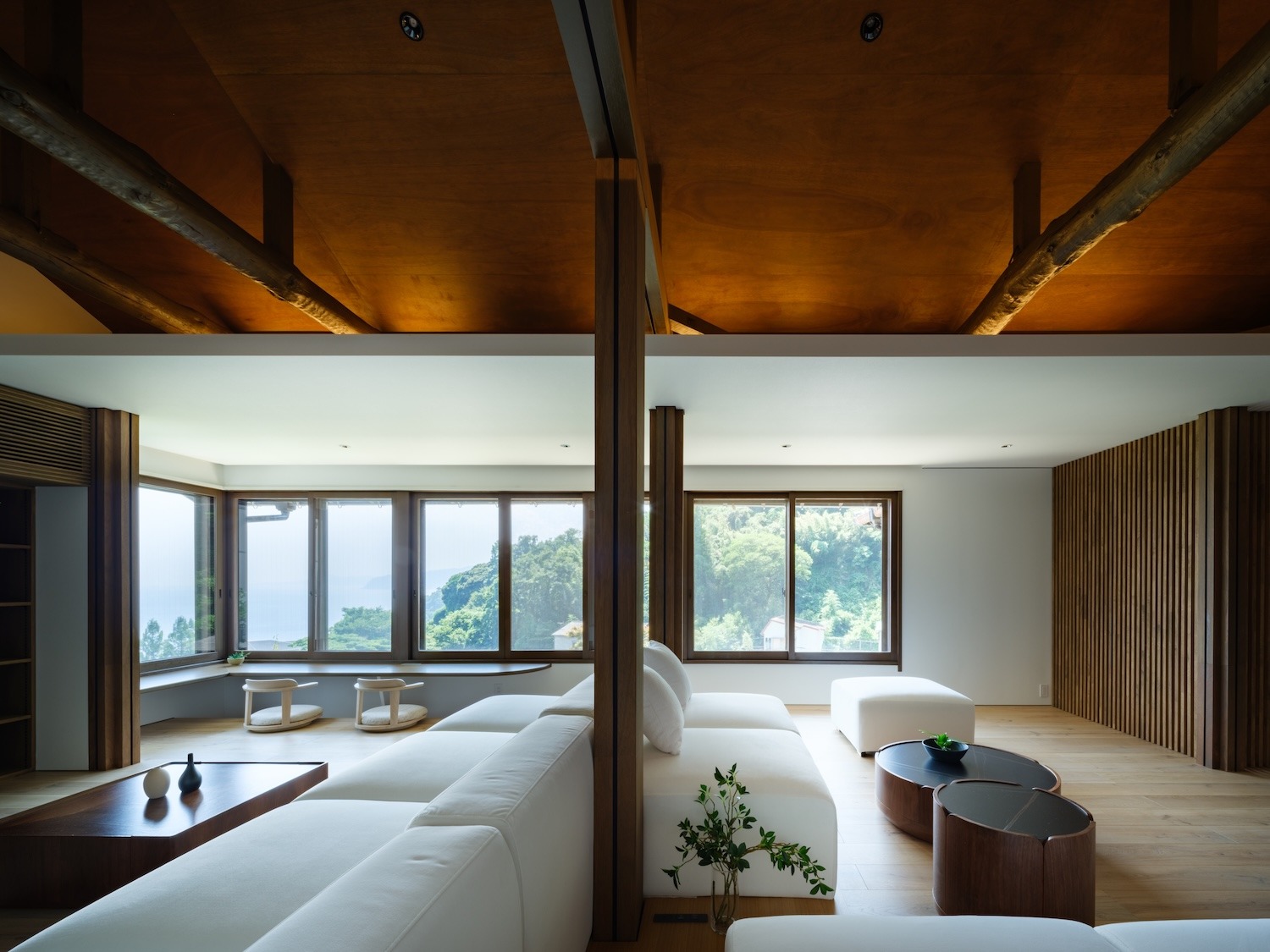
구조 조사 과정에서 마감 천장 위로 무언가가 모습을 드러냈다. 세월의 결을 고스란히 간직한 천연 목재 보들이었다. 오랜 시간 감춰져 있던 이 보들을 NOFORMA는 건물의 잊혀진 본질로 알아보았다. 단순한 구조재가 아니었다. 이 집이 지닌 역사적 정체성과, 현대의 별장으로 거듭날 새로운 삶 사이를 이어주는 다리였다. 그 발견은 이후 모든 설계 결정의 출발점이 되었다.
열린 하늘 아래, 2층의 삶
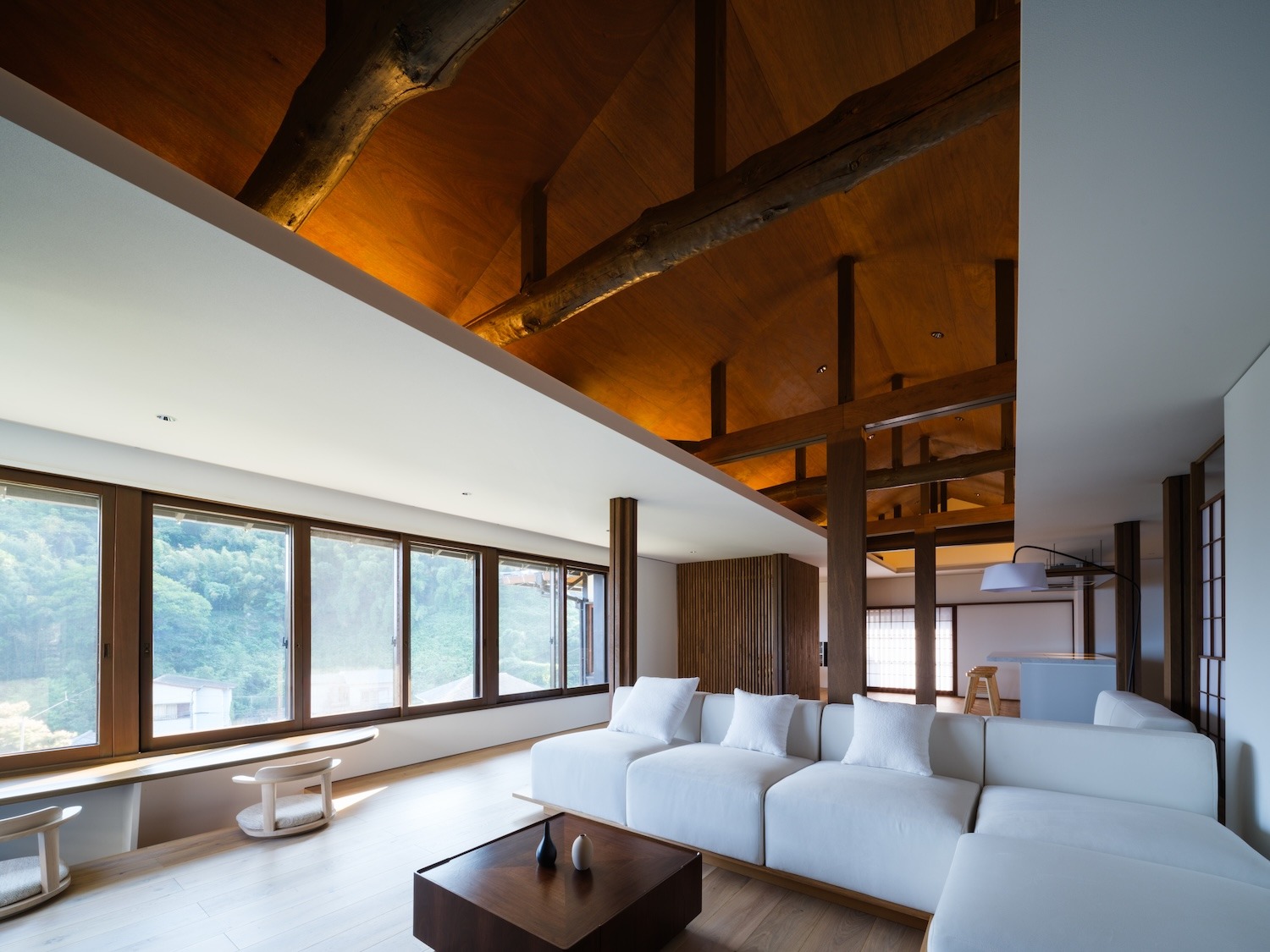
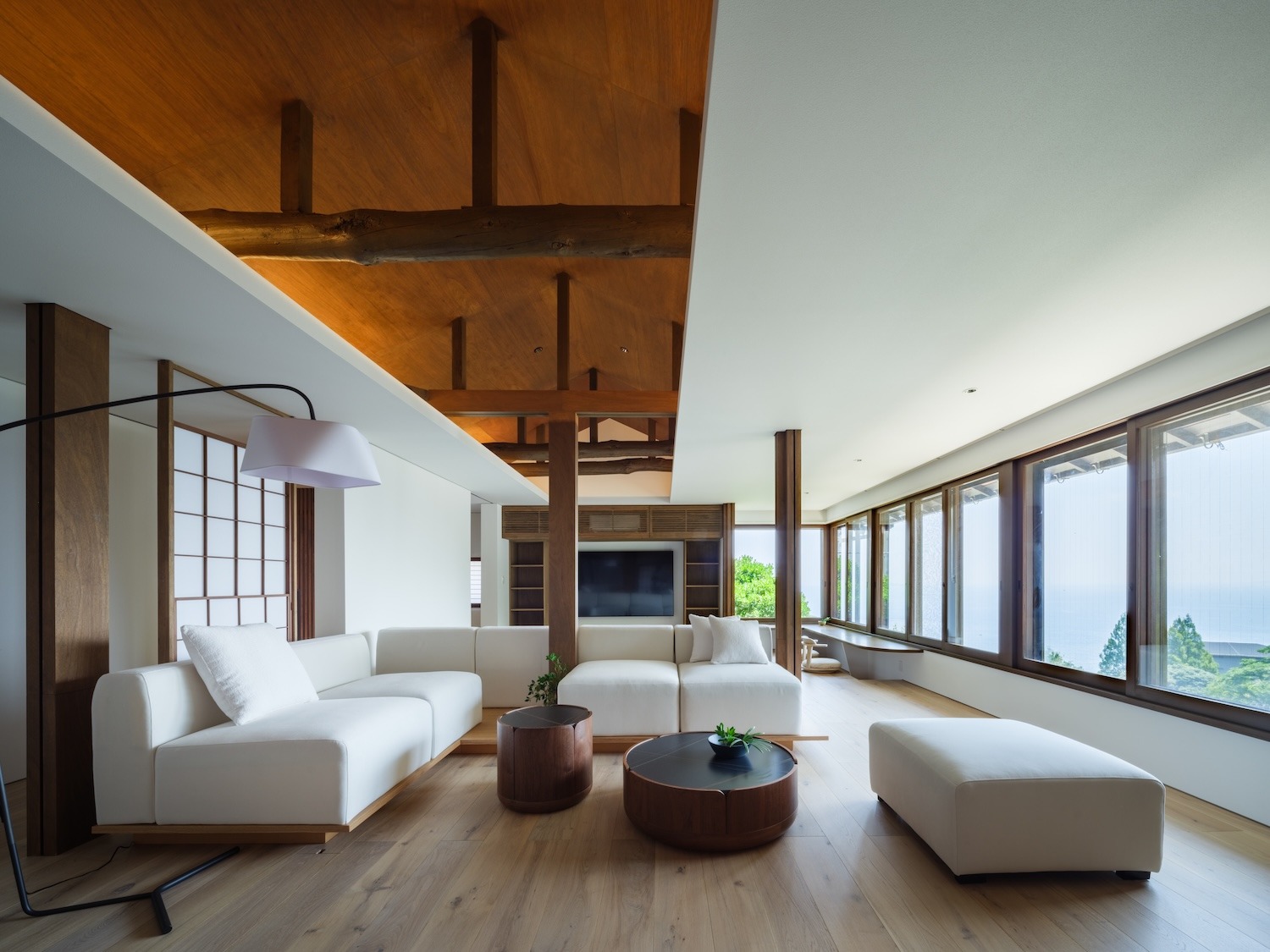
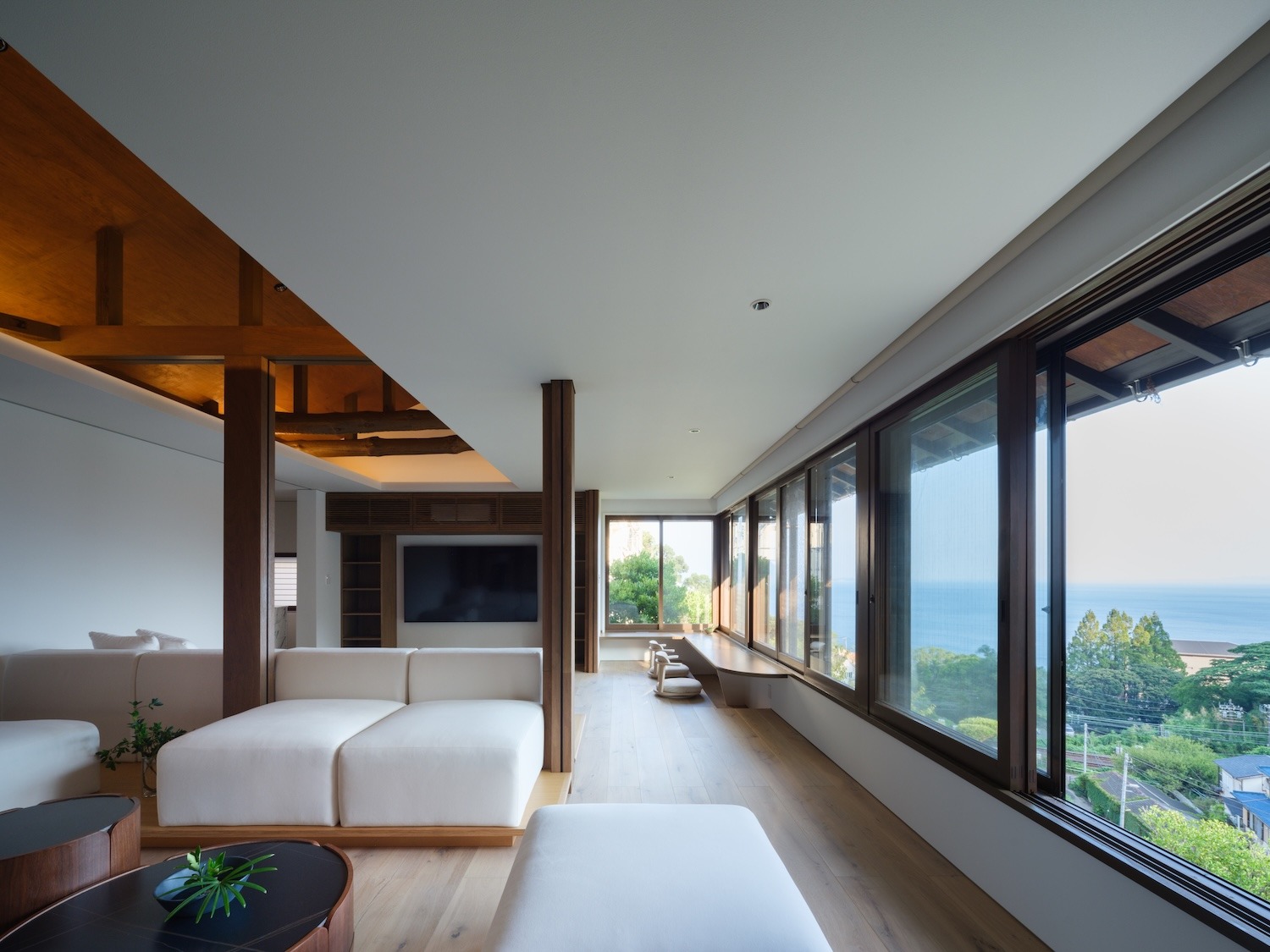
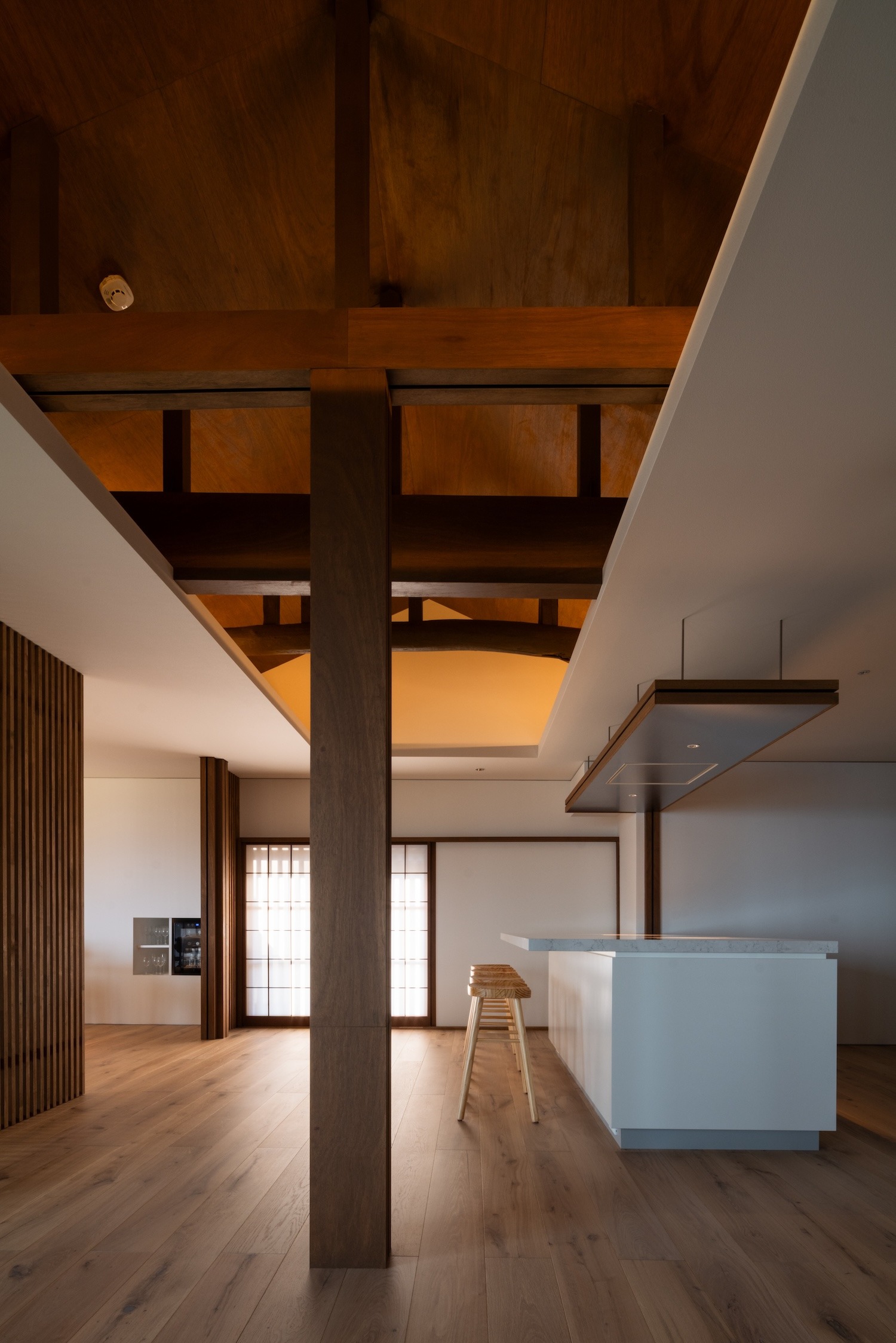
이 집의 현관은 2층에 있다. 문을 열고 들어서면 공간은 곧바로 넓게 펼쳐진다. NOFORMA는 쇼지(障子) 미닫이로 나뉘어 있던 다다미방들을 걷어냈다. 그 자리에 하나의 열린 볼륨이 들어섰고, 발굴된 지붕 보들이 이제 천장 위에서 당당하게 공간을 내려다본다. 호박색으로 달아오른 고재의 결이 흰 벽과 맞닿는 그 경계는, 이 집이 얼마나 오래된 시간을 품고 있는지를 말없이 드러낸다.
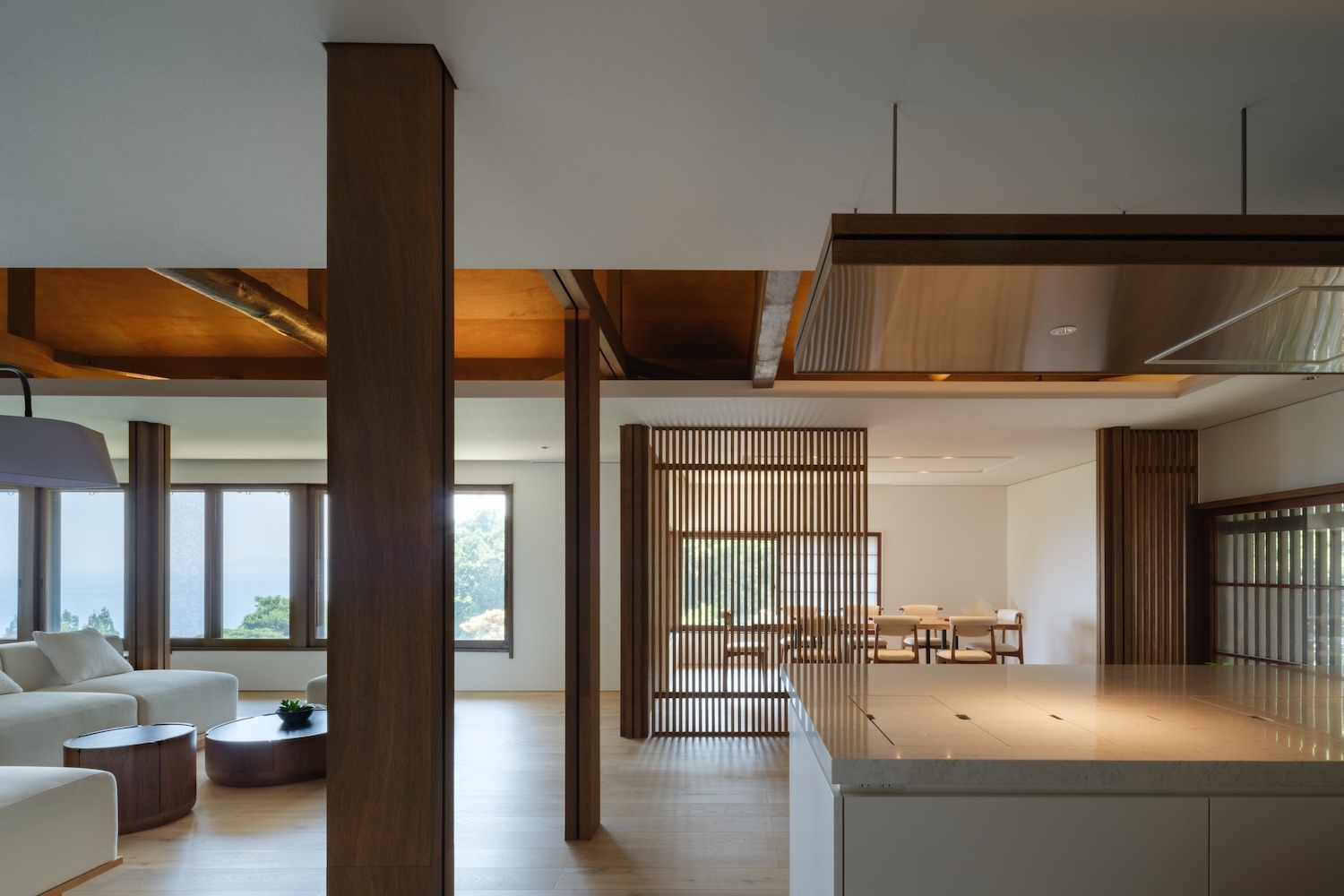
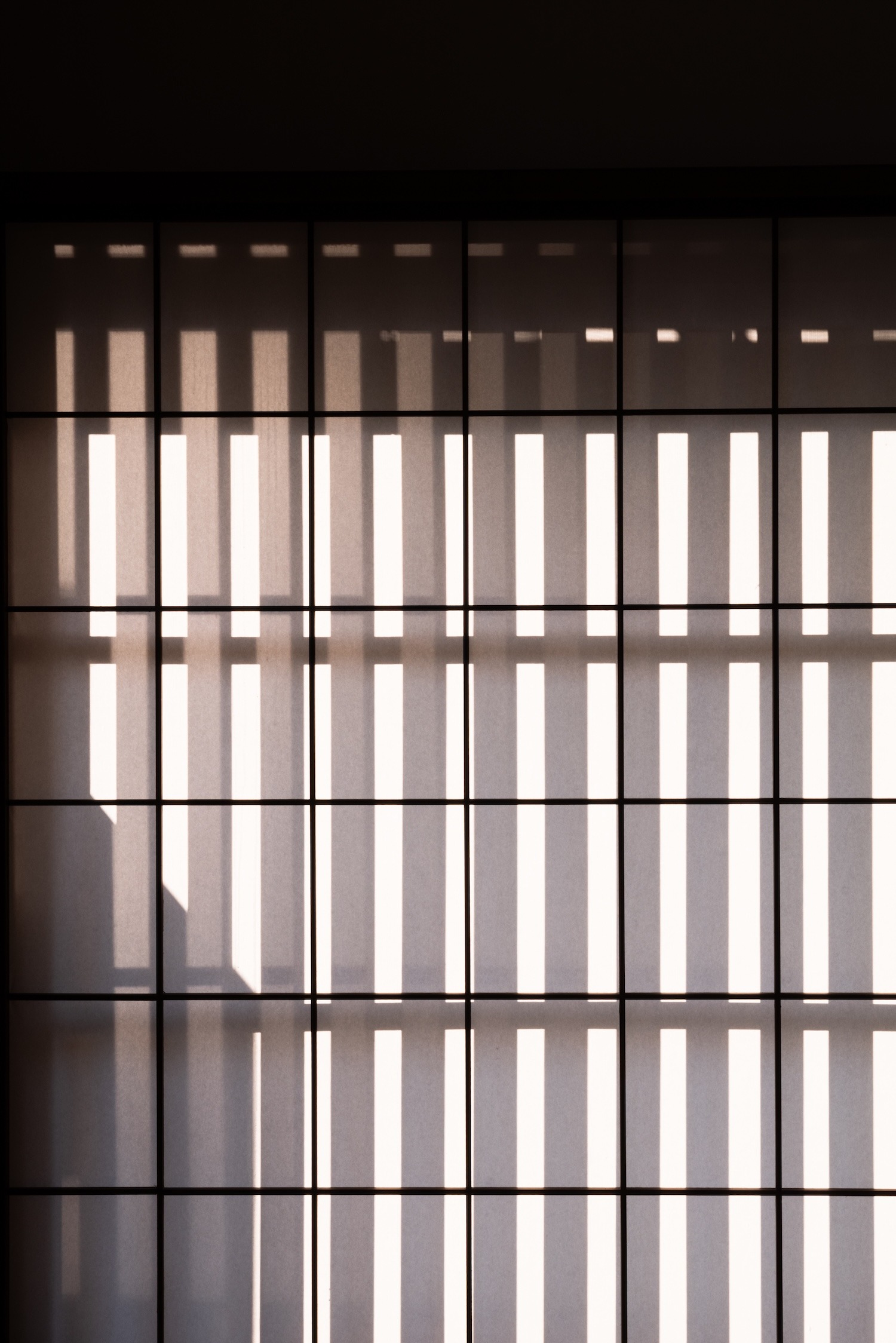
한쪽 모퉁이에는 바닥으로 내려앉은 호리코타츠(堀りごたつ)가 자리를 잡는다. 시선은 자연스럽게 바다를 향하고, 넓은 방 안에 아늑하고 내밀한 모임의 자리가 생겨난다. 주방 아일랜드, 식사 공간, 거실은 서로 시선을 주고받으며 하나의 흐름을 이룬다. 일본 물푸레나무(Japanese ash)로 지역 장인이 빚어낸 가구들이 공간에 온기를 얹는다. 등나무 루버 파티션과 원래의 쇼지 문은 벽 속에 감춰진 레일 위를 조용히 오가며, 이 공간을 손님을 맞이하는 열린 장(場)과 사적인 닫힘 사이에서 자유롭게 이동시킨다. 오후의 햇살이 쇼지 격자를 통과할 때, 바닥 위에 또 하나의 격자가 그림자로 그려진다.
물과 온기의 시퀀스
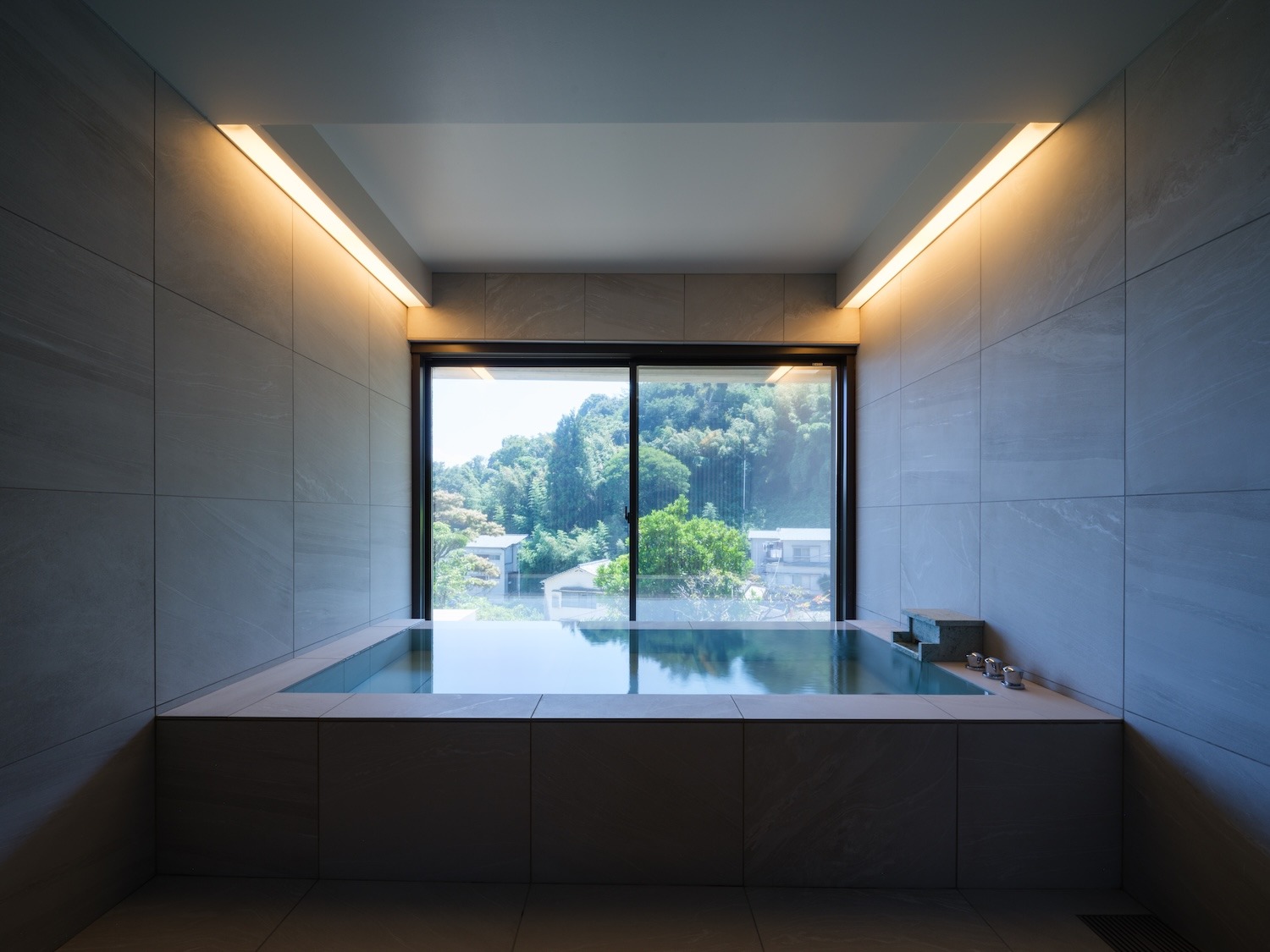
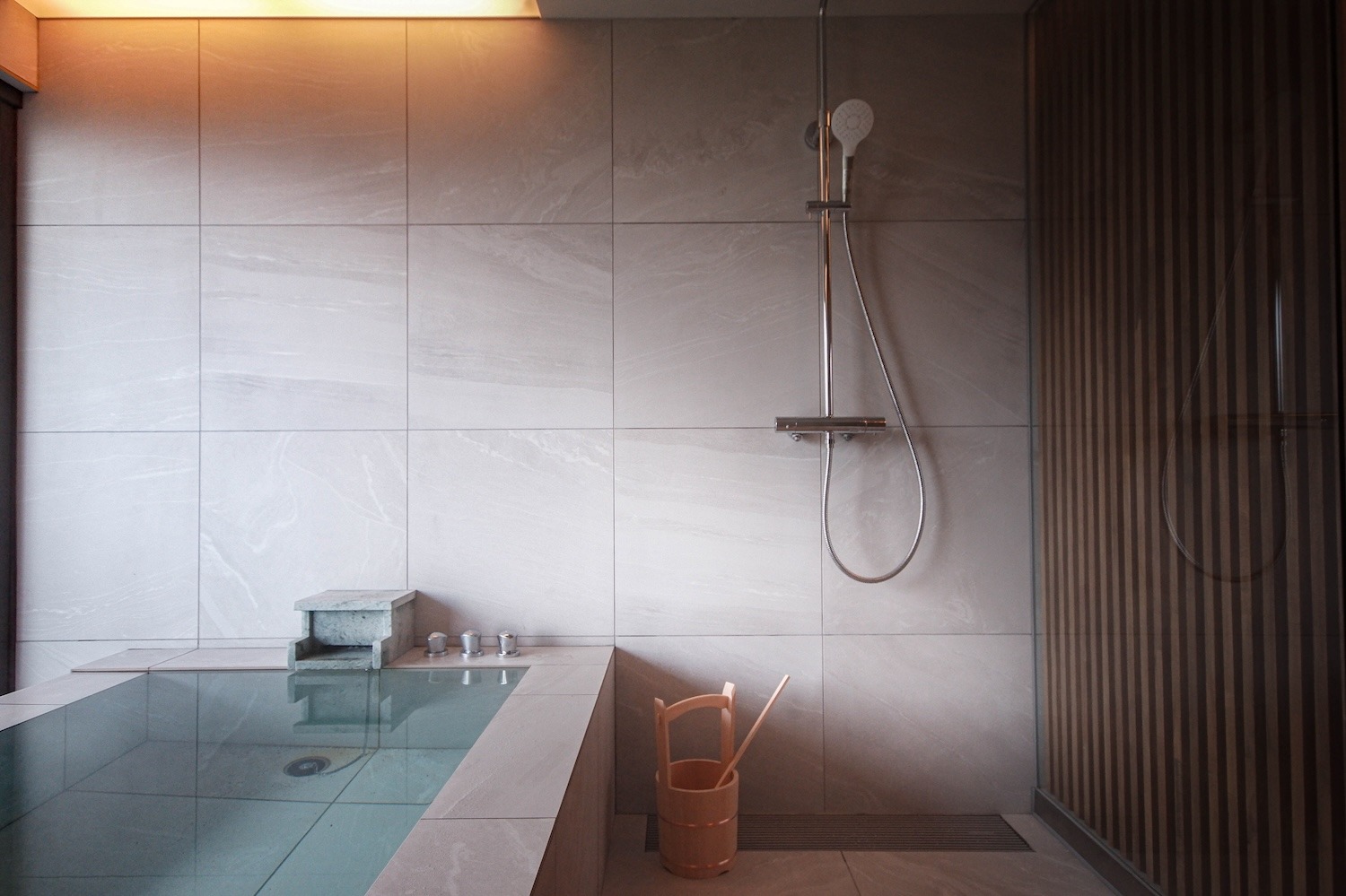
NOFORMA는 이 집이 본래부터 지니고 있던 온천수 연결을 그대로 살렸다. 욕실은 부차적인 편의 시설이 아니라 집의 정체성을 규정하는 핵심 공간으로 다루어졌다. 1층에는 히노키(桧) 사우나가 욕실과 온천탕에 나란히 자리하며, 물과 온기에 헌정된 연속적인 공간의 시퀀스를 형성한다. 석재로 마감된 욕조에 물이 차오르고, 창밖으로 언덕의 녹음이 펼쳐진다. 이 시퀀스는 아타미가 품은 지질적 기운, 즉 땅 아래에서 쉼 없이 솟아오르는 열기와 물에서 비롯된다.
안과 밖 사이, 엔가와의 경계
1층은 사적인 안식처로 기능한다. 마스터 침실은 욕실을 갖춘 두 개의 방으로 나뉘거나, 운동이나 영화 감상, 조용한 작업을 위한 하나의 유연한 공간으로 열릴 수 있다. 두 침실은 모두 정원 데크로 직접 이어지며, 유리로 마감된 긴 1층 전면부 전체가 엔가와(縁側)로 기능한다. 어느 쪽에도 속하지 않으면서 동시에 양쪽 모두를 품는 곳, 엔가와의 본질이 여기에 살아 있다.
NOFORMA는 외관에는 거의 손을 대지 않았다. 언덕 위 이웃들과의 관계를 해치지 않으면서도, 새로운 시선이 바다를 향해 열리도록 몇 개의 창을 신중하게 더했을 뿐이다. 드러낼 것은 드러내고, 감출 것은 감추는 것. NOFORMA가 이 집에서 선택한 방식은 그것이었다.
Write by Claude & Jean Browwn
NOFORMA
Atami House is a minimalist residence located in Atami, Japan, designed by NOFORMA. The renovation of a traditional Japanese home perched on a coastal hillside, the project began with a discovery that redirected its entire design narrative. Hidden above a false ceiling, a set of beautifully aged natural timber beams emerged during a structural assessment – elements that NOFORMA recognized as the building’s forgotten core, and the bridge between its historical identity and its new life as a contemporary retreat.
Atami sits along the historical Tokaido, the ancient route connecting Edo and Kyoto, just forty minutes by bullet train from Tokyo. The town’s name translates to hot ocean, a reference to the thermal springs that rise from the seabed beneath it. NOFORMA preserved the house’s existing connection to onsen water, treating the bathing space as a defining element rather than a secondary amenity. A hinoki sauna sits adjacent to the bathroom and onsen on the ground floor, forming a continuous sequence of spaces dedicated to water and warmth that draws directly from the region’s geological character.
The second floor, where arrival occurs, opens immediately into the primary living space. NOFORMA removed the original layout of small tatami rooms divided by shoji screens and replaced it with a single open volume where the exposed roof beams now preside overhead. A sunken hori kotatsu anchors one corner, positioned to maximize views toward the ocean while creating an intimate gathering point within the larger room. The kitchen island, dining area, and living space remain in continuous visual dialogue, furnished with pieces crafted by local artisans from Japanese ash. Rattan louver partitions and preserved original shoji doors move on tracks concealed within the walls, allowing the floor plan to shift between open entertaining and enclosed privacy.
The ground floor functions as a private sanctuary. The master bedroom can be subdivided into two en suite rooms or opened into a single flexible space suited for exercise, film screenings, or quiet work. Both bedrooms open directly onto a garden deck, and the long glazed ground floor operates as an engawa – a threshold condition that belongs to neither inside nor outside, yet functions as both. NOFORMA chose to leave the exterior largely untouched, introducing only a few carefully placed window openings to maintain the building’s relationship with its hillside neighbors while directing new sight lines toward the ocean.
from leibal