"건축은 대지 위에 놓이는 것이 아니라, 대지와 하나가 되어야 한다."— 프랭크 로이드 라이트
 |
 |
 |
수평선 위에 떠오른 집 Gubbins Polidura Arquitectos + MasArquitectos-“S” House
푼타 피테(Punta Pite)는 칠레 산티아고에서 북쪽으로 150km 떨어진 사발라르와 파푸도 사이에 위치한다. 이름 그대로 바다를 향해 뾰족하게 돌출된 바위 곶이다. 건축가들이 풀어야 할 과제는 부부와 세 자녀를 위한 세컨드홈을 짓는 일이었다.
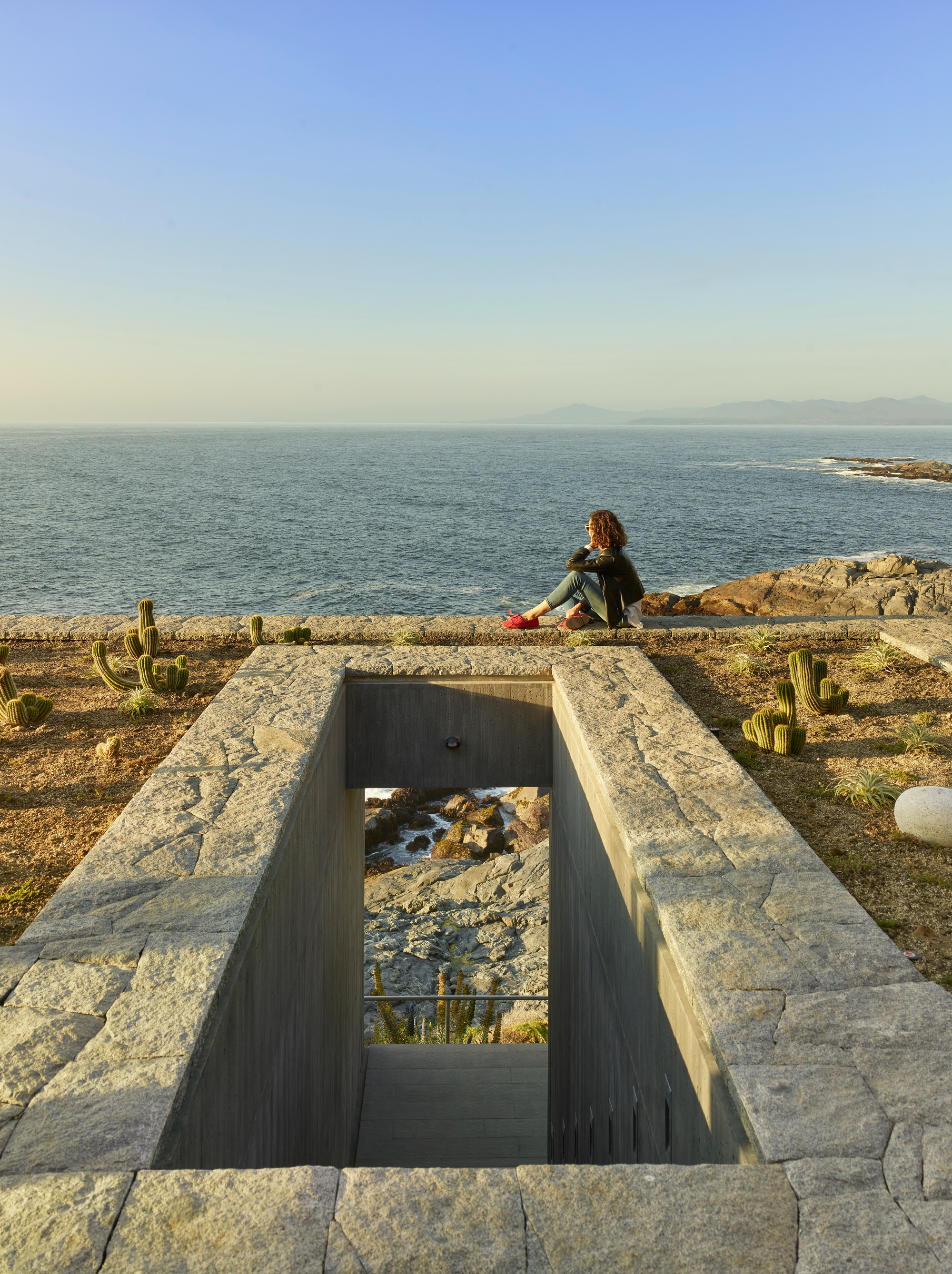
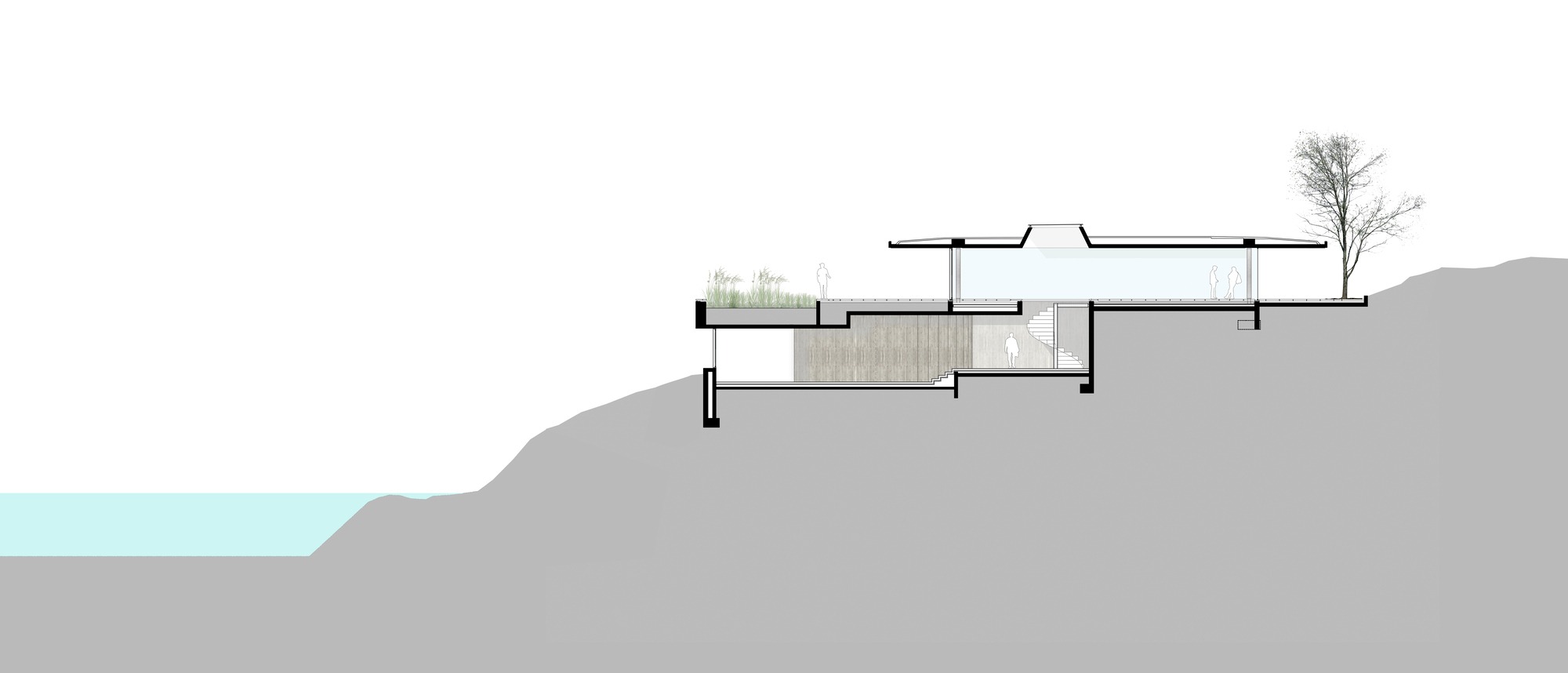
6,500제곱미터 대지는 20미터 높이 차의 가파른 경사(20% 기울기)를 보여준다. 핵심은 이 경사지에 거주 가능한 수평면을 만드는 일이었다. 자연의 압도적인 존재감, 바다 전망, 그리고 석양을 거주하고 부각시키는 거대한 수평 기단을 만들고자 했다. 거주자는 이 기단 위에서 풍경을 온전히 마주한다.
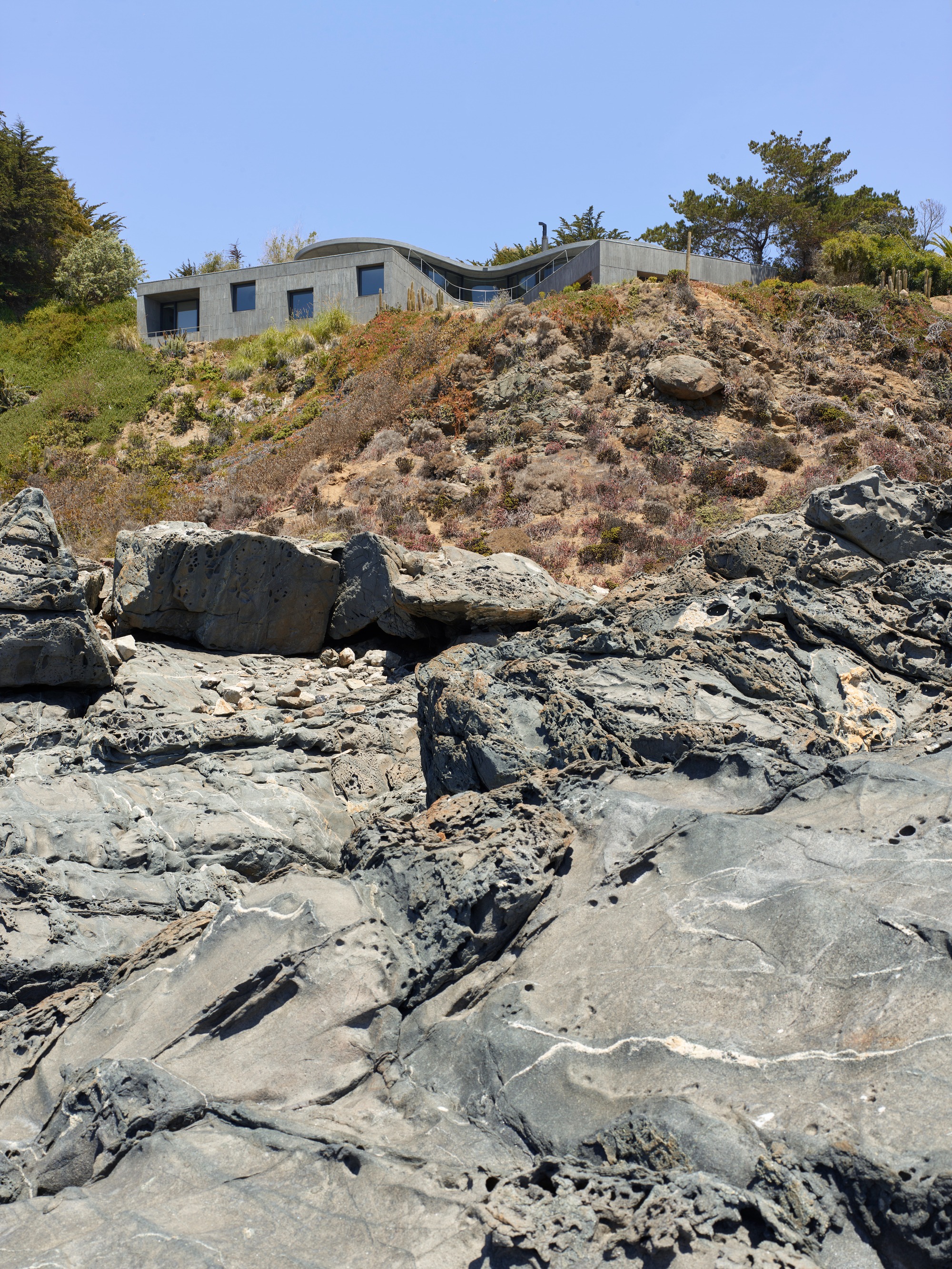
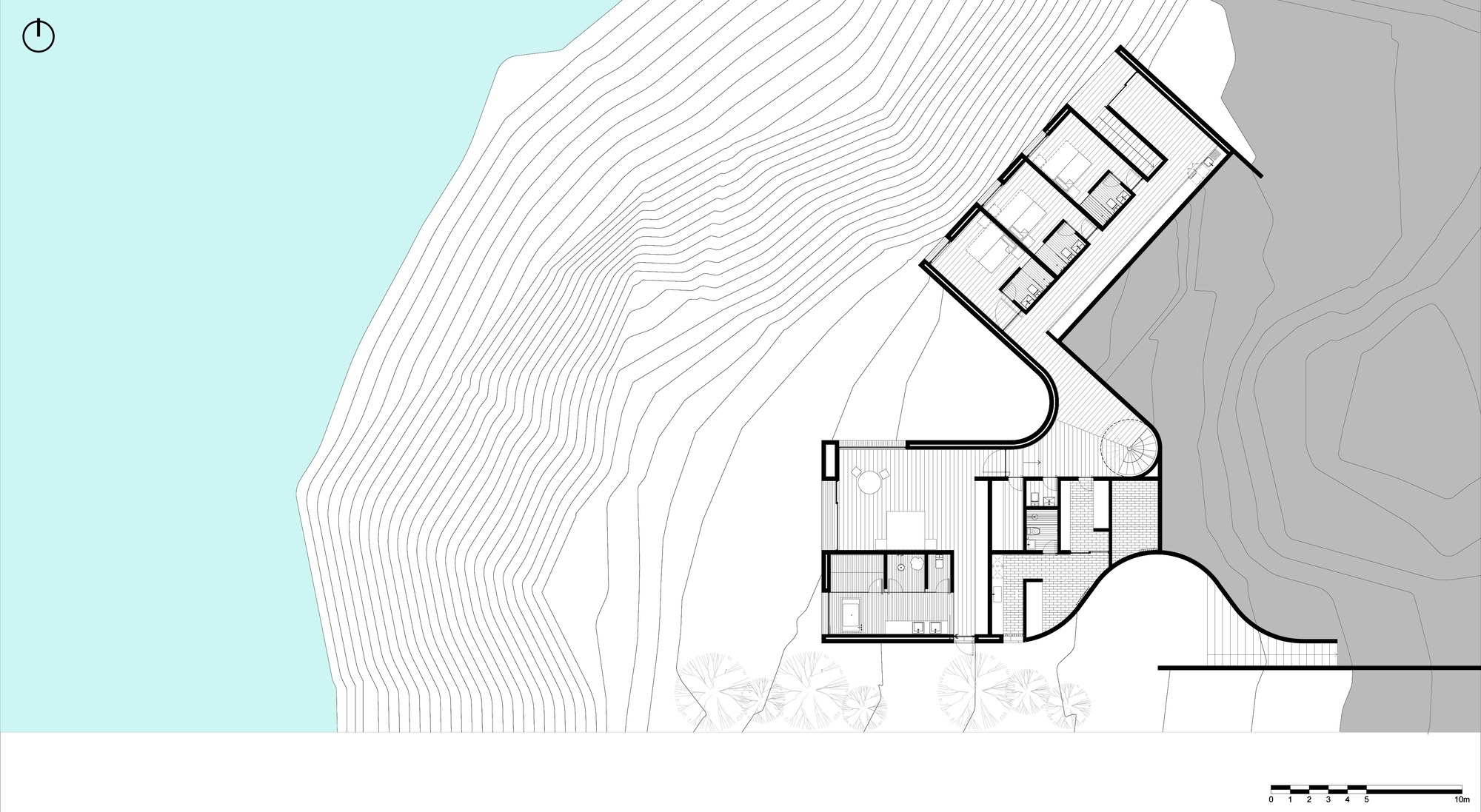
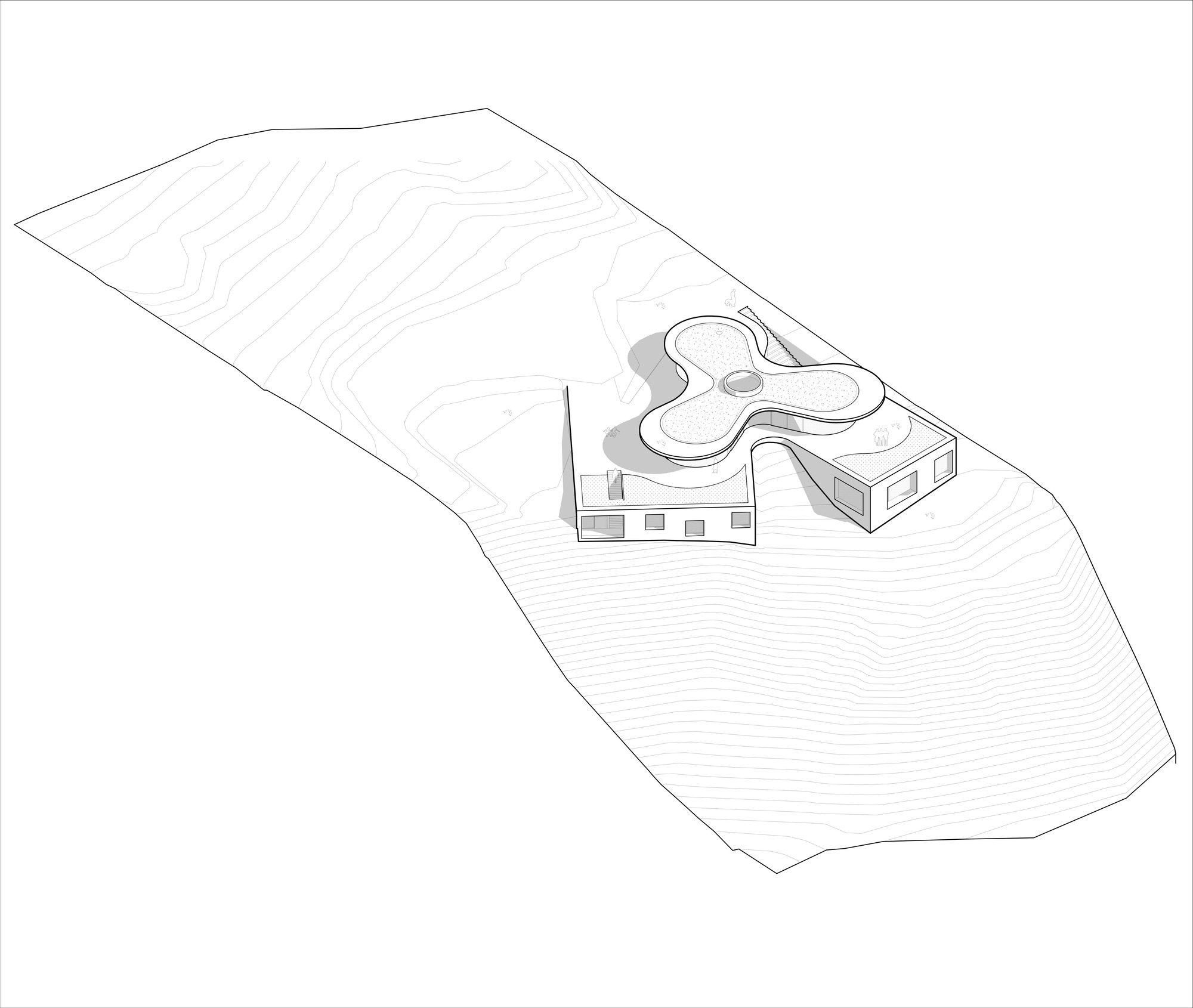
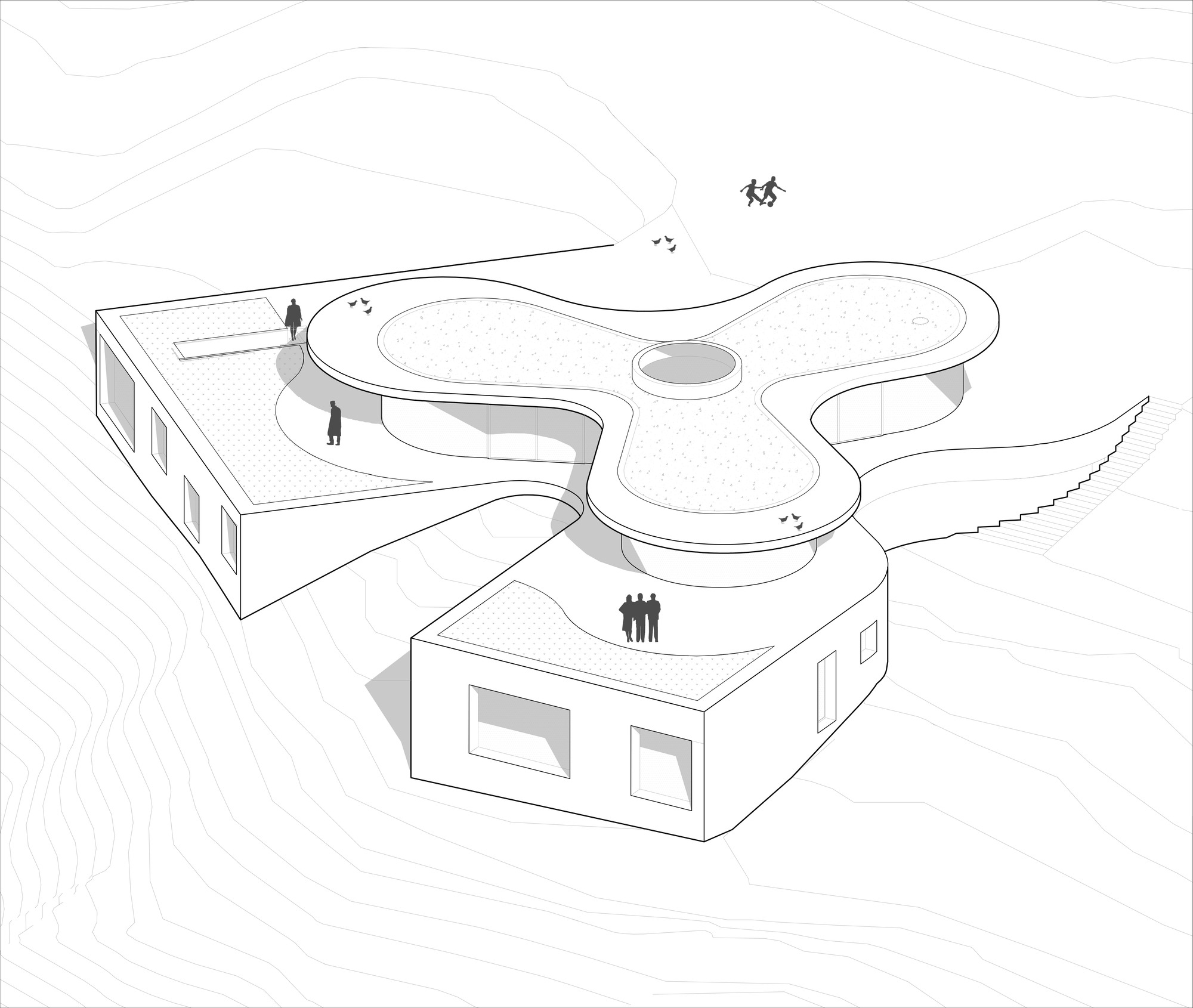
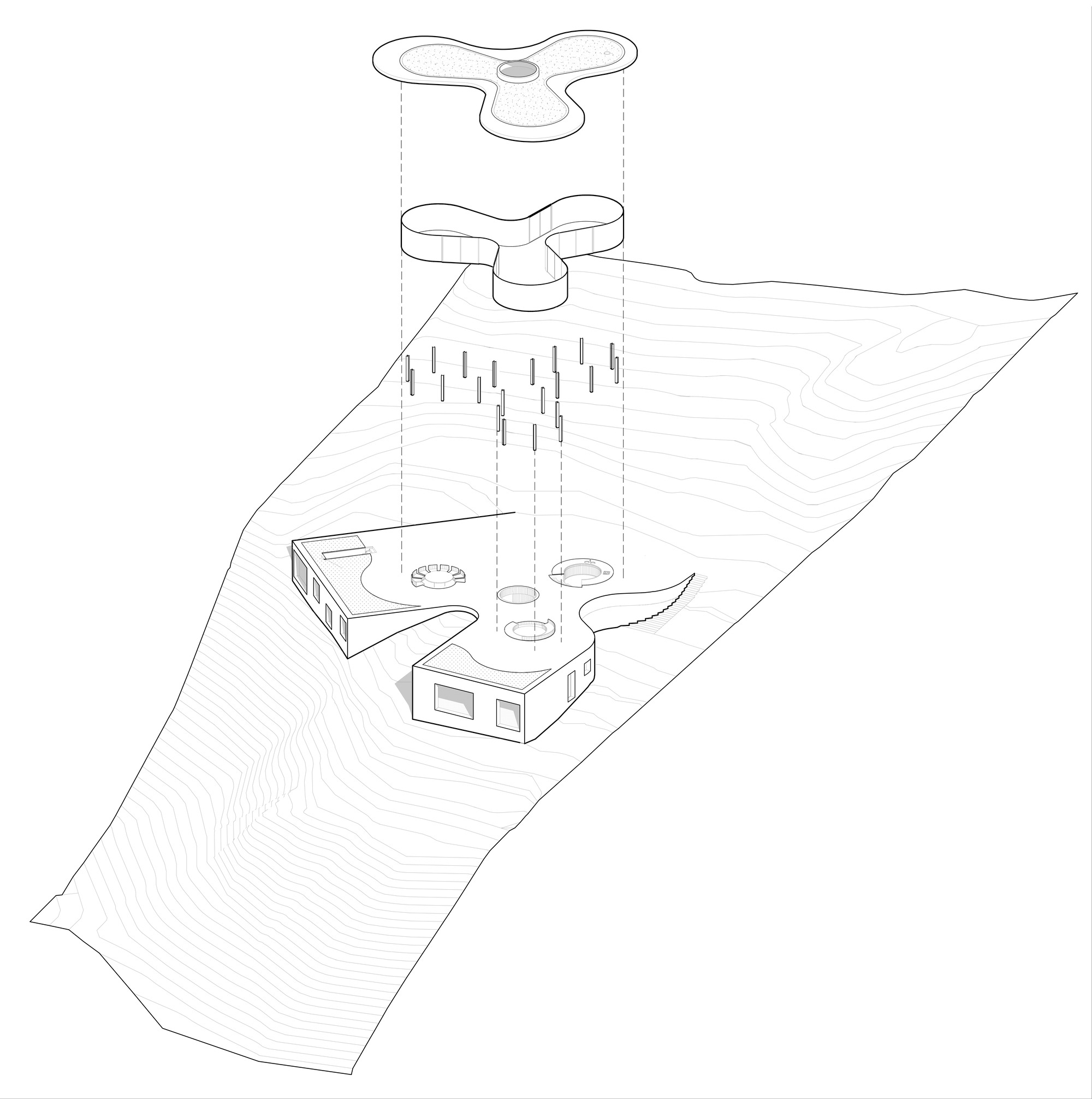
첫 번째 결정은 공용 공간과 사적 공간을 두 개의 중첩된 볼륨으로 분리하는 일이었다. 이렇게 하면 집의 모든 영역이 자연 지형과 물리적으로 연결된다. 이 중첩은 또한 풍경 속 집의 존재감을 지운다. 상층 파빌리온에 서면 나머지 집이 시야에서 사라진다.
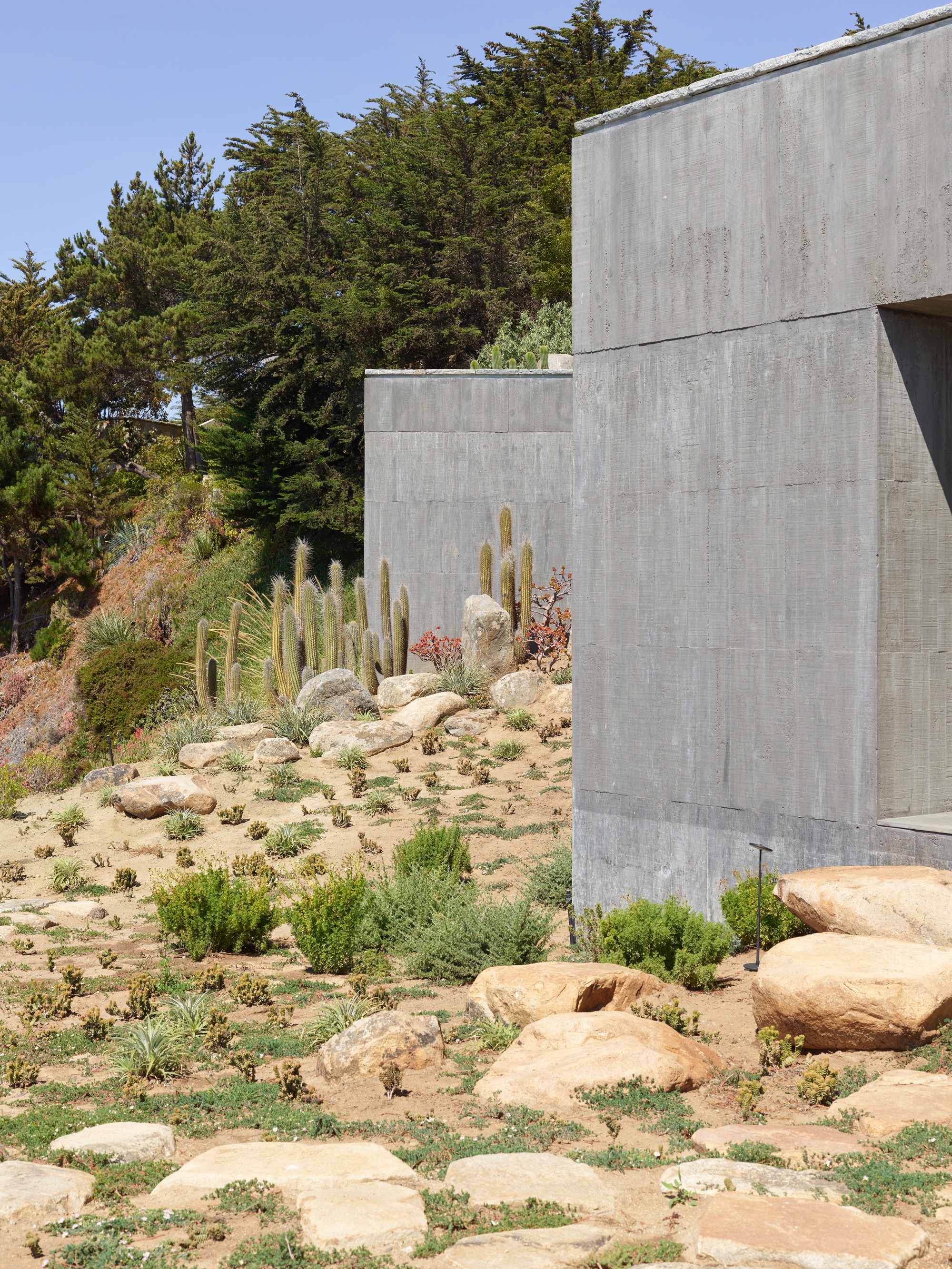
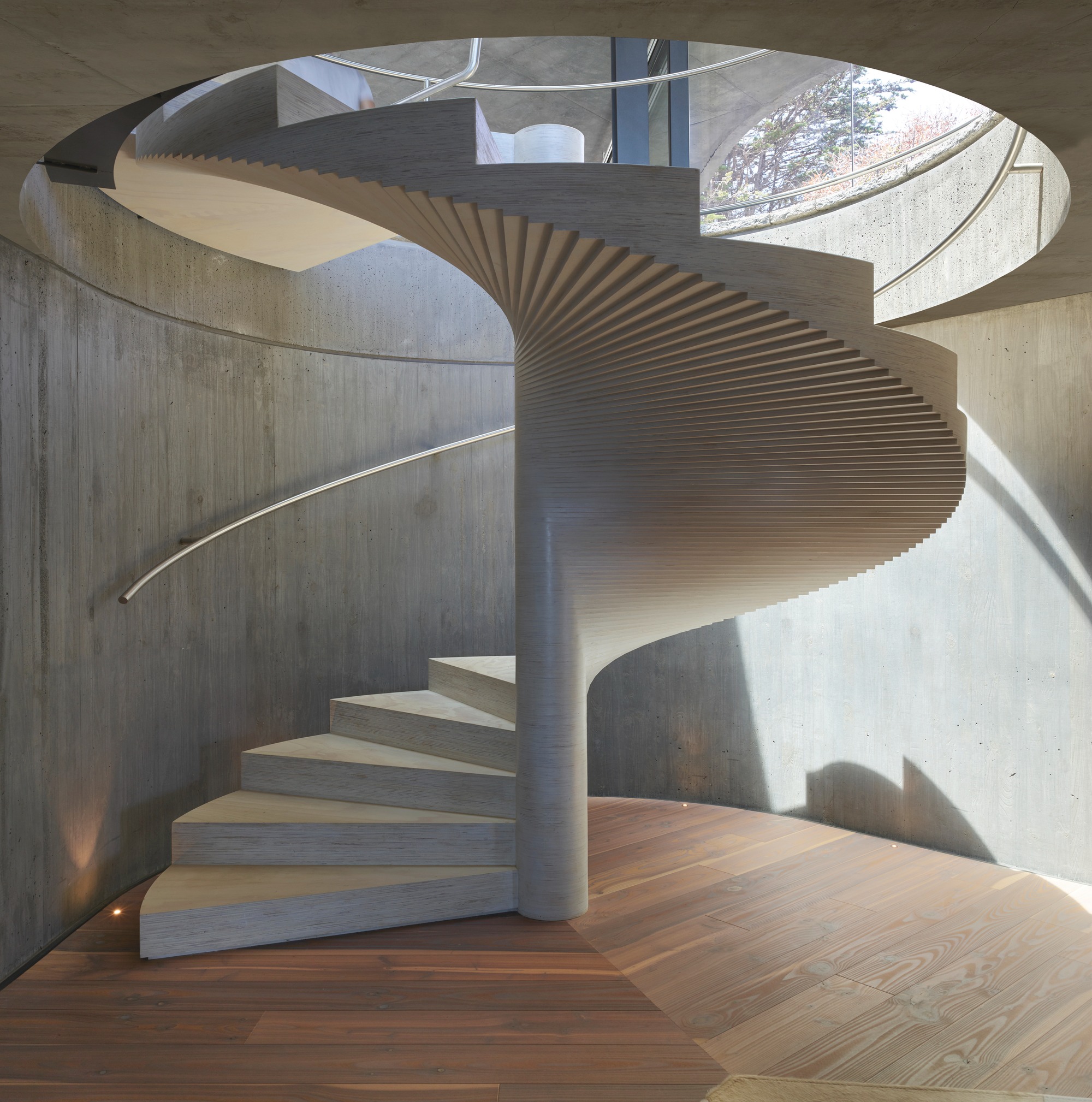
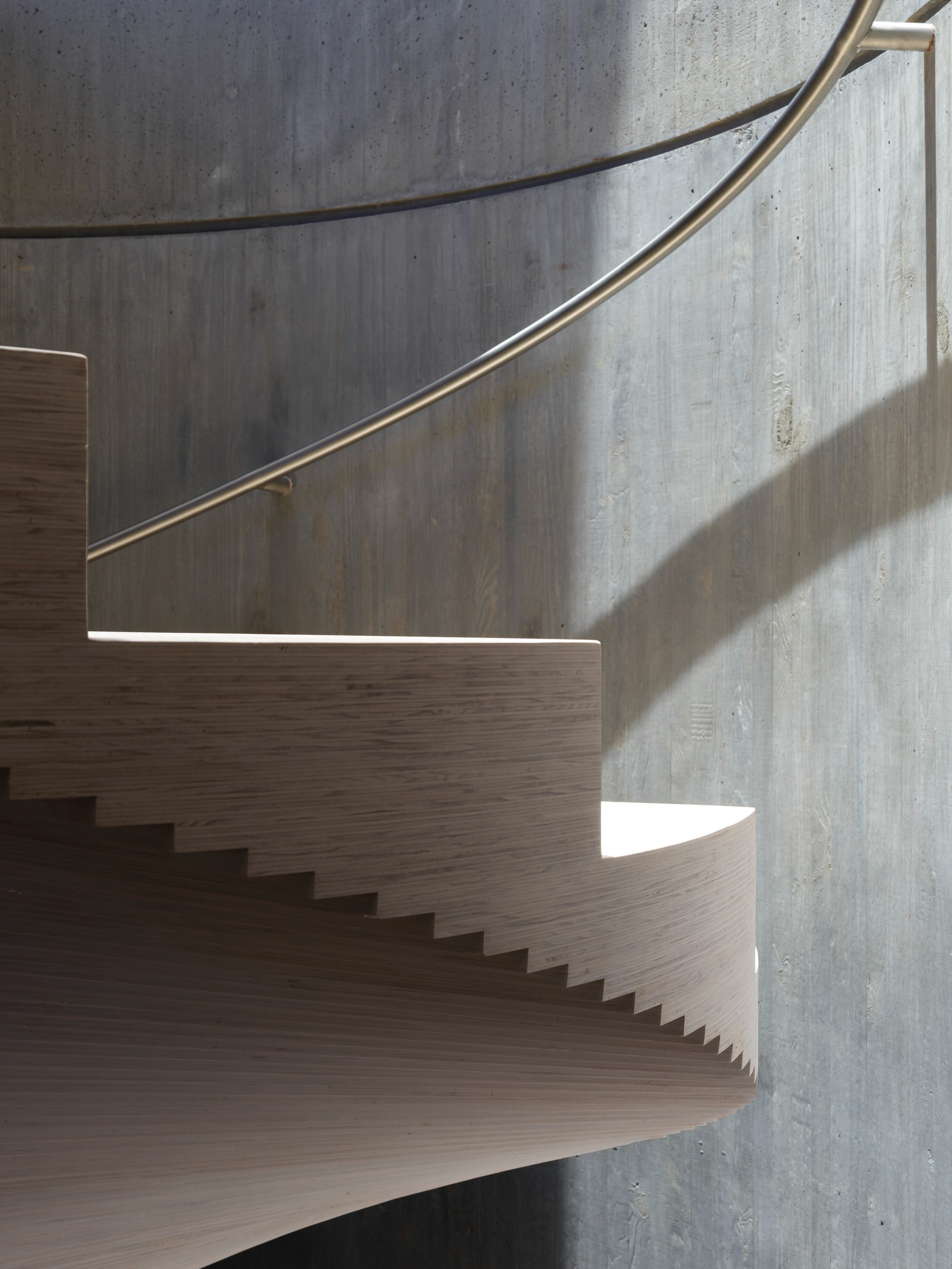
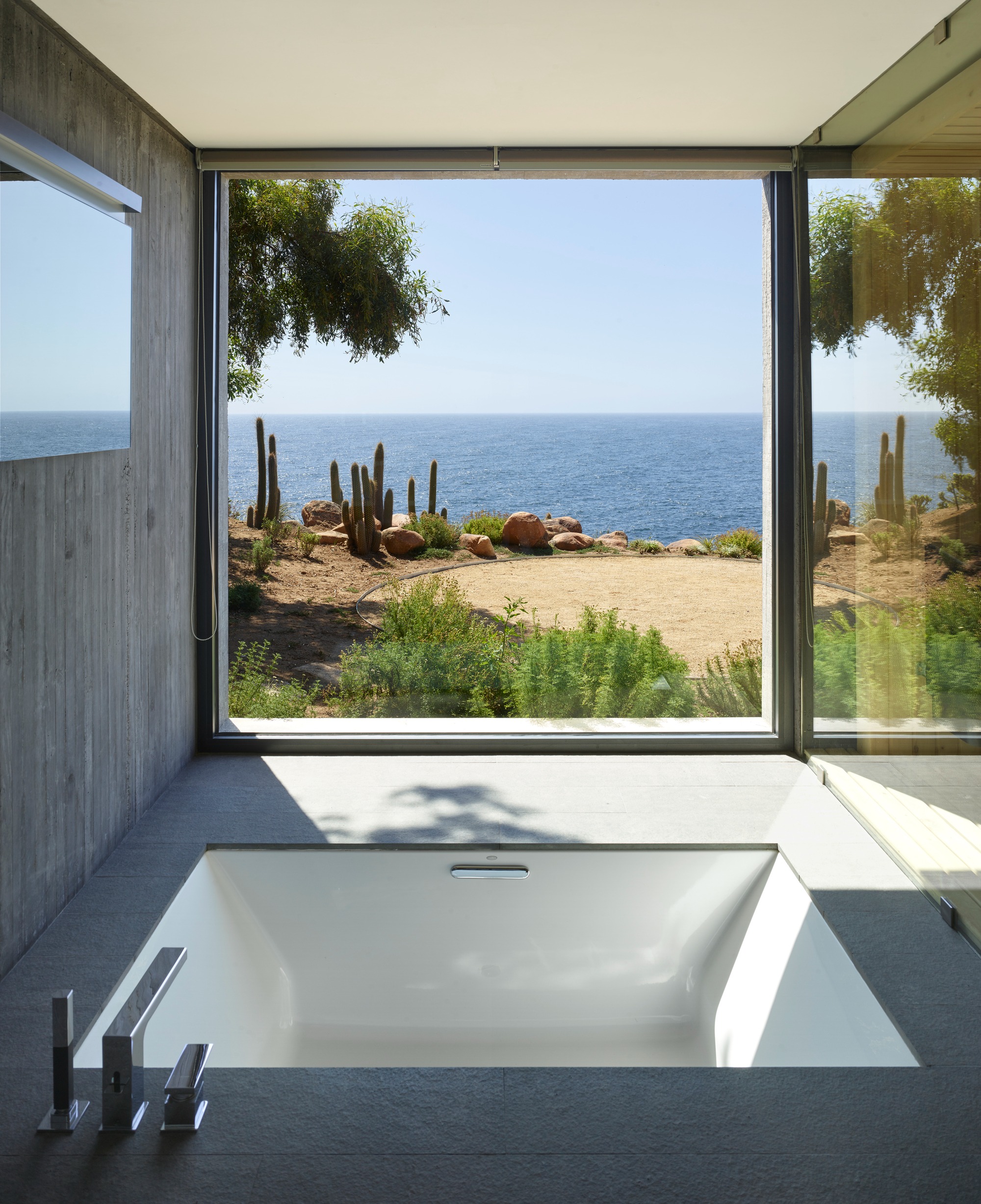
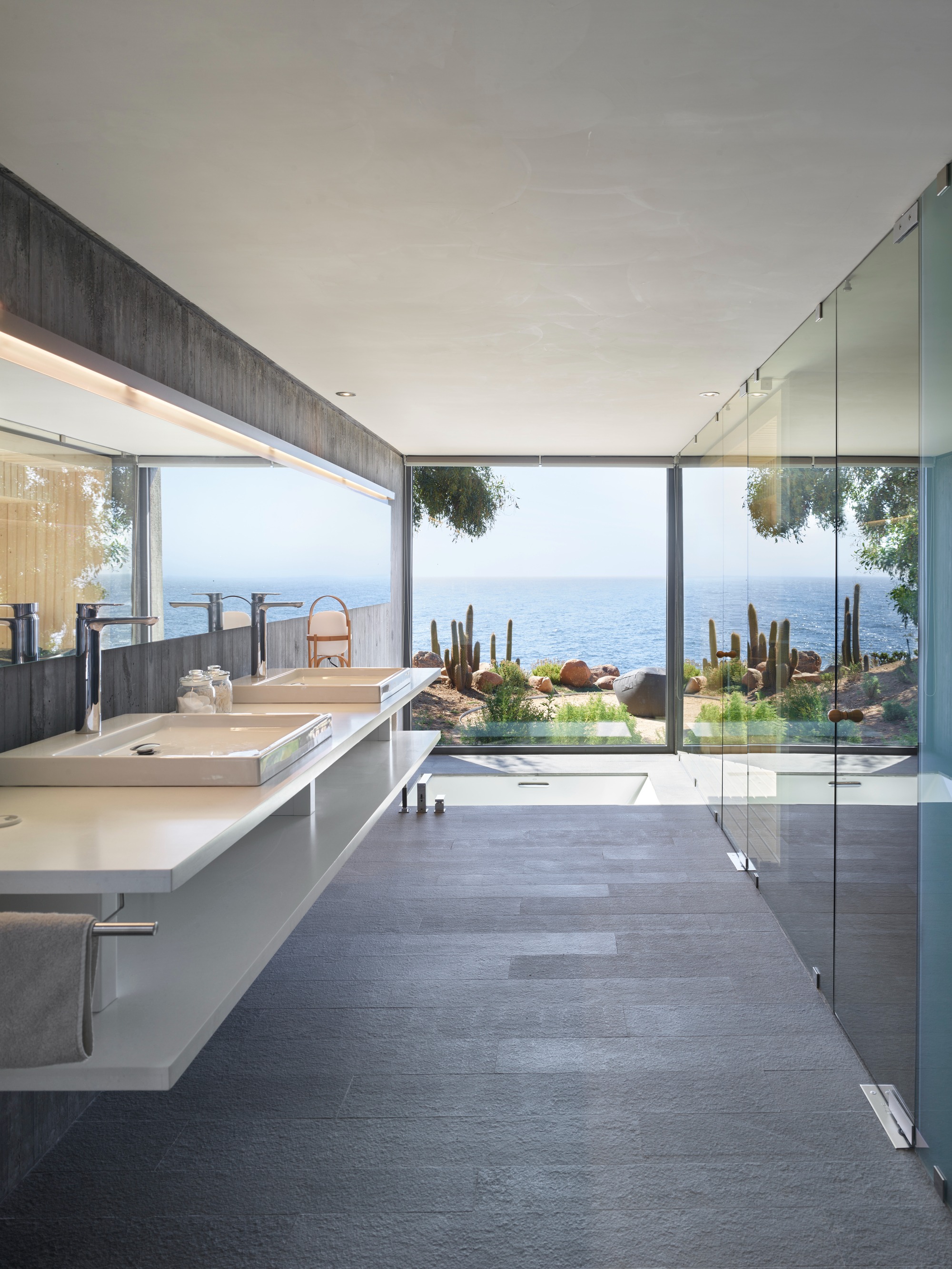
침실을 담은 하부 볼륨은 지형 속으로 깊이 파고들어 주변 환경과 하나가 되려 한다. 검은 안료로 물들인 노출 콘크리트 기단, 거푸집 자국을 그대로 남긴 거친 표면이다. 이 물질은 세월의 흔적을 머금으며 끊임없이 변화할 것이다. 협곡 아래 바위들처럼.
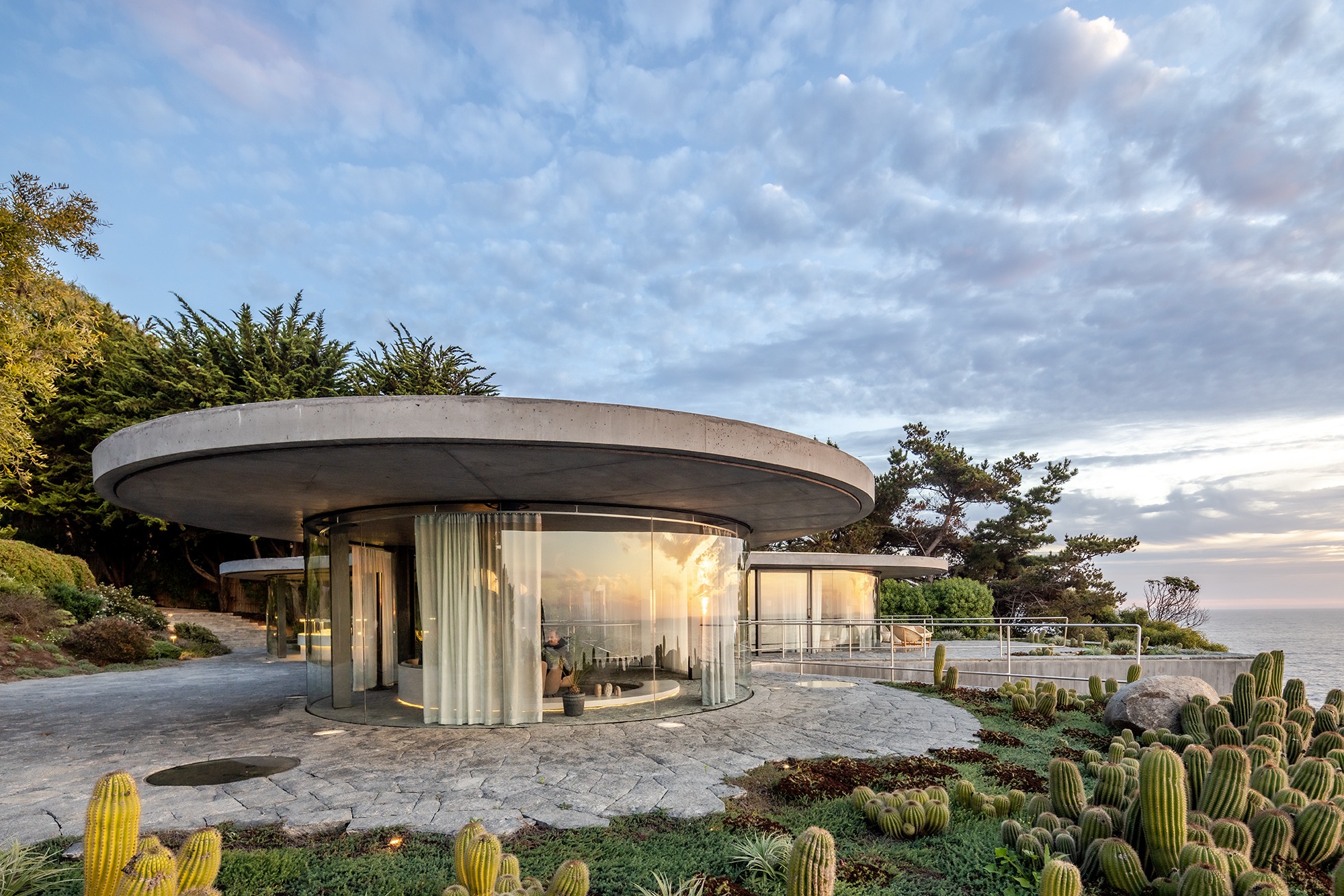
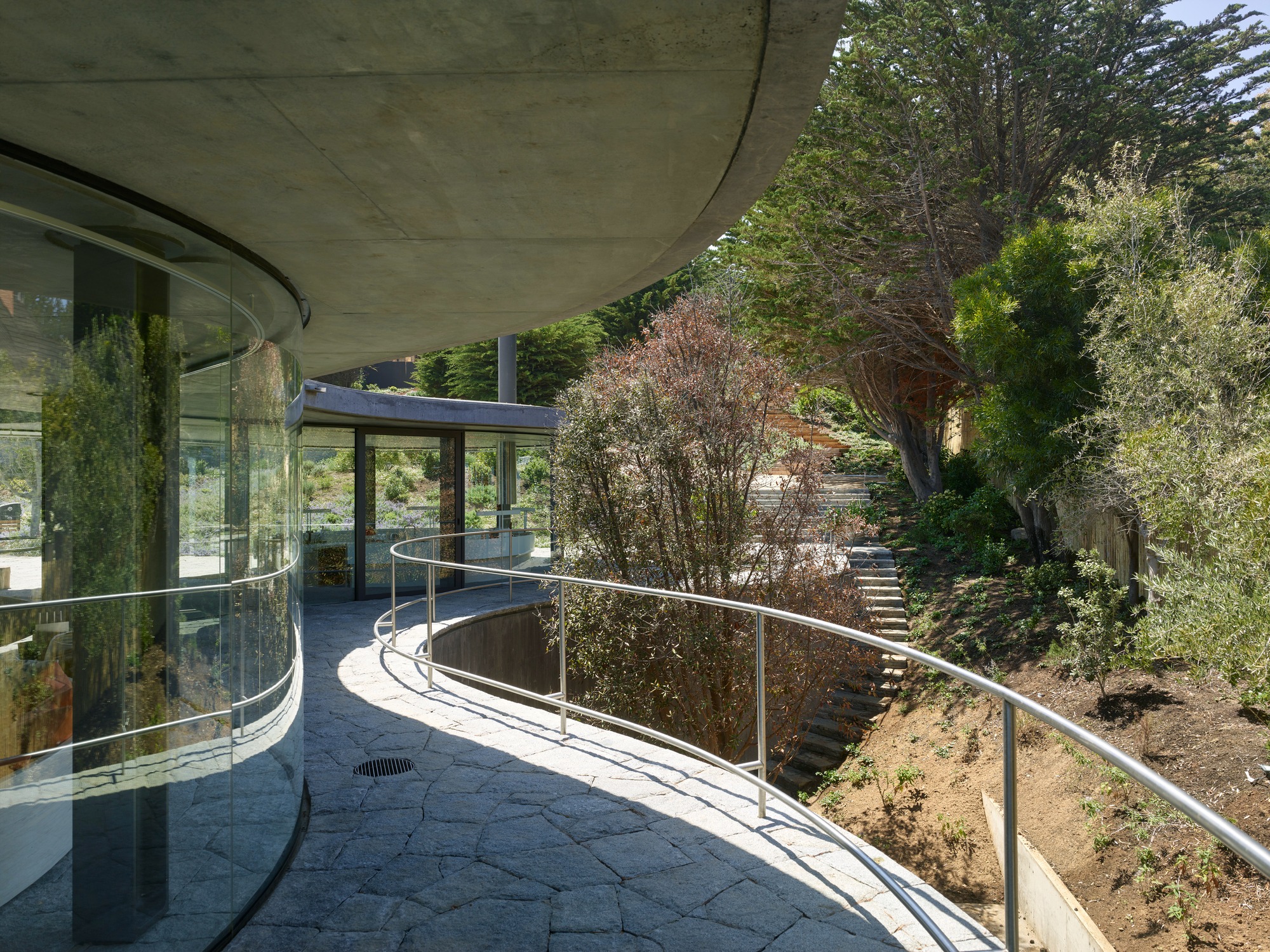
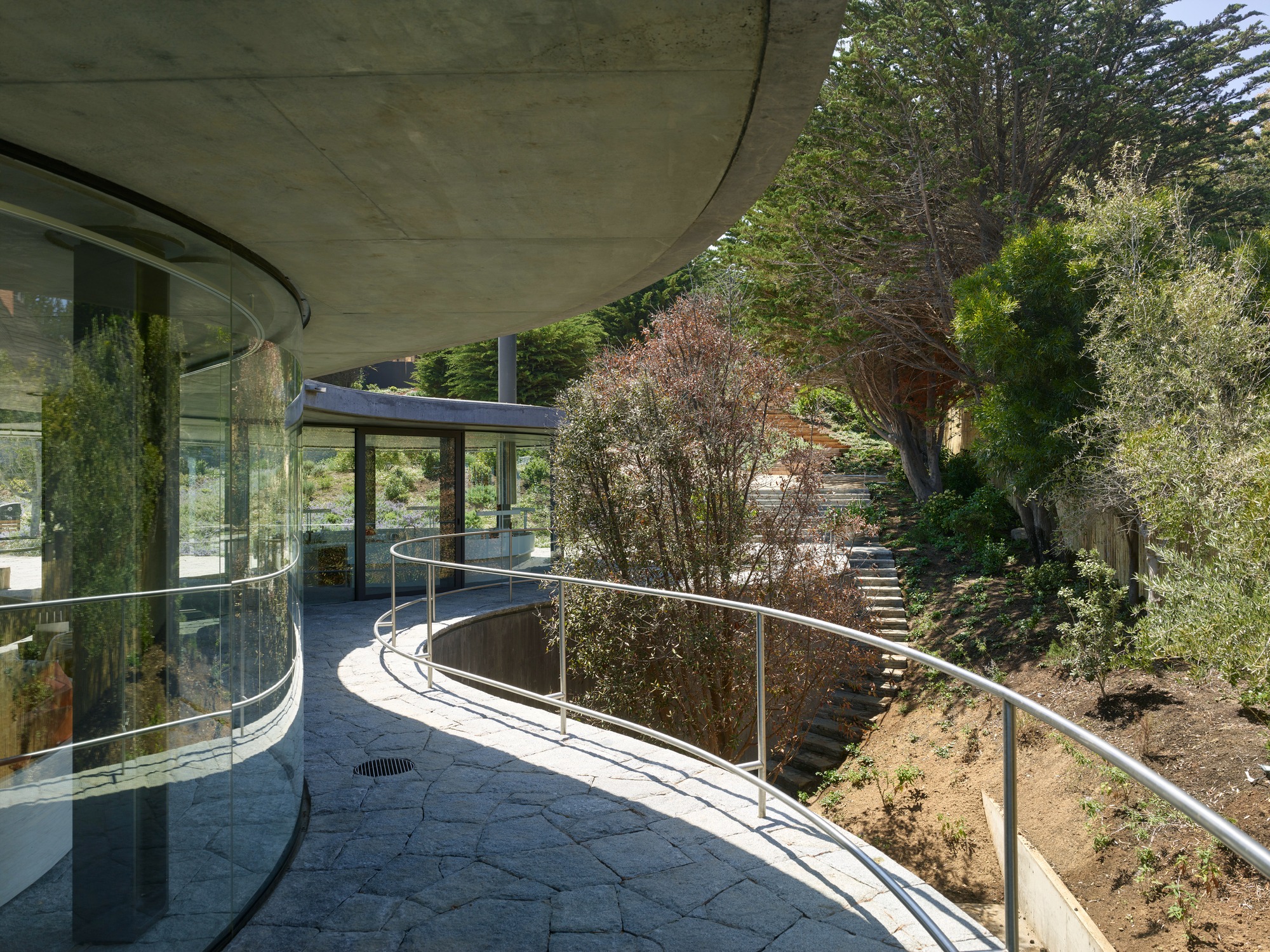
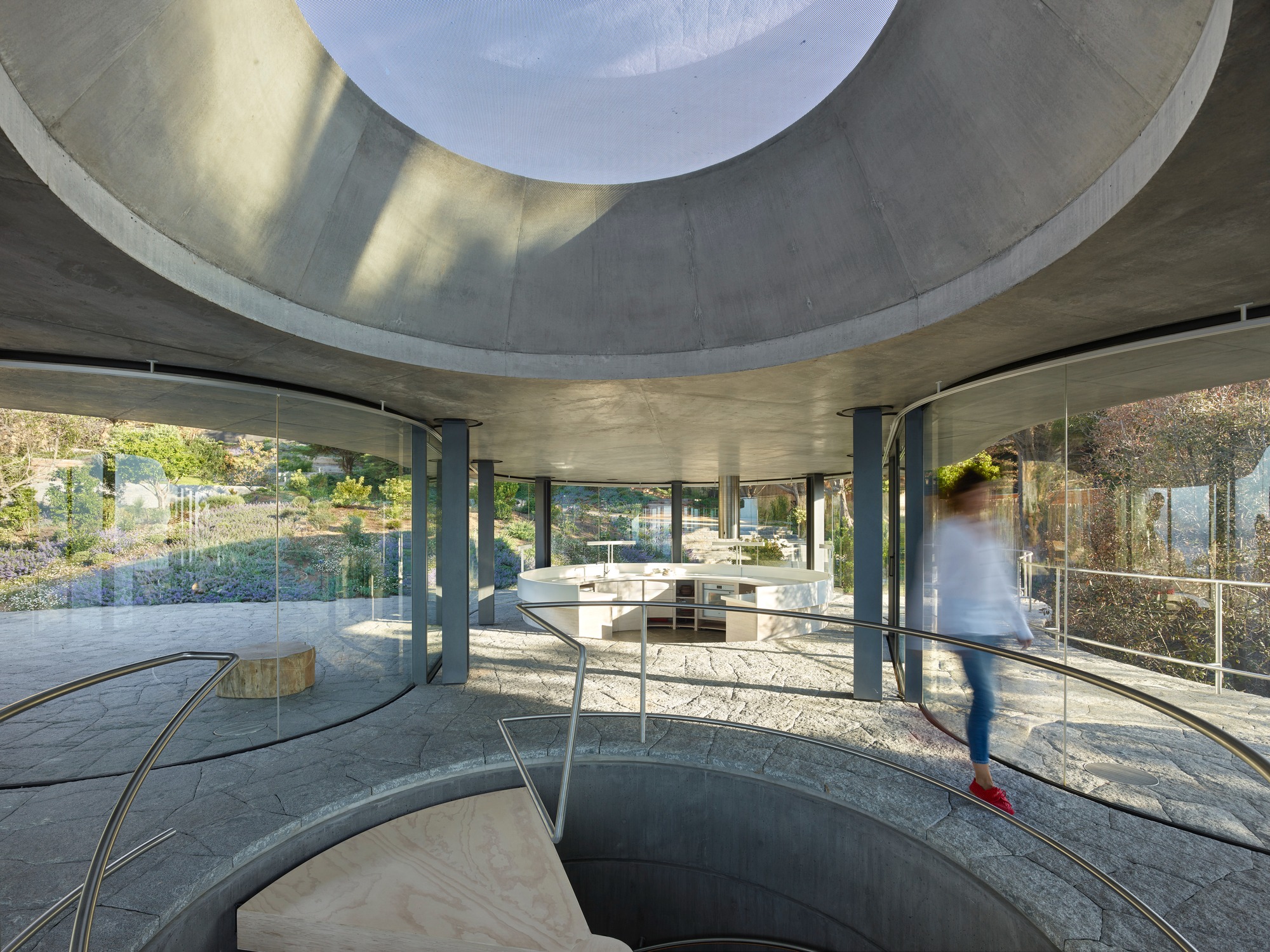
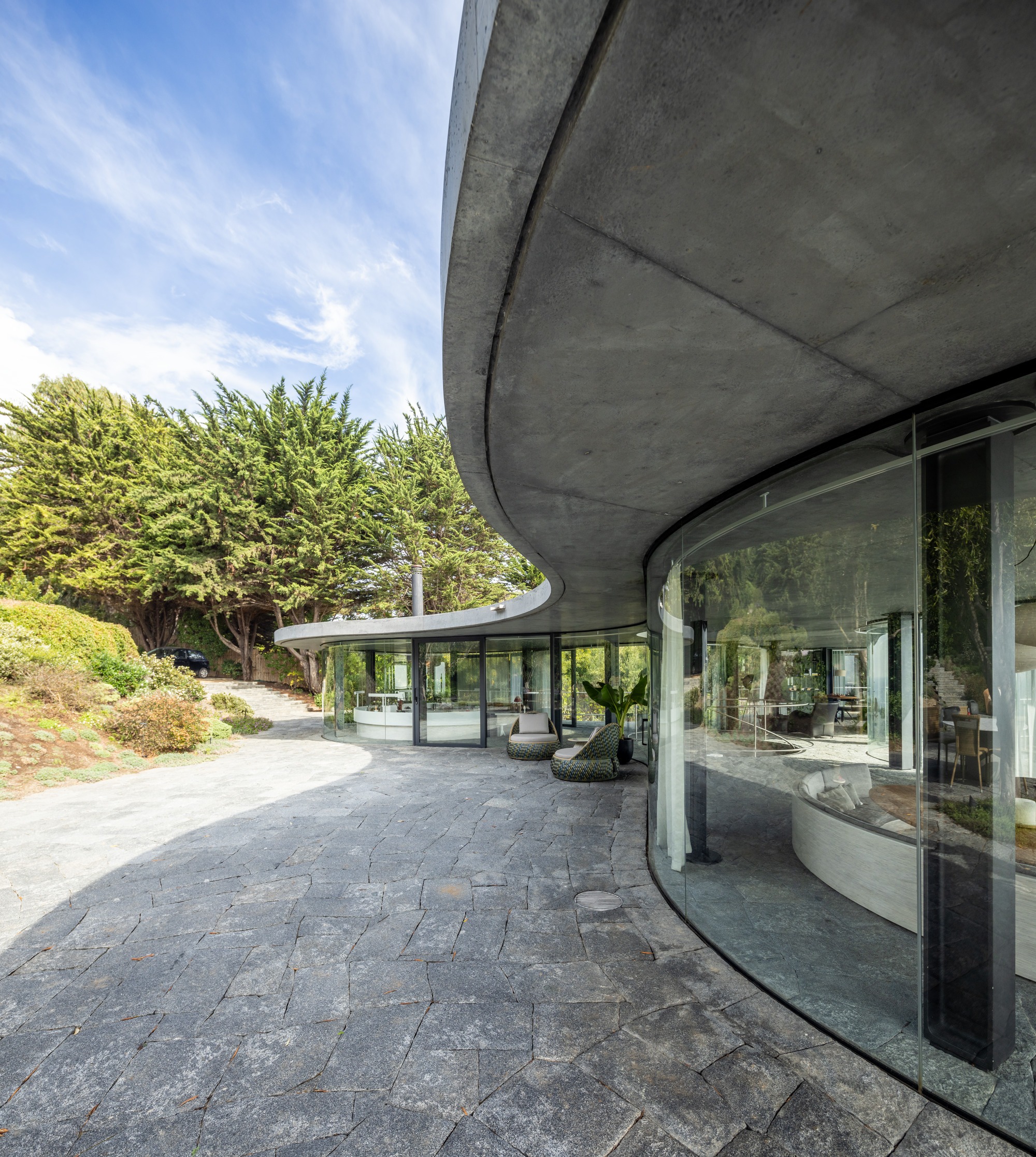
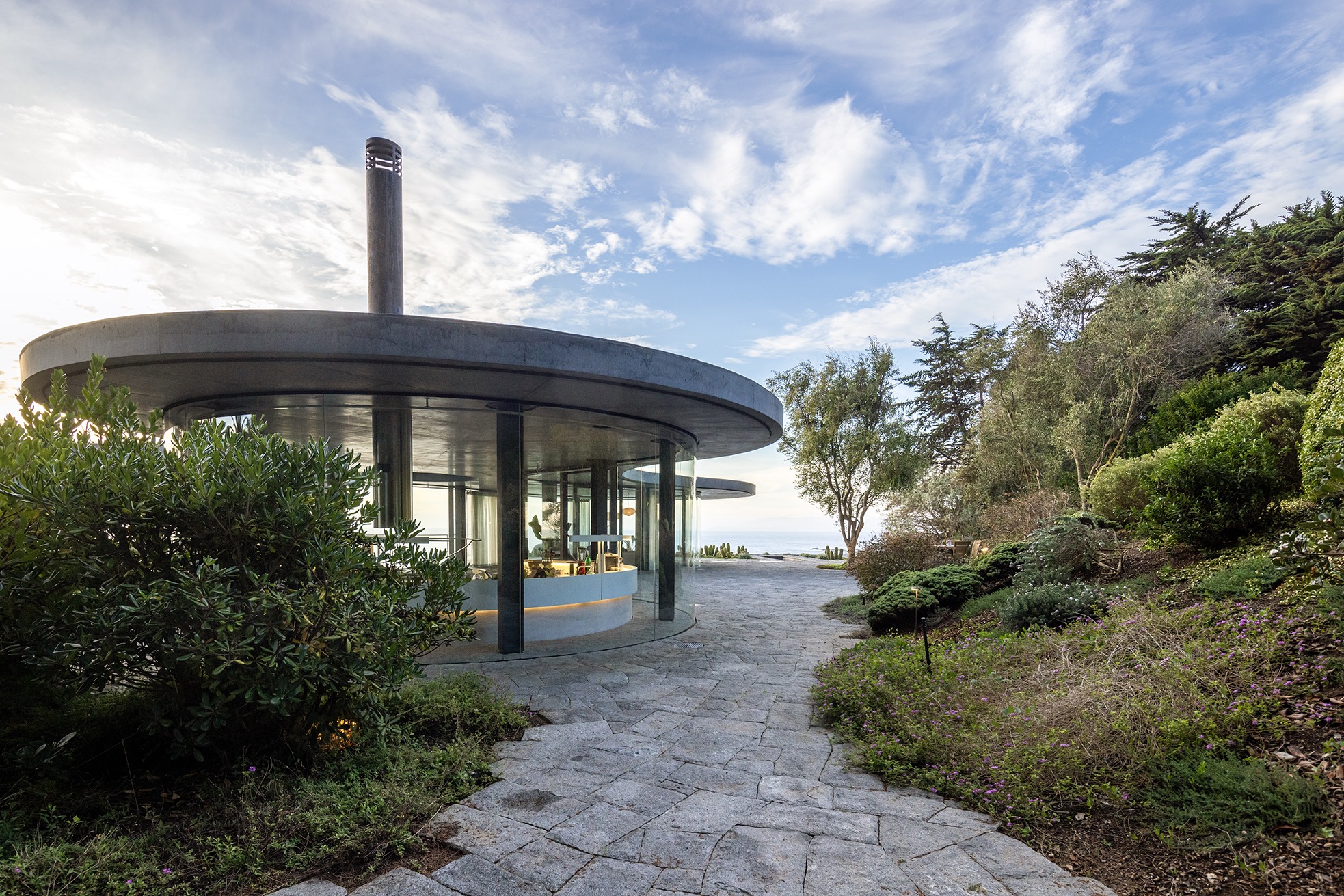
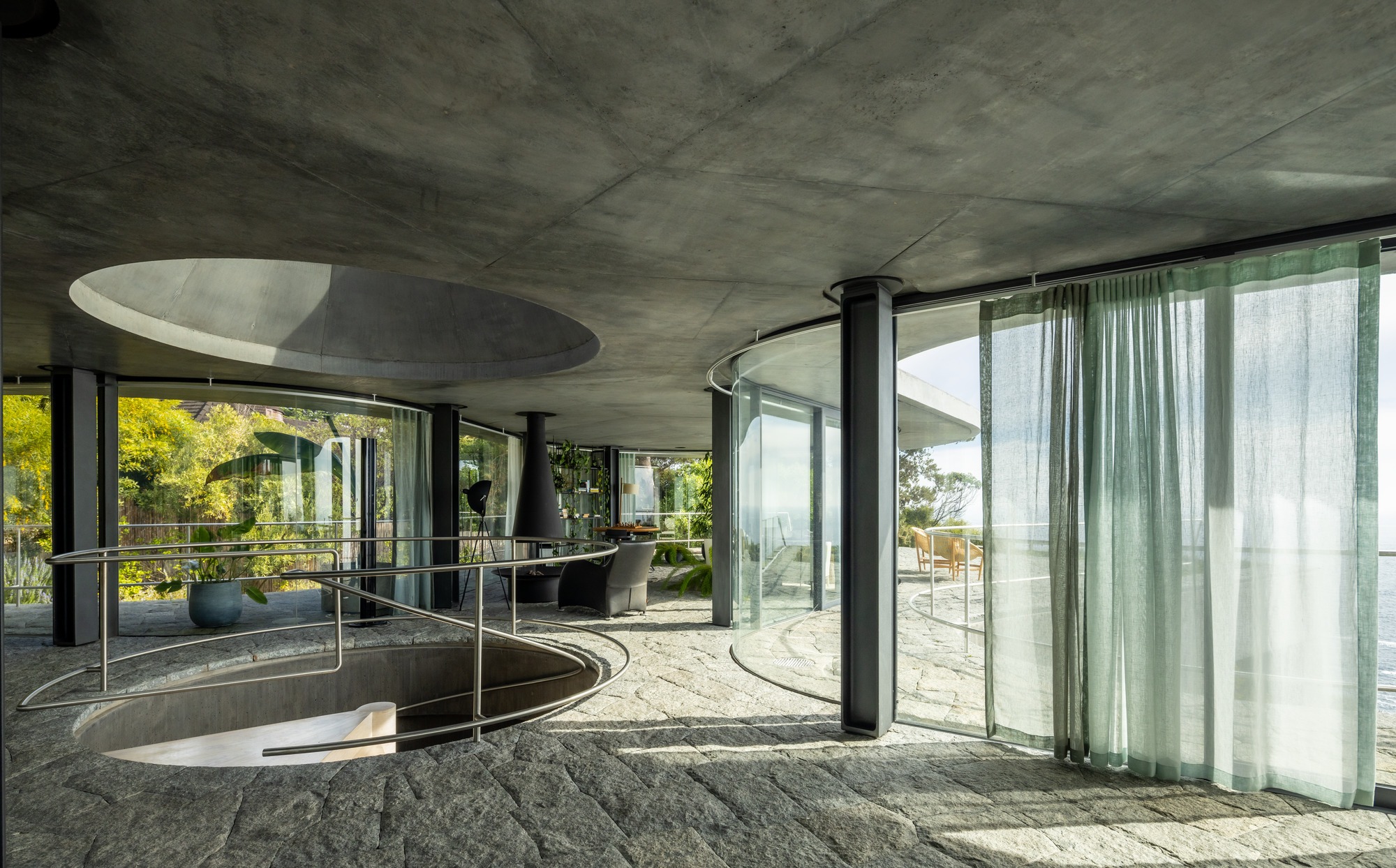
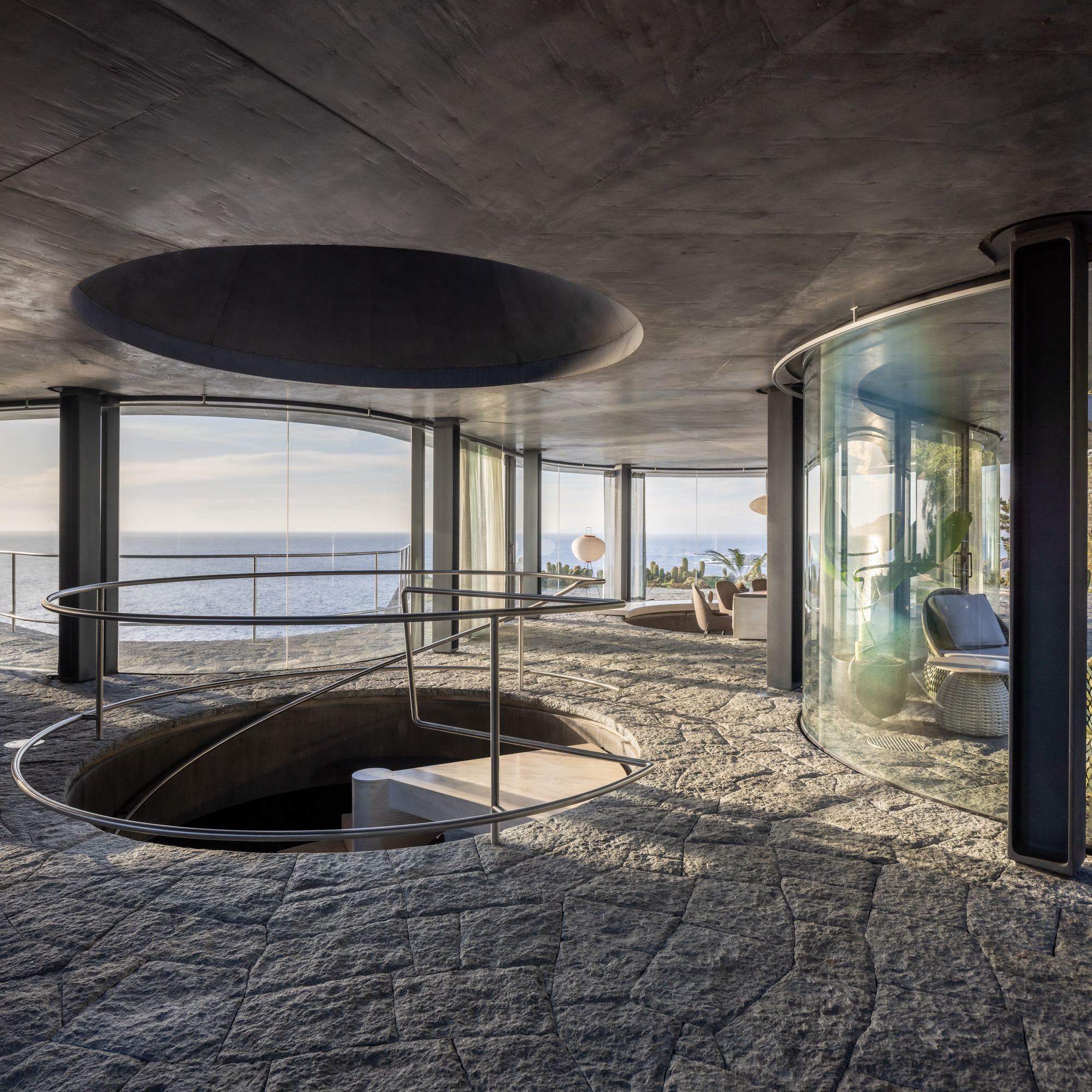
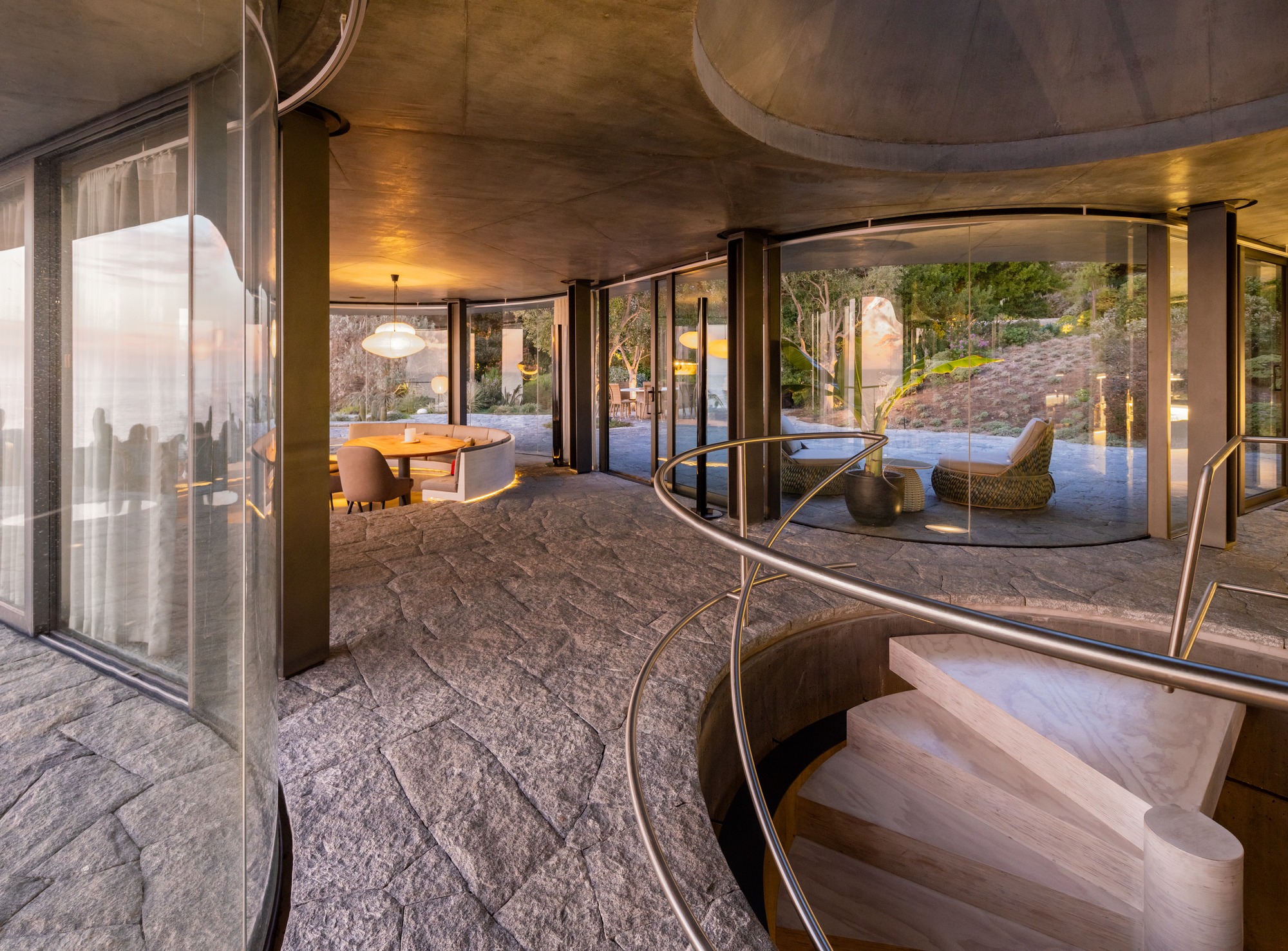
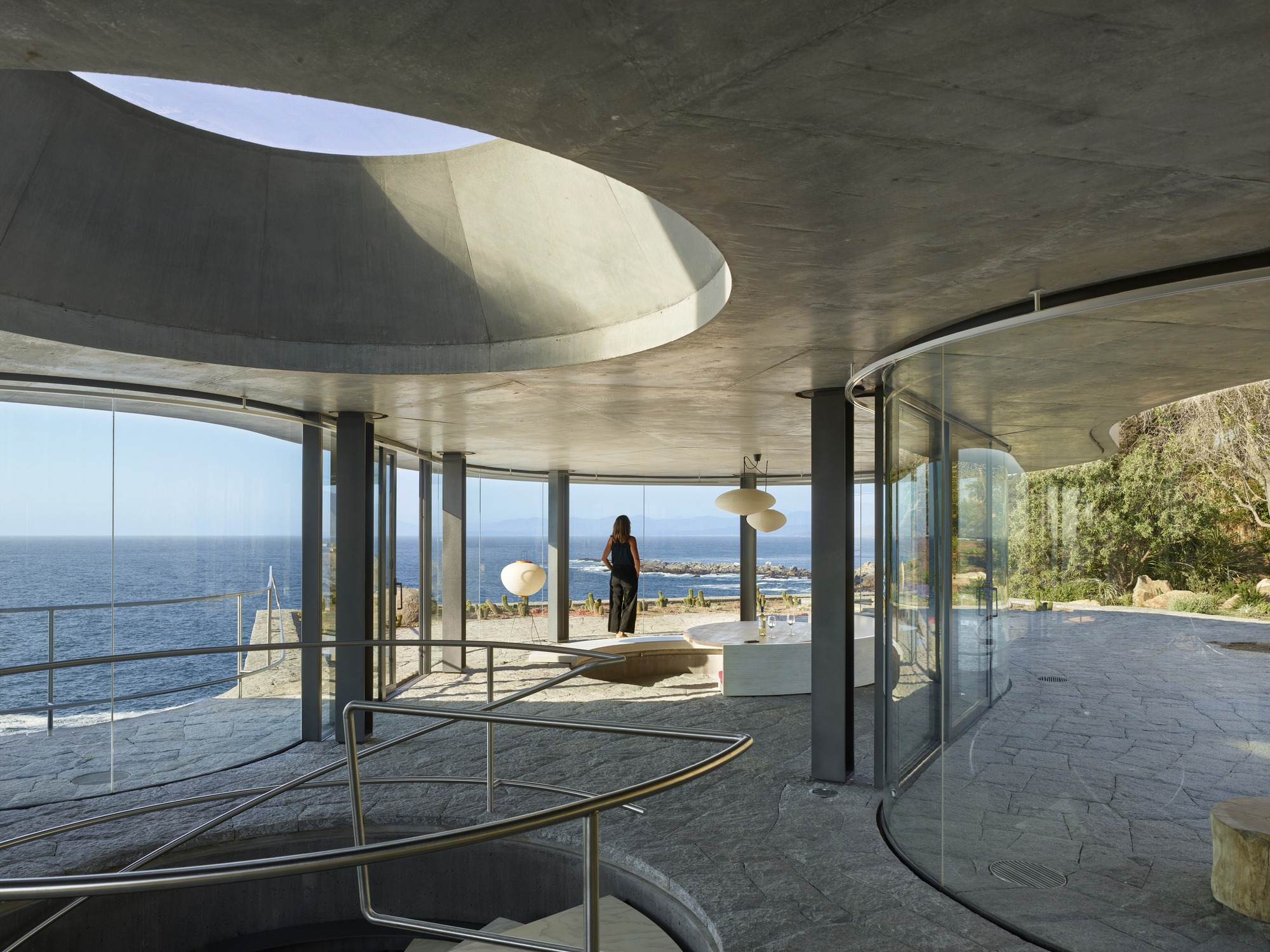
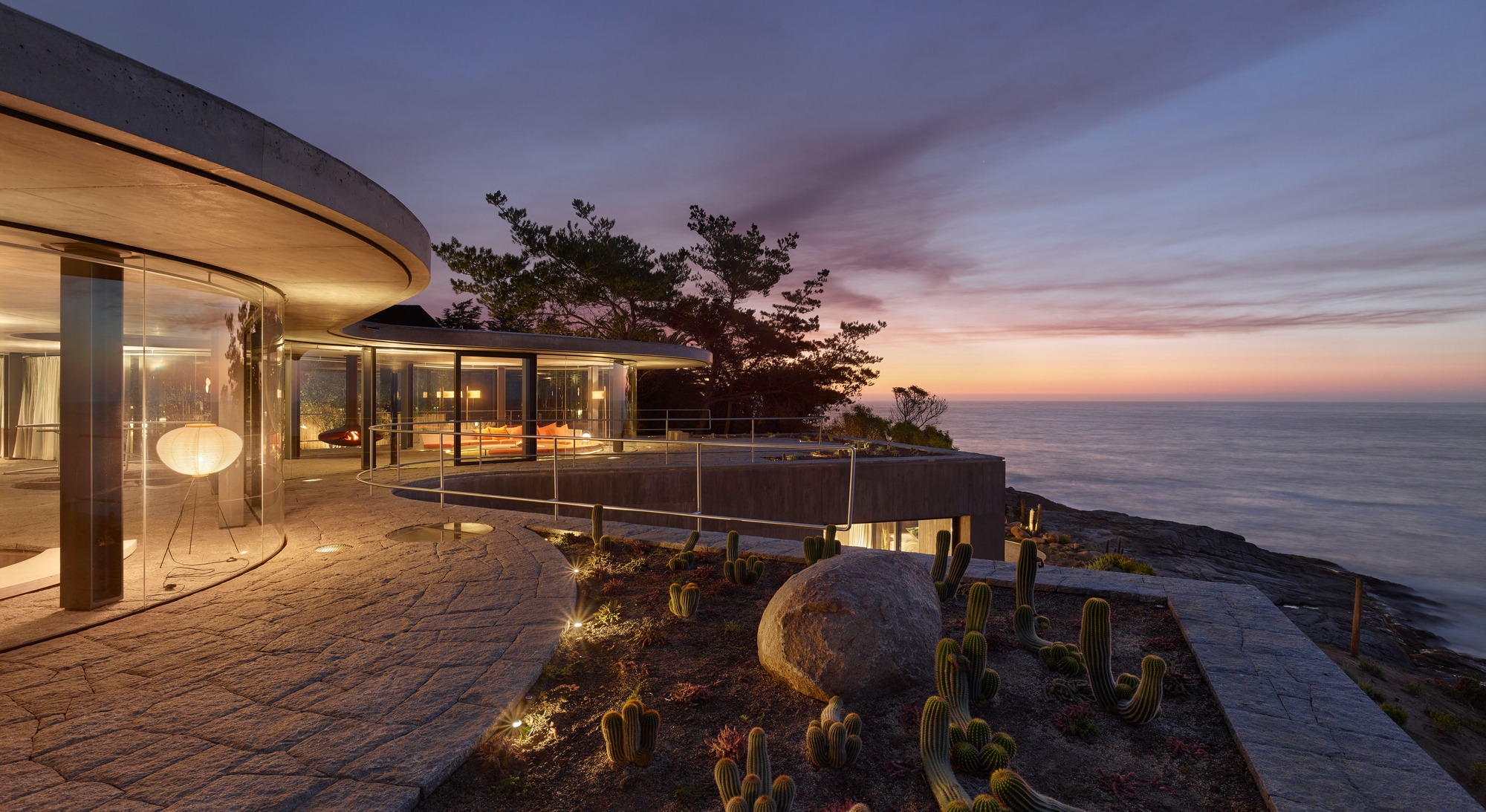
침실 볼륨 위에 얹힌 파빌리온은 공용 공간을 담았으며, 완전히 투명하다. 21개의 철 기둥이 떠받치는 거대한 그늘, 하나의 콘크리트 지붕판이다.
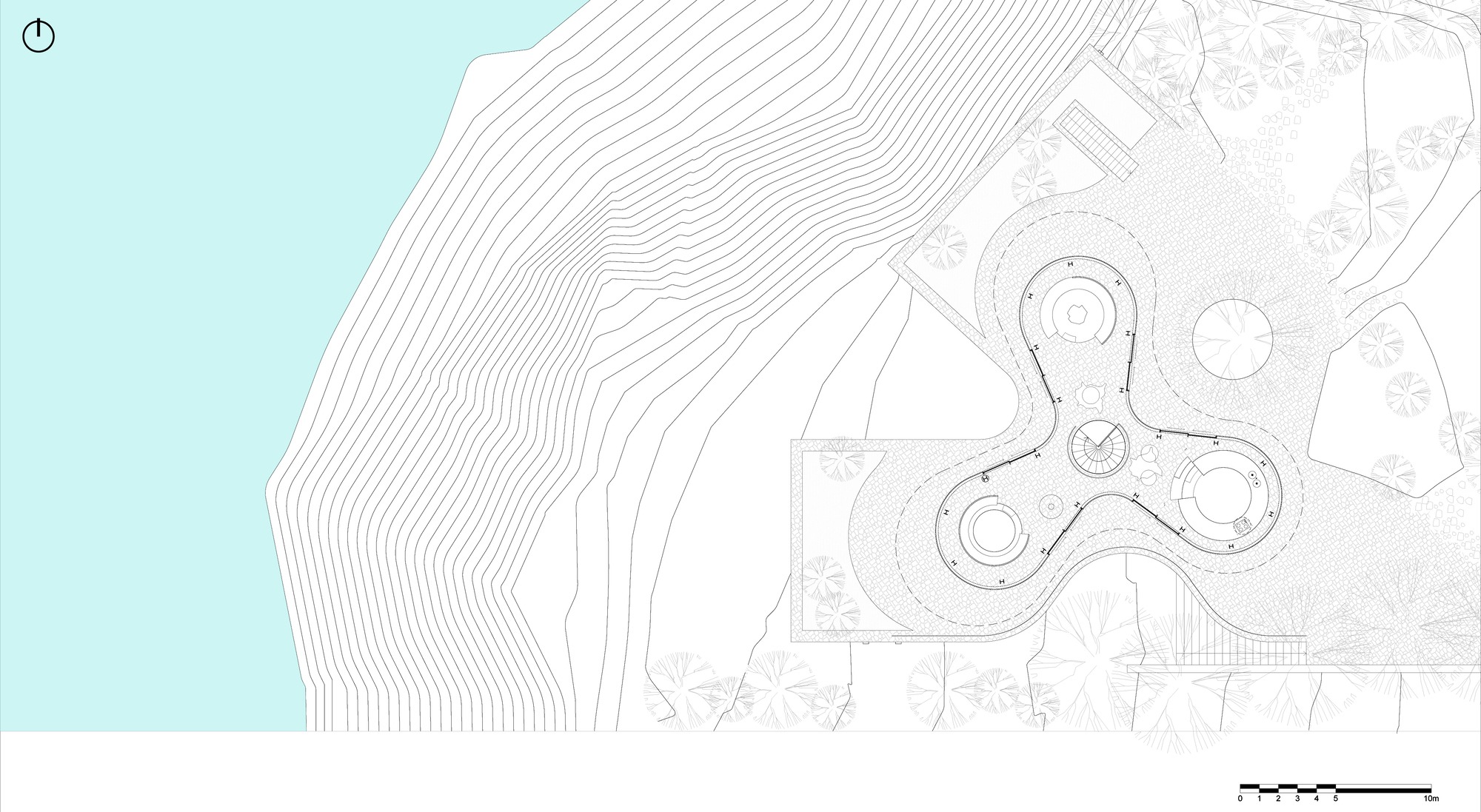
지붕을 지지하는 벽이나 필수적인 가새를 피하기 위해 기둥 높이를 최소화했다(230센티미터). 그리고 내진 성능을 높이는 형태를 찾았다. 세 면의 유기적 곡선형, 아메바.
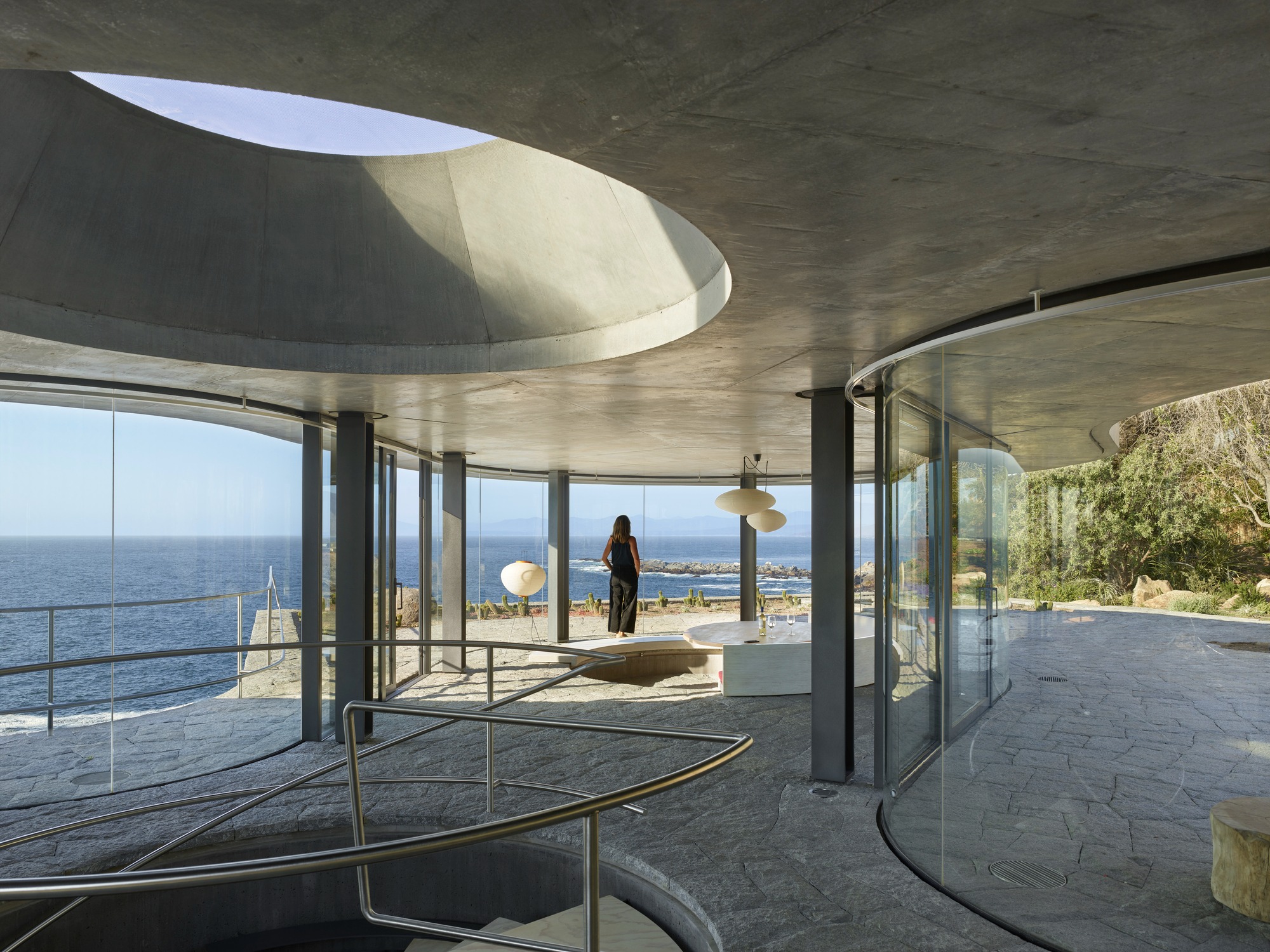
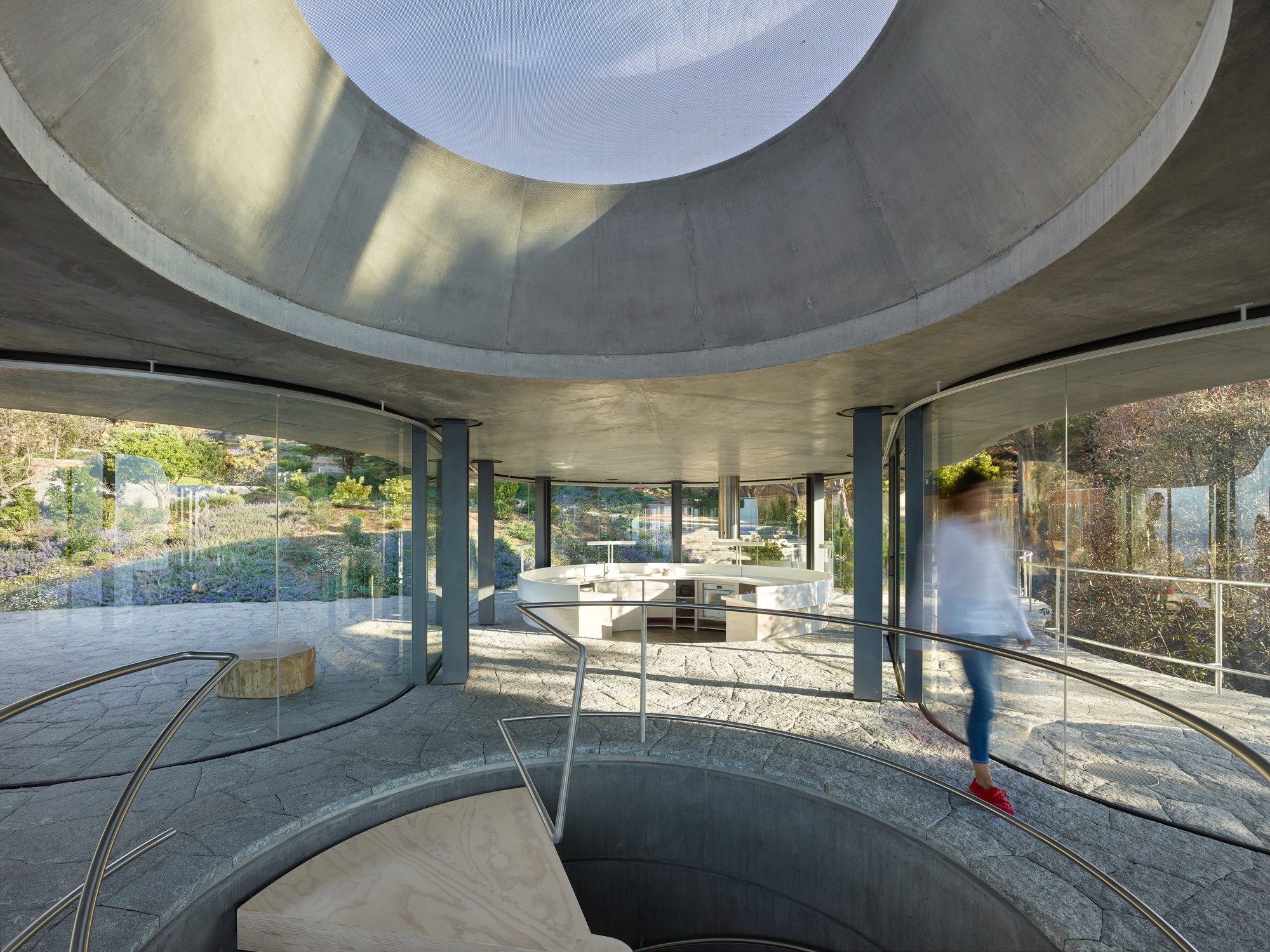
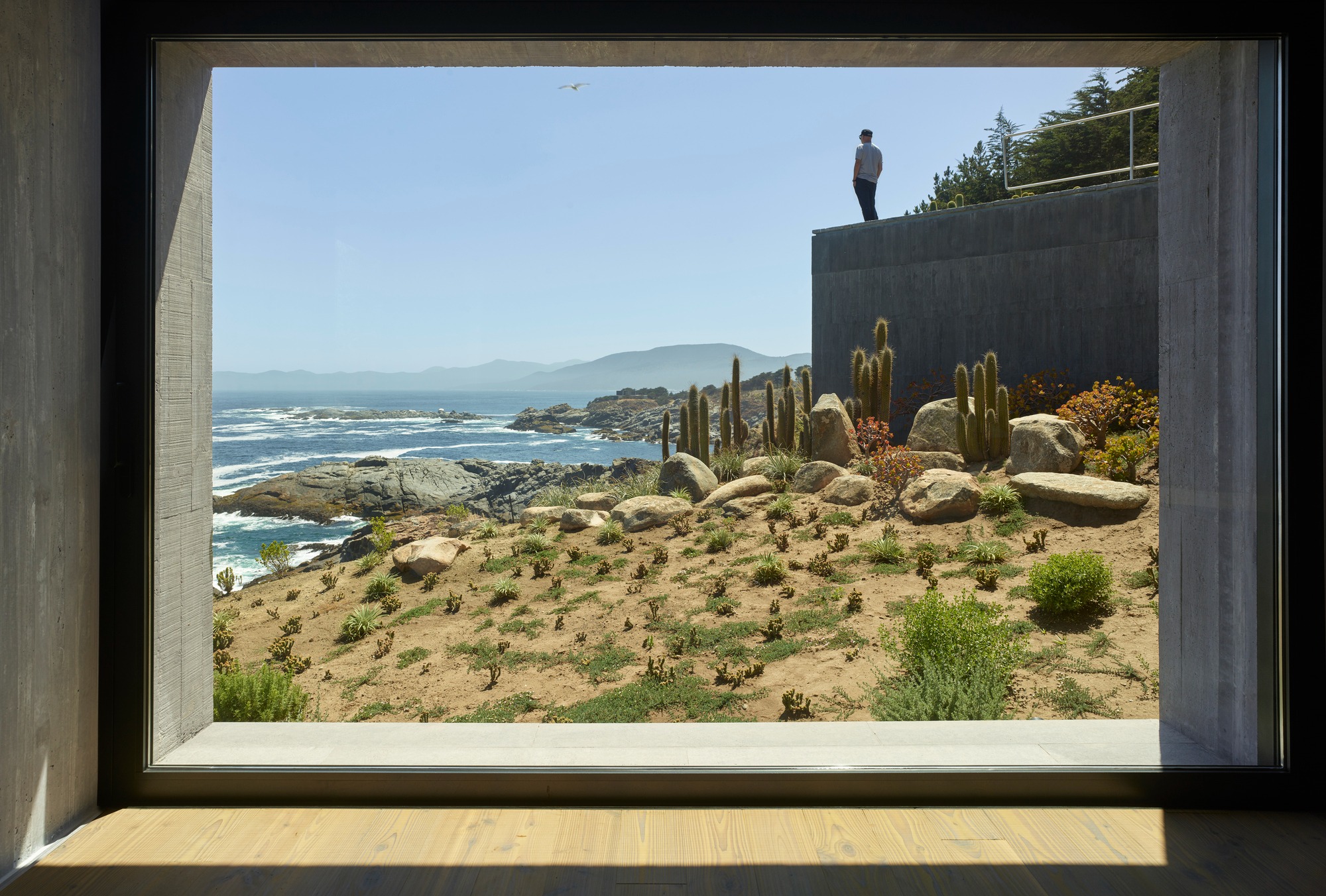
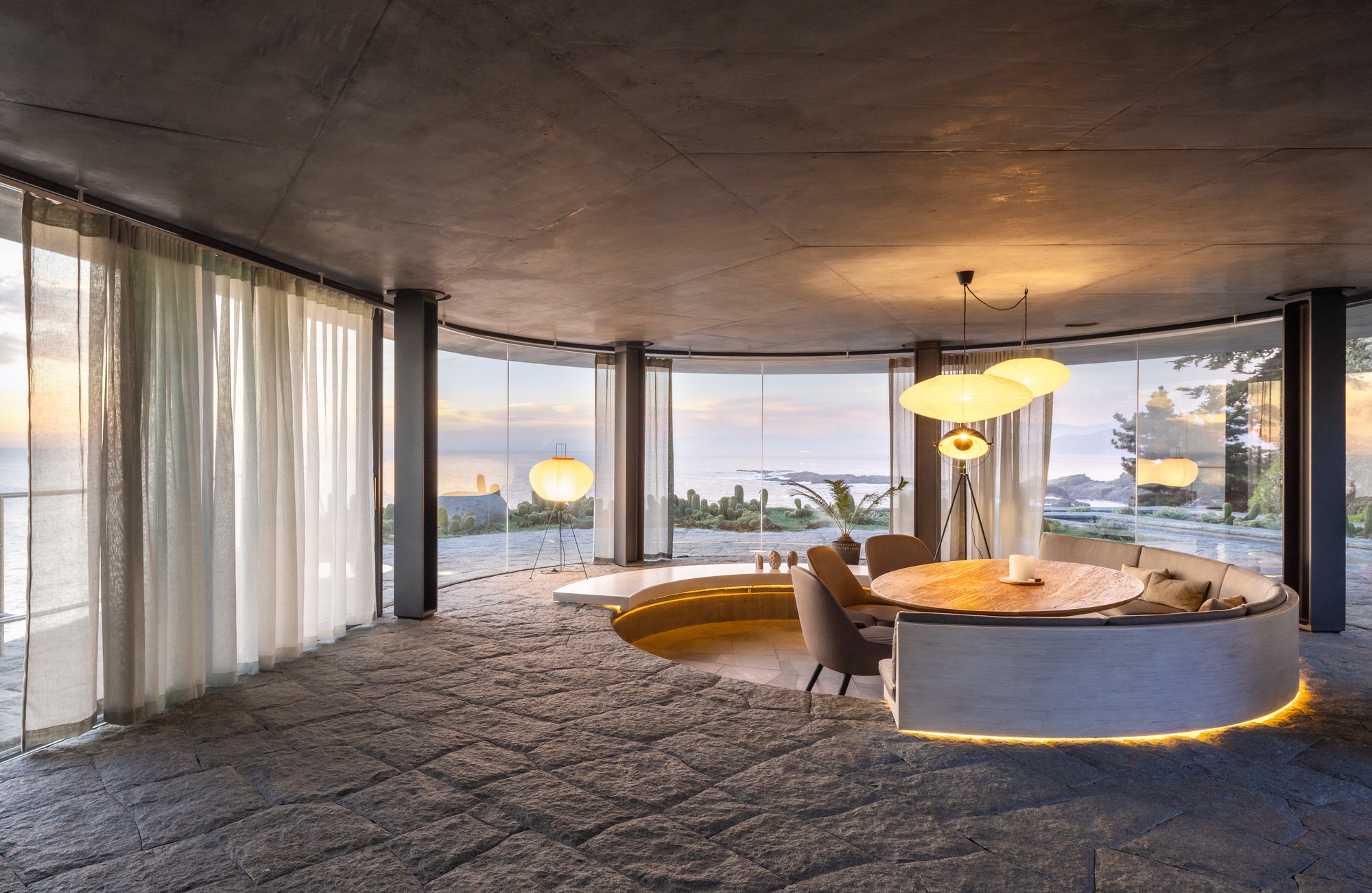
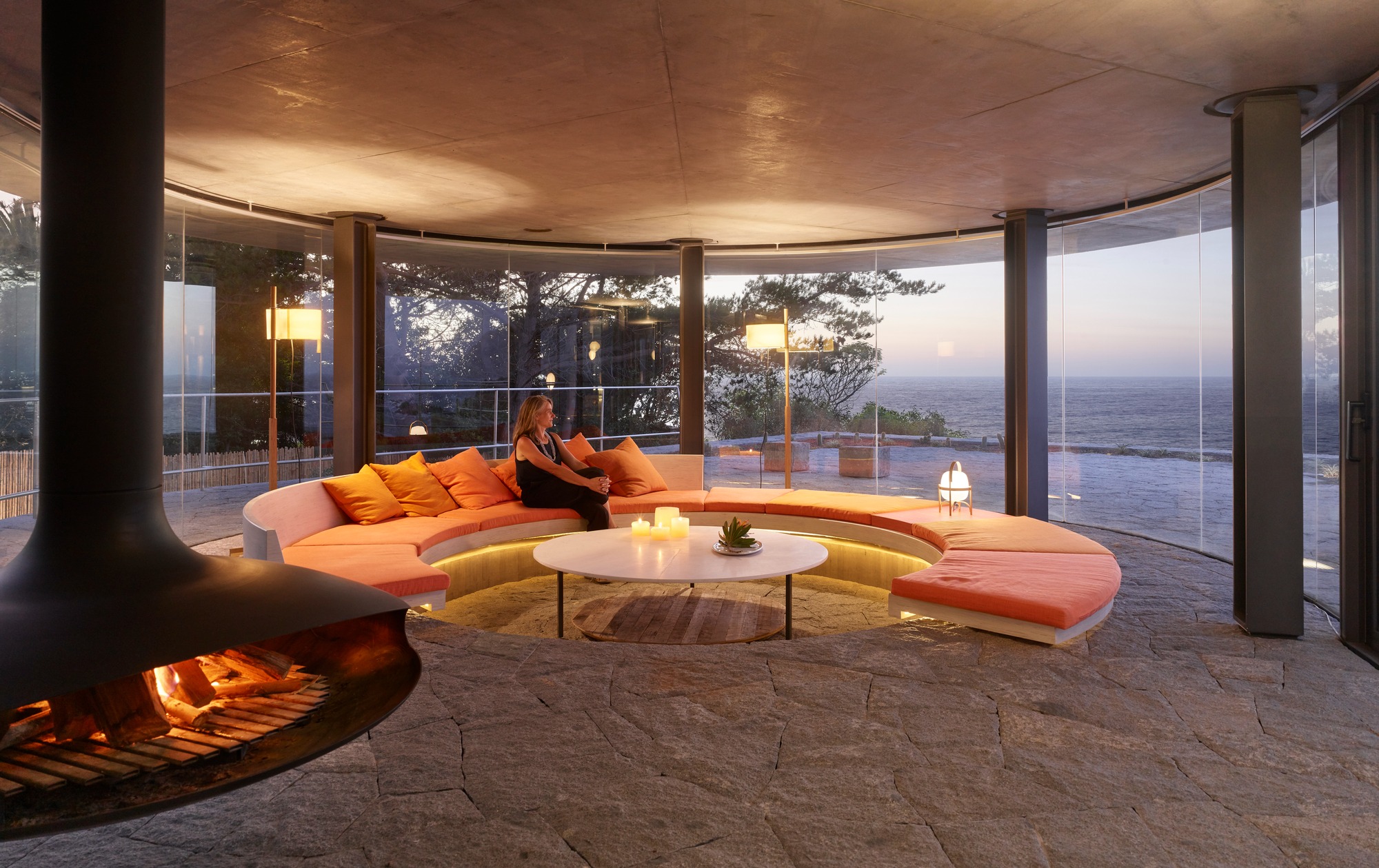
낮은 천장과 넓은 지붕판은 수평 시선을 더욱 강조한다. 외부 공간 및 수평선과의 관계를 강화한다. 시선이 지붕판에 가까워지면서 위를 향하는 각도가 줄어든다. 이 층의 거실, 식당, 주방은 아메바의 세 면 각각에 배치되며, 세 개의 움푹 들어간 원을 이룬다.
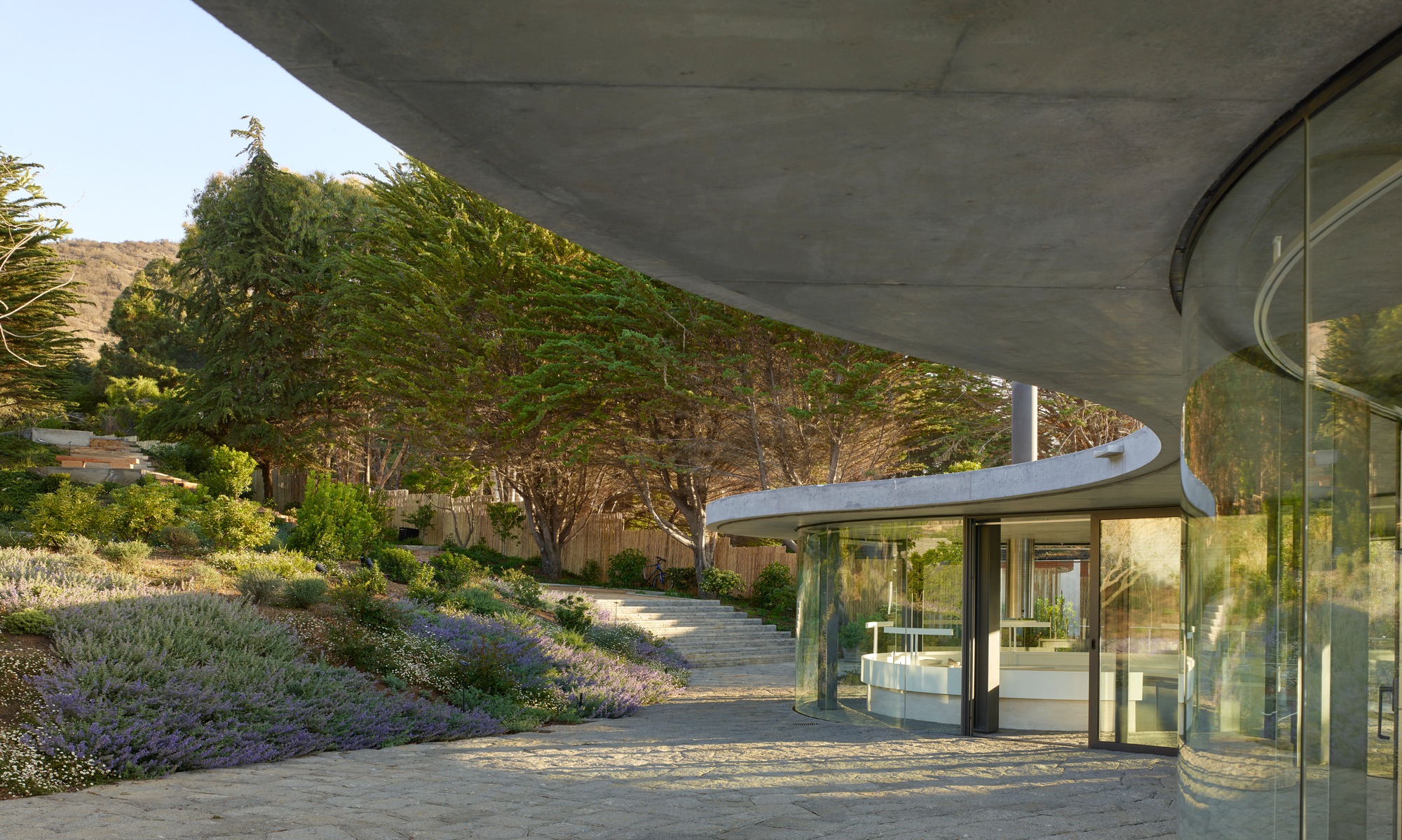
후안 그림(Juan Grimm)이 설계한 조경은 협곡에 원래 존재하던 식생과 동물상을 복원하려 한다. 새로운 건축 이전에 존재했던 것을 되찾는다. 프로젝트가 완성되면 자연이 건축이 남긴 틈새를 채워 넣을 것이다. 마치 집이 처음부터 그 자리에 있었던 것처럼.
Write by Claude & Jean Browwn
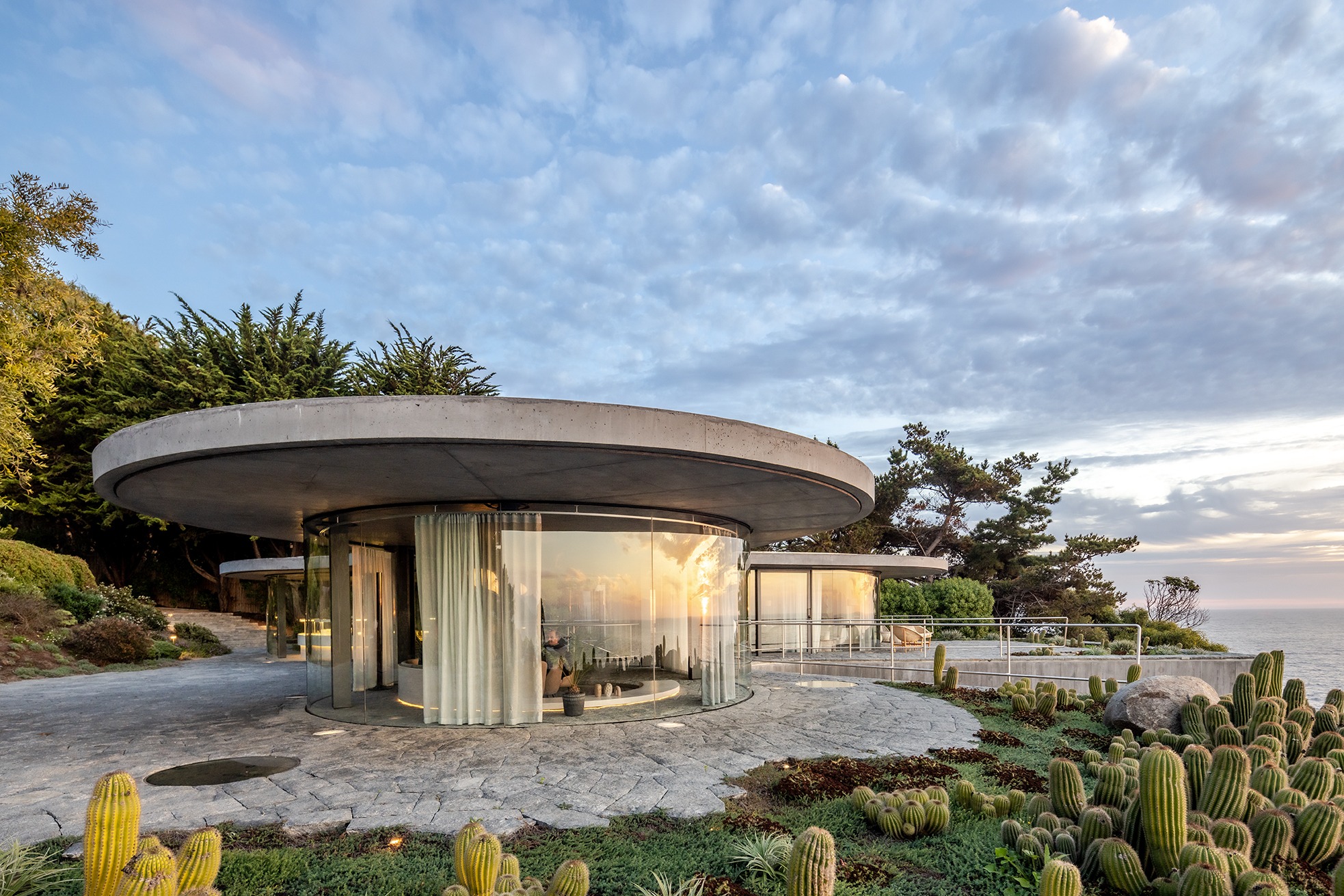

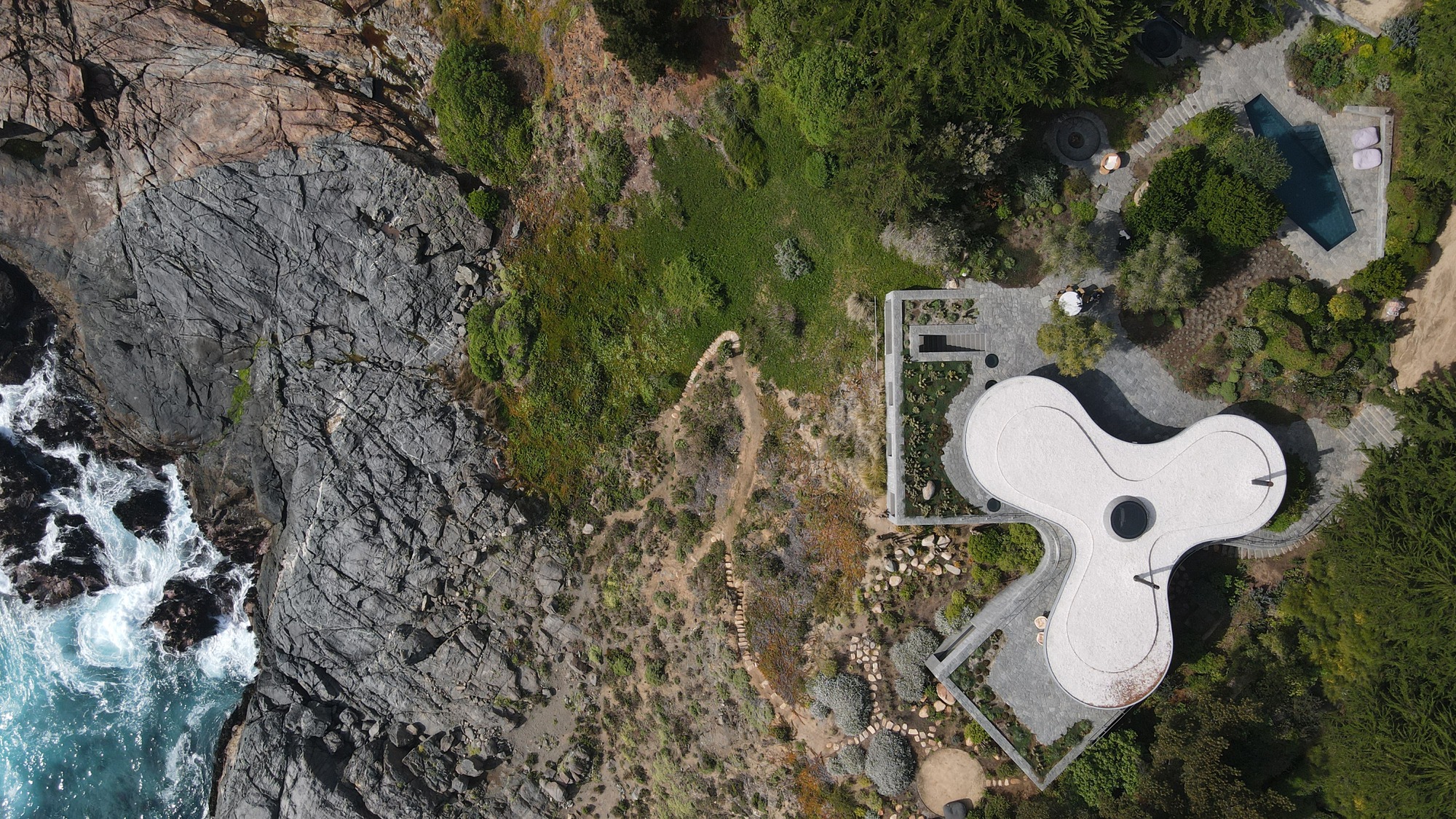

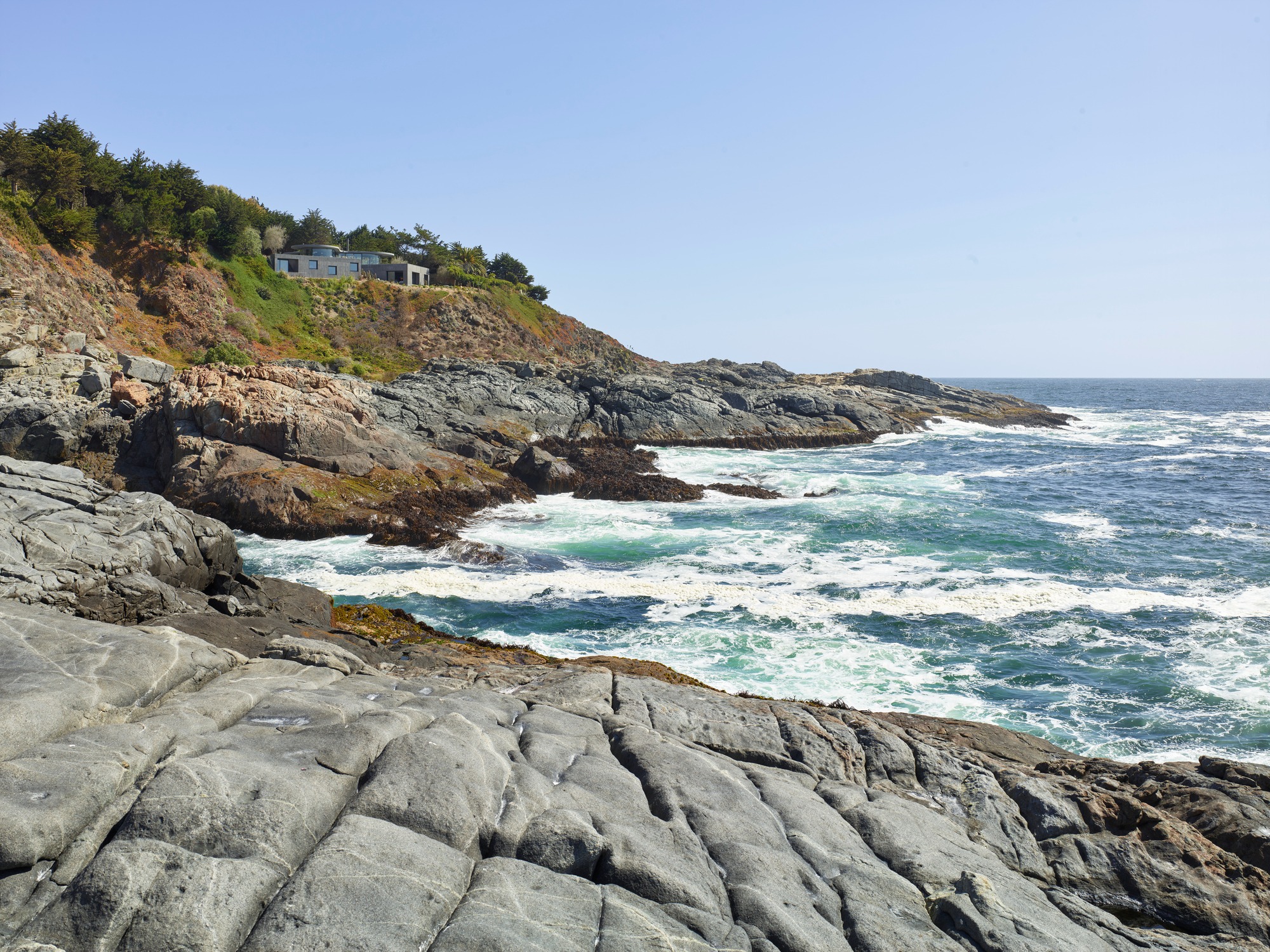
Punta Pite is located between Zapallar and Papudo, about 150 km north of Santiago, Chile. The site, as its name indicates, is a rocky point that juts into the sea. The task was to design a second home for a couple and their three children.
The 6500m2 plot of land is characterized by a steep slope of 20 meters in height (20% gradient). One of the main objectives of the project was to create a horizontal plane that would allow for inhabiting this slope. A large podium that allows for inhabiting and highlighting the force of the landscape; nature, the ocean view, and the sunsets.
The first decision was to separate the public and private programs into two overlapping volumes, allowing all areas of the house to be physically related to the natural terrain. This overlap also reduces the presence of the house in the landscape; when you are in the upper floor pavilion, the rest of the house disappears.
The lower volume, which contains the bedrooms, is excavated into the terrain and seeks to blend in with the surroundings; a visible concrete podium, dyed with black pigments and resolved with unbrushed board formwork. A material solution that will collect the patinas of time, allowing for constant transformation; similar to the existing rocks in the ravine.
The pavilion that rests on top of the volume of the bedrooms contains the public spaces and is completely transparent. It is defined as a large shadow, a concrete slab supported by 21 steel columns.
To avoid the presence of walls or necessary diagonals to brace the roof, the height of the columns was minimized (230 cm), and a shape was sought to assist in seismic behavior; a three-sided amoeba
The reduction in height and the surface area of the slab intensify the horizontal view; accentuating the relationship with the exterior space and the horizon (the observer's line of sight is close to the slab, reducing the angle of elevation). The three public programs of this level (living - dining - kitchen) are located on each of the three sides of the amoeba and are resolved as three recessed circles.
The landscaping of the house, designed by Juan Grimm, seeks to recover the pre existing flora and fauna in the ravine. To reclaim what existed before the new construction. Once the project is completed, nature will fill in the interstices left by the architecture, making it appear as though the house has always been in that location.
from archdaily