"어떤 집도 언덕 위에 있어서는 안 된다. 집은 언덕의 일부가 되어야 하며, 언덕과 집이 서로 어우러져 더 행복한 존재가 되어야 한다." – 프랭크 로이드 라이트 (Frank Lloyd Wright)
 |
 |
 |
대지와 시간 위에 쌓은 층위
포르투갈 북부, 숲이 울창한 어느 비탈진 땅에 자리 잡은 카사 코르텐(Casa Corten)은 대지의 지형과 방위, 그리고 그 땅에 새겨진 역사에 대한 치밀한 건축적 해법입니다. HPA 아키텍추라(HPA Arquitetura)의 휴고 페레이라(Hugo Pereira)가 설계한 이 집은, 한때 목재 공장이었으나 오랫동안 폐허로 남았던 터 위에 지어졌습니다. 건축가는 과거의 산업적 흔적을 지워버리는 대신 그 유산 위에 새로운 층위를 쌓아 올렸습니다. 대지가 가진 물리적 제약을 오히려 형태와 공간을 만드는 핵심 동력으로 삼은 것입니다.
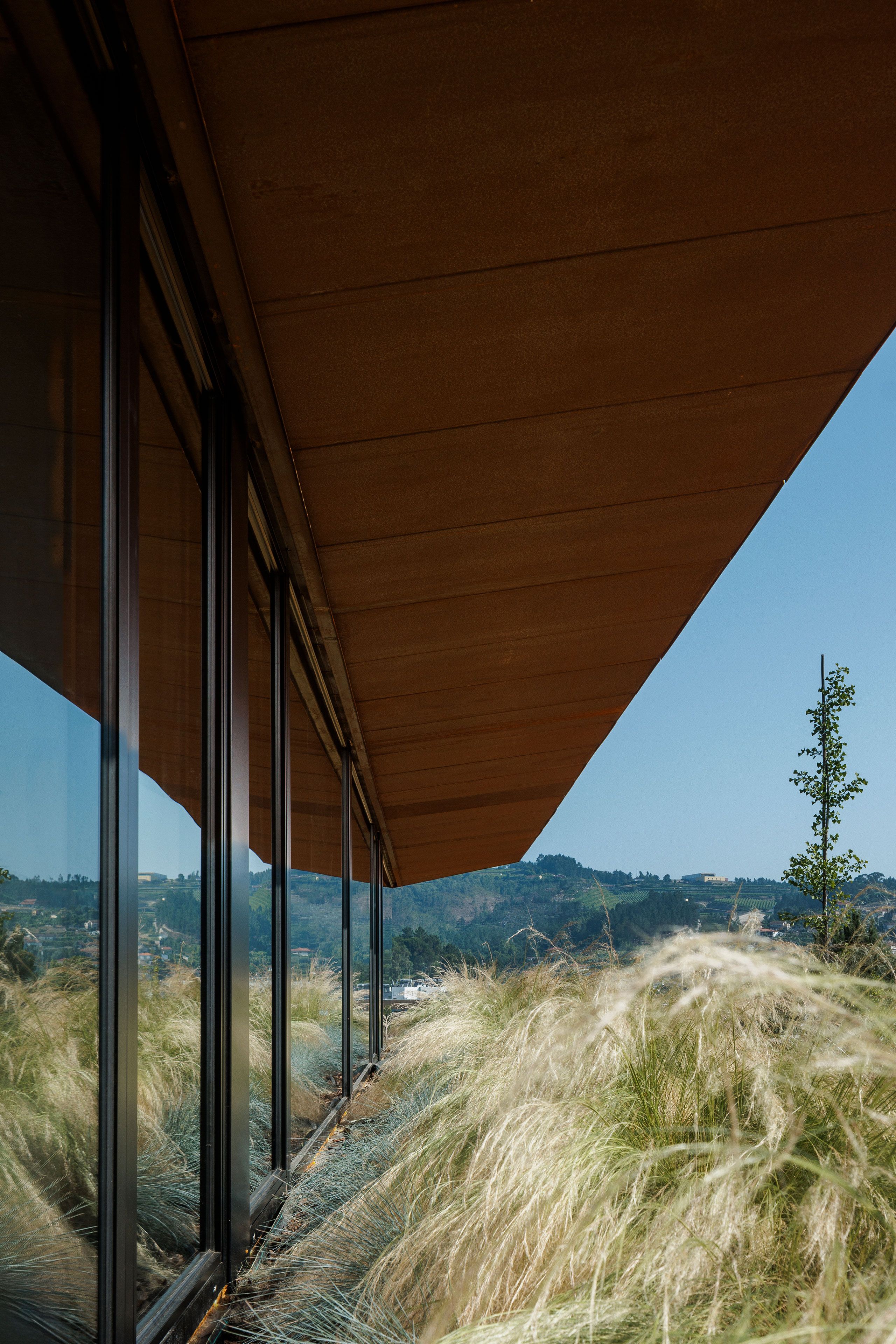
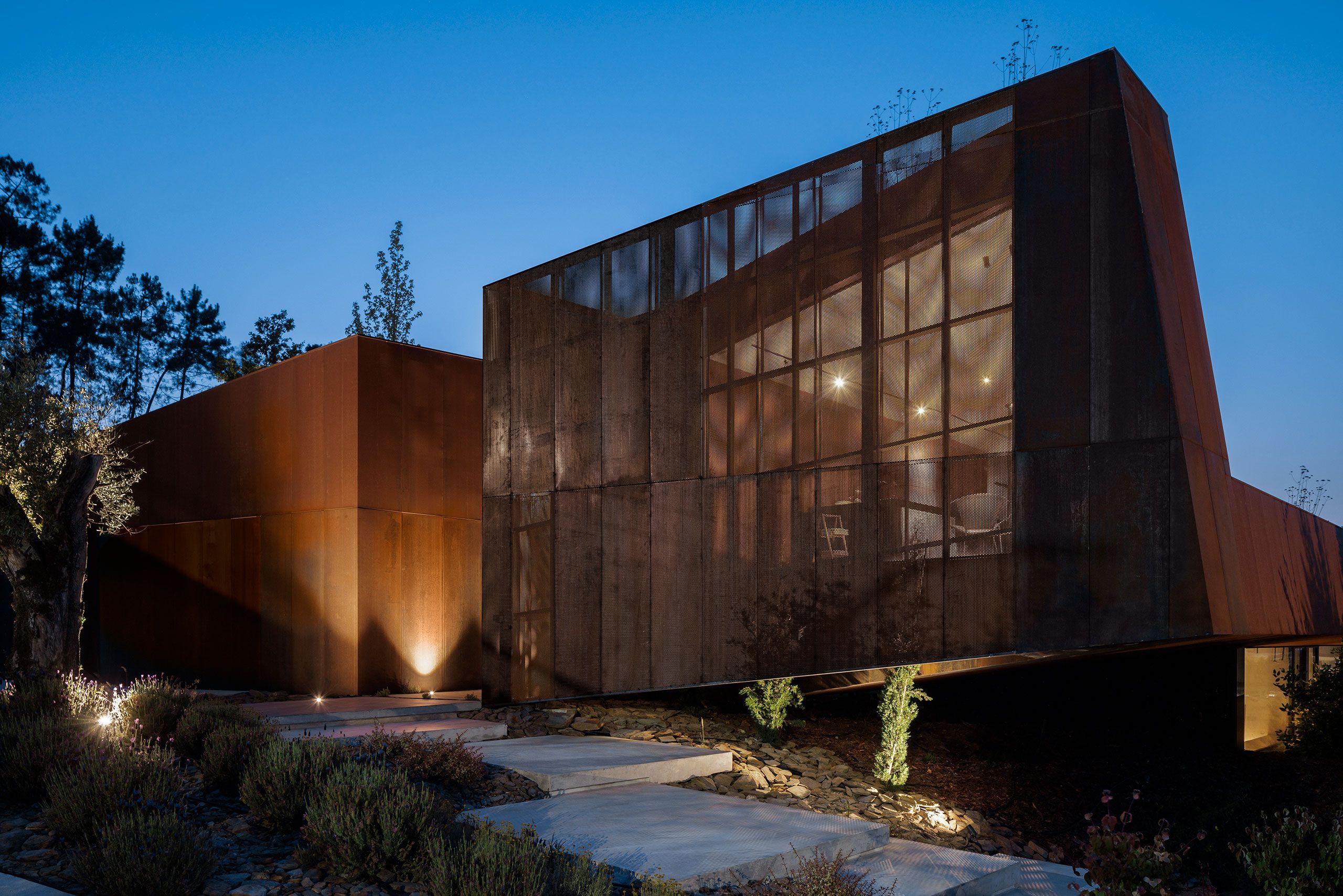
코르텐 강(Corten steel)으로 외피를 감싸고 자연스러운 식재가 어우러진 정원 속에 깊숙이 자리한 이 집은, 시간의 흐름에 따라 변화하는 하나의 유기체와 같습니다. 금속 외피가 붉게 산화되고 야생 관목과 풀들이 무성해질수록, 건축과 풍경은 서로 공유하며 진화하는 균형 속에 안착하게 될 것입니다.
지형에 순응하며 낮게 깔린 매스
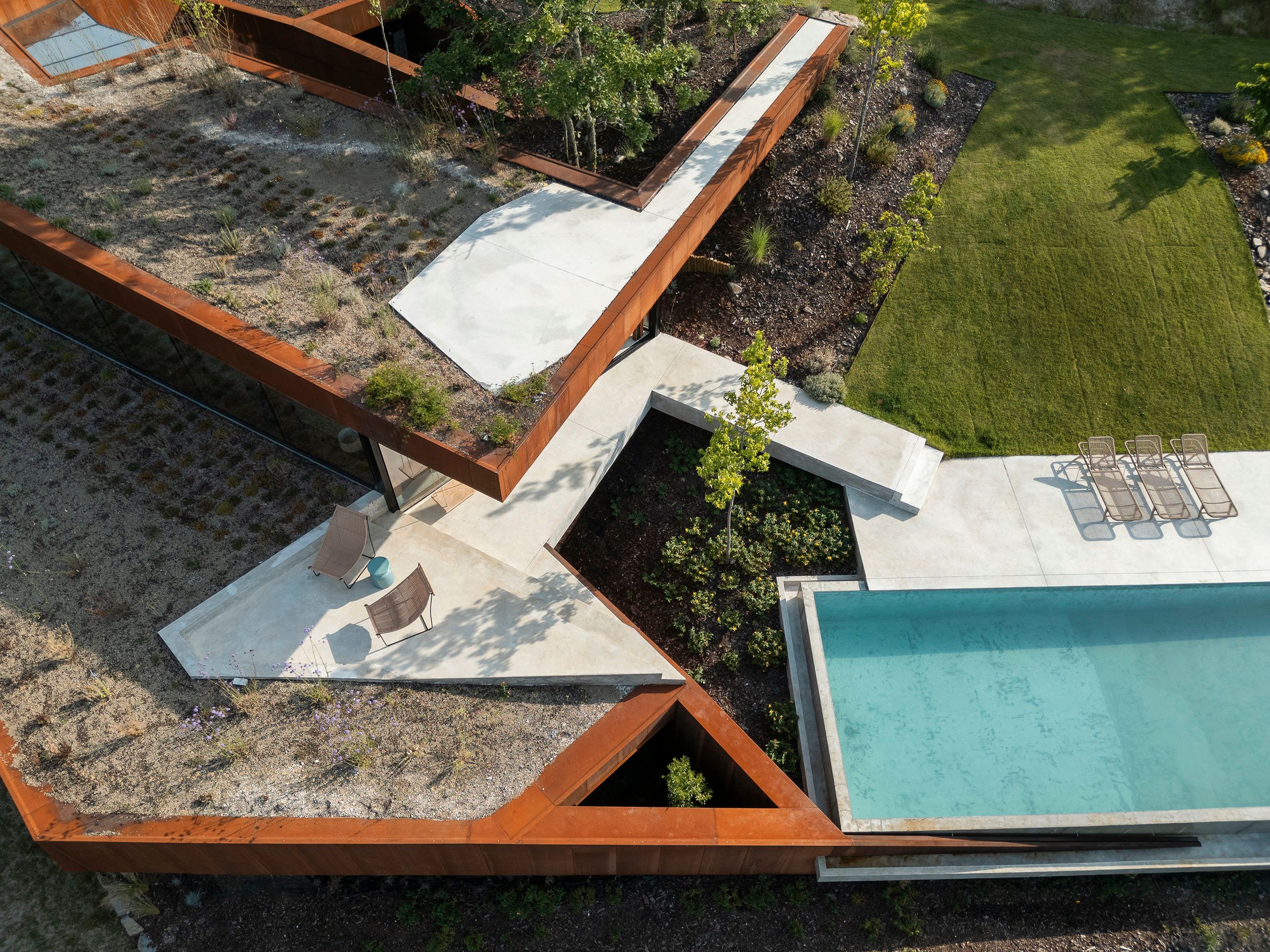
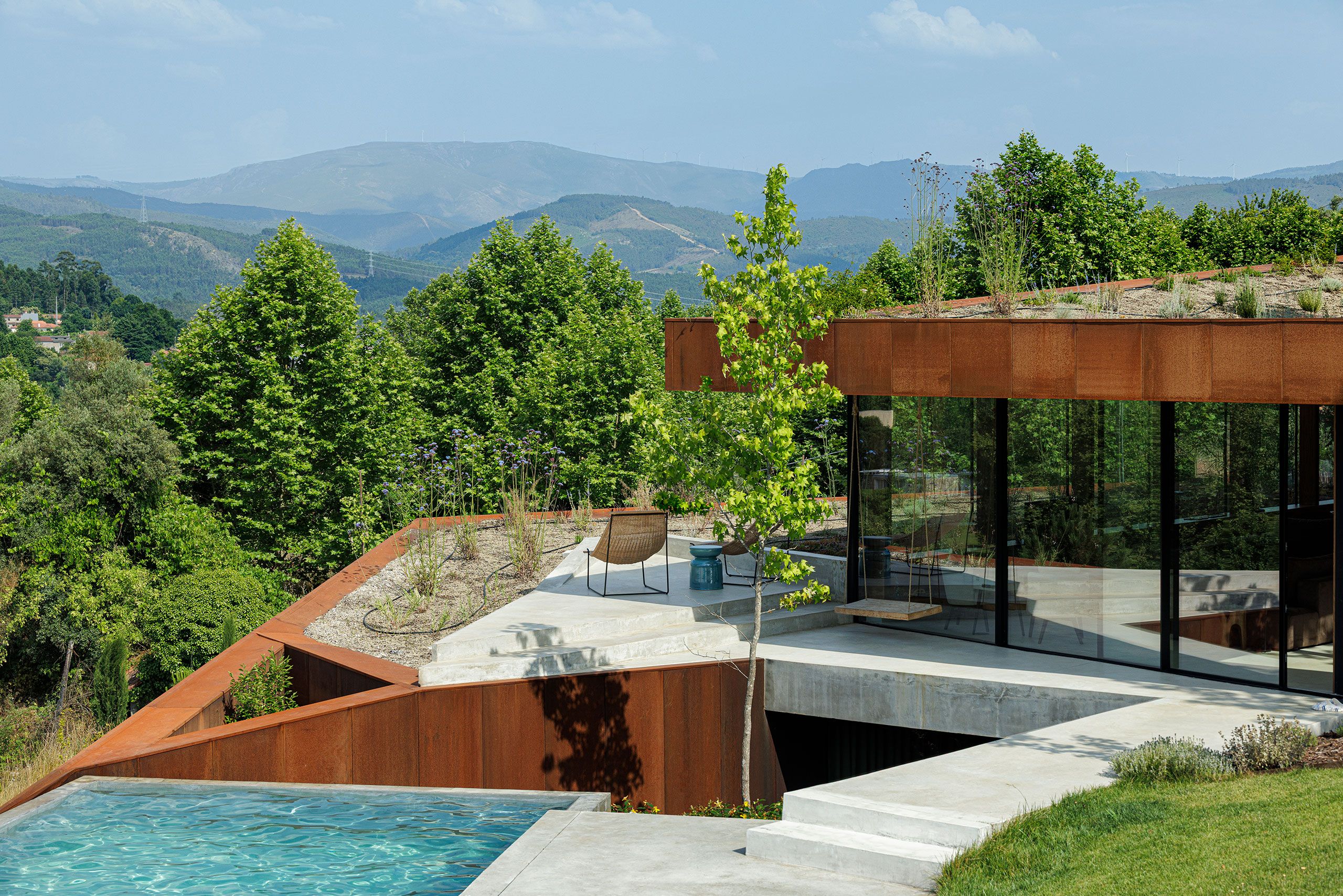
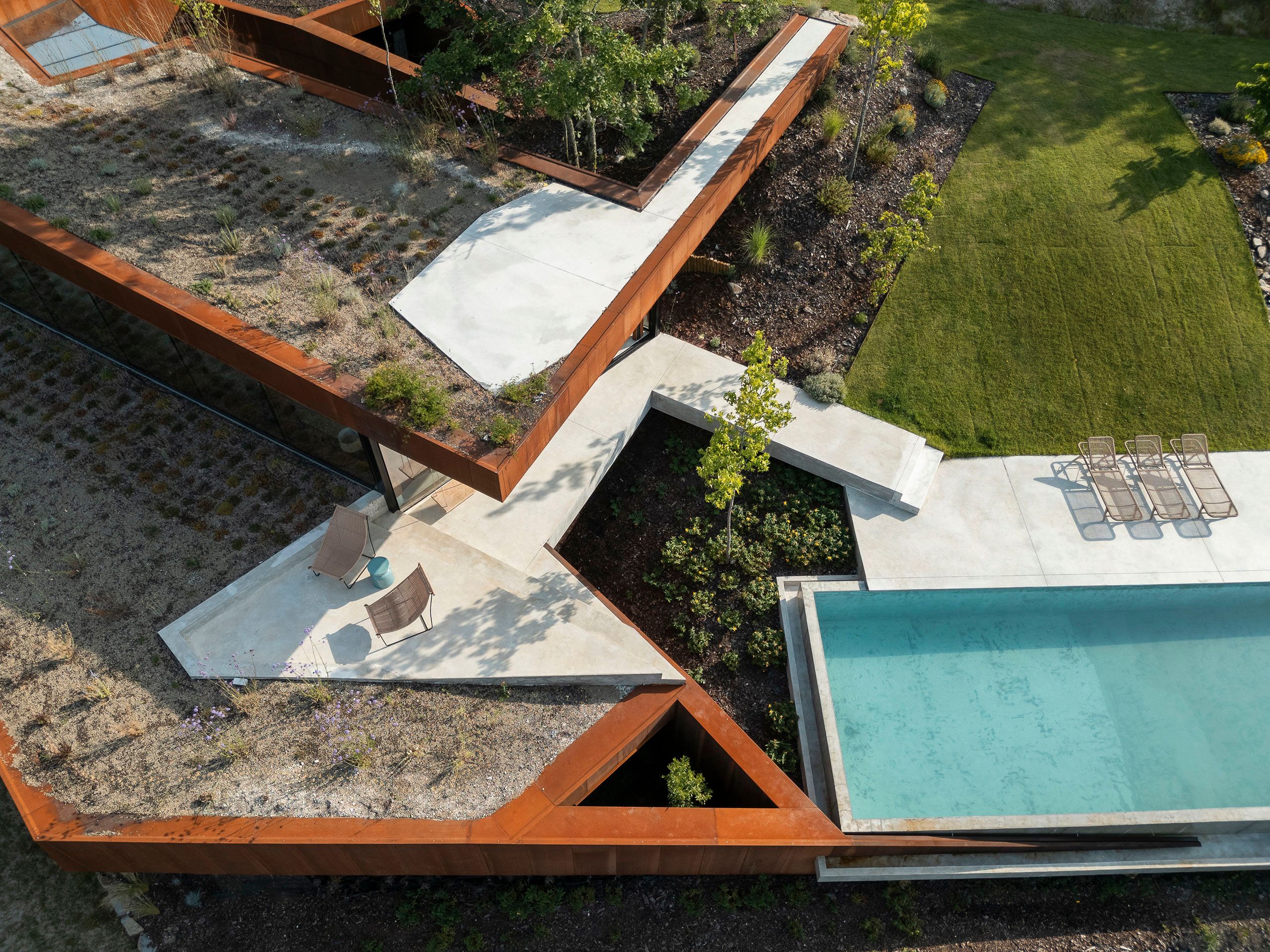
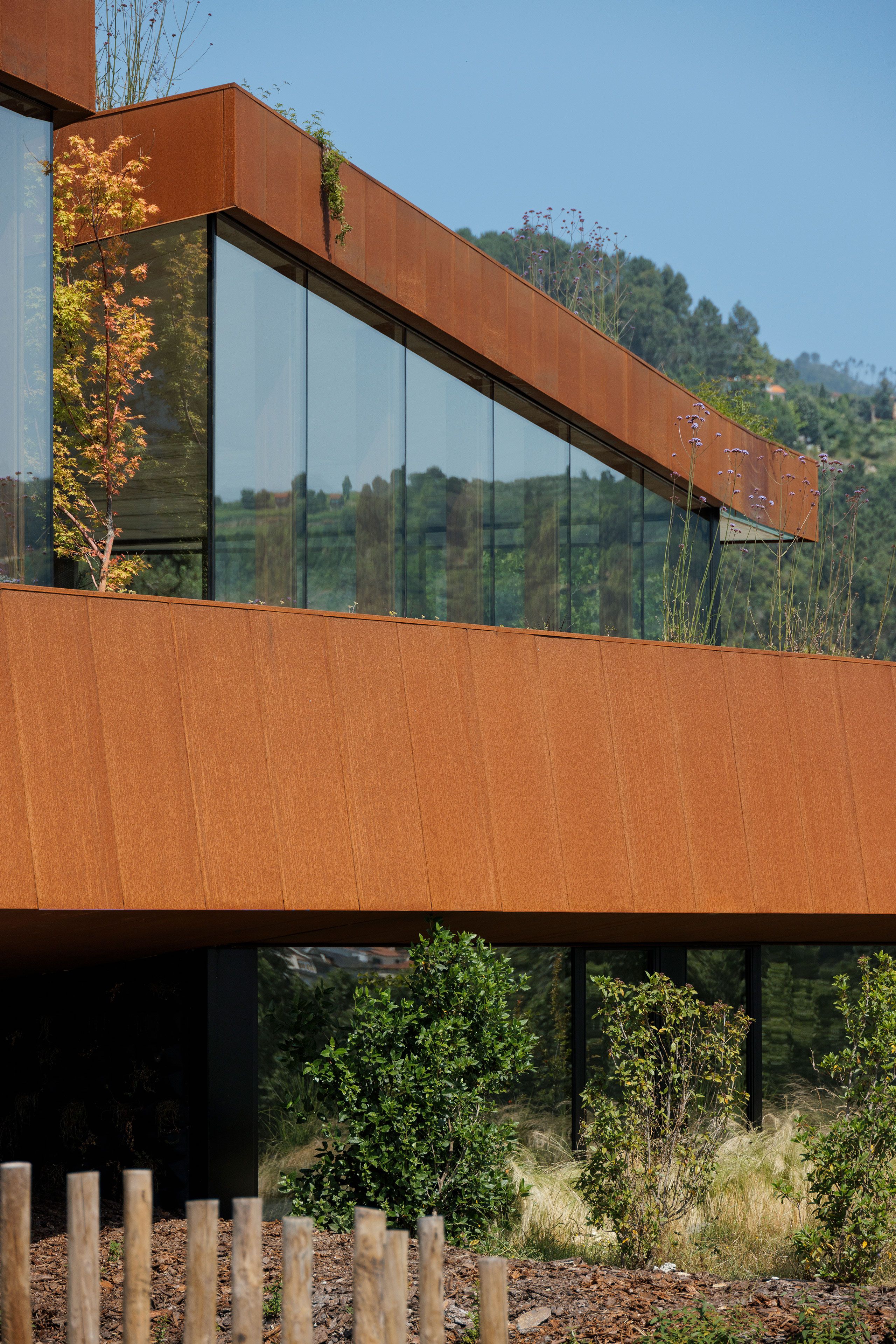
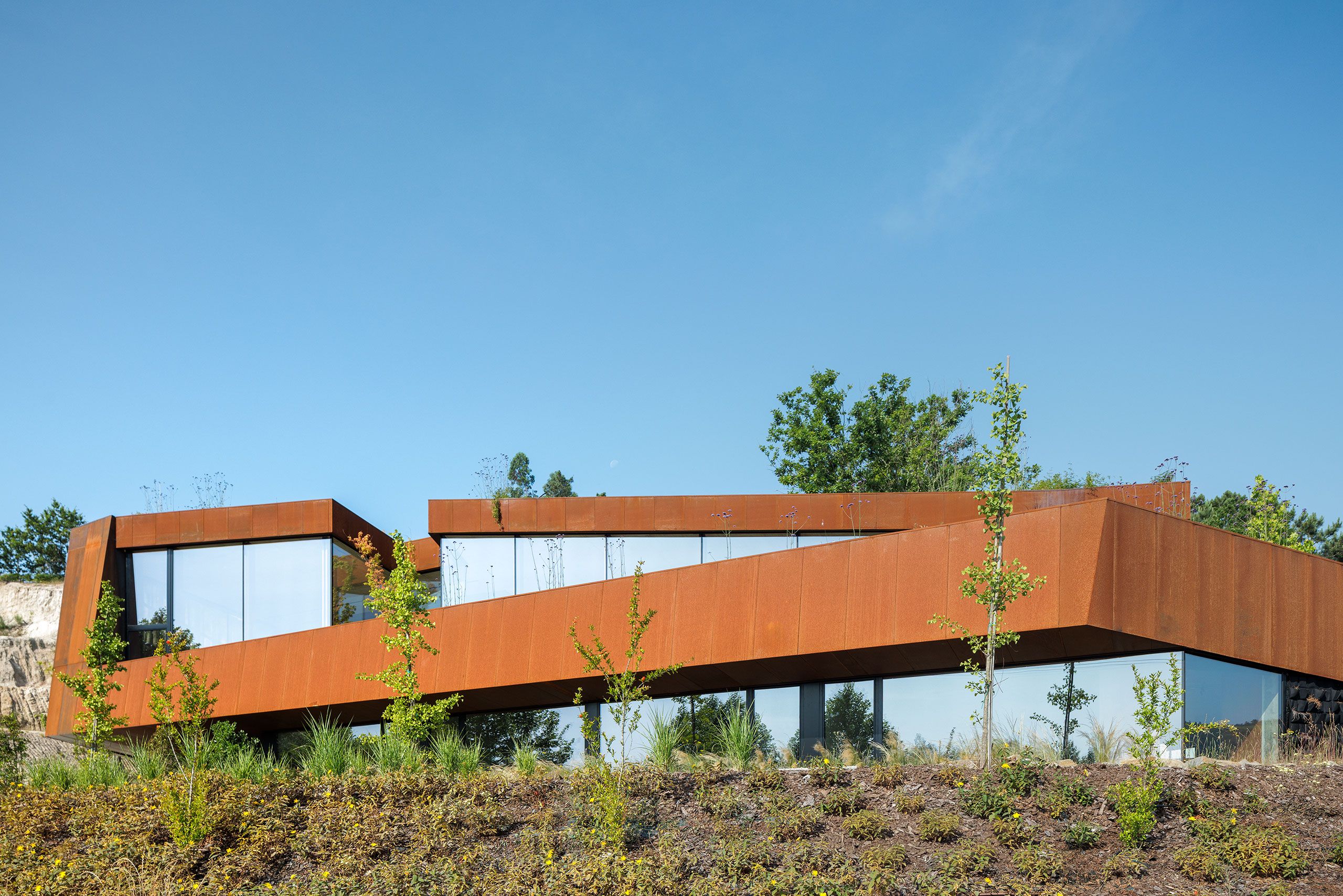
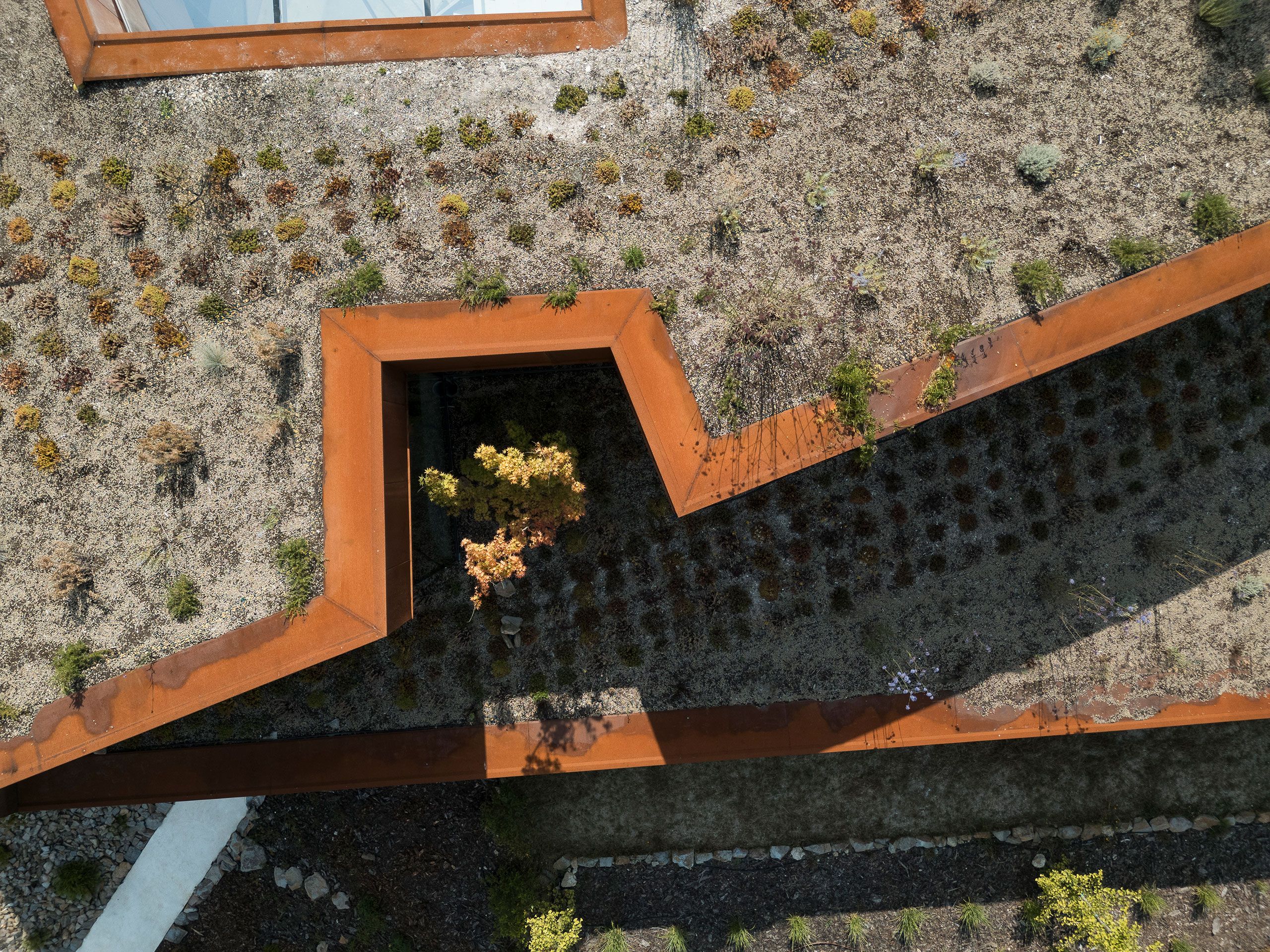
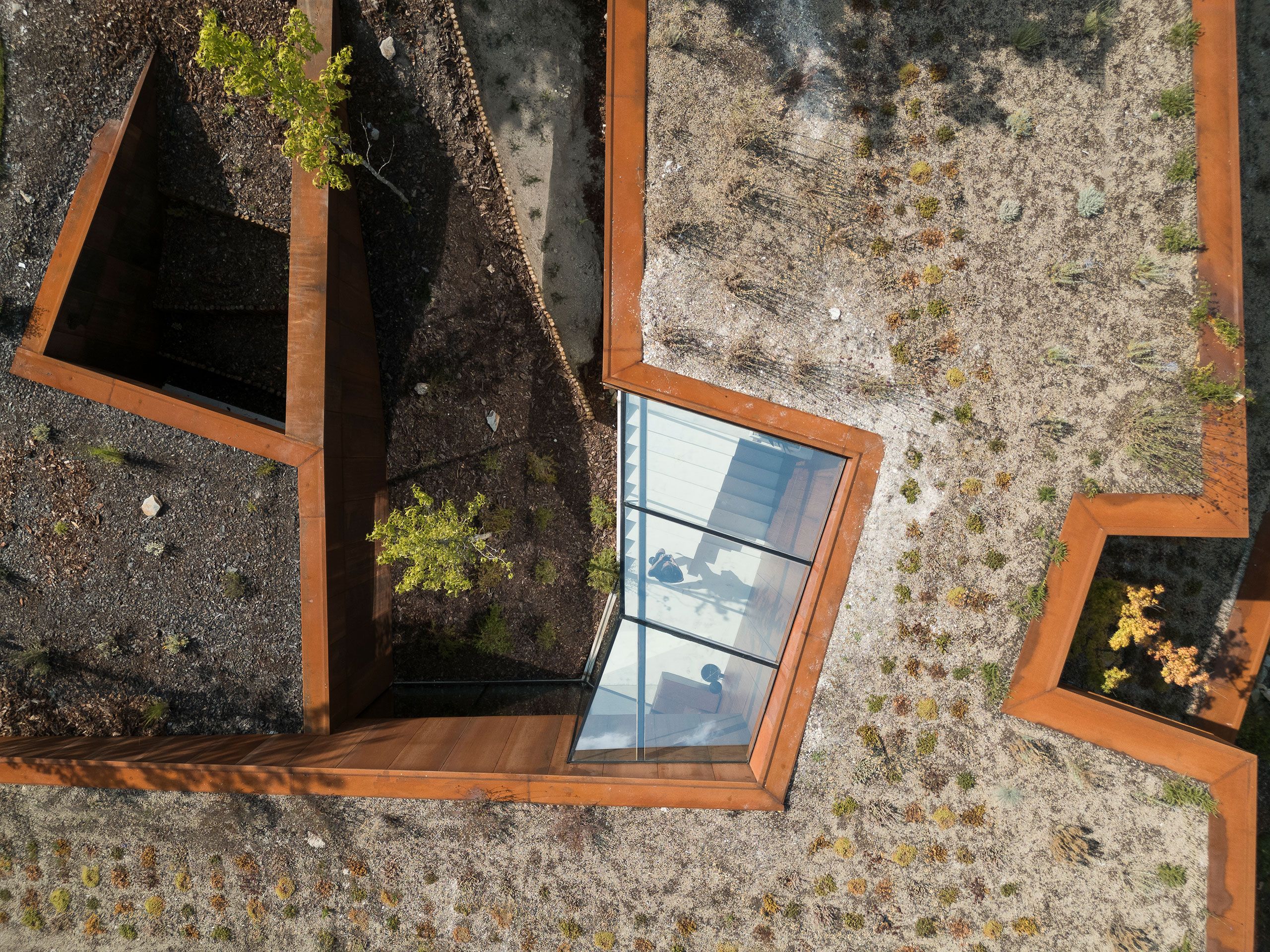
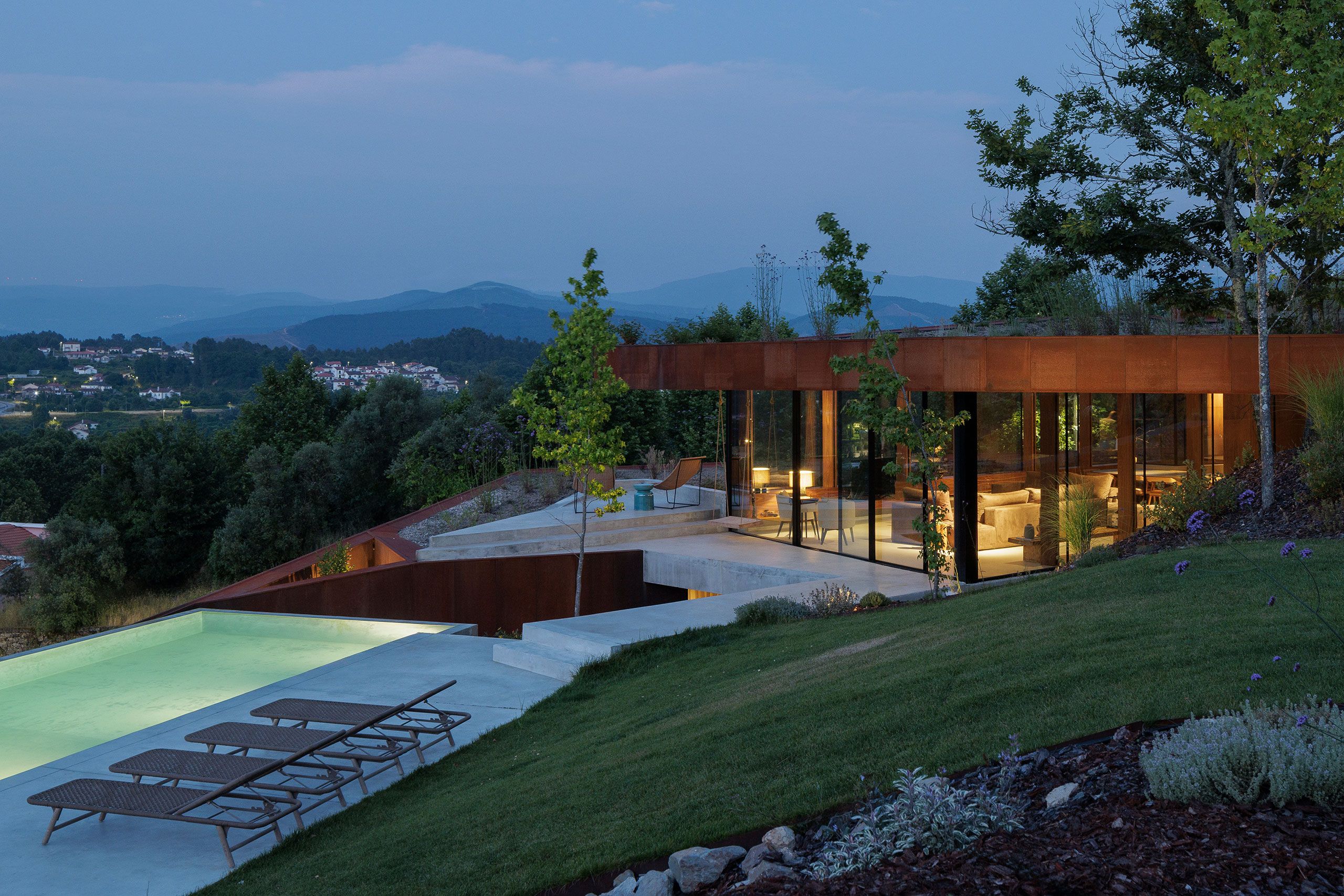
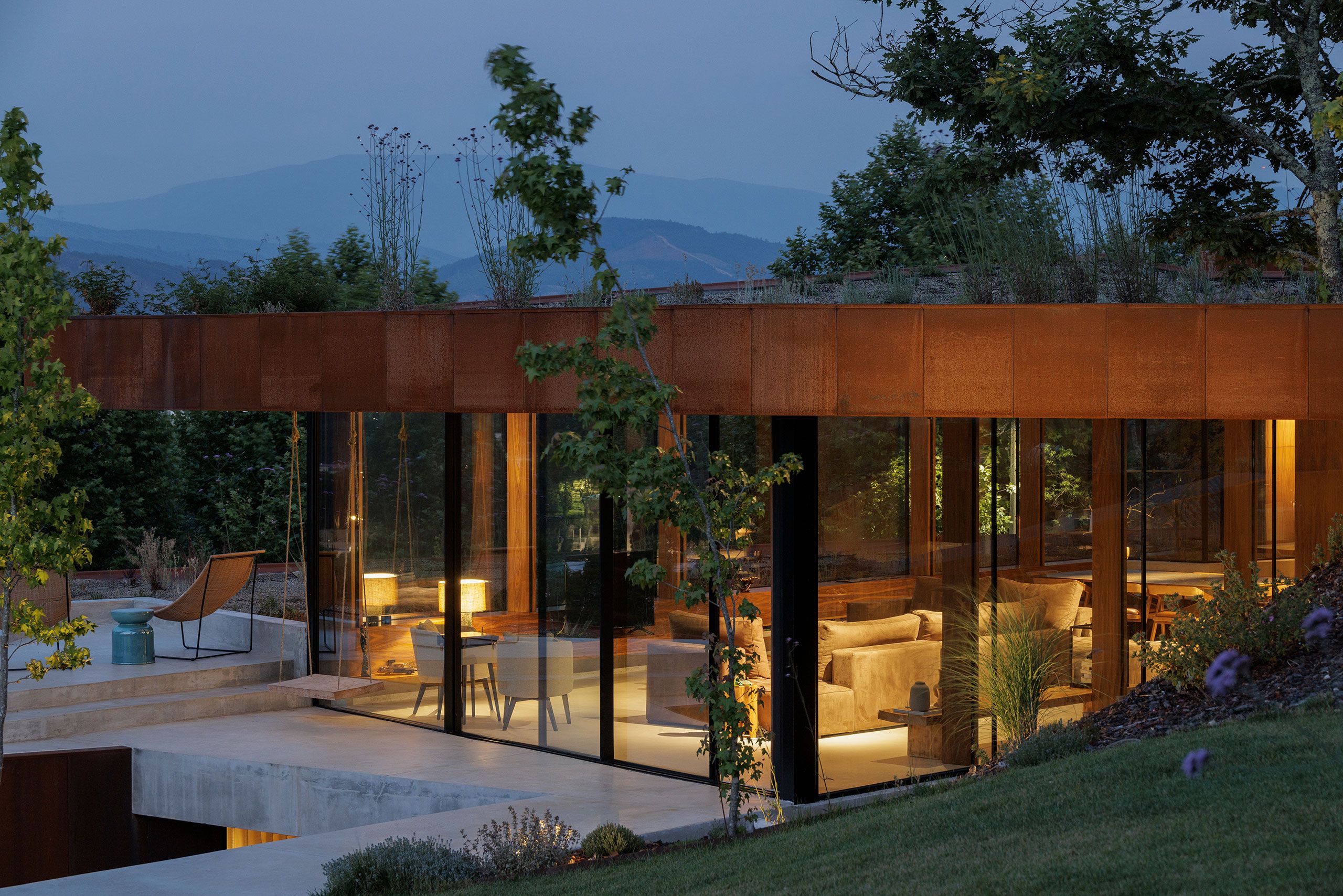
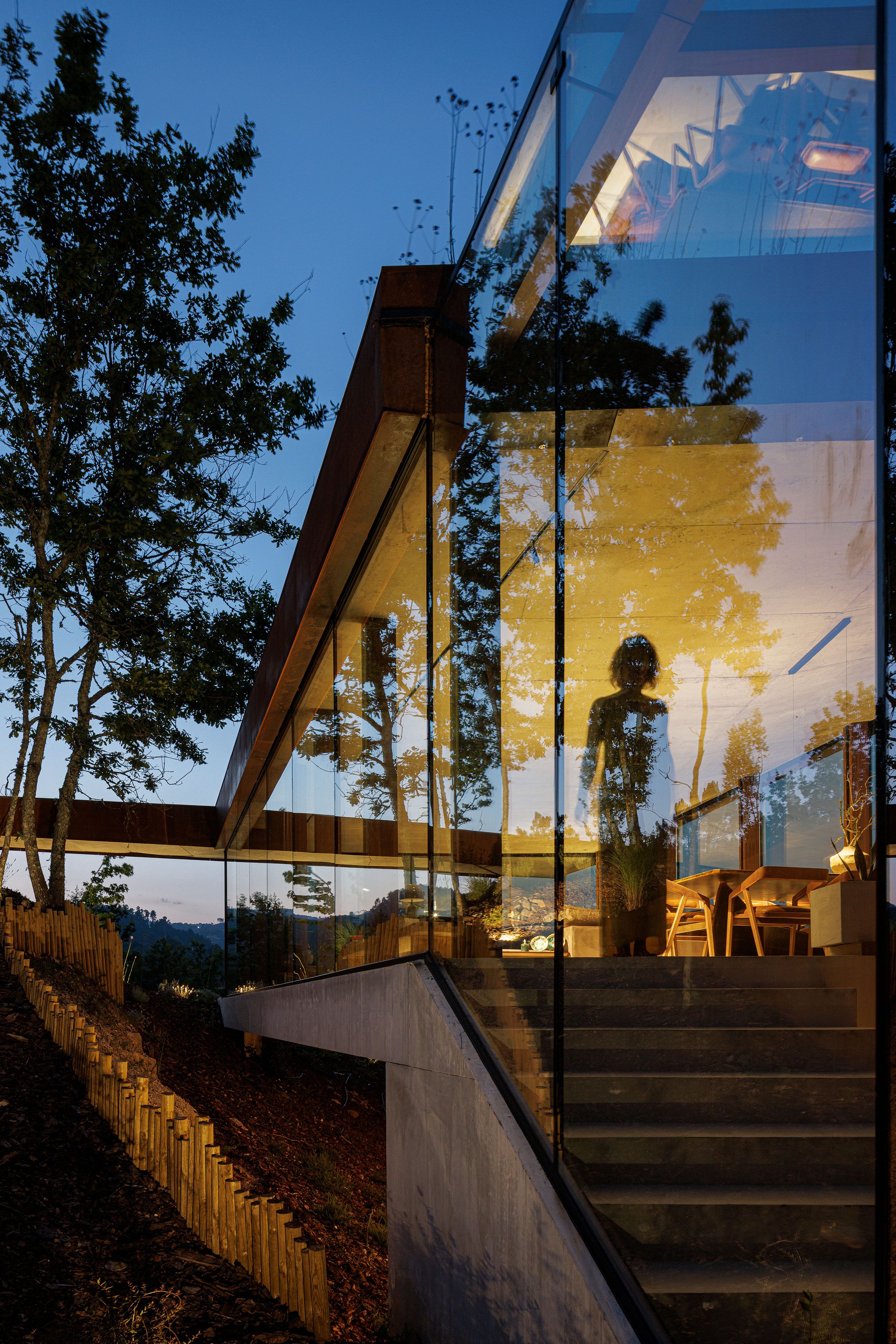
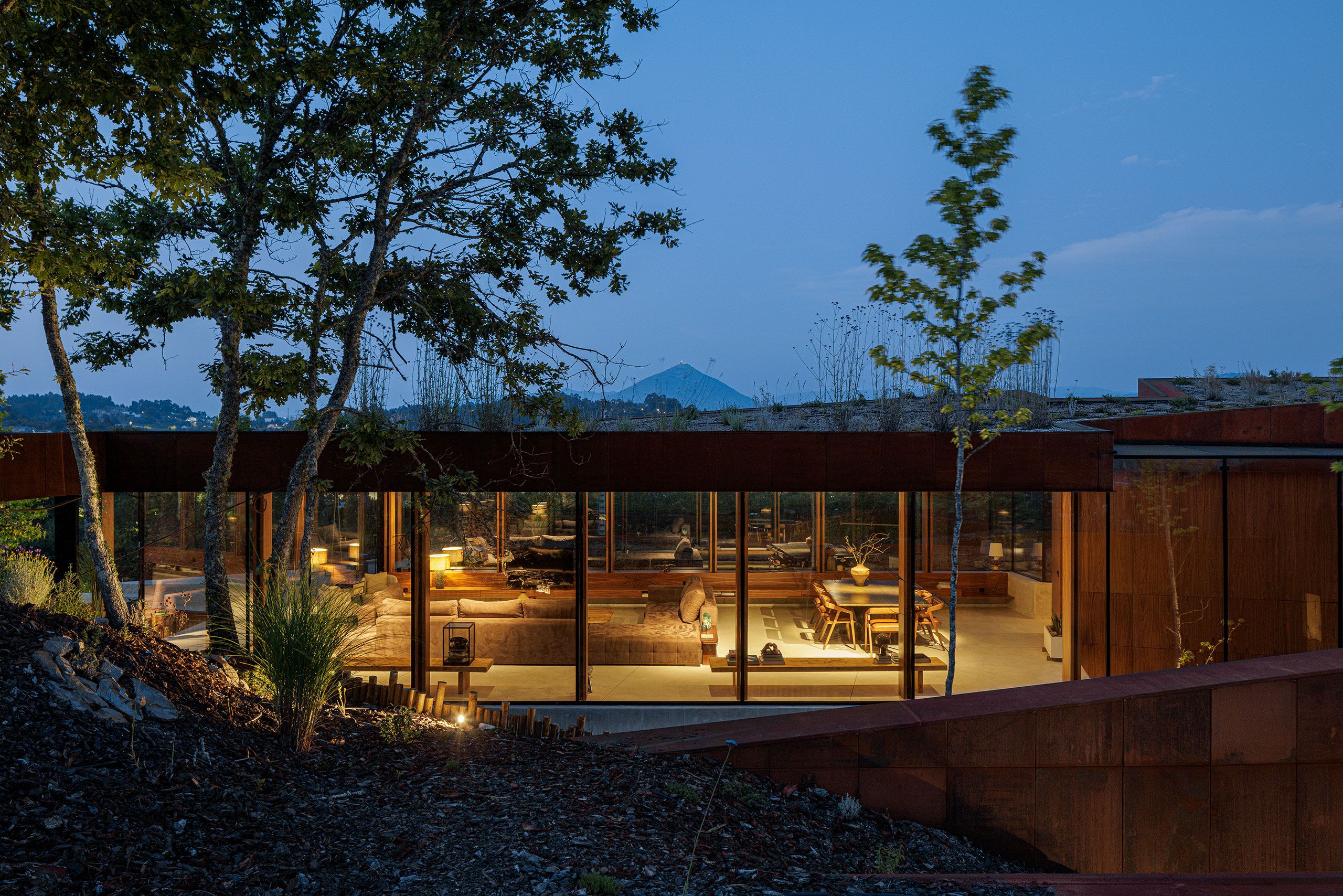
가파른 경사와 동향(東向)은 건축가가 시급히 풀어야 할 숙제였습니다. 건축가는 땅을 평평하게 밀어버리는 쉬운 길 대신, 건물을 낮게 깔린 여러 개의 매스로 나누는 전략을 택했습니다. 등고선을 따라 흐르는 각각의 매스는 향과 프라이버시, 조망을 최적화하기 위해 미묘하게 각도를 틀었습니다. 이러한 방식은 건물이 주는 위압감을 덜어내며, 집이 대지 위에 얹혀진 이질적인 물체가 아니라 지형의 자연스러운 연장선처럼 보이게 합니다. 옥상을 덮은 녹지 지붕은 인공 구조물과 자연의 경계를 허물고, 식생이 다시금 지붕을 점유하도록 돕습니다.
빛과 동선을 품은 공극
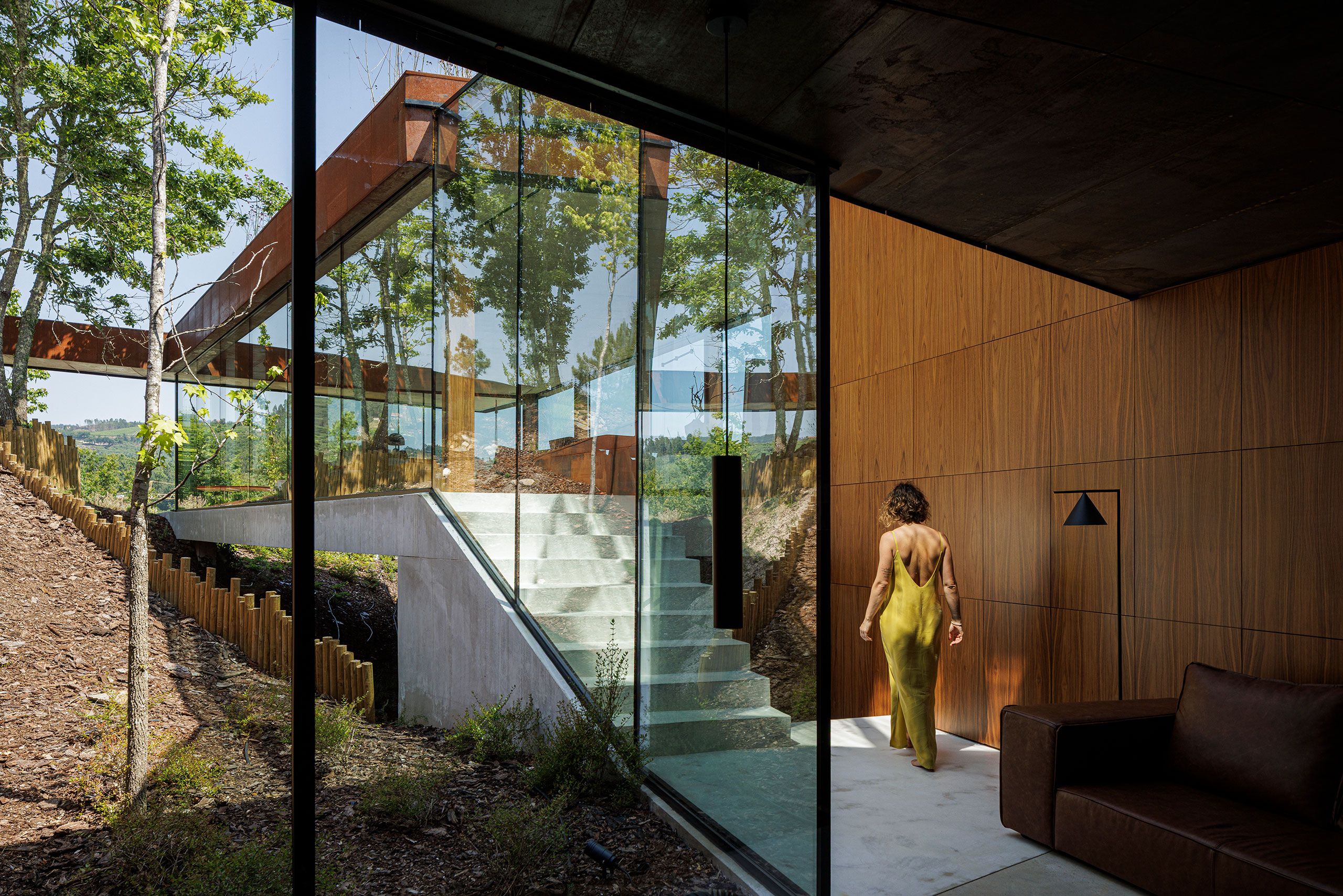
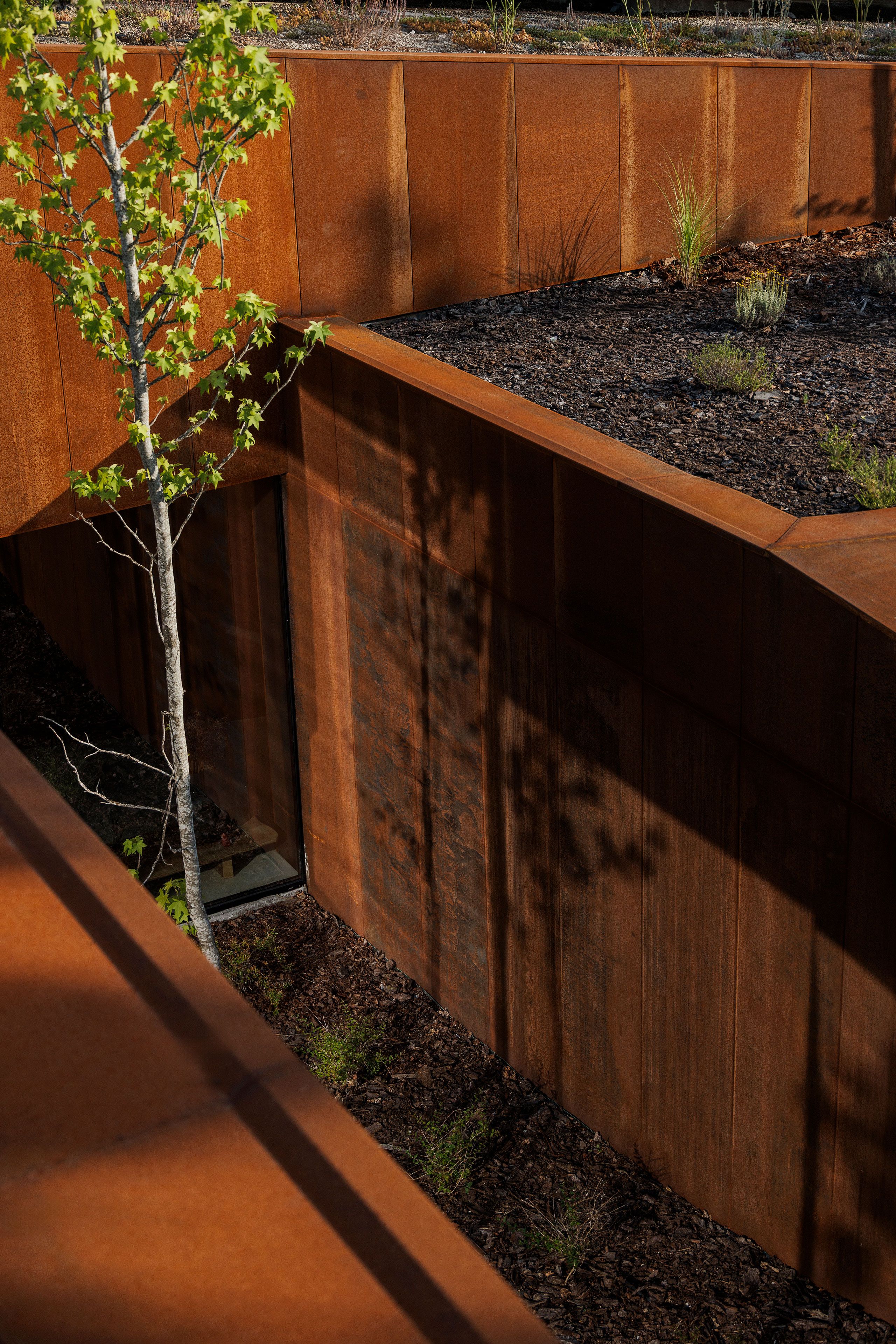
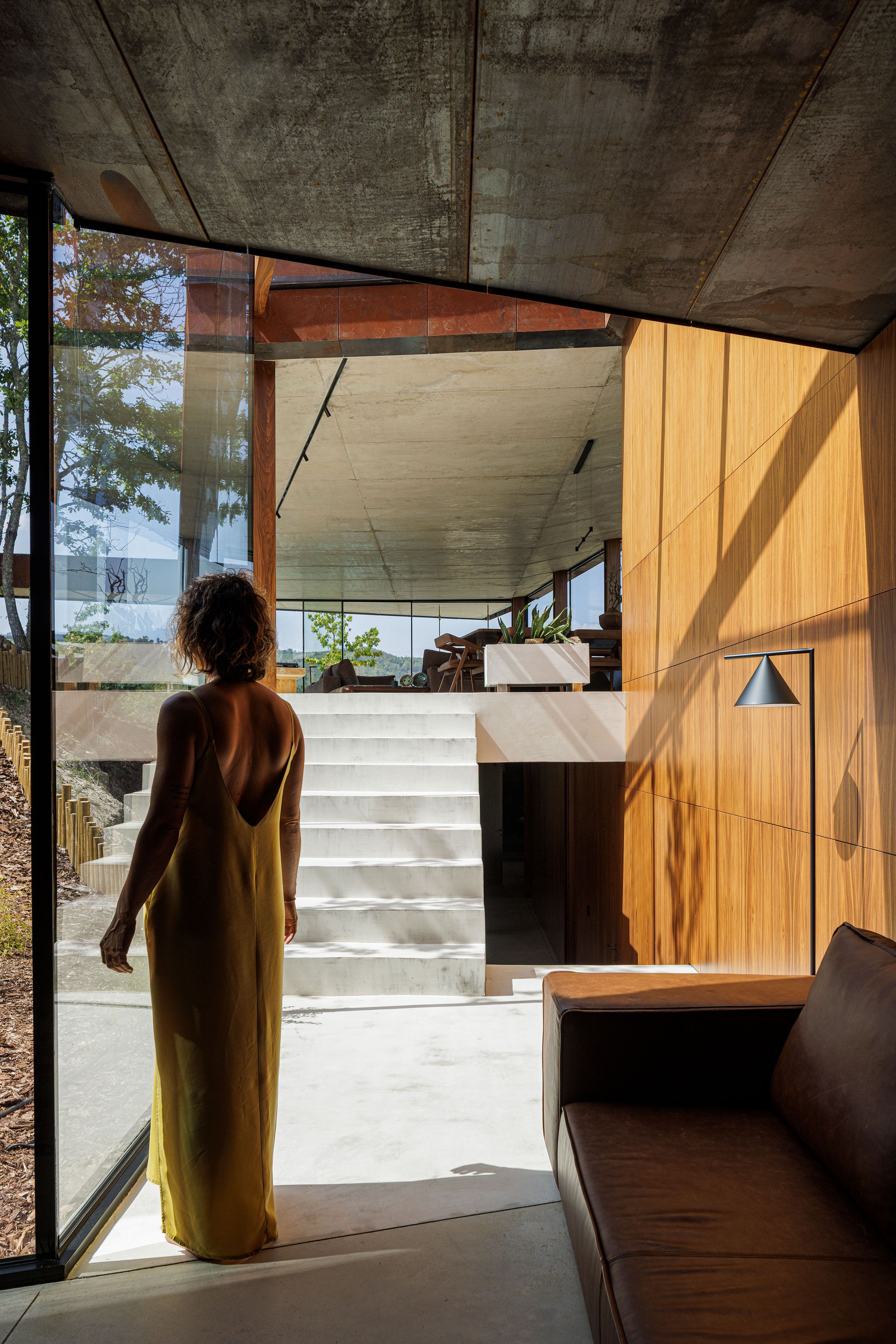
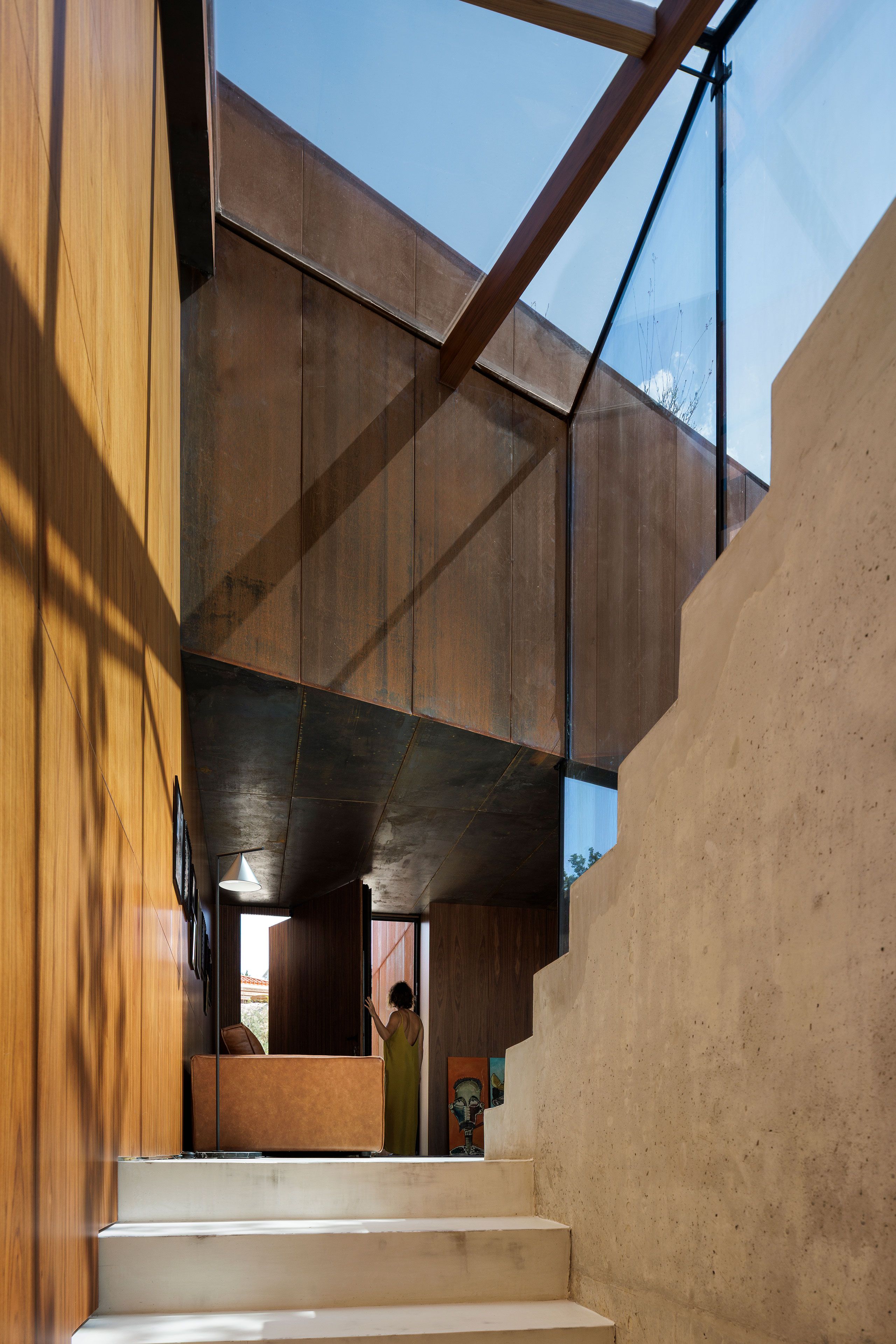
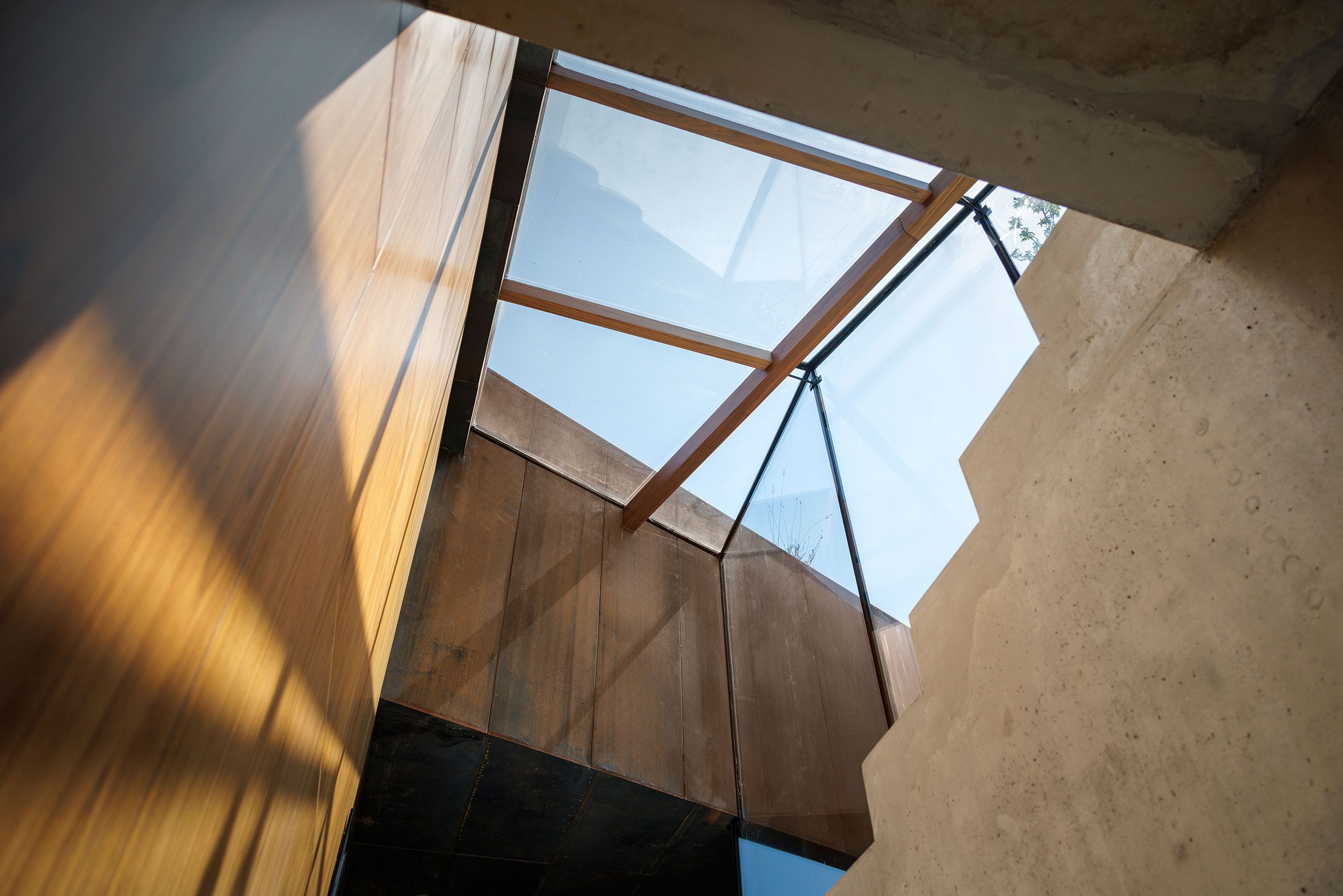
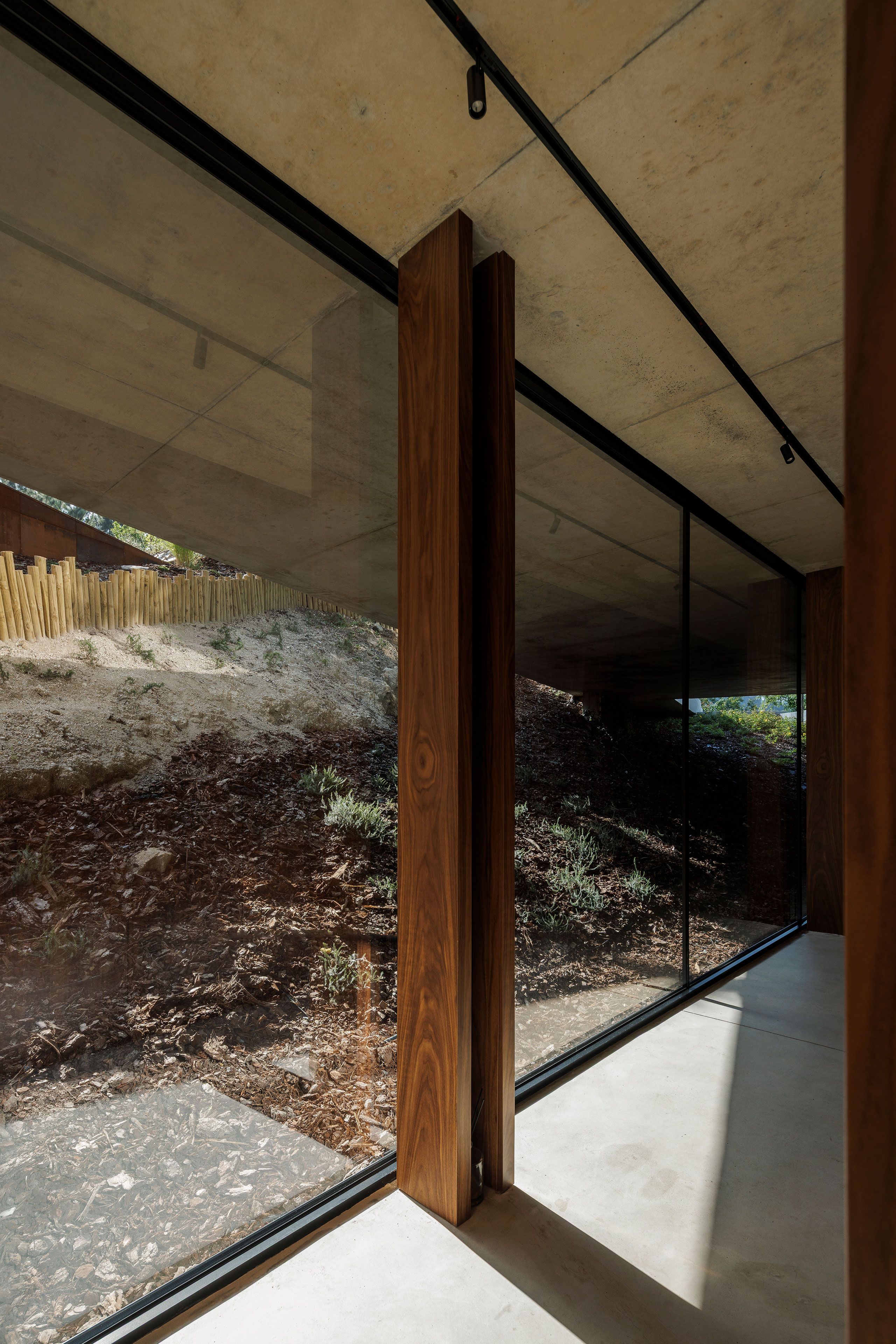
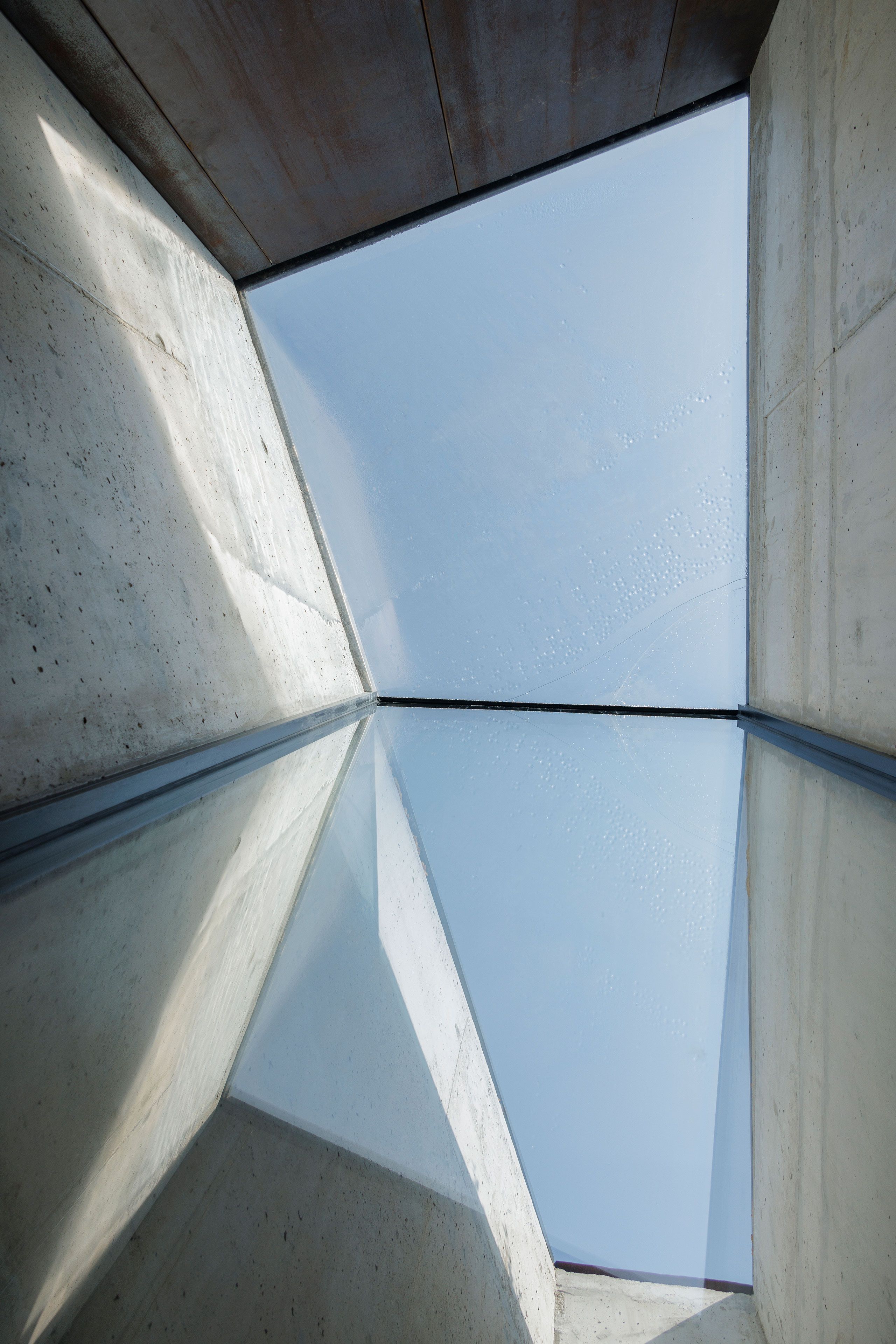
건물을 산비탈에 완전히 파묻는 대신, 경사면에서 살짝 물러나 앉히는 방식을 택했습니다. 덕분에 건물과 땅 사이에는 좁은 틈이 생겨났고, 이곳에 식물을 심어 아래층 양쪽으로 자연광이 스며들게 했습니다. 내부 동선은 바로 이 공극(void)을 중심으로 흐릅니다. 빈 공간과 나란히 뻗은 긴 유리 복도는 아래층의 침실들을 연결하며, 유리 계단을 통해 위층 공용 공간과 지하 차고로 이어집니다. 이 선형의 중심축은 거주자가 이동하는 내내 땅과의 시각적 교감을 유지하게 만드는 척추가 되어줍니다.
풍경을 거르는 투명한 필터
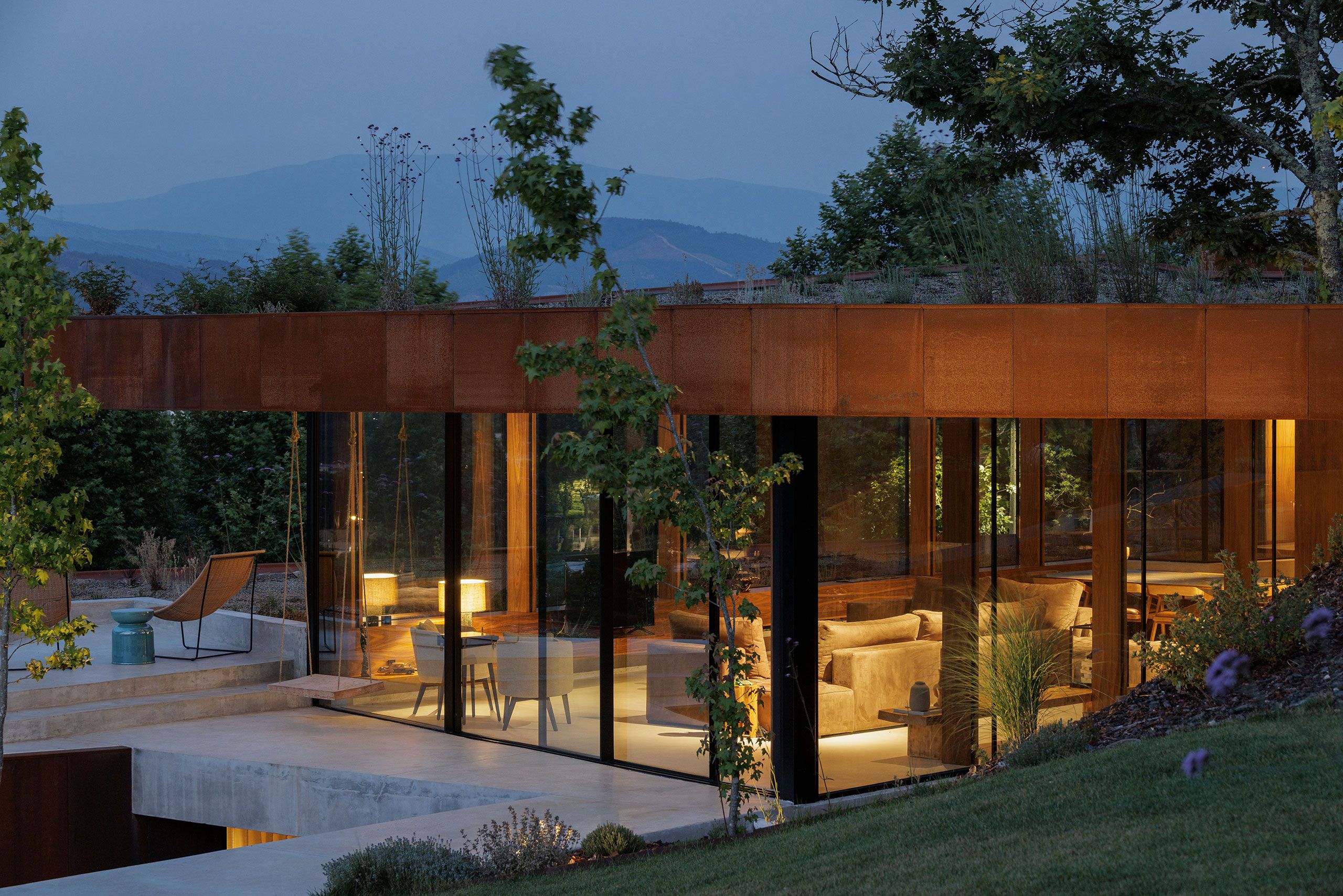
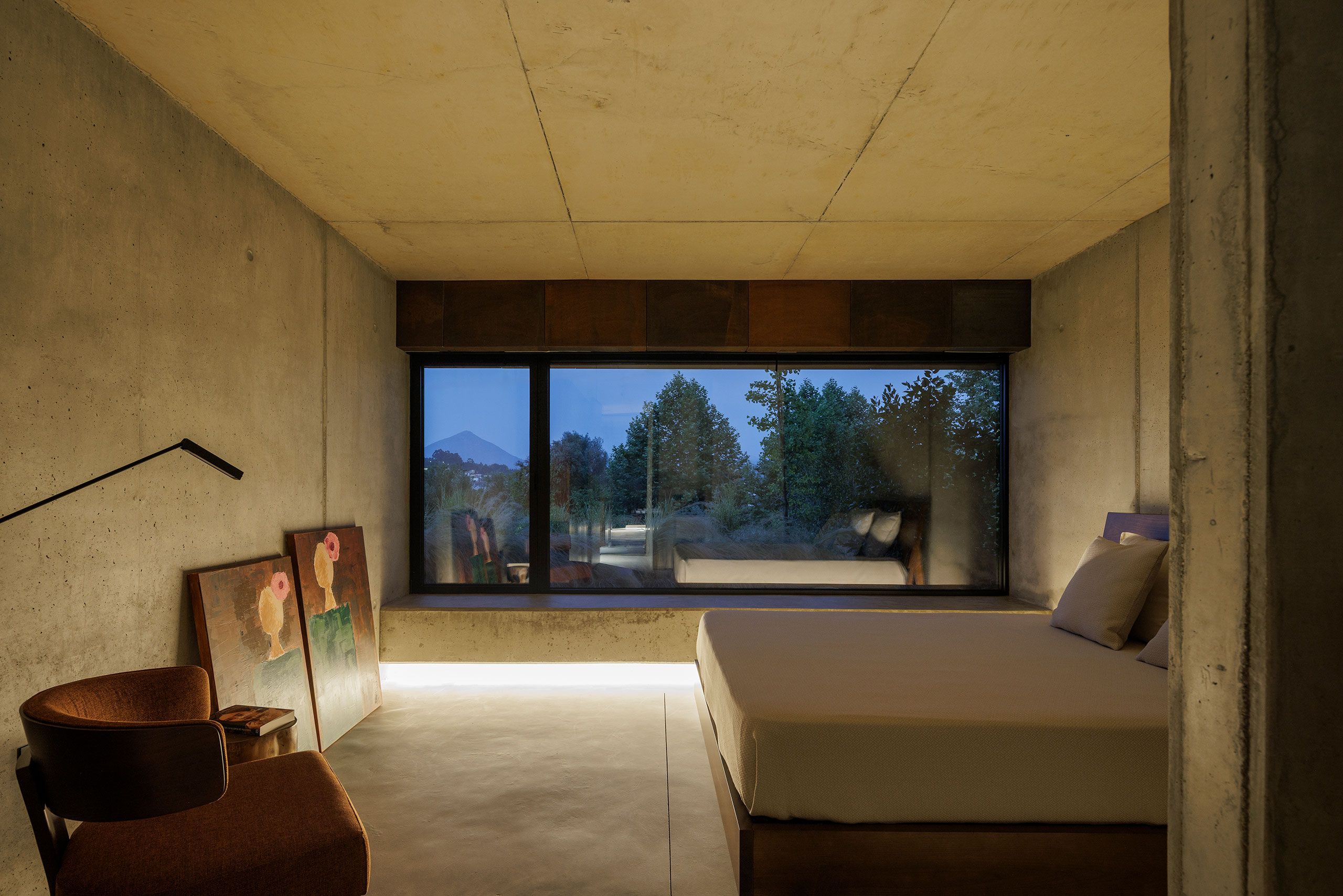
아래쪽 비탈을 향해 열린 침실들은 벽면을 가득 채운 통창을 통해 풍경을 내부로 깊숙이 끌어들입니다. 창밖의 수풀과 식재들은 시선을 부드럽게 걸러주는 필터가 되어, 다소 아담할 수 있는 방에 깊이감과 탁 트인 개방감을 불어넣습니다.
열림과 닫힘의 유연한 조율
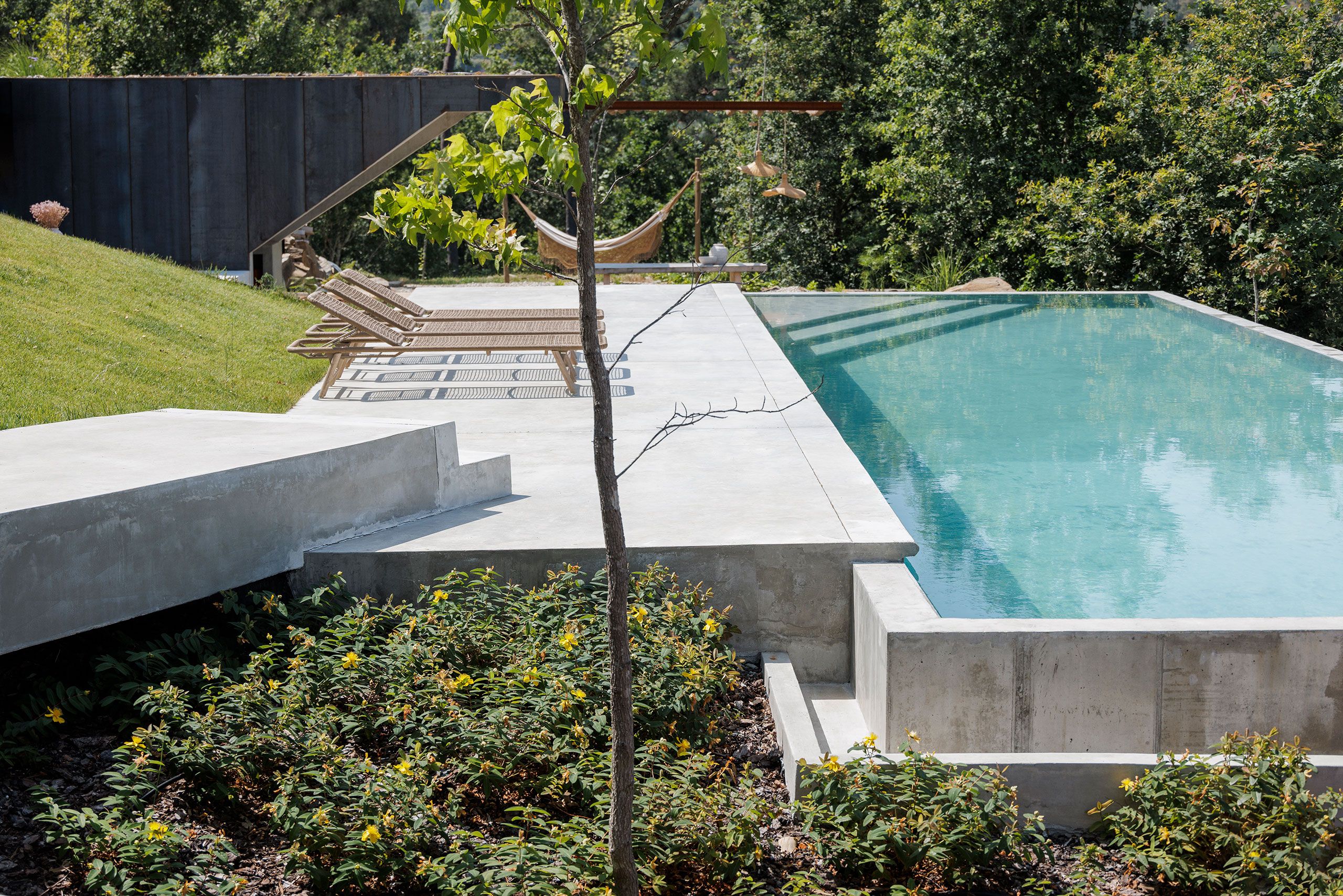
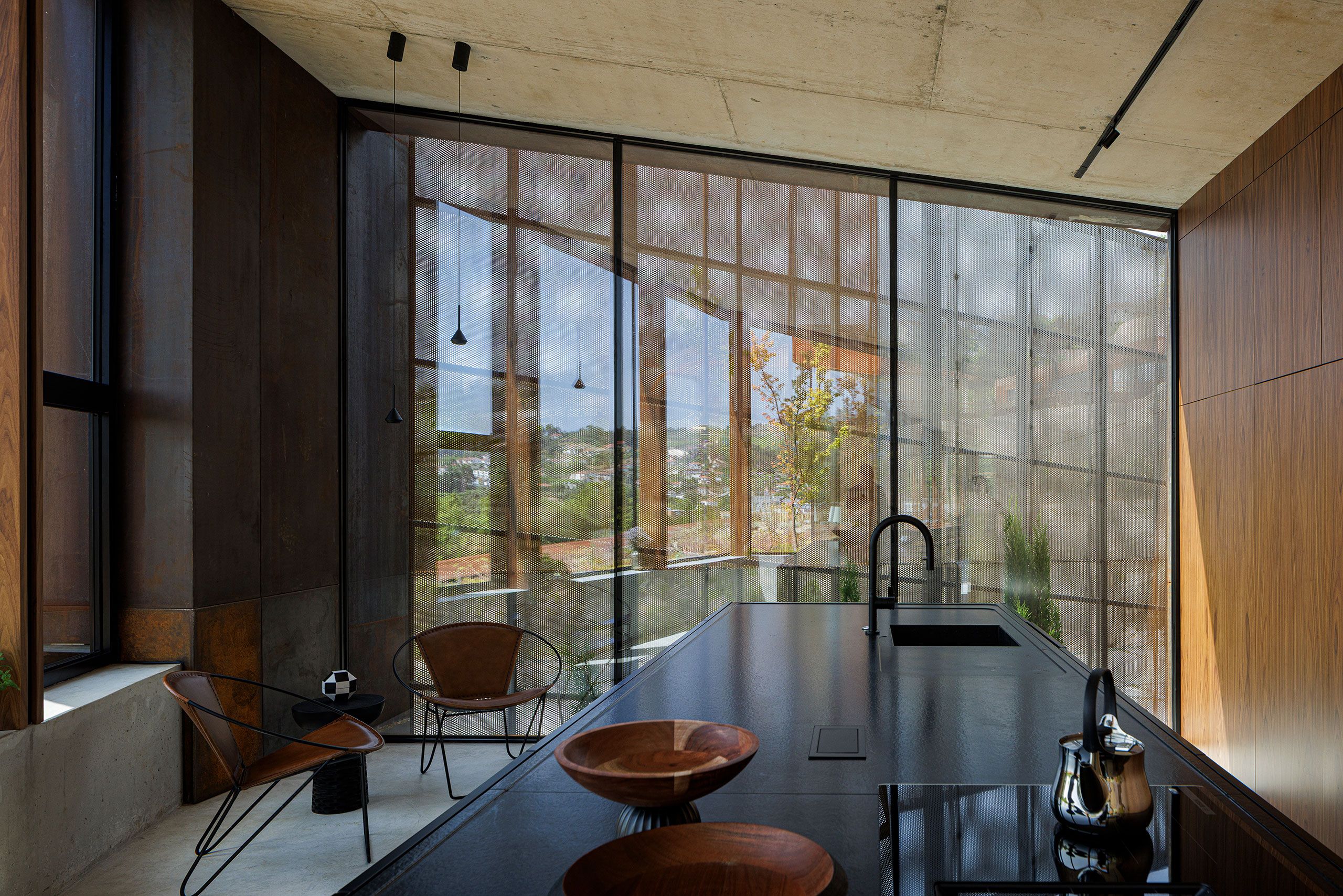
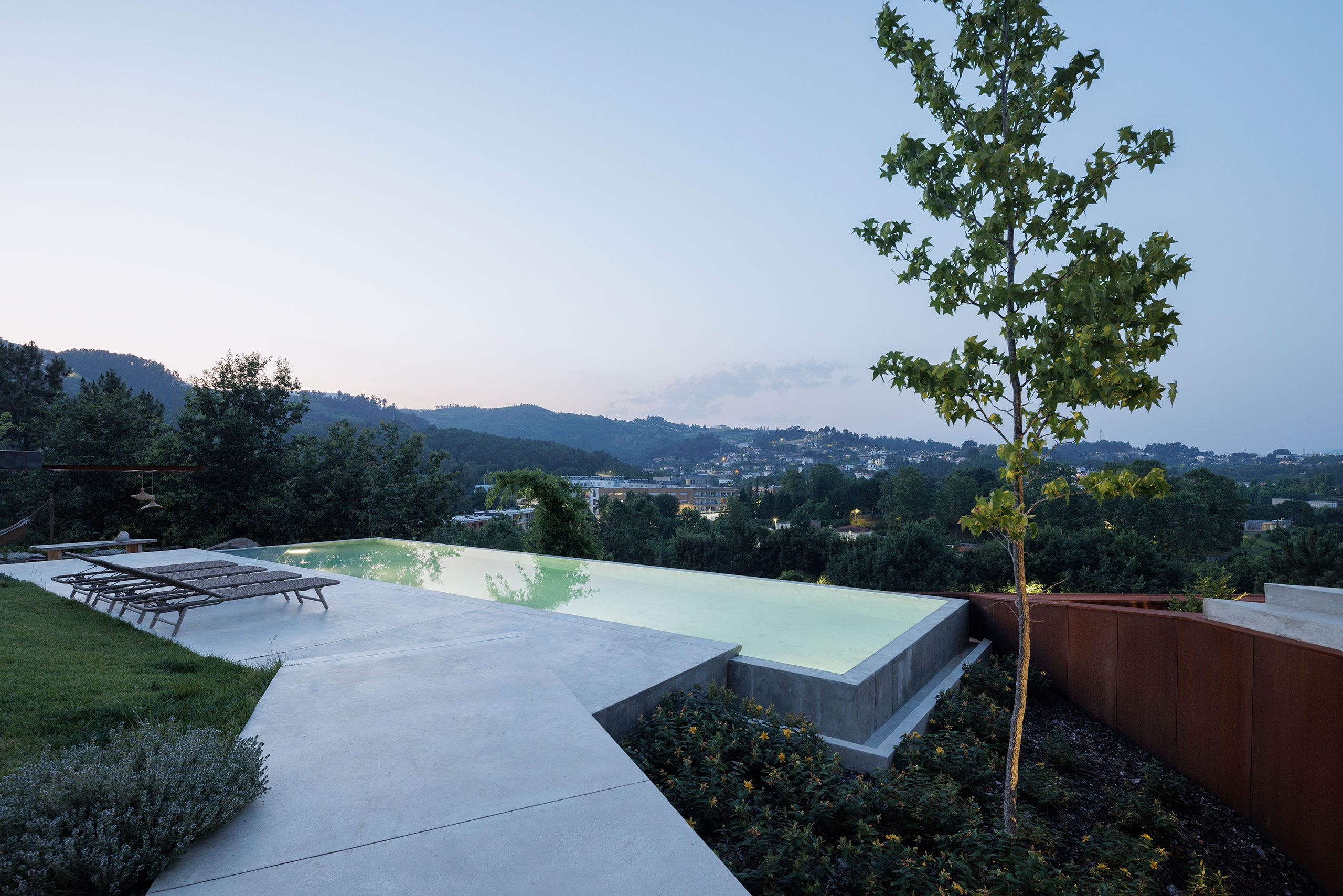
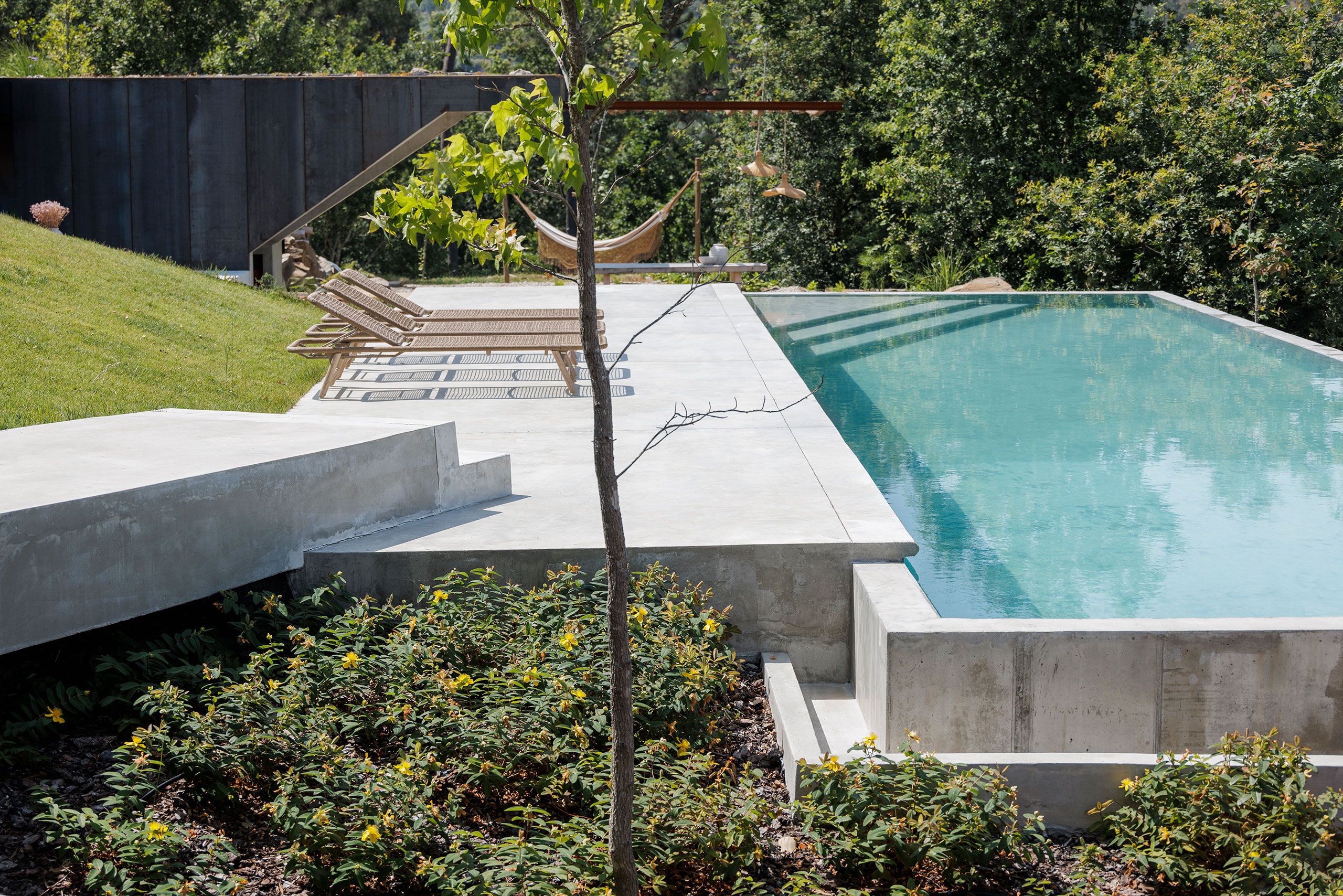
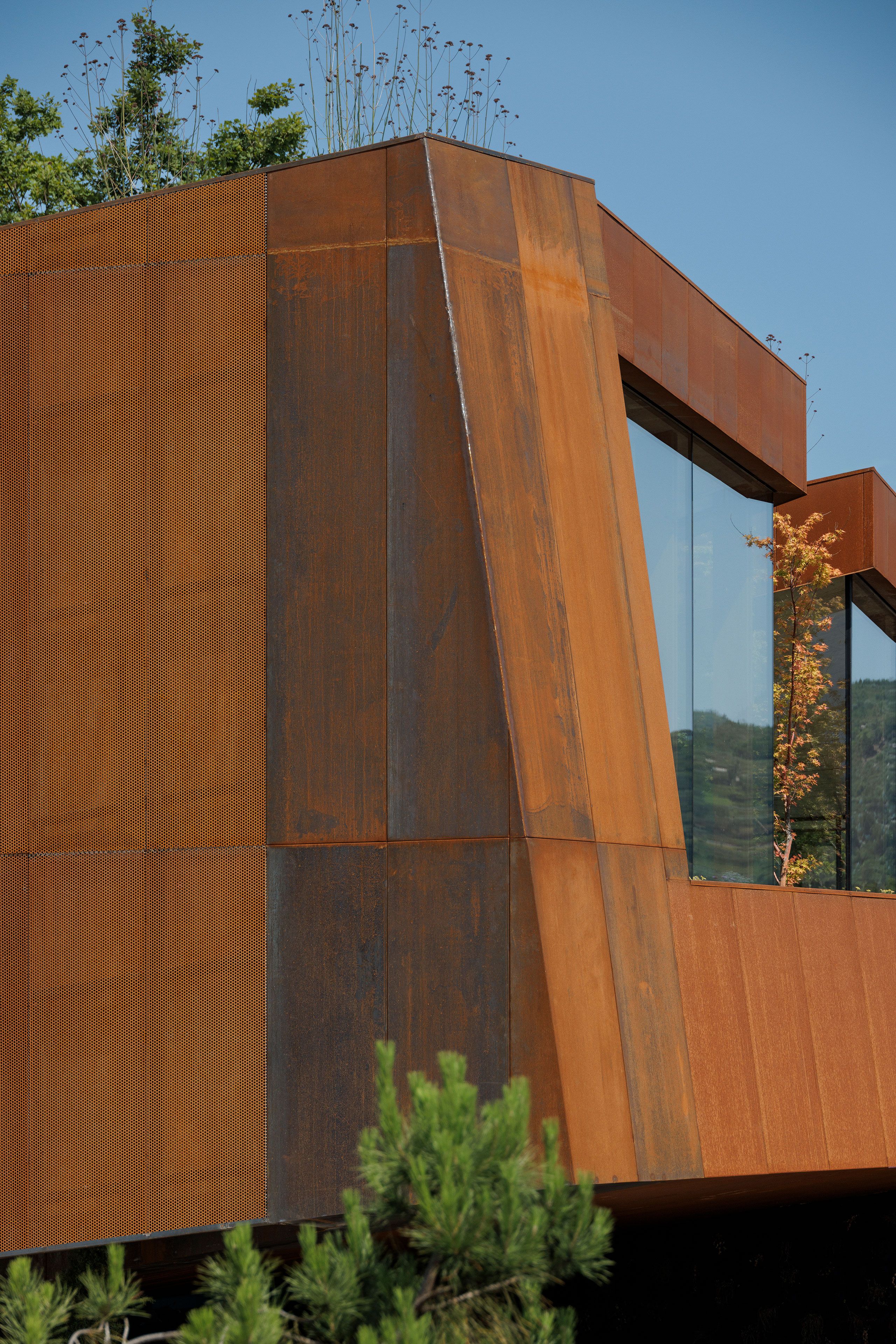
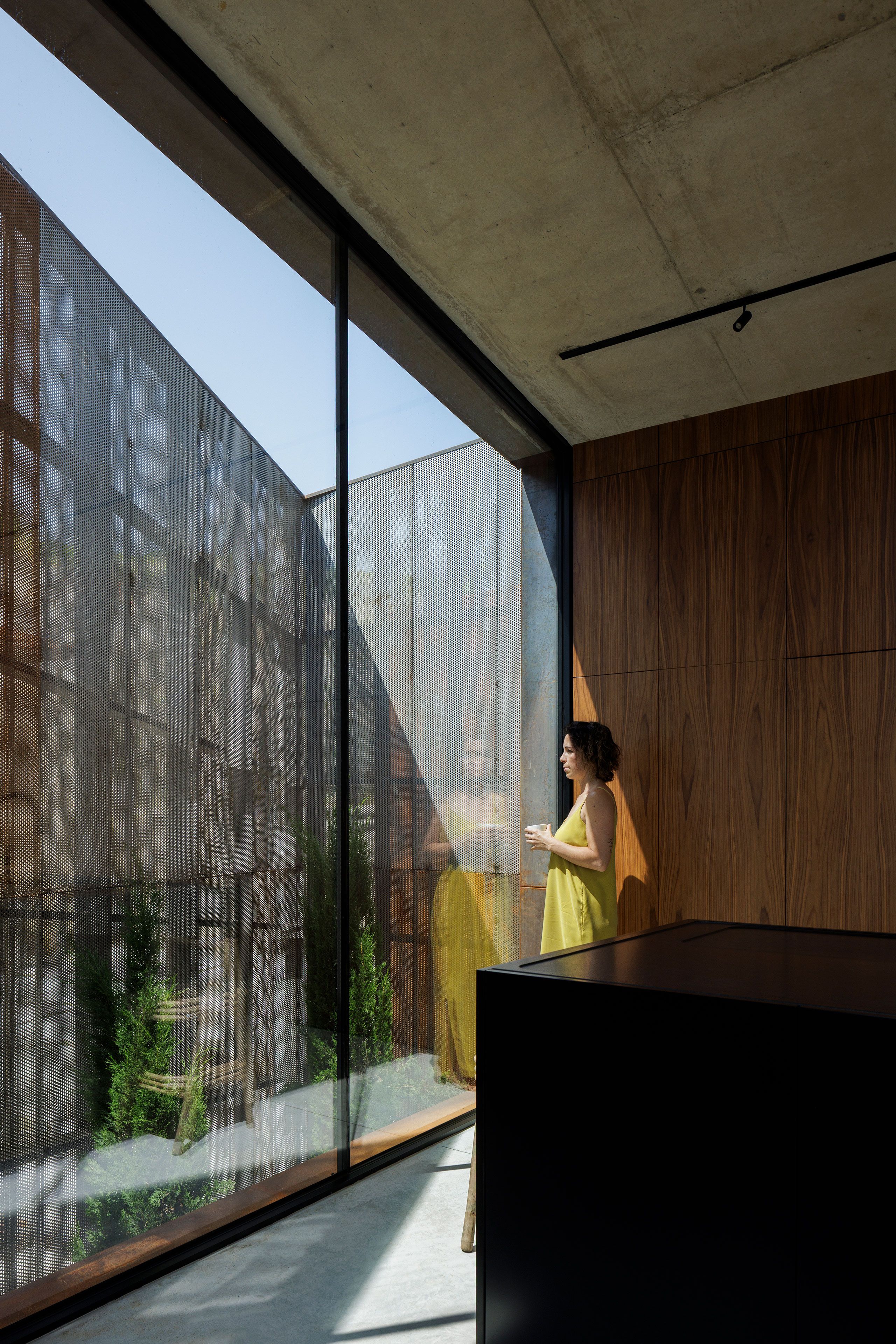
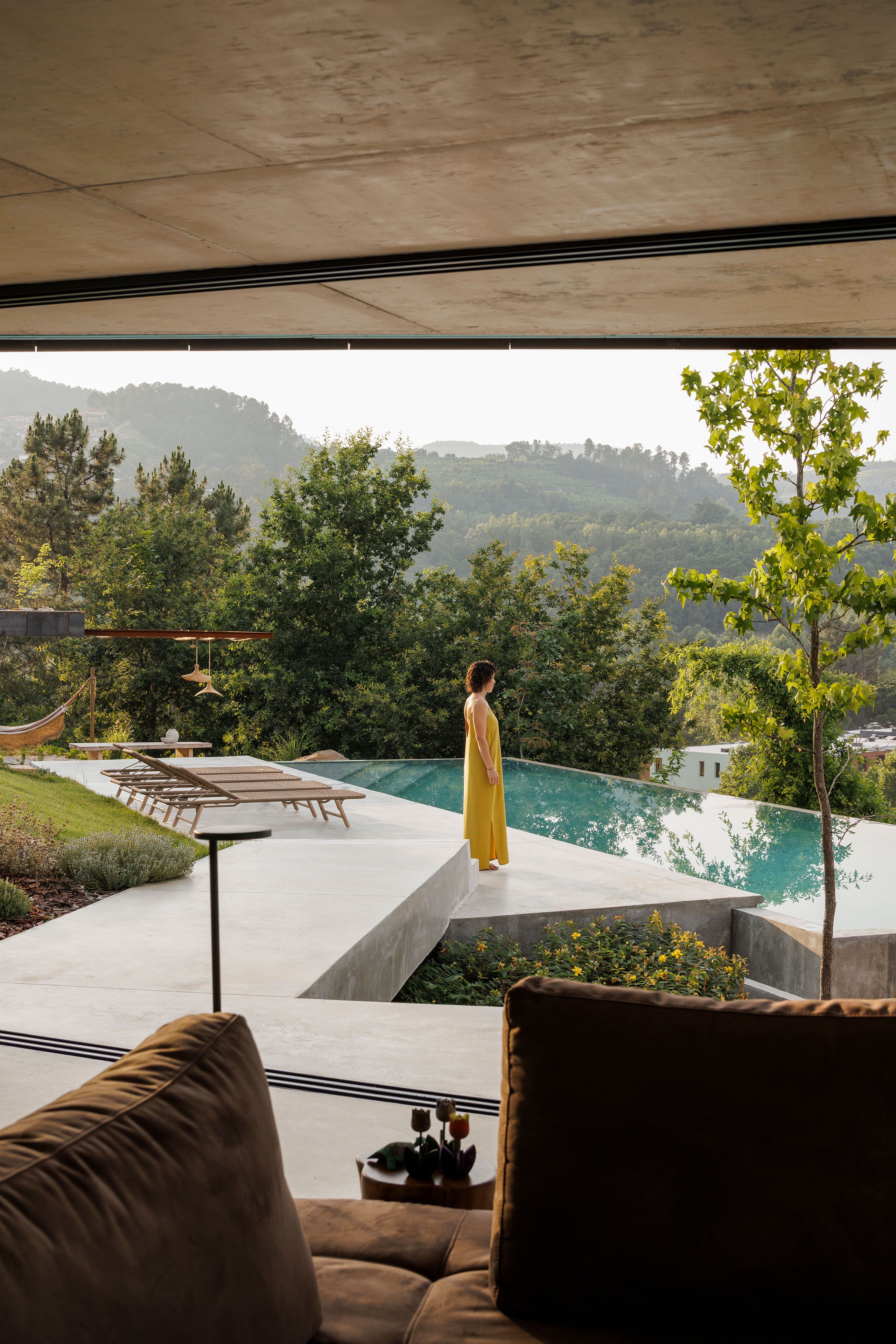
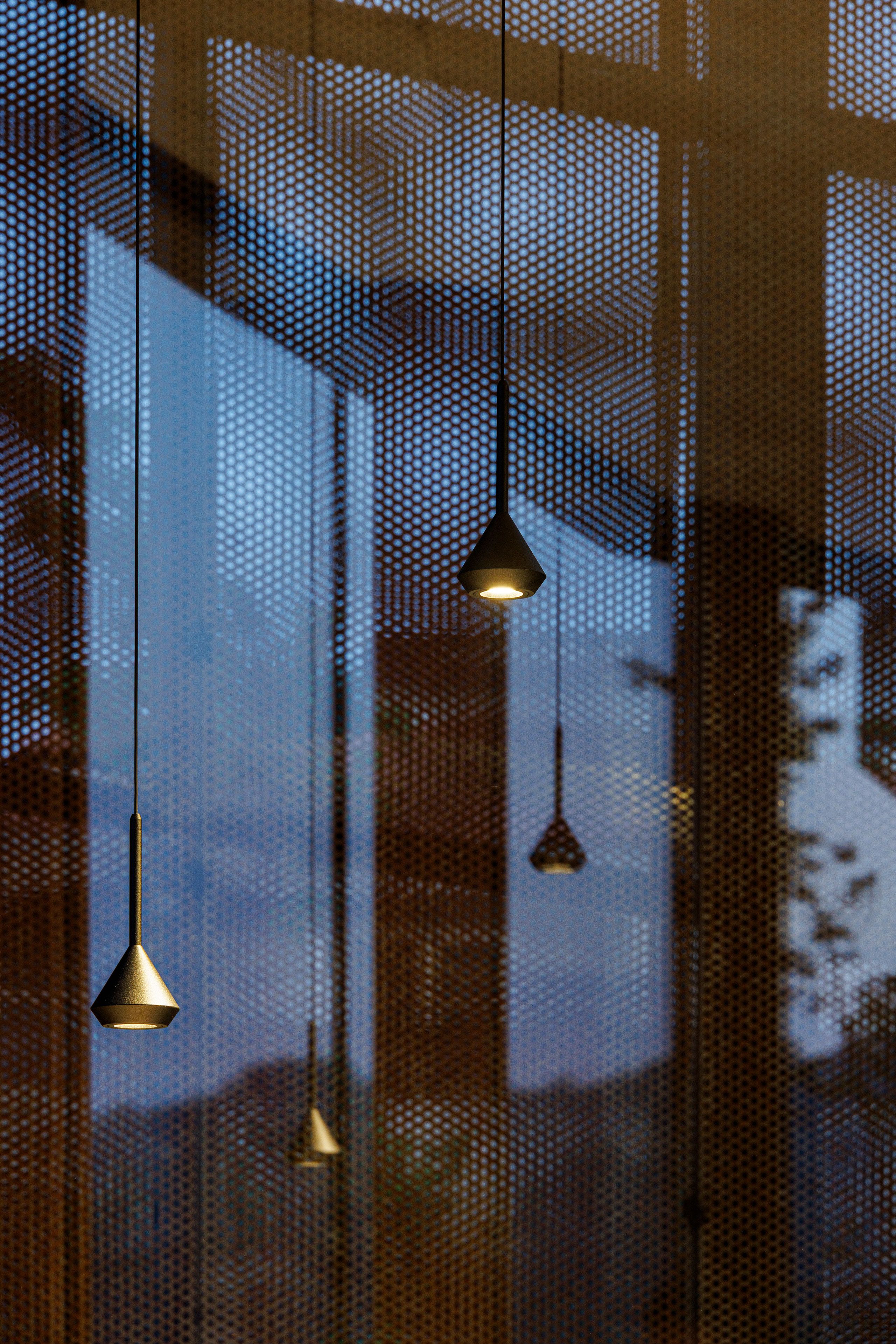
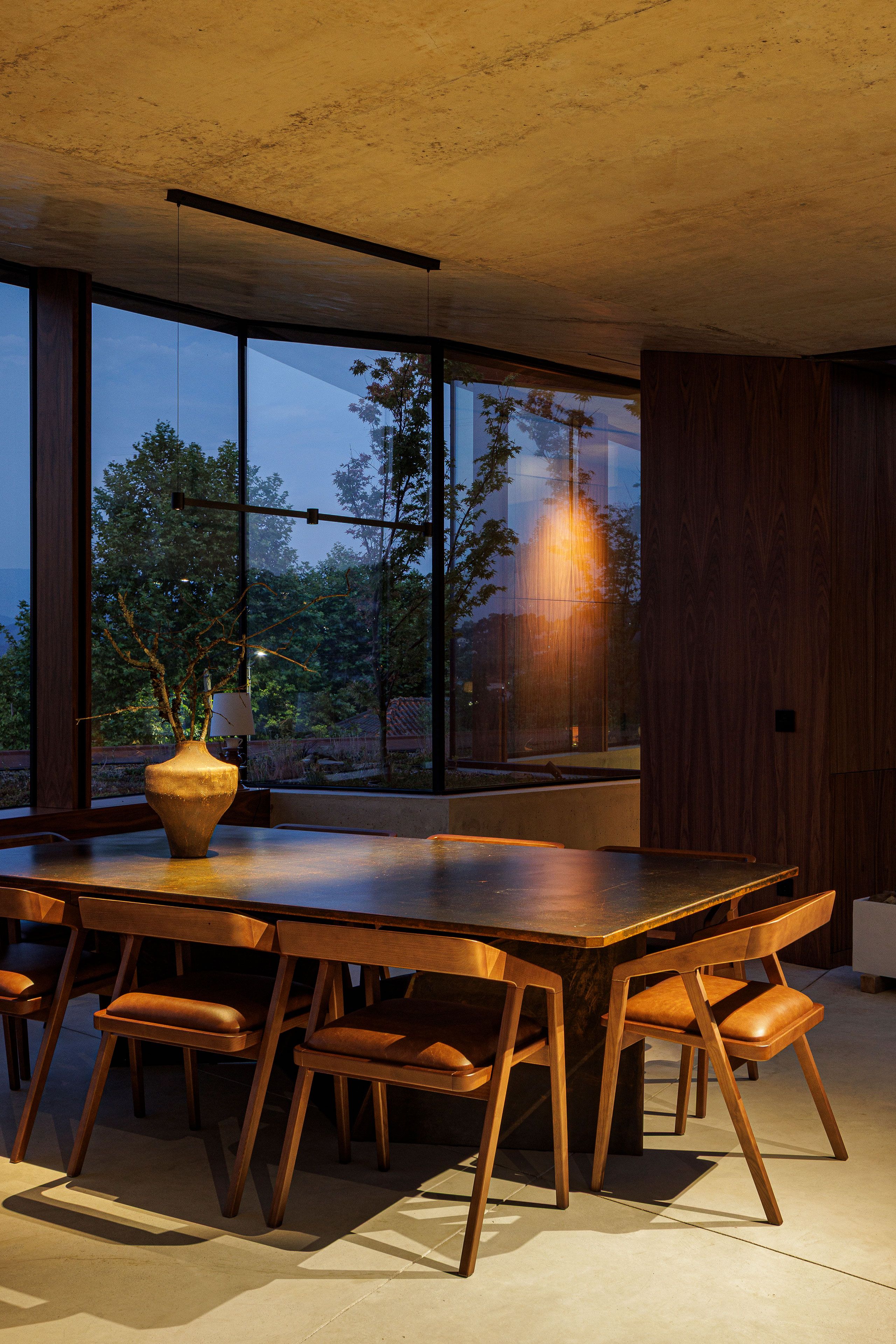
상층부 평면은 주방, 다이닝 룸, 거실이 끊김 없이 이어지는 개방형 구조입니다. 전면 유리가 적용된 파사드는 주변 풍경과 파노라마처럼 마주하고 있습니다. 반면, 남쪽 입면에는 타공된 코르텐 강판으로 만든 브리즈 솔레이유(brise-soleil)를 설치했습니다. 이는 햇빛을 조절하는 차양막이자 시각적 거름망으로서, 과도한 일사를 막고 프라이버시를 지키며 건물의 재료적 정체성을 강조합니다. 야외 공간은 파티오와 테라스, 그리고 자연스러운 조경 속 수영장으로 확장되며, 대비가 아닌 연속성에 방점을 둔 건축가의 의도를 보여줍니다.
시간의 흔적을 담은 붉은 외피
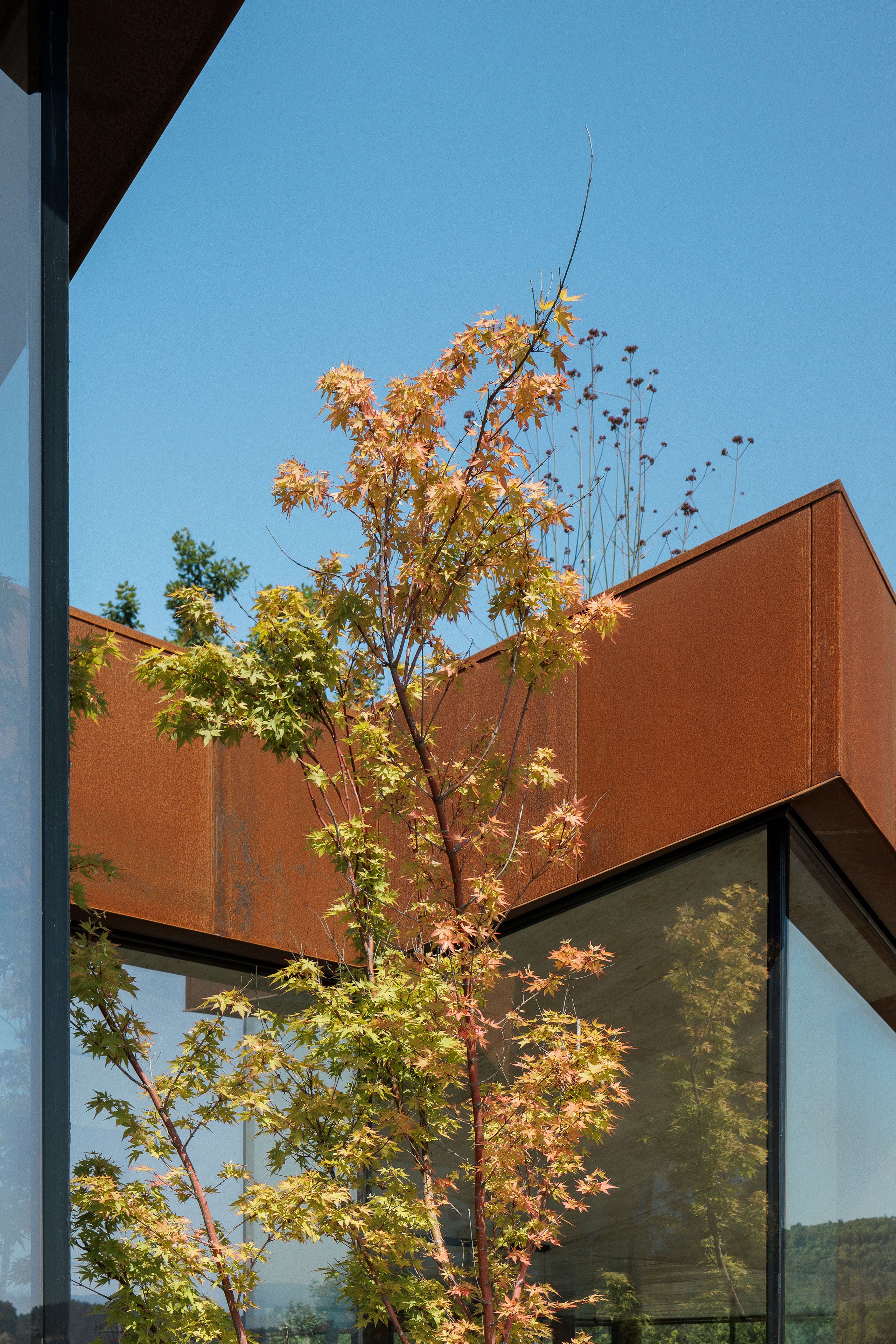
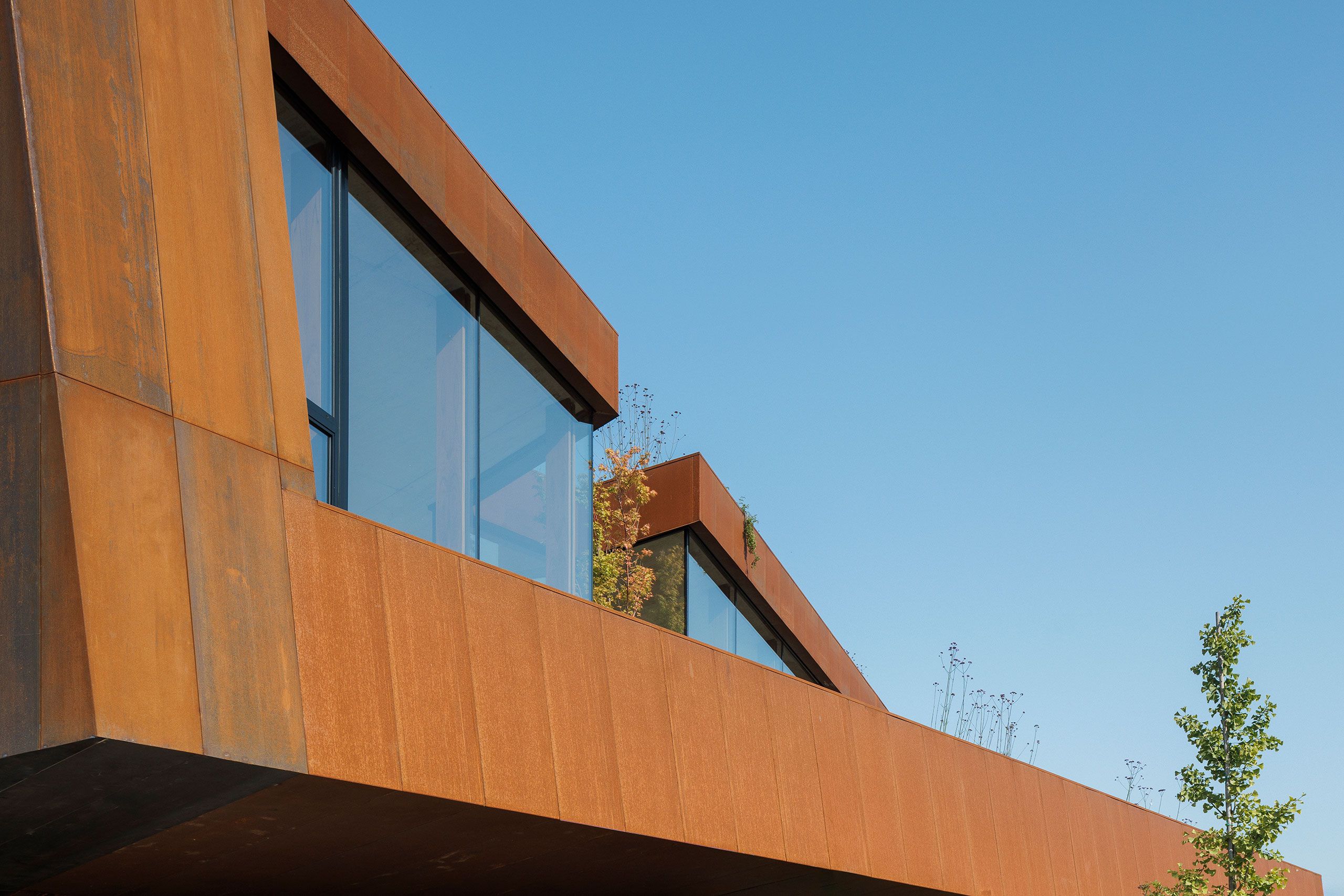
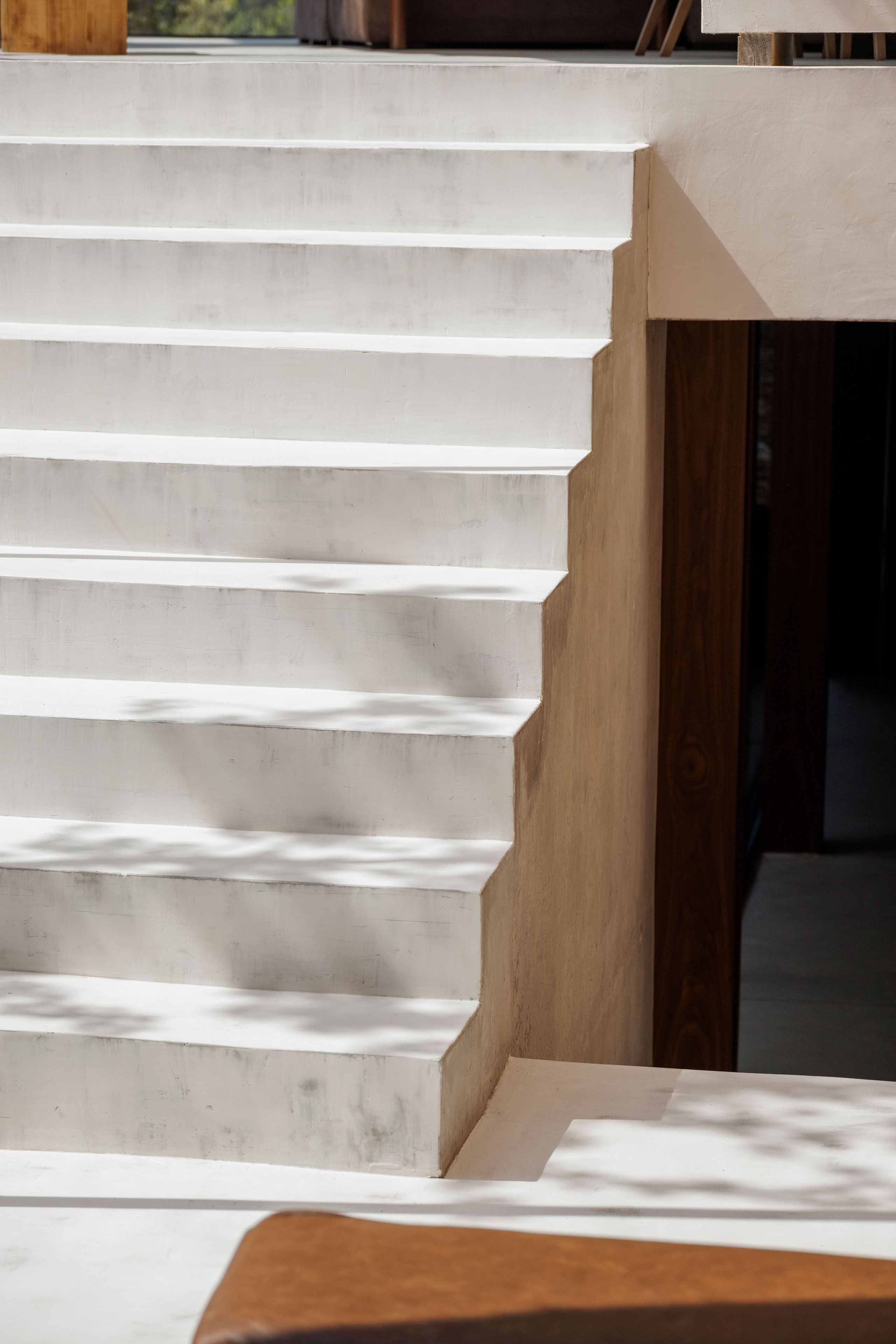
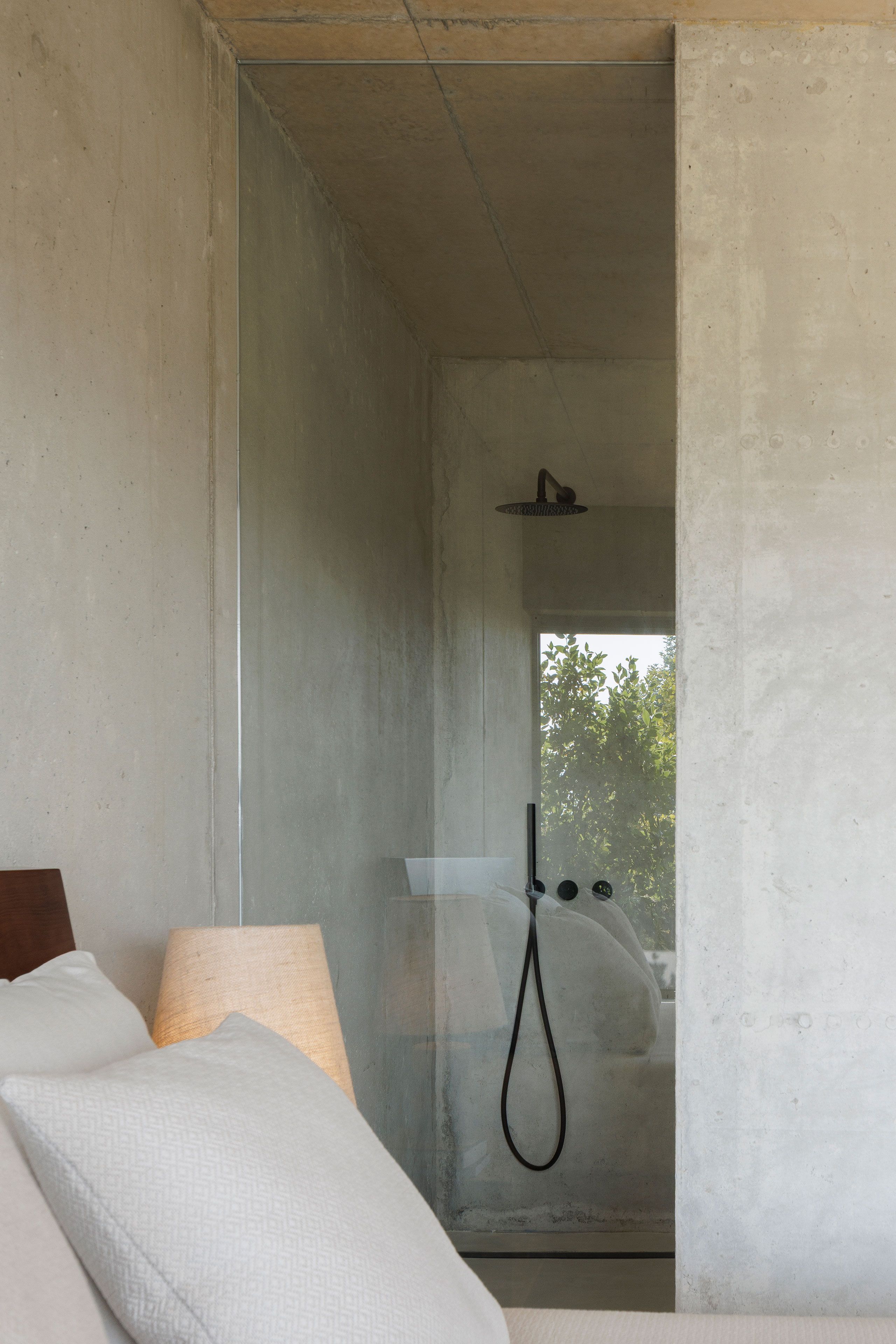
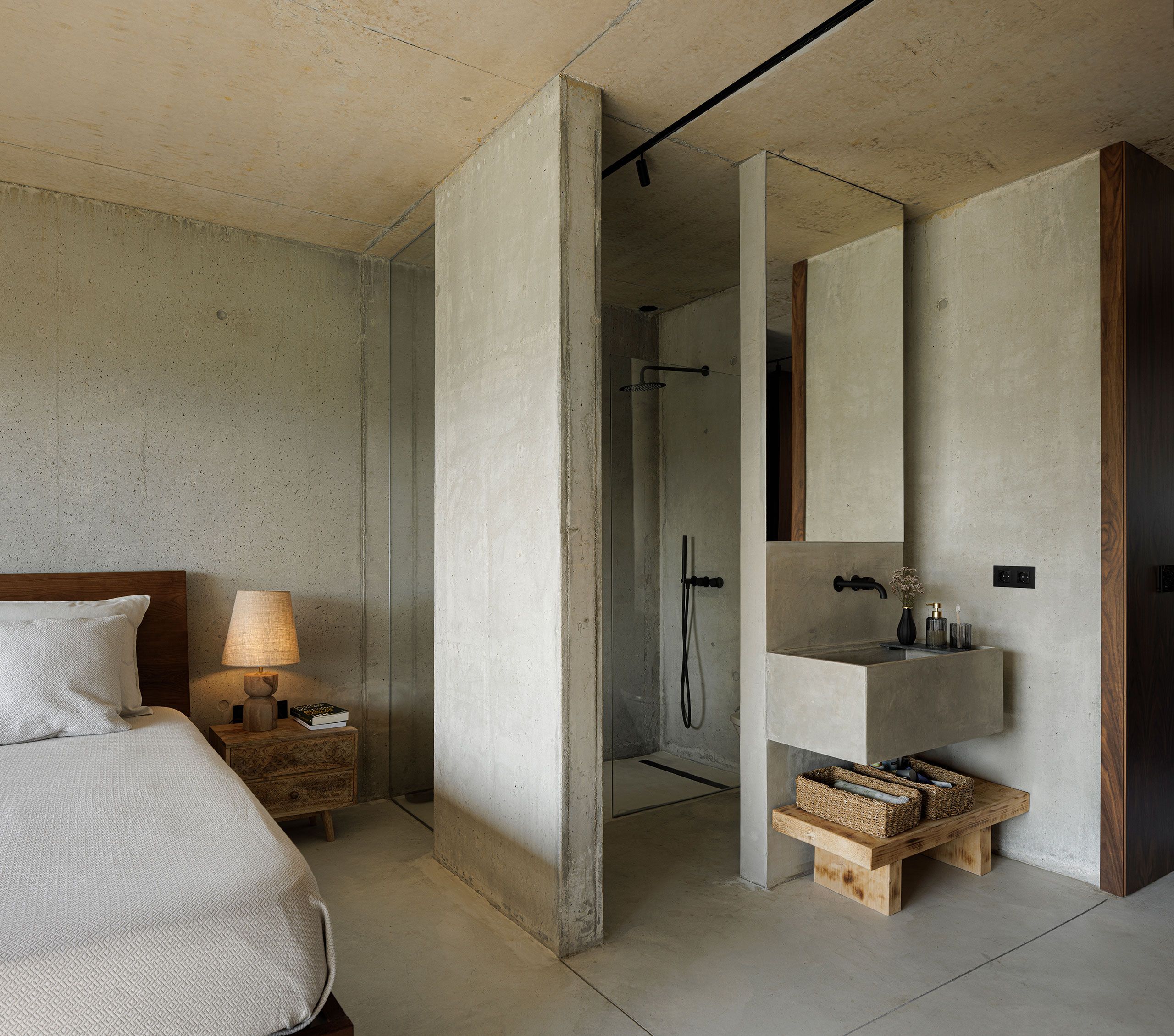
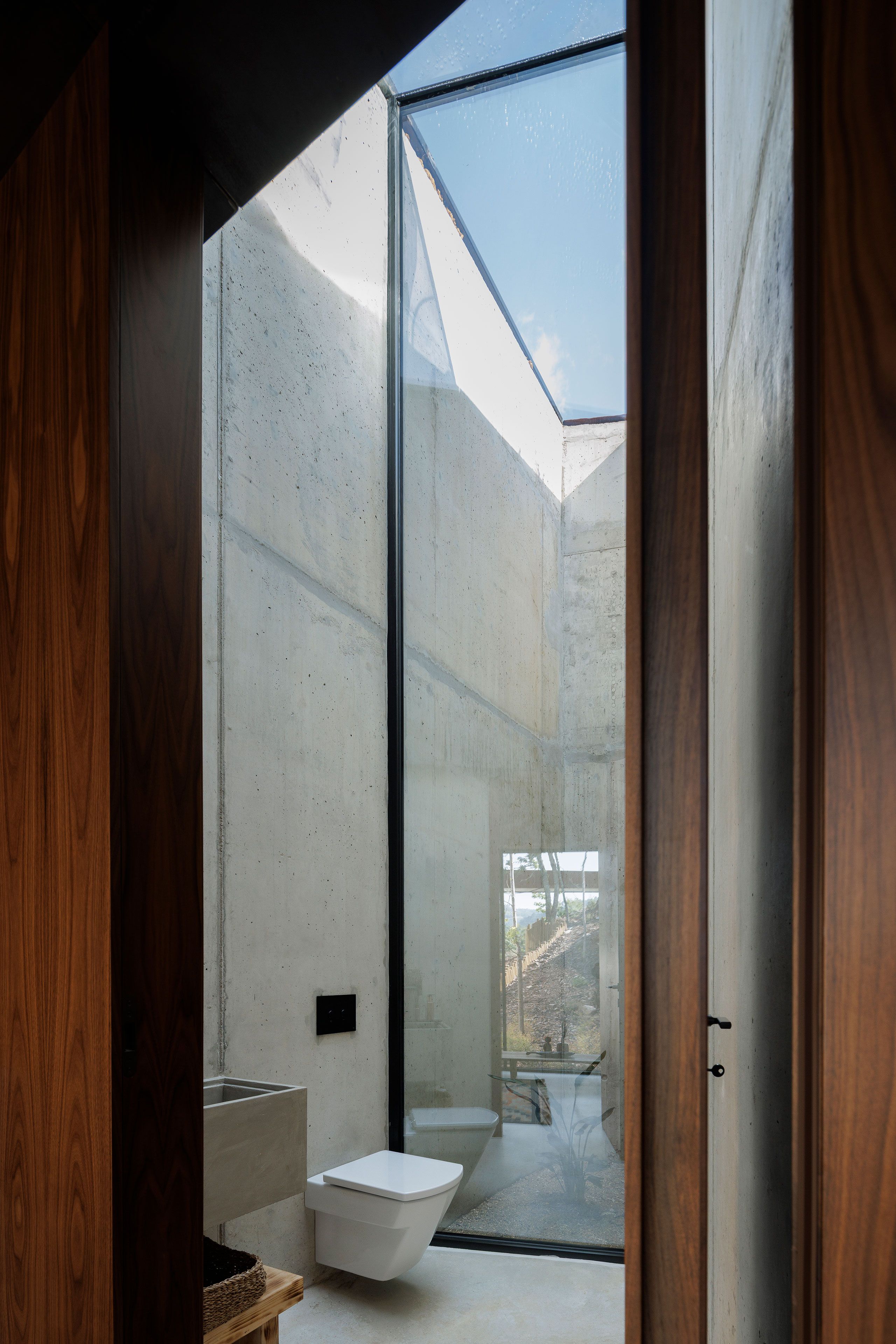
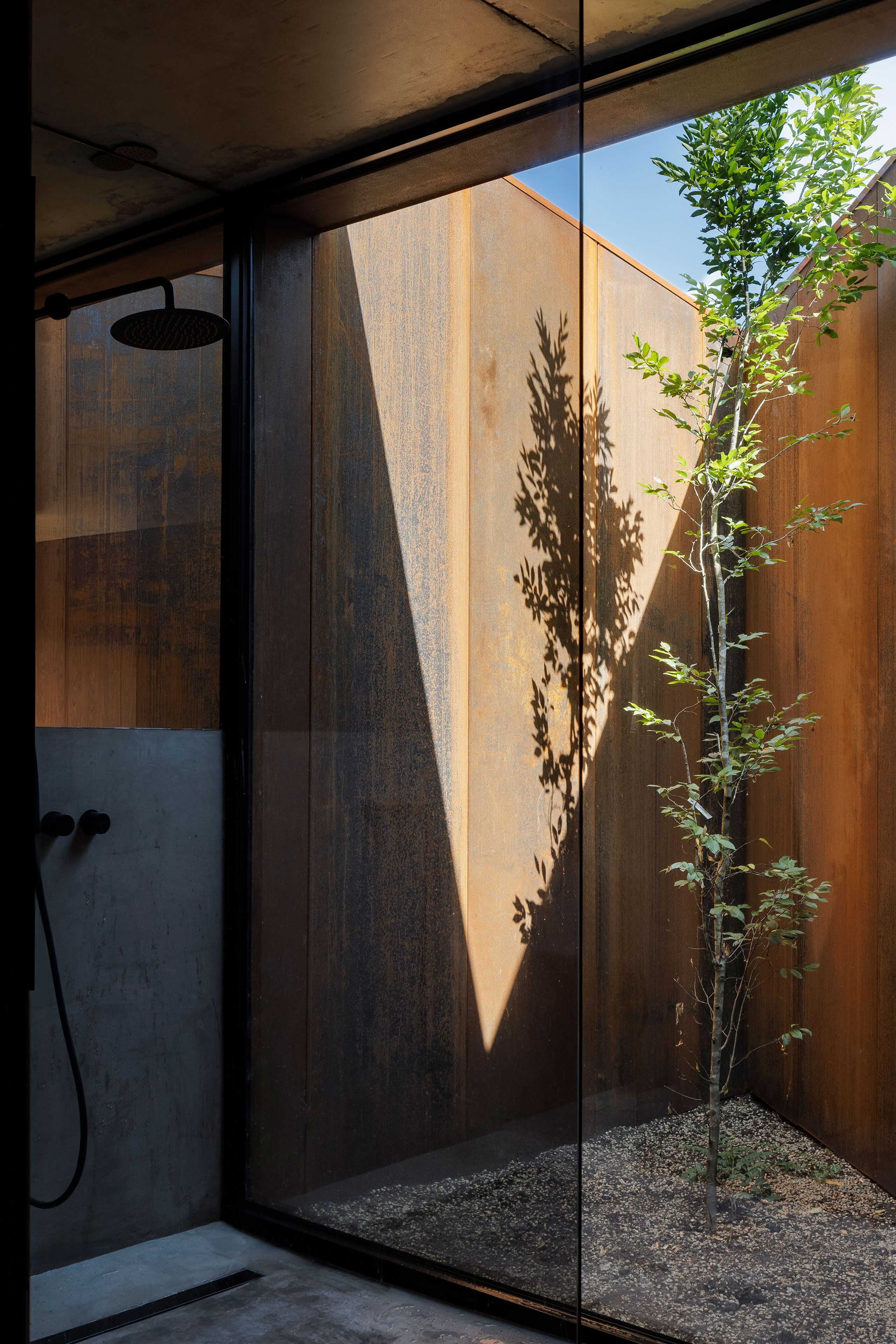
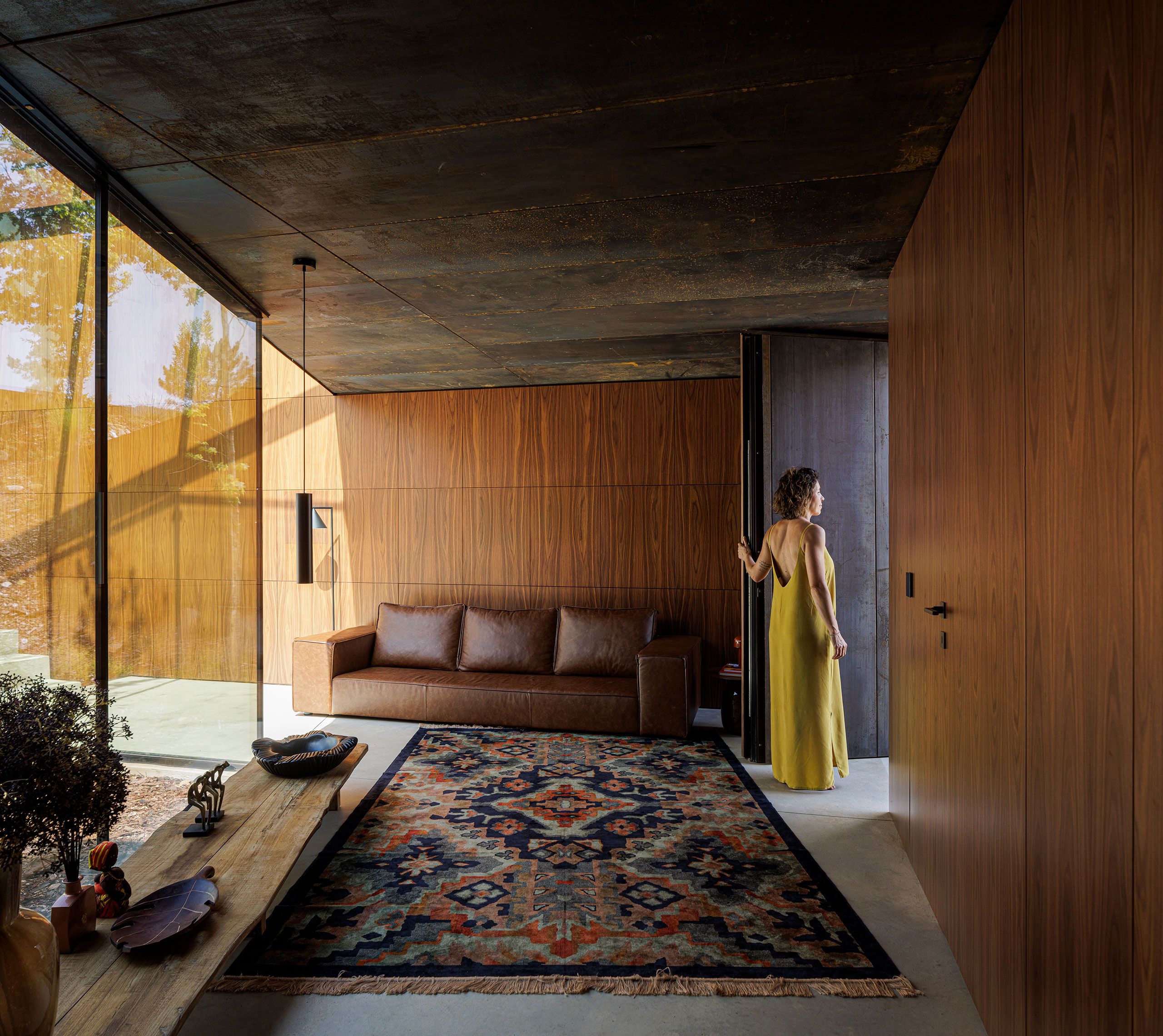
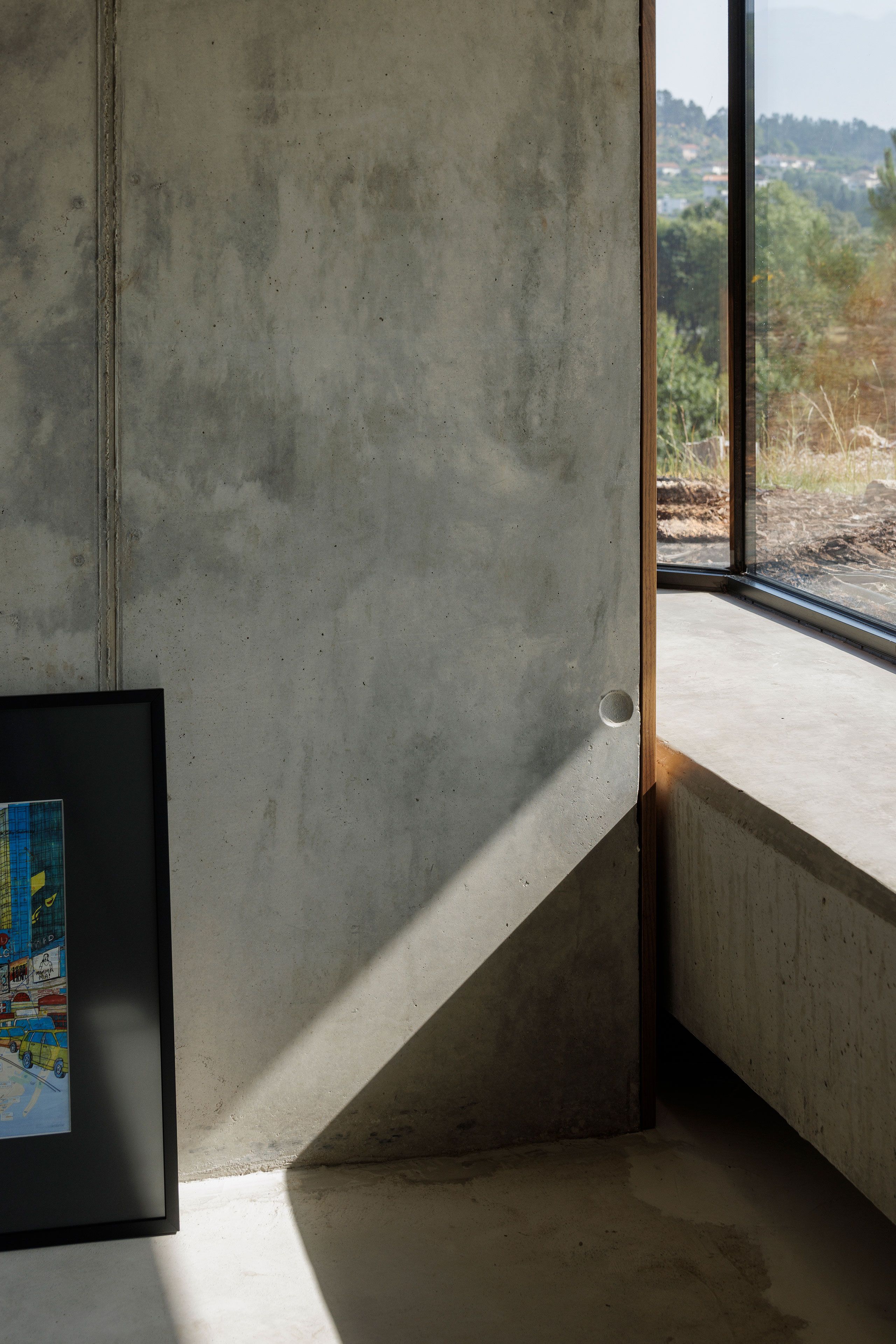
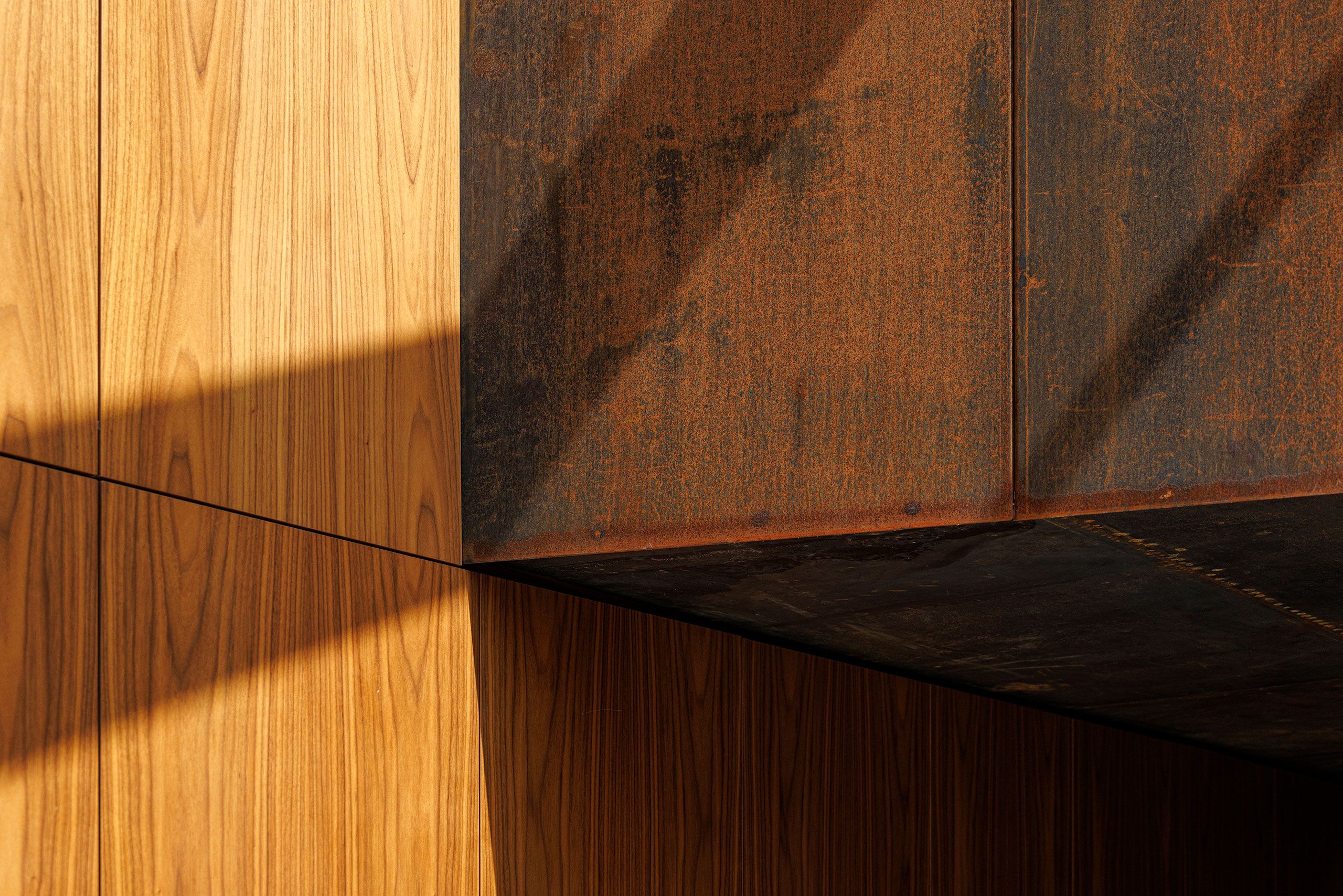
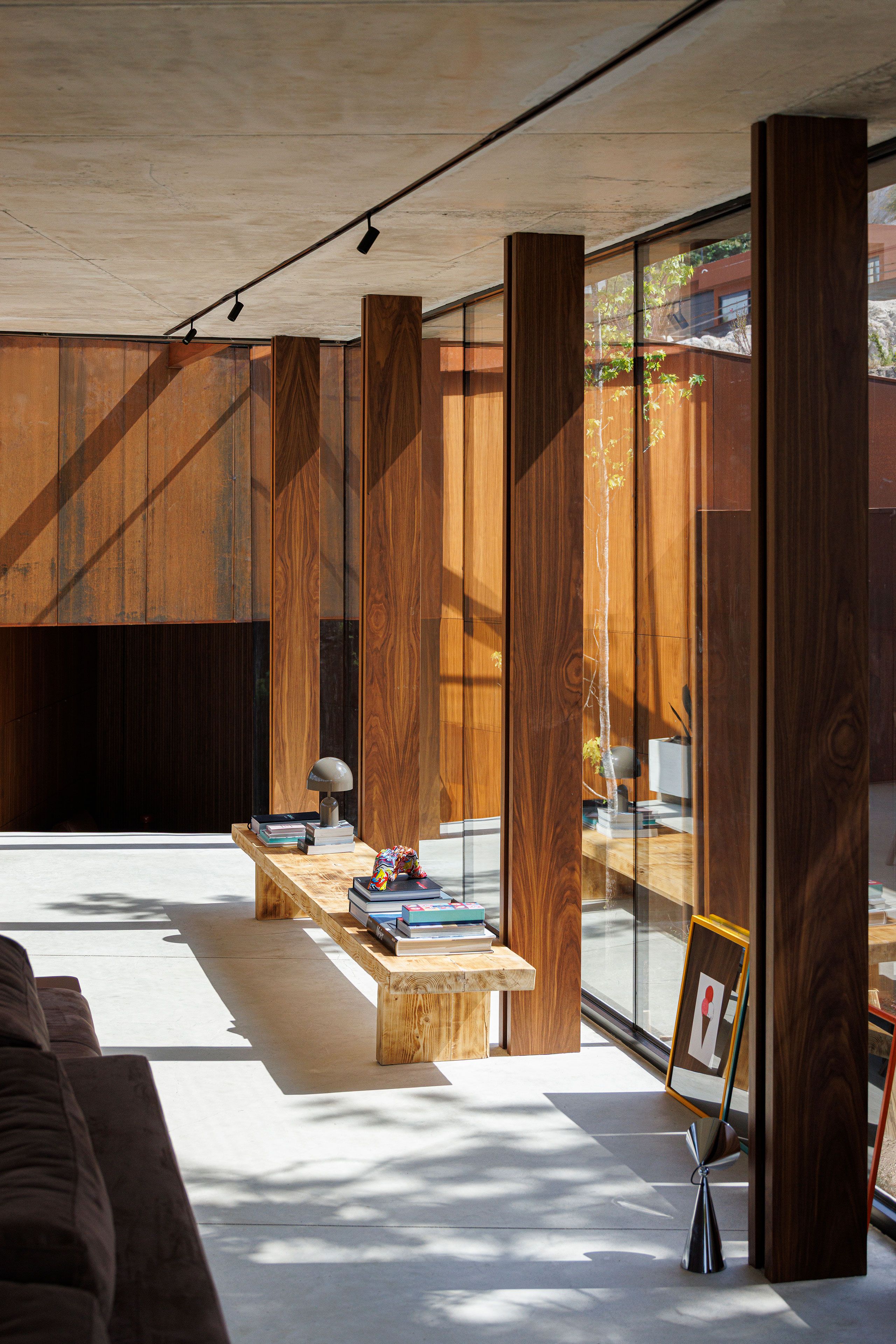
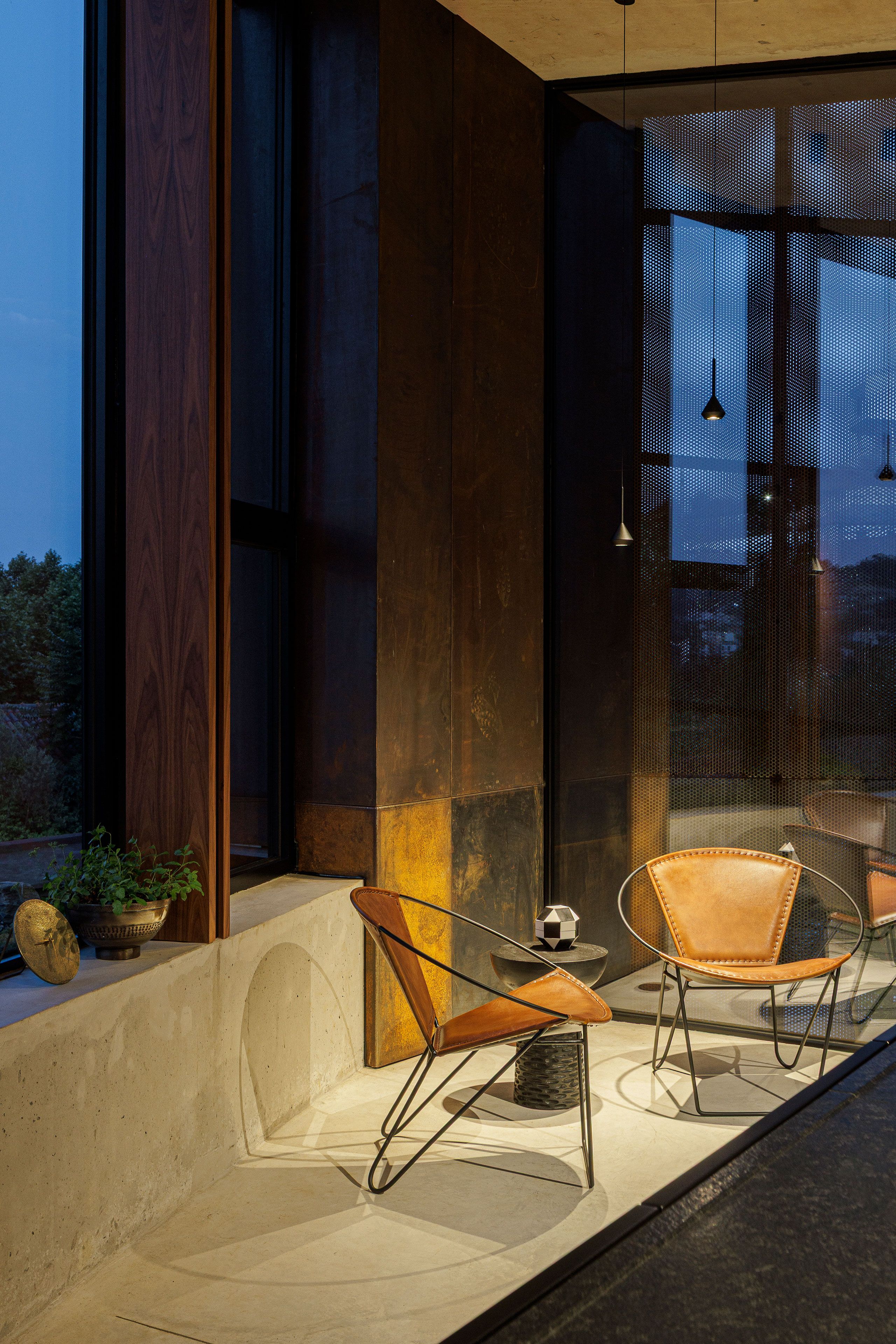
재료는 절제되었지만 강렬한 인상을 남깁니다. 외관을 감싼 코르텐 강은 현관 홀과 일부 내부 공간까지 이어지며 반복해서 등장합니다. 붉게 산화된 표면은 옛 공장의 잔해를 연상시키고, 바닥과 벽, 천장을 지배하는 노출 콘크리트의 거친 질감과 선명한 대비를 이룹니다. 콘크리트는 별도의 마감 없이 거칠고 불규칙한 면을 그대로 드러내어 구축의 논리를 강조했습니다. 여기에 선별적으로 사용된 목재 마감이 공간의 명료함을 해치지 않으면서 따스함을 더합니다.
감상(Sentimentalism)을 배제한 진정성
추상적인 기하학적 형태로 대담하게 표현된 카사 코르텐의 단순함 뒤에는, 대지와 기후 그리고 사용자에 뿌리를 둔 치밀한 결정들이 숨어 있습니다. 지형이 배치를 결정하고, 동선은 땅의 흐름을 따르며, 재료는 감상적이지 않은 태도로 대지의 산업적 과거를 투영합니다. 그 결과, 이 집은 개방감과 아늑함, 견고함과 절제미 사이에서 균형을 이루며, 장소에 단단히 뿌리 내린 현대적인 삶의 배경이 되었습니다.
Write by Claude & Jean Browwn

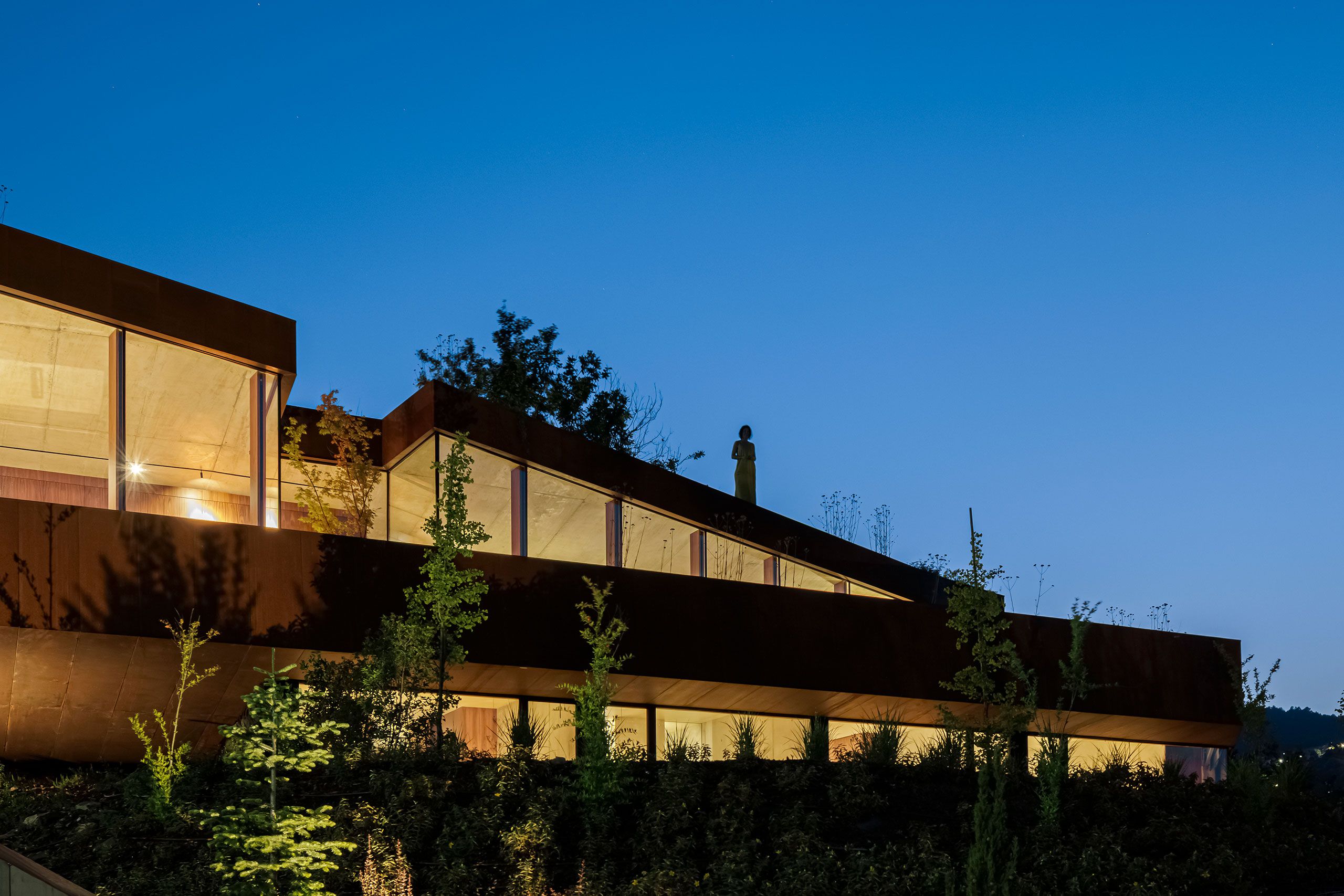
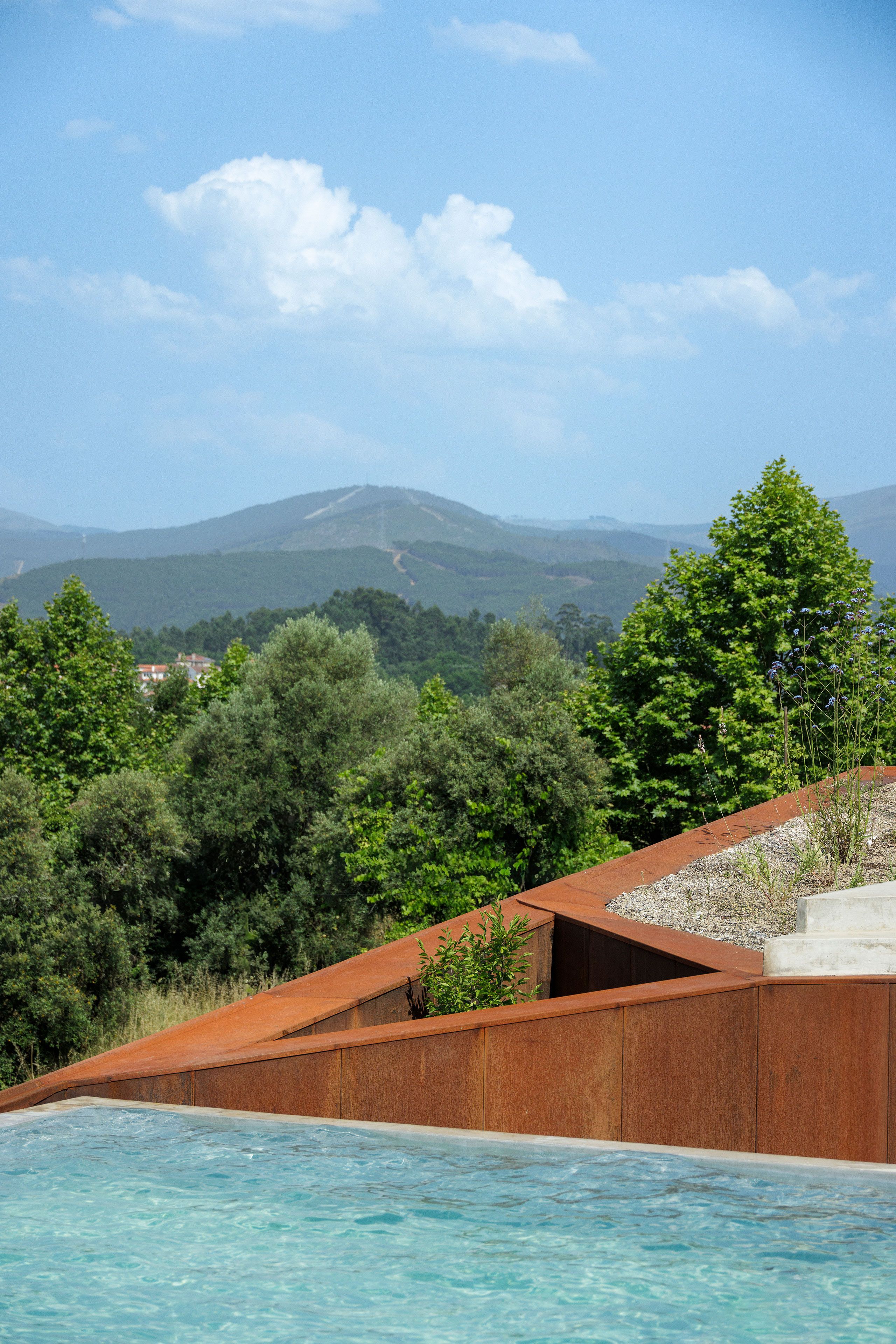
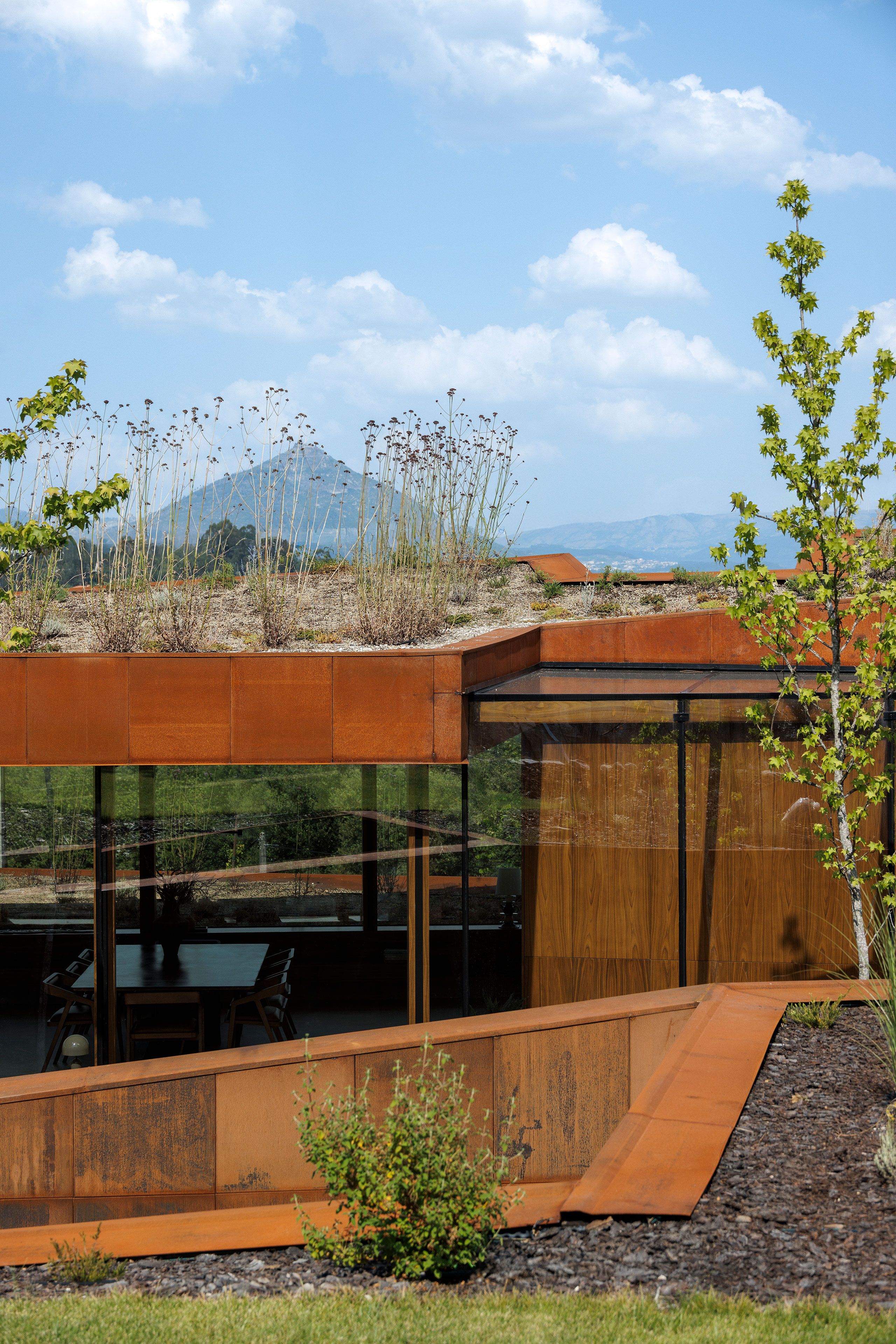
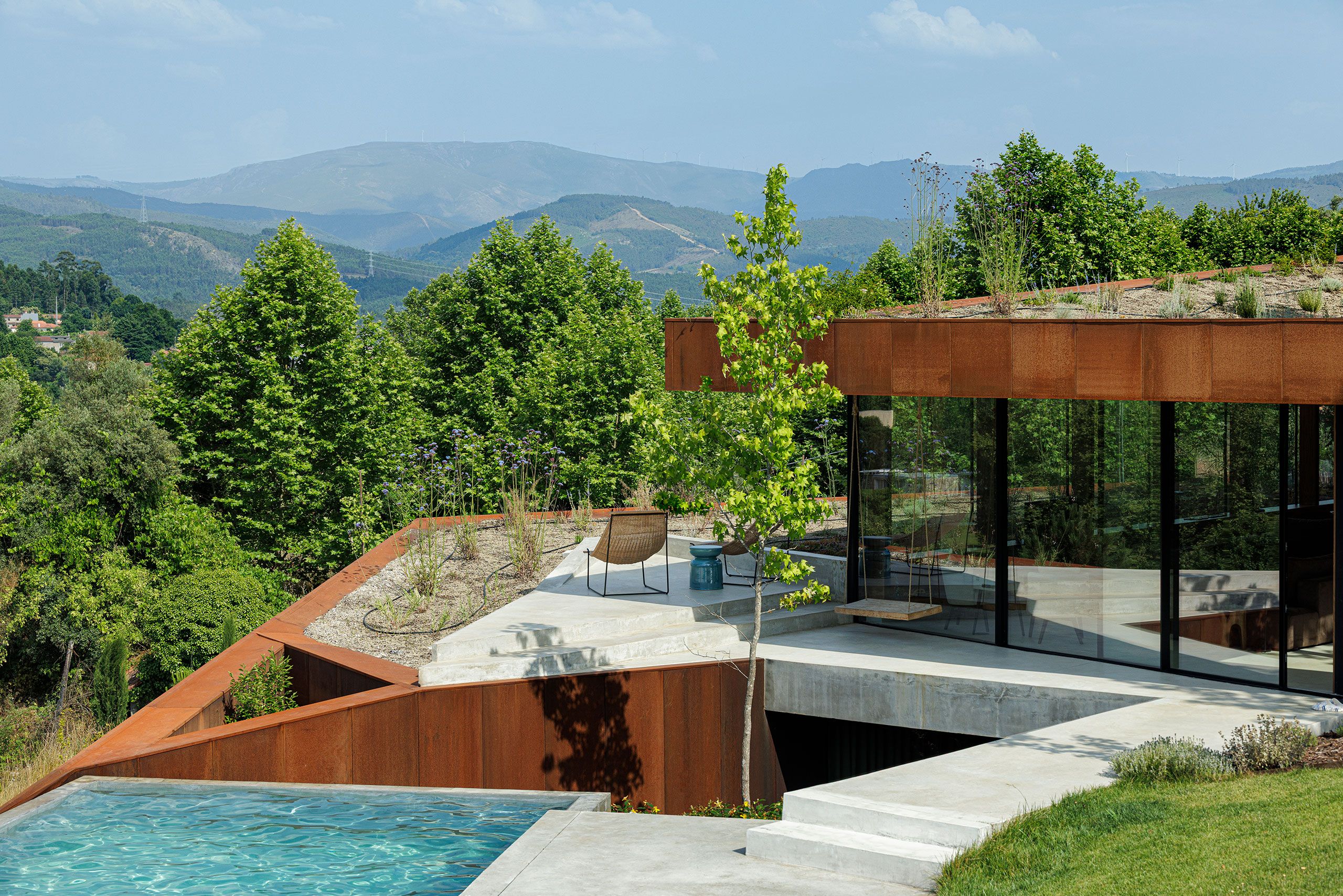



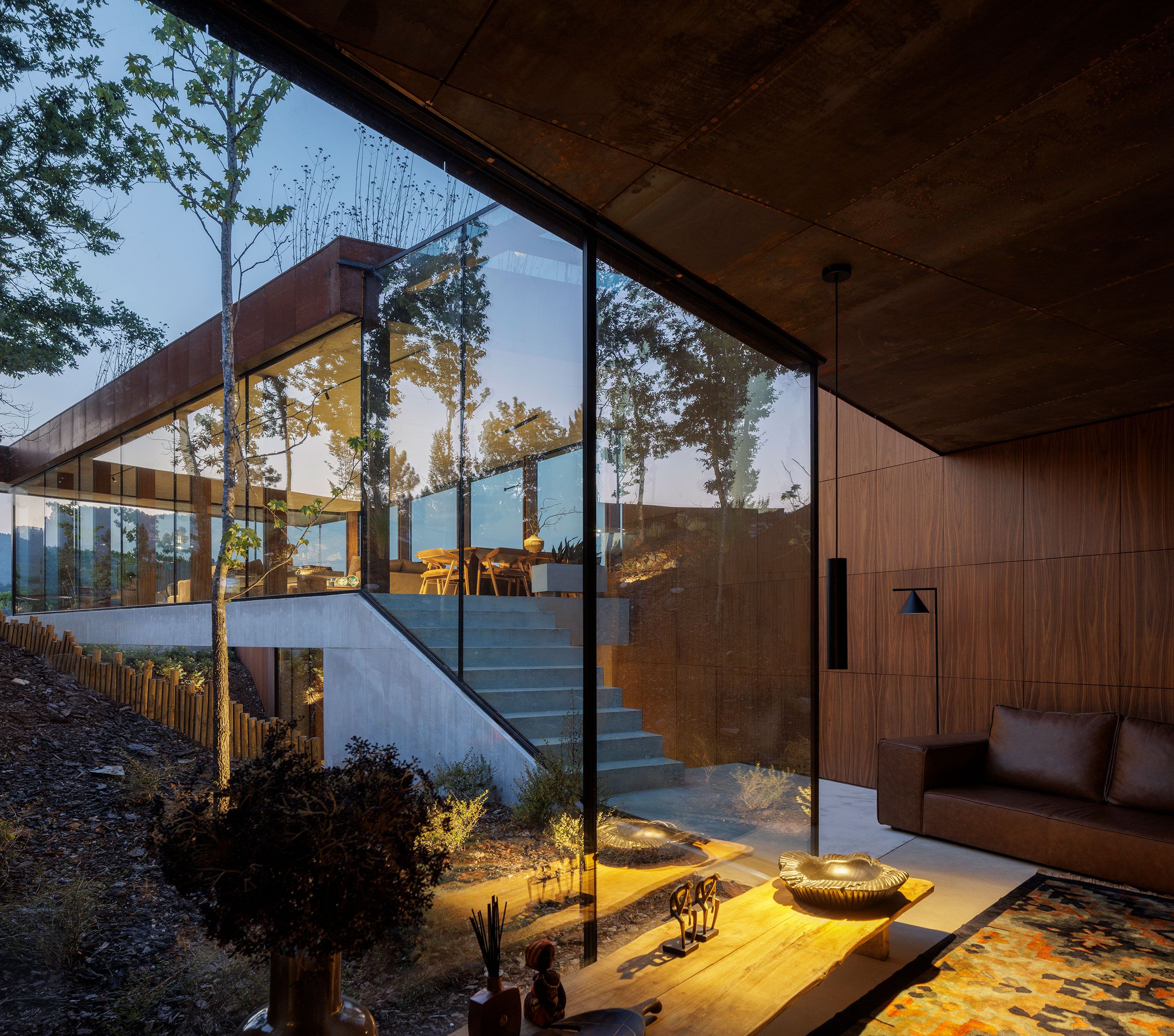
Located on a forested slope in northern Portugal, Casa Corten is a carefully calibrated response to the plot’s terrain and orientation as well as its history. Designed by Hugo Pereira of HPA Arquitetura, the four-bedroom house occupies the site of a former timber factory, long reduced to ruins. Rather than erasing this industrial past, the project builds upon it, both materially and spatially, using the site’s constraints as the primary drivers of form and organisation. Wrapped in corten steel and embedded within naturalistically planted gardens, the house is conceived as a structure that changes over time: as the metallic envelope slowly oxidises and wild shrubs and grasses mature, architecture and landscape will settle into a shared, evolving equilibrium.
The plot’s steep slope and eastfacing orientation presented immediate challenges. Instead of levelling the land, the architects fragmented the building into a series of low-slung, prismatic volumes that follow the natural contours of the site, each one subtly angled to optimise orientation, privacy, and views. This approach reduces the visual impact of the house, making it appear as an extension of the terrain rather than an object imposed upon it. Extensive green roofs reinforce this strategy, blurring the boundary between built and natural surfaces while allowing vegetation to reclaim the roofscape.
Rather than being pushed fully into the hillside, the structure is deliberately set back from the slope, creating a narrow, planted gap that allows daylight to reach the lower level from both sides. Circulation is organised around this void, with a long, glazed corridor running parallel to it, connecting the four bedrooms downstairs to the social spaces above via a glass-enclosed staircase, as well as to the underground garage. This linear spine maintains a constant visual relationship with the terrain while structuring movement through the house.
Oriented downhill to take advantage of the expansive landscape, the bedrooms feature generous, wall-to wall glazing that opens onto views filtered by planted grasses and vegetation, lending the otherwise compact rooms a sense of openness and depth.
Above, the plan opens up to accommodate the kitchen, dining, and living areas in a continuous, flexible sequence. Fully glazed façades establish an almost panoramic relationship with the surroundings, while the southern elevation is screened by a perforated corten steel brise-soleil. Both a sun shading device and visual filter, the latter tempers solar exposure, enhances privacy, and reinforces the project’s material identity. Outdoor spaces extend the living areas through patios, terraces, and a pool set within a naturalistic landscape, maintaining the project’s emphasis on continuity rather than contrast.
Material choices are deliberately restrained yet expressive. As mentioned before, corten steel clads the exterior, reappearing inside, most notably in the entrance hall and selected private areas. Its oxidised surface echoes the remnants of the former factory and provides a chromatic counterpoint to the raw concrete that dominates floors, walls, and ceilings. The concrete is left exposed and irregular, emphasising construction logic and material continuity across the house, while timber surfaces, used selectively, soften the palette without diluting its clarity. Throughout the interior, built-in furniture has been custom designed to align with the architecture, reinforcing cohesion rather than introducing competing elements.
Sustainability is unsurprisingly an integral part of the project’s logic. Green roofs, rainwater collection systems, photovoltaic panels, and deciduous planting work both regulate temperature and reduce energy demand, supported by home automation systems that optimise daily operation.
Boldly articulated through abstract volumetric geometry, Casa Corten belies a sequence of deliberate decisions, each rooted in site, climate, and use. Topography shapes the layout, circulation follows the land, and material choices echo the site’s industrial past without resorting to nostalgia. The result is a house that negotiates its context with precision, balancing spatial openness with privacy, and robustness with restraint, offering a contemporary domestic environment that remains firmly anchored to place.
from archdaily