건축은 자연을 정복하는 것이 아니라, 자연의 일부가 되는 것이다.-프랭크 로이드 라이트
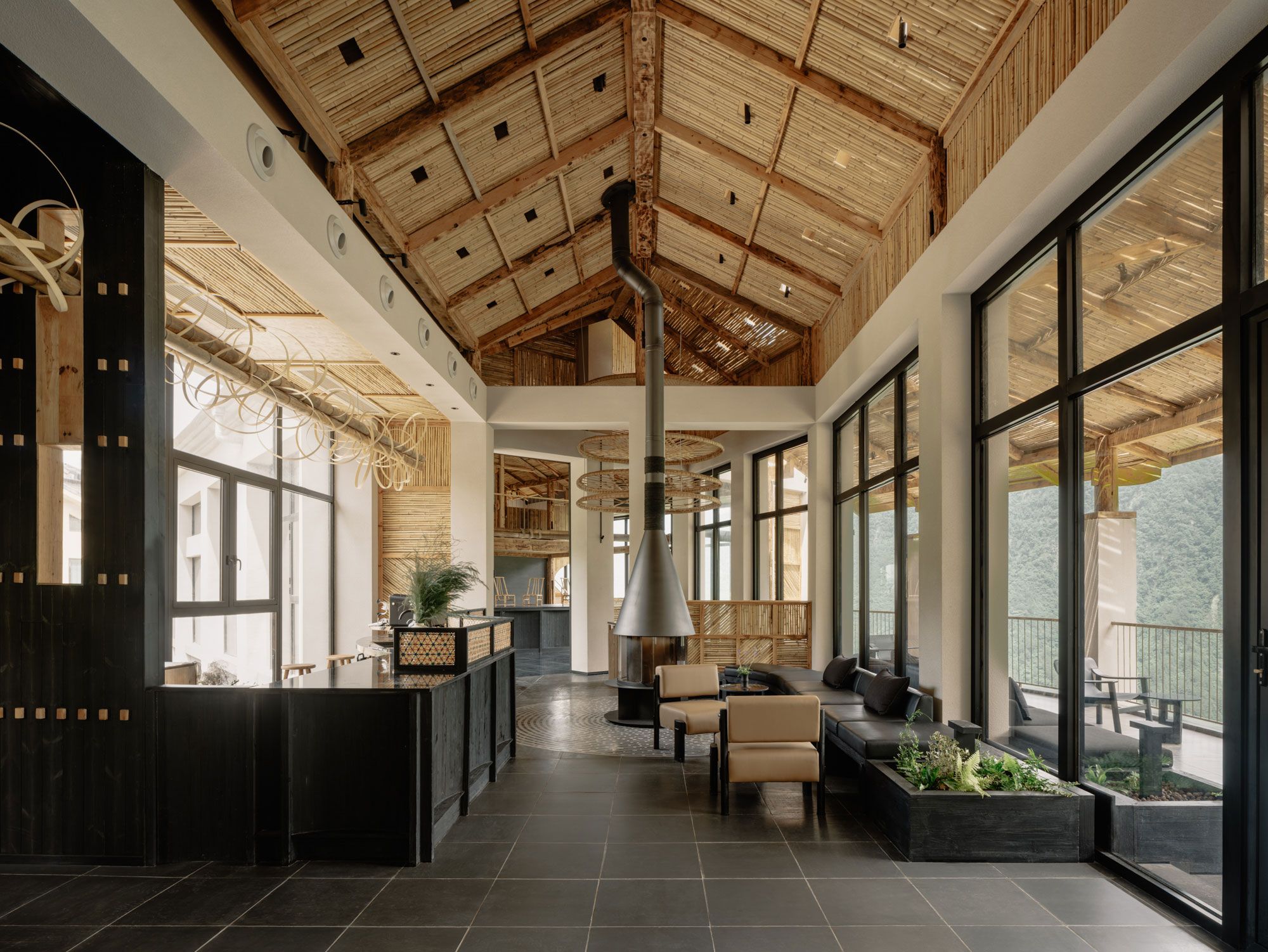
지역의 숨결로 빚은 산속의 성소 / RooMoo Design Studio - Cloudhaus Hotel
자연과 기억의 재생: 진포산의 새로운 안식처
충칭 난촨구, 구름이 머무는 진포산의 북쪽 비탈에 클라우드하우스 호텔이 고요히 자리하고 있다. 루무 디자인 스튜디오(RooMoo Design Studio)가 설계한 이 24객실 규모의 호텔은 현대적인 호스피탈리티 디자인이 어떻게 지역의 정체성을 계승하고 지속 가능성의 가치를 품을 수 있는지를 보여주는 탁월한 사례다. 유네스코 세계자연유산인 진포산의 카르스트 지형, 울창한 대나무 숲, 깊은 협곡, 그리고 오랜 불교 문화가 어우러진 이 안식처는 본래 인근 리조트의 분양 사무소로 사용되던 건물을 적응형 재사용(Adaptive Reuse) 방식을 통해 새롭게 탄생시킨 결과물이다.
땅의 기록을 탐구하다: 적응형 재사용과 지역성
루무 디자인 스튜디오는 미리 정해진 컨셉을 강요하기보다 현장에 대한 깊이 있는 탐구를 선행했다. 그들은 산세를 탐험하고 현지의 전통 건축 기법을 기록했으며, 인근의 목재 공장과 대나무 채취 현장을 직접 방문했다. 이러한 과정을 통해 축적된 재료와 문화적 지식은 호텔의 외관부터 인테리어 마감 디테일에 이르기까지 모든 디자인 언어의 근간이 되었다. 특히 건설 과정과 탐사 중에 발굴된 폐자재를 단순히 보조적인 장식이 아닌 디자인의 핵심 요소로 활용한 점은 이 프로젝트가 지향하는 생태적 검소함을 잘 보여준다.
산세를 닮은 건축: 지형과의 조화로운 대화
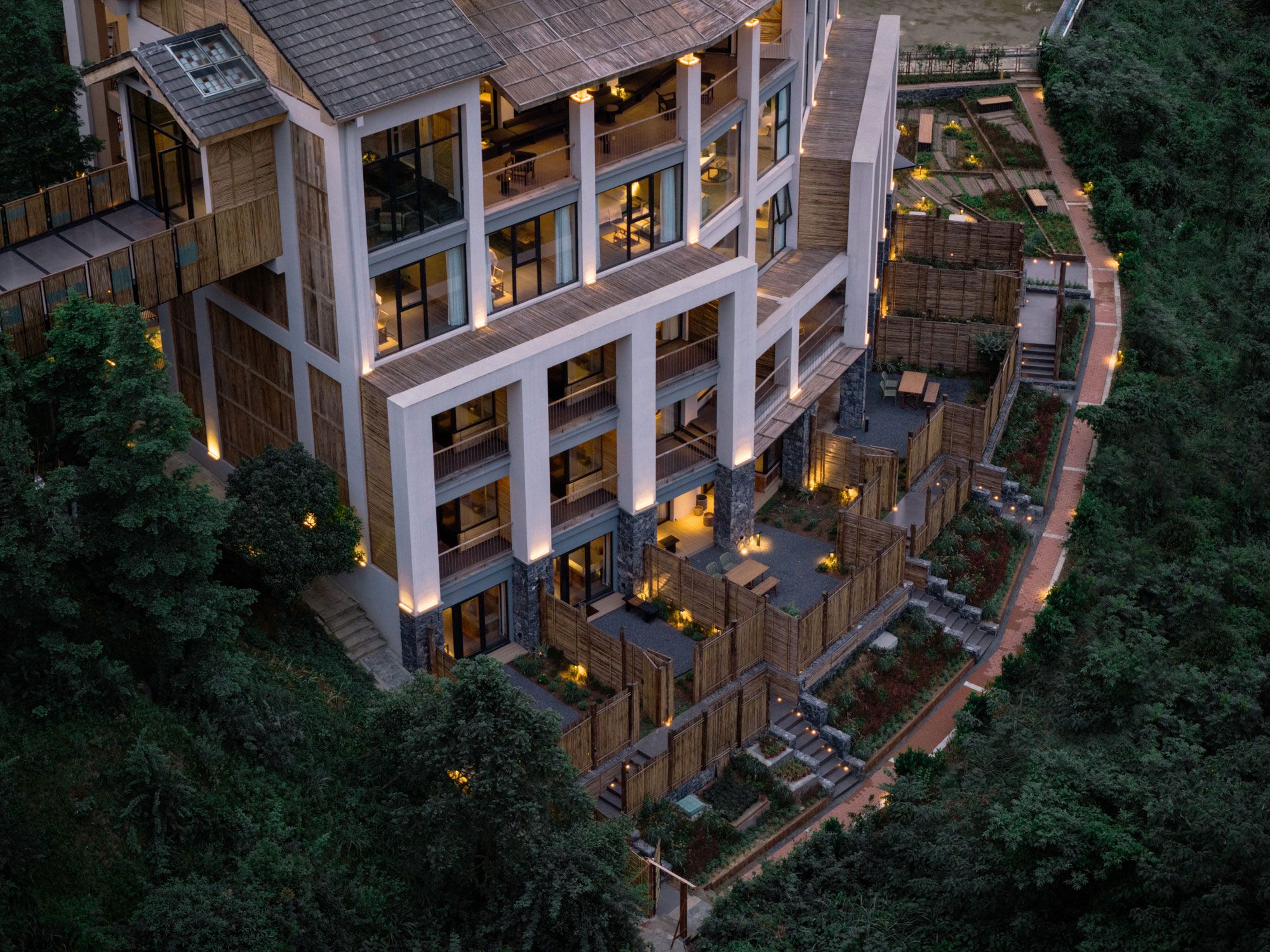
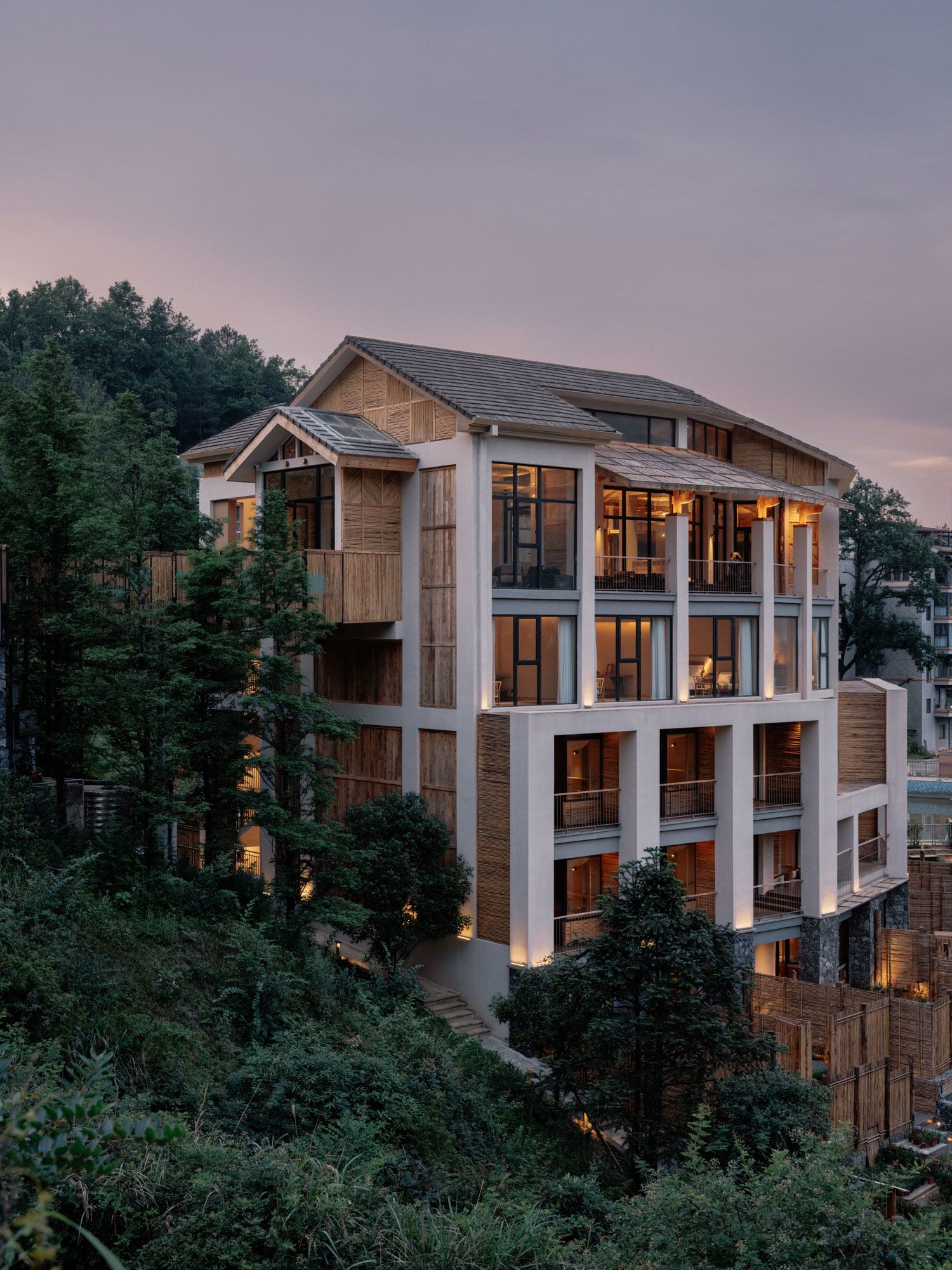
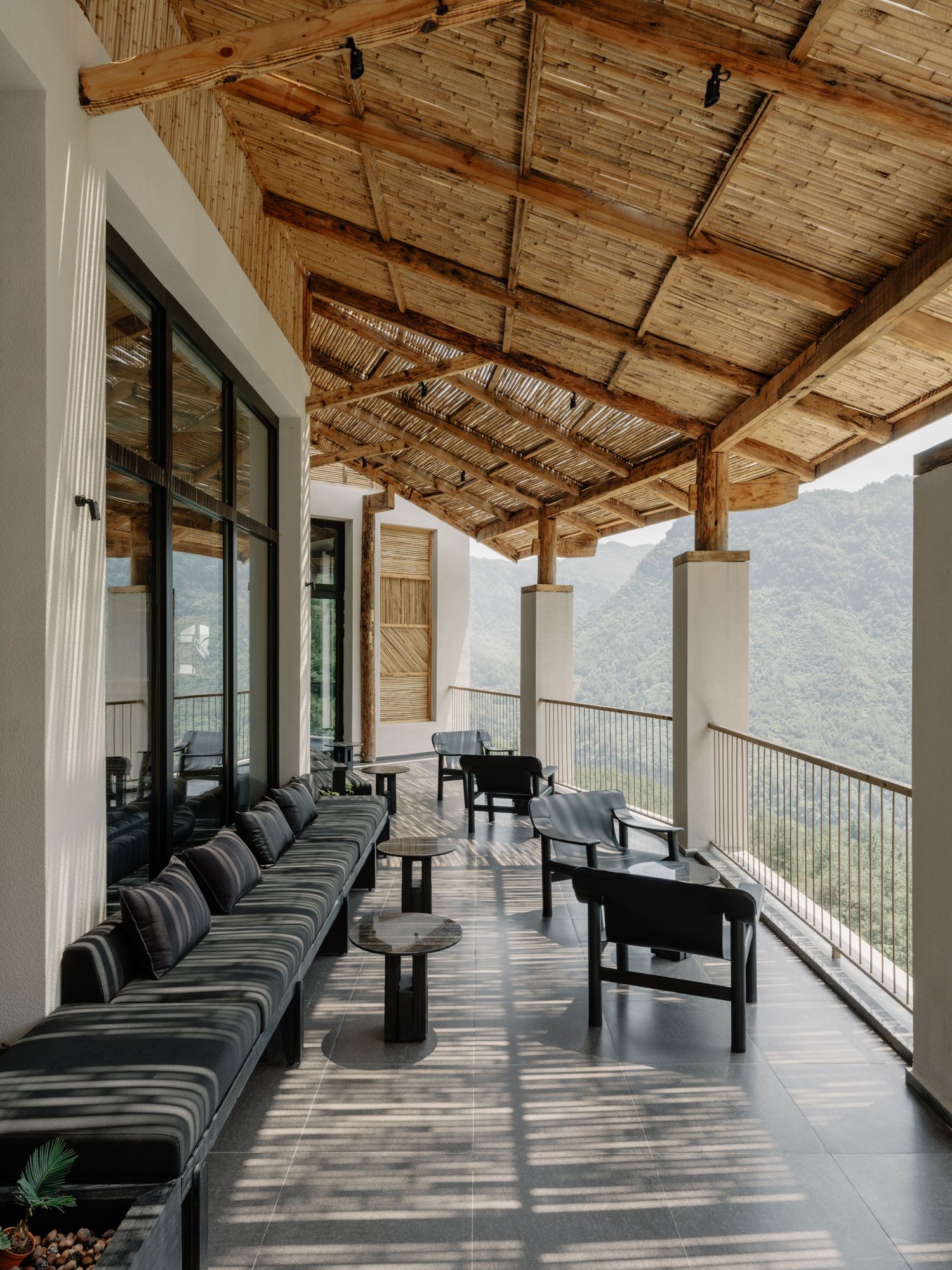
건축적으로는 다소 평범했던 기존의 5층 건물을 과감히 재구성하여 산과의 대화를 시도했다. 검은색 지역 암석으로 마감된 하층부는 건물을 대지에 단단히 고정하는 석조 기단의 역할을 하며, 그 위로 캔틸레버 형태의 백색 프레임이 수직으로 뻗어 나간다. 이는 가파른 산세와 시각적 조화를 이루는 동시에 객실 발코니의 윤곽을 형성한다. 수직 프레임 사이의 전면 유리창은 계곡의 파노라마 뷰를 내부로 가득 들여오며, 측면의 대나무 패널과 1층 객실의 프라이빗 중정을 구분하는 파티션은 차가운 물성에 따스한 질감을 더한다.
여정이 되는 진입: 풍경 속으로 걷다
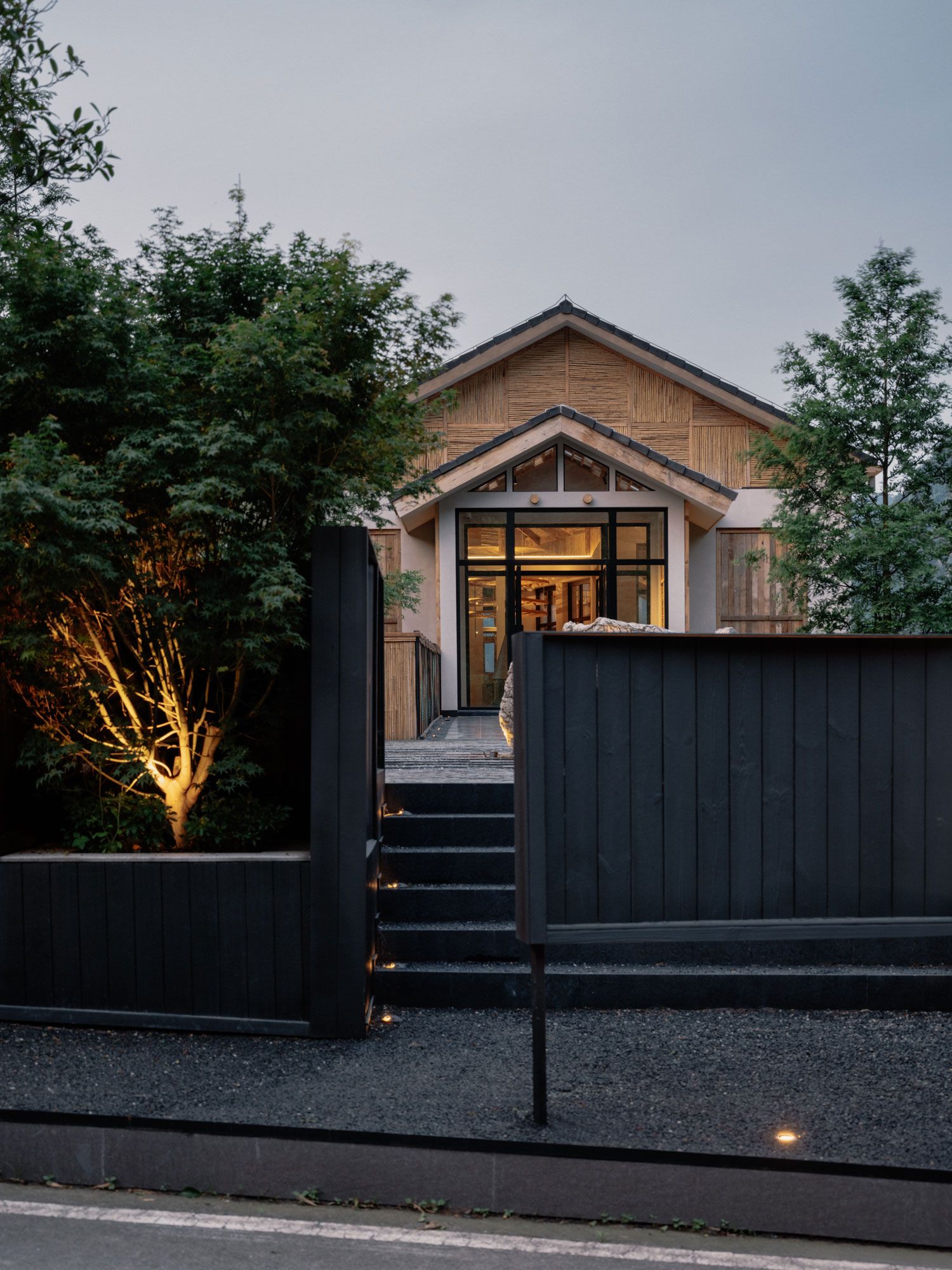
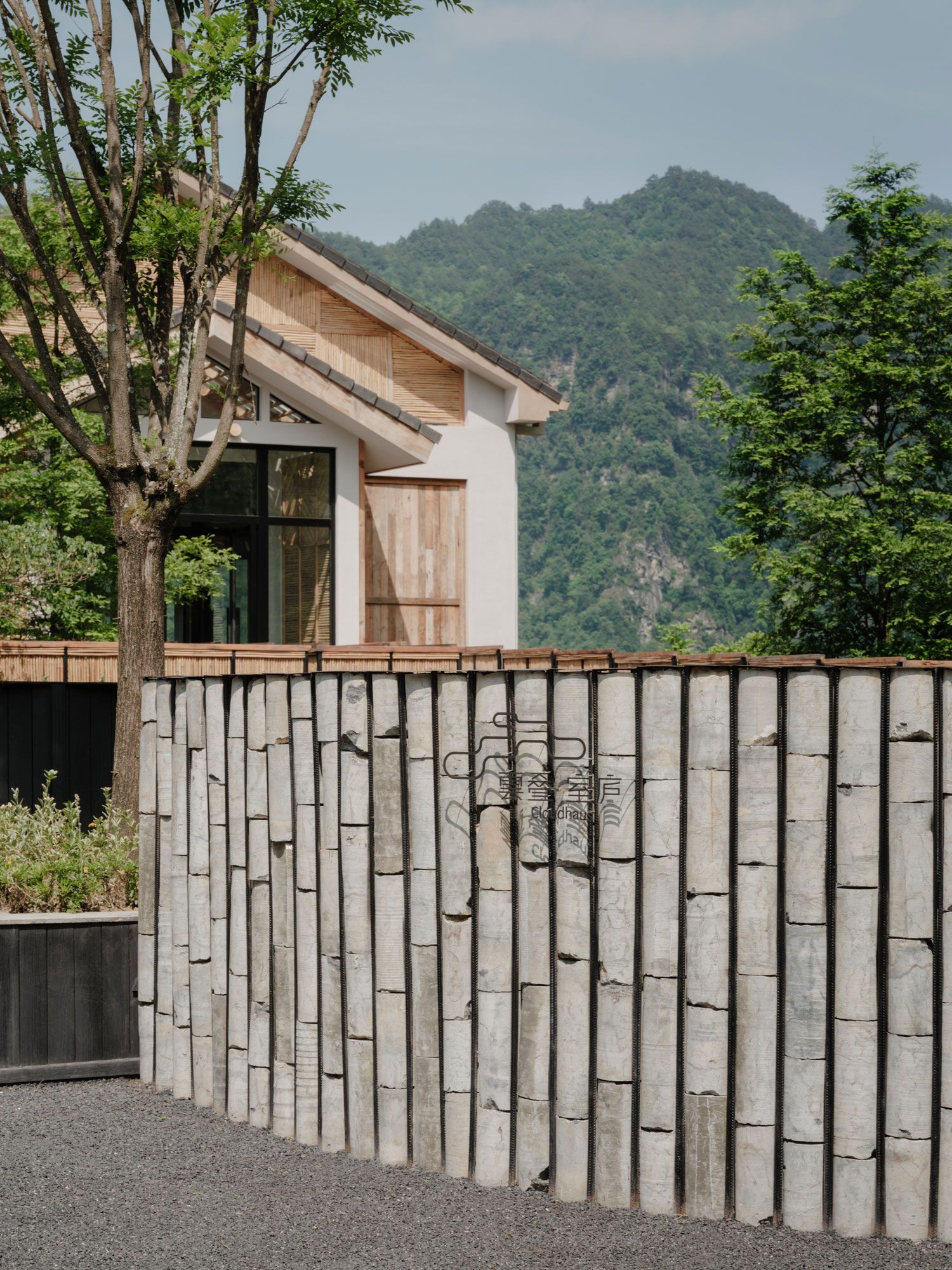
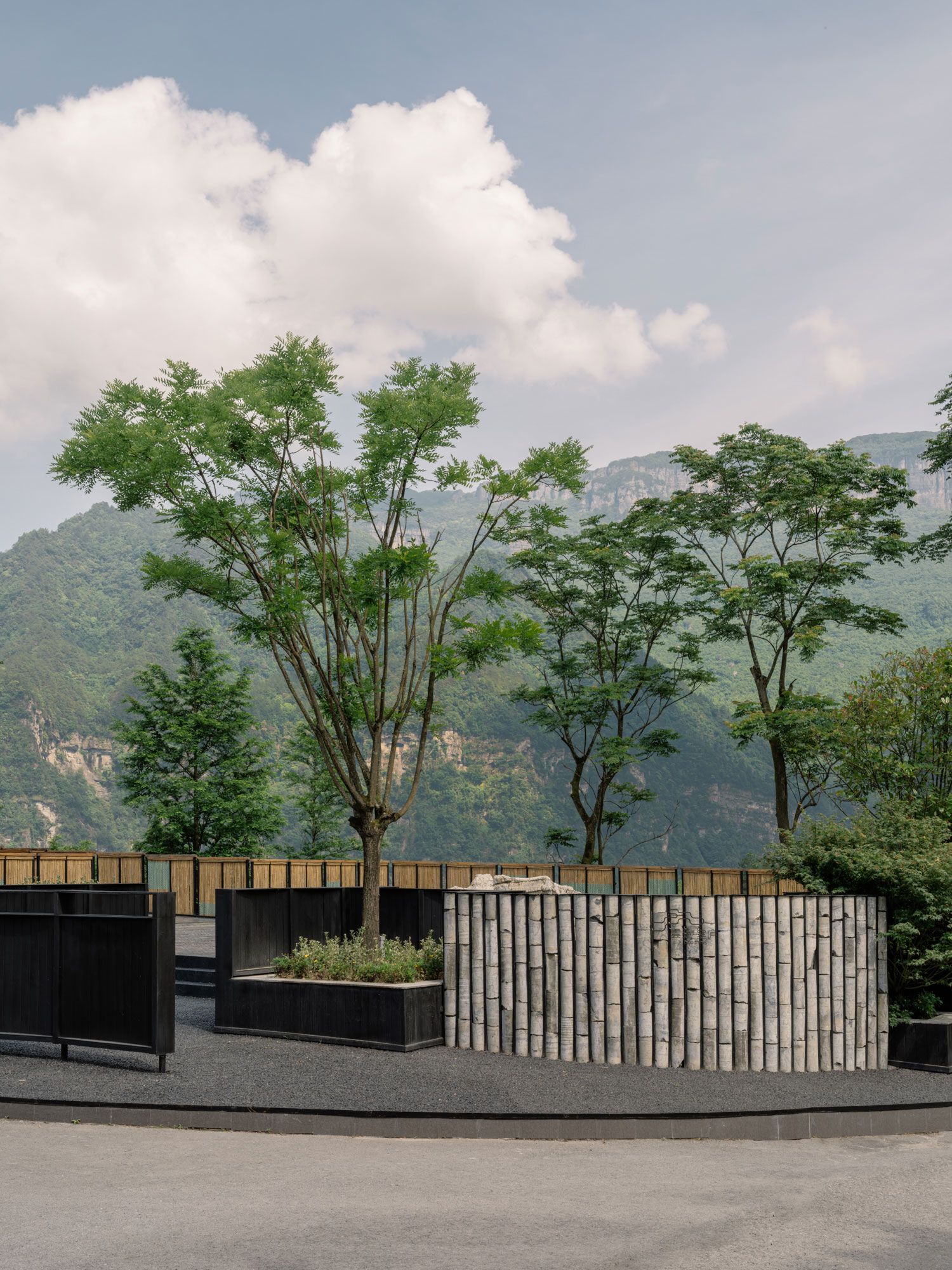
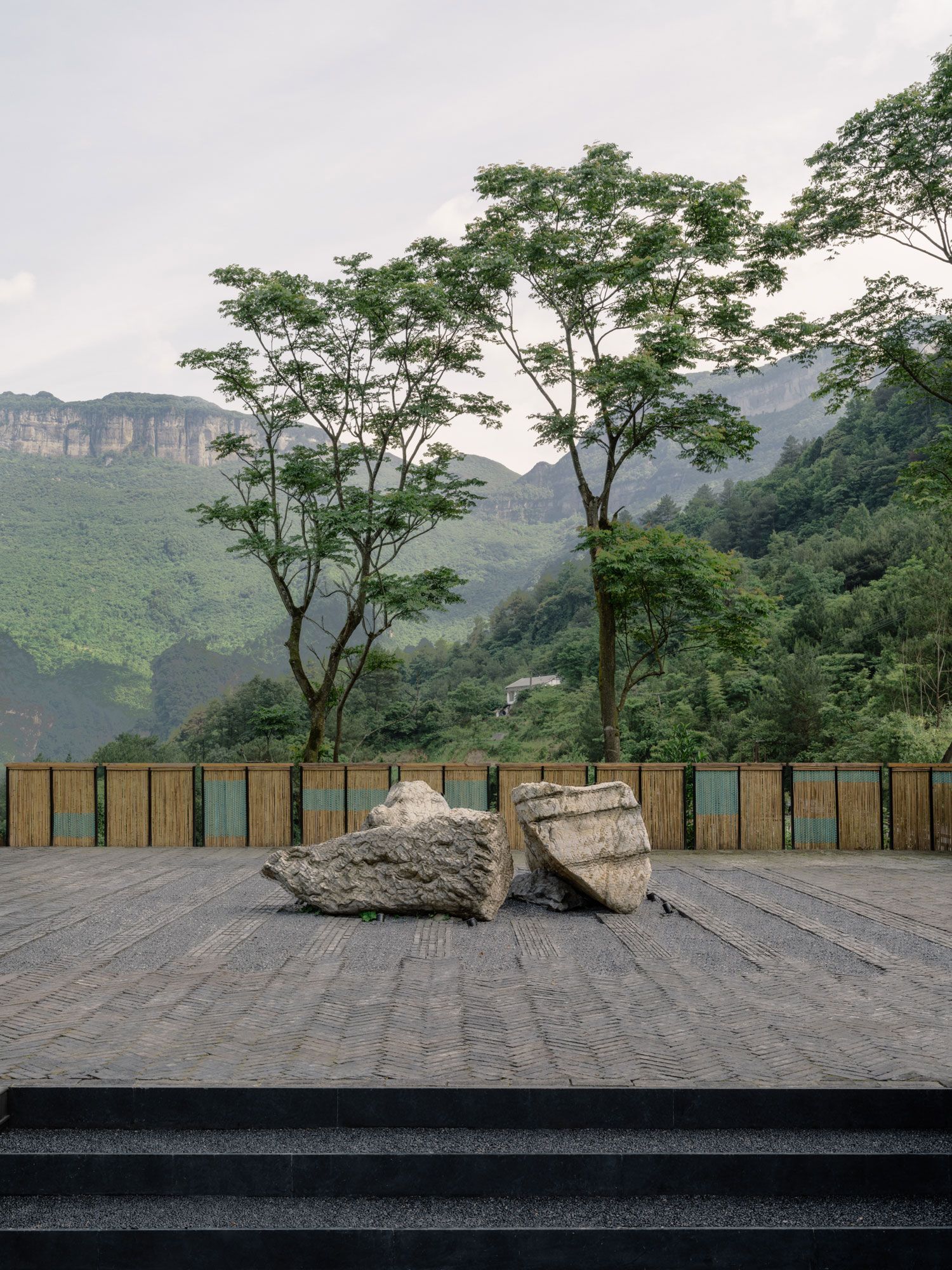
건축가는 이곳에 닿는 과정을 단순한 이동이 아닌, 풍경을 관통하는 하나의 여정으로 풀어냈다. 굽이치는 산길을 따라 올라온 투숙객은 가장 먼저 독특한 진입 광장을 마주하게 된다. 현지의 난간 제작 방식을 있는 그대로 차용하여, 녹색 플라스틱 띠와 대나무를 엮어 만든 울타리가 투박하지만 정겨운 지역색을 드러낸다. 이곳에서 다리를 건너면 최상층에 위치한 로비와 리셉션으로 이어진다. 또는 가파른 지형을 활용한 이색적인 배치 덕분에 아래층 주차장을 통해 레스토랑으로 바로 진입하거나, 조경이 된 상부 중정을 통해 들어올 수도 있다.
풍경을 담는 그릇: 비움과 채움의 미학
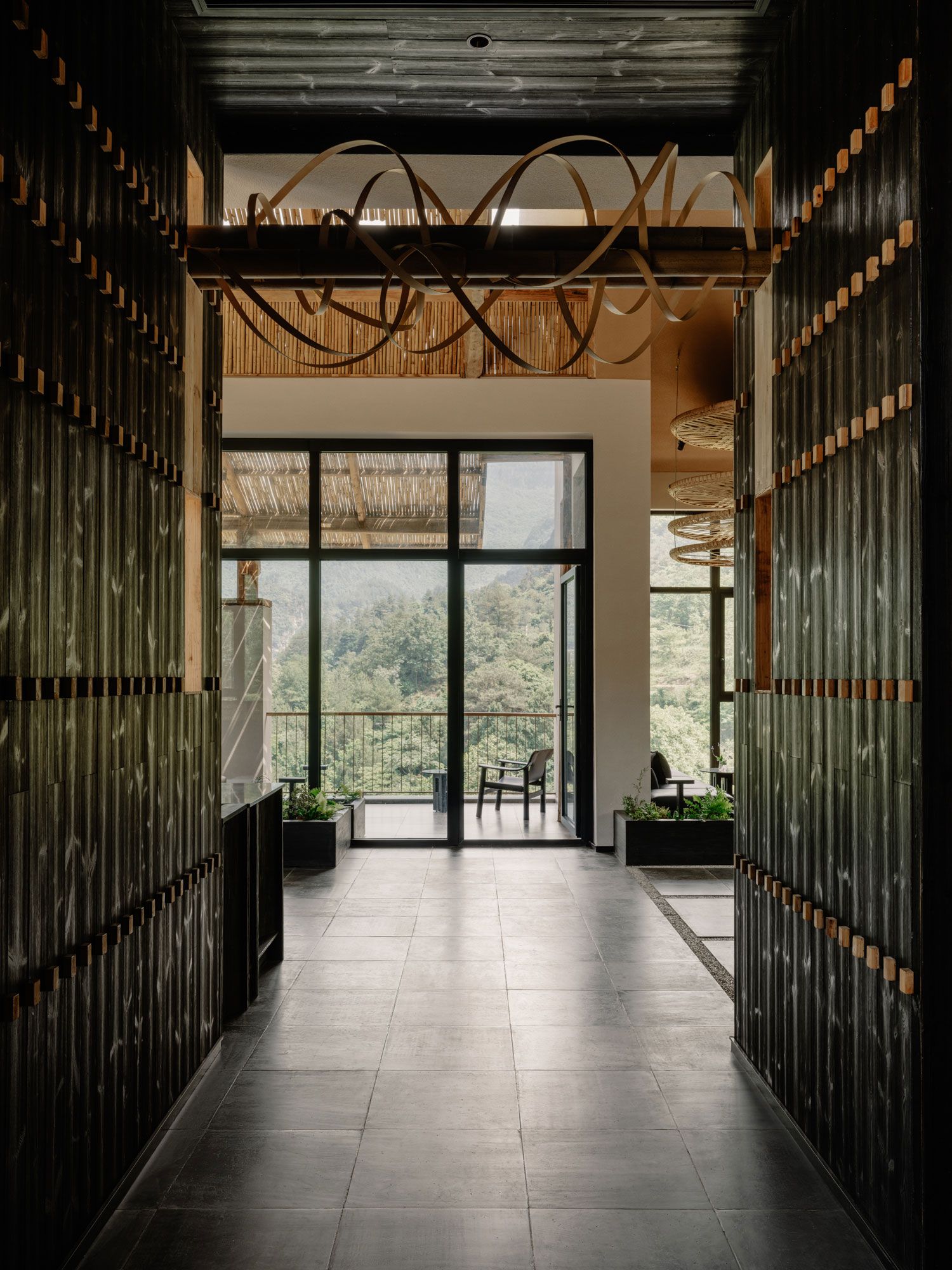
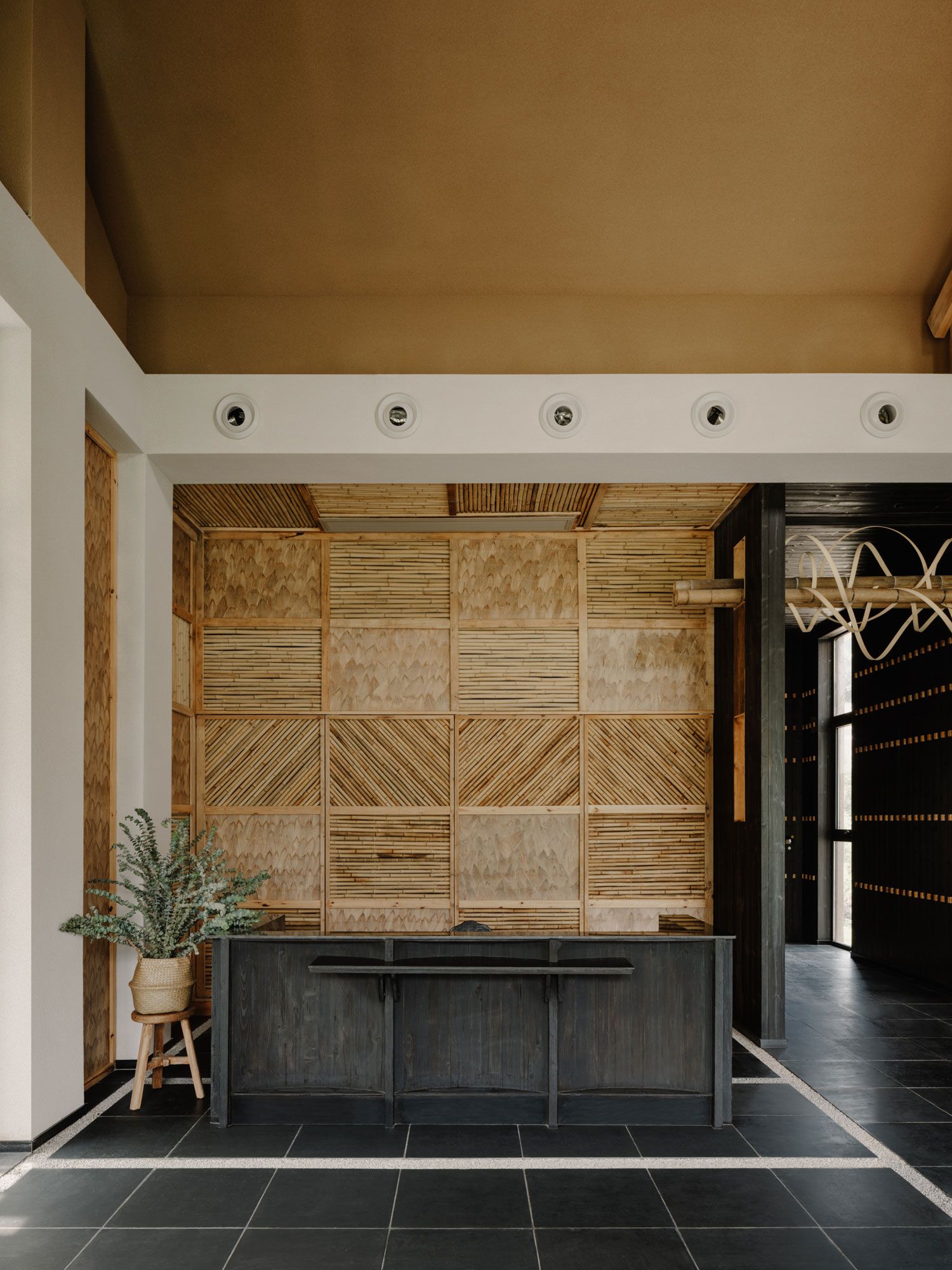
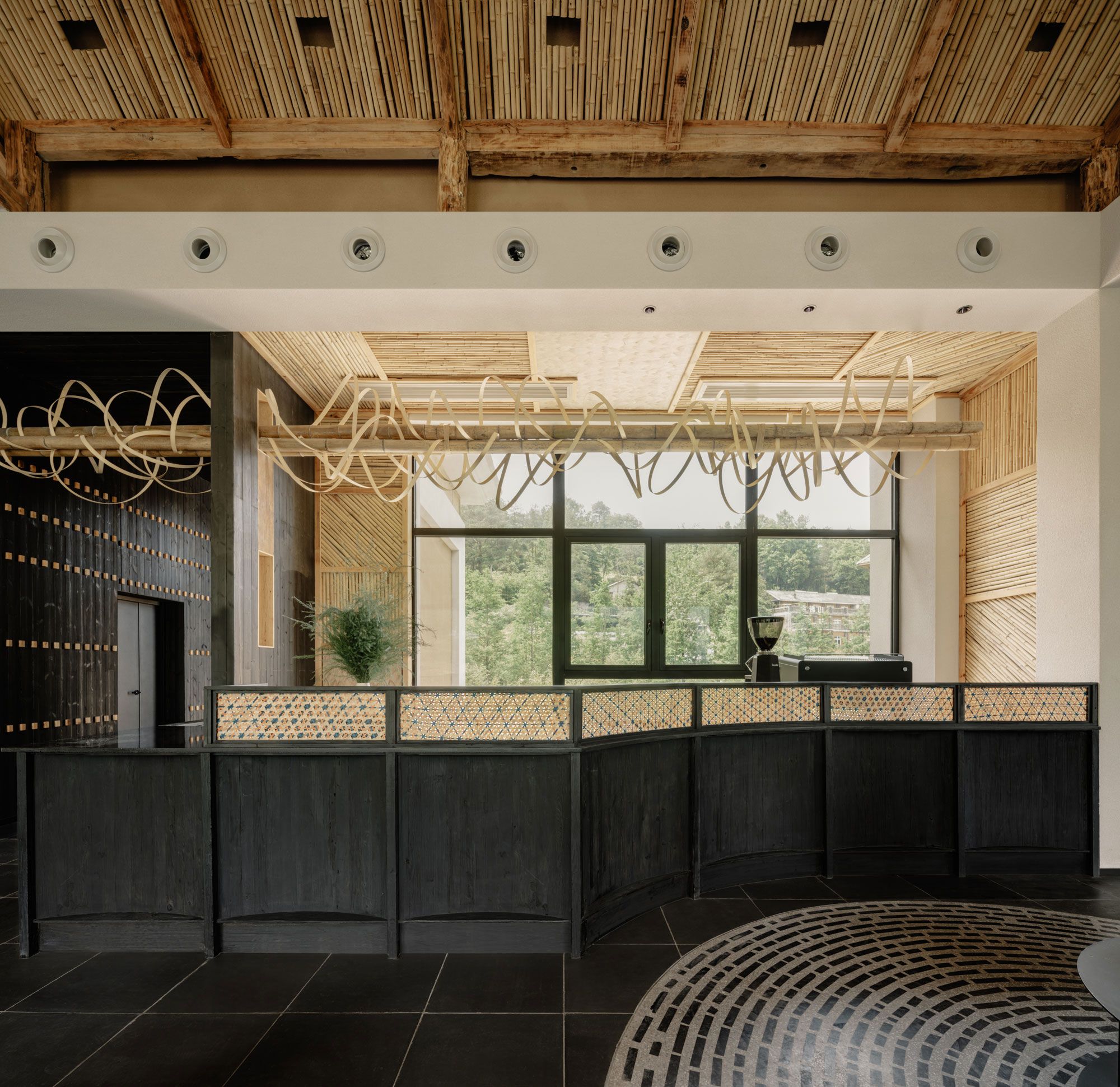
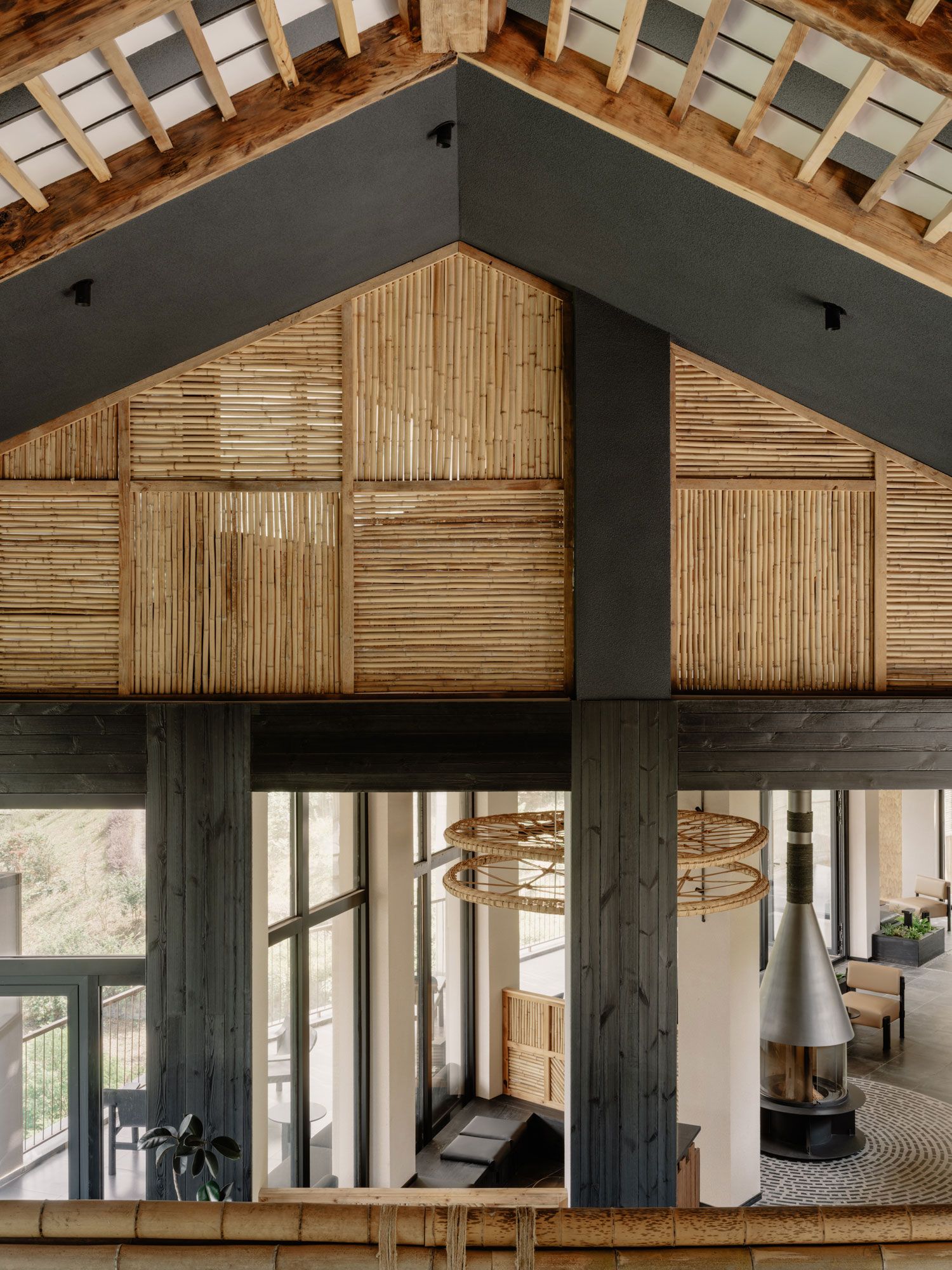
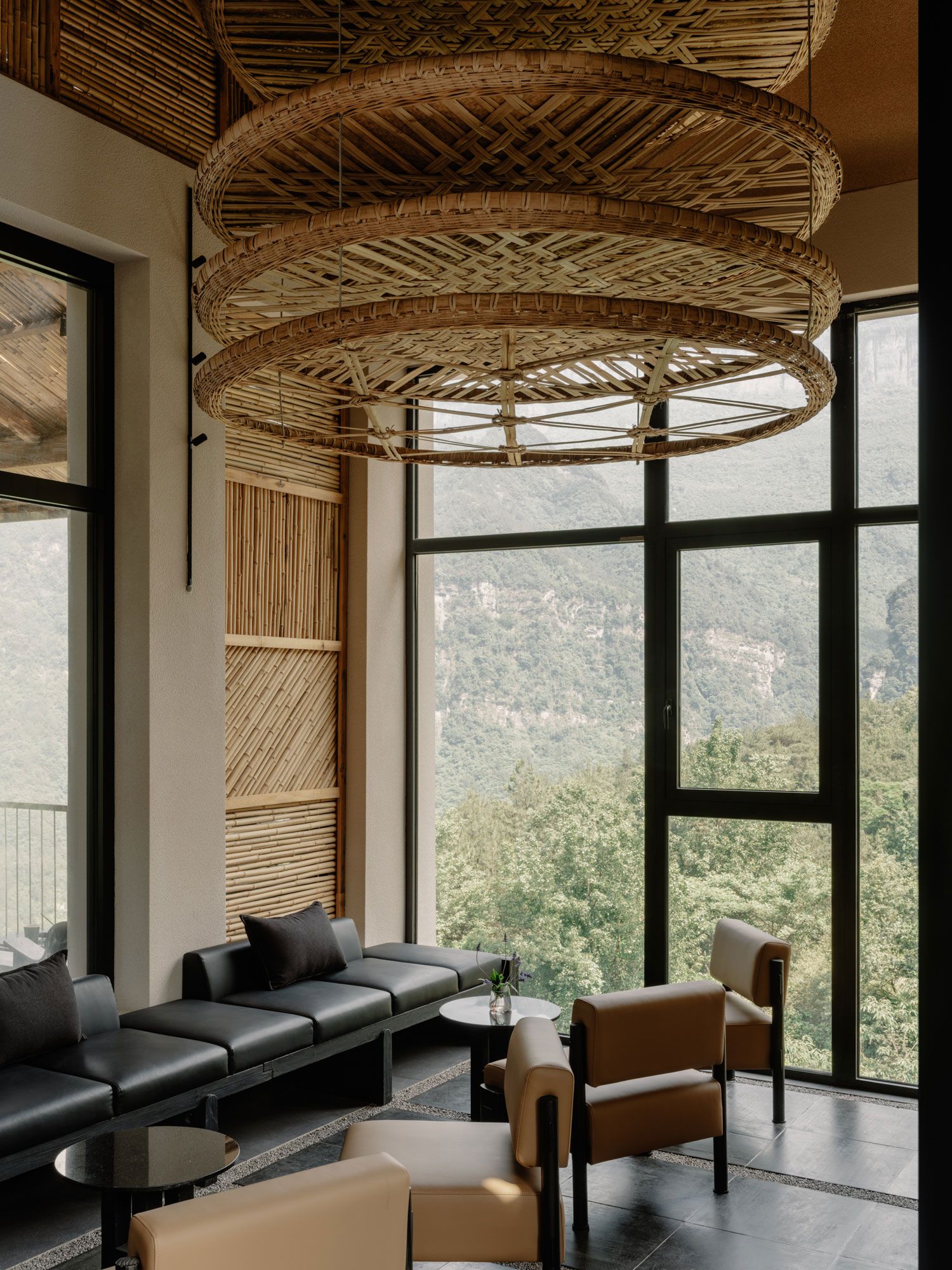
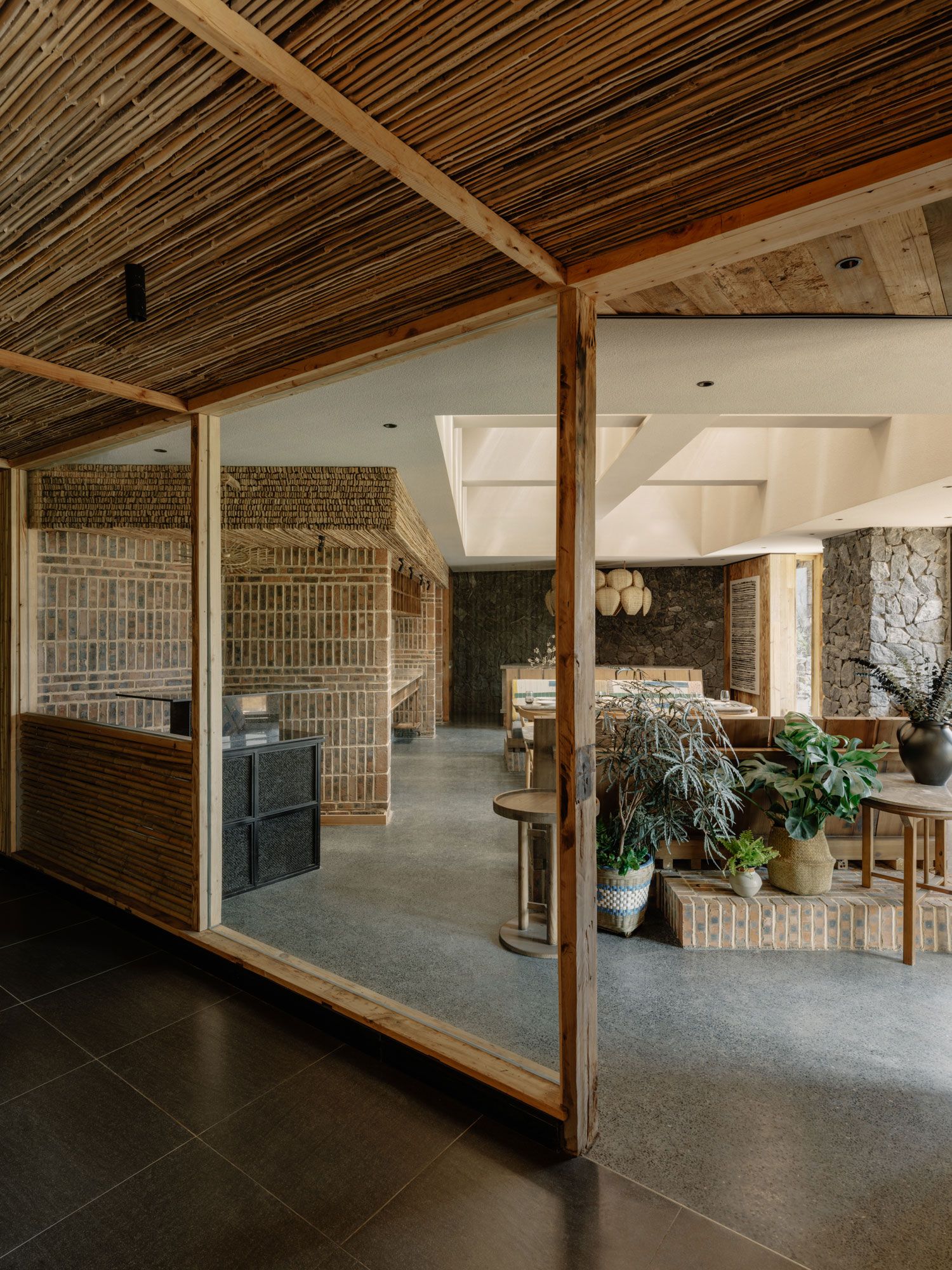
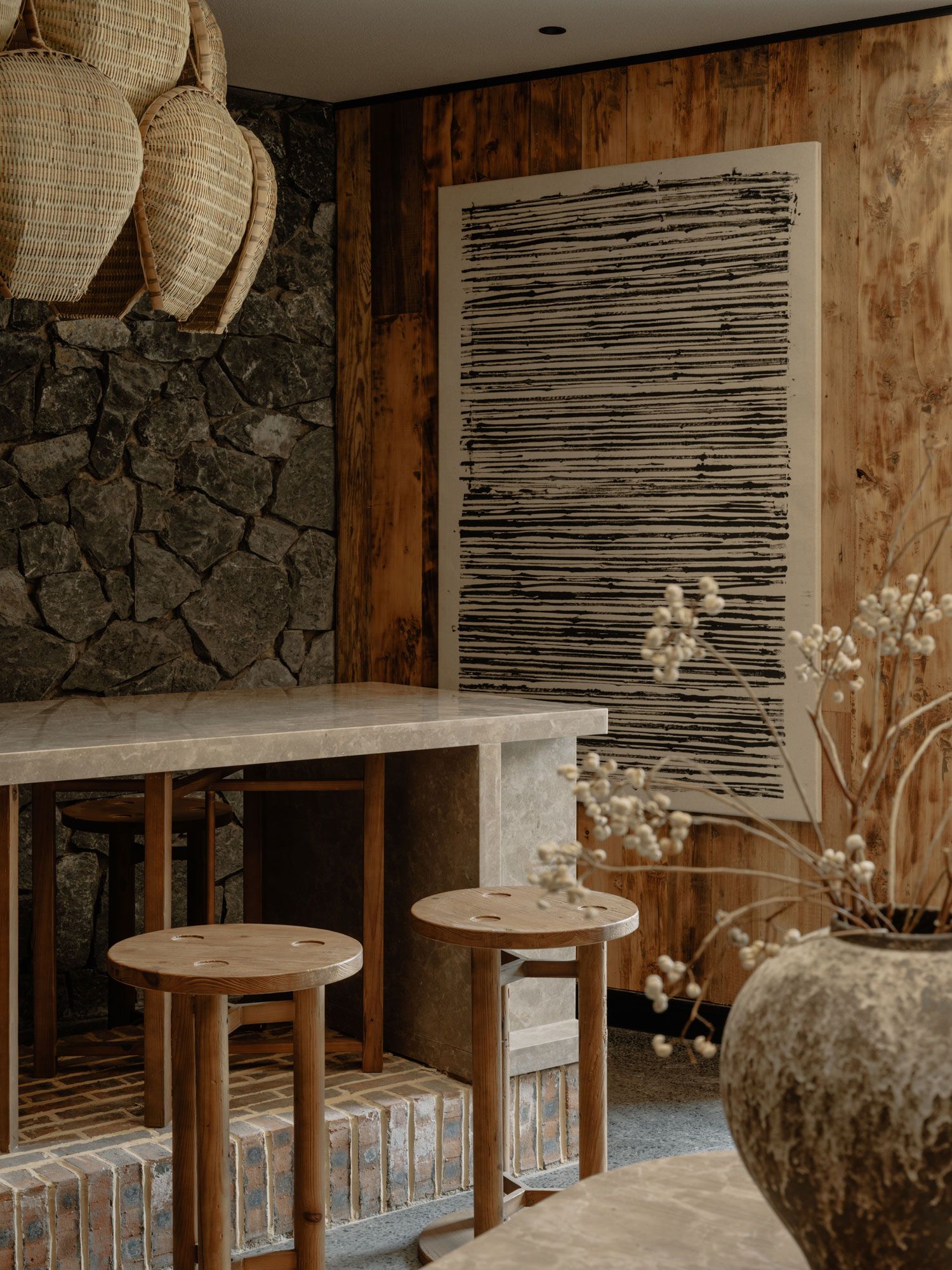
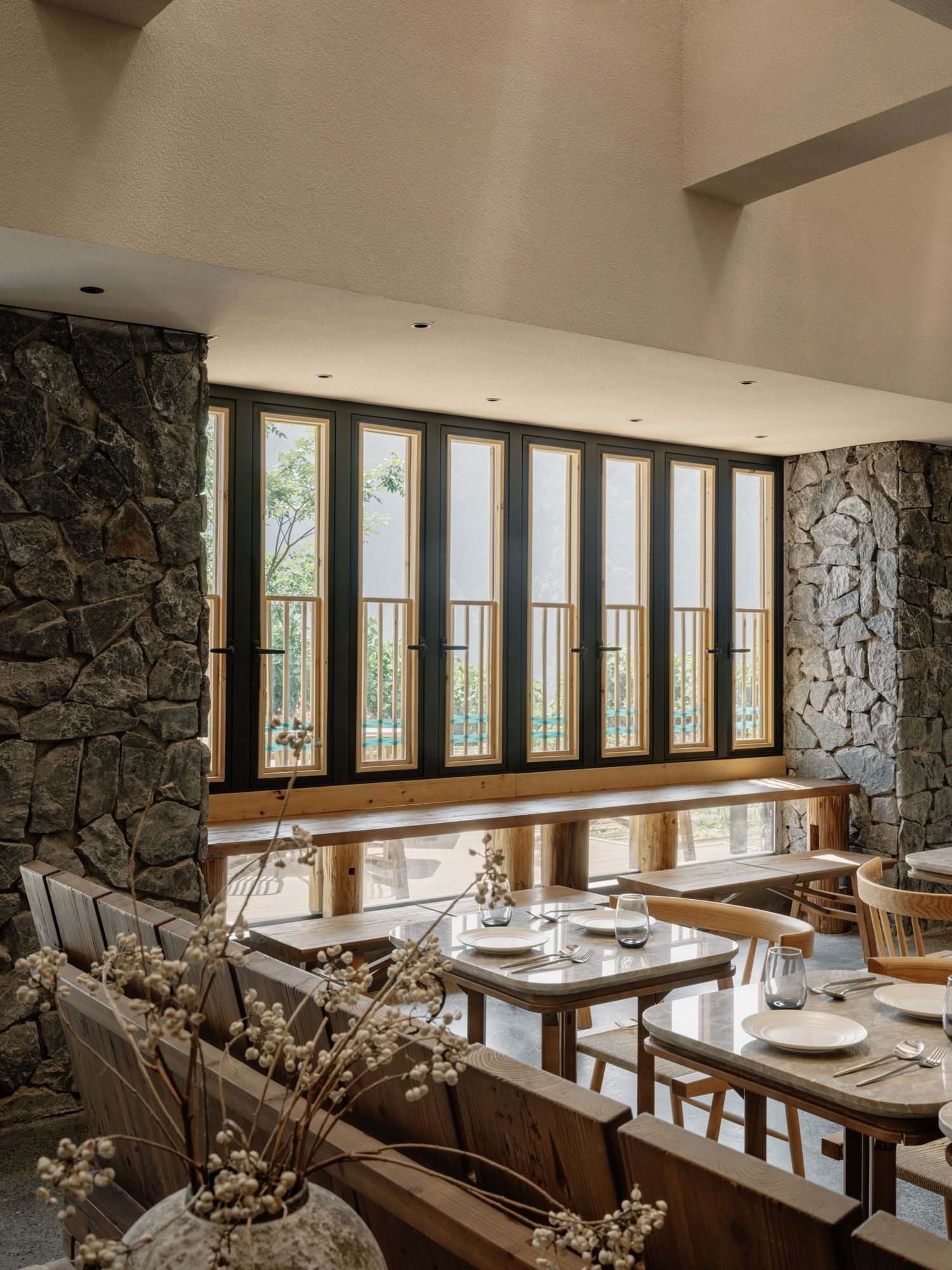
내부에 들어서면 바닥부터 천장까지 이어진 통창을 통해 웅장한 산세가 펼쳐진다. 인테리어는 창밖의 압도적인 풍경과 경쟁하려 하지 않는다. 대신 대나무, 목재, 검은 돌과 같은 현지 재료와 재활용 자재를 차분하게 조화시켜 풍경을 더욱 돋보이게 한다. 공용 공간인 최상층에서는 쪼개진 대나무 패널이 벽과 경사 천장을 감싸며 수직, 수평, 대각선의 다양한 패턴으로 공간에 리듬감을 부여한다. 현지 대나무 공예가와 협업하여 제작한 링과 디스크 형태의 조형물은 공간의 기하학적 선들을 부드럽게 중화시킨다.
재료의 재탄생: 시간의 흔적을 디자인하다
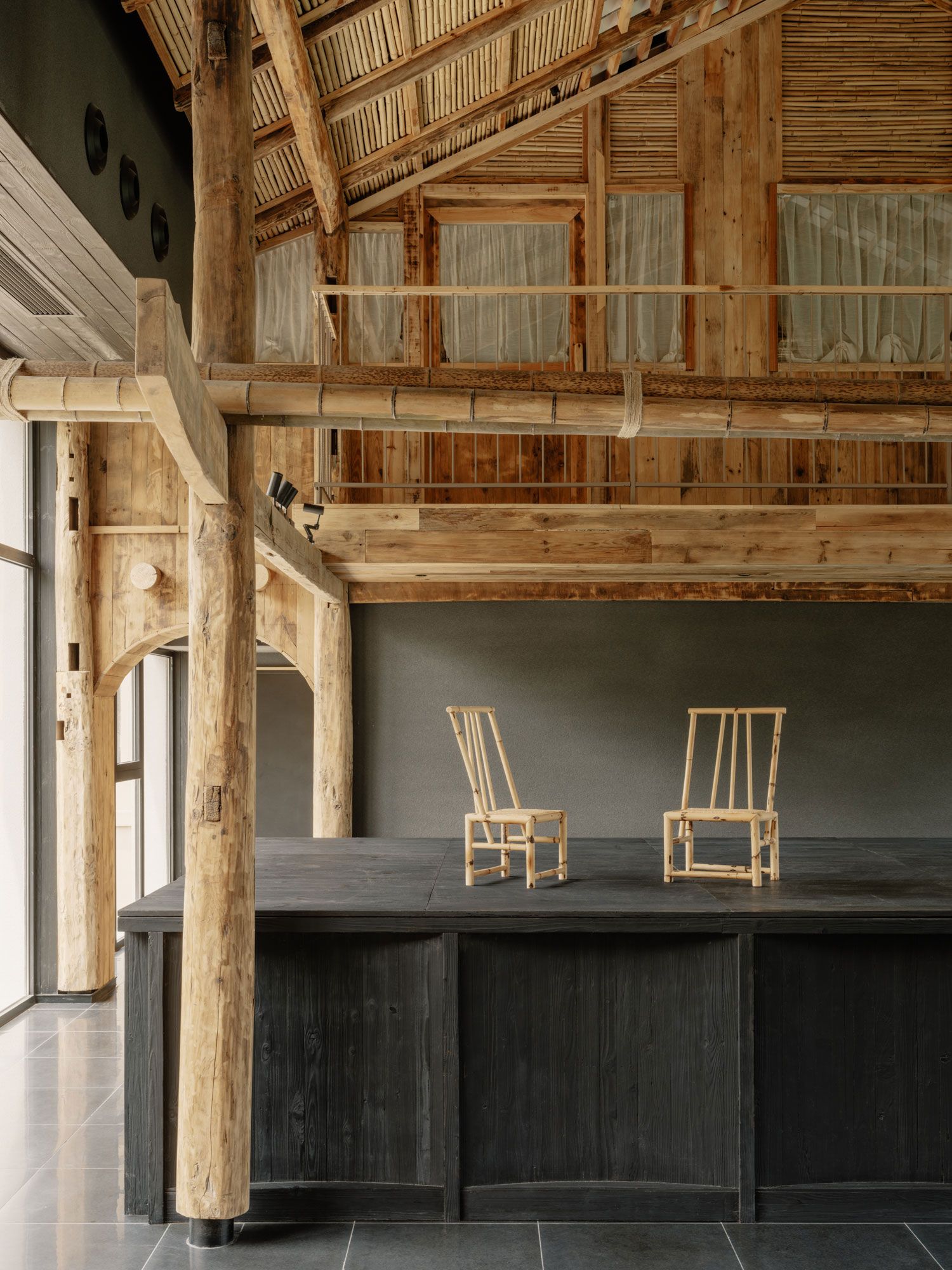
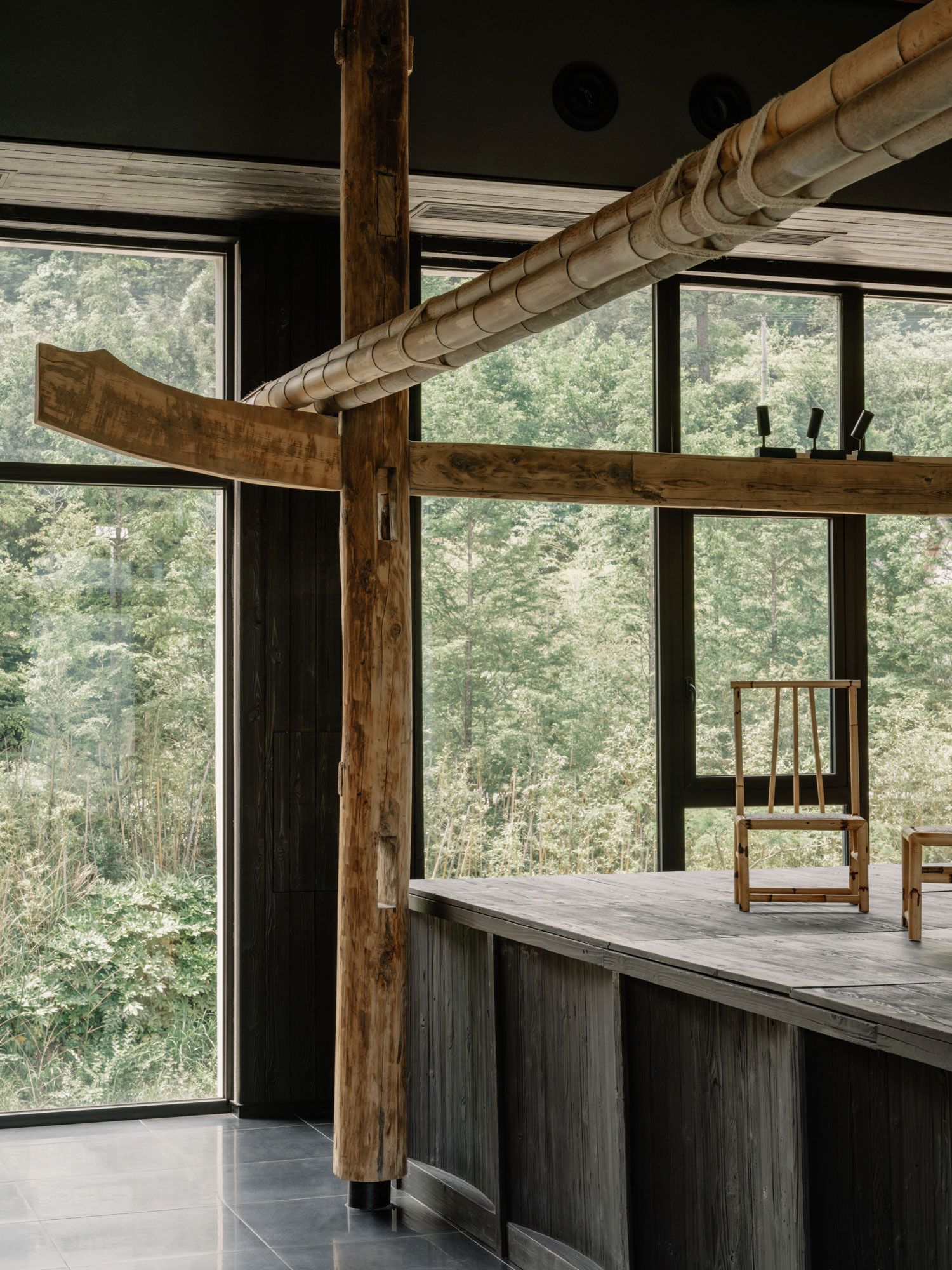
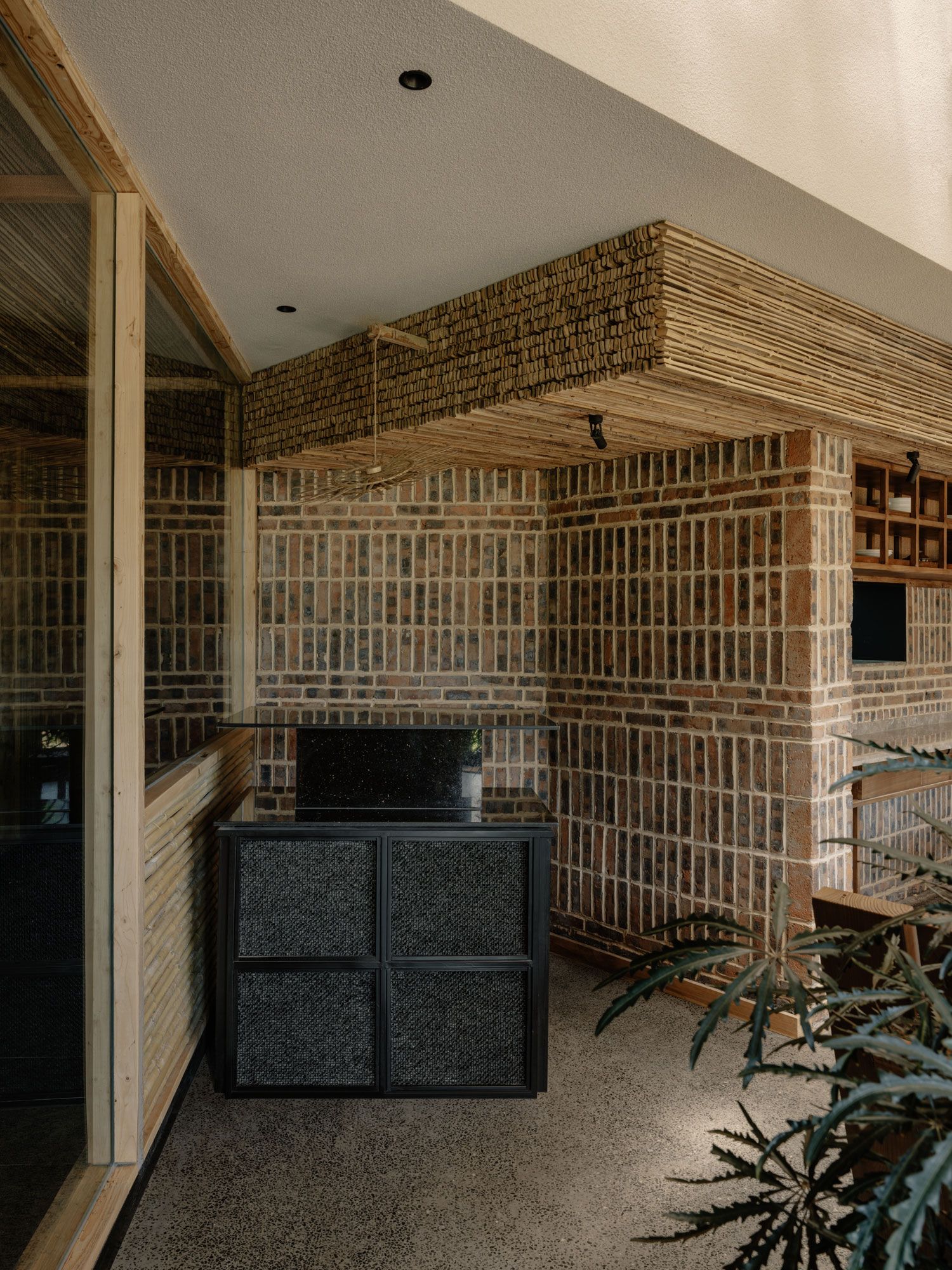
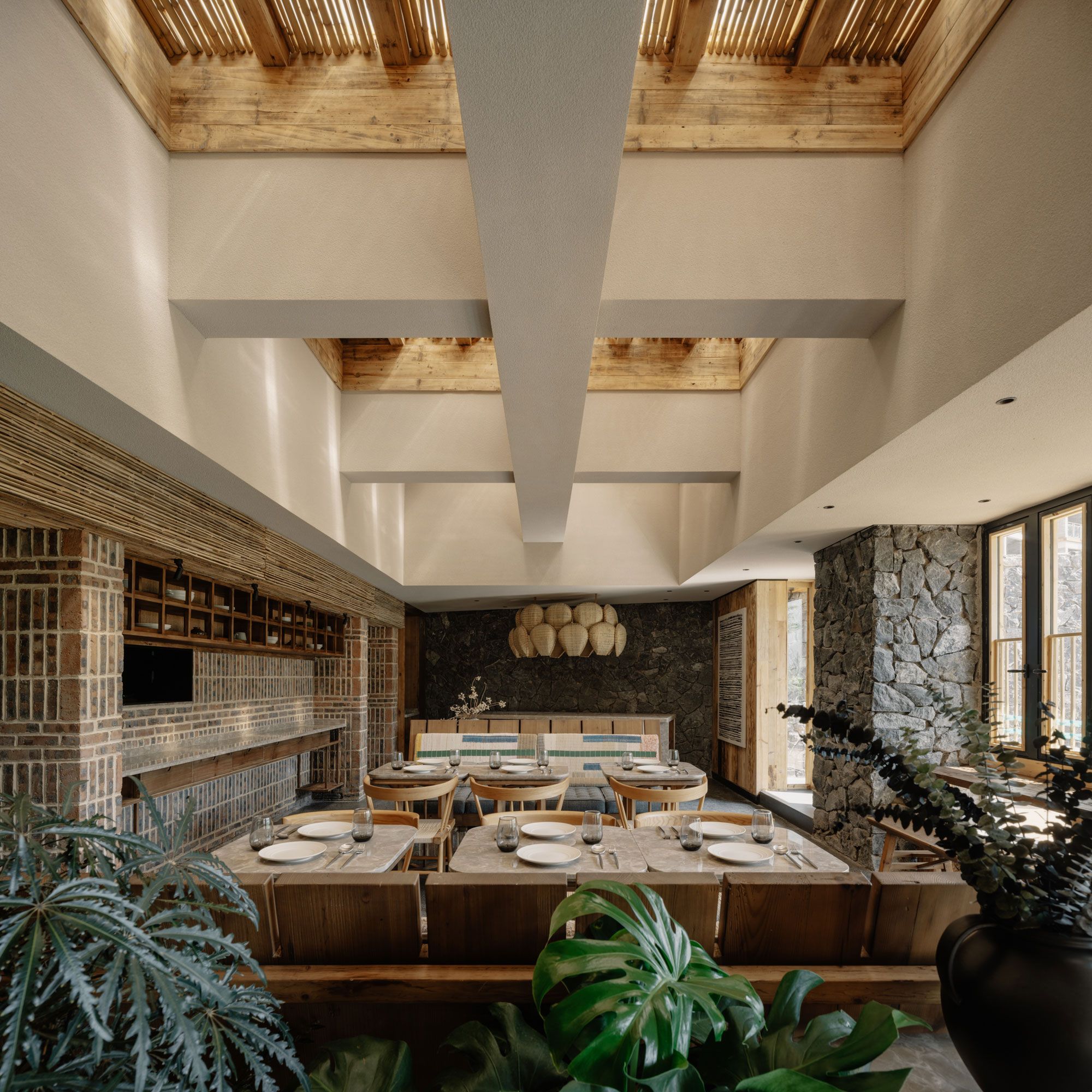
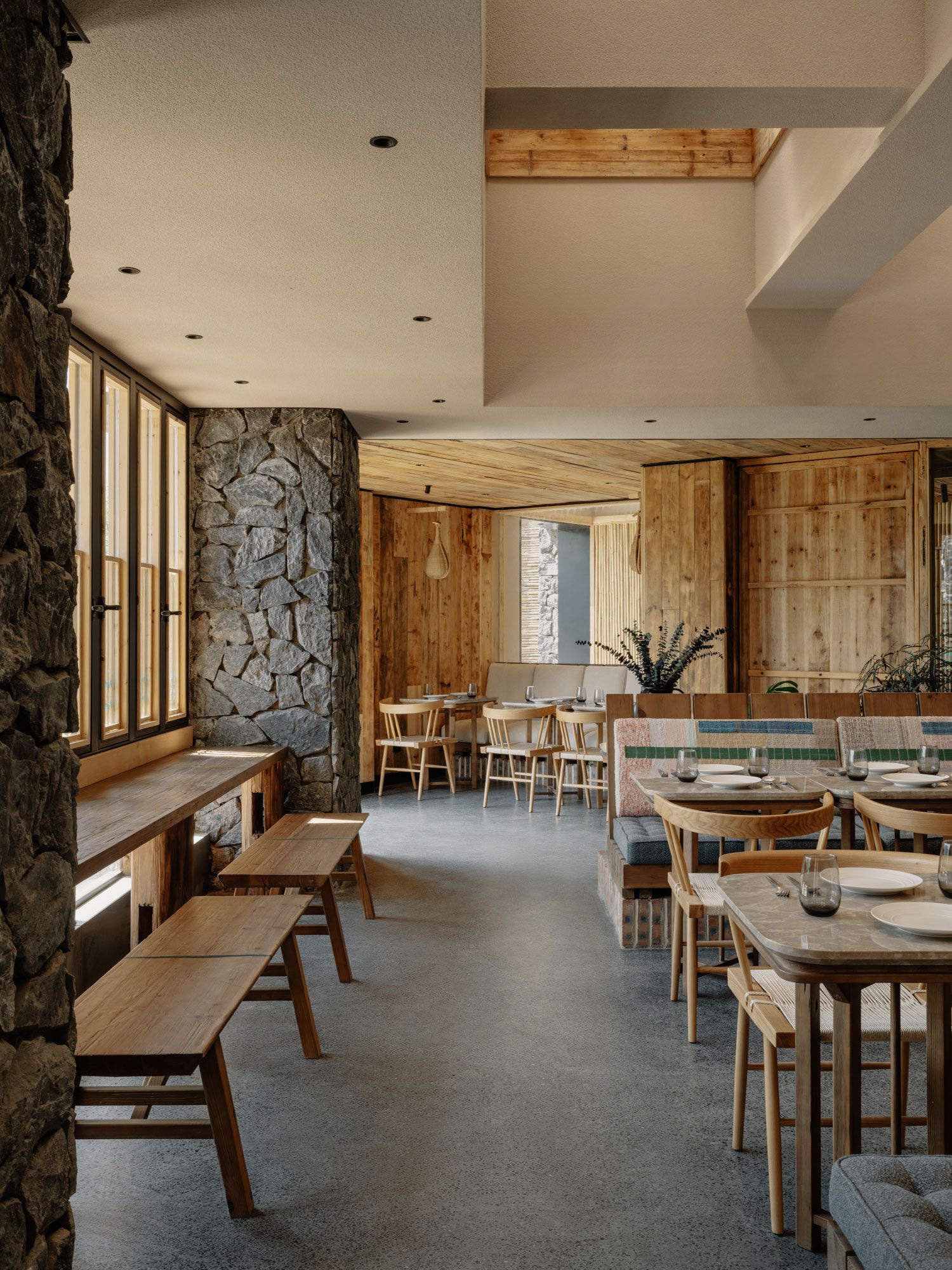
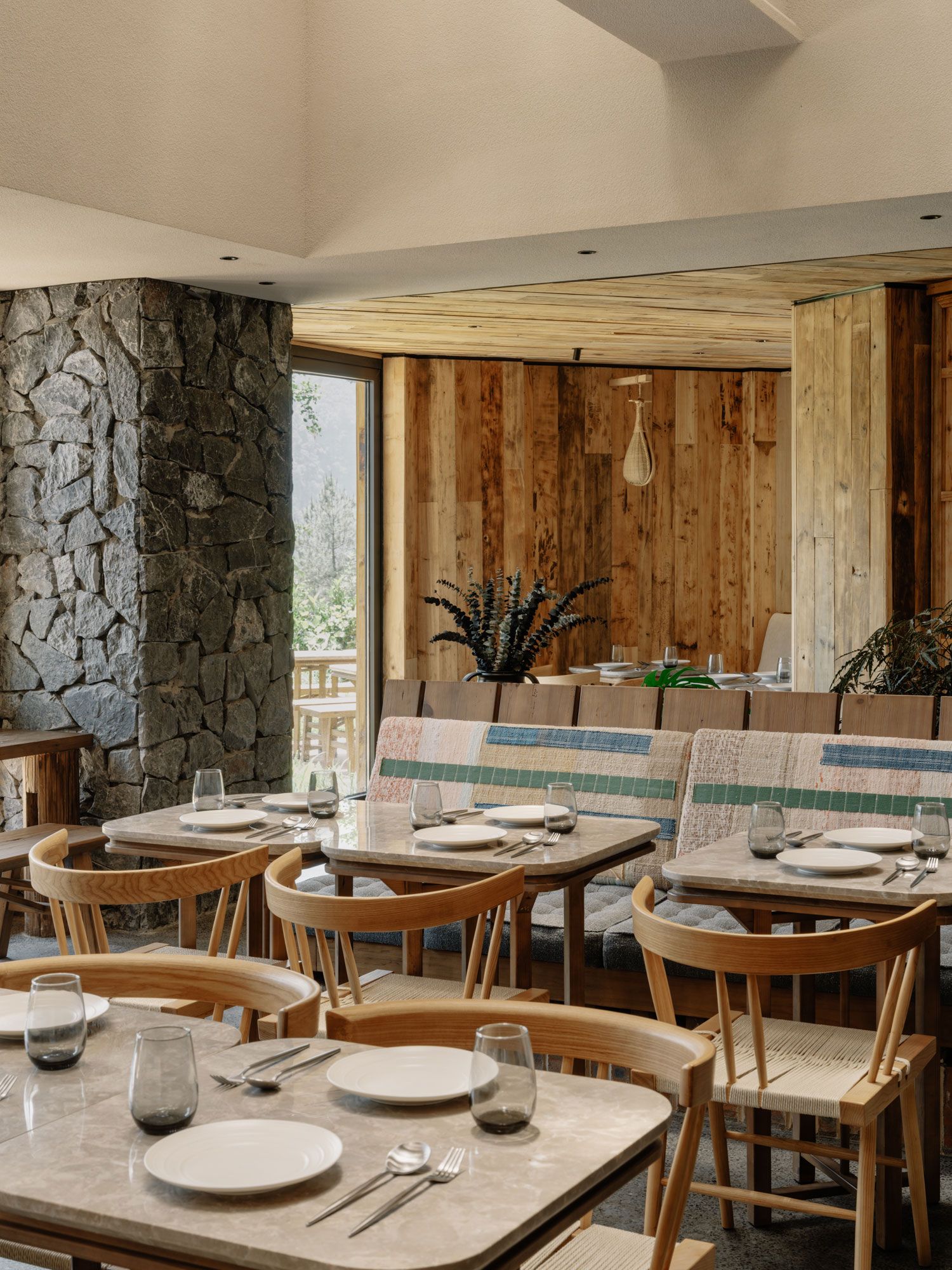
로비 옆의 다목적 공간에는 버려진 산장 오두막에서 수거한 목재로 만든 오두막 형태의 구조물이 무대처럼 자리 잡고 있다. 그 위를 덮은 체크무늬 캐노피는 고대 쓰촨성 서부의 지붕 타일에서 영감을 받은 것이다. 기존 주차장을 확장해 만든 1층 레스토랑 역시 재생의 미학을 이어간다. 철거 과정에서 나온 붉은 벽돌은 주방과 홀을 구분하는 벽이 되었고, 남은 대나무 비계 발판은 천장의 장식 구조물로 변모했다. 자투리 돌은 벽 마감재로, 현지에서 채집한 자갈은 테라조 바닥 속에 박혀 새로운 생명을 얻었다. 다채로운 질감이 풍성하게 어우러져 있지만, 정직하고 단순한 가구 디자인 덕분에 공간은 고요하고 절제된 분위기를 유지한다.
머무름의 미학: 단순함 속에 깃든 평온
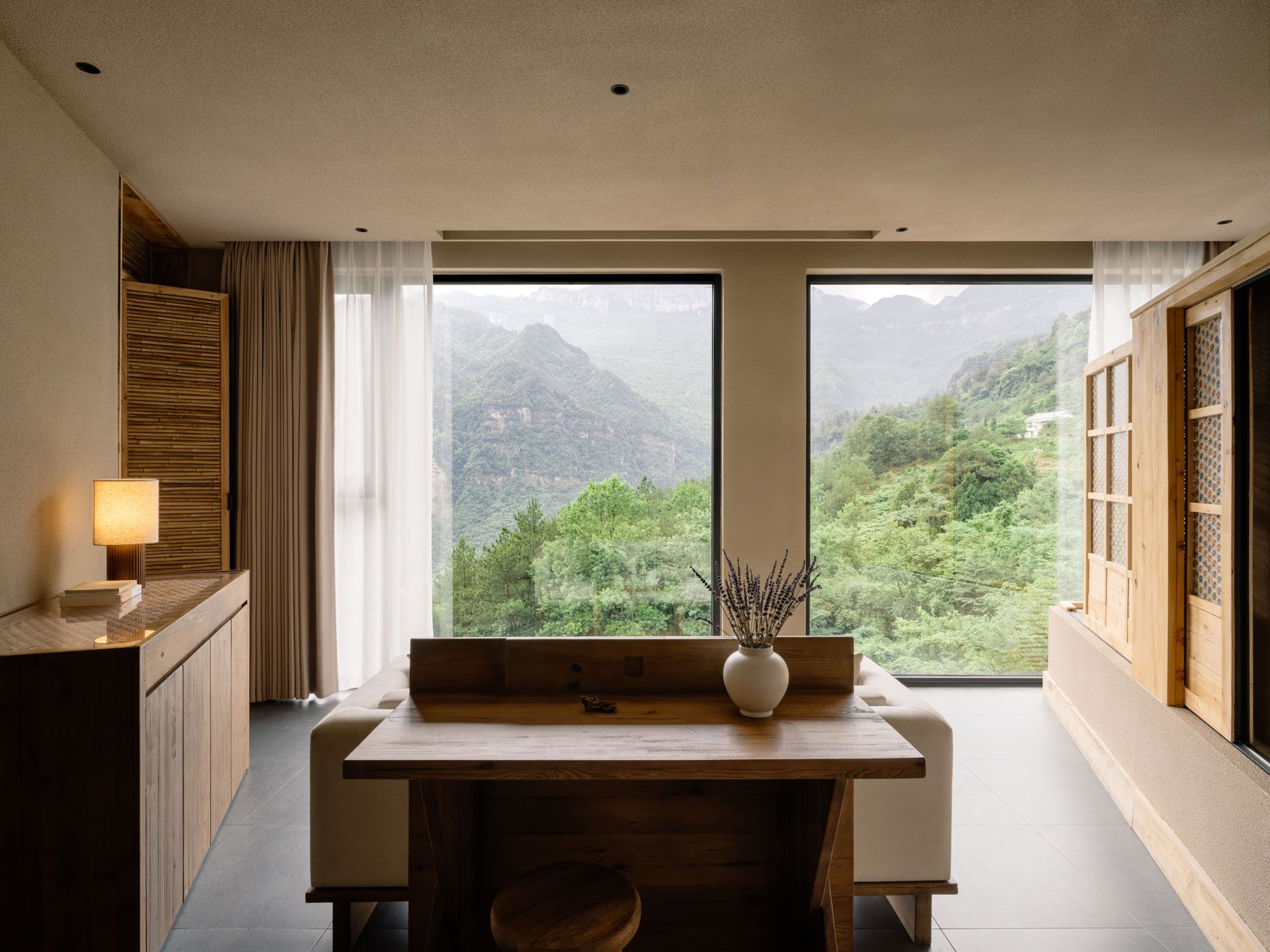
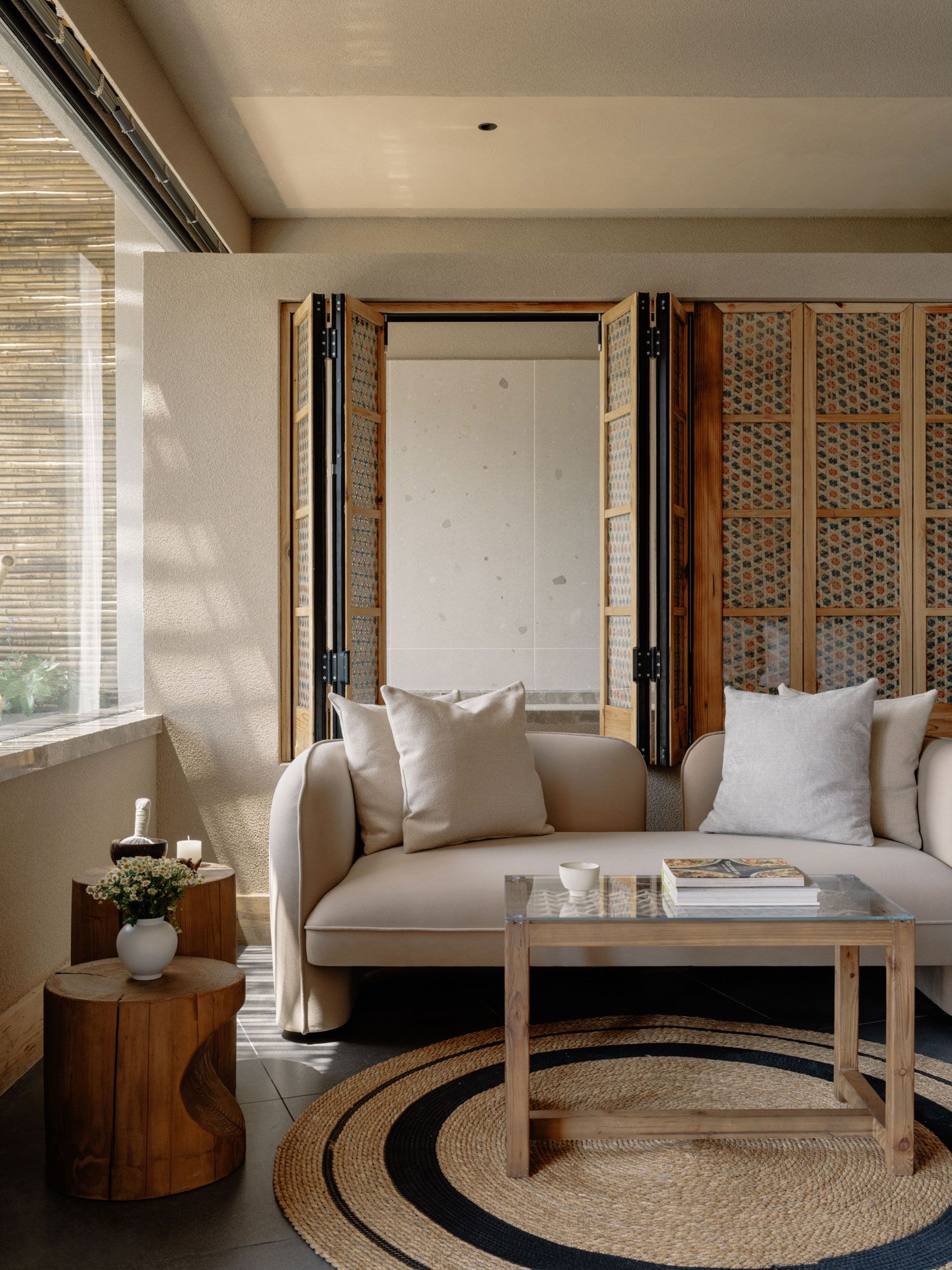
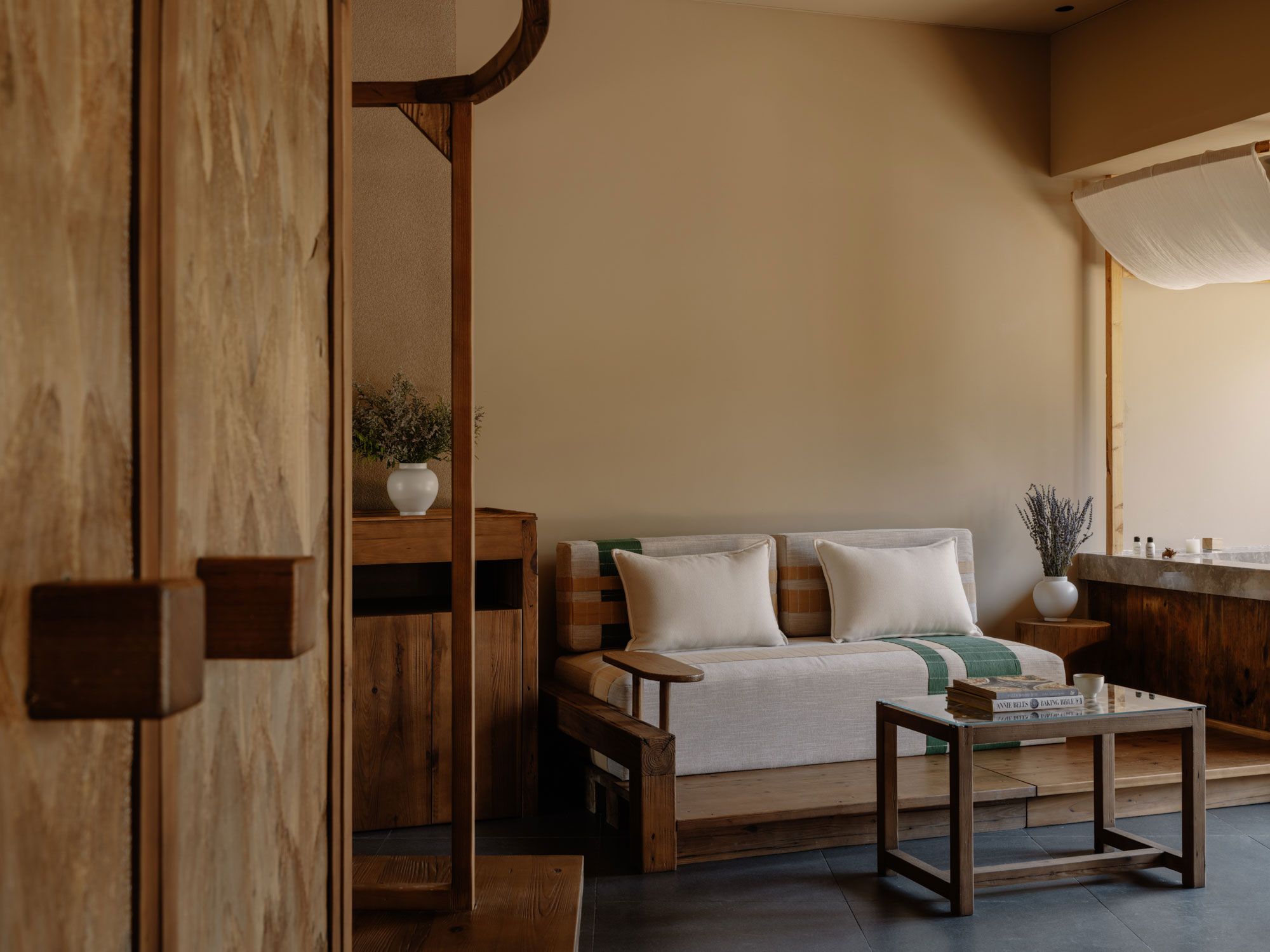
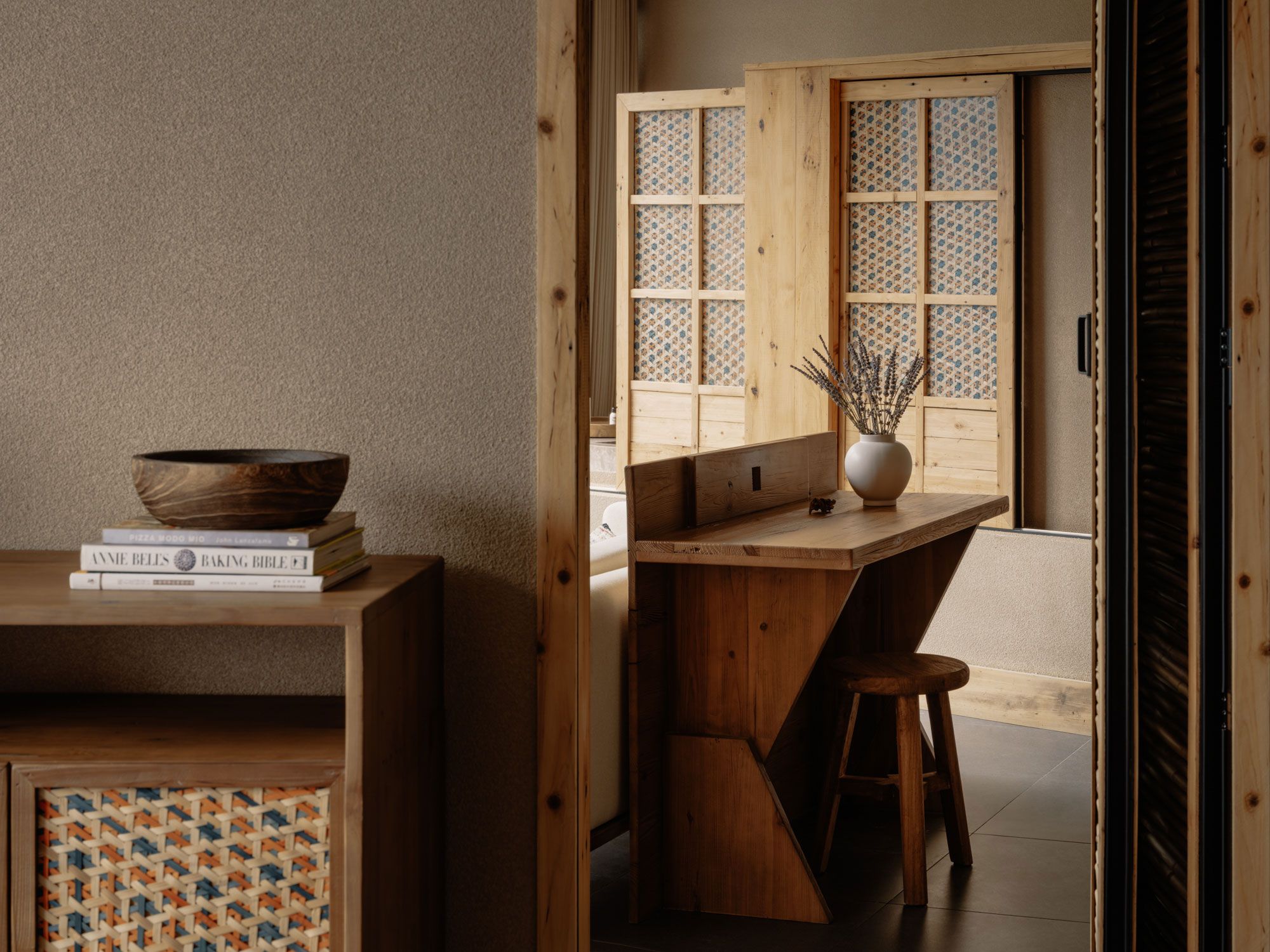
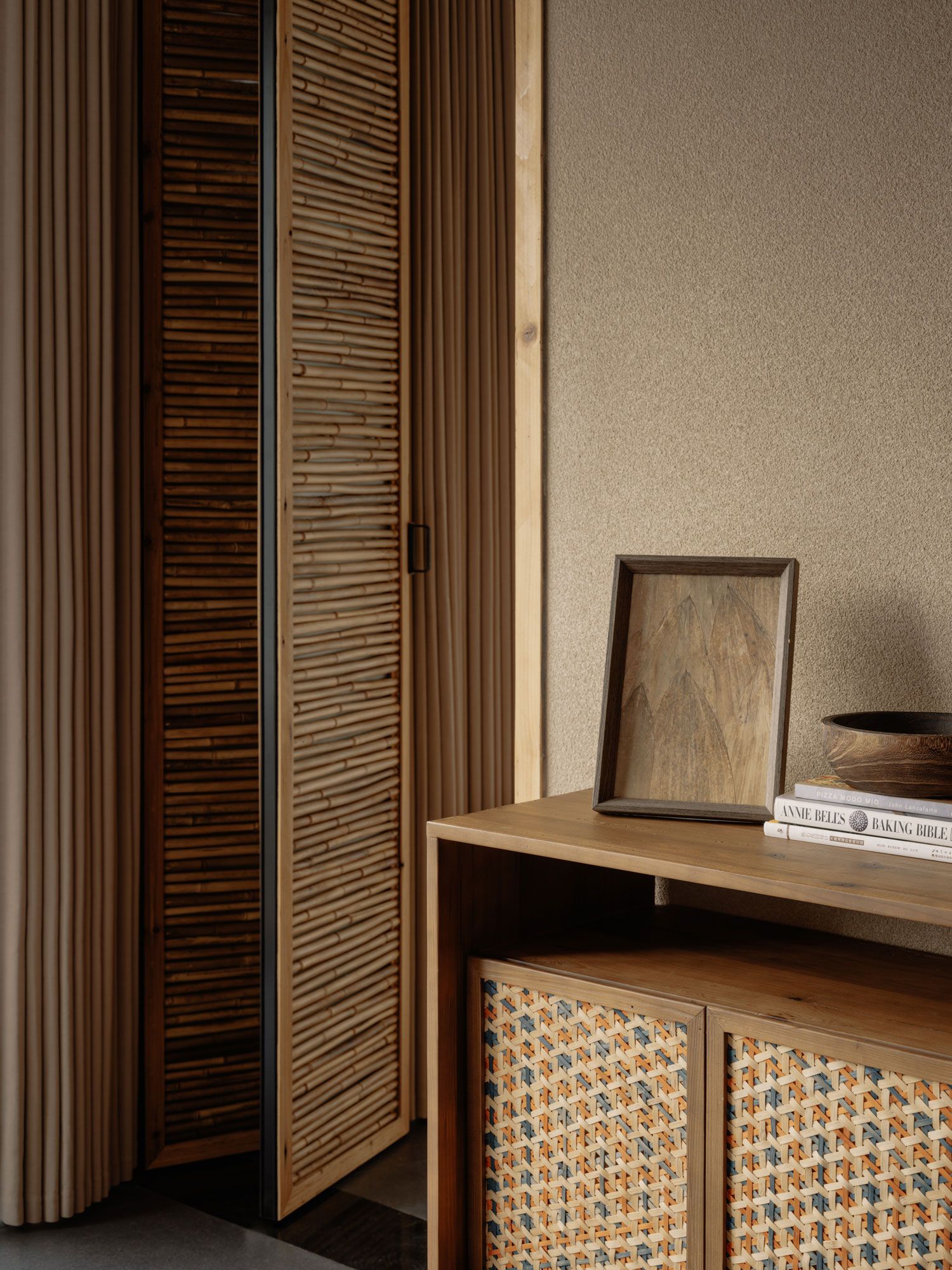
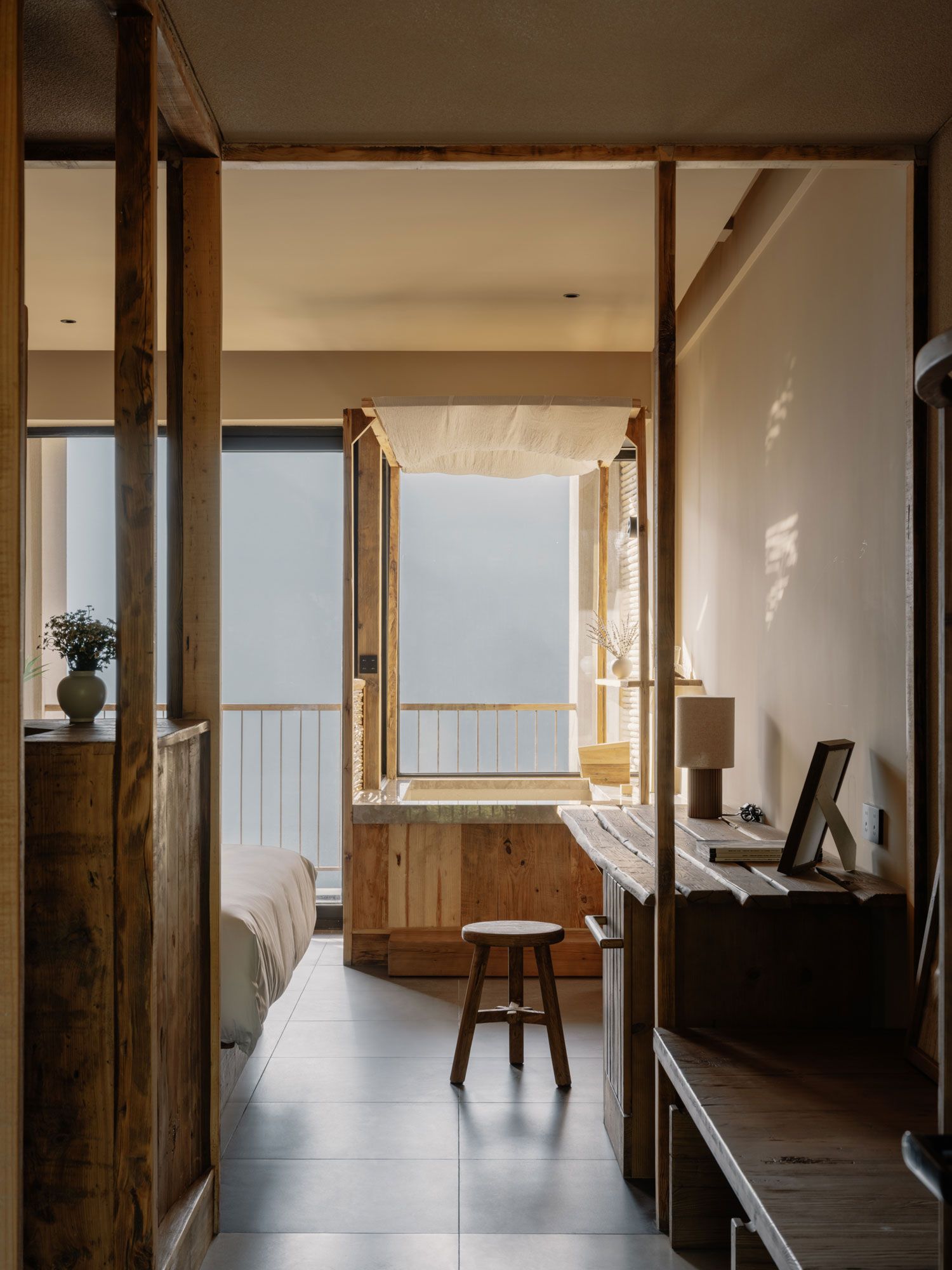
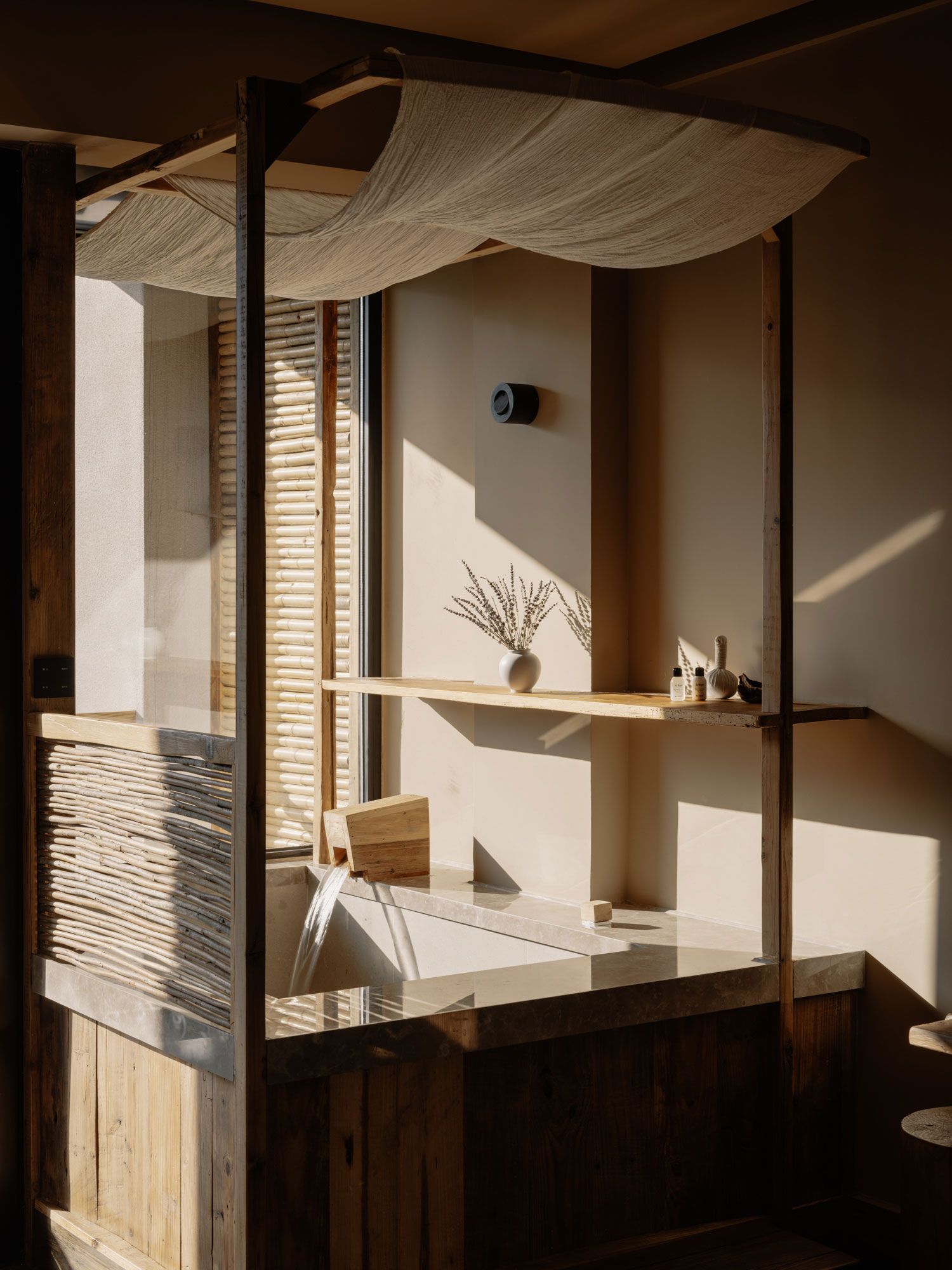
24개의 객실은 흙빛 톤과 천연 소재, 수공예 디테일을 조화롭게 사용하여 프로젝트의 철학을 일관되게 유지한다. 인근 난촨에서 생산된 가구들은 지역 경제에 기여할 뿐만 아니라 공간에 소박한 통일성을 부여한다. 투숙객은 장식적인 요소보다는 창밖으로 펼쳐지는 막힘없는 산의 풍경에 온전히 집중하게 된다.
현대적 순례자를 위한 성소
클라우드하우스는 자연을 압도하려 하지 않고, 변화하는 빛과 안개, 날씨의 흐름이 실내를 은은하게 채우도록 내버려 둔다. 이곳에서의 머무름은 산길을 걷는 것만큼이나 매혹적인 경험이 된다. 순례와 사색의 장소로 오랫동안 알려져 온 진포산에서, 클라우드하우스는 생태적 실천과 지역 공예, 그리고 공간적 명료함을 통해 현대적인 휴식의 의미를 다시 쓰고 있다.
Write by Claude & Jean Browwn



RooMoo Design Studio-Cloudhaus Hotel
A Mountain Sanctuary Born from Local Craft and Sustainable Vision
Perched on the northern slope of the Jinfo Mountain in Chongqing's Nanchuan District, the Cloudhaus Hotel exemplifies how contemporary hospitality design can honour regional identity while embracing principles of sustainability and adaptive reuse. Occupying what was once the sales office of a nearby resort, the 24-room hotel was designed by RooMoo Design Studio in dialogue with its scenic setting: a UNESCO World Natural Heritage site, Jinfo Mountain boasts a landscape of dramatic karst formations, dense bamboo forests, deep gorges and cliff-side trails, along with a long-standing Buddhist culture. This mountainous context provided both the physical and conceptual foundation for the hotel’s design, shaped as much by the availability of locally sourced materials as by the region’s vernacular architecture and craft heritage. Guided by the Studio’s instinct for understated elegance and underpinned by a commitment to reuse and low waste construction, the result is a soulful sanctuary that feels deeply rooted in place and yet thoroughly contemporary.
Rather than approaching the project with predetermined concepts, RooMoo embarked on an extensive period of varied field research during which they explored the mountainous landscape, documented local resources such as catalogued traditional building techniques, and visited nearby wood factories, whilst observing bamboo harvesting practices. This accumulation of material and cultural knowledge was distilled into an architectural vocabulary that informed every aspect of the hotel’s design, from the reconstructed façade to interior specifications and finishing details. Sustainability also played a pivotal role where salvaging and repurposing materials unearthed during construction and mountain exploration became the core design driver rather than a supporting gesture.
Architecturally, the Studio has reorganised the original, somewhat generic five-storey block with the aim of creating a clearer dialogue with the neighbouring mountain. The lower level, designed to resemble a stone plinth, thanks to its façade clad in dark local rock that anchors the building to the terrain, gives way to a cantilevered white framework above which extends vertically along the main façade, echoing the mountain’s steep incline whilst articulating the guestroom balconies. Extensive glazing between the vertical frames brings in ample natural light, opening up sweeping views of the valley, while infill bamboo panels on the lateral façades and bamboo partitions delineating a series of private courtyards for the ground floor guestrooms introduce warmth and texture. At the very top, the building is crowned by a tiled gabled roof, punctuated by a timber-and-bamboo canopy that shelters a deep terrace on the top floor.
Arrival has been rethought as a journey through landscape. From the winding mountain road, guests first encounter an enclosed plaza defined by a bamboo fence laced with bands of green plastic tape in what is a direct translation of local railing techniques. From there, a bridge leads to the hotel’s reception and lobby on the top floor, while the 24 rooms are evenly distributed on the four floors below. Additionally, guests can enter via the underground parking on the lower floor, where the restaurant is also located, or through a landscaped courtyard above, a quirky configuration made possible by the site’s steep topography.
Once inside, guests are met with panoramic mountain views courtesy of floor-to ceiling glazing. Rather than competing with the drama outside, the interior design defers to it through a carefully composed palette of locally sourced and salvaged materials such as bamboo, wood and black stone.
In the public areas on the top floor, split bamboo panels clad the walls and pitched ceiling, their alternating vertical, horizontal and diagonal striations lending the space a rhythmic visual energy. Clean lines and simple furniture temper the textural richness which aid in creating a contemporary atmosphere, while two decorative installations, crafted in collaboration with local bamboo weavers, one suspended above the bar, the other further along the space, soften the geometry with their playful ring and disc forms.
In a multi-purpose space adjoining the lobby, a hut like structure made from timber salvaged from an abandoned mountain cabin demarcates a stage for performances, topped with a chequered canopy inspired by the bright tiles of ancient Western Sichuan roofs.
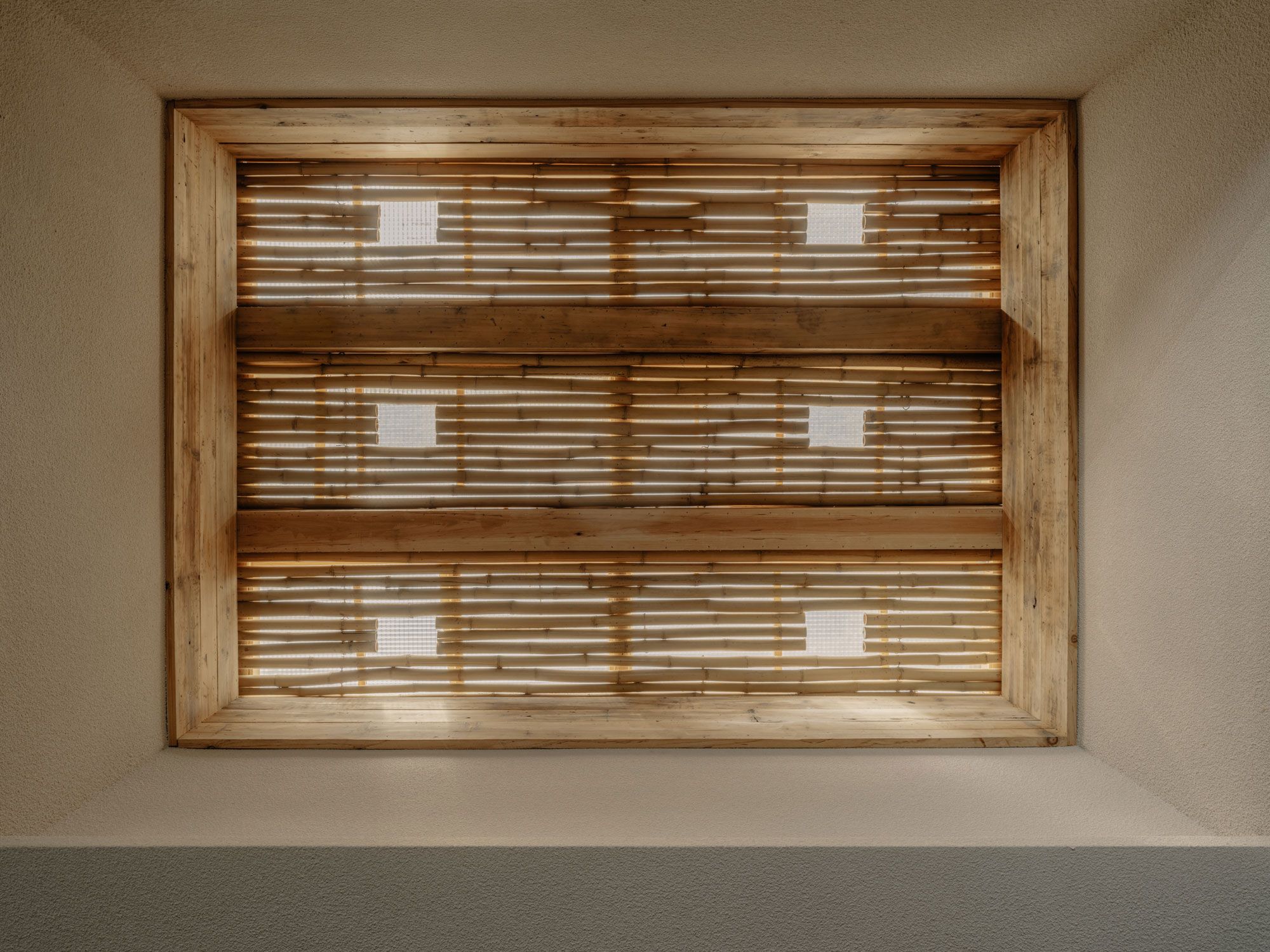
Occupying a ground floor annex created by extending the original parking area, the restaurant carries the vocabulary of reclamation into the dining environment. Red bricks removed during the building’s renovation were repurposed to build a textured wall separating the kitchen which is topped by a decorative bulkhead made from leftover bamboo scaffolding treads; offcut stones were used as wall cladding while locally collected rock and gravel is embedded in the terrazzo floors; even the cushions are sewn from reused fabrics. Despite this rich tapestry of textures, the space remains serene and pared-back thanks to simple, honest furniture and an otherwise restrained material palette. Daylight filtering through bamboo-lined skylights further enhances the warm, grounded atmosphere.
The design of the 24 rooms maintains the project's overarching philosophy, harmoniously incorporating earthy tones, natural materials and handcrafted details. The furniture, most of which is produced in nearby Nanchuan, keeps the language simple and cohesive while rooting the project in the local economy and landscape. Typologies range from compact twins to suites with dedicated living areas, all striking the same balance of restraint and comfort, inviting guests to focus less on decoration and more on the uninterrupted mountain views.
RooMoo Design Studio’s renovation does not try to outdo it’s surrounding dramatic scenery; instead, it uses it as a constant backdrop, allowing interiors to be quietly animated by shifting light, mist and weather. For guests, this translates into an experience where staying put can be as compelling as setting out on the region’s scenic trails. In a place long associated with pilgrimage and contemplation, Cloudhaus offers a contemporary form of retreat that folds ecological frugality, local craft and spatial clarity into the larger story of the Jinfo Mountain.
from yatzer
'Hotel & Resort' 카테고리의 다른 글
| * 대지 몰입형 공간 비평 [ Oppenheim Architecture ] Desert Rock Resort (0) | 2026.03.04 |
|---|---|
| * 시간과 물성이 빚어낸 건축적 번역 [ Tristan Auer ] Rosewood Courchevel Le Jardin Alpin (0) | 2026.02.27 |
| * 시간의 그릇, 시안의 기억을 담다 [ MUDA-Architects ] Younch Hotel (0) | 2026.01.05 |
| 디아마스 하야마: 바다와 하나 되는 주거 [ APOLLO Architects & Associates ] Diamas Hayama (0) | 2025.12.16 |
| * 란서호프 질트: 절제로 만드는 치유의 공간 [ Ingenhoven ] Lanserhof Sylt (0) | 2025.11.07 |