자연을 모방하지 마라. 자연의 법칙을 찾아라. - 르 코르뷔지에
 |
 |
 |
Ecological Infrastructure Embracing Nature / Bulla - Malba Forest
ㅇ 생태와 문화가 만나는 새로운 교외 미술관
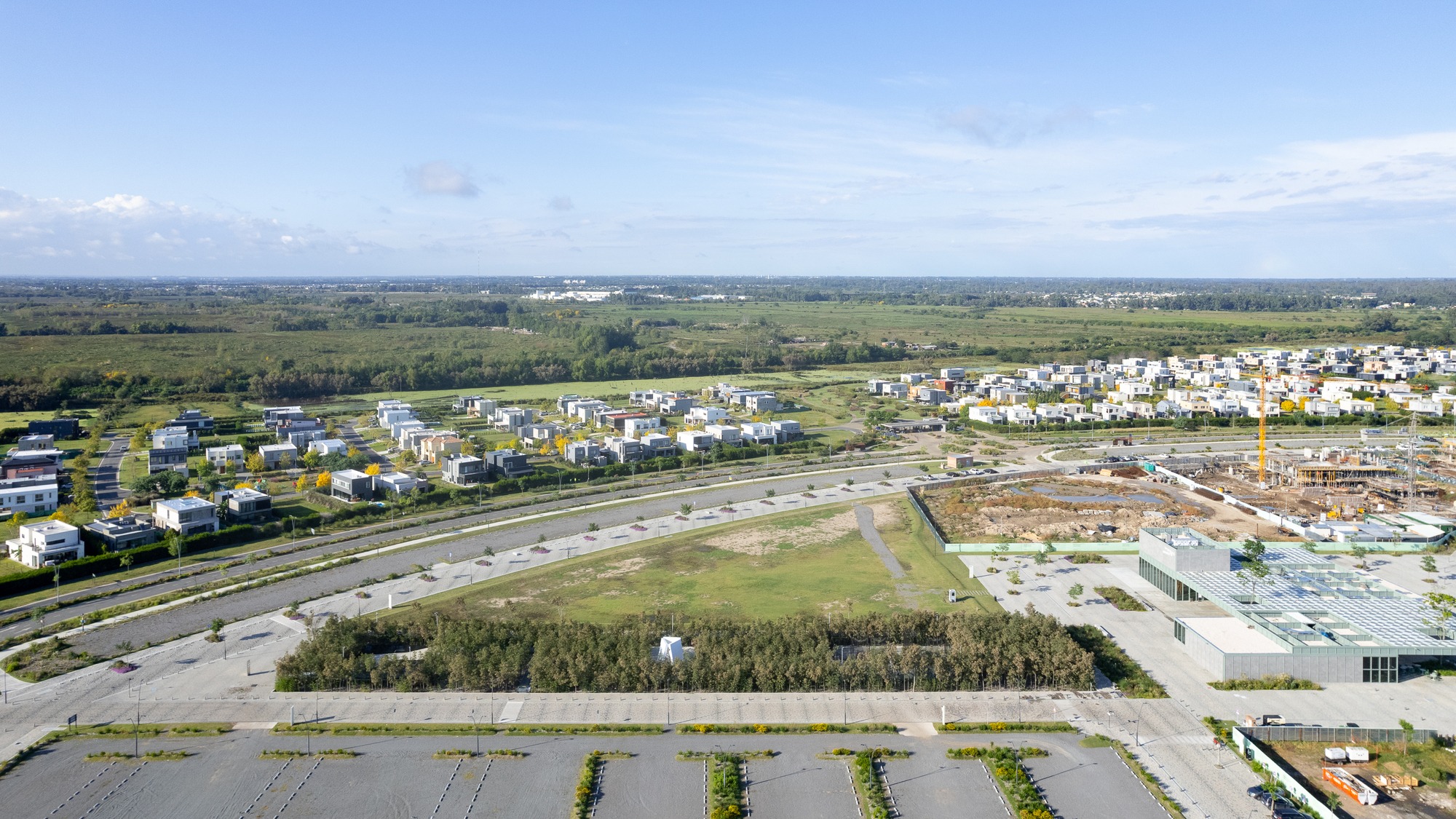
푸에르토스는 아르헨티나 부에노스아이레스 주 에스코바르 지역에 위치한 2,500헥타르 규모의 신도시입니다. 조경 설계 스튜디오 불라는 이곳에서 사람과 생태가 조화롭게 호흡하는 삶의 방식을 탐구하는 실용적 실험실이자 친환경 문화 경관 프로젝트를 전개해 왔습니다. 이러한 새로운 도시적 맥락 속에서 최근 새로운 문화적 이정표가 등장했습니다. 바로 교외형 공공 미술관인 말바 푸에르토스입니다. 총 여섯 개의 전시 공간 중 세 곳은 실내에, 나머지 세 곳은 불라가 설계한 야외 갤러리로 구성됩니다. 방문객들은 새롭게 조성된 오리나무 숲 사이로 난 길을 거닐며 예술과 자연을 입체적으로 경험하게 됩니다.
ㅇ 대지의 탐구와 고유 수종의 재발견
프로젝트의 첫 단계는 대지를 깊이 탐구하는 과정이었습니다. 이 과정에서 강변 오리나무로 잘 알려진 테사리아 인테그리폴리아 군락을 발견했습니다. 이를 계기로 과학자, 생태 보존 전문가, 토양 전문가로 구성된 학제간 팀과 함께 본격적인 연구와 실험을 시작했습니다. 다양한 구역에서 샘플을 채취하고 토양을 분석했으며, 여러 물리적 조건과 기술을 적용해 이 수종을 복원하고 번식시키는 작업에 착수했습니다. 연구진은 2주 간격으로 다양한 자극을 주며 수종의 생장 특성을 면밀히 관찰했습니다. 2,500그루의 강변 오리나무를 육성하기 위해 현장에 두 곳의 전초 묘목장을 설치했고, 이 수종이 매우 빠르게 성장하여 단기간에 울창한 숲의 볼륨을 형성할 수 있는 특성이 있음을 확인했습니다.
ㅇ 숲과 건축을 엮는 유기적 공간 설계
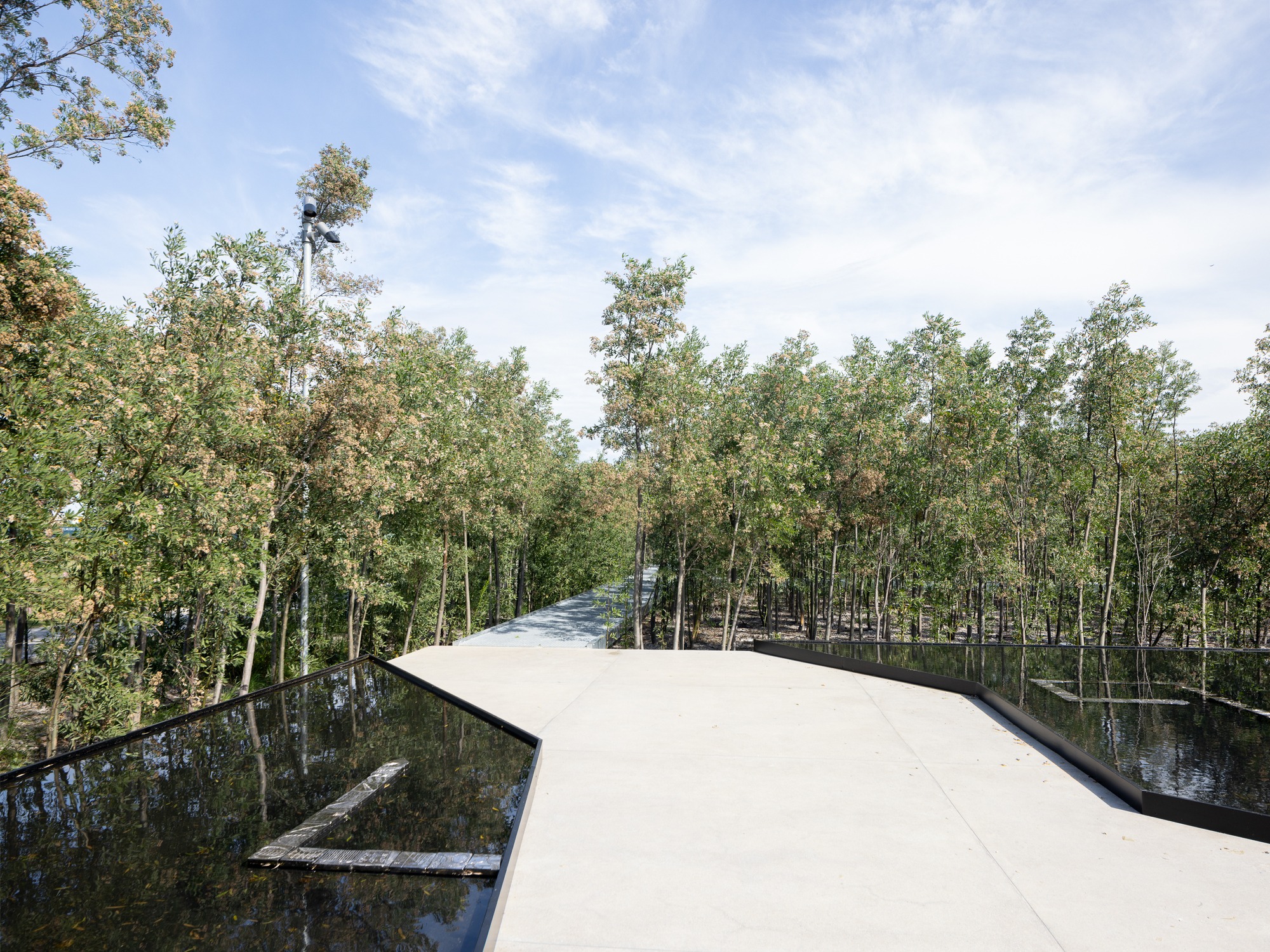
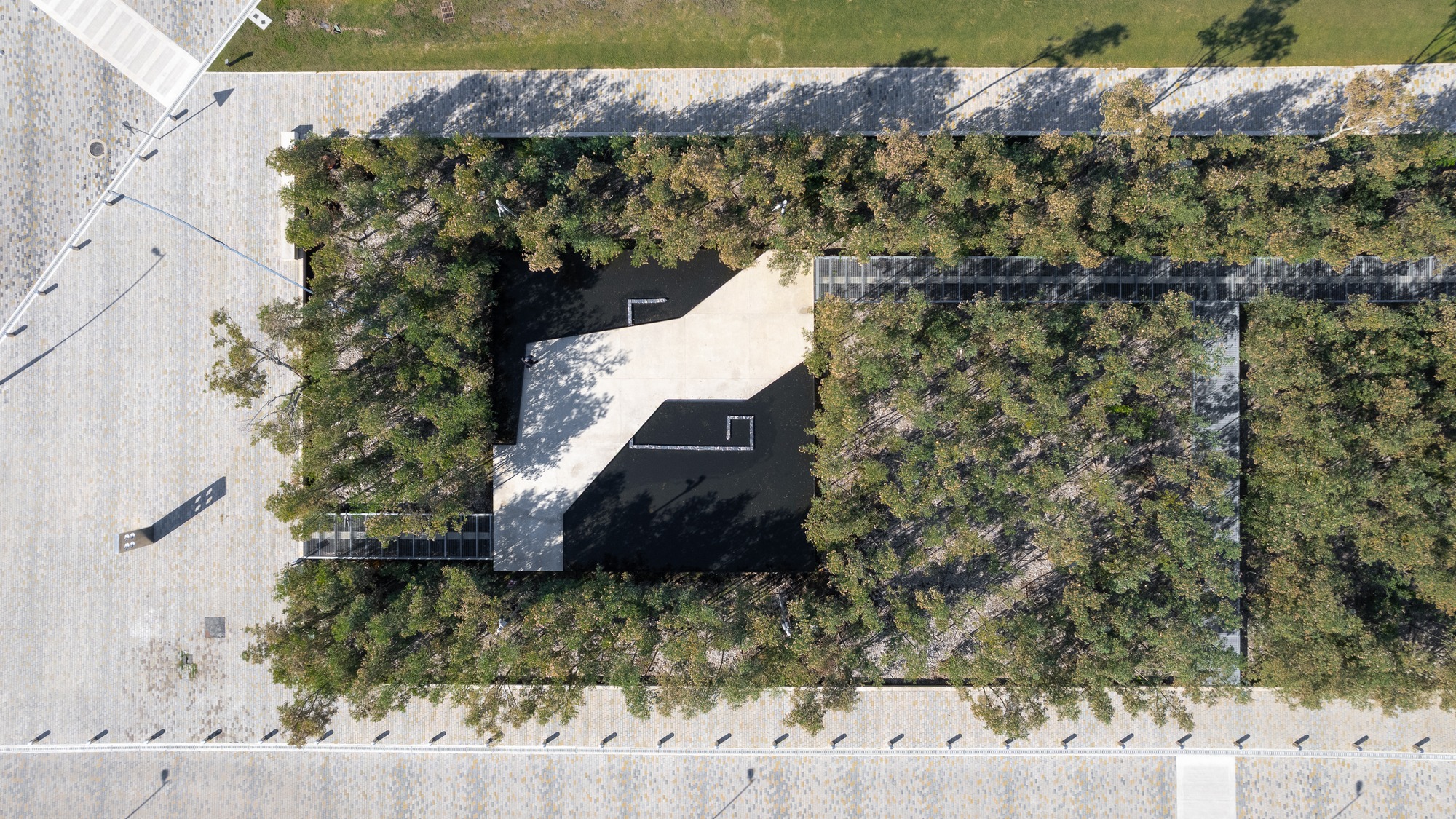
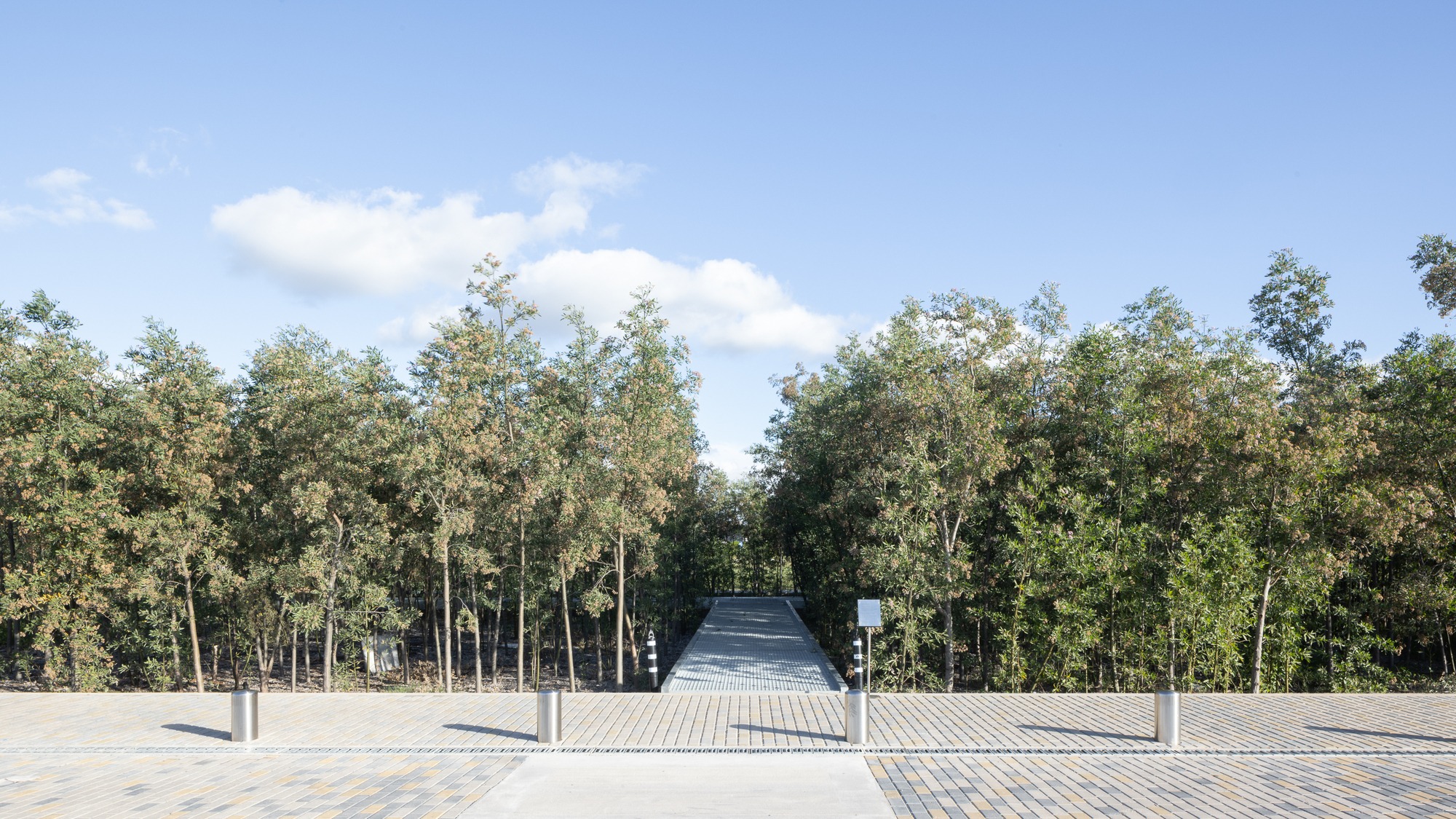
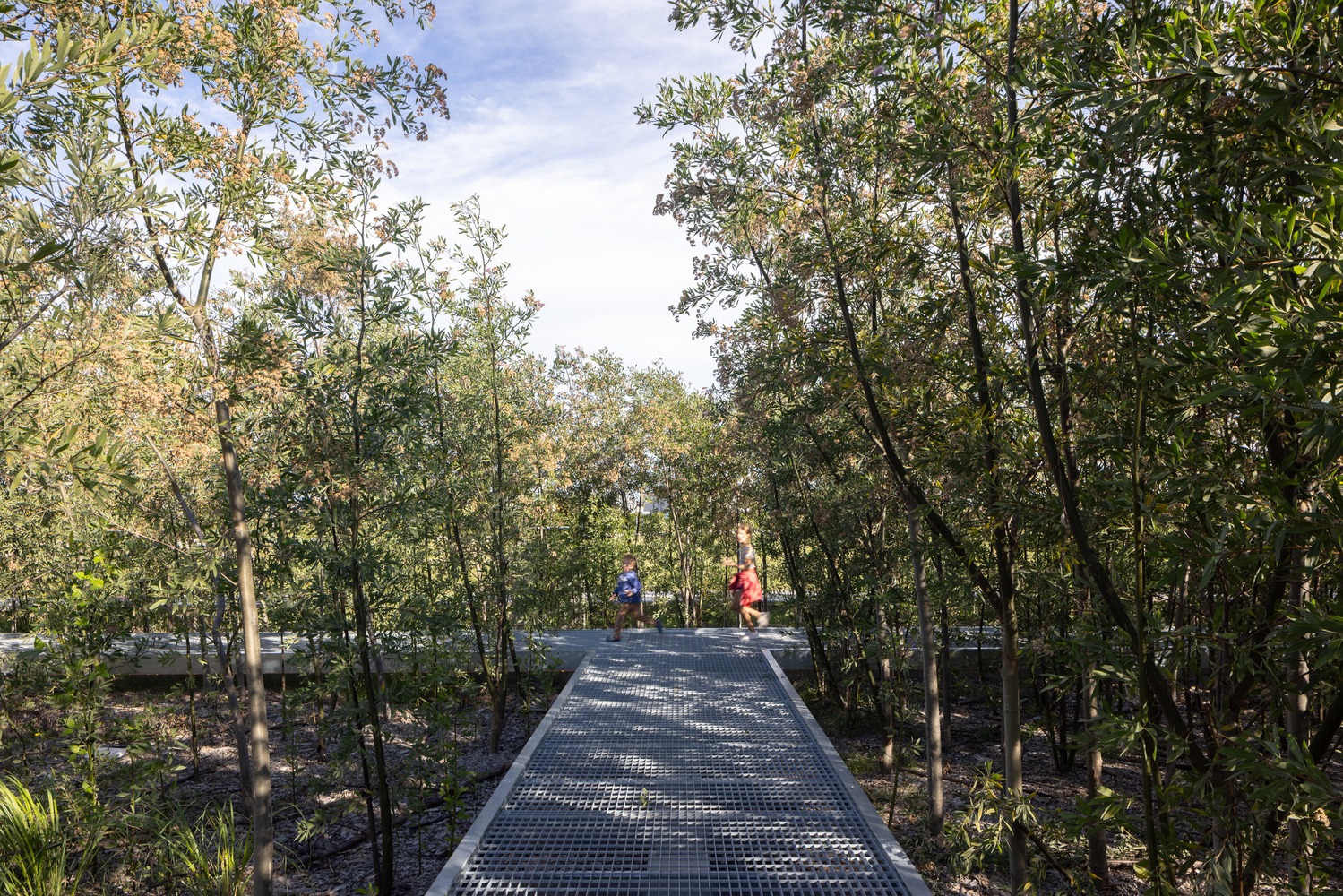
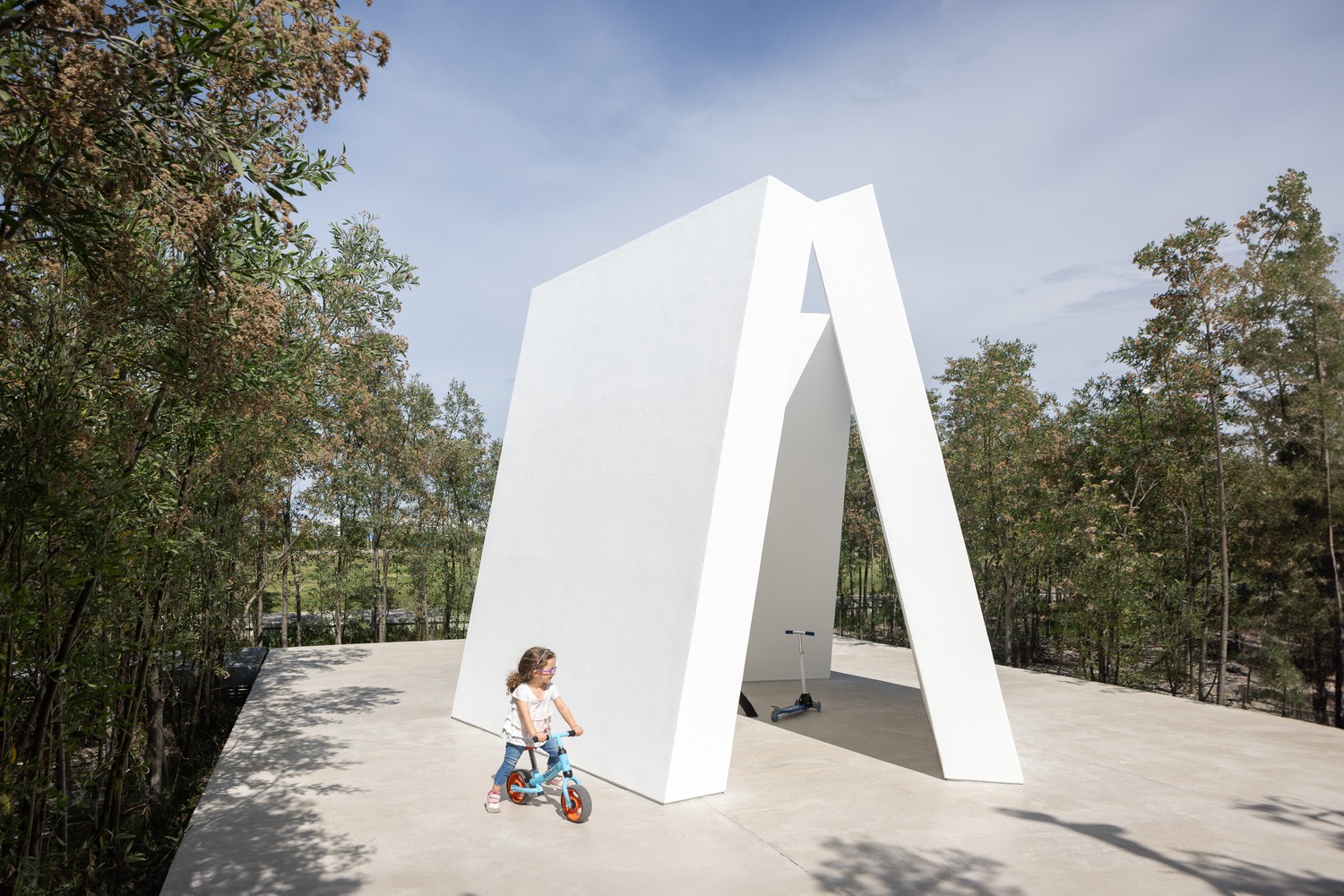
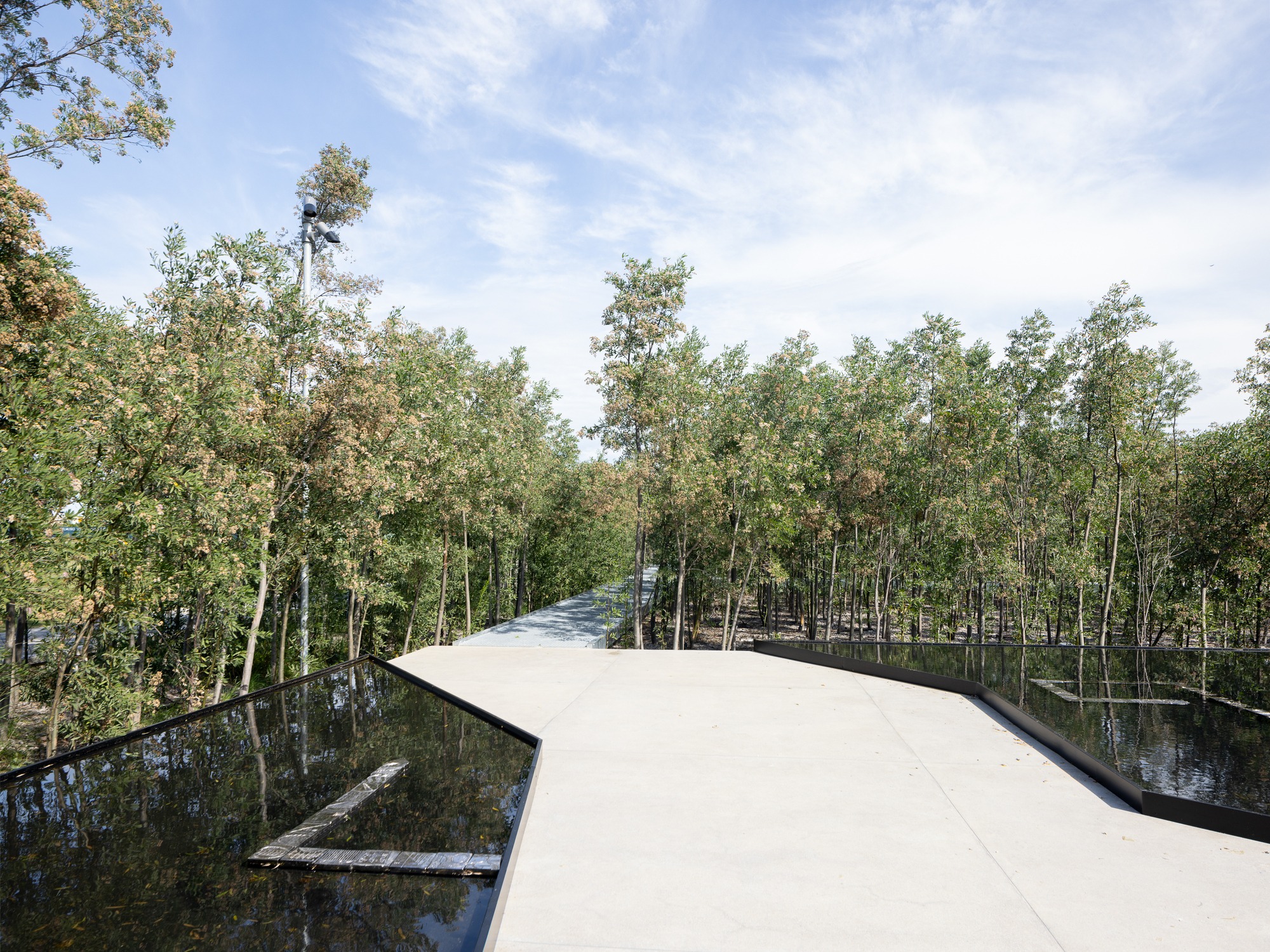
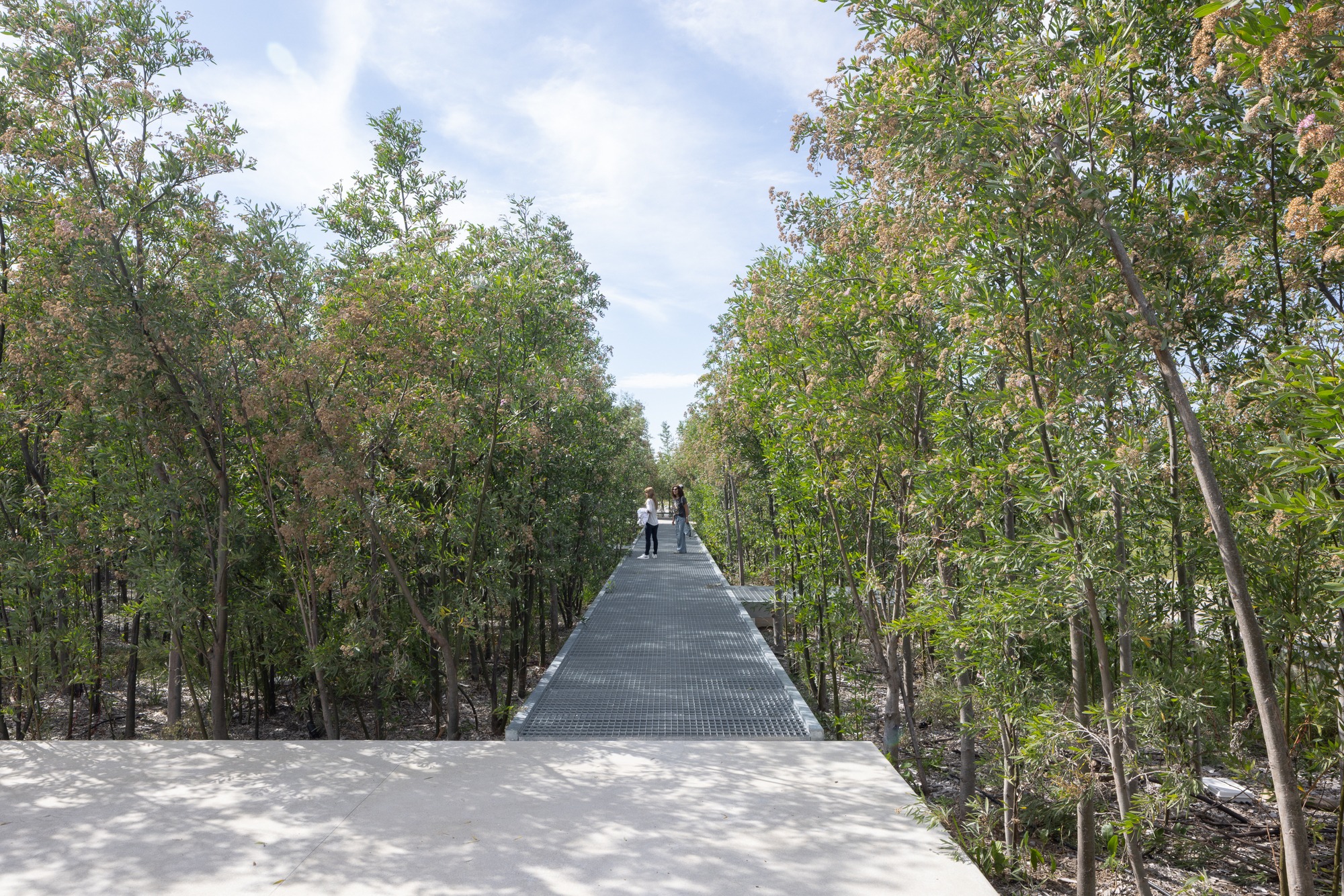
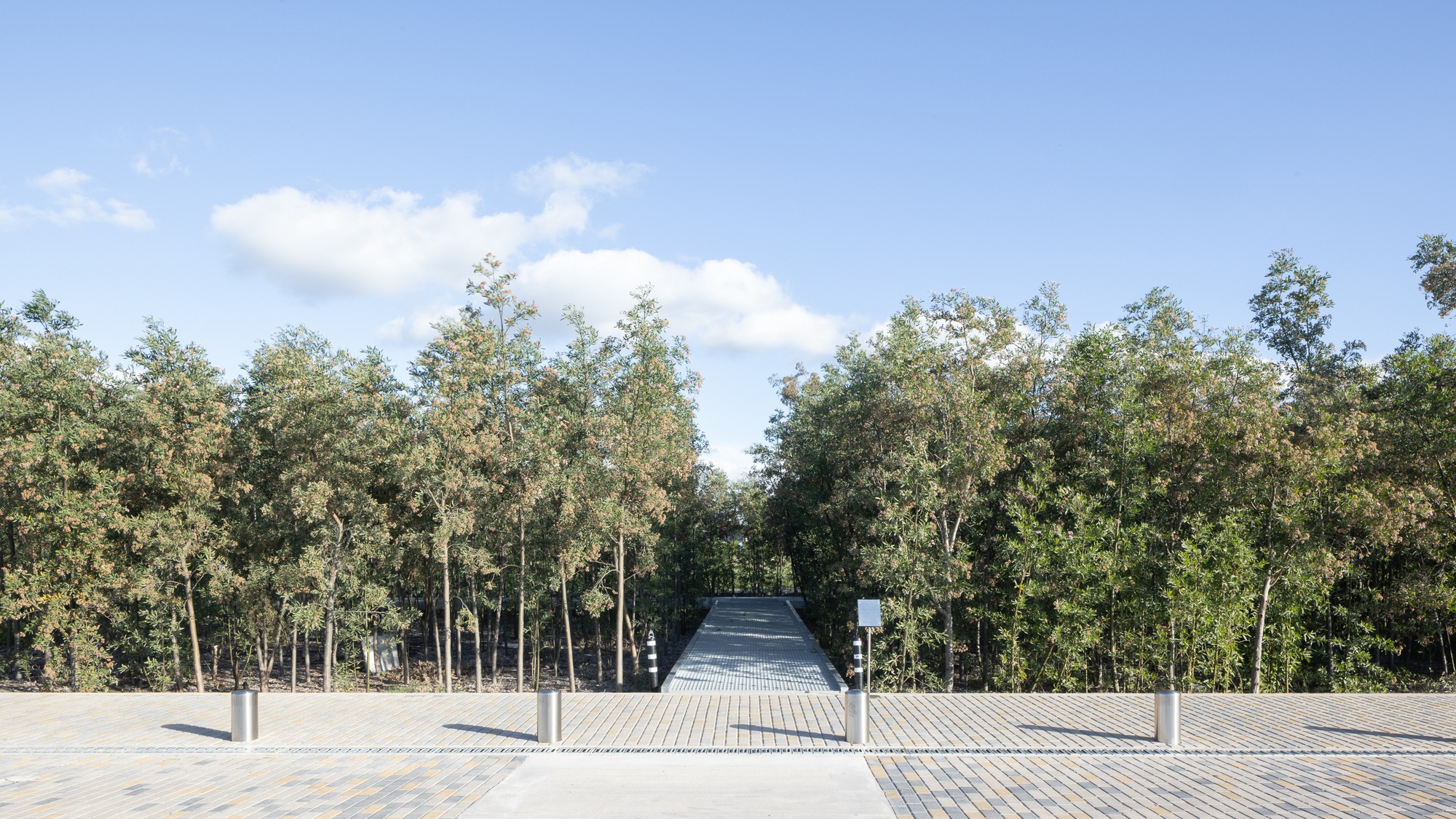
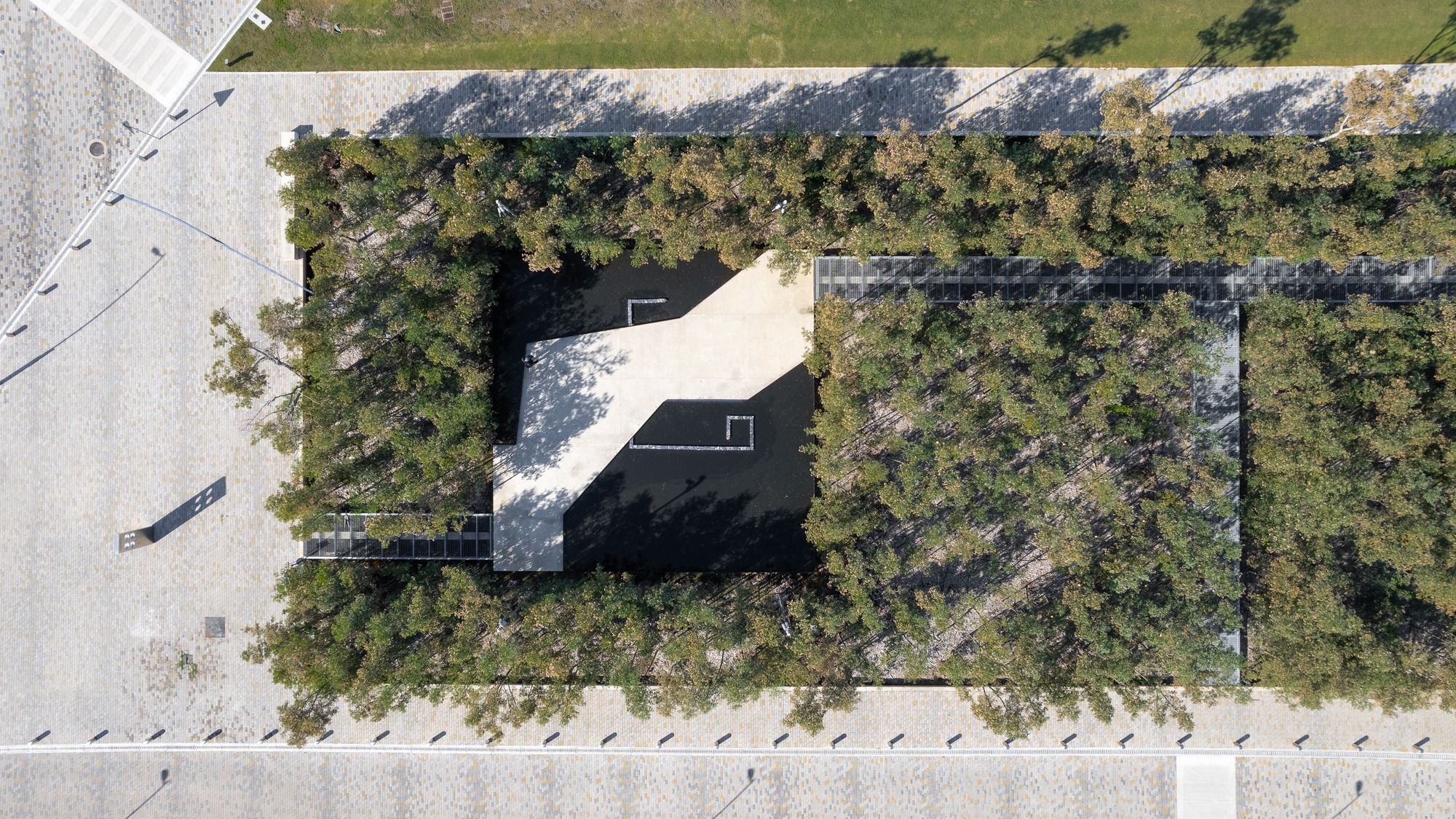
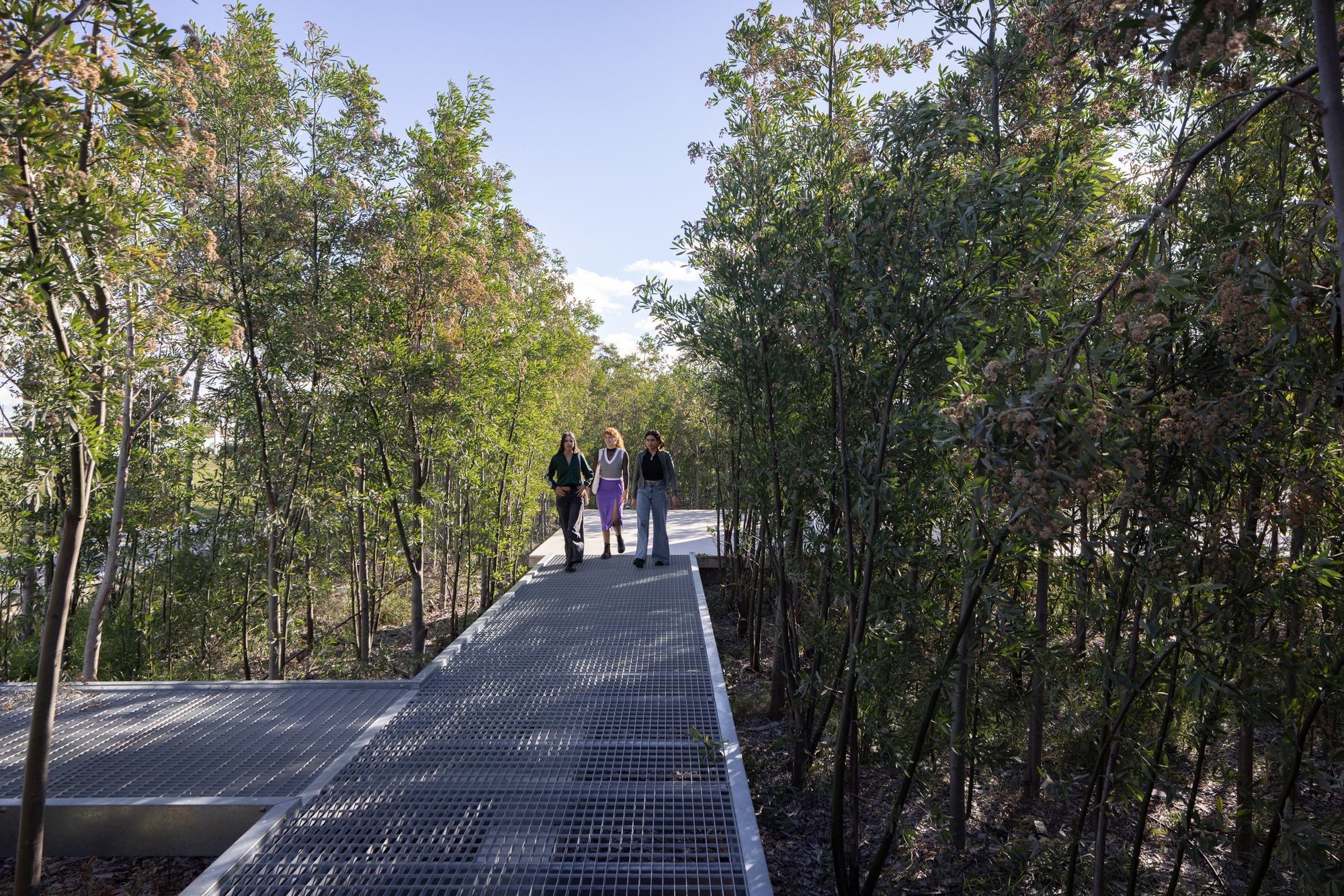
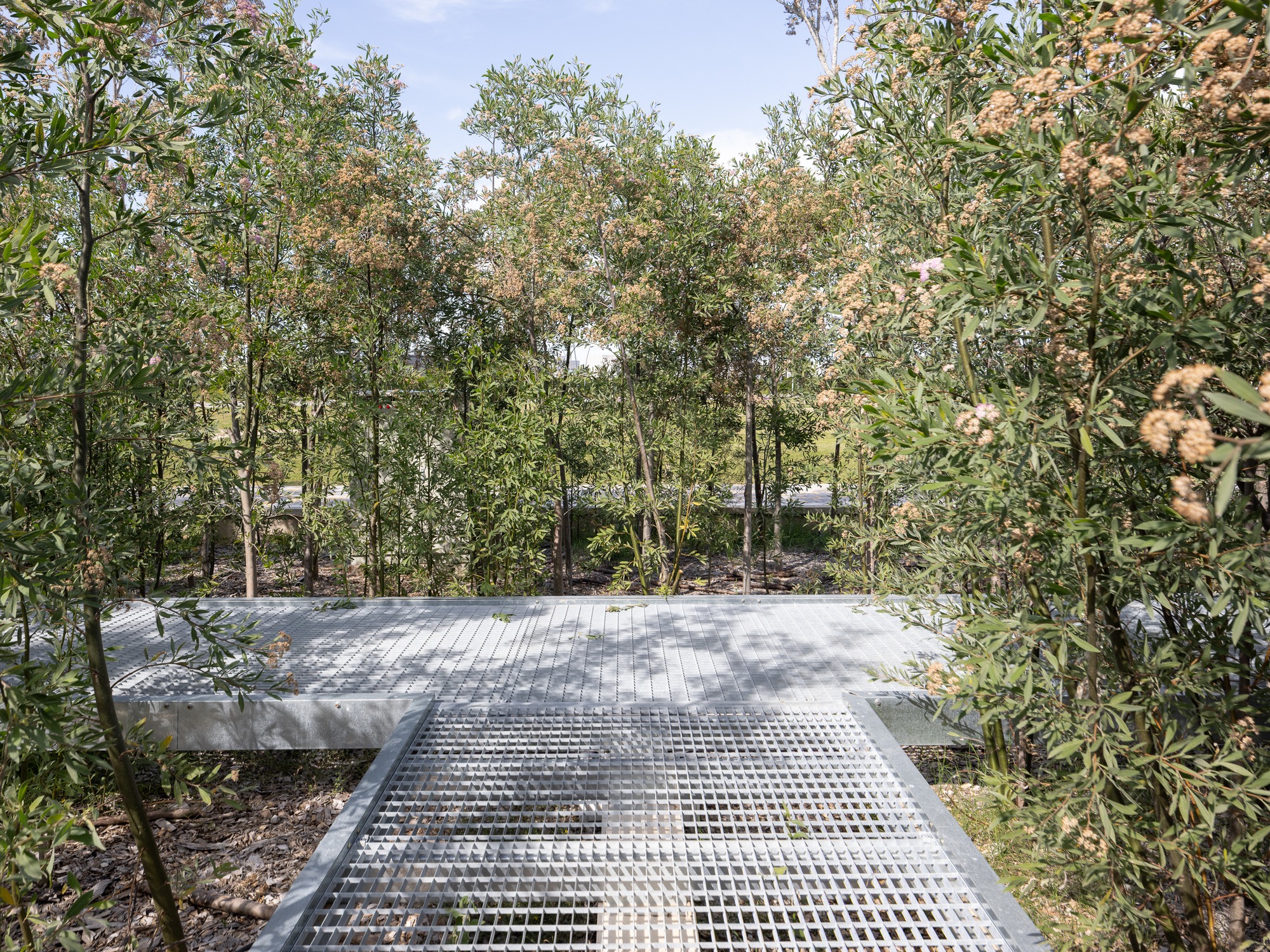
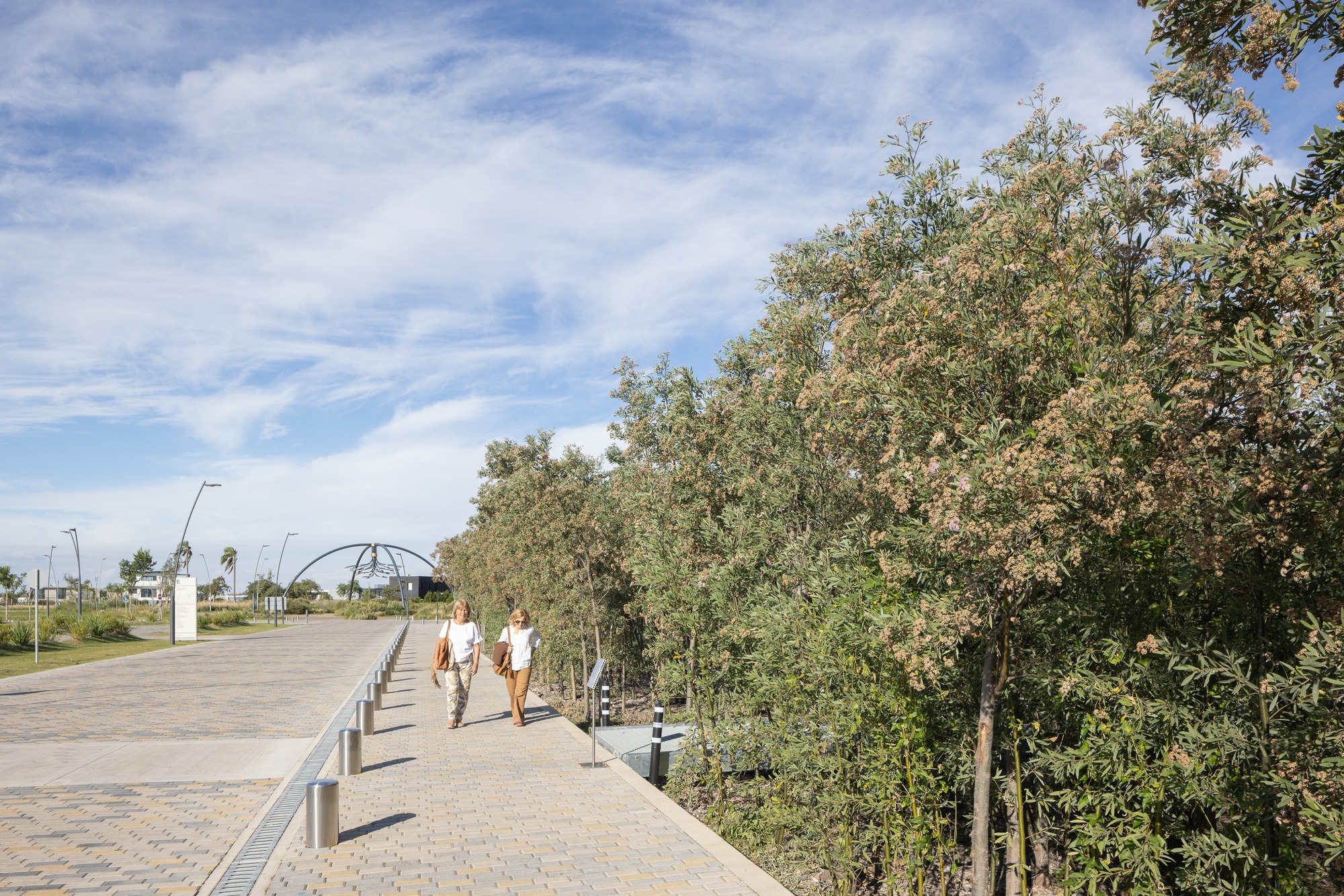
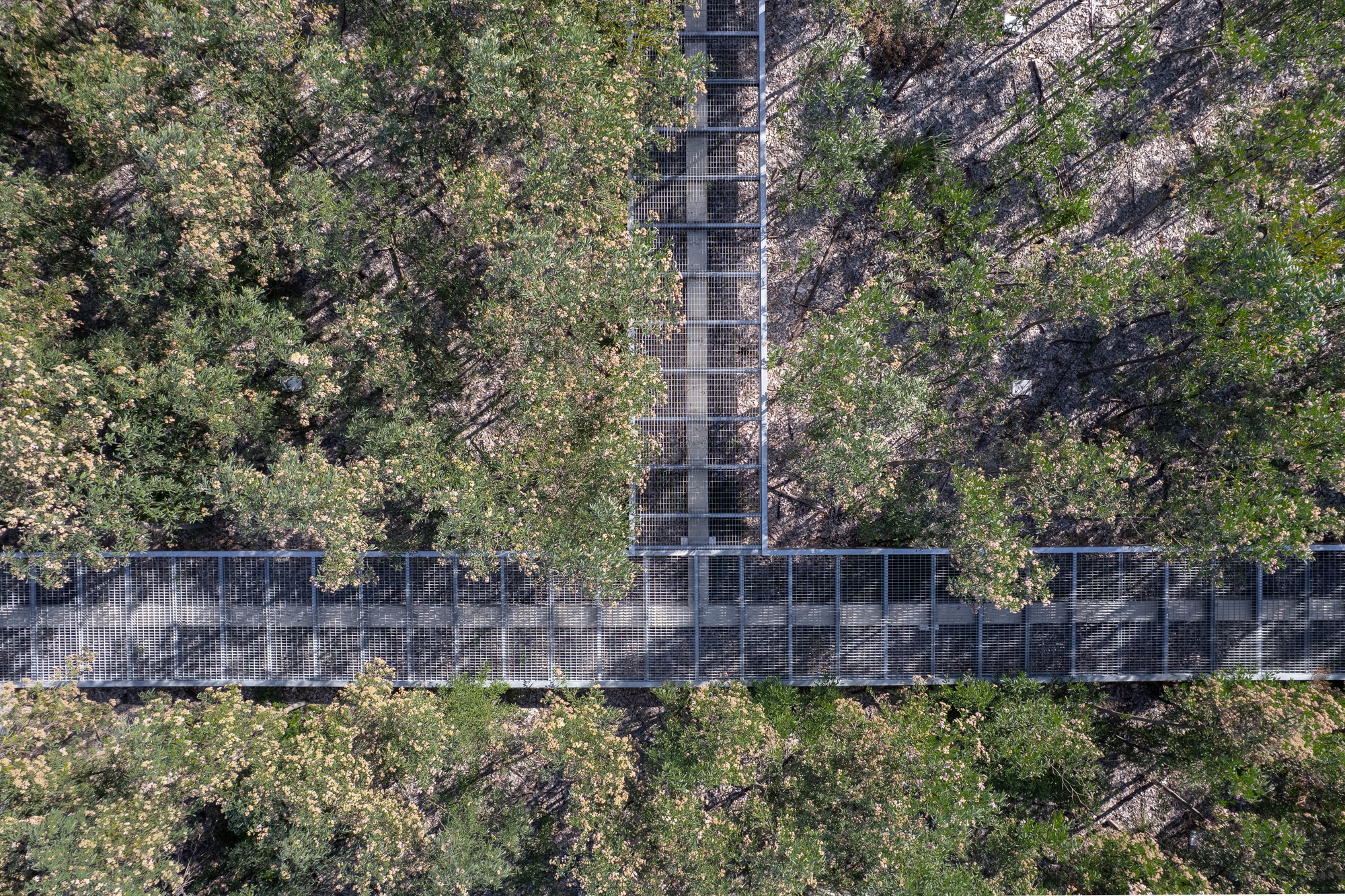
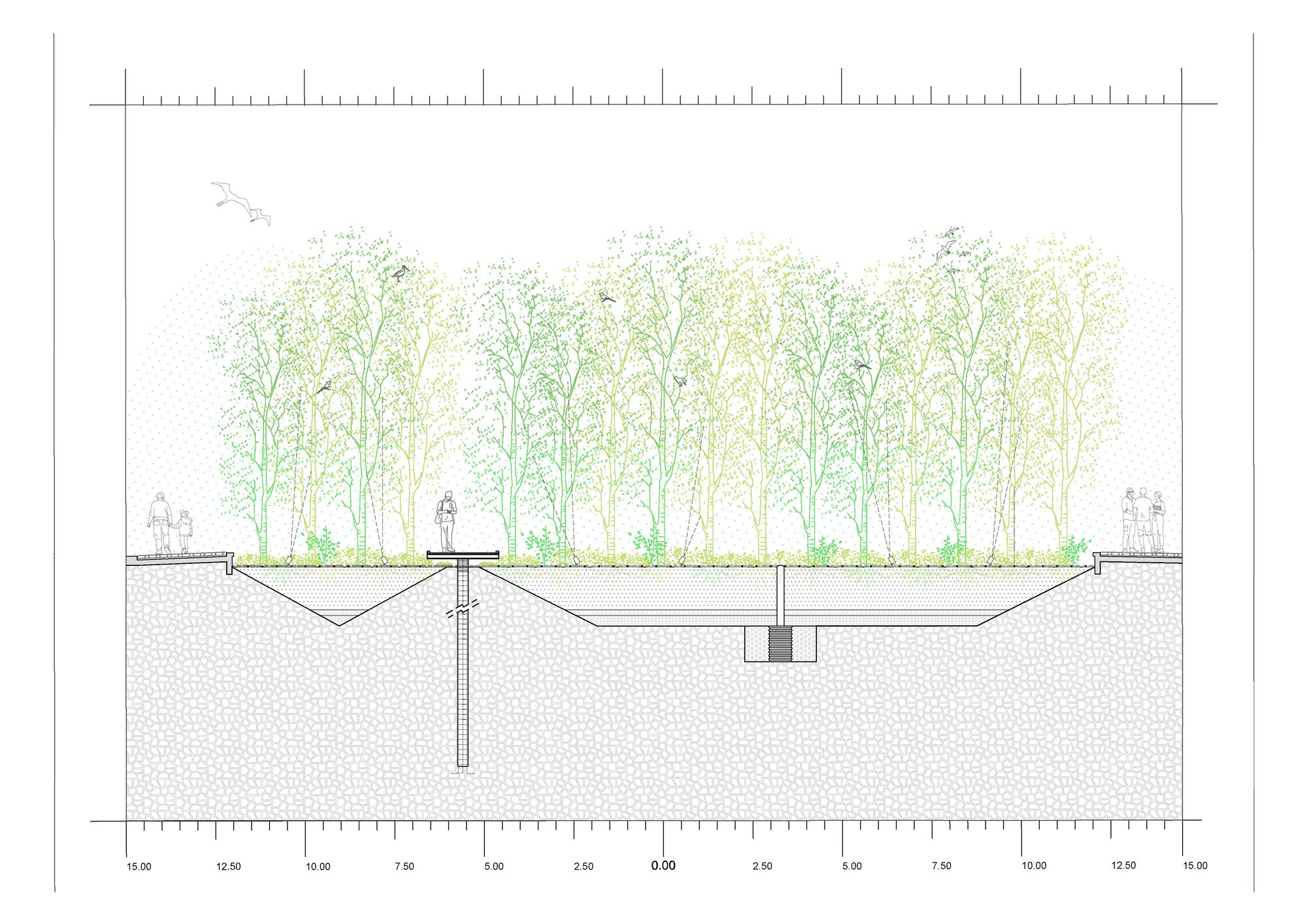
이러한 심층적인 연구는 말바 포레스트의 설계로 결실을 맺었습니다. 이 숲은 건축물 사이를 엮어내며 주변 환경과 소통하는 150미터 길이의 식생 프리즈로 설계된 정교한 도시적 개입의 결과물입니다. 인공적으로 조성된 오리나무 숲 안에는 각각 200, 100, 50제곱미터 규모의 유연한 공간 세 곳이 마련되어 있습니다. 이 공간들은 공중에 뜬 금속 산책로로 연결됩니다. 방문객들은 발아래 생동하는 숲의 바닥을 내려다보며 숲의 깊은 층위를 탐험할 수 있습니다. 세 개의 공간은 2,000제곱미터의 빽빽한 숲 한가운데 자리한 아늑한 빈터입니다. 한국의 전통 건축이 창을 통해 자연의 풍경을 집 안으로 들이는 차경의 철학처럼, 이 공간은 아주 오래전부터 그 자리에 존재했던 원시림의 감각을 자아내며 교육과 체험에 중점을 둔 푸에르토스의 새로운 문화적 중심지로 자리 잡았습니다.
ㅇ 자연의 맥동을 모방한 생태 인프라 구축
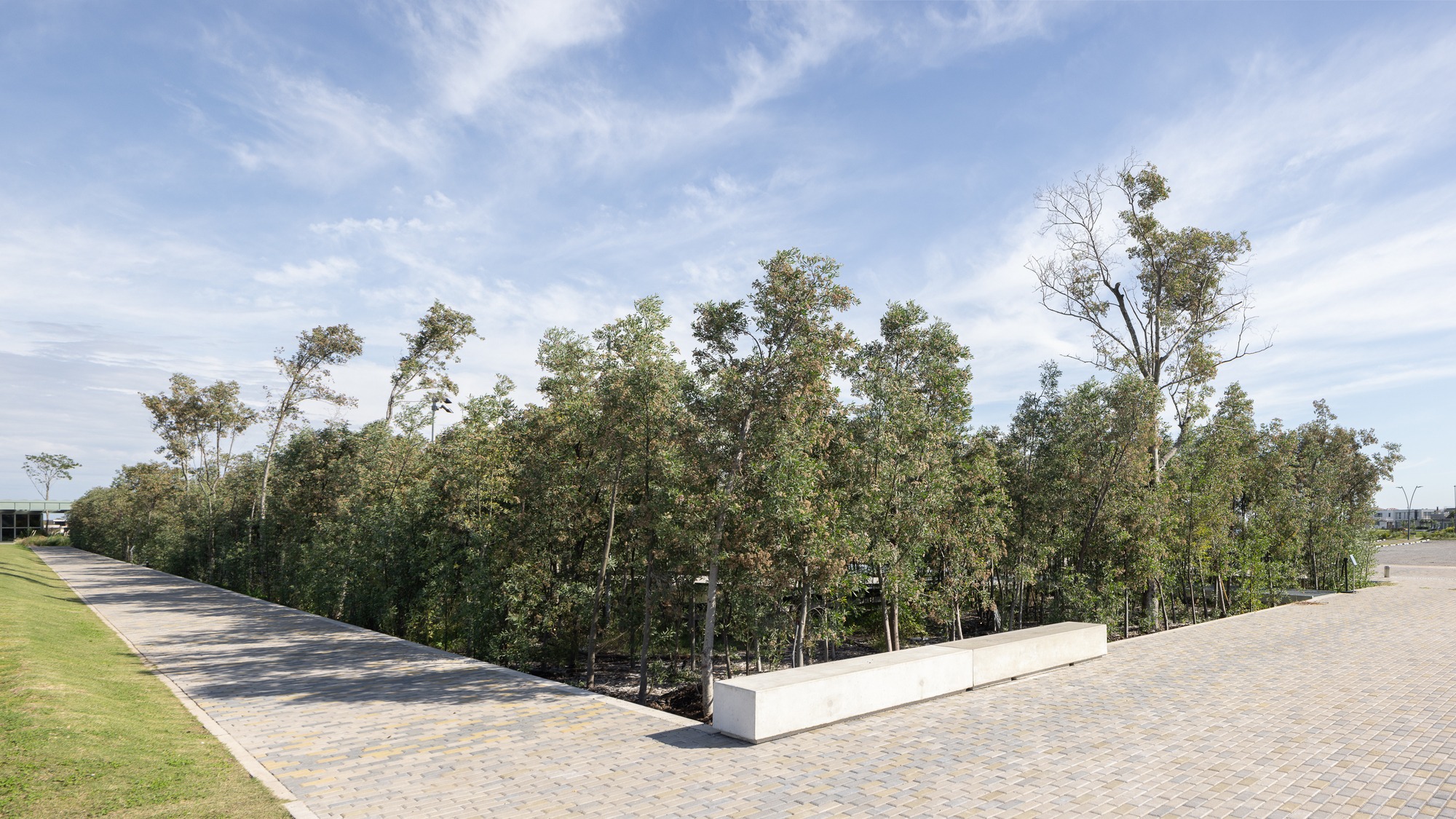
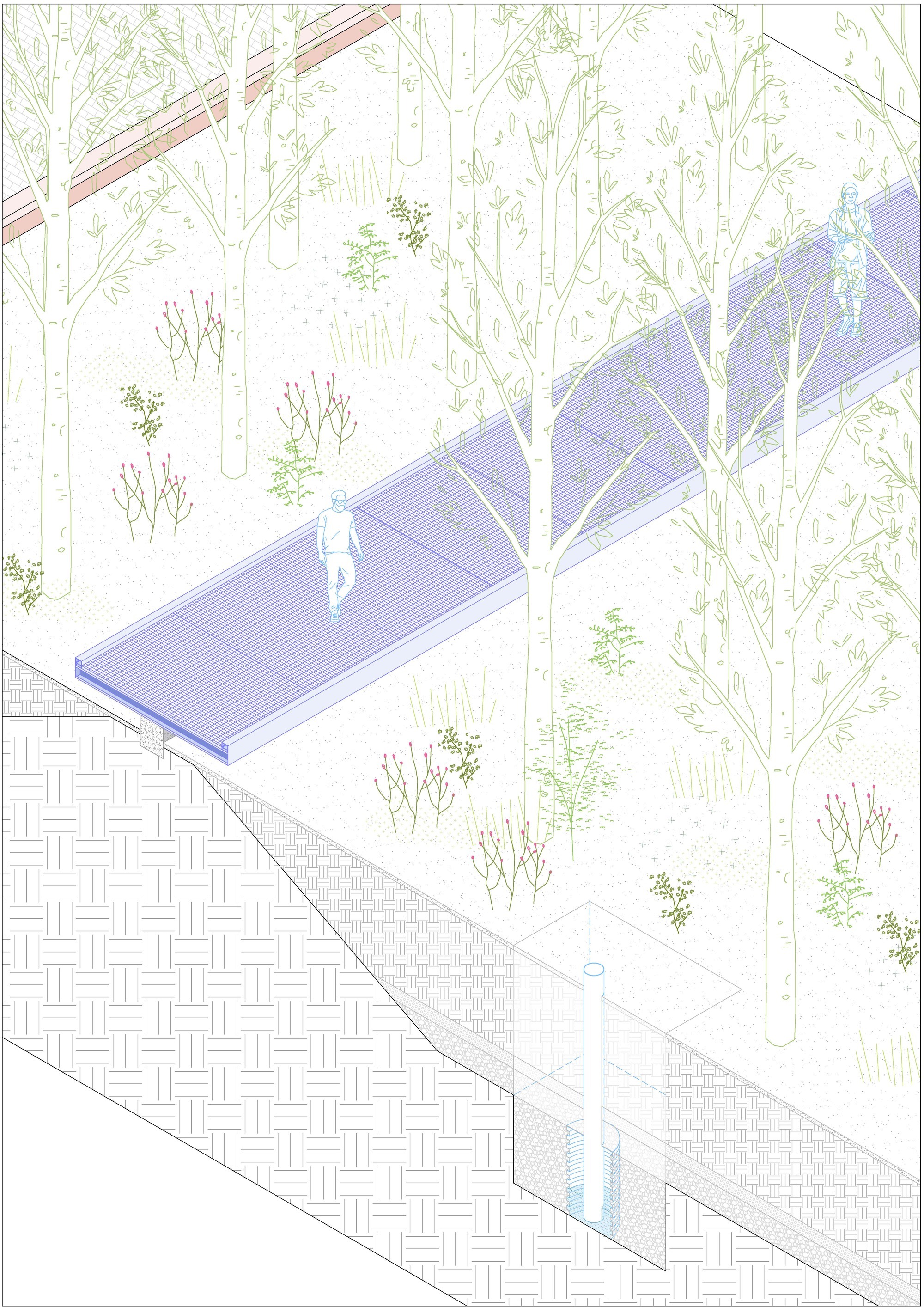
말바 포레스트는 단순한 시각적 조경을 넘어 수리학적이자 생태학적인 인프라로 기능합니다. 오리나무가 자생할 수 있는 최적의 환경을 모방하여 침수, 물의 흐름, 염도 조건 등을 세밀하게 맞춘 7,500세제곱미터 규모의 특수 토양 기반이 조성되었습니다. 펌프와 배수 시스템을 통해 원래 서식지의 수위 변화와 맥동을 시뮬레이션하며 물을 채우고 비우는 시스템을 갖추고 있습니다. 고도로 기술화된 이 인공 토양은 근처의 짠 지하수로부터 오리나무의 뿌리를 안전하게 보호합니다. 상업적 가치는 없지만 지역의 고유한 유전자를 지닌 2,200그루의 오리나무가 모여 최초의 인공 오리나무 숲을 형성했습니다. 서식지를 잃었던 종이 원래의 자리로 돌아와 대지의 원형을 재생시킨 것입니다. 다양한 수령의 나무들을 세밀하게 조합하여 식물 생태계의 원래 군락 구성을 자연스럽게 재현했습니다.
ㅇ 잃어버린 생태계의 복원과 다감각적 숲의 탄생
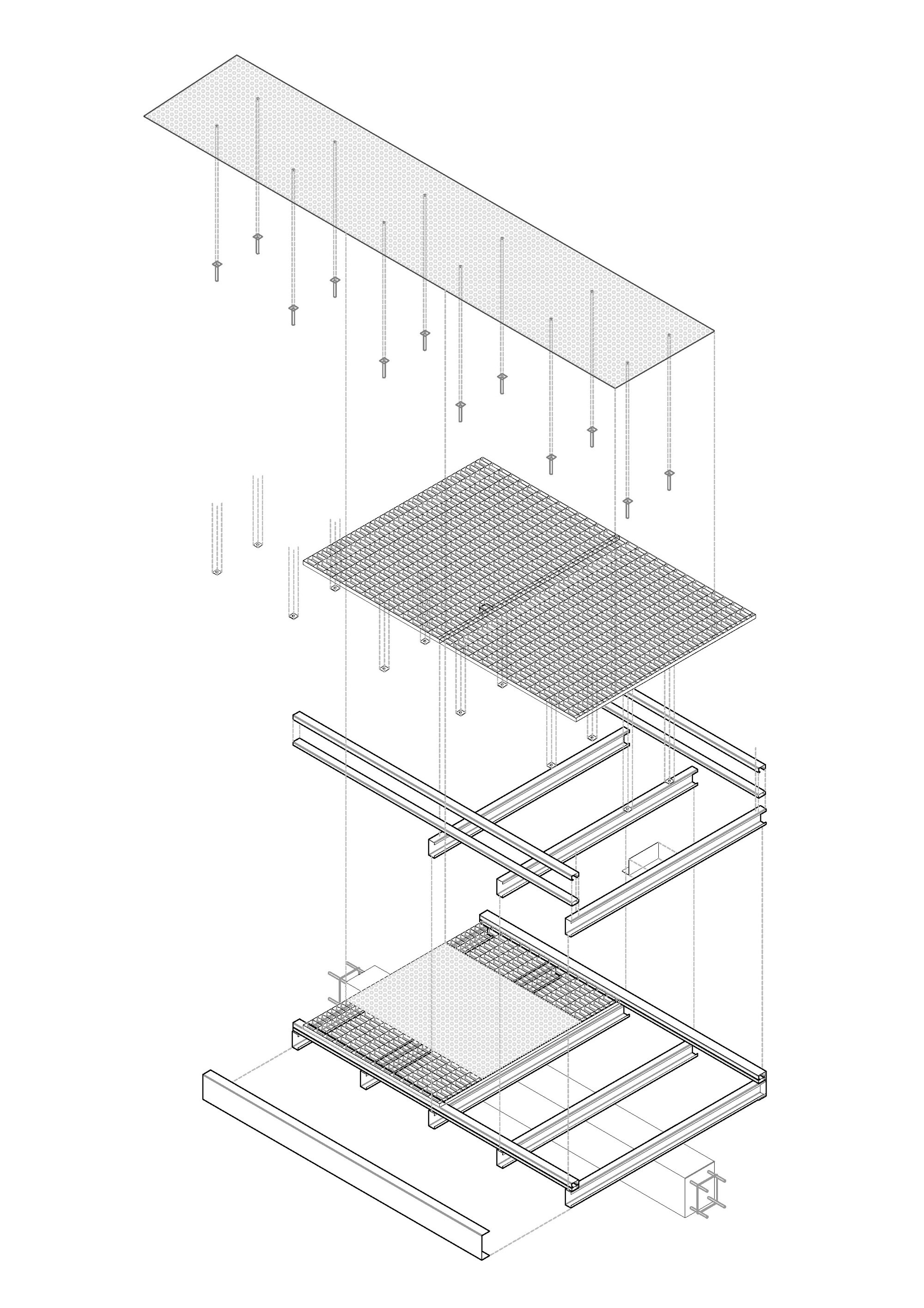
이 최초의 인공 오리나무 숲 조성 프로젝트는 과거에는 풍요로웠으나 지금은 점차 사라져가는 지역 생태계의 가치를 재조명하는 독보적인 작업입니다. 그 결과 다채로운 소리와 색채, 그리고 역동적인 동식물 군락이 생동하는 매력적인 숲 공원이 탄생했습니다. 세 개의 전시 및 행사 공간은 이 습하고 상쾌한 녹색의 장막 위로 가볍게 떠 있습니다. 각 공간은 다양한 문화 활동을 수용할 수 있도록 최대 3톤의 하중을 견디게 설계되었습니다. 알루미늄 조인트를 활용한 일체형 모듈식 바닥재는 숲의 빈터 아래에서 은은한 빛을 뿜어내며 공간의 신비로움을 더합니다.
ㅇ 땅과 하늘을 잇는 조경의 미래
산책로는 숲의 흙을 밟아 훼손하지 않도록 종방향 보에 의지해 공중에 부유하고 있습니다. 이 미술관이자 숲인 장소는 공공 공간을 바라보는 실용적인 도시적 관점과 미래를 향한 생태 환경적 시각을 완벽하게 융합합니다. 과학과 창의성은 공동의 목표를 위해 헌신하며, 깊이 있는 연구는 혁신의 든든한 기반이 됩니다. 이 숲은 조경이 땅과 하늘 사이의 공간적 삶을 재창조하는 도시의 진정한 주인공으로 다시 자리 잡는 경이로운 미래를 묵묵히 증명하고 있습니다.
Write by Gemini & Jean Browwn
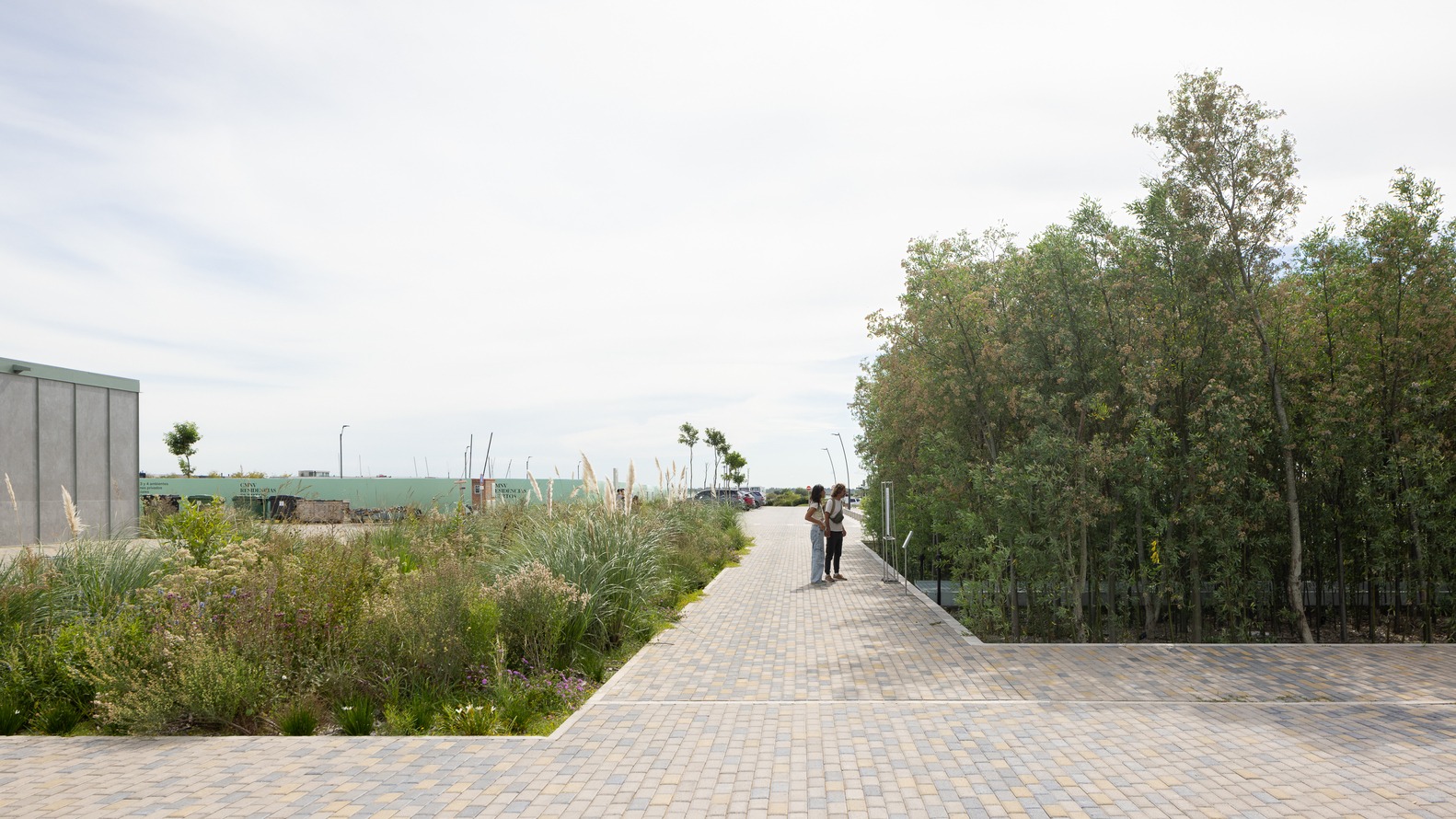
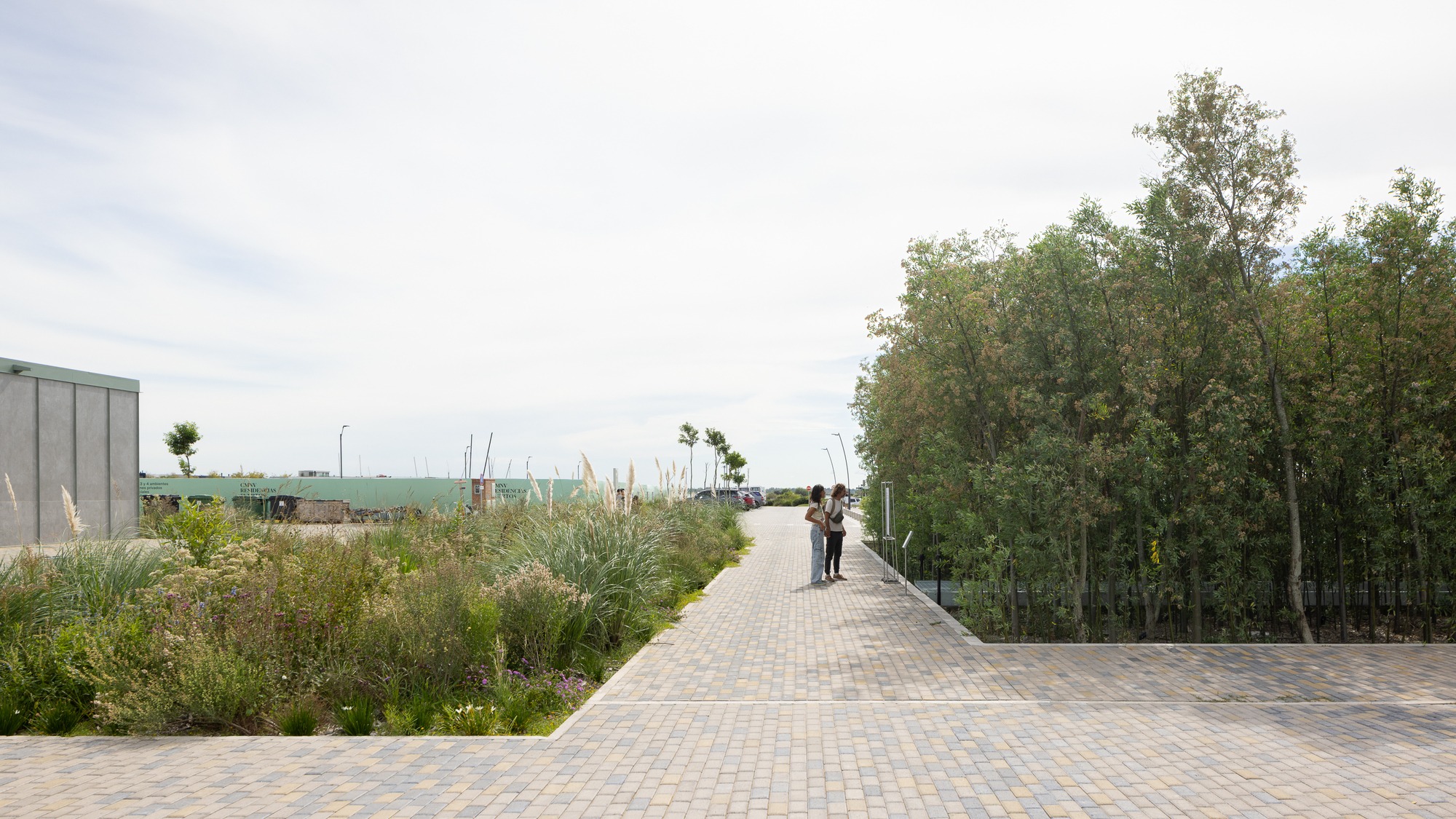
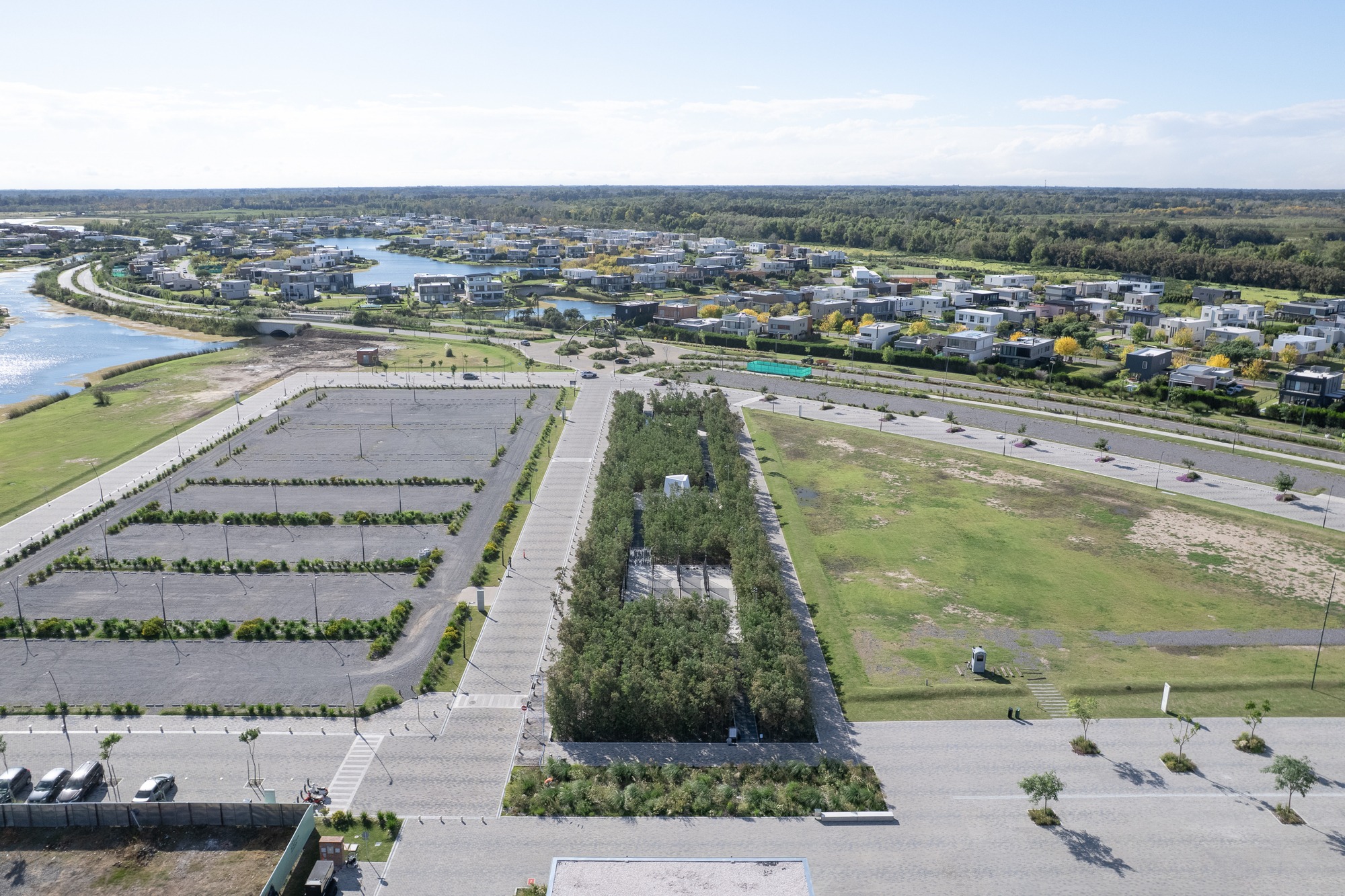
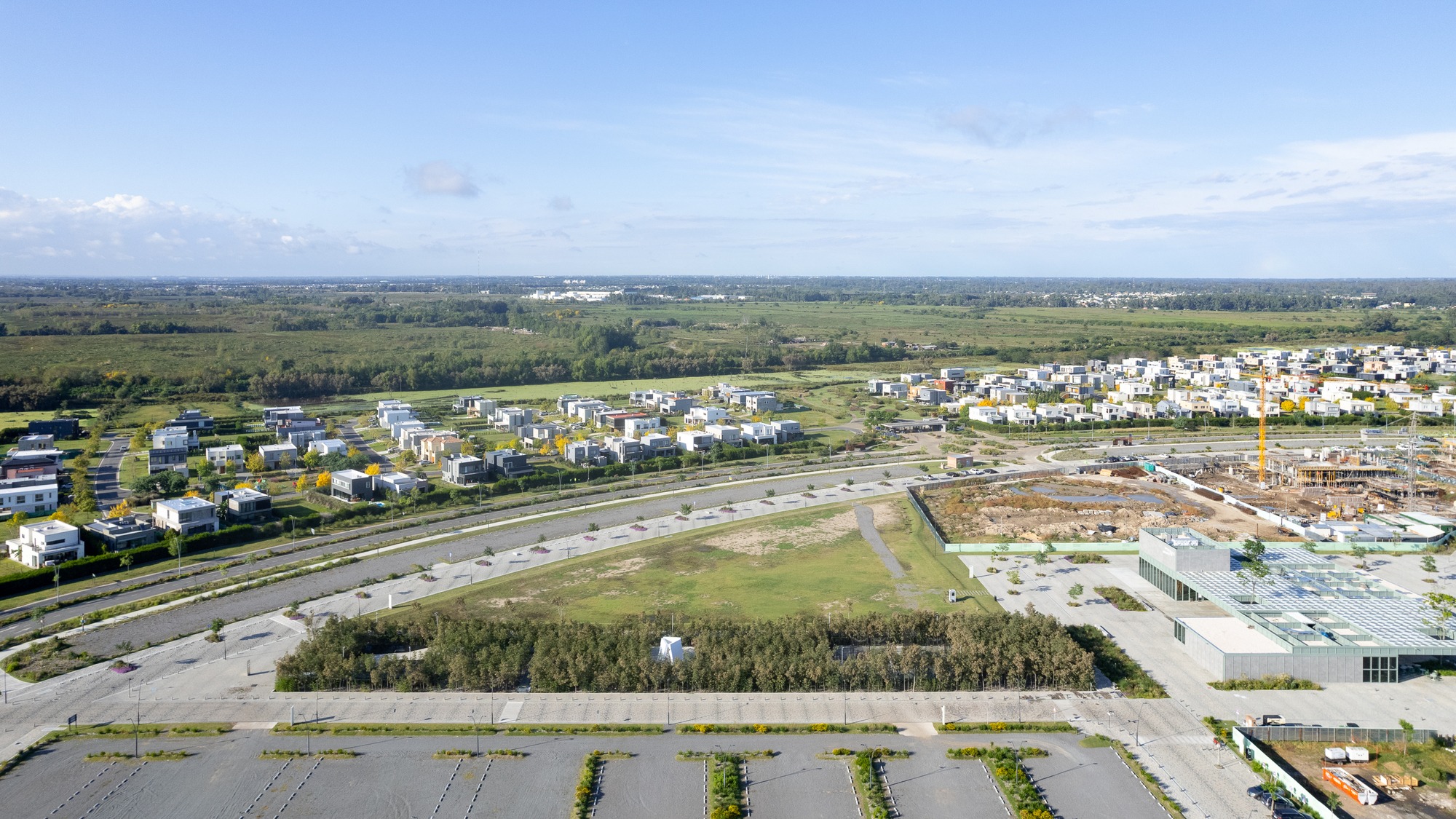
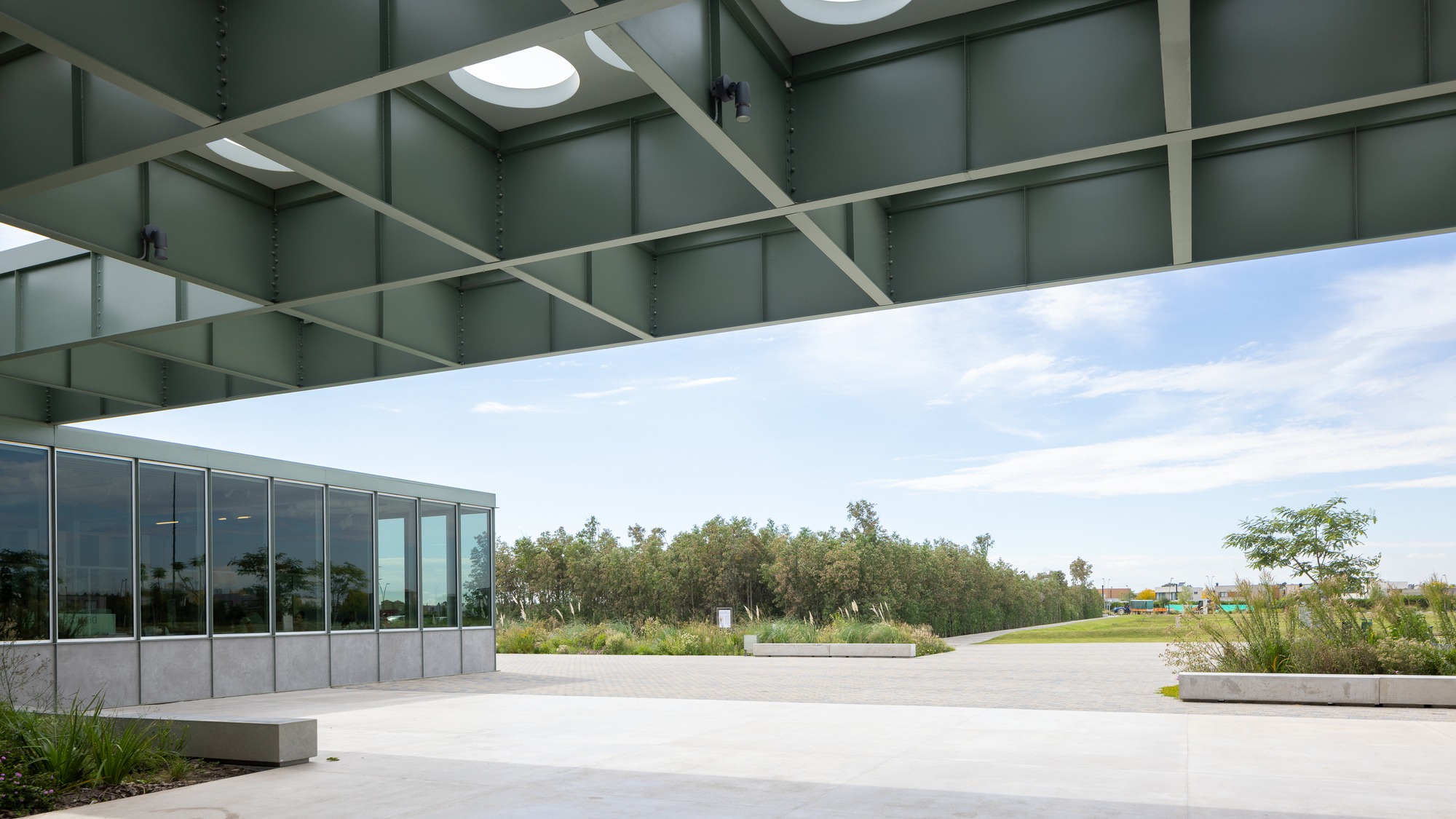

Puertos is a city of two thousand five hundred hectares located within the Escobar party in the Province of Buenos Aires. As part of an extensive work process, Bulla has developed there an active, environmental, and cultural suburban landscape project, a pragmatic laboratory on how to rethink the atmospheric life in harmony with people and ecology. Within this new urbanity, a new cultural milestone emerges: the new Malba Puertos, a suburban public museum that has six exhibition rooms: three indoors and three outdoor galleries designed by Bulla, aimed at creating a pathway within a grove of planted alders.
The first phase of the project was related to the exploration of the site and the discovery of entire woods of Tessaria integrifolia, a species popularly known as river alder. This discovery initiated a process of trial and research alongside a team of scientists and conservation and soil specialists. Consequently, samples were taken from various locations, soil studies were conducted, and subsequently, efforts began to reproduce and rescue them using various methods, techniques, and conditions. The species was measured and observed biweekly under different stimuli. Two campaign nurseries were set up for two thousand five hundred river alders, where it was verified that the species has the particularity of growing very quickly, allowing for a dense mass in a short period of time.
The research process concluded with the design of the Malba Forest: a project defined as a vegetative frieze of one hundred fifty meters that weaves through the buildings, dialogues with them, and is part of an urban operation. The artificial alder grove contains three generic and flexible rooms of two hundred, one hundred, and fifty square meters respectively, linked by a system of floating metal walkways, allowing visitors to walk while looking down at the ground. Each of the three rooms is a clearing within a dense forest of two thousand square meters that evokes the sensation of a woodland that has always been there, and now becomes a cultural agenda for Puertos, with an educational and experiential focus.
The Forest is defined as both a hydraulic and ecological infrastructure. A large vessel of seven thousand five hundred cubic meters of a soil specifically designed to emulate conditions of flooding, water flow, and salinity, in which this species lives and develops. An infrastructure that fills and empties with water simulating the pulsations of origin, through irrigation and drainage pumps. This new highly technical soil protects the alder from the nearby salty water table. This grove of two thousand two hundred specimens of local genetics and no commercial value functions as the first artificial alder grove: a displaced species that returns to its place of origin, regenerating part of the original matrix of the site. A systemic and dense planting was designed, combining specimens of various age ranges to accompany the original social composition of these botanical populations.
The first artificial alder planted, a sui generis work that revalues a relictual ecosystem of the region, a landscape that was abundant in the past and is now in retreat. The result is a dynamic wooded park, full of sounds, colors, and a flora and fauna that make it vibrant and attractive. The three rooms float above this mantle of humidity and freshness. Each room supports up to three tons to accommodate various cultural activities. The design of a modular system of monolithic flooring with aluminum joints allows for illumination from below the clearing in the forest.
The walkways float supported by a longitudinal beam. This museum forest combines an urban perspective of public space with an ecosystemic and environmental view of a possible future. A future where science and creativity collaborate towards a common goal, where research is a key part of our innovation processes, and where the landscape reclaims its leading role in cities, which is to reinvent the spatial life that exists between the ground and the sky.
from archdaily