건축은 형태에 관한 것이 아니다. 그것은 공간, 빛, 그리고 그 안에서 살아가는 사람의 경험에 관한 것이다. - 페터 춤토르
 |
 |
 |
자연과 건축의 고요한 상호작용 kooo architects - House in Narutaki, Kyoto
풍경 속에 스며든 수키야 건축
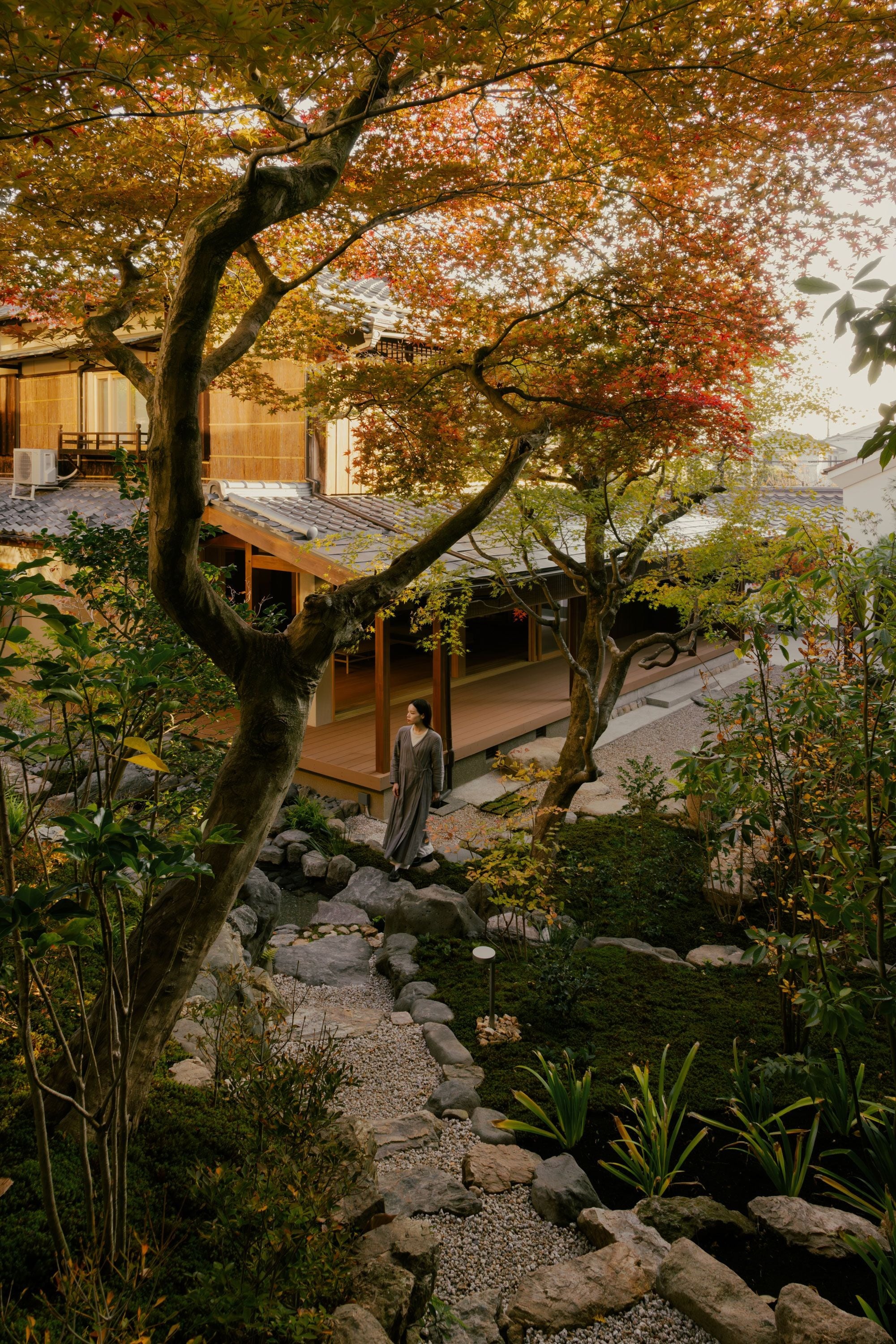
교토 외곽 숲이 우거진 산자락에 나루타키 주택이 자리 잡고 있다. 쿠 아키텍츠가 레노베이션한 수키야 양식의 주거 공간이다. 이 프로젝트는 주변 환경을 거스르며 억지로 존재감을 내세우지 않는다. 대신 기존 주택의 질서를 섬세하게 다듬어 건축과 자연이 고요하게 상호작용하도록 이끈다. 정원과 산의 배경, 은은한 물의 존재는 단순한 풍경화에 머물지 않는다. 이는 거주자의 평범한 일상에 스며드는 핵심 요소다. 흙벽과 돌, 그리고 나무가 전하는 소박한 촉감을 타고 집 안 깊숙한 곳까지 잔잔하게 공명한다.
물소리를 따라 이어지는 두 채의 집
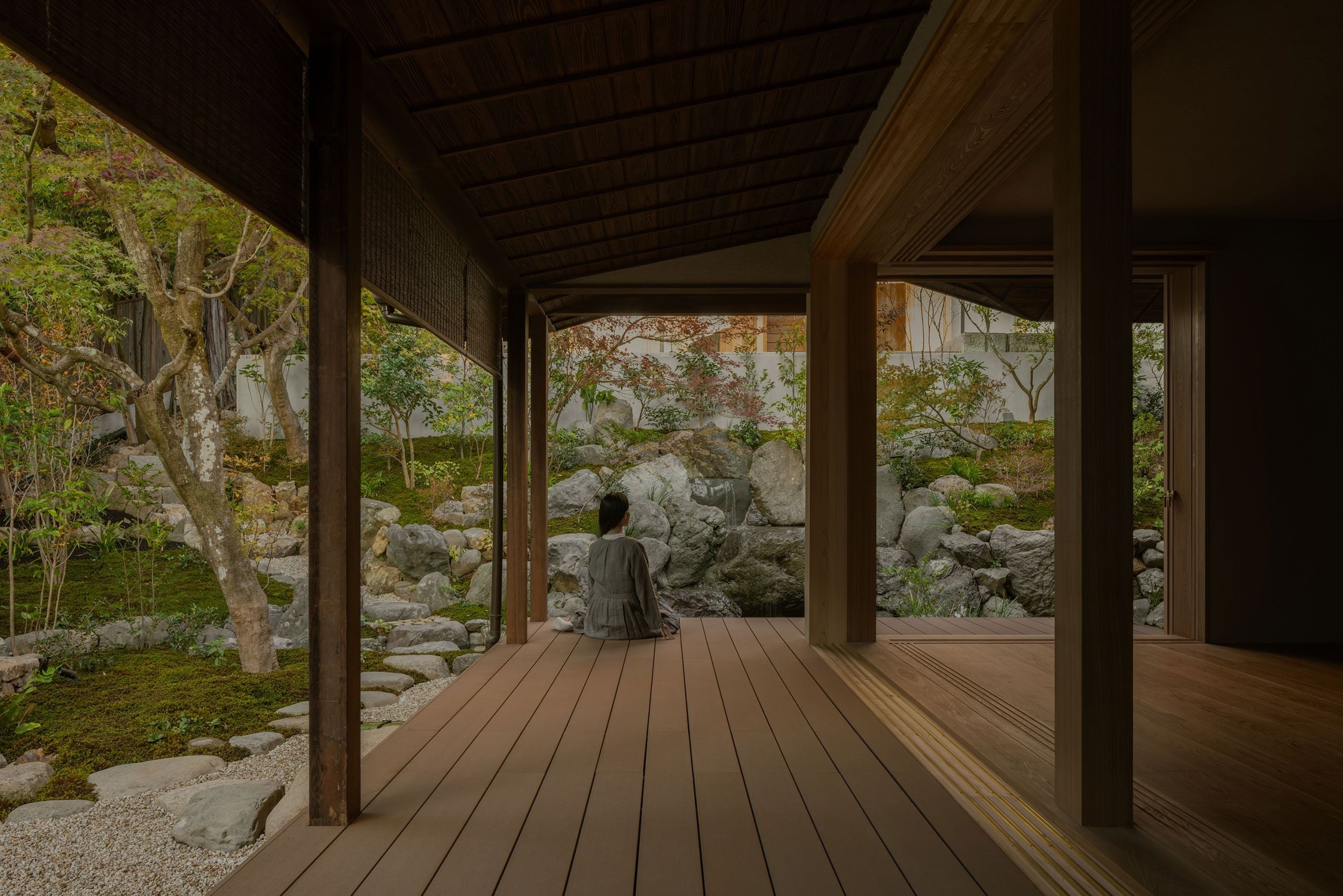
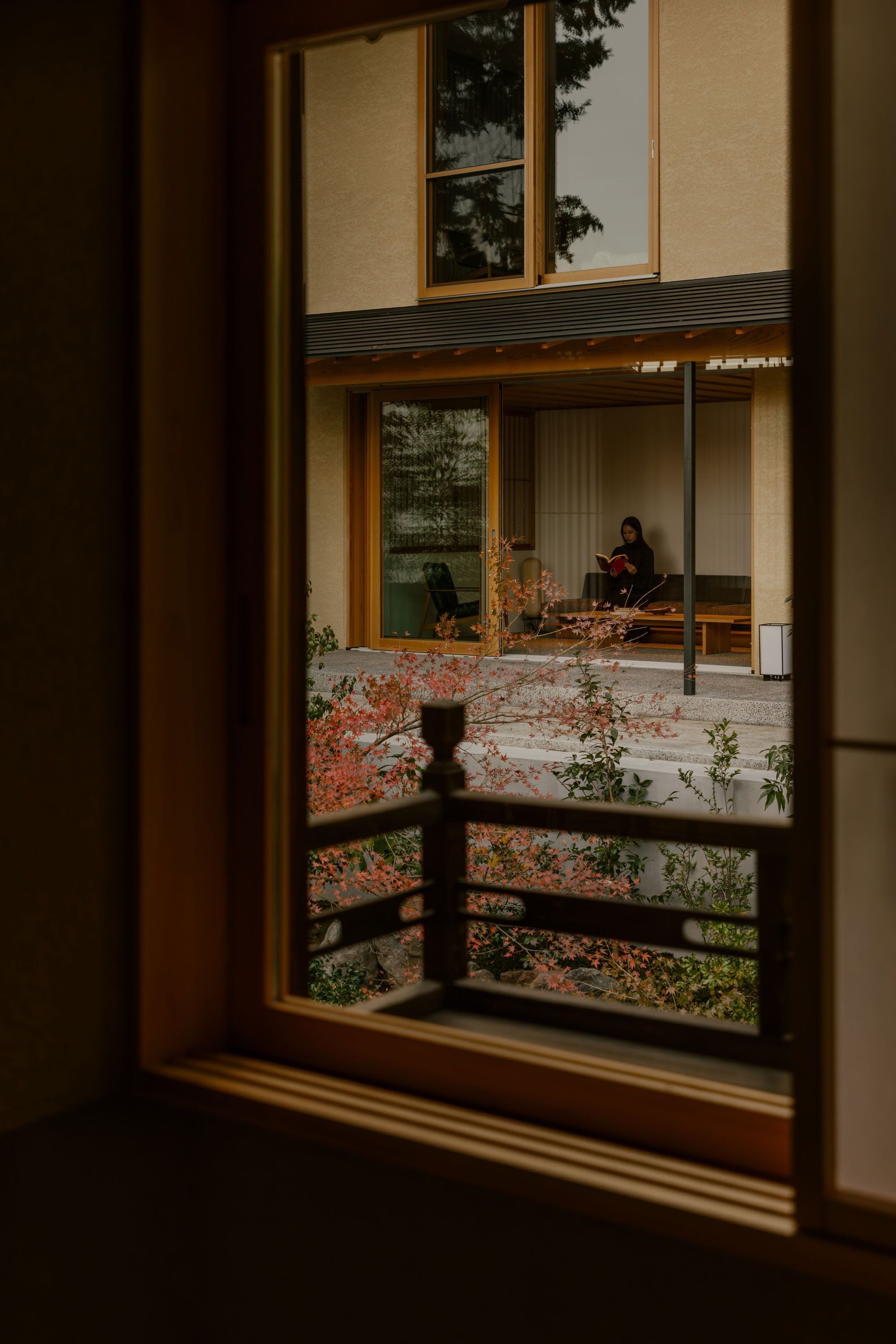
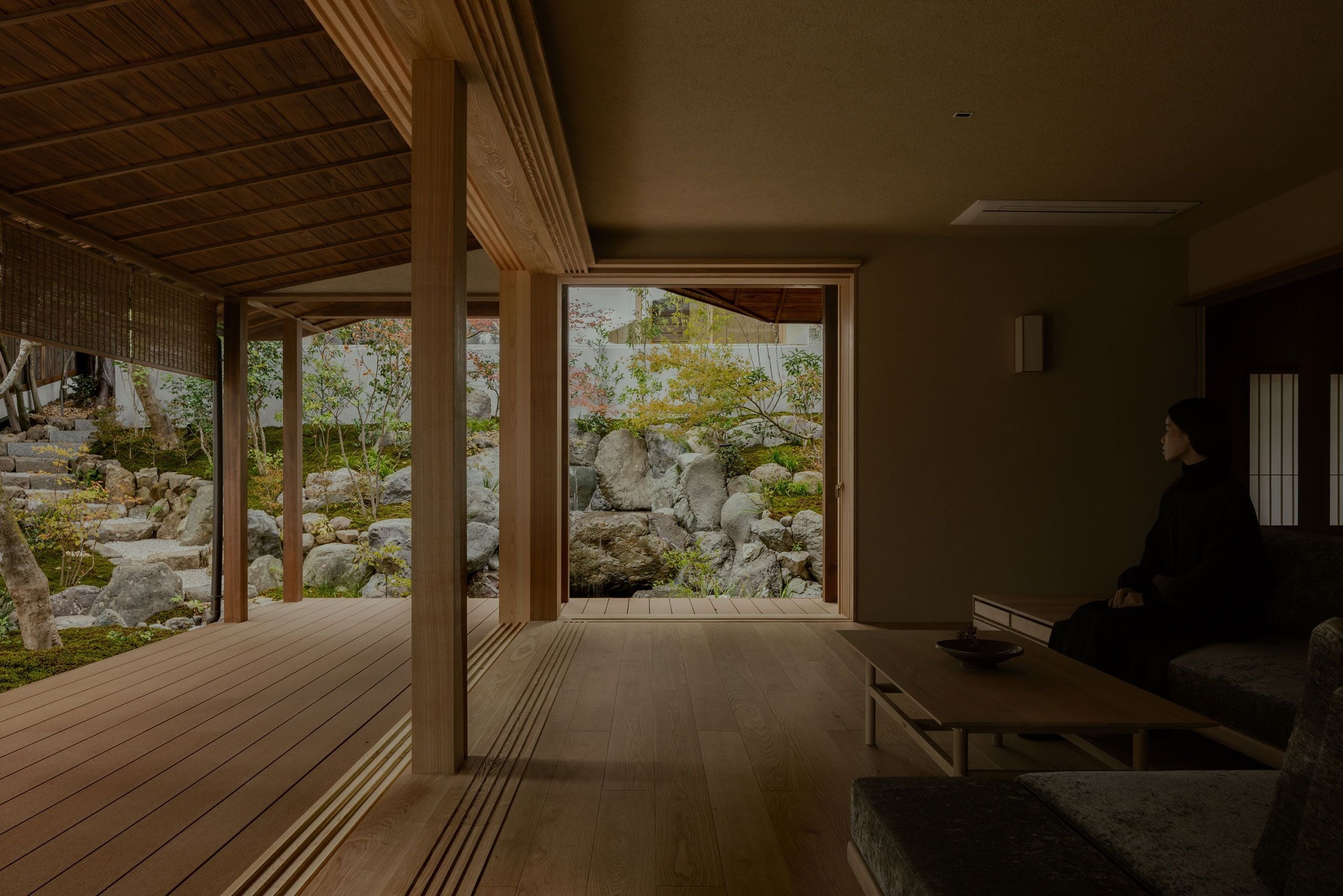
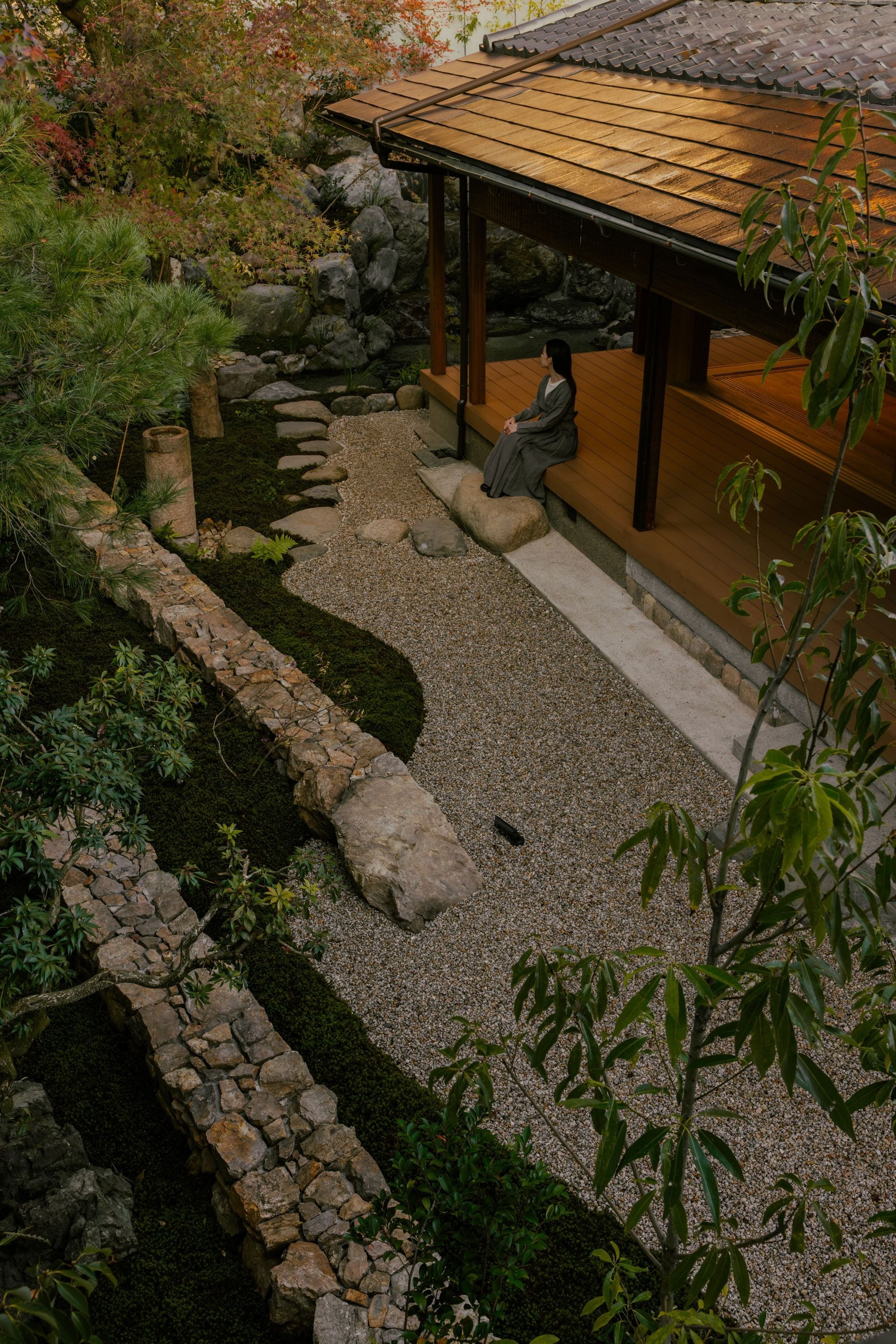
이 주택은 2층 규모의 본채와 별채로 나뉜다. 그리고 세심하게 가꾼 정원이 두 공간을 자연스럽게 하나로 묶어준다. 대지의 단차를 활용해 두 건물 사이에 폭포를 새롭게 조성했다. 어디서든 바라볼 수 있는 물의 흐름은 시각적인 중심을 잡아준다. 쉼 없이 흐르는 물소리와 수면에 일렁이는 빛은 일상 속으로 고요하게 흘러든다.
경계를 허무는 흙바닥 통로, 도마
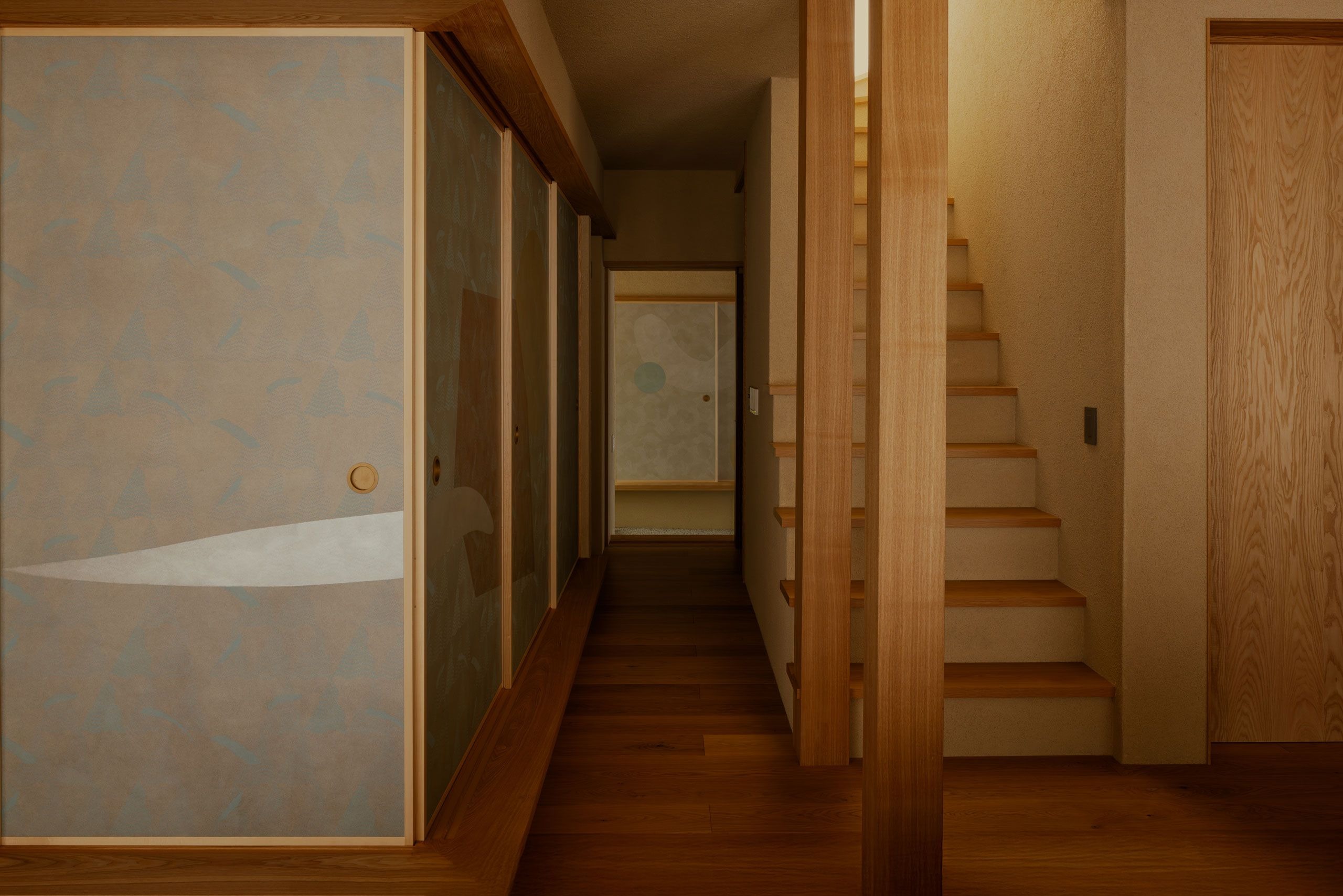
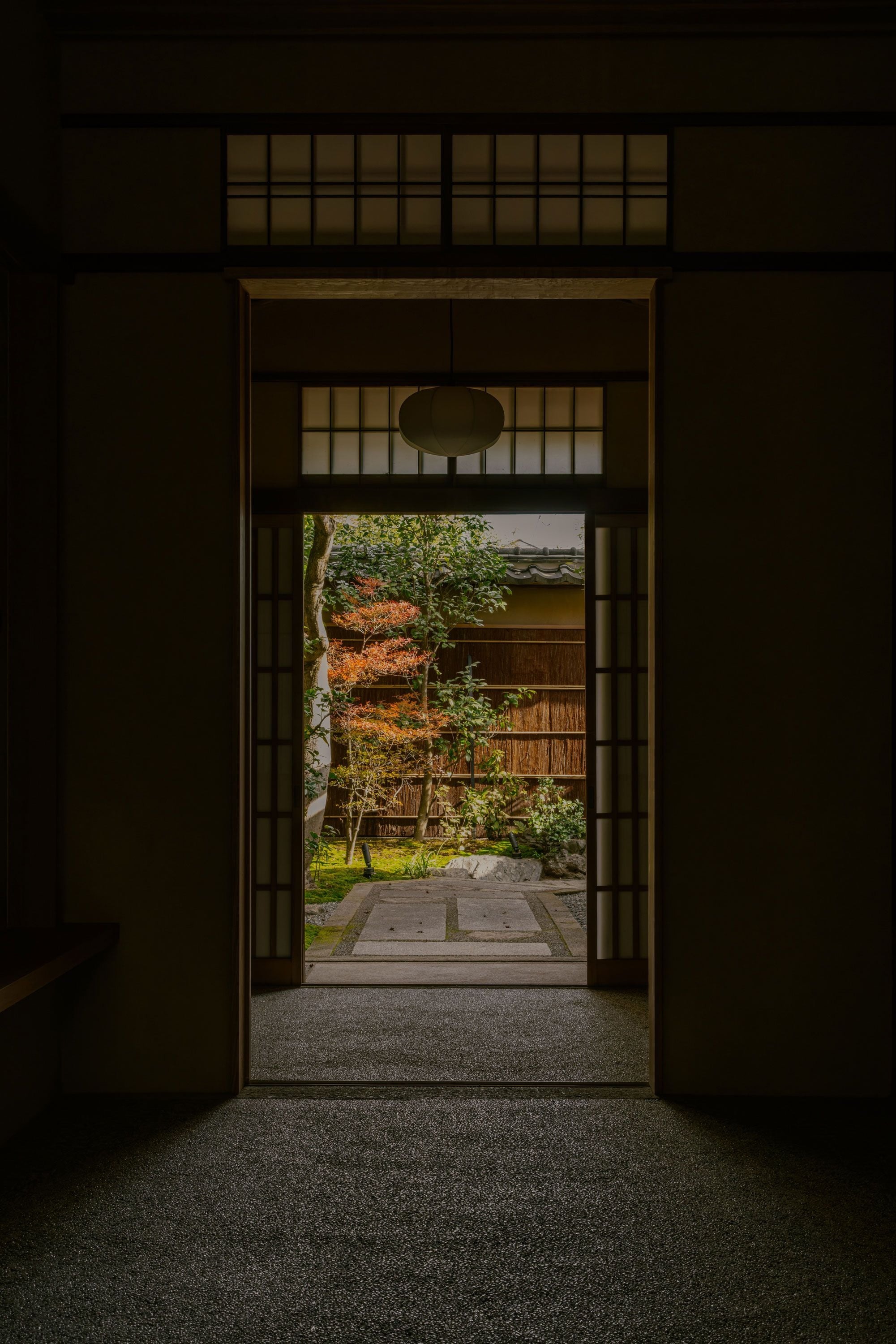
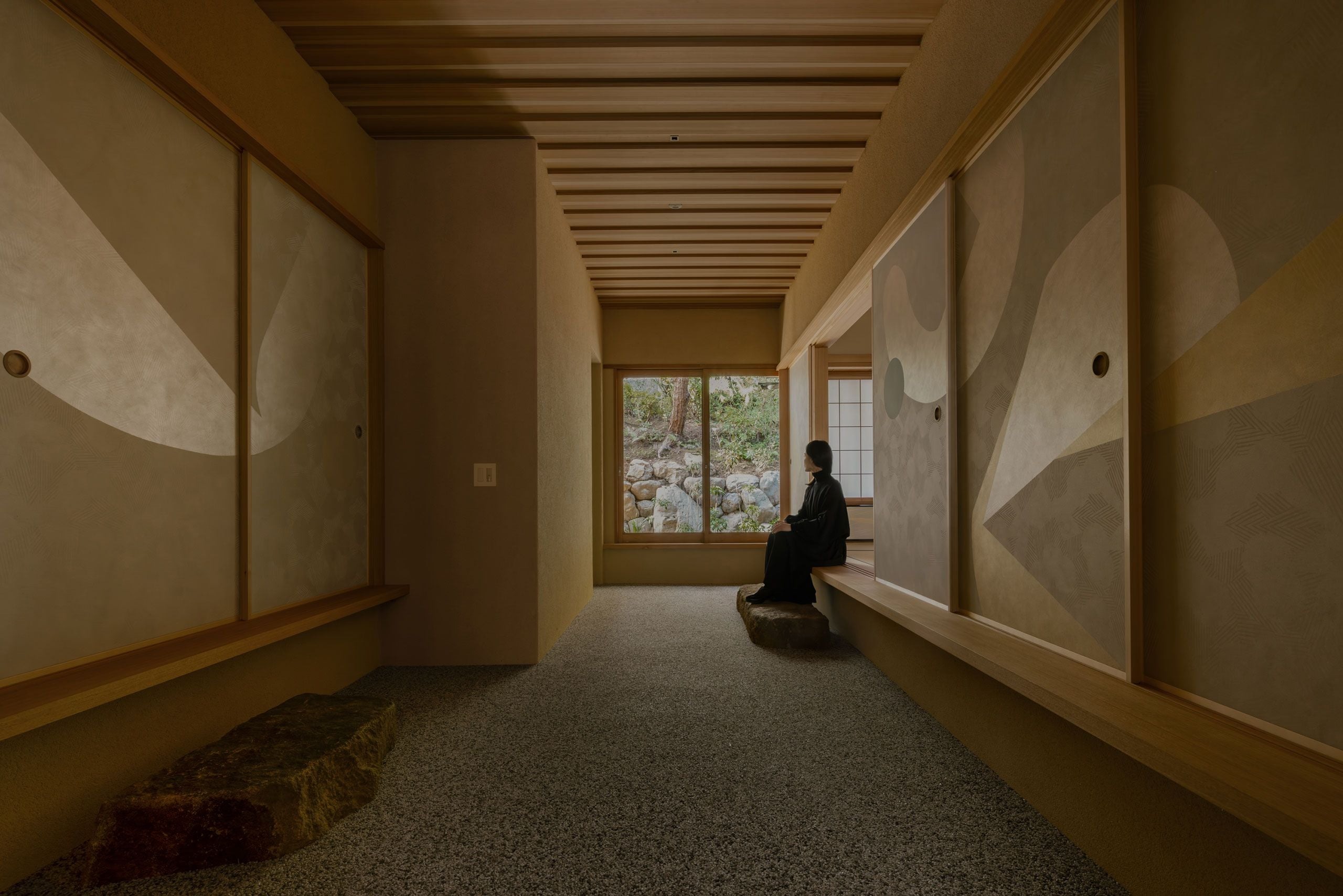
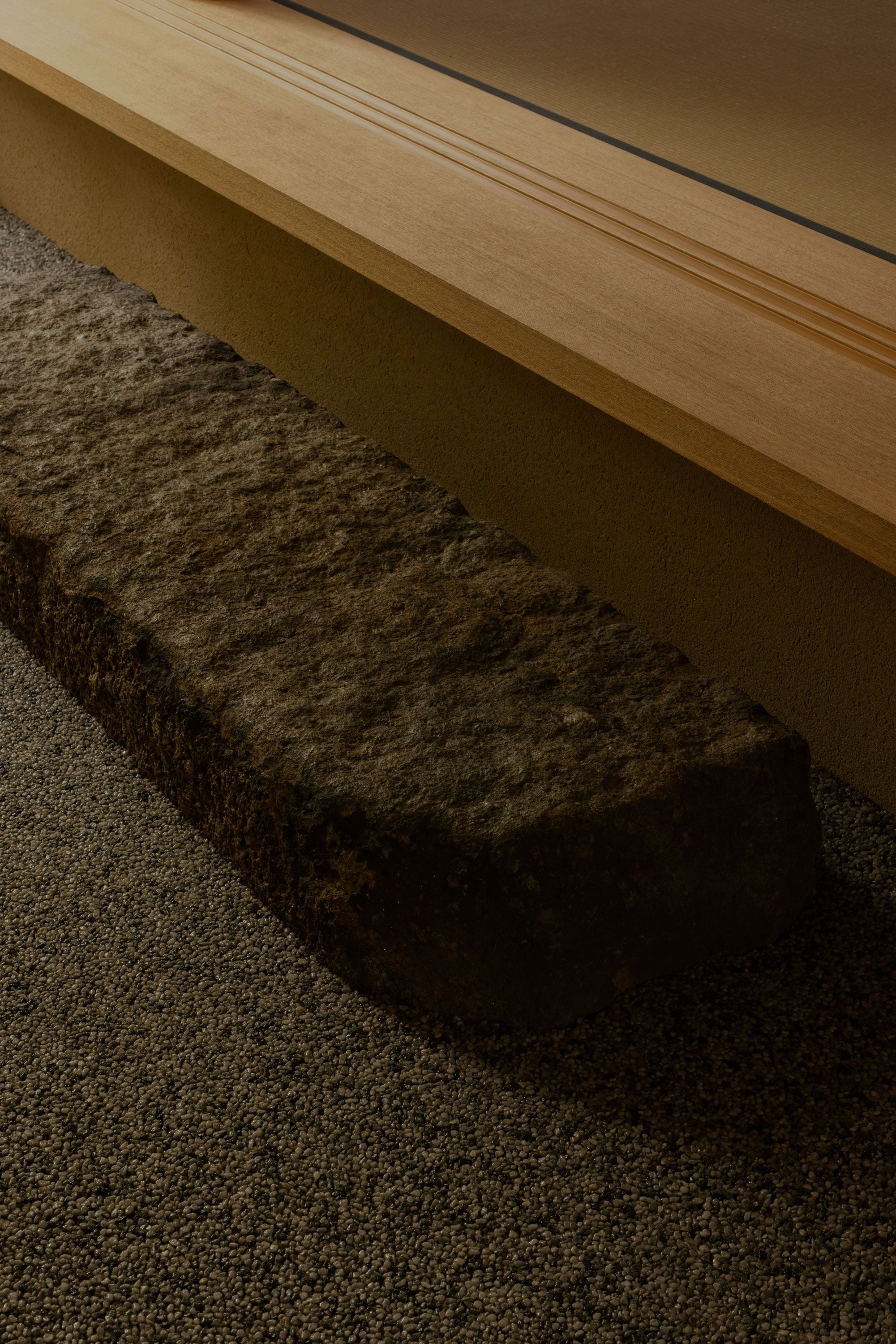
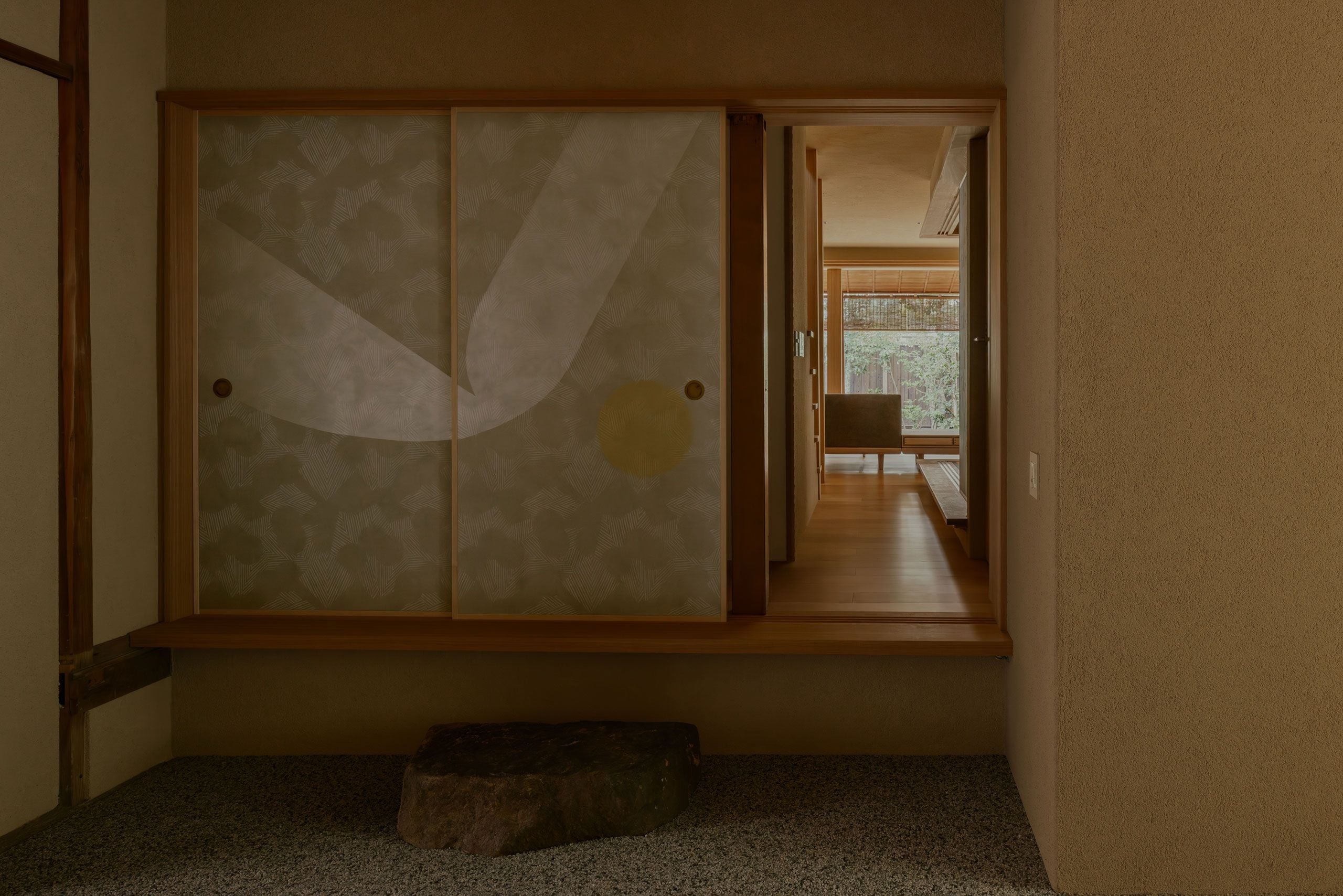
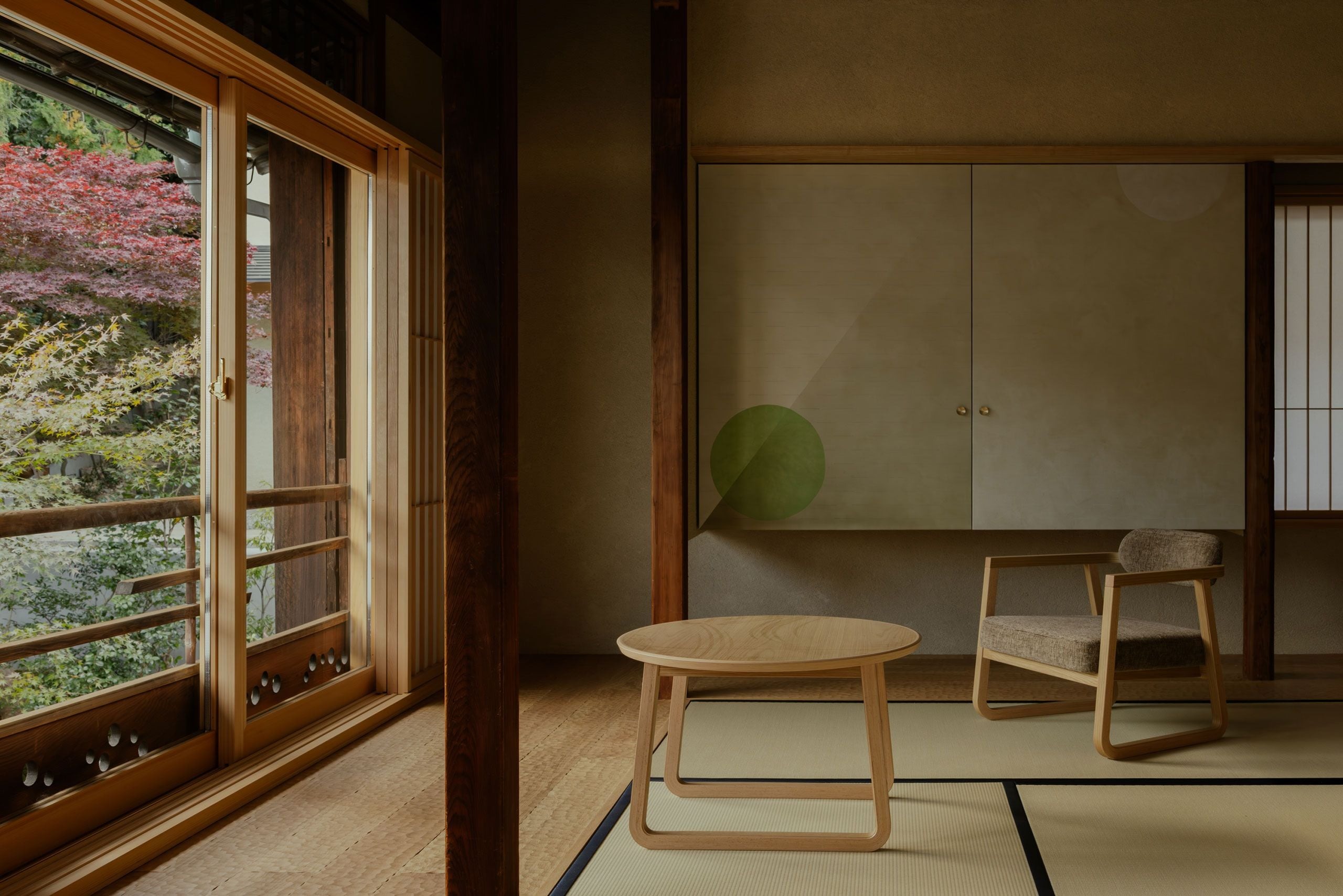
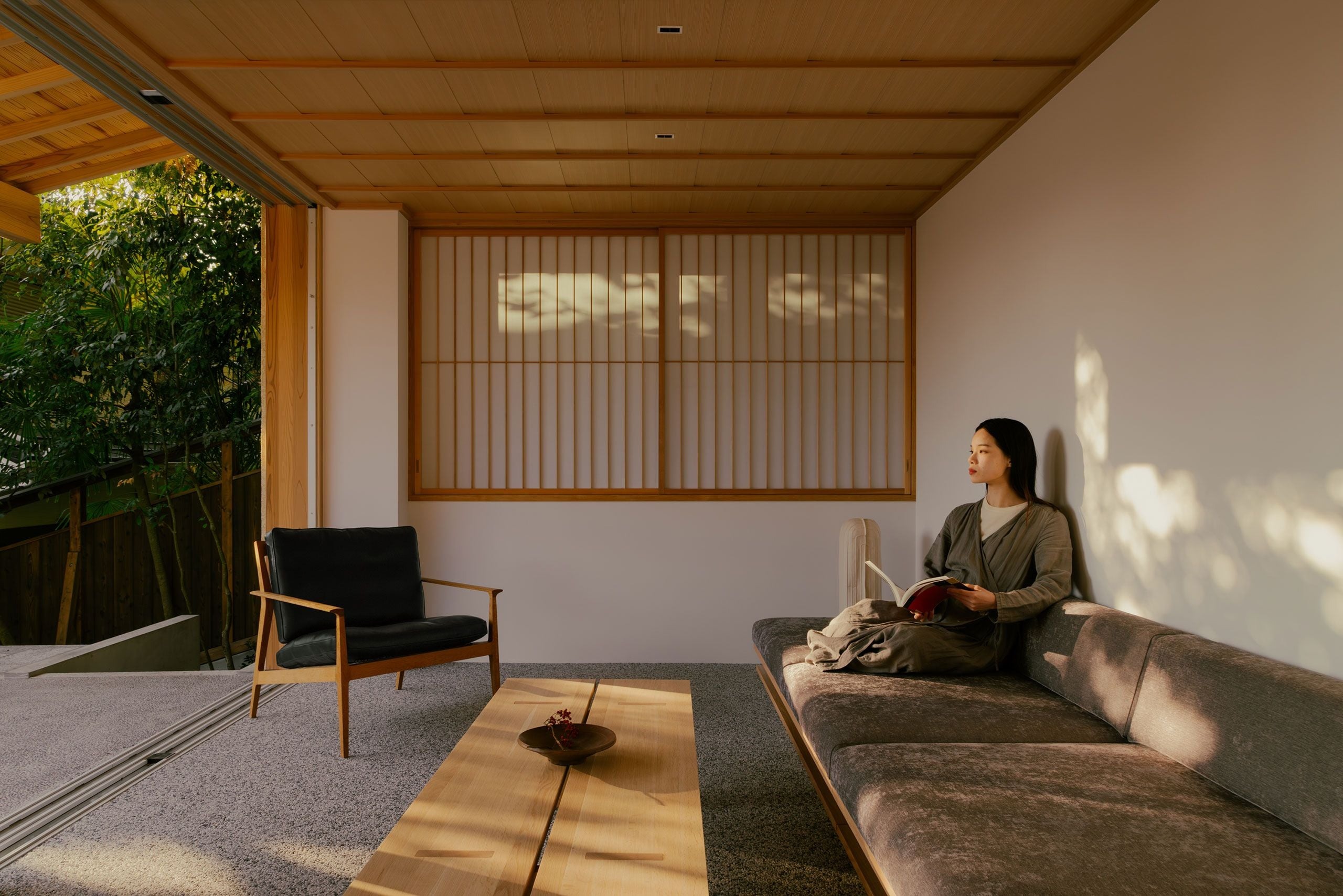
본채 1층을 가로지르는 흙바닥 통로, 즉 도마에서 진정한 공간의 변화가 시작된다. 전면의 돌길과 후면의 정원을 잇는 이곳은 단순한 복도가 아니다. 일상 공간과 손님을 맞는 공간을 구분하는 든든한 축이자, 외부에서 내부로 들어설 때 분위기를 바꿔주는 감각적인 경계선이다. 발밑에 깔린 골재 바닥은 바깥 길에서 실내로 매끄럽게 이어져 안팎의 경계를 흐릿하게 만든다. 여기에 더해진 기하학 무늬의 맹장지는 공간에 차분한 리듬감을 부여한다. 이는 수제 인쇄 기법을 현대적으로 풀어낸 노다 프린트 스튜디오의 작품이다.
툇마루 너머로 확장되는 일상
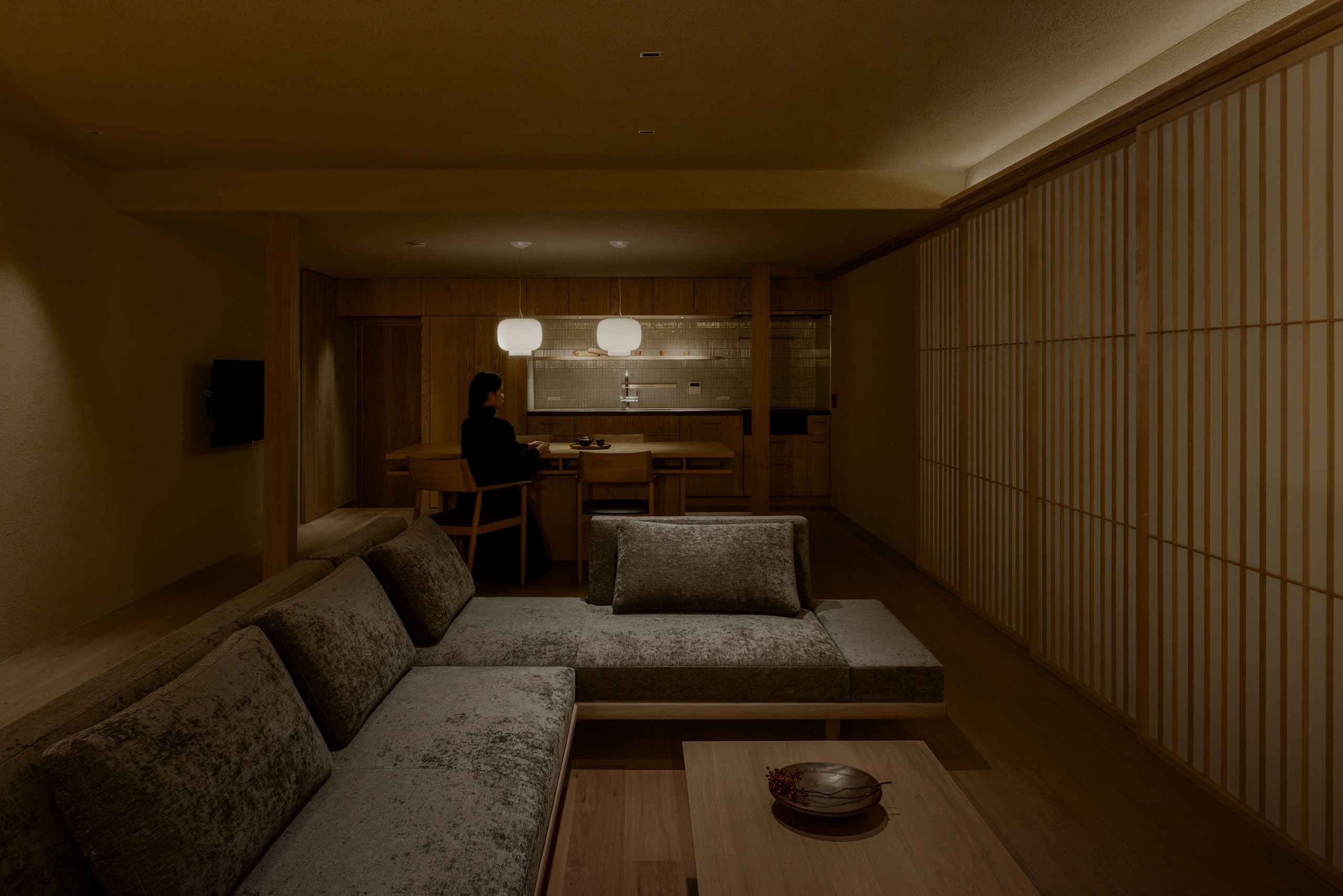
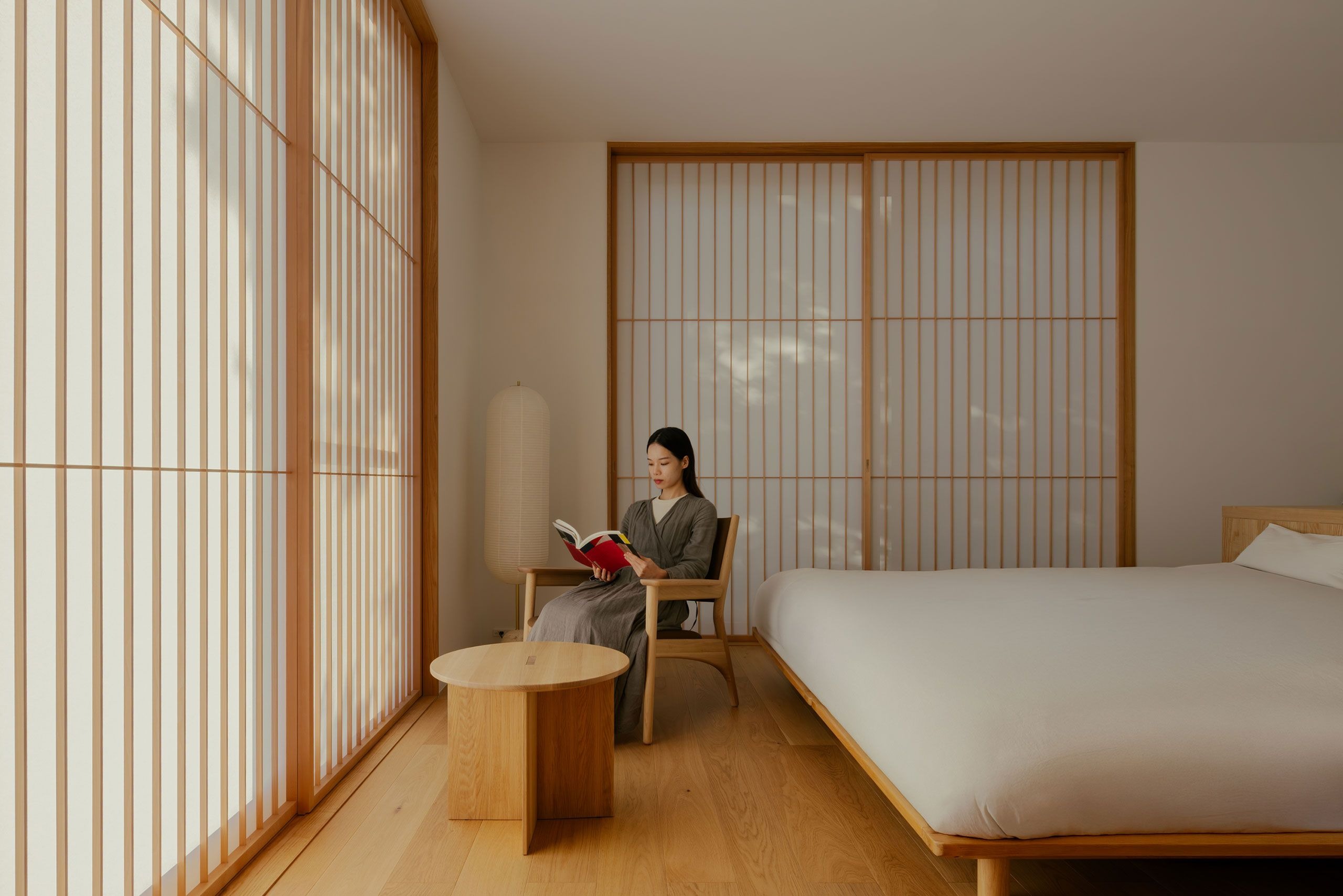
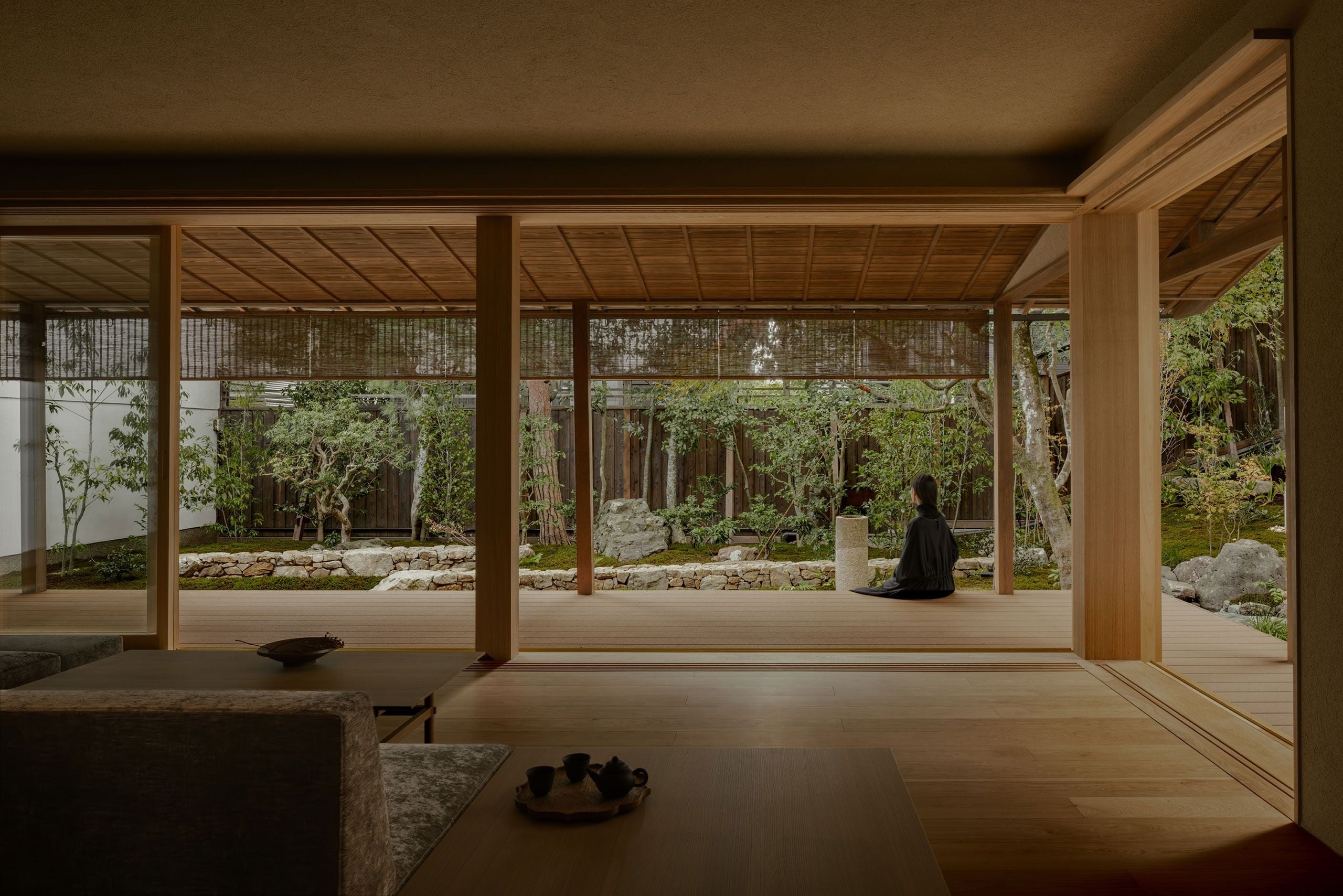
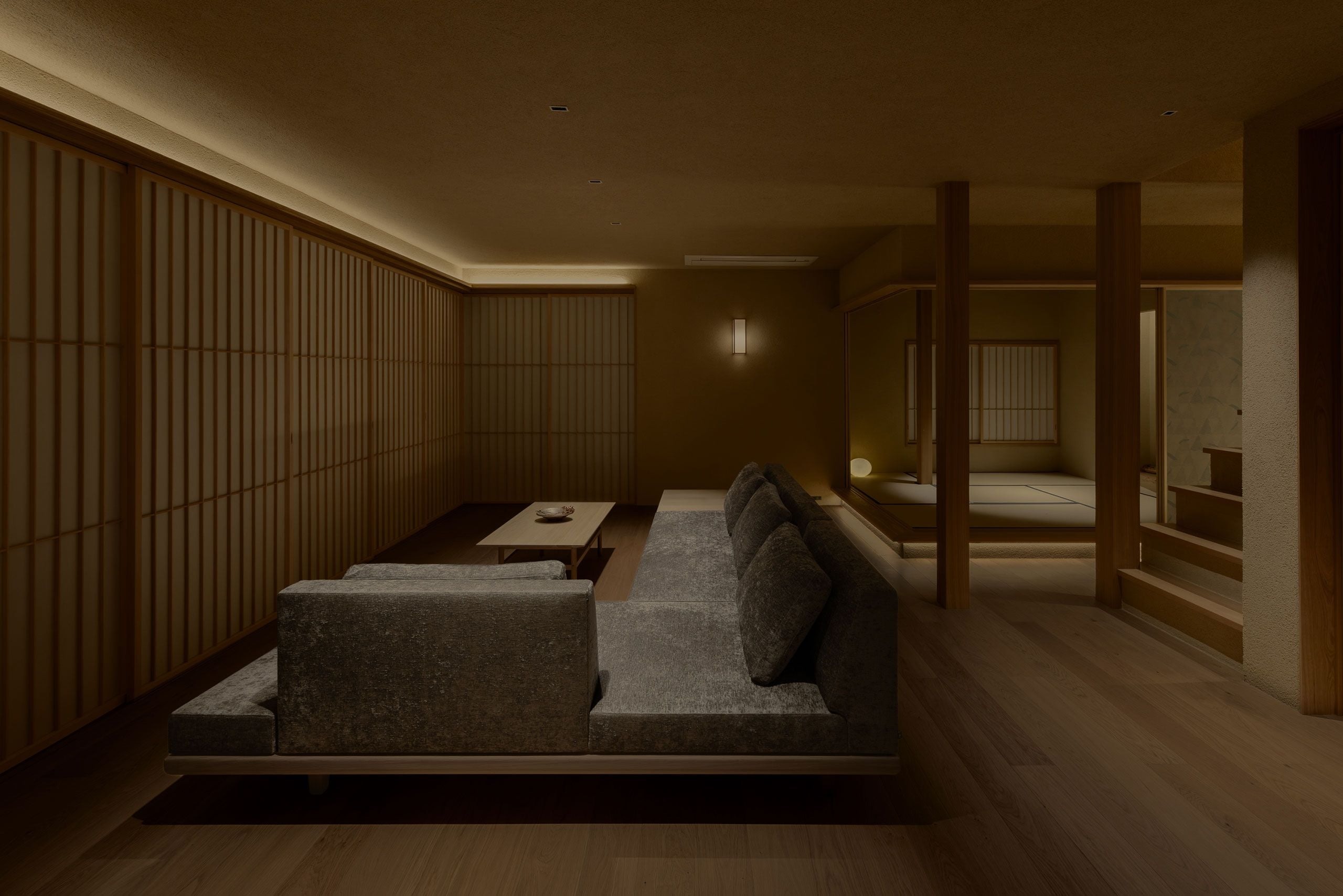
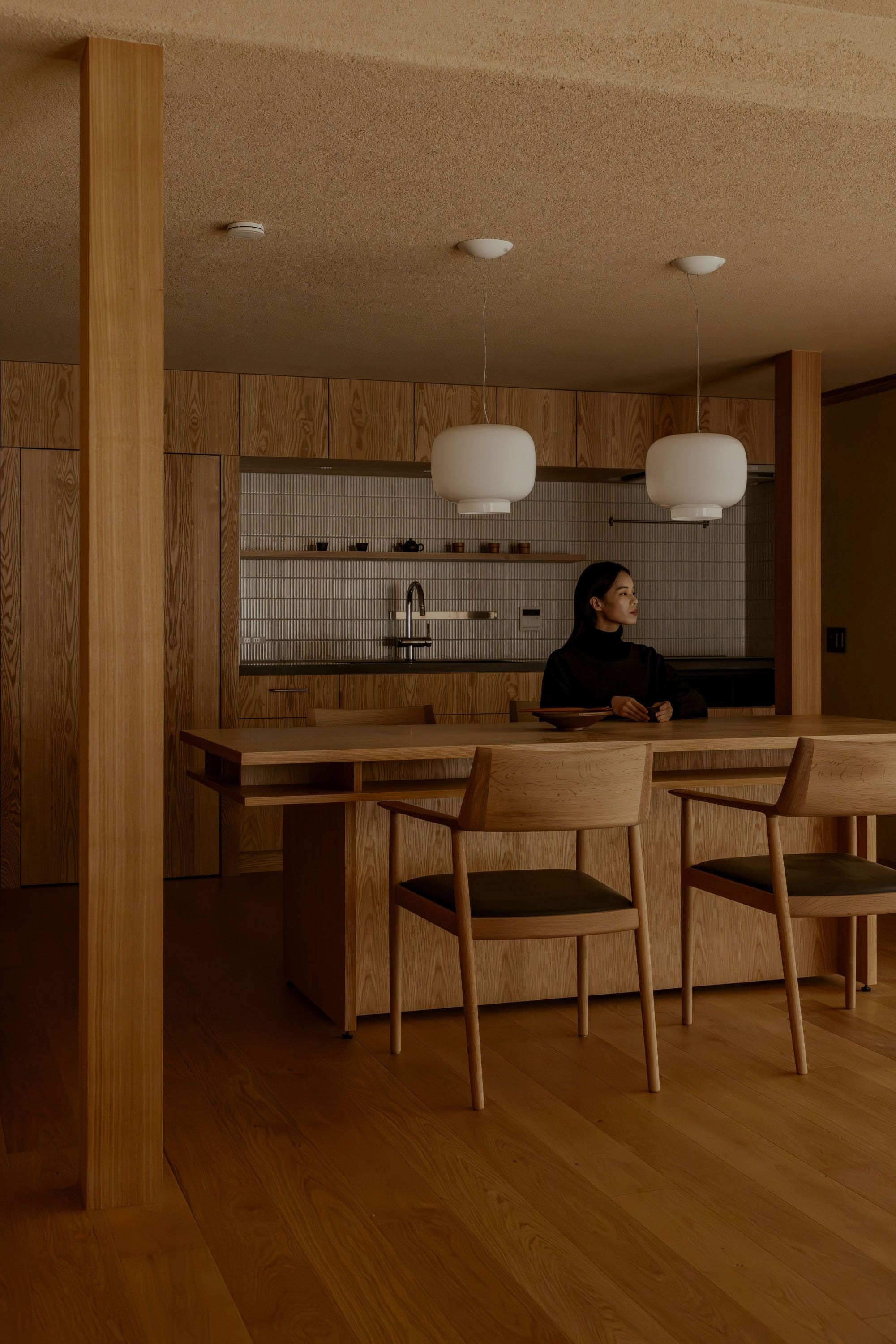
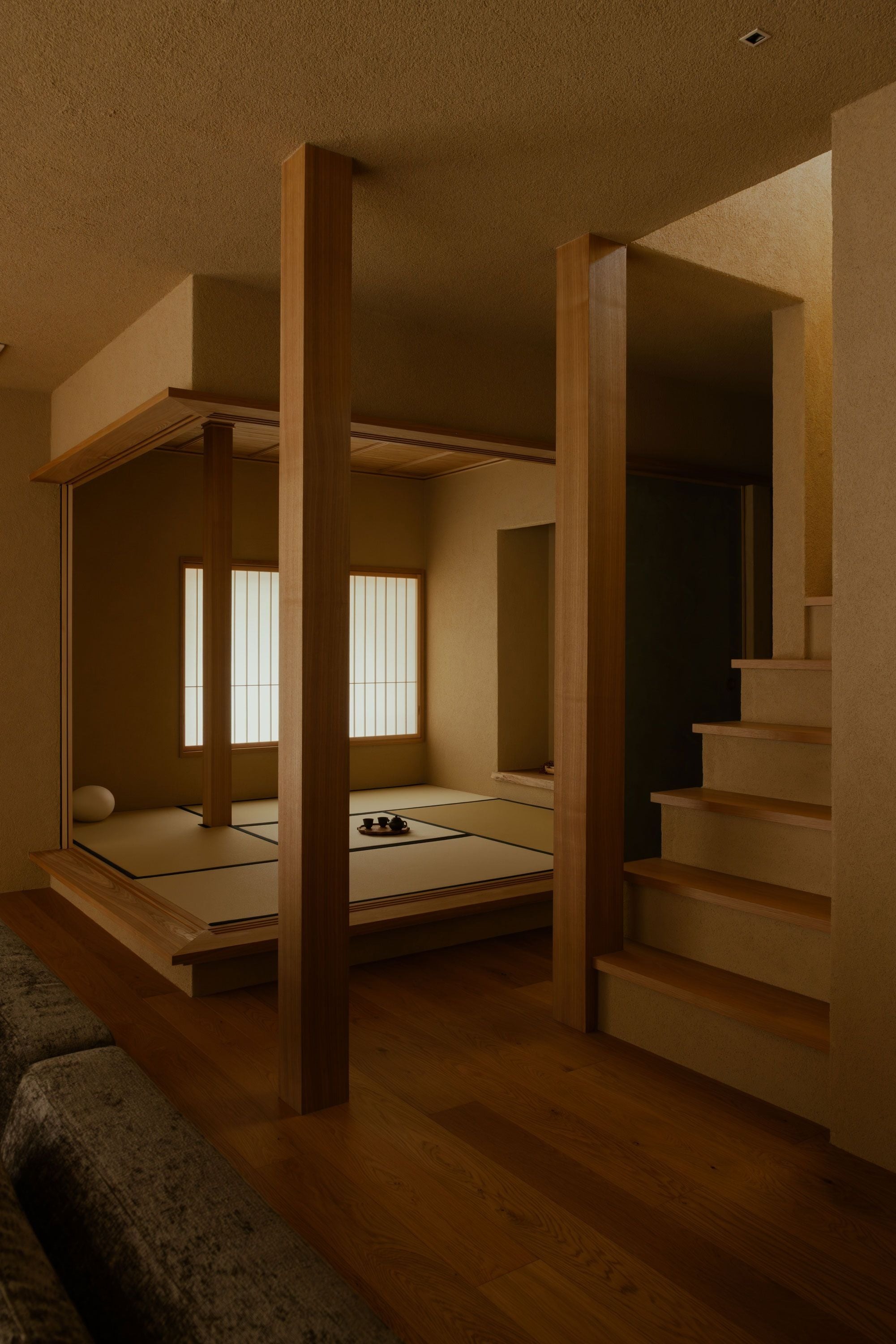
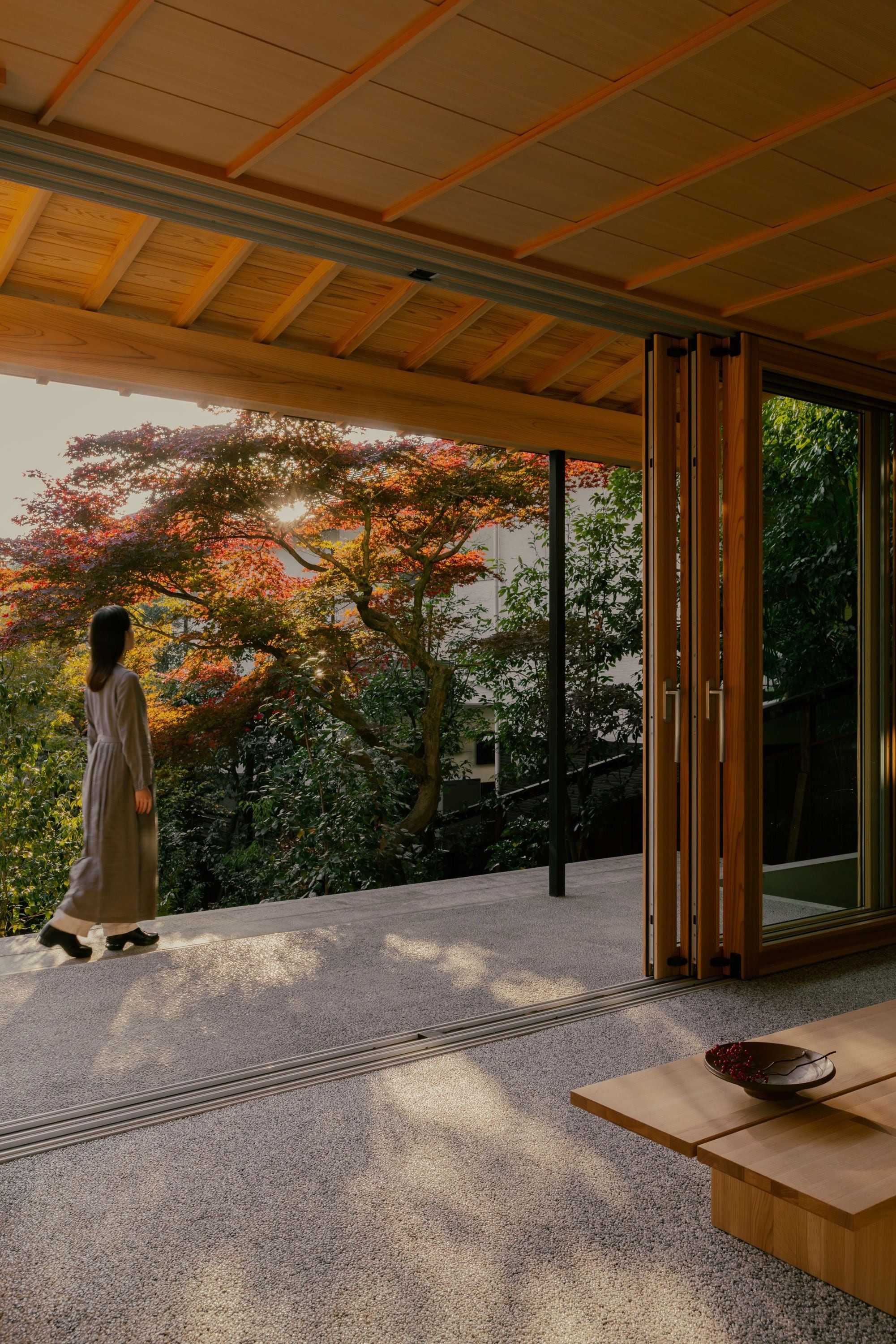
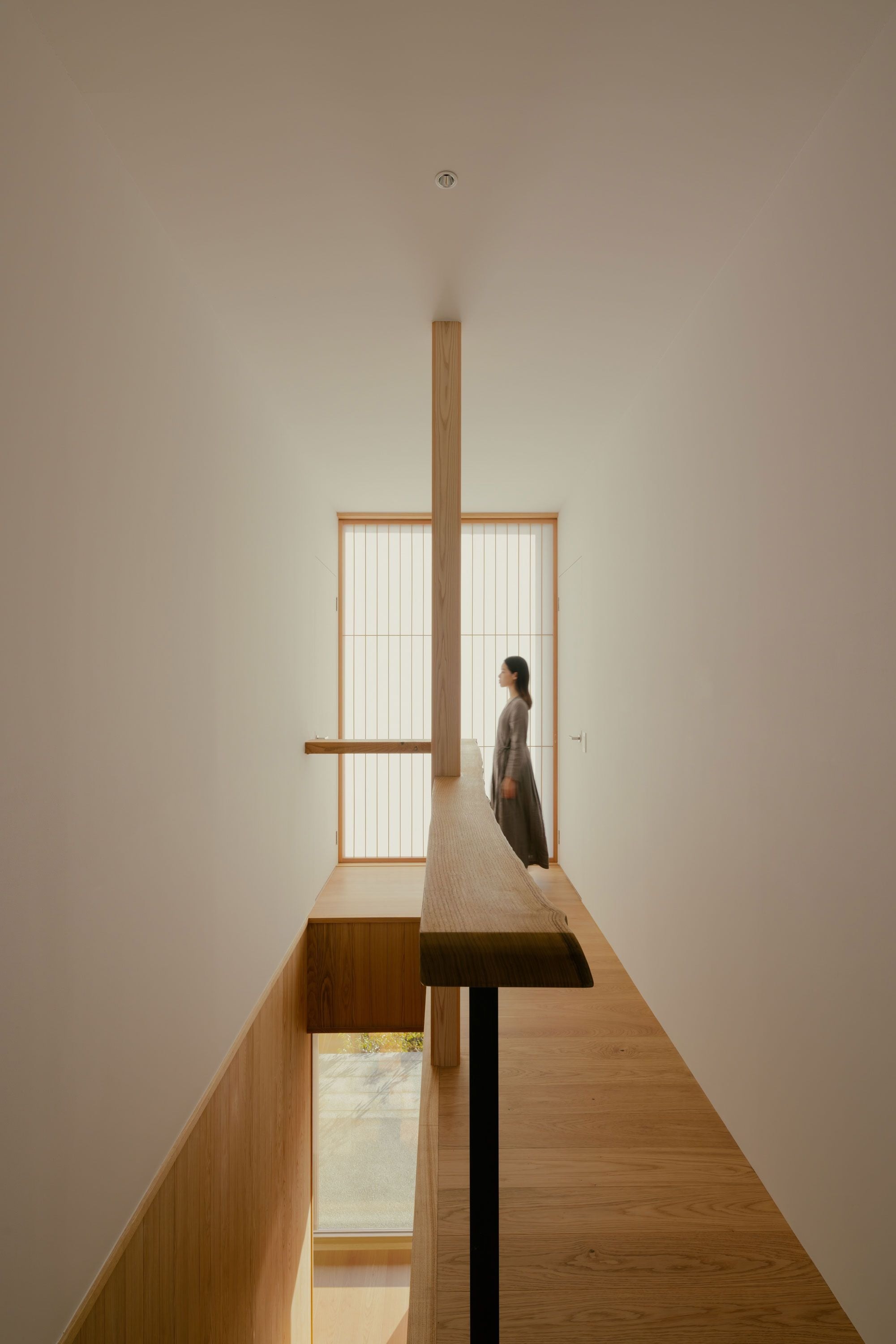
통로 한쪽에는 다다미 방을 터서 만든 넓은 응접실이 손님을 맞이한다. 반대편 거실과 다이닝 공간은 천장 높이의 미닫이문을 통해 정원과 활짝 마주한다. 문을 열어젖히면 실내는 일본 전통 툇마루인 엔가와를 지나 정원 깊숙이 뻗어 나간다. 주변 방들 역시 미닫이문으로 쉽게 여닫을 수 있어 상황에 따라 공간을 마음껏 넓히거나 좁힐 수 있다. 계단을 올라 2층으로 향하면 푸른 나뭇잎이 창공을 채우는 아늑한 침실이 기다린다.
빛과 소재가 빚어내는 촉각적 깊이
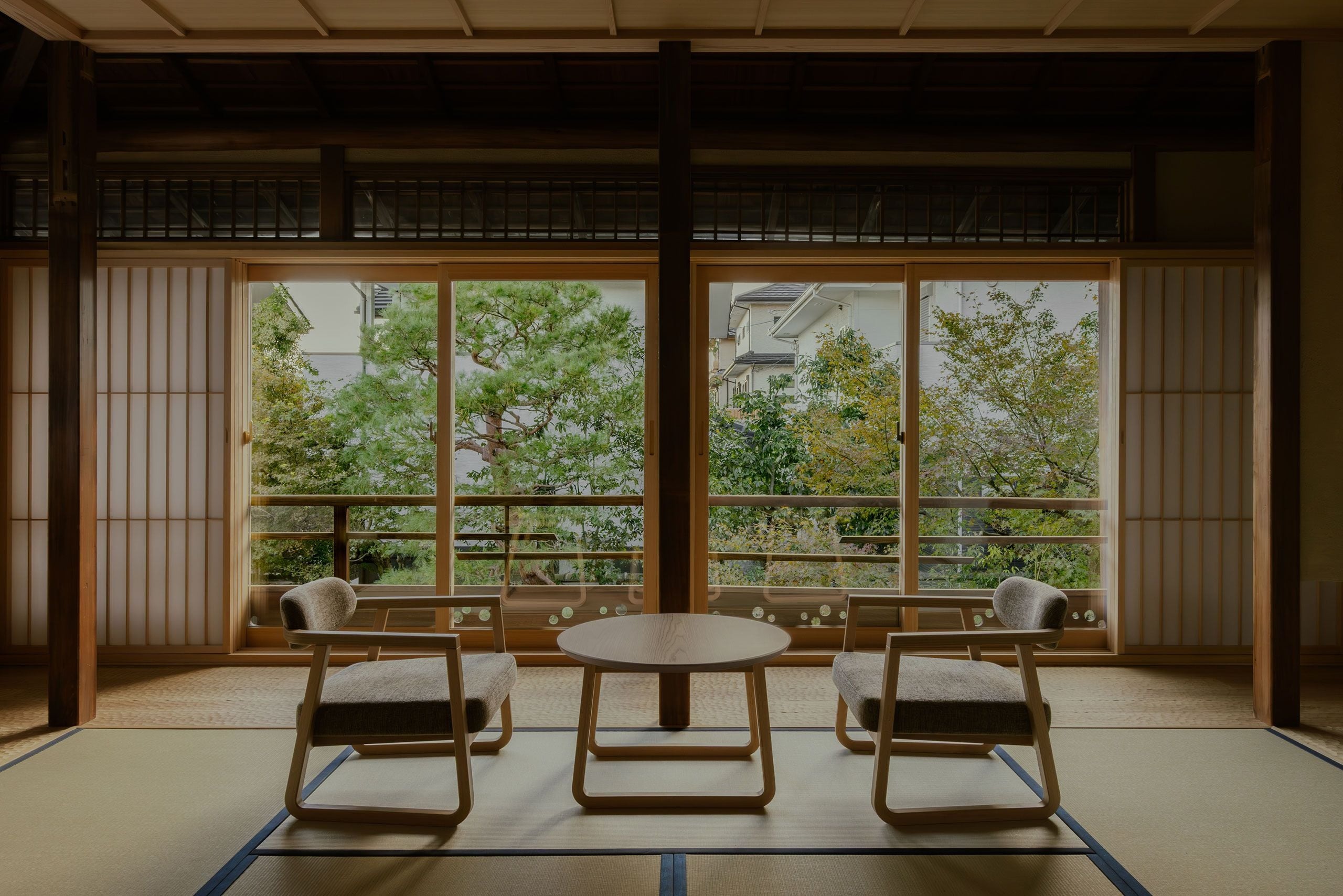
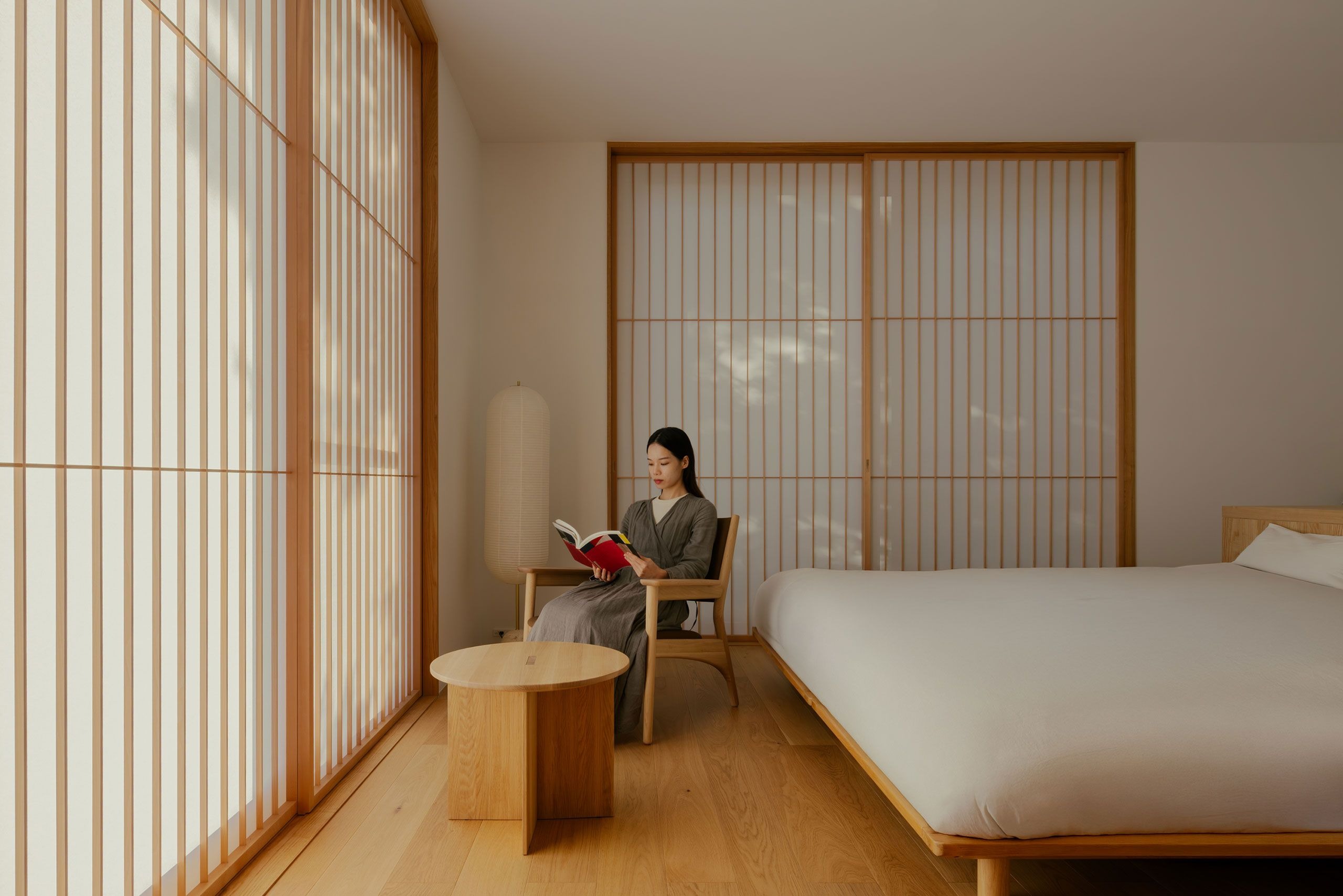
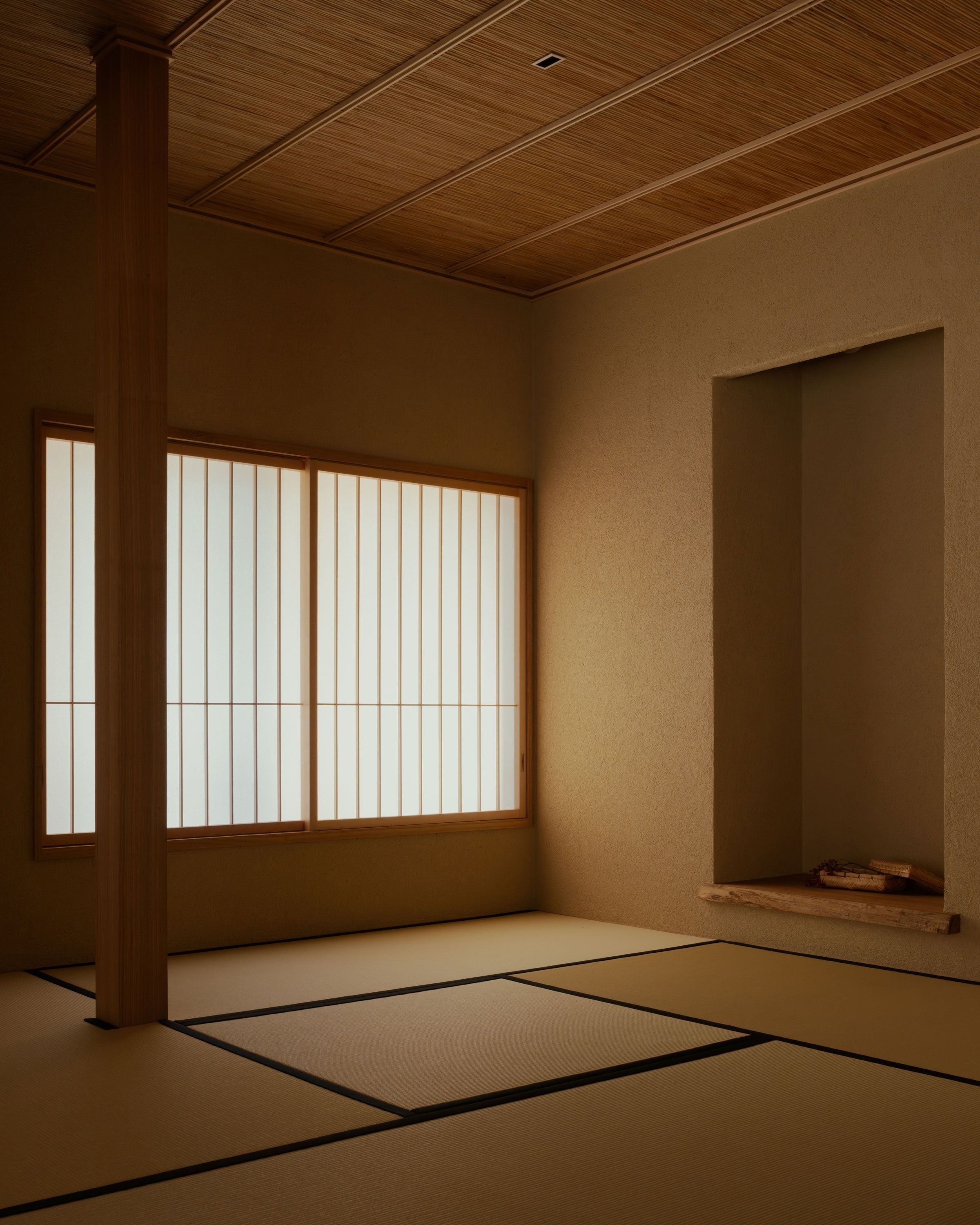
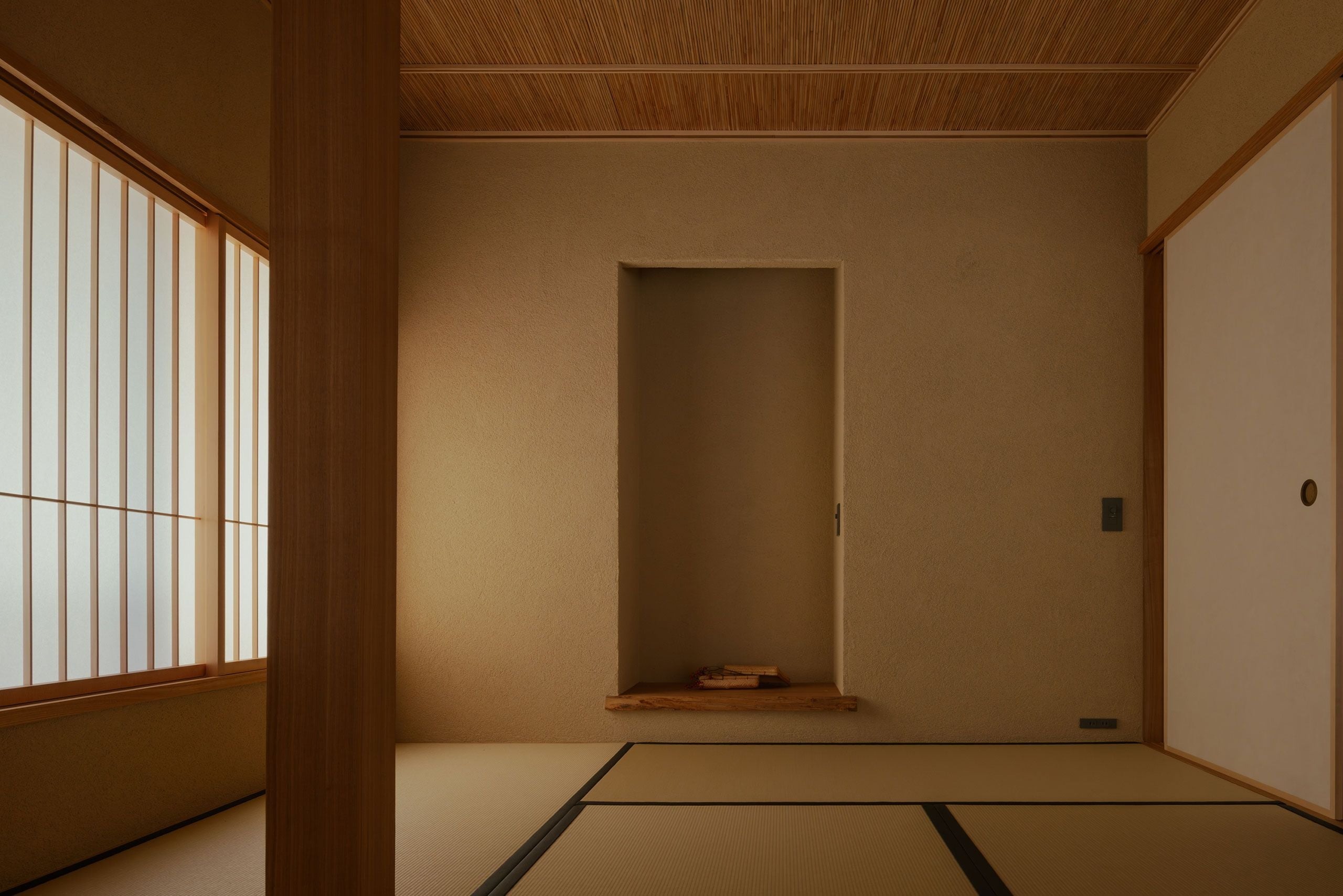
집안 곳곳에는 깊은 처마와 전통 창호를 거친 맑은 빛이 내려앉는다. 이 빛은 마감재가 품은 차분한 표정을 가만히 어루만진다. 쥬라쿠 흙벽은 부드럽고 깊이 있는 질감으로 공간에 빛을 골고루 흩뿌린다. 단풍나무 마루와 굵직한 목재 기둥, 나뭇결이 살아있는 가구들은 따뜻한 색감을 조화롭게 더해준다. 이 자연 소재들은 그저 풍경을 액자처럼 담아내는 데 그치지 않는다. 바깥의 자연을 실내로 끌어들여 조용히 교감하는 아늑한 분위기를 빚어낸다.
사색과 휴식을 품은 별채
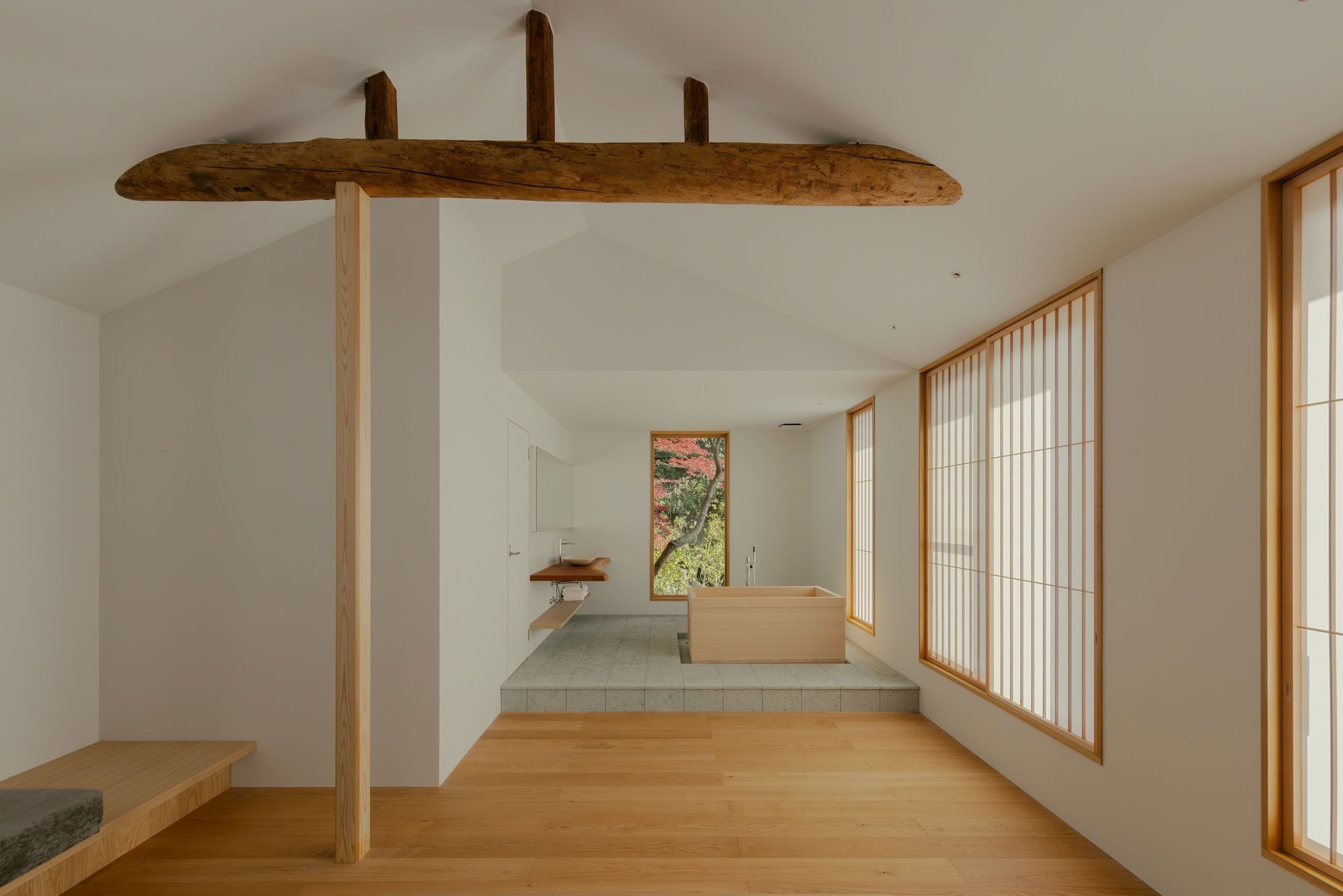
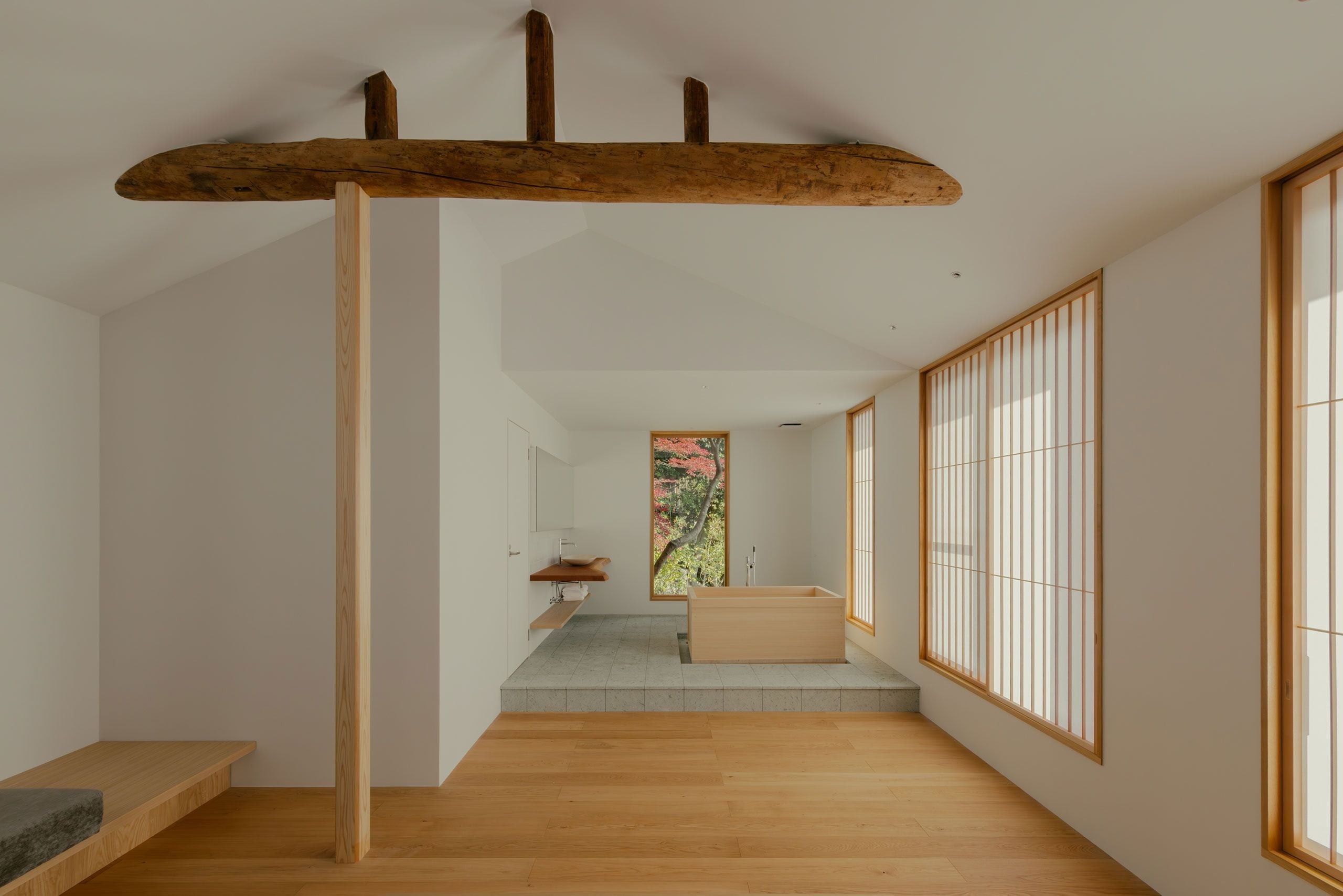
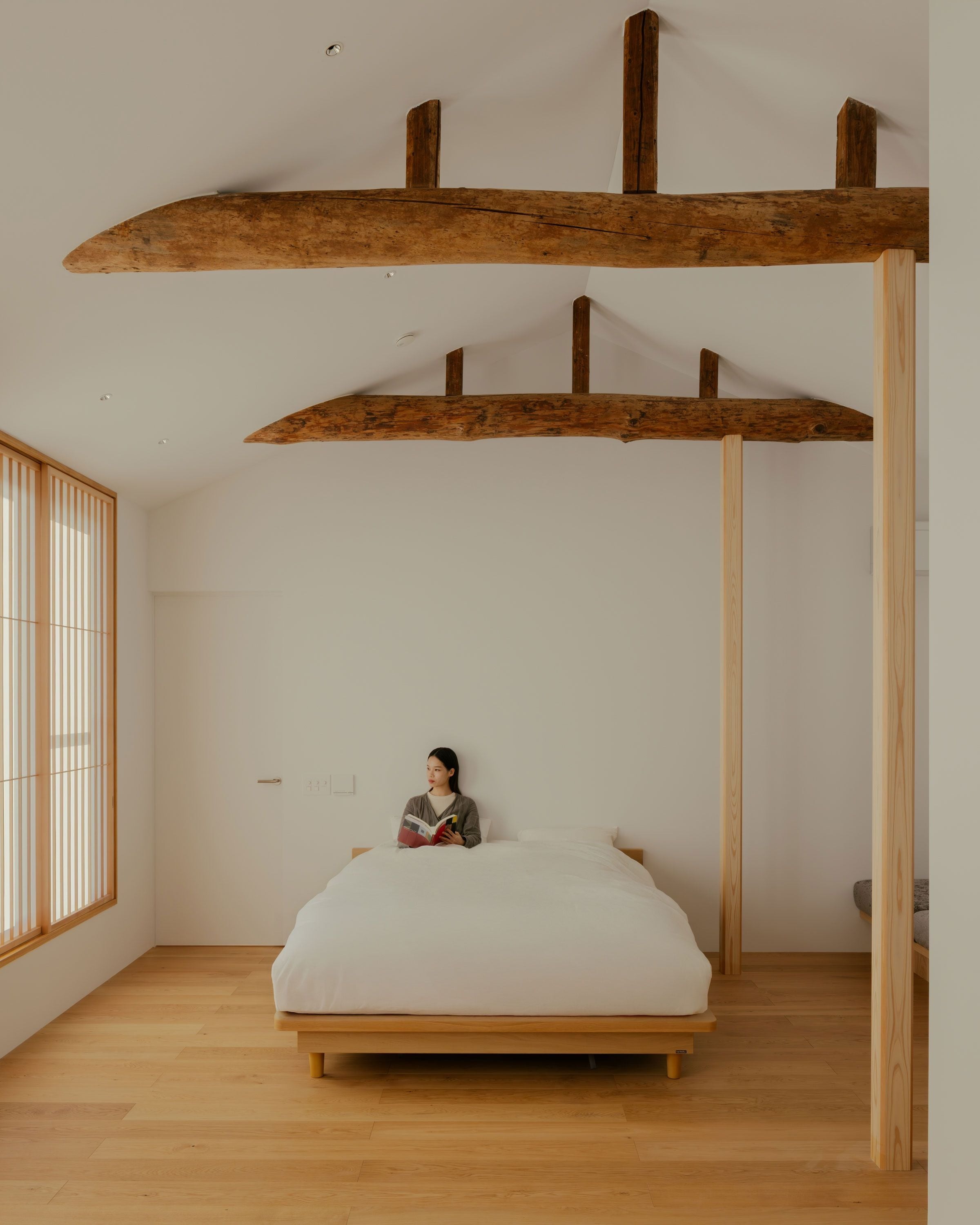
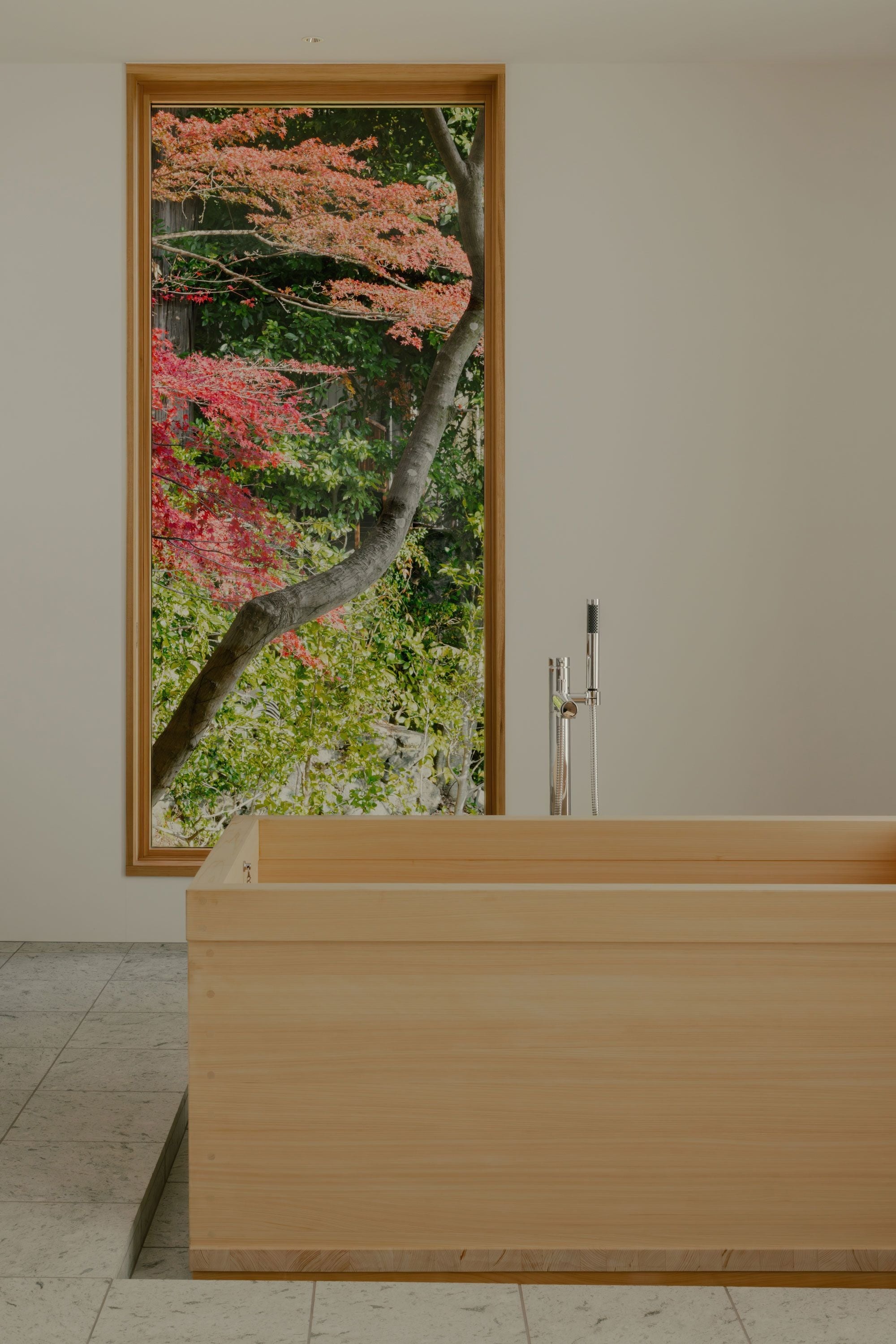
게스트하우스로 꾸민 별채는 본채를 향해 열린 라운지와 세 개의 객실을 품고 있다. 1층 휴식 공간은 정원과 곧바로 이어져 두 집 사이의 시각적인 대화를 한층 깊게 만든다. 실내로 들어서면 하얗게 칠한 벽면과 오래된 벚나무 보가 선명한 대비를 이루며 목재 특유의 아름다움을 뽐낸다. 2층 객실 한편에는 침실과 매끄럽게 이어진 편백나무 욕조가 놓여 있다. 이곳에서 목욕은 평범한 일상을 넘어, 계절의 변화와 빛의 흐름을 온몸으로 느끼는 사색의 시간으로 피어난다.
변치 않는 가치를 지닌 안식처
쿠 아키텍츠는 이 집을 과거의 유물로 멈춰두지 않았다. 공간의 정교한 경계, 투명하게 겹치는 시선, 그리고 풍경과의 어우러짐이라는 수키야 건축의 핵심을 짚어내 현대적인 삶에 맞게 재해석했다. 그 결과 나루타키 주택은 억지스러운 향수나 차가운 현대성을 강요하지 않는다. 단단한 소재가 주는 명료함과 자연을 향한 끊임없는 대화를 바탕으로, 오래도록 곁에 두고 싶은 묵직하고 평온한 안식처로 거듭났다.
Write by Gemini & Jean Browwn





Architecture and Landscape Operate in Quiet Reciprocity in a Renovated Sukiya-Style House in Kyoto
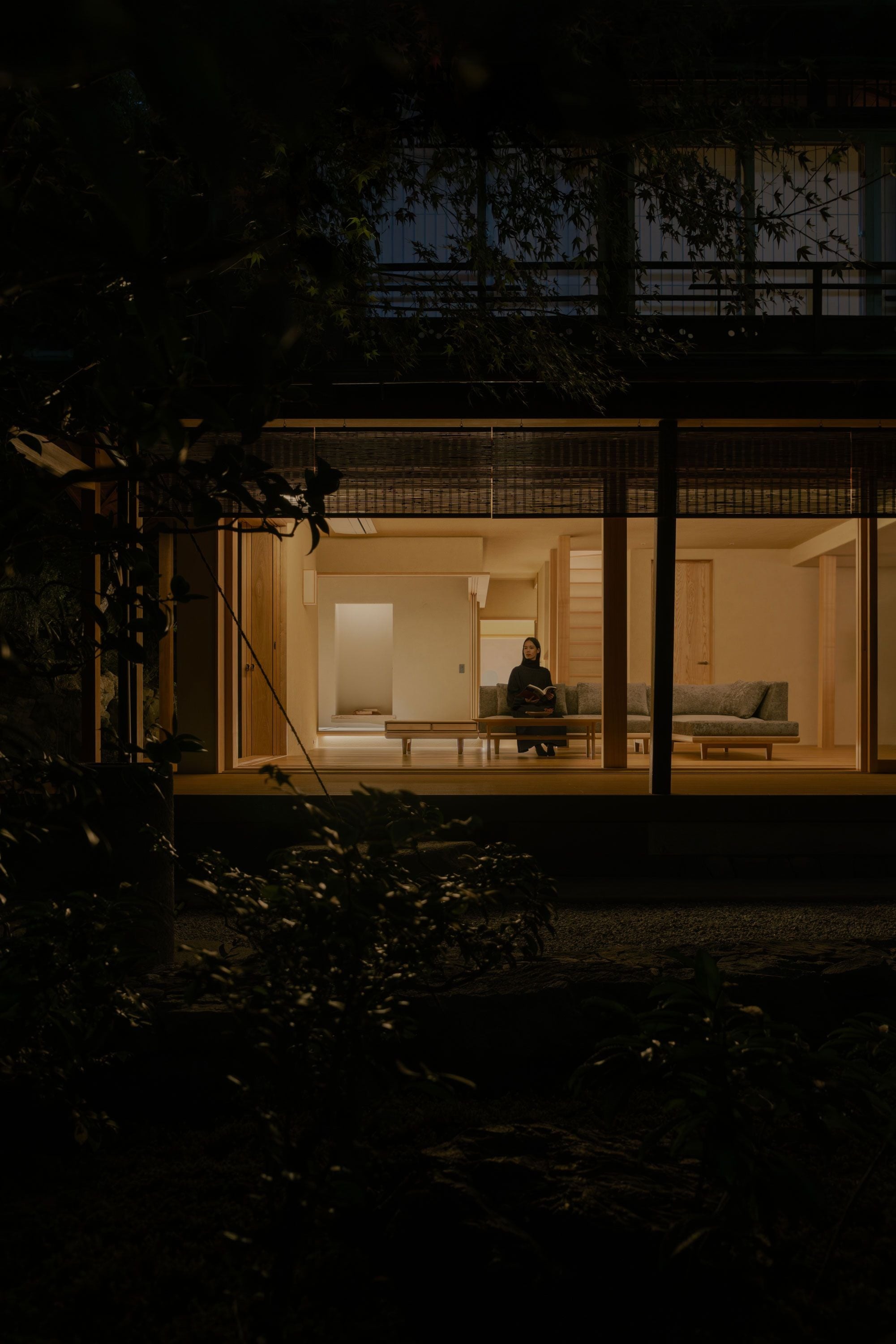
Located in the outskirts of Kyoto, "House in Narutaki" is a renovated Sukiya style residence by kooo architects that unfolds within a gently sloping site at the edge of a wooded hillside. Rather than asserting itself against its surroundings, the project recalibrates an existing home, allowing architecture and landscape to operate in quiet reciprocity. Garden, mountain backdrop and the subtle presence of water are not treated as picturesque scenery but as intrinsic elements woven into the cadence of everyday life, echoed indoors through the tactile simplicity of timber, plaster and stone.
The property comprises a two-storey main house and a detached two storey annex, connected through a carefully orchestrated garden. Between them, the architects introduced a newly designed waterfall, making use of the site’s natural gradient. Visible from the living spaces of both buildings, the flow of water becomes at once focal point and ambient presence, folding sound, movement and reflection into the domestic routine.
The reconfiguration of the main house begins with the doma, an earthen floored passage that bisects the ground floor, linking the stone-paved entrance at the front to the landscaped garden at the rear. More than a corridor, it functions as a spatial hinge, separating everyday living areas from spaces intended for formal entertaining, while also operating as an atmospheric threshold. Washed aggregate underfoot extends seamlessly from the exterior approach, blurring the boundary between arrival and interior, while fusuma sliding panels featuring abstract geometric compositions by Noda Print Studio, acclaimed for their modern use of karakami hand-printing techniques, imbue the space with a muted graphic rhythm.
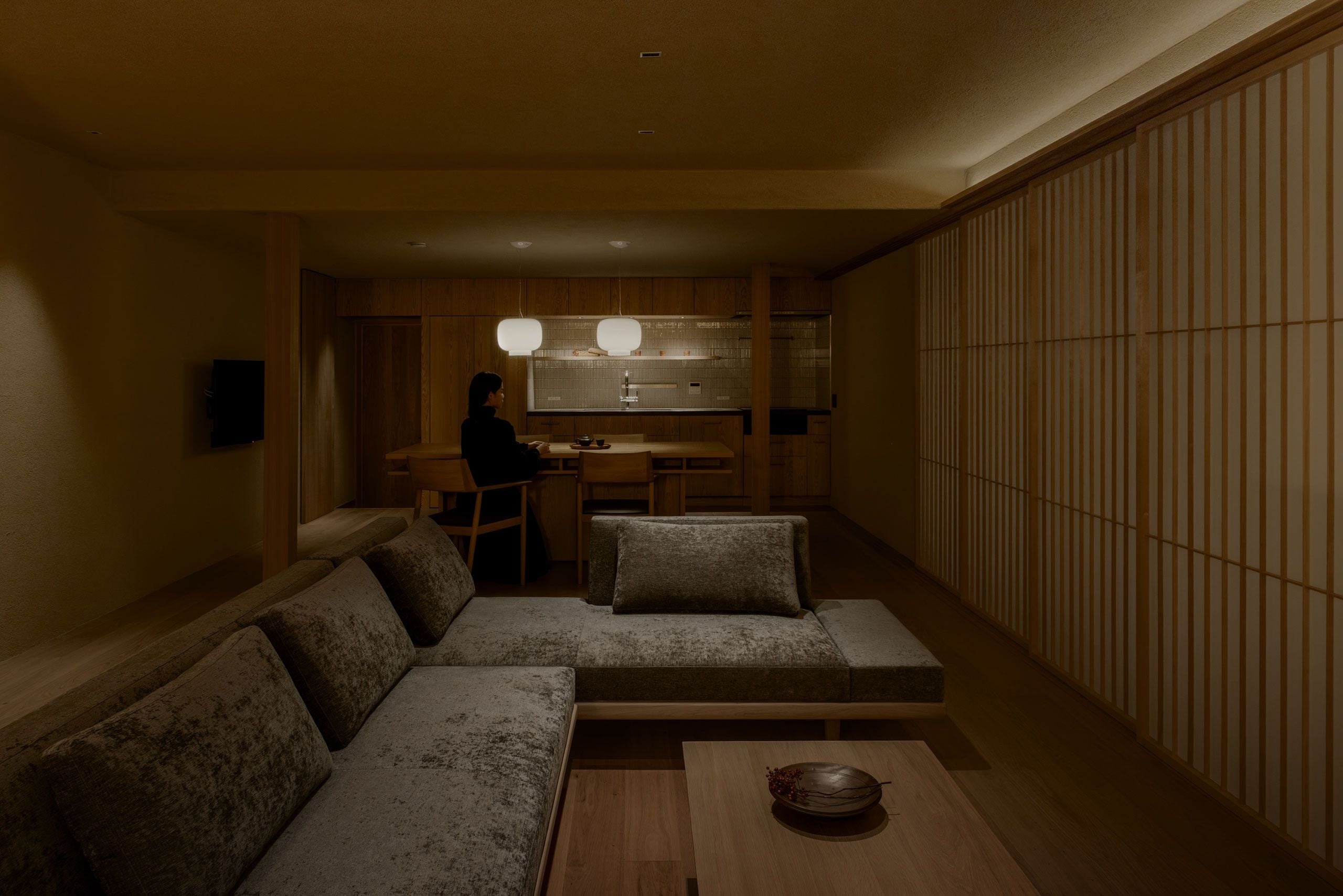
On one side of the passage, the original tatami rooms have been consolidated into a large reception hall intended for entertaining. On the other, a fluid living, dining and kitchen area opens onto the garden through floor-to-ceiling timber-framed sliding doors on two sides. When fully retracted, the space expands onto the engawa, a traditional Japanese covered veranda extending along the outer perimeter of a house, and into the garden. Additional rooms, separated by sliding partitions, can also be incorporated into the main space, allowing the house to contract or expand according to use. Meanwhile, upstairs, the bedrooms are conceived as spaces of retreat, framed by expansive views of the surrounding foliage.
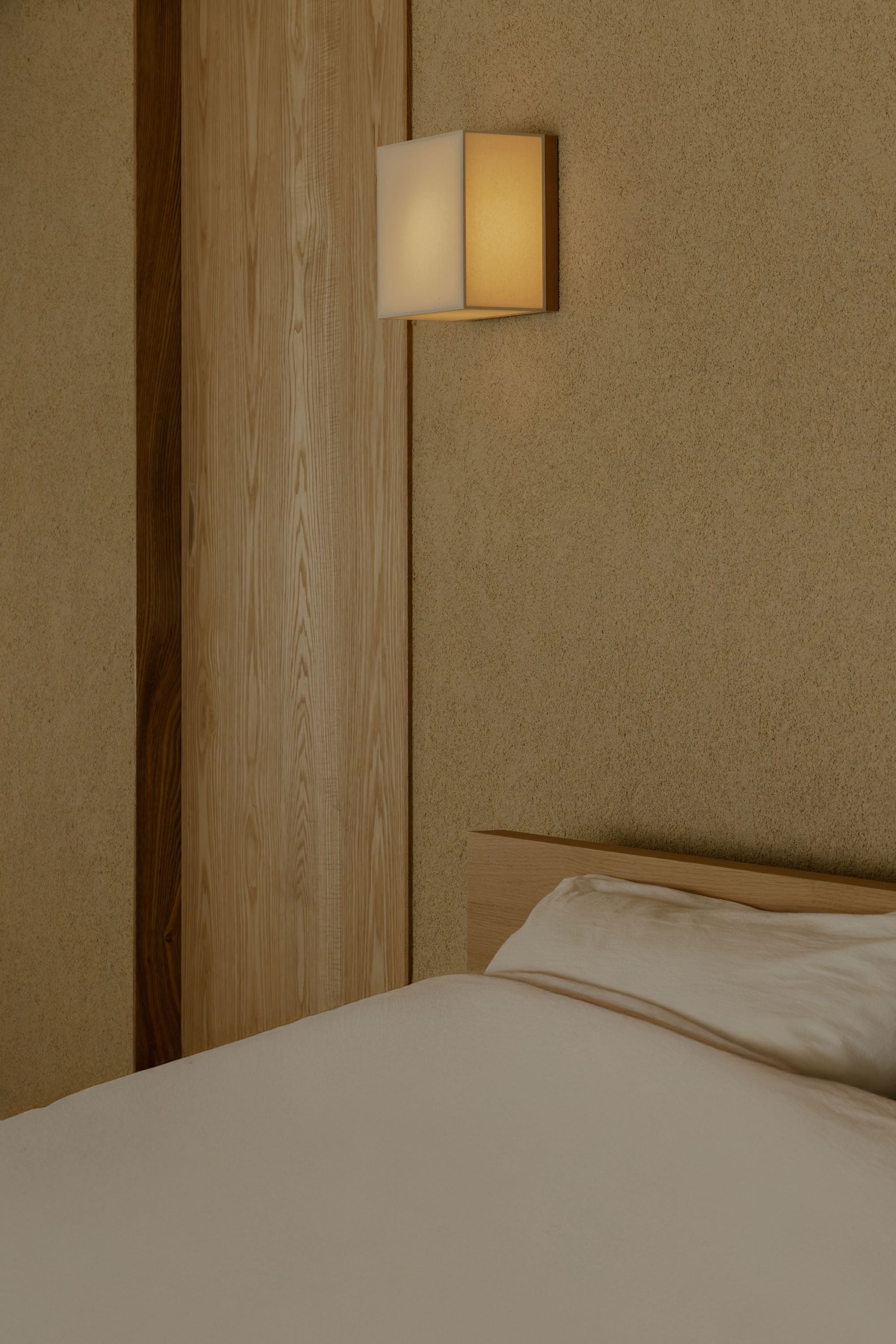
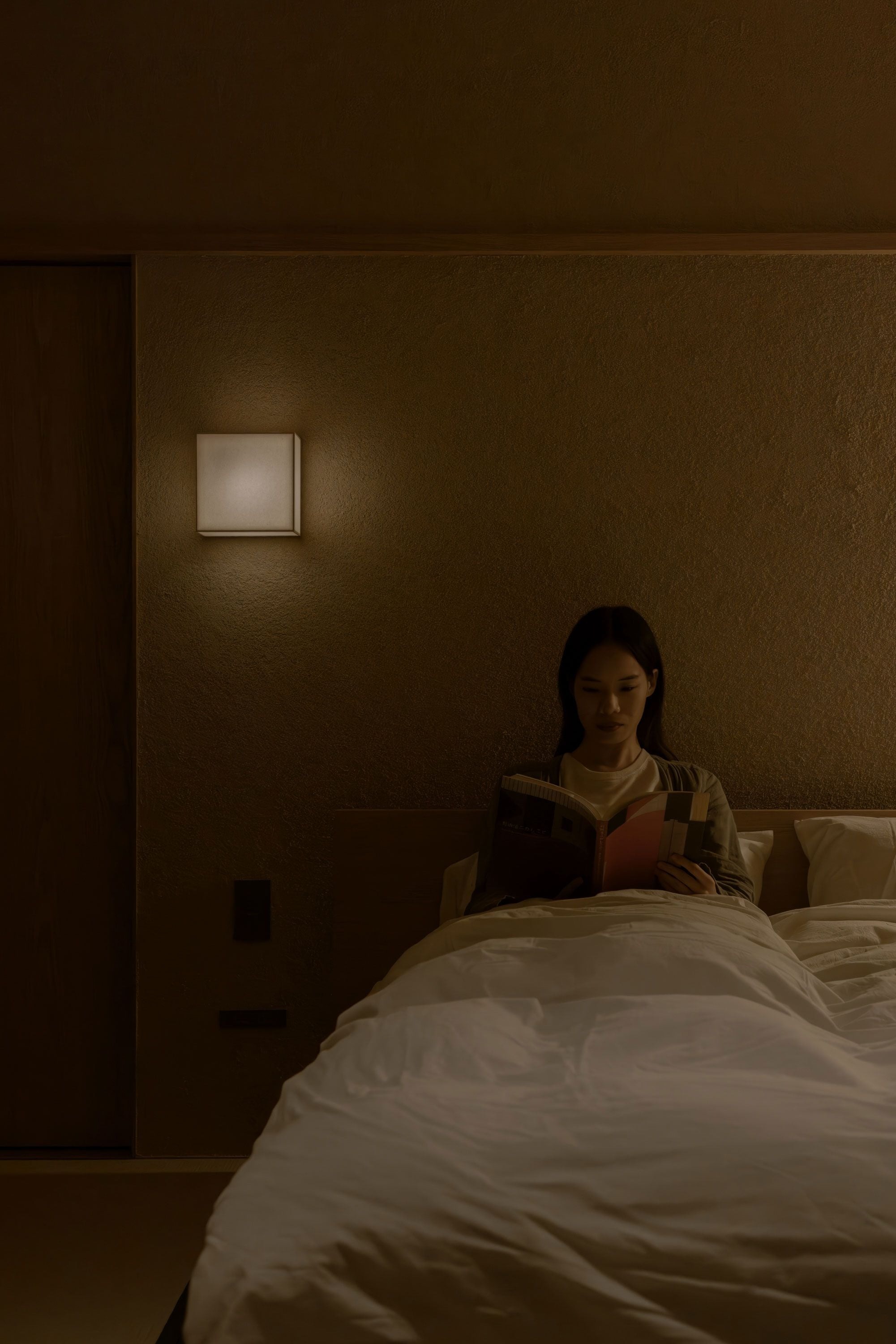
Throughout the house, light, filtered through deep eaves and shoji screens, moves gently across surfaces, drawing out the quiet nuances of the material palette. Juraku plaster lends the walls and ceilings a velvety depth, softening and diffusing illumination, while hardwood floors, timber posts and beams, and wooden furnishings in their natural grain add warm tonal shifts. In dialogue with the verdant garden beyond, these materials do not frame the view so much as extend it inward, creating an interior atmosphere that feels quietly attuned to nature.
Conceived as a separate guest house, the annex includes a lounge that opens towards the main house along with three guest rooms distributed across two floors. Its ground floor sitting area unfolds directly onto the garden, reinforcing the spatial dialogue between the two buildings while inside, reclaimed timber beams and cherry wood are set against white-painted walls and ceilings, allowing material nuance to take precedence. Upstairs, in one of the guest suites, a hinoki bath connects seamlessly with the bedroom, turning bathing into a contemplative act oriented towards filtered light and seasonal change.
Rather than preserving the house as a historical artefact, kooo architects have extracted the spatial logic of Sukiya architecture, its calibrated thresholds, layered transparency and integration with landscape, adapting it to contemporary living. The result is a home that feels neither nostalgic nor overtly modern, but measured and enduring, grounded in a material clarity and an ongoing dialogue with its surroundings.
from yatzer
'House' 카테고리의 다른 글
| * 그래픽적인 명료함과 경쾌한 대비 [ Mistovia ] A Graphic Designer's Home in Kraków (1) | 2026.03.27 |
|---|---|
| * 빛의 구조학, 정교하게 연출된 어둠과 빛 [ Zuso Studio ] House Kuo (0) | 2026.03.24 |
| * 자연을 품은 건축적 선언 [ Perkins&Will ] HVM Maya (1) | 2026.03.12 |
| * 지그재그 평면이 숲을 꿰뚫다 [PL.architekci ] S House (1) | 2026.02.24 |
| * 비움으로 빚어낸 빛의 서사 [ Leckie Studio ] Lantern House (0) | 2026.02.11 |