"건축은 사라져야 한다. 그래야 비로소 자연이 말하기 시작한다." — 켄고 쿠마
 |
 |
 |
Tatsuro Sasaki Architects-SATOYAMA TERRACE
자연과 건축 사이에서
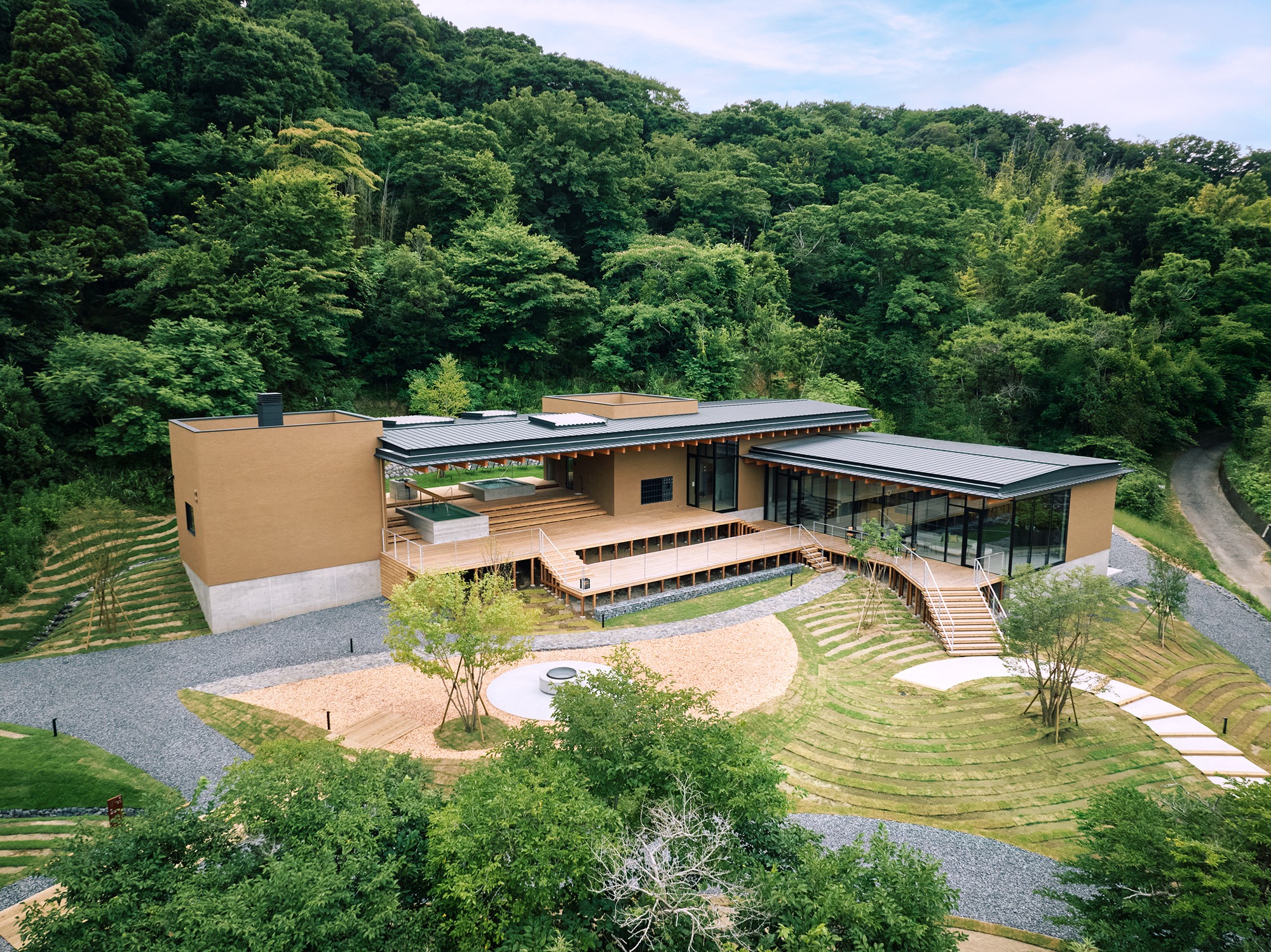
사토야마(里山)는 자연과 인간의 활동이 오랜 시간 함께 얽혀온 일본의 전통 경관이다. 숲과 경작지, 물길과 마을이 서로를 돌보며 유지해온 이 풍경 위에, 타츠로 사사키 아키텍츠는 하나의 근본적인 질문을 던졌다. 건축은 이 땅과 어떻게 관계 맺을 수 있는가. 낭만적인 농촌 풍경을 재현하는 대신, 사토야마에 내재된 관계의 질서를 해석하여 현대적인 공간 경험으로 다시 풀어내는 것. 그것이 이 프로젝트의 출발점이었다. 물, 바람, 흙, 식생은 배경이 아니다. 사람의 지각과 공간의 점유 방식을 실질적으로 빚어내는 살아있는 힘이다.
흩어진 캐빈들, 이어진 감각
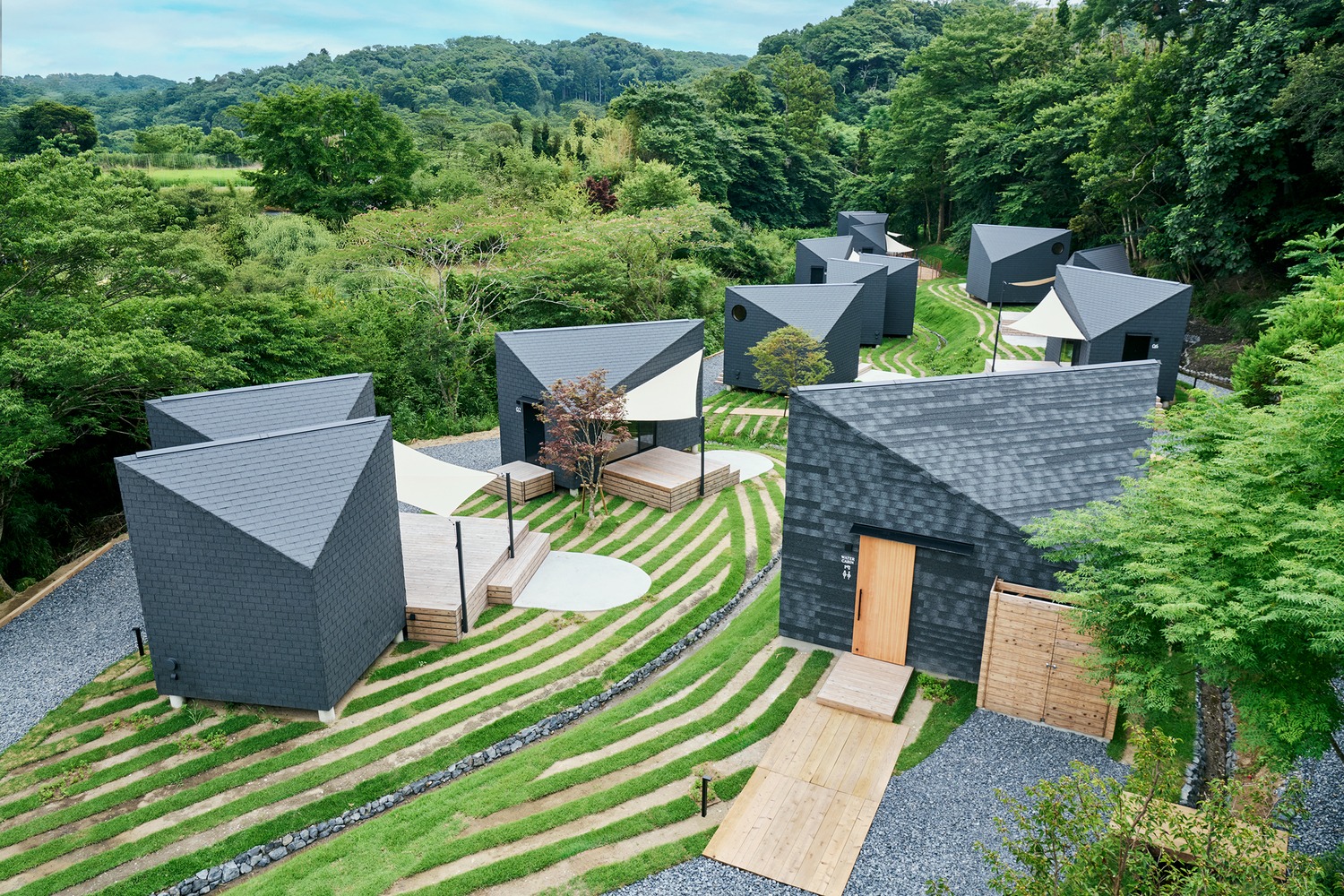
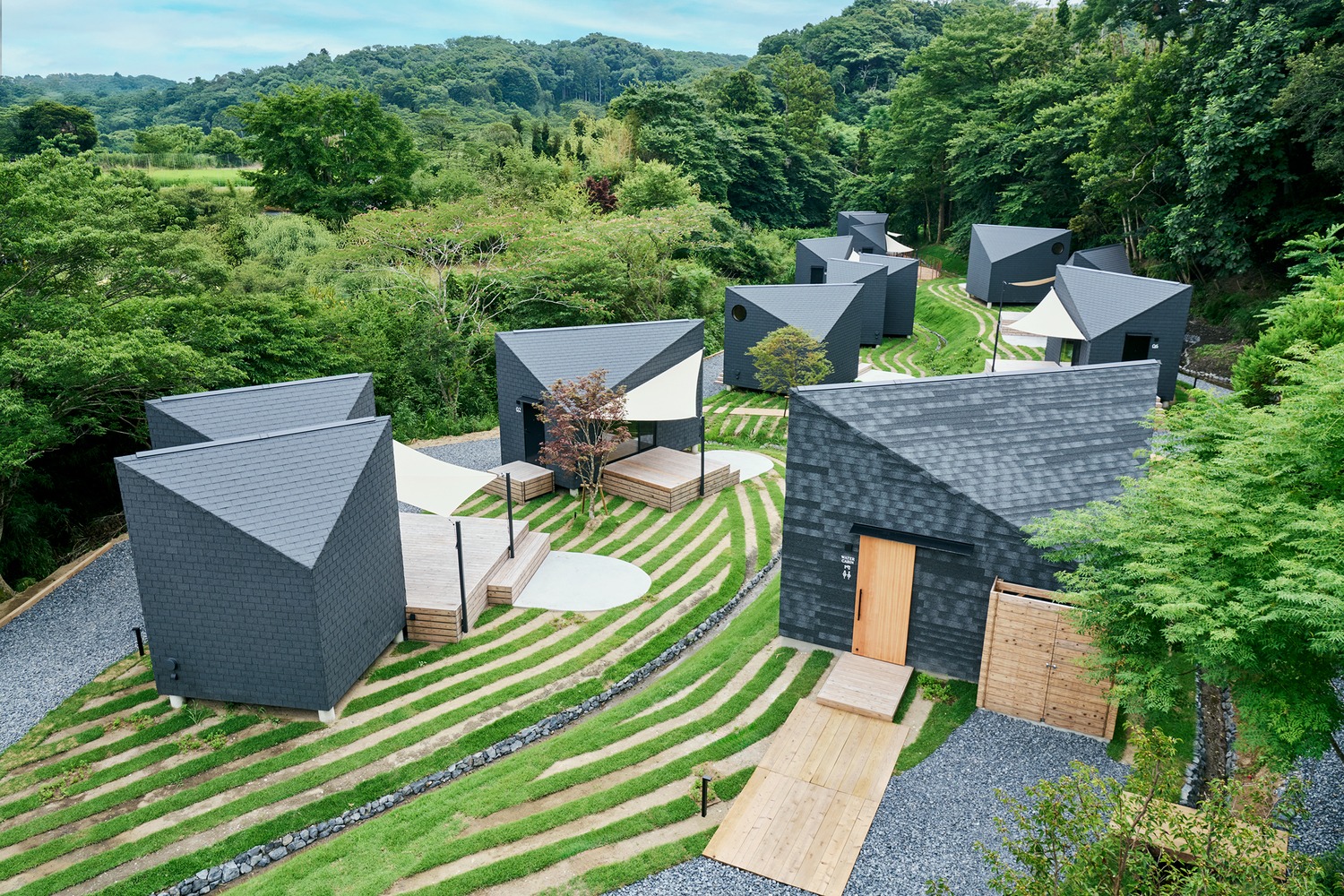
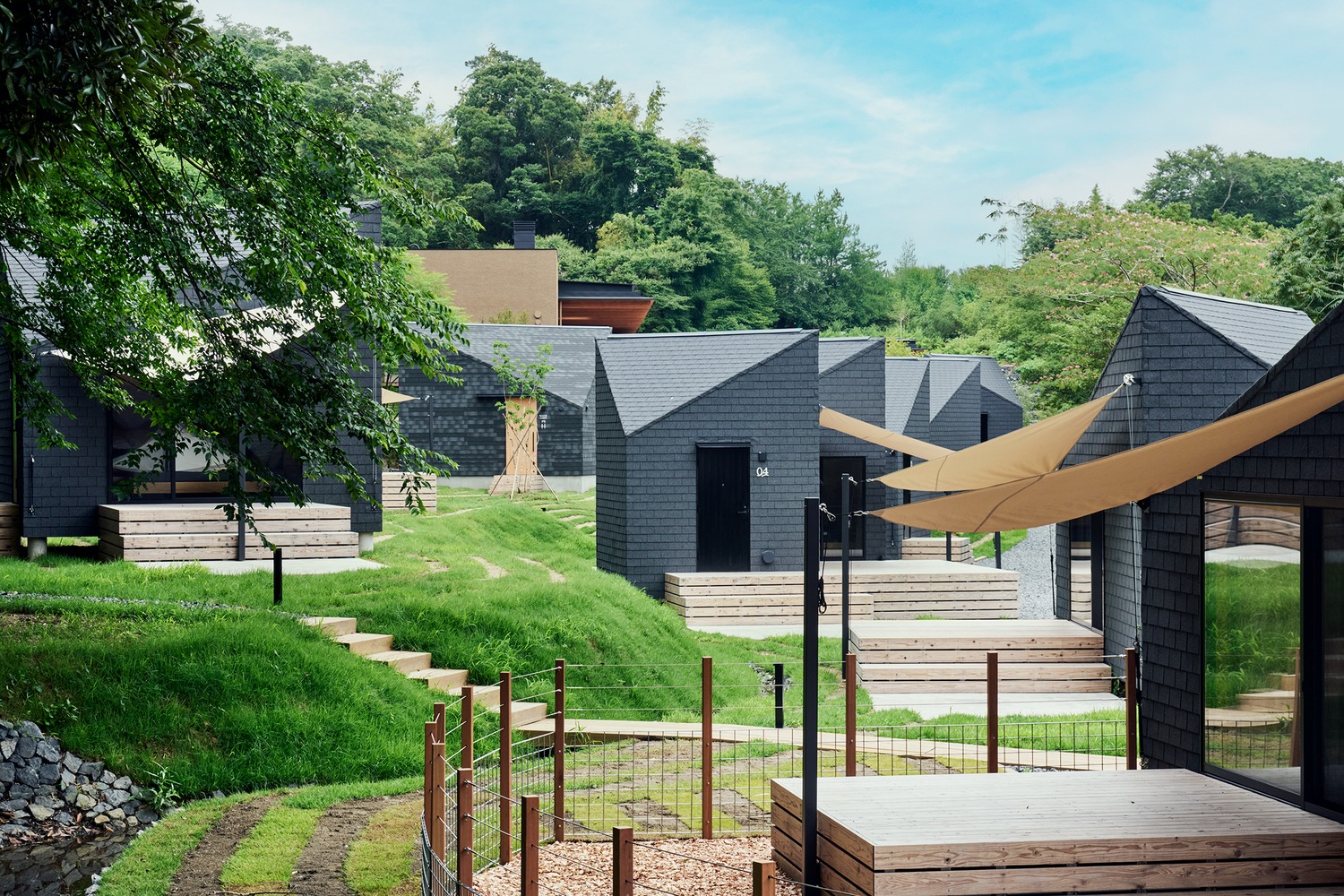
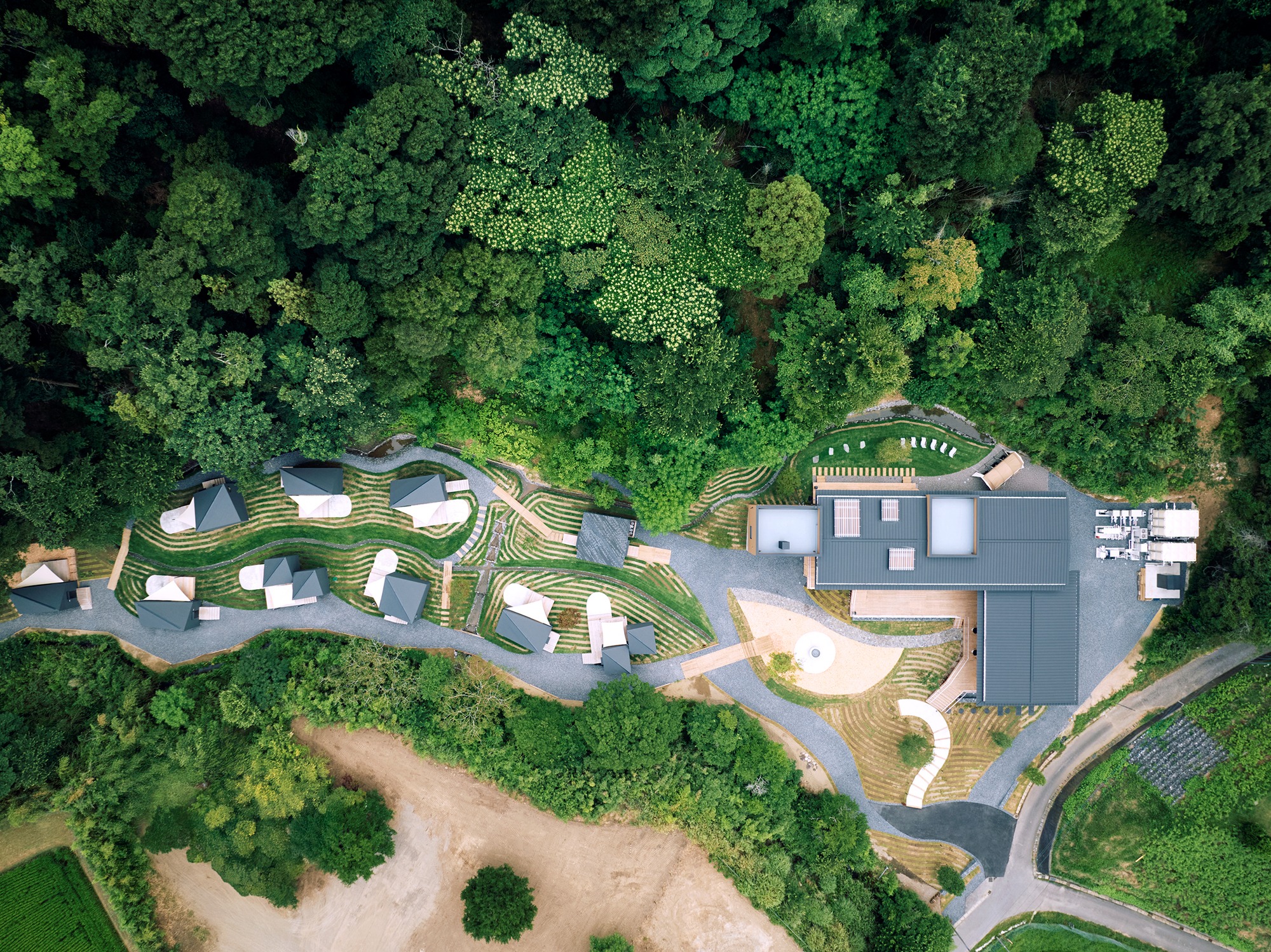
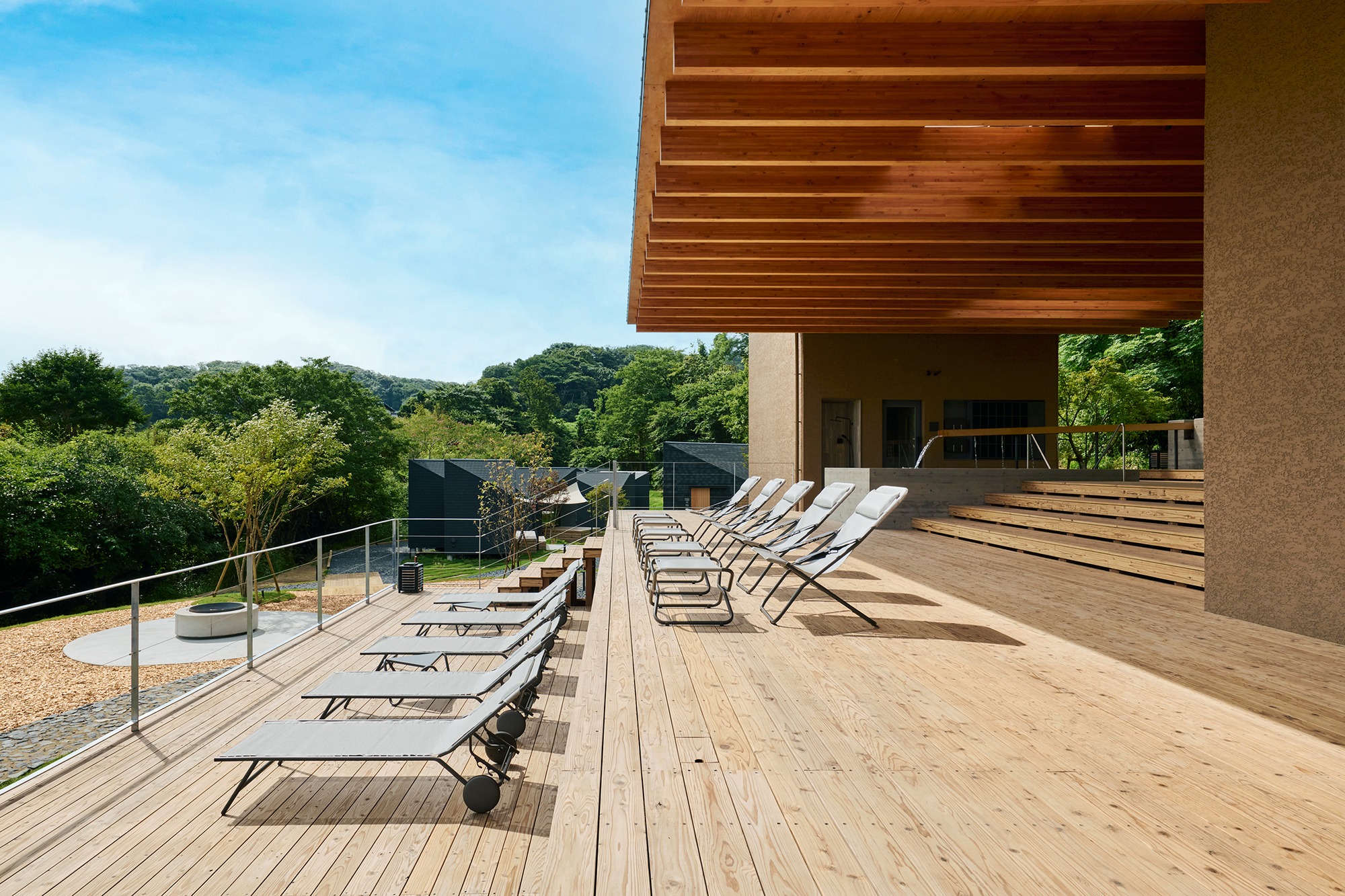
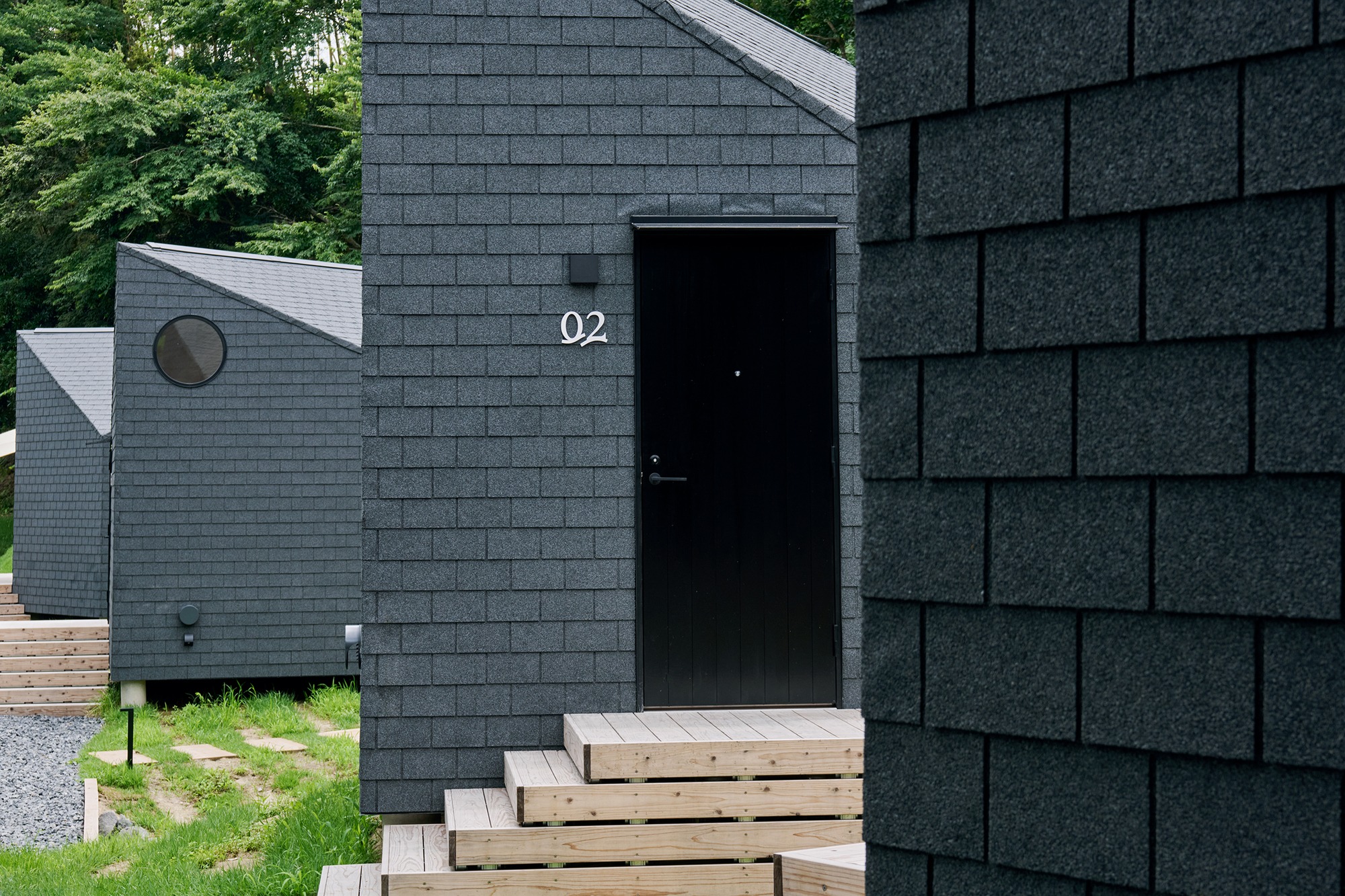
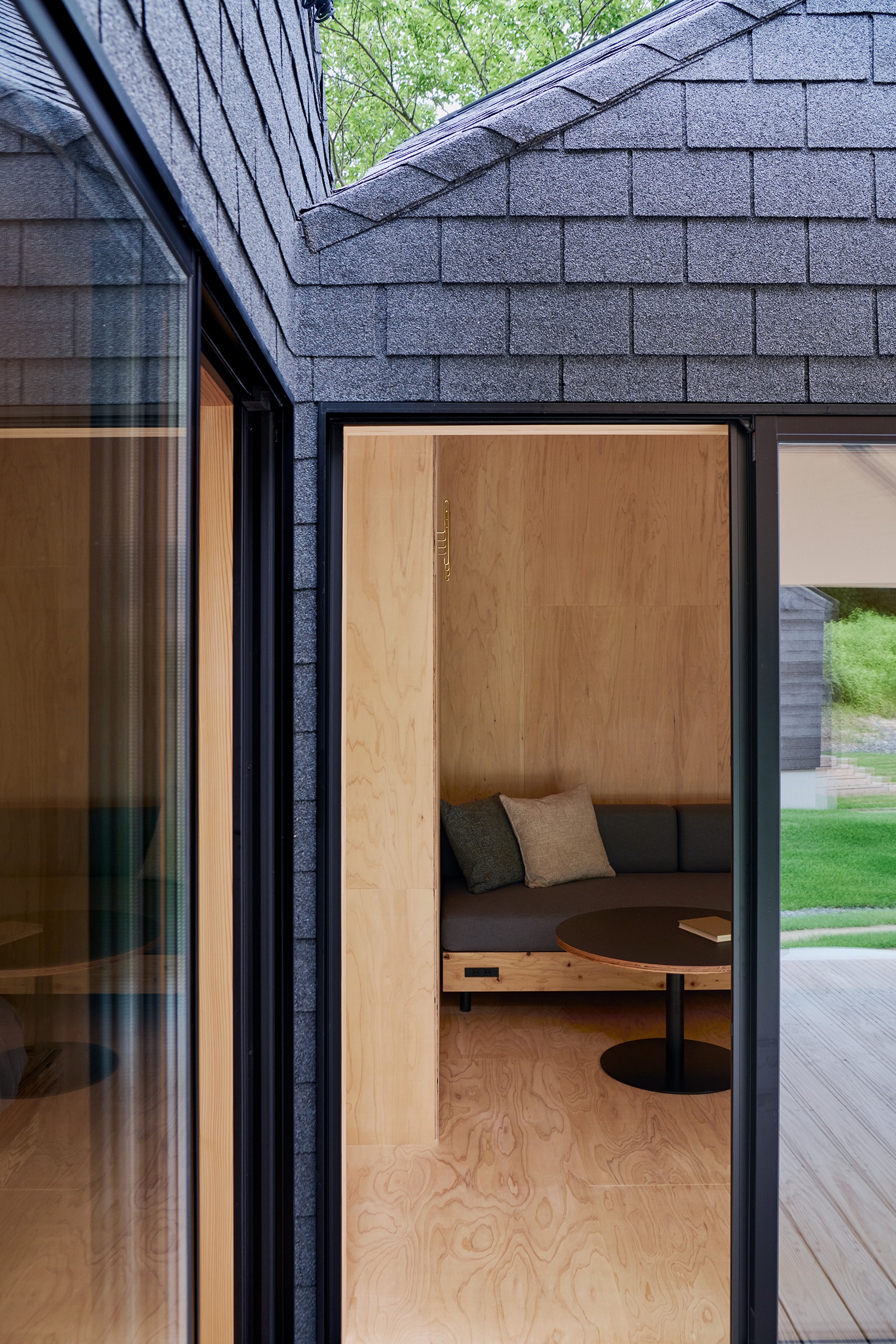
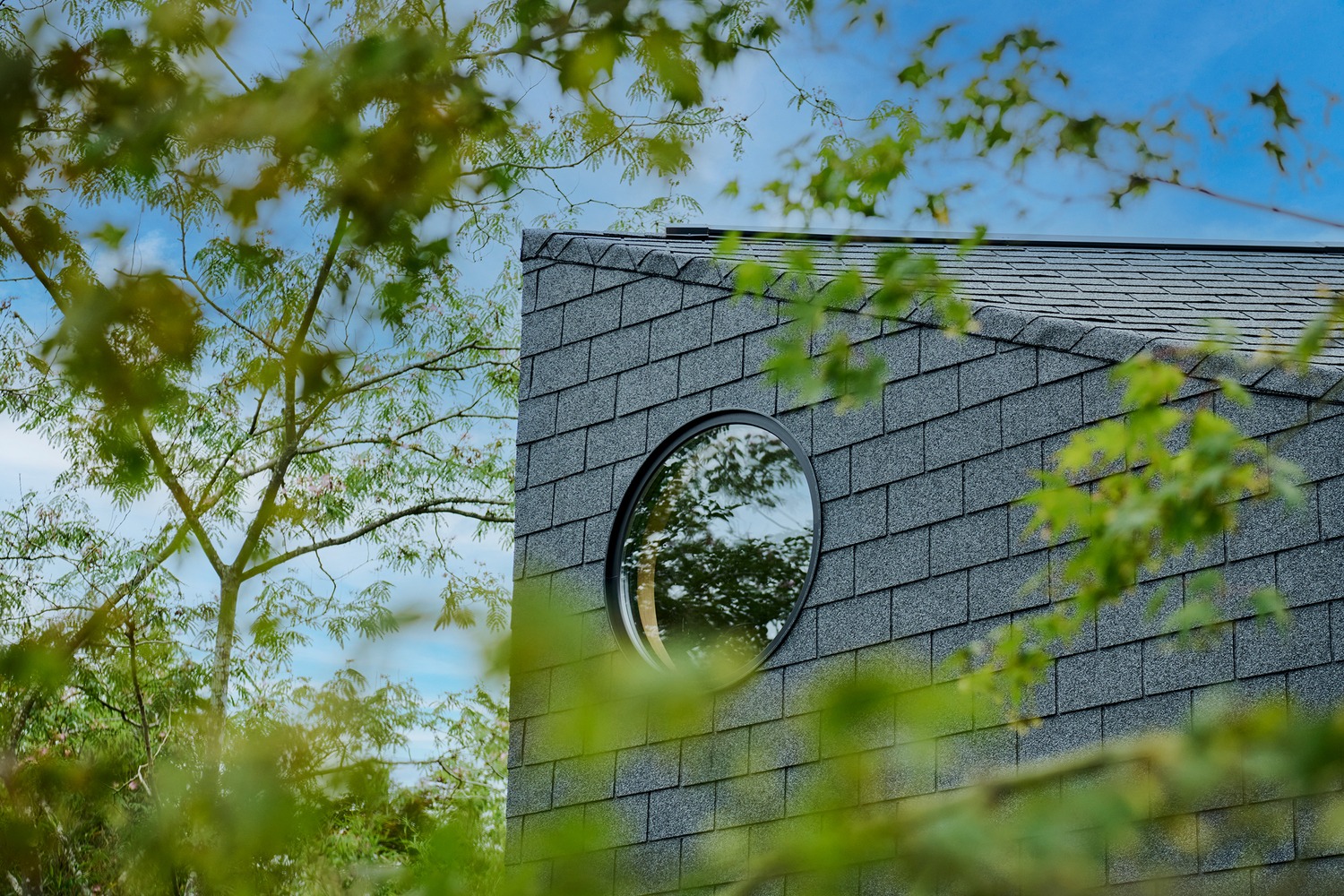
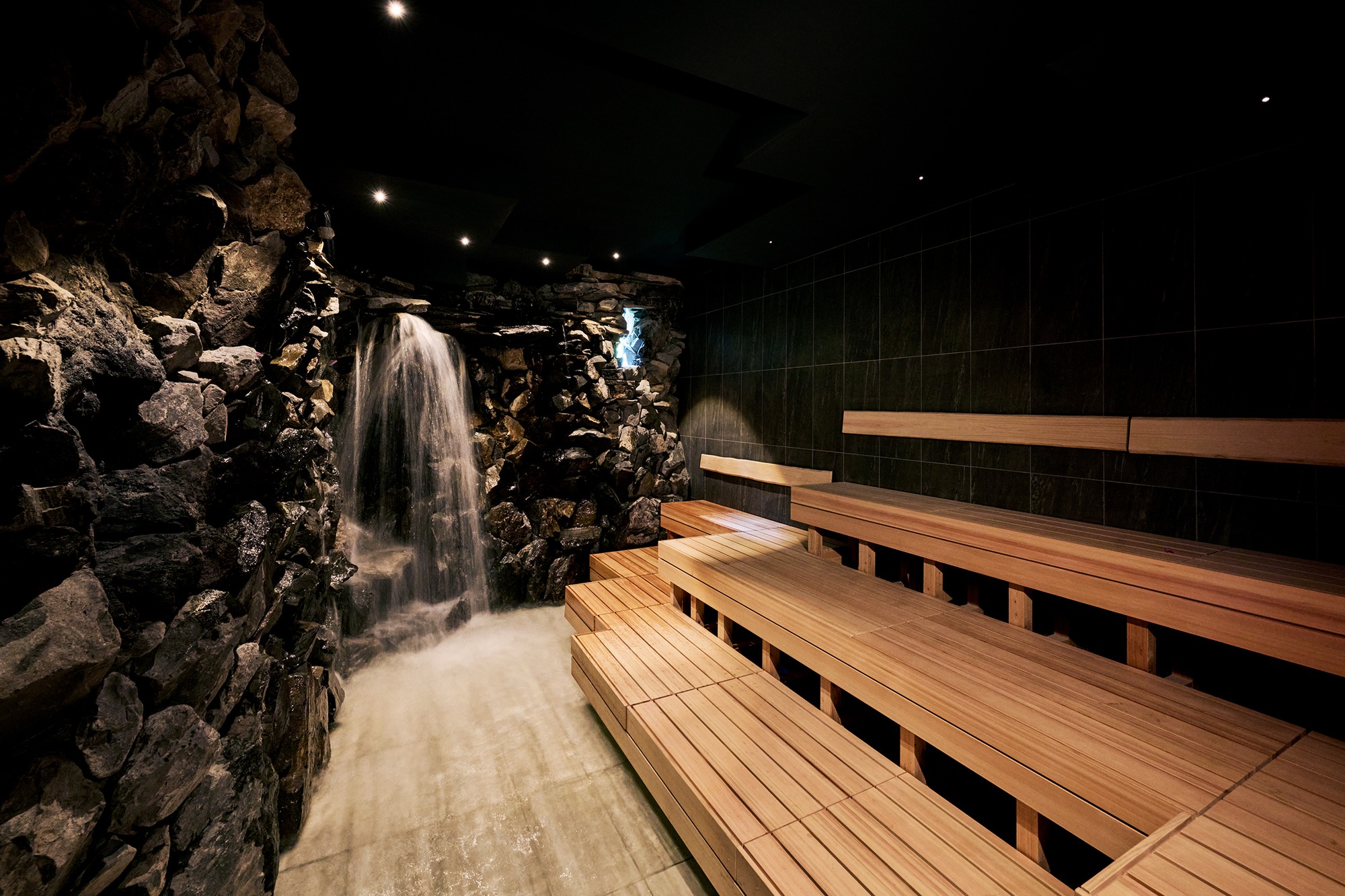
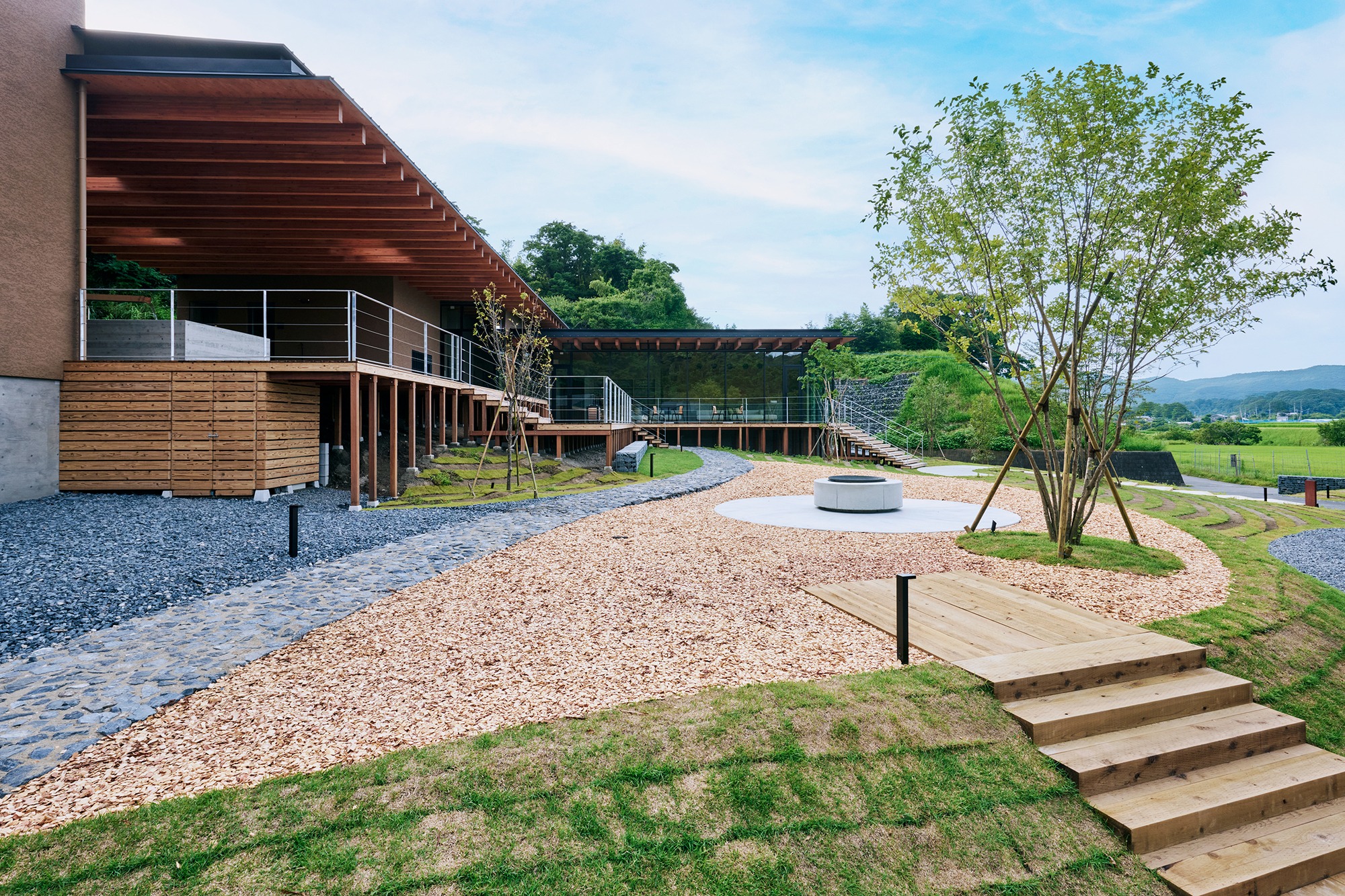
대지에는 여러 채의 캐빈이 분산 배치되고, 중심부에는 사우나 시설을 갖춘 메인 동이 자리한다. 건물들은 고정된 배열이 아니라 환경적 전이의 연속으로 놓였다. 캐빈들 사이를 걸으면서 사람들은 조금씩 달라지는 기류, 온도, 빛의 농도, 공간의 스케일을 몸으로 읽어나간다. 각각의 지점은 독립된 미시 기후를 이룬다. 그 차이들이 쌓여, 걷는 행위 자체가 하나의 경험이 된다. 검은 슁글로 마감된 캐빈의 날카로운 지붕선이 짙은 초록의 숲을 배경으로 선명하게 서고, 그 아래 목재 데크와 둥근 콘크리트 마당이 방문자를 조용히 맞이한다.
땅 아래를 생각한 설계
이 프로젝트에서 가장 근본적인 도전은 옹벽과 경직된 배수 시스템 같은 통상적인 토목 공사를 피하는 것이었다. 설계는 눈에 보이는 지형만이 아니라 지하의 조건까지 함께 살폈다. 지하 수계의 흐름을 세밀하게 파악하고, 자연적인 수계 패턴이 살아있도록 기초부터 다시 설계했다. 땅은 평탄화해야 할 고정된 표면이 아니라, 숨 쉬고 움직이는 하나의 유기체로 다루어진 것이다.
바람과 물의 통로
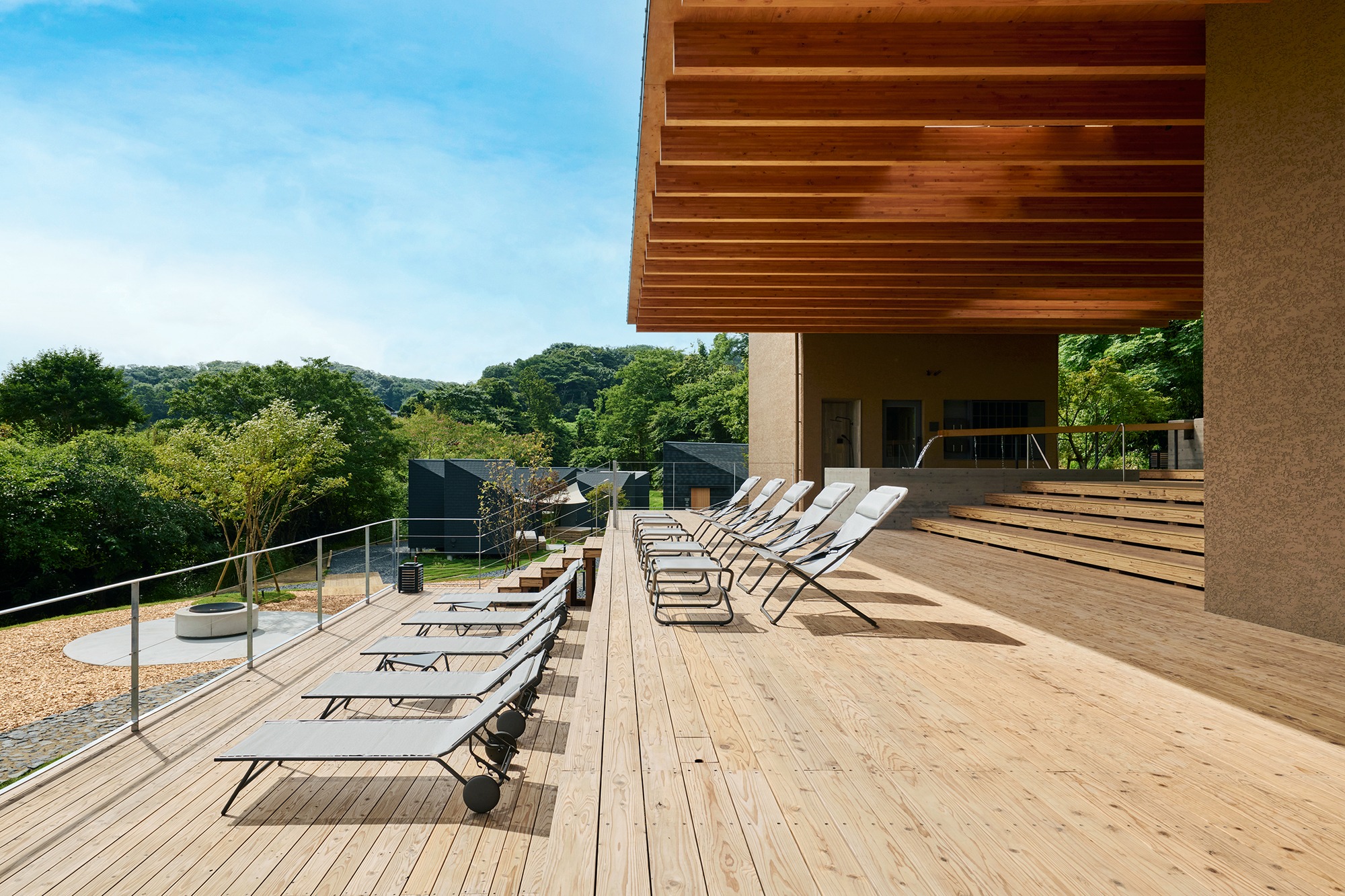
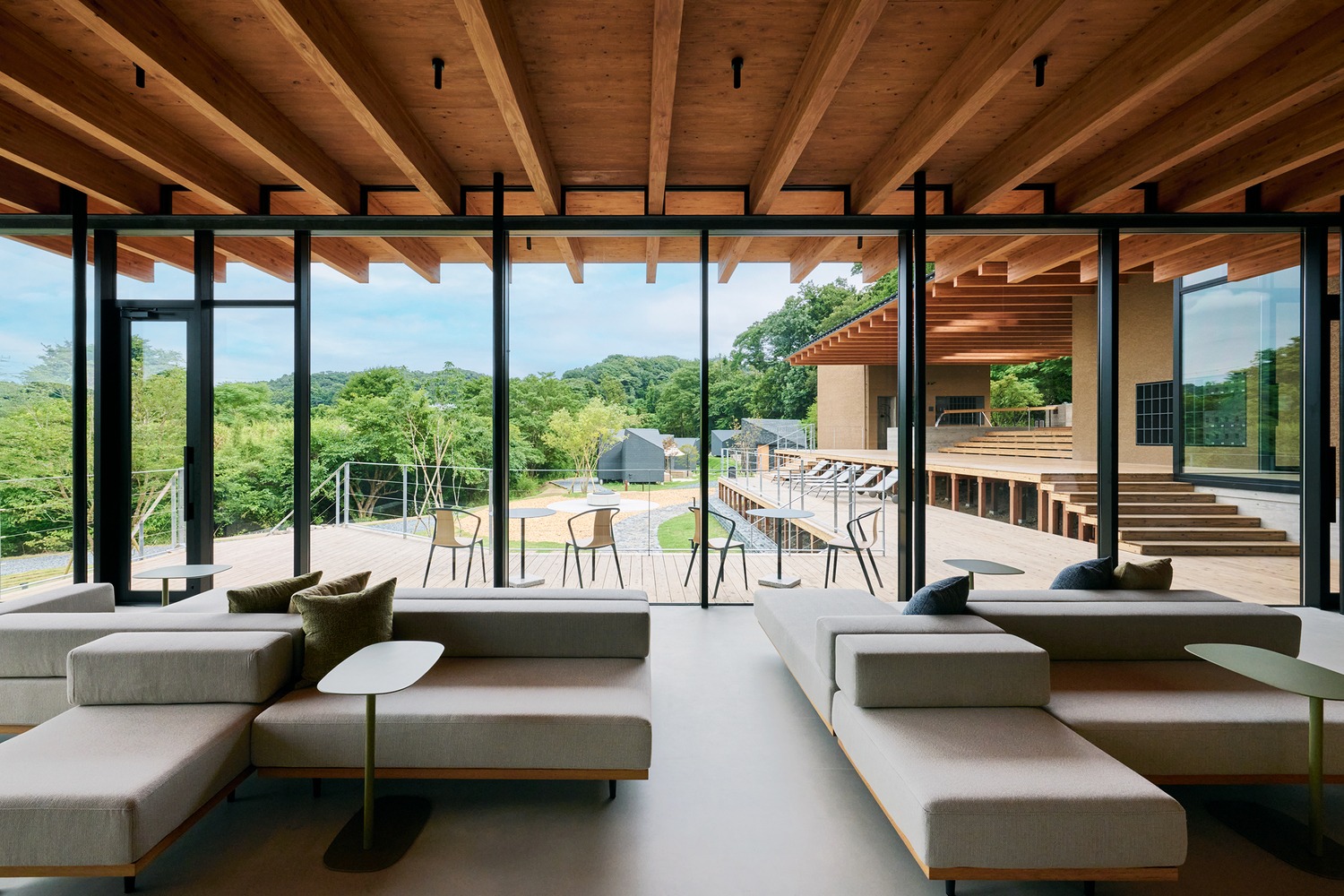
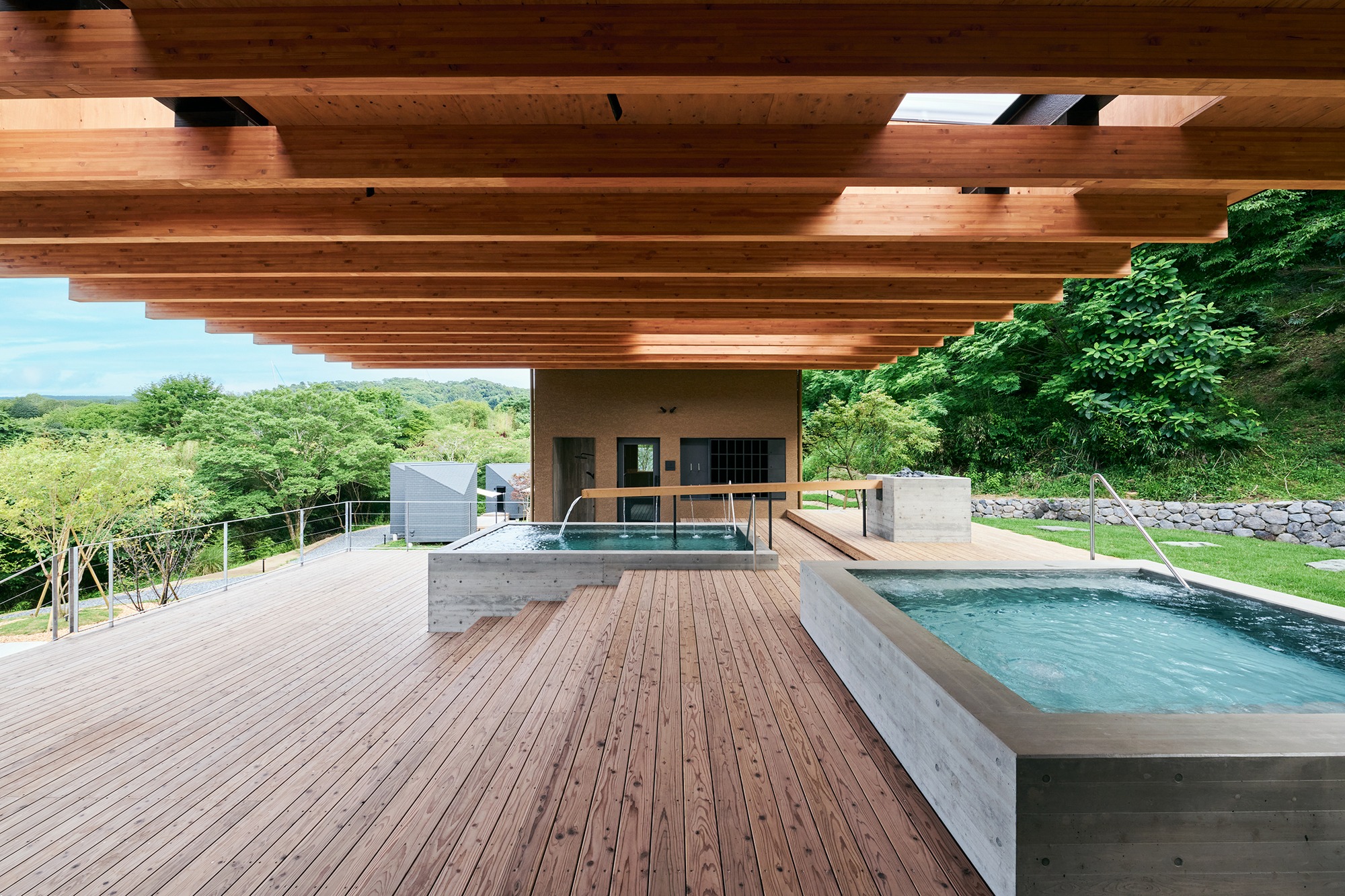
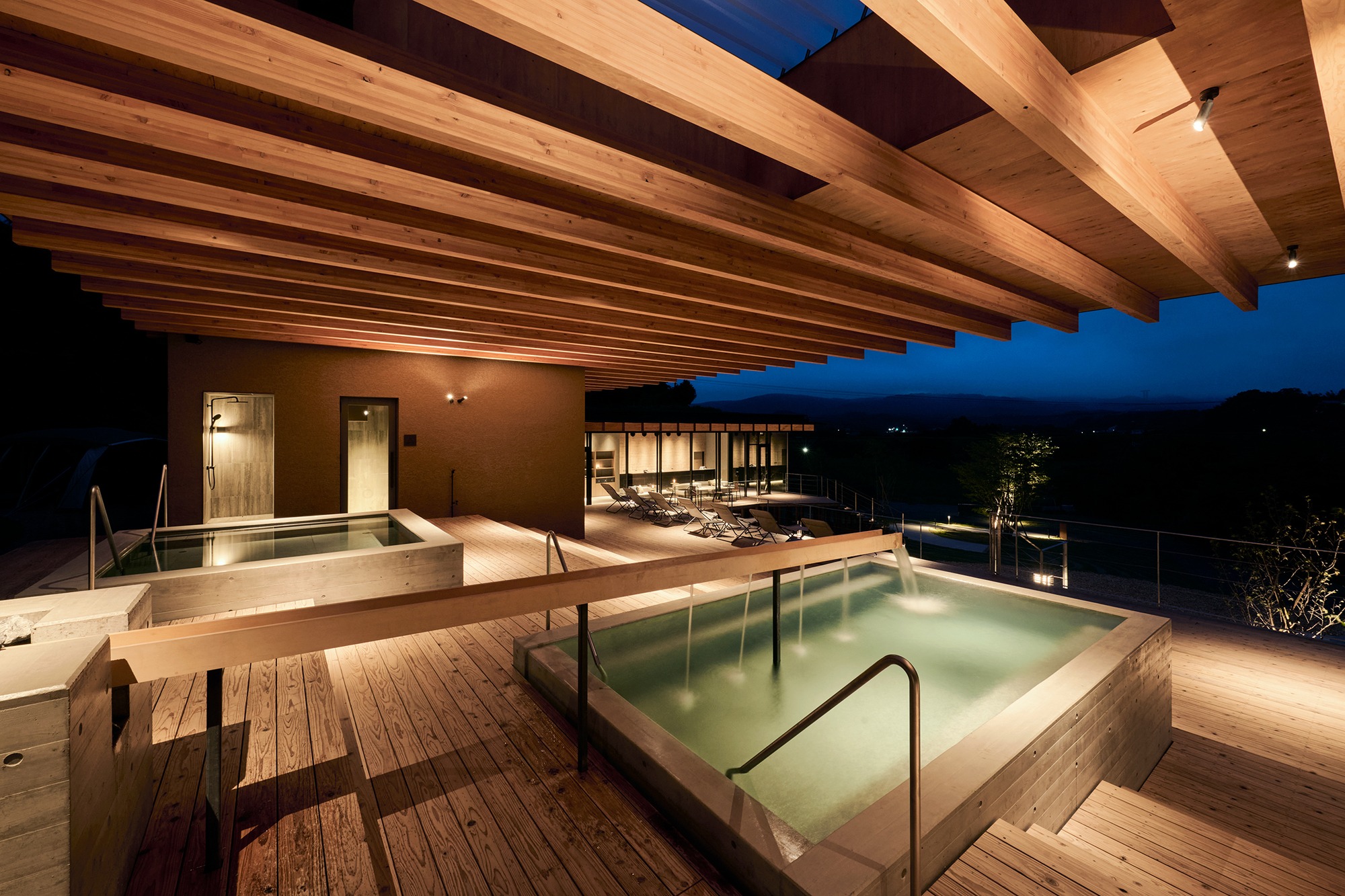
메인 동의 중심에는 볼륨을 가로지르는 데크 테라스가 놓인다. 이 테라스는 산에서 내려오는 바람이 통과하고, 물이 대지를 가로질러 흐르도록 설계된 통로이기도 하다. 테라스는 독립 기초 위에 살짝 떠 있다. 그 아래로 공기와 물이 자유롭게 움직이고, 기존의 지하 수계 경로가 그대로 유지된다. 테라스에 서면 바람이 발 아래에서 올라오는 것을 느낄 수 있다. 이 공간은 건축적 장치인 동시에 자연의 흐름을 잇는 매개체다.
목재와 강재, 빛을 향한 구조
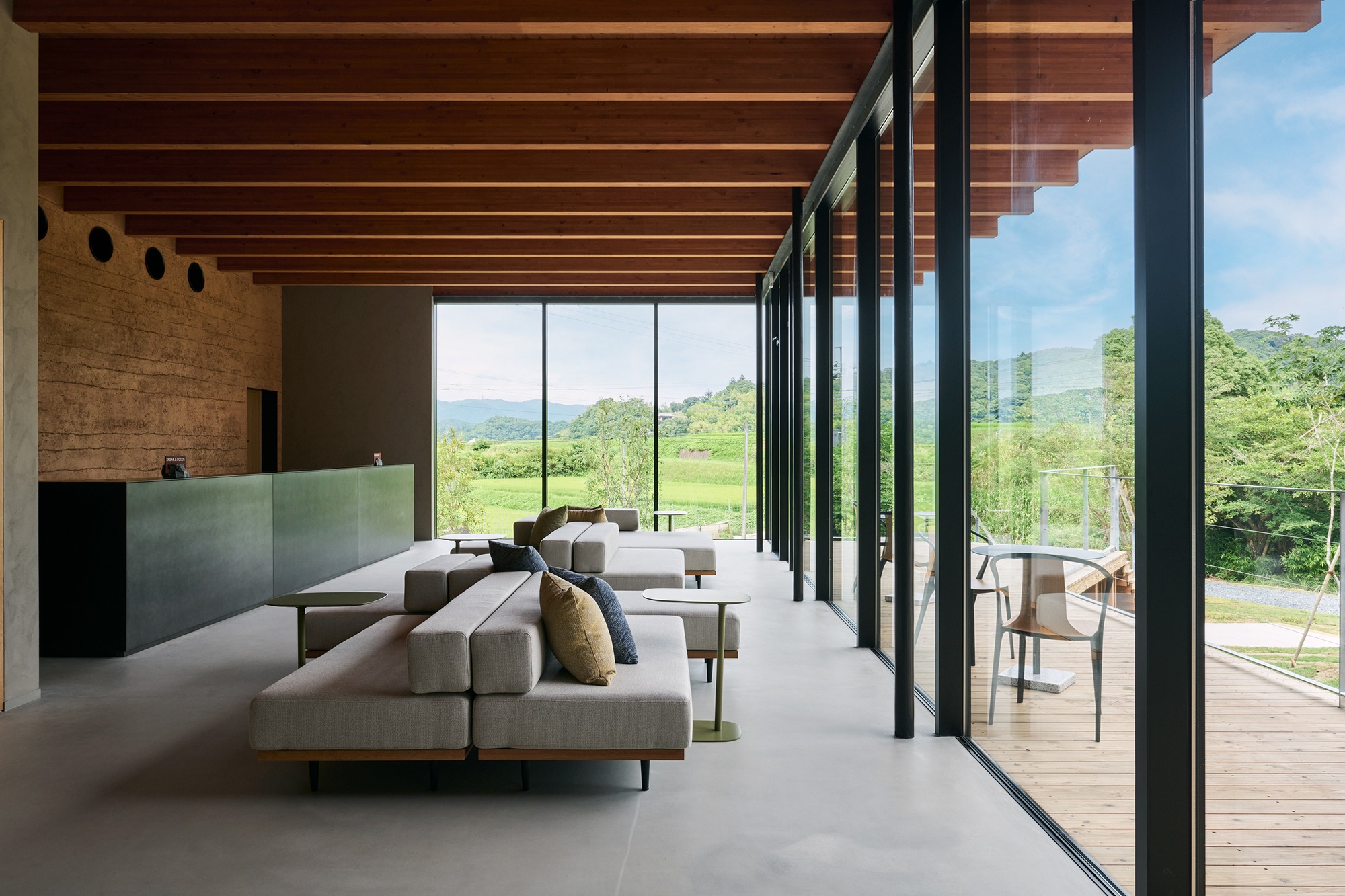
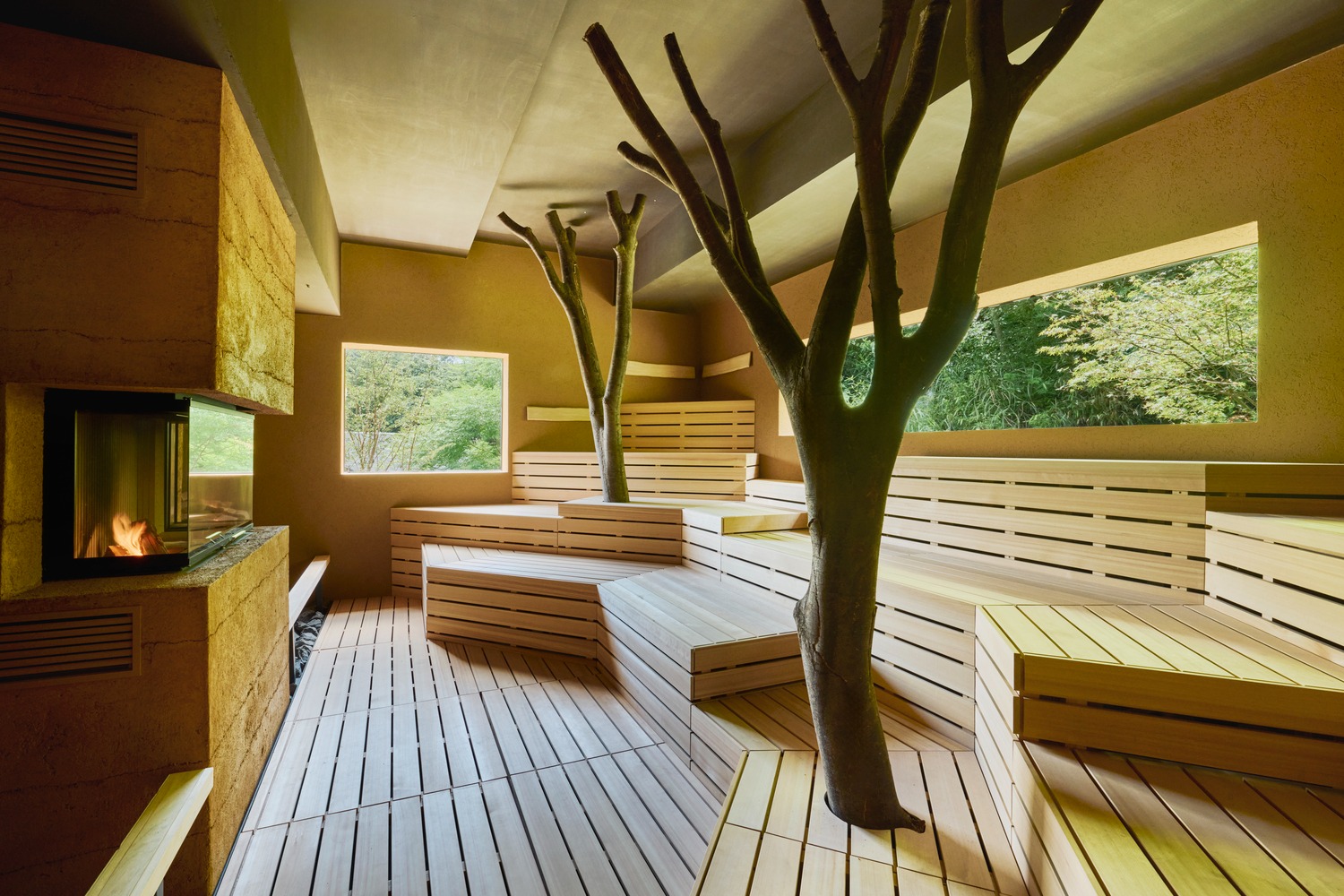
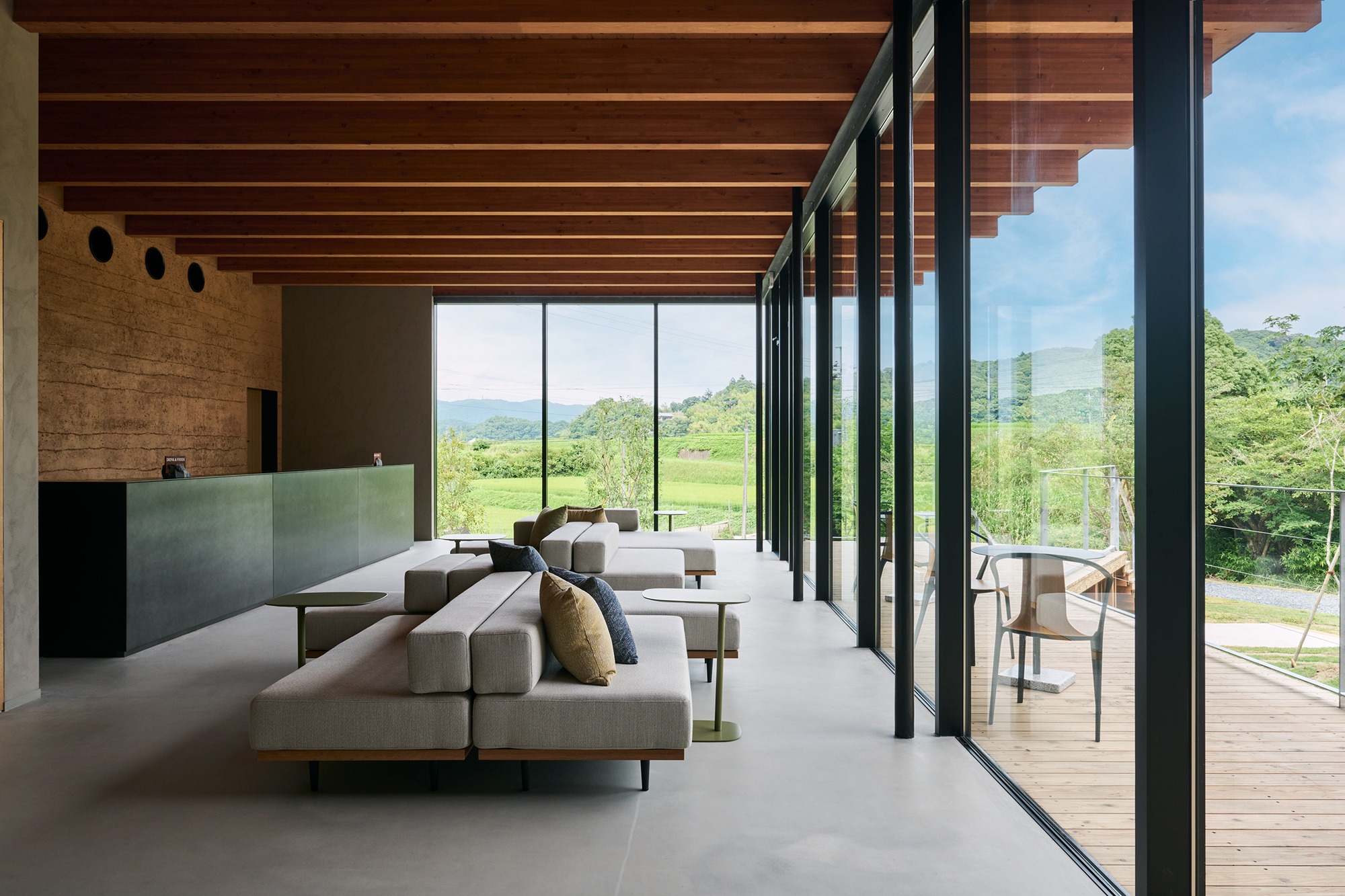
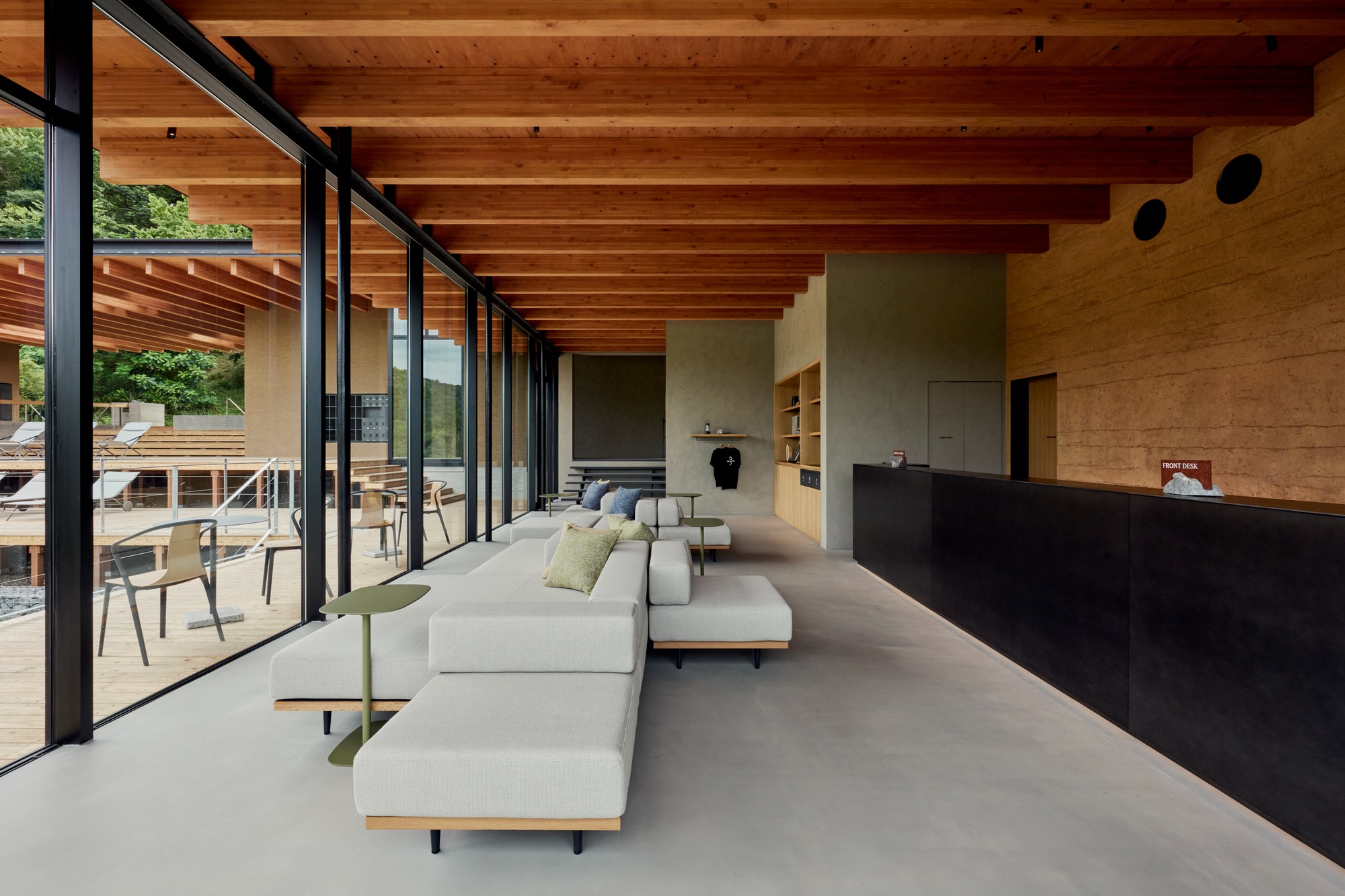
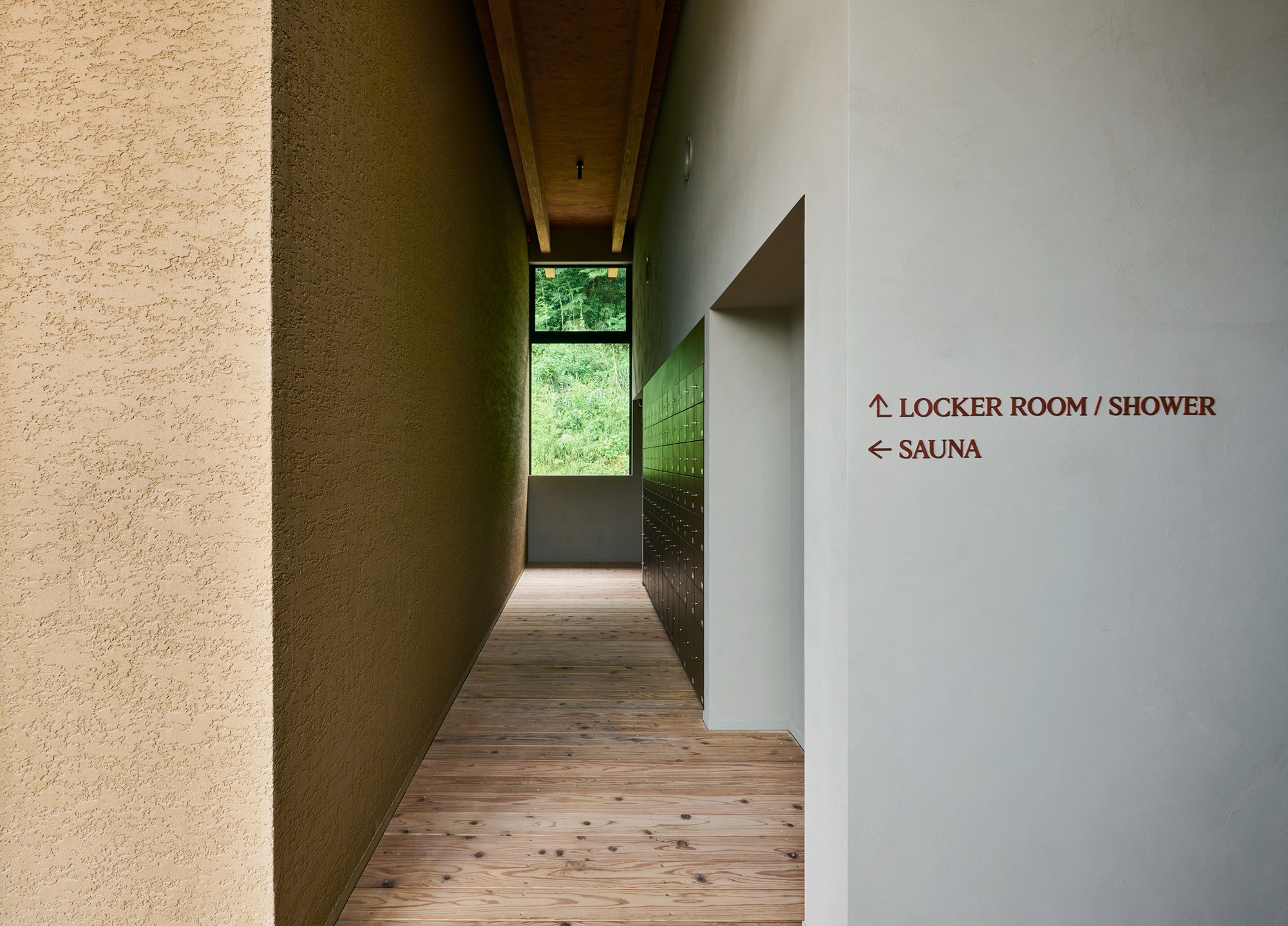
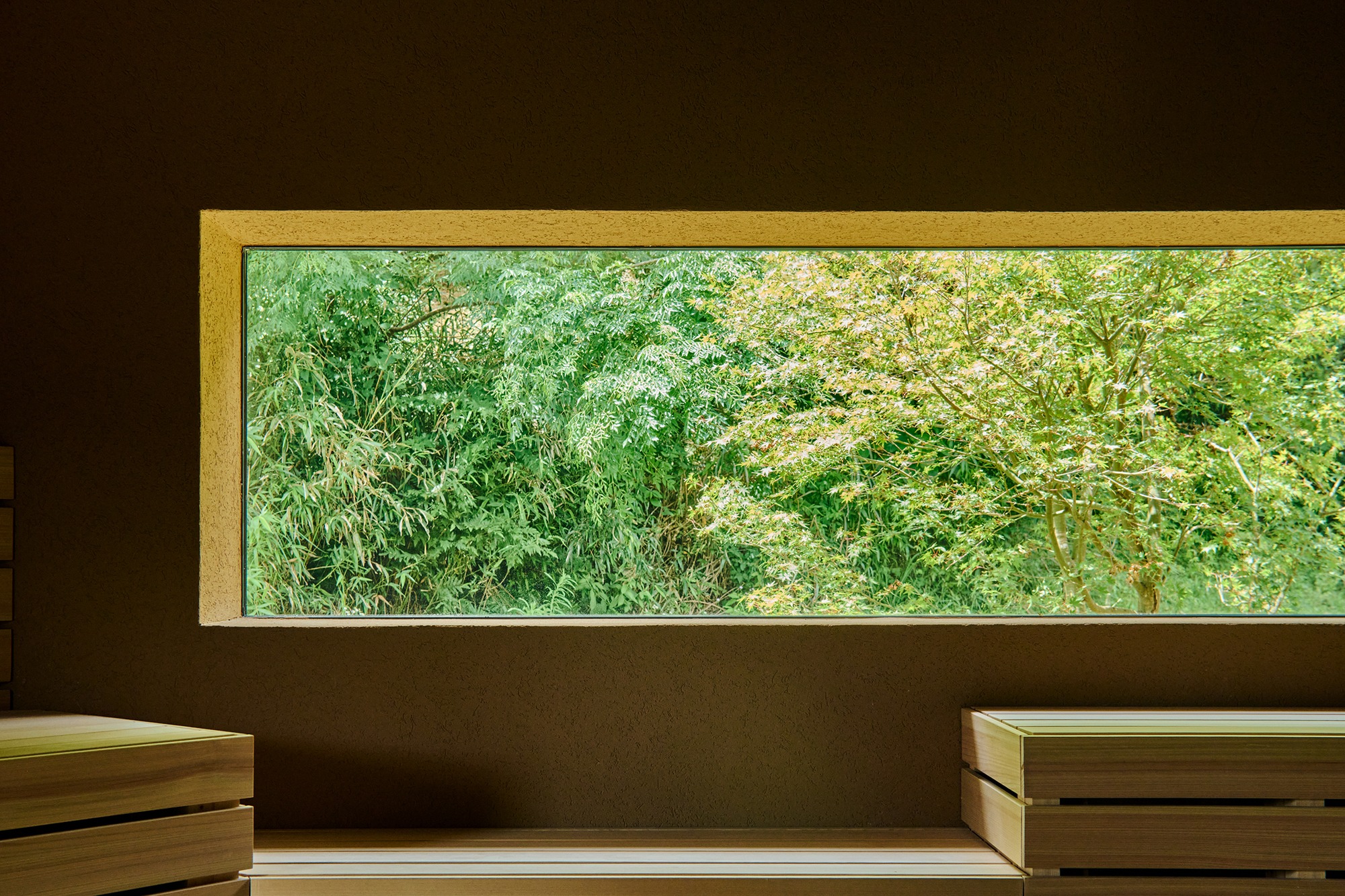
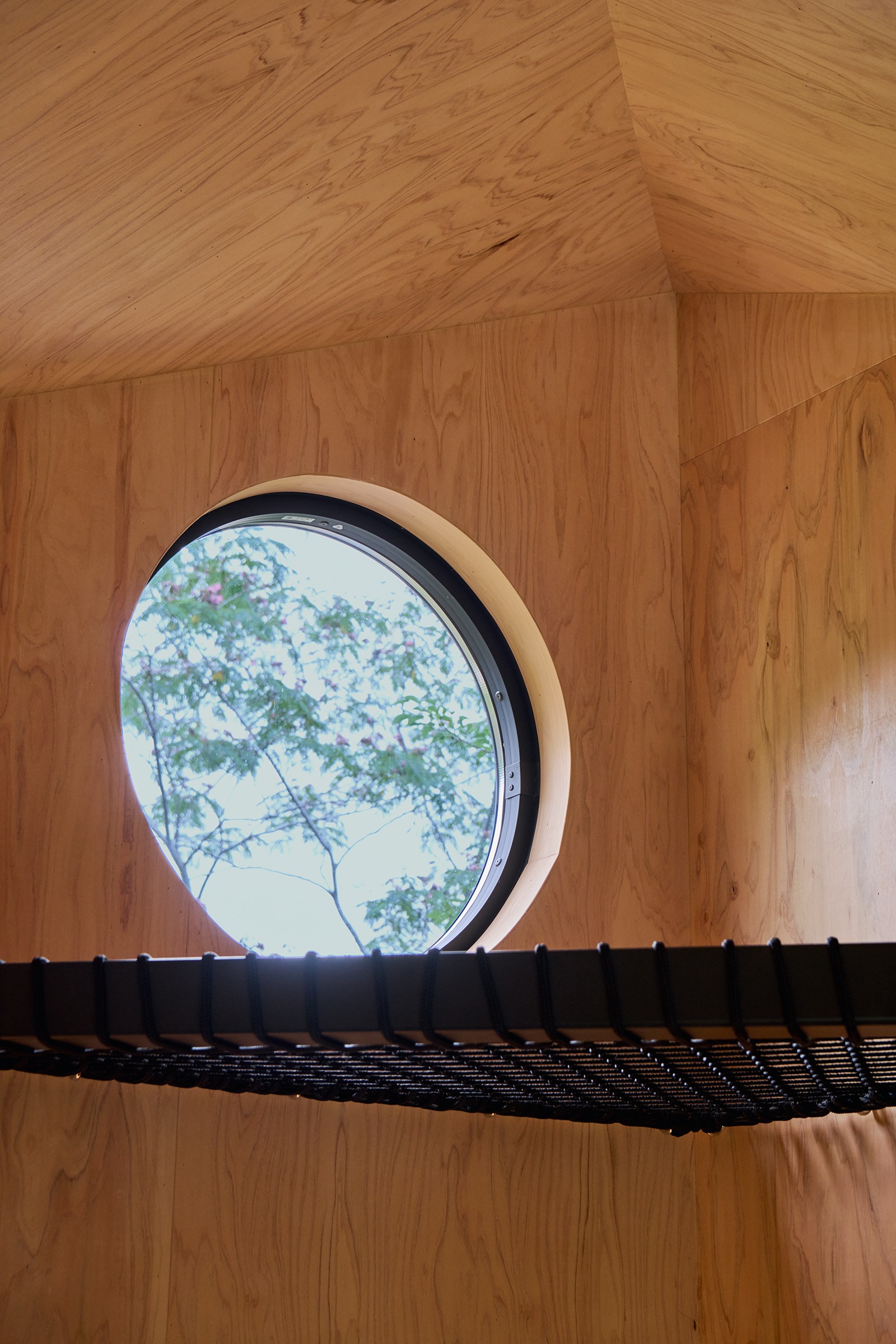
메인 사우나 공간은 내부 기둥 없이 12.7미터를 가로지른다. 시선이 사방의 풍경으로 열린 채 방해받지 않도록 하기 위해서다. 이 경간은 집성 목재 보를 주요 철골 보에서 현수하는 복합 구조로 실현되었다. 지붕은 얇고 가볍게 떠 있고, 외곽의 세장한 철제 기둥은 구조적 존재감을 최대한 지운다. 실내에서 올려다보면 목재의 결이 격자처럼 펼쳐지고, 유리 너머로 숲이 가득 들어온다. 황혼이 내려앉으면 캐빈마다 작은 빛이 켜지고, 계단식 녹지 위로 불빛이 번진다. 건축과 풍경 사이의 경계는 그렇게 조용히 사라진다.
Write by Claude & Jean Browwn

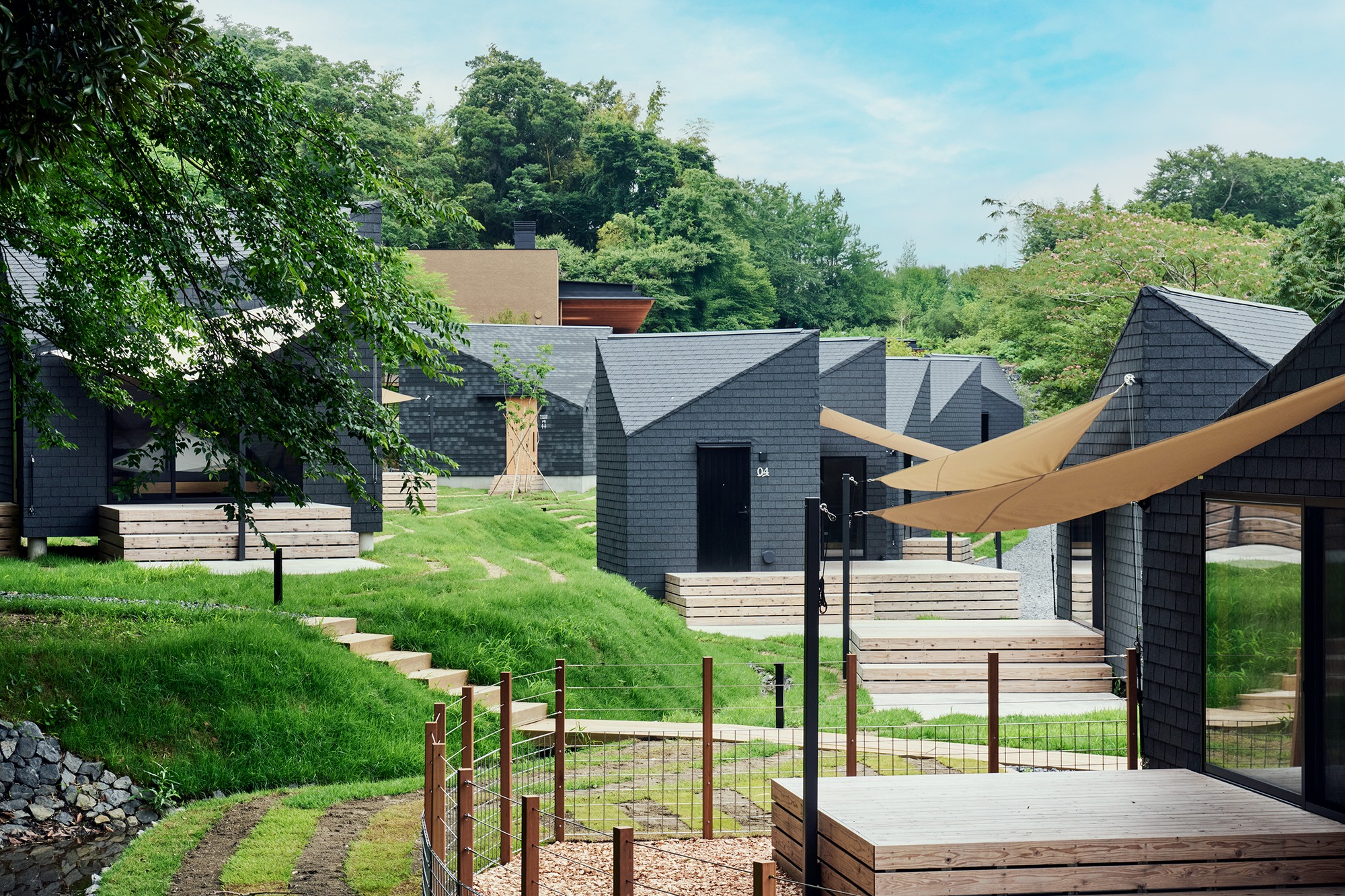
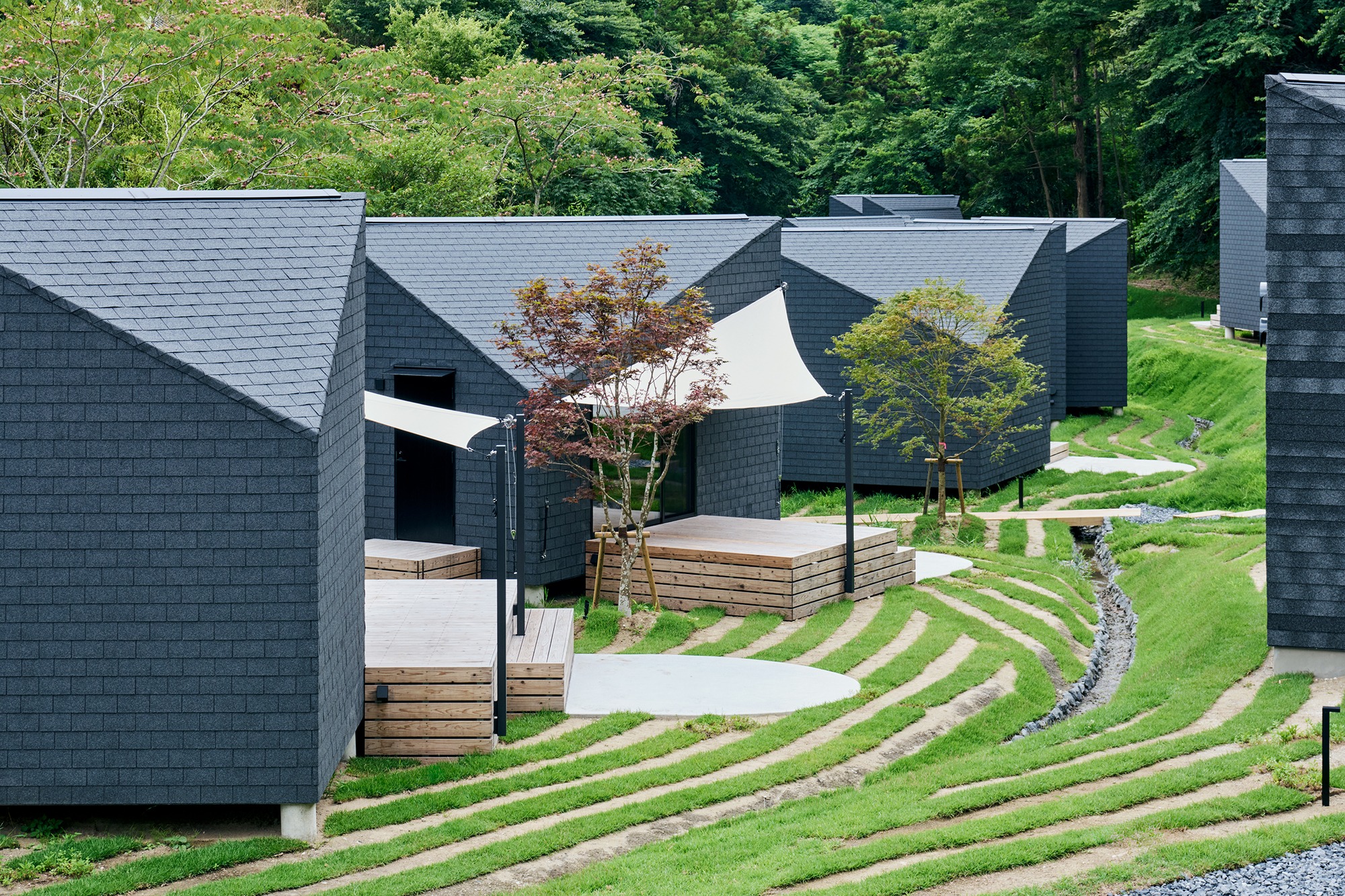
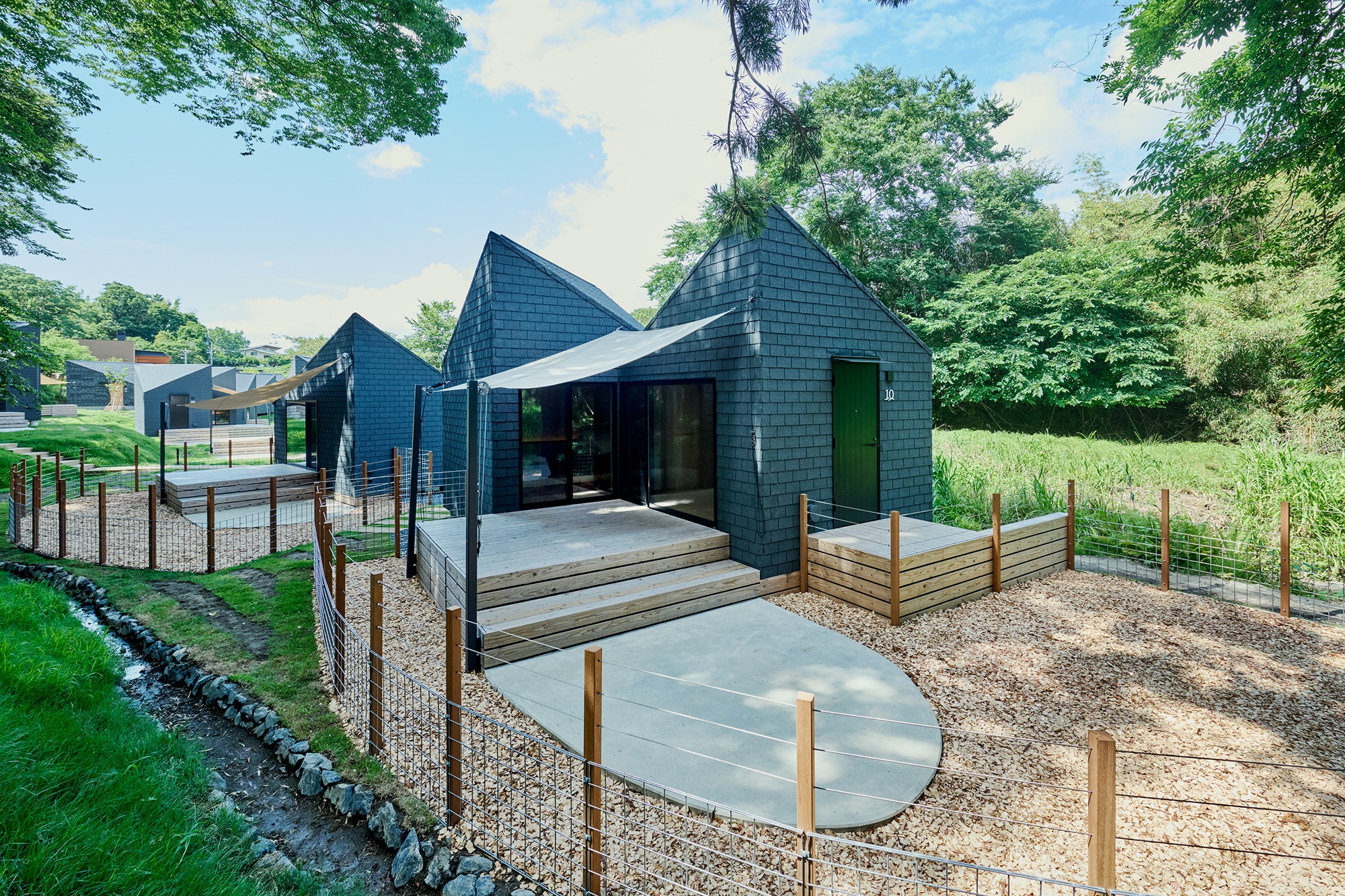

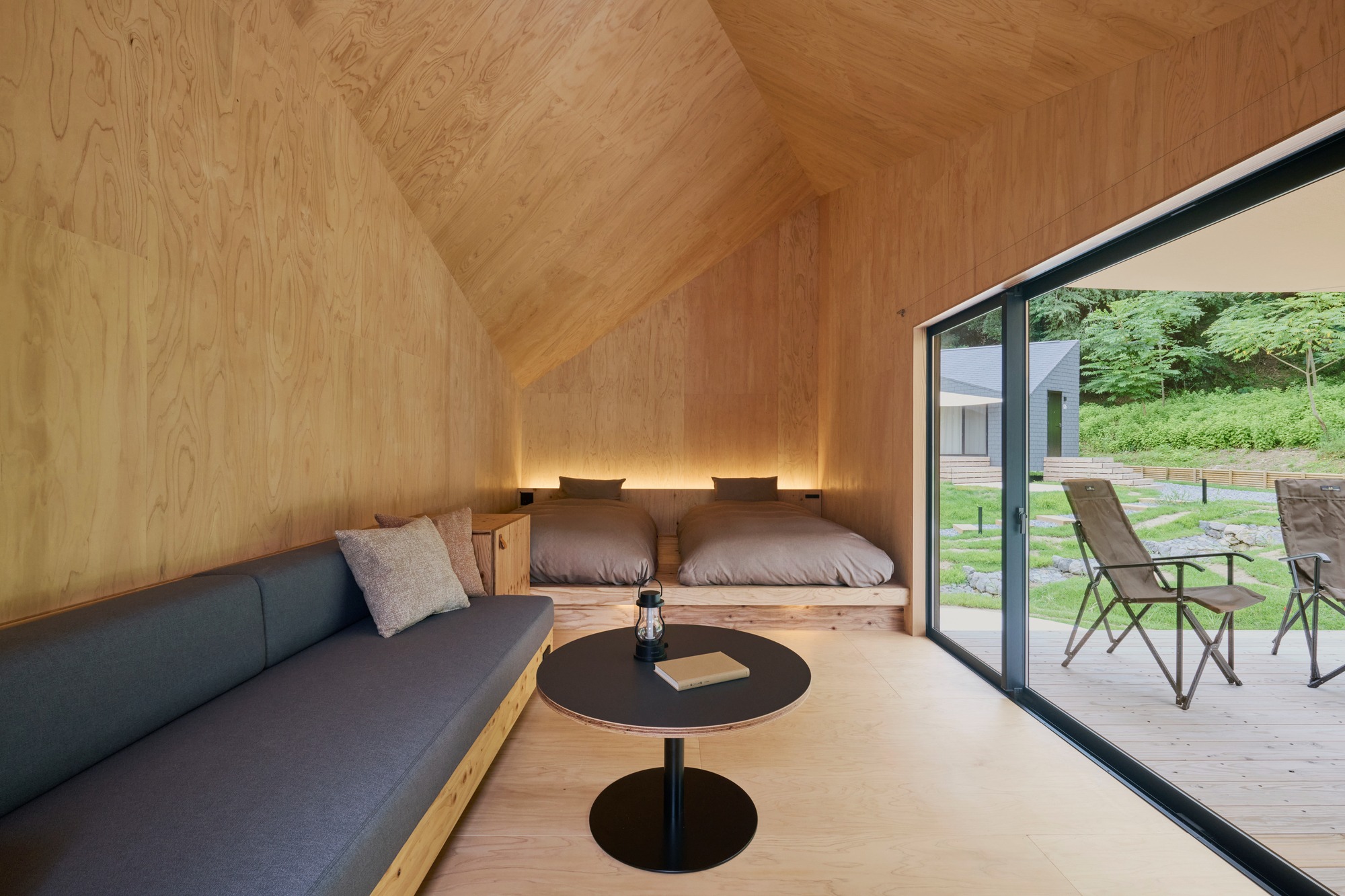
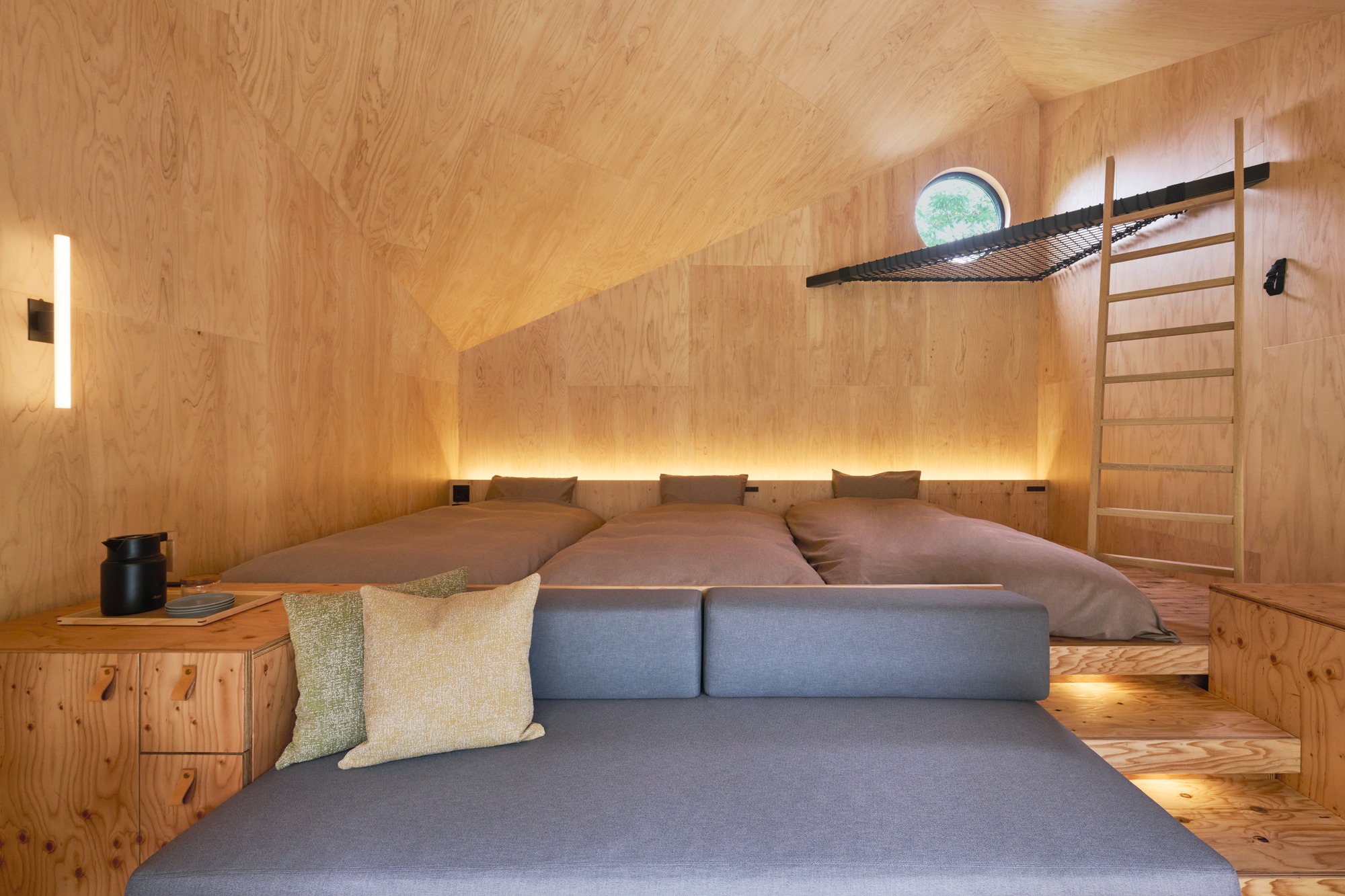
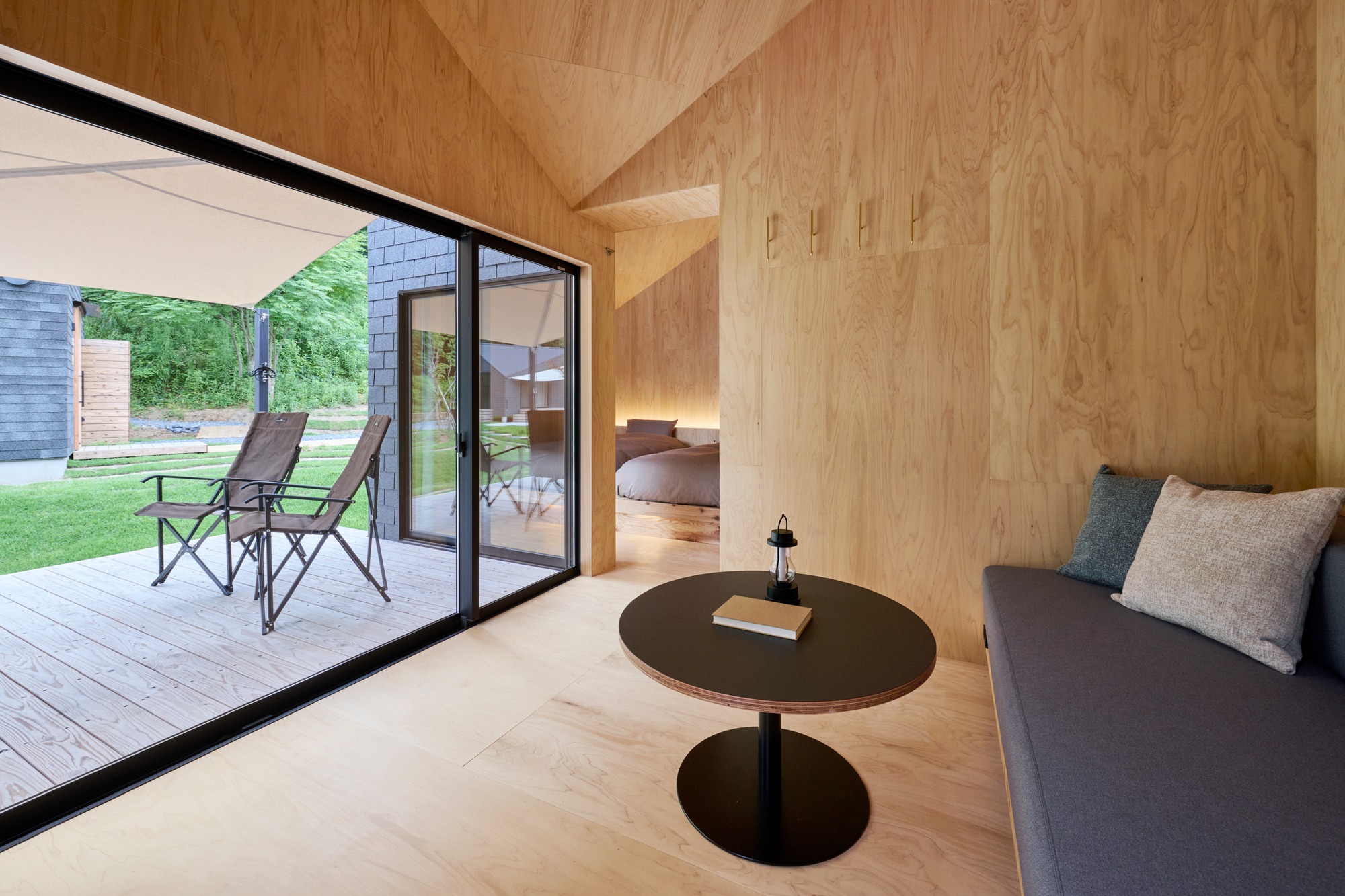
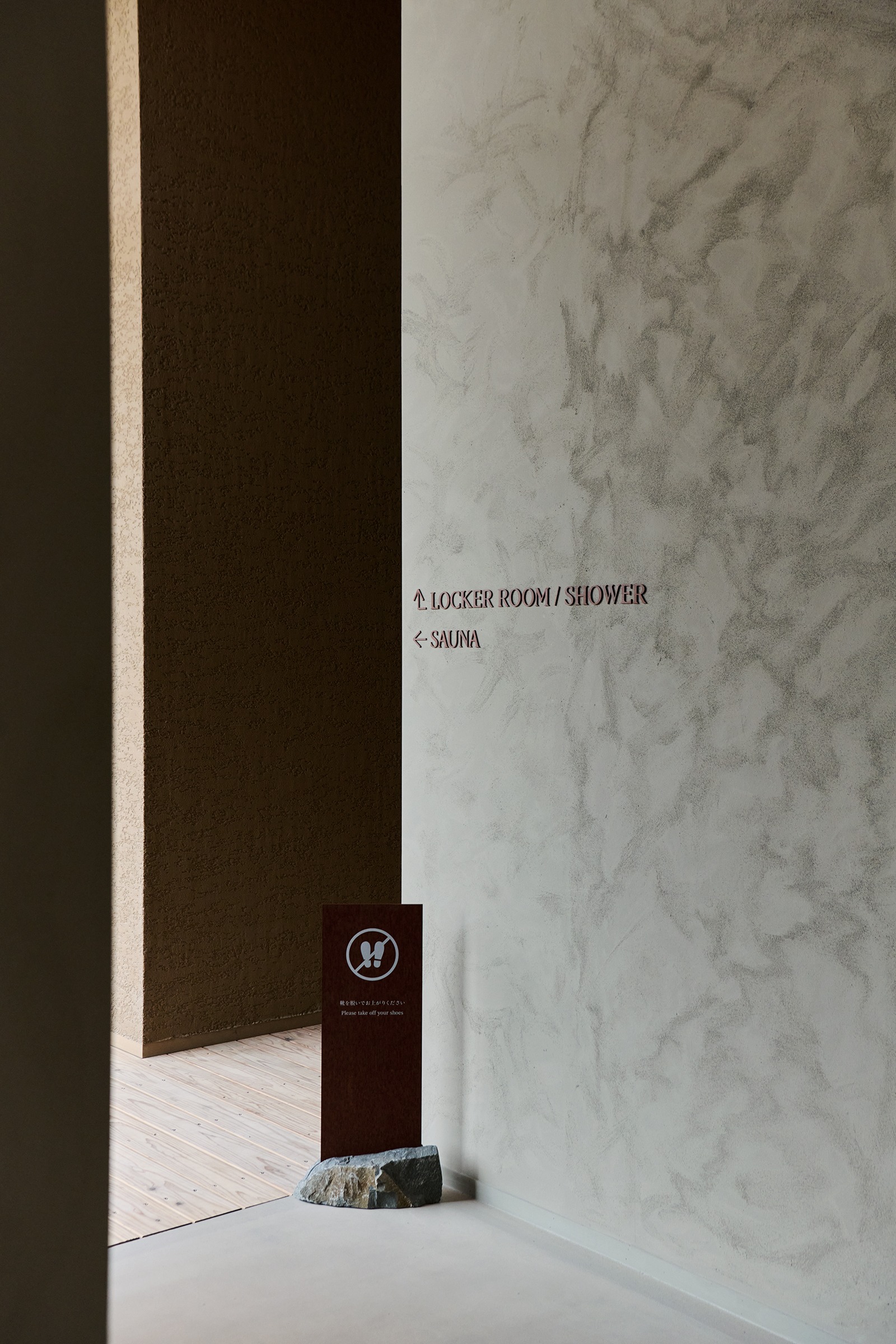
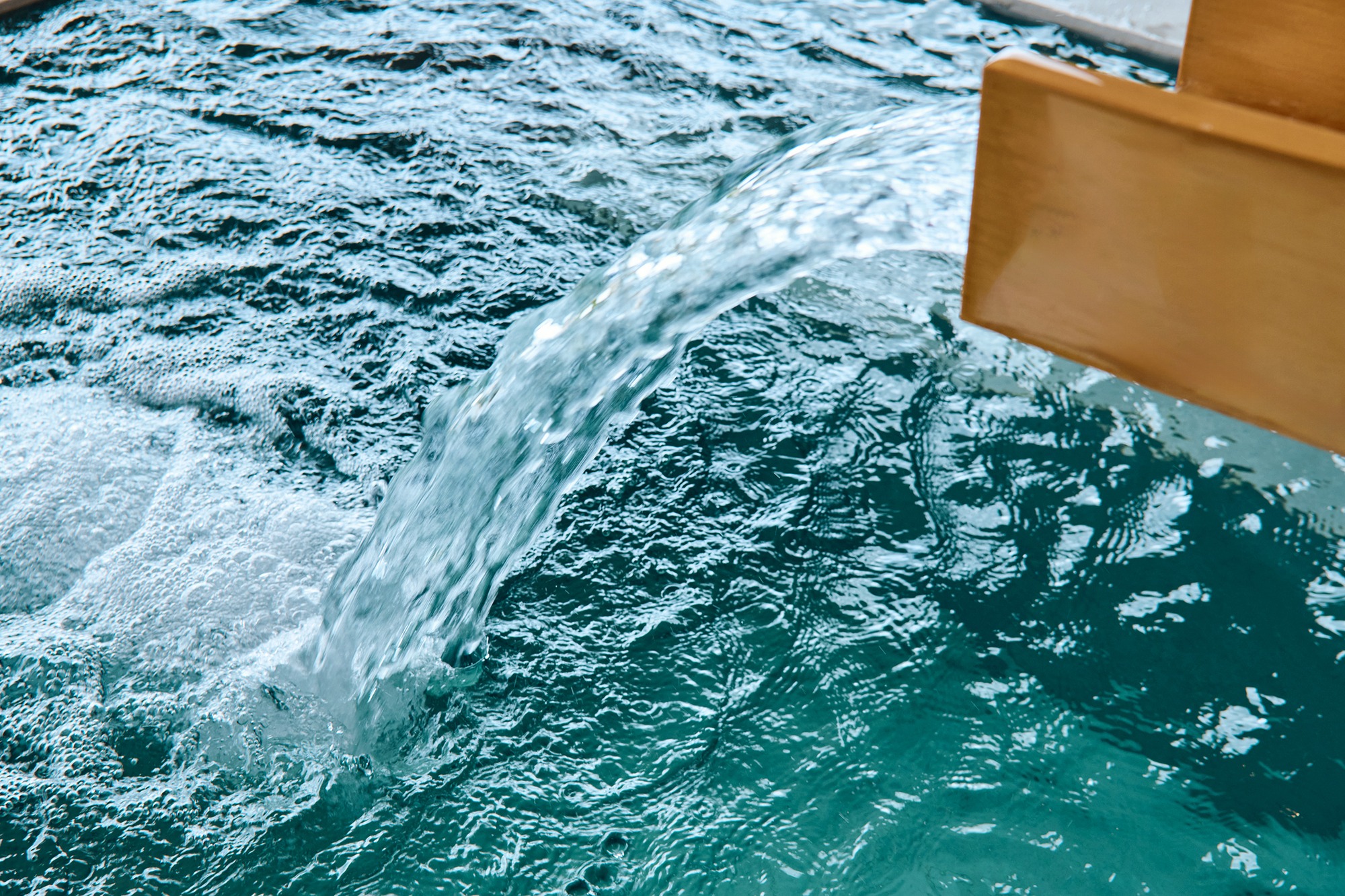
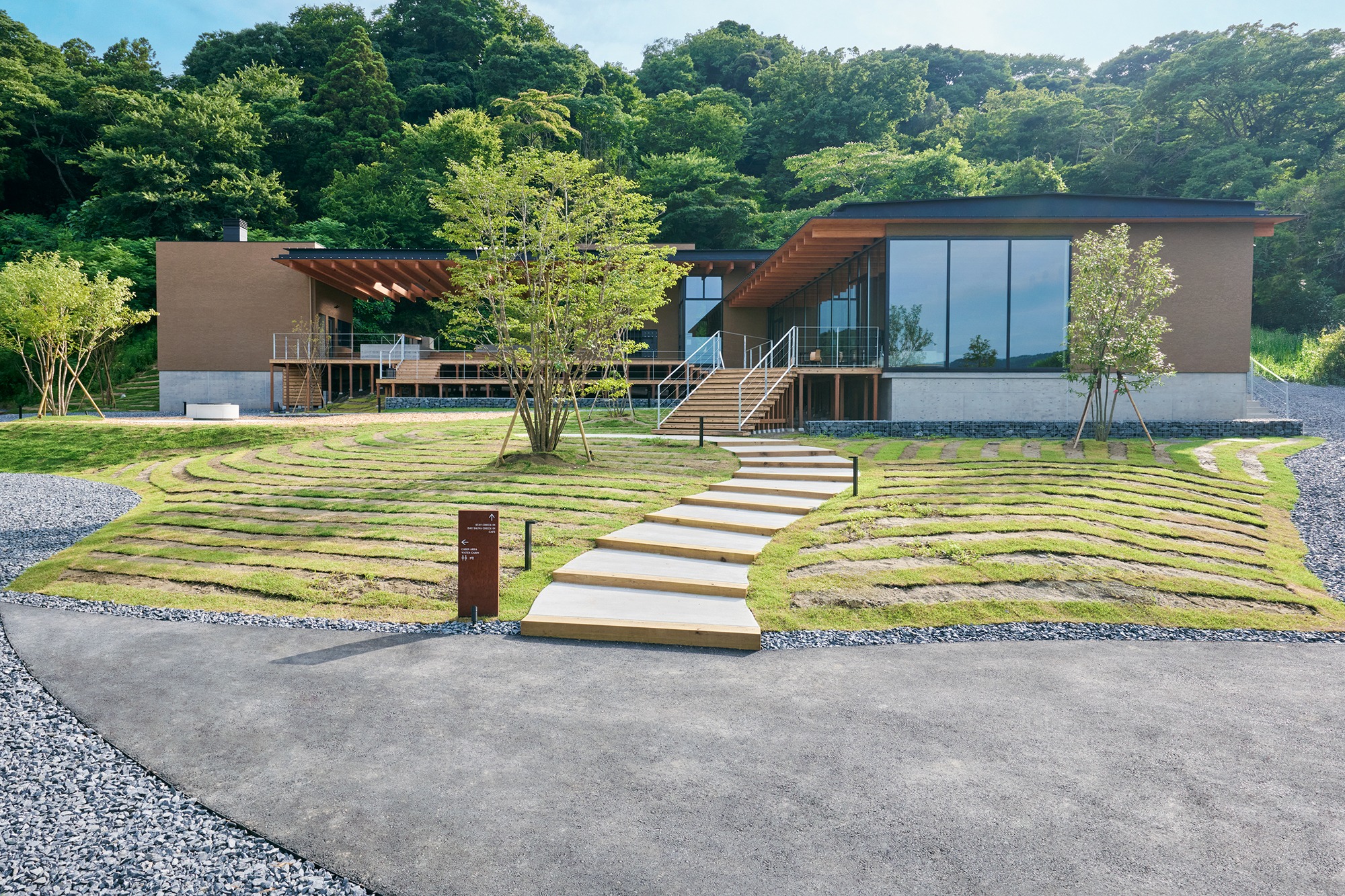
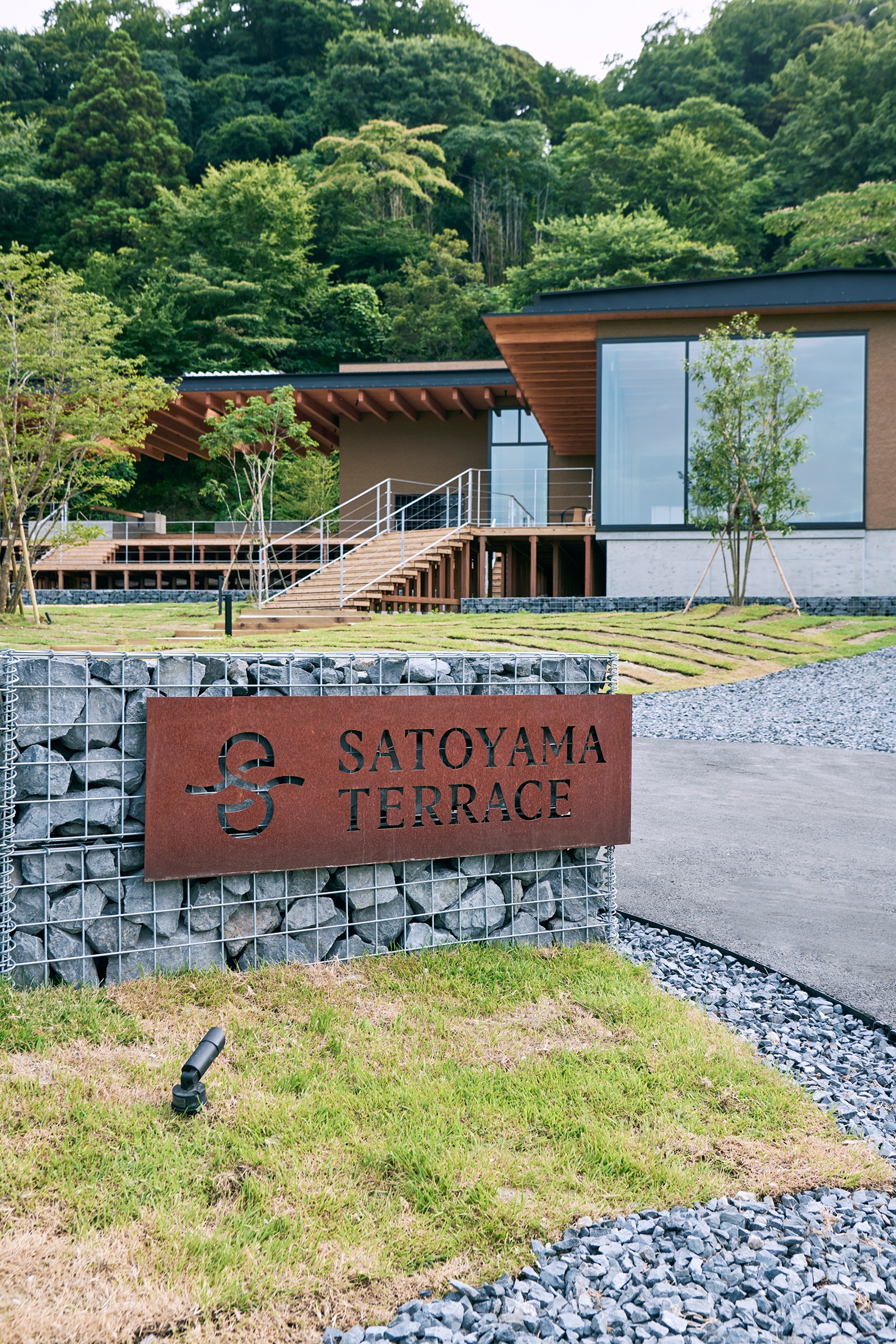
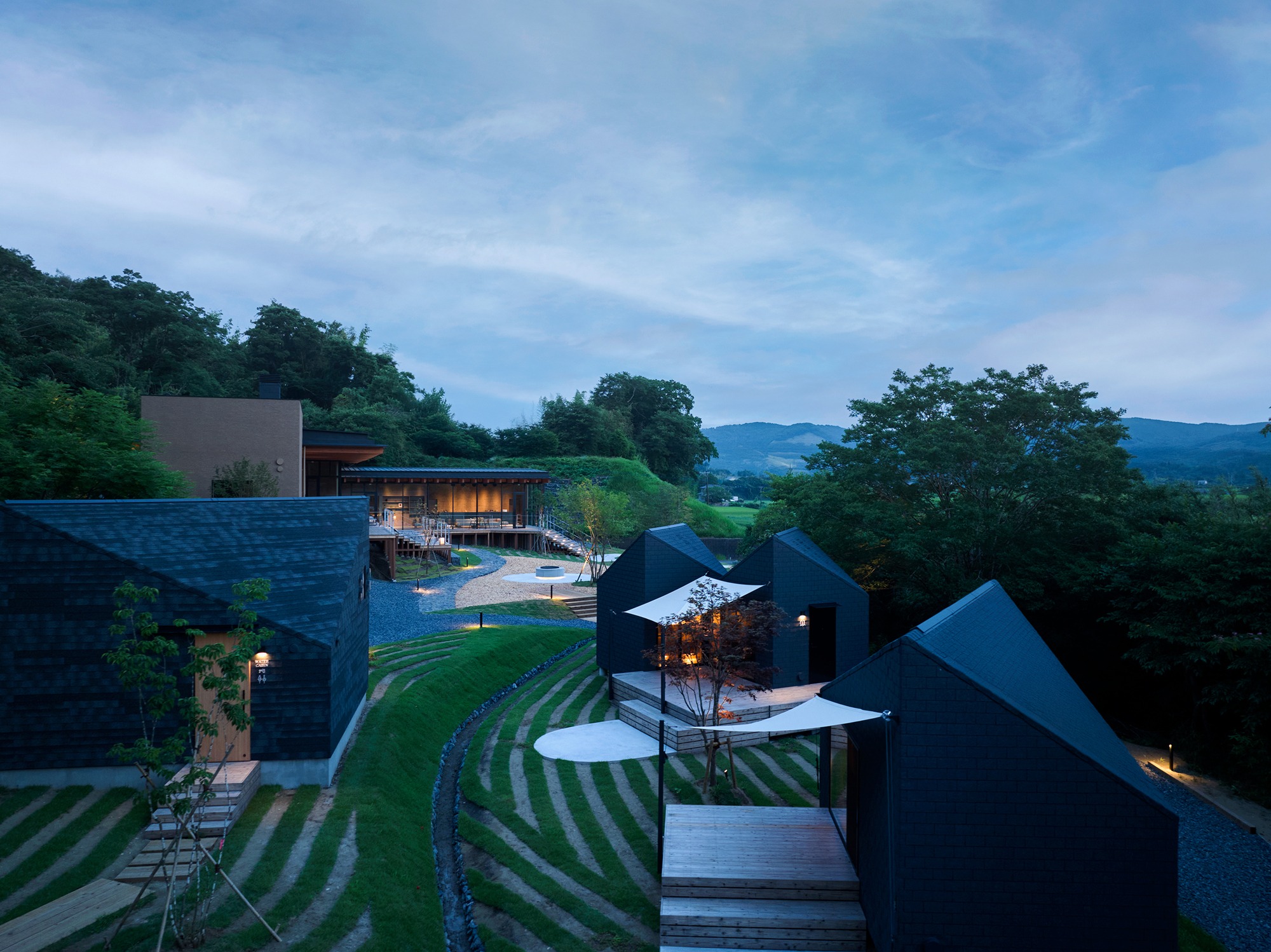
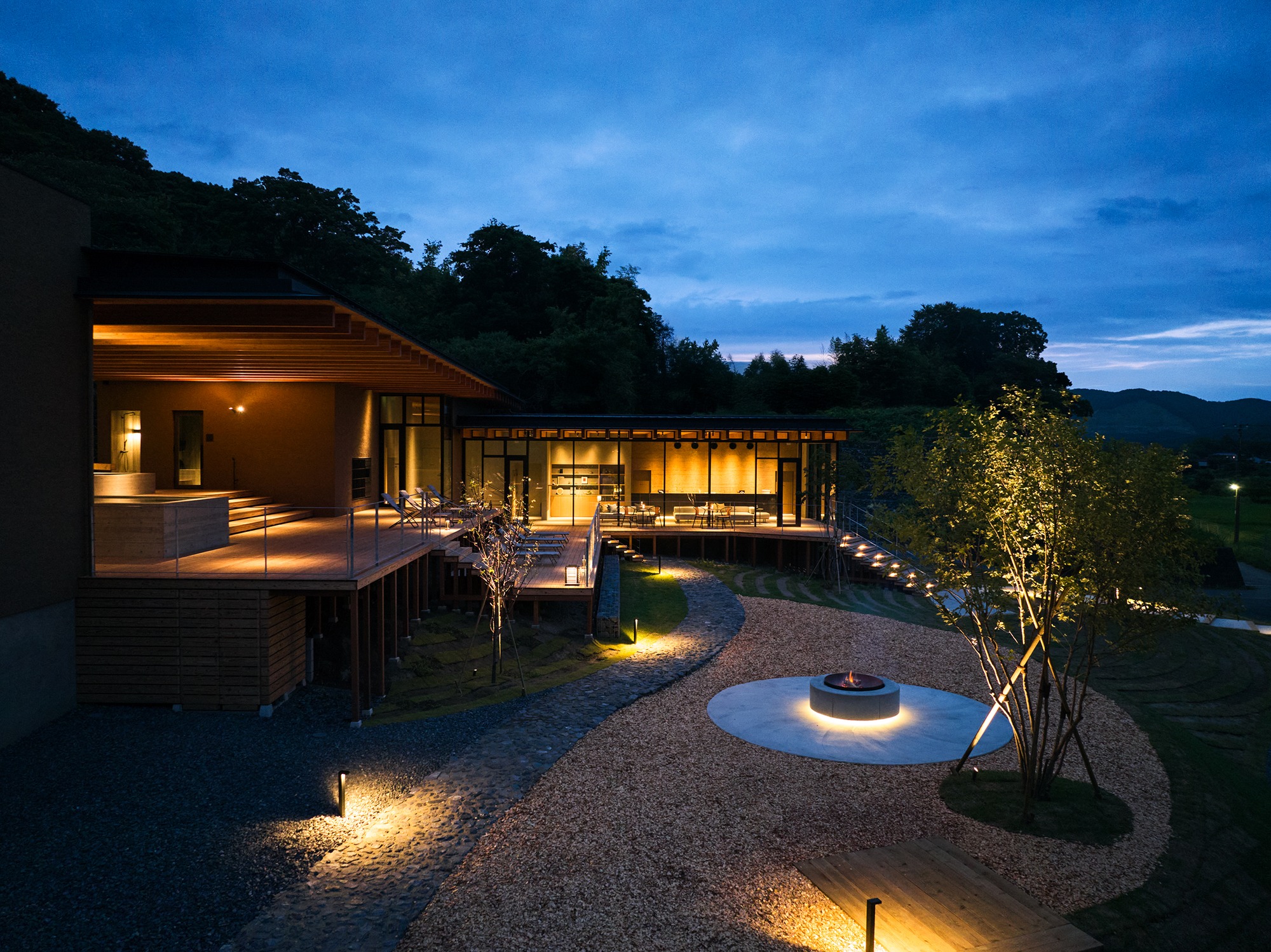
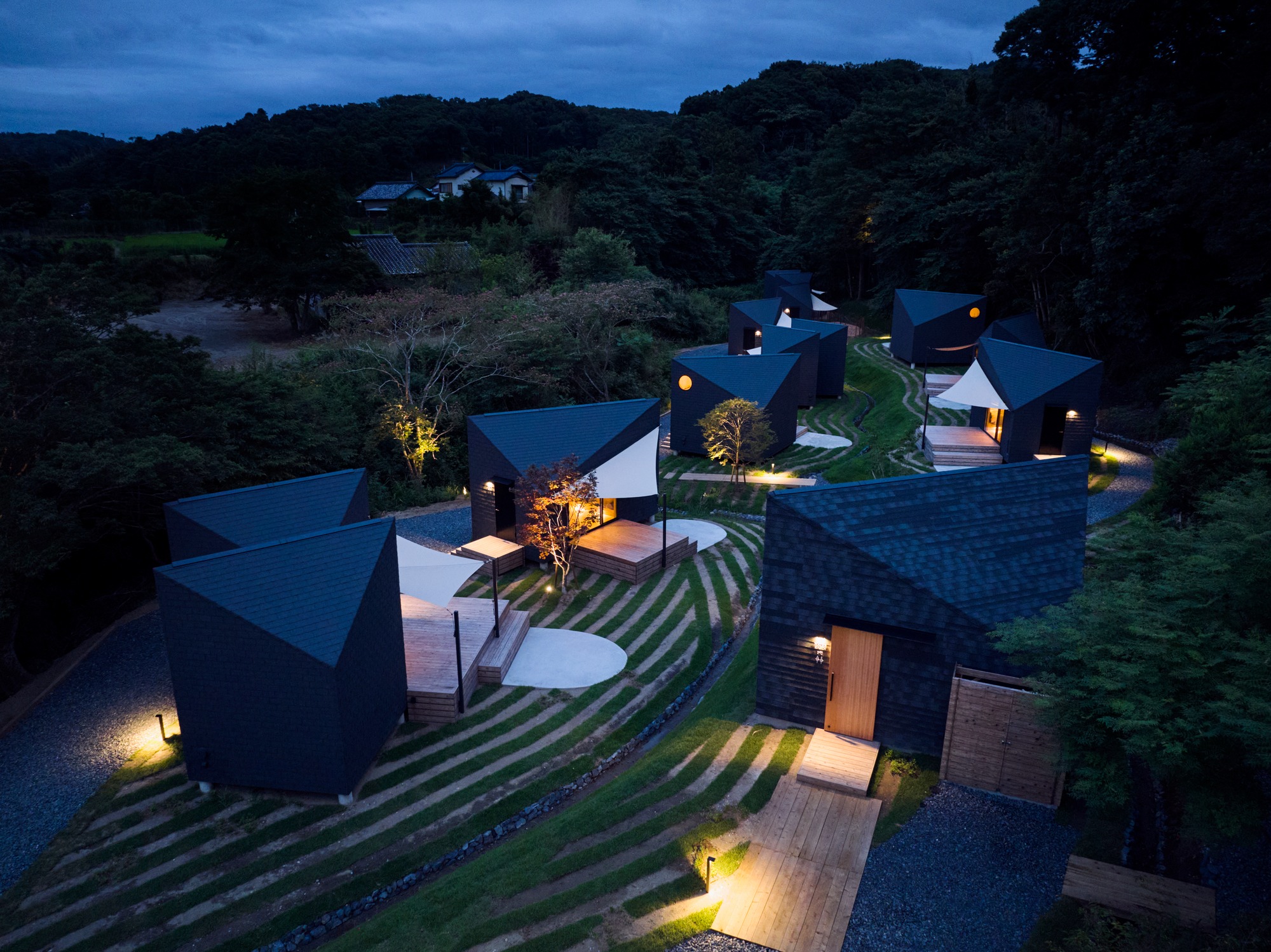
Satoyama Terrace is a small scale hospitality project situated within a traditional Japanese satoyama landscape, where natural systems and human activity have historically coexisted in dynamic balance. The project begins with a fundamental question: how can architecture engage with this landscape without reducing it to a static or consumable image? Rather than reproducing a nostalgic rural scenery, the design reinterprets the relationships embedded in satoyama and translates them into a contemporary spatial experience. Water, wind, soil, and vegetation are treated not as background elements, but as active forces shaping perception and occupation.
The project consists of dispersed cabins and a central sauna building, arranged across the site to create a sequence of environmental transitions. Movement through the site unfolds as a continuous encounter with subtle differences in airflow, temperature, light, and scale, forming a series of micro-environments.
A primary challenge was to avoid conventional civil engineering interventions such as retaining walls or rigid drainage systems. Instead, both visible and invisible conditions of the land were considered. Particular attention was given to underground water flows, ensuring that natural hydrological patterns remain uninterrupted. The ground is treated as a living system rather than a fixed surface.
The main building is organized around a deck terrace that penetrates the volume, forming a passage for wind descending from the mountain and for water to flow through the site. This terrace is slightly elevated on independent foundations, allowing both air and water to move freely beneath it and maintaining existing subsurface flow routes.
The main sauna space spans 12.7 meters without internal columns, prioritizing uninterrupted views toward the surrounding landscape. This span is achieved through a hybrid structure in which laminated timber beams are suspended from primary steel beams, allowing the roof to remain thin and visually light. Slender steel columns at the perimeter further reduce the presence of structure, reinforcing the continuity between architecture and landscape.
from archdaily
'Hotel & Resort' 카테고리의 다른 글
| * 숲이 건축이 되는 곳 [ Michele Sicher Architetto ] Pineta Nature Resort (0) | 2026.06.17 |
|---|---|
| * 골목의 리듬 [ Brewin Design Office ] Capella Kyoto (0) | 2026.05.07 |
| * 대지 몰입형 공간 비평 [ Oppenheim Architecture ] Desert Rock Resort (0) | 2026.03.04 |
| * 시간과 물성이 빚어낸 건축적 번역 [ Tristan Auer ] Rosewood Courchevel Le Jardin Alpin (0) | 2026.02.27 |
| * 지역의 숨결로 빚은 산속의 성소 [ RooMoo Design Studio ] Cloudhaus Hotel (0) | 2026.01.23 |