"나는 건축을 지우고 싶다. 건물이 대지와 경관 속으로 녹아드는, 그런 건축을 만들고 싶다."— 구마 겐고 (隈研吾)
 |
 |
 |
Traditional wooden townhouses inform interiors of Kengo Kuma-designed Capella Kyoto hotel
골목이 품은 논리
교토에서 건축을 한다는 것은 역사를 정면으로 마주하는 일이다. 기온 거리 한 켠, 오래된 초등학교 터 위에 구마 겐고 건축사무소가 카펠라 교토를 설계했을 때, 그 주변 골목에는 이미 하나의 건축 언어가 수백 년째 살아 숨 쉬고 있었다. 마치야(町家), 교토 고유의 전통 목조 도시형 주택이다.
마치야는 앞쪽에 작은 상점을 두고, 안으로 깊숙이 들어갈수록 생활 공간이 이어진다. 그 사이사이에는 정원이나 중정이 끼어들며 빛과 공기를 불러온다. 폭은 좁고 깊이는 깊다. 그 깊이 속에는 일종의 리듬이 있다. 개방에서 폐쇄로, 공적인 영역에서 사적인 영역으로 점진적으로 전이하는, 살아 있는 공간 논리다.
싱가포르 기반의 브루인 디자인 오피스(Brewin Design Office, 이하 BDO)는 이 논리에서 카펠라 교토 인테리어의 핵심 문법을 발견했다. BDO의 설립자 로버트 청(Robert Cheng)은 "마치야의 매력은 고립된 개별 아이디어에 있지 않다. 그것은 일관된 공간 논리의 총체다"라고 말한다. "우리가 특히 영감을 받은 것은 마치야 특유의 리듬과 전이였다. 더 공적이고 열린 영역에서 점점 더 사적이고 사색적인 영역으로 이행하는 공간의 연속성이었다."
문턱을 넘는 여정
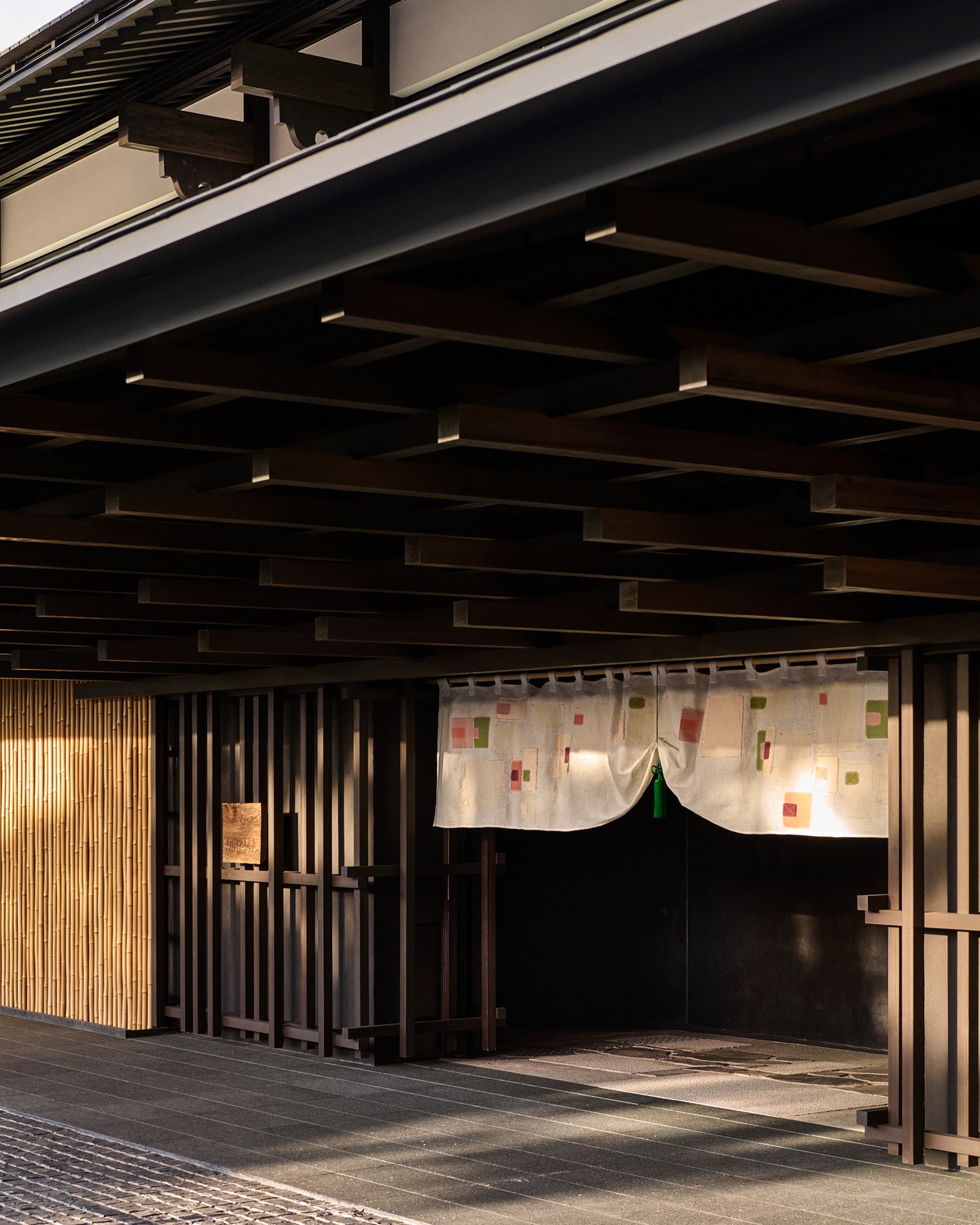
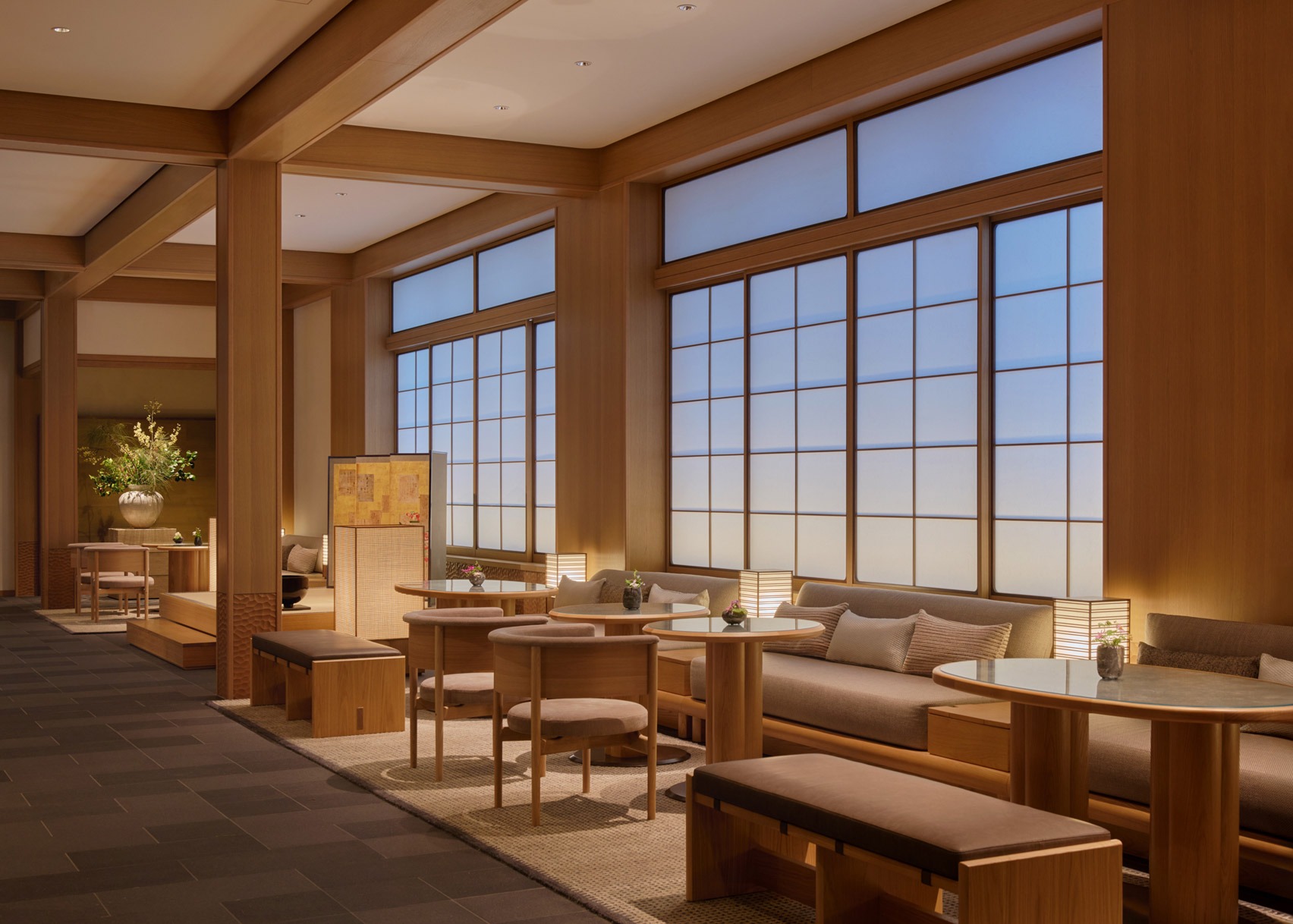
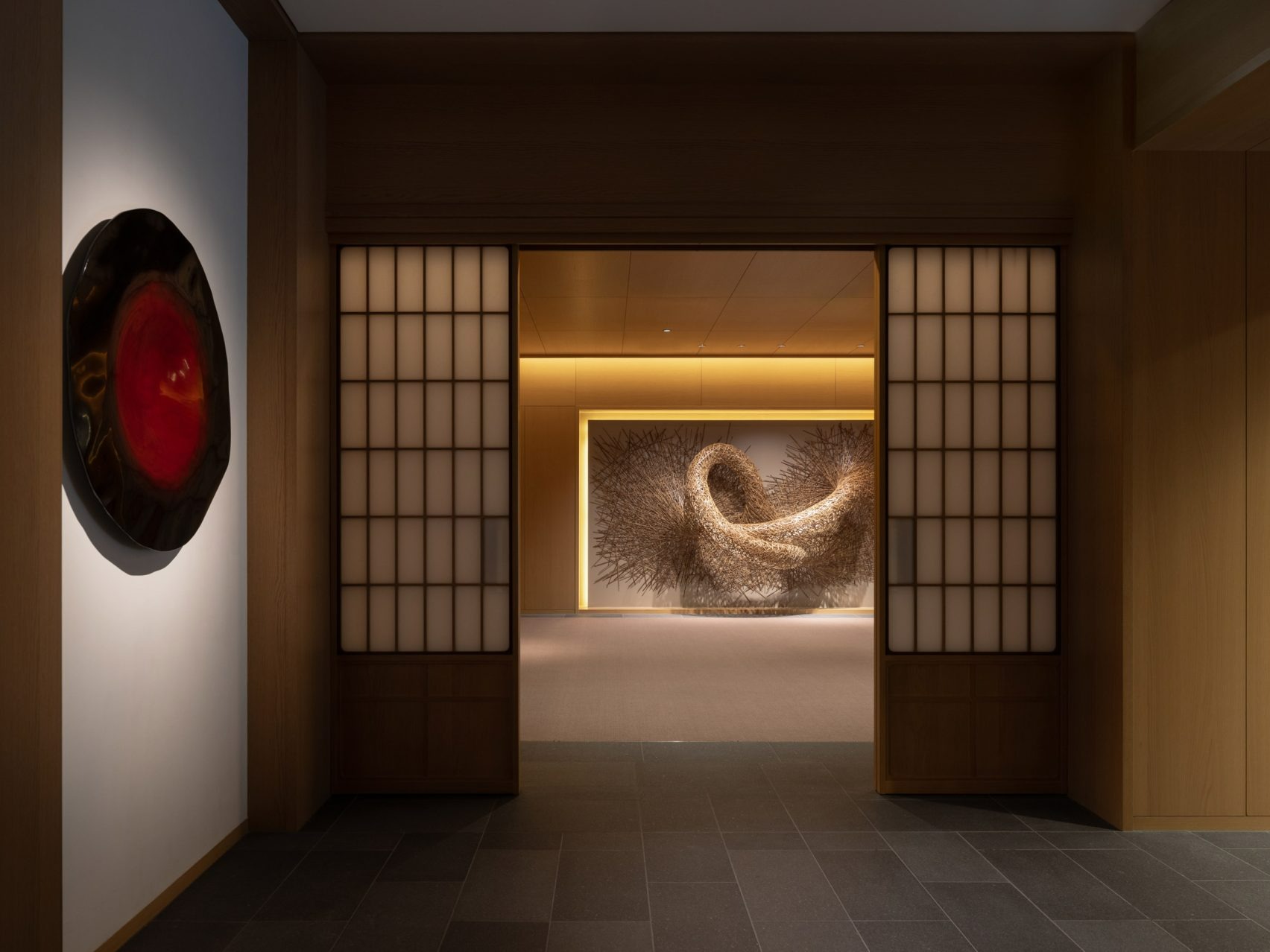
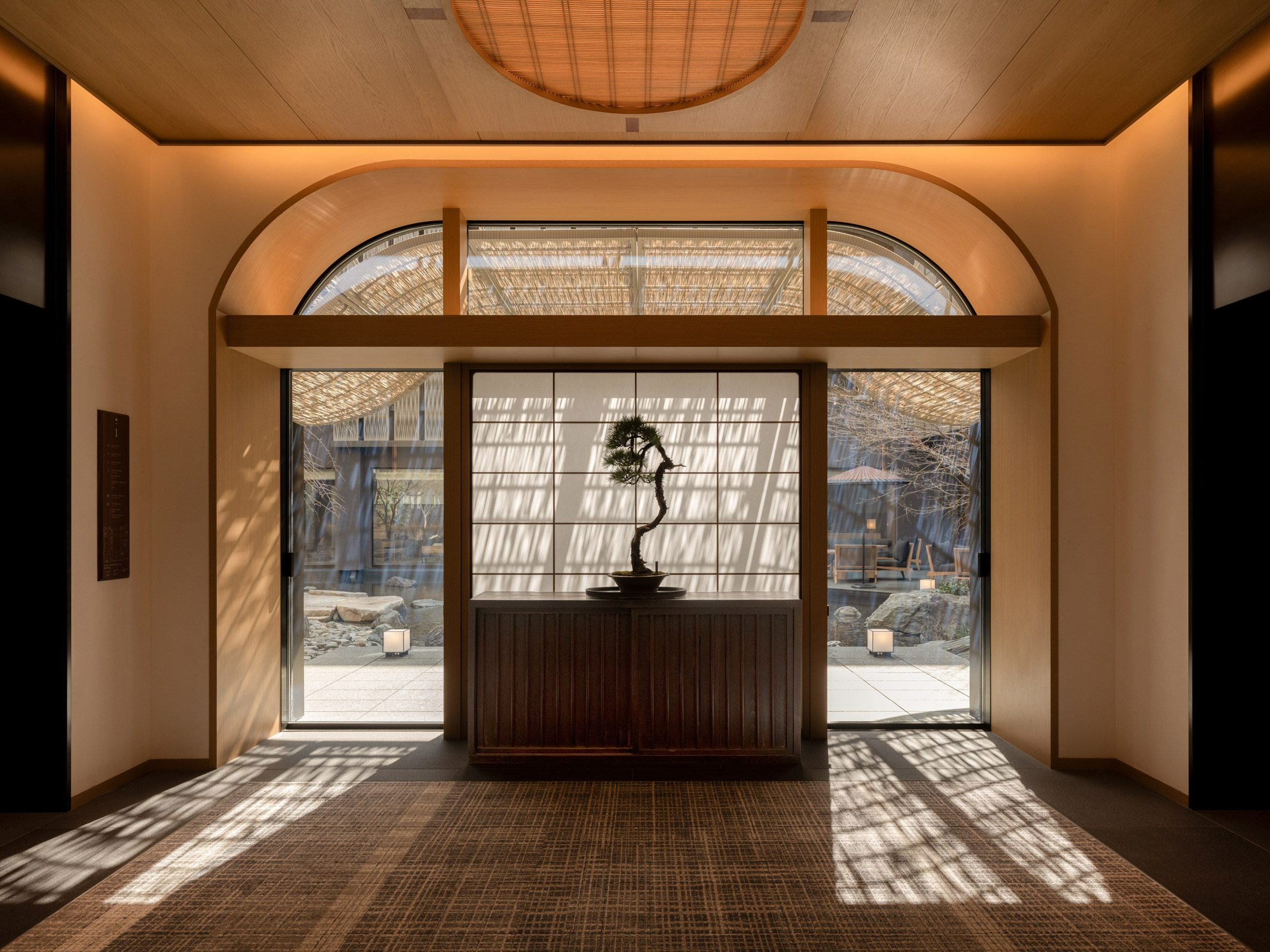
카펠라 교토에 발을 들이는 순간, 방문객은 곧바로 로비로 진입하지 않는다. 대신 쇼지(障子) 스크린이 줄지어 선 긴 통로를 천천히 걸어 나아간다. 투명하지 않지만 완전히 가리지도 않는 쇼지의 반투명한 결이 빛을 걸러내며, 도시의 소음과 속도를 조금씩 지운다. 이 완충의 시간을 BDO는 의도적으로 설계했다. "직접적인 로비 진입 대신, 도착의 과정 자체를 스크린과 전실(前室), 조절된 시선으로 켜켜이 쌓아 공간을 서서히 드러나게 했다"고 청은 설명한다. "이는 멈춤의 순간을 만들어 낸다. 도시에서 내부로의 이행이 천천히 가라앉도록 하는 것이다."
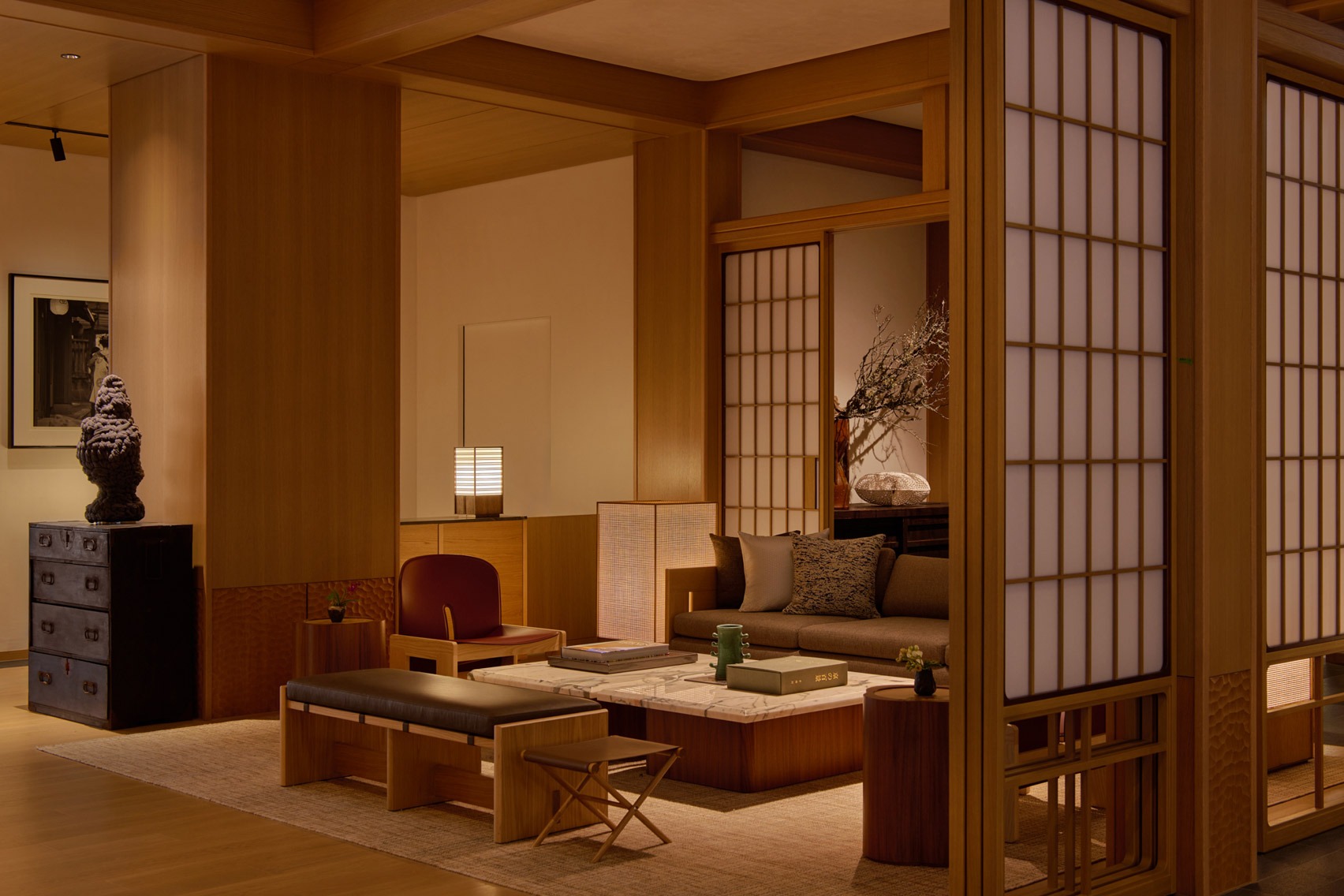
목재로 마감된 리셉션 로비 한쪽 벽에서는 커다란 조각 작품이 뻗어 나온다. 굵은 새끼줄이 뒤틀리며 솟아오른 형태, 시메나와(注連縄)다. 신도(神道) 정화 의례에 쓰이는 성스러운 줄을 모티프로 한 이 조각은, 외부와 내부 사이 어딘가에 존재하는 결계를 상징하며 방문객의 시선을 안으로 끌어당긴다.
중정, 호텔의 심장
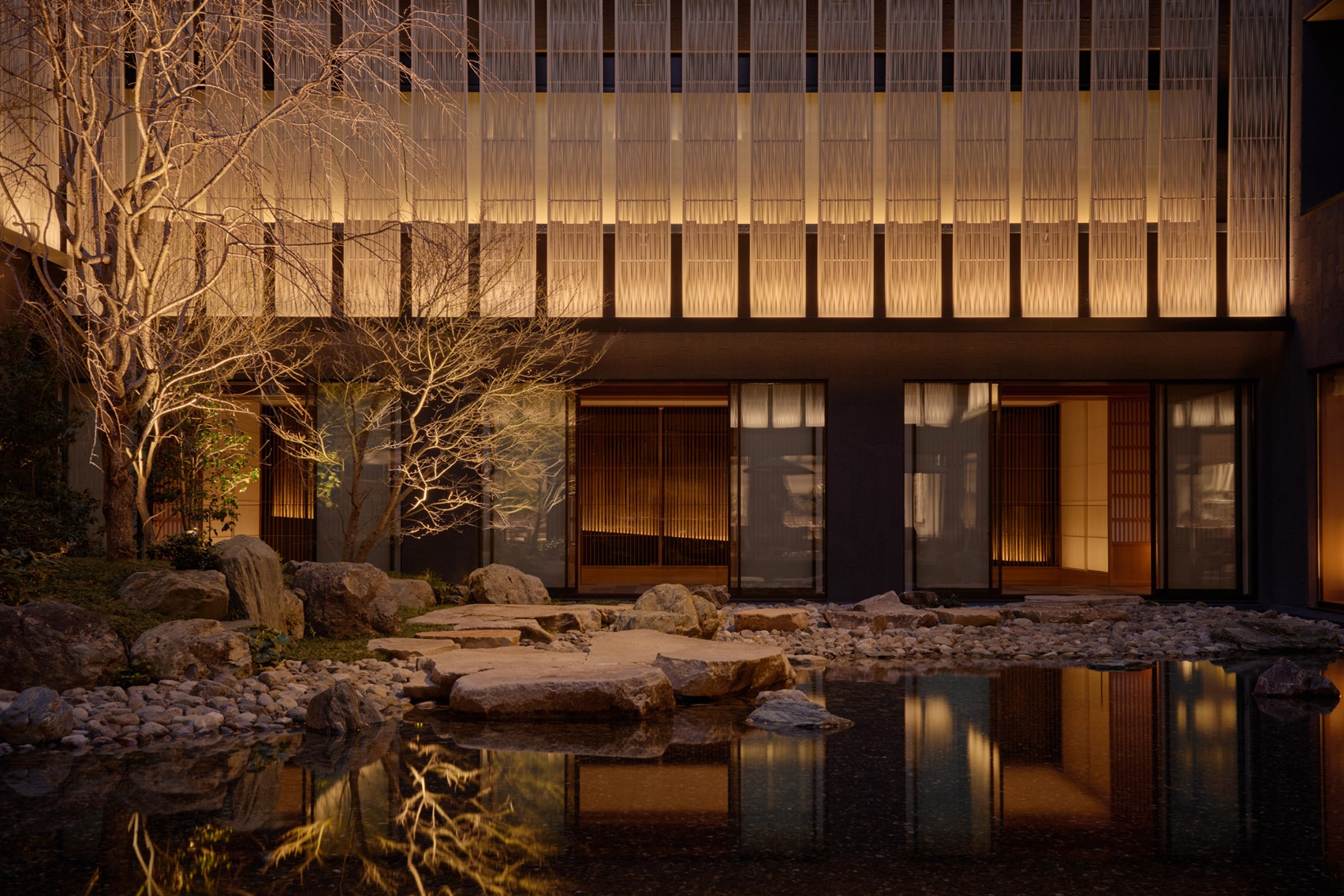
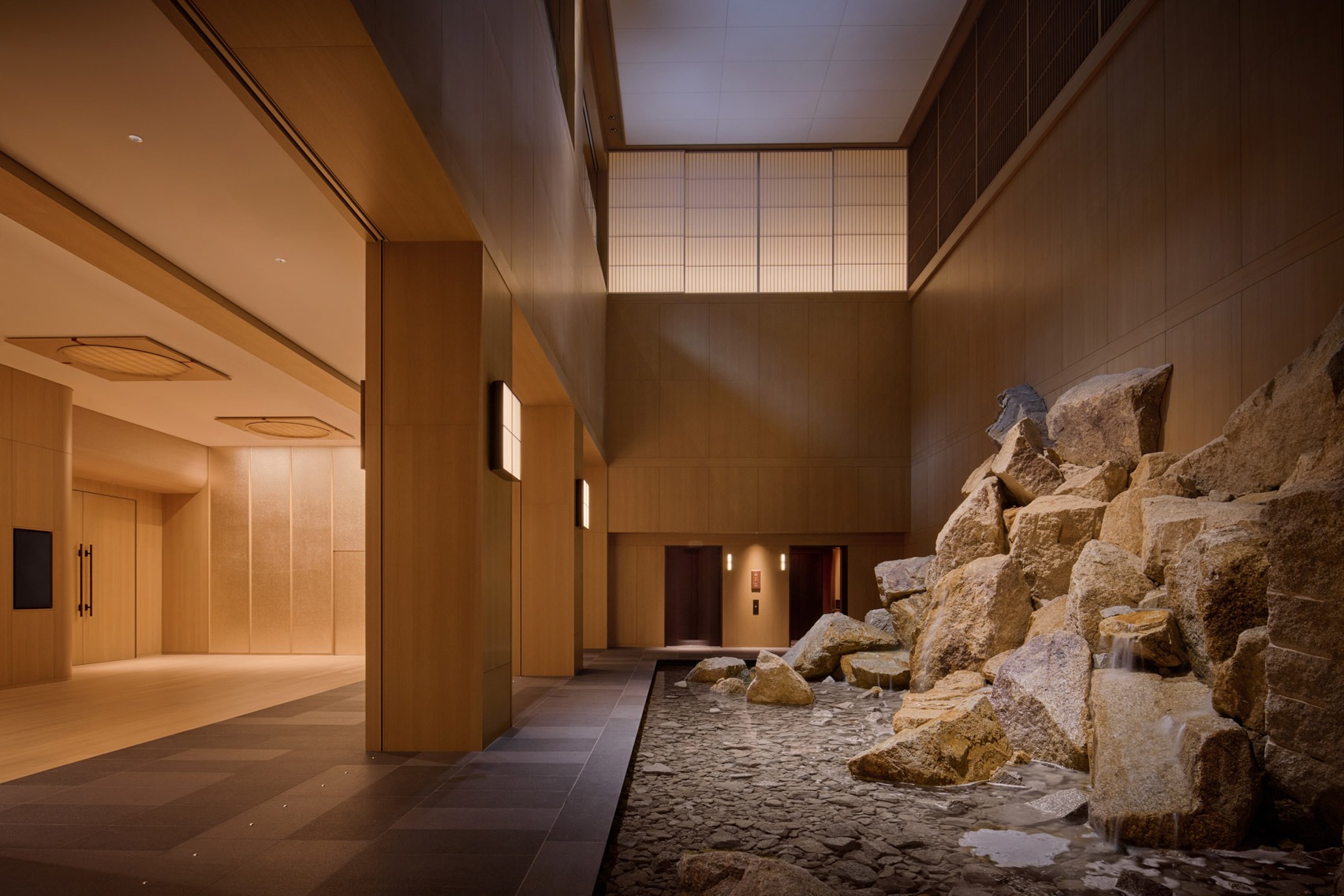
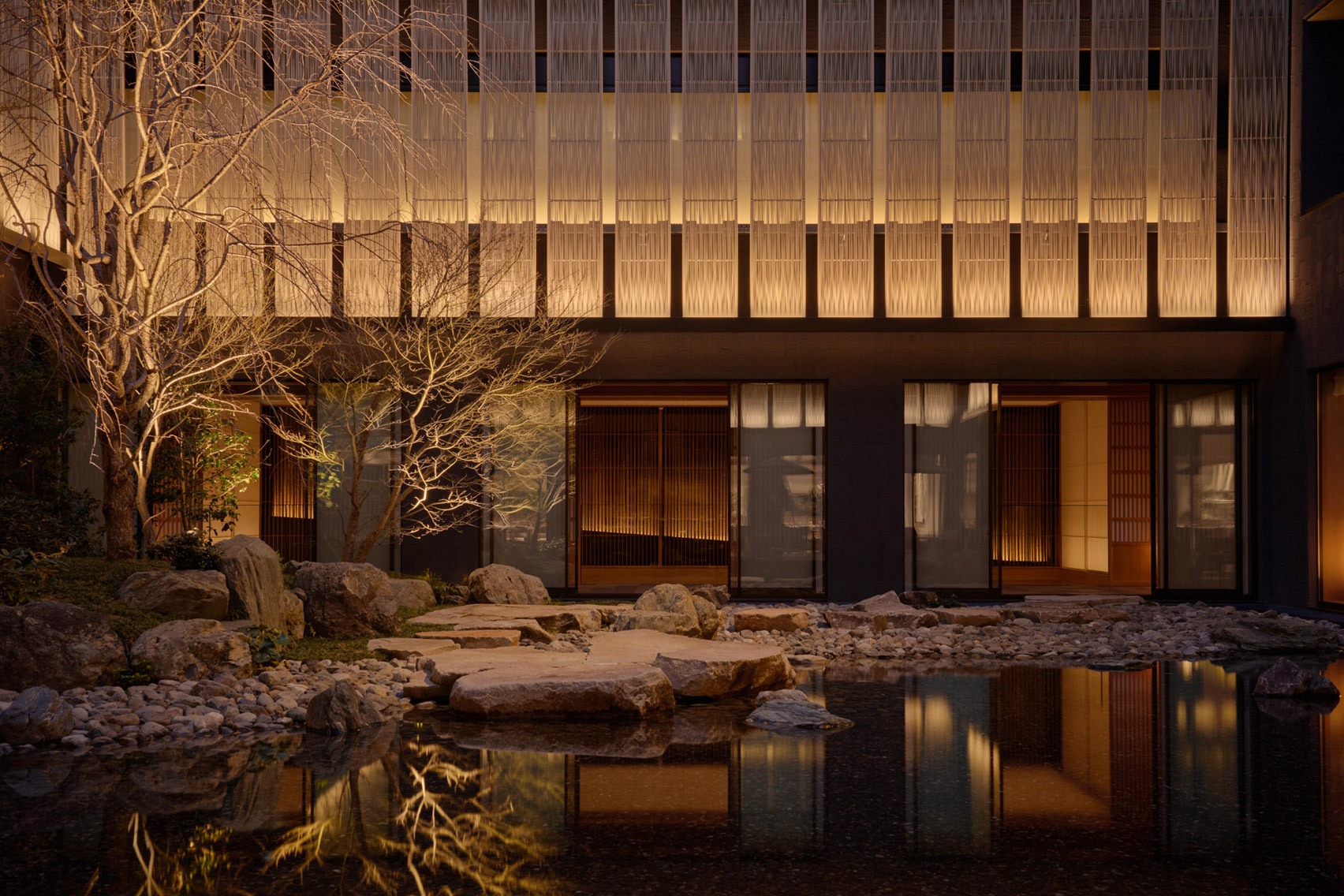
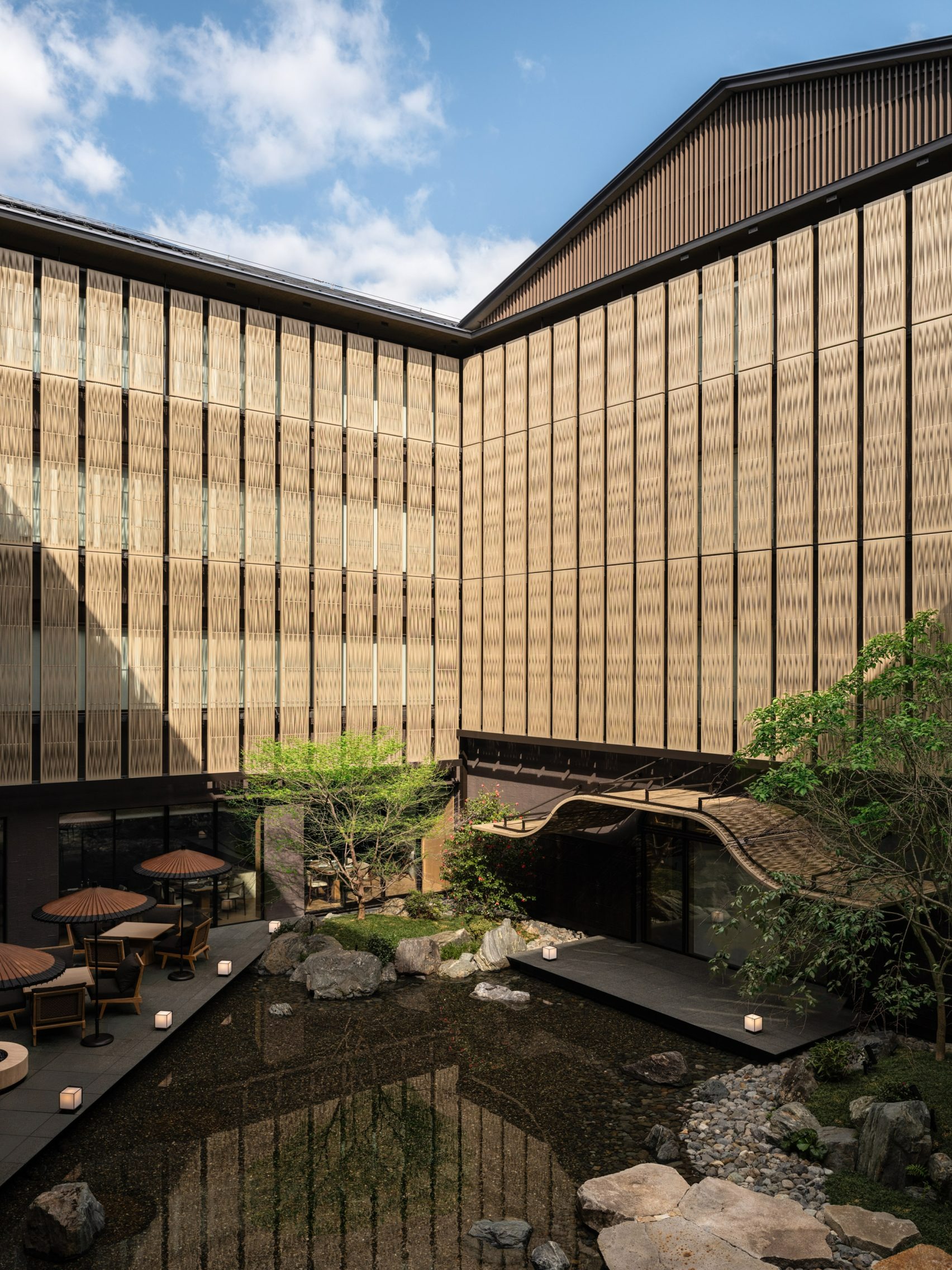
로비를 지나면 넓은 중정이 펼쳐진다. 호텔 전체의 구심점이 되도록 설계된 이 공간의 한가운데에는 얕은 연못이 자리한다. 크고 작은 돌들이 연못 가를 에워싸고, 나뭇가지 몇 그루가 물 위로 그림자를 드리운다. 야간에는 대나무 문양으로 직조된 파사드에 내부 조명이 번지며, 건물 전체가 거대한 안돈(行燈) 같은 빛을 발한다. 연못 수면은 그 빛을 고스란히 받아 조용히 흔들린다.
"교토에서 작업한다는 것은 특권이자 풍요로운 경험이었다"고 청은 회고한다. "이 도시에서 역사는 정적인 유물로 보존되는 것이 아니라, 일상의 삶 속에서 살아 있고 실천된다. 동시대적인 무언가를 만들면서도 그 문화적 맥락과 유산에 경의를 표해야 한다는 것, 그것이 기회이자 책임이었다."
교토 장인의 손, 공간에 새기다
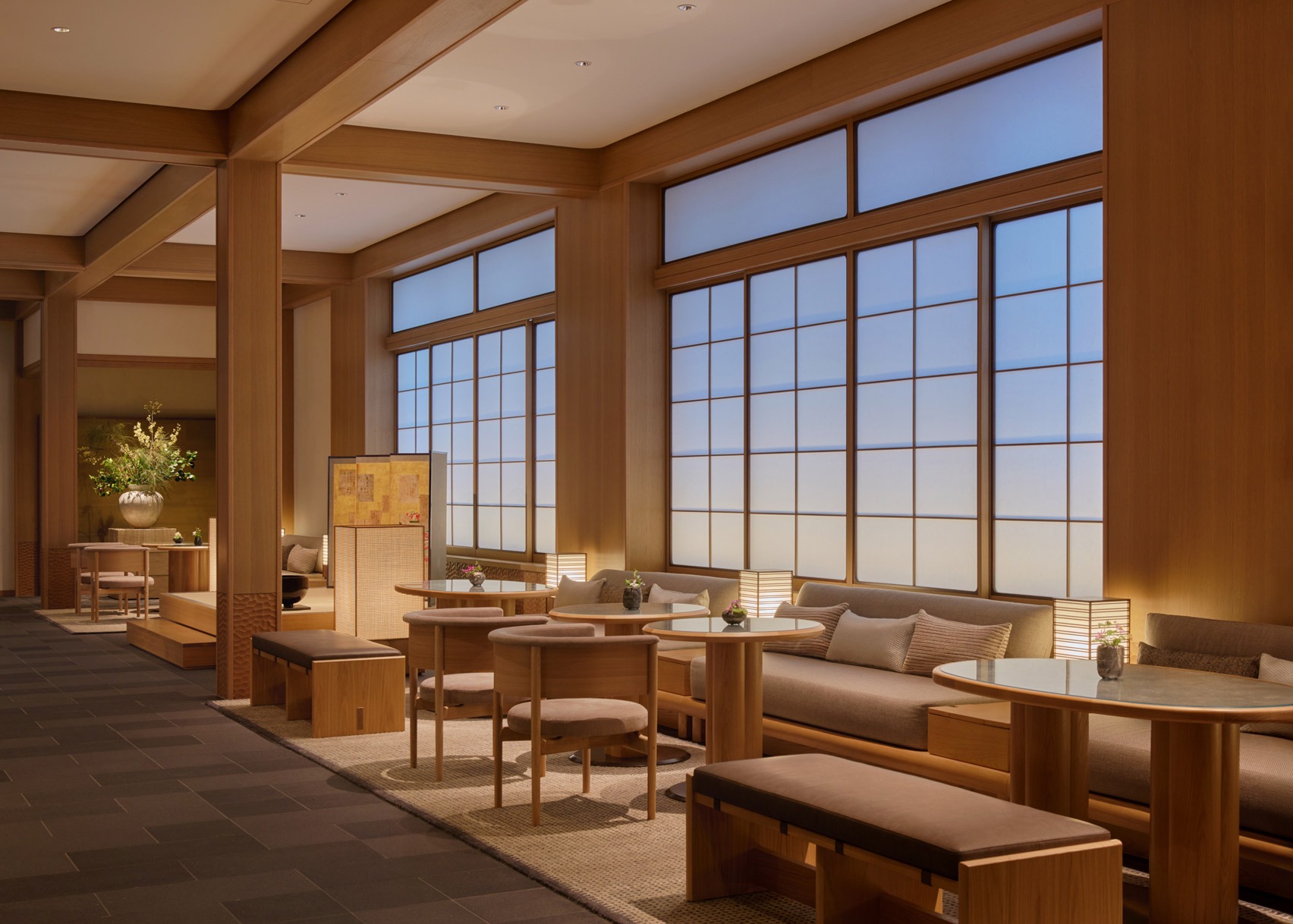
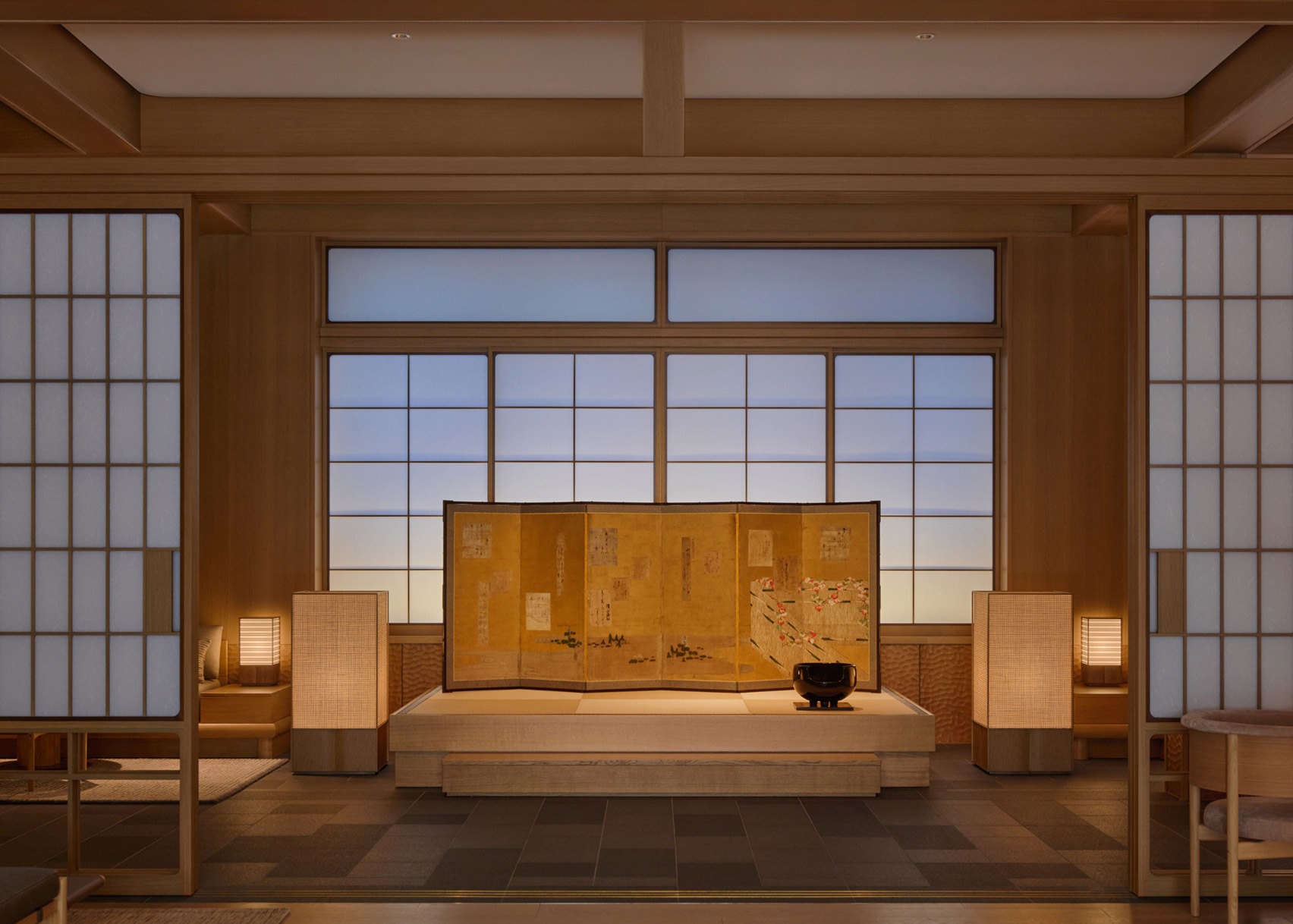
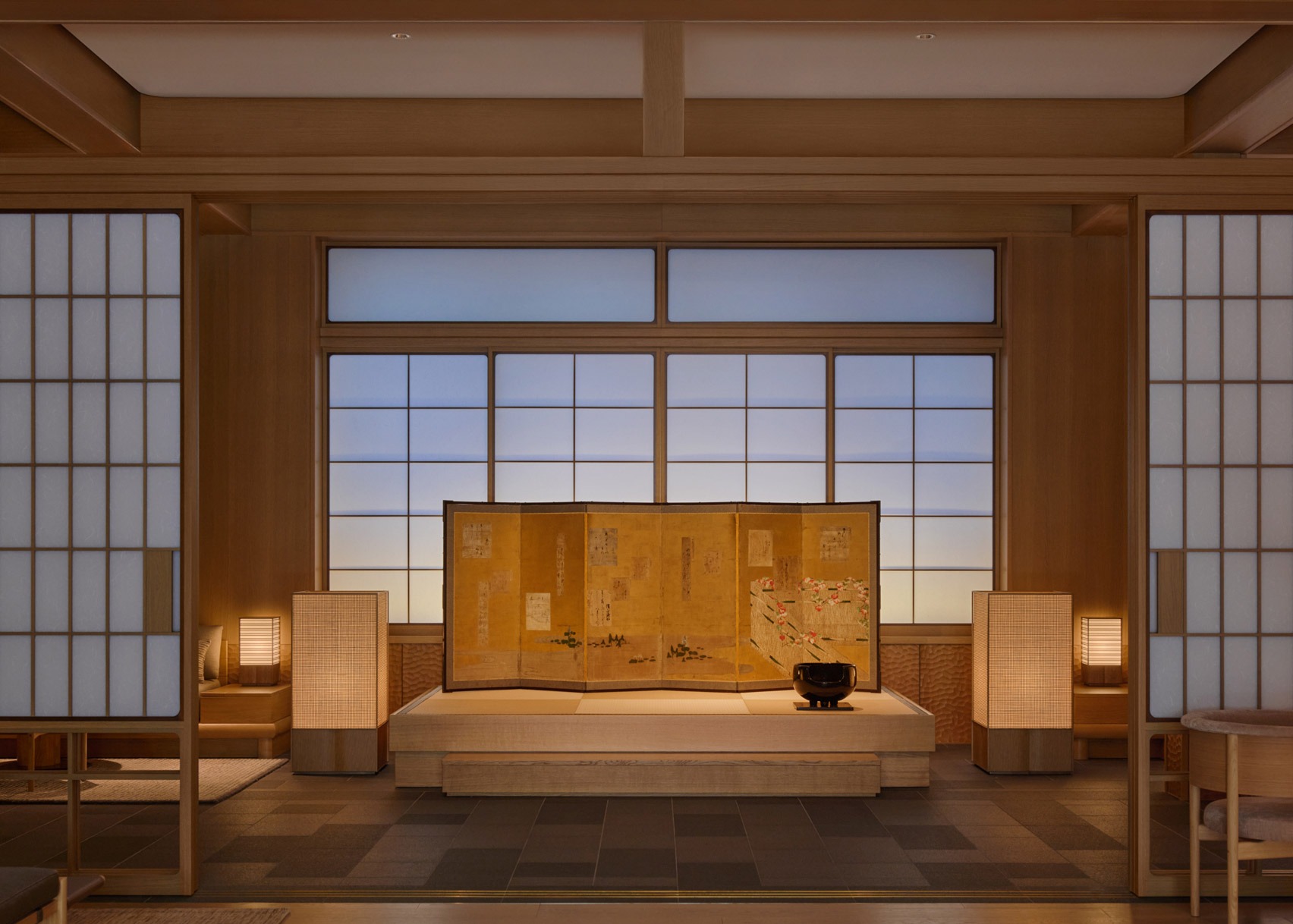
공용 공간 전반에 걸쳐 BDO는 마치야와 교토 장인 정신을 떠올리게 하는 요소들을 세심하게 배치했다. 수작업 미장으로 마감한 벽면의 질감, 목재 조이너리의 정교한 맞물림, 손으로 짜 올린 직물의 섬세한 결이 공간 곳곳에서 빛과 함께 숨을 쉰다. 응접 공간은 격자형 스크린으로 둘러싸여 있어, 내부 조명이 켜지면 방 전체가 일본 전통 안돈 등롱의 형태를 띤다. 금빛 병풍 앞에 놓인 네모난 안돈 조명 두 개가 공간에 고즈넉한 정적을 더한다.
세 개의 식탁, 세 개의 이야기
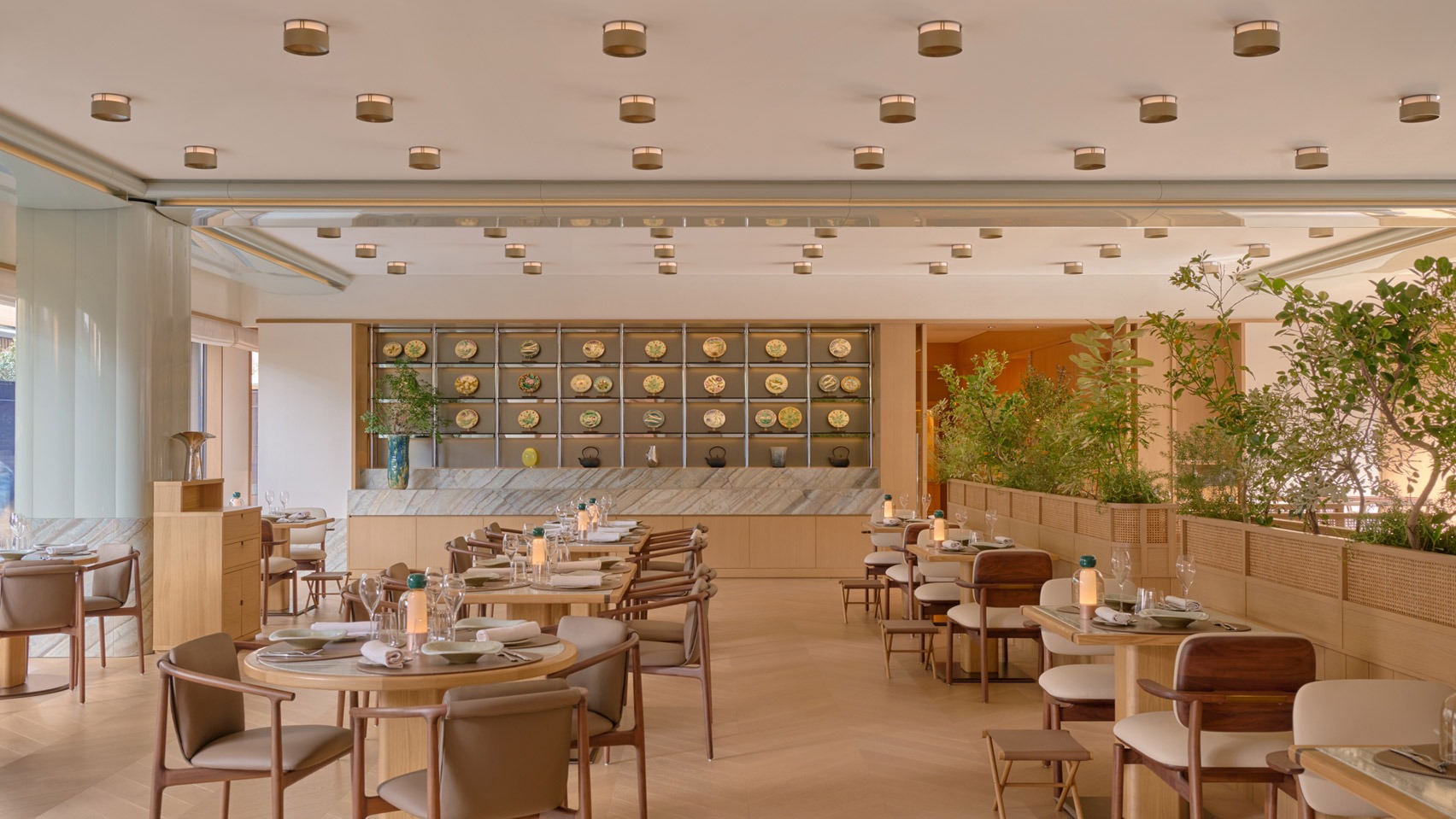
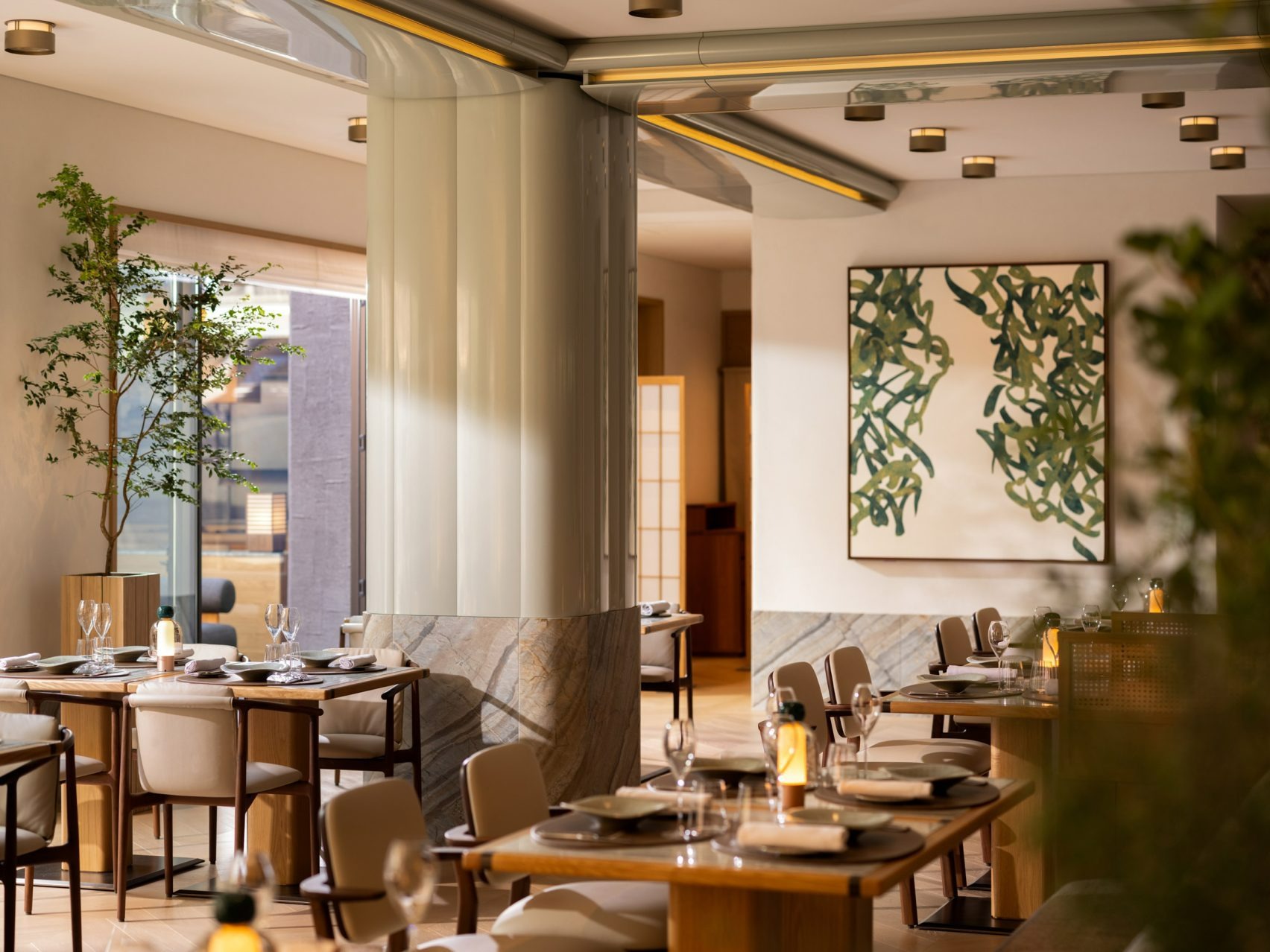
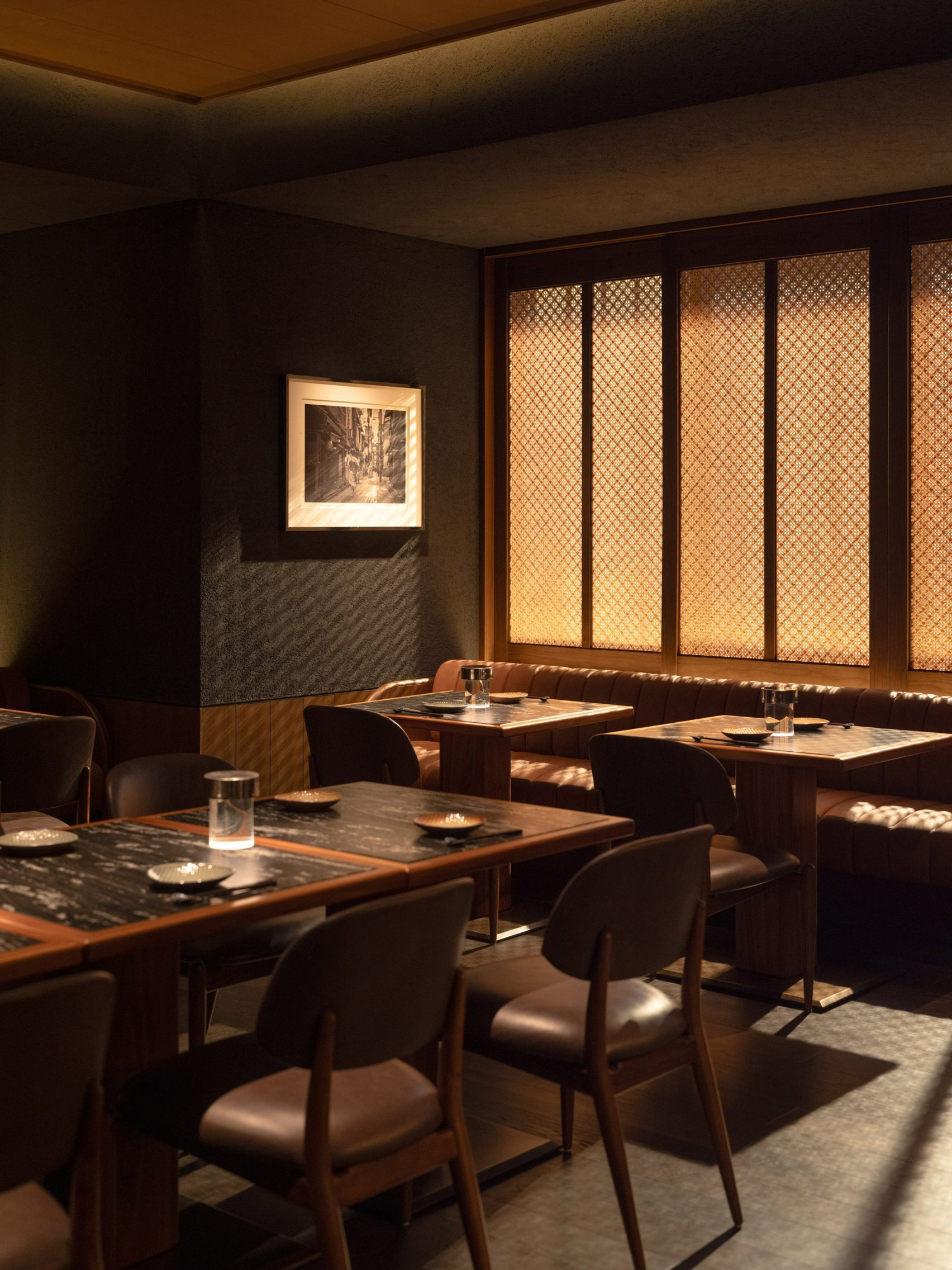
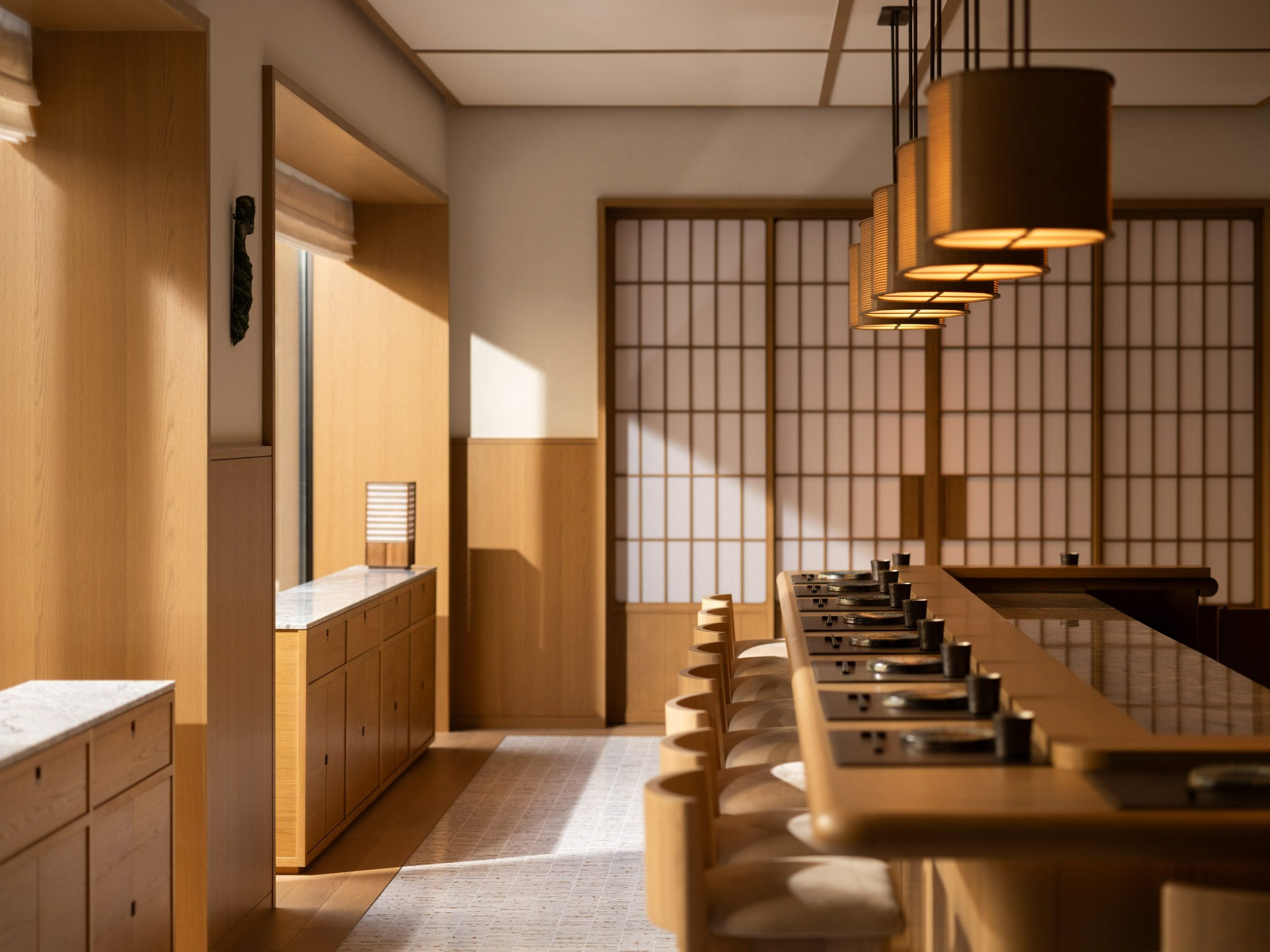
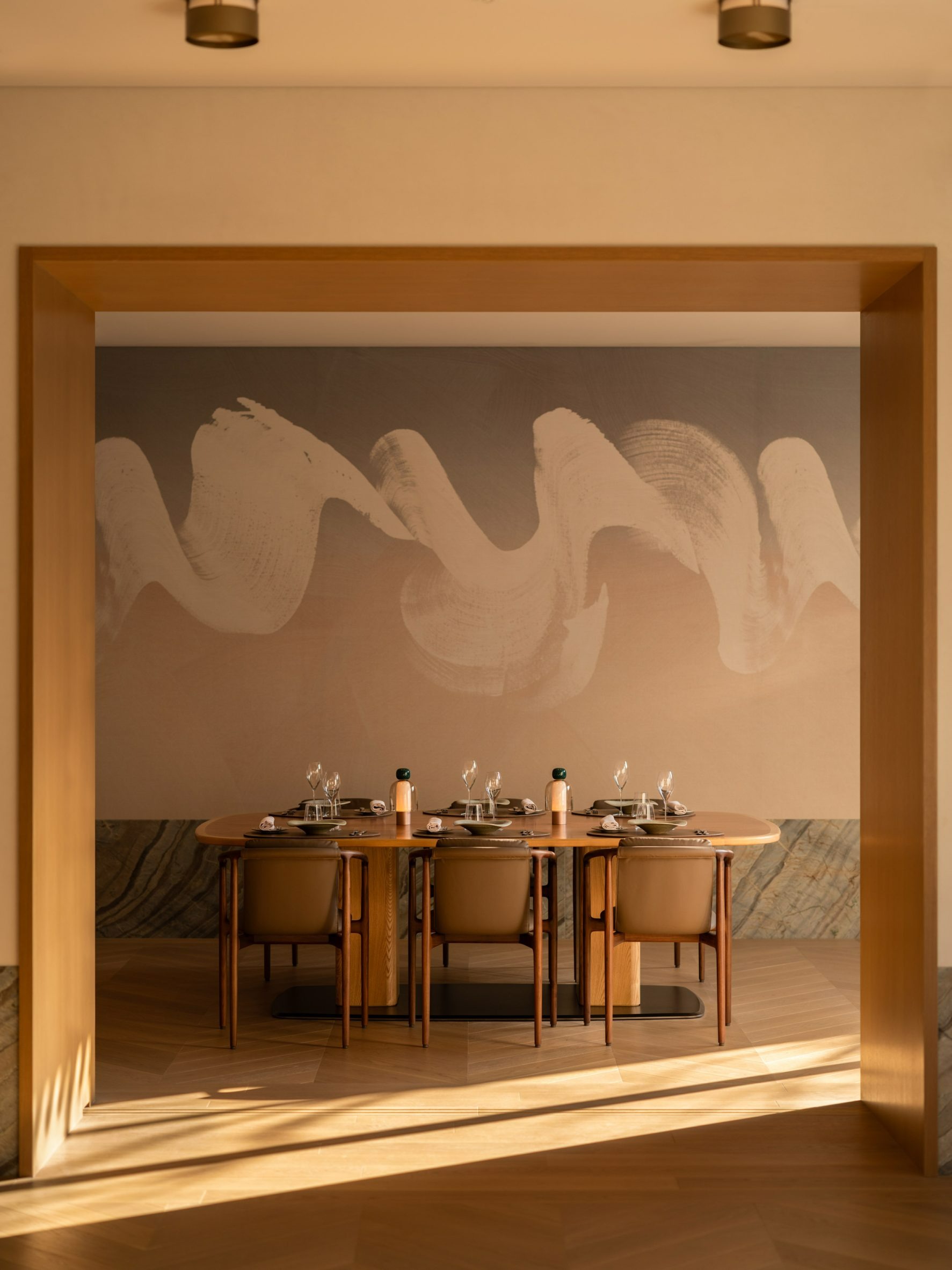
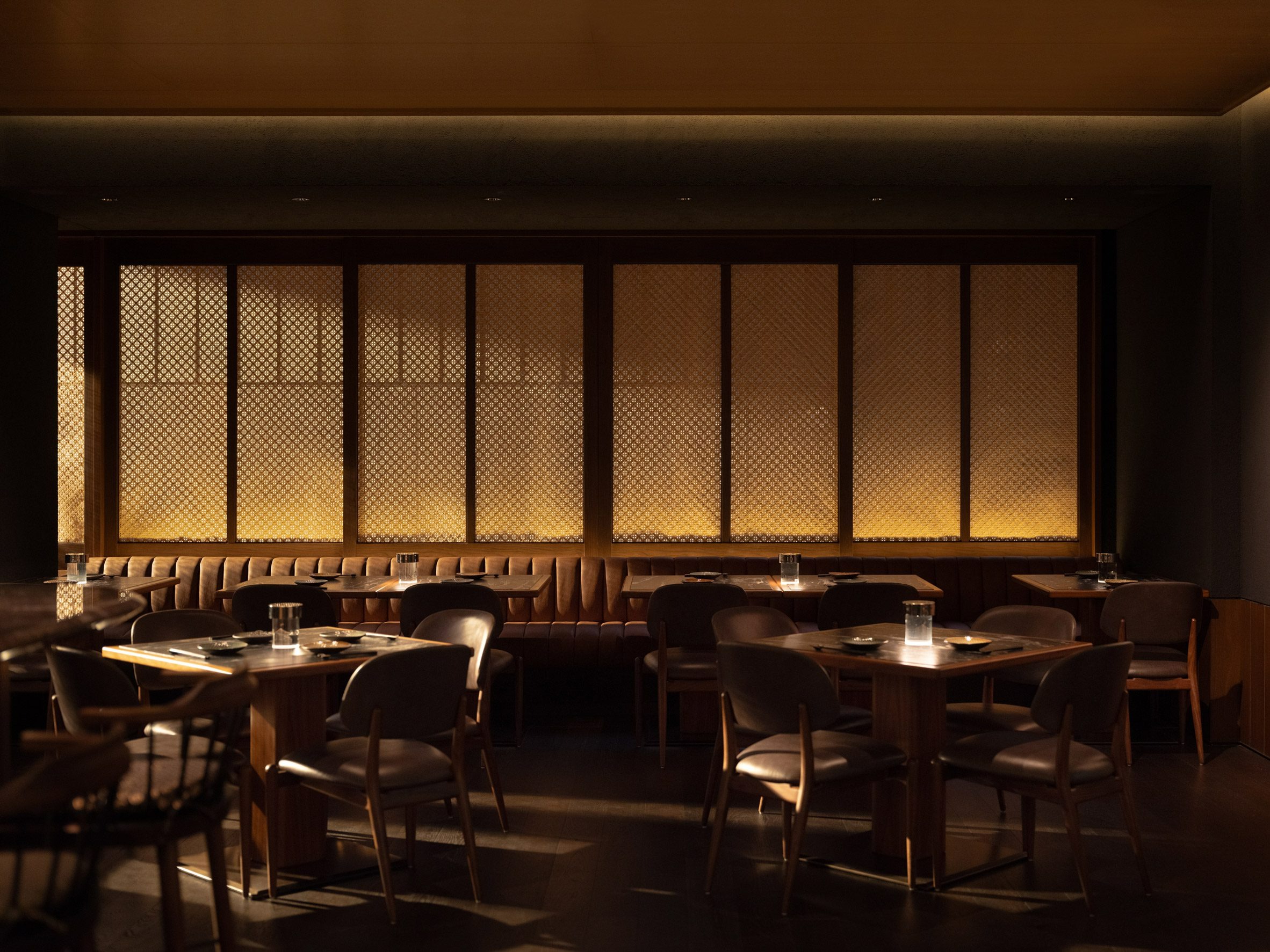
카펠라 교토는 서로 다른 성격의 레스토랑 세 곳을 품는다. 소노마(Sonoma)는 교토 인근 지역 식재료를 중심으로 한 메뉴와 오픈 키친을 선보인다. 연한 참나무 카운터와 쇼지 스크린, 줄지어 늘어선 원형 펜던트 조명이 따뜻하고 밝은 분위기를 만들어 낸다. 요이(Yoi)는 한층 캐주얼한 심야 다이닝 공간으로, 한때 이 터를 지켰던 초등학교의 목재를 되살려 공간을 완성했다. 어두운 석재 상판의 테이블과 격자 문양 스크린 뒤로 스며드는 호박빛 조명이 밤의 깊이를 더한다. 란테른(Lanterne)은 프렌치 브라스리로, 대리석 기둥과 헤링본 패턴 바닥 등 BDO가 파리를 떠올려 고른 요소들로 채워진 이질적이면서도 흥미로운 공간이다.
객실, 교토의 하루를 담다
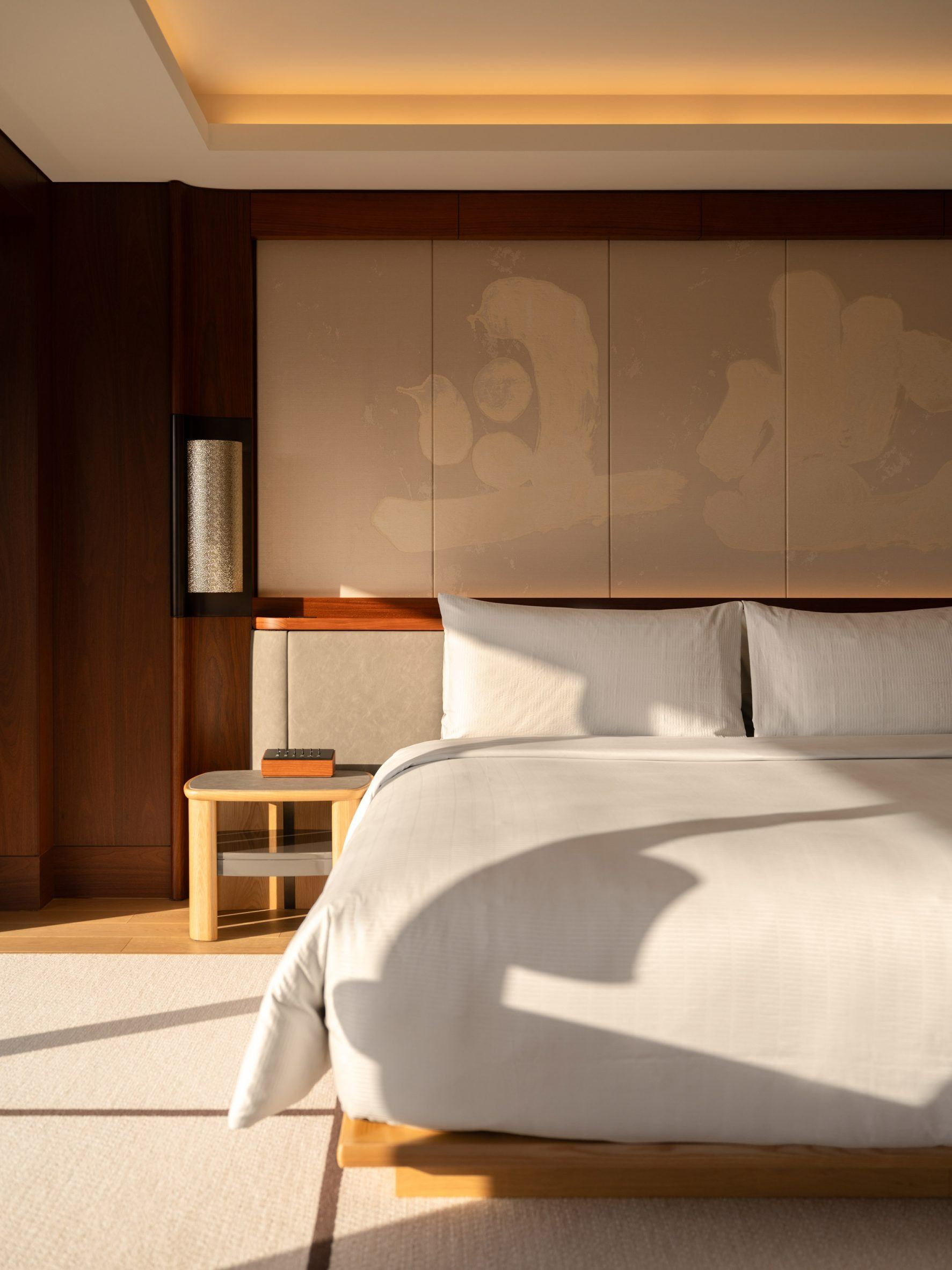
89개의 객실 곳곳에도 목재 마감과 쇼지 스크린이 이어진다. 대부분의 객실 창 너머로는 가부렌조 극장(歌舞練場) 또는 교토에서 가장 오래된 선종 사찰인 겐닌지(建仁寺, 1202년 창건)의 풍경이 들어온다. 침실 헤드보드 위로는 전통 일본 직물의 문양을 현대적으로 재해석한 패널이 배치되어, 아침 햇빛이 비스듬히 내리쬐면 은은한 그림자 문양이 공간을 가득 채운다. 어두운 목재와 따뜻한 간접 조명이 만들어 내는 층위감 속에서, 객실은 그 자체로 하나의 완결된 마치야가 된다.
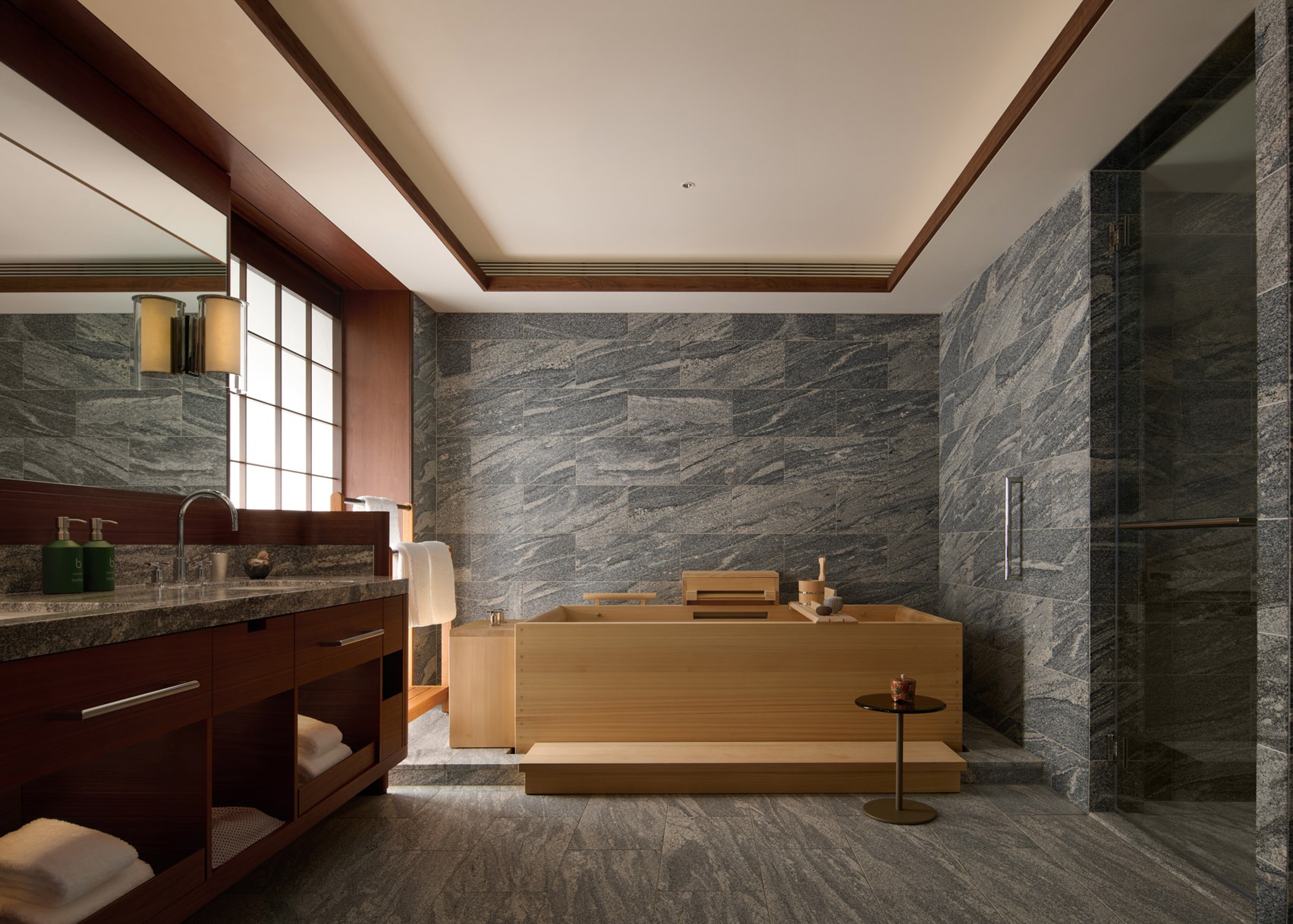
여섯 개의 스위트에는 별도의 히노키(檜) 욕조가 마련되어 있다. 일본 온천 문화에서 영감을 받은 이 욕조는 회색 화강암으로 마감된 욕실 한가운데에 자리하며, 나무 특유의 온기와 수목 향기를 공간 안으로 불러들인다. 차갑고 단단한 돌의 결과 따뜻하고 부드러운 나무의 결이 나란히 놓이는 이 대비 속에서, 마치야가 수백 년간 지켜 온 감각의 언어가 조용히 말을 건넨다.
Write by Claude & Jean Browwn
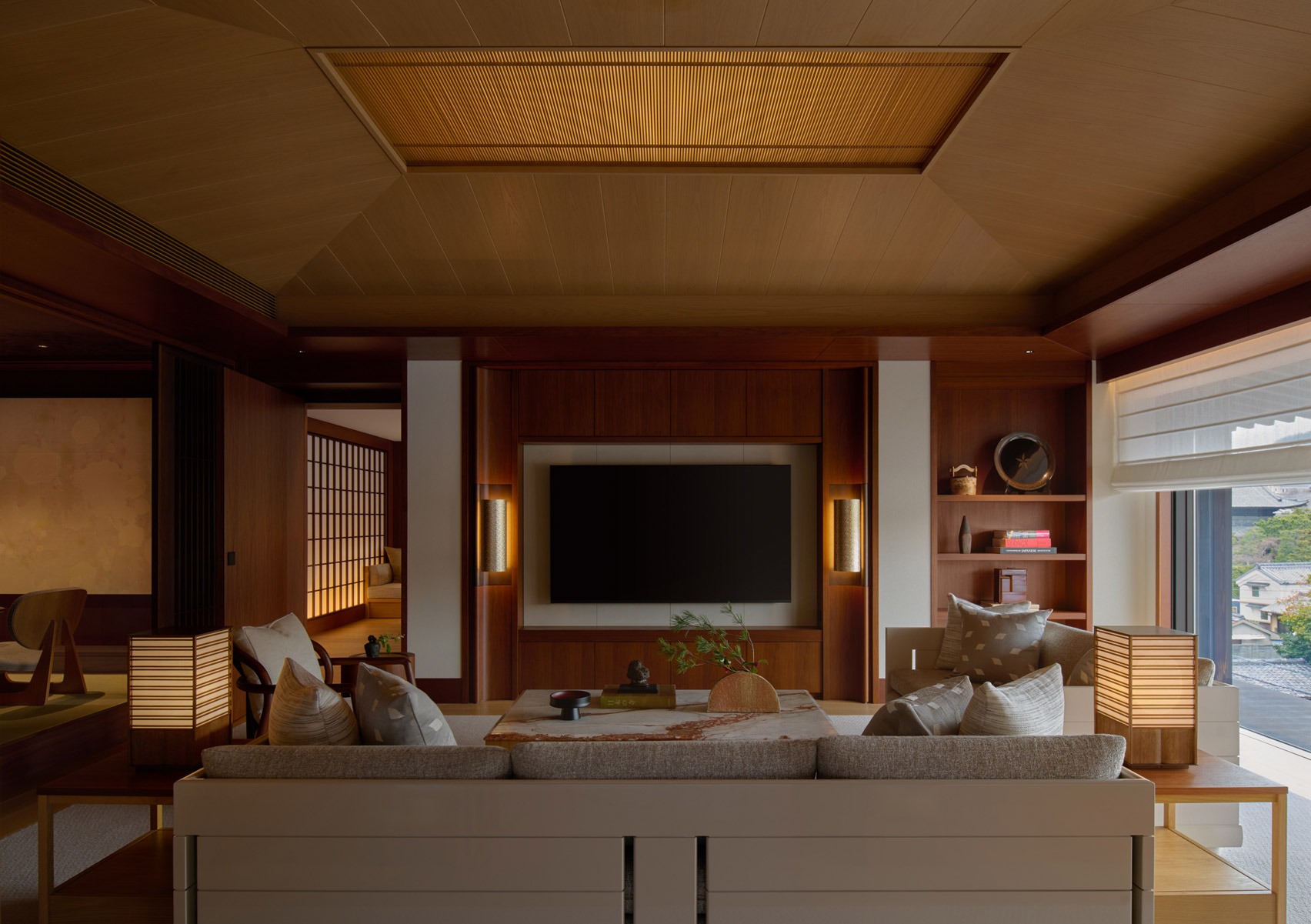
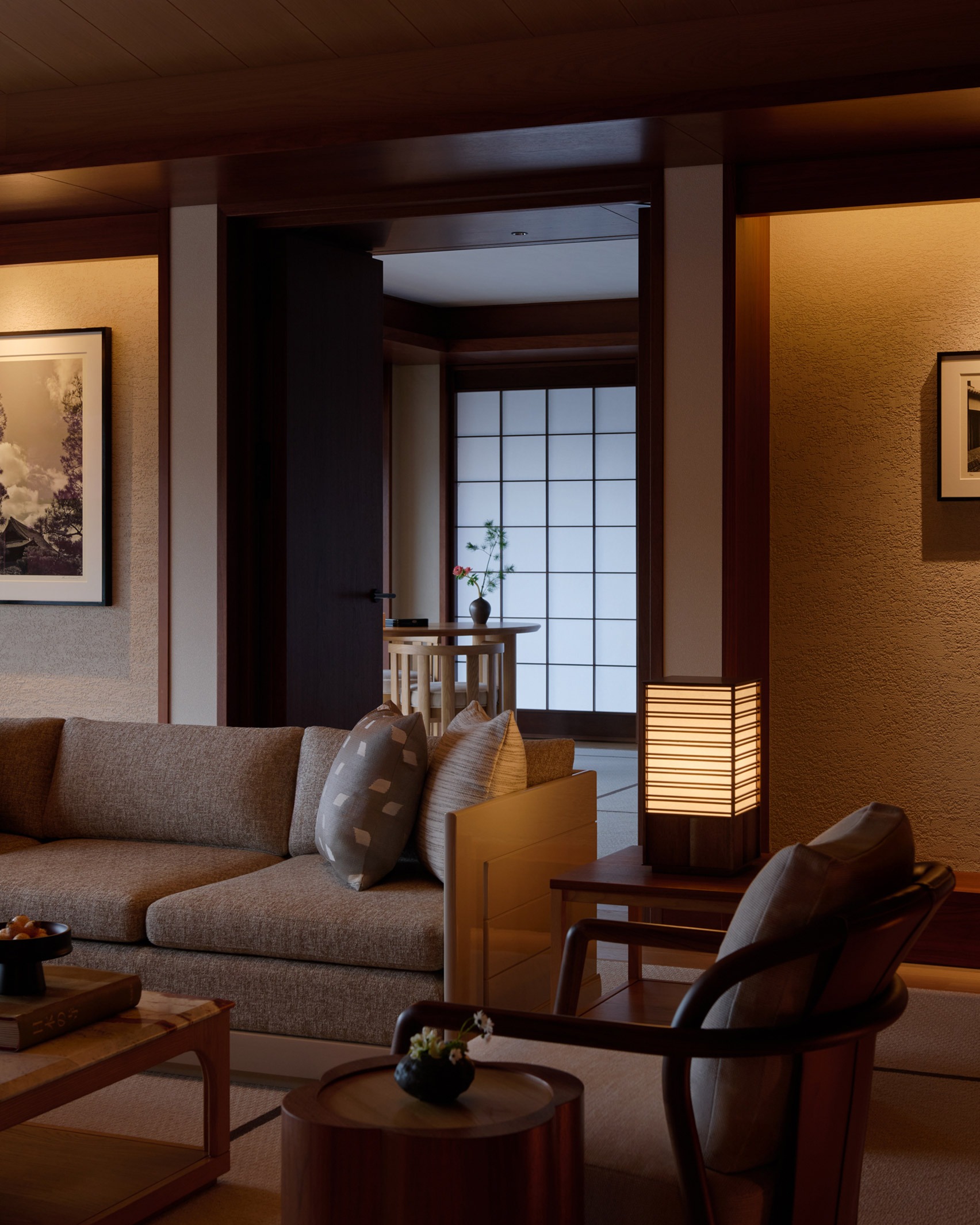
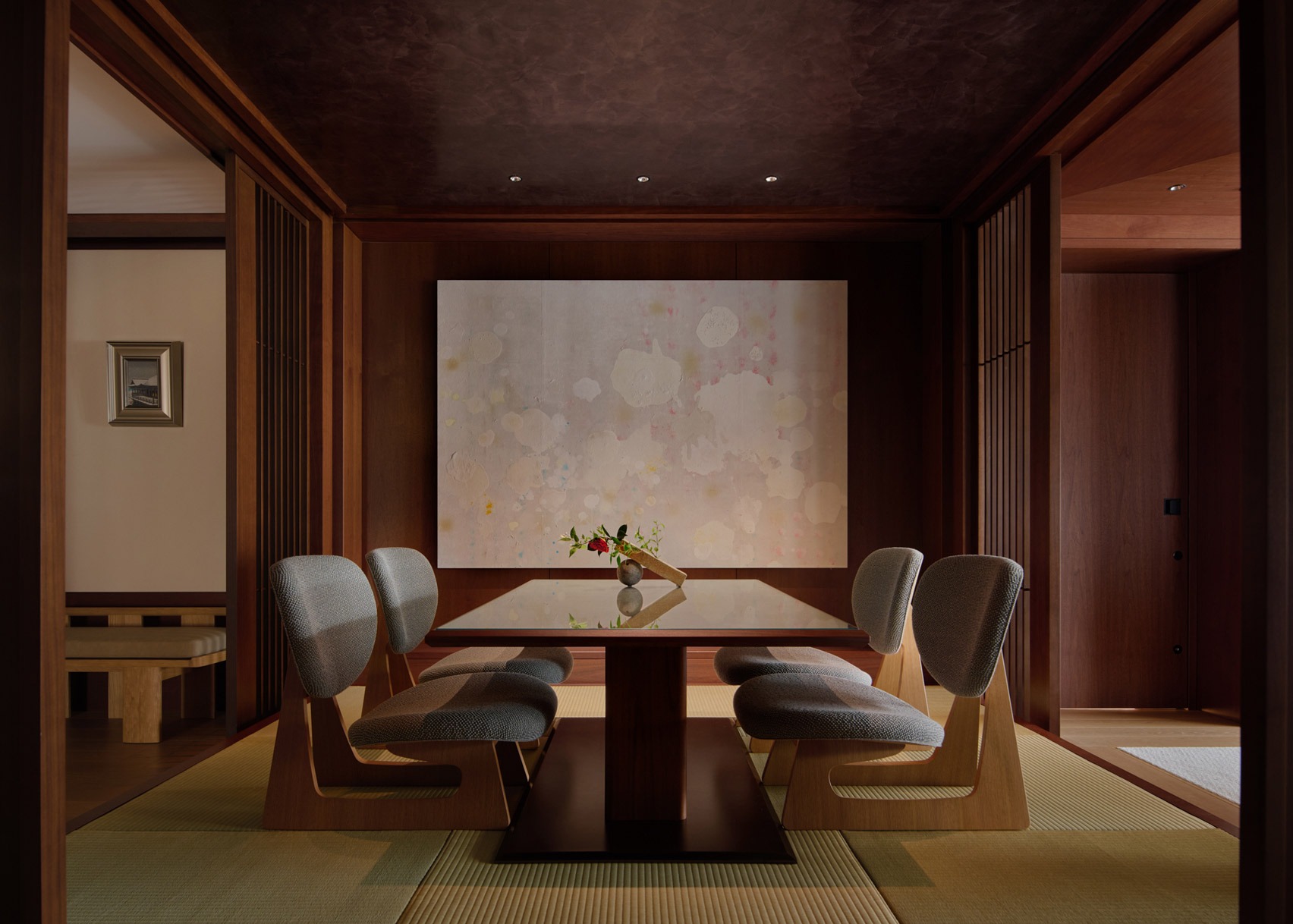
The unique "rhythm and progression" of Japanese machiya townhouses helped Brewin Design Office devise the interiors of this hotel in Kyoto designed by Kengo Kuma.
The Capella Kyoto hotel was built by Kengo Kuma and Associates on the grounds of an old primary school in Gion, a historic district of the city that's home to a number of traditional wooden townhouses known as machiya.
Machiya typically have a deep yet narrow footprint with a small shop at the front and living spaces nestled further towards the back, interspersed by gardens or courtyards.
Inspired by this layout, Singapore based firm Brewin Design Office (BDO) decided to give the hotel's interior a similarly staggered composition.
Guests enter the hotel via a lengthy walkway flanked by shoji screens, eventually coming to a wood lined reception lobby. From one wall protrudes a large, twisted sculpture that's meant to resemble shimenawa – a kind of rope that's used in Shinto purification rituals.
Just beyond is an expansive courtyard that's meant to be the nucleus of the hotel; at its centre is a shallow pond, fringed by rocks and some trees.
"What is compelling about the machiya is that its characteristics are not isolated ideas, but part of a coherent spatial logic," BDO founder Robert Cheng told Dezeen.
"We were particularly inspired by the machiya's sense of rhythm and progression, expressed through a sequence of spaces that transition from more public, open areas into increasingly private and contemplative zones."
"Rather than a direct entry into reception, we designed the arrival to extend through layered thresholds screens, vestibules, and controlled sightlines – to reveal the space gradually," he continued.
"This introduces moments of pause, allowing the transition from city to interior to slow and settle."
In the hotel's communal spaces, BDO implemented features it felt were synonymous with machiya and Kyoto craftsmanship, from hand-washed plaster walls to timber joinery and delicate woven textures.
"Working in Kyoto was both a privilege and an enriching experience," explained Cheng. "It is a city where history is not preserved as a static artefact but actively lived and practiced in everyday life."
"This presented both an opportunity and a responsibility to design something contemporary while being respectful of the cultural context and heritage."
Capella Kyoto's guest lounge is boxed in by latticed screens so that, once lights are switched on within, the room mimics the appearance of a Japanese andon lantern.
Guests also have the option of dining at three different restaurants. Sonoma features a regional menu and open kitchen, while Yoi is a more casual late-night venue decked out in reclaimed wood from the school that once stood on site.
Finally, there's Lanterne, a French brasserie that's been finished with elements BDO thought were distinctly Parisian, including marble columns and herringbone floors.
Wood lined surfaces and shoji screens continue to appear throughout the hotel's 89 bedrooms, most of which have views of the nearby Kaburenjo Theatre or Kennin-ji, the oldest Zen Buddhist temple in Kyoto.
Six suites were given their own soaking tub in a nod to Japanese onsen hot springs.
from dezeen