"태양은 건물 측면을 비추기 전까지 자신이 얼마나 위대한지 알지 못했다."— 루이스 칸 (Louis Kahn)
 |
 |
 |
OOIIO Arquitectura-Leganés Auto Center
예상치 못한 곳에서 만나는 건축
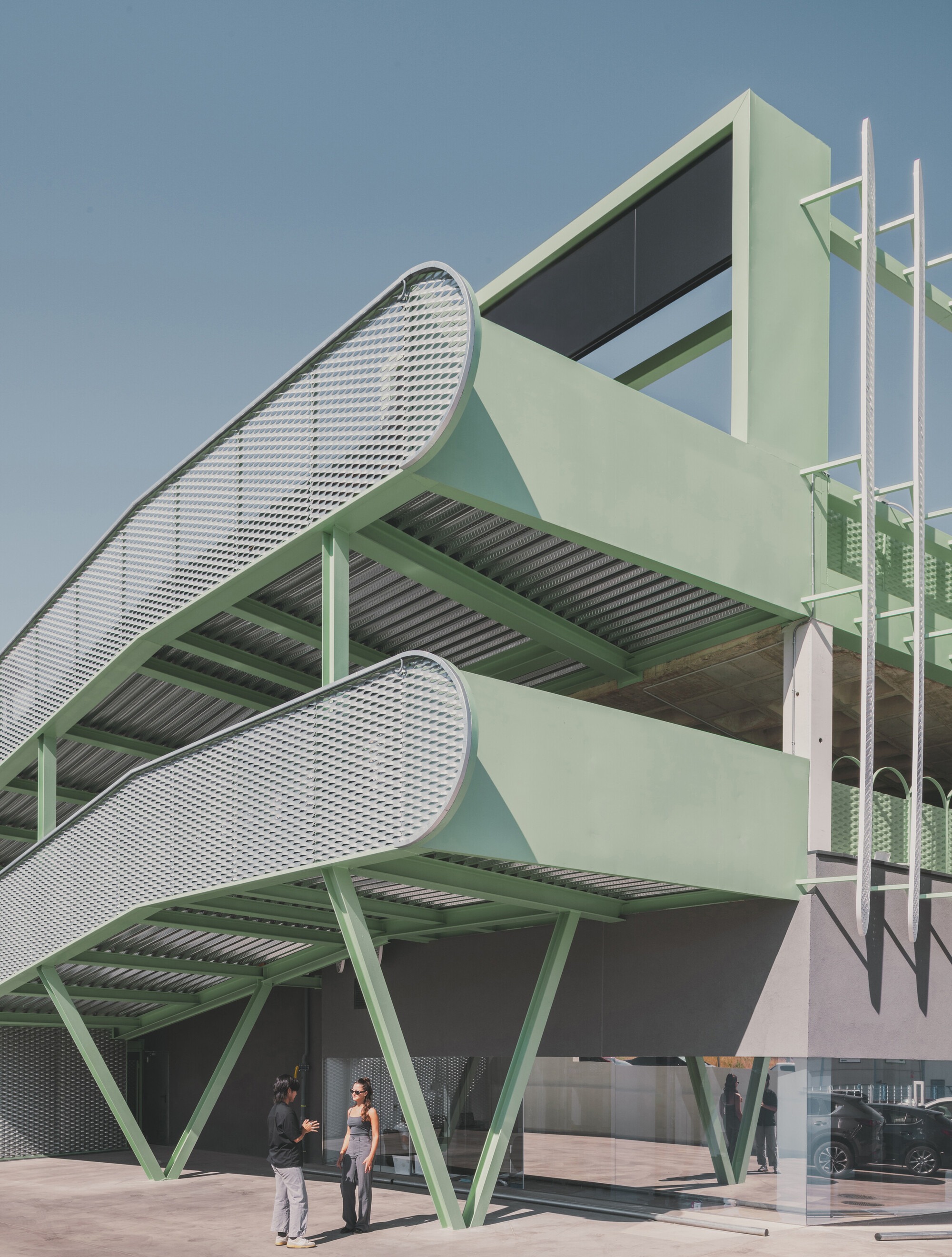
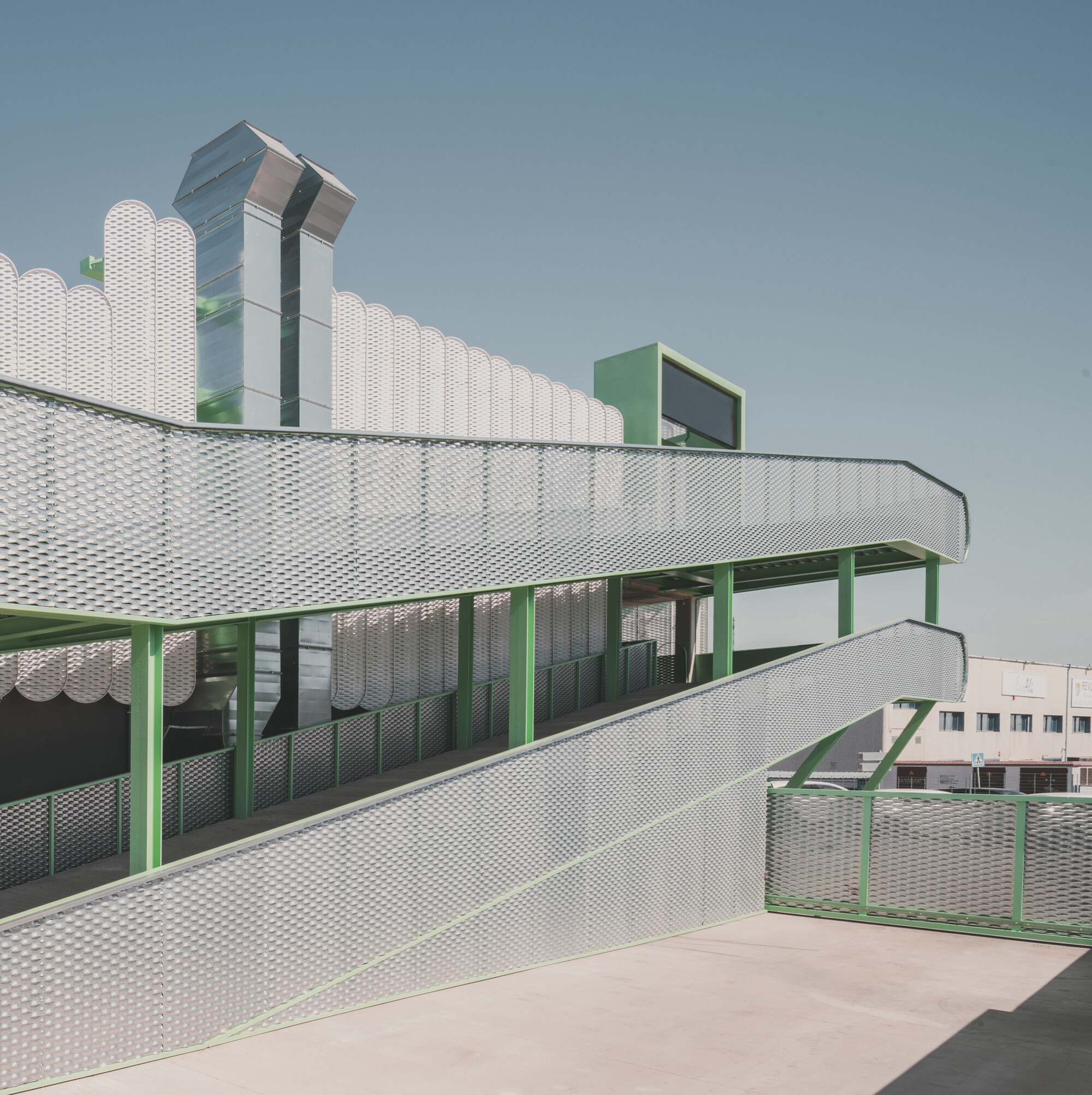
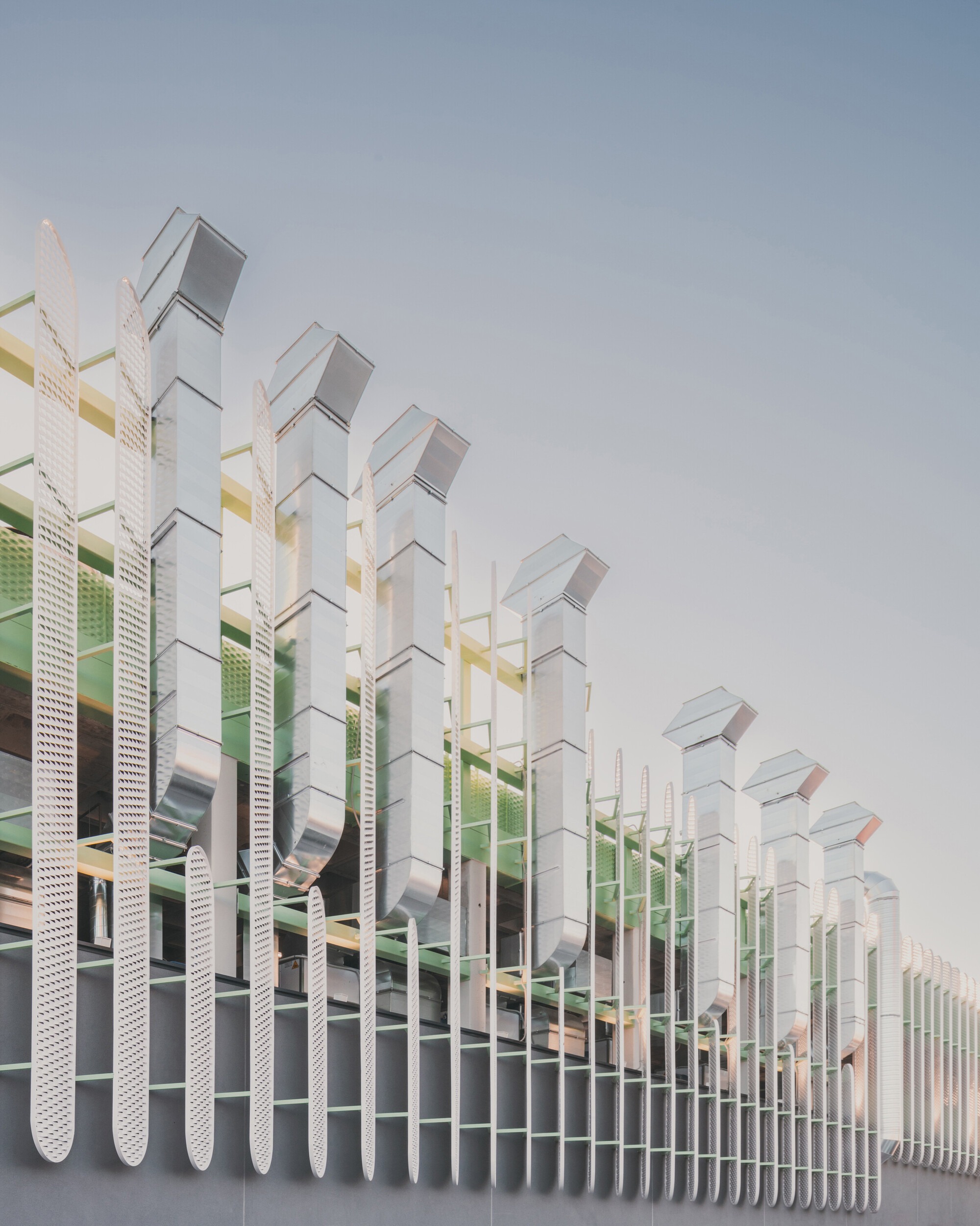
마드리드 광역권의 위성도시 레가네스. 자동차 산업에 특화된 이 공업단지를 처음 걷는 사람이라면, 주변 건물들이 얼마나 무표정한지 금세 알아챈다. 예외 없이 기능만 남겨진 외피들, 빛도 재료도 감정도 없는 건물들이 줄지어 선 이 풍경 속에서, OOIIO 아르키텍투라가 설계한 레가네스 오토 센터는 단번에 눈을 사로잡는다. 흰색 슬래트가 민트그린 구조체 위에서 리듬을 만들며 하늘을 향해 뻗어 있고, 그 뒤로 반짝이는 산업용 덕트가 파사드의 일부인 양 당당하게 솟아 있다. 자동차 판매·수리 센터가 이렇게 생겼을 줄은 아무도 몰랐을 것이다.
창의성이란 뜻하지 않은 곳에서 더욱 빛난다. 대형 공공건물이나 주거 명작에만 허락된 것이라 여겨지던 건축적 상상력을, OOIIO는 이 프로젝트에 과감히 끌어들였다. 의뢰는 단순하지 않았다. 넓은 판매 공간과 사무실, 기계·판금 수리 공방, 수백 대 차량의 보관 창고, 그리고 건물 내부를 끊임없이 오가는 차량의 동선까지 모두 품어야 하는 복합 시설이었다. 거기에 더 까다로운 조건이 있었다. 부지 안에는 수년째 방치된 낡은 주방 기기 공장이 이미 자리 잡고 있었다.
낡은 공장, 새로운 기억
이런 종류의 프로젝트는 대개 엔지니어링 회사의 손에 넘어간다. 예측 가능하고 철저히 기능 중심적인 해법이 나오고, 건축적 품위 같은 것은 애초에 의제에 오르지도 않는다. 공업단지 어디서나 볼 수 있는 그 무감각한 건물들이 그 증거다. 그러나 OOIIO는 달랐다. 설계팀이 내린 첫 번째 결정은 기존 산업 구조물을 철거하는 대신 재활용하는 것이었다. 새 건물을 짓는 편이 시간과 비용 면에서 더 단순할 수 있었지만, 환경적 대가는 비교할 수 없을 만큼 컸다. 수십 년 묵은 주방 공장이 자동차 센터로 탈바꿈할 수 있는가. 이 프로젝트는 그 질문에 힘차게 답한다.
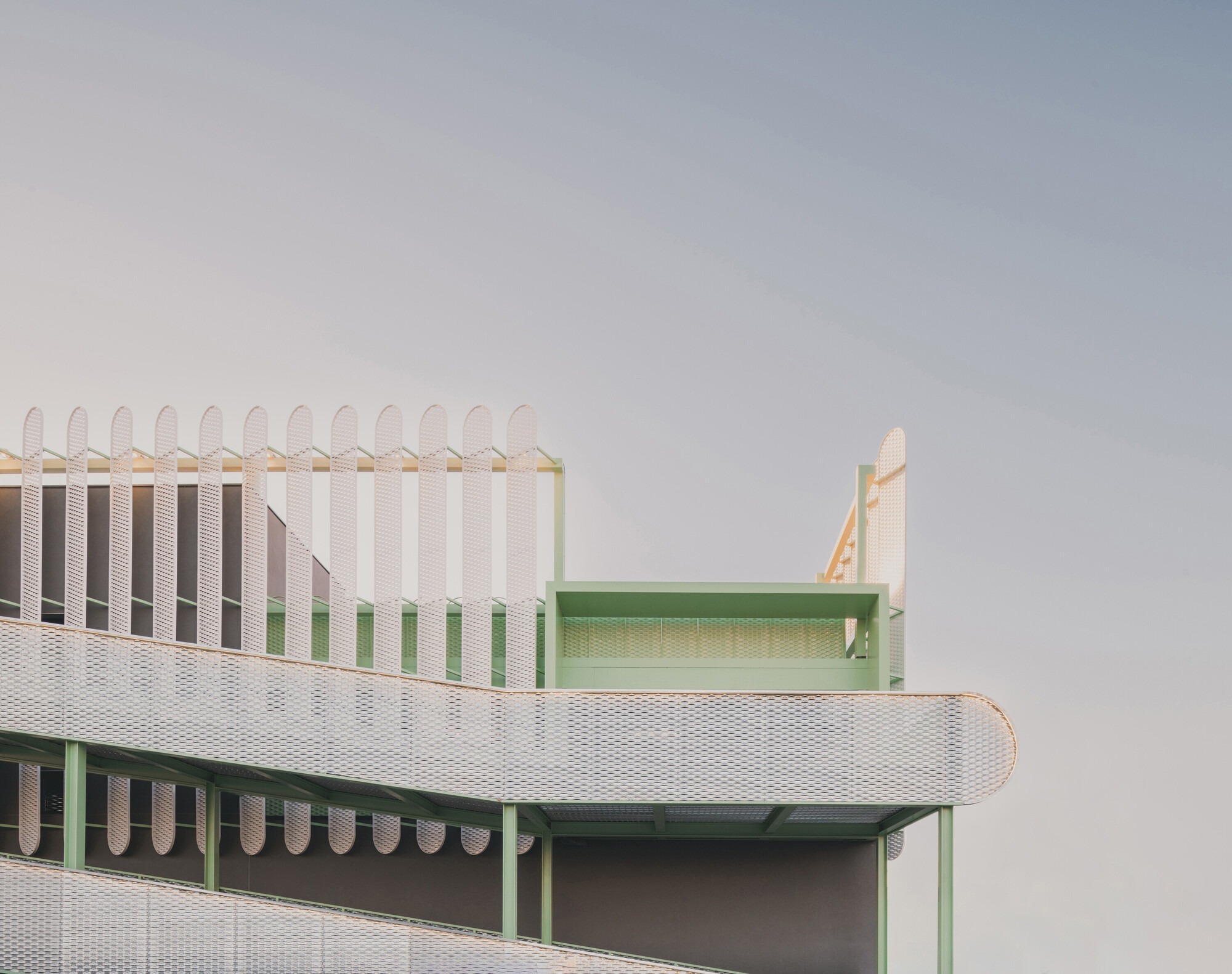
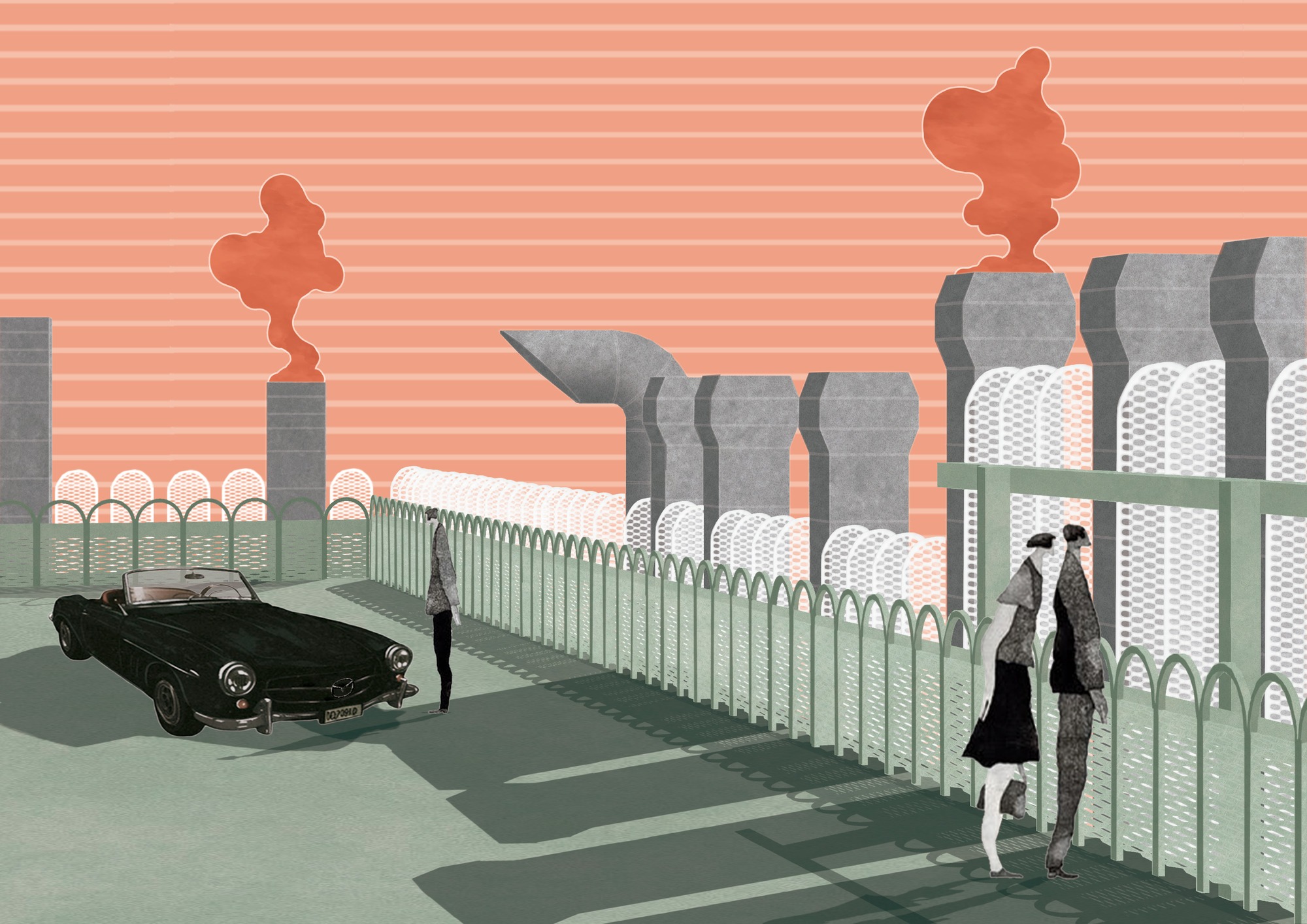
기존 구조체는 증가한 하중을 견디기 위해 보강했고, 원래의 지붕은 걷어냈다. 그 위로 태양광 퍼골라가 씌워진 새로운 최상층 보관 공간을 들였다. 이 퍼골라는 건물 자체의 에너지 소비를 충당하고도 남을 만큼의 전력을 생산한다. 공장의 기억은 지워진 것이 아니라 새로운 언어로 번역됐다.
기능의 층위
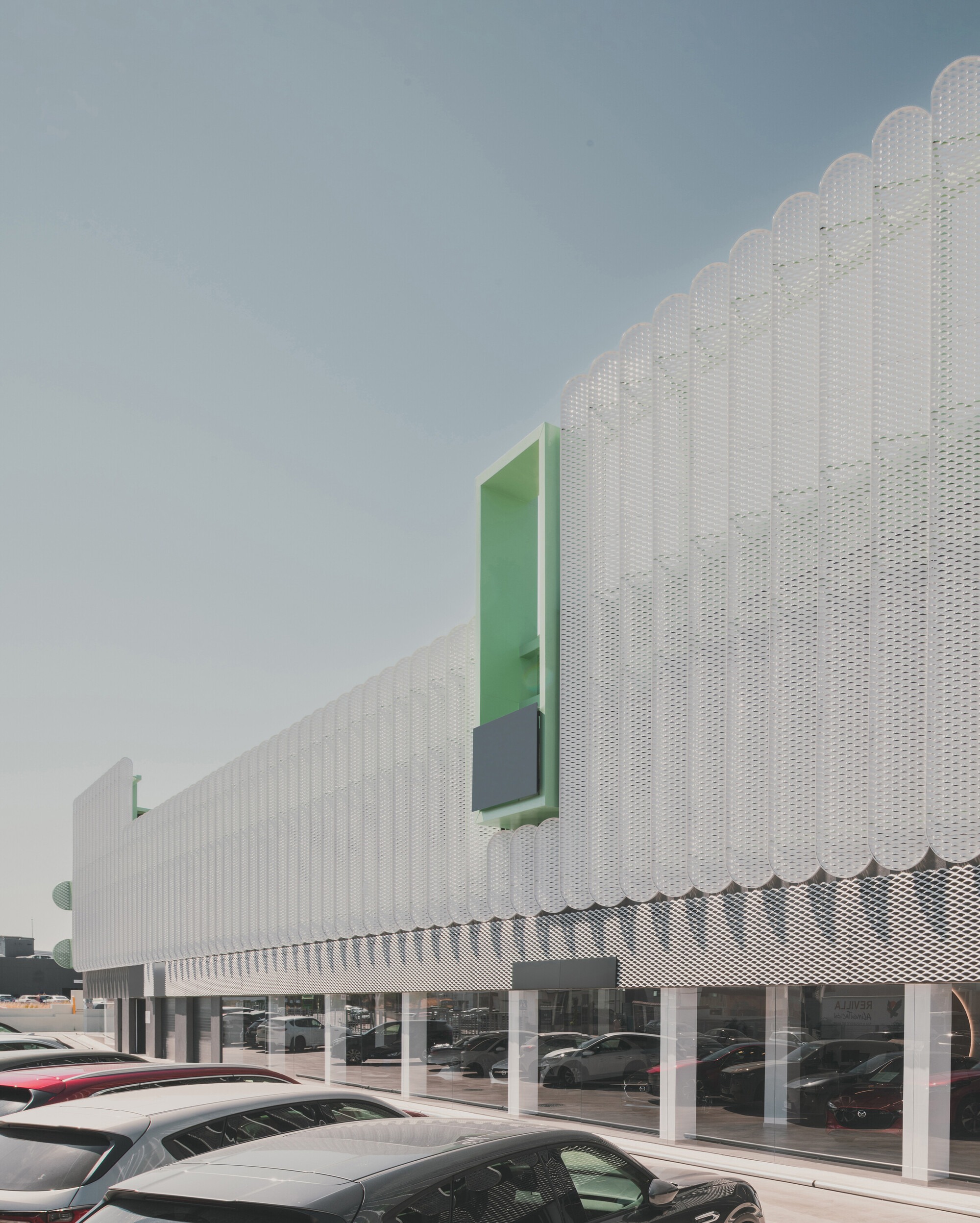
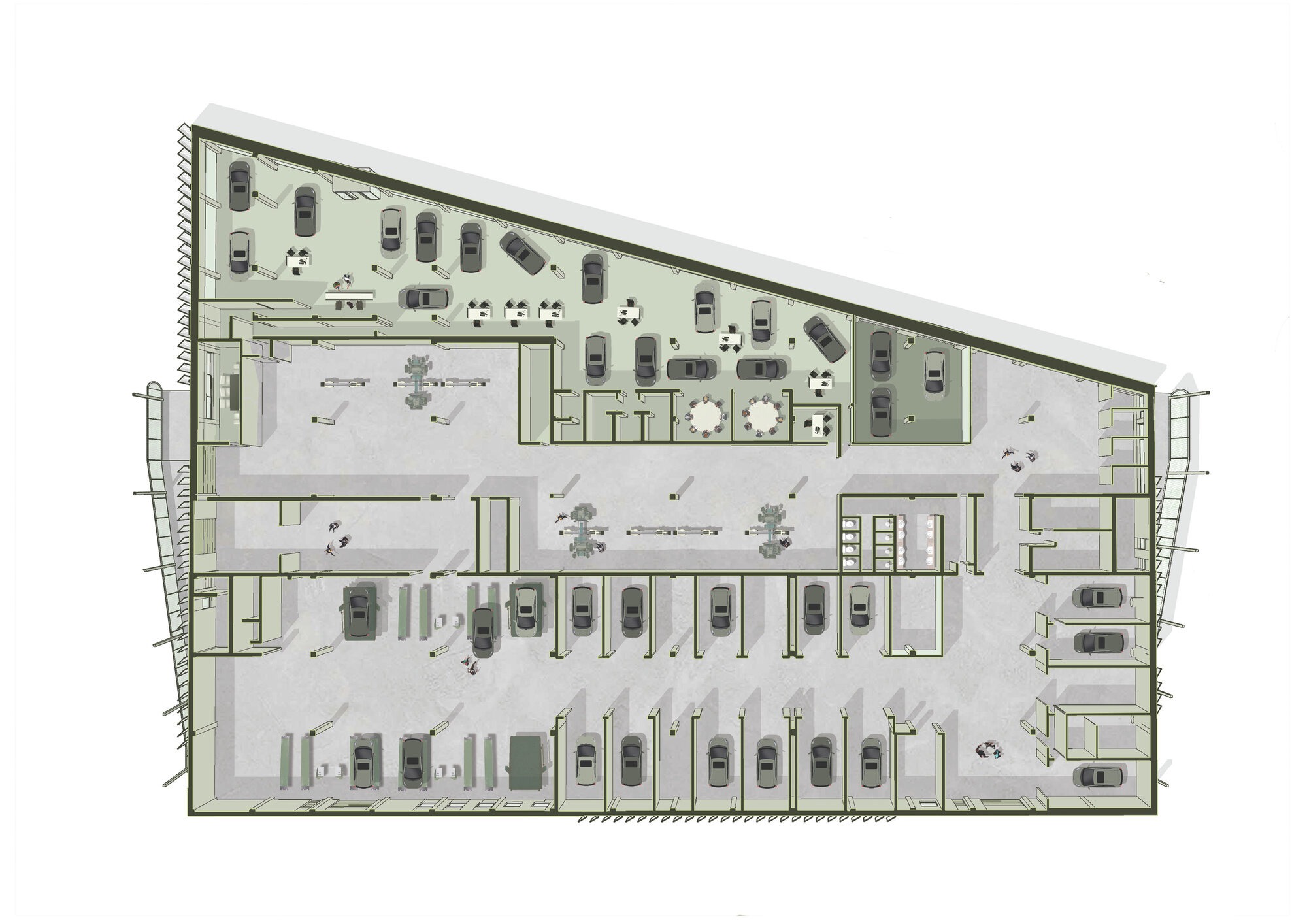
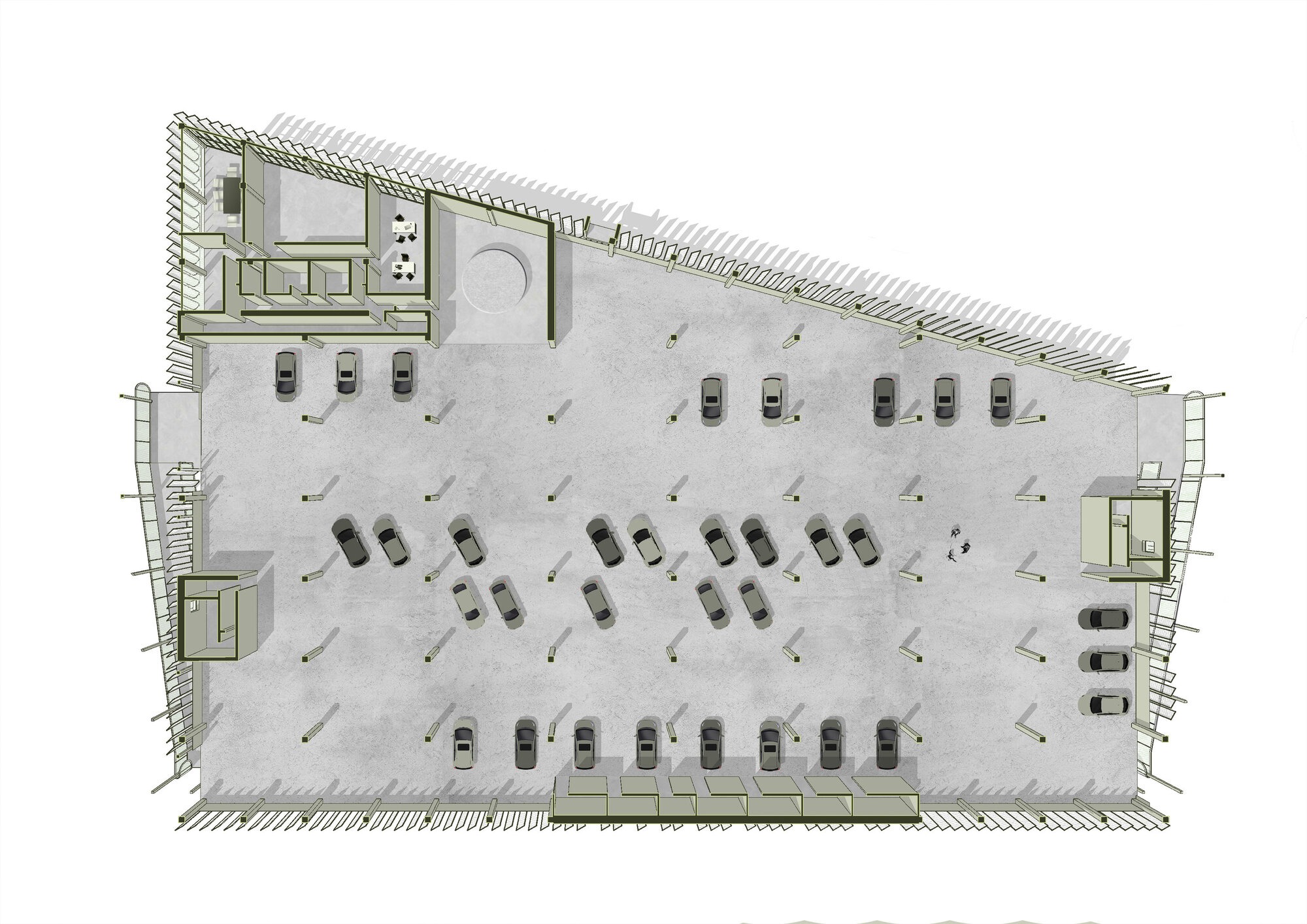
평면도를 펼쳐보면 이 건물의 논리가 선명하게 드러난다. 지상층은 차량 전시와 판매 공간, 기계 수리 공방과 판금 작업장이 공존한다. 고객과 직원의 동선이 엮이는 이 층은 유일하게 공조 시스템이 가동되는 곳이기도 하다. 1층에는 사무 공간이 자리 잡았고, 상부 두 개 층은 수백 대 차량을 수용하는 개방형 보관 창고로 쓰인다.
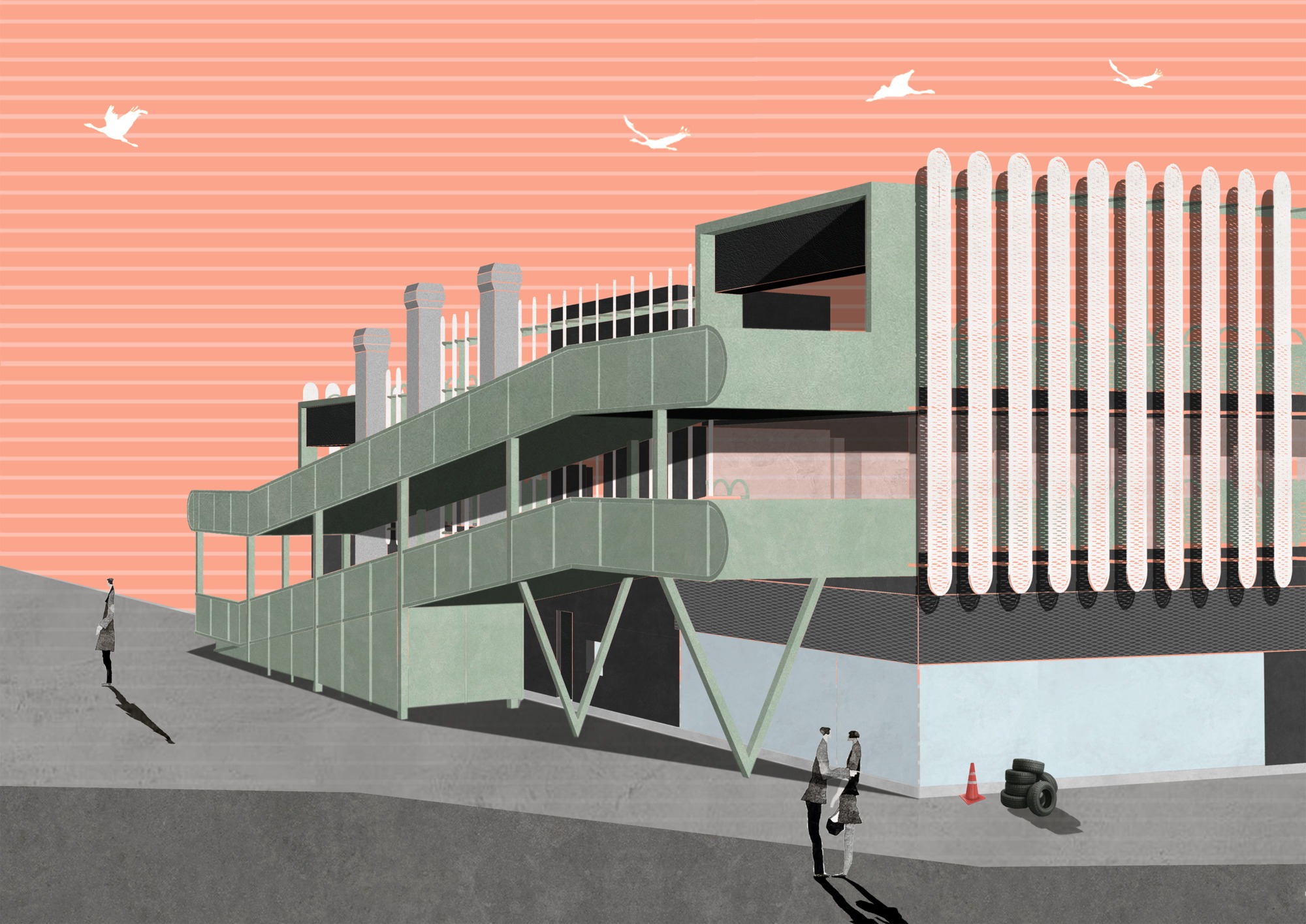
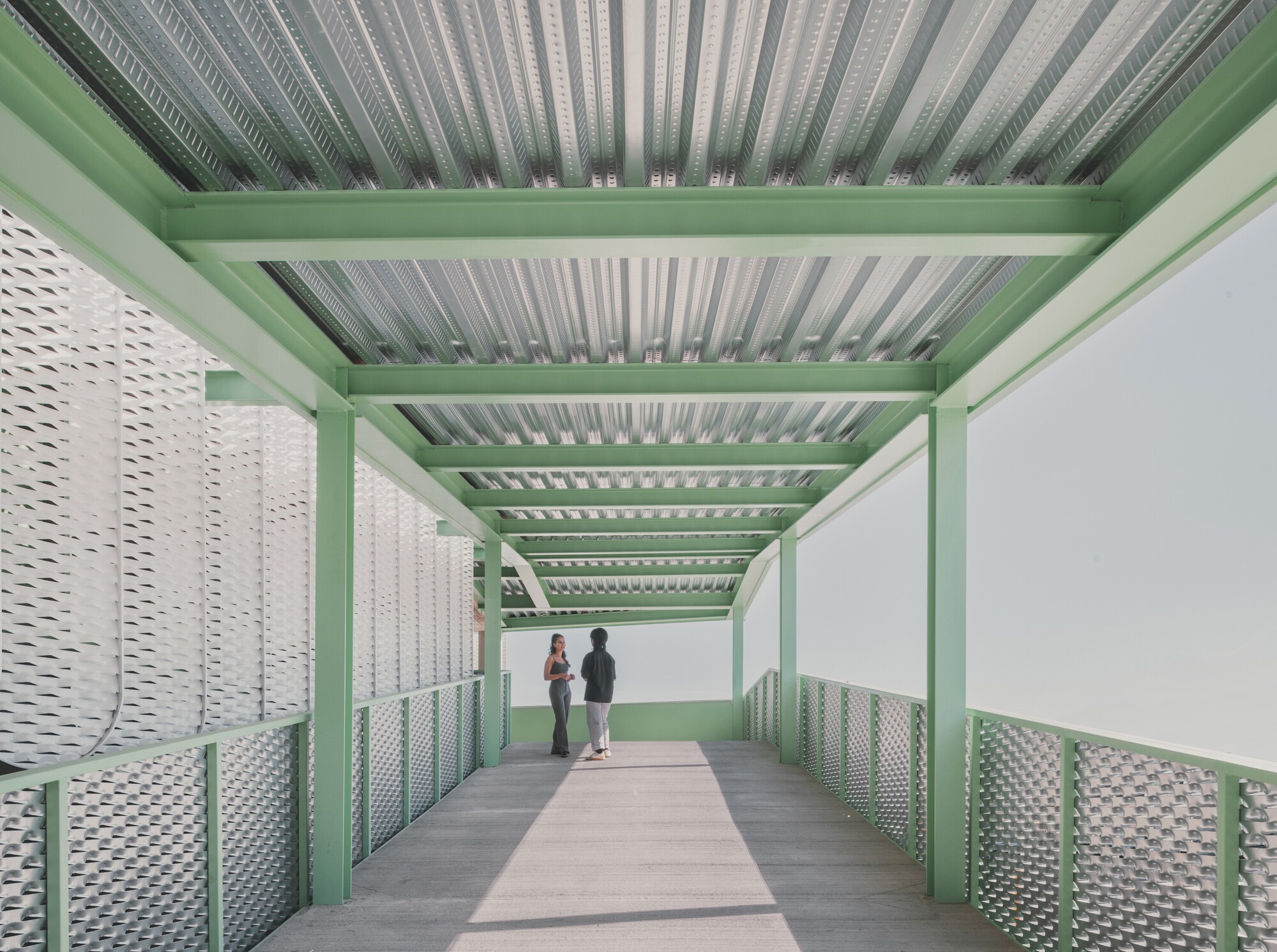
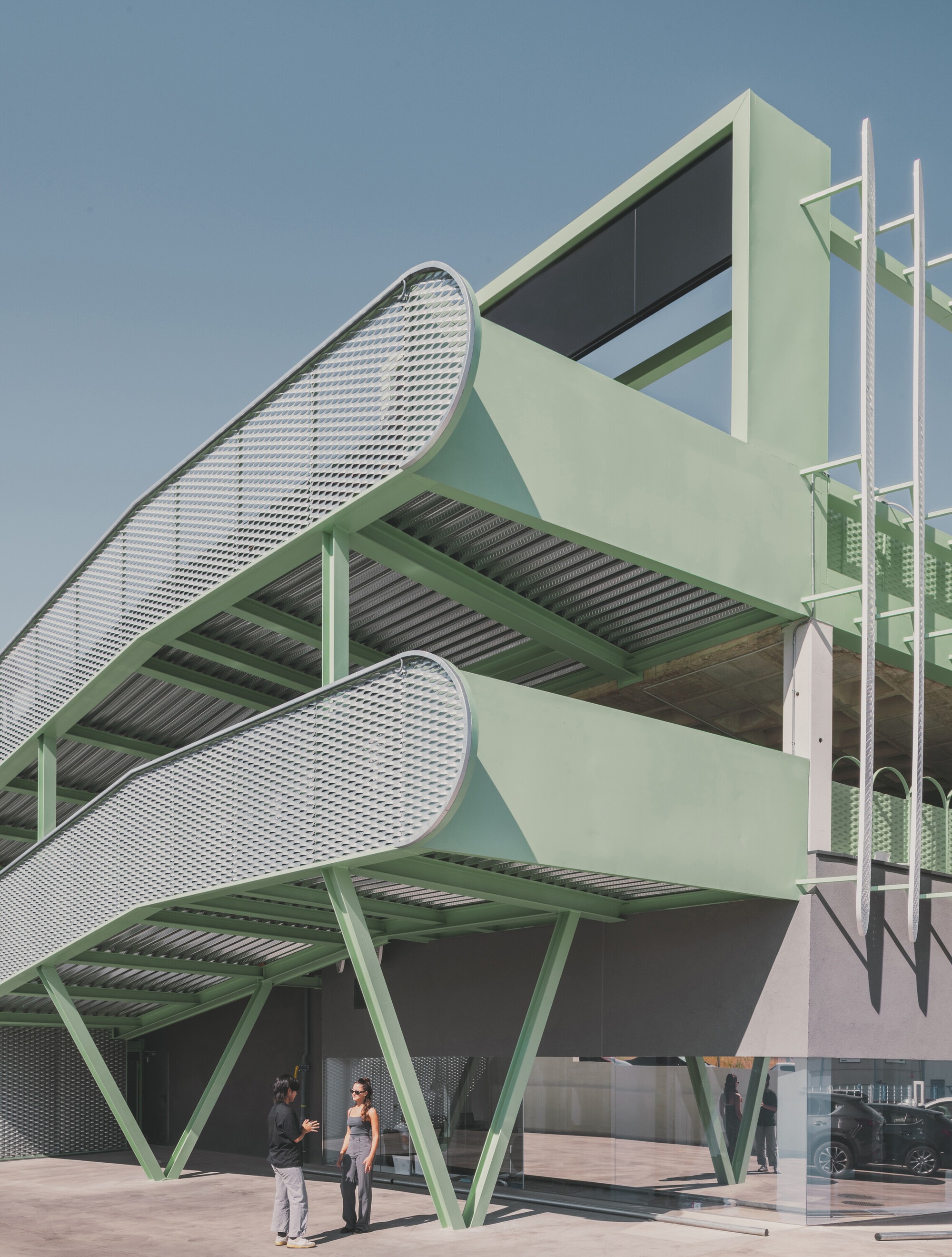
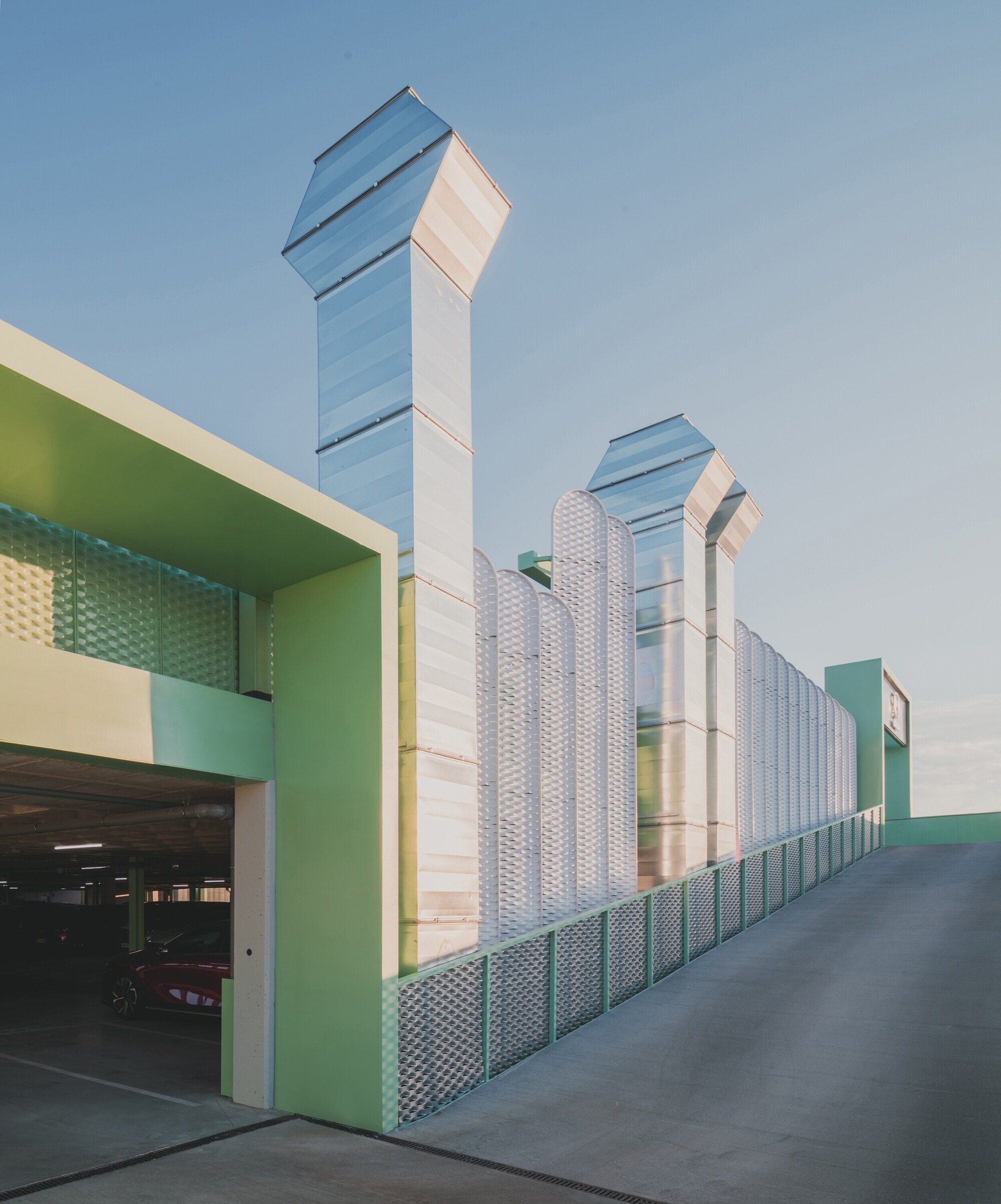
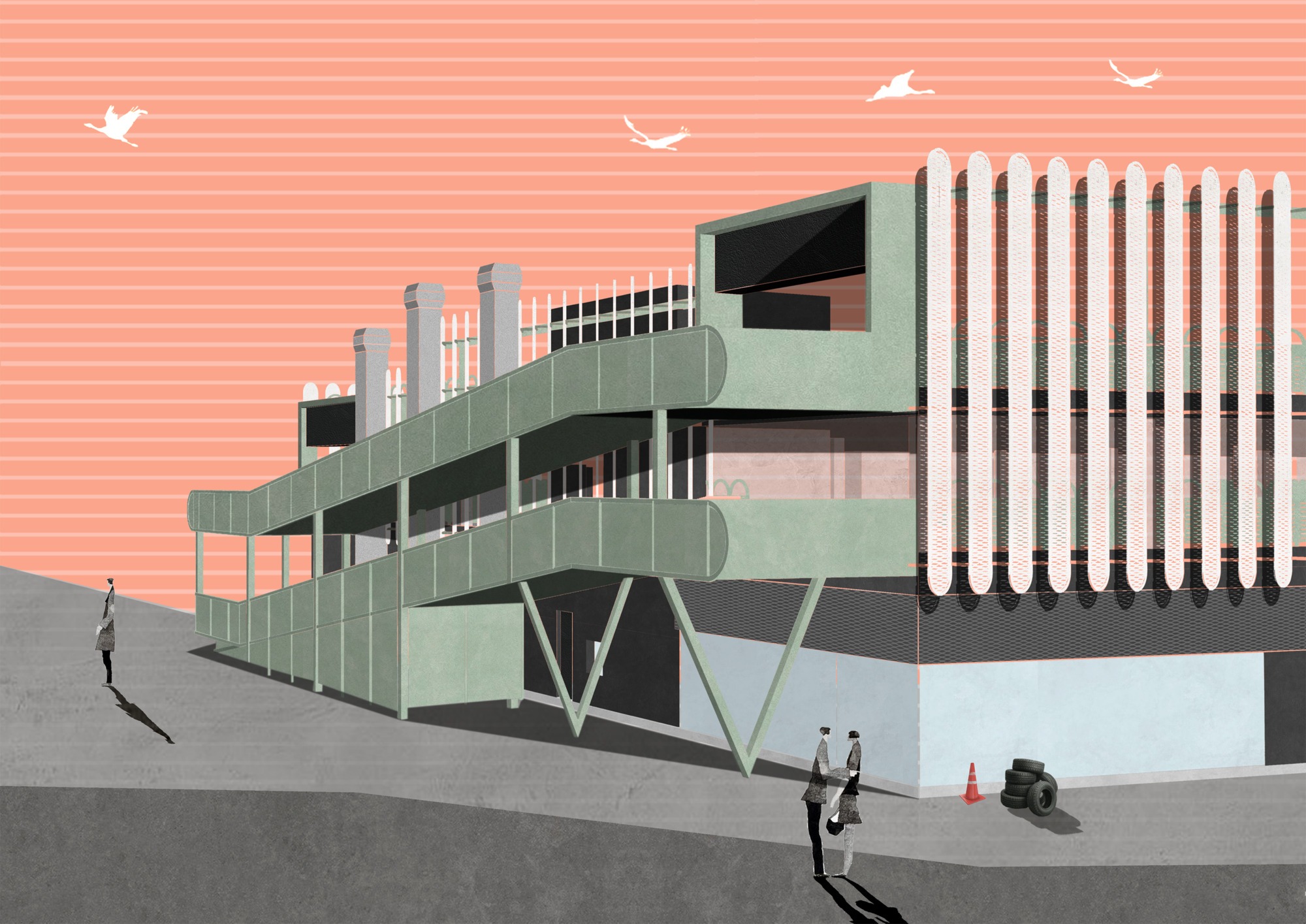
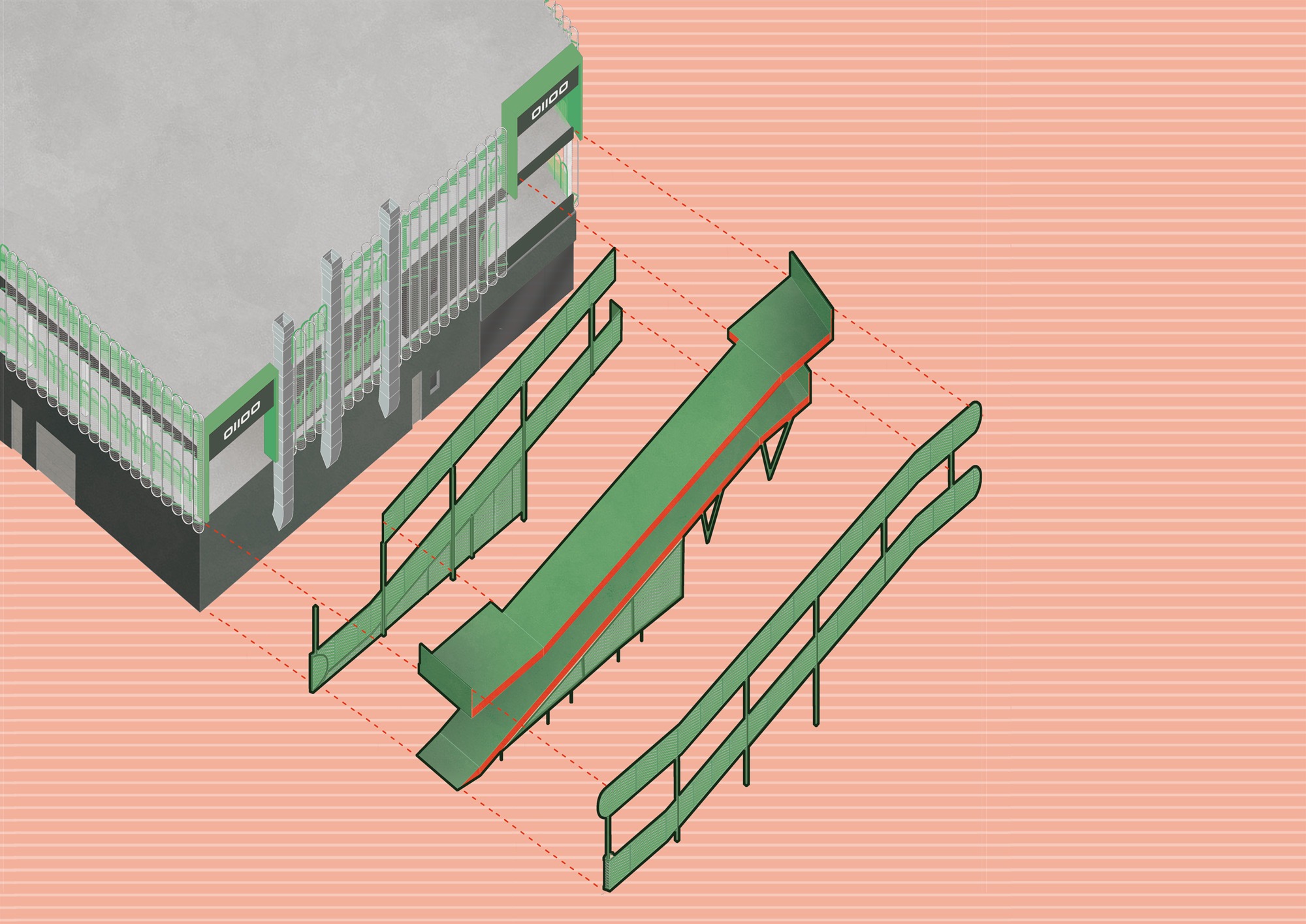
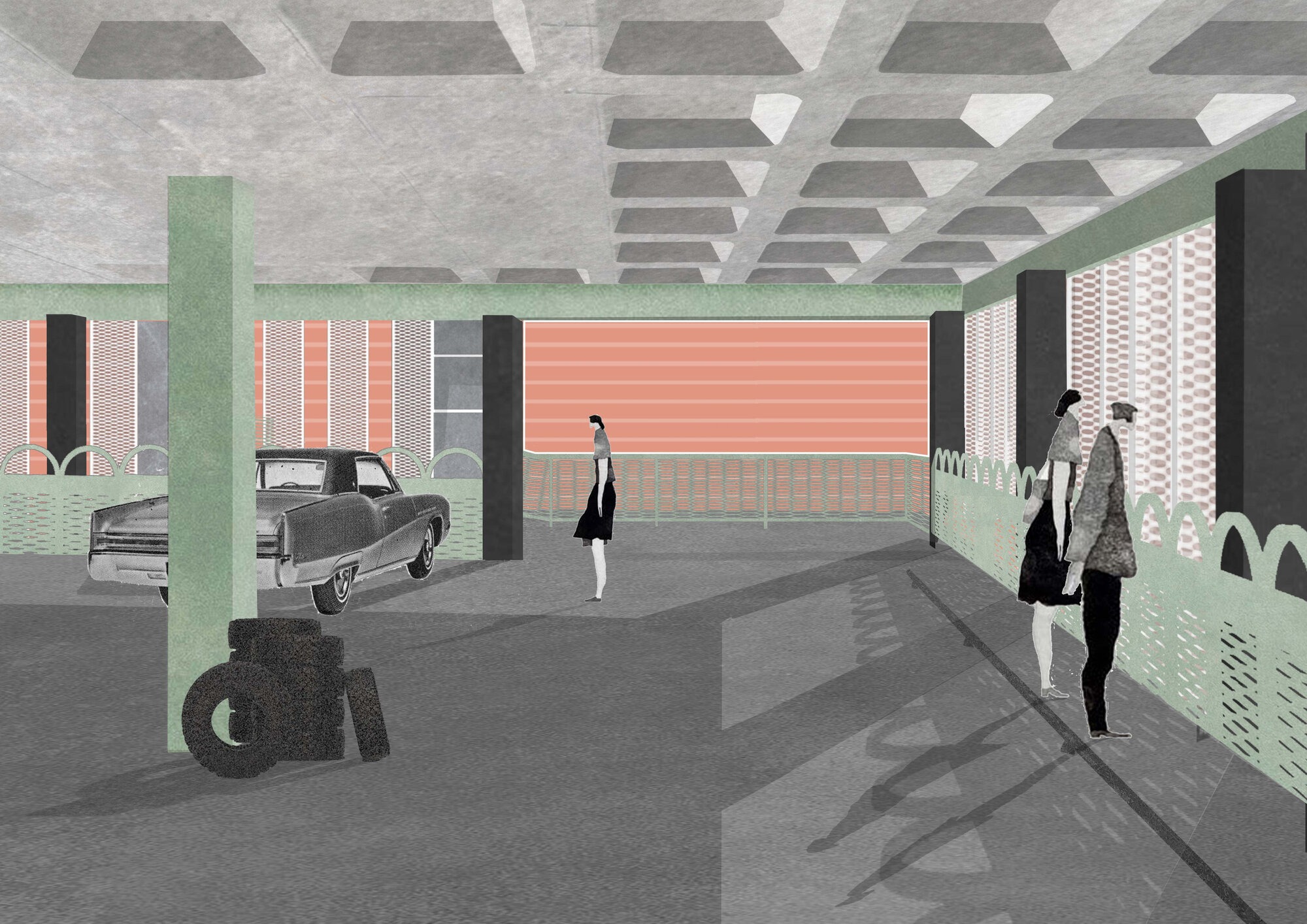
냉난방이 필요 없는 상층부는 사방이 열려 있다. 마드리드의 혹서기에도 강한 자연 통풍 덕분에 실내 온도가 바깥보다 몇 도씩 낮게 유지된다. 에어컨 없이 이루어지는 이 수동적 냉방은 설계가 아니라 건축이 이룬 성취다. 양측면을 따라 설치된 두 개의 대형 경사로는 차량 동선을 층별로 분리하면서, 지상층 고객 차량의 흐름과도 자연스럽게 공존한다.
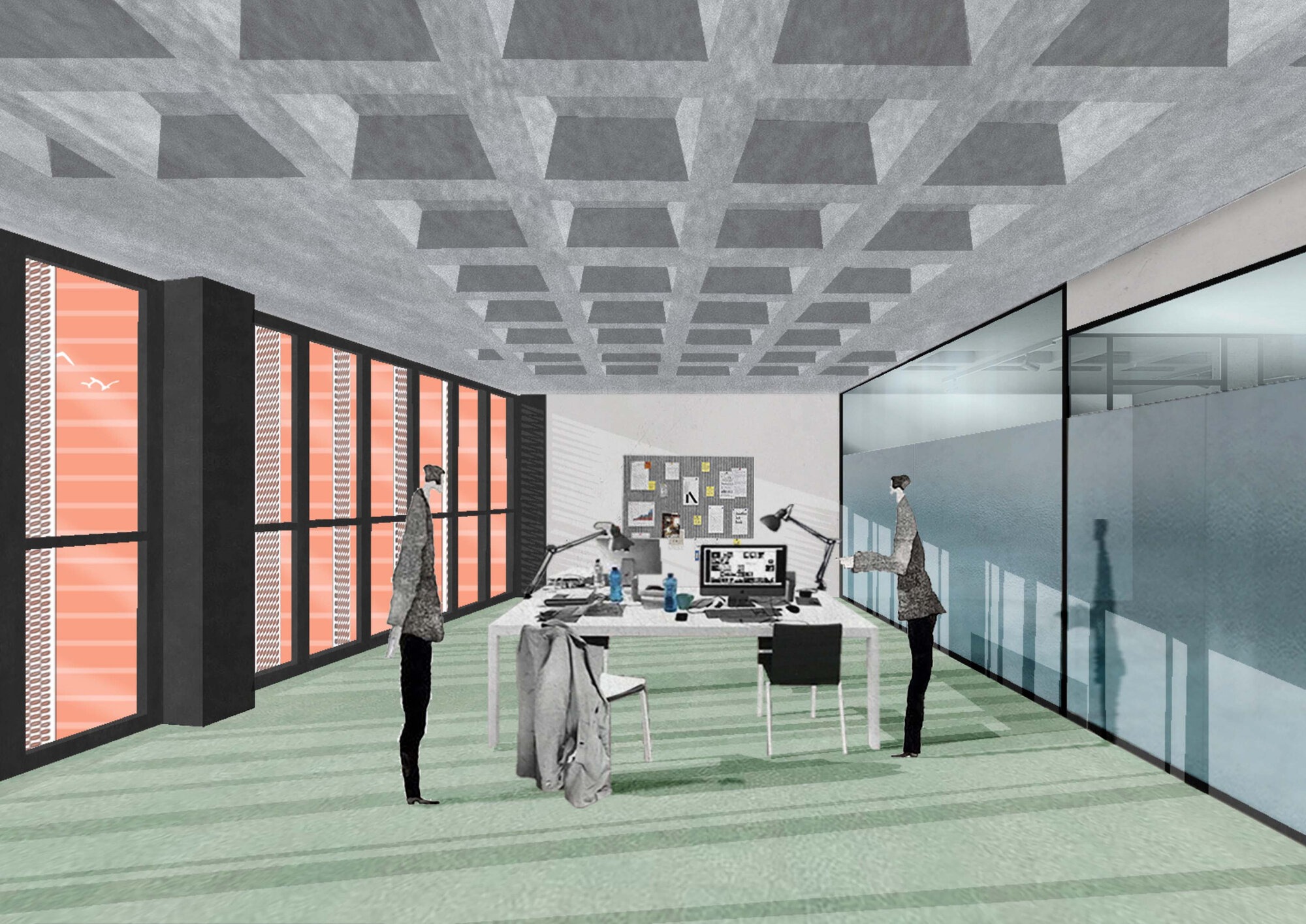
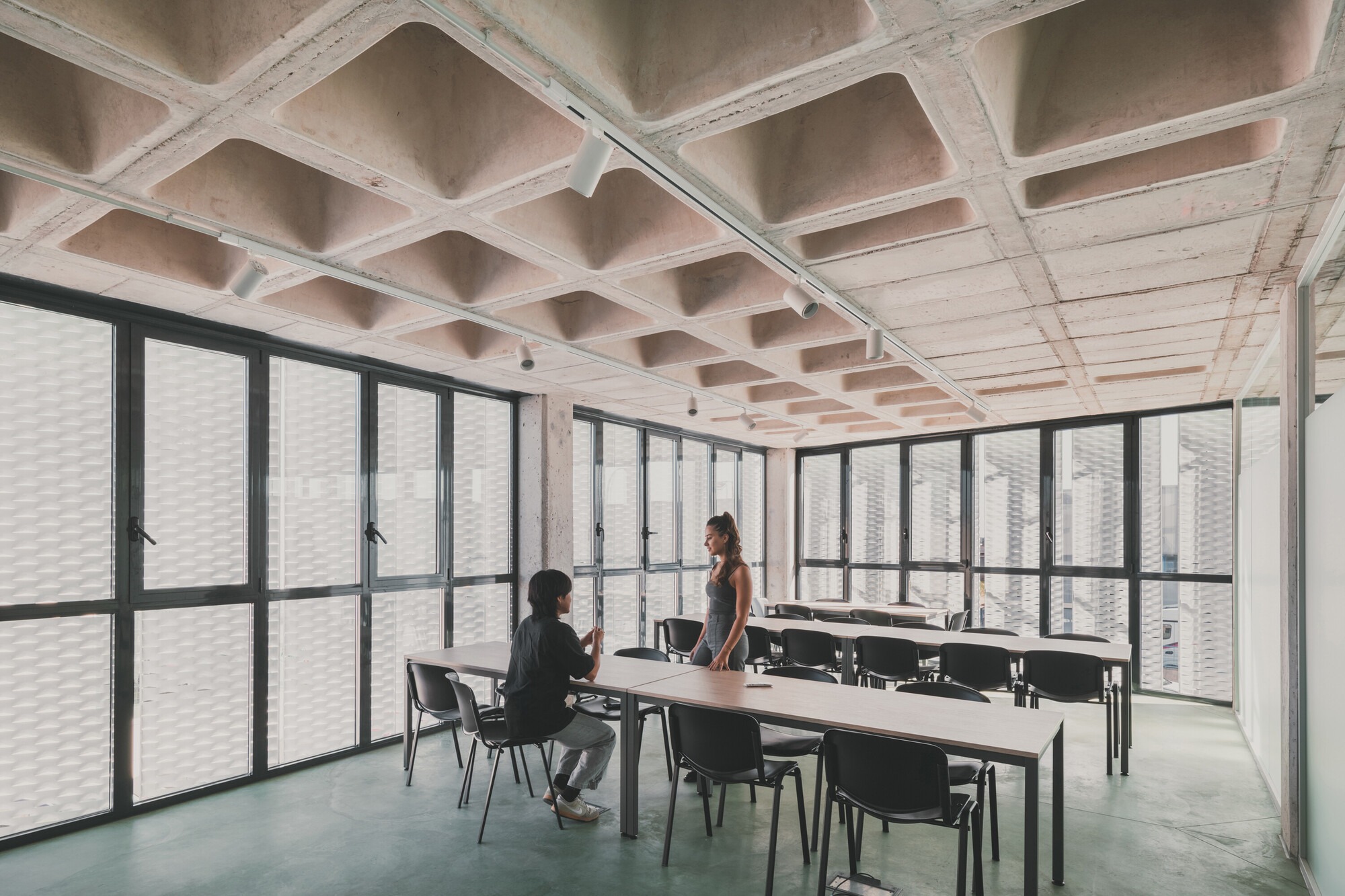
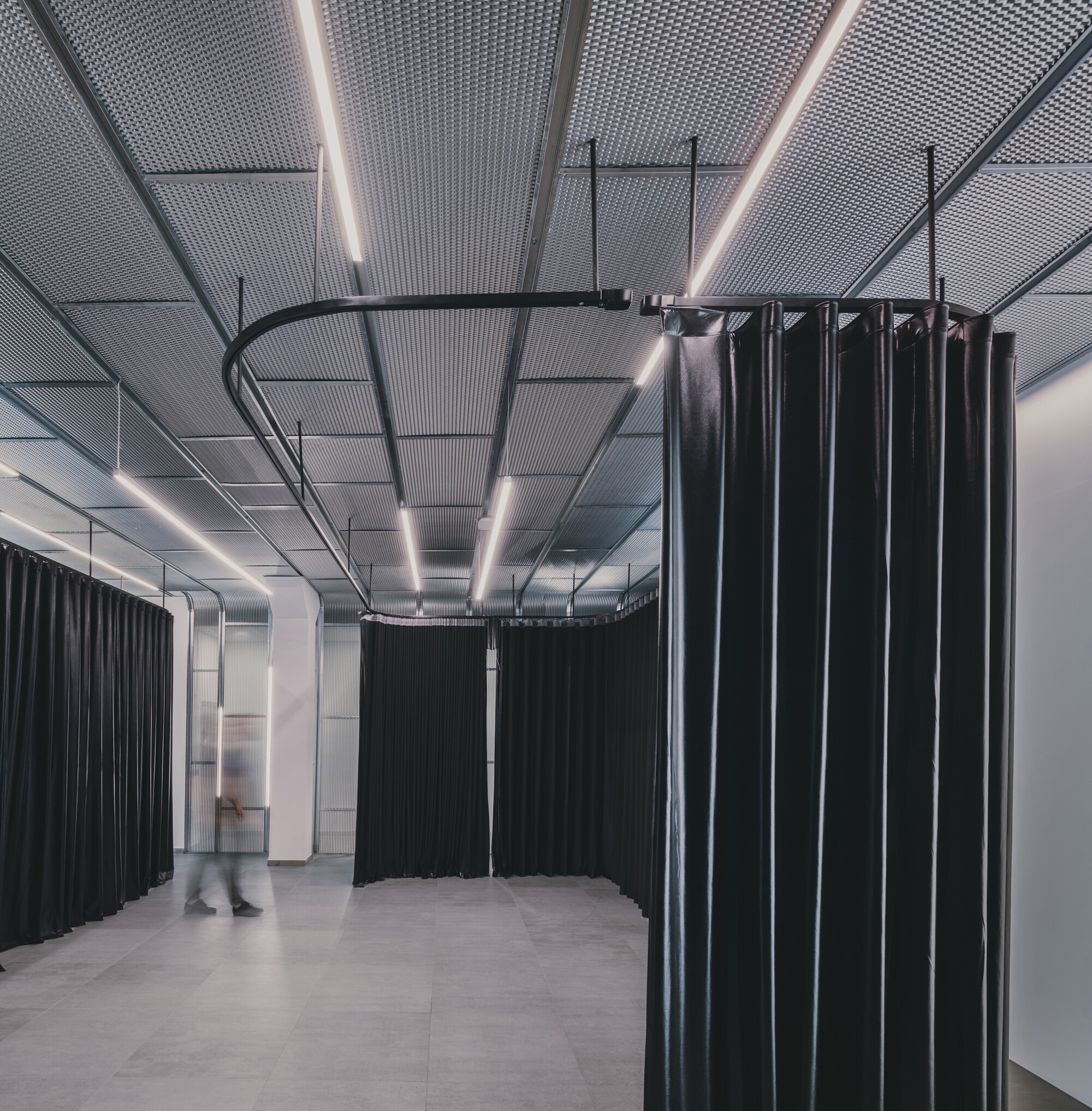
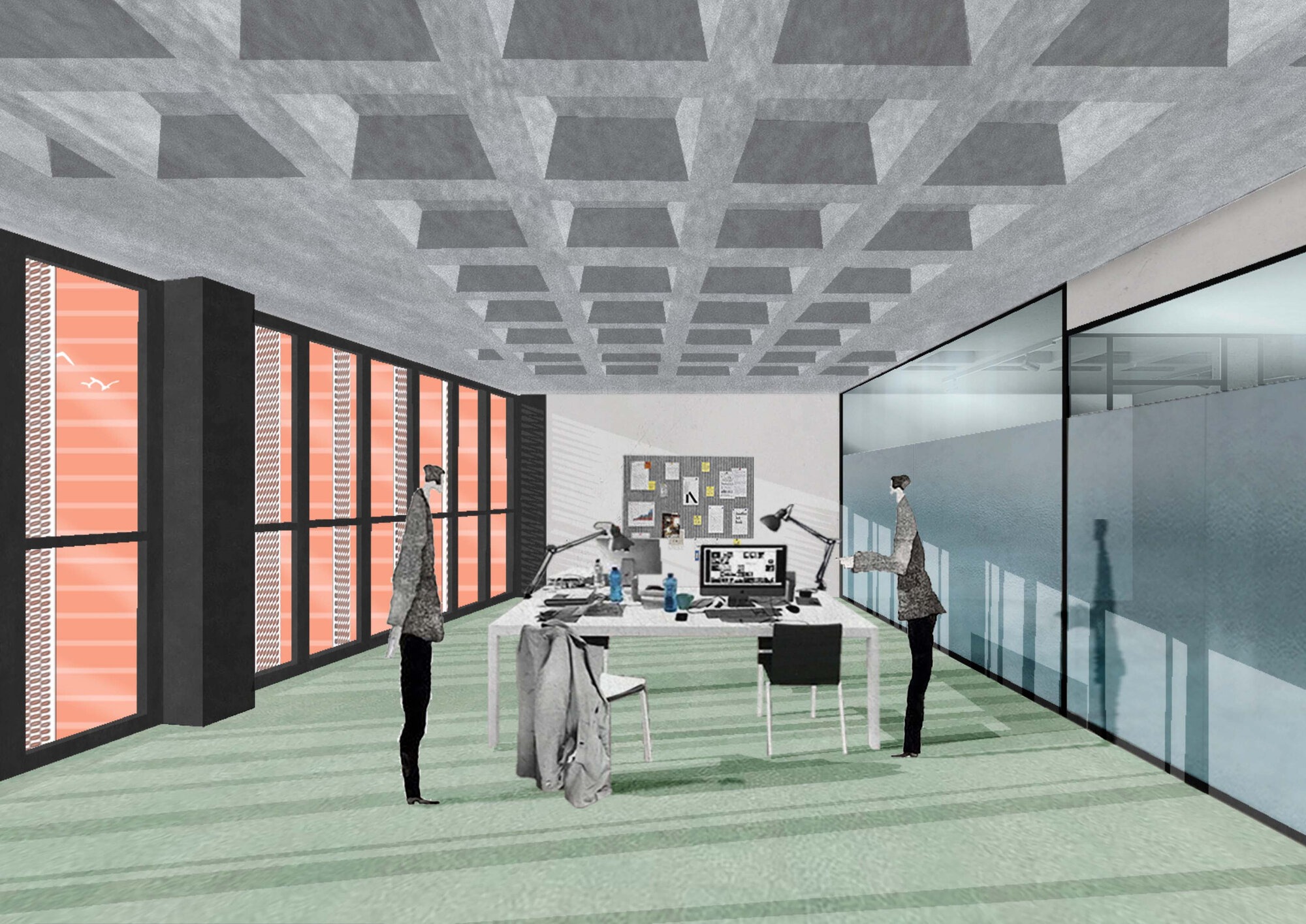
사무 공간 안으로 들어서면 이 건물의 내밀한 면이 모습을 드러낸다. 격자형 콘크리트 슬래브가 그대로 드러난 천장, 민트그린 바닥, 그리고 사방을 가득 채운 유리창 너머로 흰 슬래트의 패턴이 겹쳐 보인다. 바깥의 빛은 슬래트를 통해 부드럽게 걸러져 들어오고, 실내는 경쾌하면서도 차분하다. 산업 시설 안에서 이만한 공간감을 경험하기란 흔한 일이 아니다.
파사드: 이 건물의 얼굴
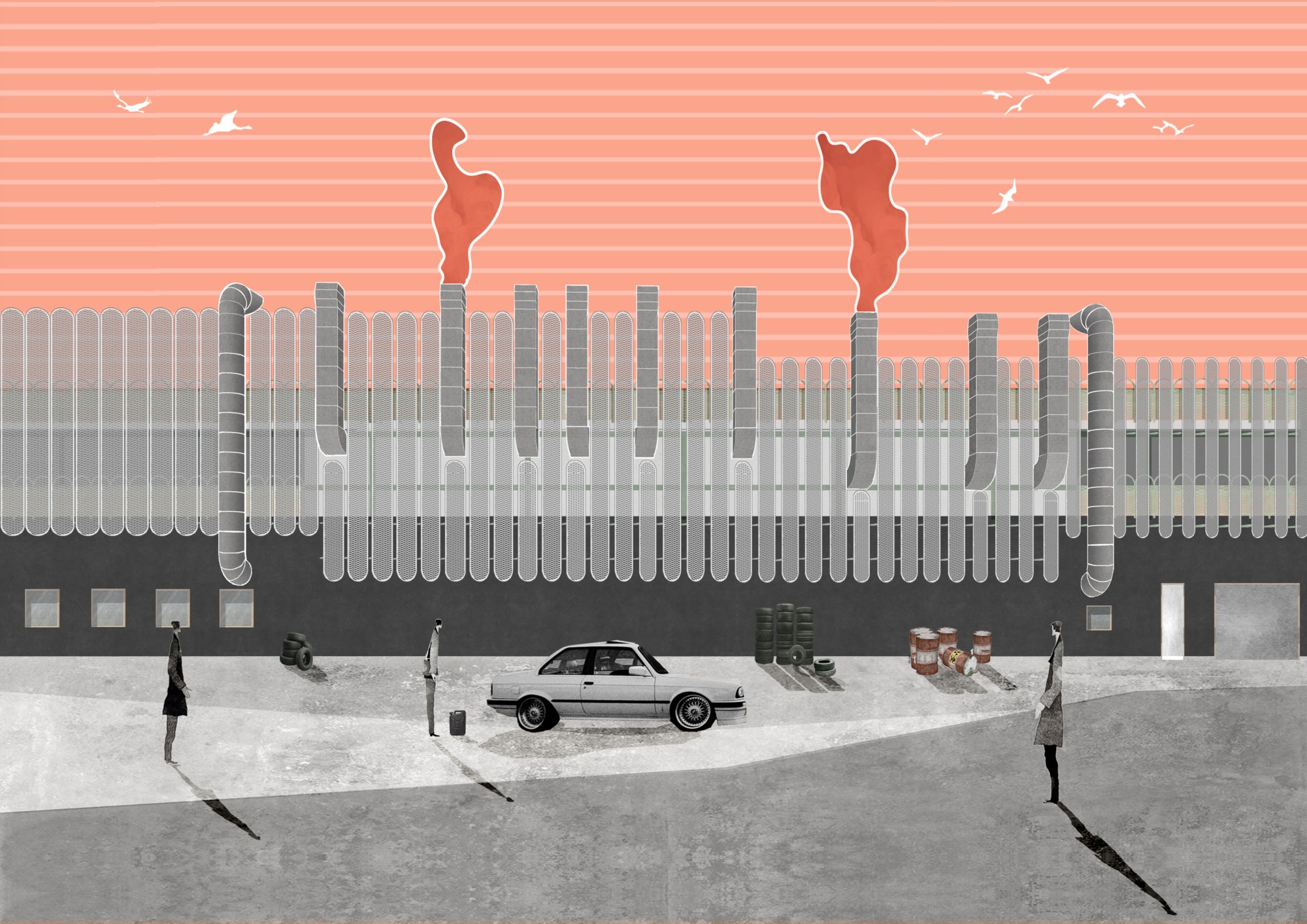
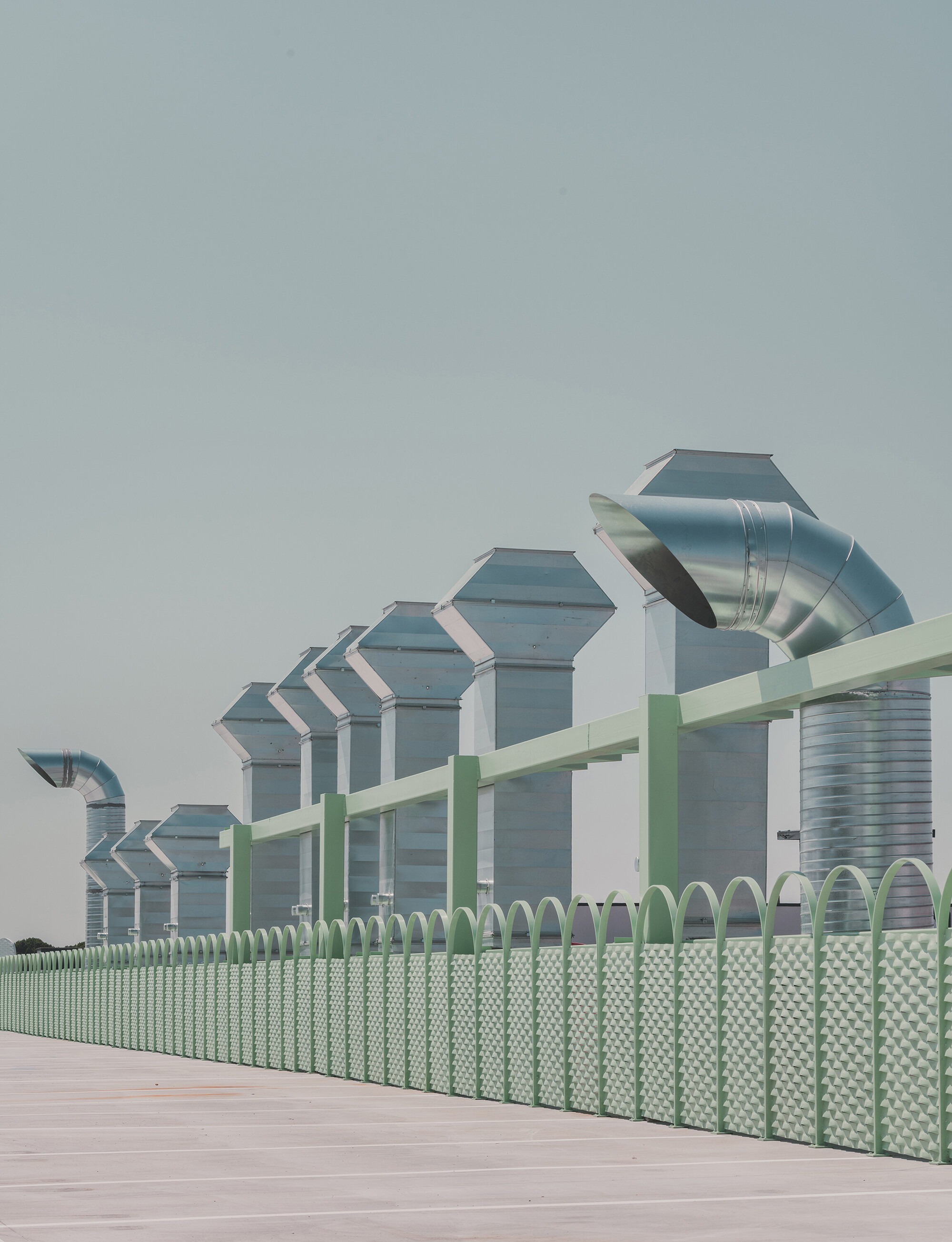
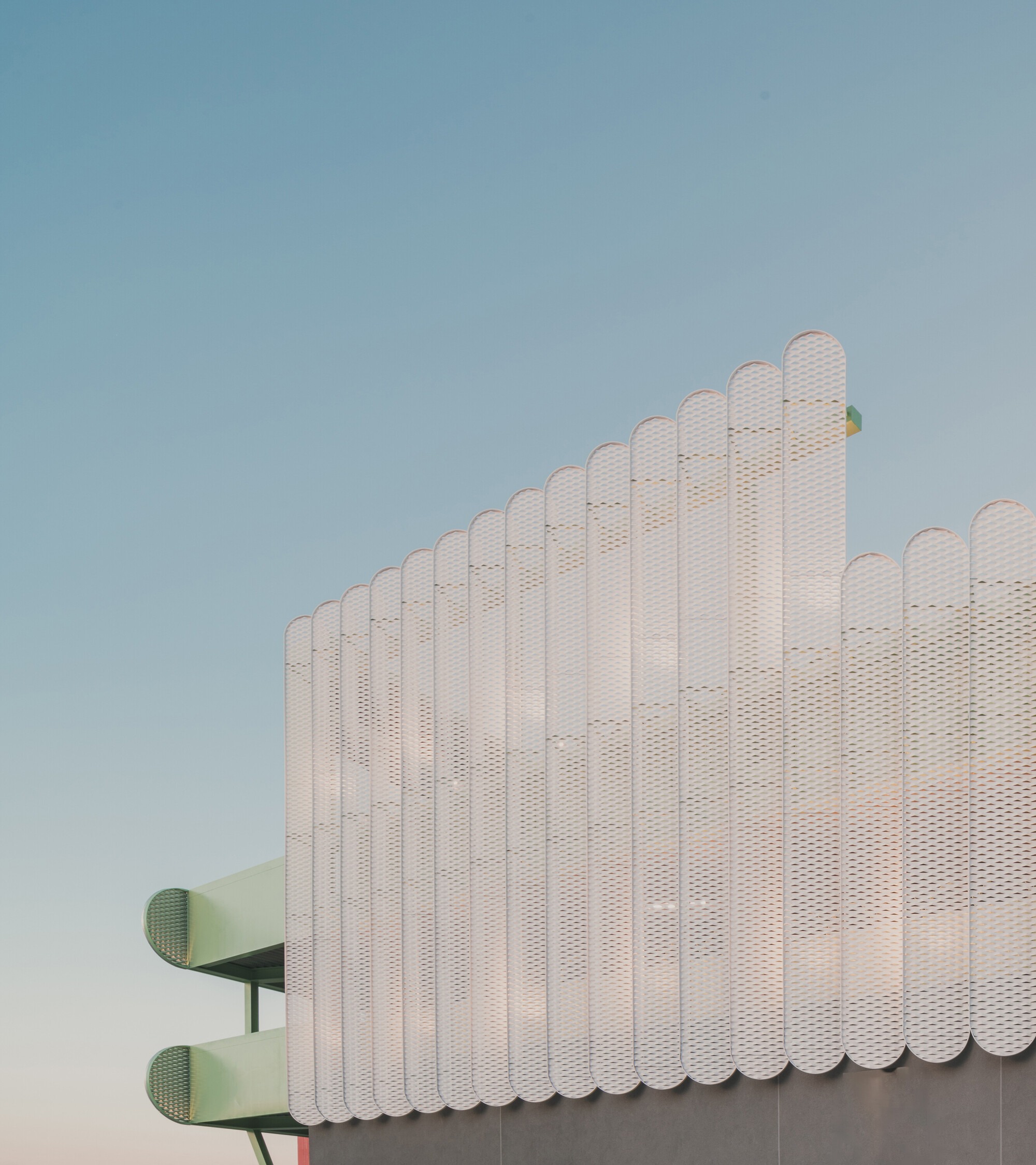
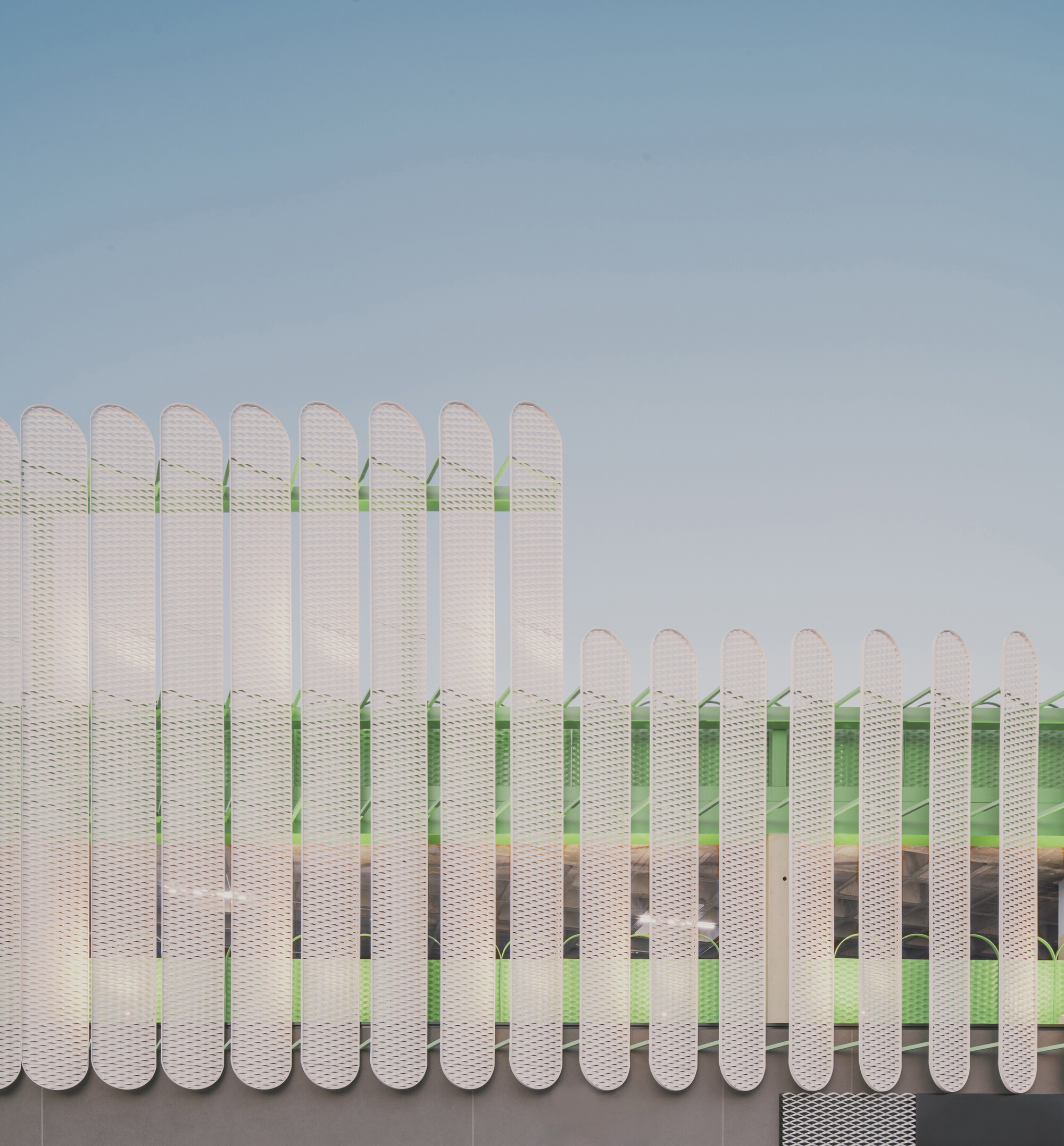
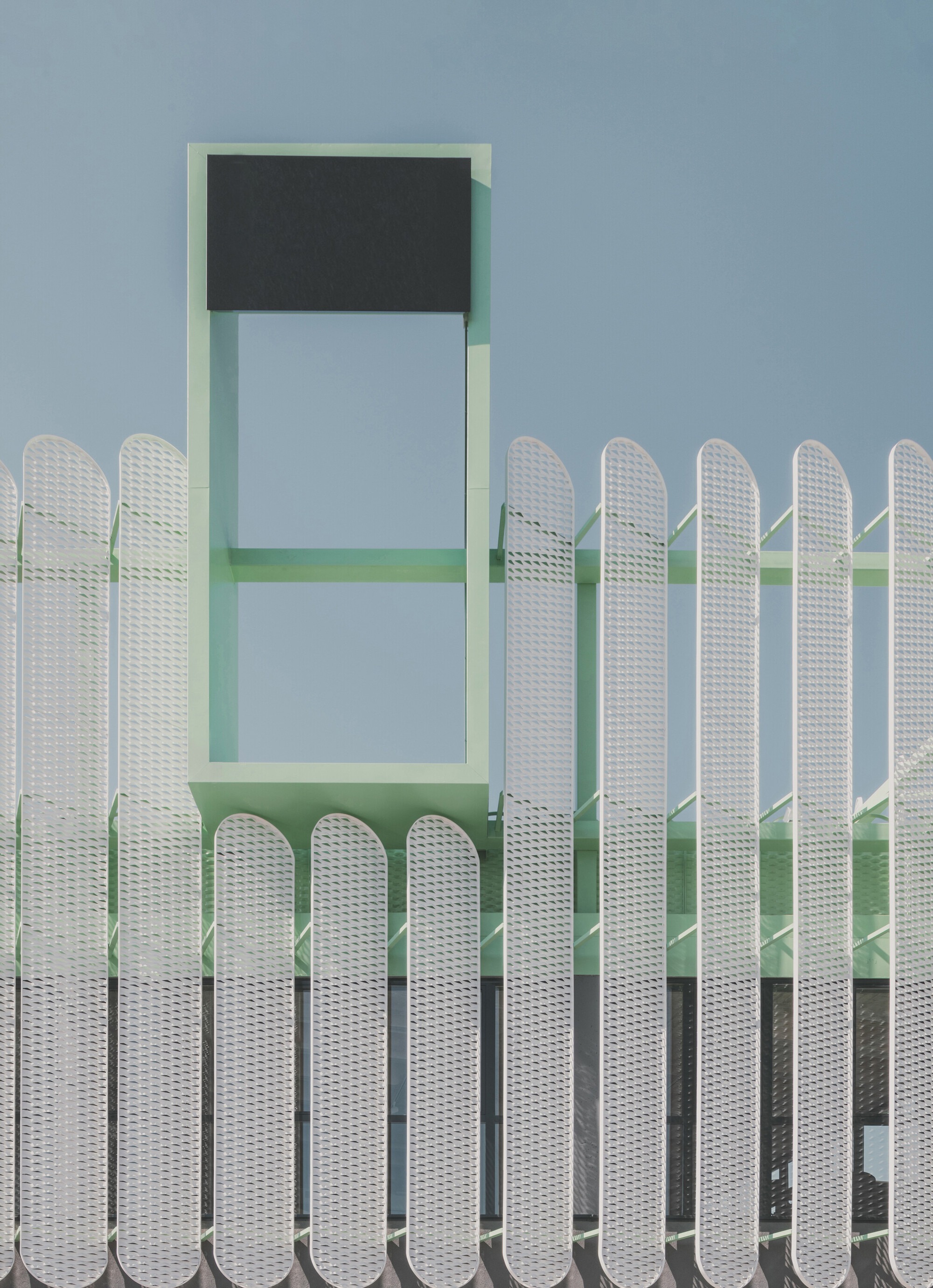
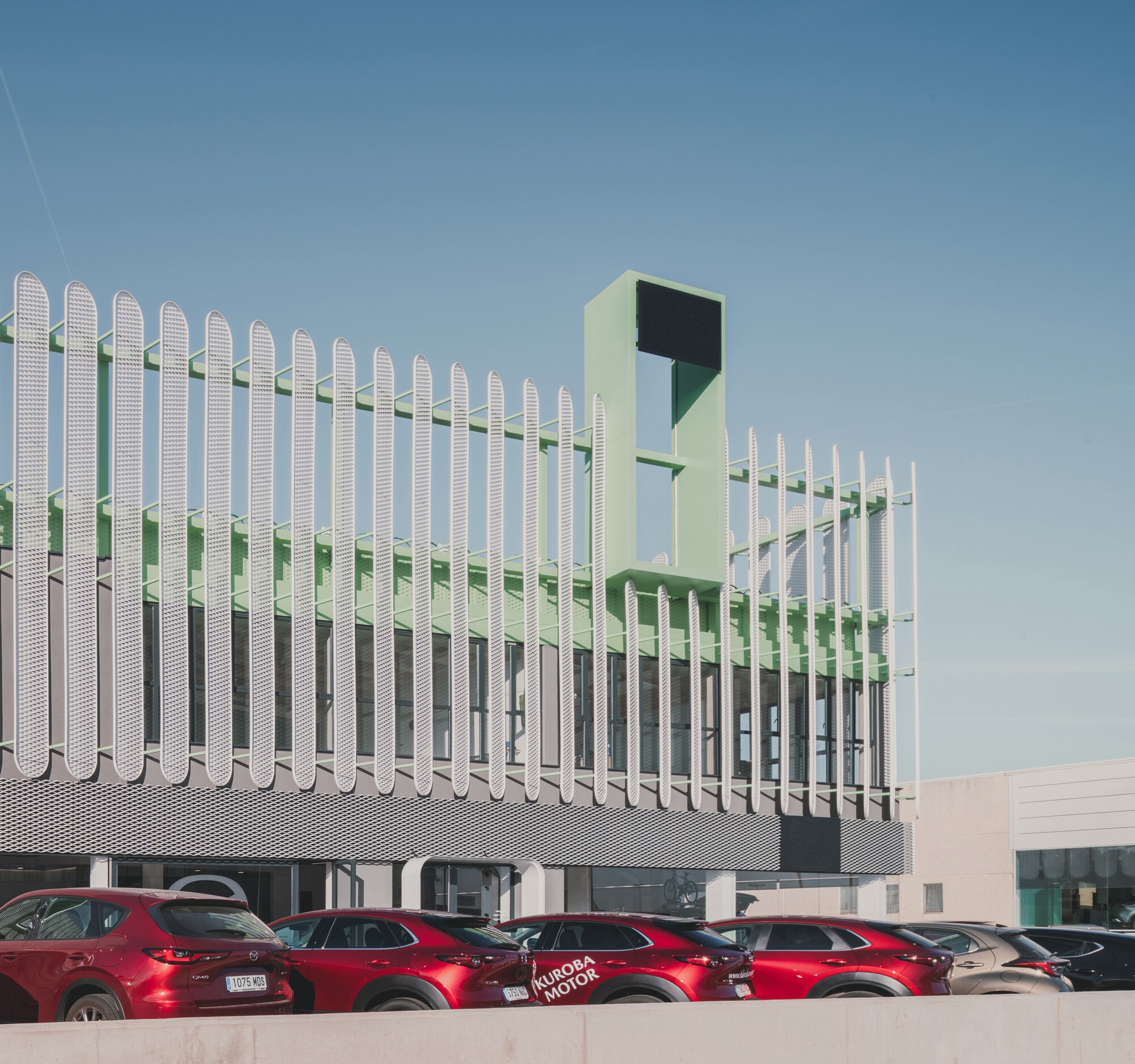
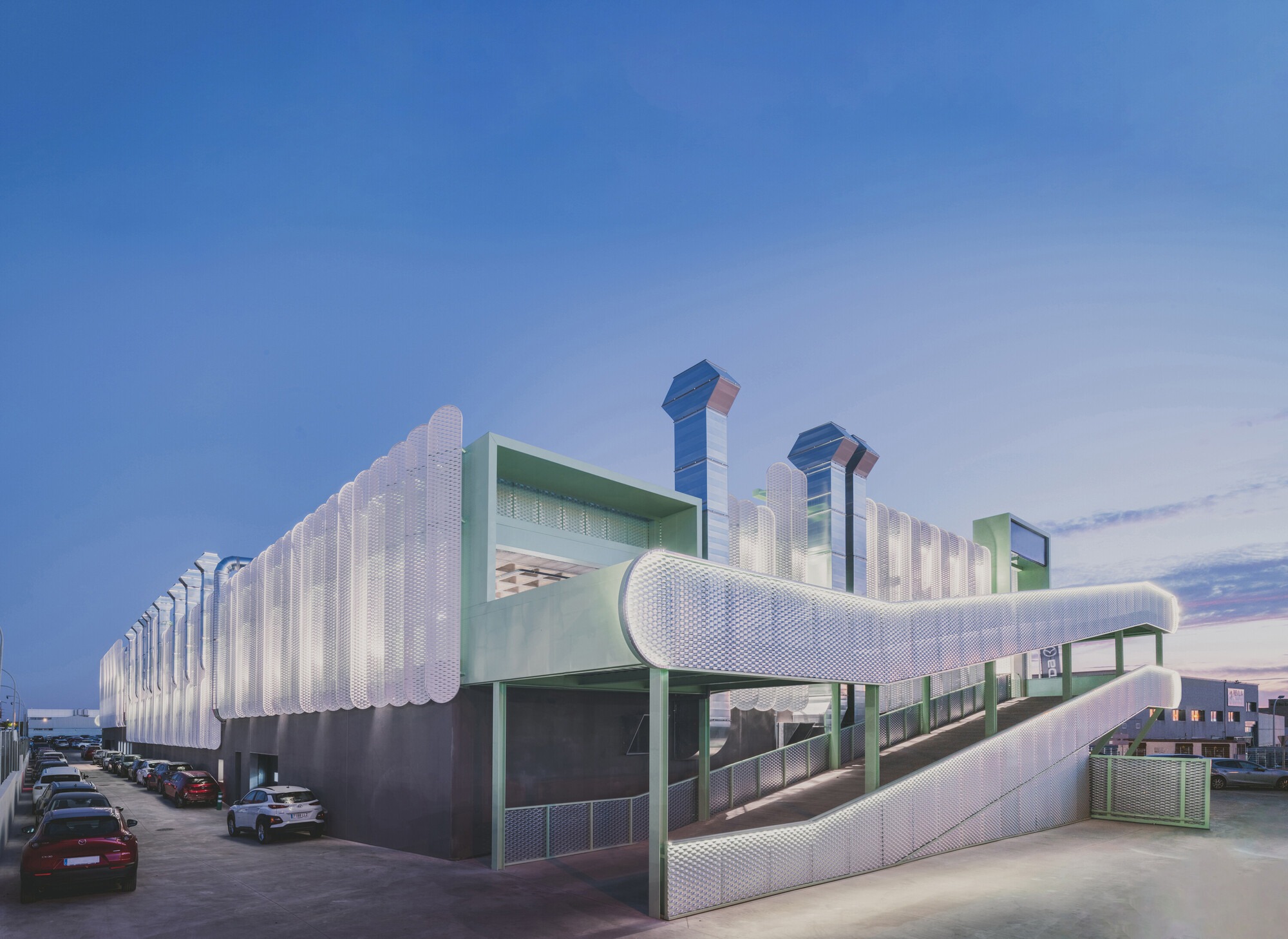
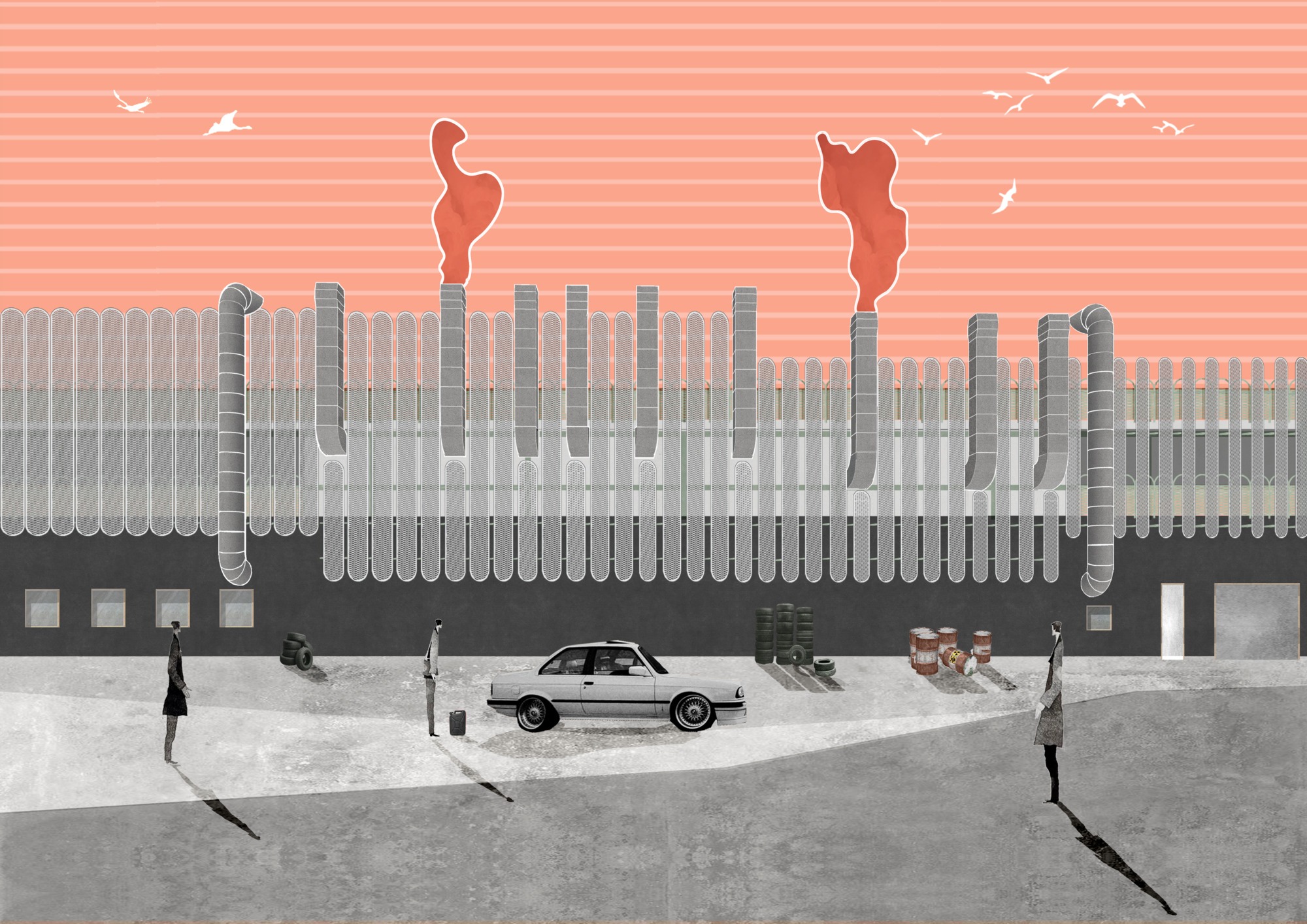
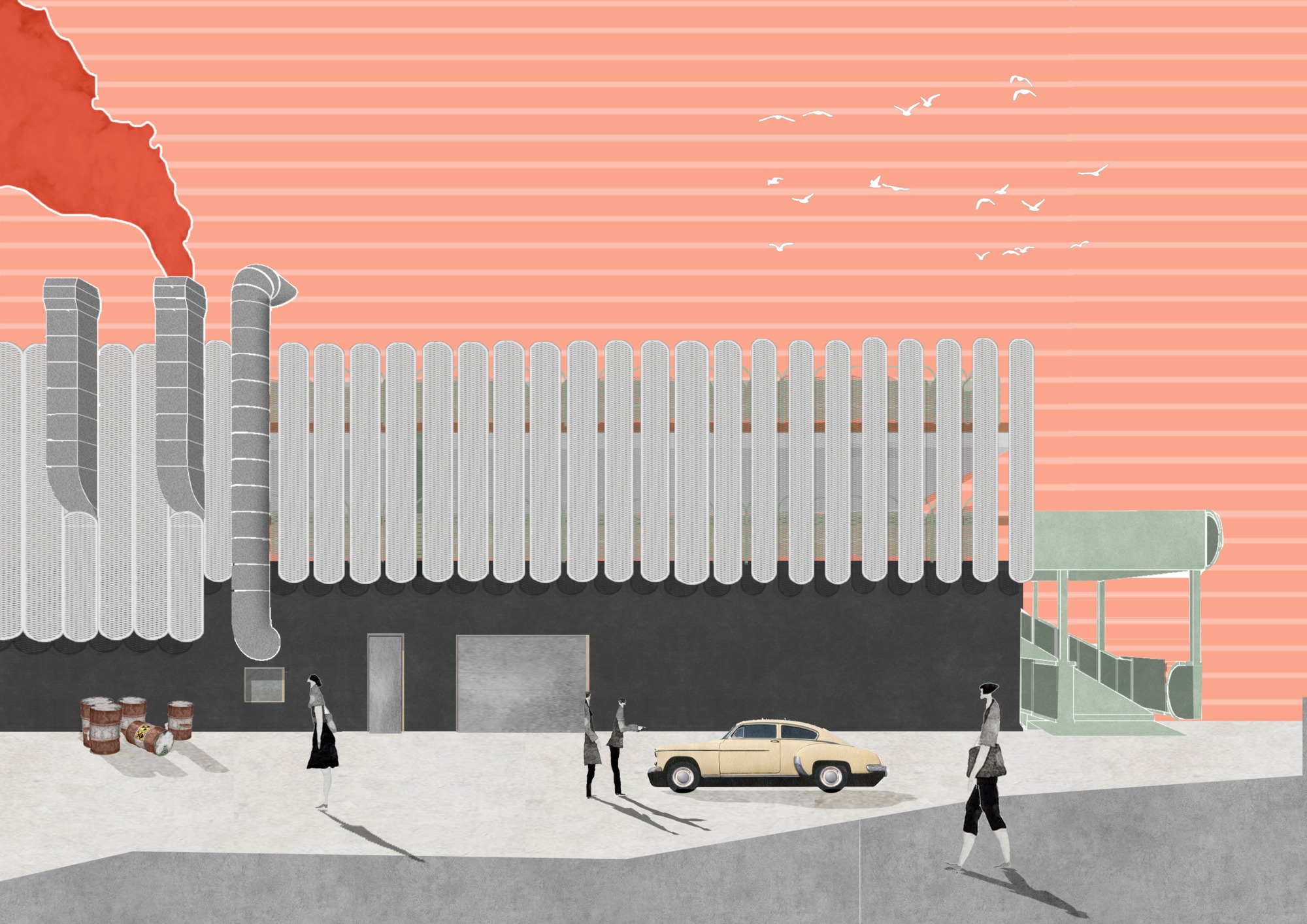
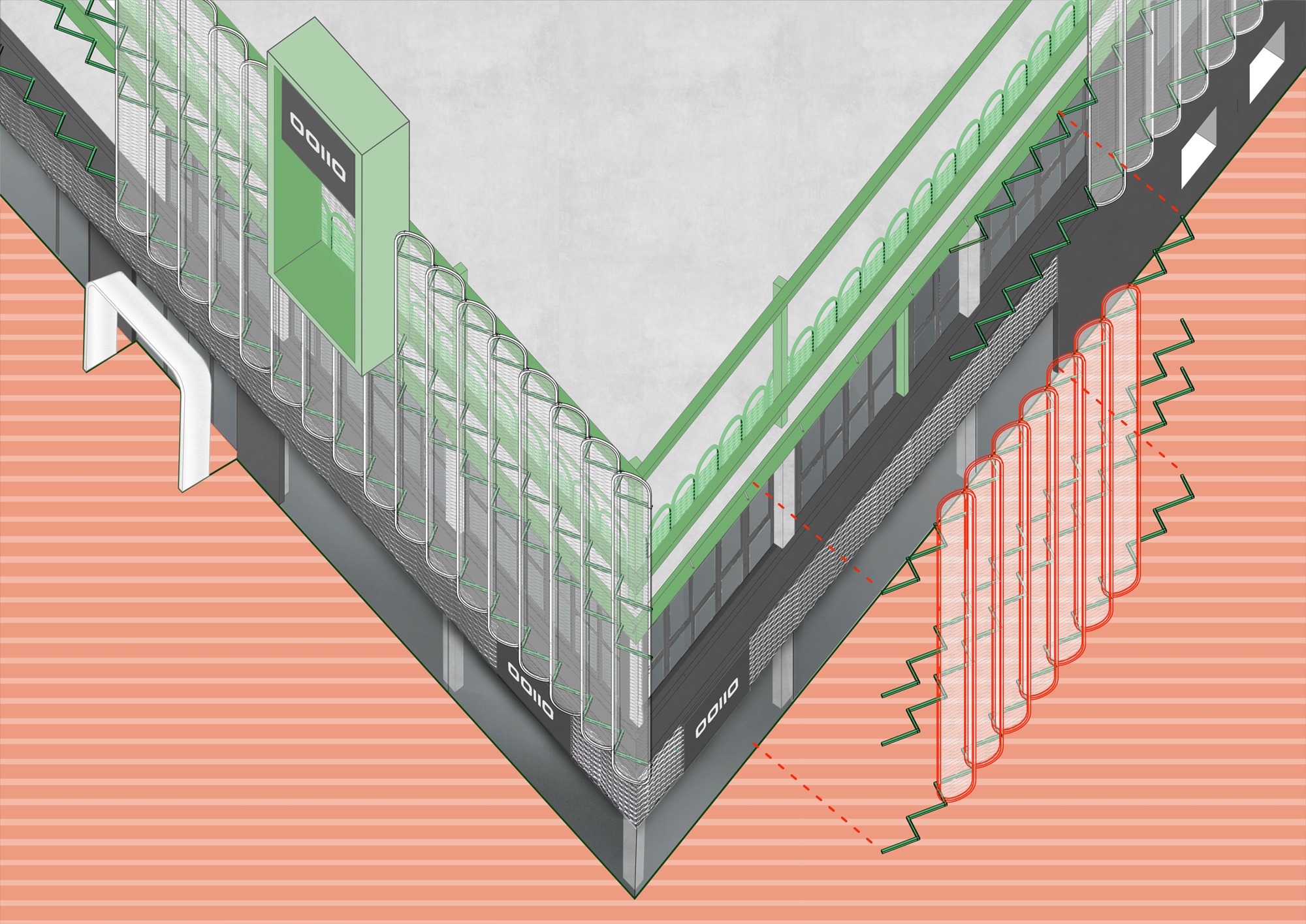
이 프로젝트에서 파사드는 단순한 외피가 아니다. 폐쇄적이고 단열재도 없던 옛 공장의 벽돌 외벽은 자취를 감췄다. 그 자리에는 민트그린 하부 구조체에 고정된 크고 작은 흰색 금속 슬래트들이 들어섰다. 슬래트 사이로는 산업용 덕트와 환기구가 고개를 내밀고 있는데, 이것들을 숨기는 대신 파사드의 일부로 당당히 드러낸 것이 이 설계의 핵심이다. 내부 설비를 파사드로 끌어내자 건물의 산업적 성격은 기념비적 이미지로 거듭났고, 동시에 내부 공간은 차량 동선을 위해 온전히 비워졌다.
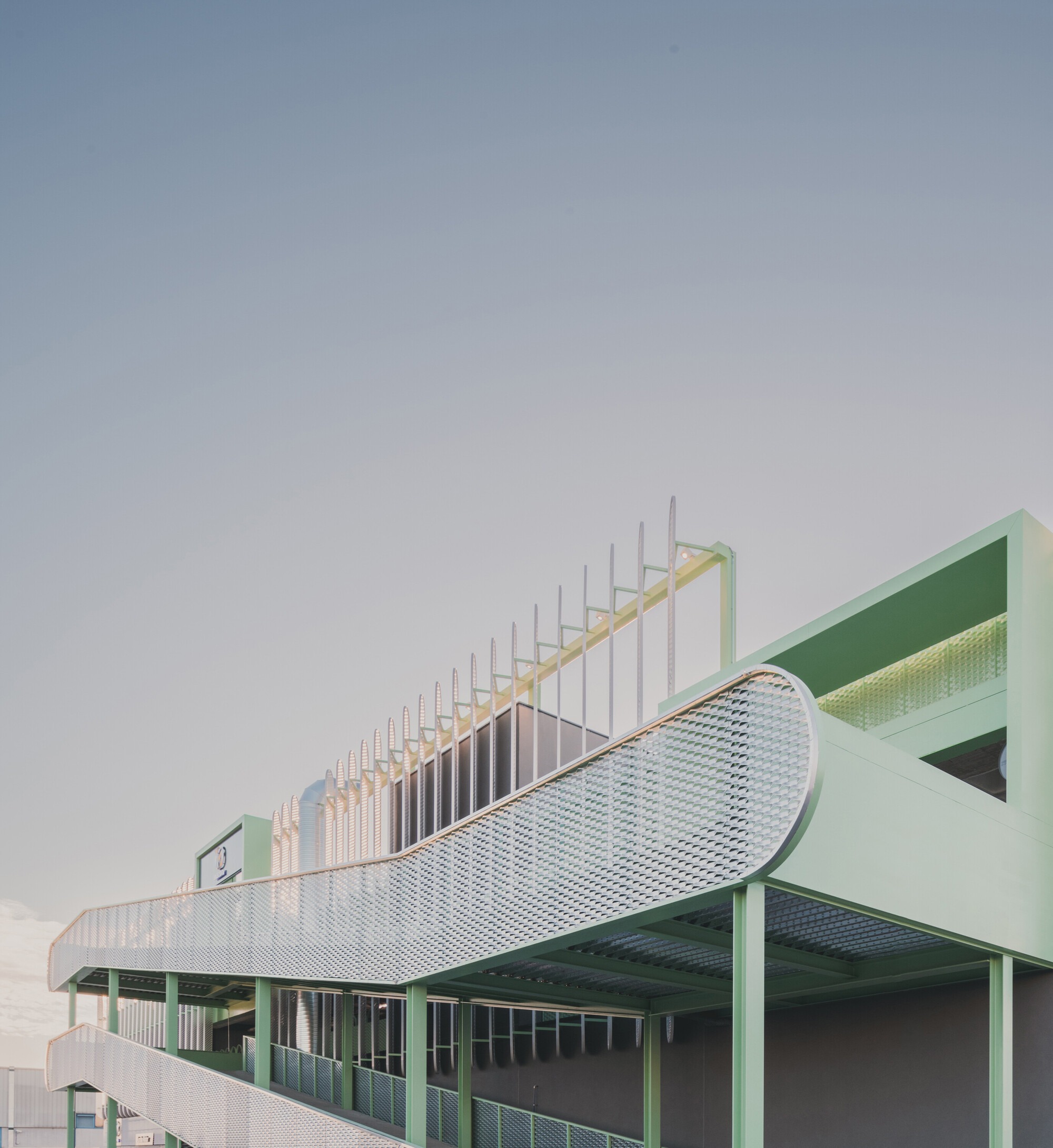
가까이 다가서는 순간, 슬래트가 빛에 반응해 만들어내는 그림자와 반사의 층위가 눈에 들어온다. 끝이 둥근 알약 형태의 판들이 높이를 달리하며 하늘을 향해 늘어서 있다. 퍼포레이티드 메탈 패널은 빛을 투과시키면서도 차단하고, 마치 자동차 대리점의 수직 배너를 연상시키는 리듬으로 시선을 붙든다. 그 뒤에서 반짝이는 금속 덕트들은 소음이 아니라 음악처럼 서 있다. 진입부에서 바라보면, V자로 벌어진 민트그린 기둥들이 건물을 땅 위에 가볍게 들어 올리고, 경사로를 감싸는 곡면 패널이 파사드에 운동감을 더한다.
기계가 감동이 되는 순간
르 코르뷔지에는 건물을 기계에 비유했다. 모든 것이 제자리에 있어야 하고, 효율과 기능은 타협의 대상이 아니라고. 그러나 스포츠카와 밴이 둘 다 목적지까지 데려다주지만 전혀 다른 경험을 선사하듯, 건물도 기능 너머의 감동을 만들어낼 수 있다. 자동차 브랜드가 그토록 공들여 감성을 설계하듯, OOIIO는 이 산업 시설에 바로 그 논리를 적용했다.
레가네스 오토 센터는 무엇보다 예외의 건물이다. 산업단지의 자동차 정비소에 이만한 건축적 야심을 불어넣는 일은 드물다. 그 결과물은 단조로운 산업 경관 속에서 질감과 색채, 빛의 대비로 존재감을 발산하는 하나의 조각이 됐다. 태양광 에너지로 스스로 돌아가며 주변 건물들에게도 전력을 나눠주고, 폐공장의 뼈대 위에 새로운 피부를 입혀 수백 대의 차들과 함께 하루하루를 채운다. 르 코르뷔지에의 말처럼 기계는 완벽하게 작동해야 한다. 그러나 OOIIO는 거기서 멈추지 않았다. 기계가 감동을 줄 수 있다는 것, 이 건물은 그 사실을 조용히, 그러나 분명하게 증명한다.
Write by Claude & Jean Browwn



Creativity is an extraordinarily powerful tool, capable of providing solutions to almost any challenge. In architecture, imagination and unique solutions shouldn’t be the exclusive preserve of grand public buildings or those dream homes we’d all love to live in. There’s also room for innovation—and excitement—in the most unexpected places.
That was the starting point when a businessman commissioned the OOIIO architecture firm to design a large building for car sales and repairs in an industrial park specializing in the automotive sector in Leganés, one of the cities in Greater Madrid. The challenge was as appealing as it was complex: a large scale building that had to house a spacious retail area, offices, mechanical and body shops, as well as storage areas for hundreds of vehicles while also managing the intense daily flow of cars within the building itself. Added to this functional complexity was a key constraint: the site already contained a disused industrial building, an old kitchen factory that had been abandoned for years.
This type of architecture is usually left to engineering firms that opt for predictable and strictly functional solutions. Such commissions are rarely entrusted to creative firms like OOIIO. One need only walk through any industrial park to see the scant attention paid to architecture, light, materials, or these buildings’ ability to convey emotion. That is why this project stands as an exception, a true rarity in the world of auto repair shops.
As Le Corbusier said, a building—including an industrial one can be understood as a machine, where everything must be in its place. A car must function perfectly: efficiency and function are non-negotiable. But it must also excite and generate sensations. Driving a sports car is not the same as driving a van, even though both take you from point A to point B. Car brands know this well and consciously work on that emotional component. In this case, that same logic is applied to architecture.
The first major decision of the project was to recycle the existing industrial structure and adapt it to new uses. This is clearly a more sustainable approach than demolishing and constructing a completely new building an option that would have been faster and simpler, but also far more costly in environmental terms. Can an old kitchen factory be transformed into a center for car workshops and sales? The answer is a resounding yes.
Following functional criteria, the ground floor is designated for retail space and mechanical and bodywork workshops, while the two upper floors are used as vehicle storage. This required reinforcing the existing structure to support the new loads. In addition, the original roof was removed and a new upper storage level was created, protected from the sun by photovoltaic pergolas capable of generating enough energy to power not only the building but also others in the surrounding area.
Two large ramps are incorporated on the sides to organize internal circulation and coexist with the paths of customer vehicles on the ground floor. With the addition of offices on the first floor, the building’s functional program is fully realized.
The old factory had a closed, heavy brick facade, without insulation and practically invisible in its surroundings. The project completely transforms the relationship between the interior and exterior, opening the building to its context. The upper storage floors are not climate controlled and remain open, concentrating energy consumption solely on the ground floor, where workers and customers are located.
The new envelope consists of large white metal slats of varying sizes, anchored to a mint green substructure, combined with chimneys and vents from the industrial facilities. By bringing these facilities to the façade, the building’s industrial character is showcased and monumentalized, while simultaneously freeing up interior space to facilitate vehicle circulation.
The façade thus becomes the defining element of the project: a car dealership that stands out amidst the monotonous industrial landscape thanks to its textures, formal interplay, and chromatic contrasts. The slats evoke the vertical banners of car dealerships, capturing the visitor’s attention, adding character, and reducing energy consumption through passive solar control. Even during Madrid’s intense summer, the upper floors maintain a temperature several degrees lower thanks to cross-ventilation, without the need for air conditioning.
from archdaily