"벽돌이여, 너는 무엇이 되고 싶으냐 물었더니 이렇게 대답했다. 아치가 되고 싶다고."— 루이스 칸 (Louis Kahn)
 |
 |
 |
Rushnaiwala Architects-Studio ALT
평원 위에 세워진 것
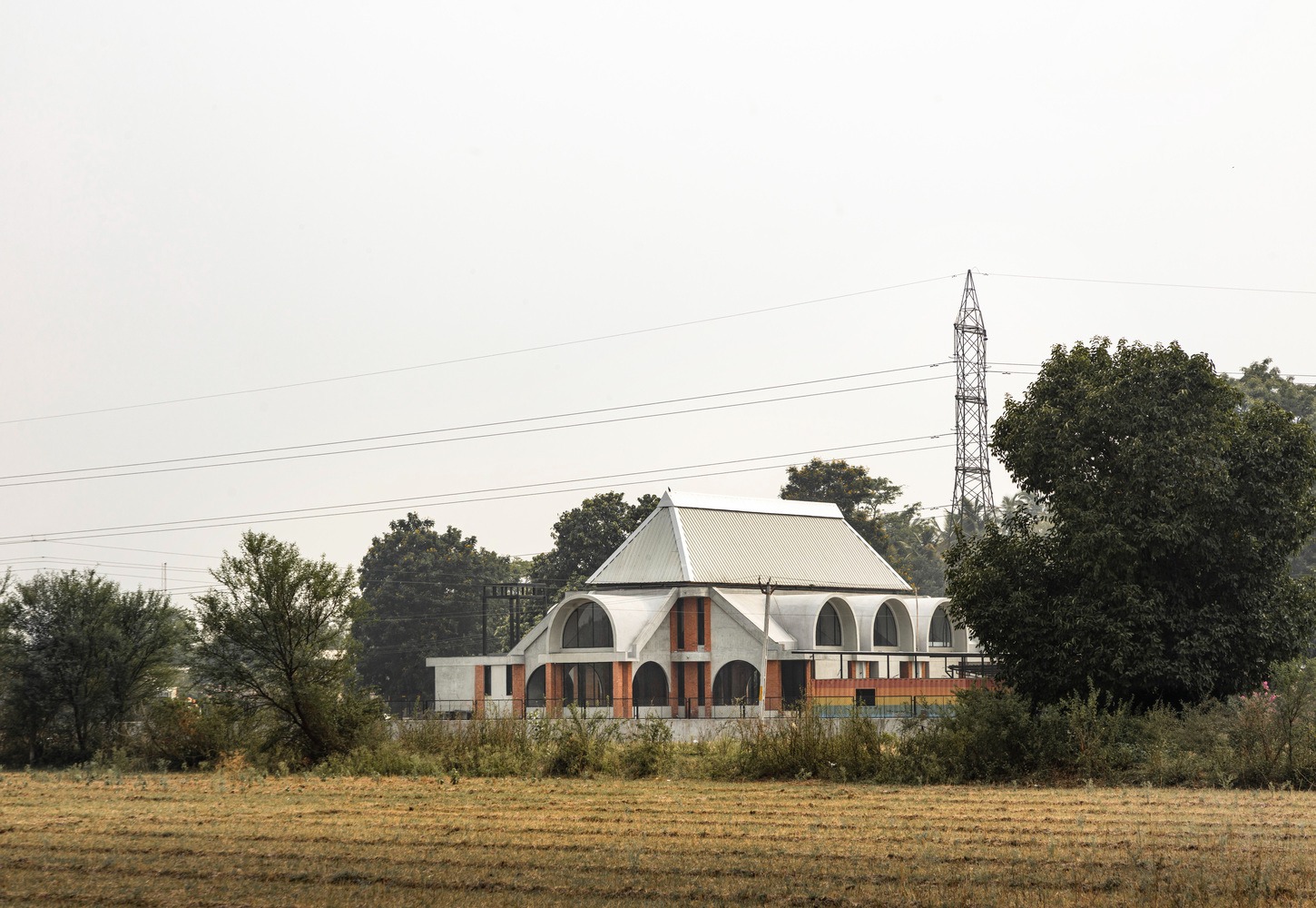
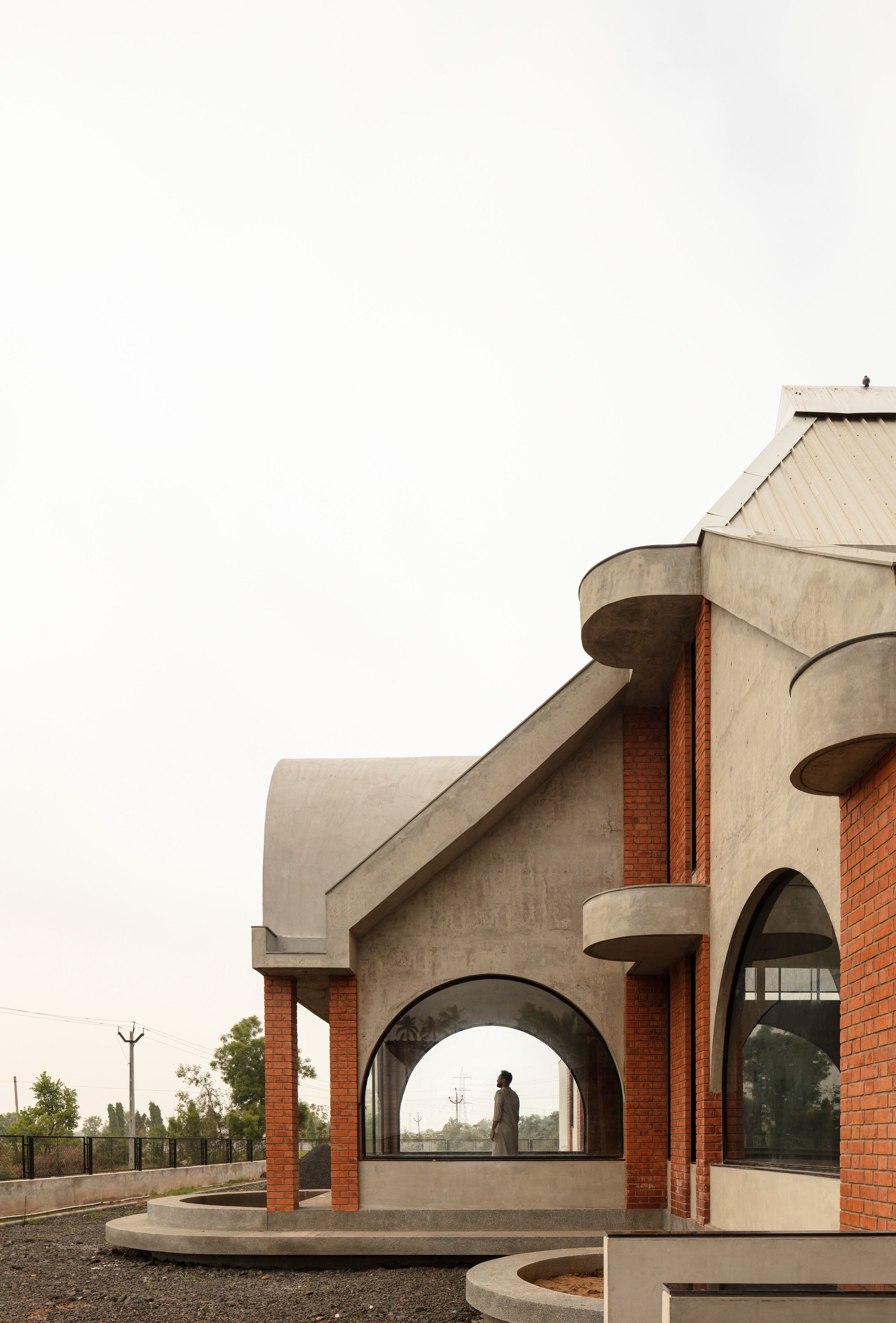
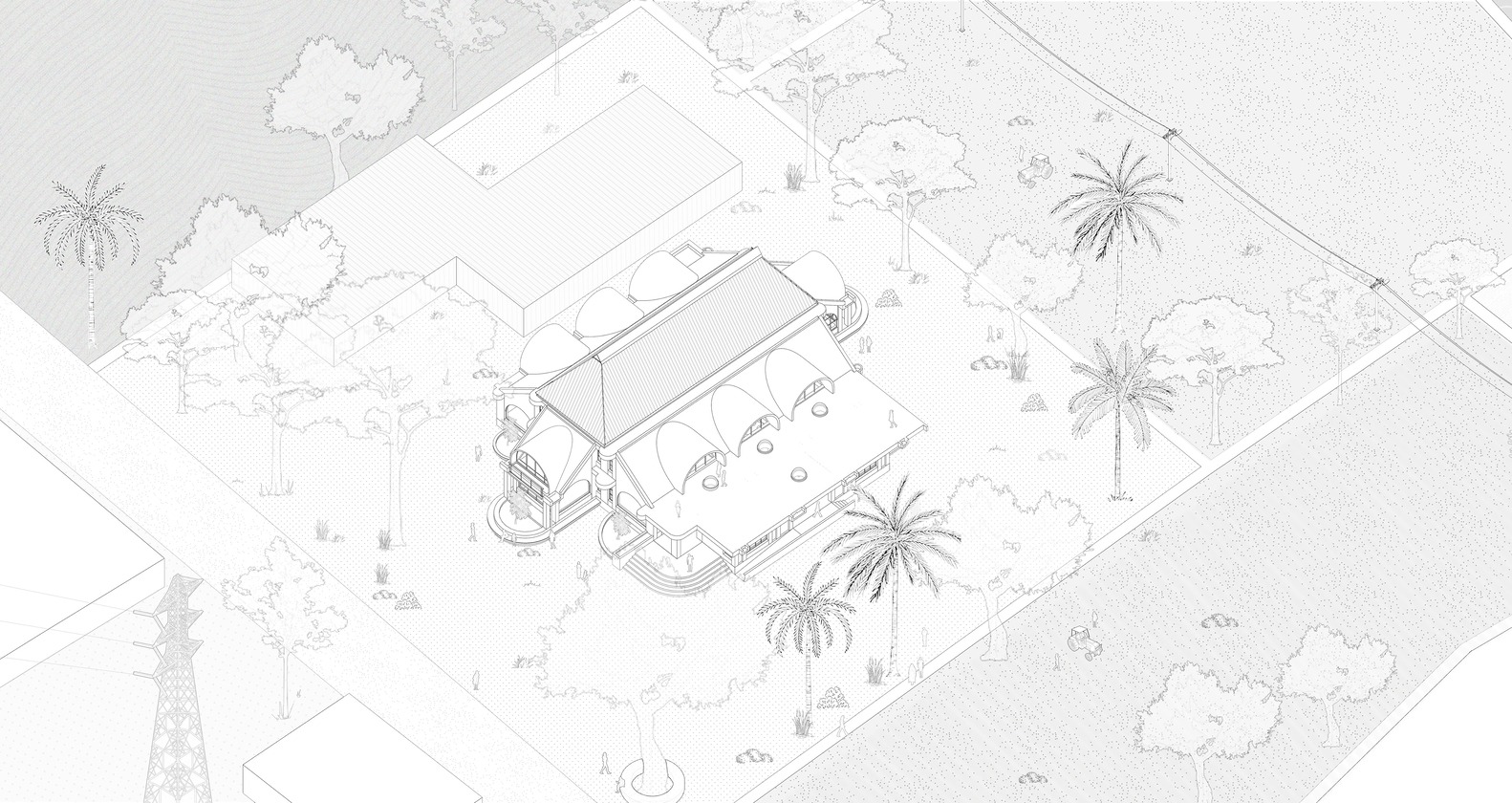
인도 구자라트, 카트화다 인근 빌라스야의 125에이커 유기농 농장 한가운데, 건물 하나가 평원 위에 낮고 묵직하게 뿌리내리고 있다. 멀리서 바라보면 피라미드형 금속 지붕이 야자수와 나무들 사이로 낯선 실루엣을 그리며, 그 아래 붉은 벽돌과 회색 콘크리트의 아치들이 수평선 위에 고요하게 펼쳐진다. 평원의 스케일 앞에 건물은 크지도 작지도 않게, 꼭 그만큼의 무게로 서 있다.
이 갤러리에는 두 개의 창작 세계가 공존한다. 하나는 손으로 그림을 그려 넣은 도자기 공방이고, 다른 하나는 맞춤 제작 스피커를 설계하는 아틀리에다. 서로 이질적인 두 실천이 한 지붕 아래 나란히 자리하면서, 건물은 처음부터 단일한 규정을 거부한다. 설계를 맡은 Rushnaiwala Architects와 Studio ALT는 이 복수성을 건축의 언어로 옮기기로 했다. 노출 벽돌, 콘크리트, 강재 — 세 가지 재료는 각자의 물성을 있는 그대로 내보이며, 이 갤러리의 이원성을 물질의 언어로 말한다.
견고한 외부 매스와 내부의 구축적 경쾌함 사이의 긴장 속에서, 앙리 라브루스트(Henri Labrouste)의 파리 국립도서관이 떠오른다. 19세기 주철 구조가 석조 외피 안에서 독자적인 질서를 형성했듯, 이 건물 역시 두 구조 시스템이 각자의 정체성을 유지하면서 하나의 공간 안에 공존한다. 브루탈리즘의 재료적 솔직함과 현대 산업 디자인의 감수성이 겹쳐지며, 갤러리는 공공 전시와 사적 창작 모두를 위한 공간을 품는다.
도착의 의례
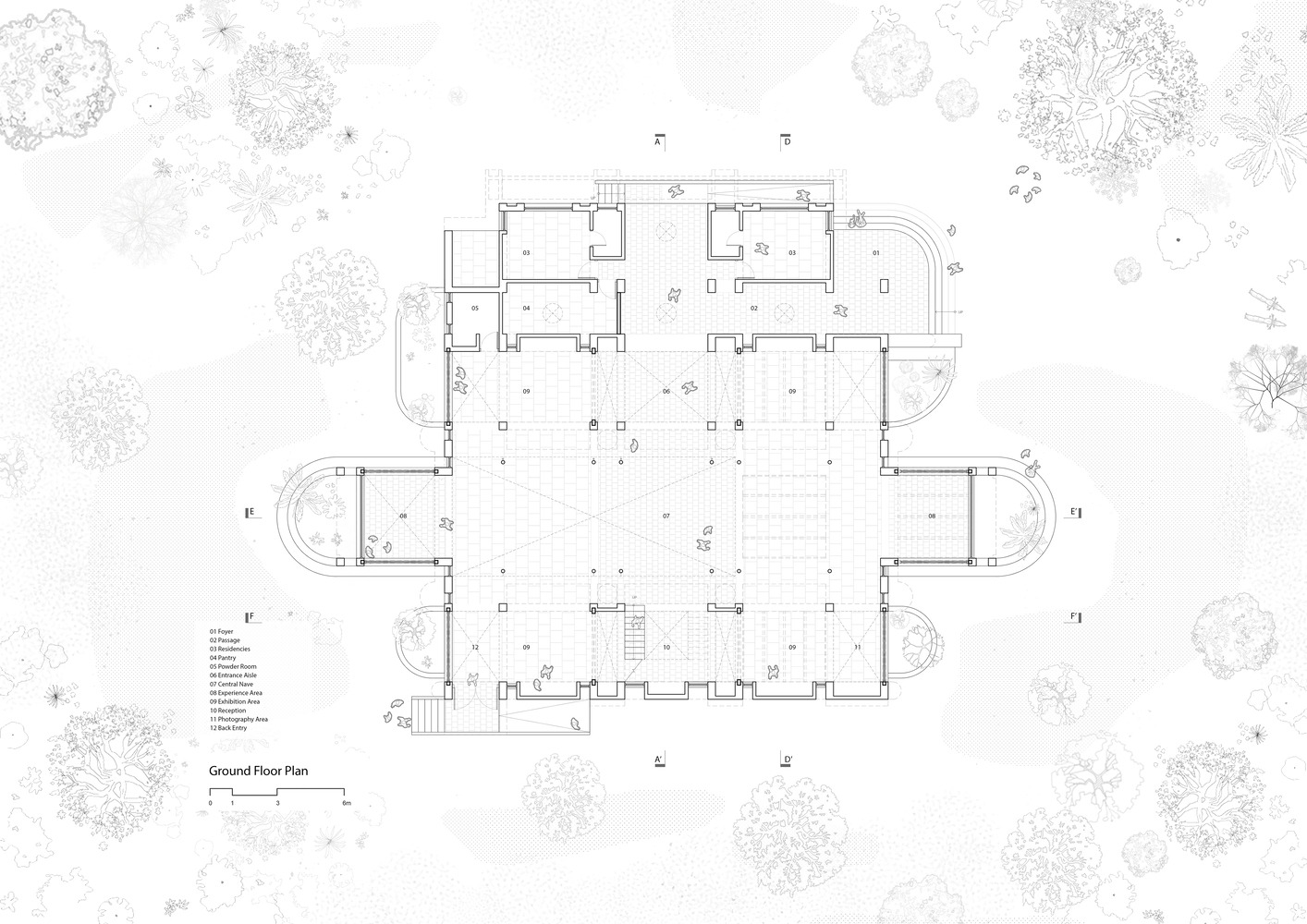
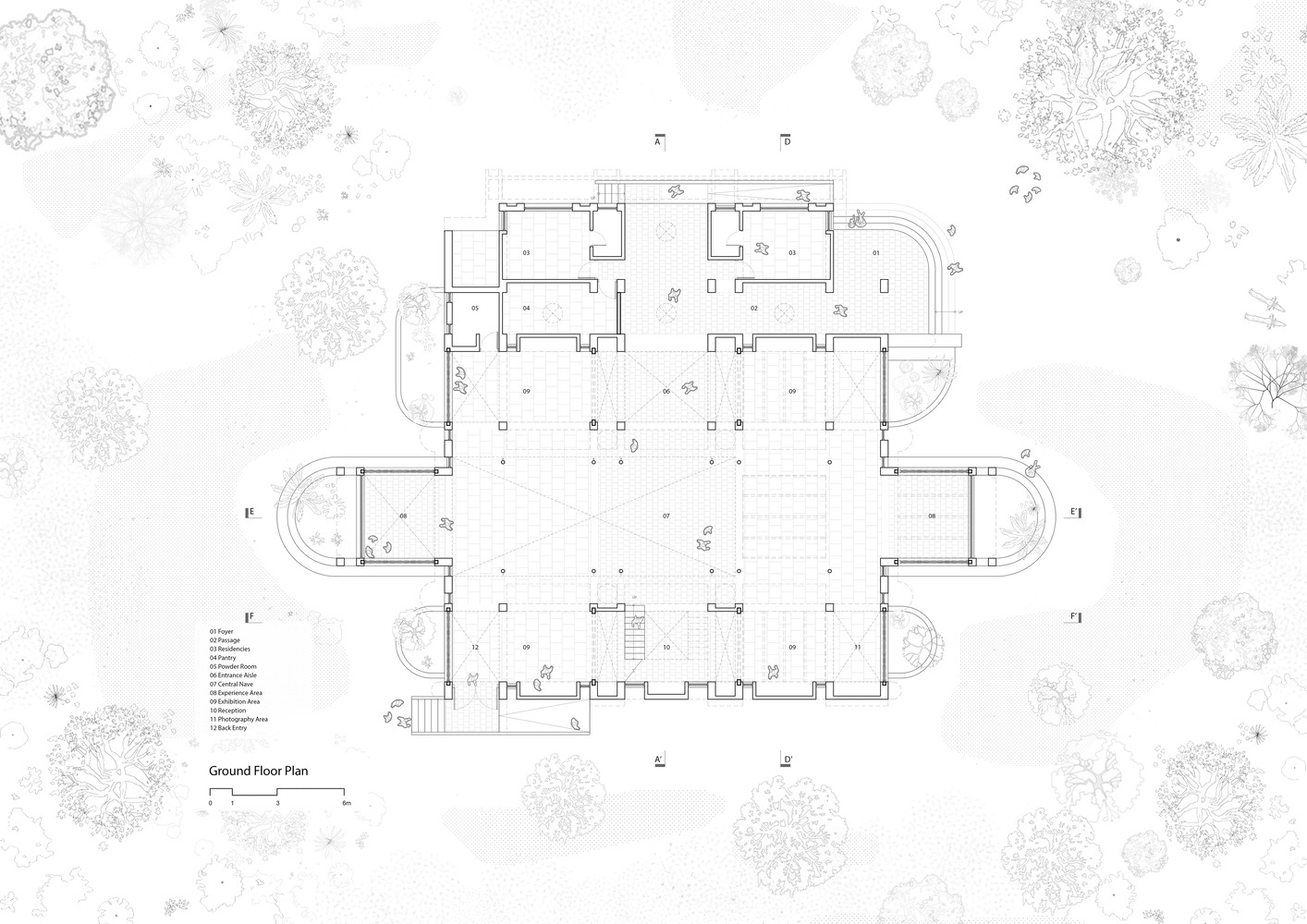
건물로 들어서는 과정은 직접적이지 않다. 대지 가장자리에서 오래전부터 그 자리를 지켜온 망고나무 곁의 굽은 계단을 오르면서 도착의 시퀀스가 시작된다. 이 입구 축선은 의도적으로 비틀리고 연장되어, 방문자는 목적지에 곧장 당도하는 대신 건물을 향해 천천히 나아가는 과정 자체를 경험한다. 건축가들은 도착을 하나의 절제된 의례로 만들었다. 서두르지 않아도 된다는 신호를 공간이 몸으로 먼저 전한다. 도면은 단정하고 대칭적인 십자형이다. 그러나 축선을 따라 걷다 보면 공간은 예상보다 훨씬 풍부하게 펼쳐진다.
두 세계가 만나는 곳
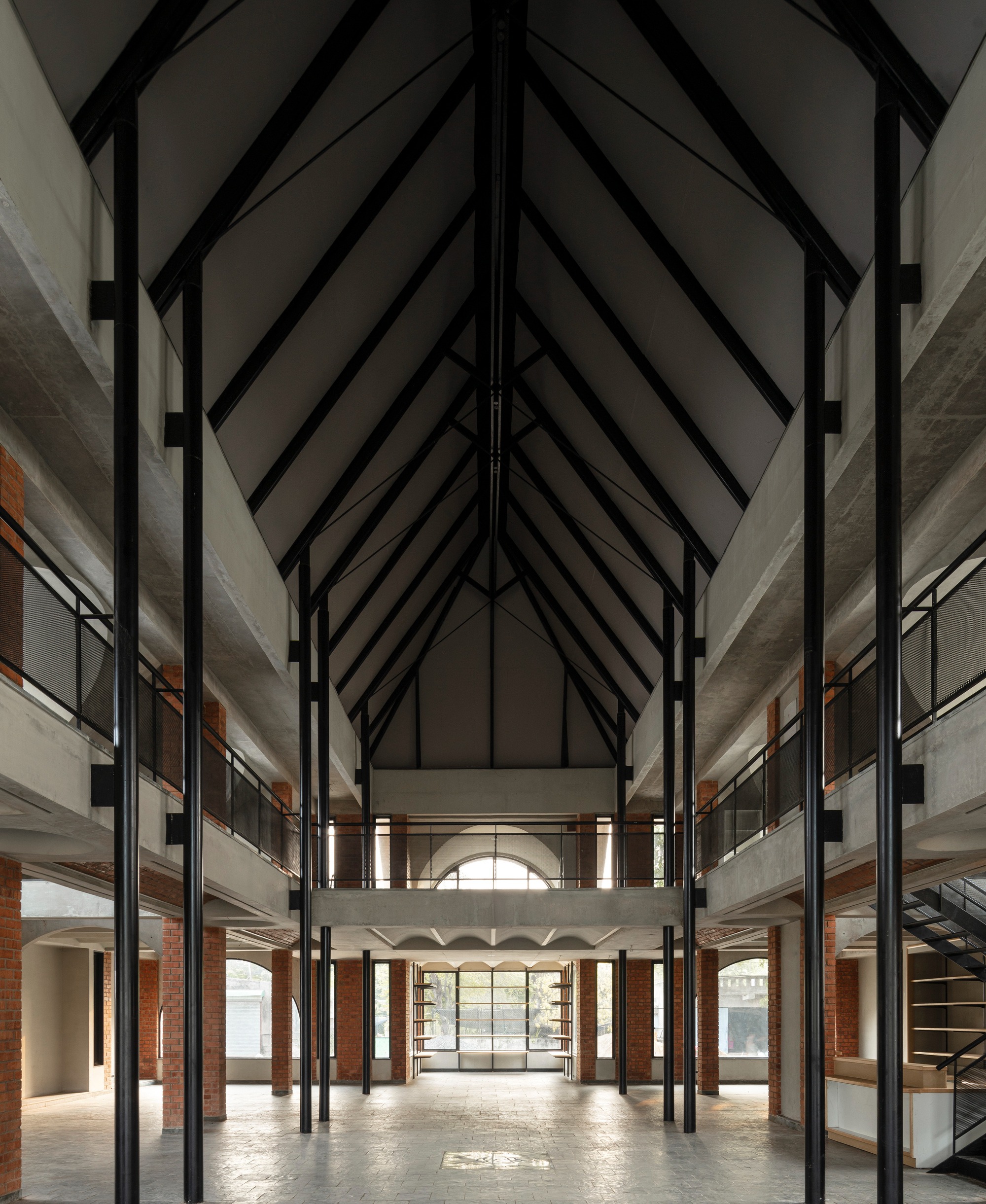
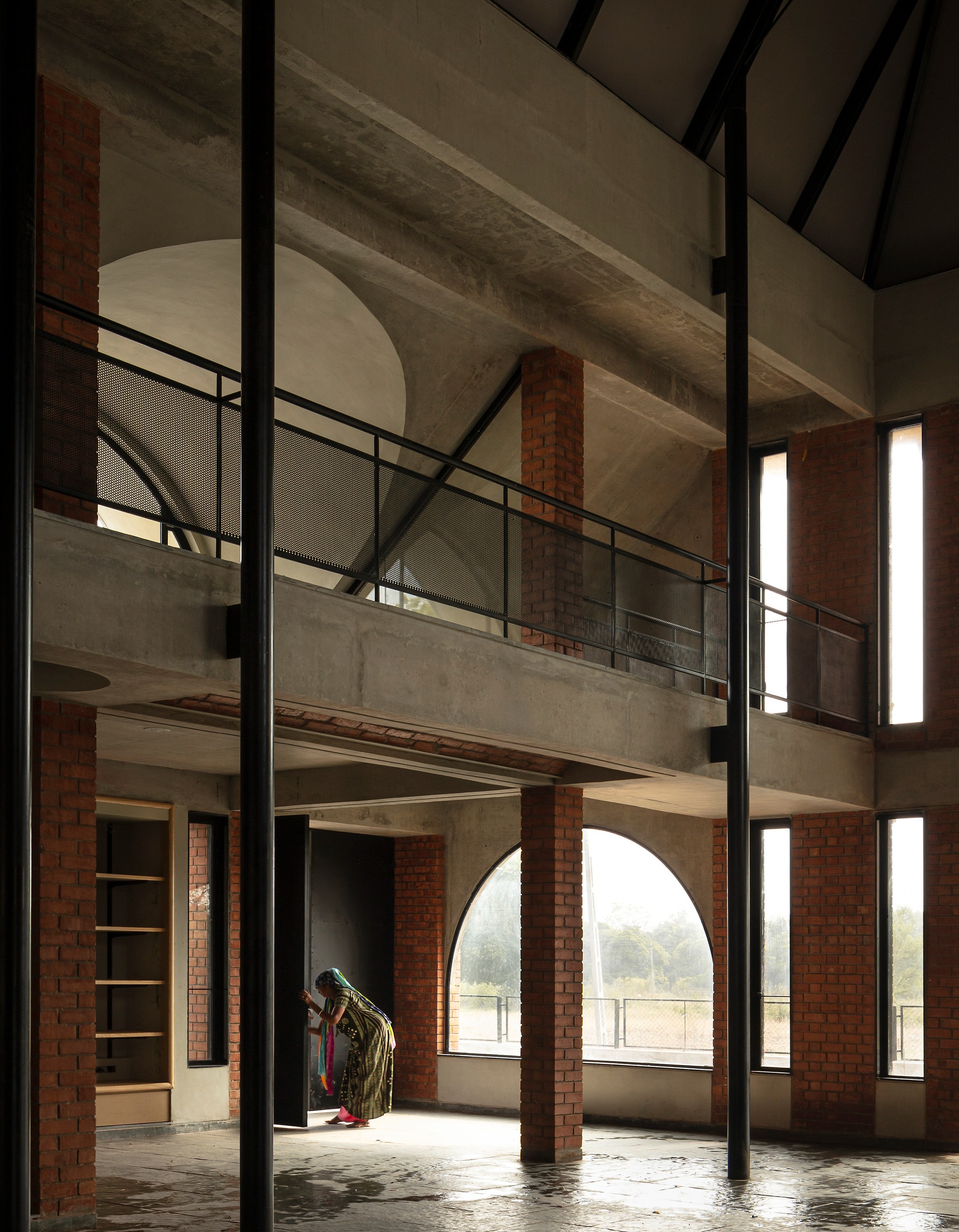
건물의 중심에는 세 개 층을 관통하는 중앙 네이브(nave)가 솟아 있다. 갤러리의 심장부다. 이 높은 홀은 주요 전시 공간으로 기능하면서도 복수의 용도가 위계 없이 공존하는 장소다. 남쪽 익부에는 입주 작가를 위한 게스트 룸과 생활 편의 시설이 갖춰지고, 벽면 곳곳의 벽감(recessed alcove)에는 도자기 작품과 스피커 설치물이 자리한다. 메자닌 층의 스튜디오와 도서관은 좁은 브리지를 통해 아래 공간을 내려다보며, 더 큰 볼륨 안에 친밀한 순간들을 만들어낸다. 전시 여정 내내 만들기와 보기의 대화는 끊기지 않는다.
빛과 구조의 대화
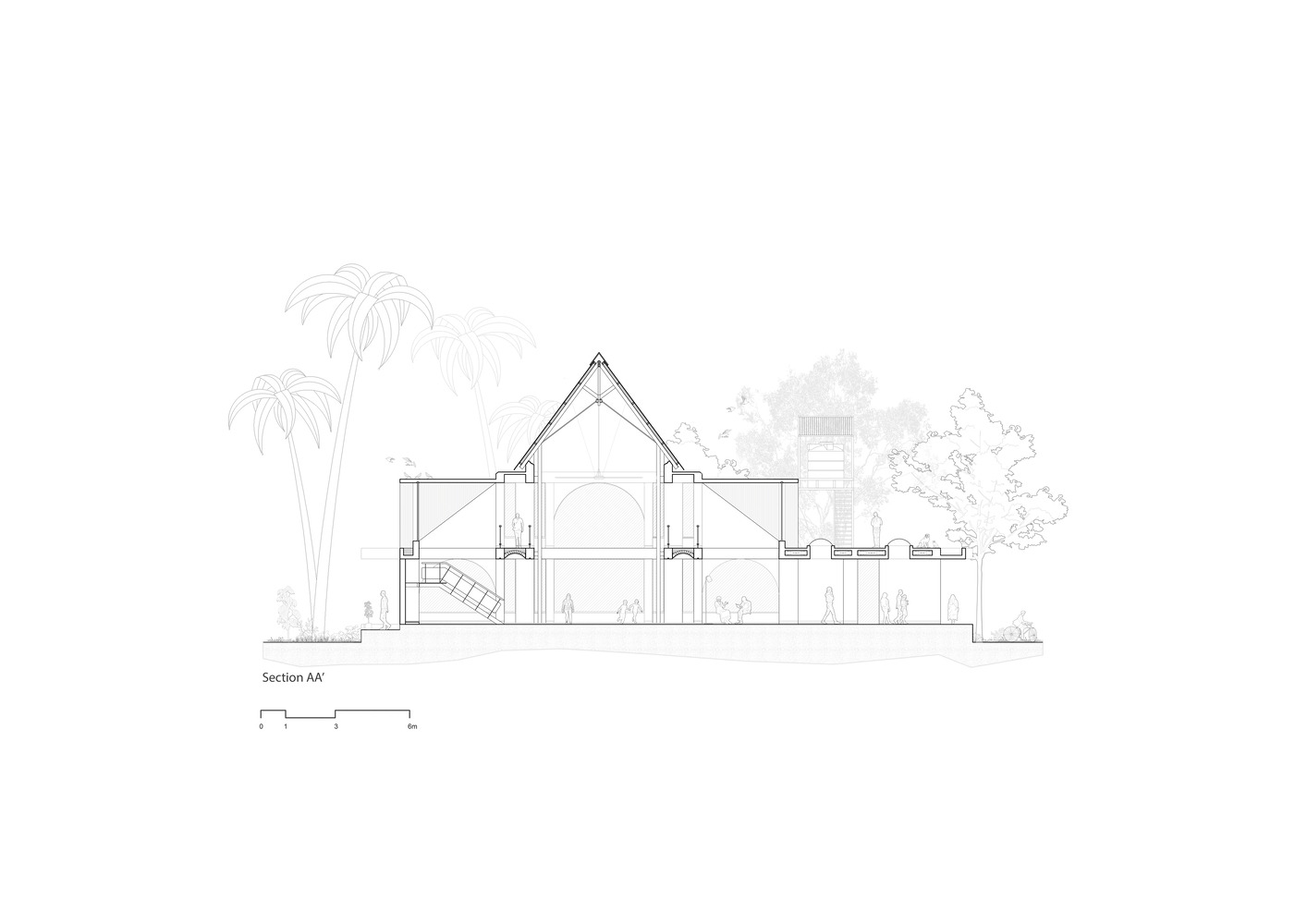
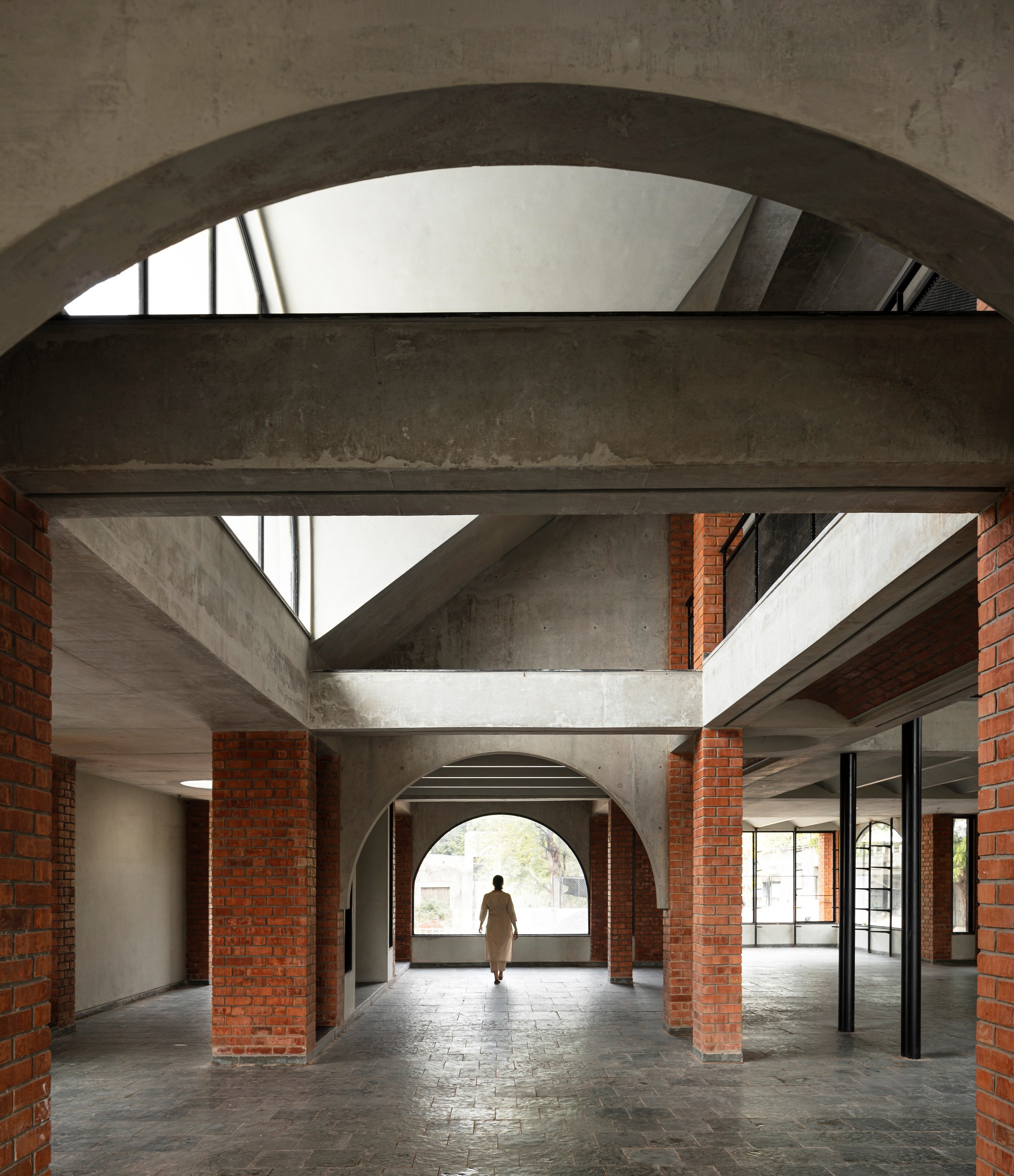
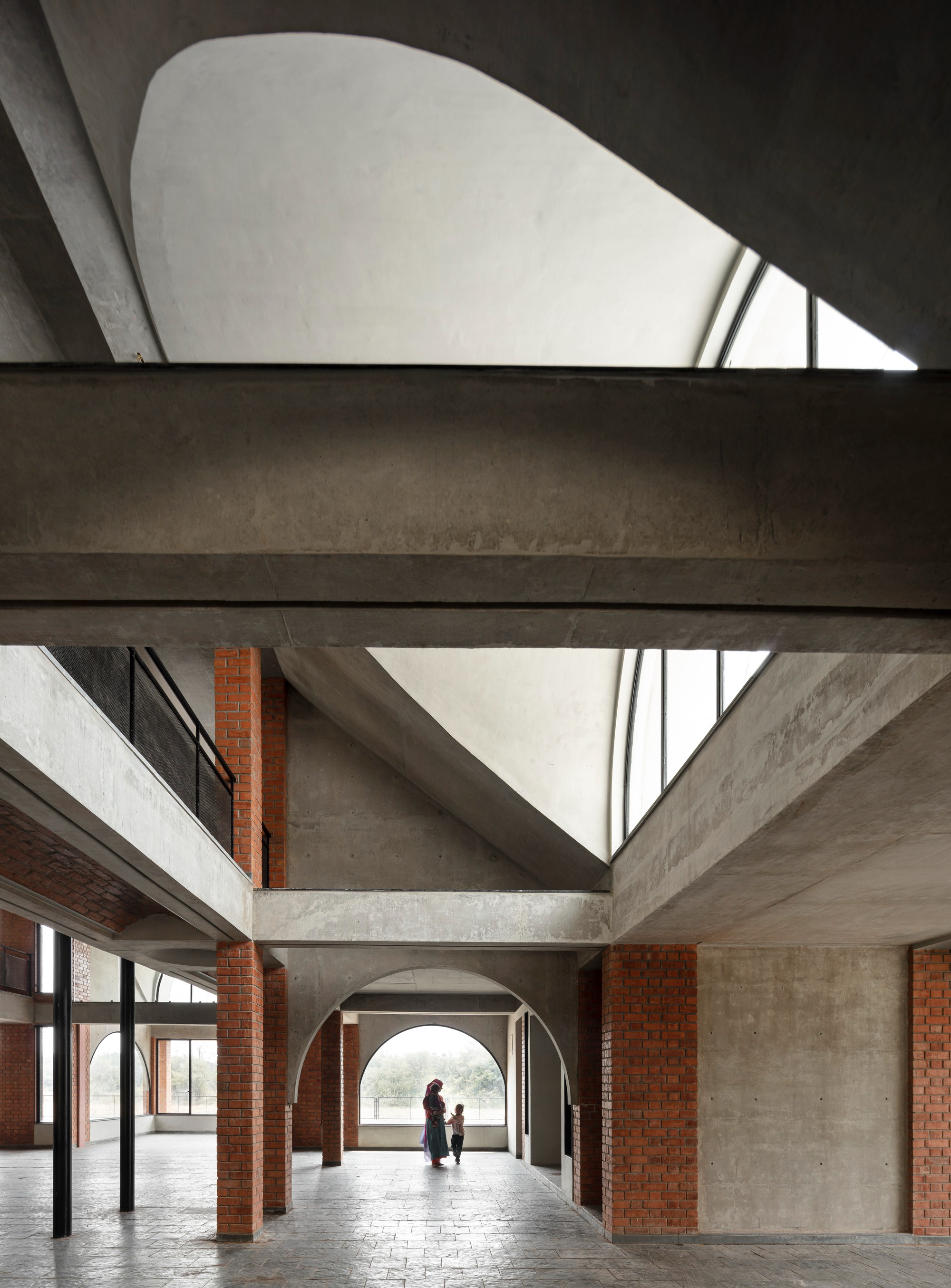
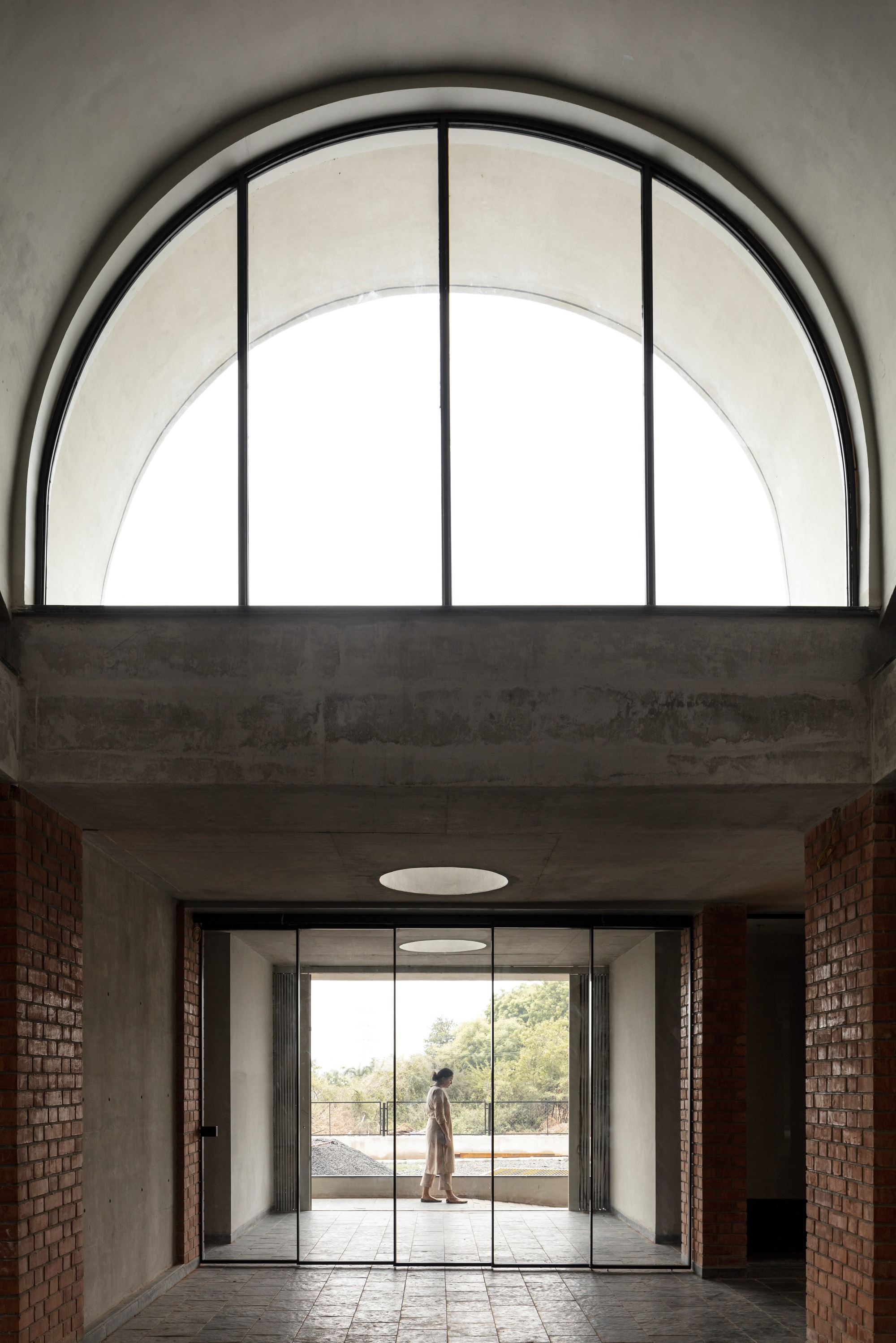
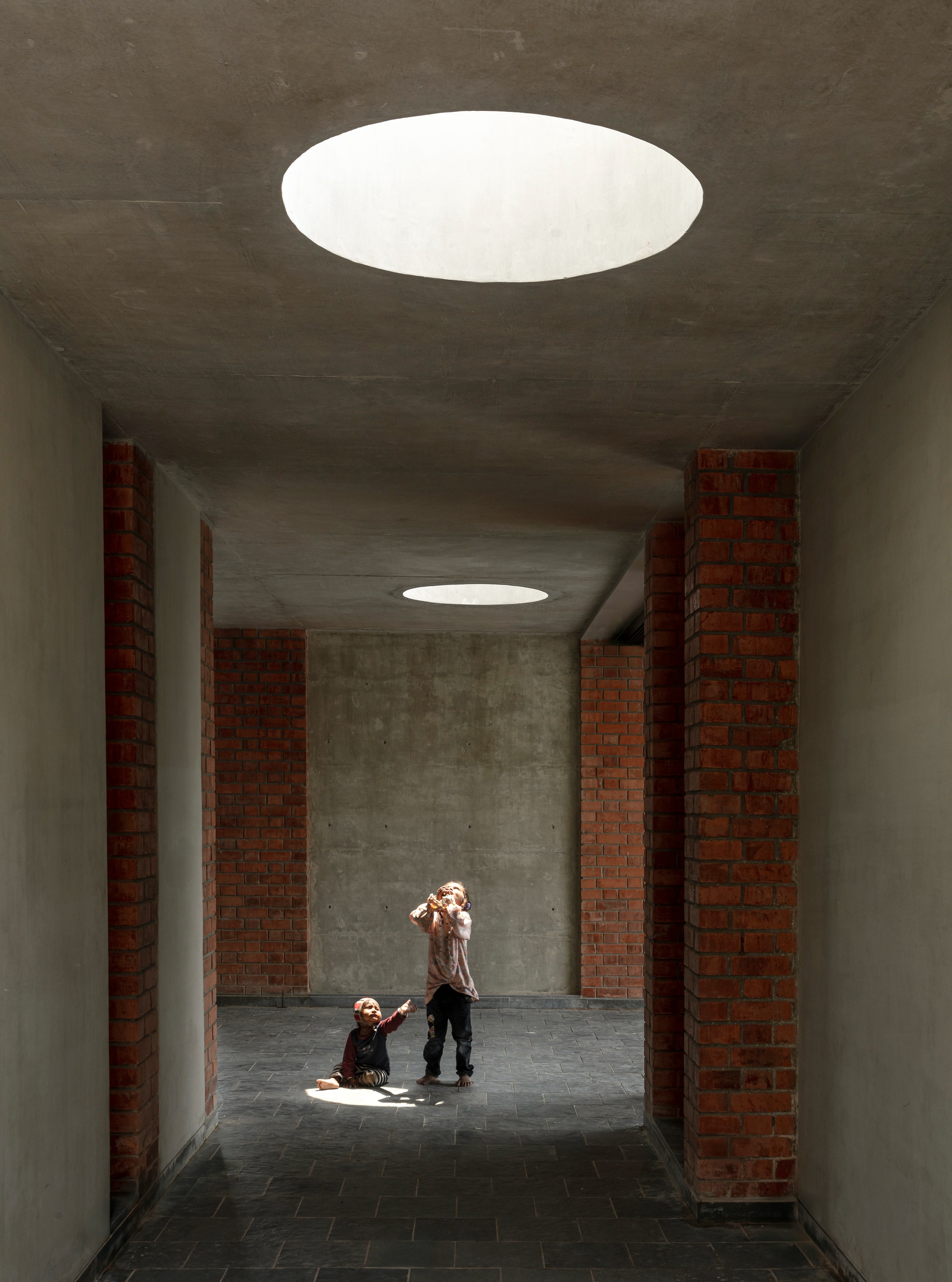
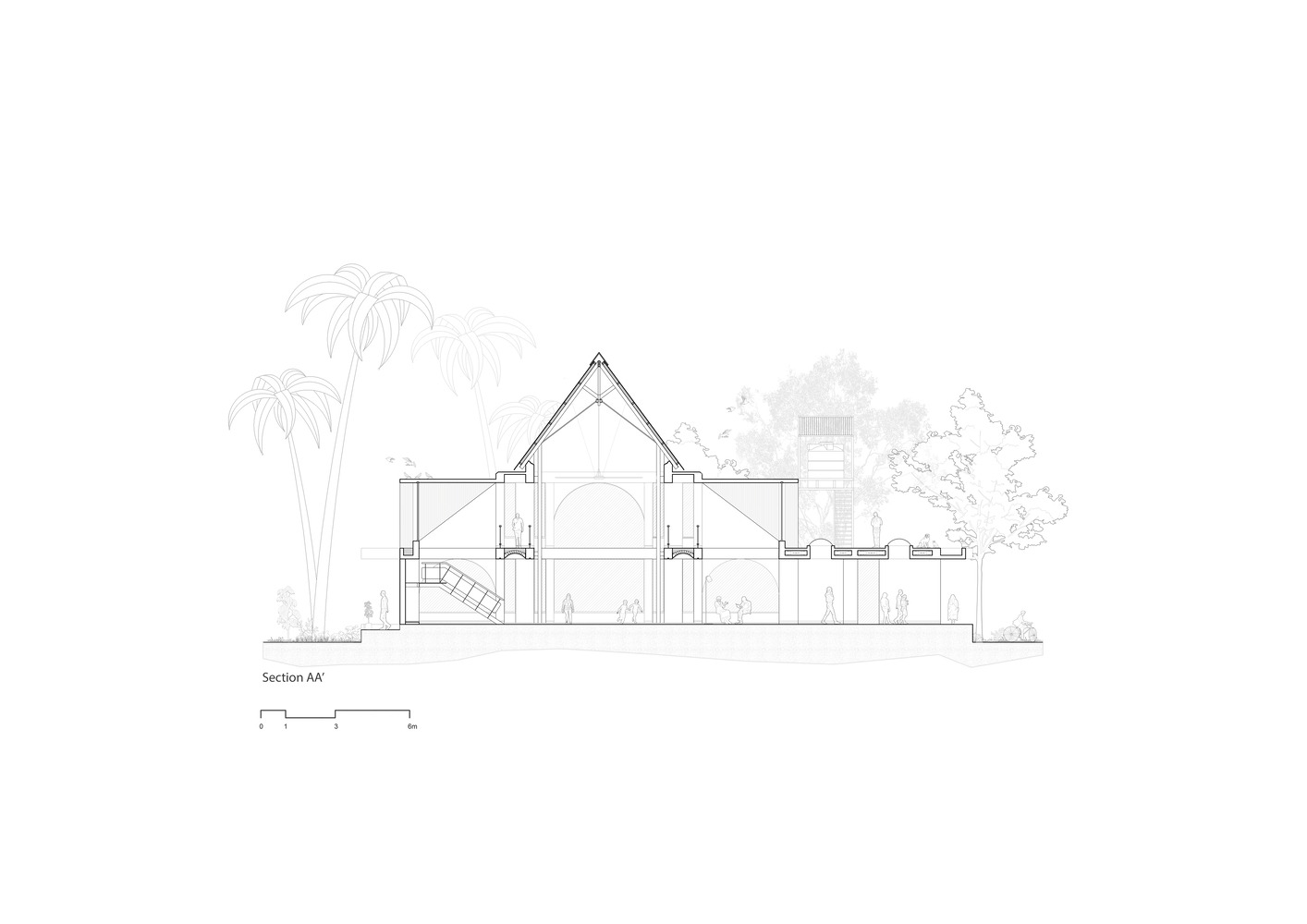
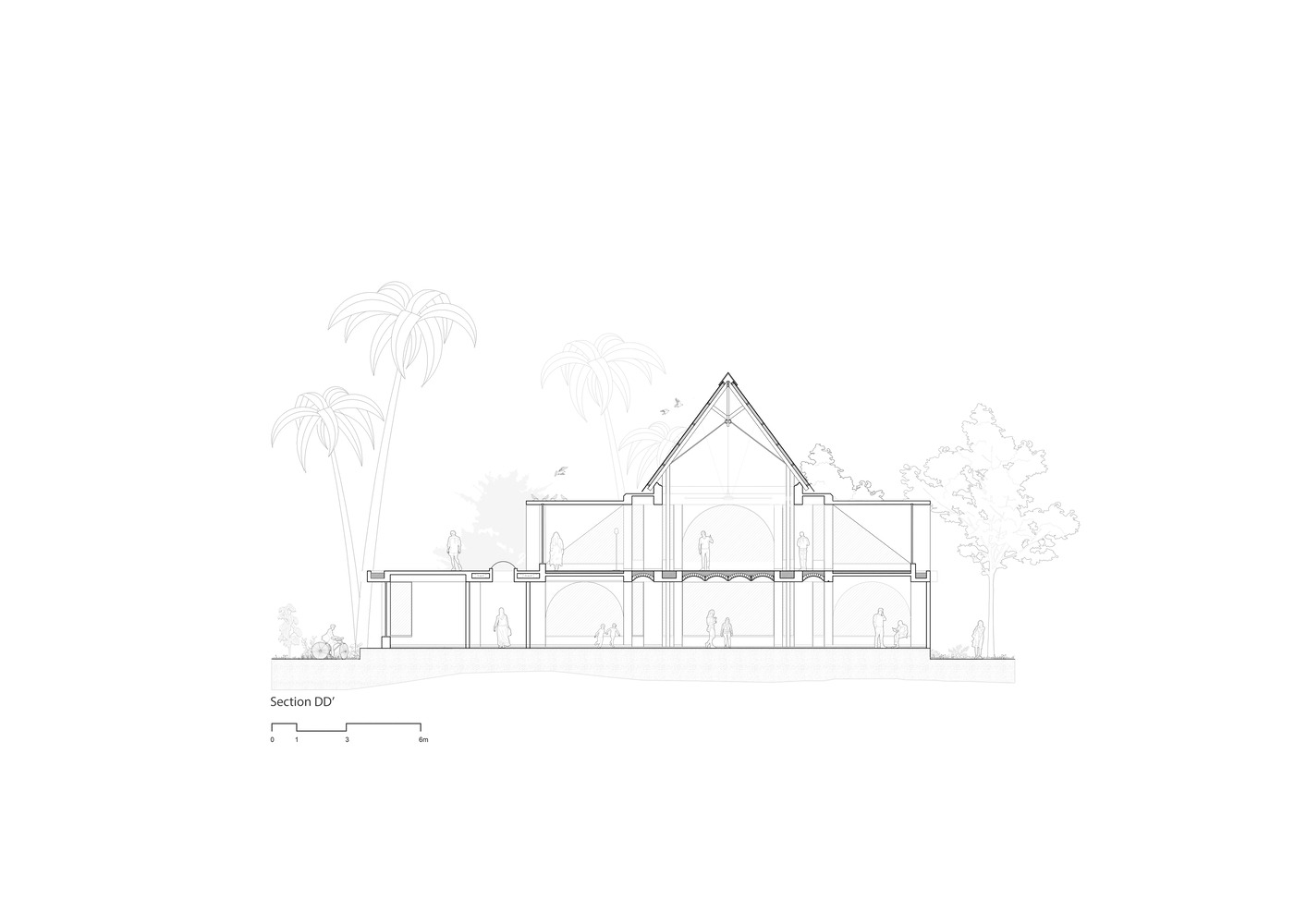
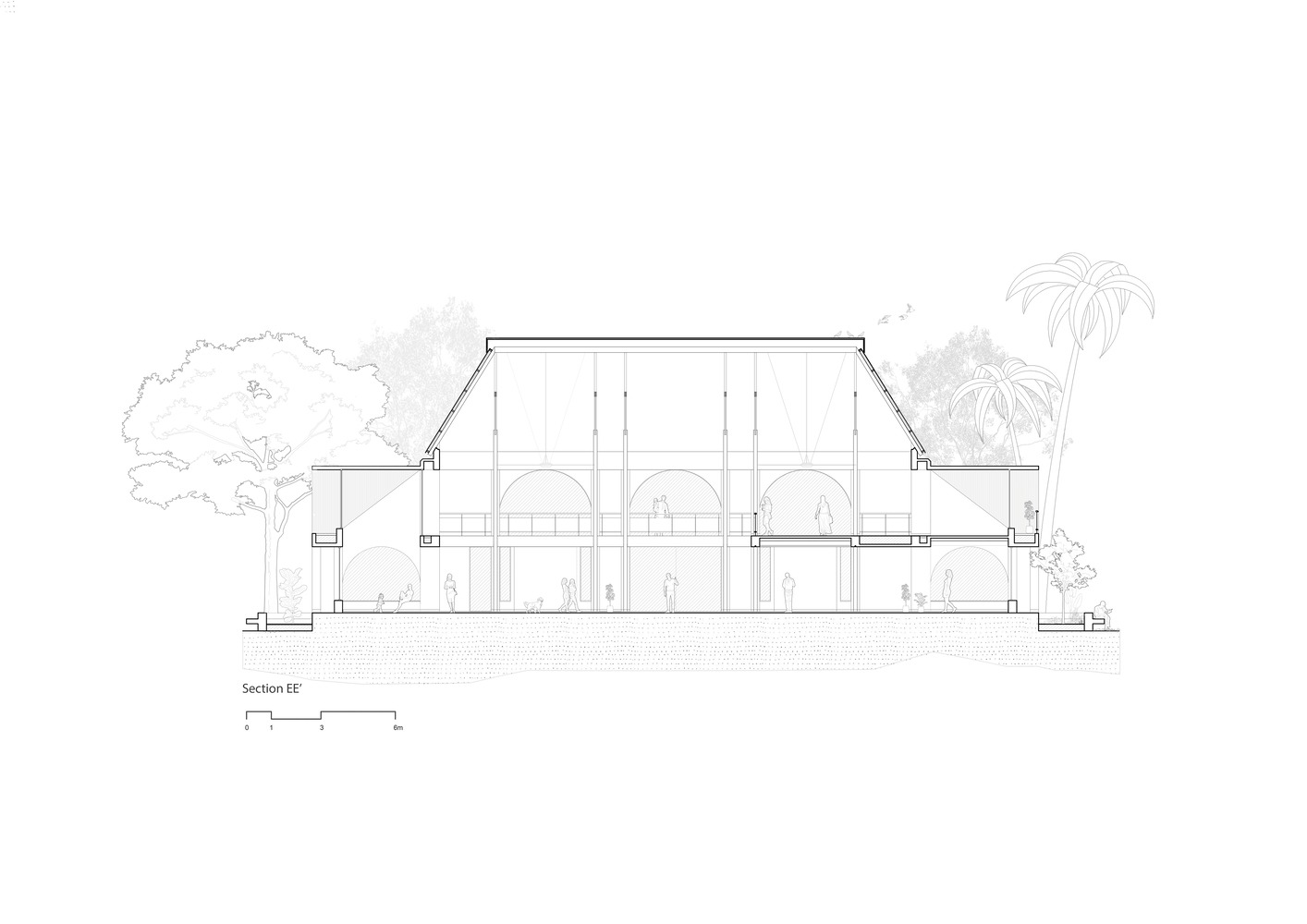
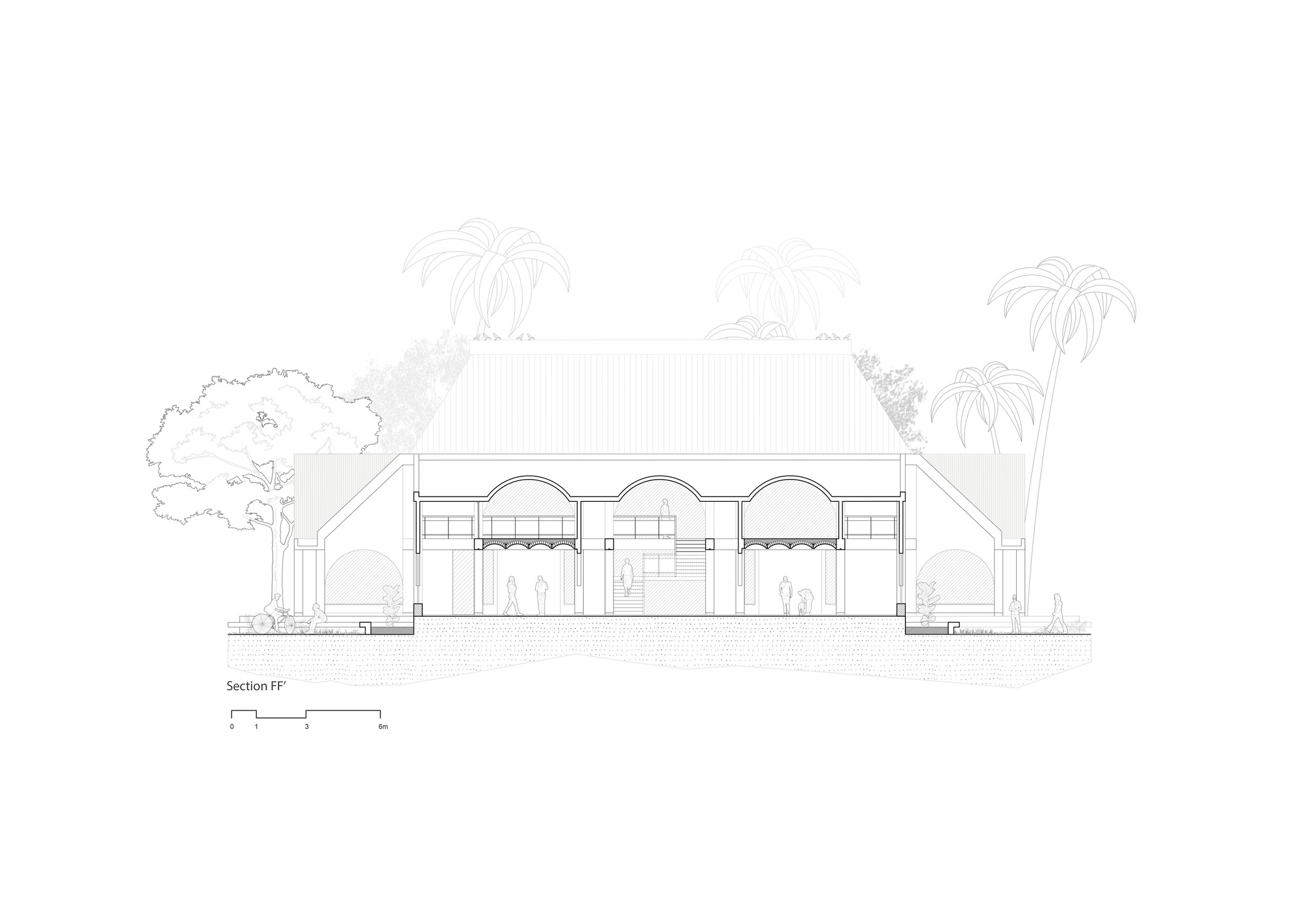
평면이 정제된 대칭을 보여준다면, 단면은 그 반대의 이야기를 한다. 볼륨의 변화, 층위의 교차, 정밀하게 계획된 천창들이 단면을 통해 공간의 복잡성을 만들어낸다. 동선의 경직성은 이 단면 조작을 통해 동적인 공간 경험으로 탈바꿈한다. 천창에서 내려오는 빛은 시간에 따라 각도를 달리하며 콘크리트 표면 위를 미끄러지고, 벽돌의 거친 질감 위에 부드러운 그라데이션을 남긴다.
내부 어디에 서 있든, 시선은 아치를 통해 다른 아치로, 그리고 저 멀리 외부의 풍경으로 이어진다. 복도 끝의 아치 개구부로 나무와 하늘이 액자처럼 담기고, 메자닌 브리지 위에서는 중앙 홀의 전체 높이가 한눈에 들어온다. 공간은 작은 스케일과 큰 스케일 사이를 오가며, 방문자의 시선을 끊임없이 새로운 방향으로 이끈다.
두 개의 구조 시스템, 하나의 질서
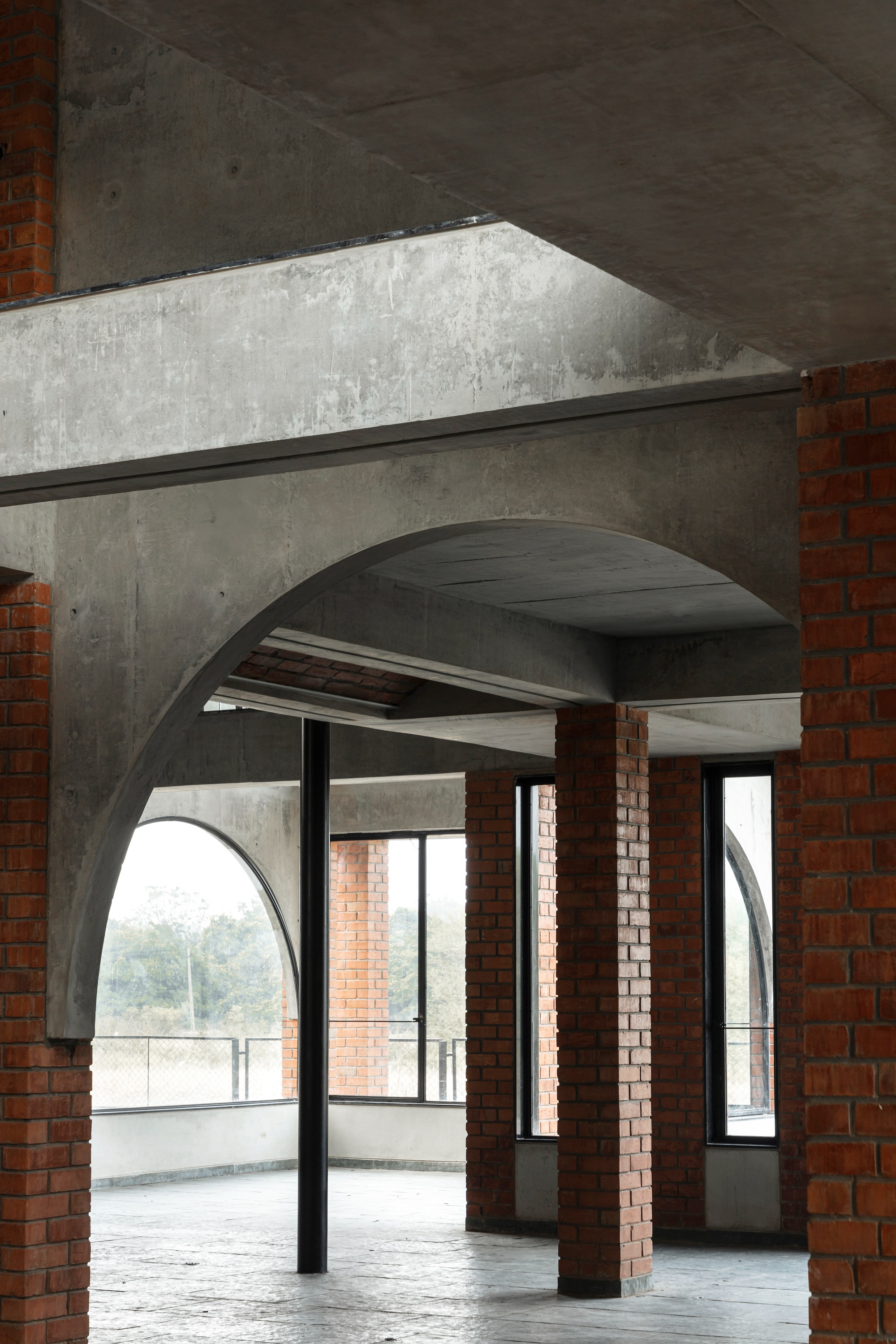
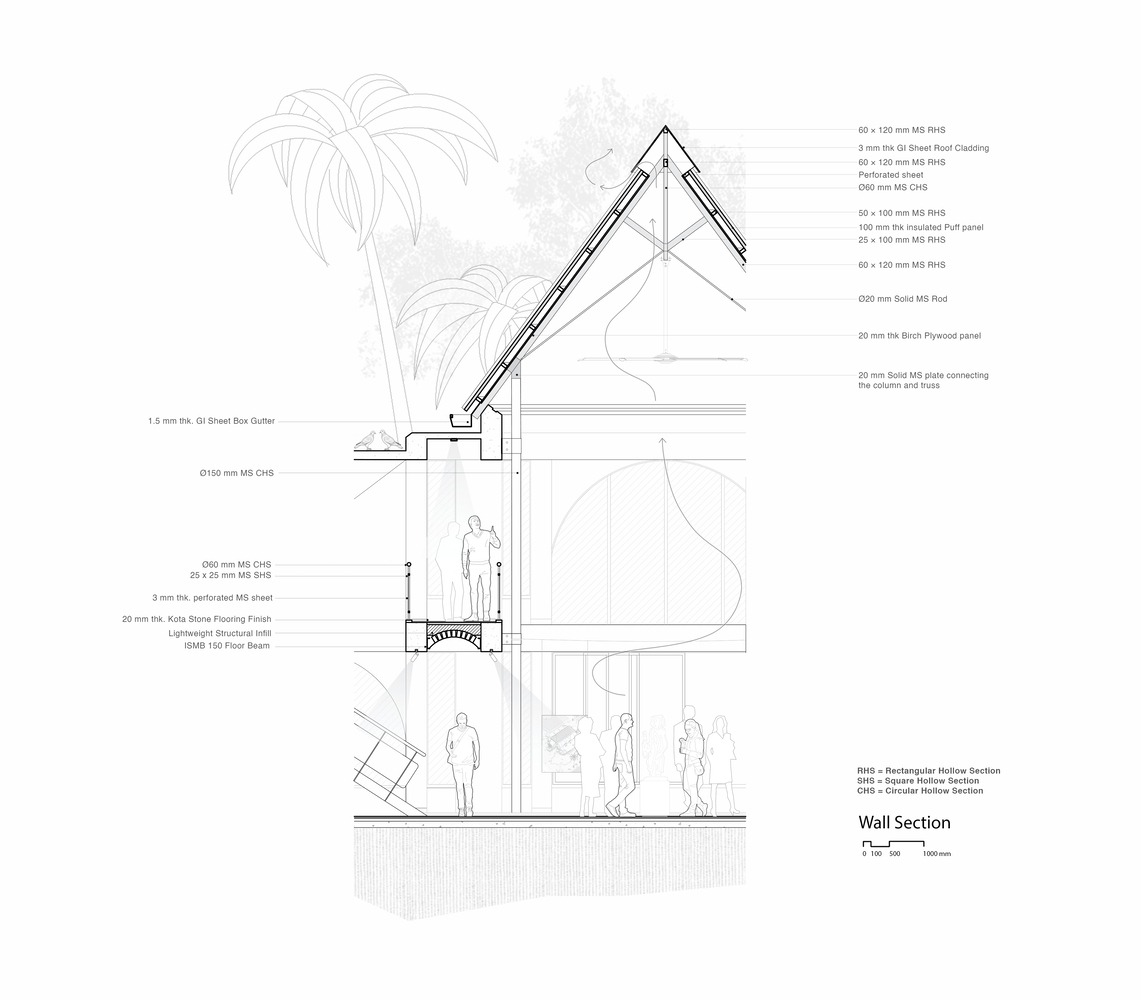
이 건물은 두 개의 구조 시스템을 나란히 사용한다. 하나는 아치형 보를 갖춘 내력 조적 구조(load-bearing masonry)이고, 다른 하나는 중앙 네이브를 가로지르는 독립 철골 트러스다. 건축가는 두 시스템을 의도적으로 갈라놓는다. 각자의 구축 논리가 스스로를 내보이도록. 한쪽에서는 벽돌과 콘크리트가 아치의 힘으로 하중을 처리하고, 다른 쪽에서는 날카로운 검은 강재 트러스가 넓은 스팬을 경쾌하게 가로지른다. 이 두 시스템의 대비가 공간에 구축적 긴장감을 불어넣는다.
메자닌 바닥은 잭 아치(jack-arch) 공법으로 시공했고, 그 위로는 볼트형 천창이 뚫린 철근 콘크리트 지붕이 강재 포탈 프레임과 함께 네이브를 덮는다. 피치 지붕 마루를 따라 난 가느다란 틈이 뜨거운 공기를 위로 내보내며 여름철 자연 환기를 이끌어낸다. 이중 슬래브와 잭 아치 구조는 아래층으로 전달되는 열을 줄이고, 콘크리트와 벽돌은 낮의 열기를 품었다가 늦은 오후 천천히 내보낸다. 공간은 그렇게 스스로 온도를 다스린다.
그릇이자 목격자
구조를 숨기지 않는 이 건물에서, 테크토닉 논리 — 구조가 스스로를 내보이는 방식 — 자체가 공간 경험의 한 층위가 된다. 갤러리는 관습적인 공간 규범을 넘어, 만들기, 재료, 빈 공간 사이의 대화를 연출한다. 건축이 창작 행위에 직접 참여한다.
충돌하는 이원성 속에서, 이 건물은 복수성 안에서 일관성을 찾는다. 두 가지 물질 세계와 두 가지 시간 감각이 하나의 통합된 공간 질서 안으로 수렴한다. 재료의 견고함과 열린 느낌이 균형을 이루며, 건물은 교회의 정제된 행진 질서와 공장의 실용적 논리 사이 어딘가에 자리한다. 이 전개 속에서 구조는 스스로를 전시하고, 동시에 전시물 그 자체가 된다. 건물은 그릇이자 목격자다. 두 창작의 세계를 담고, 그것들이 펼쳐지는 과정을 함께 지켜본다.
Write by Claude & Jean Browwn
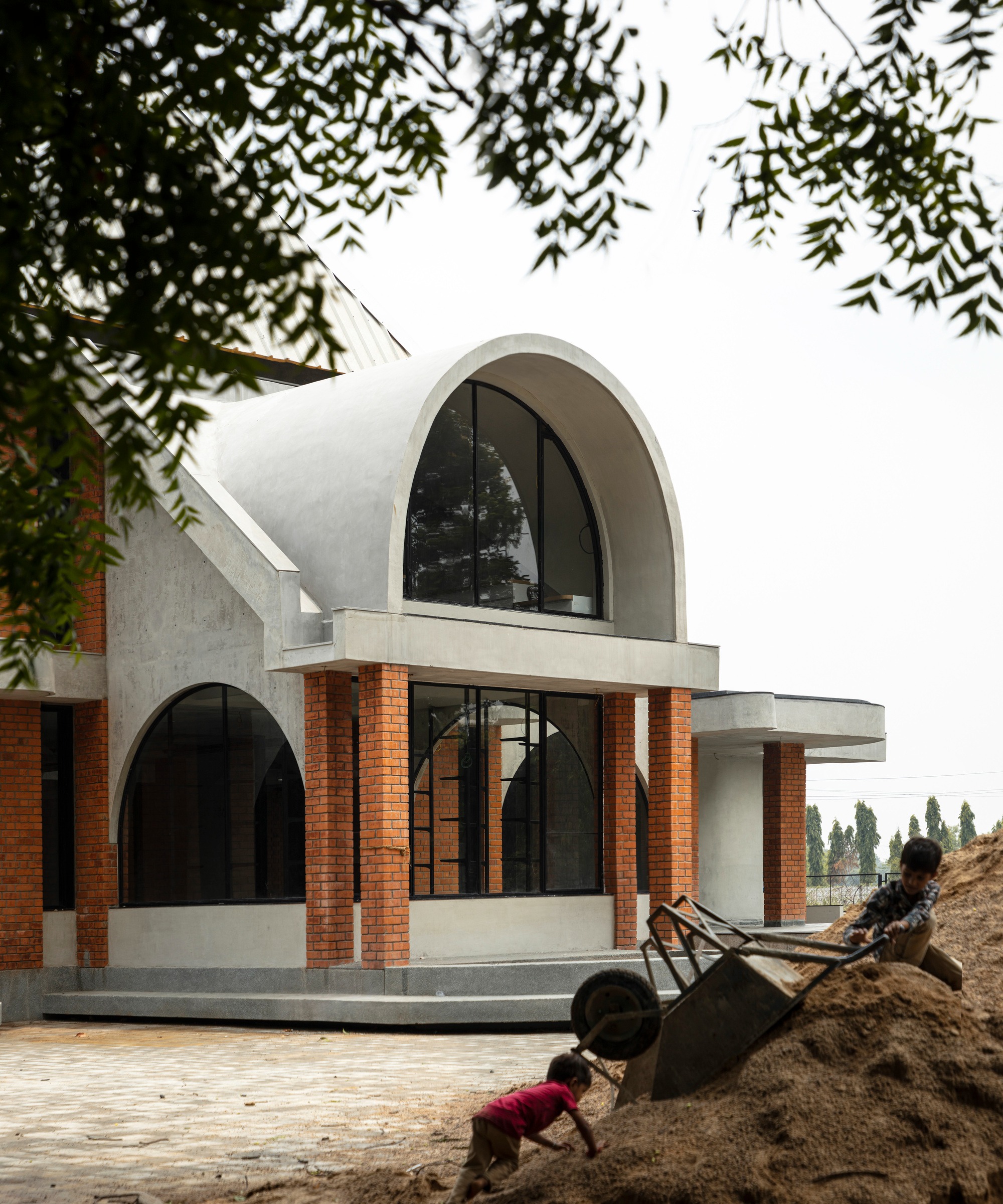

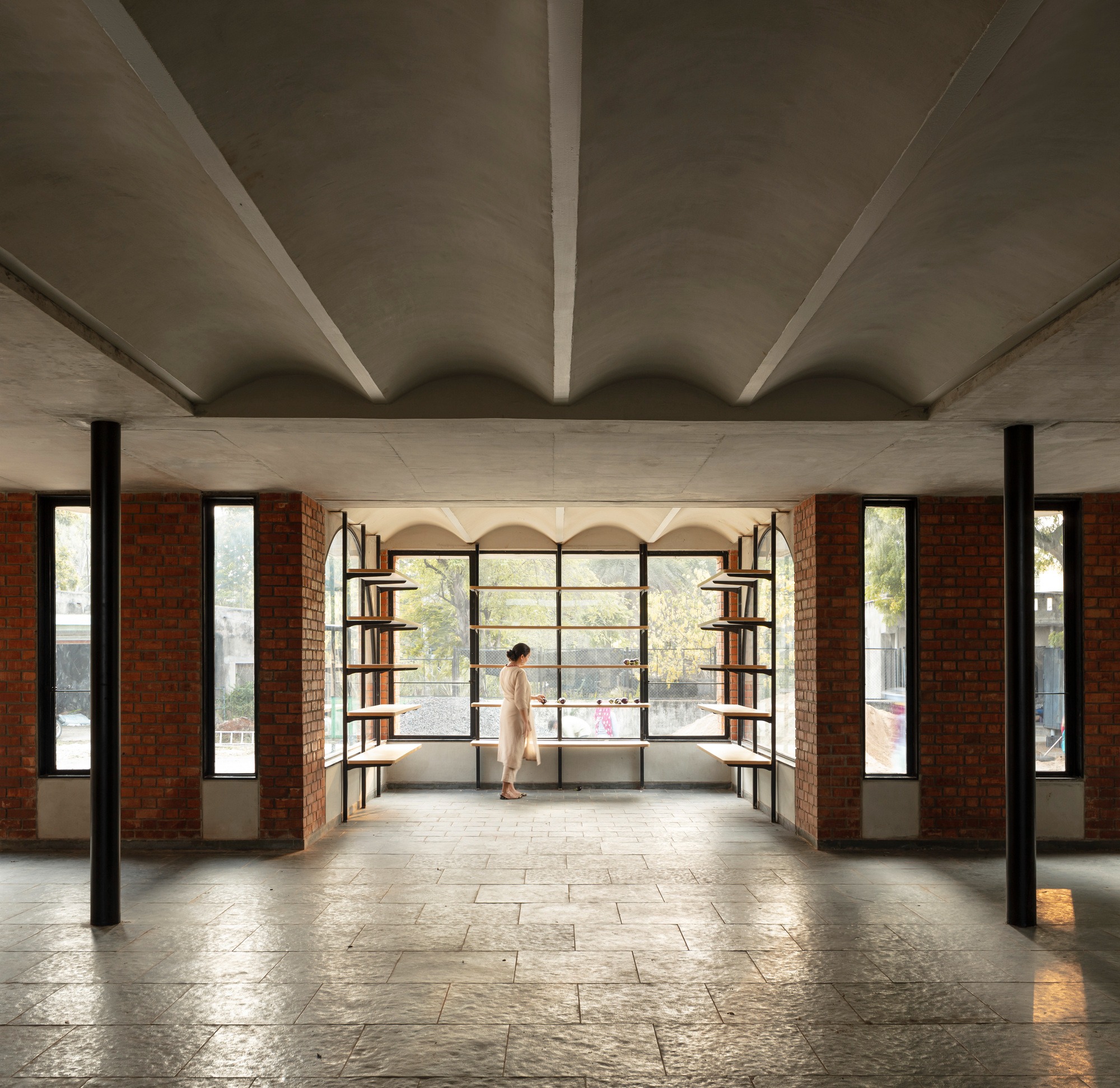
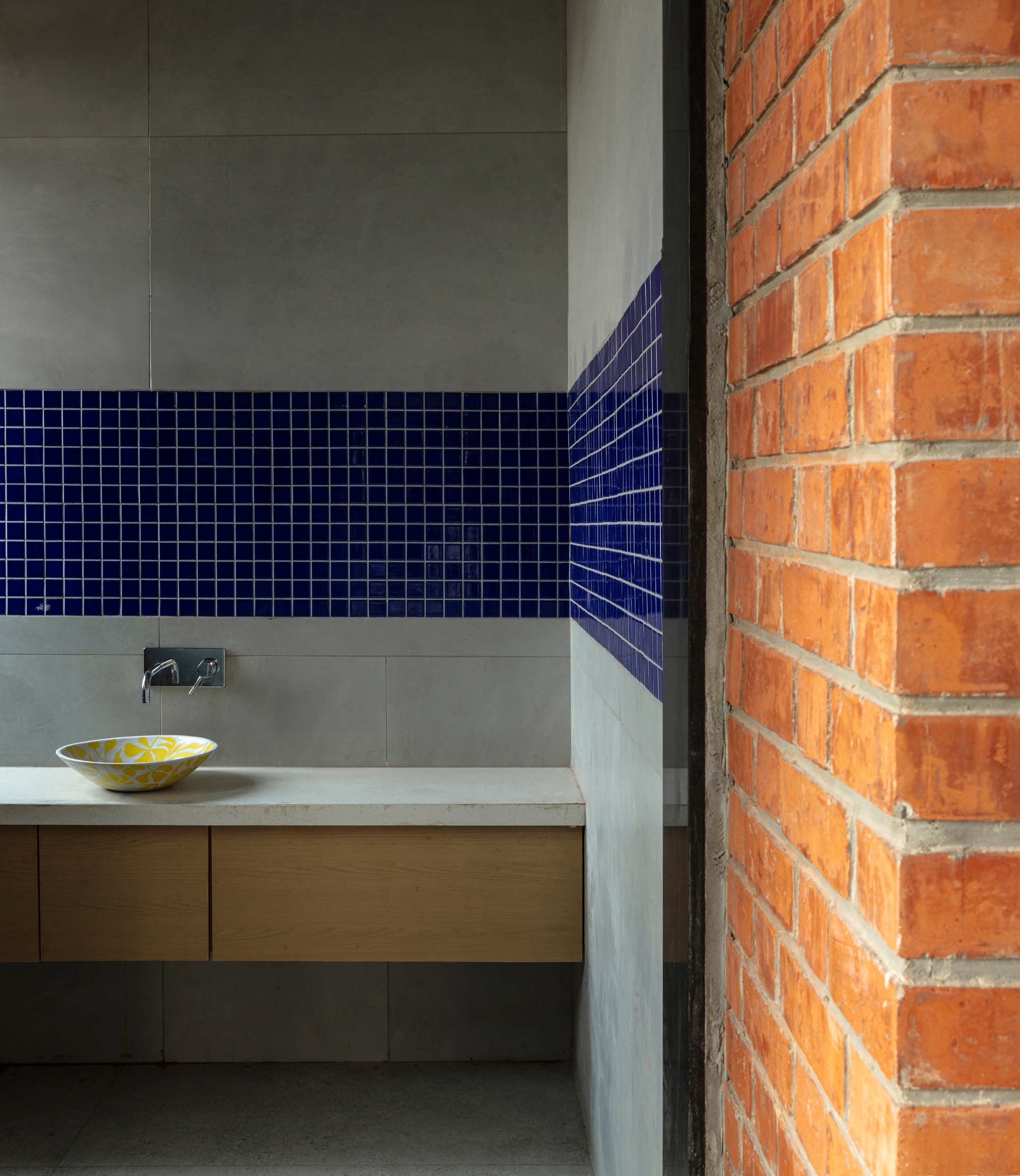
Set within a 125-acre organic farm in Bilasya, Kathwada, two creative practices, hand painted ceramics and bespoke speaker design, converge. The result is a design gallery that is a layered, adaptable space and resists singular definition. Its architecture reflects this plurality through exposed brick, concrete, and steel to negotiate the intersection of material and spatial dualities. The robust external mass sits in contrast to an internal tectonic lightness, recalling Henri Labrouste's Bibliothèque nationale de France. This duality informed the foundational approach of the project, balancing nostalgia and innovation while sensitively reconciling a brief for an exposed material palette. It draws from Brutalism and contemporary industrial design, allowing the gallery to hold space for both public display and private creative practice, and thus generate a layered and tactile dialogue between the built form, wood-crafted speakers, and vibrant ceramics.
The program combines commercial, institutional, and residential functions within a cohesive spatial framework organized around a central axis. The spatial sequence begins with curved steps beside an existing mango tree, leading to the entrance. From the outset, this axis guides an entrance sequence that is indirect and deliberately elongated, transforming arrival into a measured progression. At the heart of the building, a central hall rises through three levels, serving as the primary gallery space while allowing multiple functions to coexist without hierarchy.
A southern wing accommodates guest rooms and essential amenities for the residences. Recessed alcoves display ceramic works and integrated speaker installations. Mezzanine studios and the library overlook the space through narrow bridges, creating moments of intimacy within the larger volume and facilitating a continuous dialogue throughout the gallery. While the plan reads as orthodox and symmetrical, sectional shifts introduce spatial complexity through variations in volume, interwoven levels, and calibrated skylights, thereby transforming the rigidity of the movement into a dynamic spatial experience.
The project employs two distinct structural systems: a load bearing masonry system articulated with arched beams, and an independent steel truss spanning the central nave. The deliberate separation of the two systems clarifies the building's tectonic order while allowing each system to assert a distinct identity. The mezzanine uses jack-arch flooring, while above it, a reinforced concrete roof punctuated by vaulted skylights works with a steel portal frame spanning the nave. A narrow slit along the pitched roof allows hot air to escape, enabling passive cooling within the gallery during the region's intense summers. Double slabs and jack-arch construction reduce heat transfer to the lower levels, while the thermal mass of the brick walls helps maintain cooler interior temperatures even during scorching afternoons.
By openly expressing the construction systems, the architecture allows the building's tectonic logic to become an integral part of the spatial experience. The gallery orchestrates a layered, immersive architectural journey, moving beyond conventional spatial norms. It frames a dialogue between making, material, and void, allowing architecture itself to participate in the act of creation. In this collision of contrasts and dualities, the building finds coherence in its plurality. It becomes both vessel and witness, accommodating two material worlds, two temporal sensibilities within a unified spatial order. It balances material solidity with a sense of openness, thus evolving as a hybrid condition, poised between the ordered procession of a church and the utilitarian logic of a factory. In this unfolding, the structure is exhibited and simultaneously becomes an exhibit in itself.
from archdaily