"집은 거주를 위한 기계가 아니다. 집은 인간 정신의 연장이다."— 르 코르뷔지에(Le Corbusier)
 |
 |
 |
Amaltash House: A Contemporary Navsari Home by Design ni Dukaan, Shaped by Indian Craft Traditions
땅의 빛깔, 집의 얼굴
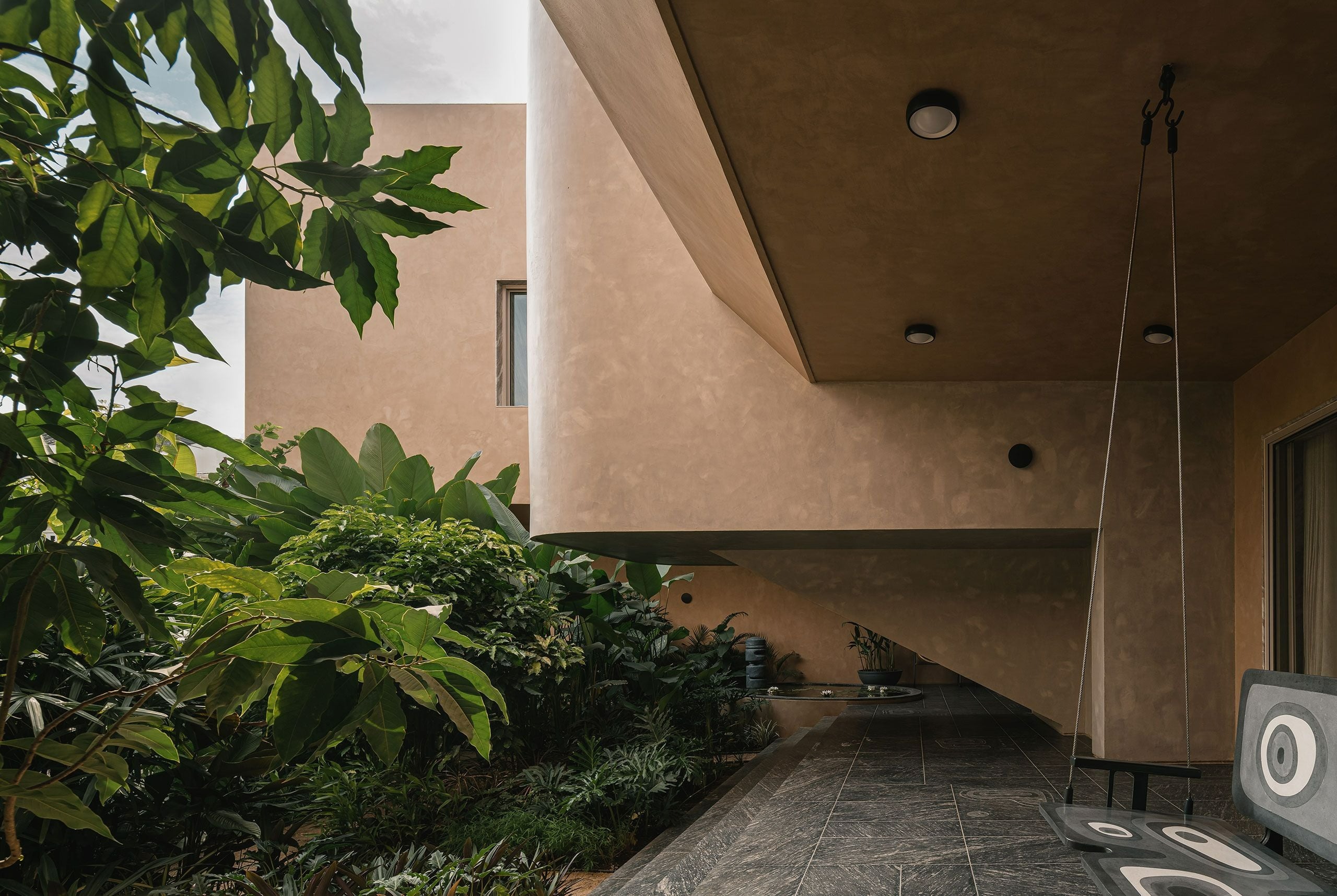
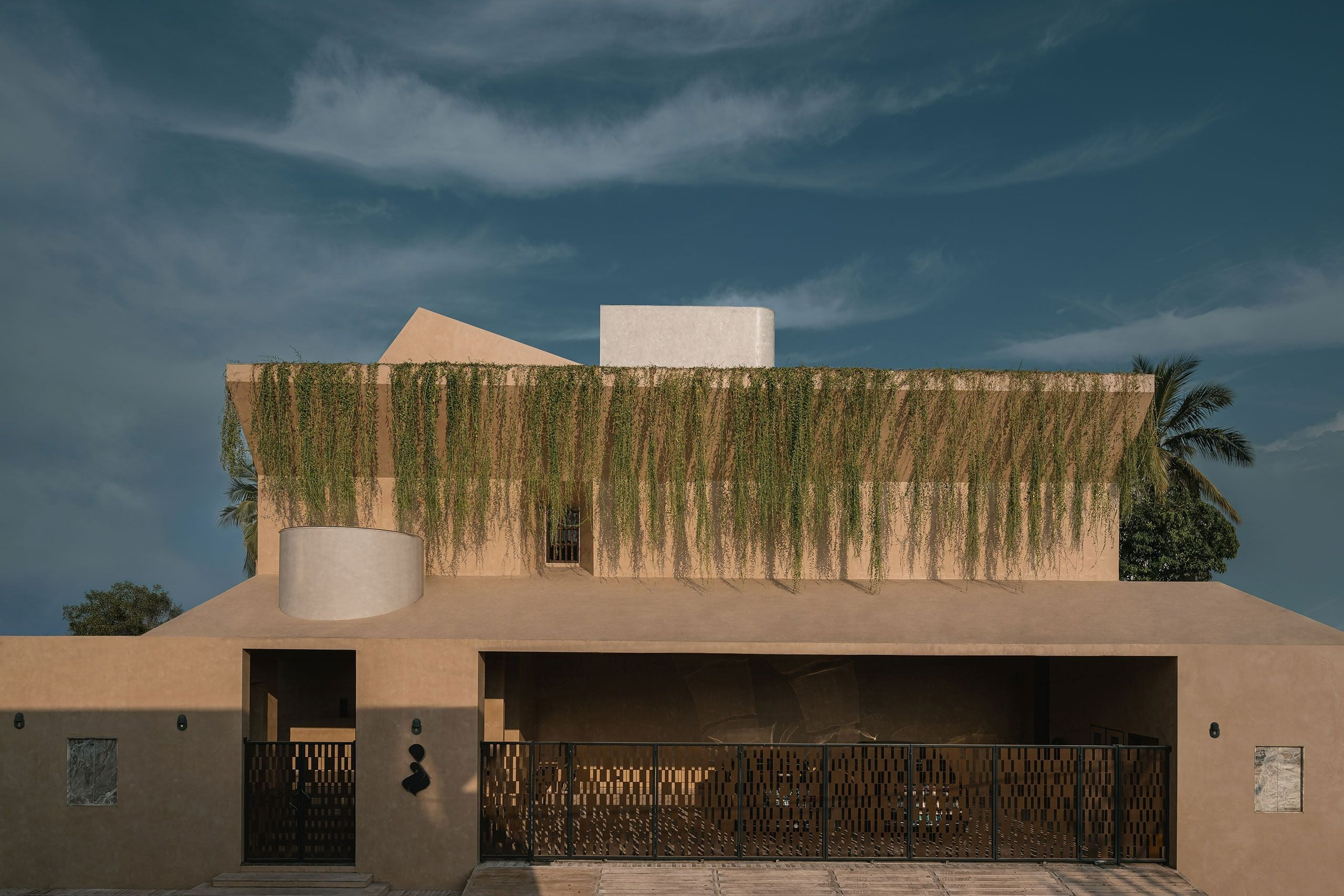
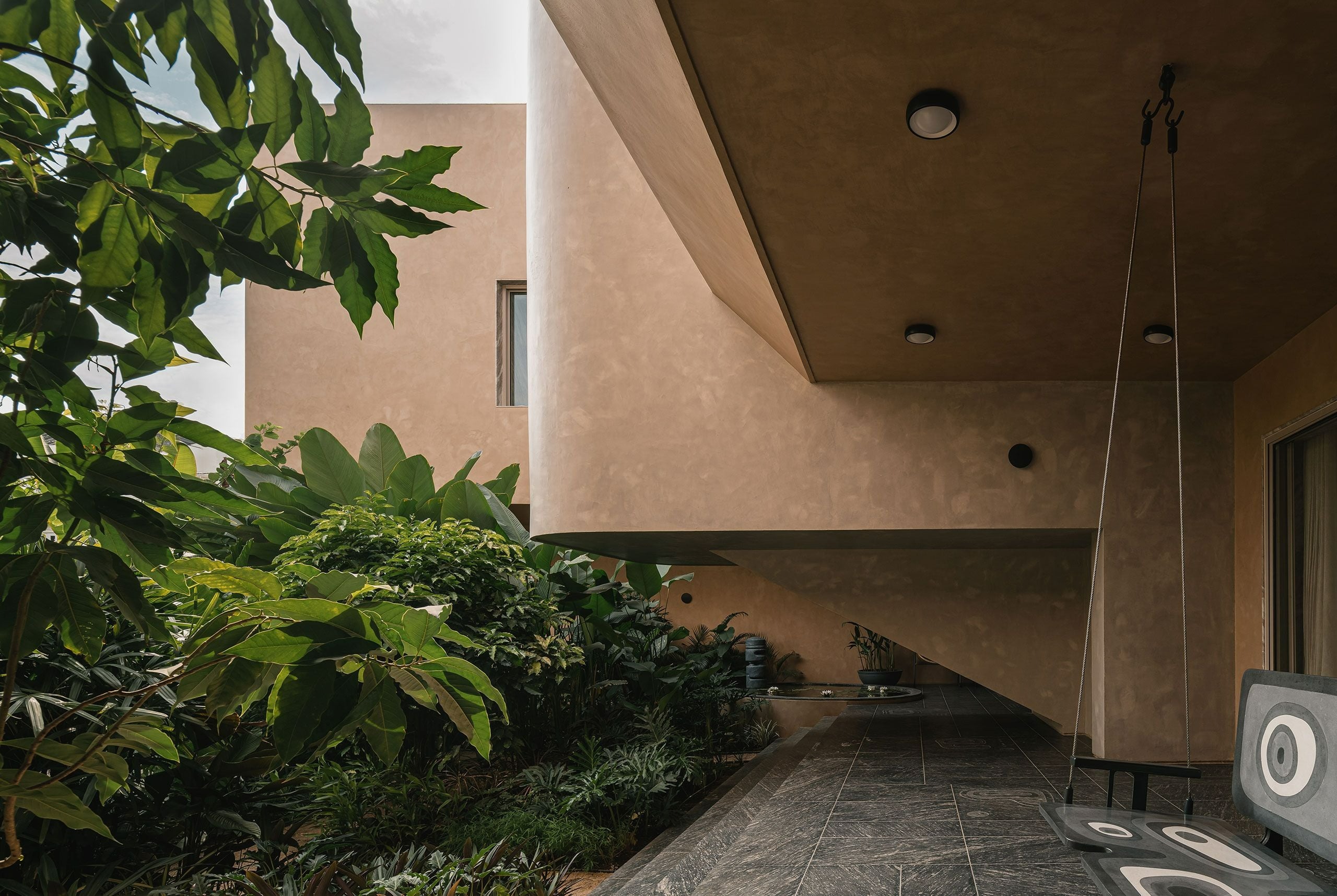
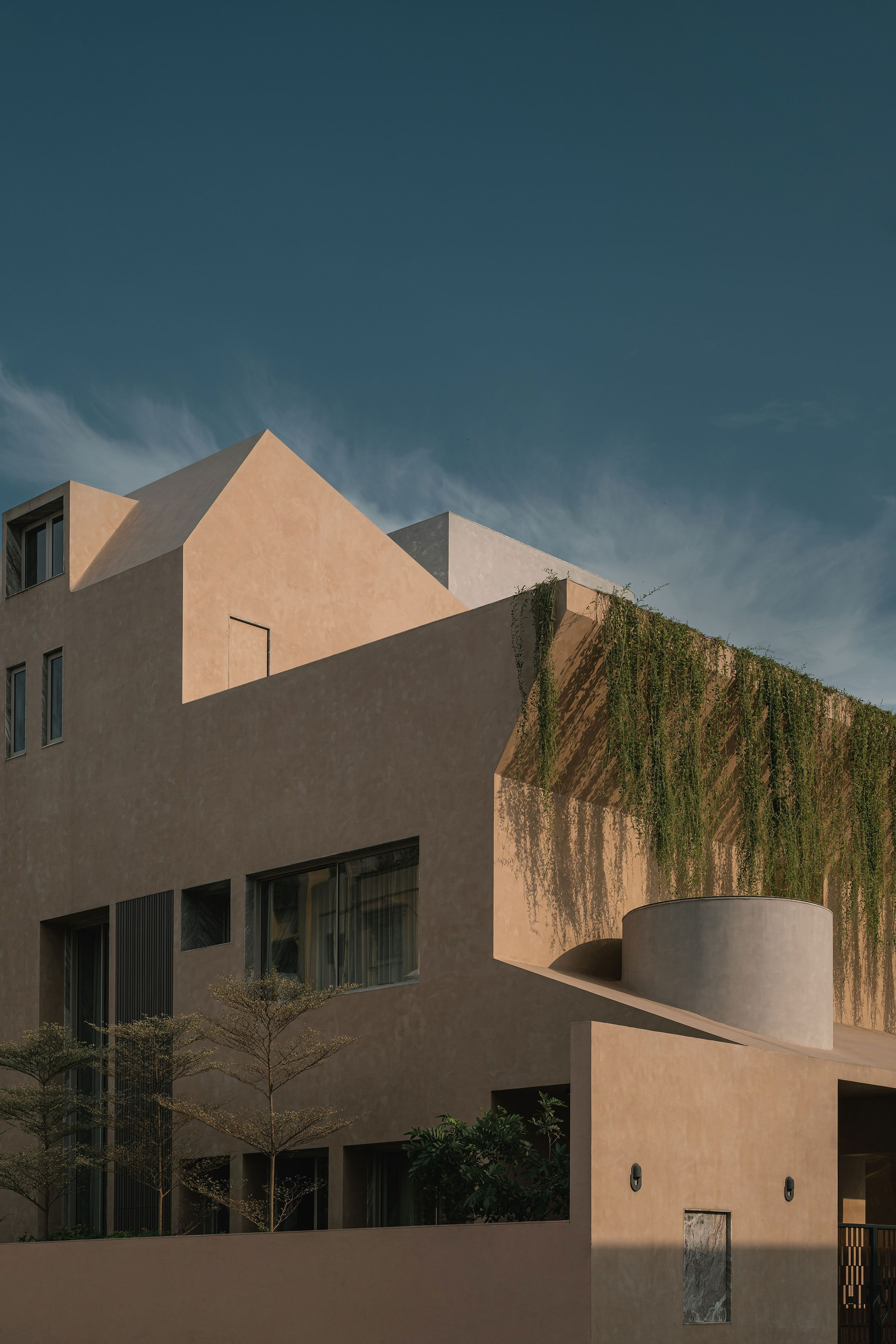
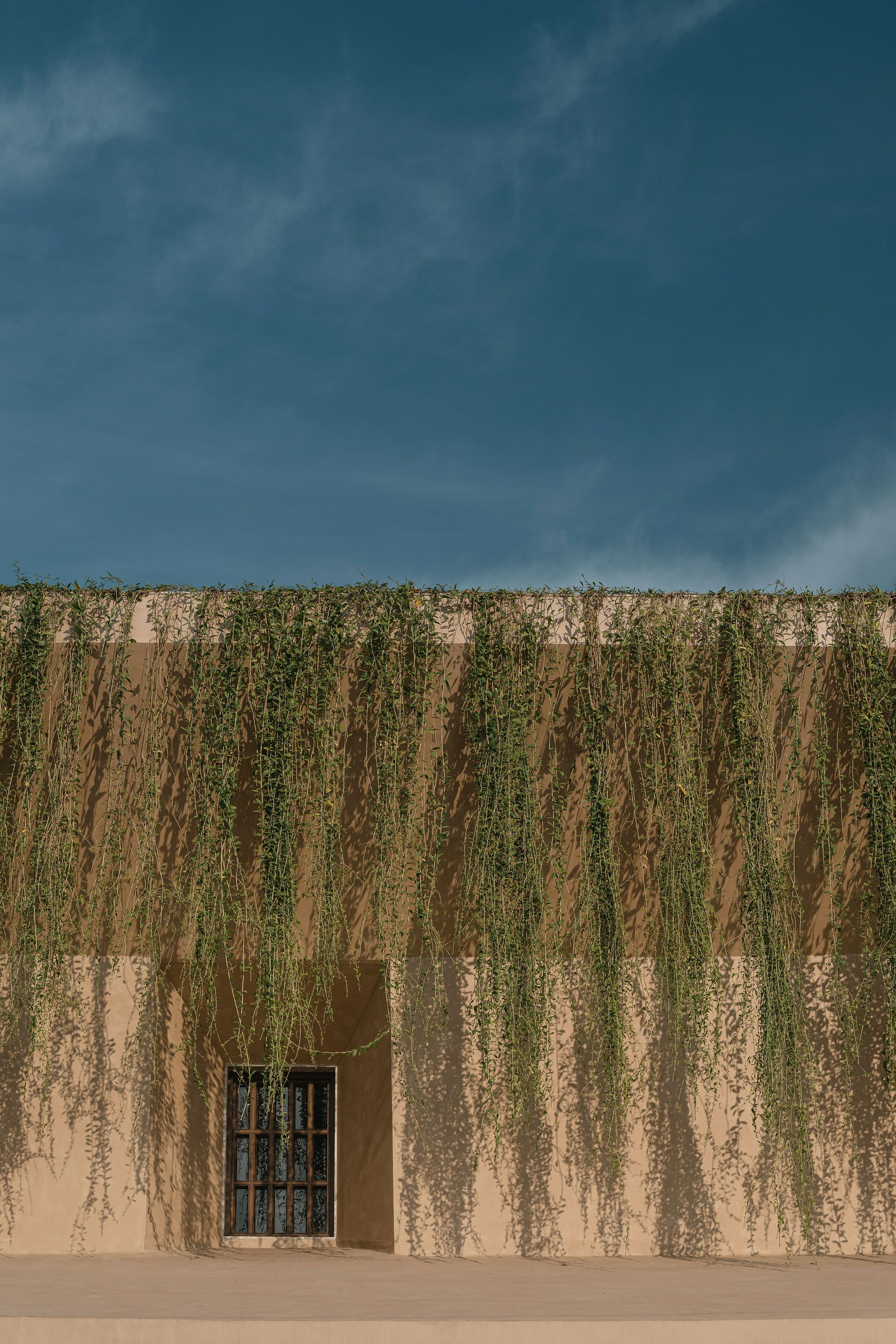
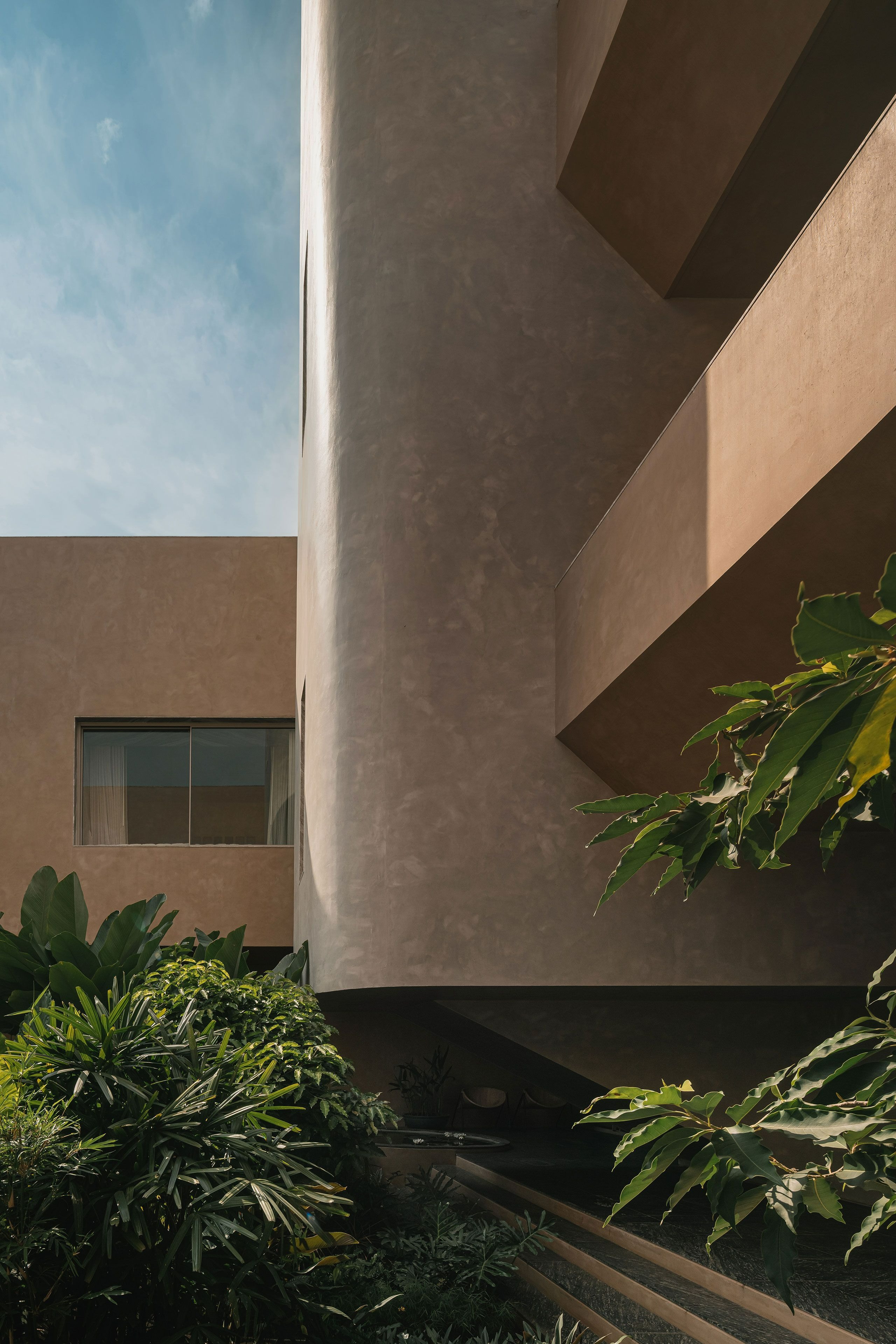
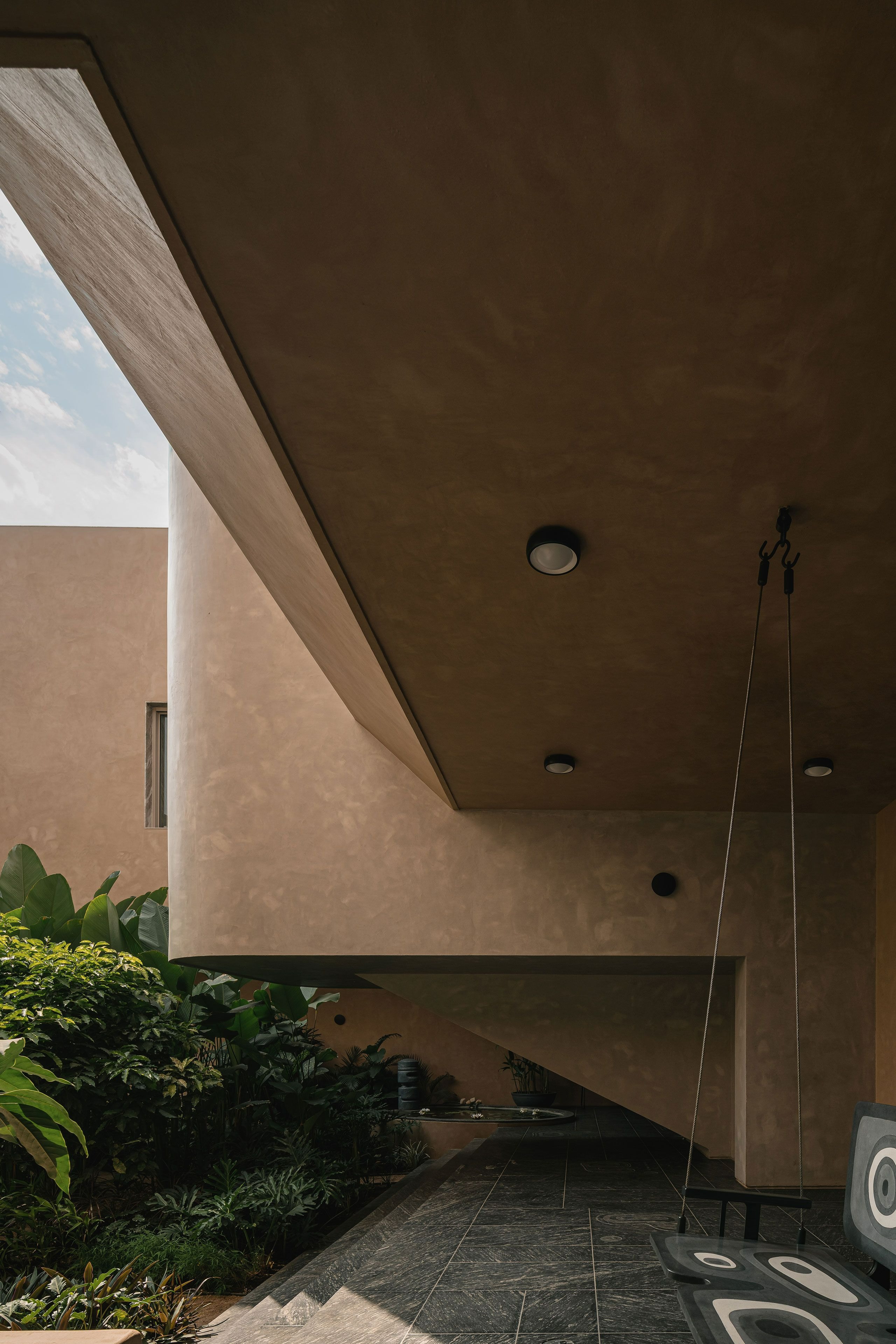
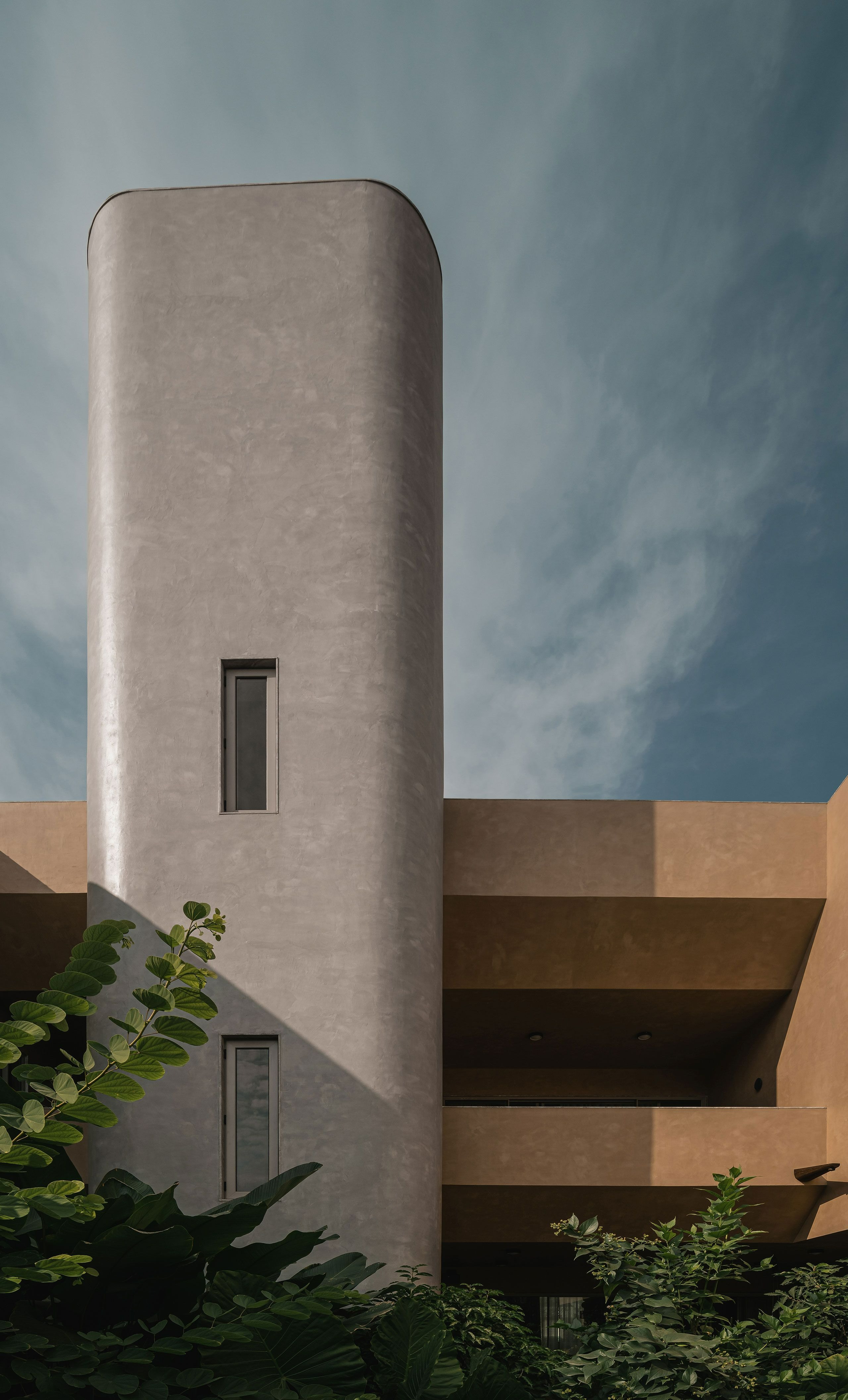
인도 구자라트주 나브사리의 조용한 주택가, 테라코타 빛 미장벽이 수평선을 가르며 서 있다. 화가들이 붓질을 거듭해 두텁게 쌓아 올린 이 벽은 단순한 외장재가 아니라 집 전체의 조각적 의지를 선언하는 피부다. 기하학적으로 정돈된 볼륨들은 건축가의 미학적 판단뿐 아니라 기후와 인도 전통 공간 배치 원리인 바스투 샤스트라(Vastu Shastra)의 요구를 함께 받아 안으며 자리를 잡는다. 옥상에서 드리워진 넝쿨 식물들이 파사드를 타고 흘러내리고, 아흐메다바드 기반 스튜디오 Design ni Dukaan이 설계한 이 집은 그렇게 땅의 온도와 하늘의 빛깔 사이 어딘가에 조용히 서 있다.
빛이 내려앉는 문턱
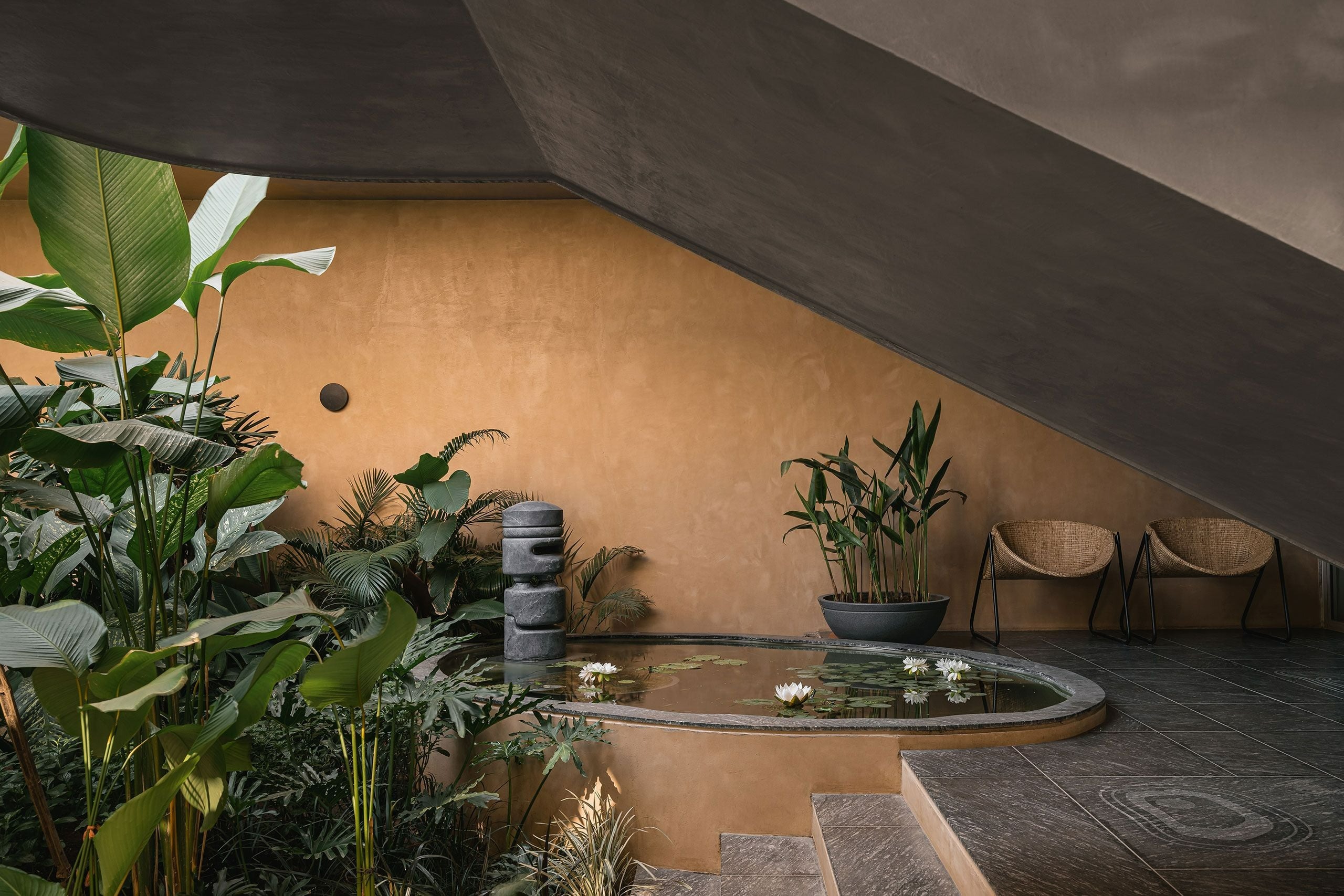
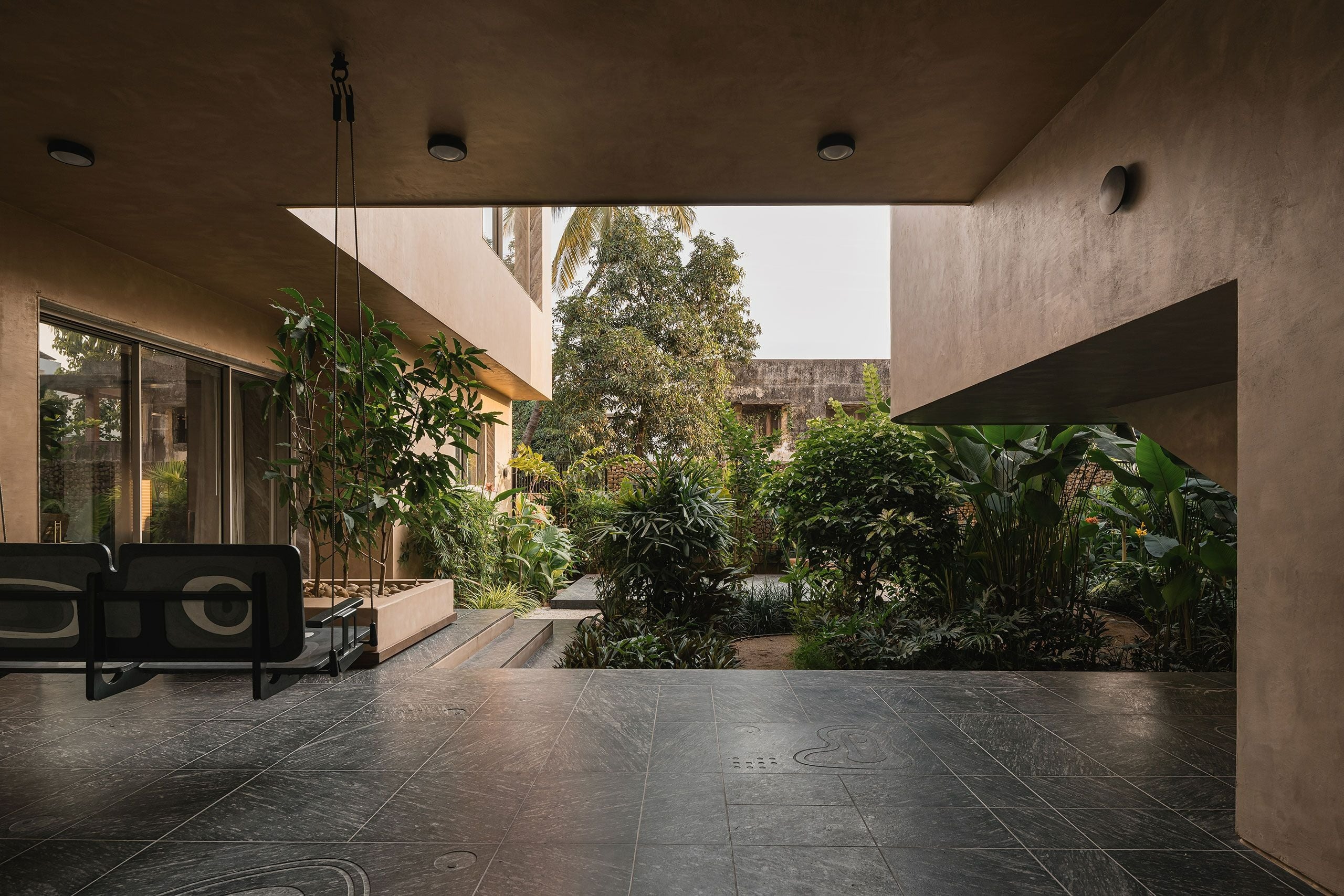
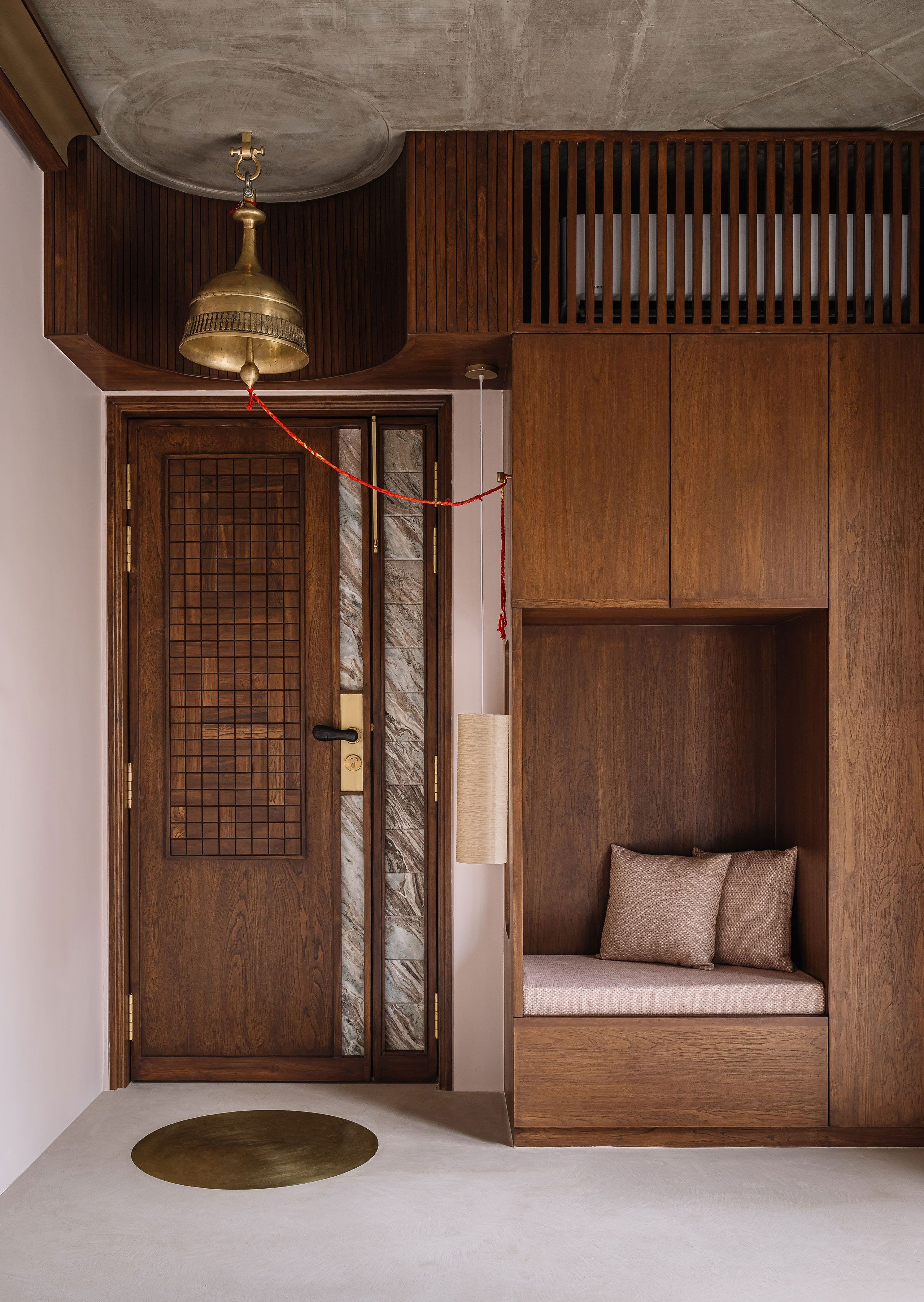
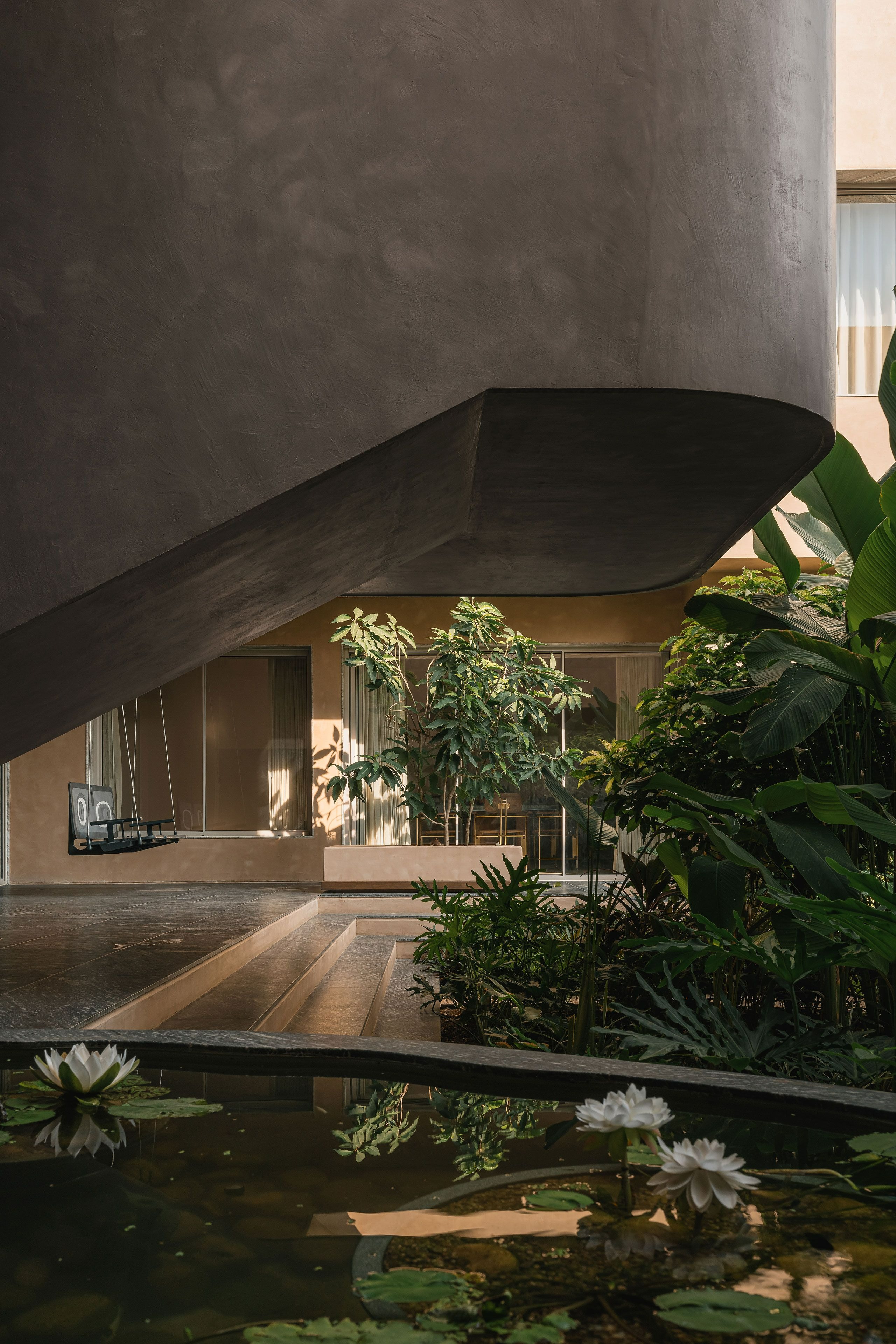
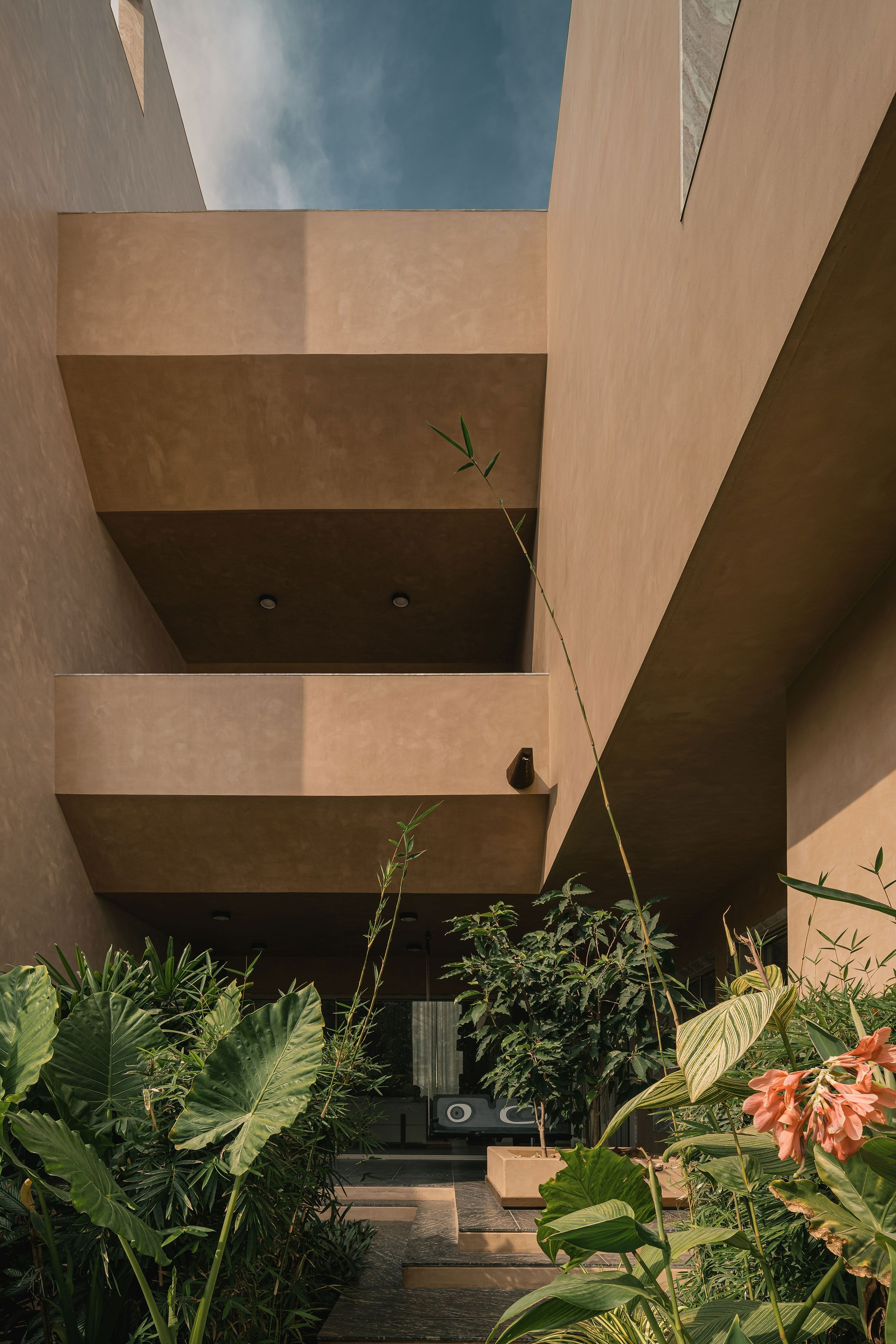
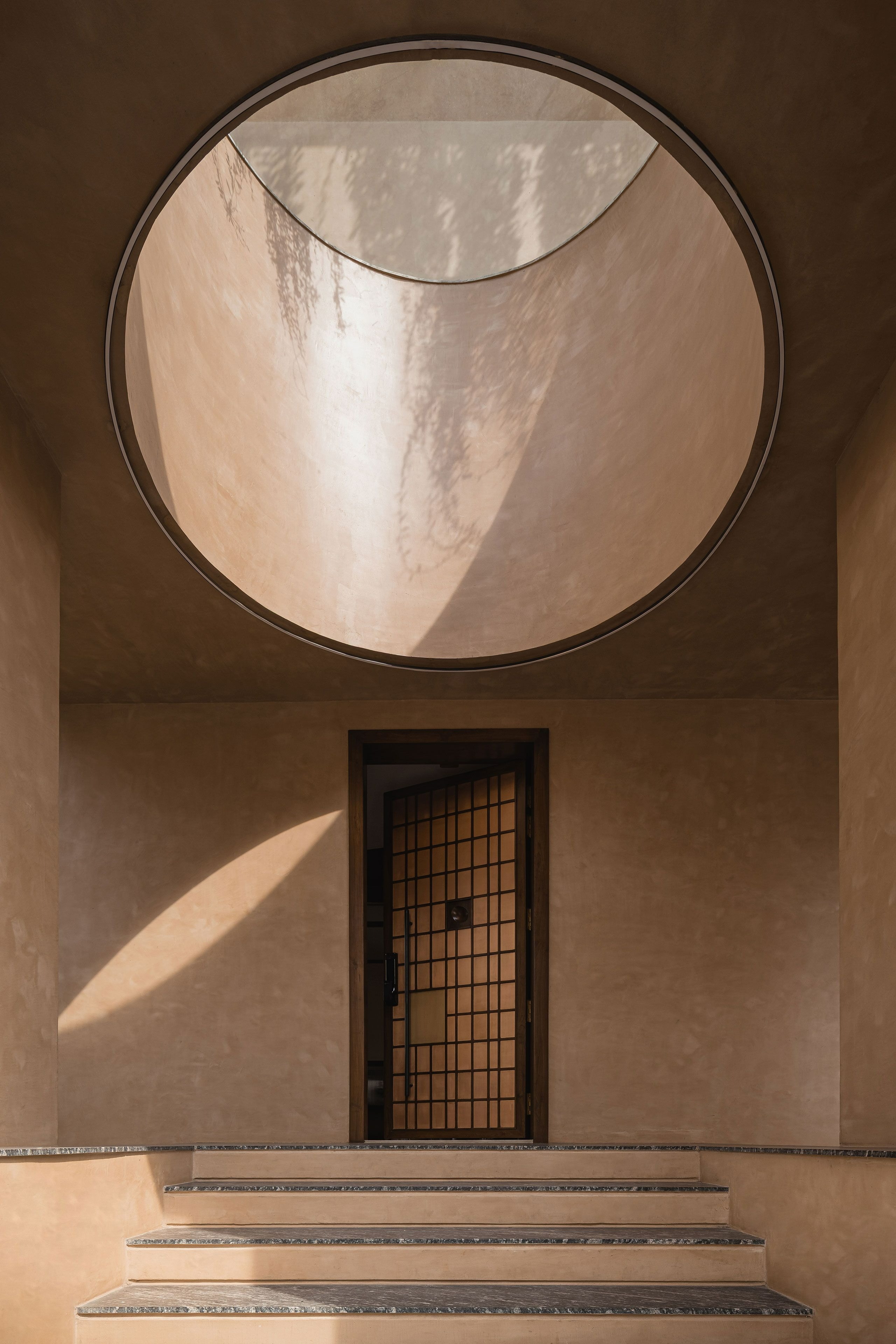
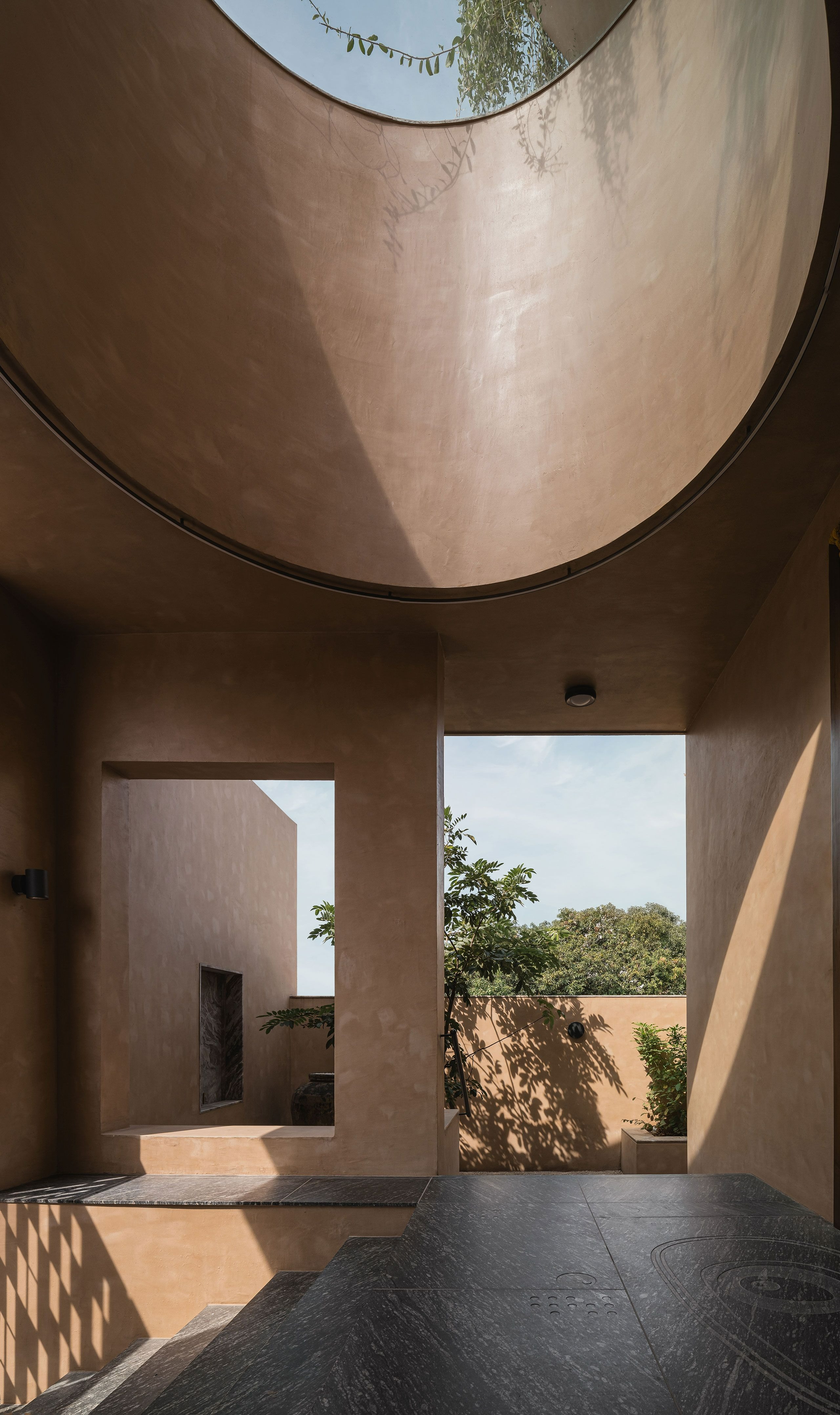
대문을 지나면 아말타쉬 나무 한 그루가 먼저 손님을 맞는다. 황금샤워나무(Cassia fistula)라는 별명을 가진 이 나무의 이름이 곧 이 집의 이름이기도 하다. 나무 위로는 커다란 원형 천창이 뚫려 있고, 그 아래 흑색 화강암 포장이 주변 미장벽의 모래빛 온기를 무게 있게 받쳐 준다. 빛은 원형 개구부를 통해 수직으로 내려오다가 천천히 바닥으로 번지고, 진입의 순간은 일상과 구별되는 하나의 의례가 된다.
손이 만든 것들의 목록
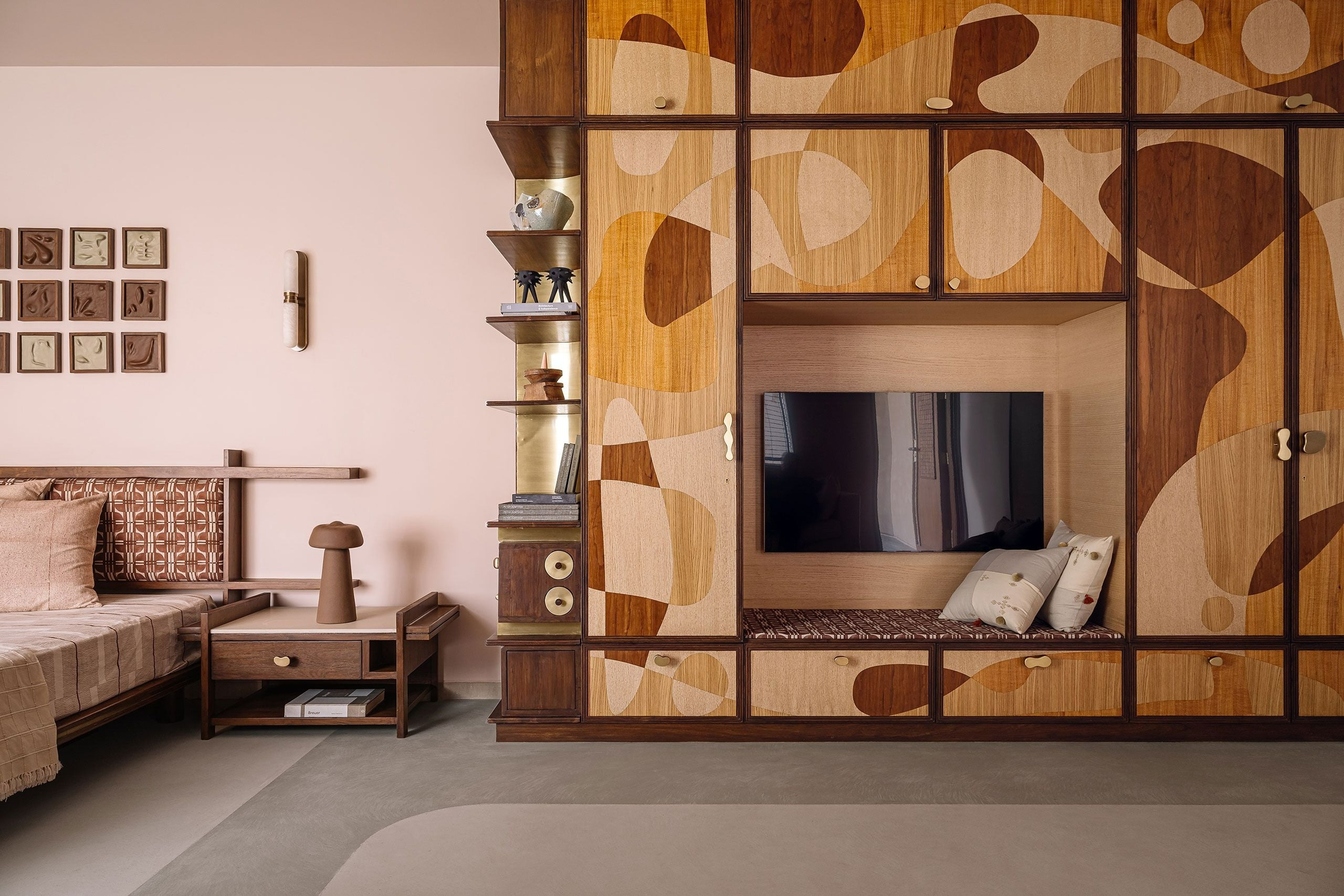
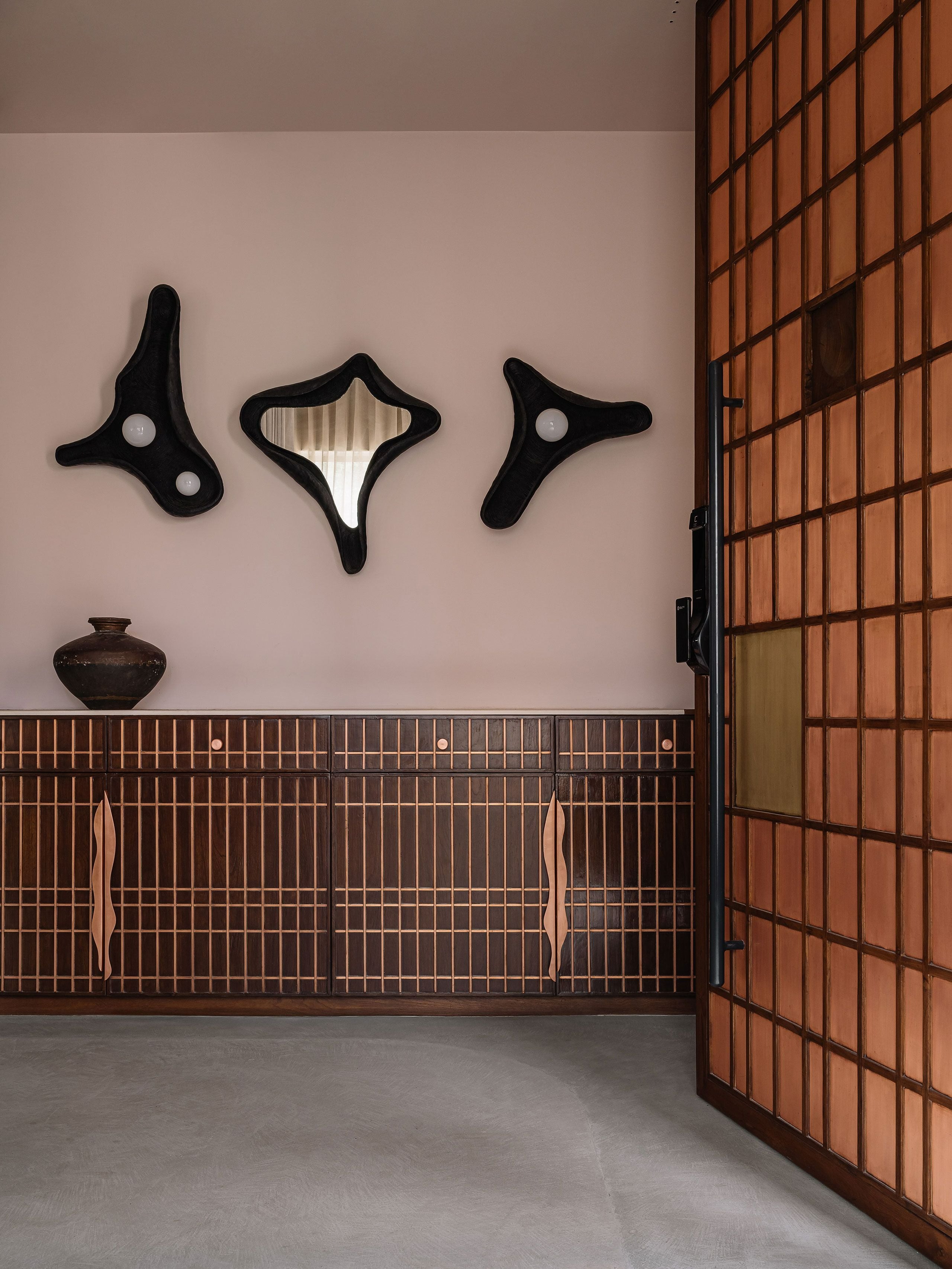
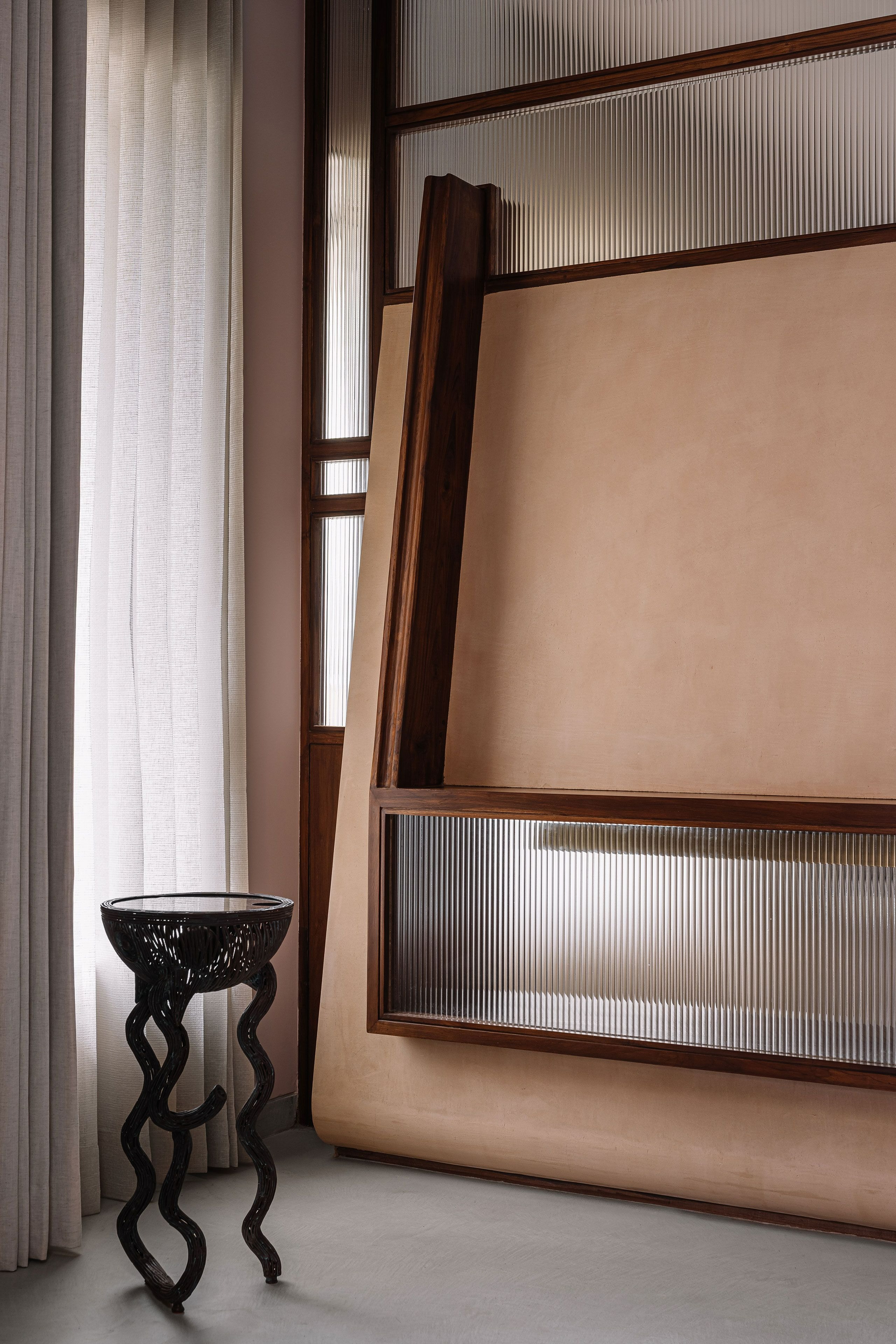
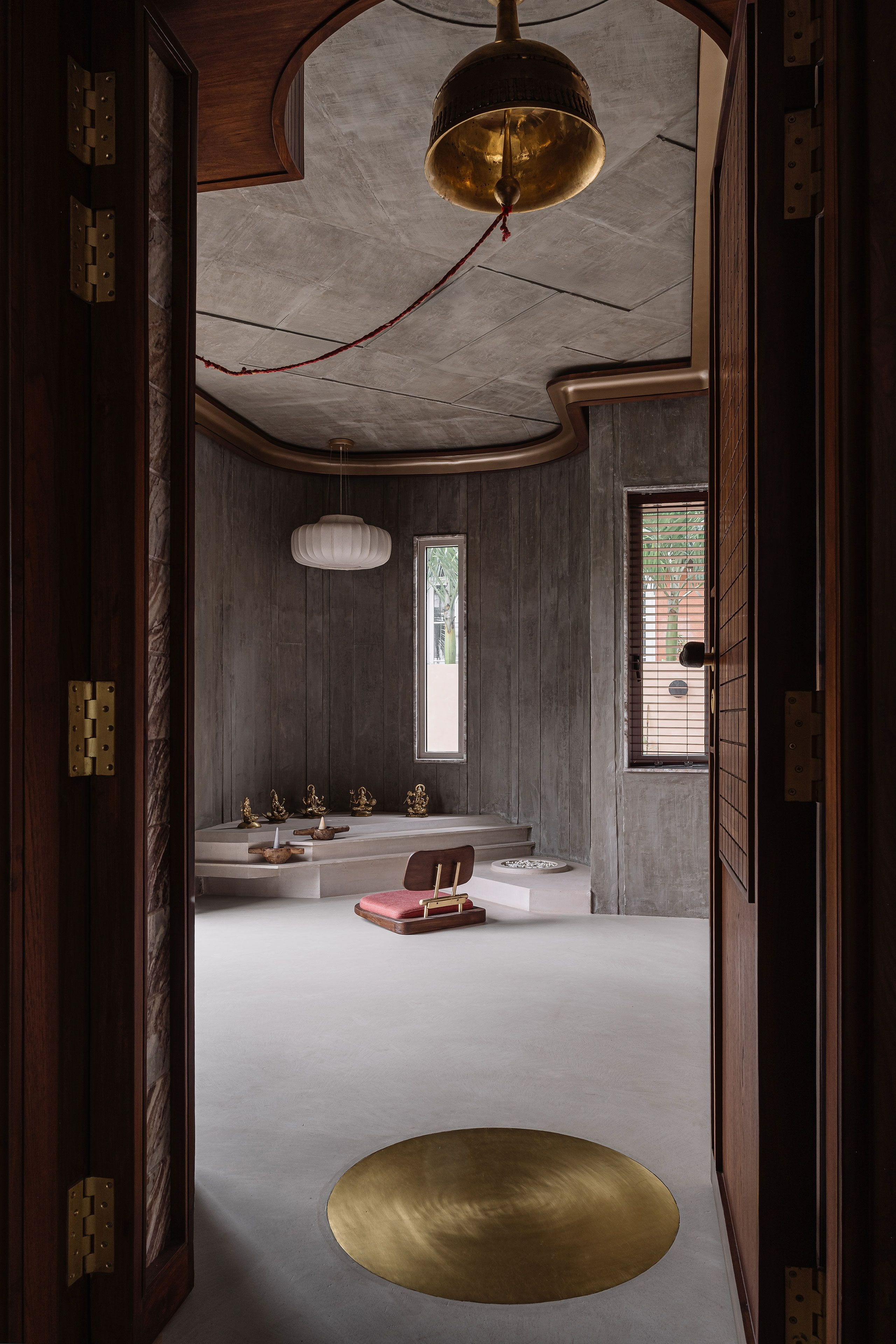
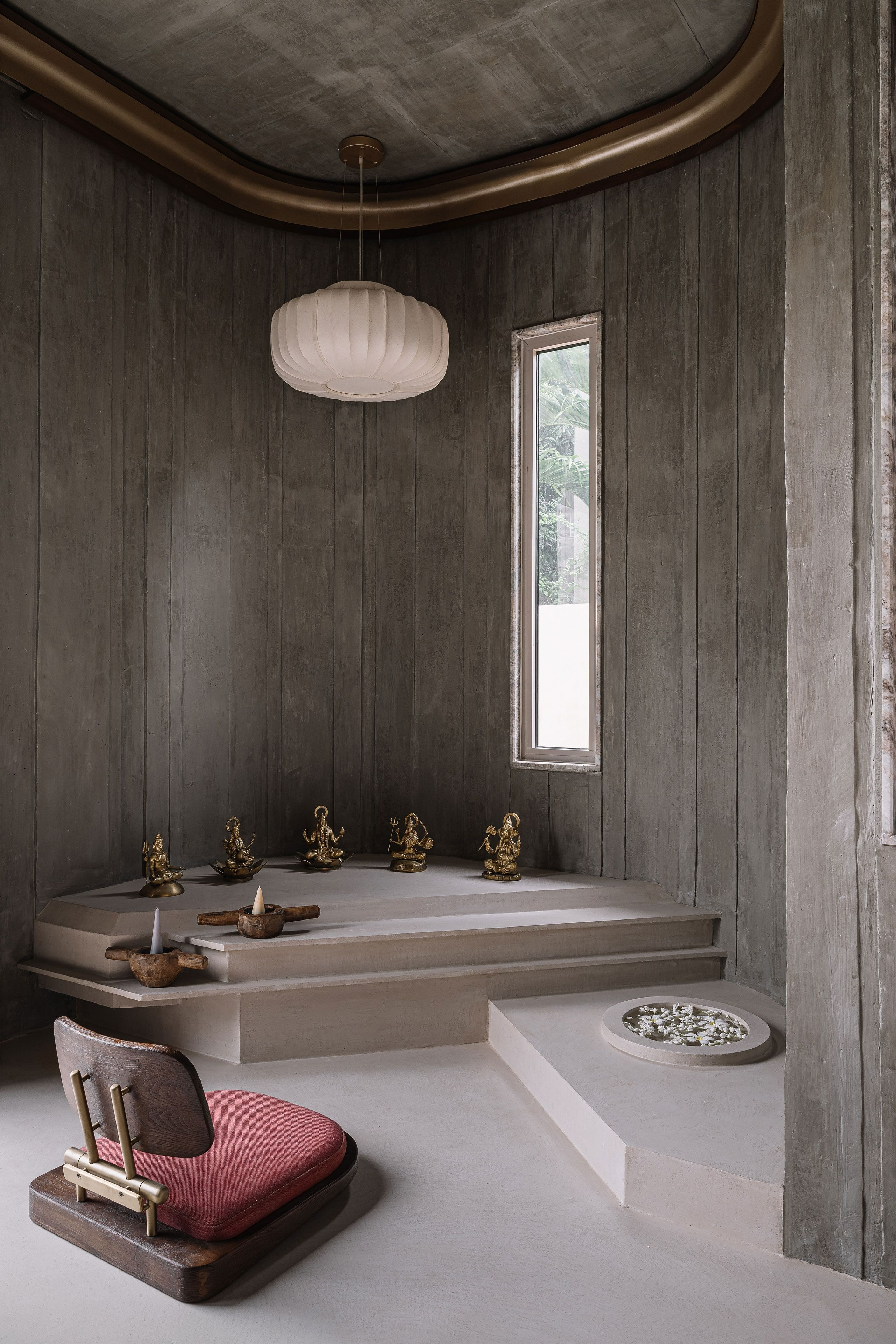
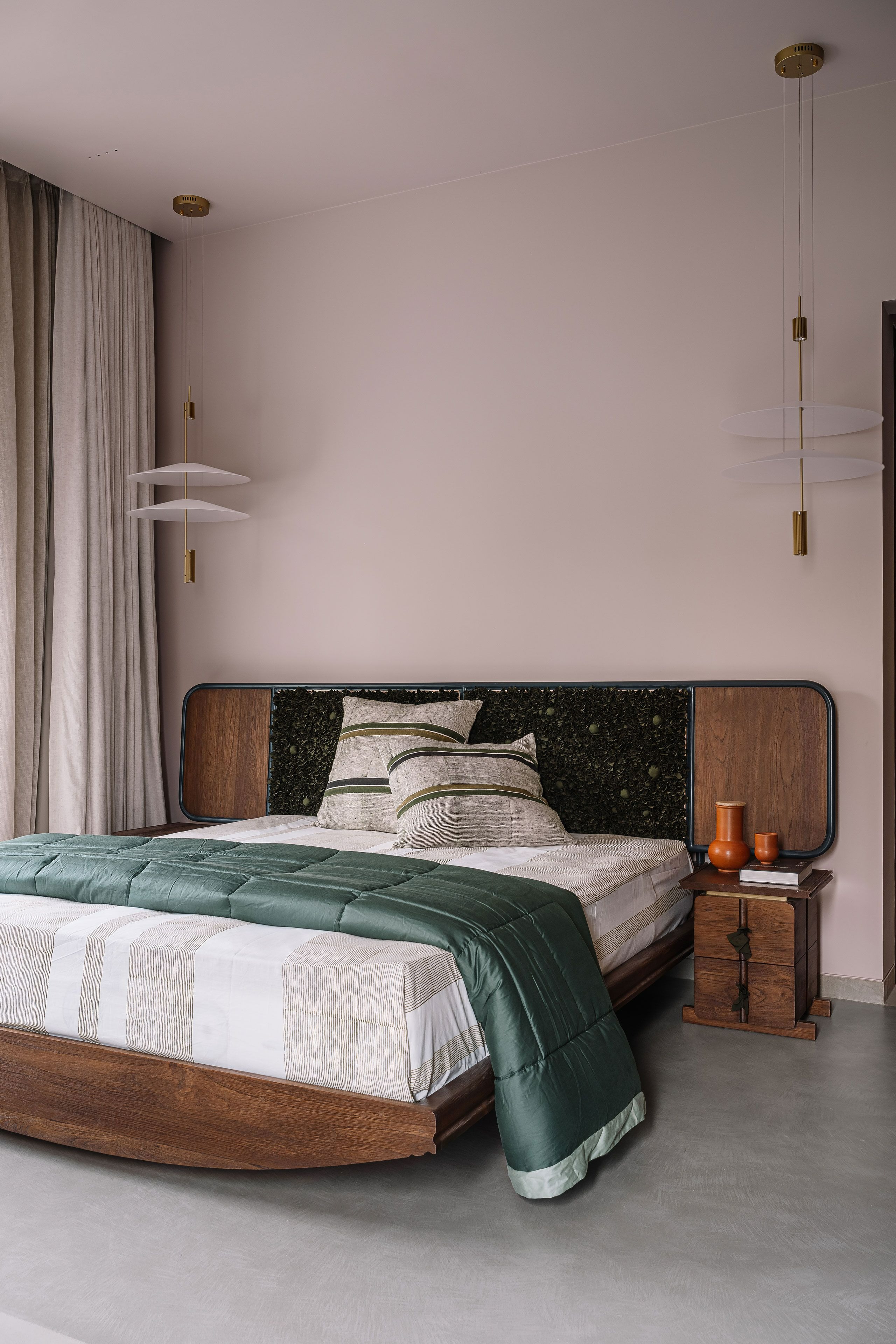
내부로 들어서면 팔레트는 한결 차분해진다. 광택 콘크리트 바닥과 블러시 핑크·따뜻한 회색의 플라스터 벽이 배경을 이루고, 그 위에 무수한 공예의 결이 층층이 쌓인다. 브러싱 처리된 티크우드가 모든 공간의 가구를 관통하는 하나의 실처럼 이어지고, 황동 디테일이 과하지 않은 온기를 더한다. 손으로 짠 직물과 도예 오브제가 촉각적인 풍요를 한 겹씩 더한다. 눈보다 먼저 손이 닿고 싶어지는 표면들이다.
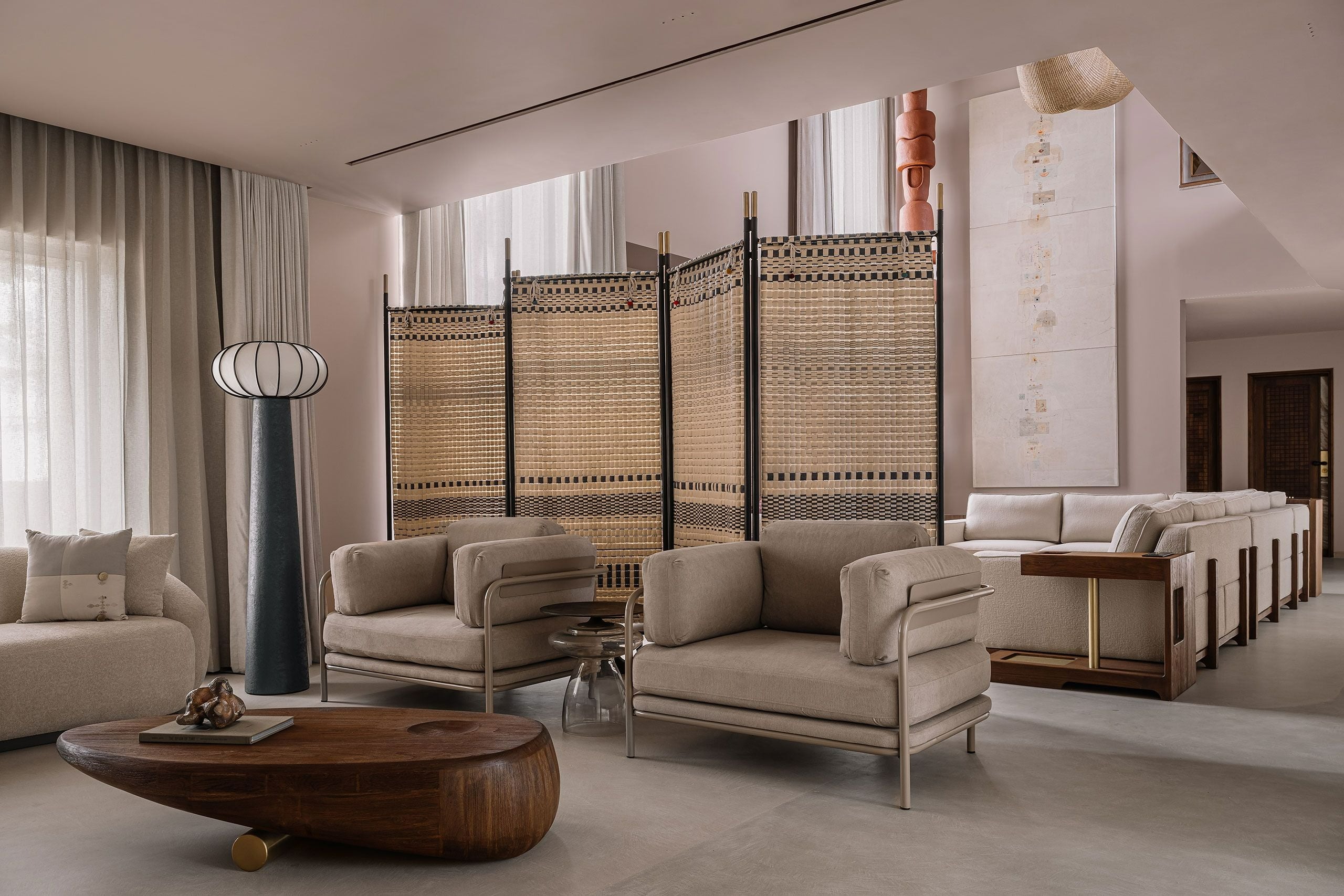
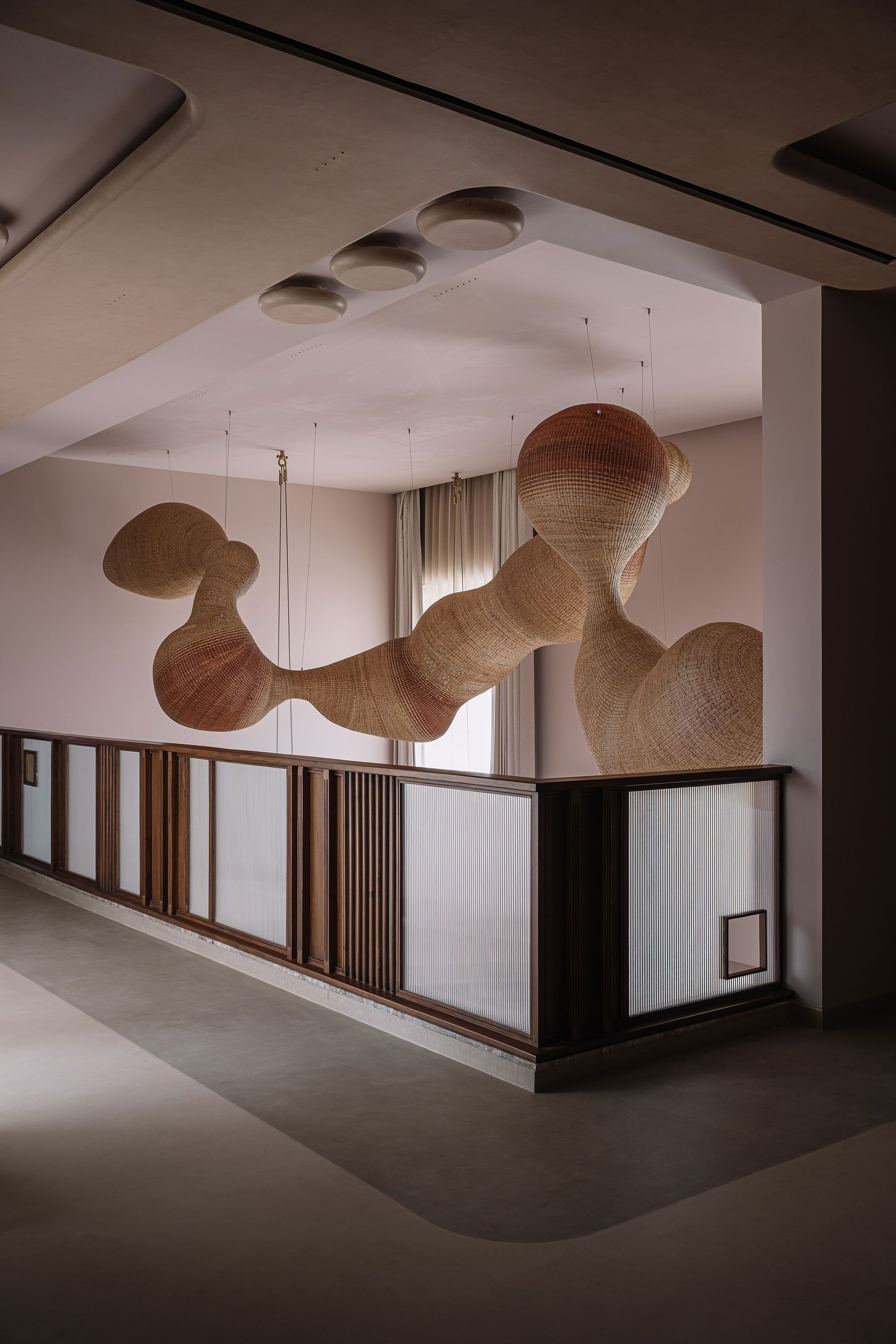
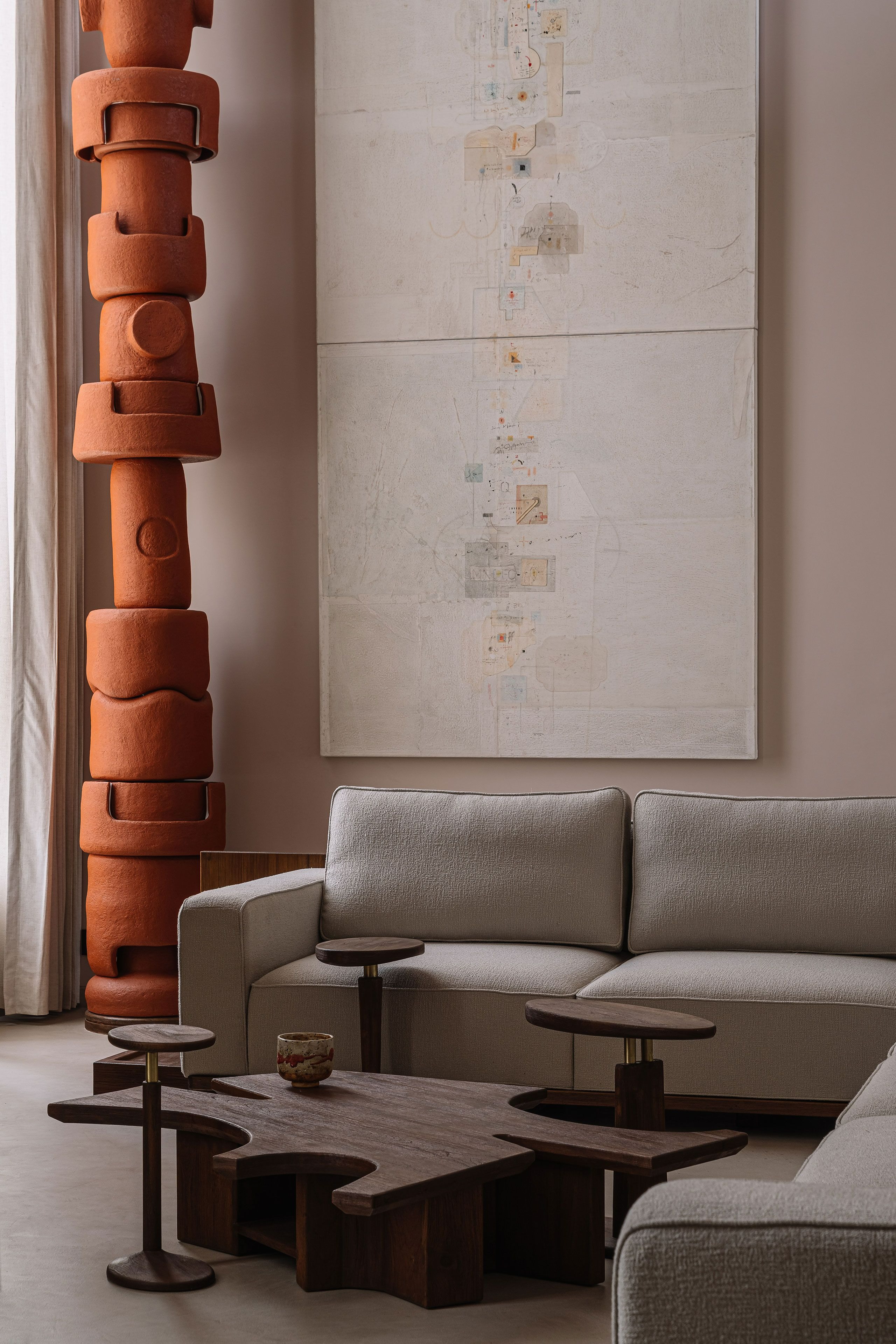
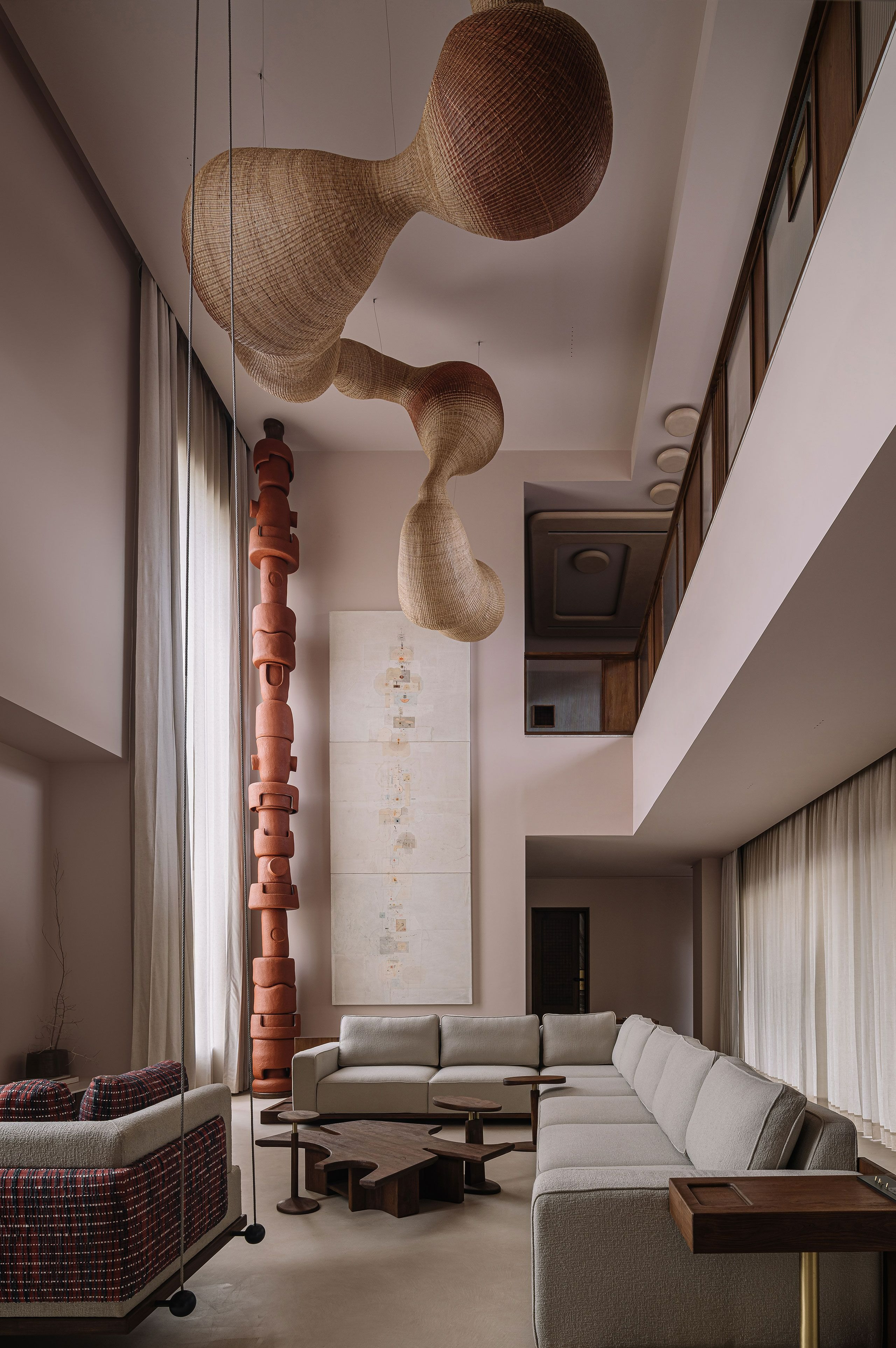
드로잉룸에 들어서면 복층 천장 높이를 압도하는 설치물이 먼저 눈을 붙든다. 위커 스토리(The Wicker Story)의 프리얀카 나룰라(Priyanka Narula)가 제작한 위커 설치물이 공중에서 물결치듯 부풀고 굽어지며 허공을 채운다. 한 쪽 코너에는 뭄바이 디자이너 하르시타 잠타니(Harshita Jhamtani)가 손으로 빚은 테라코타 토템이 천장까지 올라서고, 그 모듈형 단위 사이사이에 빛을 품고 있다. 같은 벽면에는 뉴델리 작가 샤헨샤 미탈(Shahenshah Mittal)의 혼합 매체 회화가 4.5미터 높이로 걸려 공간의 무게를 완성한다.
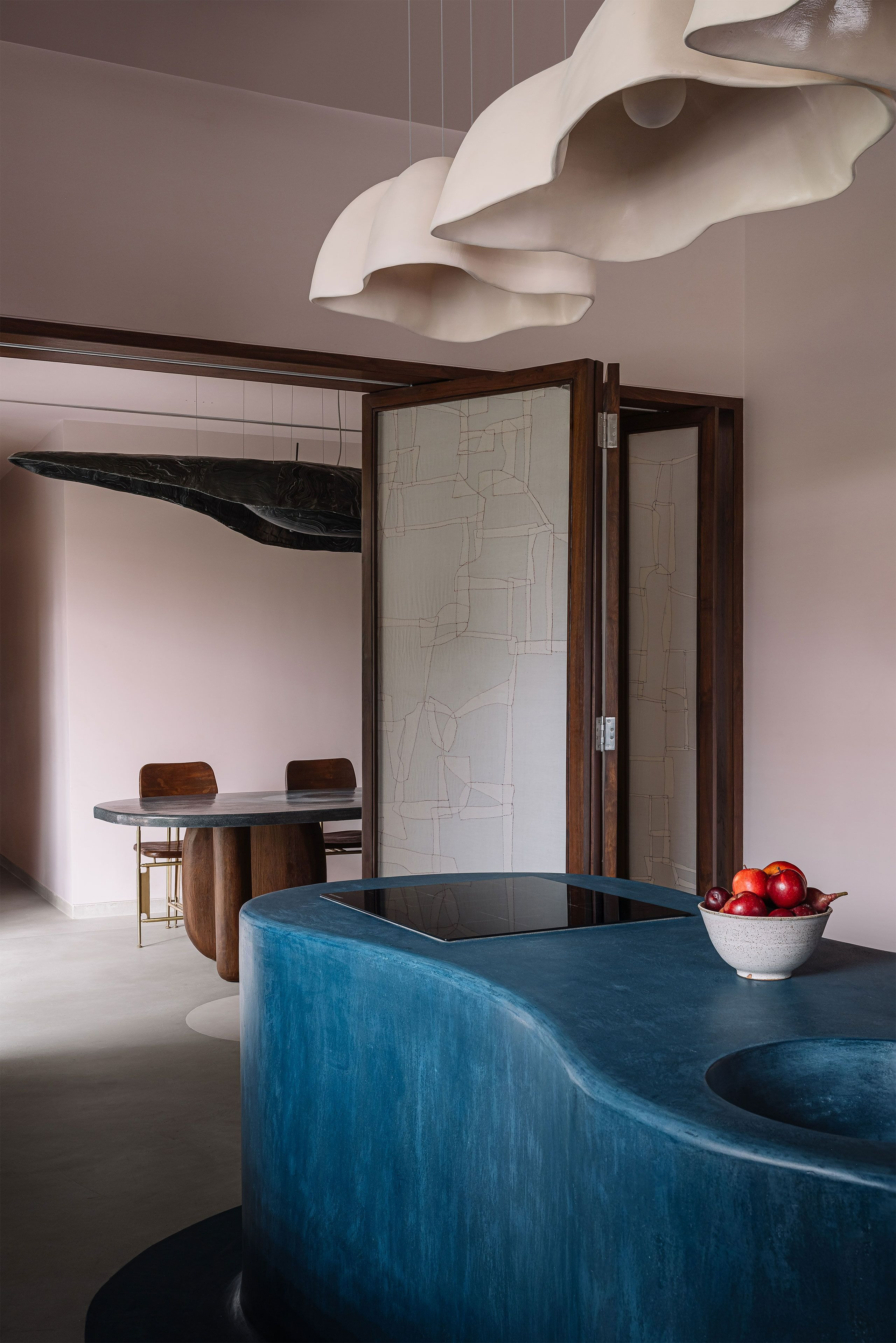
드로잉룸과 거실 사이의 경계는 라아슬릴라 텍스타일(RaasLeela Textile)의 헤탈 슈리바스타브(Hetal Shrivastav)와 협업한 폴딩 스크린이 담당한다. 티크우드와 금속으로 짜인 이 스크린에는 수자니 누비 기법(Sujani quilt technique)으로 직조된 직물이 펼쳐지는데, 두 직공이 베틀의 양쪽에서 동시에 실을 얹어 한 장의 천을 완성하는 방식이다. 접히고 펼쳐지는 그 경계는 공간을 나누는 동시에 이어준다.
식탁 위의 시간
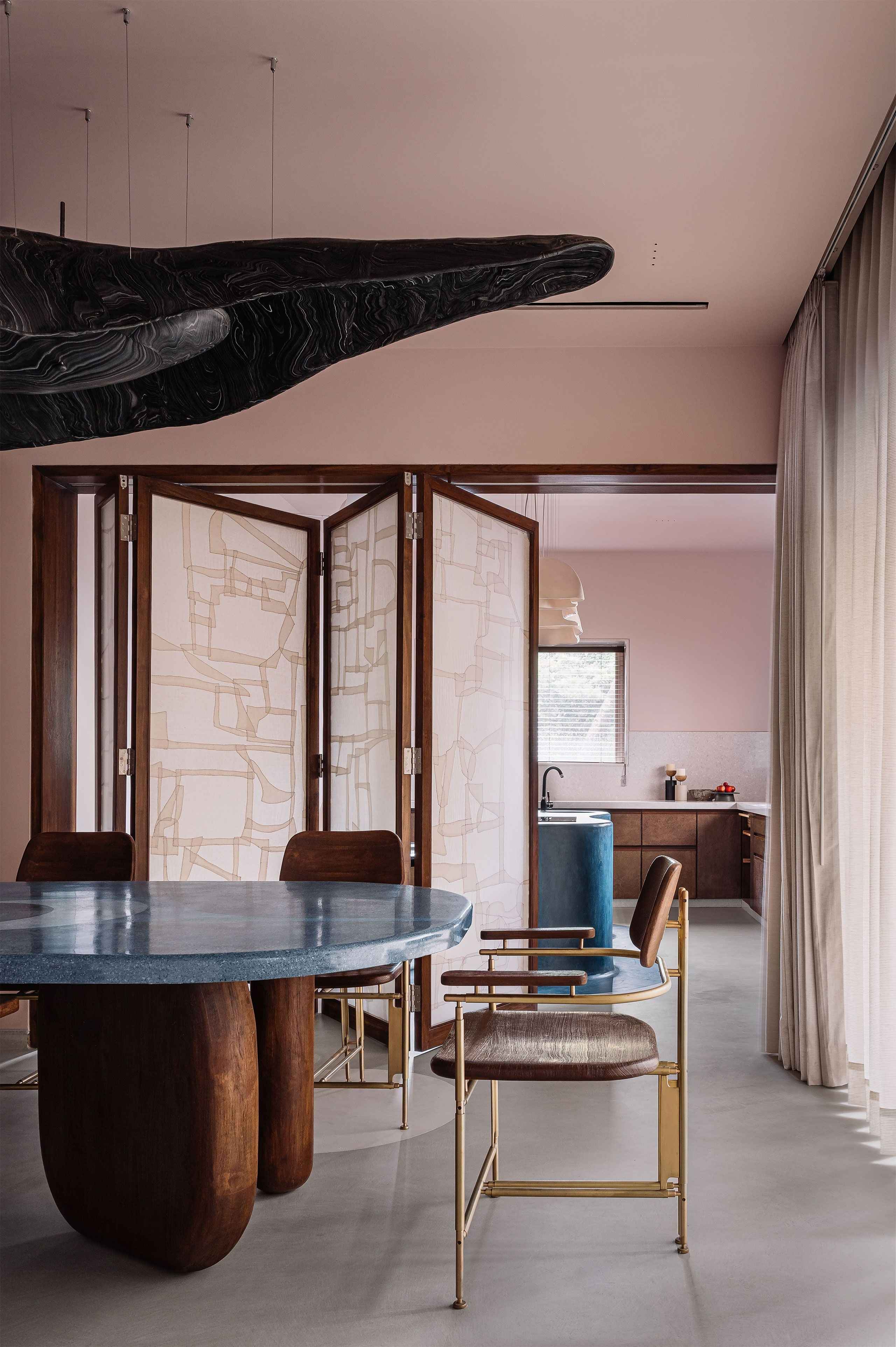
다이닝룸과 주방은 같은 결의 공간으로 이어진다. 라아슬릴라 텍스타일의 또 다른 폴딩 파티션이 이곳에도 자리한다. 버려진 직물 조각들을 이어 붙인 반투명 패널이 유리판 사이에 끼워져, 빛을 부드럽게 걸러내며 추상적인 무늬를 만들어 낸다.
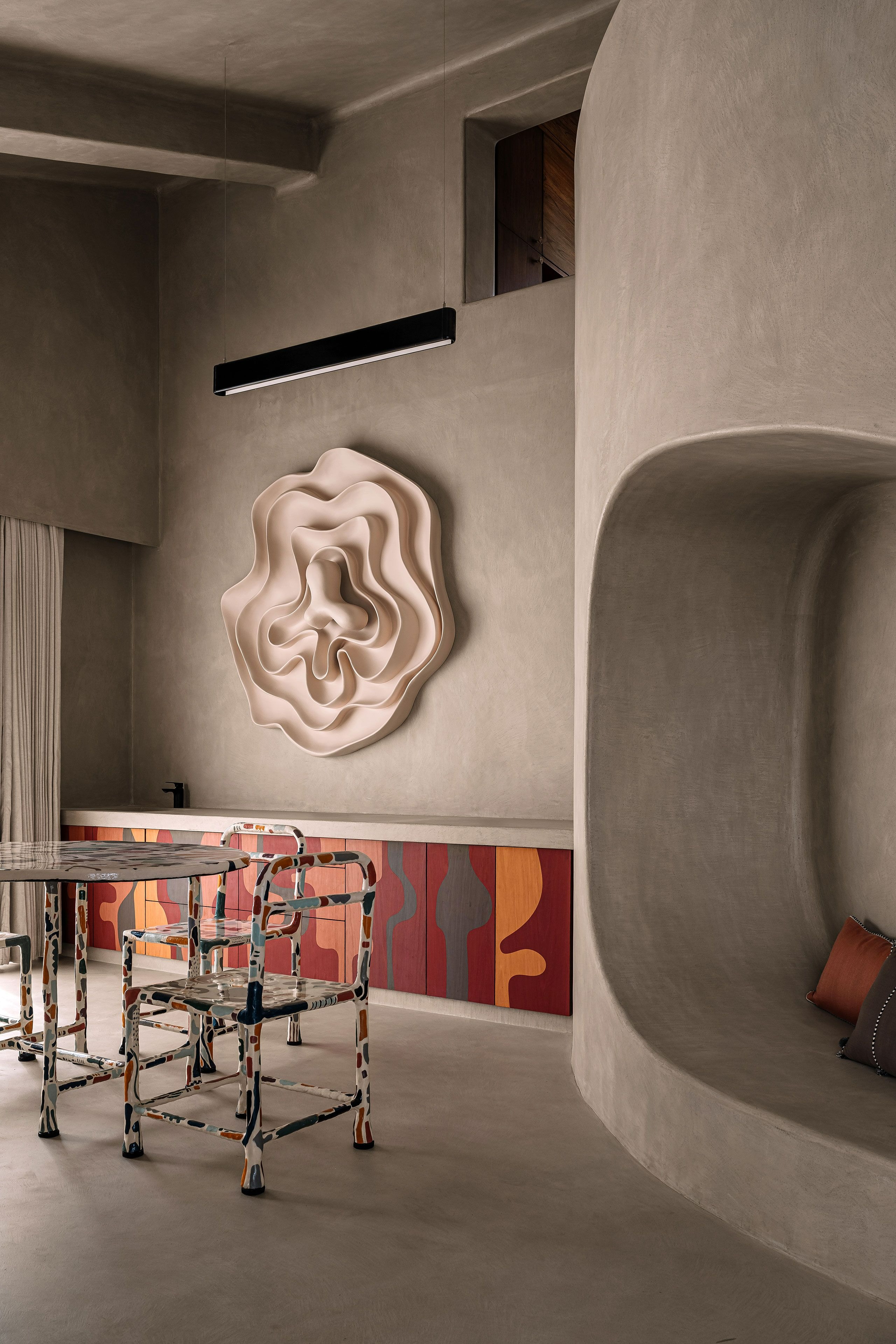
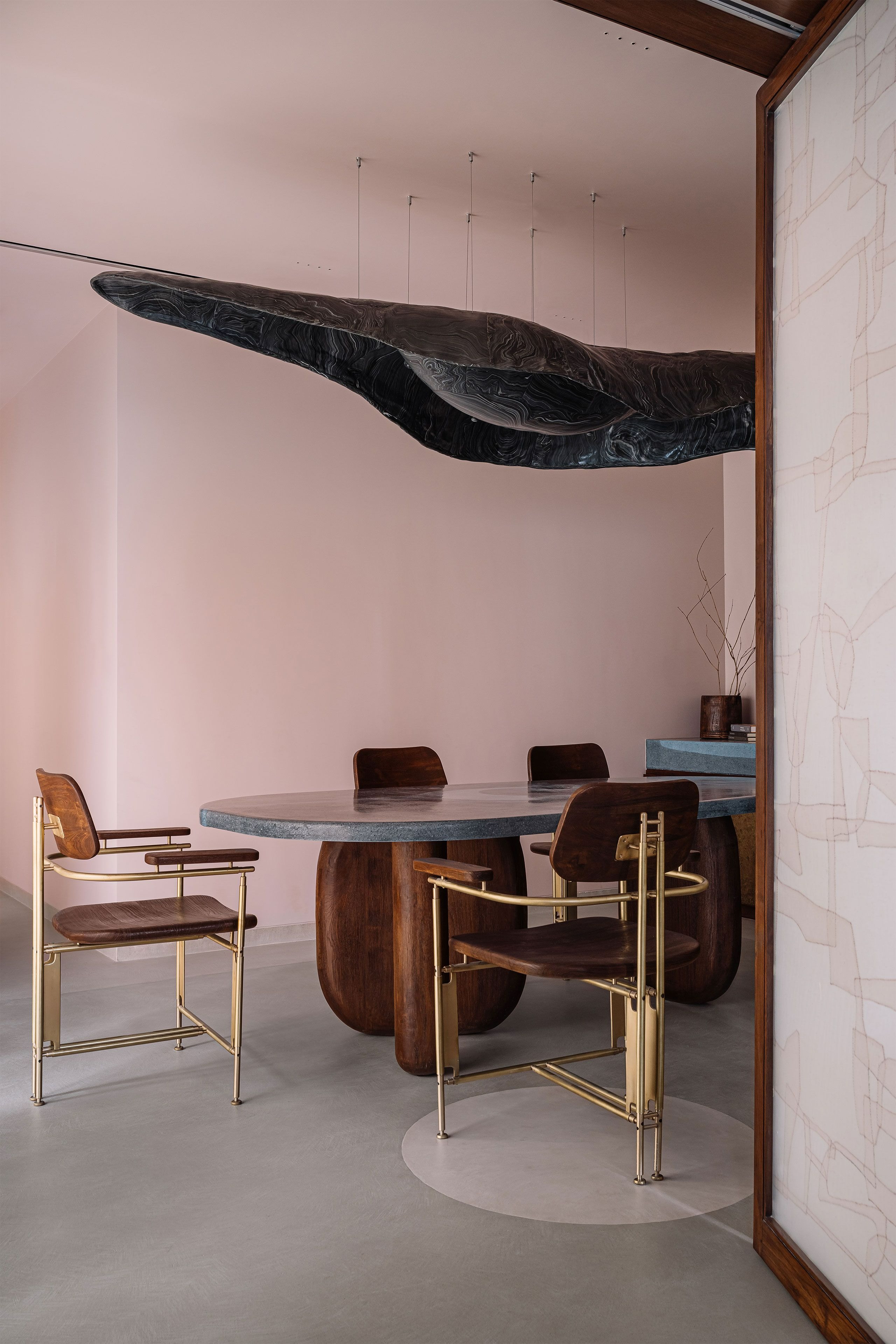
식탁은 그 자체로 하나의 조각이다. 뭄바이 스튜디오 로한 슈로프(Rohan Shroff)가 설계한 이 테이블은 인디고 테라초 상판을 구근 형태의 나무 다리 위에 올려놓아 마치 물속에 떠 있는 것처럼 보인다. 그 위에는 KEPH Design Studio의 에폭시 레이어 펜던트 조명이 내려앉는다. 커스텀 몰드 위에 레이어를 쌓아 올린 뒤 탈형하여 지층처럼 깊이 새긴 표면을 드러낸 작품이다. 반면 Design ni Dukaan이 직접 설계한 멘탈 디스맨틀 체어(Mental Dismantle Chair)들은 단정한 실루엣으로 균형을 잡는다. 티크우드와 황동을 단 하나의 용접도 없이 짜맞춤 목공과 육각 렌치만으로 조립한 이 의자들은 미니멀한 외형 속에 치밀한 구축의 논리를 숨기고 있다.
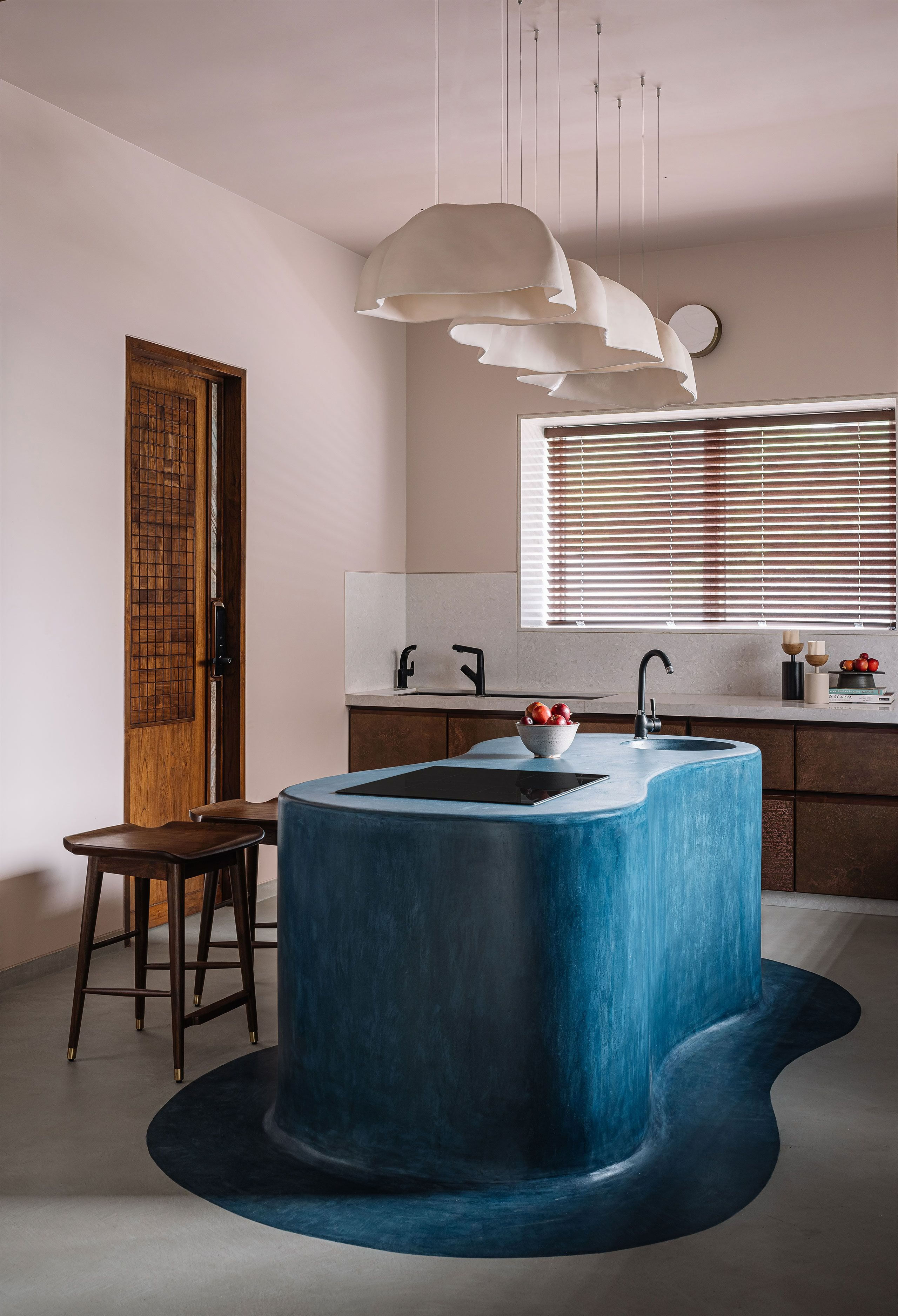
주방의 중심에는 같은 인디고 색조의 유기적 형태 아일랜드가 자리하고, 그 위로 KEPH Design Studio의 손 빚기 도예 펜던트들이 무리 지어 매달린다. 각기 조금씩 다른 이 도예 조각들은 일부러 불완전함을 남겨 두어, 손이 지나간 자국을 그대로 보여 준다.
잠드는 방, 기억하는 손
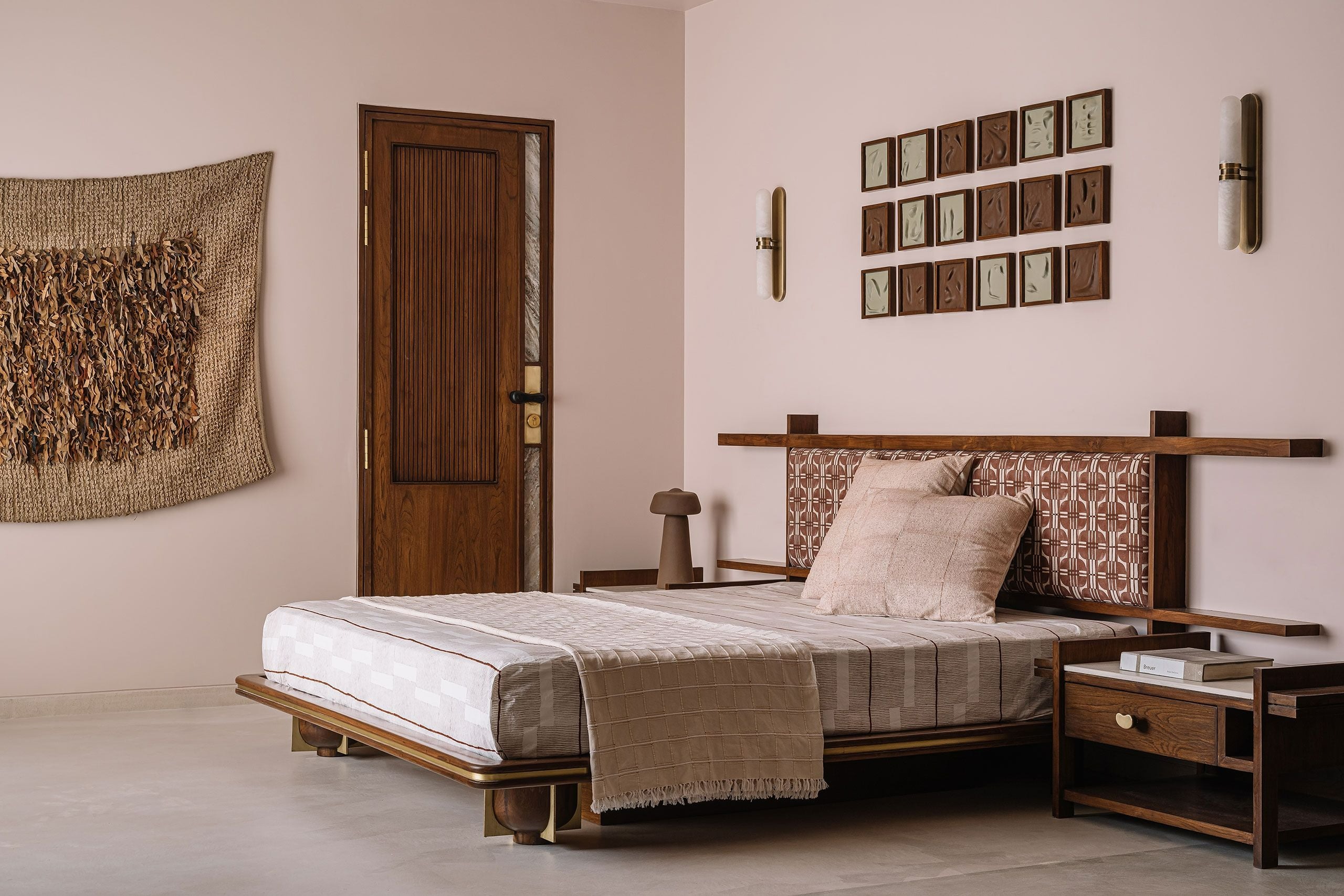
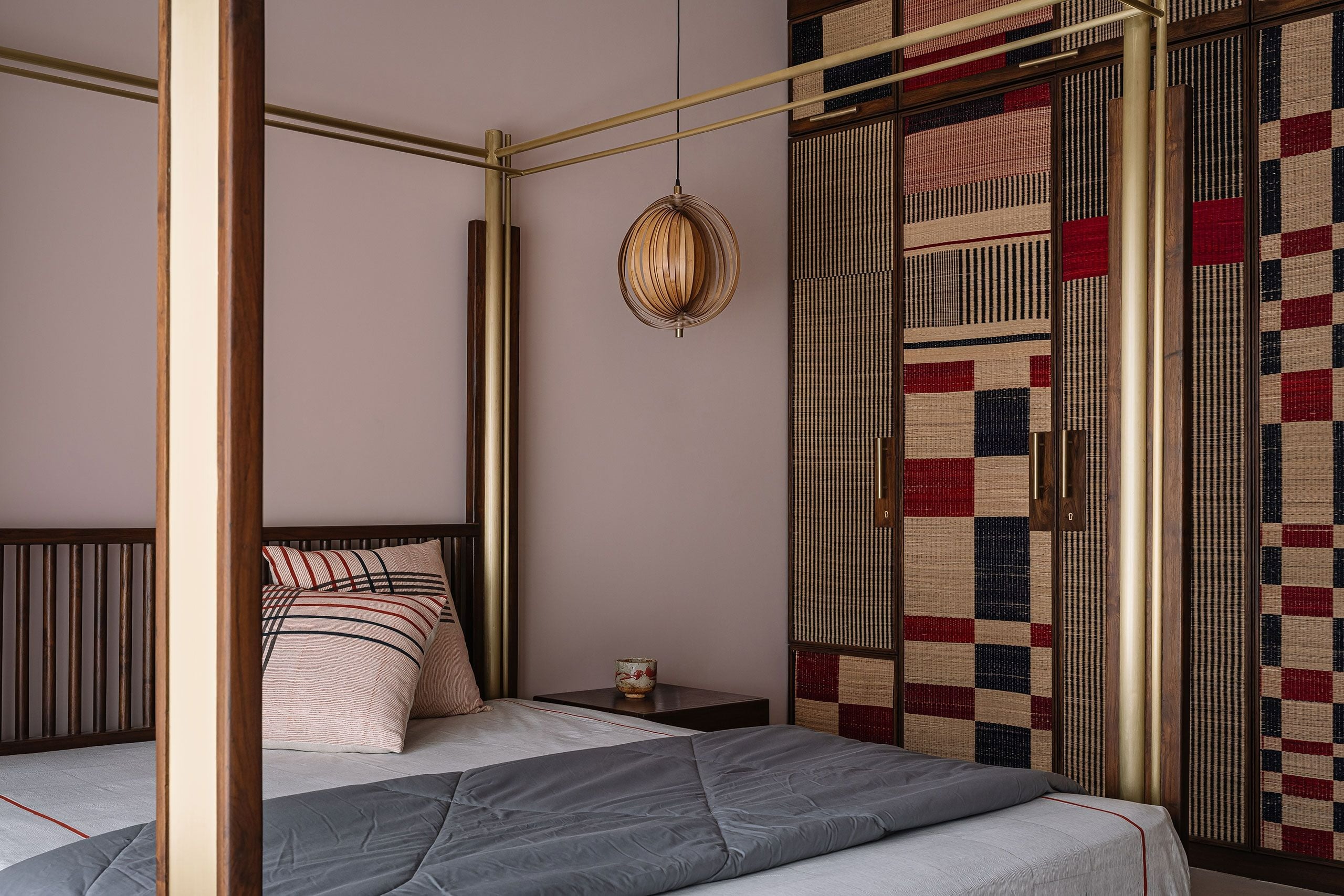
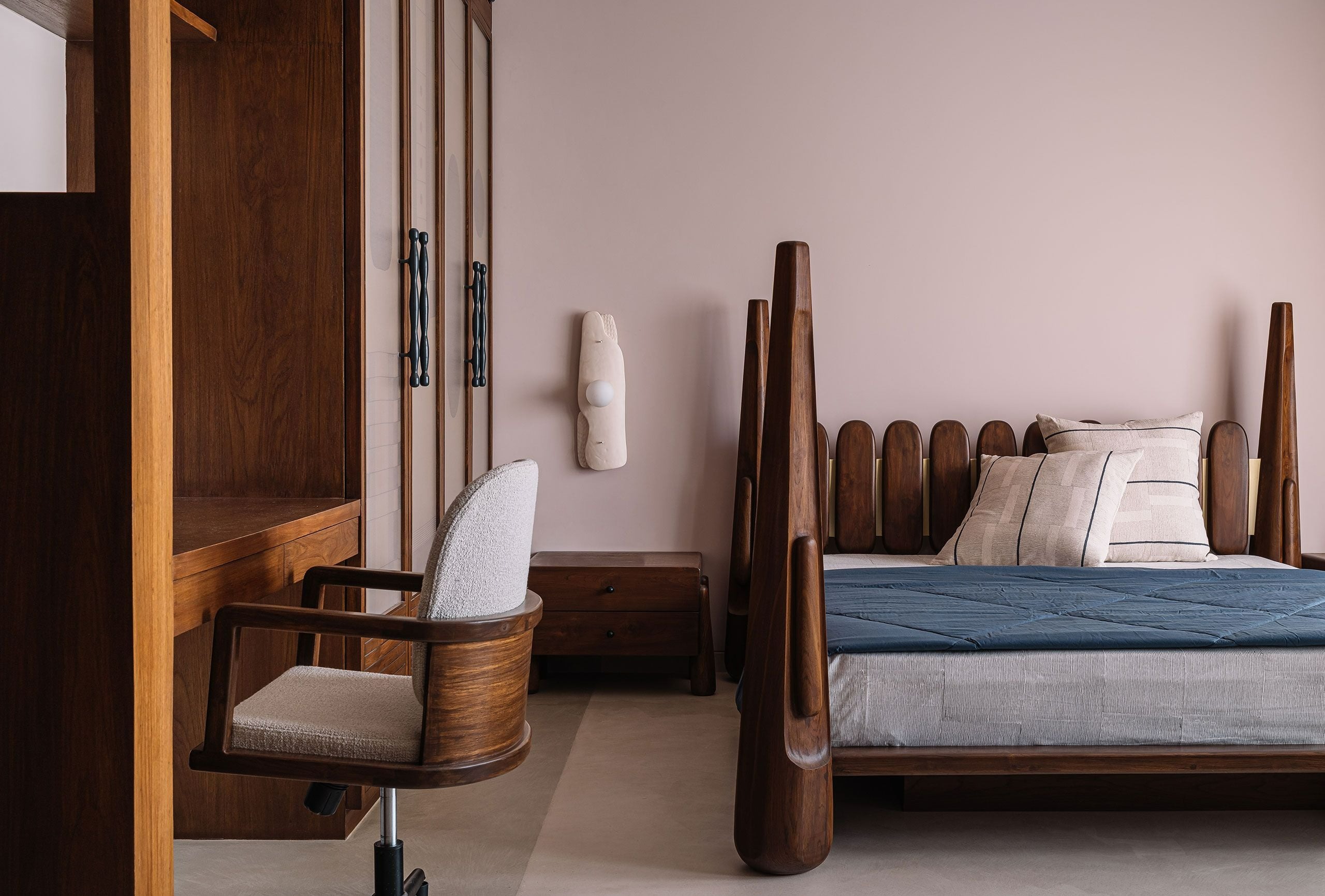
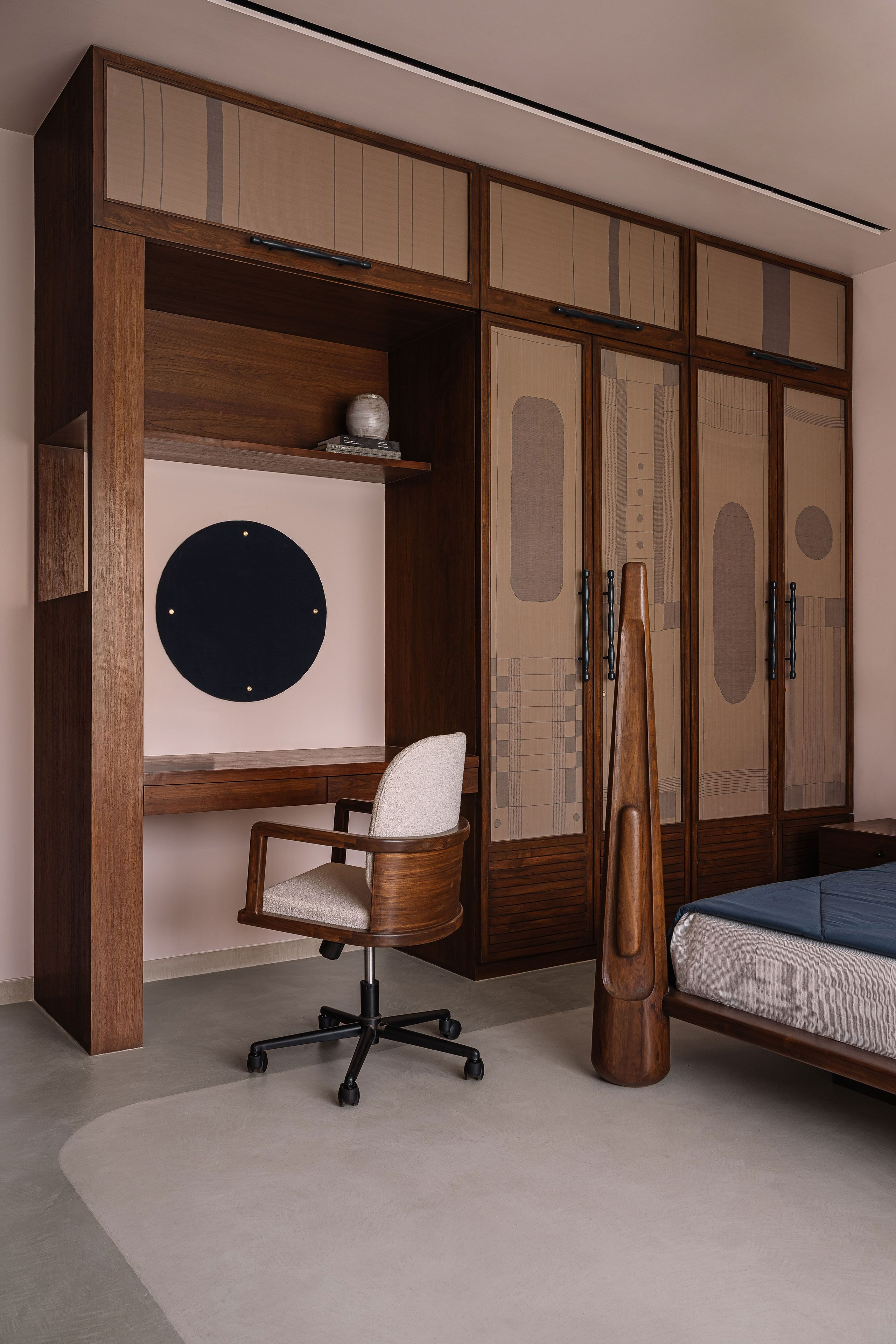
침실 공간으로 들어서면 공예의 결은 더욱 섬세해진다. 붙박이 수납장 패널은 두 가지 공예 언어로 나뉘어 제작되었다. 하나는 타밀나두의 파타마다이 등나무 매트 직조(Pattamadai cane mat weaving)로, 마쟈 디자인 스튜디오(Majja Design Studio)가 제작했다. 다른 하나는 글로컬 위브스(Glocal Weaves)의 잠다니 직물(Jamdani textile)로, 벵골 전통 직조의 섬세한 무늬가 패널 표면에 펼쳐진다. 침실마다 다른 공예 언어를 입은 수납장 앞에 서면, 이 집이 얼마나 많은 손들의 협업으로 완성되었는지를 실감하게 된다.
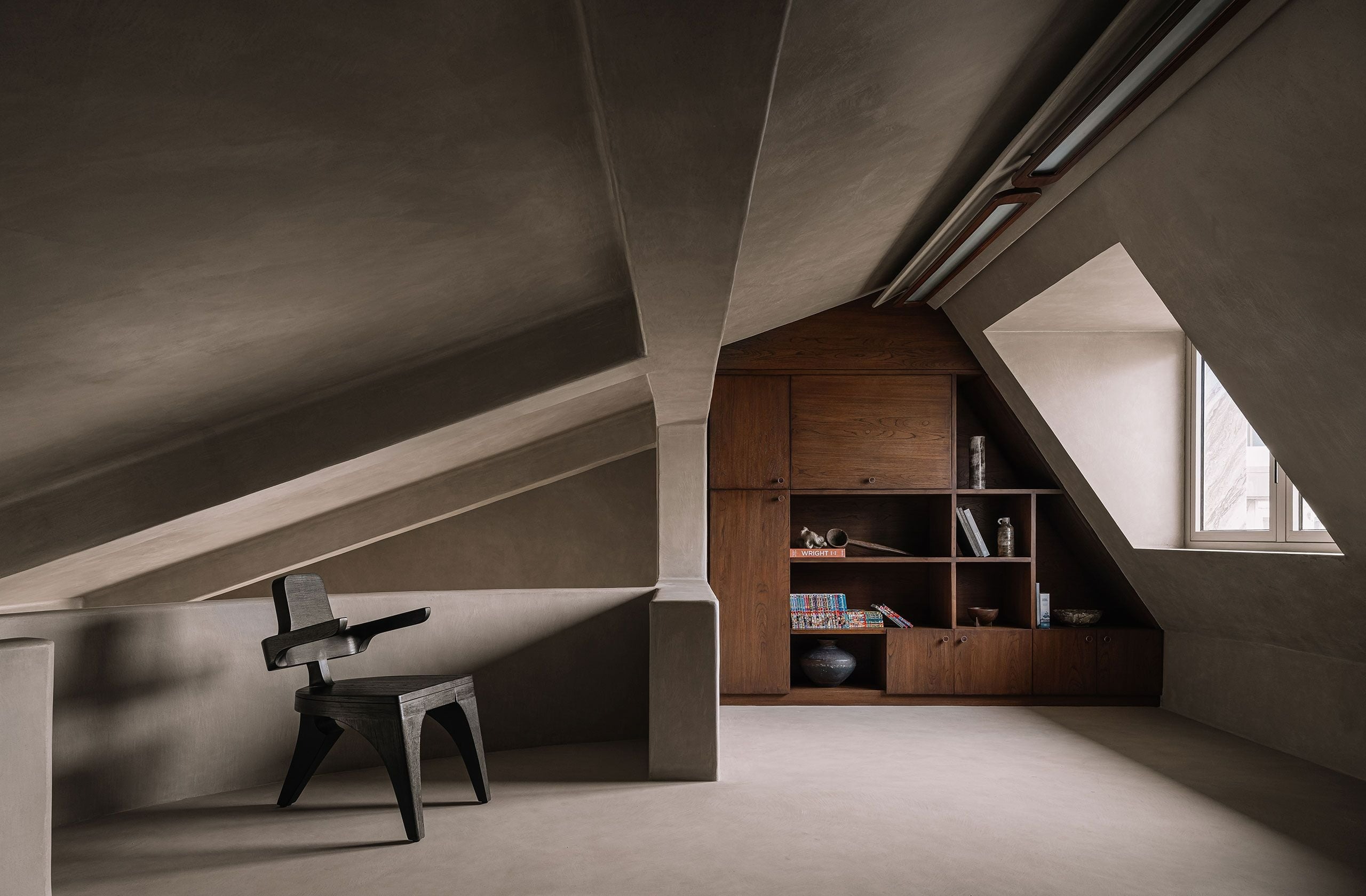
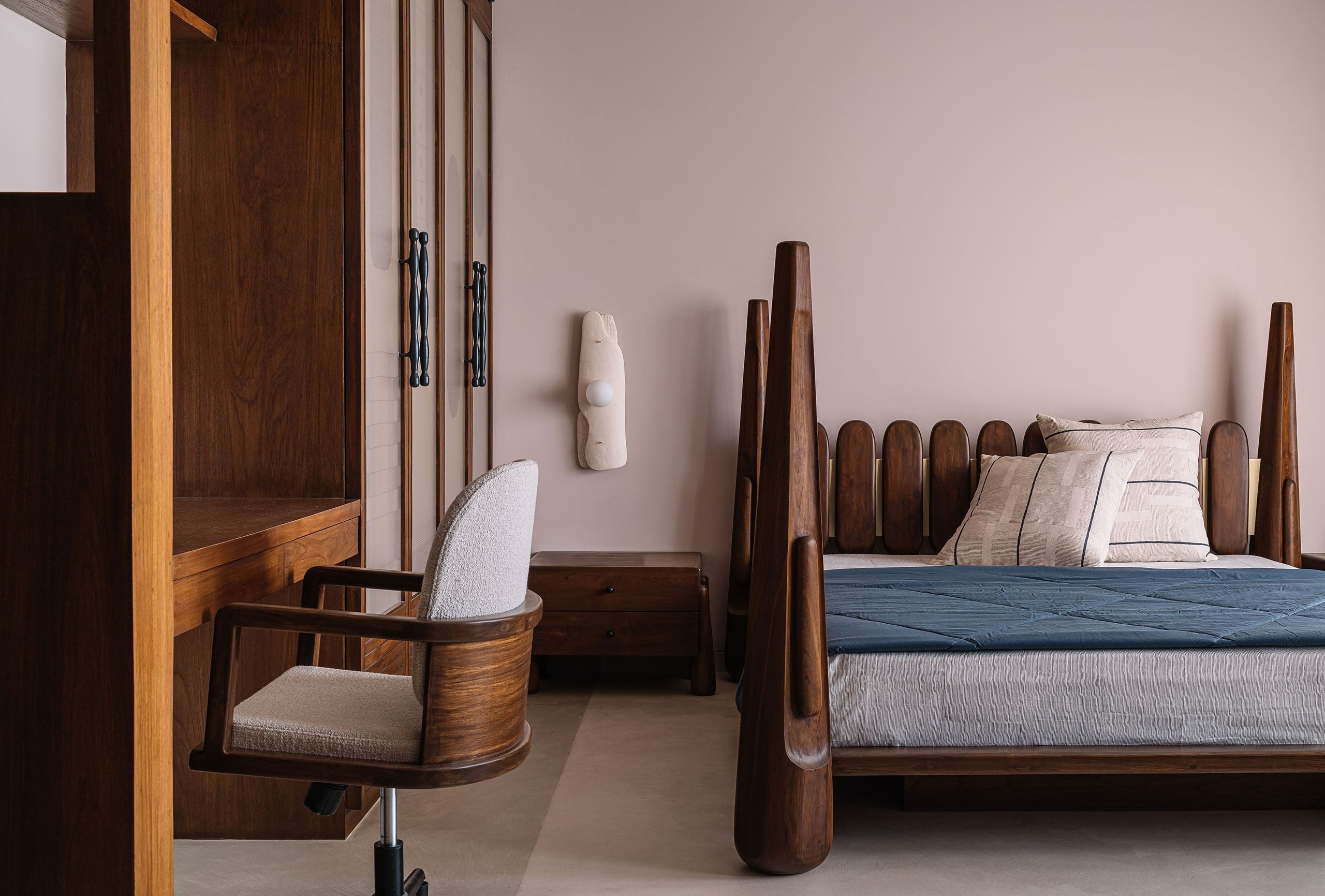
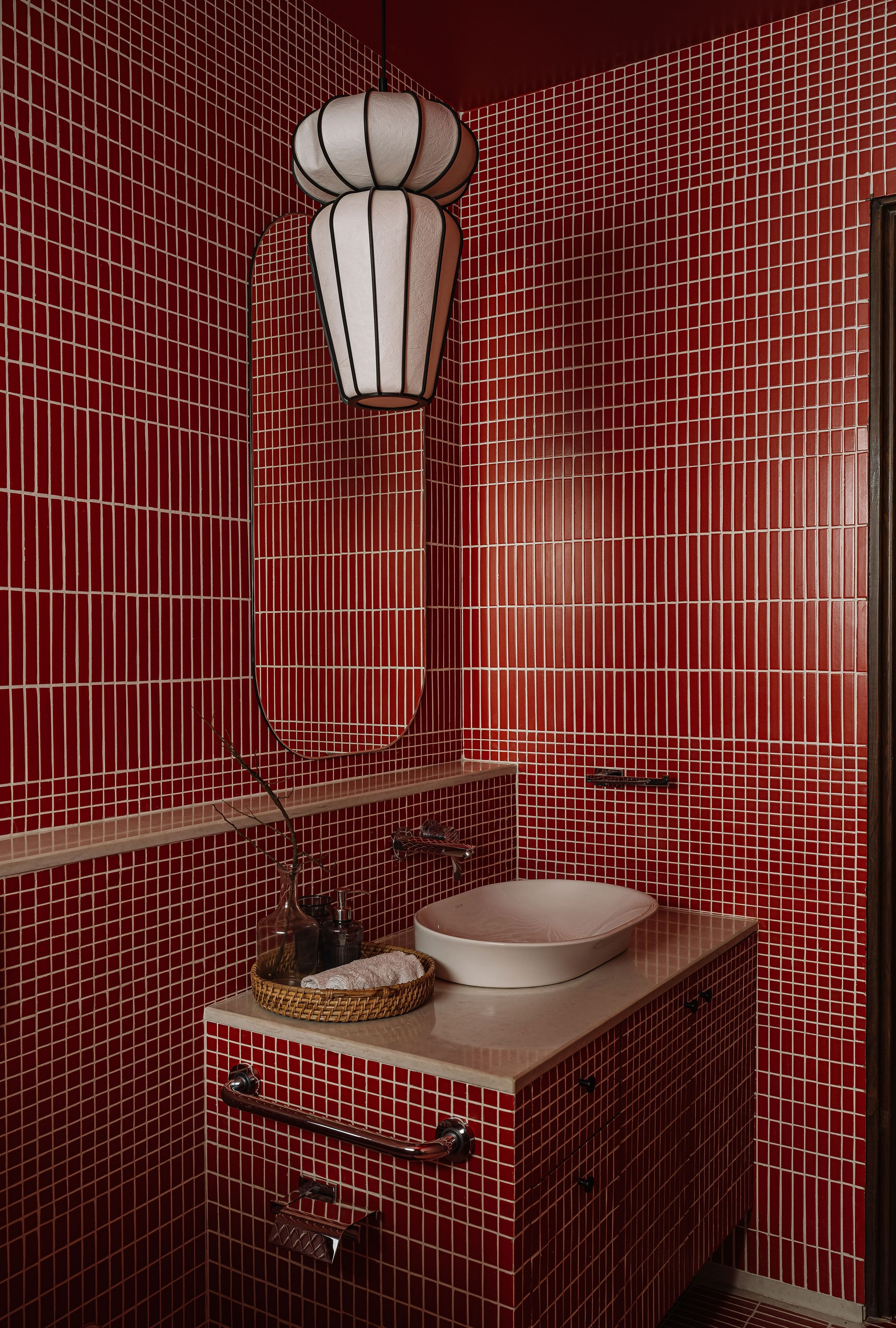
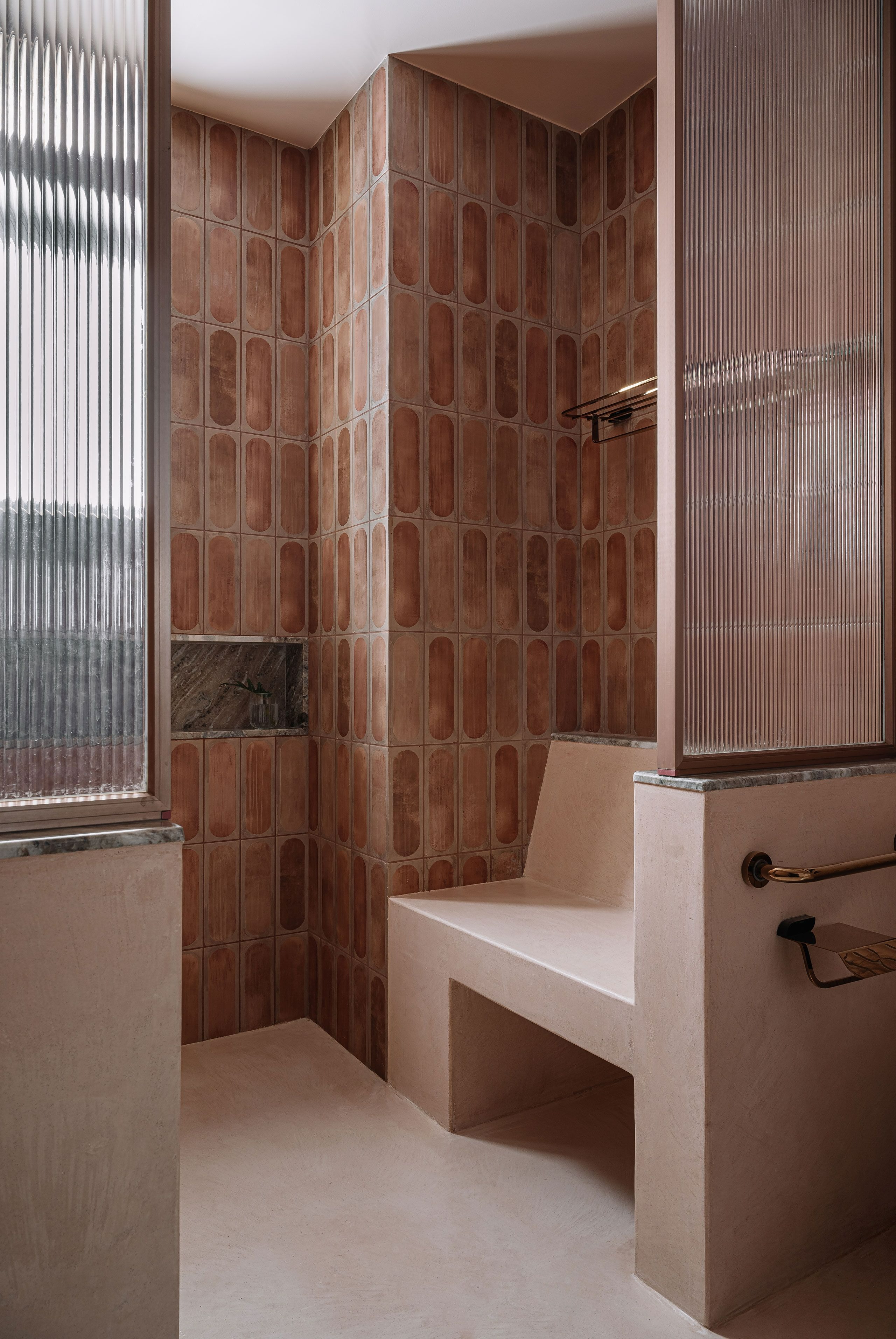
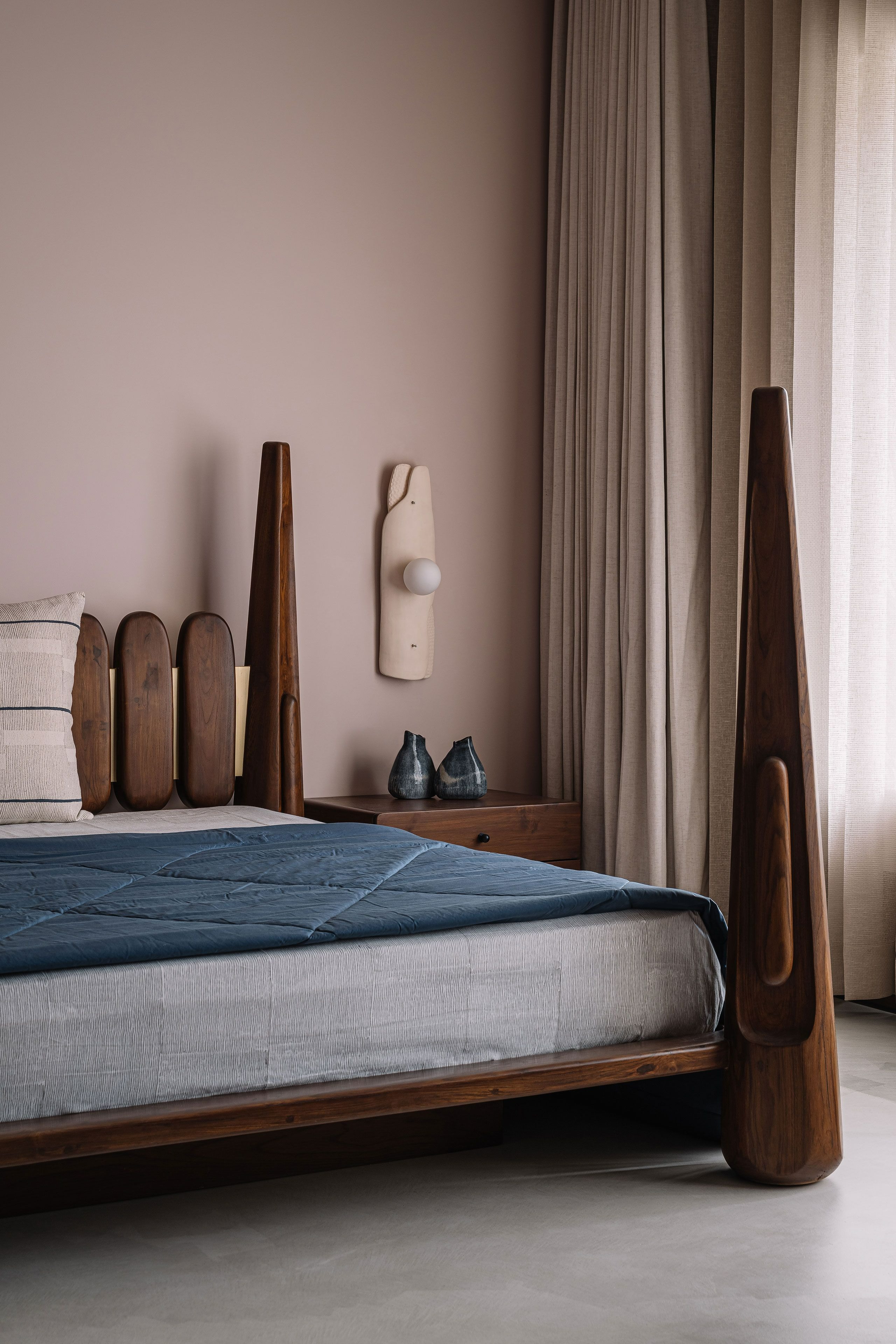
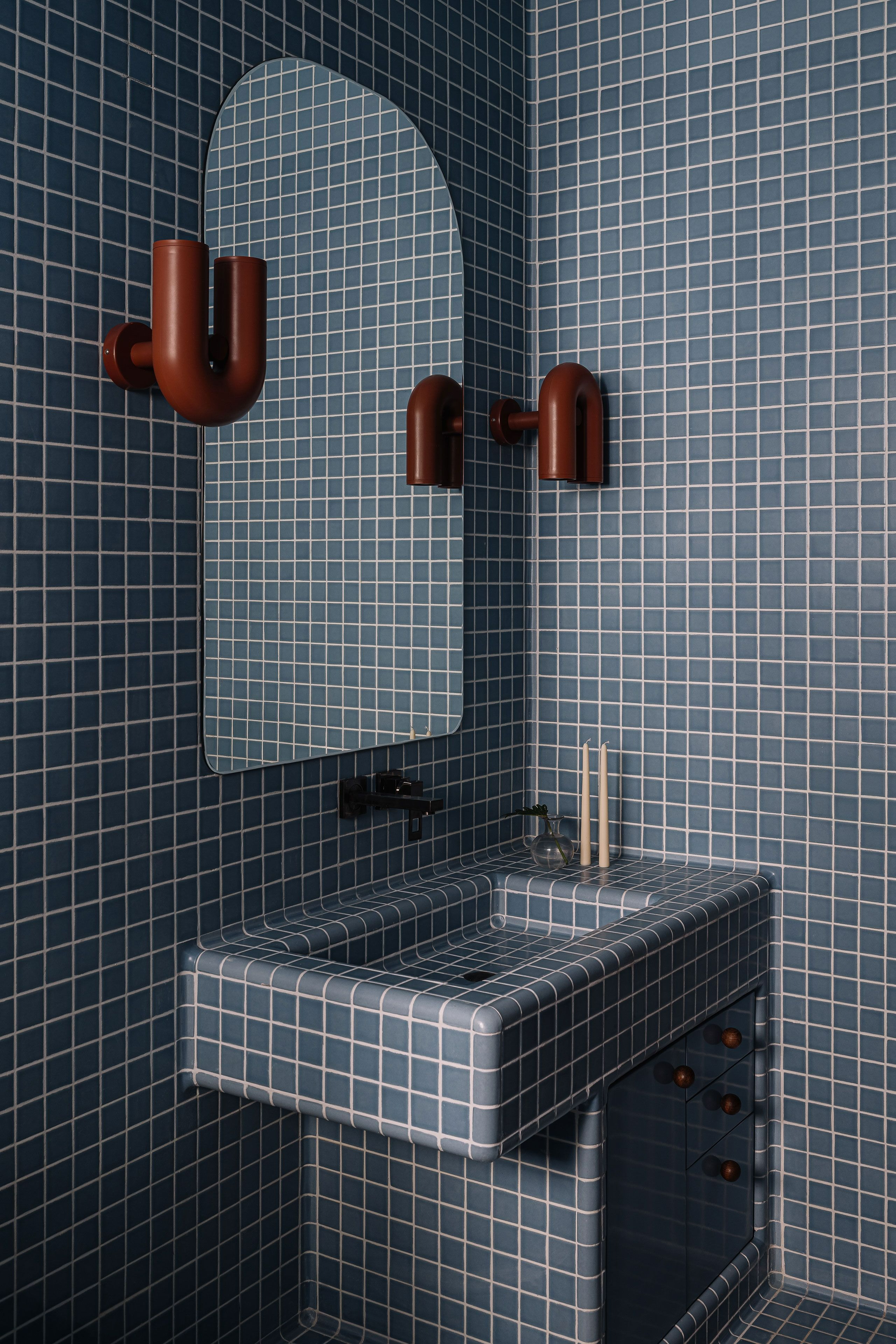
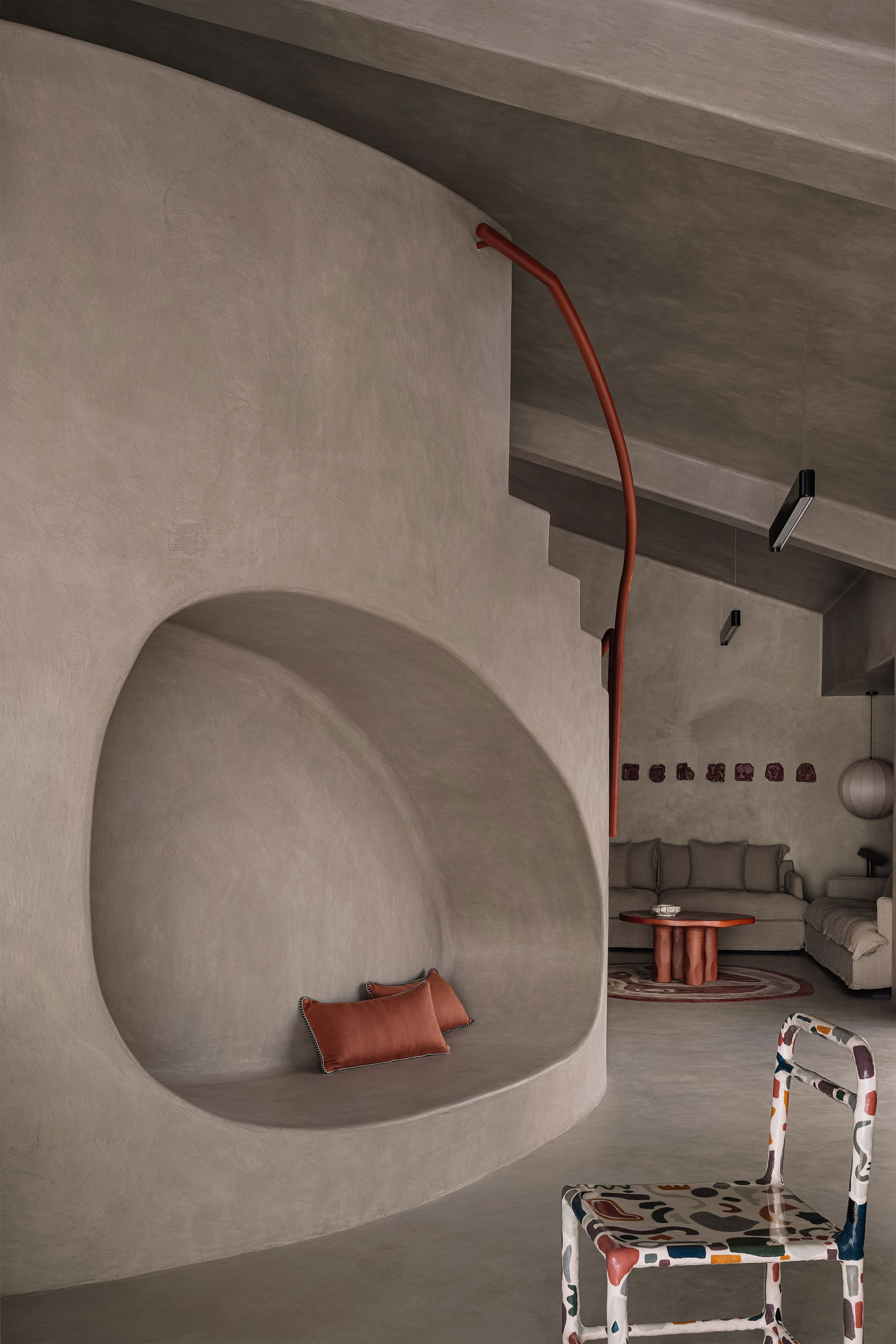
침대들 역시 단순한 가구가 아니다. Design ni Dukaan이 설계한 침대들은 각각 하나의 조각적 존재로 서 있으며, 마스터 스위트의 4주식 침대는 원시적 토템의 형상을 목재로 빚어내어 방 안에 고요한 의식의 감각을 불어넣는다. 욕실로 이어지는 공간에서는 블러시 핑크 세로 타일이 천장까지 가득 펼쳐지고, 청동빛 물방울 형태의 펜던트 조명이 타원형 거울 곁에 반짝인다. 건물 꼭대기층으로 오르면 사선으로 기울어진 천장이 작은 다락 공간을 만들어 내고, 그 기울기 아래에 티크 서가가 딱 맞게 끼어든다. 검정 목재 의자 하나가 빛이 드는 구석에 놓여 있다.
장인들이 엮어낸 집
1,115제곱미터에 이르는 이 집은 총체 예술의 집(Gesamtkunstwerk)이다. 문 손잡이 하나, 조명 하나, 의자 하나까지 이 공간을 위해 특별히 설계되고 인도 전역의 장인과 디자이너들과의 협업으로 제작되었다. Design ni Dukaan은 미적 완성도를 추구하는 동시에 하나의 제작 공동체를 스스로 유지하고 성장시키는 방식을 선택했다. 아말타쉬 하우스는 그 선택의 결과이자, 아름다움과 일상의 쓸모가 함께 살 수 있다는 오래된 믿음을 현재의 언어로 다시 쓴 집이다.
프로젝트 크레딧
프로젝트명: 아말타쉬 하우스 (Amaltash House)
위치: 인도 구자라트주 나브사리 (Navsari, Gujarat, India)
설계: Design ni Dukaan (아흐메다바드, 인도)
면적: 1,115㎡
협업 작가 및 스튜디오: Priyanka Narula / The Wicker Story, Harshita Jhamtani, Shahenshah Mittal, RaasLeela Textile / Hetal Shrivastav, Rohan Shroff, KEPH Design Studio, Majja Design Studio, Glocal Weaves
Write by Claude & Jean Browwn




Amaltash, a contemporary family home in Navsari, Gujarat designed by Ahmedabad based studio Design ni Dukaan, revives a century-old Arts and Crafts proposition: that beauty and everyday utility belong together, and that handmaking is both an art and a social good. The 1,115-square-metre residence is a Gesamtkunstwerk in the fullest sense—every element, from door handles to furniture to lighting installations, was designed specifically for the space and realised through a web of collaborations with Indian craftspeople and designers. The house is as much a community project as a domestic one—a conscious effort to build a collaborative circle of makers that sustains itself and grows.
The Amaltash house sits in a quiet Navsari neighbourhood, its terracotta exterior, applied by painters in thick, layered brushstrokes, accentuating its sculptural massing. The volumes are geometric and precise, shaped not only by aesthetic choices and spatial requirements but by climatic considerations and Vastu Shastra principles. Entry is through a covered patio presided over by a Cassia tree (the Amaltash, or Golden Shower tree, from which the project takes its name), with a large circular skylight above and black granite pavers below, their dark tone grounding the sandy warmth of the surrounding plasterwork.
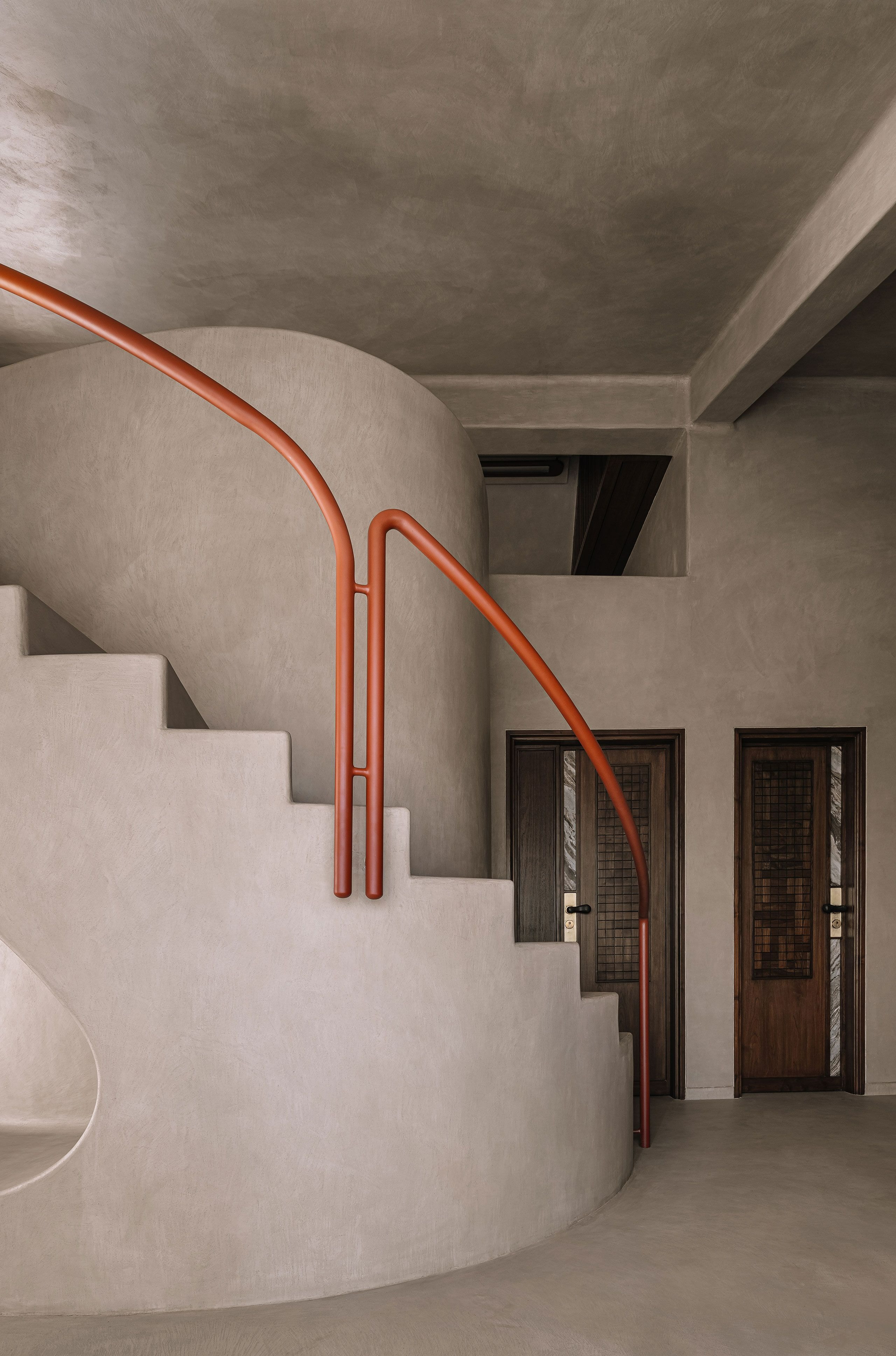
Taking its cues from the exterior, the interior palette is deliberately quiet. Polished concrete floors and plastered walls in blush and warm grey provide a backdrop that is calm but not cold, a foil for the extraordinary density of craft around it. Brushed teakwood runs as a consistent thread through furniture across all the rooms, its textured surface inviting touch as well as sight. Brass accents add warmth without excess, while handwoven textiles and ceramics layer in further tactile richness. Nearly everything is custom made, and the restraint of the shell allows each piece to be read closely, which is precisely the point.
The drawing room announces the scale of the ambition. Suspended from the double height ceiling is a wicker installation by Priyanka Narula of The Wicker Story, its organic form bending and swelling across the void. In the corner, a hand-built terracotta totem by Mumbai-based designer Harshita Jhamtani climbs to the full height of the room, its modular stacked forms concealing light within certain segments, and beside it a 4.5-metre-tall mixed-media painting by Delhi-based artist Shahenshah Mittal commands the same wall.
Dividing the drawing room from the more relaxed living area is a folding screen created in collaboration with Hetal Shrivastav of RaasLeela Textile. Crafted with lightweight teakwood and metal, it features textile woven using the Sujani quilt technique in which two weavers work simultaneously on either side of a loom.
The same fluid approach extends to the dining room and kitchen, where another folding partition by RaasLeela Textile provides separation. Composed of translucent textile panels stitched from reclaimed fabric offcuts and sandwiched between glass panes, it lends the boundary a quiet, diffused lightness, while introducing abstract decorative patterns.
Featuring an indigo terrazzo slab balanced on bulbous timber supports, the dining table by Mumbai studio Rohan Shroff feels almost aqueous, as though the material is in motion, as does a large sculptural pendant in layered epoxy by KEPH Design Studio suspended above, which was built over a custom mould, then de moulded to reveal a surface of geological depth, as though carved slowly over time. By contrast, Design ni Dukaan’s Mental Dismantle Chairs introduce a note of formal precision, their minimalist silhouette concealing an ingenious teakwood and solid brass construction assembled entirely through joinery and allen keys, without a single welded component. Echoing the dining room’s arrangement, the kitchen is anchored by an organic island in the same indigo hue, above which hangs a cluster of hand-shaped ceramic pendants by KEPH Design Studio, each piece slightly different, their irregularities left deliberately visible.
Other highlights include the custom joinery in the bedrooms. Wardrobe panels were developed in two distinct craft languages Pattamadai cane mat weaving from Tamil Nadu (by Majja Design Studio) and Jamdani textile (by Glocal Weaves)—while the beds themselves, designed by Design ni Dukaan, are sculptural objects, most notably the four-poster bed in the master suite, crafted in wood and featuring totem-like, primal forms.
from yatzer
'House' 카테고리의 다른 글
| * 작은 몸짓들의 탑, 거리와 대화하는 집 [ sauermartins ] Vicco Building (0) | 2026.06.15 |
|---|---|
| * 구조적 접힘, 산을 품다 [PLATAFORMArq ] House #474 (1) | 2026.06.11 |
| * 도시를 다시 쌓는 법 [ FGMF Arquitetos ] Valente, São Paulo (0) | 2026.06.02 |
| * 코쿤과 비상, 그 사이의 집 [ Mohamed Amine Siana ] Villa Butterfly (0) | 2026.06.01 |
| * 숲이 기억하는 불의 자리 [ Mimosa Architects ] River Rock Fire House (0) | 2026.05.21 |