"건축은 공간 속에서 빛을 연주하는 예술이다." — 르 코르뷔지에 (Le Corbusier)
 |
 |
 |
산과 대면하는 집
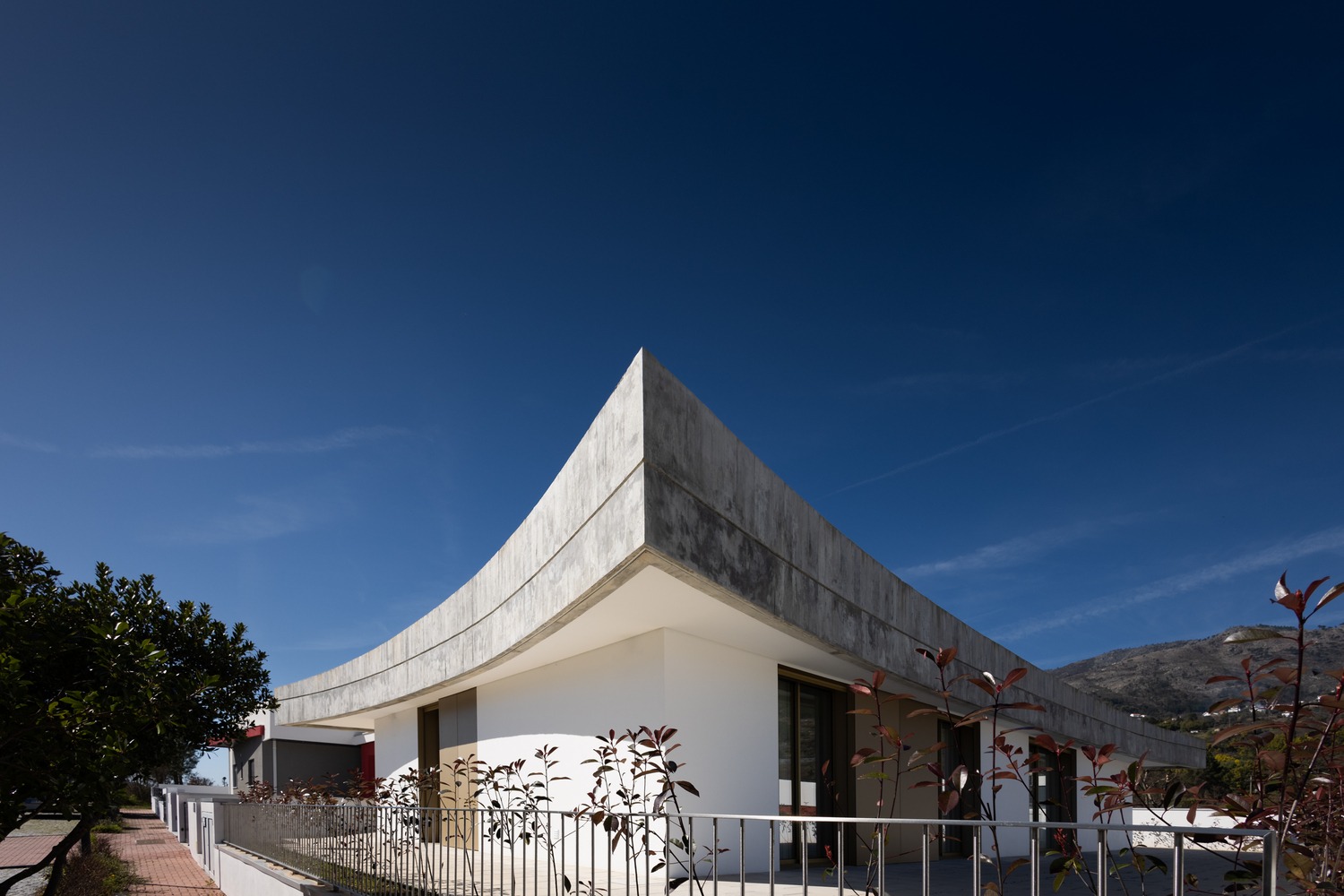
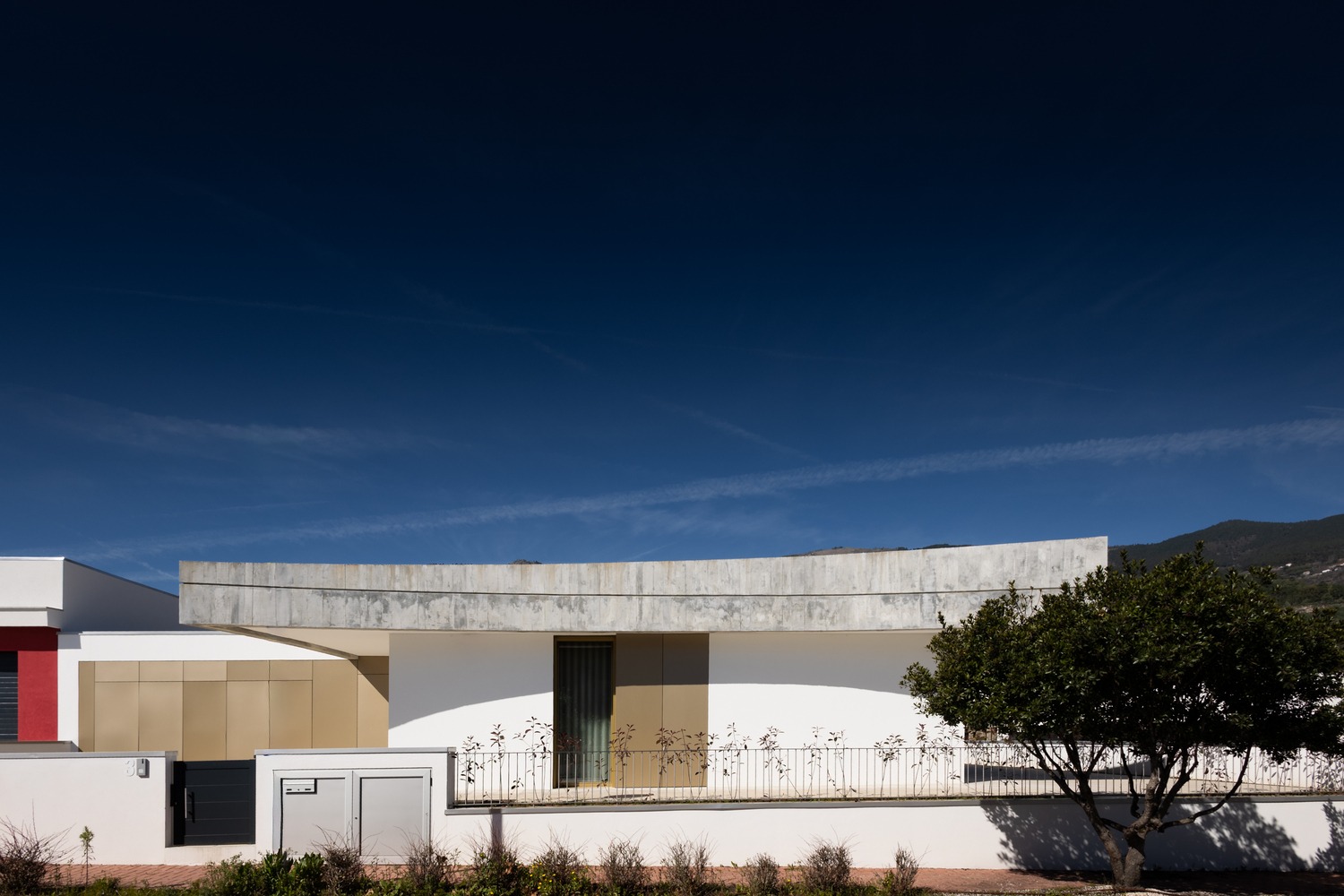
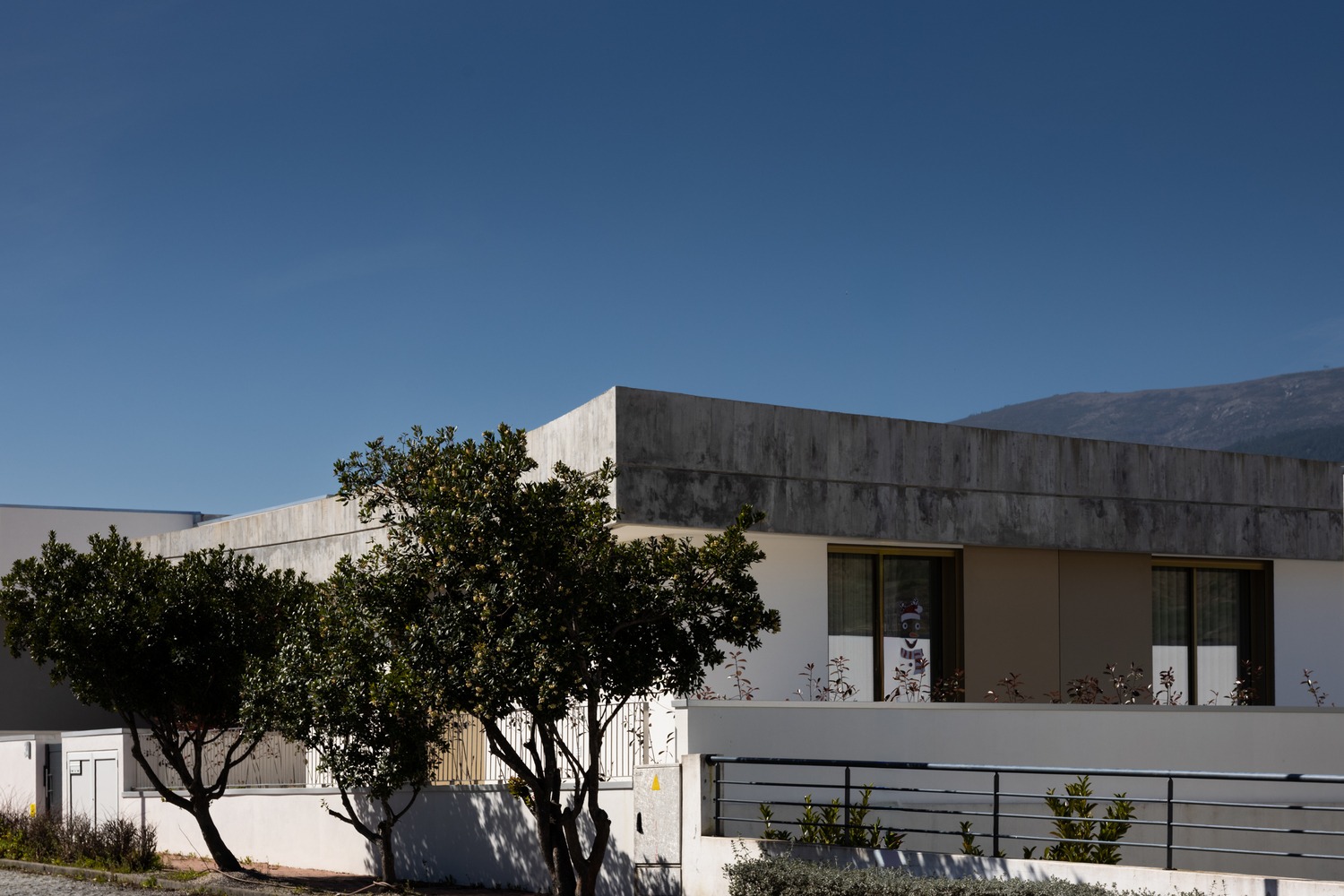
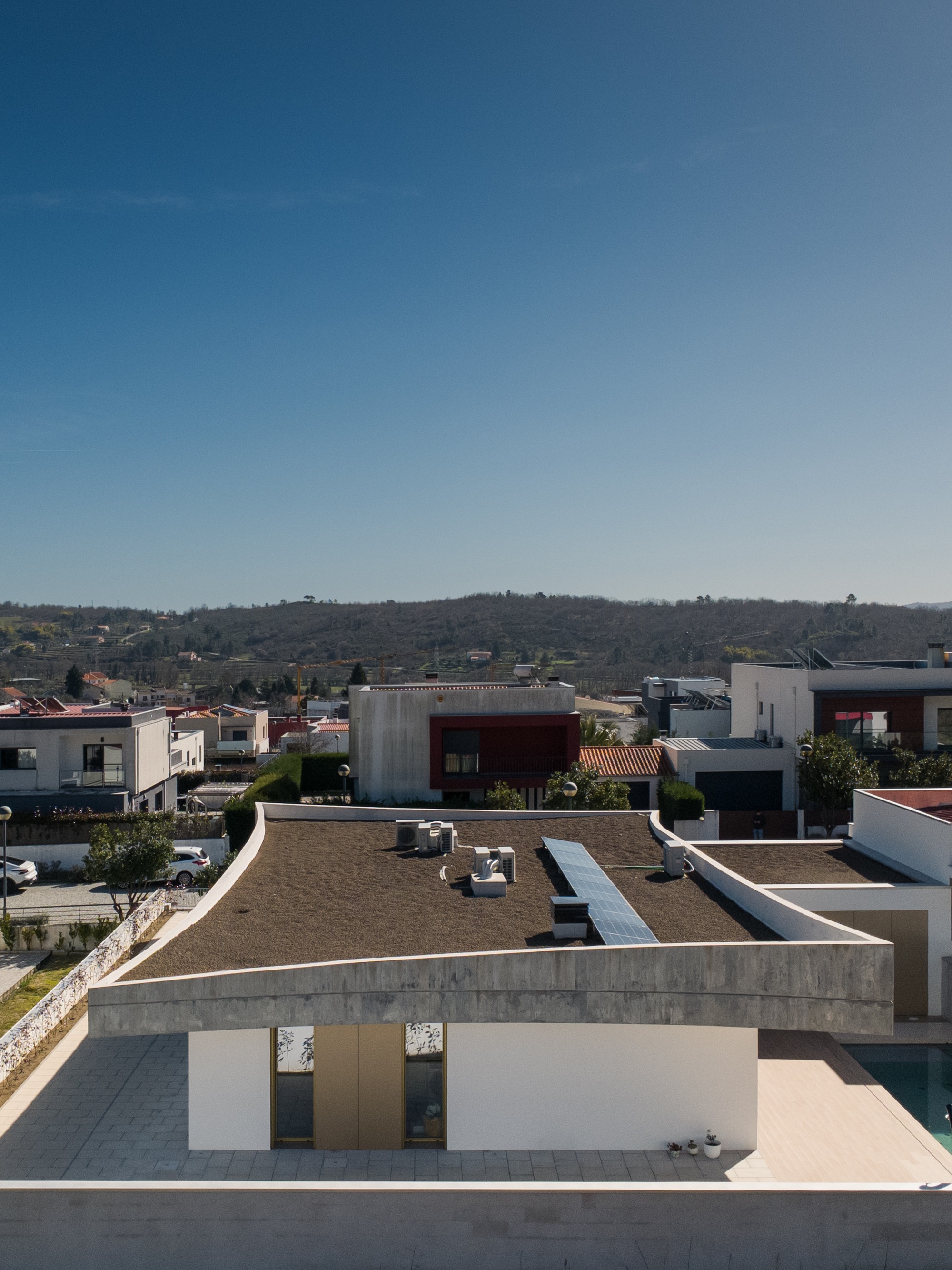
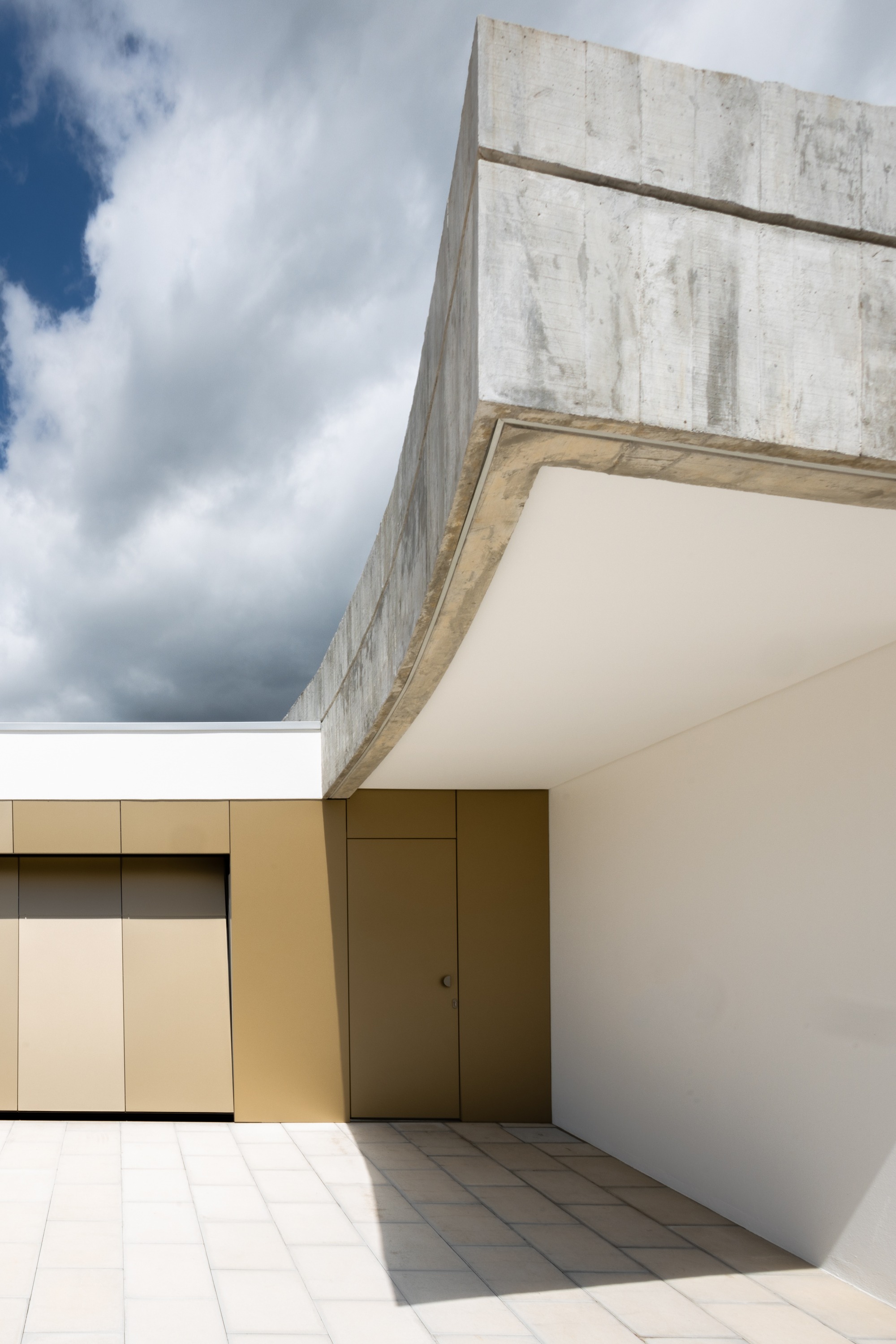
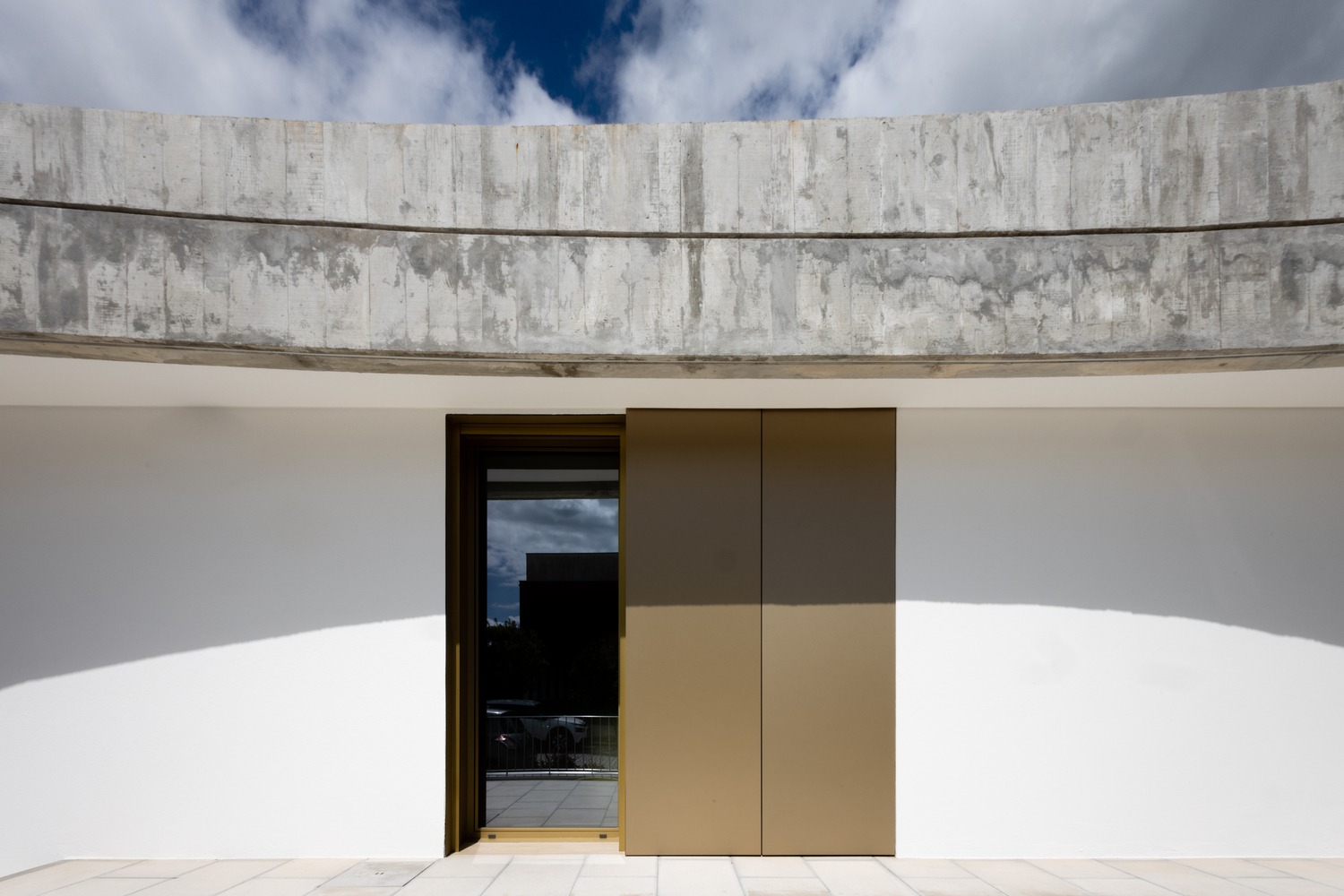
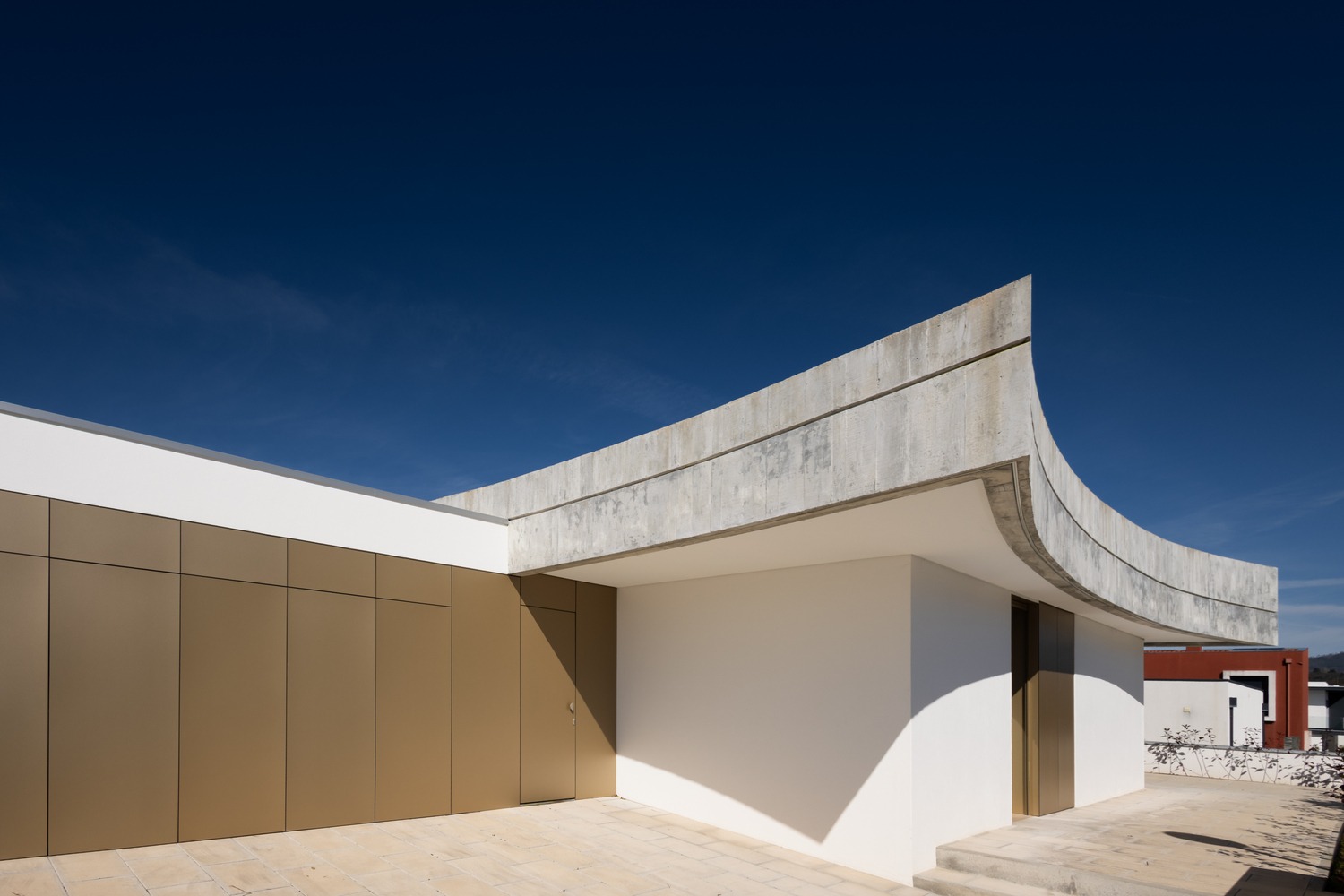
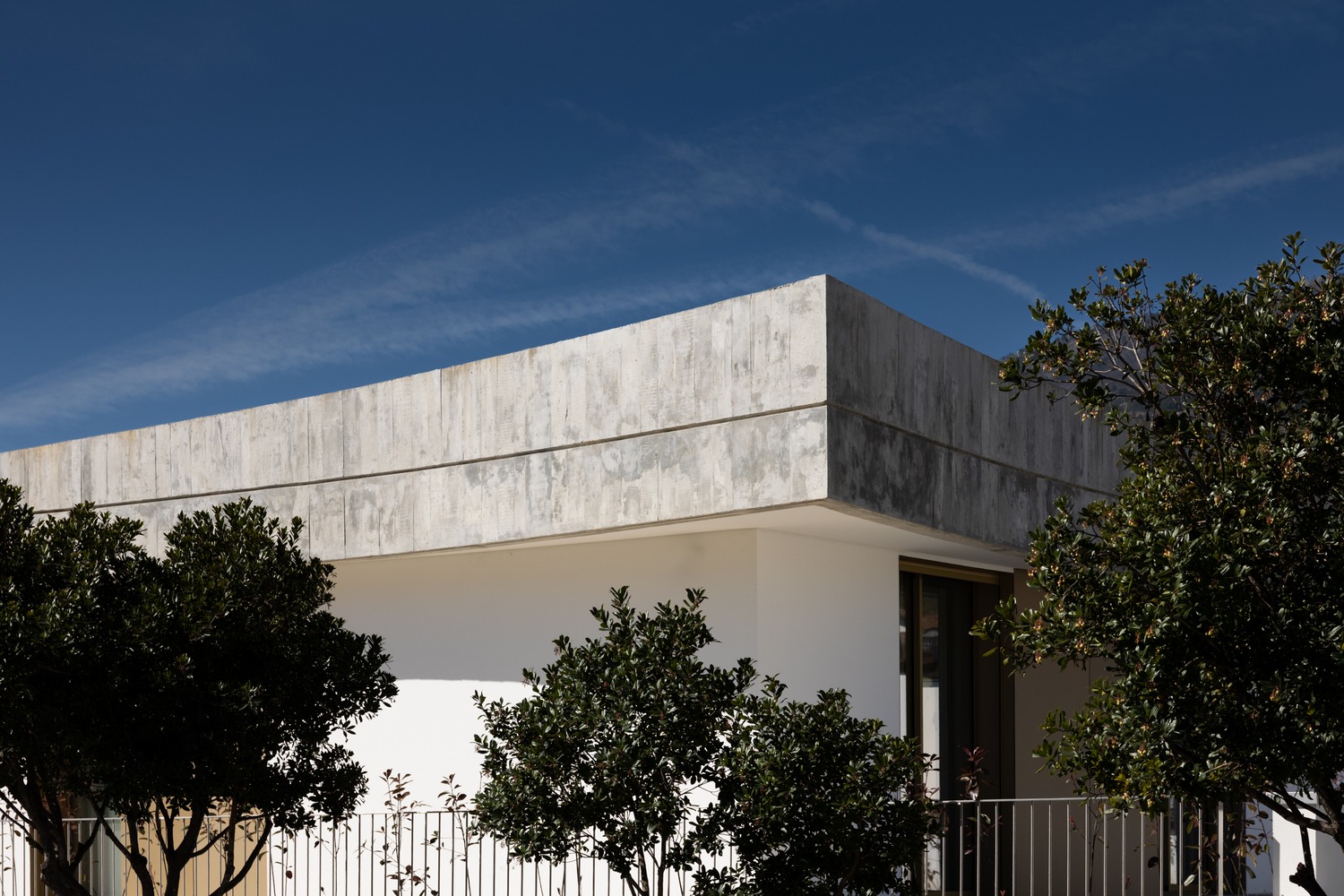
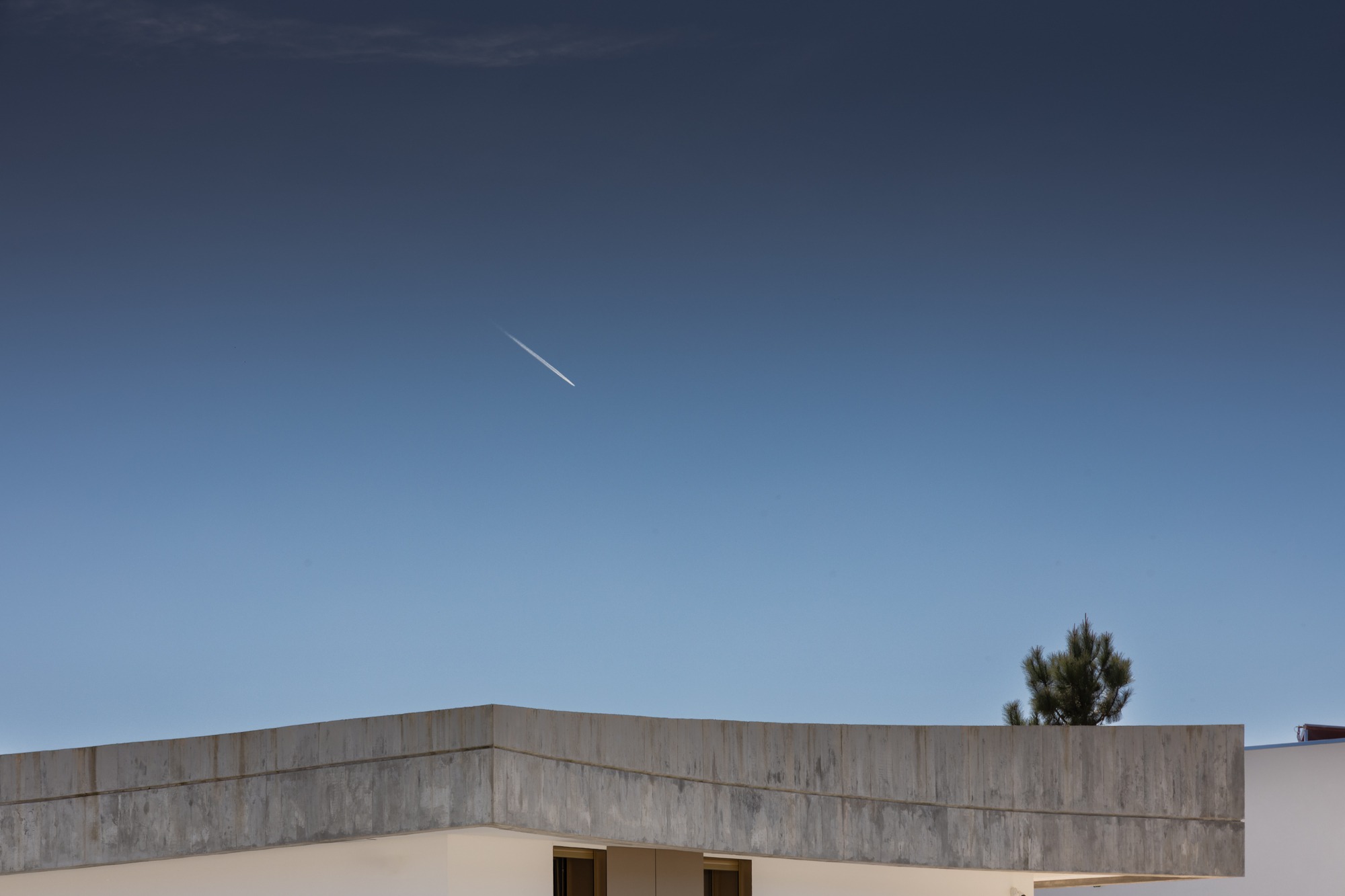
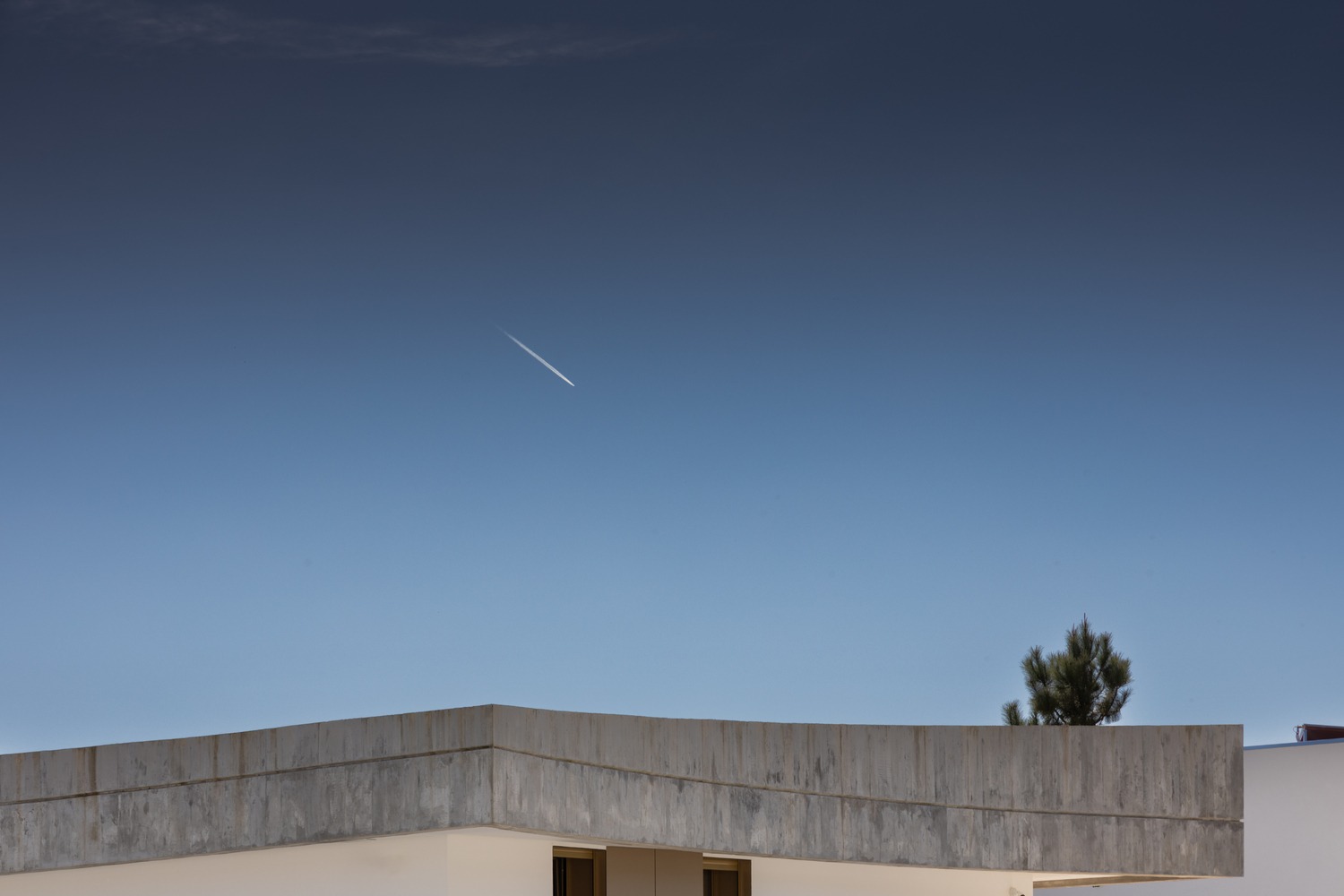
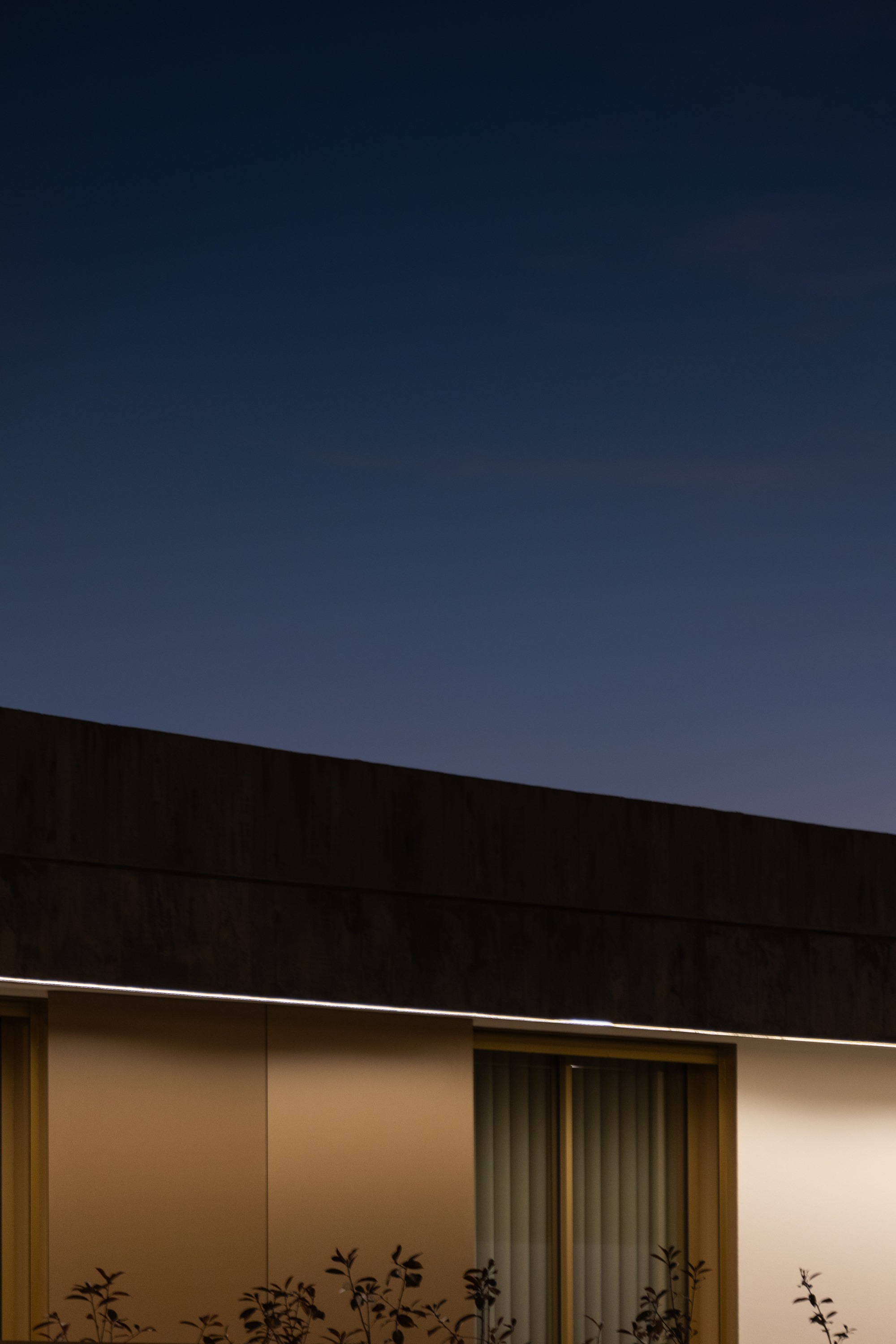
산악 지형을 배경으로 낮게 엎드린 이 집은, 처음 마주하는 순간부터 범상치 않은 인상을 남긴다. 정면에서 바라보면 노출 콘크리트로 빚은 지붕이 수평으로 길게 뻗어 있고, 그 아래 순백의 벽체가 단단히 집을 받쳐 선다. 지붕도, 벽도 아닌 그 경계 어딘가에 금빛 브론즈 패널이 조용히 빛난다. PLATAFORMArq가 설계한 House #474는 형태와 소재의 대비를 언어 삼아 말을 건네는 집이다.
접힌 하늘: 이중곡률 지붕의 탄생
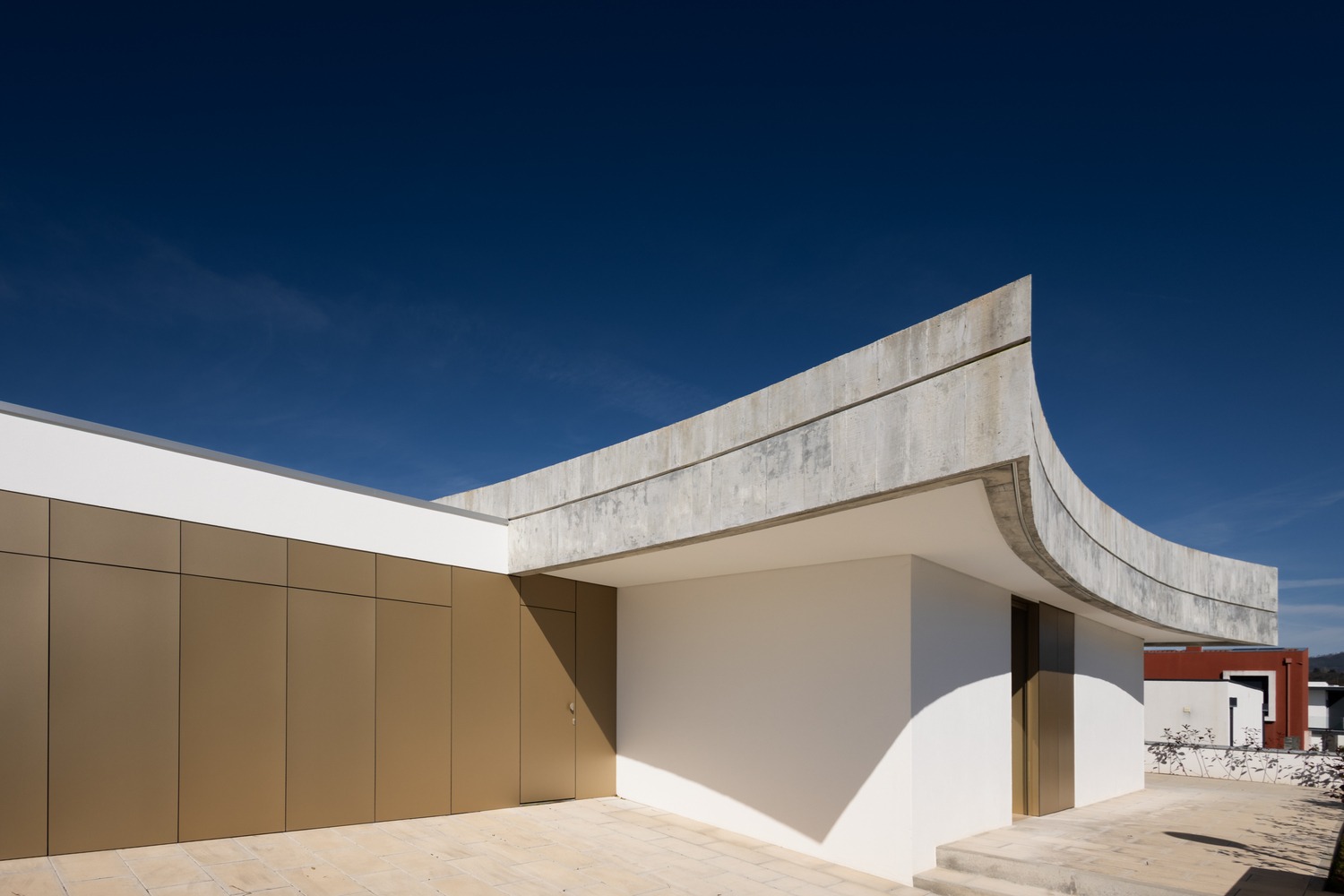
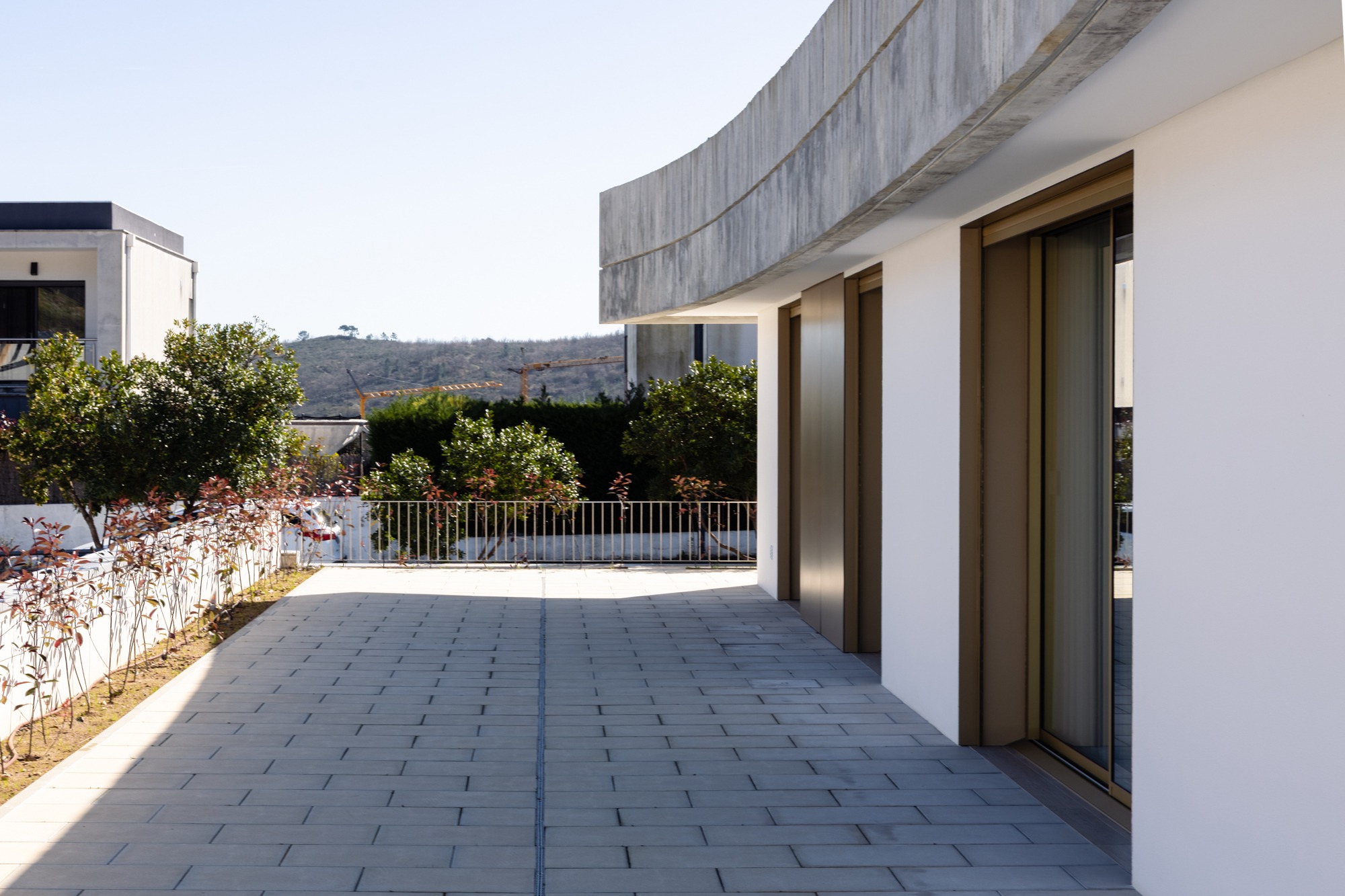
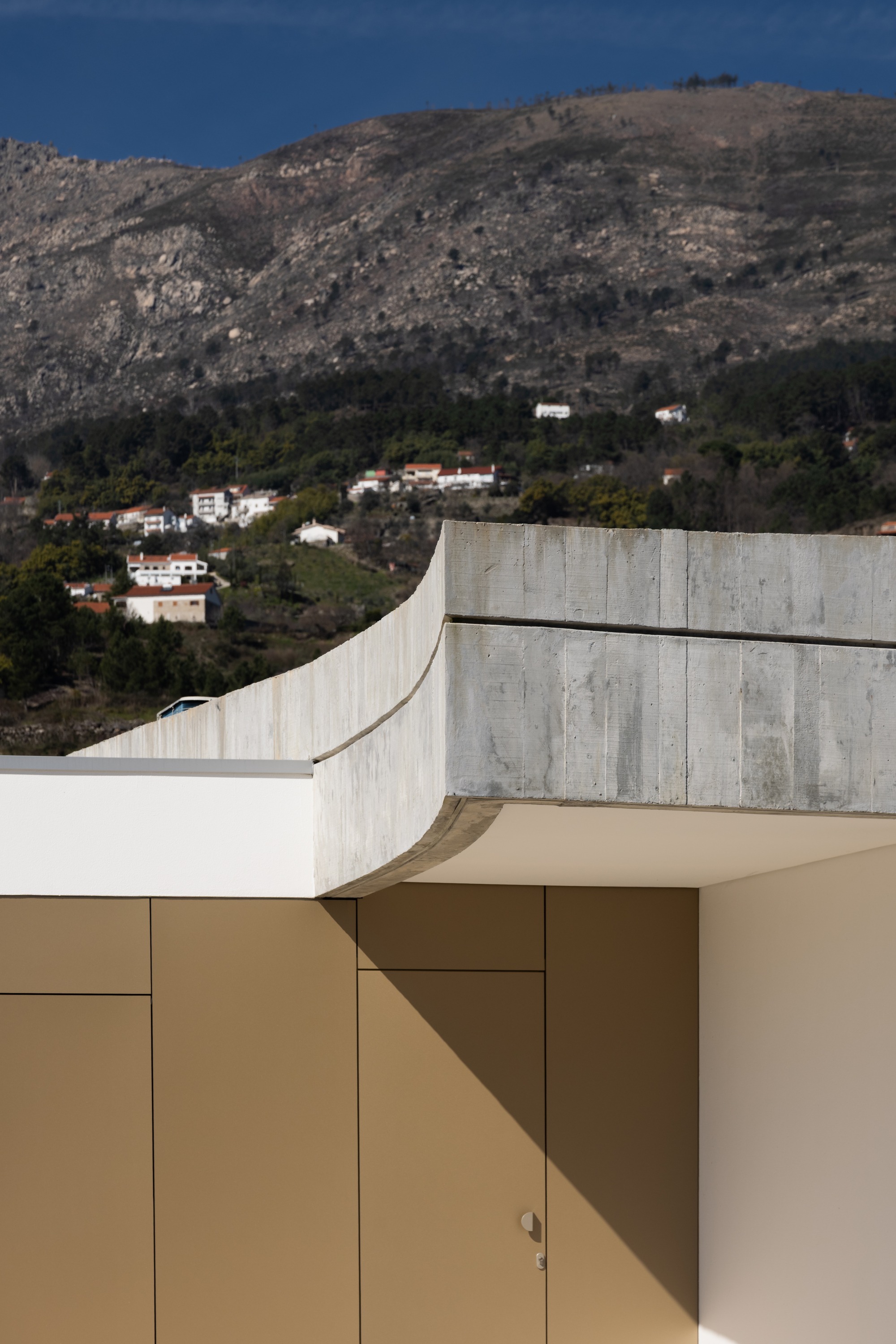
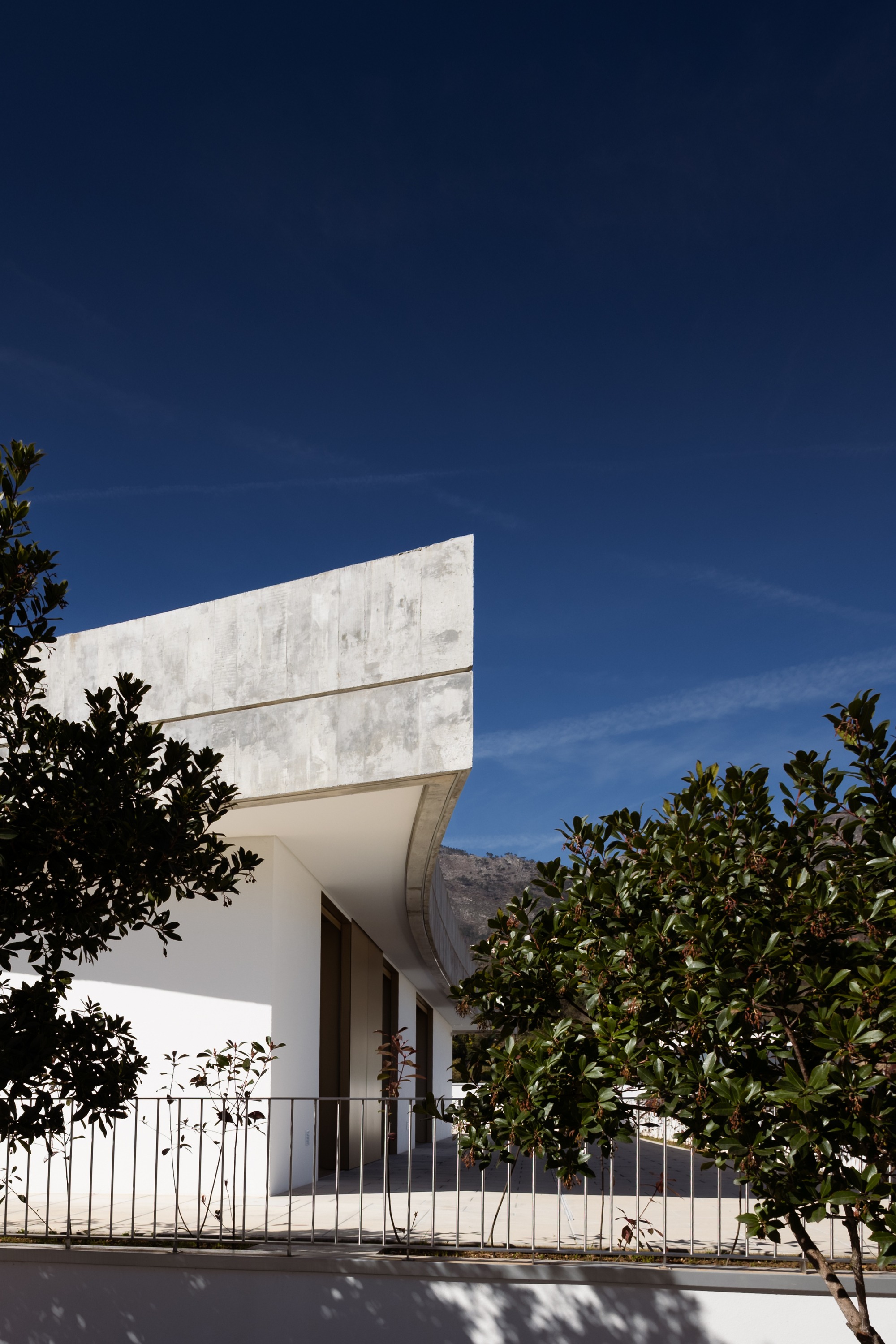
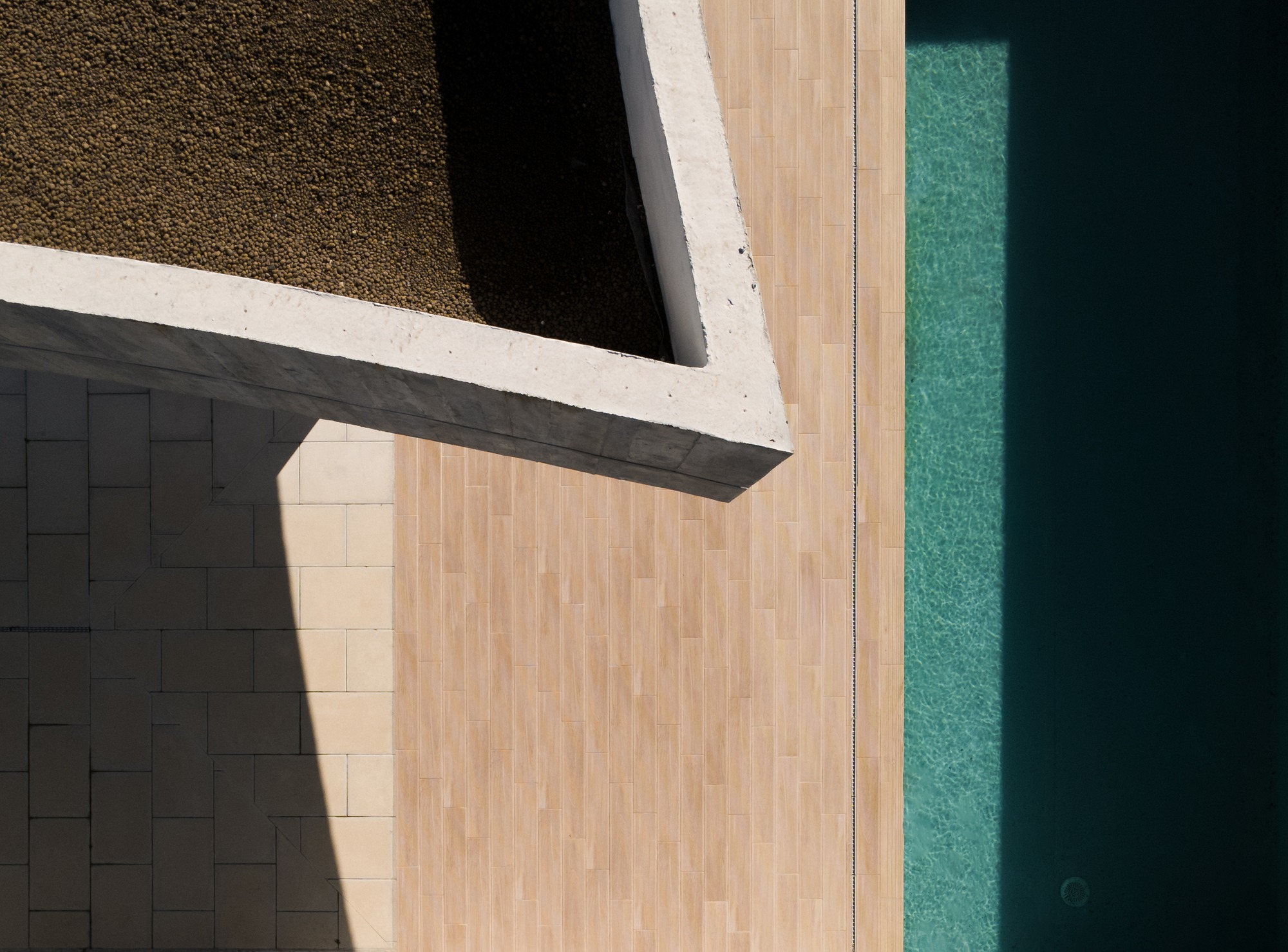
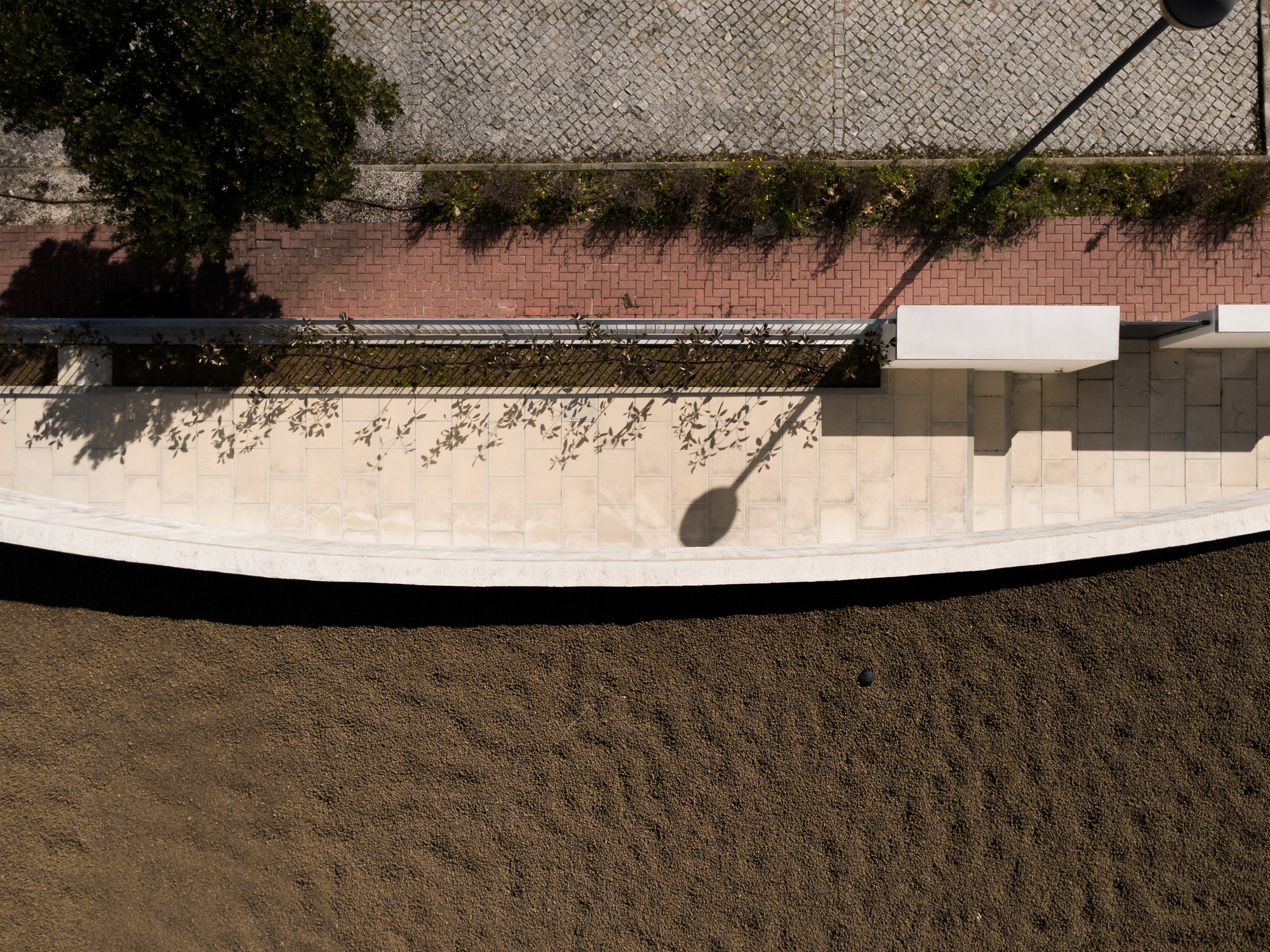
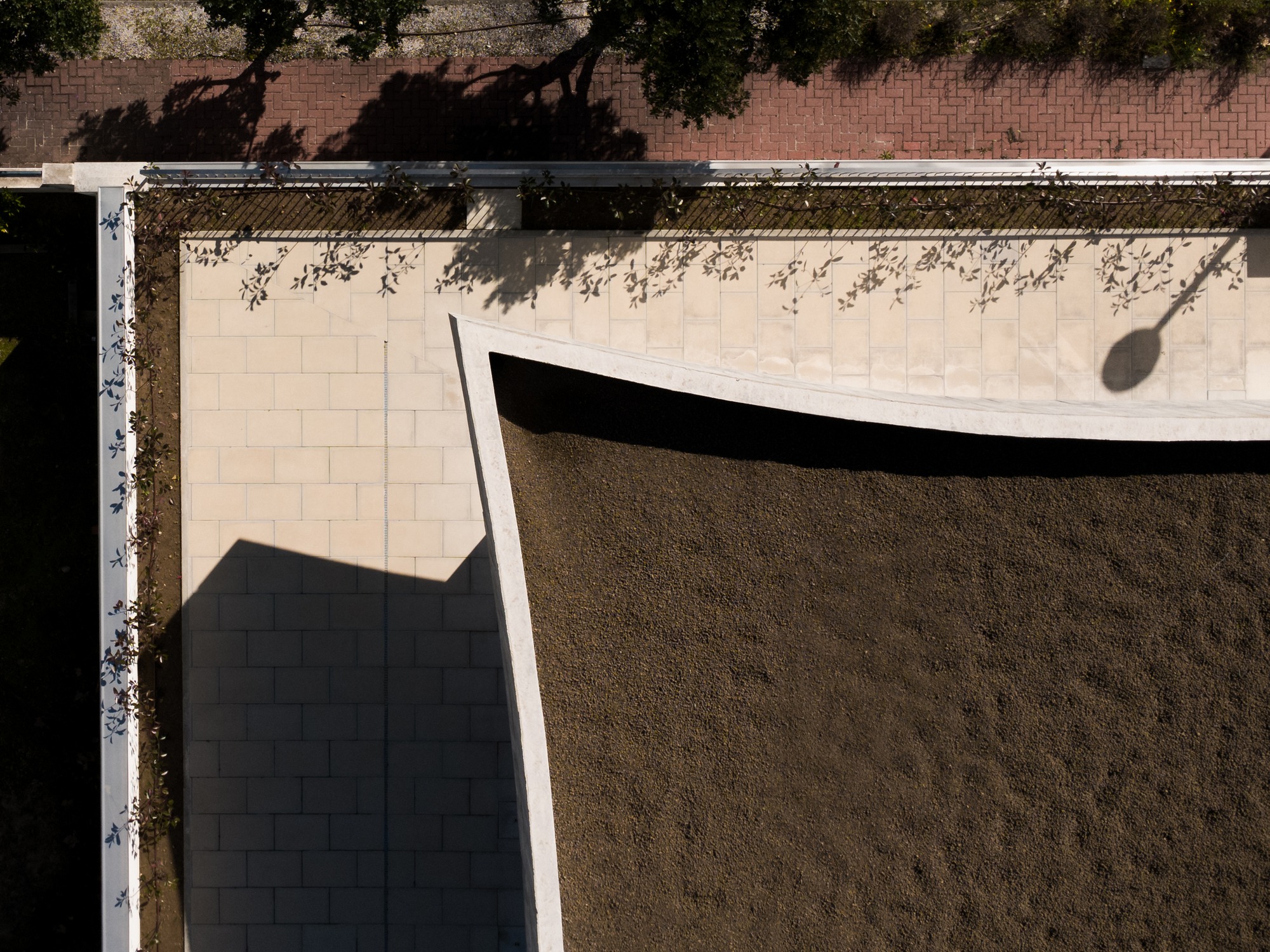
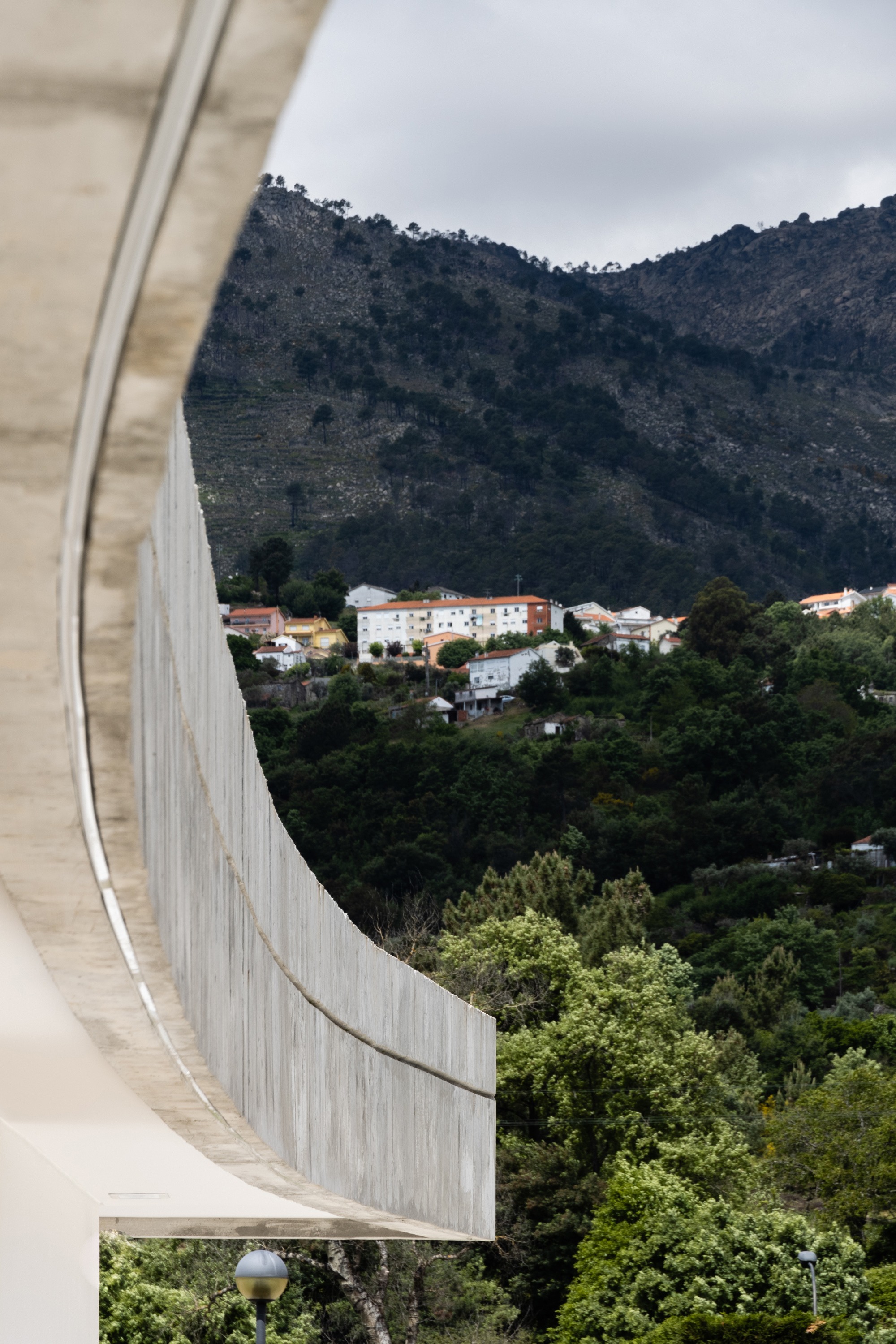
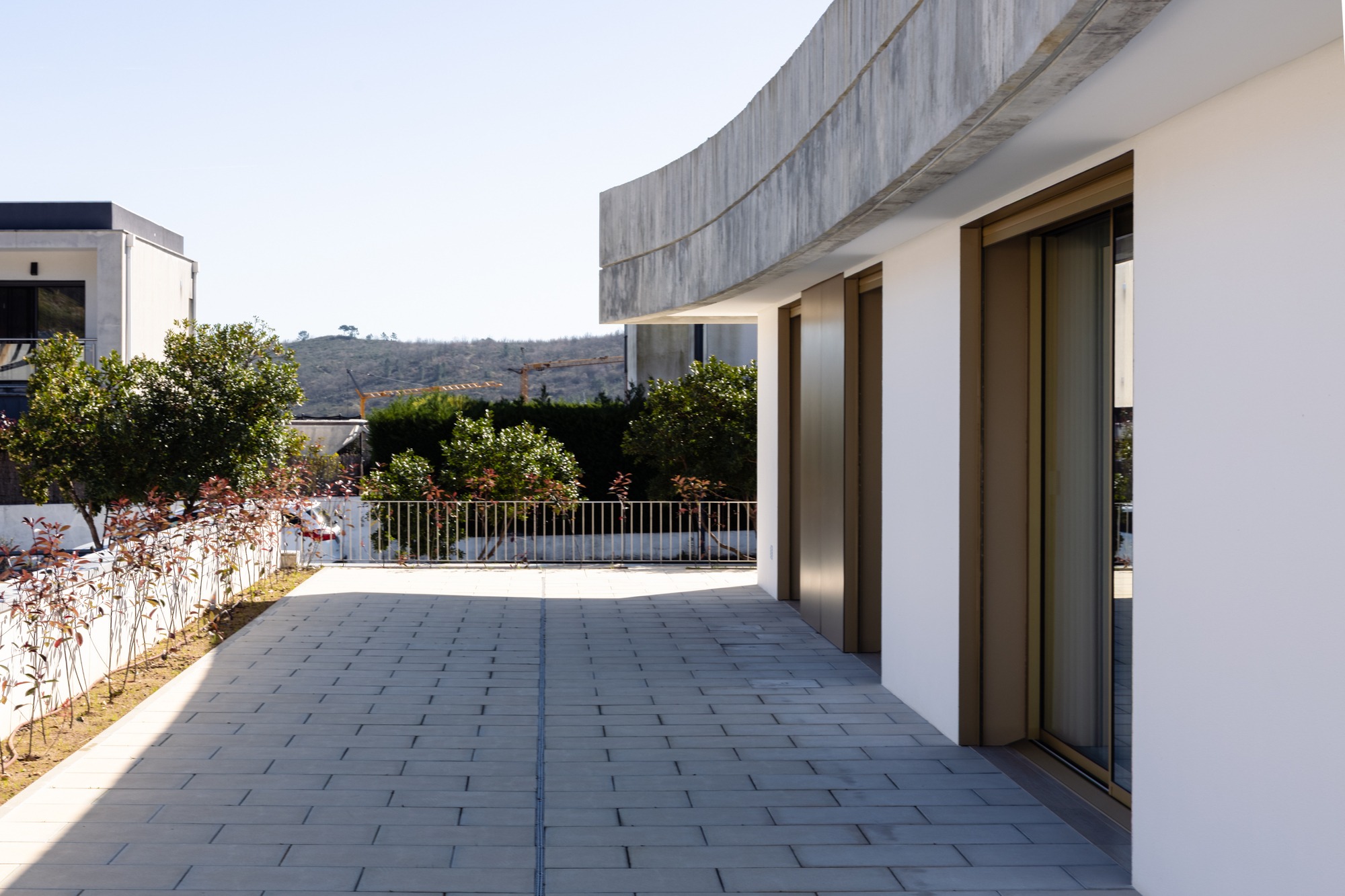
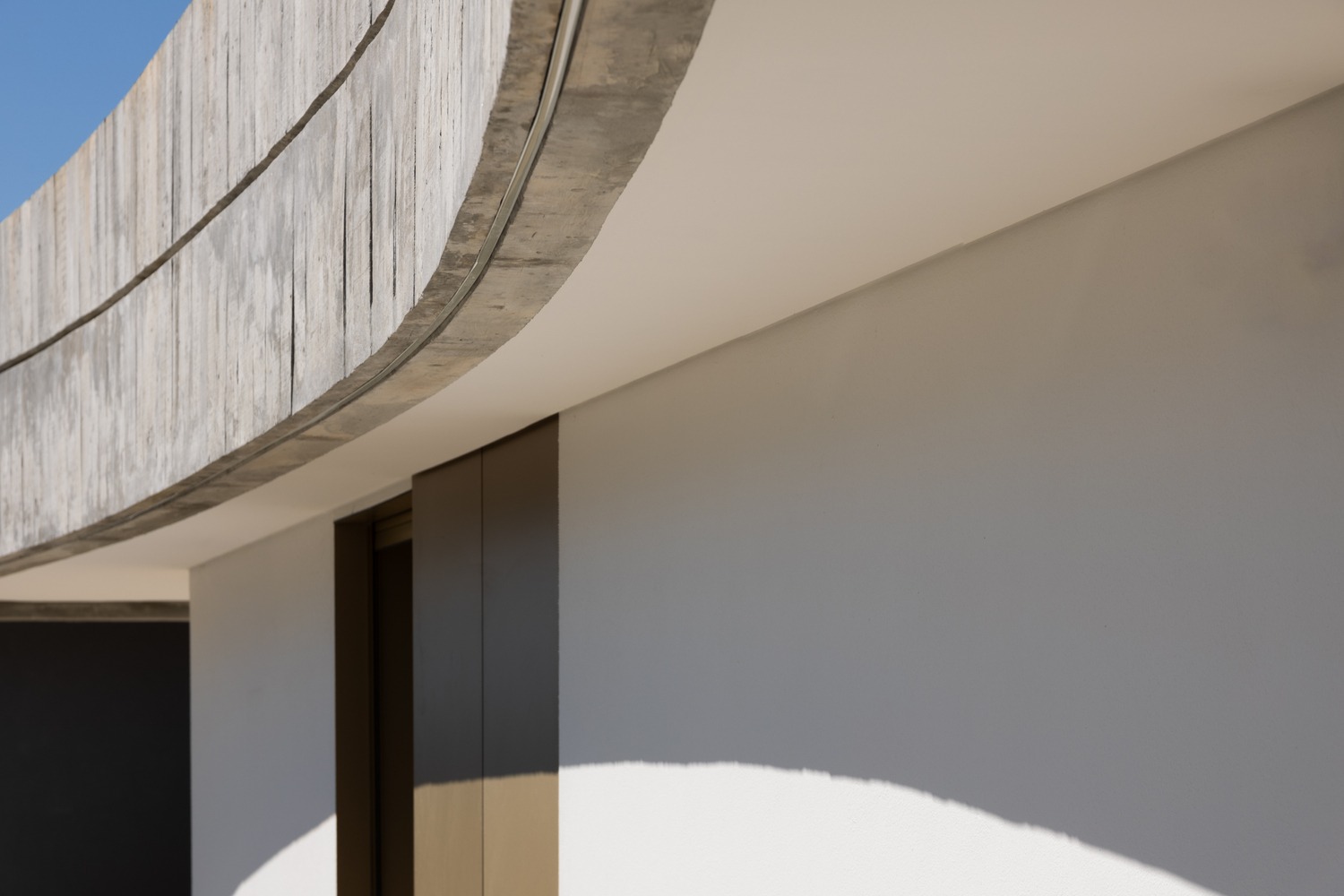
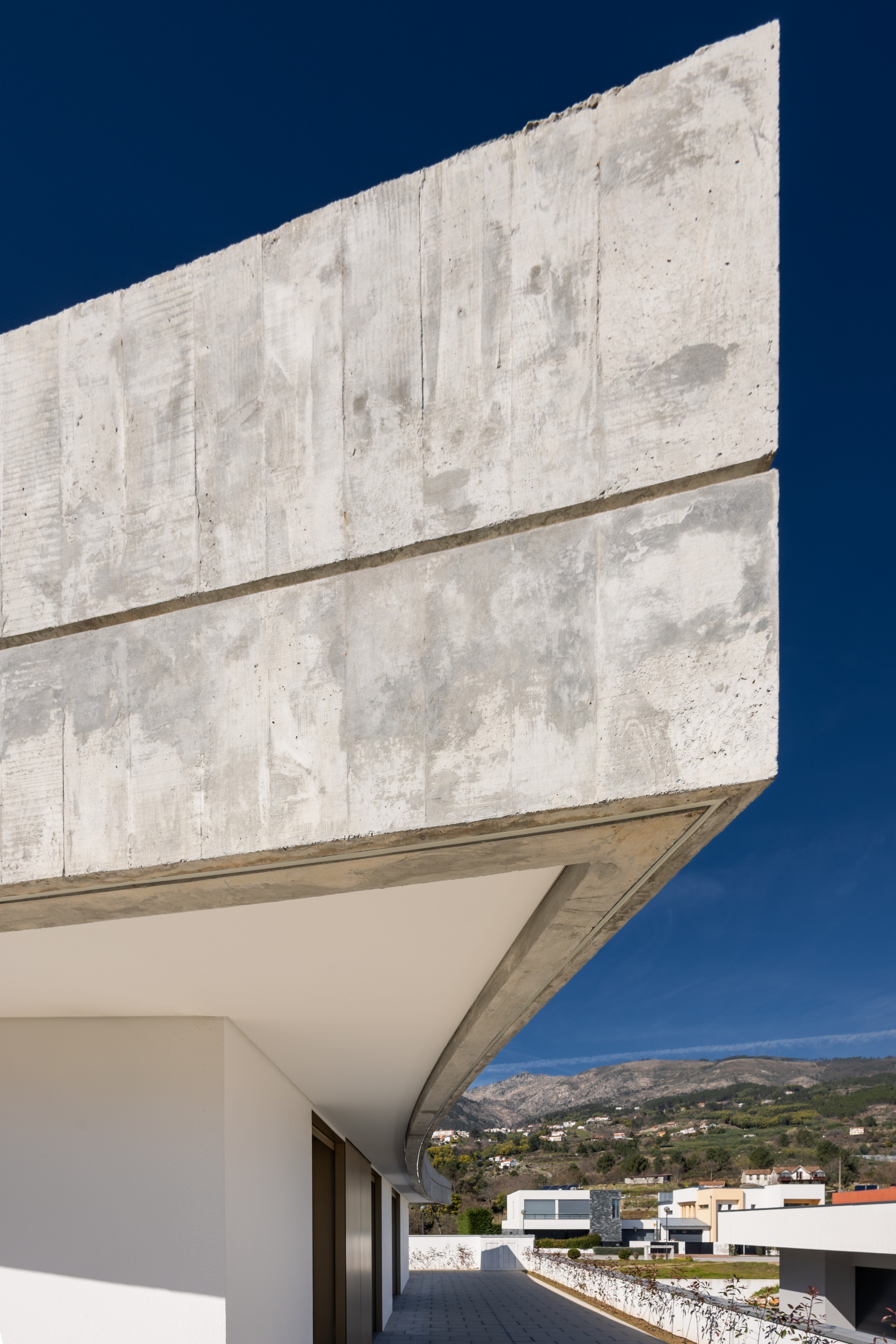
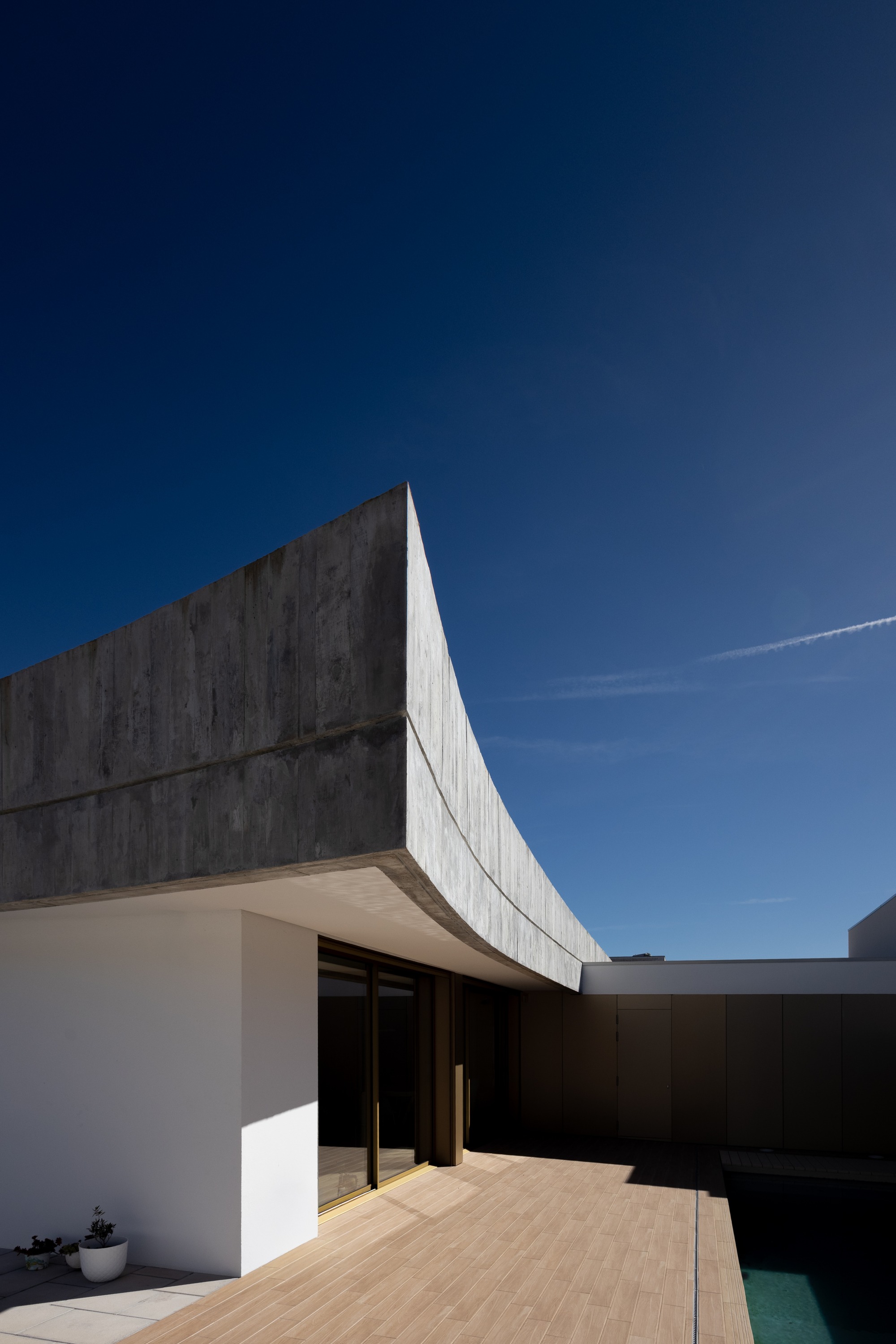
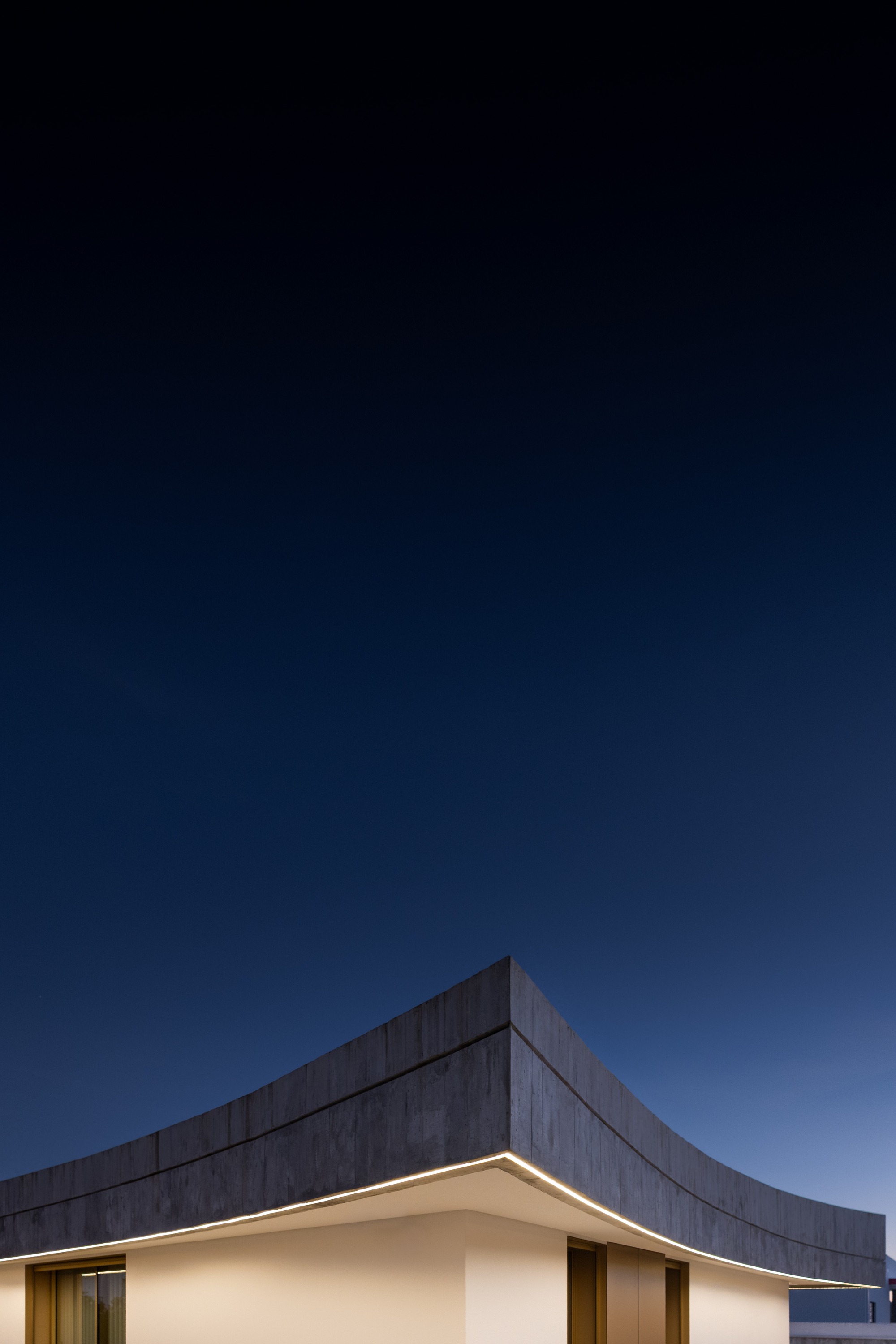
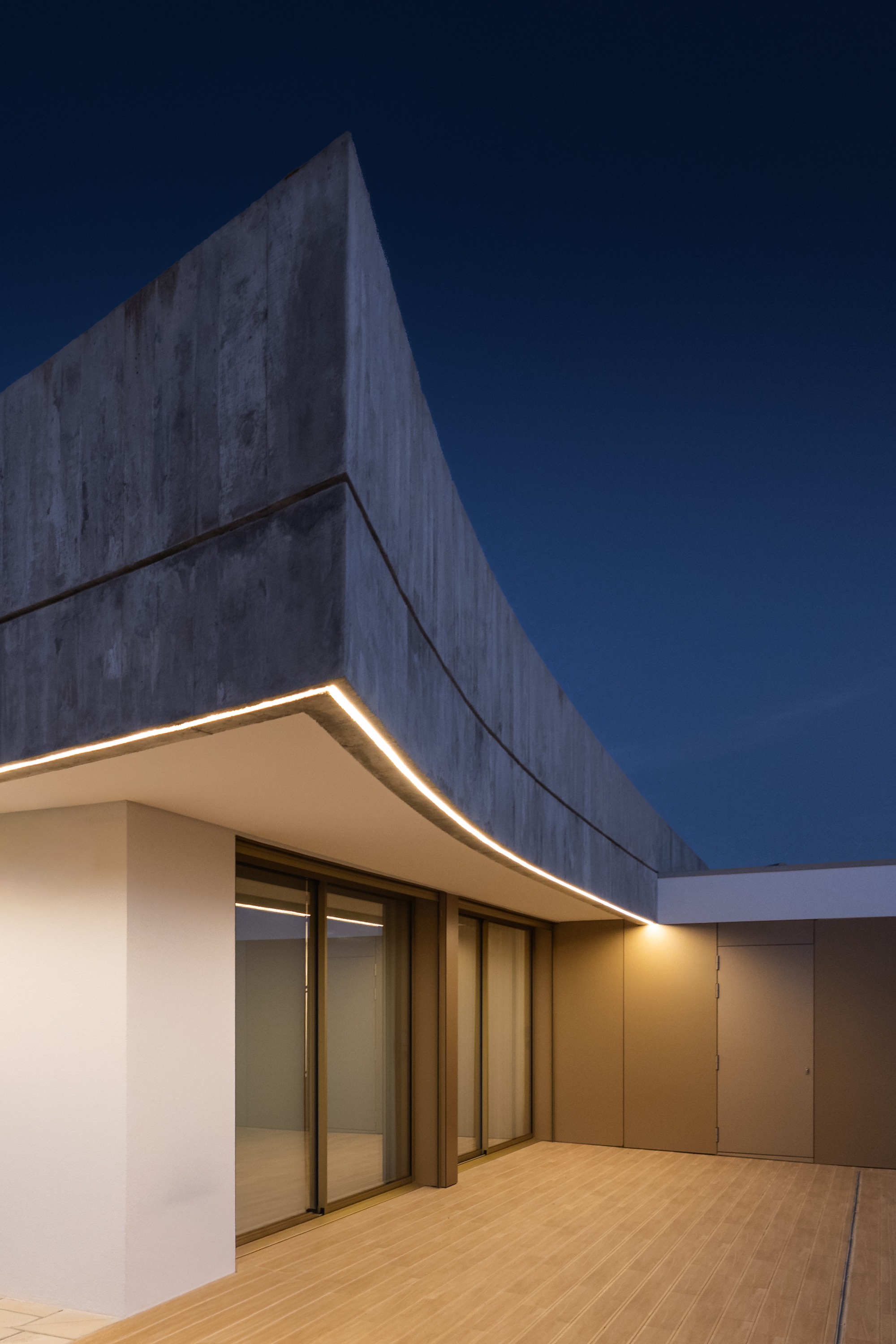
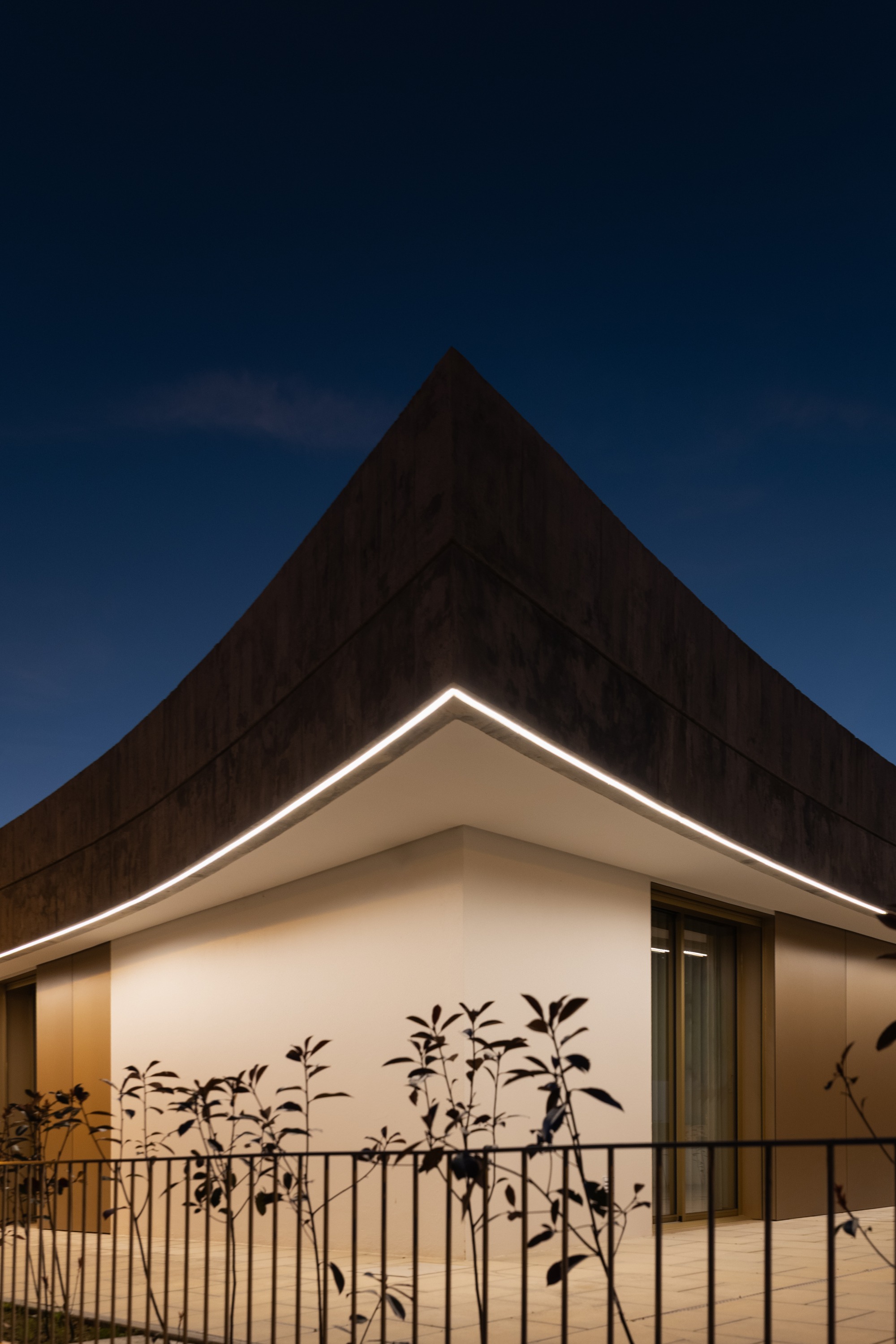
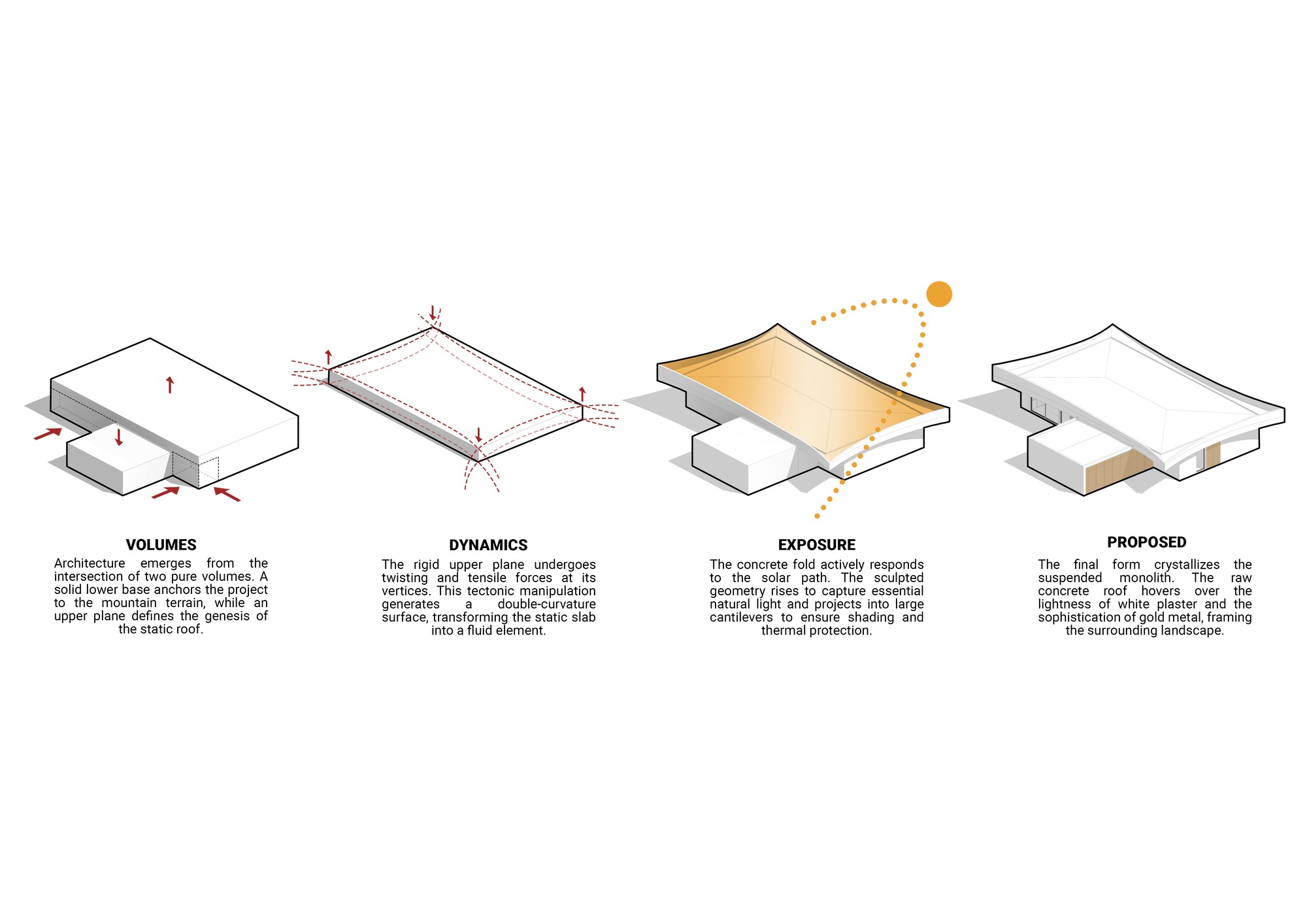
이 집의 핵심은 지붕이다. 단순한 평슬래브에서 출발한 형태는 네 모서리에 비틀림과 인장력을 가해 이중곡률(double-curvature), 곧 두 방향으로 동시에 휘어지는 곡면으로 변형된다. 그 결과 딱딱한 콘크리트 덩어리가 마치 천의 한 자락처럼 유동하는 형태를 얻는다. 날이 선 처마 끝은 하늘을 향해 날카롭게 치솟고, 반대편 처마는 완만하게 가라앉아 땅과 이어진다. 이 조형적 몸짓은 단순한 미적 선택이 아니다. 지붕은 태양의 궤도를 읽고 그에 반응한다. 조각된 곡면은 자연광을 깊숙이 끌어들이는 동시에 넓은 캔틸레버(cantilever, 기둥 없이 내밀어진 구조)로 돌출되어 테라스와 외부 공간에 그늘과 열적 보호를 제공한다. 형태가 곧 환경의 전략이 된다.
세 가지 소재, 하나의 언어
집은 세 가지 소재가 빚어내는 긴장 속에 살아있다. 상부의 노출 콘크리트는 거칠고 솔직한 질감으로 조각적 존재감을 드러낸다. 그 아래 백색 미장 벽체는 투명하고 중립적인 바탕이 되어 콘크리트 지붕이 드리우는 극적인 그림자를 받아낸다. 콘크리트의 이중곡률 표면은 이 순백과 균형을 이루며 서로를 부각시킨다. 백색은 빛과 그림자의 지각을 극대화하는 바탕이 되어, 콘크리트 지붕의 곡선이 만들어내는 음영을 한층 선명하게 드러낸다.
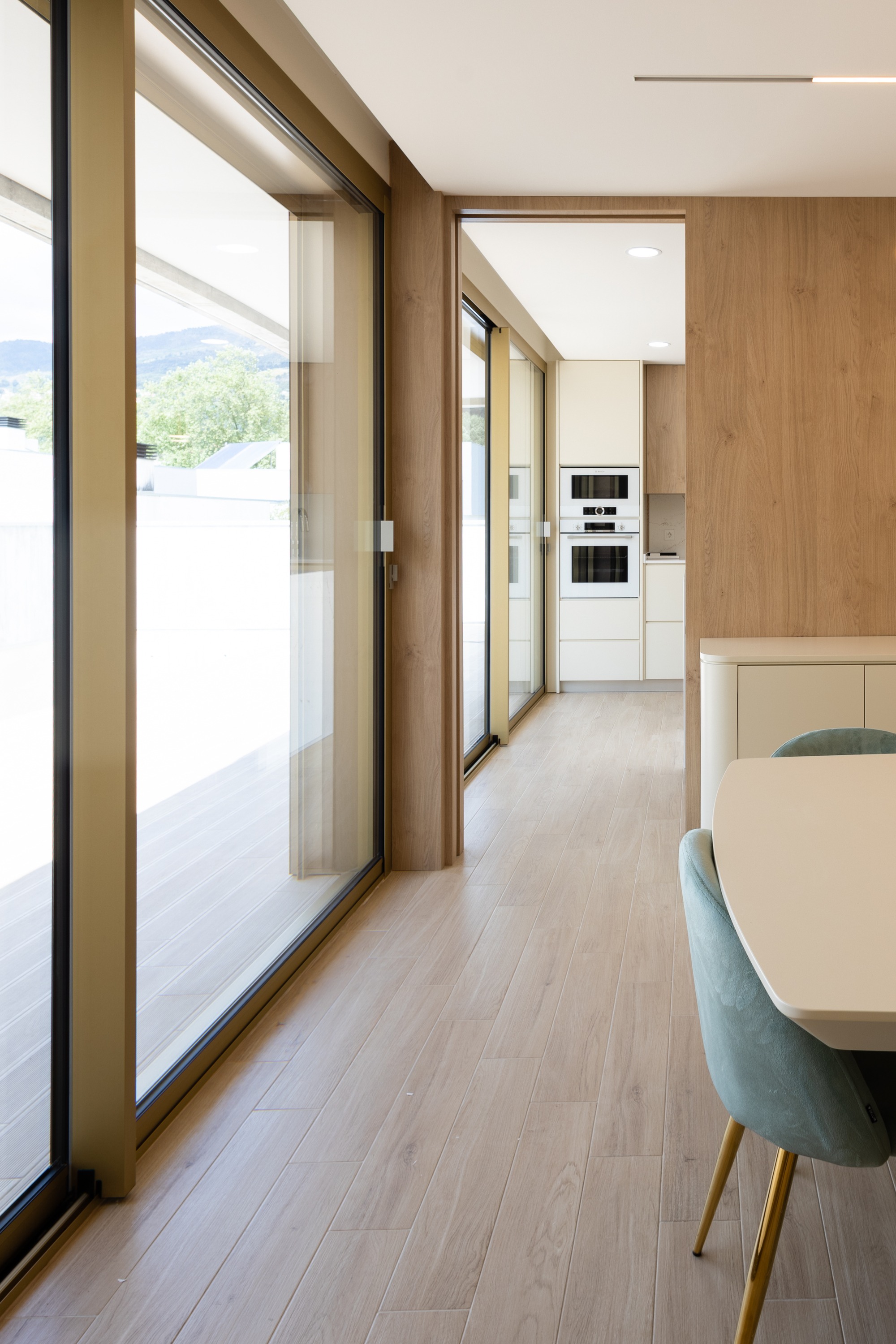
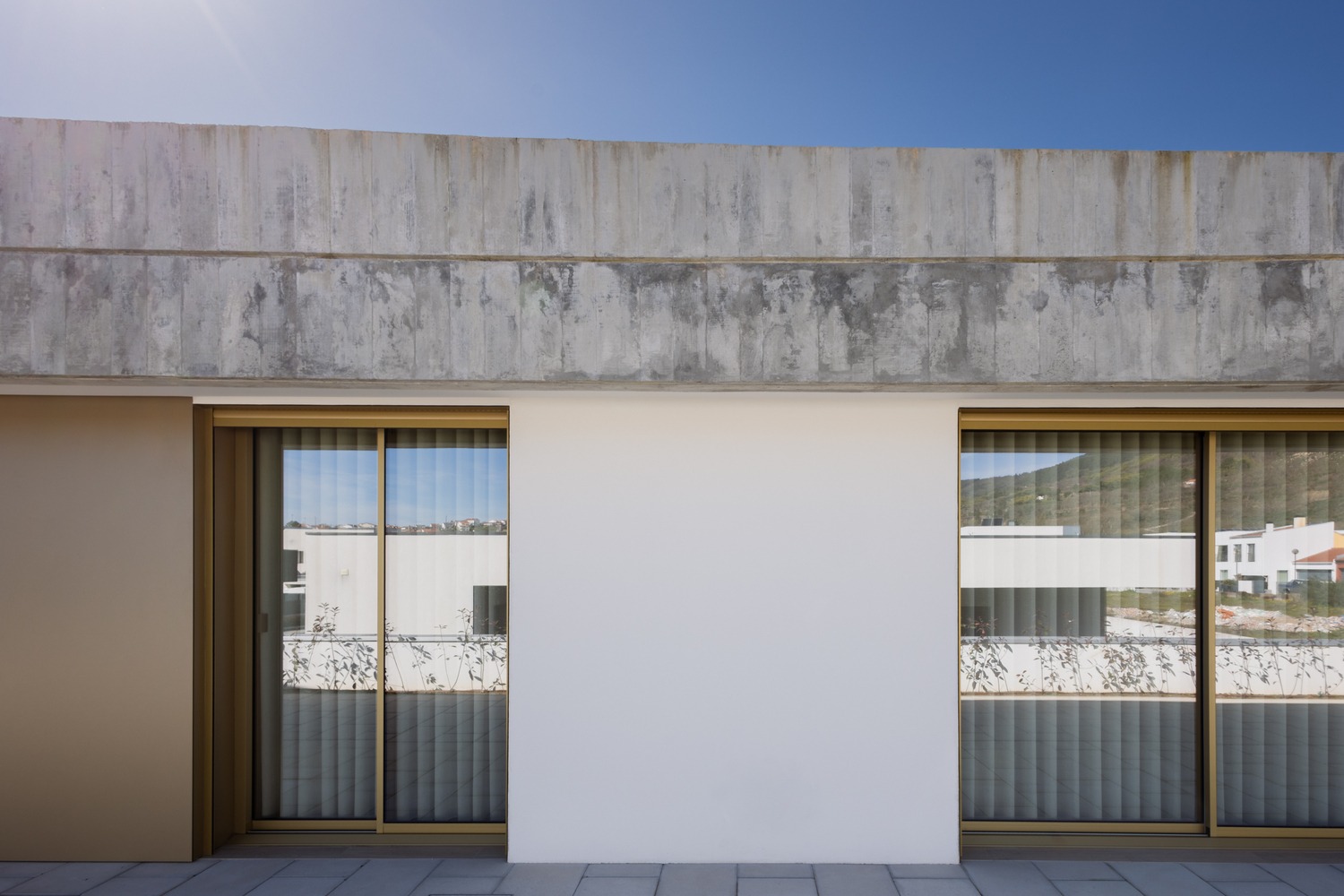
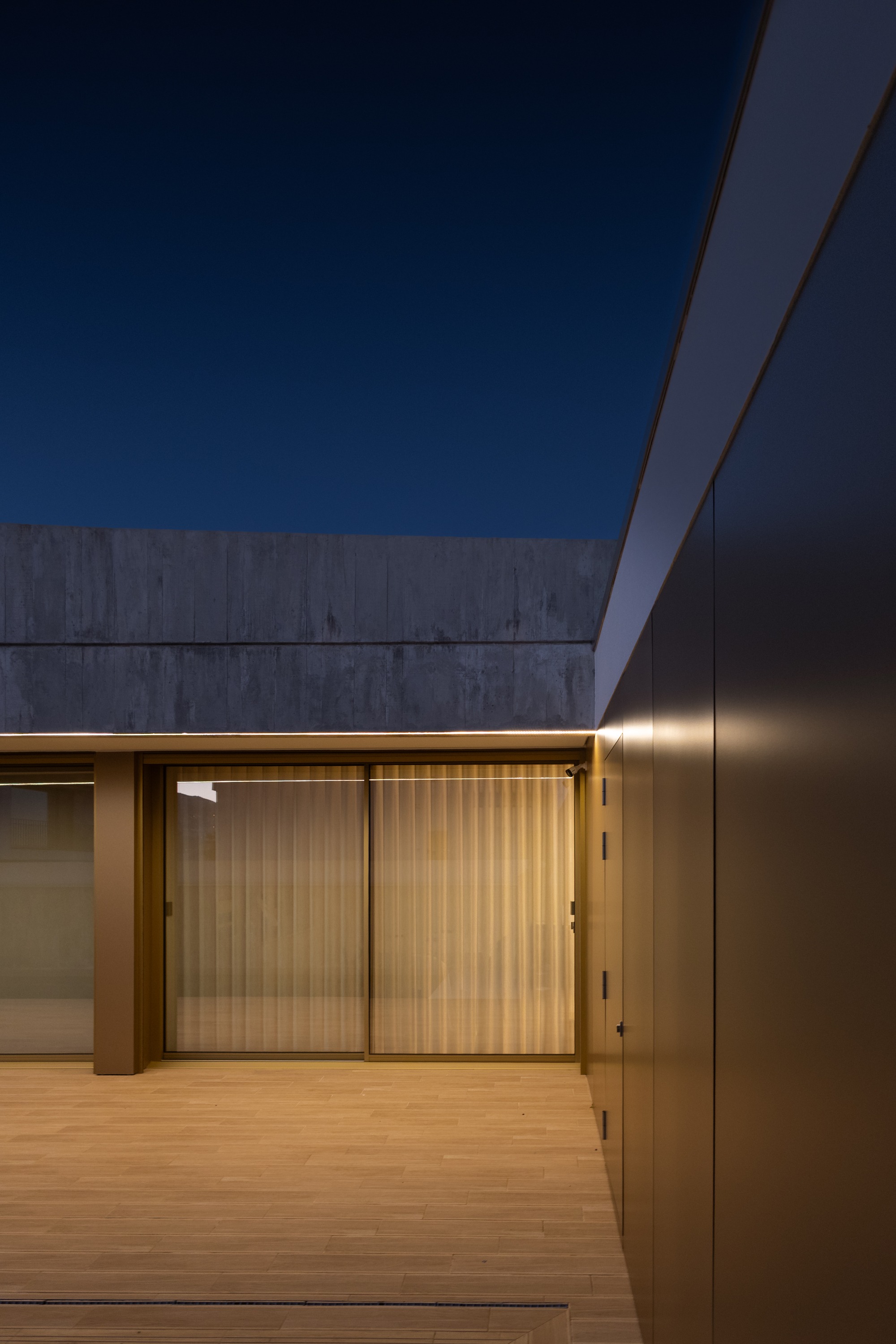
이 이원적 구성 사이에 브론즈가 개입한다. 창호 프레임과 외장 패널에 사용된 브론즈는 차가운 회색 콘크리트와 순백 사이에서 색채적 가교 역할을 한다. 금속의 따뜻한 온기가 두 극단 사이의 긴장을 부드럽게 이으면서, 동시에 깊이감과 세련미를 더한다. 브론즈 테두리가 두른 창은 시선을 내부로 끌어당기고, 건물의 기하학을 선명하게 강조한다. 내부에서 바라보면, 금빛 창호 프레임 너머로 산의 풍경이 액자처럼 담긴다.
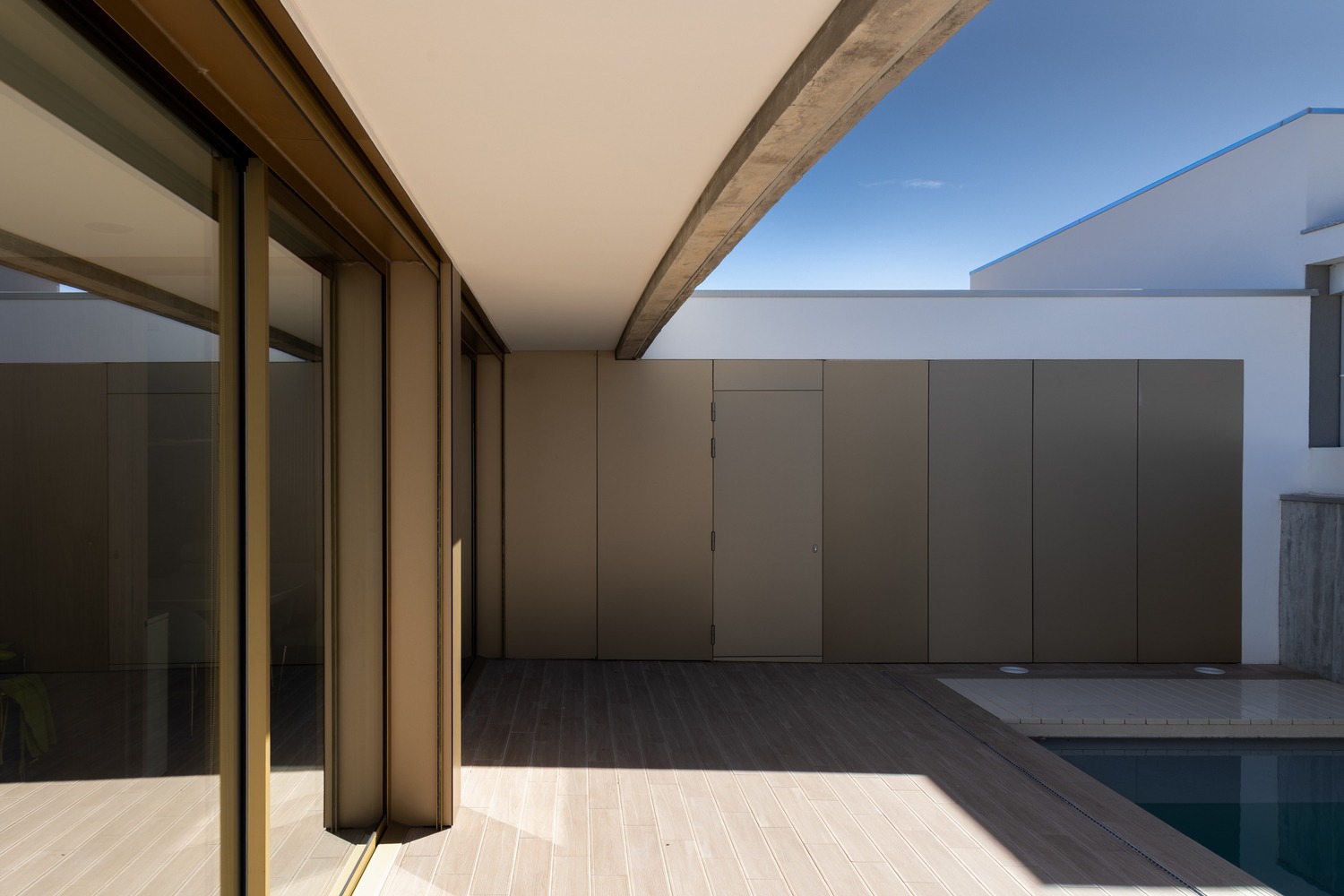
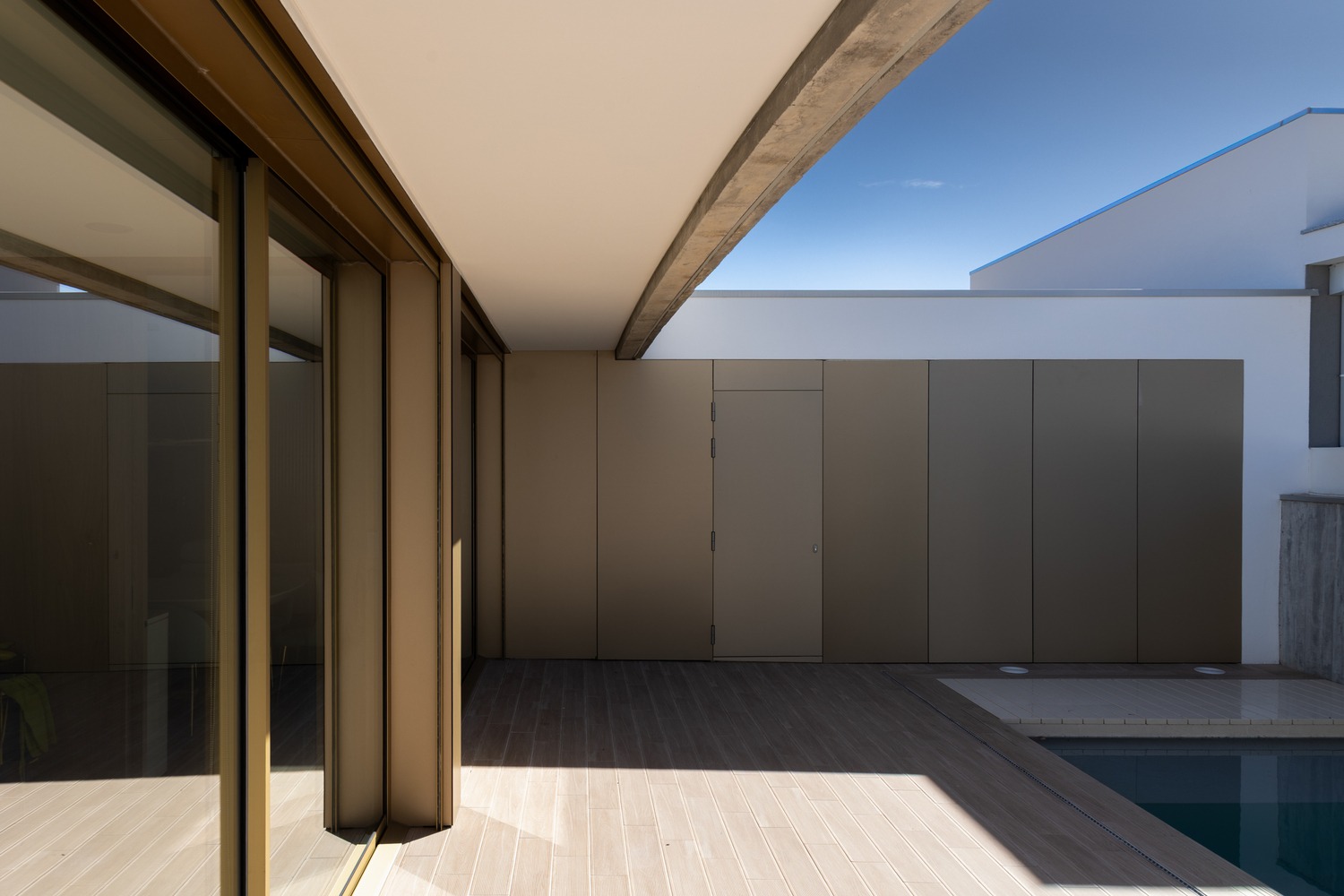
외부 테라스에서도 이 소재의 대화는 이어진다. 목재 데크가 발아래 따뜻하게 깔리고, 브론즈 패널로 마감된 벽이 수영장과 나란히 서며, 노출 콘크리트 지붕이 하늘과의 경계를 긋는다. 세 소재는 각자의 목소리를 지니면서도, 함께 놓였을 때 하나의 건축 언어를 완성한다.
삶의 위계: 공간 구성 전략
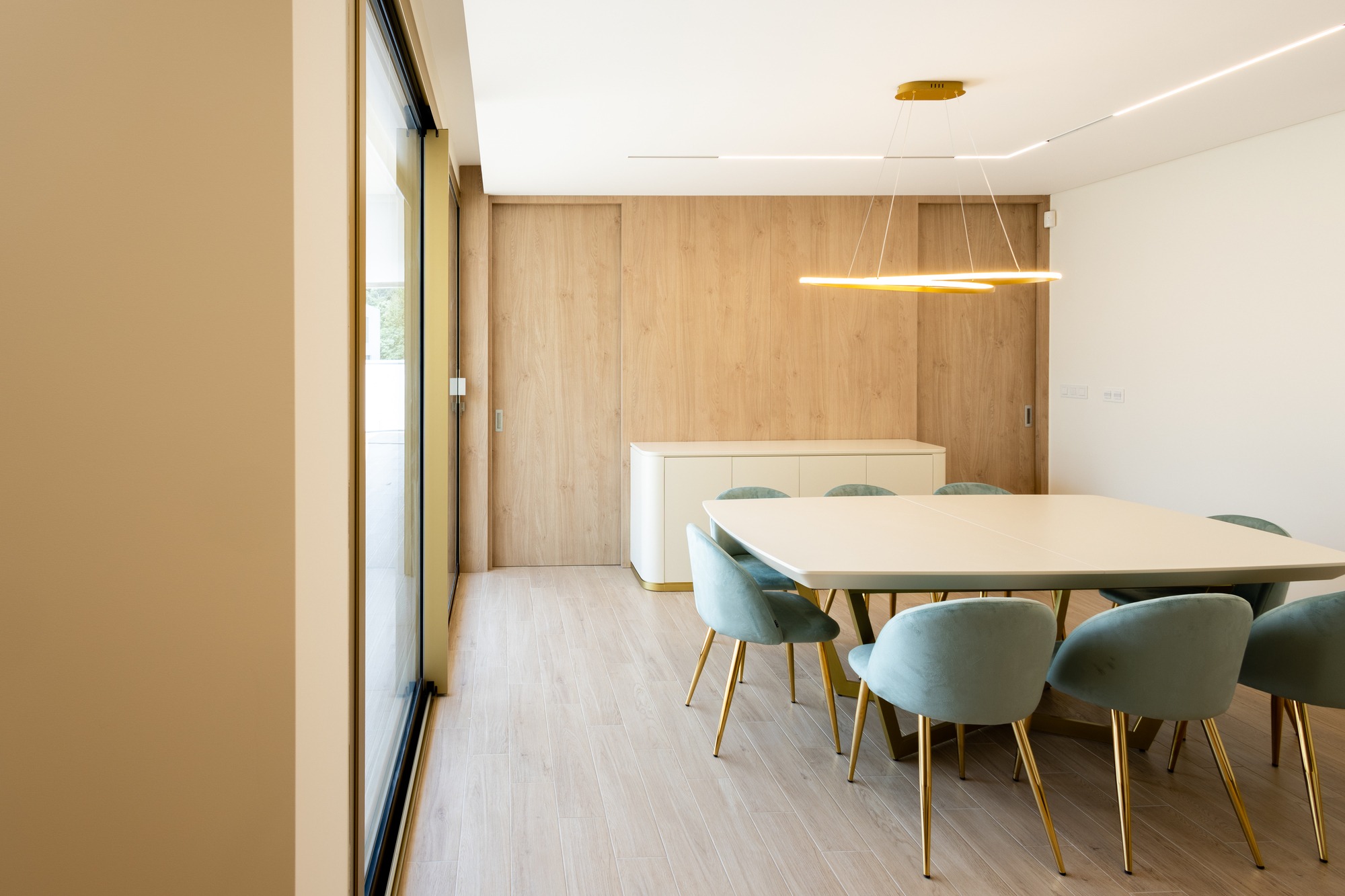
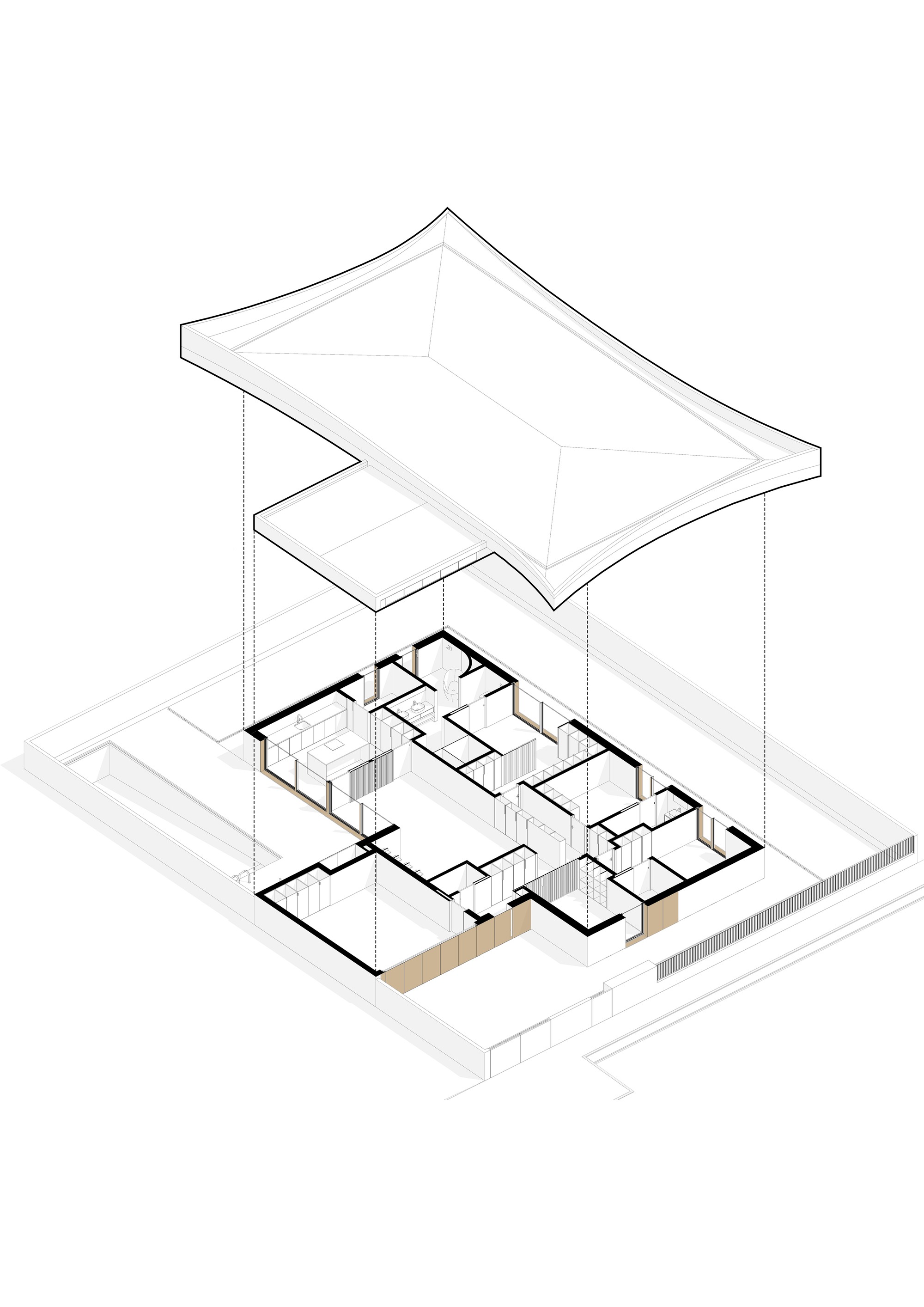
이 집은 공간의 기능을 세 층위로 명확히 나눈다. 중심에는 사회적 영역이 자리한다. 주방, 다이닝, 거실이 하나의 개방형 평면으로 통합되고, 이 공간은 외부 테라스와 수영장으로 막힘 없이 이어진다. 안쪽에서 바라보면 연한 목재 바닥이 실내에서 테라스 데크까지 끊임없이 이어지고, 유리 슬라이딩 도어 너머로 산의 풍경이 눈에 가득 찬다.
사적 영역은 평면의 후면에 의도적으로 격리된다. 종방향 복도가 외부의 소음을 차단하며 각 침실로의 동선을 배분한다. 드레스룸(walk-in closet)과 대형 욕실을 갖춘 넉넉한 안방은 이 복도의 끝에서 조용히 집의 깊이를 완성한다.
현관 인근에는 2대분의 주차 공간, 손님용 화장실, 독립된 작업실이 자리 잡는다. 이들은 거주자의 일상을 실질적으로 뒷받침하면서도, 집의 사회적·사적 영역 어디에도 침범하지 않는다. 위계는 단순하지 않다. 각 영역이 나뉘어 있으되 서로를 배려하며, 그 결과 집 전체가 하나의 조용하고 단단한 흐름으로 살아간다.
PLATAFORMArq의 House #474는 결국 대비의 건축이다. 콘크리트의 무게와 곡면의 유동, 차가운 회색과 따뜻한 브론즈, 거친 질감과 순백의 정제. 그러나 이 모든 대비는 충돌이 아닌 대화를 이룬다. 그리고 그 대화의 중심에, 산을 닮은 지붕 아래, 사람의 삶이 조용히 깃든다.
Write by Claude & Jean Browwn

PLATAFORMArq-House #474
Tectonic Fold. "A singular and organic geometry that folds over the landscape of the mountain itself".
The project is based on a dialogue of sharp contrasts, where a monolithic and curved roof made of natural, textured concrete stands out as the main sculptural gesture, contrasting with the lightness and purity of the immaculate white walls that support the structure. This visual tension between the monolithic and the lightness is softened by bronze details in the window openings, which add a touch of warmth and sophistication, framing them and mediating the relationship between the materials.
Essentially, the project explores how the fluid shape of the curve can be expressed through a robust and honest materiality, while the roof serves as a unifying element, sheltering the spaces and framing the landscape. The curved shape of the roof is not merely an aesthetic element, but a powerful force that shapes the spatial experience of the building.
The roof, made of natural concrete with its raw and robust texture, imposes a sculptural presence, contrasting and at the same time complementing the vertical surfaces. The relationship between materiality and form is the core of the project. The curved surface of the concrete is balanced by the immaculate whiteness of the walls located beneath it. The white provides a neutral and luminous base that maximizes the perception of light and shadow, highlighting the projected shadow and the dramatic curvature of the concrete roof, creating a visual tension.
Punctuating this binary composition, bronze notes appear on the window frames and claddings. The bronze introduces a warm and metallic tone that adds depth, functioning as a chromatic intermediary between the cold grey of the concrete and the white. These bronze elements frame the openings, inviting the eye towards the interior and reinforcing the geometry of the building.
The curved and continuous shape of the concrete gives the building a sense of fluidity and movement that softens the solidity of its construction. The roof acts as a protective mantle, embracing the exterior space and visually connecting it to the landscape. Ultimately, the project is a cohesive dialogue where the curved shape is rigidly defined by the expressive and contrasting materiality of the concrete, the white, and the bronze.
The project establishes a clear functional hierarchy by distinctly separating the public, private, and service areas to optimize daily living. At the core of the home lies the social zone, designed as an expansive open plan space that integrates the kitchen, dining, and living areas while seamlessly connecting to the outdoor patio and pool. In stark contrast, the private quarters are intentionally secluded at the rear of the floor plan, utilizing a longitudinal corridor to buffer noise and distribute access to the bedrooms, including a generous master suite with a walk-in closet and a large ensuite bathroom.
Finally, the service and work spaces—comprising a two-car garage, a guest bathroom, and an isolated office are strategically positioned near the entrance and alongside the living area, functioning as practical transitional elements that support the household without disrupting its tranquil or social dynamics.
from archdaily
'House' 카테고리의 다른 글
| * 산을 닮은 동네, 데 베르헌의 새 풍경 [ MVRDV ] Nieuw Bergen (0) | 2026.06.16 |
|---|---|
| * 작은 몸짓들의 탑, 거리와 대화하는 집 [ sauermartins ] Vicco Building (0) | 2026.06.15 |
| * 손의 기억이 집이 되다 [ Design ni Dukaan ] Amaltash House (0) | 2026.06.09 |
| * 도시를 다시 쌓는 법 [ FGMF Arquitetos ] Valente, São Paulo (0) | 2026.06.02 |
| * 코쿤과 비상, 그 사이의 집 [ Mohamed Amine Siana ] Villa Butterfly (0) | 2026.06.01 |