땅을 가볍게 딛어라.— 글렌 머컷(Glenn Murcutt)
 |
 |
 |
GOA (Group of Architects)-The Earth Valley Theater
산을 따라 내려가는 길
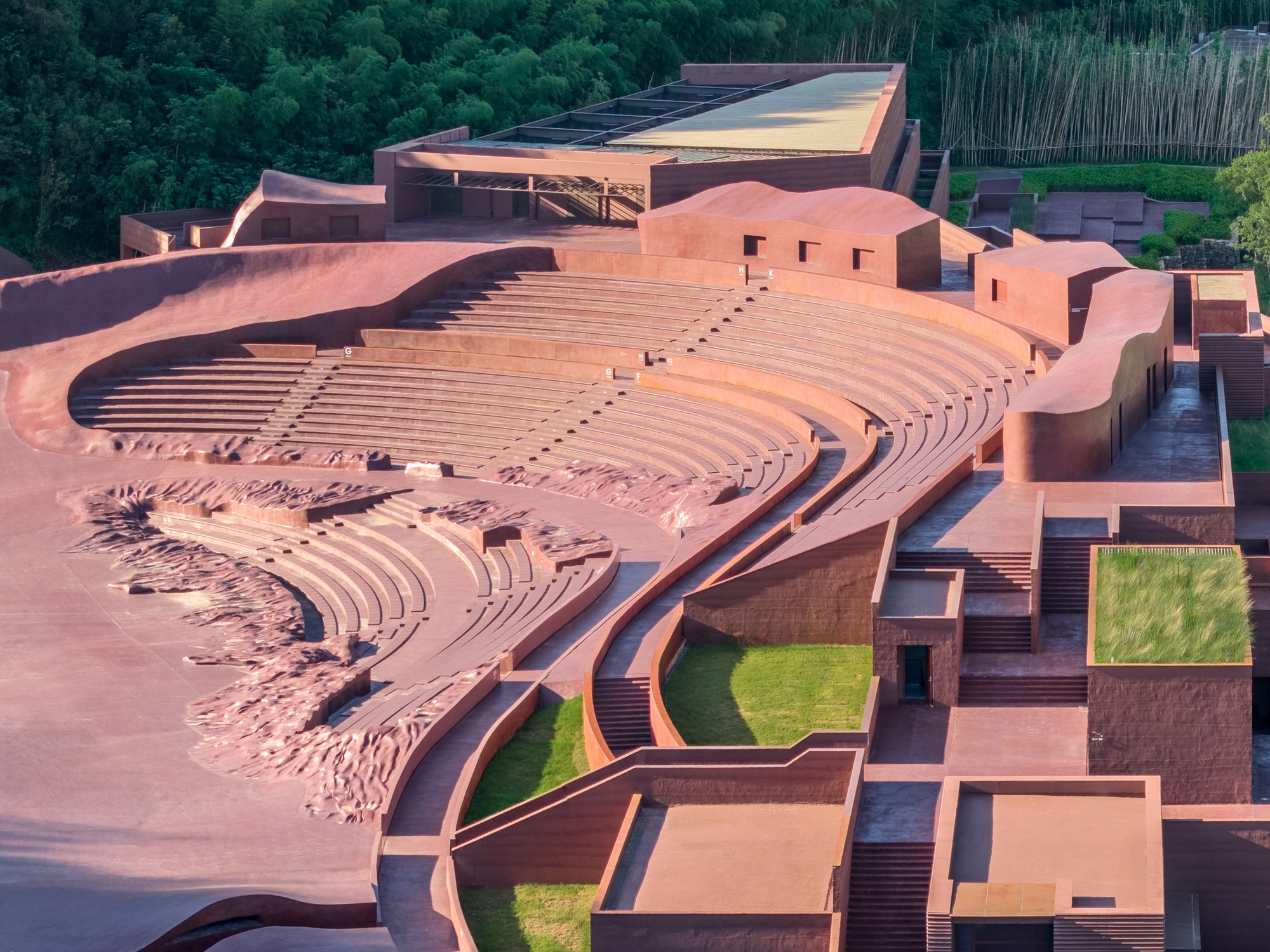
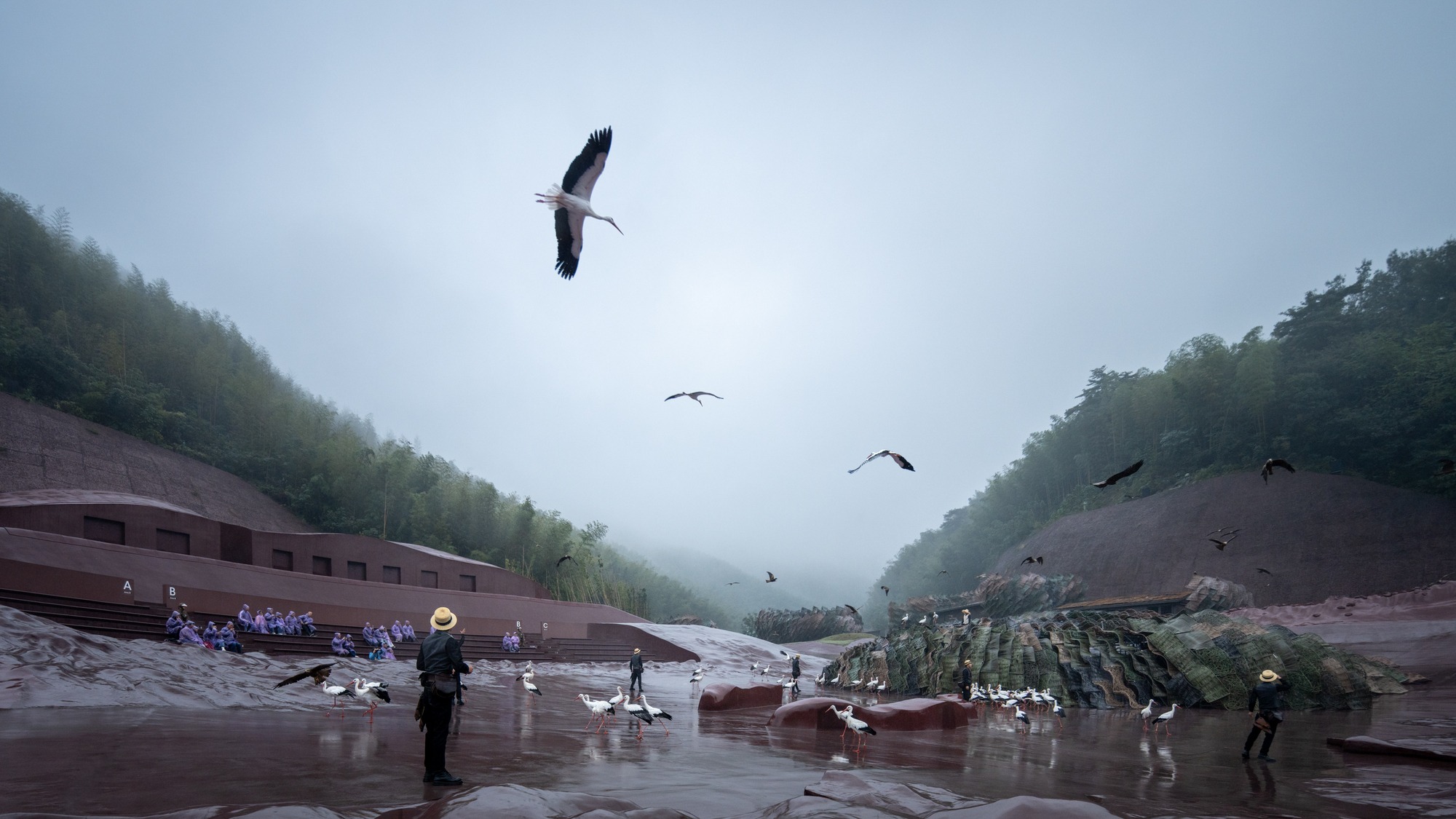
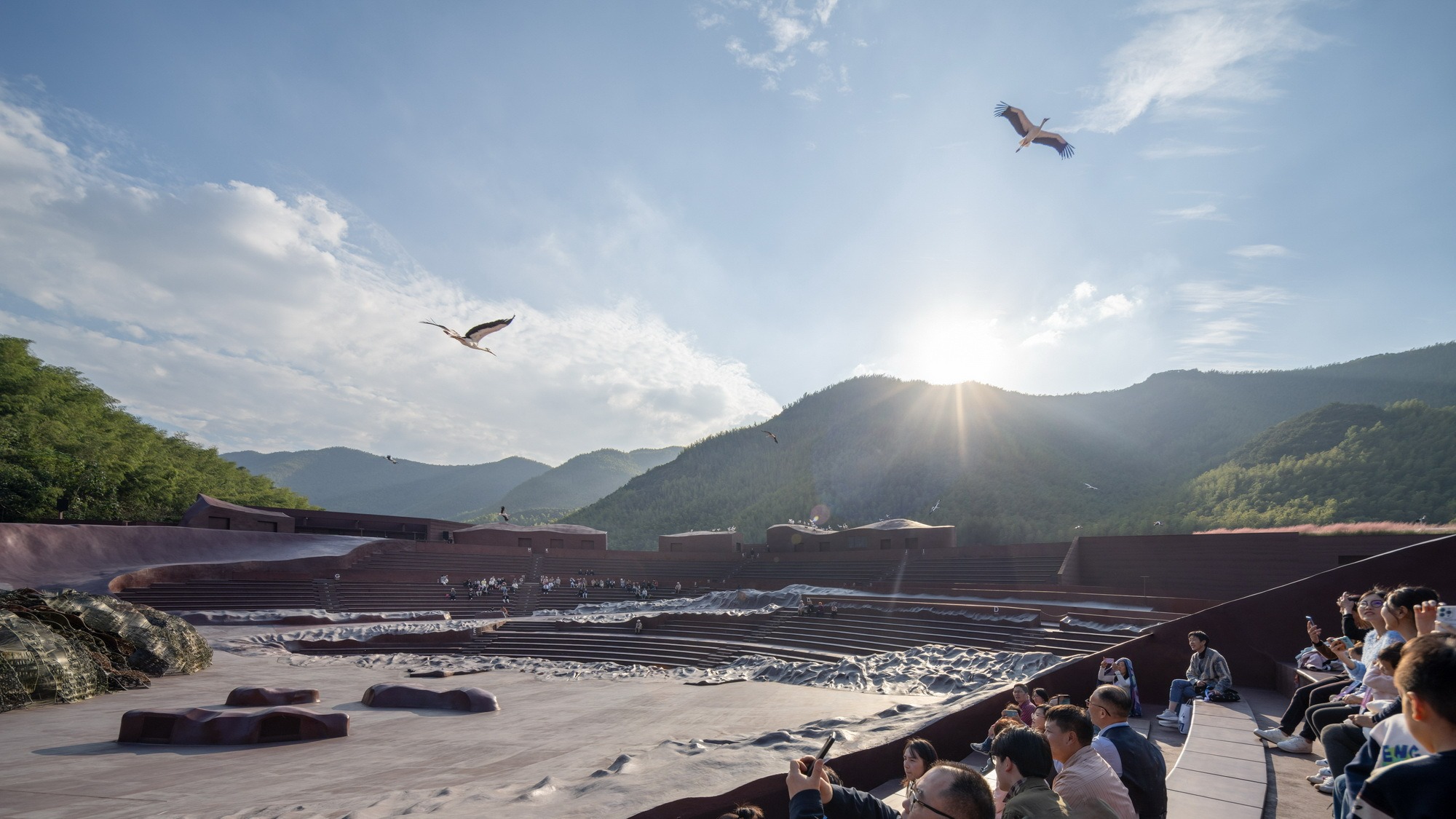
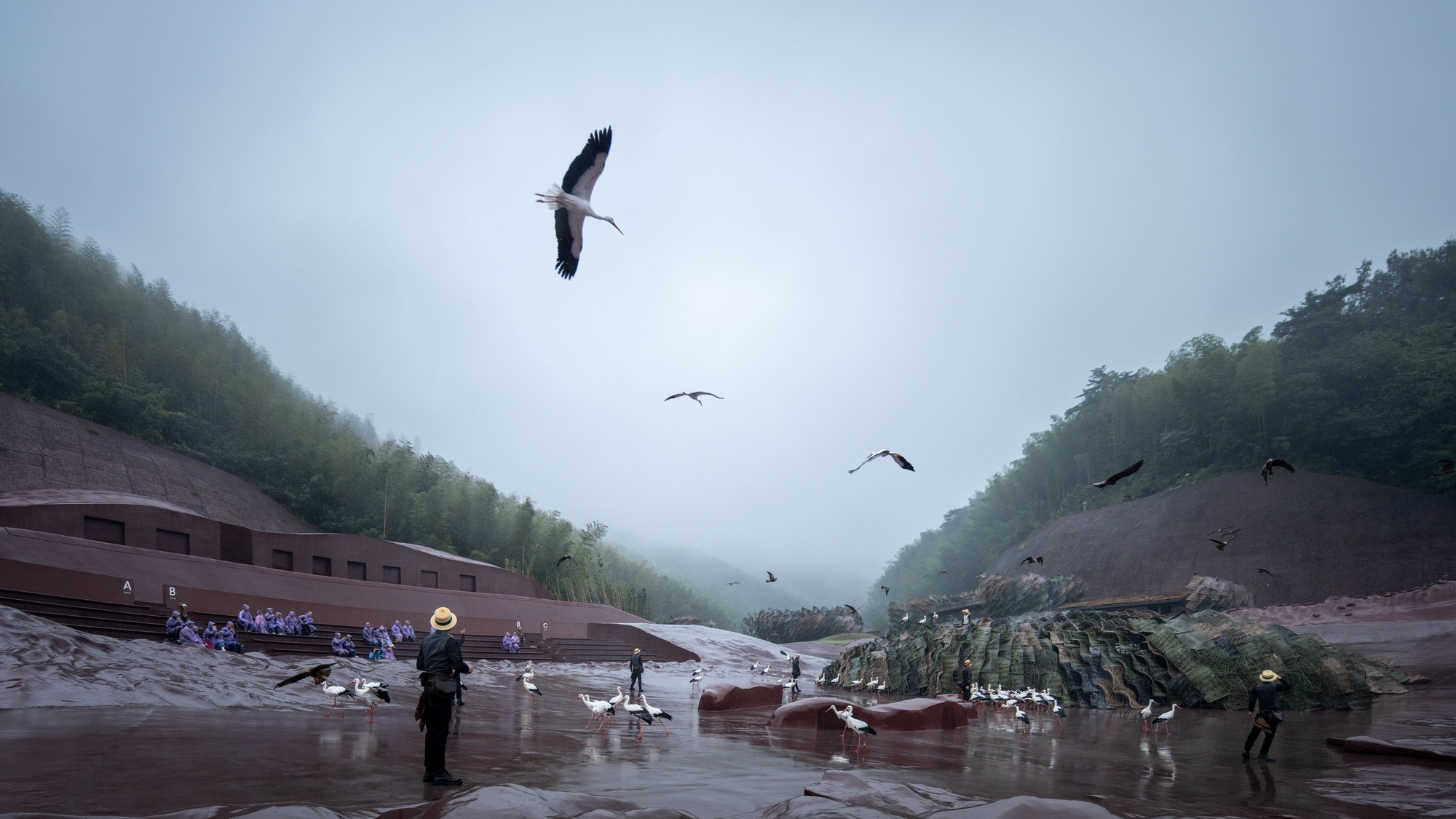
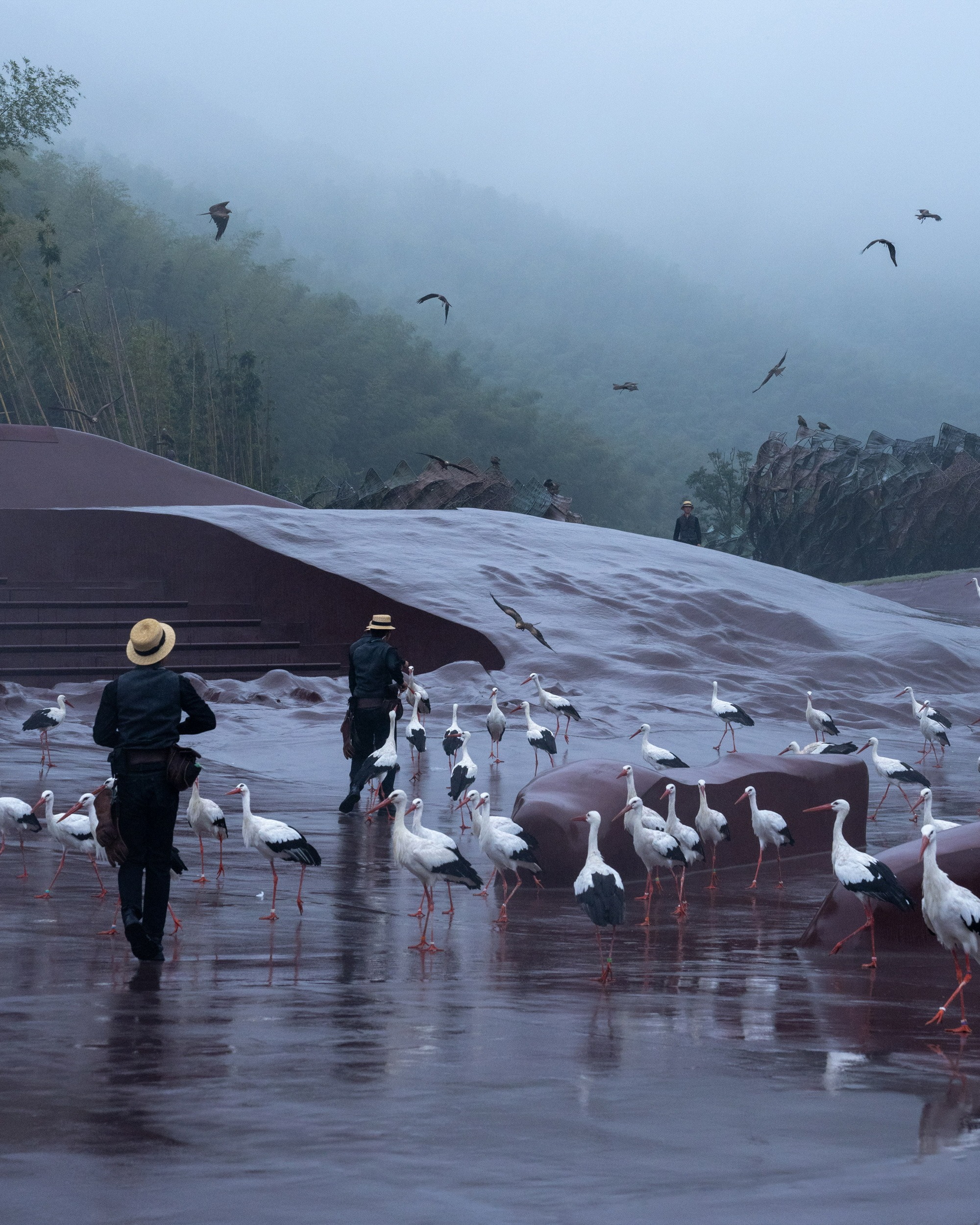
중국 도자의 고향으로 불리는 이싱, 그 곁을 둘러싼 밍링 산맥의 골짜기 사이로 9200제곱미터 규모의 야외극장이 자리한다. 어스 밸리 시어터는 단순한 공연장이 아니라 인간과 새가 함께 머무는 하나의 풍경으로 설계되었다. 건축과 조경의 경계를 지우는 총체적 예술작품, 즉 게잠트쿤스트베르크(Gesamtkunstwerk)로 구상된 이곳은 새를 가두는 전통적인 사육장의 발상을 완전히 뒤집는다. 새들이 자유롭게 날아오르고, 사람과 새가 같은 공간에서 공존하는 살아 있는 랜드아트로 기능한다.
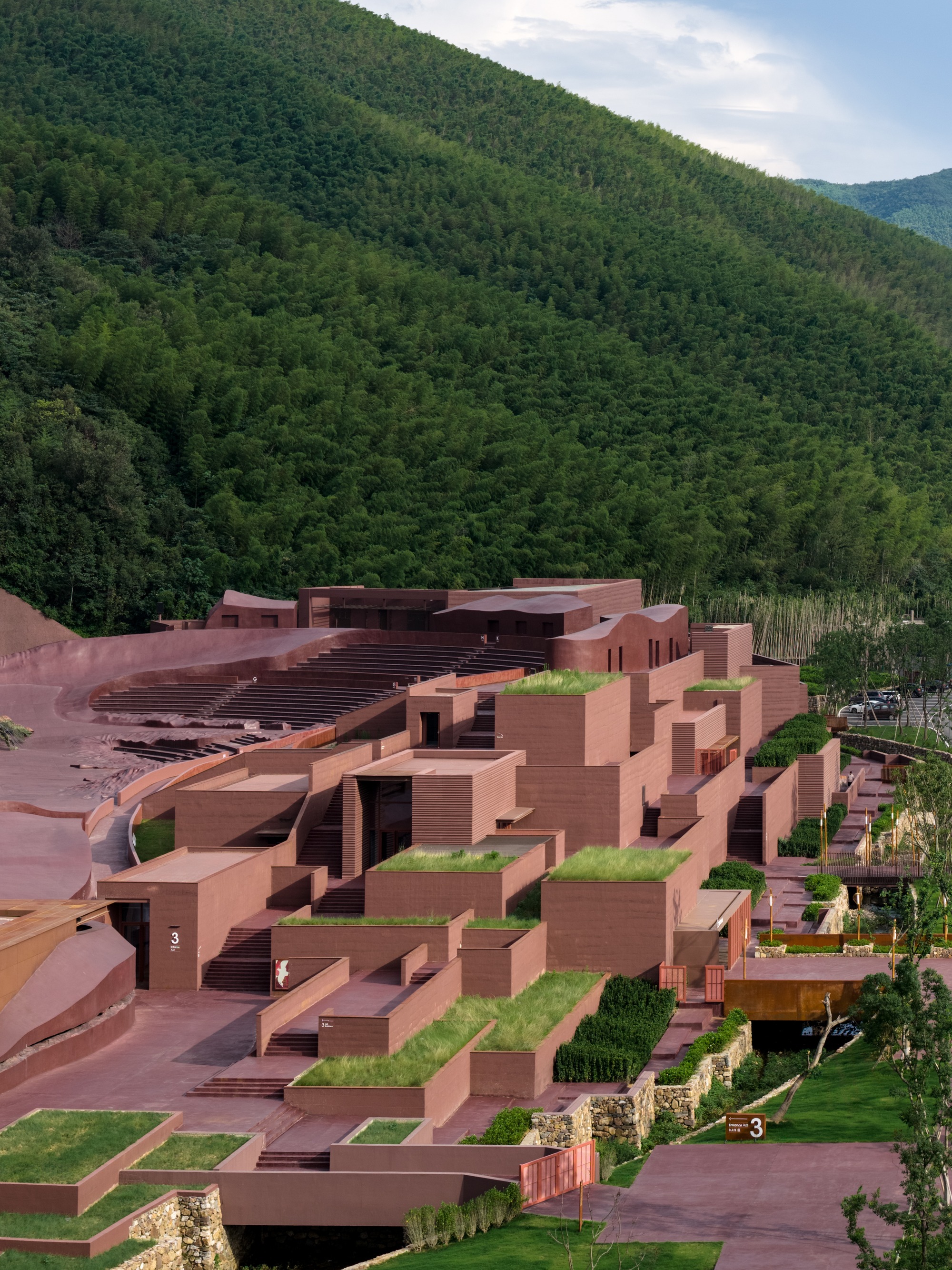
방문객의 여정은 북쪽 입구에서 시작된다. 동서로 길게 뻗은 좁은 계곡과 남북으로 펼쳐진 너른 계곡이 만나는 T자형 지형 위에 세 개의 광장이 자리한다. 그 곁에는 세 개의 입방체 형태 출입동이 겹겹이 포개진 구조로 들어서 있다. 도착하는 순간부터 관람객의 흐름은 자연스럽게 갈래를 이루며 나뉜다.
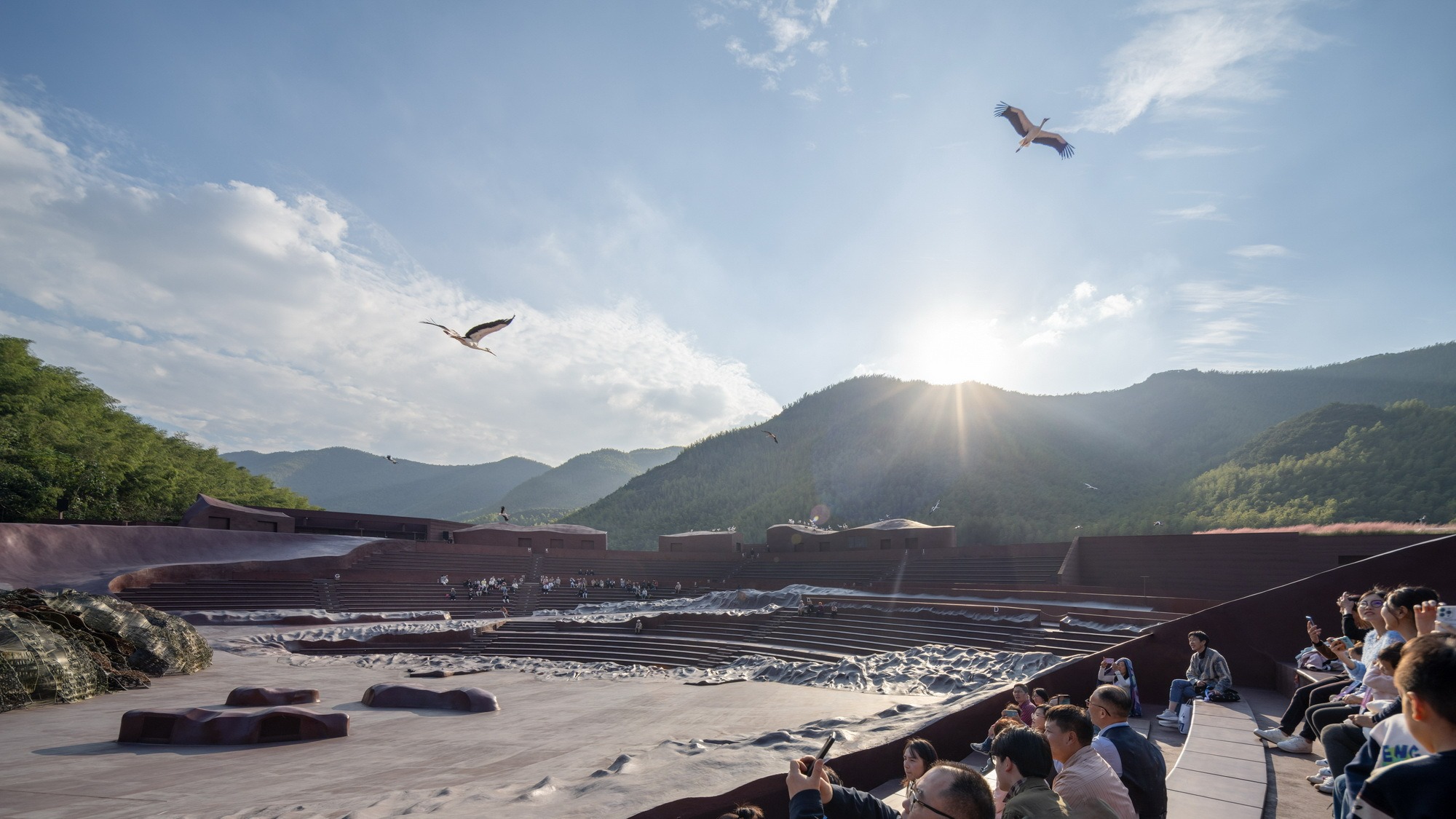
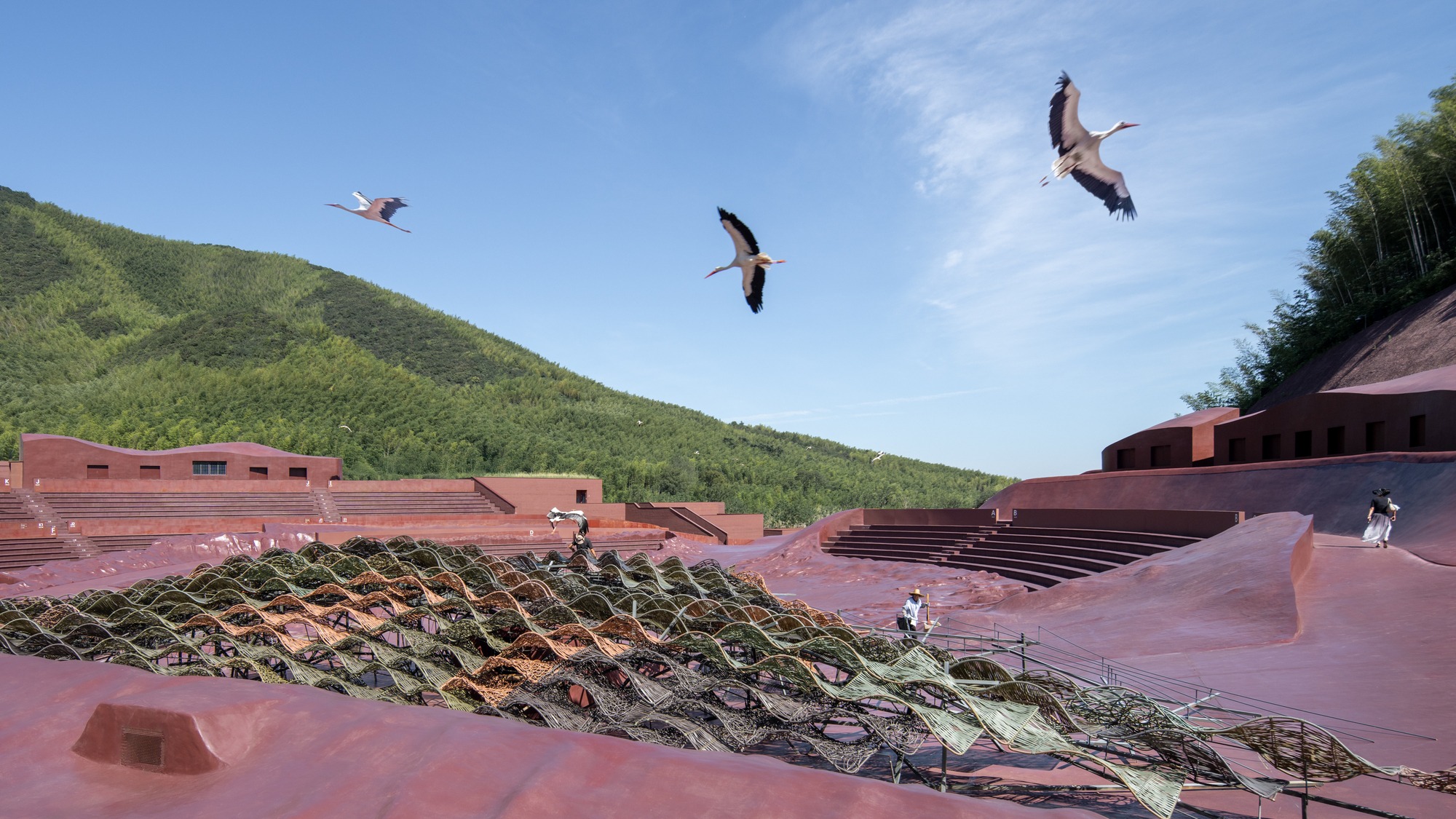
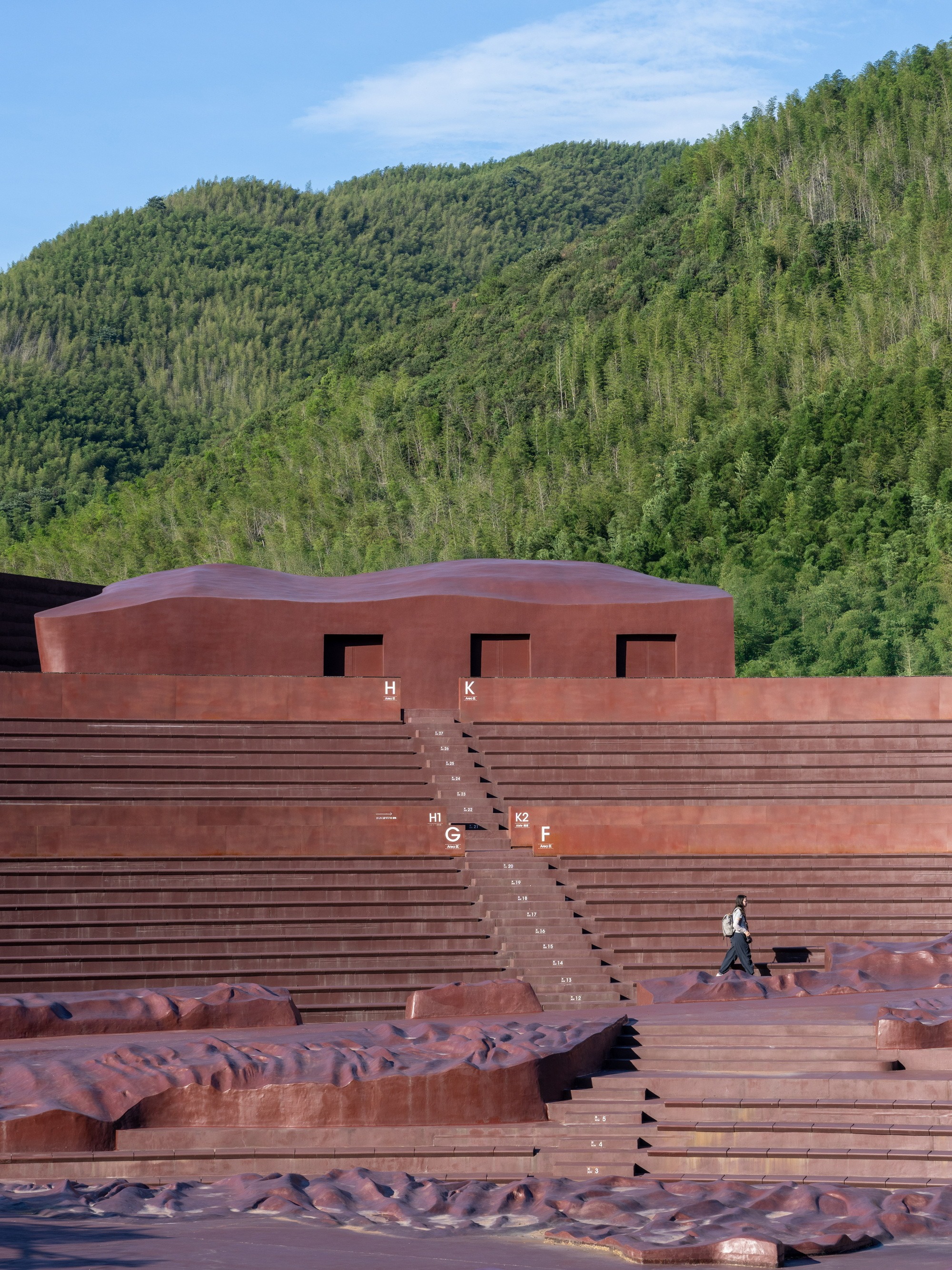
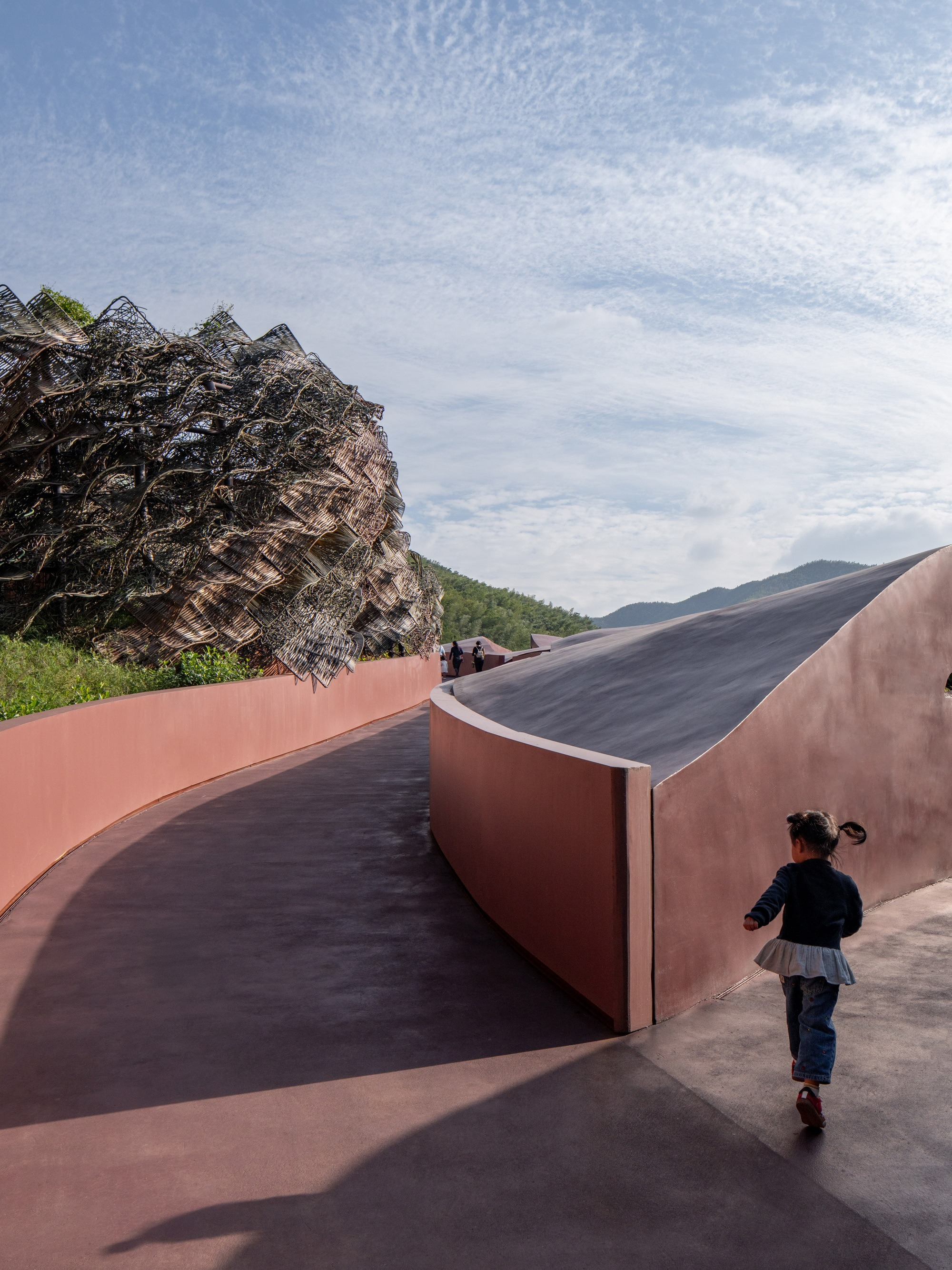
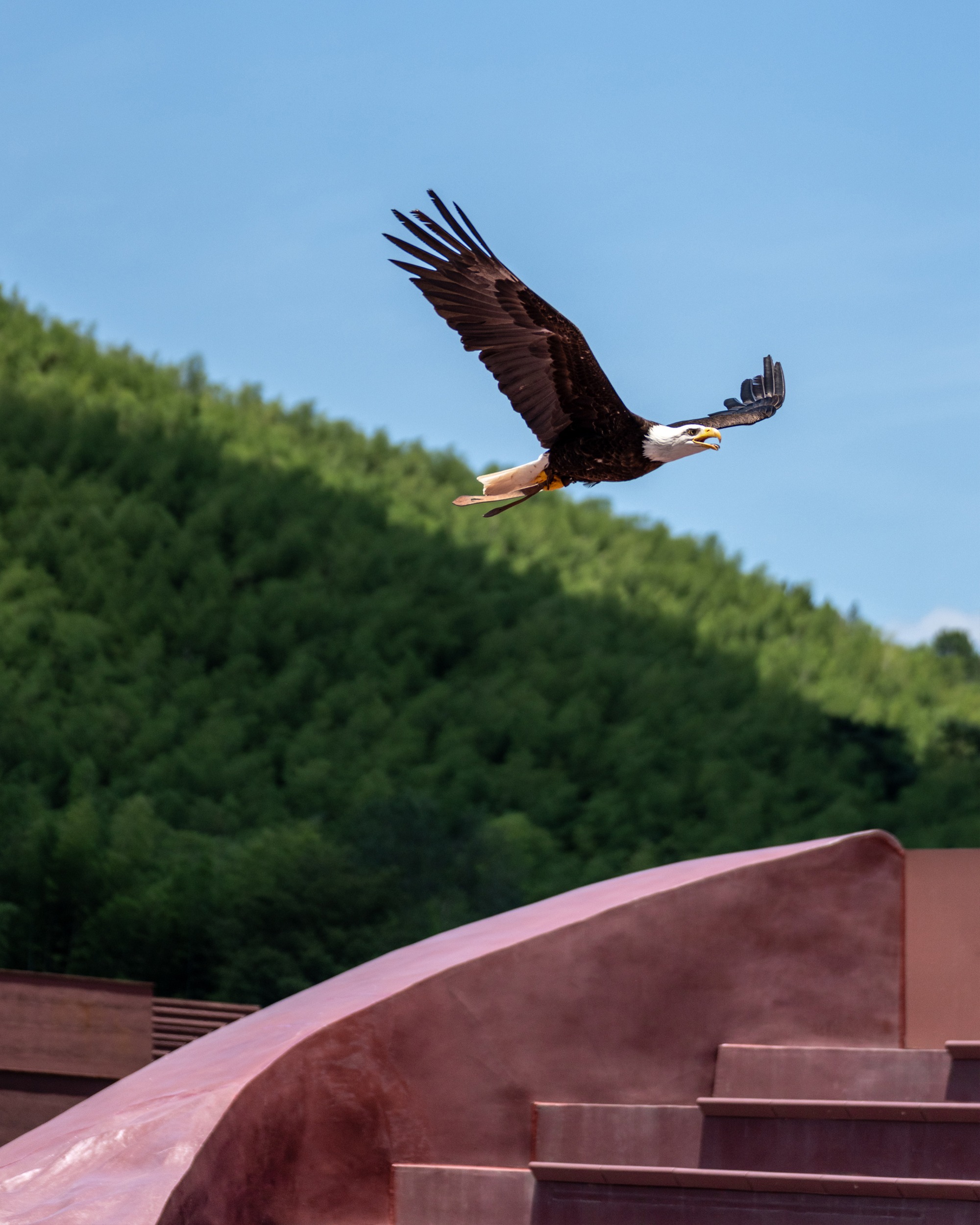
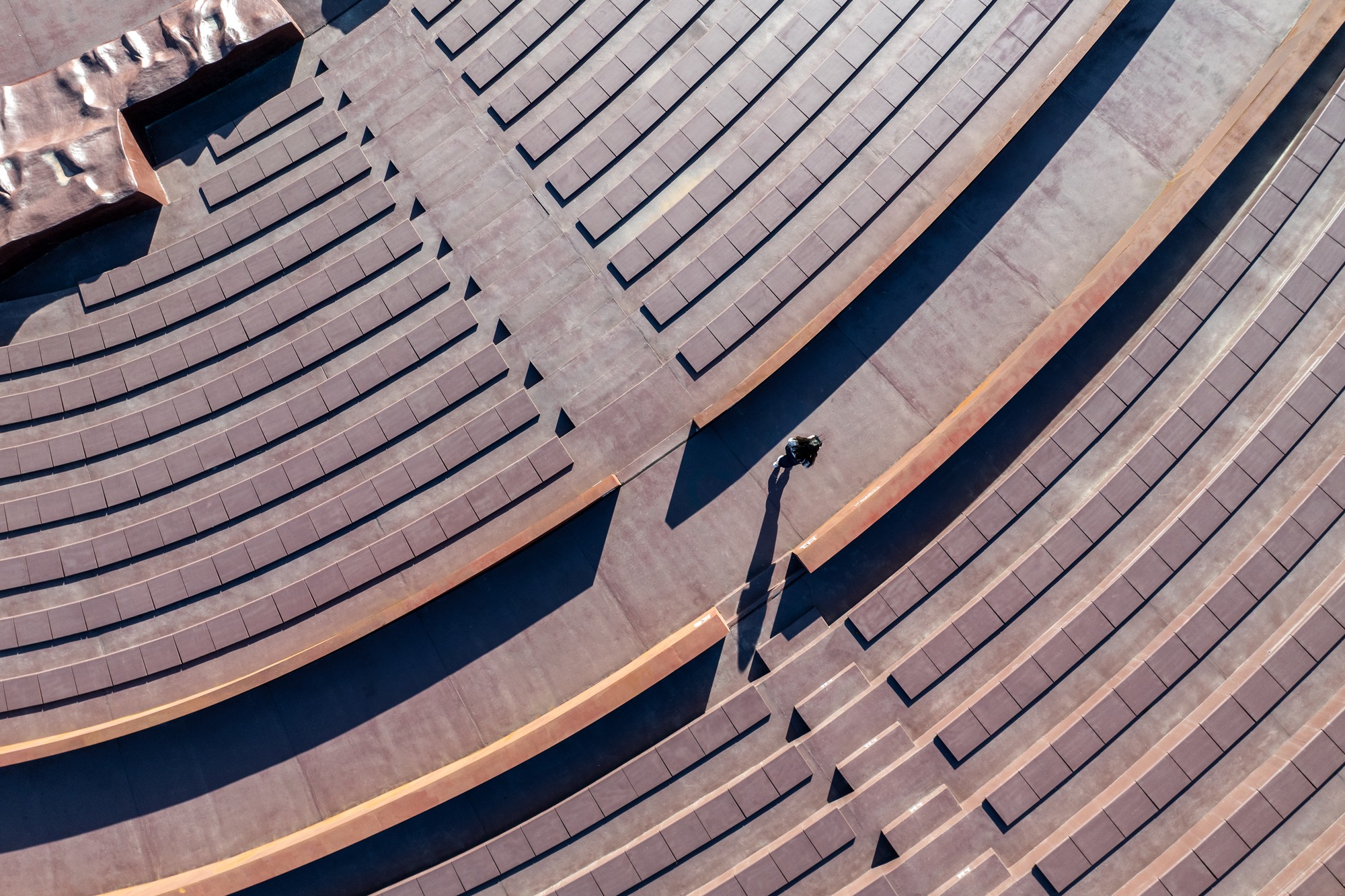
이 단단한 경계 지점을 지나면, 길은 지형을 따라 서서히 아래로 향한다. 물가를 따라 지그재그로 이어지는 계단식 데크를 걸을 수도 있고, 굽이치는 땅의 형태를 따라 흐르는 또 다른 길을 선택할 수도 있다. 두 갈래의 길은 관람객이 머무는 영역과 새들이 보호받는 영역을 자연스럽게 갈라놓는다. 새의 비행 궤적과 관람석의 경사를 정밀하게 계산해, 2300석 규모의 원형극장은 계곡 속으로 깊이 가라앉듯 자리했다. 맹금류가 관객의 눈높이에서 머리 위를 가로지르며 날아오를 때, 안전한 거리는 유지되면서도 가슴이 떨릴 만큼 강렬한 몰입감이 찾아온다.
새를 위한 건축, 흙에서 빌려온 질감
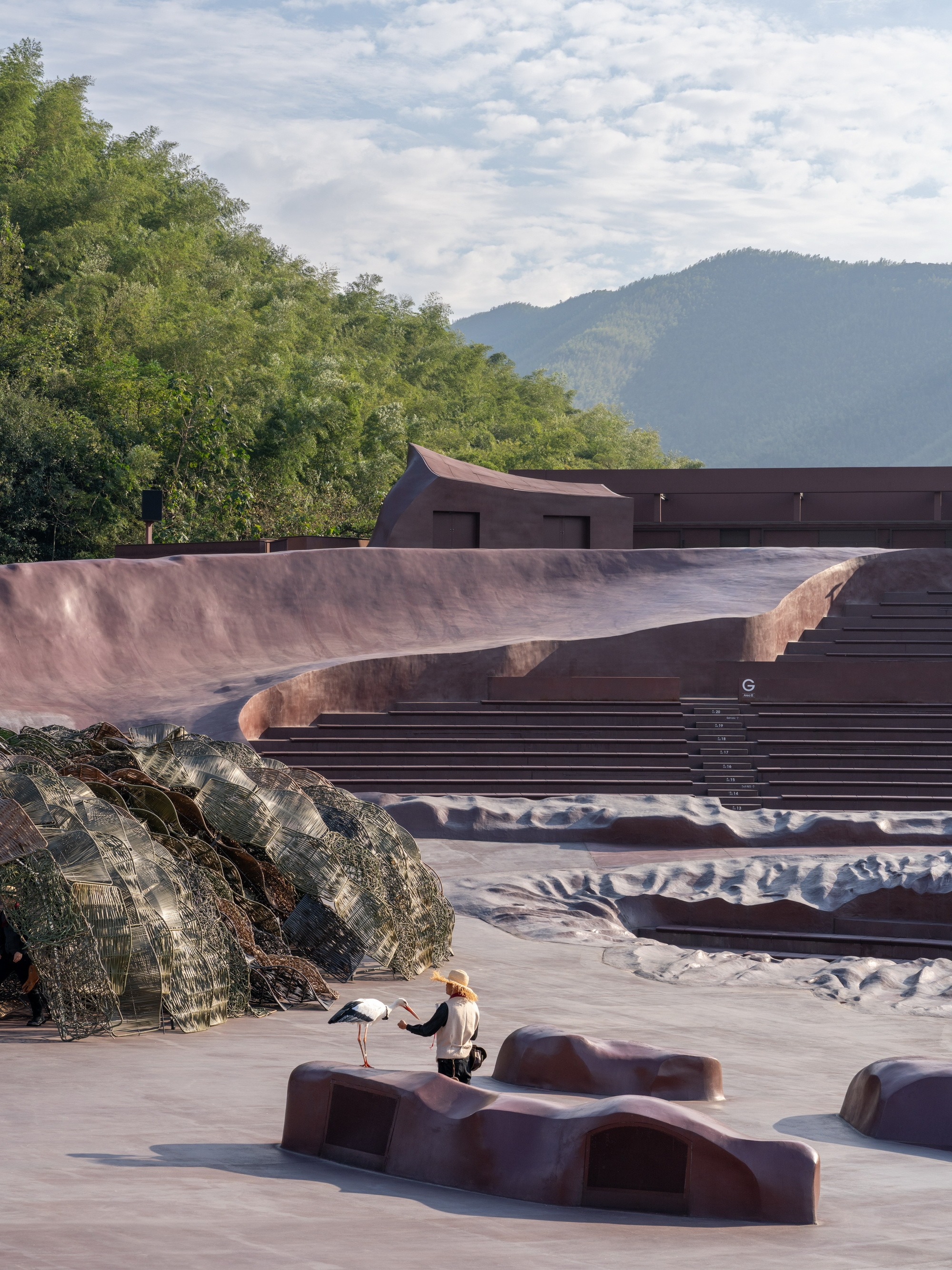
이 프로젝트는 건축적 논리와 무대 연출, 그리고 퓌 뒤 푸(Puy du Fou)의 조류 행동 전문 컨설팅이 동시에 맞물리며 진행된 다학제적 협업의 결과물이다. 새들에게 진정으로 친화적인 서식 환경을 만들기 위해, 정교한 인프라가 건축 구조 깊숙이 스며들어 있다. 깜빡임 없는 LED 조명 시스템은 독립적인 프로그램으로 작동하며 자연스러운 새벽과 황혼의 빛 변화를 재현해, 새들이 받을 수 있는 심리적 스트레스를 사전에 차단한다. 프랑스식 자동 슬라이딩 도어와 스푸트니크 모양의 둥지형 구조물은 새들이 스트레스 없이 자유롭게 드나들고 안전하게 돌아올 수 있도록 돕는다. 음향 또한 정밀하게 설계되었다. 고효율 지향성 라인 어레이 스피커는 소리를 객석 영역 안에만 머물게 해, 둥지 주변으로 새어 나가는 소음을 최소화한다.
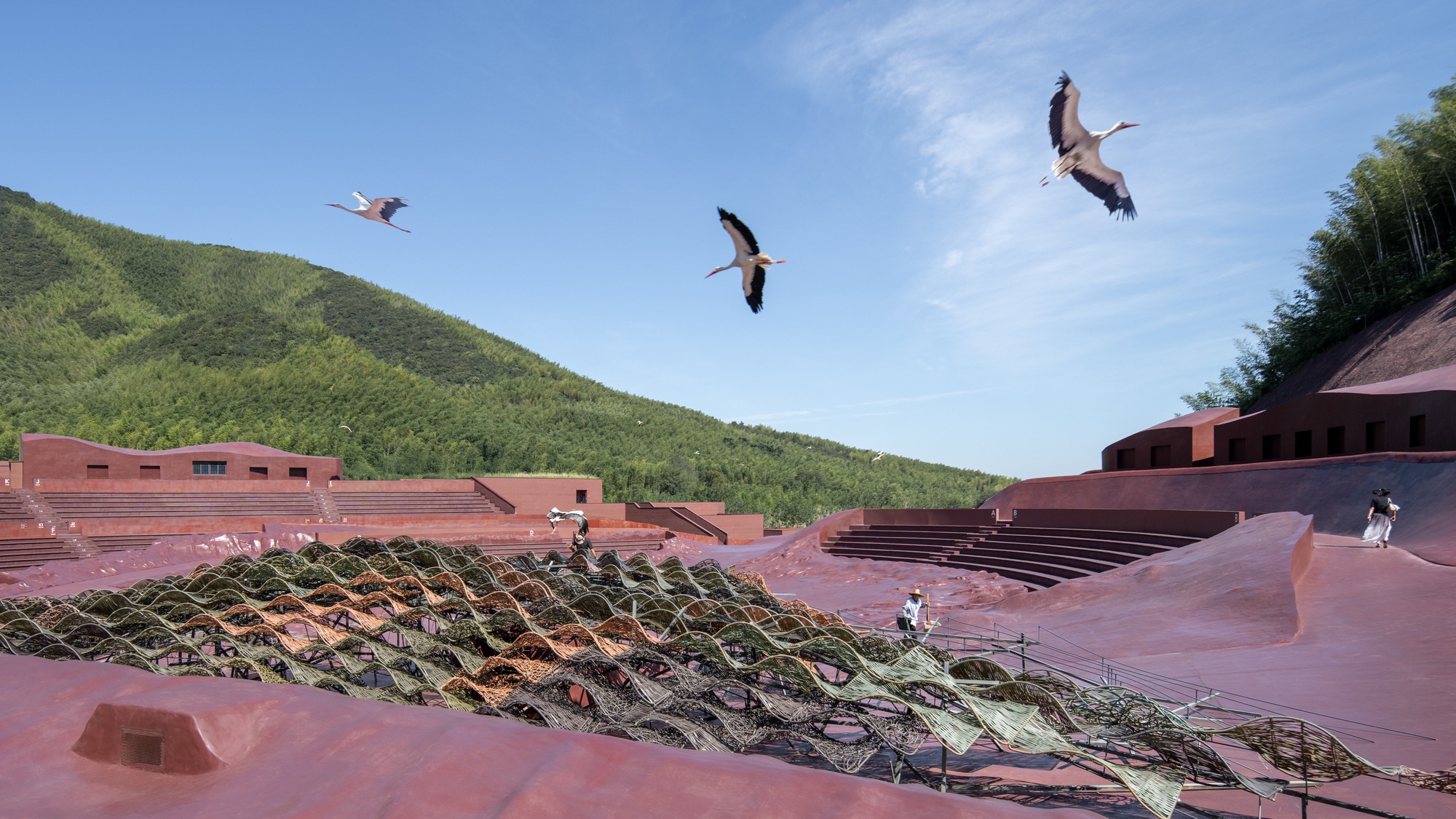
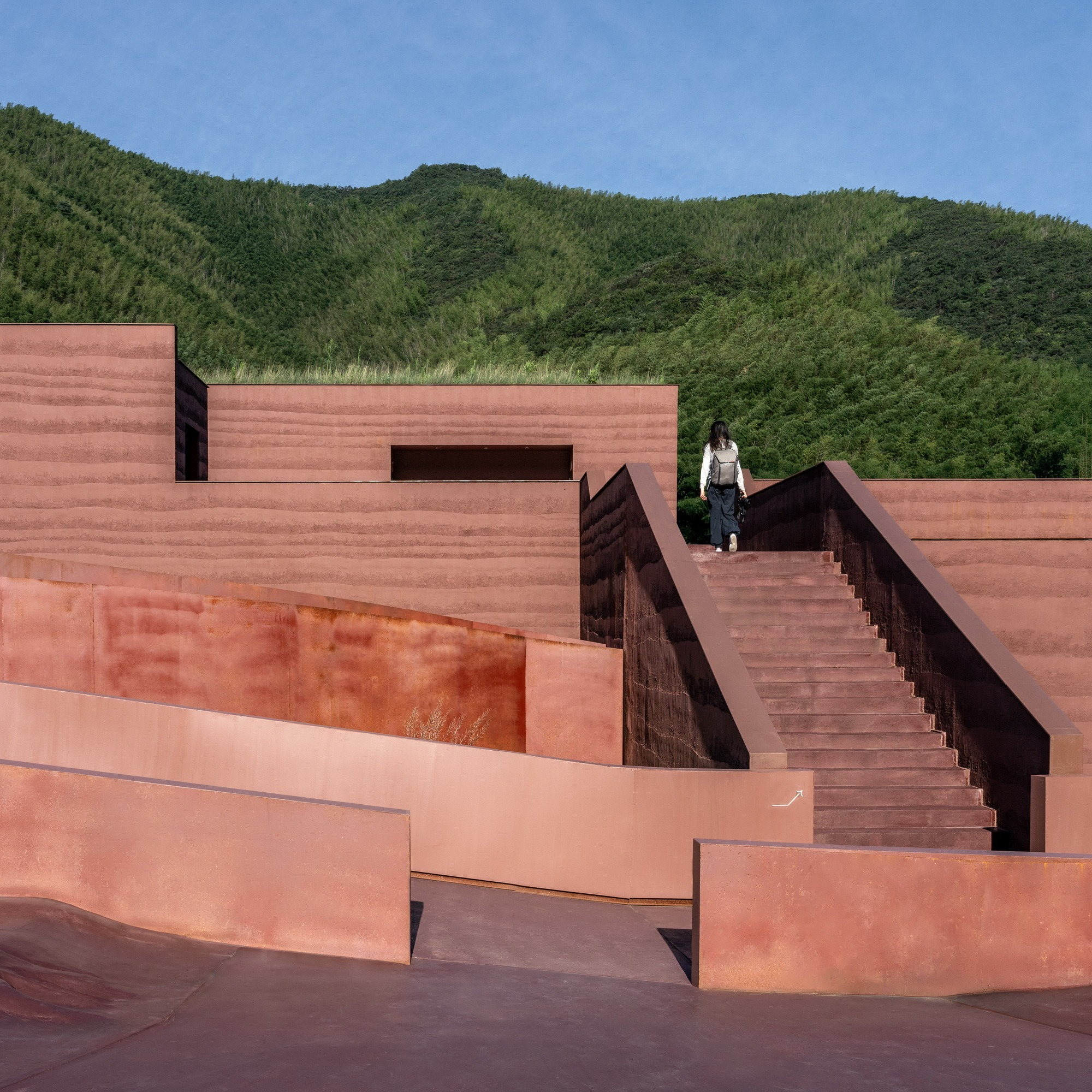
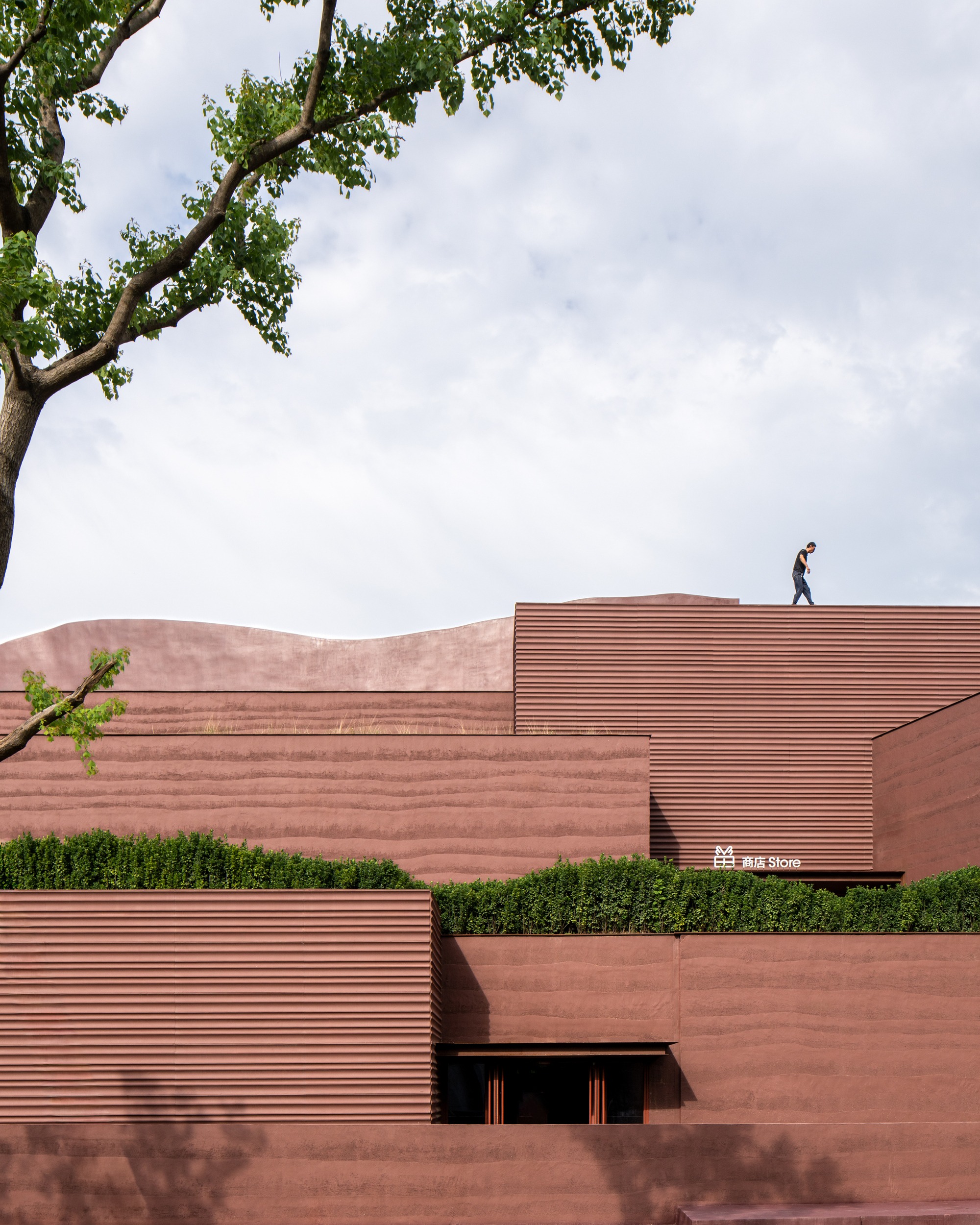
이 건축물의 물성은 지역의 전통 산업을 첨단 기술로 번역해낸 결과이기도 하다. 무대와 보행로를 이루는 공공 기단부는 CNC로 형태를 잡고 손으로 직접 다듬은 콘크리트에, 평방미터당 약 220위안 수준의 저비용 모조 흙다짐 코팅을 더해 거친 도자 흙의 질감을 그대로 재현했다. 모래로 씻어낸 듯한 거친 마감은 새들이 시각적으로 혼란을 느끼거나 미끄러져 다치는 일을 막아준다. 반면 새들이 머무는 영역은 가볍고 탄소 배출이 적은 경량 철골 구조에, 자유로운 형태로 짠 고밀도 폴리에틸렌(HDPE) 소재의 외피를 둘렀다. 이는 지역에서 전통적으로 사용해온 대나무 직조 기법을 닮은 모습으로, 오랜 시간 비바람을 견디면서도 눈부심을 줄이고 통풍을 원활하게 한다.
땅을 닮은 건축, 순환하는 풍경
지속가능성은 이 프로젝트의 태생적인 조건이었다. 설계 전반은 중국 녹색건축 평가기준의 투스타 등급 이상을 충족하도록 다듬어졌다. 극장의 움푹 들어간 자리를 만들기 위해 파낸 흙은 그대로 주변의 조형적인 경사지를 빚는 데 다시 쓰여, 부지 전체의 토공 균형을 이루어냈다. 계단식 관람석 아래에는 후방 시설들이 자리해 땅의 열적 질량을 활용한 자연 냉난방을 누리고, 계단식 녹색 지붕은 마치 고원의 정원처럼 펼쳐져 뛰어난 단열 효과를 더한다.
불규칙한 지형이 가진 본래의 모습을 지키기 위해, GOA는 BIM을 기반으로 한 정밀한 시스템 통합 작업을 타협 없이 진행했다. 산에서 흘러내리는 빗물은 계단식 단 사이에 숨겨진 슬롯형 배수로를 따라 흐르며, 이는 계곡에 원래 있던 홍수 배수로와 조경 수자원 순환 시스템으로 이어진다. 이 물은 다시 관개에 쓰이거나 계절성 홍수를 조절하는 데 활용된다. 멀티미디어 장비와 음향 기기, 무대 조명은 구조 이음새와 콘크리트 속 빈 공간에 매끄럽게 숨겨져 있다. 정교한 건축 엔지니어링과 새들의 생태가 한 호흡으로 맞물리면서, 어스 밸리 시어터는 인간과 자연이 다시 깊이 만나는 변화의 성소로 완성된다.
프로젝트 정보
건축: GOA (Group of Architects)
위치: 중국 이싱, 밍링 산맥
규모: 9,200제곱미터, 2,300석 규모 야외 원형극장
협업: Puy du Fou (조류 행동 컨설팅)
인증: 중국 녹색건축 평가기준 투스타 이상
Write by Claude & Jean Browwn



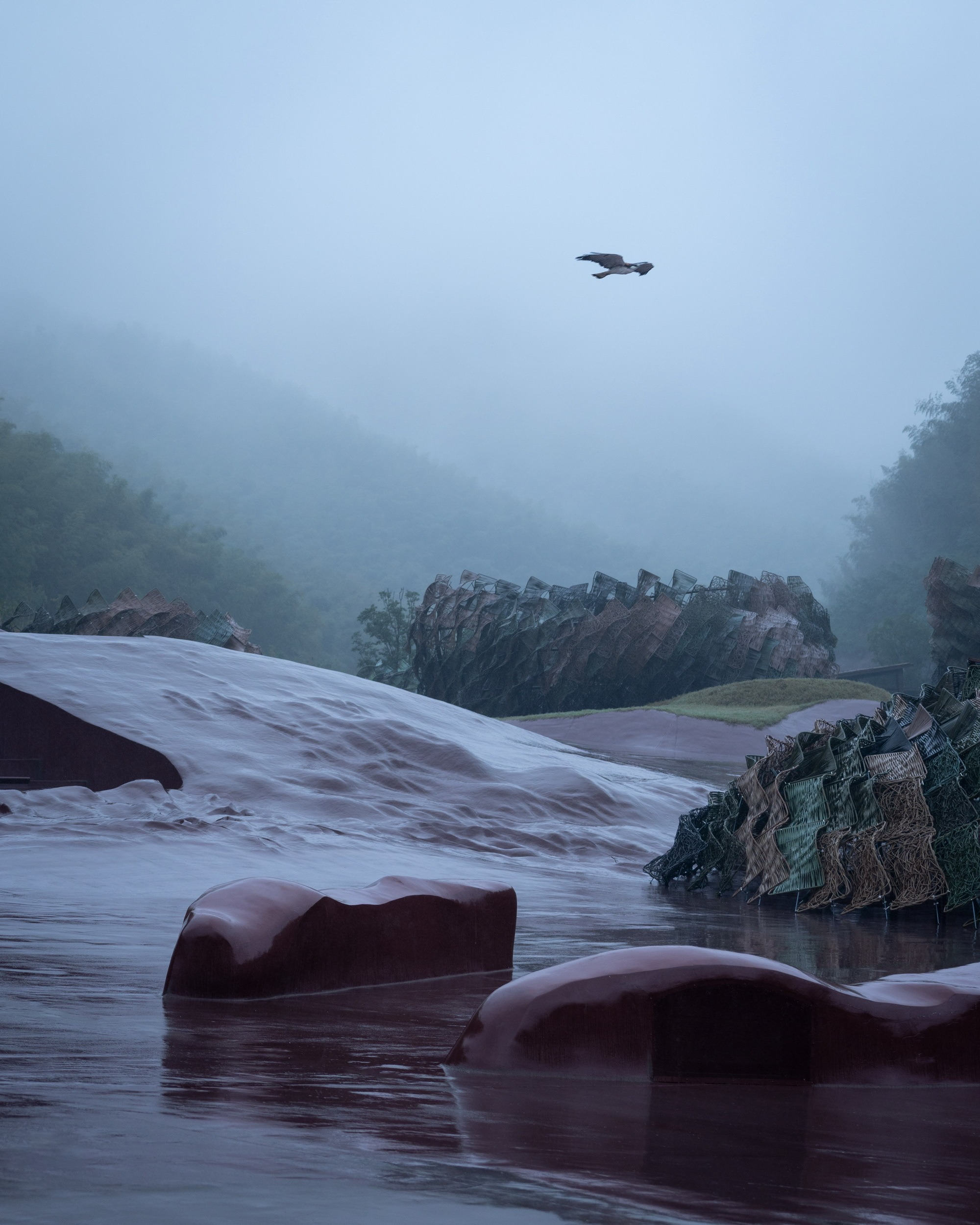
Nestled in the valleys of Mingling Mountains near Yixing, China's "Pottery Capital," the Earth Valley Theater is a pioneering 9,200-square-meter open-air venue dedicated to human avian interaction. Designed as an integrated "total work of art" (Gesamtkunstwerk), the project transcends traditional boundaries between architecture and landscape. Conceived as an alternative to traditional, anthropocentric enclosed aviaries, the theater functions as a piece of responsive land art that facilitates genuine interspecies cohabitation and autonomous avian flight.
Topography and Spatial Experience - The architectural layout utilizes a unique, naturally formed T shaped valley where a narrow east-west corridor intersects a larger north-south valley. The spatial sequence begins at the northern entrance, where three individual plazas connect to three cuboid entrance halls integrated into an overlapping geometric complex. This configuration efficiently structures the arrival by bifurcating spectator circulation from the outset.
From this hard interface, the design leverages the natural topography to offer descending roaming paths into the theater. Visitors can choose a continuous, zigzagging stepped deck along the water's edge or paths shaped by the undulating landforms. These paths naturally separate spectator entry from the protected aviary zones. By precisely calibrating bird flight trajectories with spectator seating slopes, the strategic "sinking" of the 2,300 seat amphitheater into the valley minimizes environmental intervention. Raptors can sweep autonomously over the audience at eye level, creating an intense, visceral sense of immersion while maintaining safe biological distances.
Avian-Oriented Design and Materiality - Developing the project required a cross-disciplinary co curation process where architectural logic developed in parallel with theatrical direction and Puy du Fou's avian behavioral consultancy. To achieve an absolute "avian-friendly" habitat, specialized infrastructures are deeply embedded into the architecture. The aviaries utilize independent programmers with flicker-free LED systems to simulate natural dawn and dusk transitions, preventing psychological distress in the birds. Automated French-style sliding doors and "Sputnik" boxes facilitate autonomous flight and stress-free homing. Furthermore, acoustics are precision-managed via high-efficiency directional line-array speakers that restrict sound propagation strictly to the audience zone, minimizing decibel spillover into nesting areas.
The project's materiality reinforces its regional identity through high tech translations of traditional local industries. The public plinth and performance areas utilize CNC-shaped, hand-sculpted concrete paired with cost-effective imitative rammed-earth coatings (approx. 220 RMB/$m^2$) to replicate the tactile, rustic texture of raw pottery. This rough, sand-washed finish prevents avian visual disorientation and slipping injuries. Conversely, the aviary zone employs a lightweight, low-carbon steel system wrapped in a skin of free-form woven High-Density Polyethylene (HDPE) components. This mimics traditional local woven bamboo fiber while offering long-term weather resistance, natural glare reduction, and optimal ventilation.
Sustainability and Technical Integration Sustainability is fundamentally embedded in the project's DNA, with the design strictly adhering to the Two-Star Rating or higher of China's Green Building Evaluation Standard. The project achieves a site-wide earthwork balance by reusing excavated soil from the theater's sunken pit to form the surrounding sculptural slopes. Back-of-house functions are tucked beneath the terraced amphitheater, utilizing the earth's thermal mass for natural heating and cooling, while stepped green roofs act as "plateau gardens" to provide superior insulation.
To preserve the structural integrity of the irregular landform, GOA executed an uncompromising, BIM directed system integration. Complex mountain surface-water runoff is managed via hidden slot-drainage networks embedded along the terraced steps. These rainwater runoff systems feed directly into the valley's existing flood channels and landscape water recycling loops, which simultaneously supply irrigation and manage seasonal flood discharges. Multimedia equipment, acoustic devices, and theatrical lighting are flush-mounted or hidden entirely within structural joints and carved concrete cavities. By seamlessly aligning rigorous architectural engineering with avian ecology, the Earth Valley Theater creates a transformative sanctuary where humanity and nature reconnect in a profound spatial dialogue.
from archdaily