"벽돌은 내게 말을 건다. 벽돌은 내게 무엇이 되고 싶냐고 묻는다."— 루이스 칸(Louis Kahn)
 |
 |
 |
brick chambers and cavernous passages shape this 'anthill' house in india
대지에서 솟은 붉은 둔덕
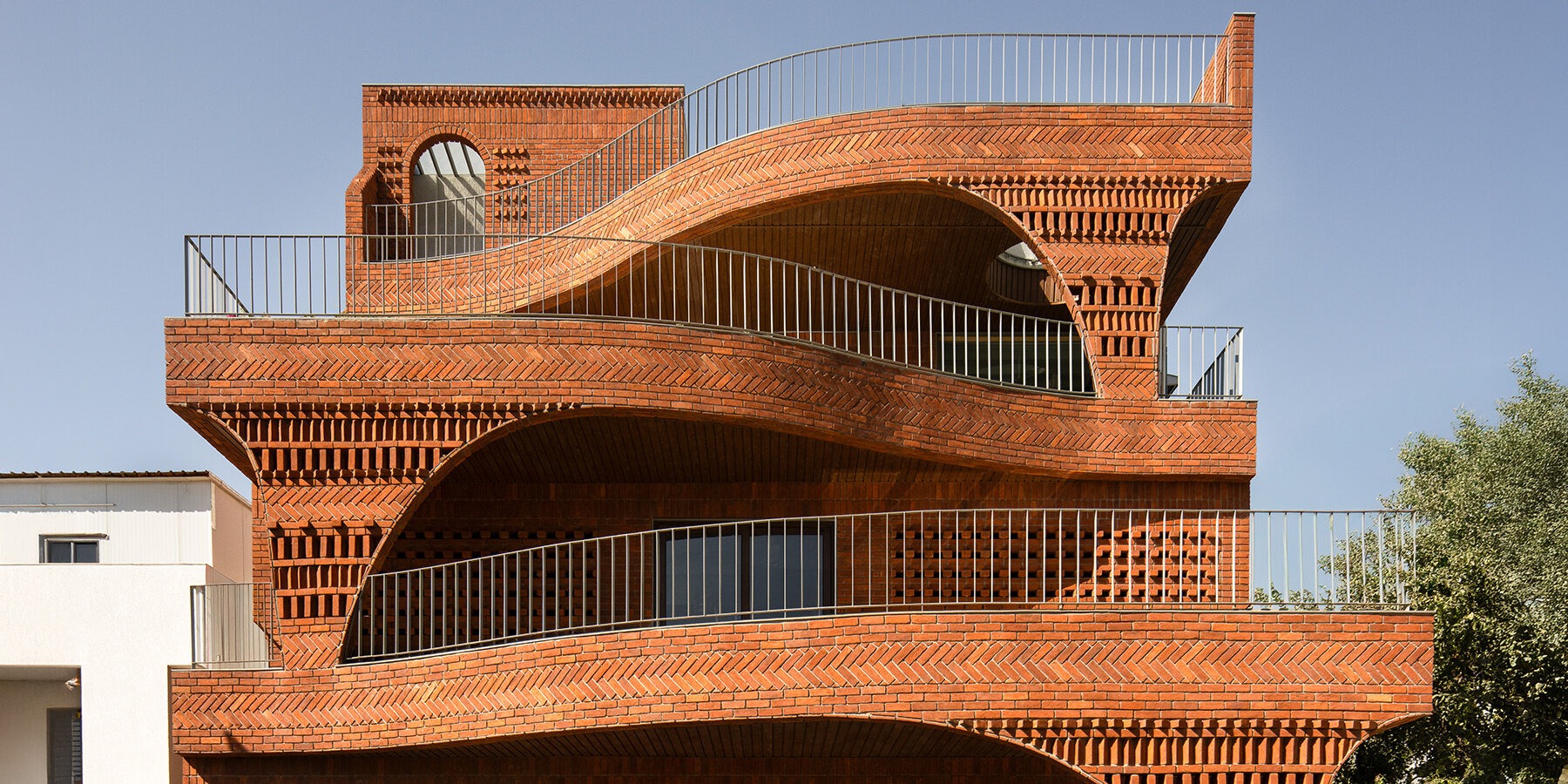
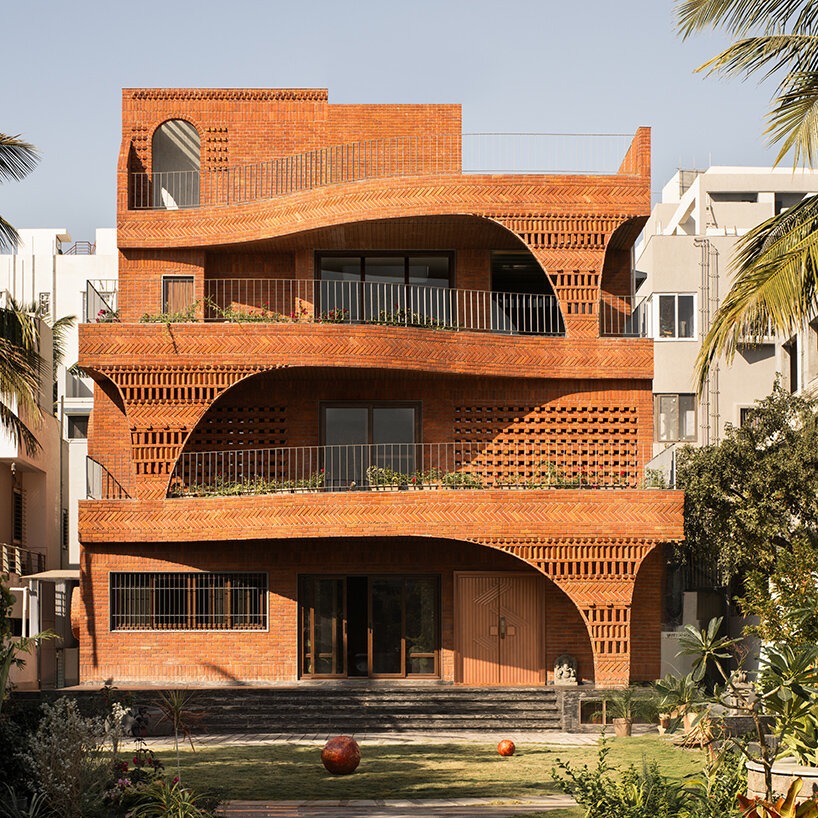
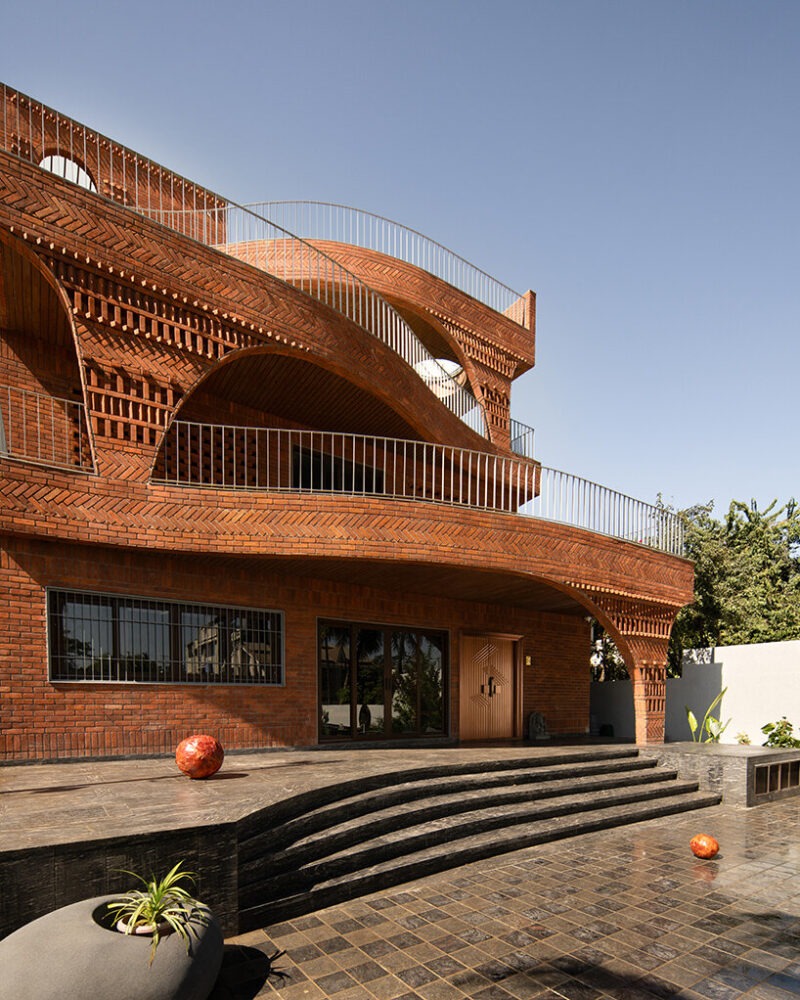
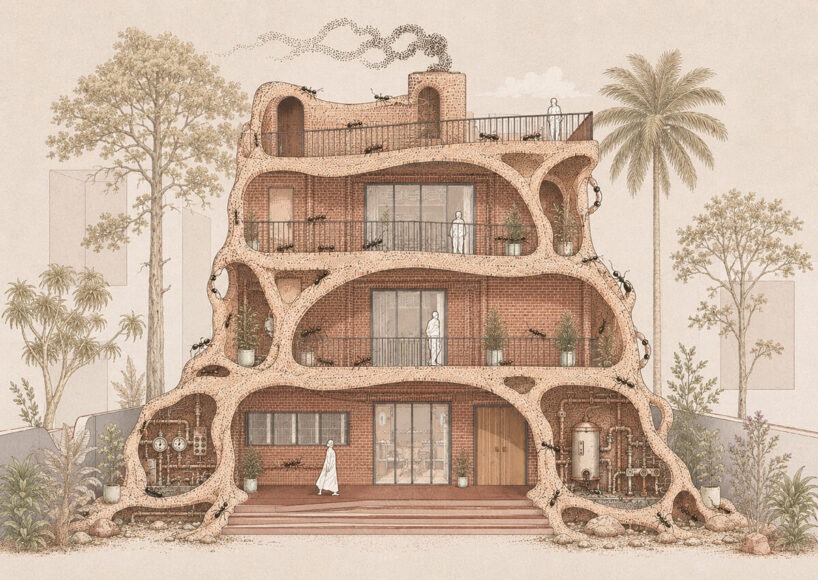
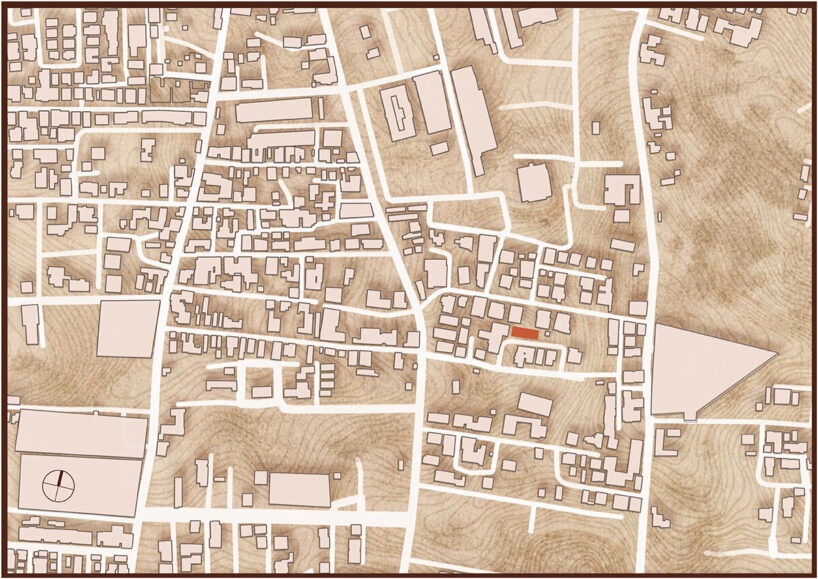
인도 마하라슈트라주의 도시 아힐야나가르(Ahilyanagar). 빛이 강하고 공기가 건조한 이 땅에, 붉은 벽돌로 쌓은 집 하나가 낮게 엎드려 있다. 멀리서 보면 마치 대지의 일부가 부풀어 오른 것처럼 보인다. 이름도 그렇다 — 앤트힐(The Anthill), 개미집. 카우샬 타티야 아키텍츠(Kaushal Tatiya Architects)의 수석 건축가 카우샬 수레시 타티야(Kaushal Suresh Tatiya)와 스위티 무타(Sweety Muttha)가 설계한 이 집은, 개미가 흙을 쌓아 올려 방과 통로와 환기구를 만들어내듯, 자연의 건축 원리를 주거 공간으로 번역한 결과물이다.
약 650㎡(약 197평) 규모의 단층 주택은 처음부터 뜨겁고 건조한 기후를 받아들이는 방식으로 설계되었다. 에어컨과 기계 냉방에 기대는 대신, 교차 환기와 자연 냉각을 집의 중심 원리로 삼는다. 외피는 두껍고 단단하게 닫혀 있지만, 그 안에서는 중정과 채광창과 그늘진 전이 공간이 숨을 쉬며 열린다.
개미집의 공간 원리
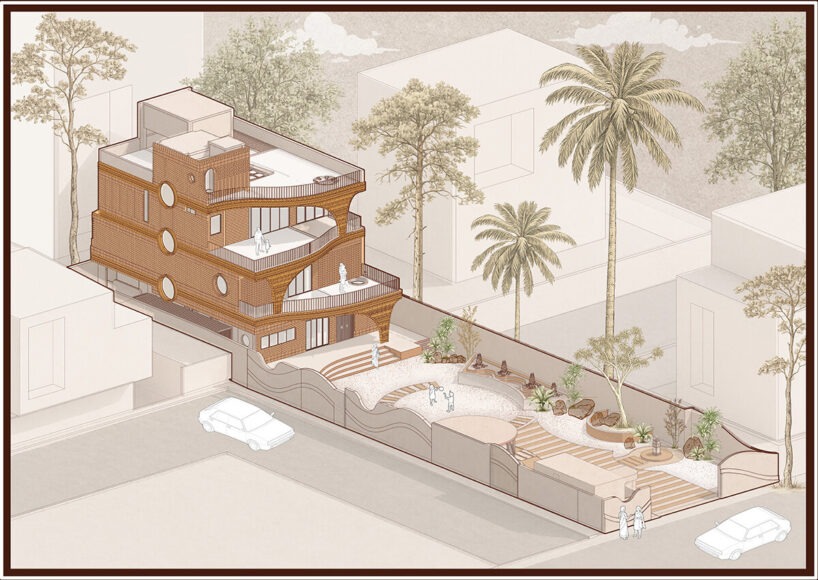
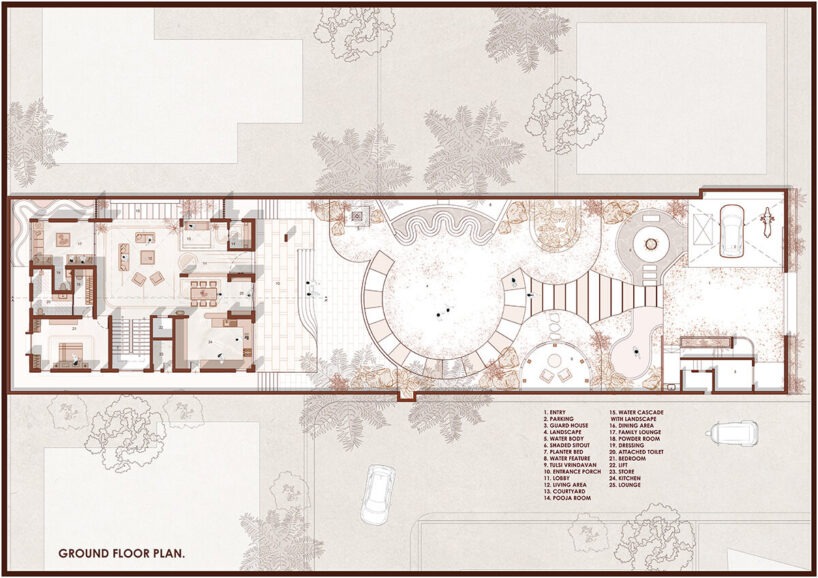
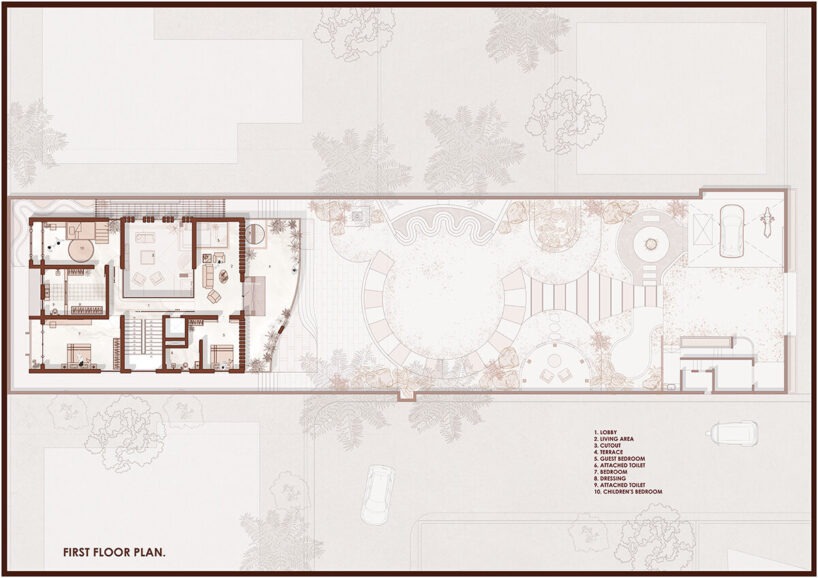
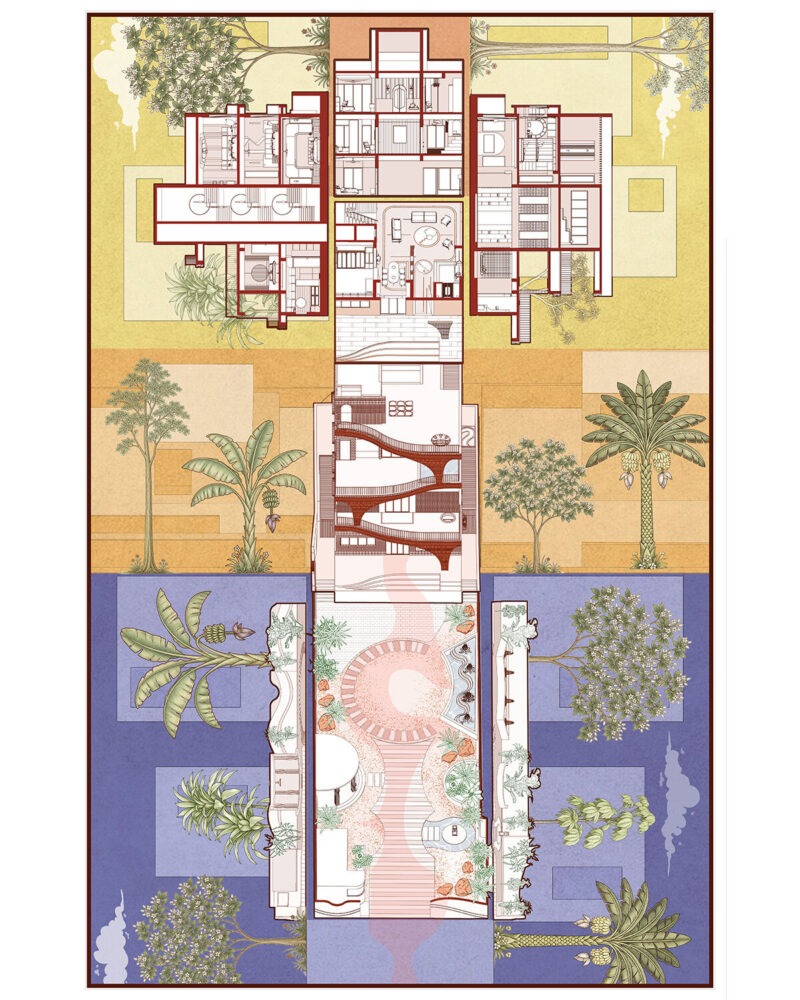
카우샬 타티야 아키텍츠가 개미집에서 빌려온 것은 형태만이 아니다. 공간을 조직하는 논리 자체를 가져왔다. 이 집은 크고 작은 방들이 서로 연결된 방실(chamber)의 연속으로 구성되어 있다. 넓고 개방적인 공용 공간에서 방이 가지를 뻗어 나오고, 그 사이를 좁은 통로가 이어준다. 거주자는 집 안을 걸으며 압축과 확장을 반복하는 공간의 리듬을 몸으로 느낀다.
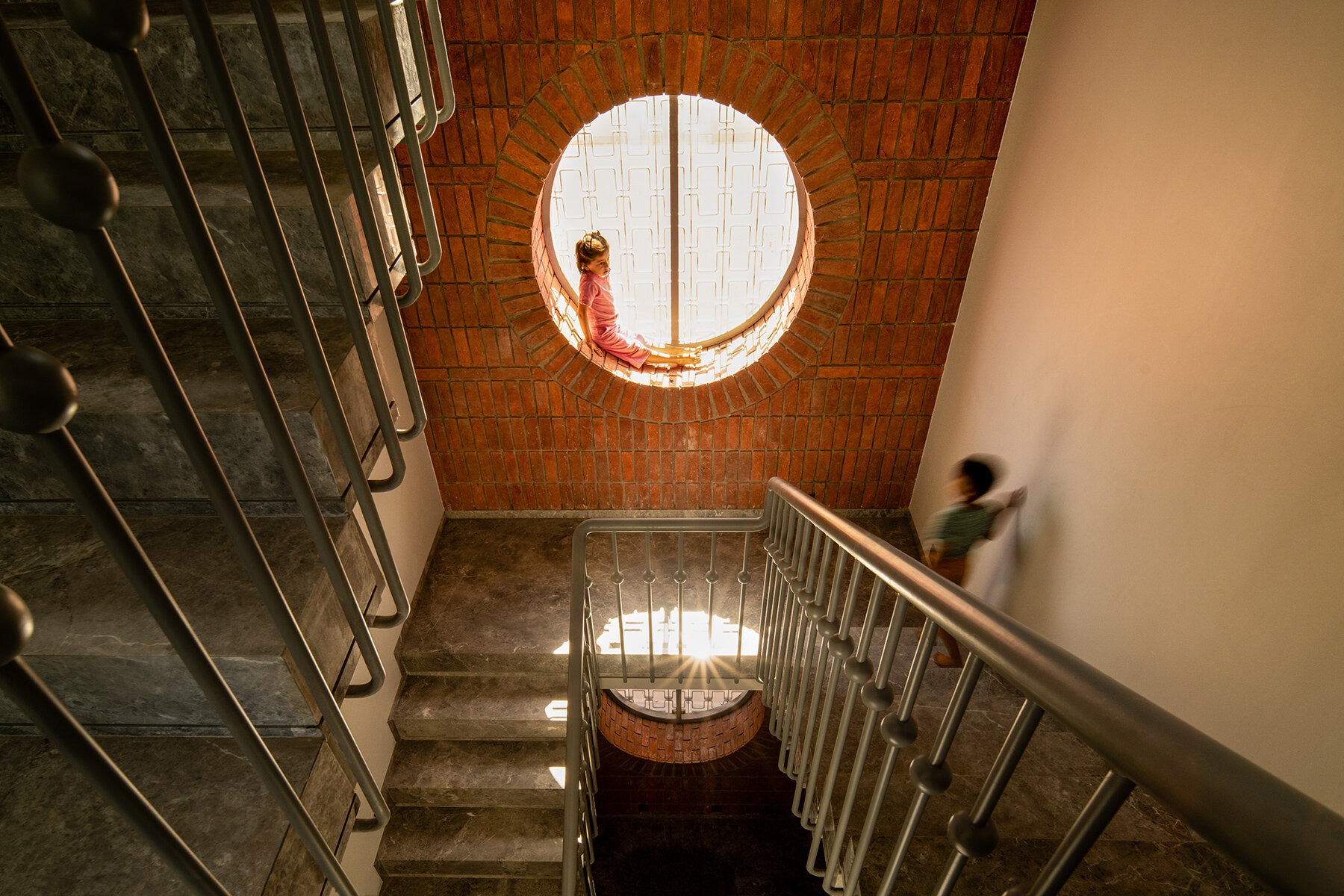
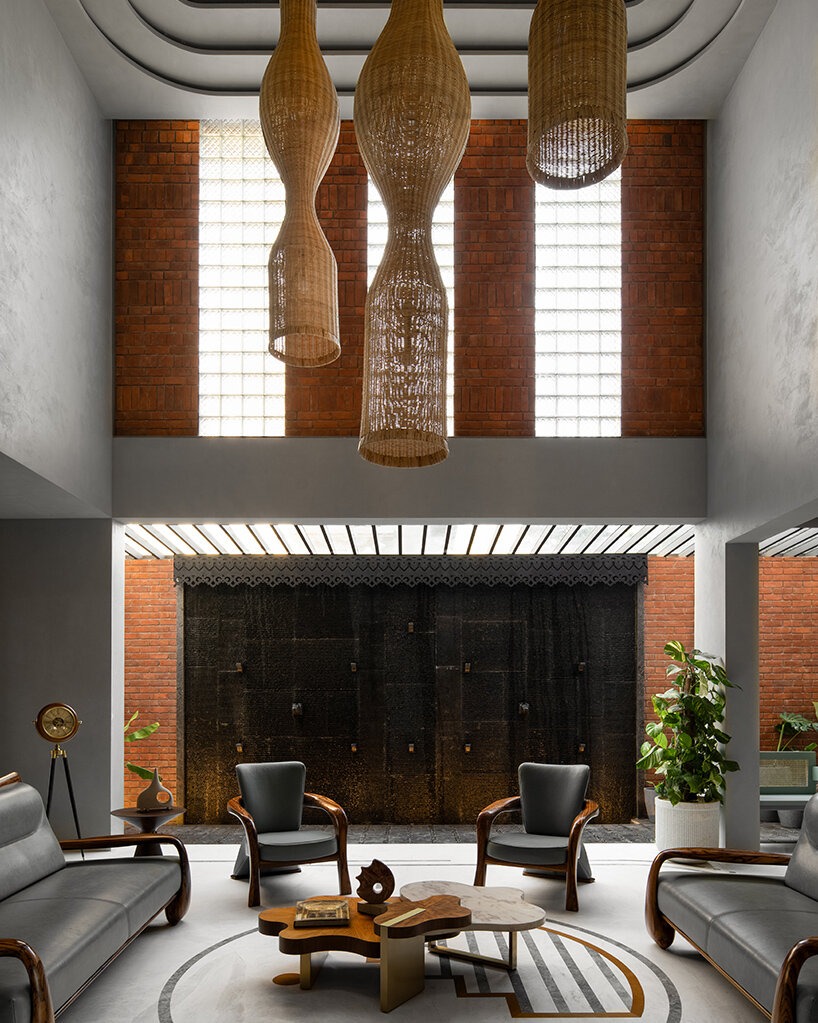
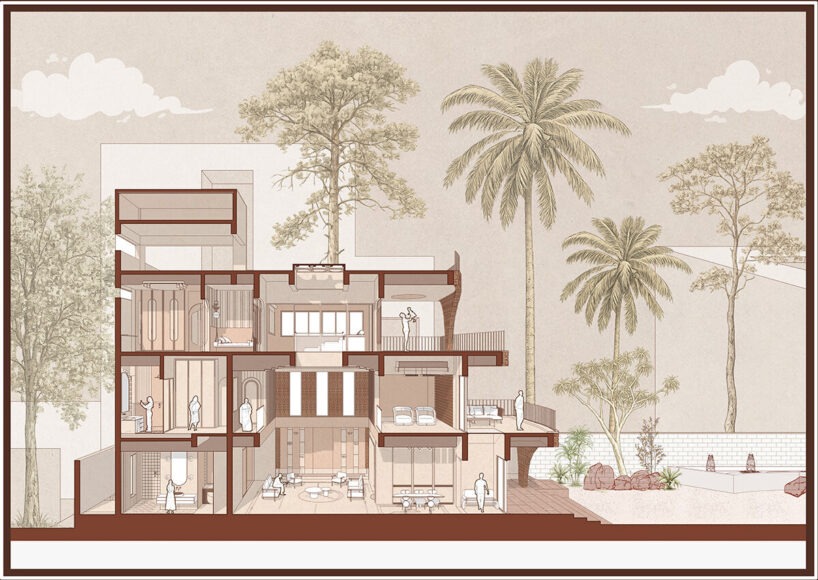
거실에 이르면, 안쪽으로 길게 뻗은 중정이 빛과 공기를 끌어들인다. 수경 시설(water cascade)이 그 중심에 놓여, 물소리와 함께 공기의 온도를 낮춘다. 천장 높이는 구간마다 달라지고, 빛은 투과된 격자를 통해 패턴으로 흘러든다. 이동이 곧 건축이 되는 공간이다.
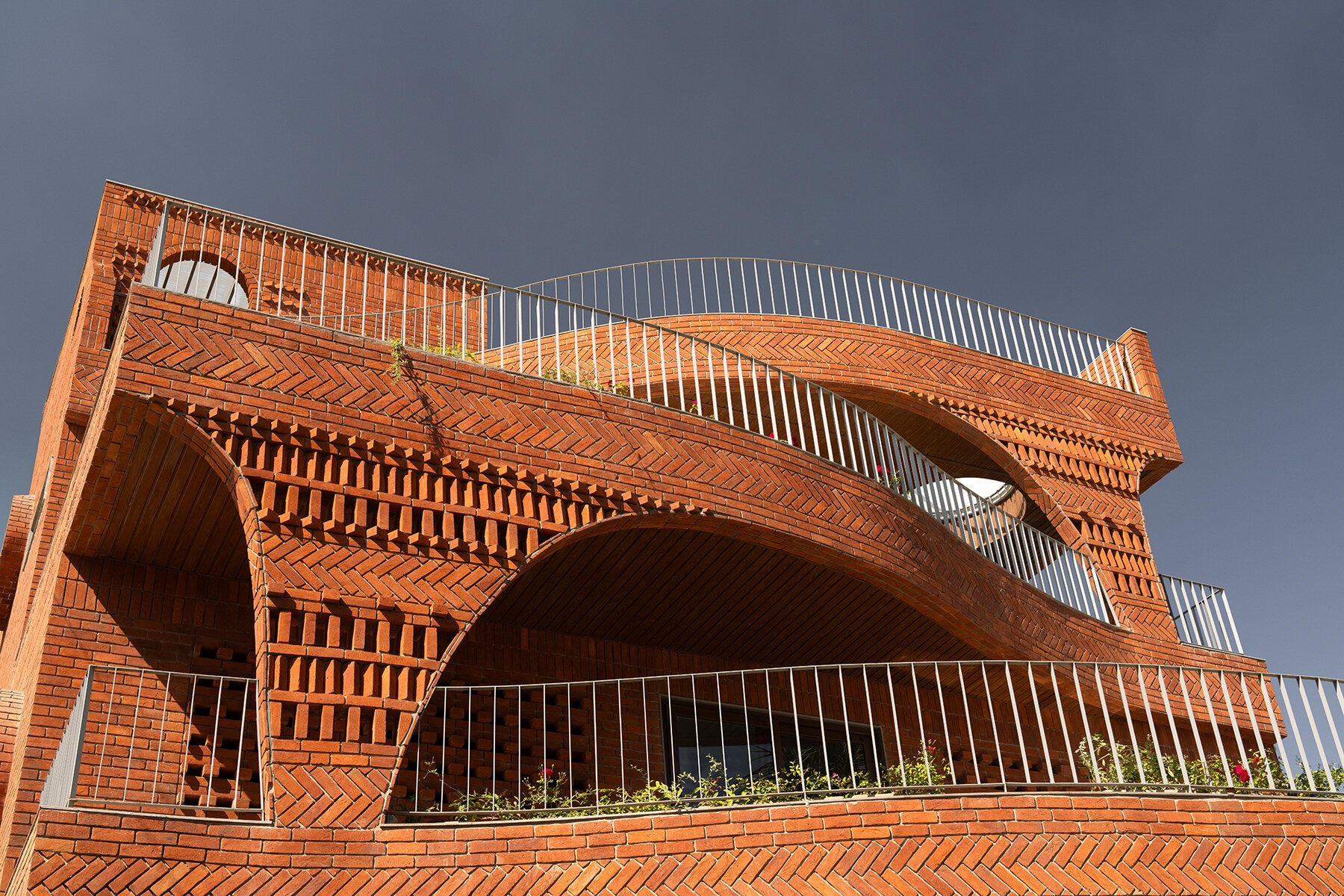
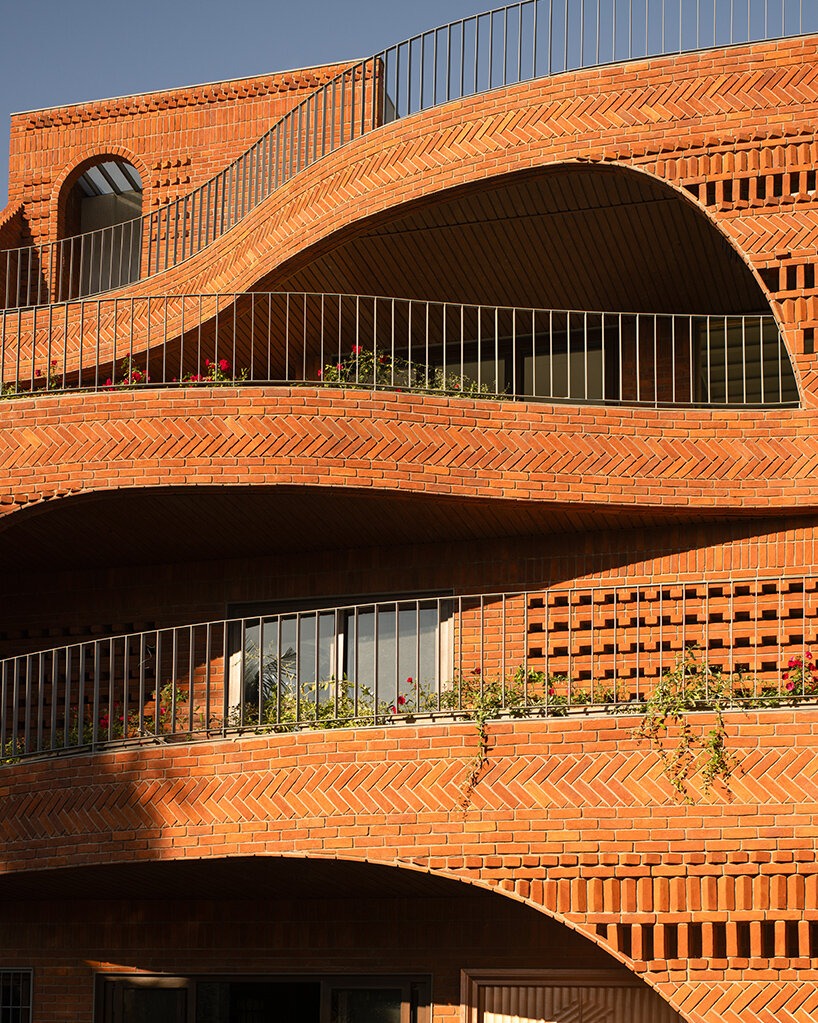
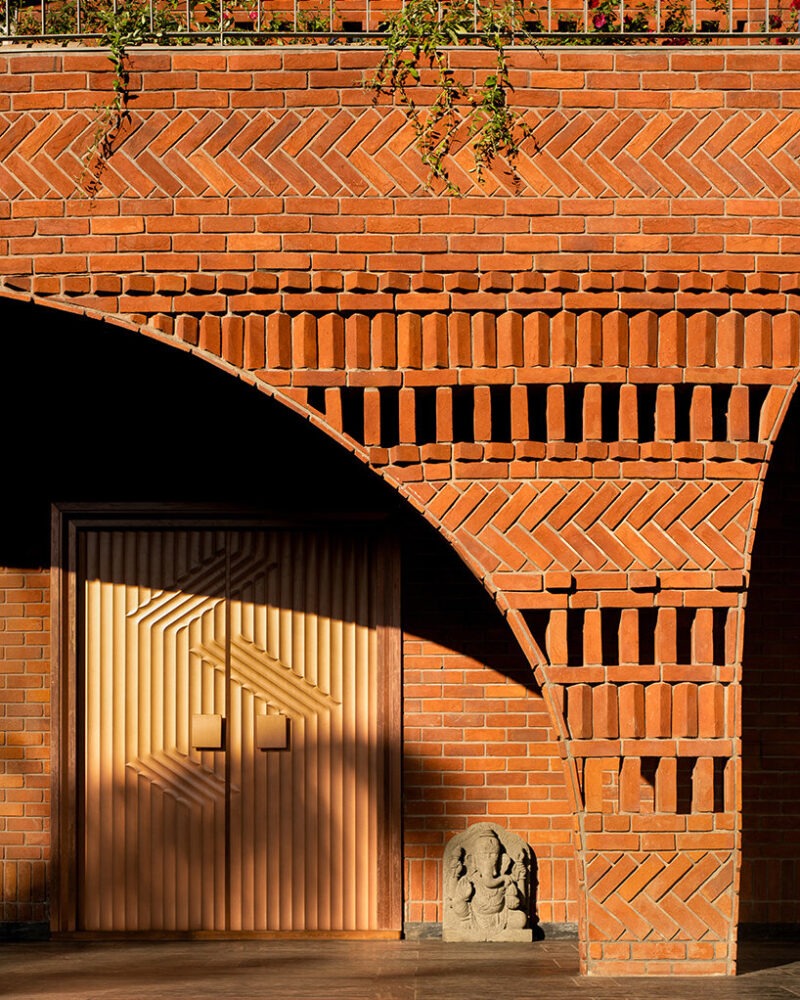
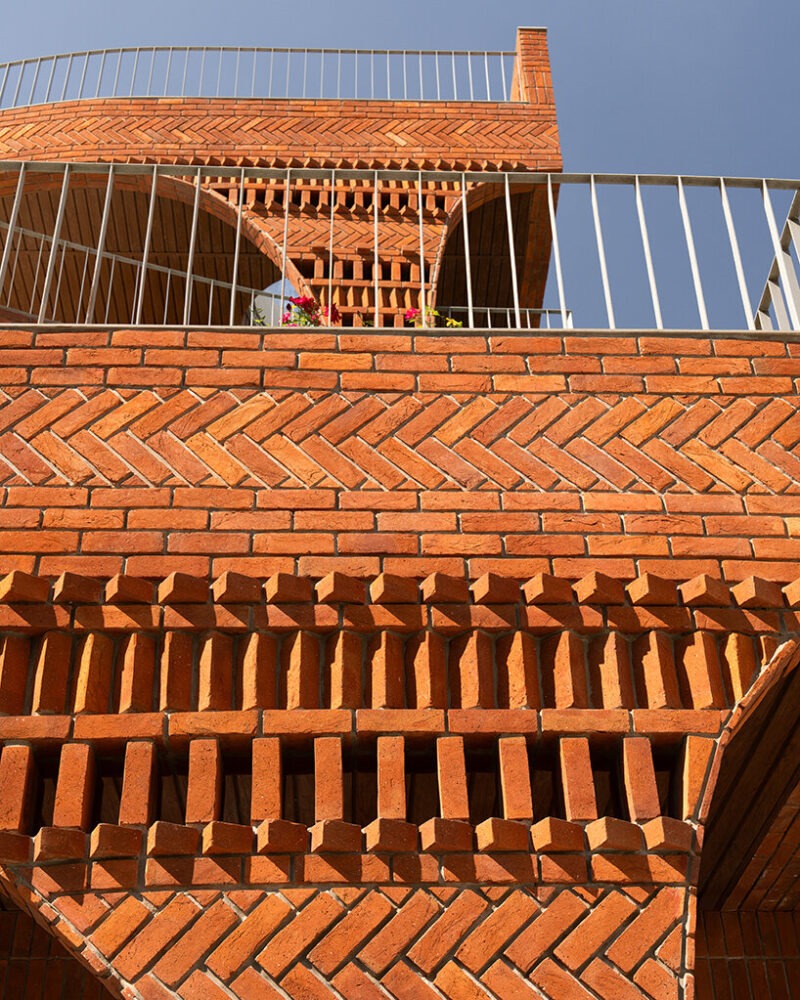
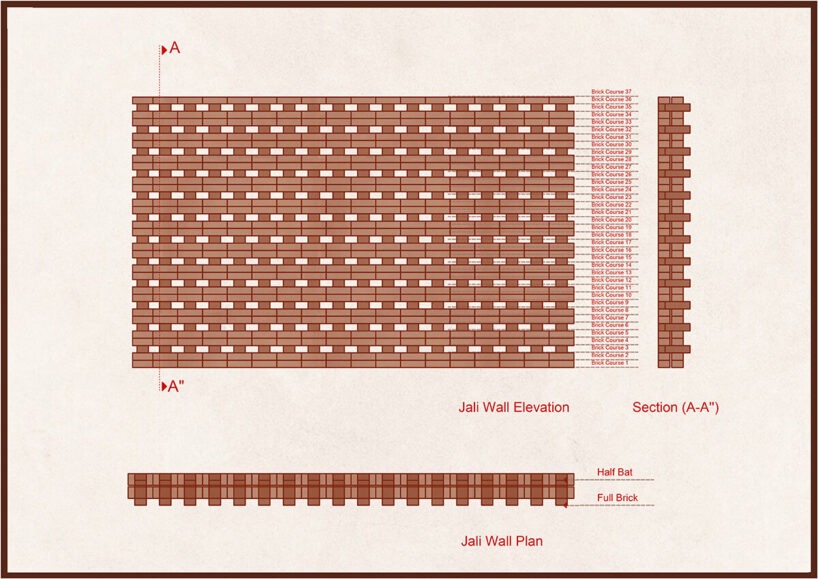
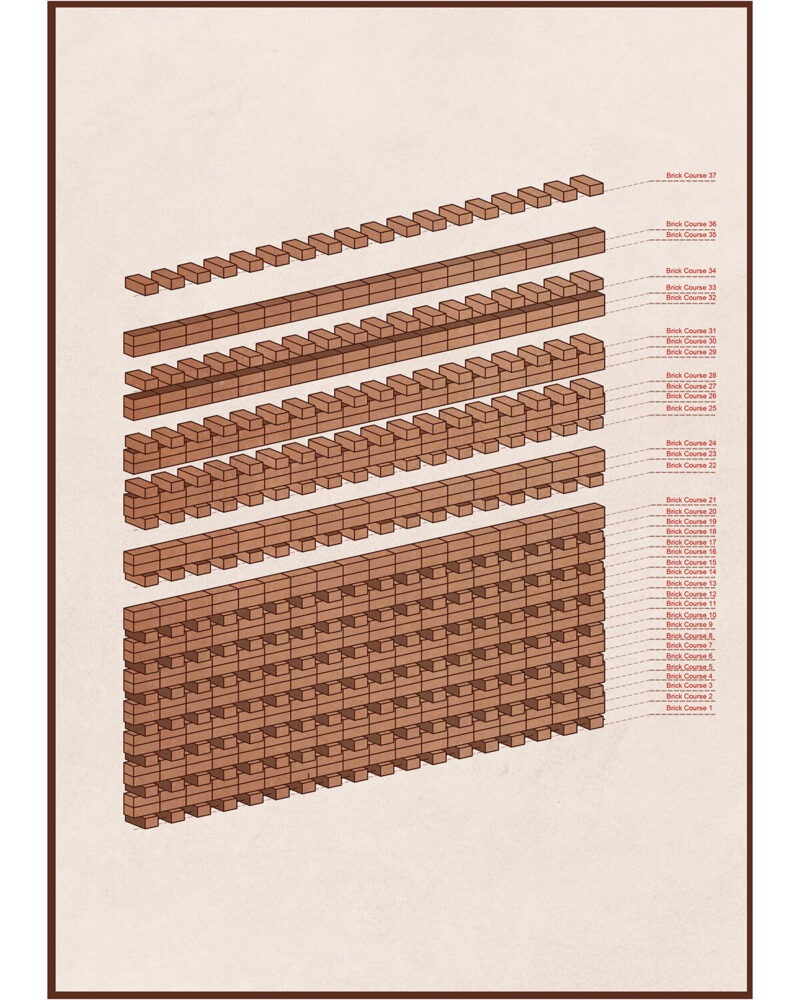
공기의 흐름을 다스리는 것은 벽돌 자리(jali — 전통적인 벽돌 격자 루버)와 환기 샤프트다. 이 둘은 공기를 집 안으로 끌어들인다. 이 흐름이 굴뚝 효과(더운 공기가 위로 빠져나가는 자연 환기 방식)를 만들어, 기계 없이도 단면 전체의 온도를 다스린다. 그 논리는 외피까지 이어진다. 격자 형태의 벽면 곳곳에 뚫린 작은 구멍들이 강한 햇빛을 걸러내고, 내부로는 빛의 패턴을 드리운다.
벽돌이 만드는 온도의 외피
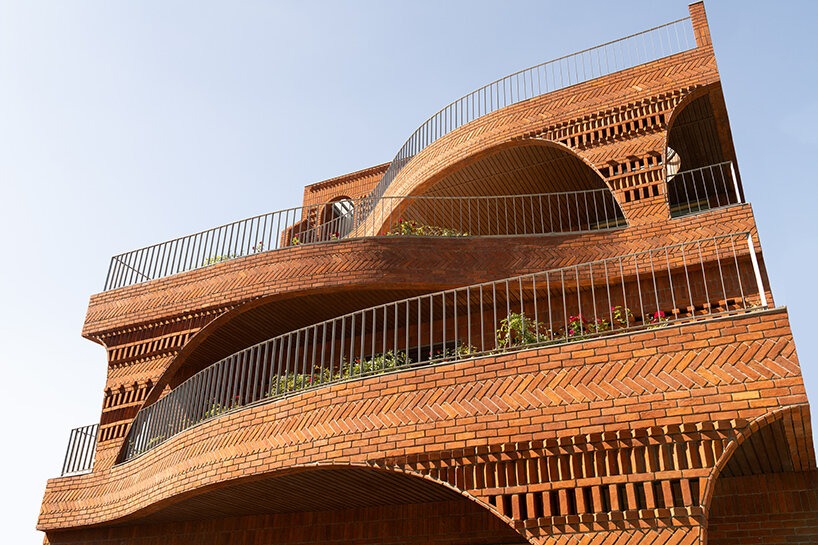
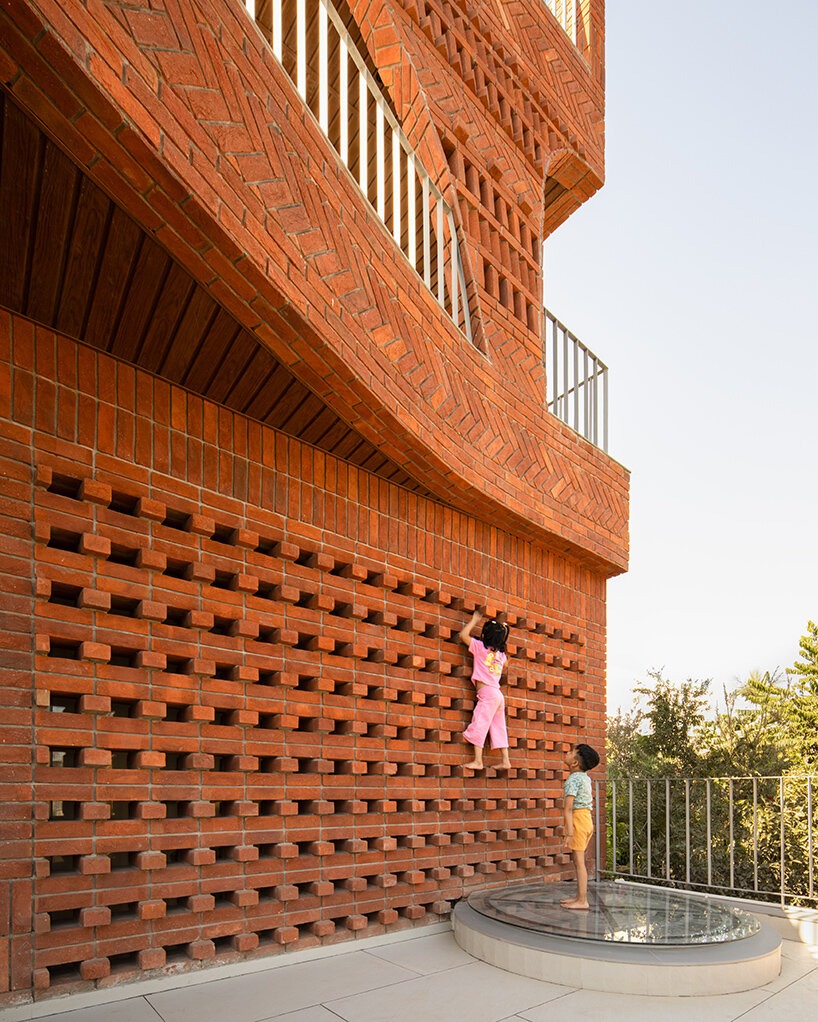
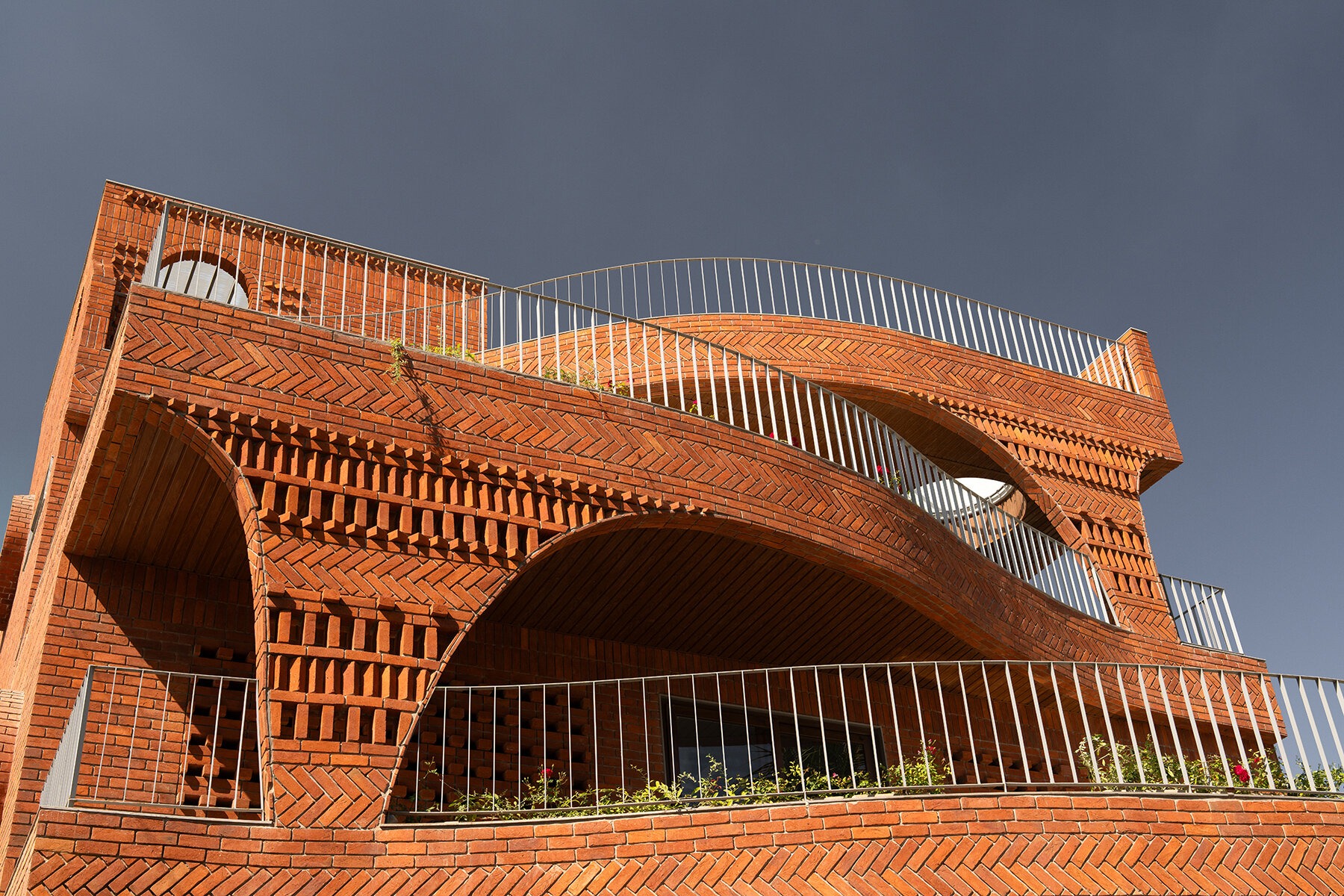
소재는 철저히 땅에 붙어 있다. 노출 벽돌이 집 전체의 건축 언어를 이끌고, 테라코타와 석회 플라스터, 현지에서 가져온 석재와 목재가 그 뒤를 받친다. 헤링본(herringbone) 패턴으로 쌓인 붉은 벽돌은 외피에 묵직한 질량감을 부여하는 동시에, 작은 틈새와 켜진 공동(空洞)을 통해 집이 숨을 쉬게 한다. 손끝으로 벽을 쓸면 그 거칠고 밀도 있는 감촉이 그대로 전해진다.
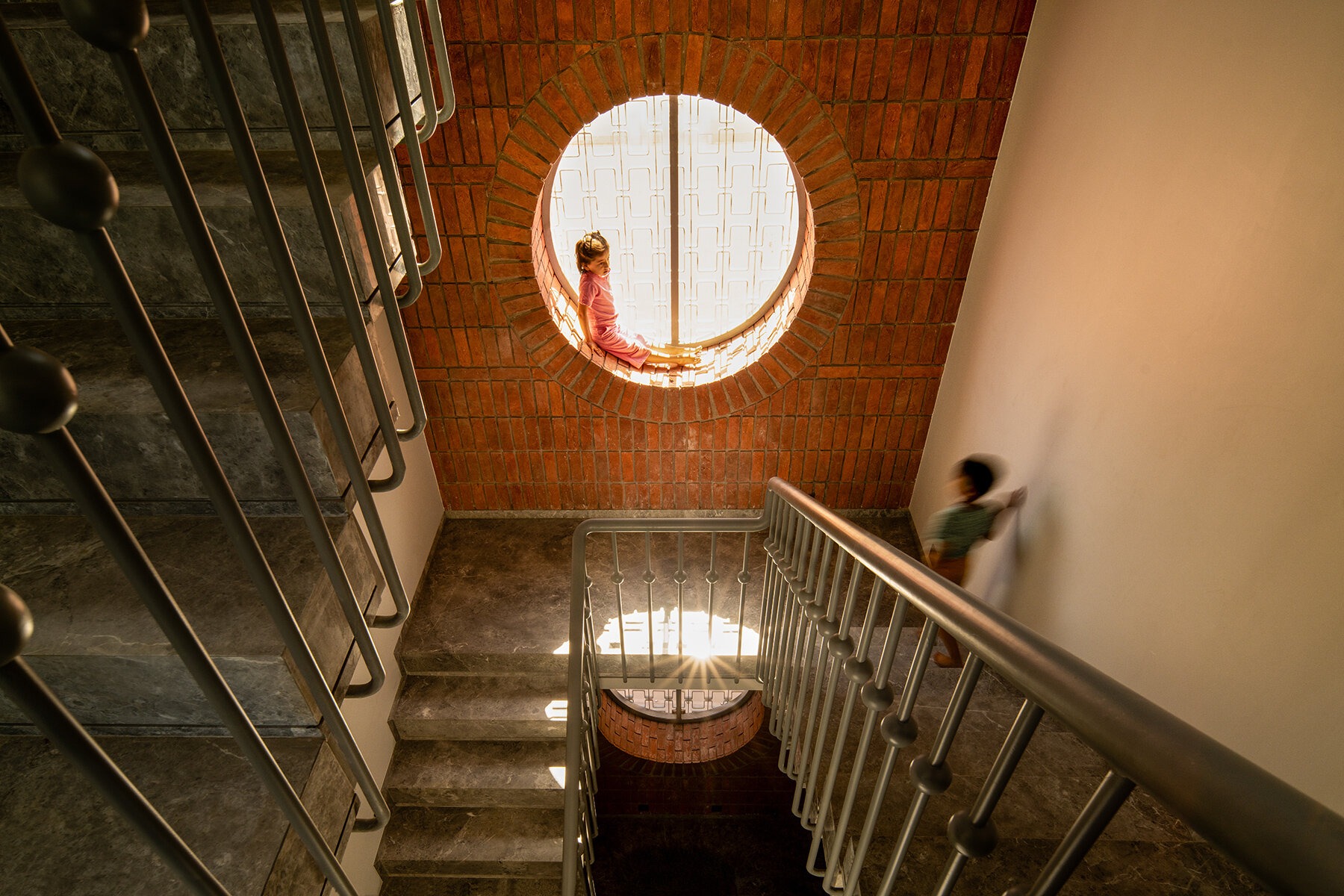
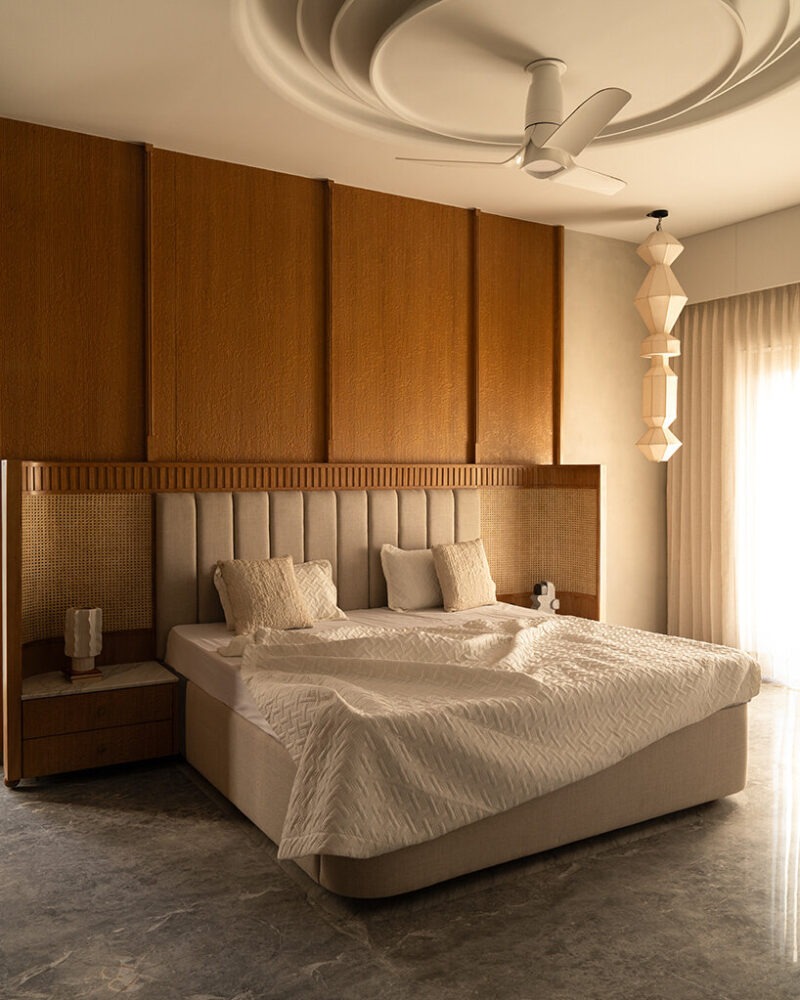
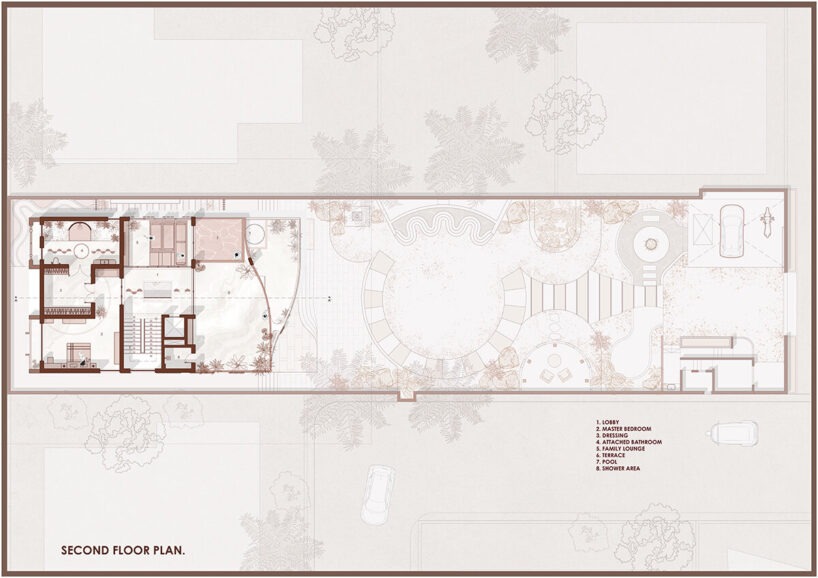
건축가들은 벽돌을 단열재이자 분위기로 사용한다. 빛은 채광창과 중정, 격자 외피를 통해 집 안으로 스며들어, 묵직한 외피 속에 밝은 빛의 섬을 만든다. 침실에서는 두 종류의 개구부가 외부와의 관계를 조율한다. 작고 깊은 창이 교차 환기를 담당하고, 층마다 뻗어 나온 발코니는 거주자의 시선을 멀리 펼쳐진 풍경으로 이끈다. 침실 내부에는 목재 패널 벽과 라탄 소재의 헤드보드, 원형 몰딩으로 마감한 천장이 어우러져 따스하고 고요한 감각을 쌓아 올린다.
기후와 이동이 빚은 집
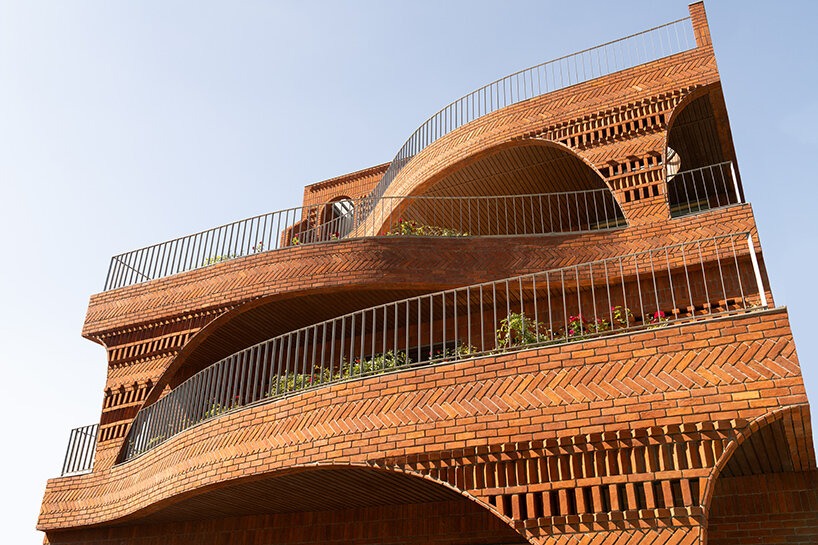
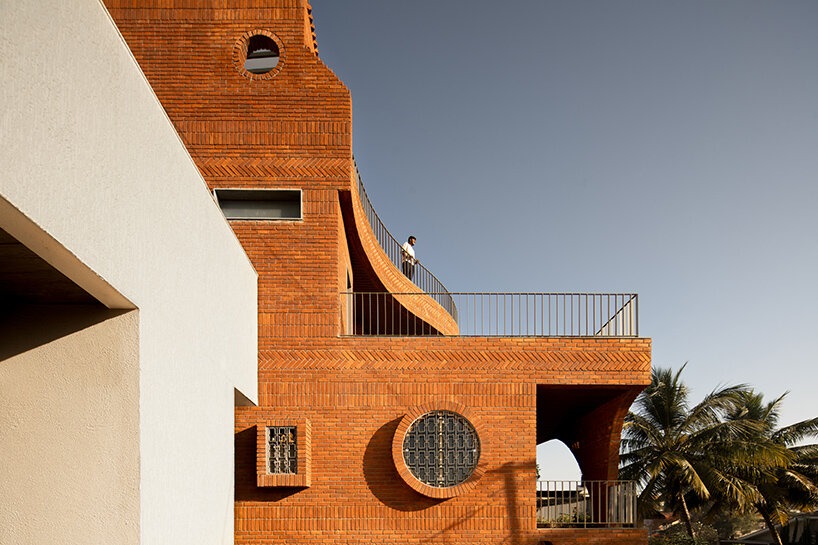
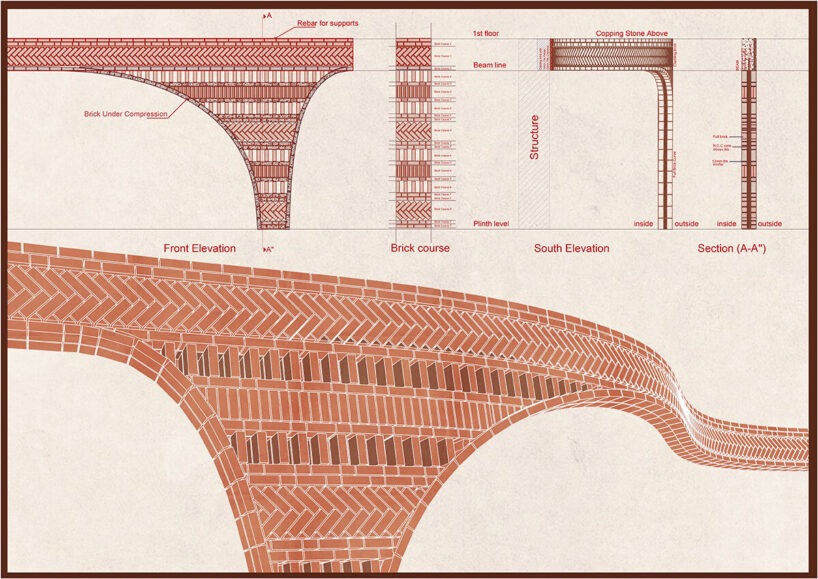
이 집의 정체성은 그늘과 질감, 그리고 땅과의 긴밀한 관계에서 비롯된다. 층마다 어긋나게 배치된 발코니와 계단식 테라스는 인도의 전통 옥상 공간 개념인 차트(chhats)를 현대적으로 환기시키면서, 그늘진 외부 경계를 집에 돌려준다. 약 3.7m(12피트)에 달하는 캔틸레버 슬래브는 벽돌을 압축력으로 지지하며, 지형을 닮은 전체 구성 속에서도 건축적 무게감을 발한다. 어린아이들이 그 테라스 계단을 맨발로 기어오르는 장면은, 이 집이 살아 있는 풍경임을 말해 준다.
강렬한 햇빛과 열기로 정의되는 이 지역에서, 앤트힐은 자연 시스템을 그대로 모방하지 않으면서도 그 원리를 충실히 배운 집이다. 카우샬 타티야 아키텍츠는 개미집이라는 은유를 통해 쾌적함과 사생활, 그리고 환기를 하나의 언어로 엮어냈다. 붉은 벽돌로 쌓은 이 집은 기계가 아니라 지혜로 더위를 다스리며, 대지와 함께 오래 숨을 쉰다.
프로젝트 크레딧
프로젝트명: 앤트힐(The Anthill)
설계: 카우샬 타티야 아키텍츠 Kaushal Tatiya Architects
수석 건축가: 카우샬 수레시 타티야(Kaushal Suresh Tatiya), 스위티 무타(Sweety Muttha)
위치: 아힐야나가르, 마하라슈트라, 인도(Ahilyanagar, Maharashtra, India)
연면적: 약 650㎡(약 197평 / 7,000 sq ft)
준공: 2026년
사진: © 아베시 가우르(Avesh Gaur)
Write by Claude & Jean Browwn



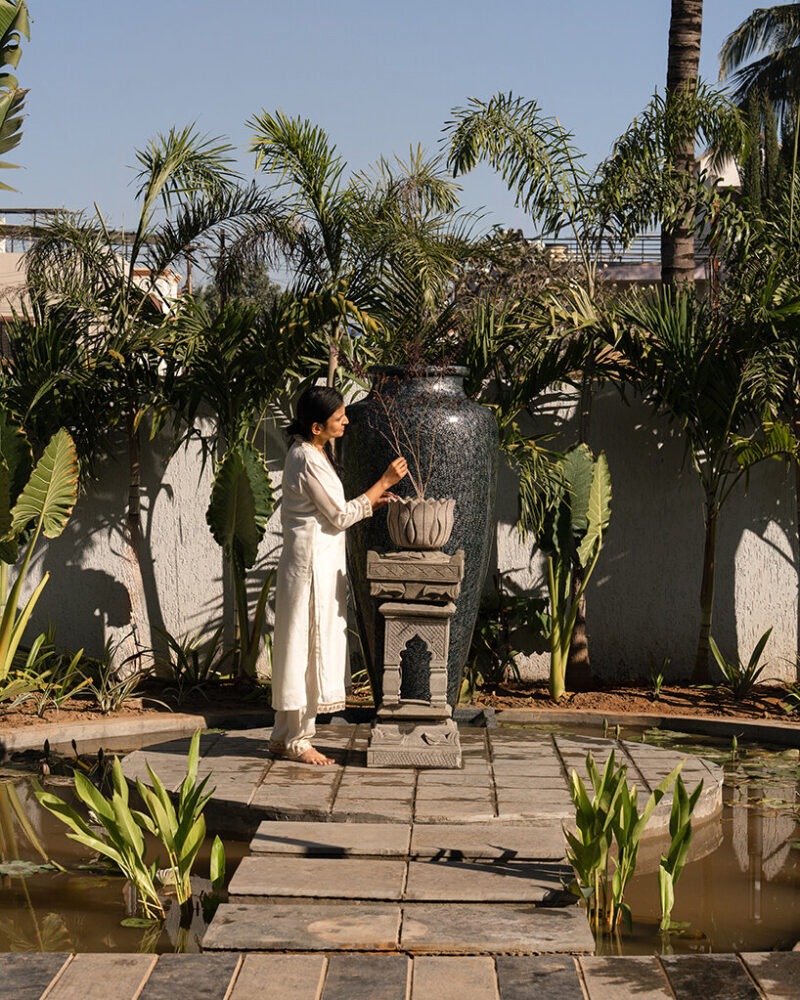

brick chambers rise from the dry landscape of ahilyanagar, india
In Ahilyanagar, India, a brick house dubbed The Anthill is designed by Kaushal Tatiya Architects as a low, terrain-like mass with an undulating facade. Called The Anthill, the house draws from the structure of insect built mounds, translating their chambers, passages, vents, and thermal intelligence into a residential project shaped for heat, movement, and shade.
Designed by lead architects Kaushal Suresh Tatiya and Sweety Muttha, the 7,000-square foot bungalow responds to a brief for a house in a hot and dry climate. The project is built around passive cooling, cross ventilation, and a reduced dependence on mechanical systems, using brick as both structure and environmental device.
Its mass feels introverted from the outside, with solid walls and perforated surfaces holding back the glare, while the interior opens through courtyards, skylights, and shaded transitions.
kaushal tatiya architects looks to the anthill
Designing the house, the team at India based Kaushal Tatiya Architects takes the anthill as a model for spatial organization as much as form. The house is planned as a series of interconnected chambers, where rooms branch from larger communal volumes and circulation shifts through compressed passages and more open gathering spaces.
Movement through the house becomes part of the architecture, shaped by changing ceiling heights, filtered light, and the slow reveal of courtyards within the brick enclosure. At the living area, an extended courtyard brings light and air into the plan, while a water cascade adds passive cooling to the central space.
Brick jalis — perforated walls — skylights, and ventilation shafts draw air through the house, creating a stack effect that helps regulate temperature through section rather than machinery. The same porous logic shapes the facade, where perforations temper the sun and bring patterned light into the interior.
exposed brick shapes a thermal shell
Across the house, material choices stay close to the earth. Exposed brick defines the main architectural language, joined by textured concrete, terracotta, lime plaster, locally sourced stone, and wooden furniture. The surfaces are tactile and dense, with the brickwork giving the bungalow a sense of mass while also allowing it to breathe through small openings and layered cavities.
The architects use the material as insulation and atmosphere at once. Light enters through punctured skylights, courtyards, and perforated facades, creating bright pockets inside the heavier shell. In the bedrooms, two types of openings shape the relationship to the outside: smaller windows support cross ventilation, while balconies extend the rooms toward distant views of the surrounding landscape.
a house formed through climate and movement
The Anthill gains its identity through texture, shadow, and a close relationship with the ground. Its mound like form is partially shaped by stepped terraces and alternating balconies, which recall the traditional idea of chhats while giving the house shaded edges and outdoor thresholds. A 12-foot cantilevered slab, supported through brick in compression, adds a heavier architectural gesture to the otherwise terrain-like composition.
In a region defined by its heat and intense sunlight, the project reads as an exploration of how a house can borrow from natural systems without becoming literal. Kaushal Tatiya Architects uses the anthill as a way to think through comfort, privacy, and ventilation.
name: The Anthill
architects: Kaushal TaTiya Architects | @kaushal_tatiya_architects
location: Ahilyanagar, Maharashtra, India
lead architects: Kaushal Suresh Tatiya, Sweety Muttha
built area: 7,000 square feet
completion: 2026
photography: © Avesh Gaur | @avesh.gaur
from designboom
'House' 카테고리의 다른 글
| * 더 핀들링, 오브 파서블 [ Of Possible ] The Findling (1) | 2026.07.02 |
|---|---|
| * 가볍게 뜬 숲, 트레슬 캐빈 [ Miller Hull Partnership ] Trestle Cabin (0) | 2026.06.30 |
| * 따뜻한 오아시스, 세대를 잇는 집 [Wahana Architects ] El House (0) | 2026.06.26 |
| * 담장이 만드는 자유 [ Además arquitectura ] Casa Alba II (0) | 2026.06.22 |
| * 숲이 남긴 터 위에서 [ Neil Logan ] Studio & Guest House (0) | 2026.06.19 |