건물이 좋은 건축이 되려면, 무엇보다 사람의 마음을 움직일 수 있어야 한다. 페터 춤토르
 |
 |
 |
Of Possible-The Findling
숲으로 돌아가는 길
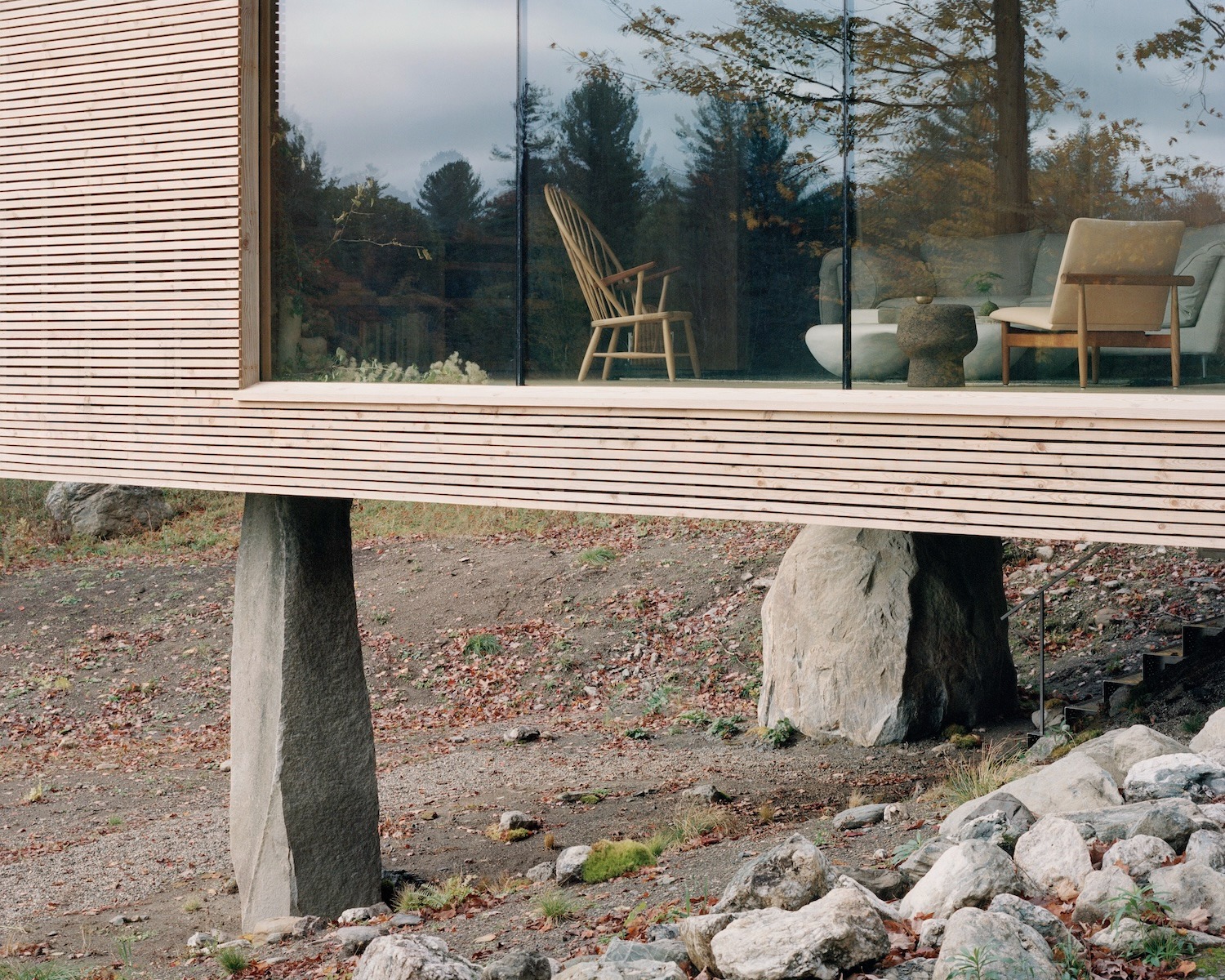
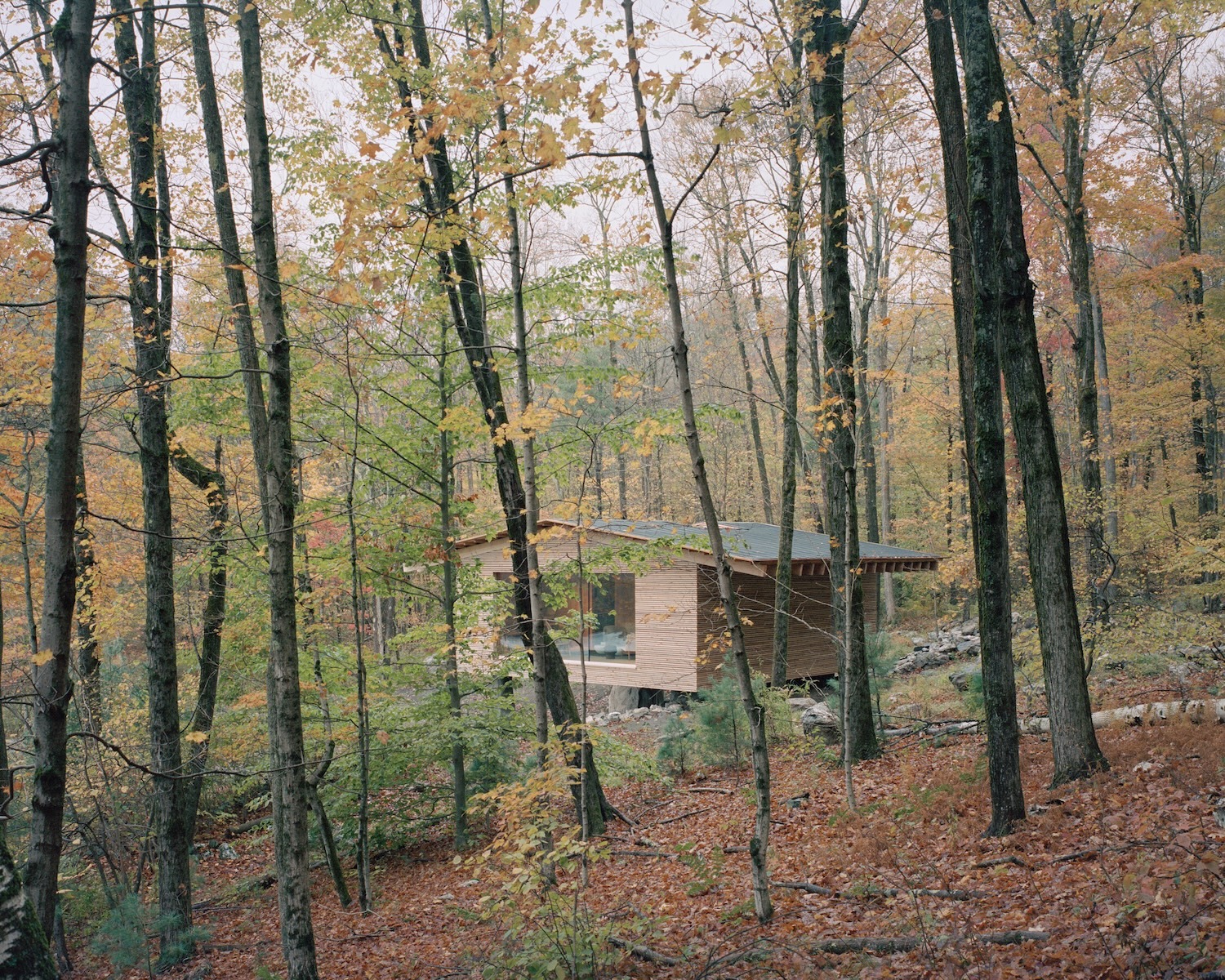
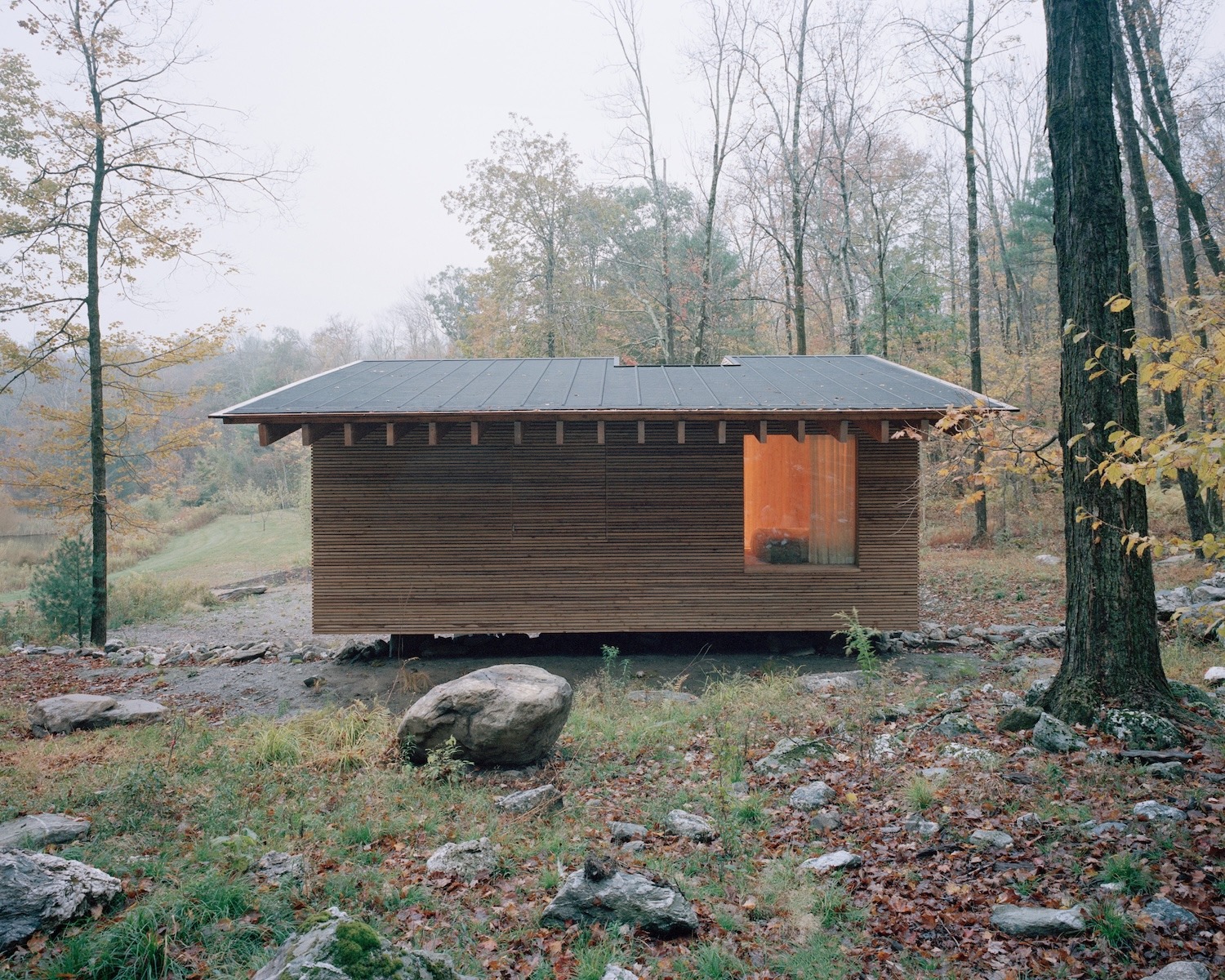
미국 뉴욕주 오스터리츠, 안개 낀 활엽수림 사이로 나무 오두막 한 채가 땅에서 살짝 떠 있다. 오브 파서블이 설계한 이 91제곱미터, 약 28평 규모의 리트리트는 맨해튼에서 활동하는 두 정신분석가 부부가 의뢰했다. 이들은 과거 다른 건축가와의 힘겨운 작업을 거치며 자신들의 전원 부지와 소원해진 상태였다. 이번 프로젝트가 짊어진 과제는 단순한 공간 복원이 아니었다. 건축이라는 행위 자체와 클라이언트의 관계를 되살리는 일이었다. 그 치유적 전제는 장식이 아니라 모든 재료 선택의 근거가 되었고, 결과적으로 회복을 향한 건축을 만들어냈다.
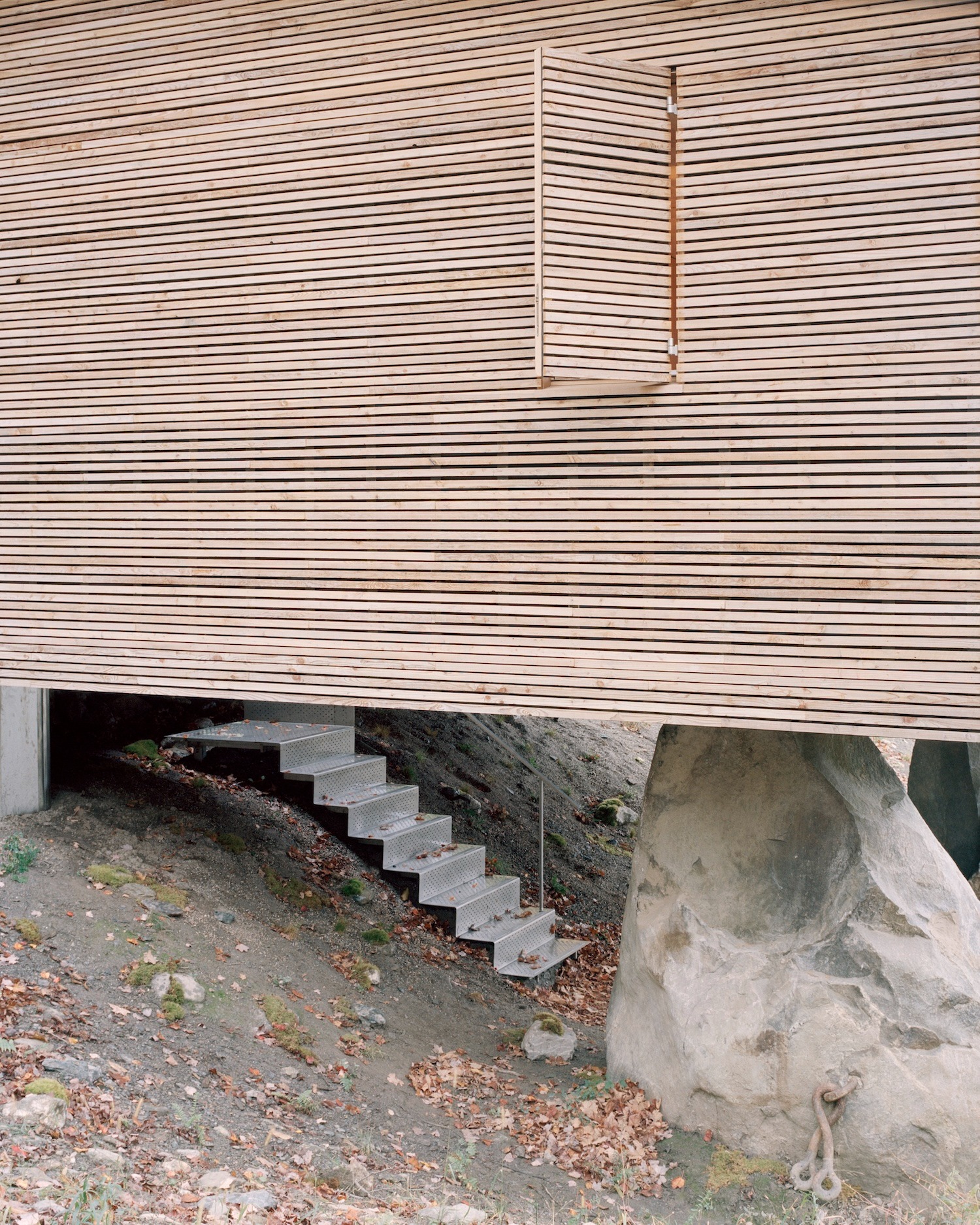
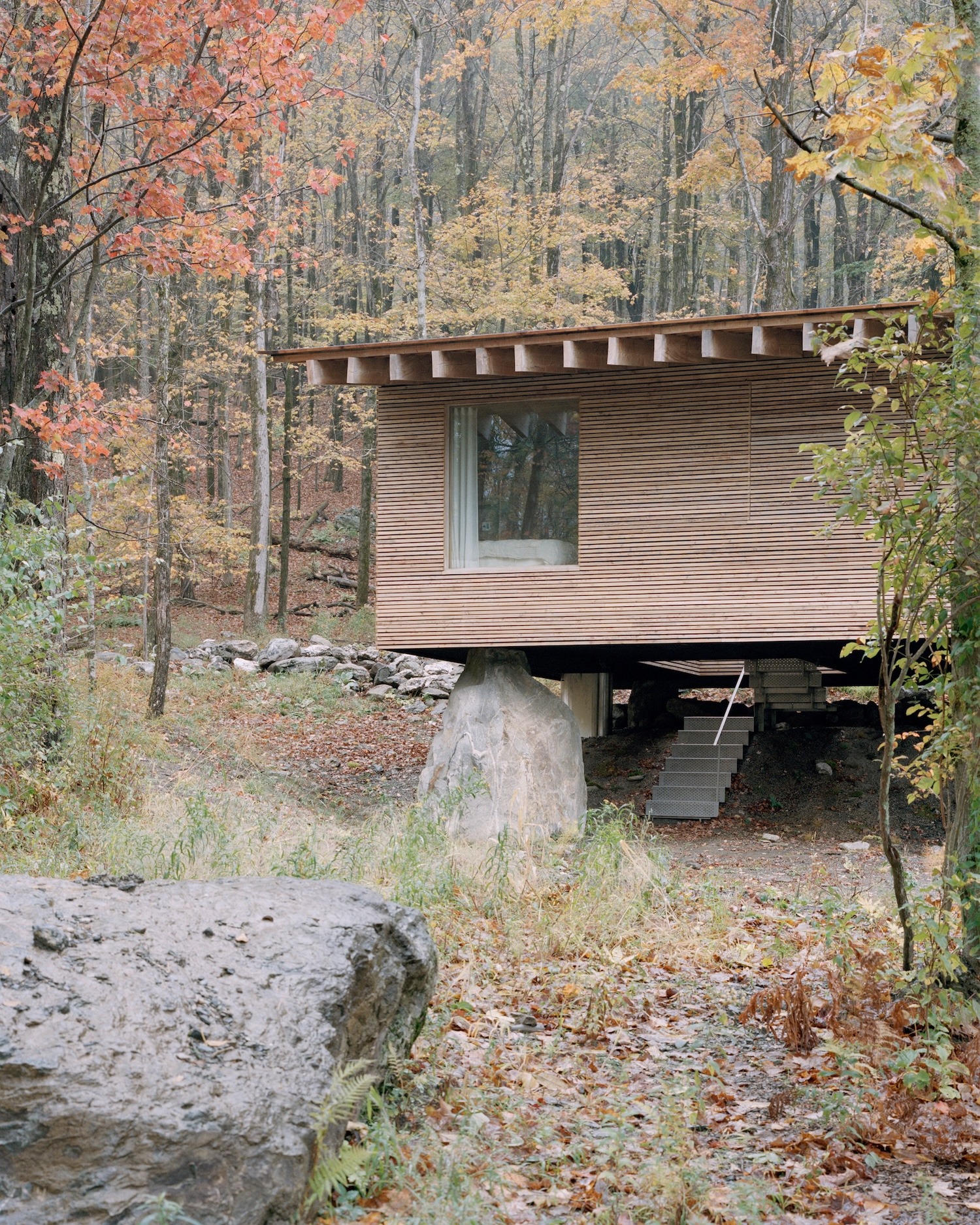
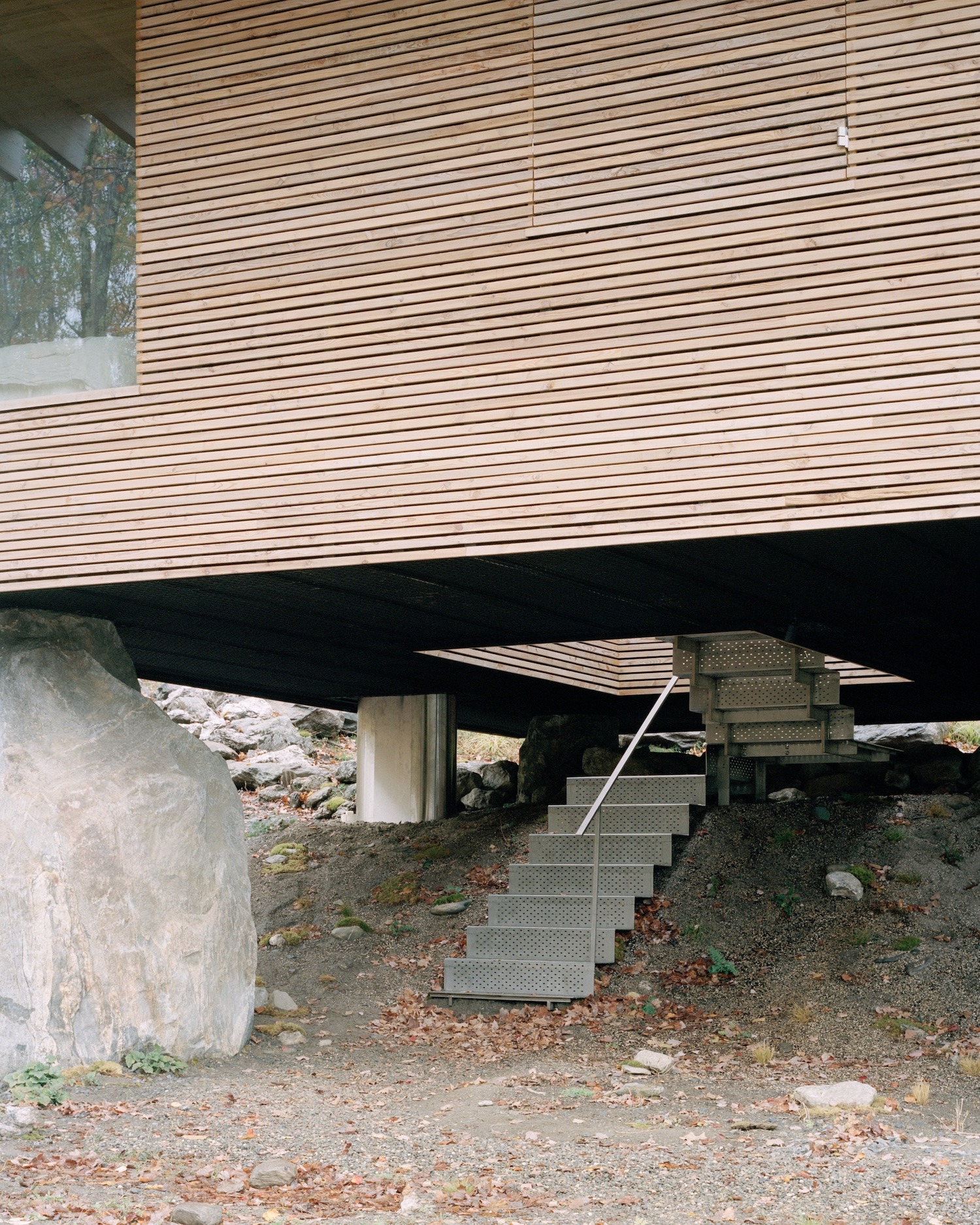
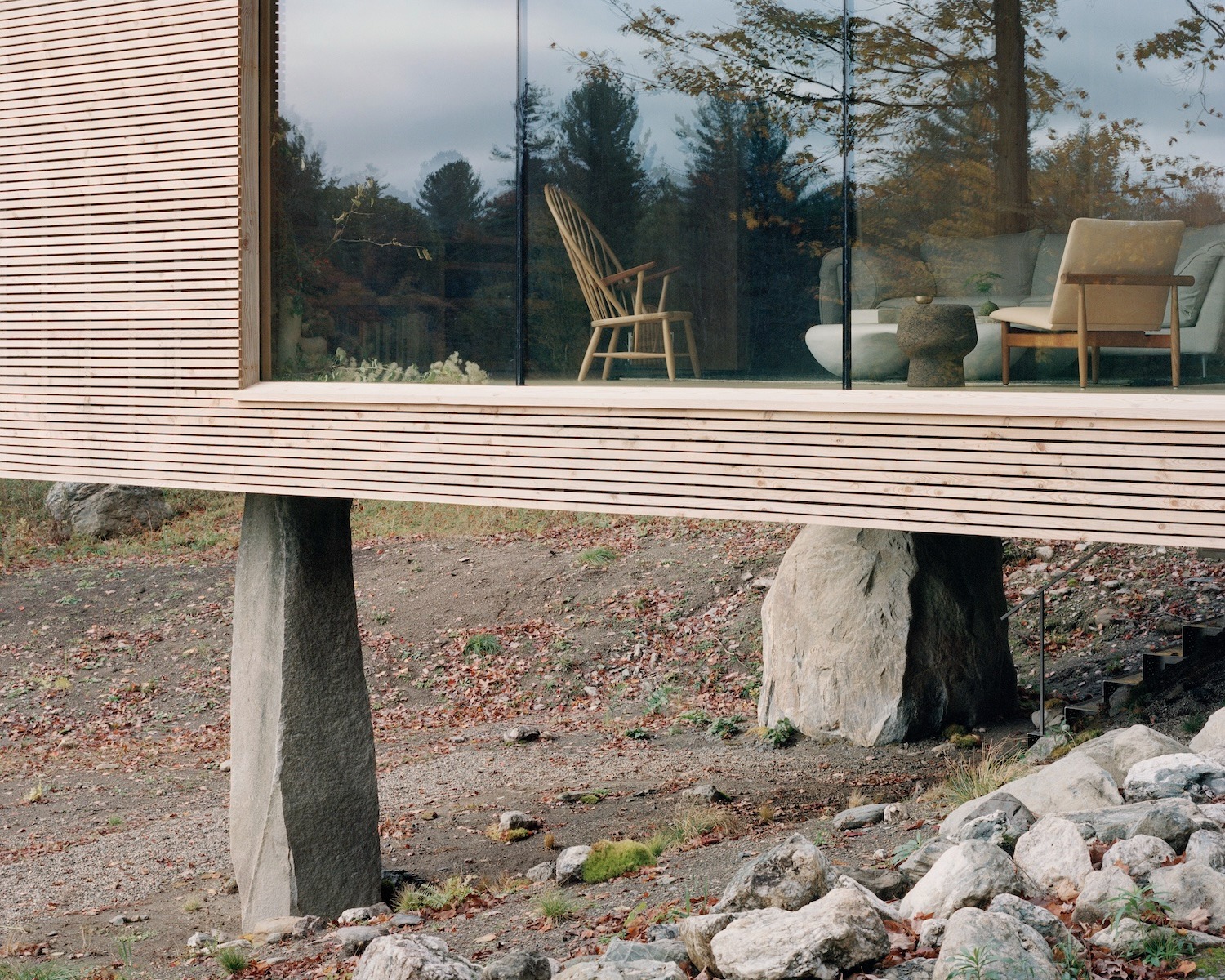
건물은 세 가지 요소로 나뉘고, 각 요소는 하나의 재료가 전담한다. 몸체는 인근 숲에서 벌목한 낙엽송으로 거의 전부 지어졌다. 그 아래로는 약 5억 년 전 형성된 빙하표석 네 덩이가 구조를 떠받친다. 땅과 건물 사이, 가느다란 스테인리스 스틸 계단이 수직의 문턱을 만든다. 나무와 돌과 금속은 단순히 나란히 놓인 것이 아니라 순서를 이루며 배치되어, 도착이라는 순간을 서둘러 지나치는 통과가 아니라 하나의 지각 경험으로 바꾸어놓는다.
세 번째 공간, 계단
이 계단은 부속 구조물이 아니라 그 자체로 하나의 공간이다. 유한요소해석을 거쳐 구조적으로 성립하는 가장 얇은 두께까지 깎여 나갔고, 그 결과 땅에도 건물에도 온전히 속하지 않는 중간적 존재로 남았다. 표면에 구멍을 낸 발판과 리본처럼 흐르는 손잡이는 낯선 촉감을 의도적으로 남긴다. 이는 방문객에게, 지금 밟고 있는 것이 익숙한 숲길이 아니라 다른 세계로 들어서는 관문임을 몸으로 알려준다. 신발을 벗고 실내로 넘어가는 일본의 겐칸, 현관에서 실내로 이어지는 완충 공간이 입장을 상태의 전환으로 재구성하는 방식과 닮았지만, 이곳에서는 그 문턱이 허공 속으로 수직으로 늘어져 있다.
중심으로 들어서다
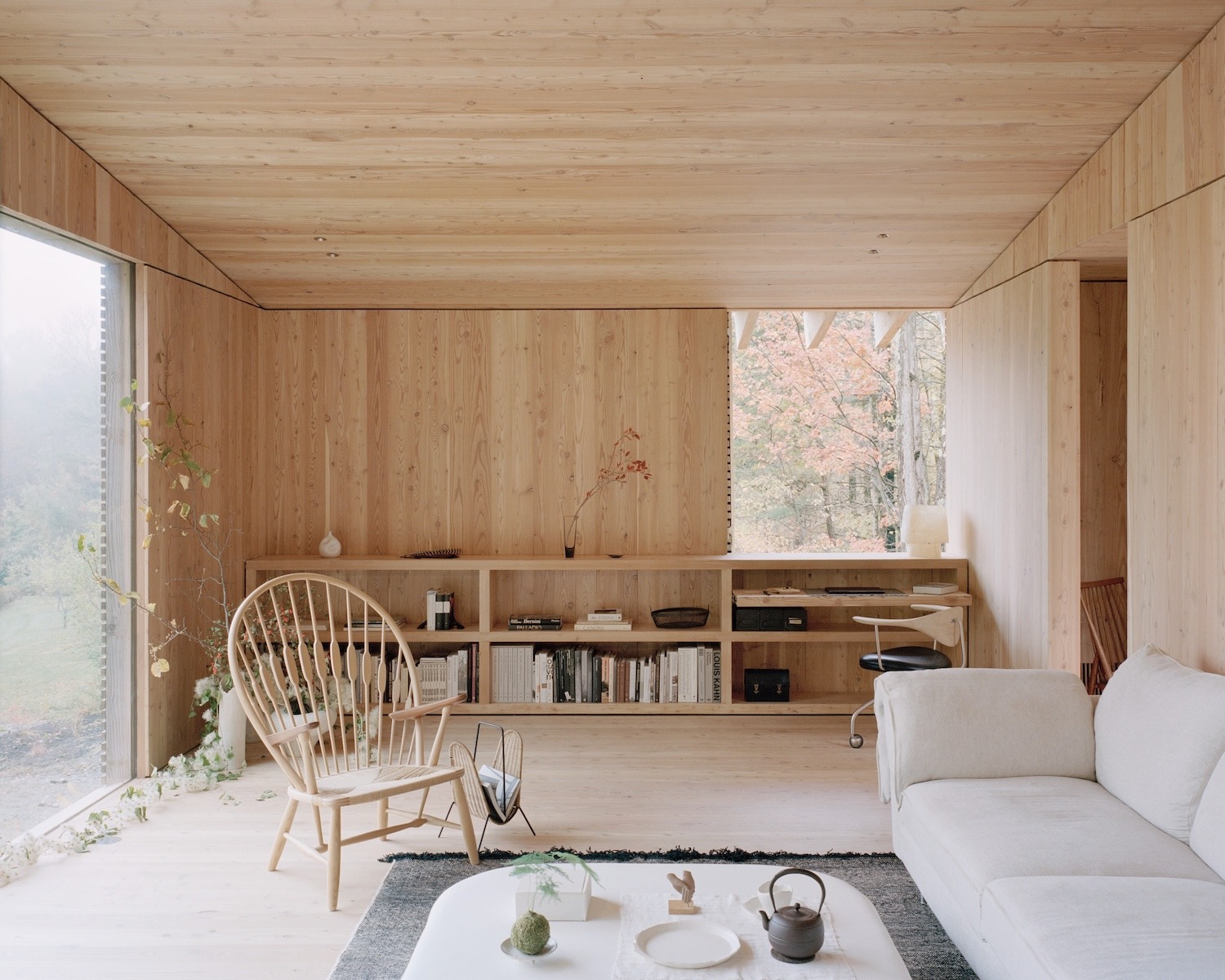
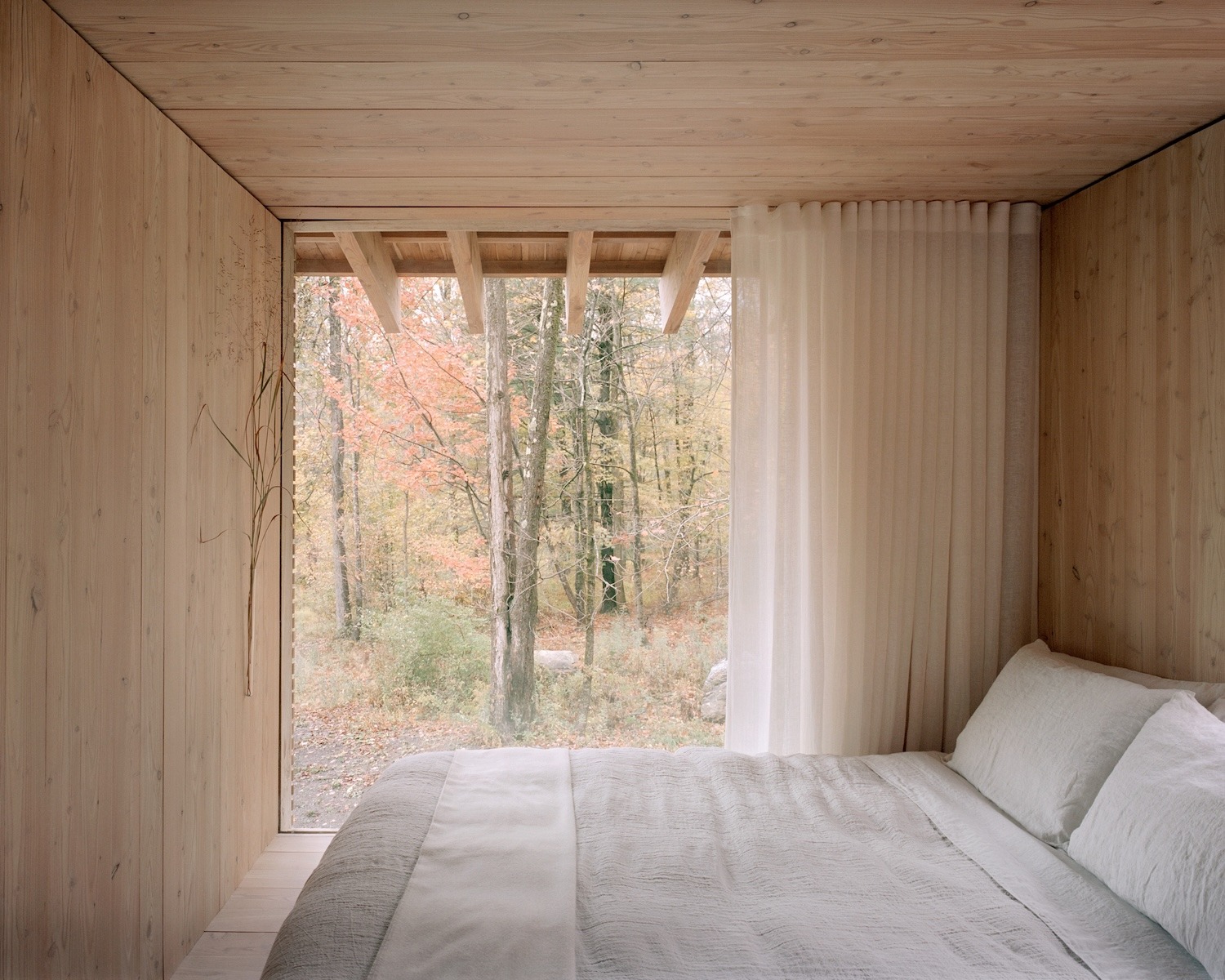
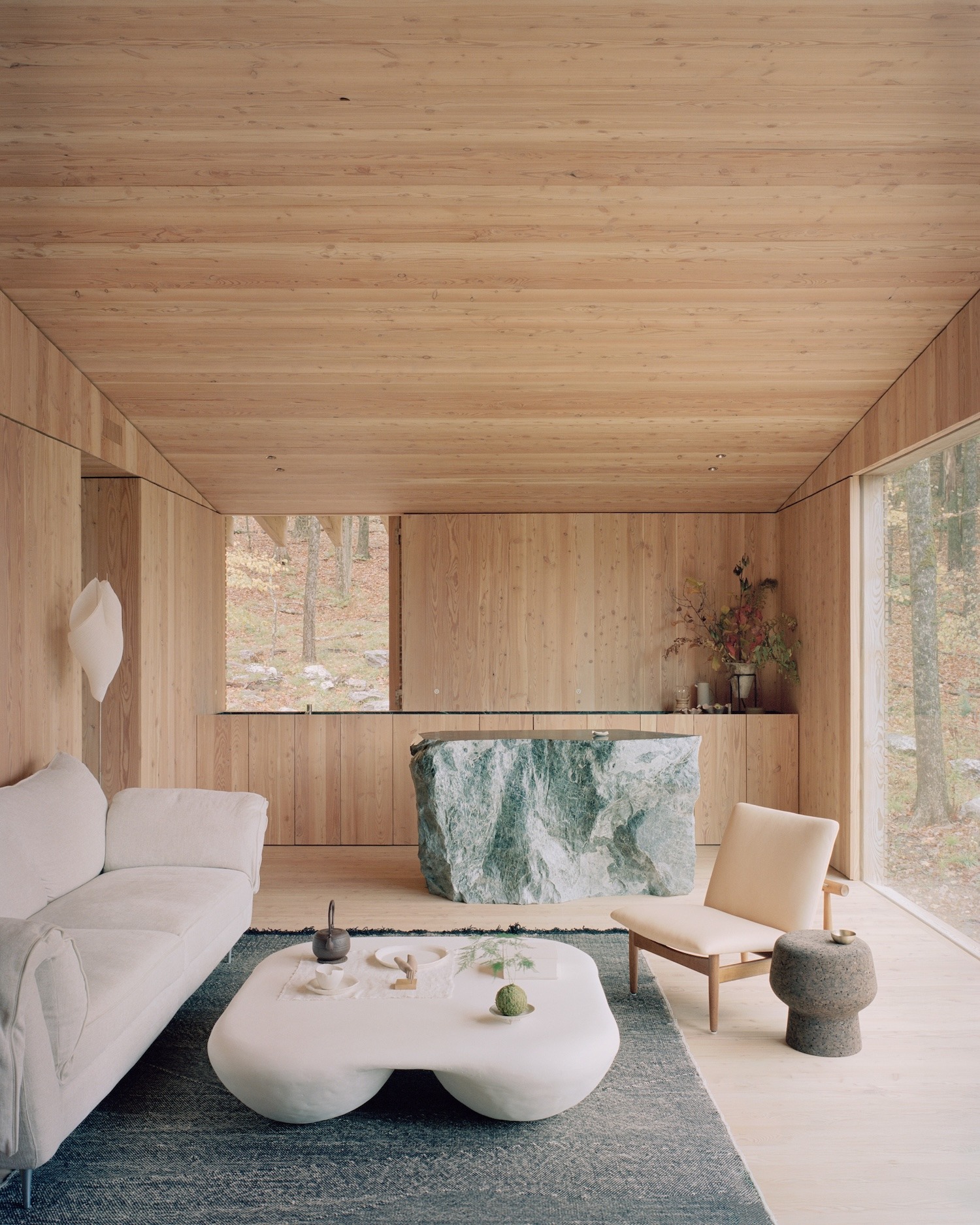
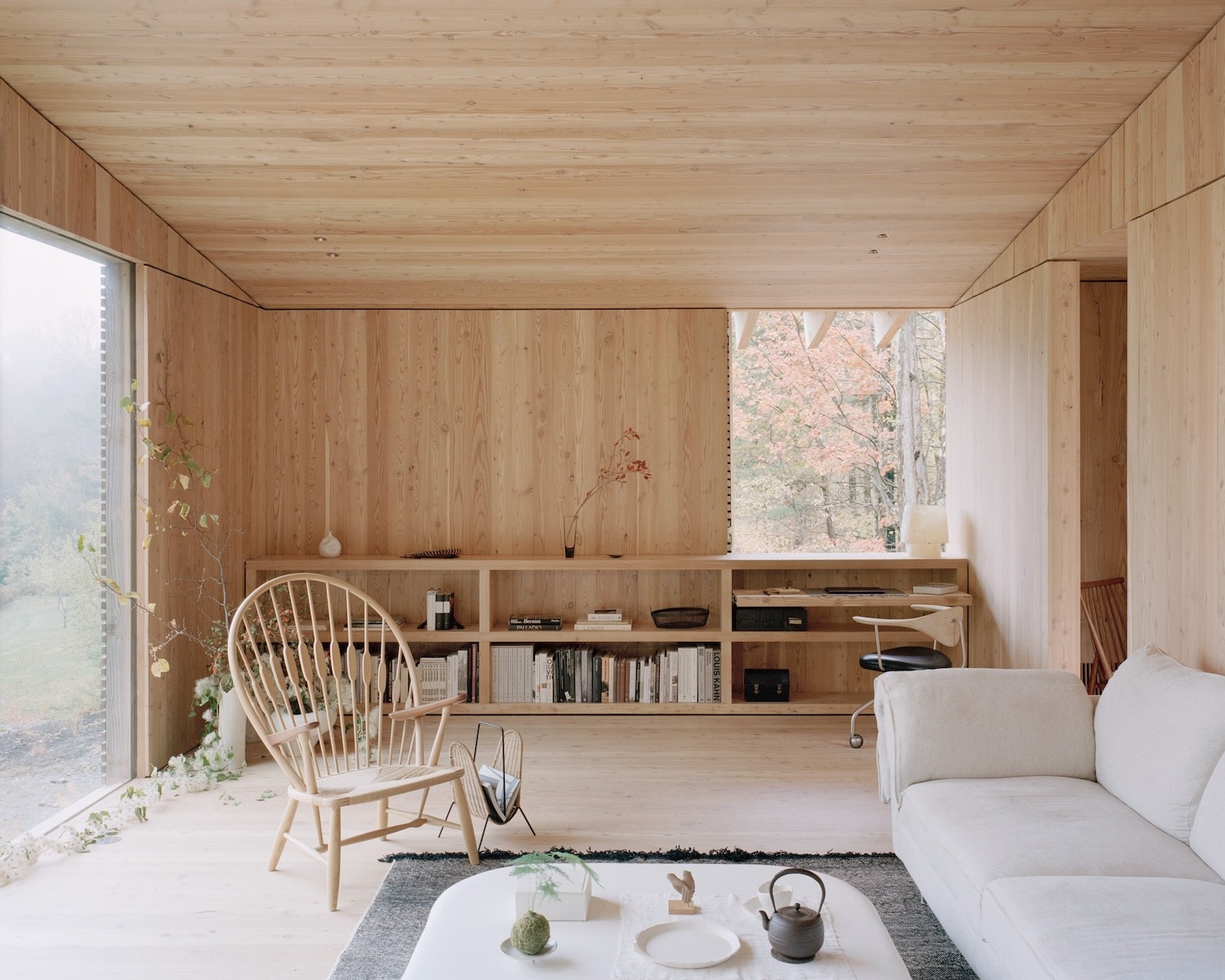
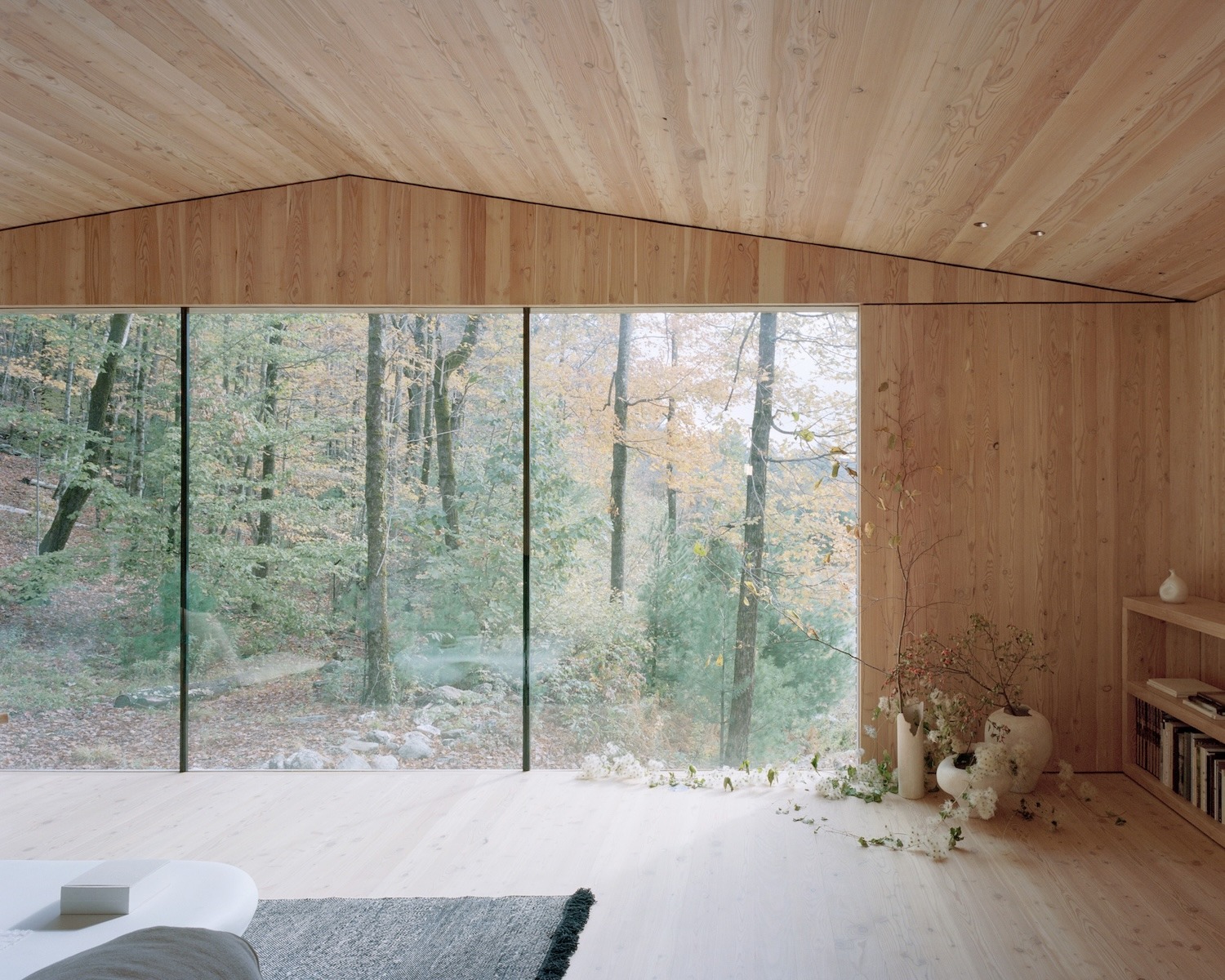
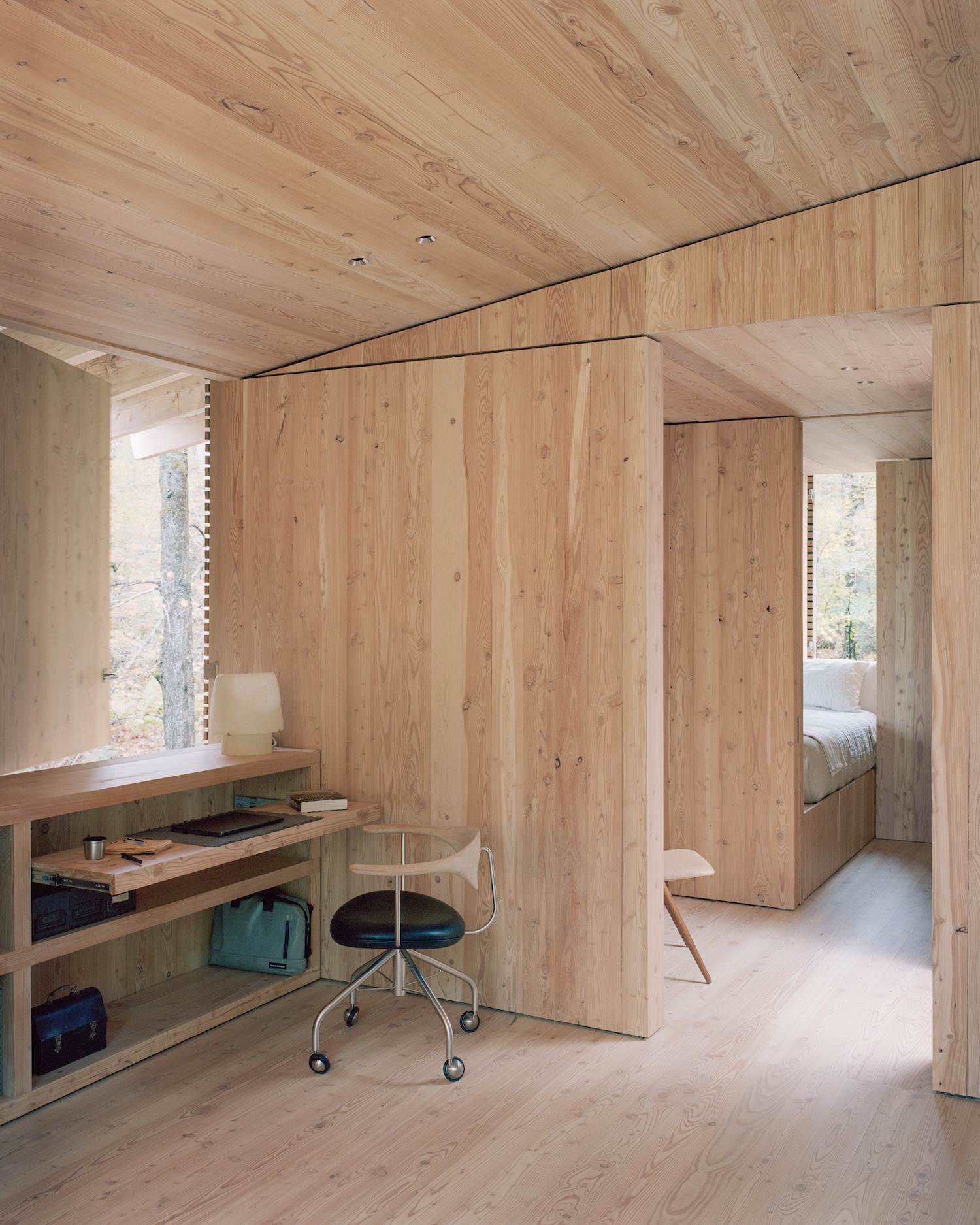
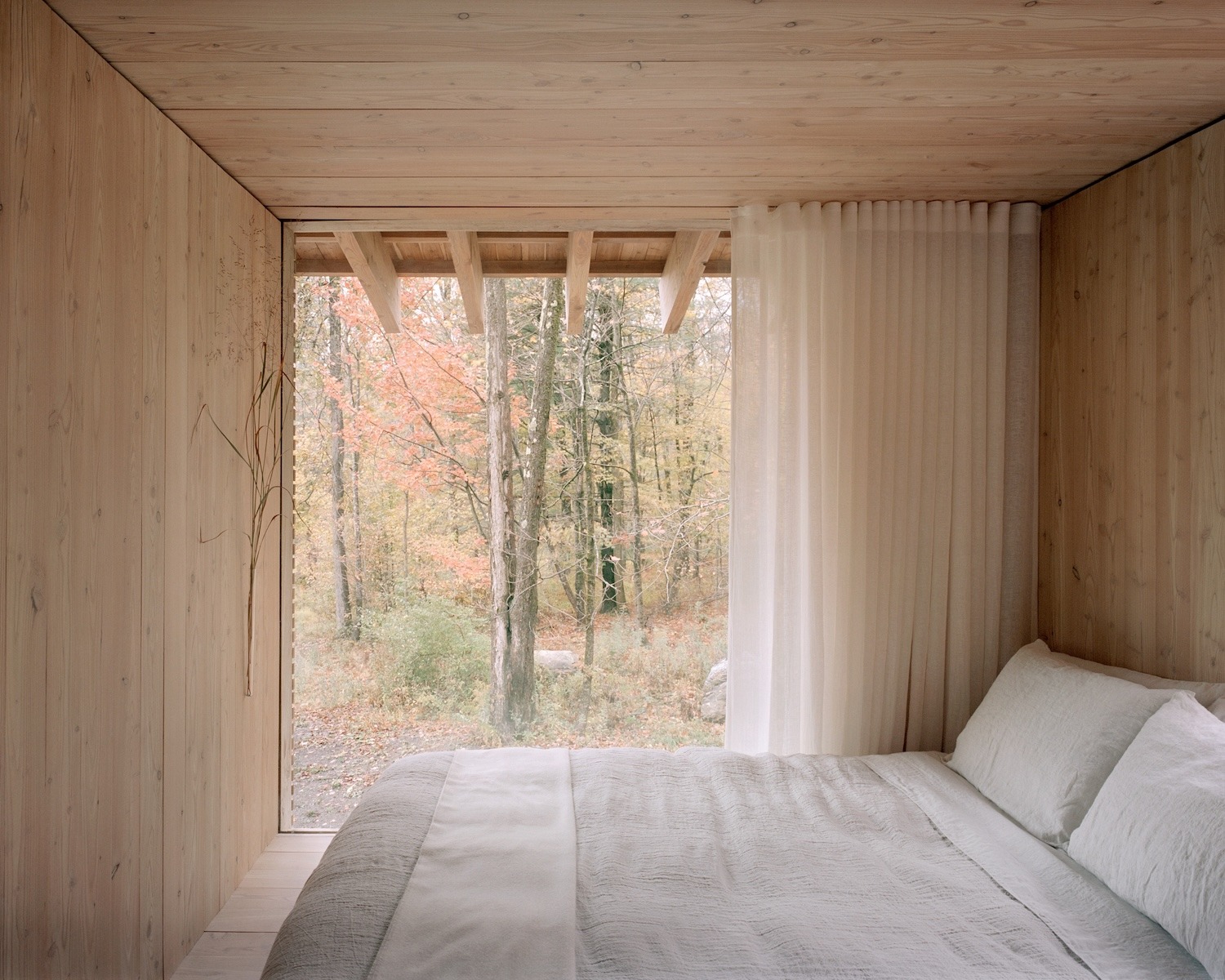
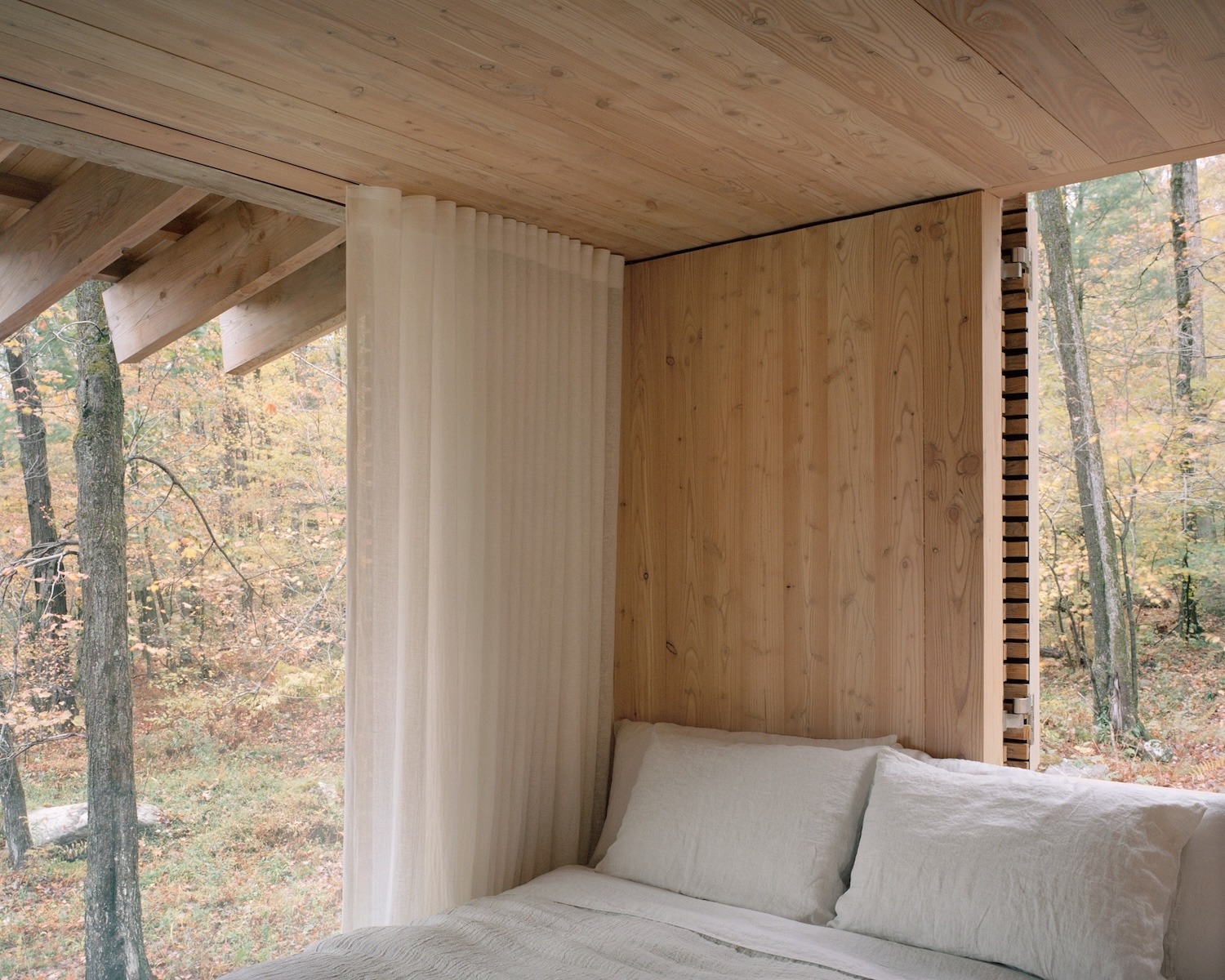
방문객은 정문을 지나 안으로 들어가는 대신, 평면의 한가운데로 곧장 진입한다. 건물의 심장부를 통과해 들어서는 이 동선은 하나의 포옹처럼 다가온다. 배치는 대칭을 이루지만 공간마다 느낌은 저마다 다르다. 두 개의 작은 침실과 하나의 욕실이 모서리를 차지한다. 각 방에는 고정창과 여닫이 목재 셔터가 딸려, 트리하우스 다락과 비슷한 아늑한 스케일을 이룬다. 그 사이 중심에 놓인 거실 겸 다이닝 공간은 바닥부터 천장까지 이어지는 유리를 통해 바깥으로 활짝 열린다.
압축과 개방 사이
이렇게 압축된 공간과 트인 공간이 번갈아 나타나는 리듬은 오지의 산장이 오래전부터 지녀온 공간 논리에서 곧바로 빌려온 것이다. 창은 통 낙엽송 창틀에 물려 현장에서 직접 유리를 끼웠다. 벽 일부는 환기를 위해 바깥으로 젖혀 열리게 지었다. 그래서 창문을 여는 행위는 기계적인 조작이 아니라 몸을 움직이는 물리적 제스처가 된다.
손끝에 닿는 디테일
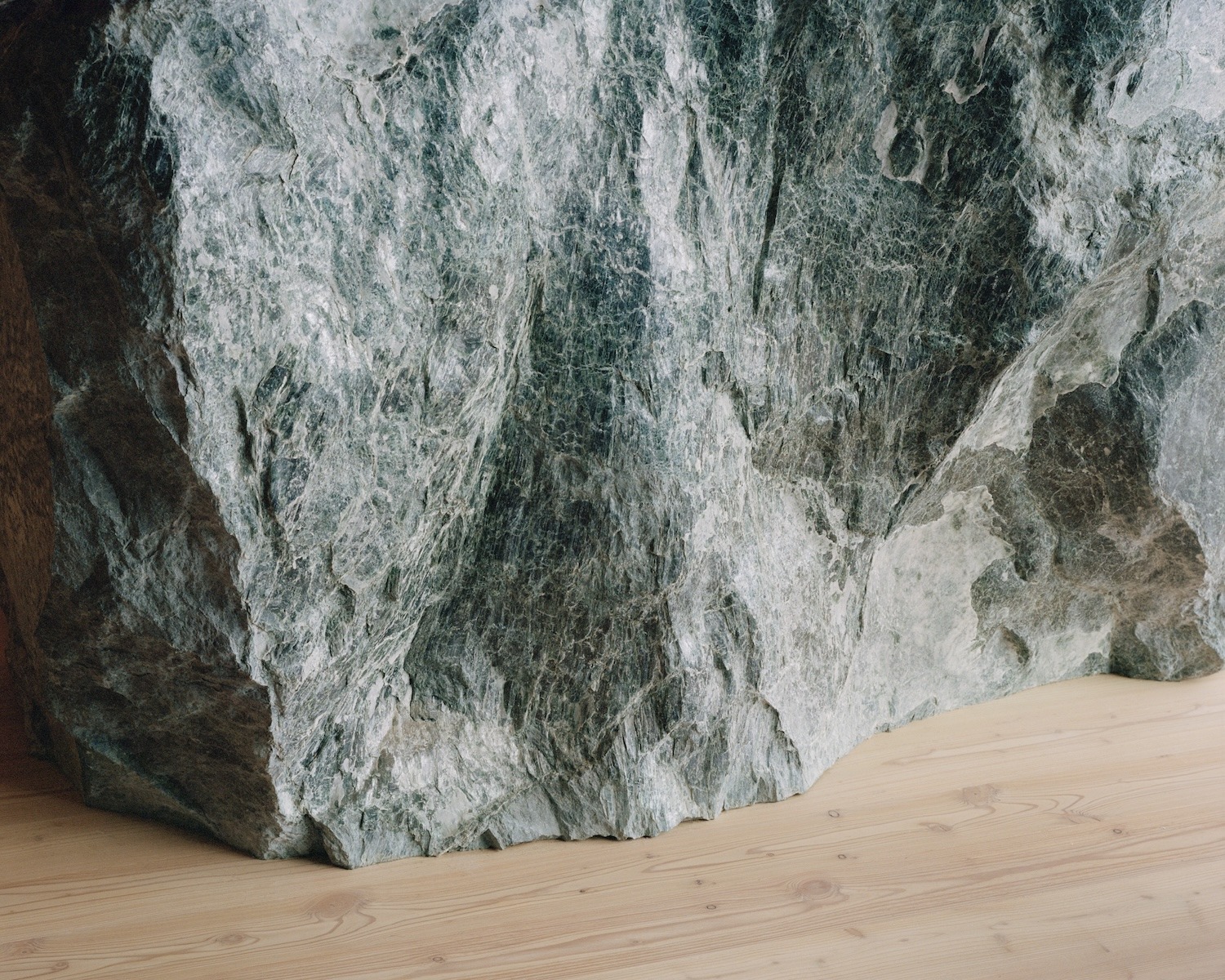
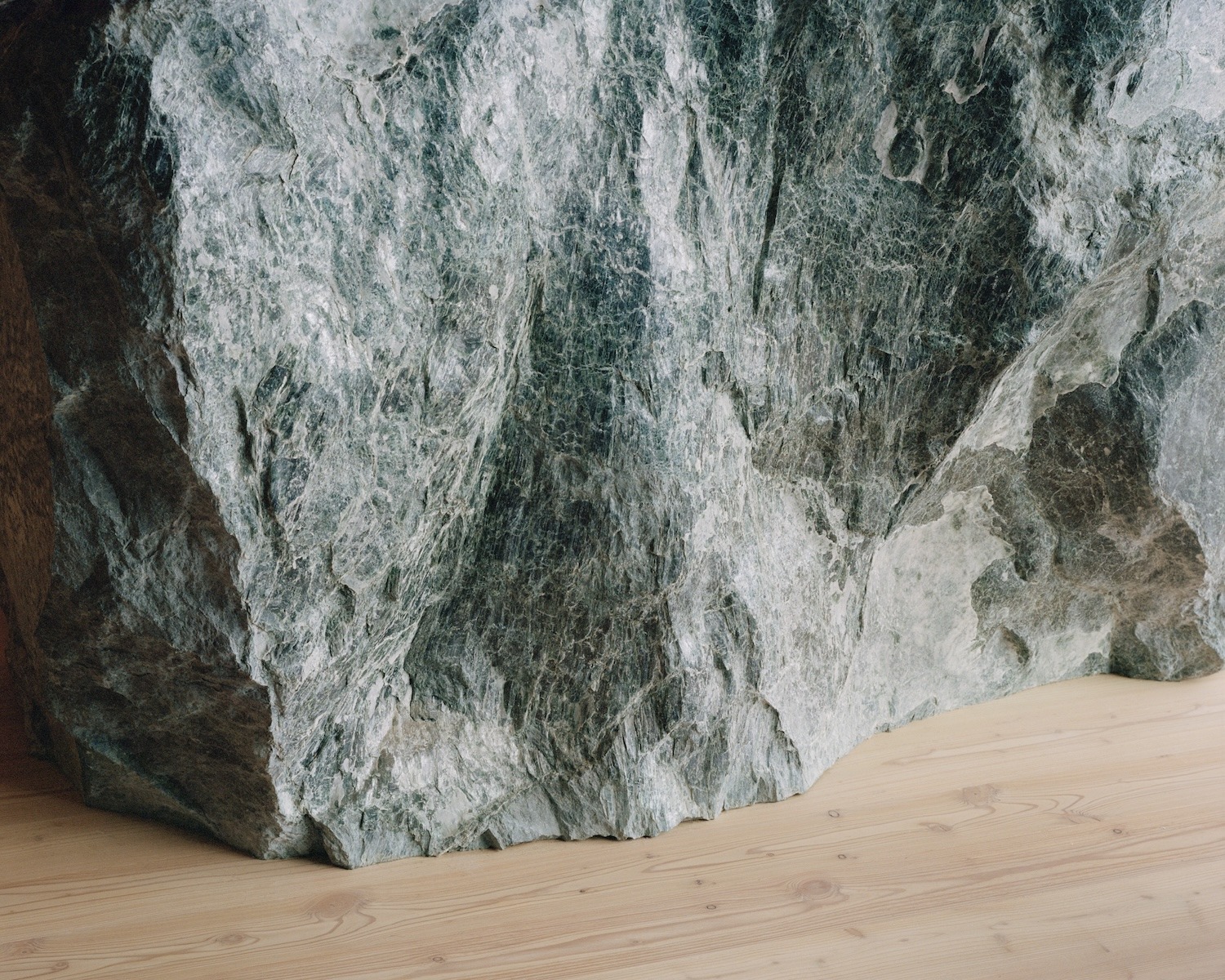
건물 절반은 1770년에서 1830년 사이에 쌓인 것으로 추정되는 뉴잉글랜드 전통 돌담 위에 올라앉아, 이 리트리트를 훨씬 오래된 거주의 역사와 이어준다. 부엌 아일랜드는 버몬트 베르데 서펜틴 원석 하나를 통째로 깎아 만들었다. 이 돌은 뉴욕 시그램 빌딩의 화단에 쓰인 돌과 같은 배리 채석장에서 나왔으며, 표면을 매끄럽게 다듬지 않고 그대로 두어 마치 언덕에서 굴러온 듯한 질감을 간직한다.
관계의 복원
더 핀들링은 결국 재료가 아니라 관계에 관한 건축이다. 낙엽송과 빙하표석과 스테인리스 스틸이 차례로 몸에 닿는 동안, 방문객은 이 작은 오두막이 그저 머무는 공간이 아니라 다시 신뢰를 회복해가는 과정 그 자체임을 서서히 깨닫는다.
Write by Claude & Jean Browwn
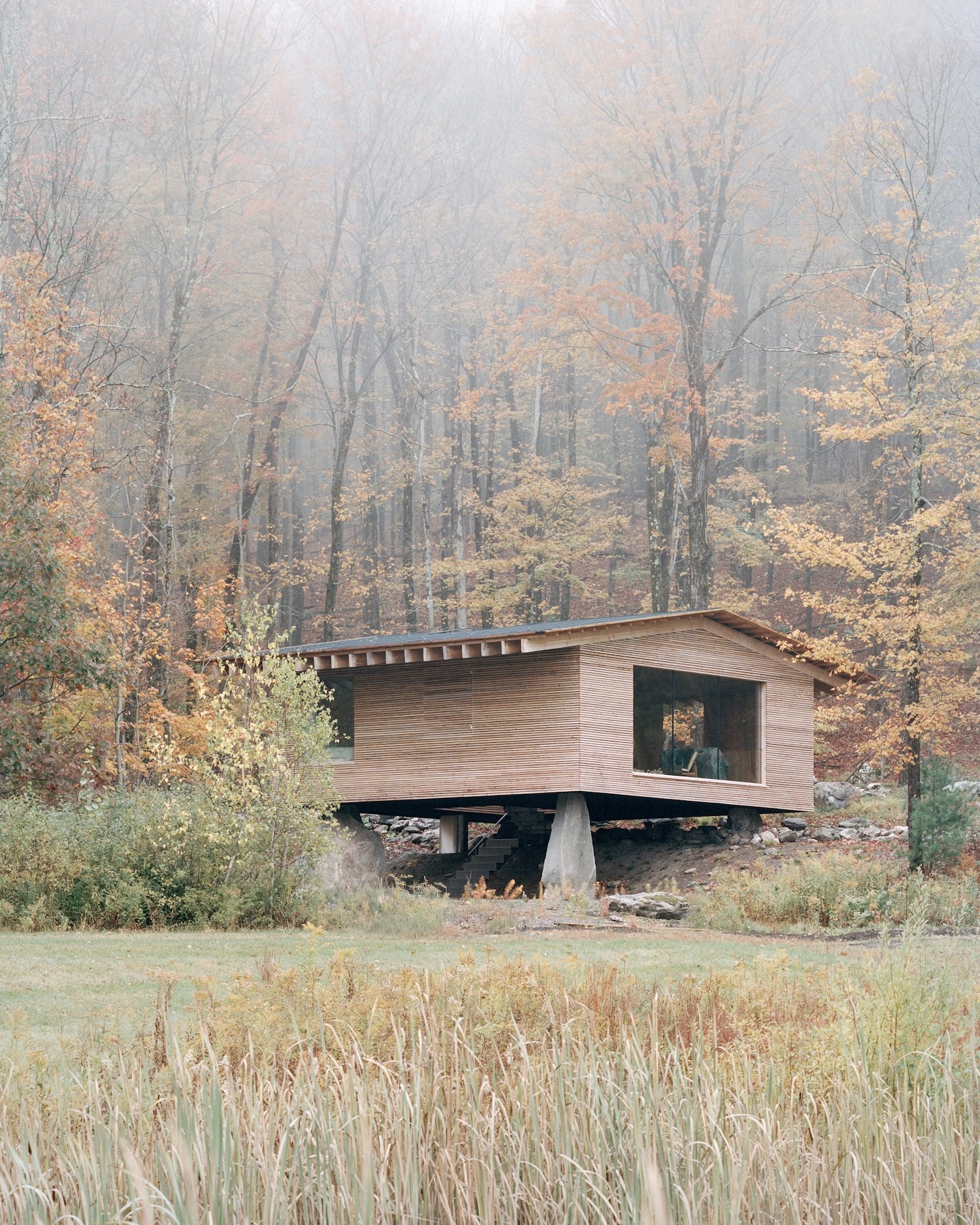
The Findling is a minimalist retreat located in Austerlitz, United States, designed by Of Possible. Commissioned by two Manhattan psychoanalysts who had grown estranged from their bucolic property after a difficult earlier build, the project sets itself an unusual brief: to restore not just a sense of place but the clients’ relationship to architecture itself. Of Possible answered with a 980-square foot cabin that appears to hover above the terrain, a writing and solitude retreat that doubles as a guest house. The therapeutic premise is not incidental decoration. It organizes every material decision toward an architecture of repair.
The structure resolves into three elemental parts, each carried by a single material. The dwelling is built almost entirely from larch harvested in nearby forests. It rests on four glacial erratic boulders roughly 500 million years old. A thin stainless steel stair forms the vertical threshold between ground and building. Wood, stone, and metal are sequenced rather than merely combined, choreographing movement so that arrival becomes a perceptual event rather than a transition to be passed through quickly.
The stair earns its billing as the third space. Engineered through finite element analysis and reduced to its thinnest viable expression, it reads as belonging to neither earth nor structure. Custom-perforated treads and a ribbon-like handrail supply tactile cues that feel deliberately unfamiliar, signaling that one is stepping off the ordinary forest path into something intentionally other. The detail recalls how a genkan reframes entry as a change of state, though here the threshold is stretched vertically across open air.
Rather than terminating at a front door, visitors arrive directly into the center of the plan, entering through its heart to register as an embrace. The layout is symmetrical but varied in feeling. Two compact bedrooms and a single bath occupy the corners, each with a fixed window and operable wooden shutters that recall the scale of a treehouse bunk, while the central living and dining volume opens outward through floor-to ceiling glass. This alternation of compression and release borrows directly from the spatial logic of backcountry lodges.
Windows are mulled into solid larch jambs and glazed on site, and portions of the wall pivot open for ventilation, so opening a window becomes a physical gesture rather than a mechanical operation. Half the building rests on a historic New England stone wall likely laid between 1770 and 1830, tying the retreat to a longer continuum of habitation. The kitchen island is carved from a single block of Vermont Verde serpentine from the Barre quarry that supplied the Seagram Building planters, left unpolished to read as drifted hillside.
from leibal