"건축은 자연과의 대화이며, 그 대화는 최소한의 언어로 시작된다." — 피터 줌터(Peter Zumthor)
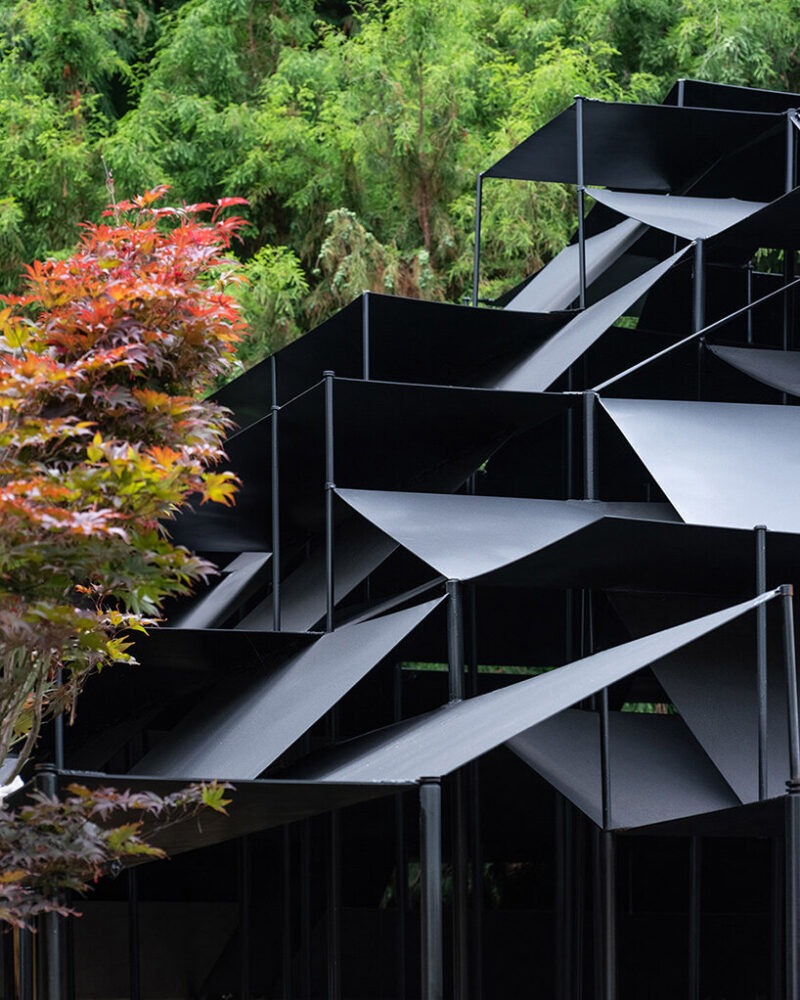
습지 위에 떠 있는 인공 숲 아틀리에 데샤우스, 중국 습지에 세운 분절의 건축 atelier deshaus tops laoyuting pavilion with fragmented modular roof in chinese wetland
습지의 경계에 자리한 멈춤의 공간
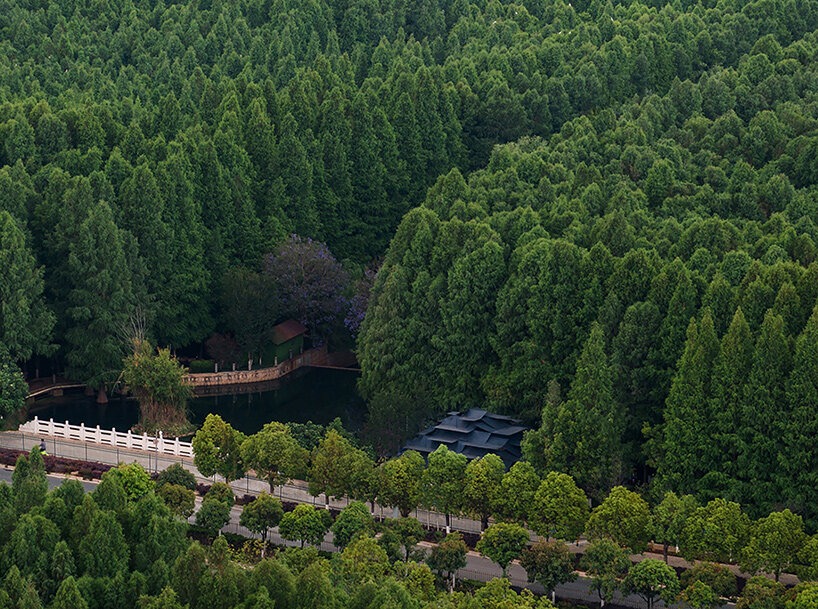
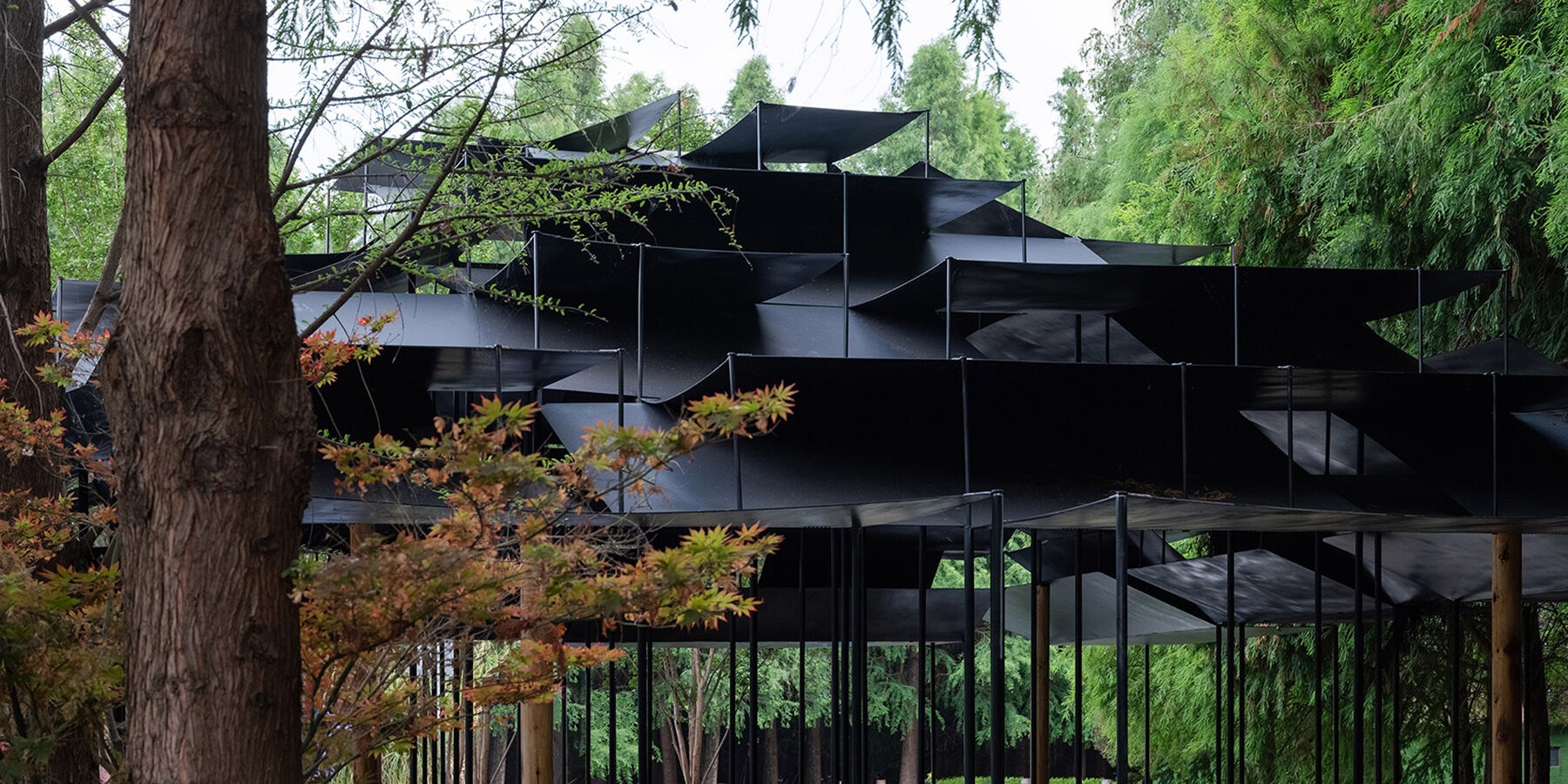
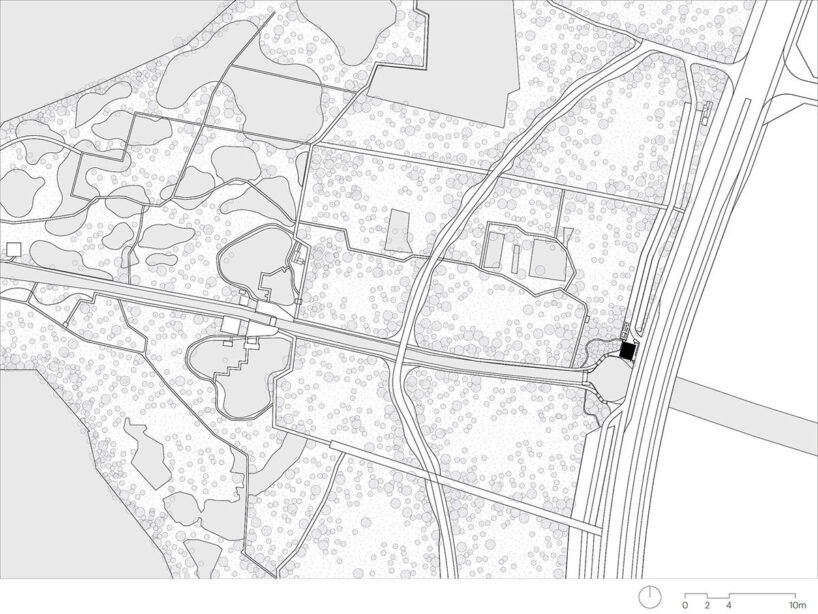
중국 윈난성 쿤밍의 디엔치 습지공원, 수림예술구역 남쪽에 라오위팅 파빌리온이 자리한다. 아틀리에 데샤우스가 설계한 이 구조물은 2024 디엔치 아트시즌의 입구로 사용된 뒤, 습지를 찾는 방문객을 위한 영구적 거점으로 남았다.
파빌리온 주변으로는 낙우송 숲이 빼곡하다. 이 나무들은 디엔치 호수로 흘러드는 물을 정화한다. 습지 가장자리에서는 주민들이 갈대 사이로 작은 물고기를 잡는 모습을 흔히 볼 수 있다. 파빌리온은 이런 풍경 속에서 사람들의 움직임과 습지의 느린 리듬 사이에 머무는 공간이다.
도시에서 수변 숲으로, 인공 기둥이 만드는 전이
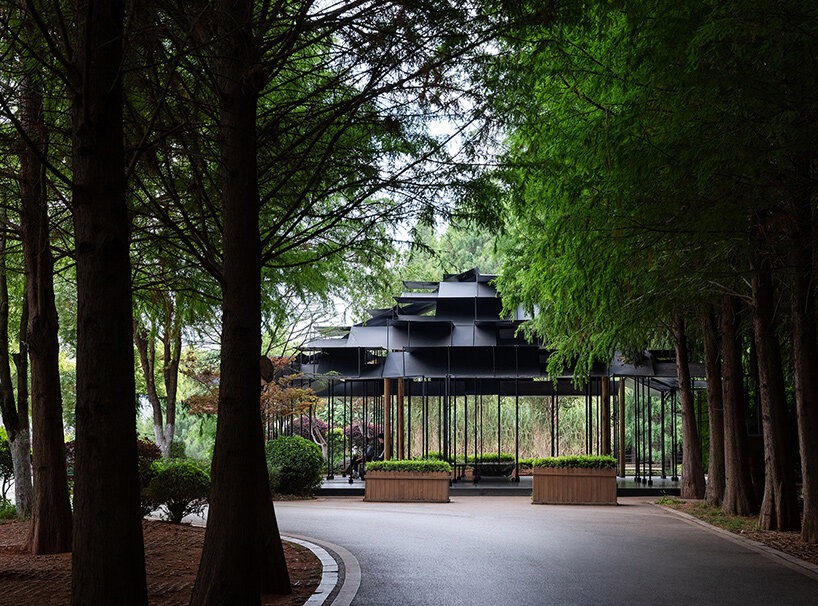
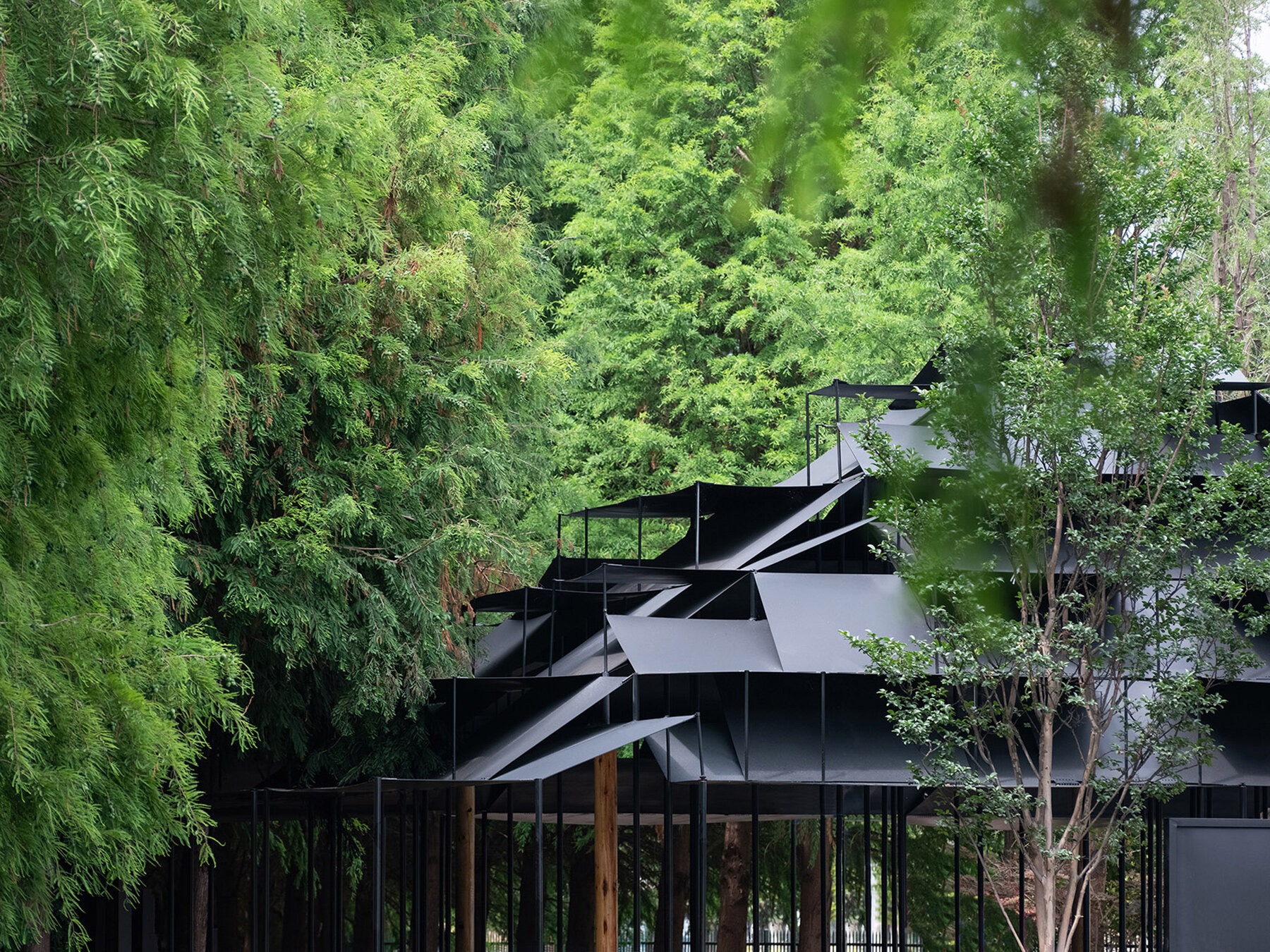
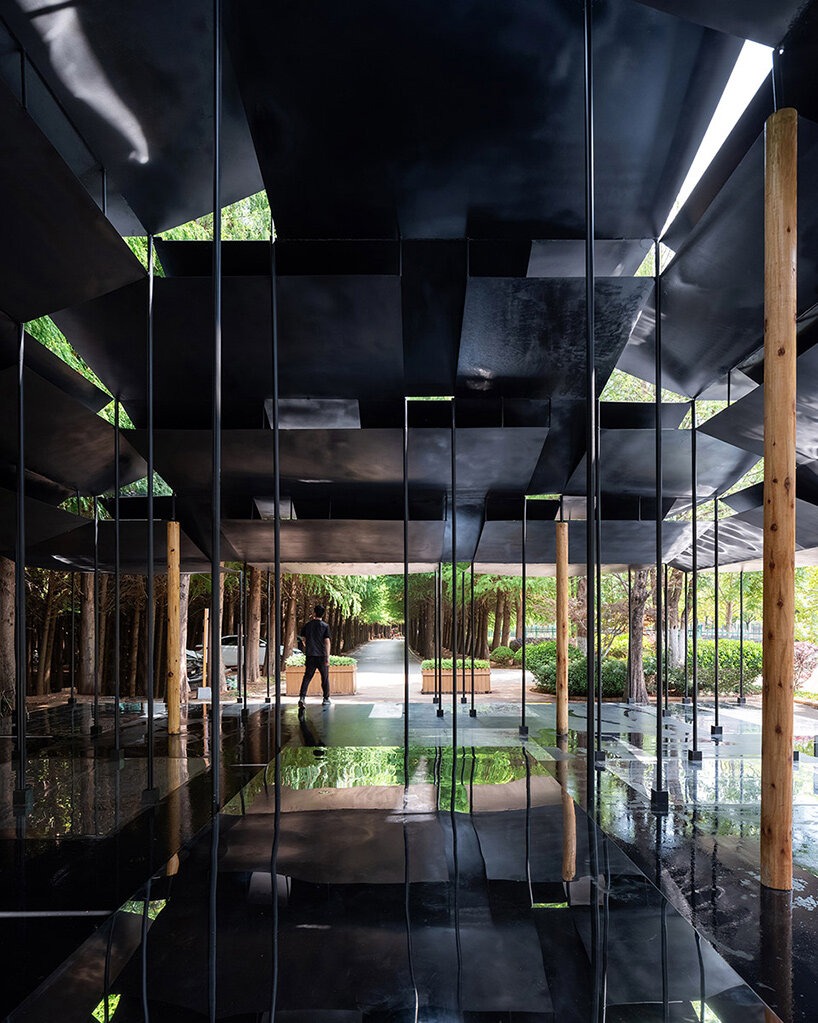
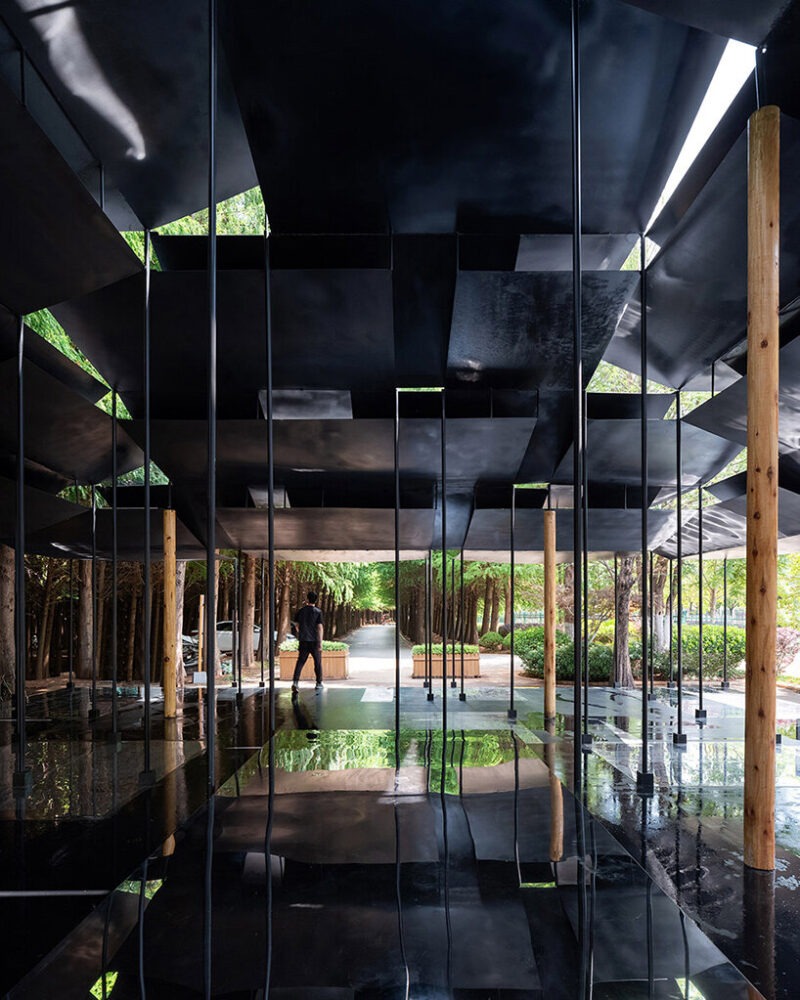
가느다란 강철 기둥들이 인공 숲을 이룬다. 이 기둥 숲은 도시에서 수변 숲으로 넘어가는 전이점을 표시한다. 빽빽한 기둥들 위로 분절된 지붕이 떠 있다. 지붕은 그늘을 만들고 하늘 조각을 프레임처럼 담아낸다. 안에서 보면, 엇갈린 기둥 사이로 두 갈래 길이 열리며 방문객을 공원 깊숙한 곳으로 이끈다.
전통의 해체, 사모지붕의 현대적 번역
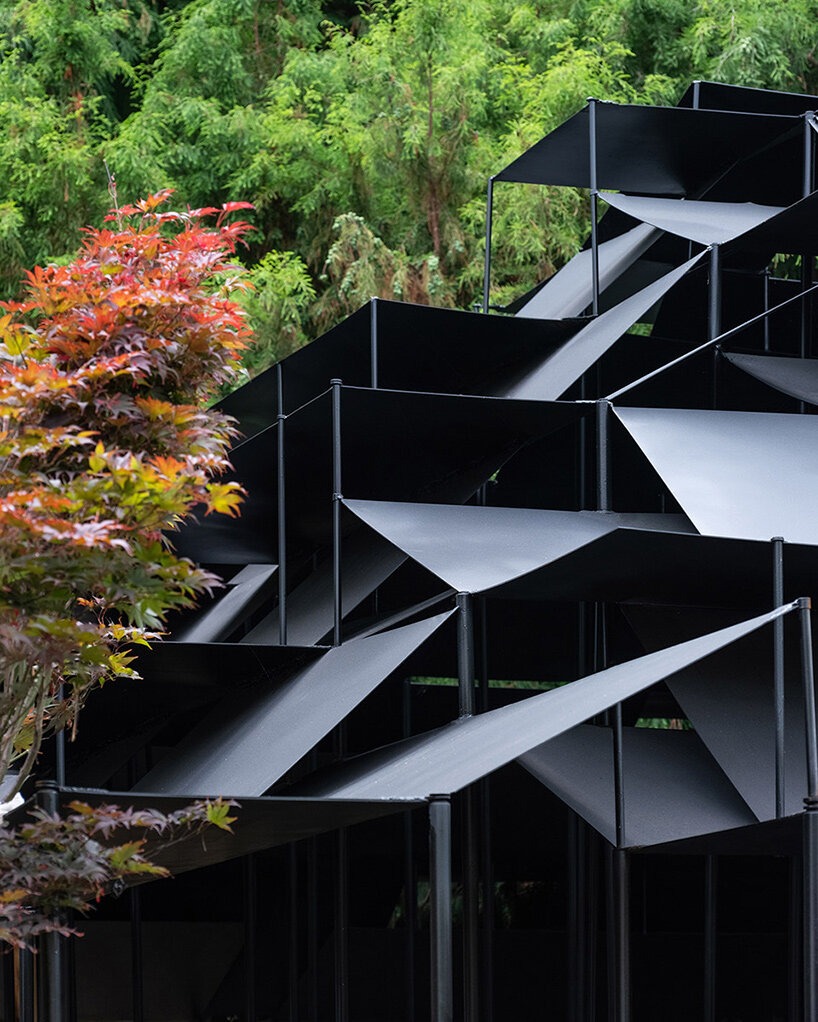
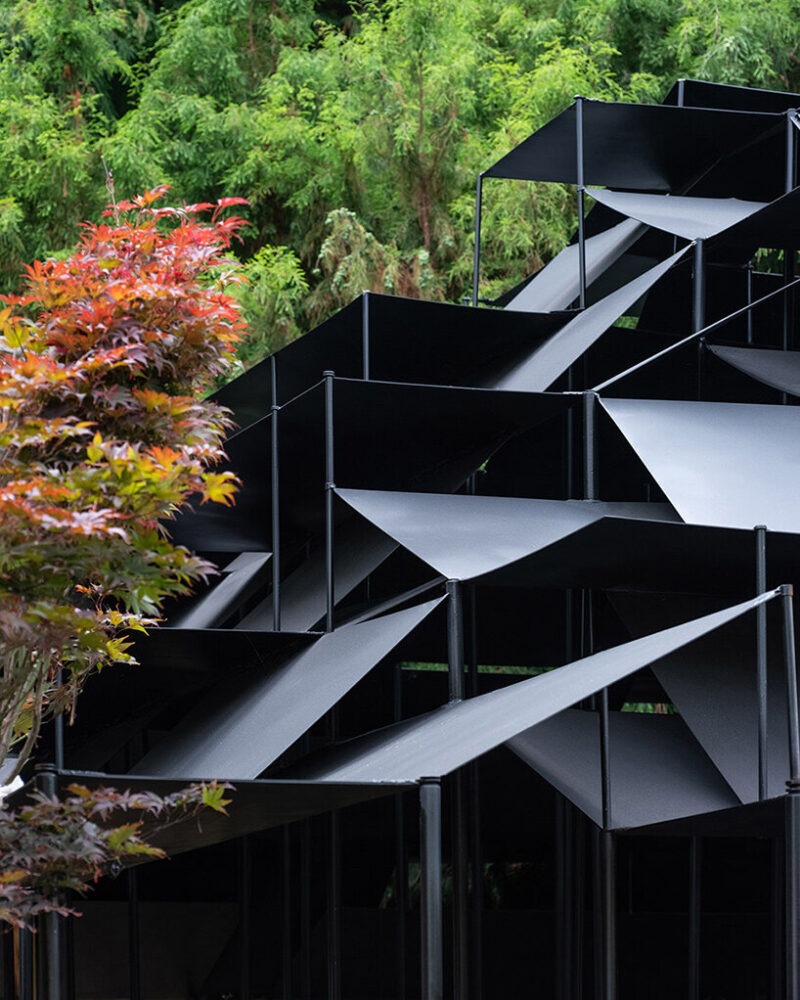
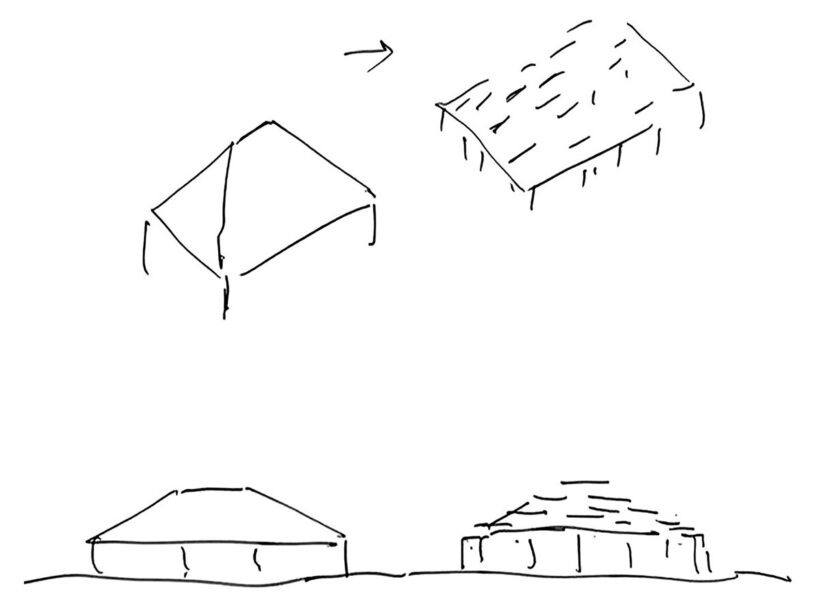
가까이서 보면 지붕은 불규칙해 보이지만, 전체 실루엣은 중국 전통 건축의 사모지붕을 떠올리게 한다. 네 면이 모두 경사진 형태다. 설계팀은 강철 판을 조각조각 나눠 소재의 인상을 부드럽게 바꾸었다. 파빌리온은 절제된 모습으로 주변에 자리 잡는다. 지붕 틈새로 스며드는 빛은 시시각각 다른 패턴을 만들며 조용히 감싸이는 느낌을 준다.
습지를 지키는 구조, 땅에 가볍게 닿다
환경적 제약이 구조 방식을 결정했다. 습지 표면을 건드릴 수 없었기에, 설계팀은 강철 판을 땅 위에 직접 놓고 그 위에 각 기둥을 10센티미터 높이의 강철 블록 위에 올리는 방식을 택했다. 이 작은 받침점들은 구조물을 지면에서 살짝 띄우며, 대지를 보호하려는 의지를 드러낸다.
반복과 변주, 모듈이 만드는 공간 리듬
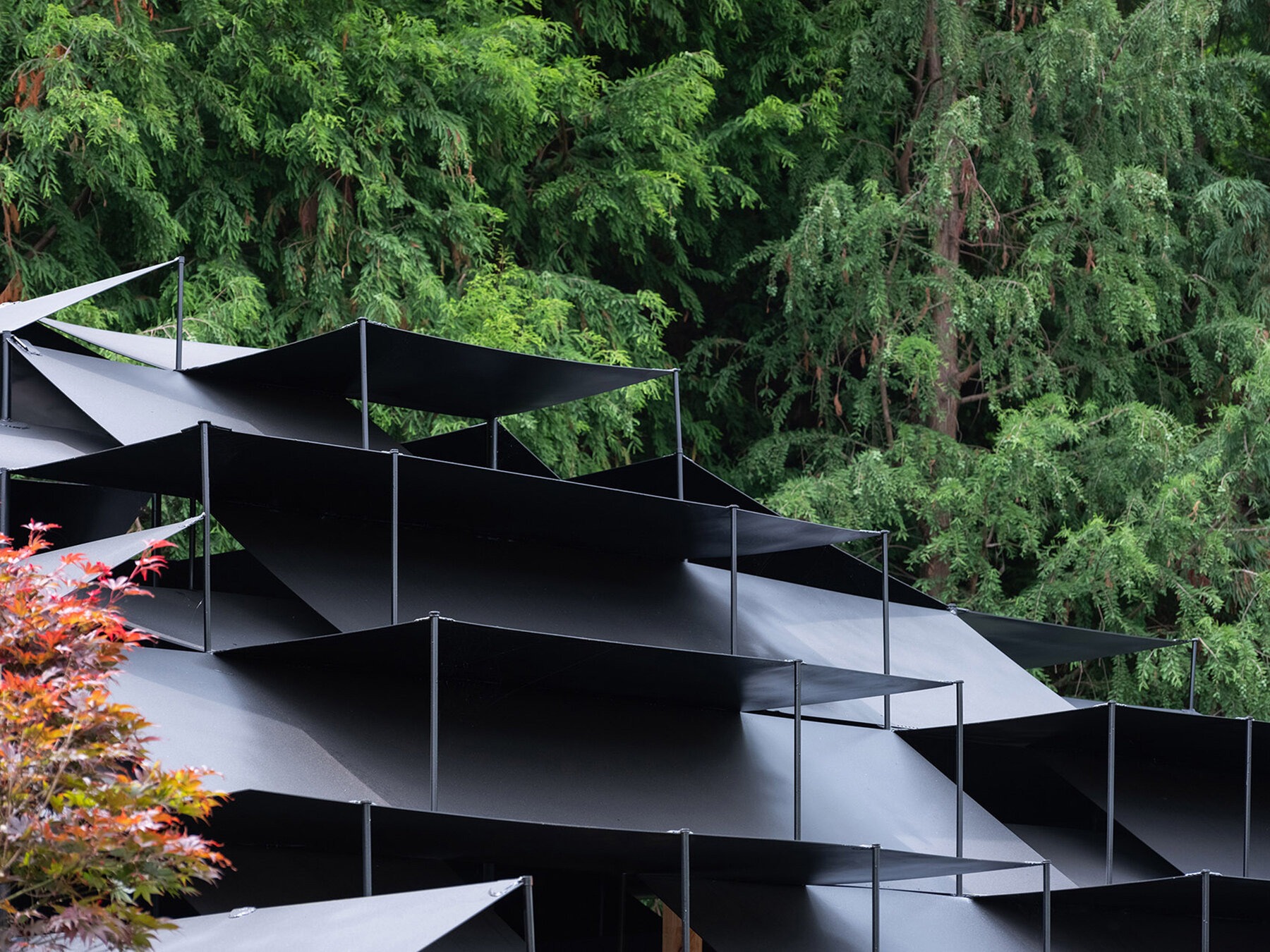
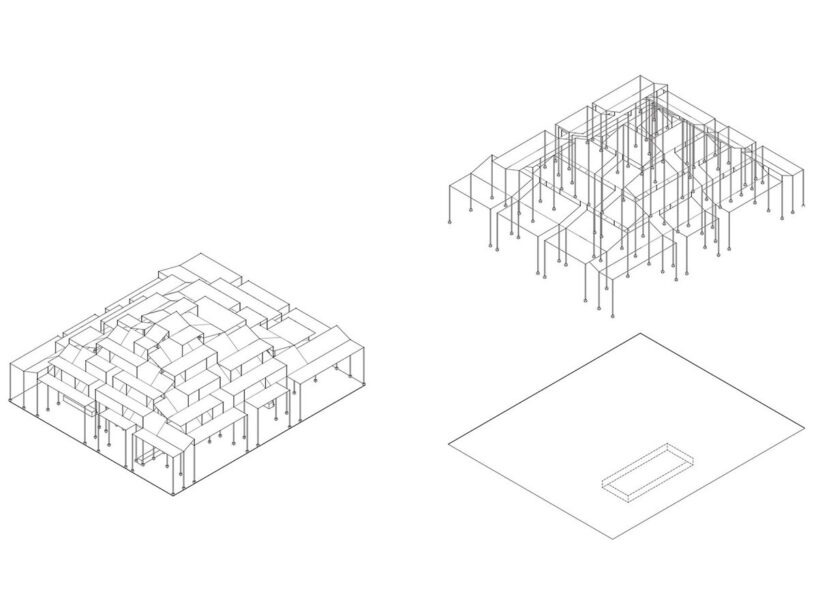
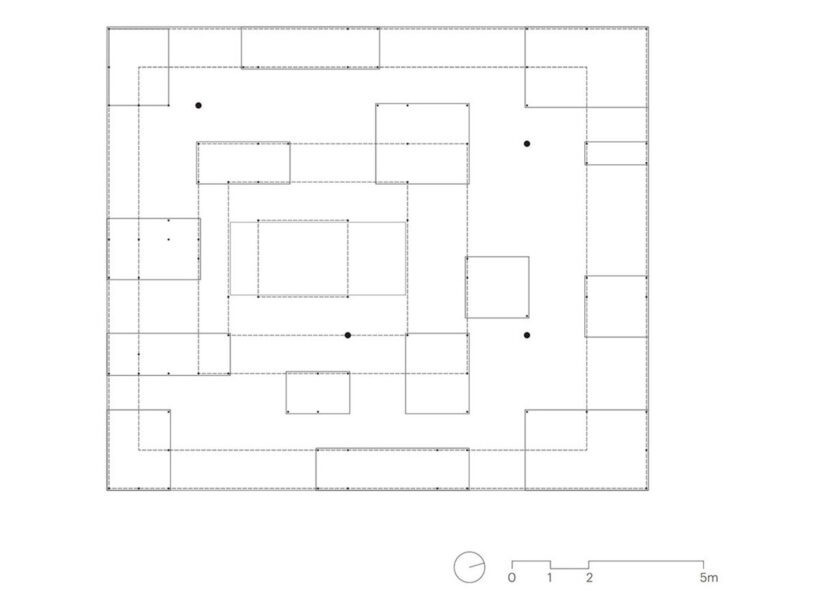
파빌리온은 같은 모듈을 반복해 만들었다. 각 모듈은 여섯 개의 기둥과 평평하거나 경사진 강철 판을 결합한다. 모듈이 겹치는 지점에서 일부 기둥은 제거되고, 하중은 지붕 판 사이에 솟은 짧고 얇은 기둥들이 나눠 받는다. 이 과정에서 기둥 간격이 달라지며 공간에 섬세하게 조율된 리듬이 생긴다. 93개의 캔틸레버 기둥이 땅에 가볍게 닿아 있고, 추가로 가느다란 원형 봉들이 지붕 상부를 떠받친다.
이러한 구조적 결정이 파빌리온에 절제된 가벼움을 만든다. 아틀리에 데샤우스는 나무와 기둥의 관계를 탐구하며, 최초의 거처 형태를 현대적 관점으로 되살렸다. 이 공간은 방문객에게 지붕 틈새로 여과된 빛과 습지의 소리 속에서 머물 수 있는 장소를 제공한다.
Write by Claude & Jean Browwn

the threshold along the wetland edge
A new project dubbed Laoyuting Pavilion has been completed by Atelier Deshaus and rises among a wetland park in China. Standing on the southern side of the Water Forest Art Zone, the project served as the entryway to the 2024 Dianchi Art Season before remaining in place as a permanent waypoint for visitors arriving to the wetland.
The pavilion sits among a grove of cypress trees which filter water before it reaches Dianchi Lake, and the area is frequented by residents who come to catch small fish among the reeds. Atelier Deshaus builds the pavilion as a space for pause in this setting, mediating between the movement of people and the slow work of the wetland.
The structure creates an artificial ‘forest’ of slender steel columns that marks the transition from city to waterborne woodland. A fragmented roof hovers above these dense vertical elements, shaping shade and framing slivers of sky. From inside, the staggered columns open two subtle paths that draw visitors toward deeper areas of the park.
atelier deshaus’ fragmented rooftop
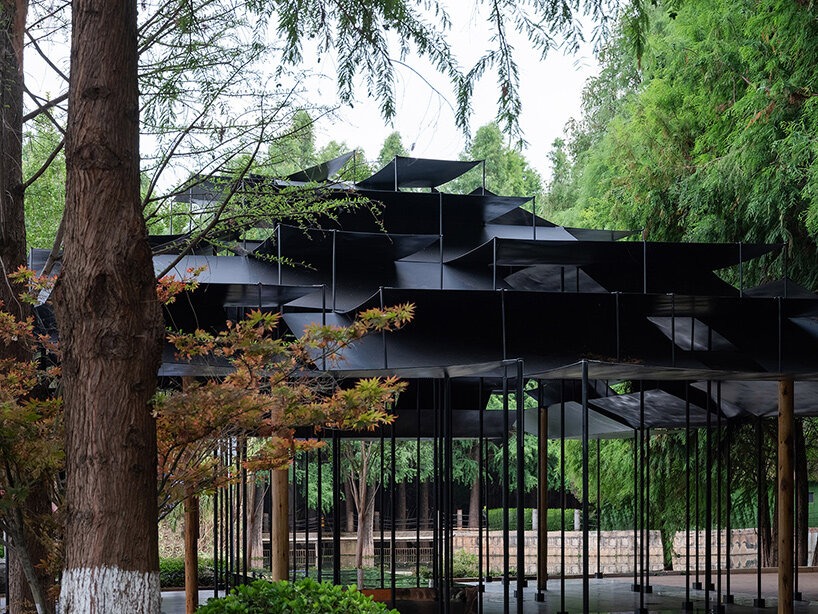
While the Laoyuting Pavilion’s roof appears irregular at close range, its overall silhouette by Atelier Deshaus recalls the four sloped hipped forms found in traditional Chinese architecture. The team‘s fragmentation of the steel plates shifts the reading of the material, giving them a softened presence and allowing the pavilion to settle into its surroundings with restraint. Light filters through the gaps in shifting patterns, producing a quiet sense of enclosure.
Environmental requirements shaped the project’s assembly. The wetland surface could remain untouched, so the foundation was conceived as a steel plate placed directly on the ground, with each column perched on a ten-centimeter steel block. These small bases act as micro foundations, lifting the structure above the terrain and signaling an effort to protect the site.
the modular logic of the Laoyuting Pavilion
Atelier Deshaus composes its Laoyuting Pavilion as an array of repeated modules that combine six columns with flat or sloped steel plates. As modules overlap, some columns are removed, and loads shift to short, thin elements that rise between roof plates. This produces varying densities of vertical supports and a spatial rhythm that feels carefully calibrated. Ninety three cantilevered steel columns meet the ground, while an additional network of smaller round bars supports the upper layers of the roof.
These structural decisions give the pavilion a measured lightness. Atelier Deshaus explores the relationship between trees and columns so that the project might echo the earliest forms of shelter through a contemporary lens. This way, the space gives visitors a place to pause within the filtered light of the roof and the ambient sounds of the wetland.
name: Laoyuting Pavilion
architect: Atelier Deshaus | @atelierdeshaus
location: Dianchi Laoyu River Wetland Park, Kunming, Yunnan Province, China
design team: Liu Yichun, Shi Yujie, Ji Hongliang
collaborator: Zhang Zhun, Pan Jun (AND Office); RoboticPlus
photography: © WangCe
from designboom