건축은 단순히 건물을 짓는 행위가 아니라, 장소의 기억을 되살리고 새로운 이야기를 덧입히는 과정이다.
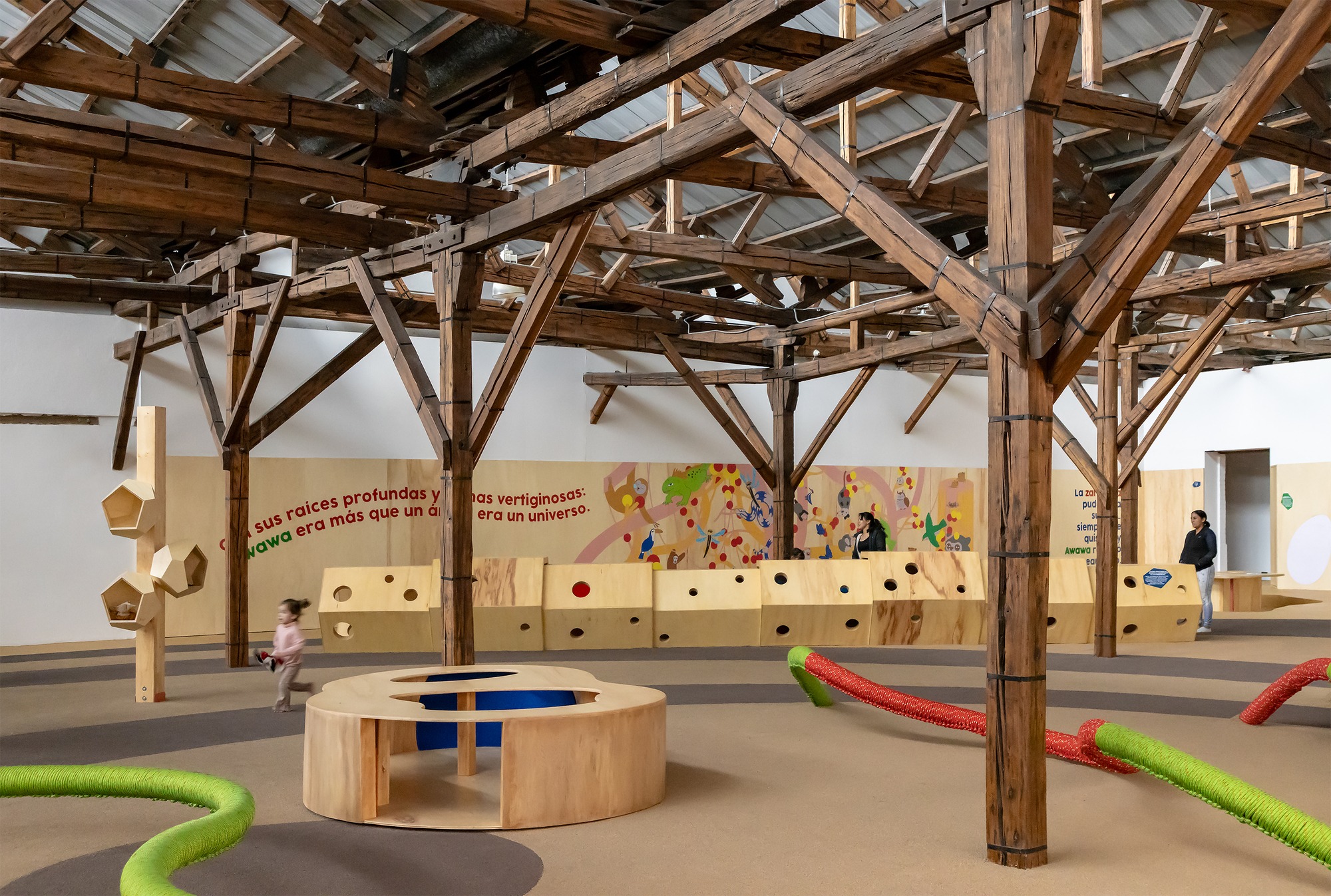
 |
 |
 |
Morphism-Awawa Interactive Science Museum
침묵하던 공장, 아이들의 웃음으로 깨어나다
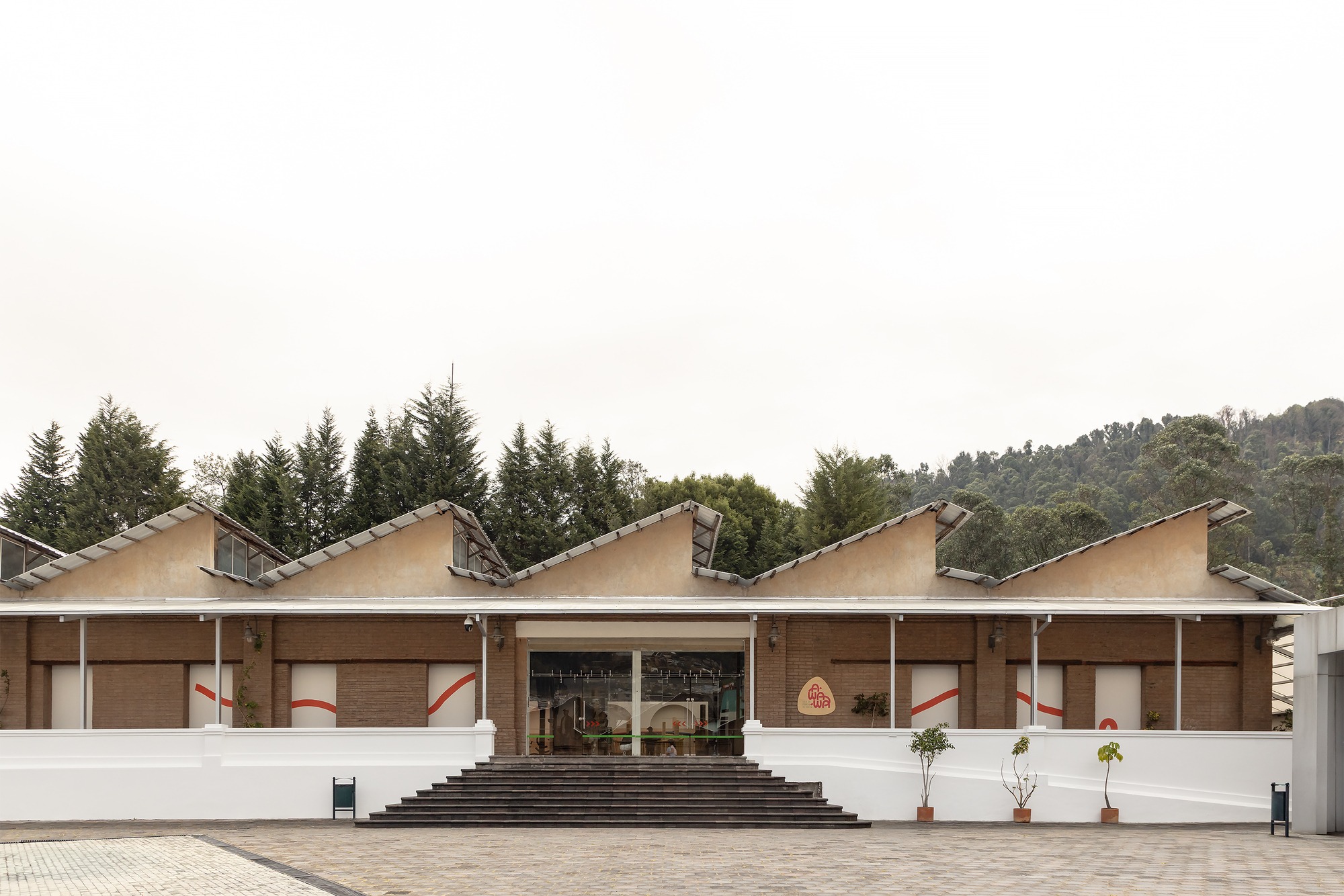
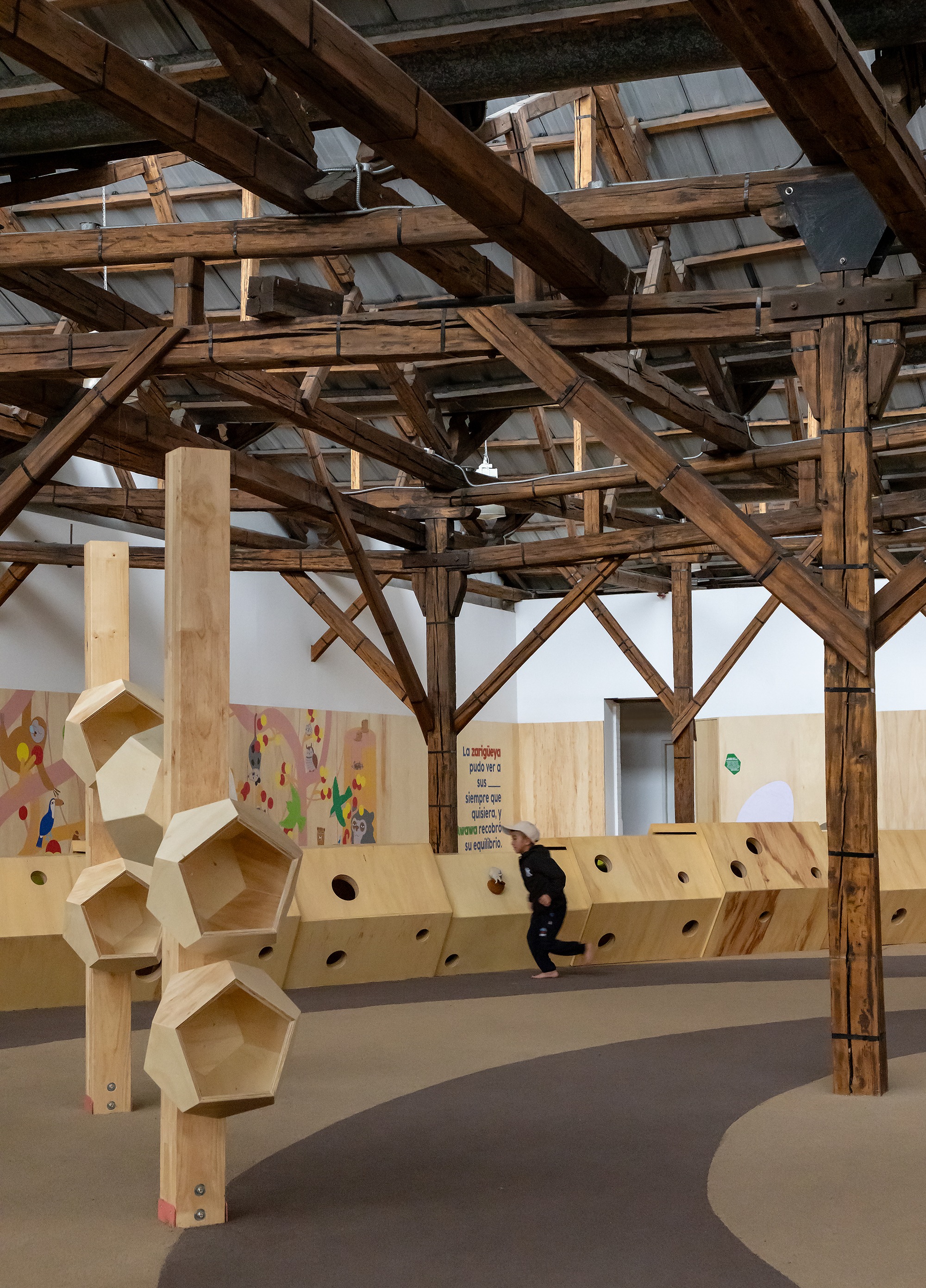
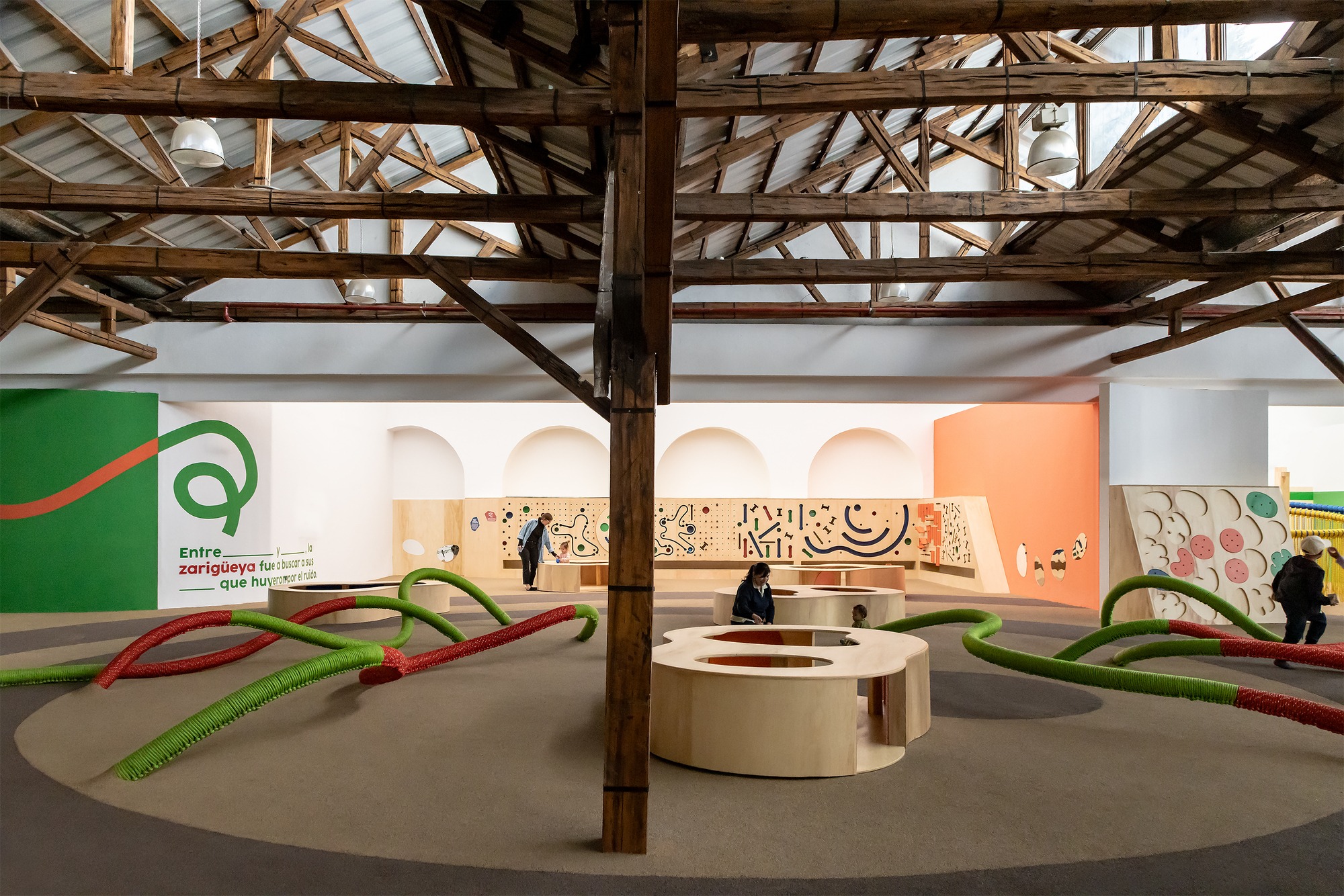
키토(Quito) 역사 지구, 20세기 중반 섬유 산업의 심장이었던 '라 인더스트리얼(La Industrial)'. 거대한 목재 트러스가 지붕을 받치고, 두터운 어도비 벽이 생산 현장을 감싸던 이곳은 오랫동안 침묵 속에 잠겨 있었습니다. 단순한 공장이 아니라, 지역 주민들의 삶과 땀이 서린 '기억의 장소'였기 때문입니다.
건축가는 이 오래된 산업 유산을 허무는 대신, 그 '집단적 기억(Collective Memory)' 위에 새로운 생명을 불어넣기로 결정했습니다. 탁 트인 창 너머로 구도심의 풍경이 내려다보이는 이곳은 이제 기계 소리 대신 아이들의 웃음소리가 채워지는 문화와 교육의 장, 아와와(Awawa)로 다시 태어났습니다.
아와와(Awawa): 아이와 자연을 잇는 거대한 나무
프로젝트의 이름 '아와와(Awawa)'는 남미 원주민어인 키추아어(Kichwa)로 '어린아이'를 의미합니다. 인터랙티브 과학 박물관(MIC) 내에 자리 잡은 이 공간은 현대적 교육론과 놀이를 결합하여, 유아들에게 감각적이고 탐구적인 경험을 선물합니다.
공간을 관통하는 핵심 이야기는 '나무(Tree)'입니다. 자연 속의 나무가 수많은 생명을 품고 복잡한 생태계를 이루듯, 박물관은 아이들이 서로 연결되고 관계를 맺는 거대한 유기체로 기능합니다. 여기에 생명의 소중함과 상호 관계성을 일깨우는 *아마존의 세계관이 더해져, 아이들은 자연스럽게 자신과 자연, 그리고 타인의 관계를 온몸으로 체득하게 됩니다.
13개의 조각으로 완성되는 '자유 놀이'의 지도
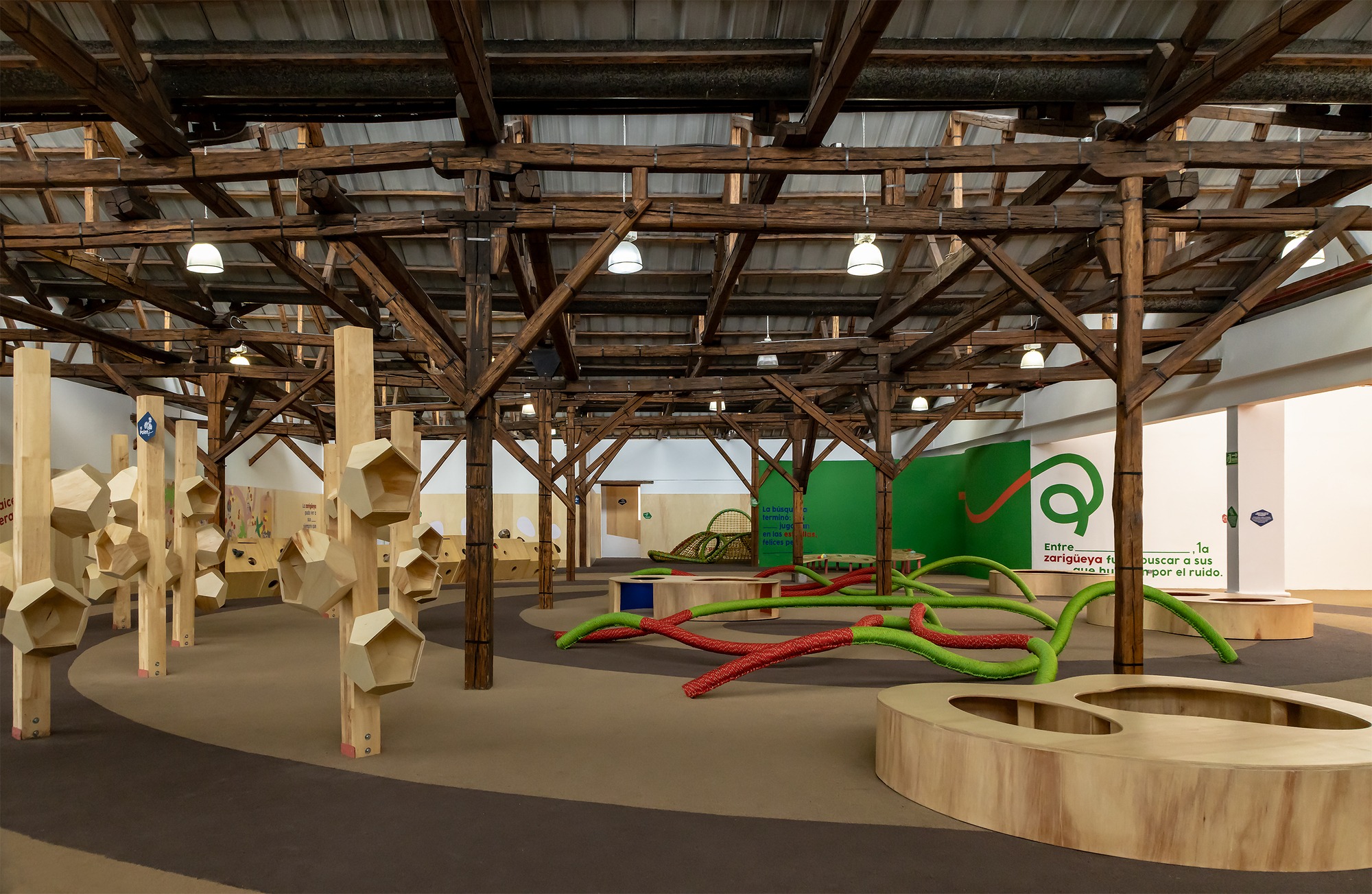
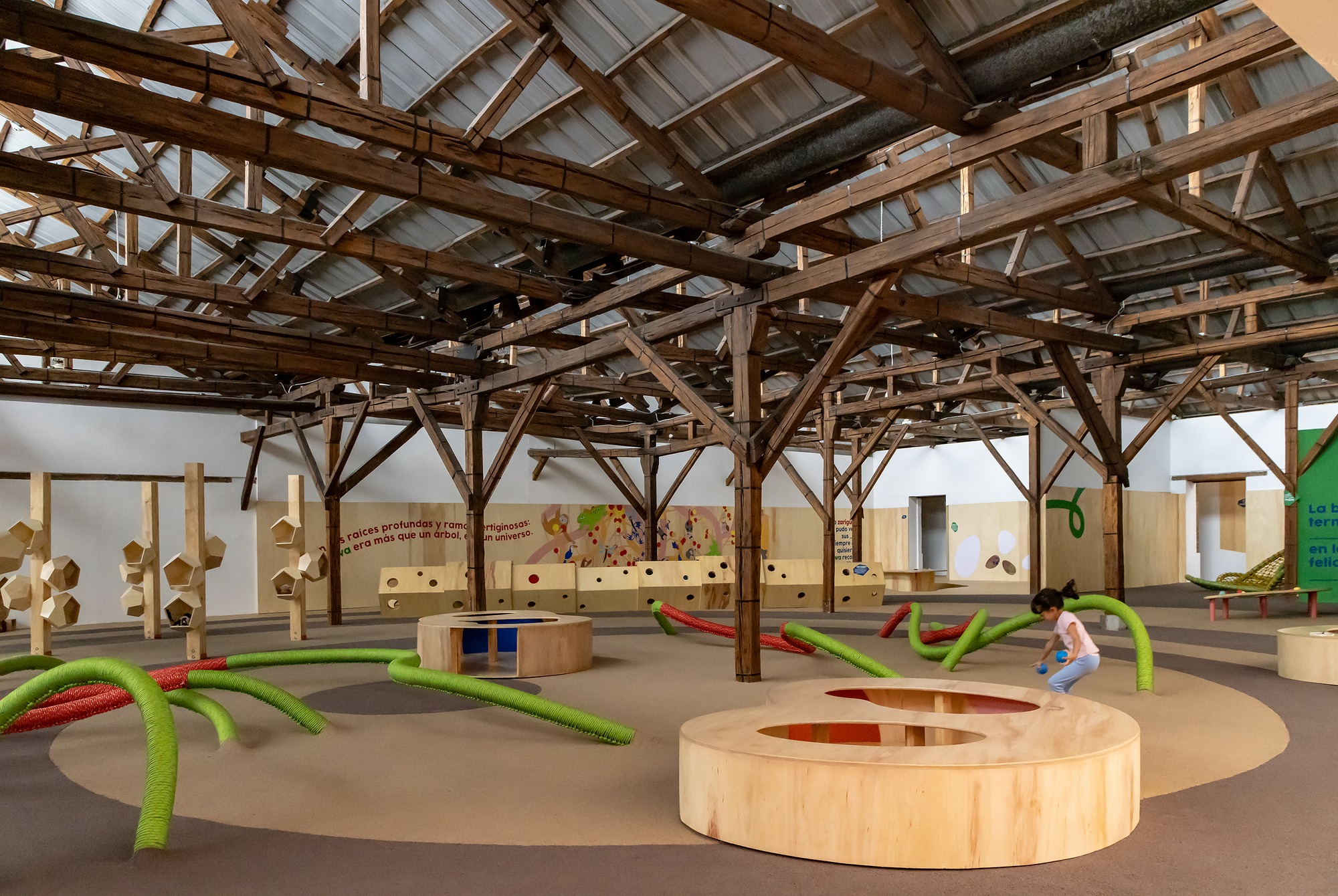
아와와는 아이들에게 정해진 규칙이나 경로를 강요하지 않습니다. 대신, 각자의 리듬에 맞춰 스스로 탐험할 수 있는 '자유 놀이(Free Play)'를 제안합니다. 경계 없이 연결된 13개의 구역에서, 아이들은 마치 숲속을 거니는 듯한 다채로운 모험을 마주합니다.
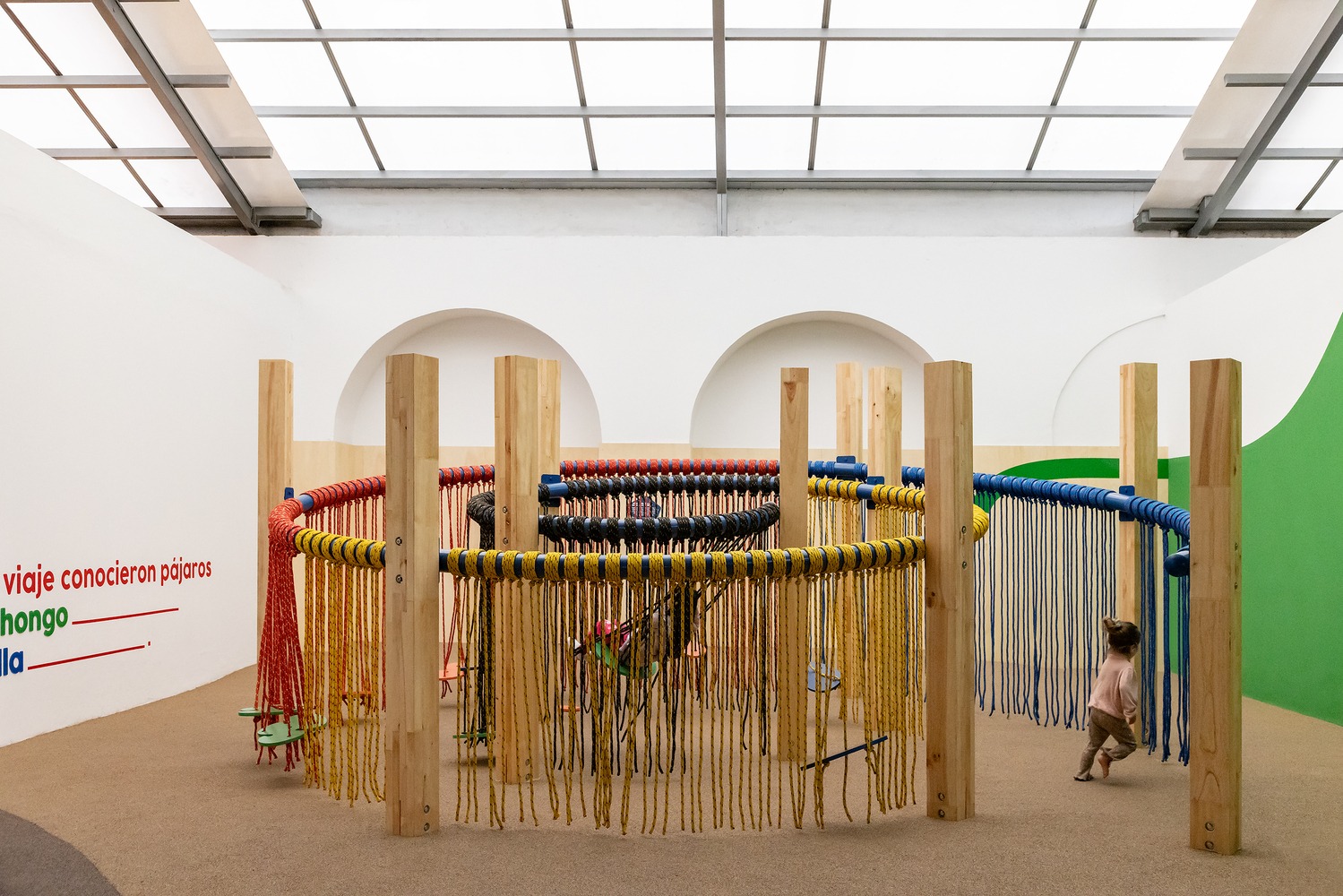
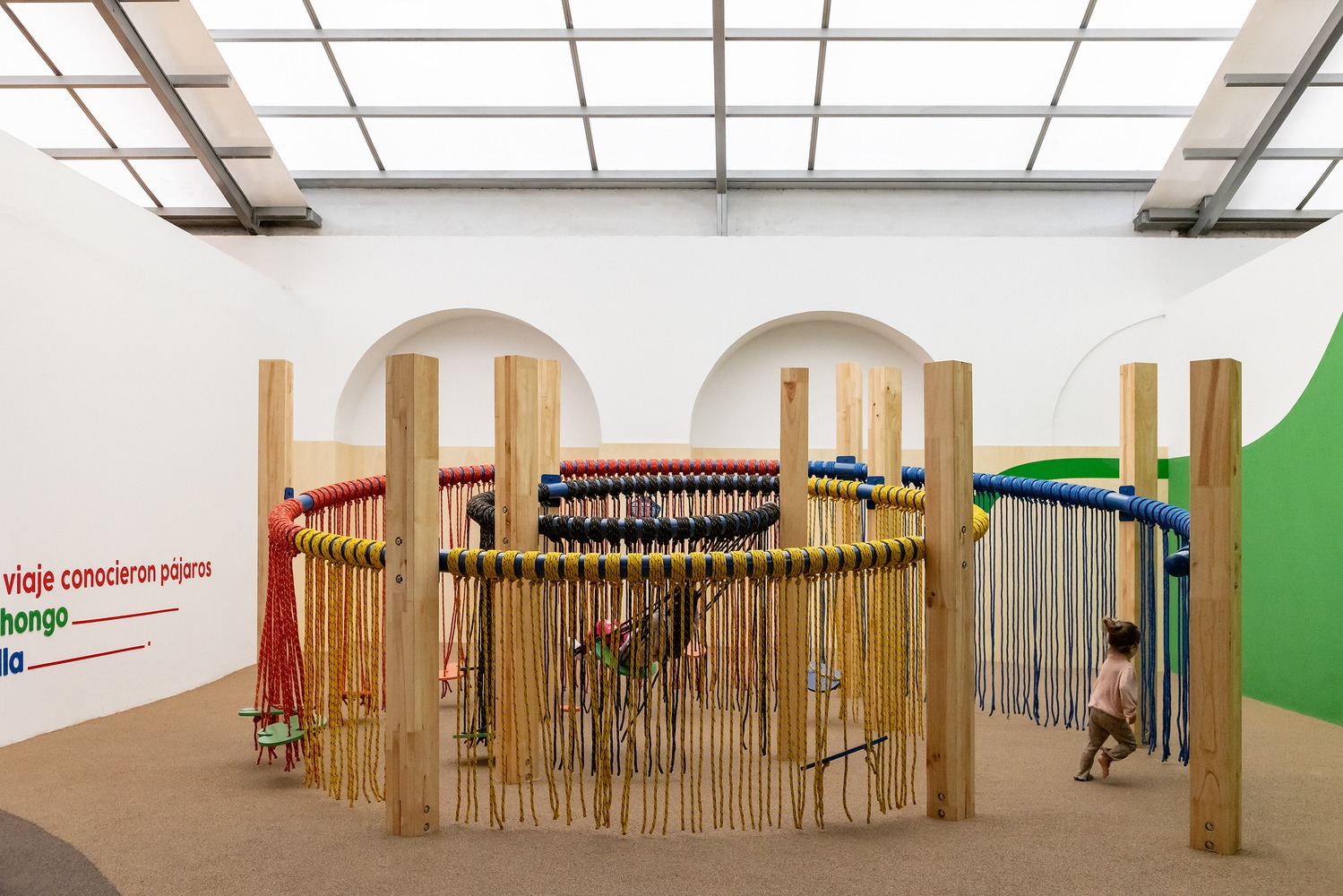
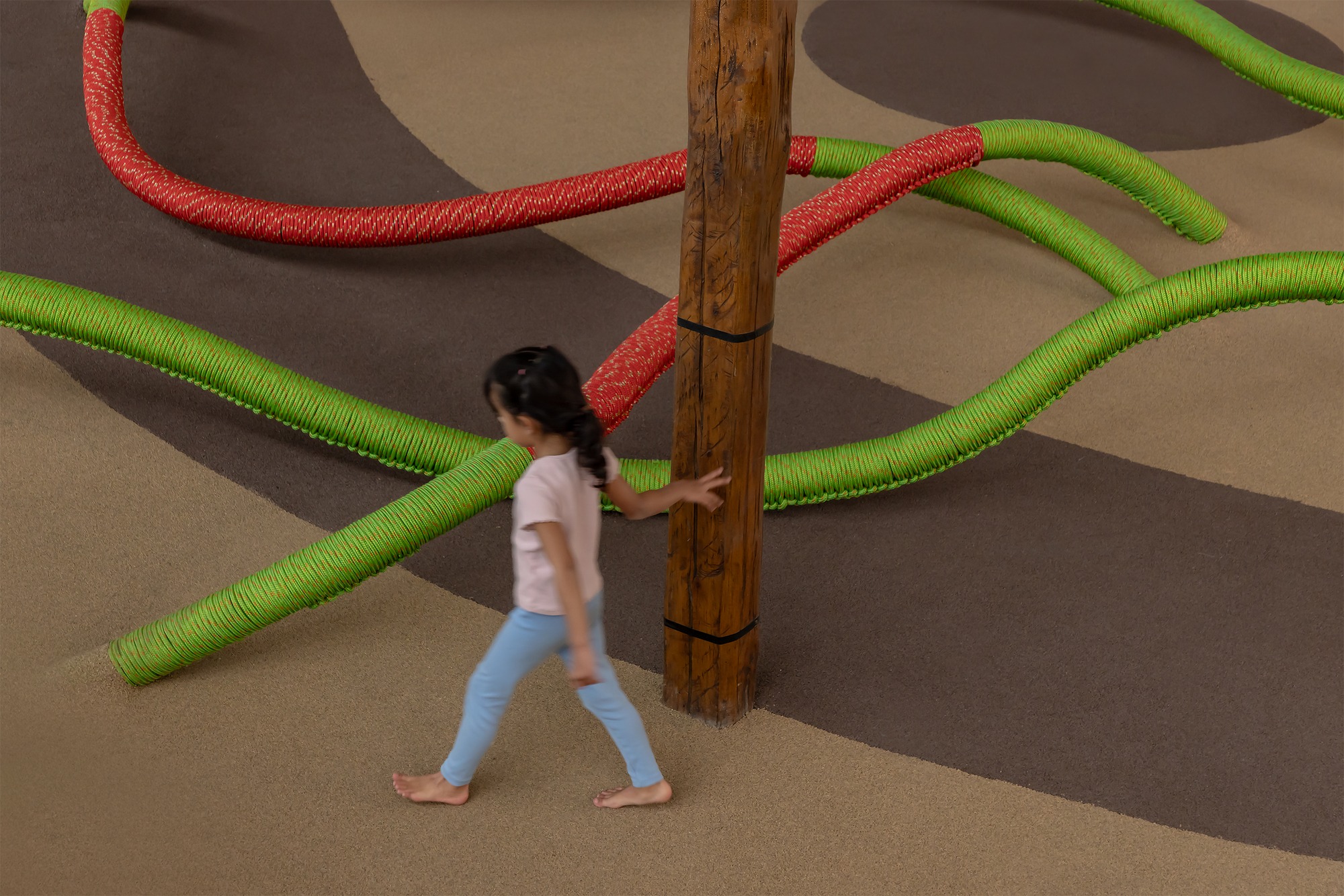
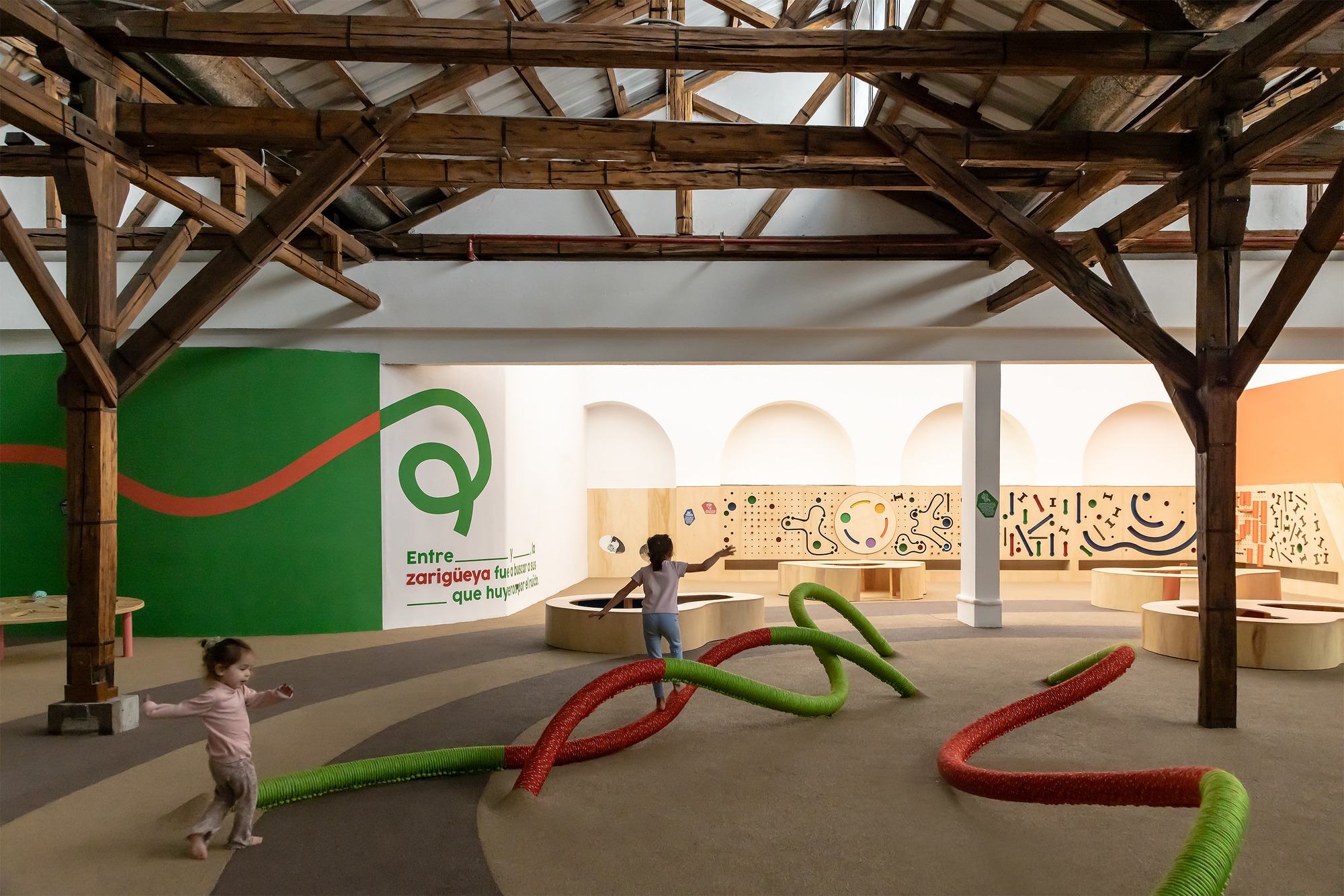
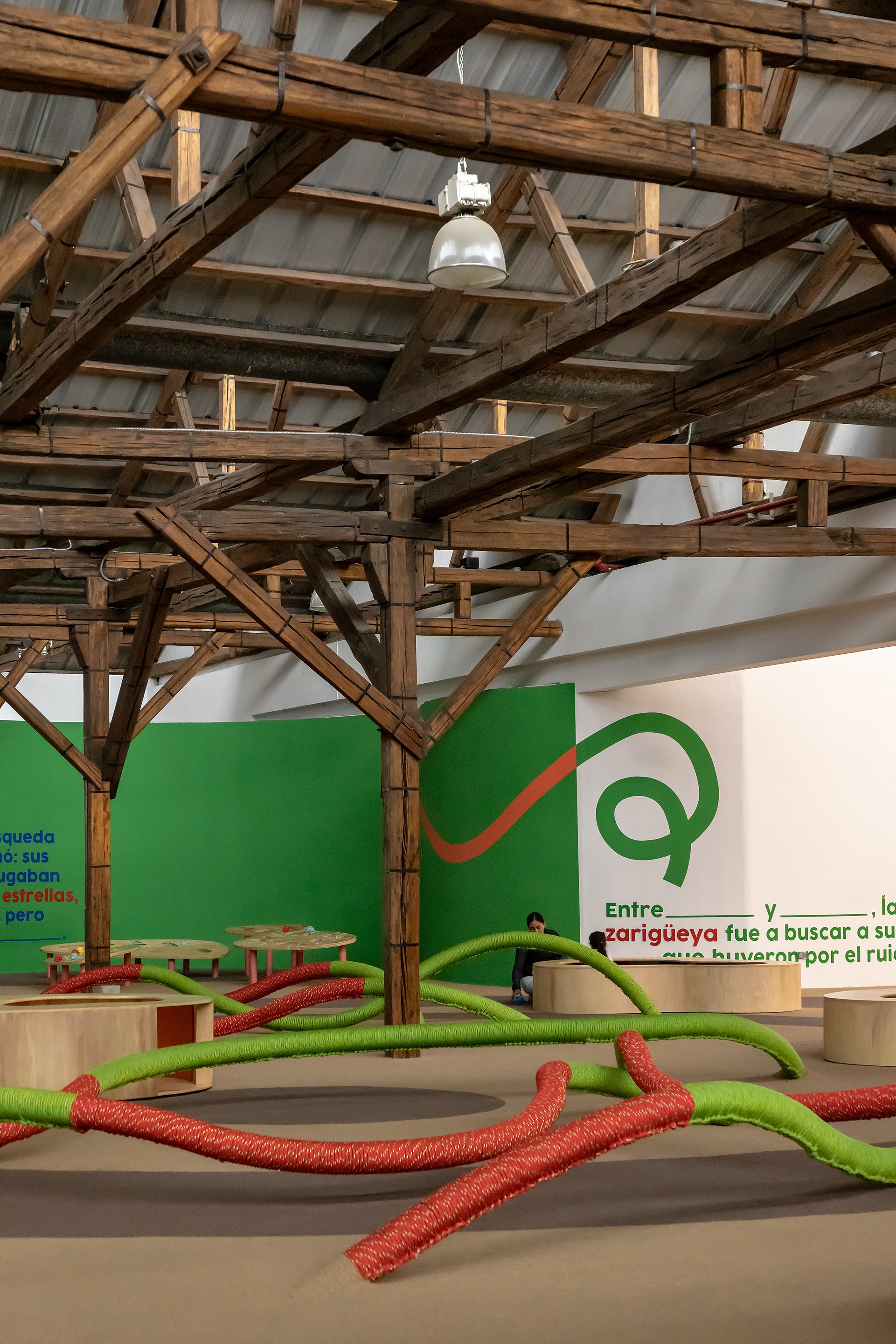
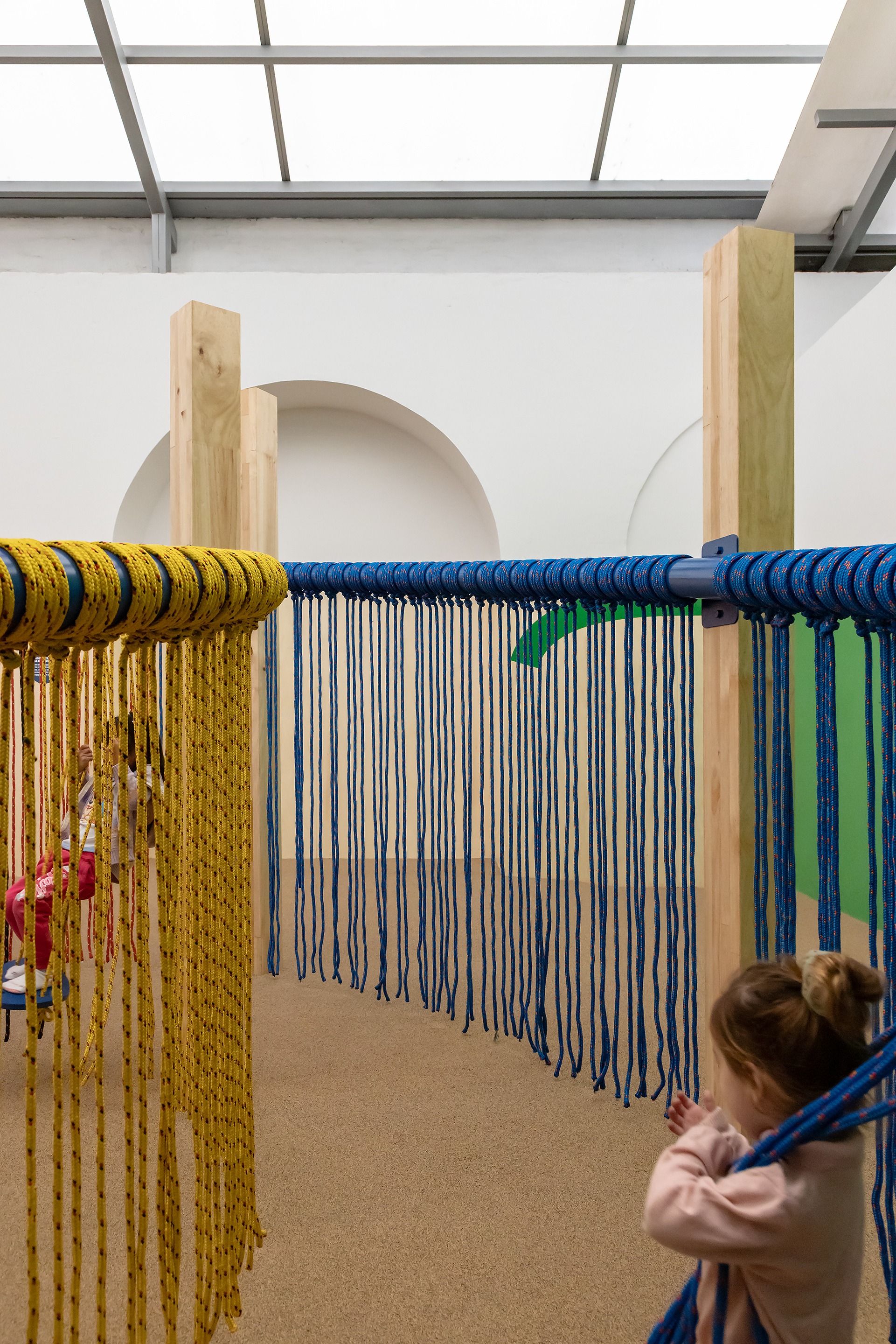
여정은 환영의 공간인 '꽃가루(The Pollen)'와 아늑한 휴식처인 '둥지(The Nests)'에서 시작됩니다. 빛과 그림자를 탐구하는 '밤(The Night)'을 지나면, 탐험은 더욱 역동적으로 변합니다. 미로처럼 얽힌 로프로 구성된 '덩굴 숲(The Vines)', 아메바를 닮은 유기적 곡선의 '개미 언덕(The Ant Hill)'은 아이들의 호기심과 모험심을 끊임없이 자극합니다.
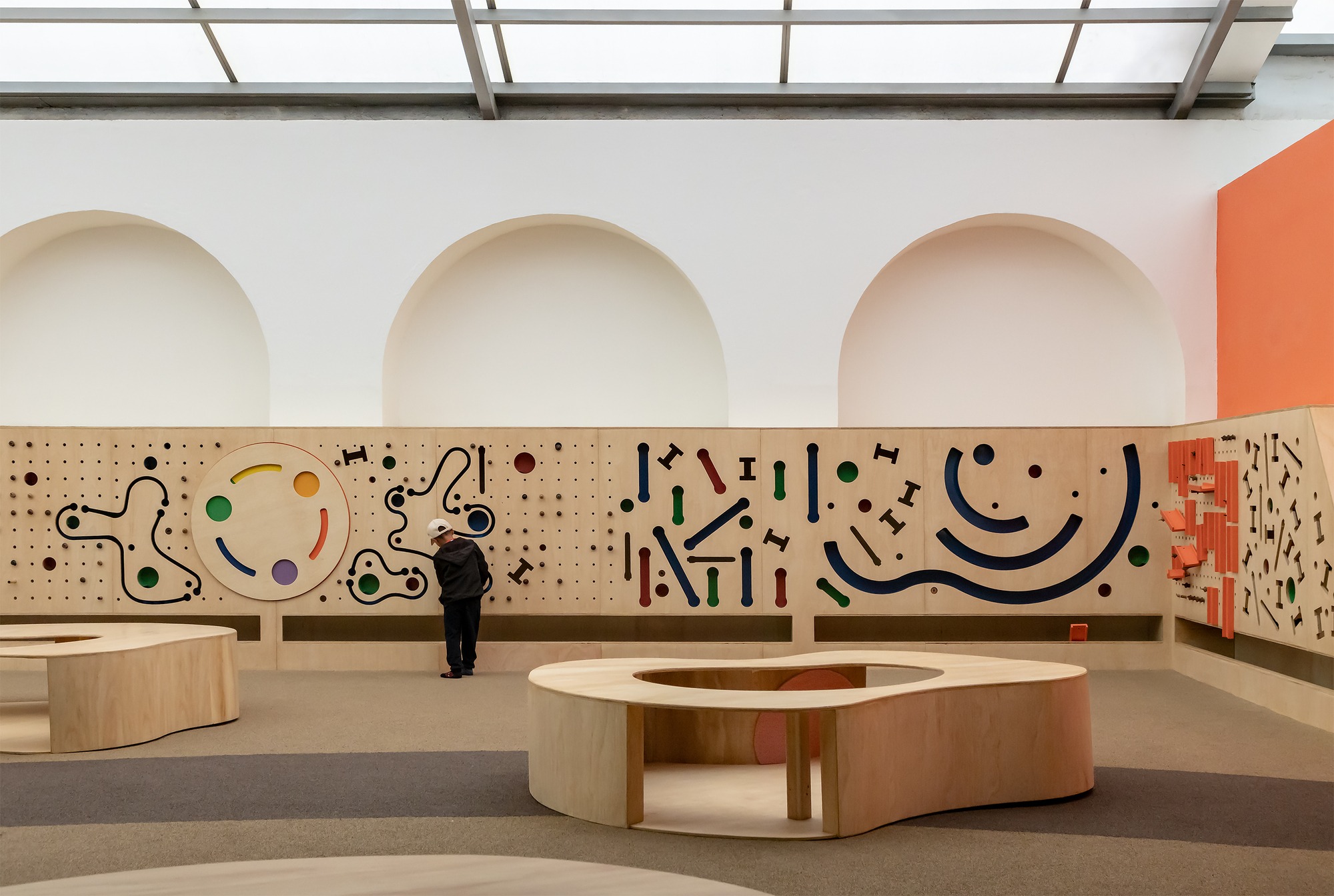
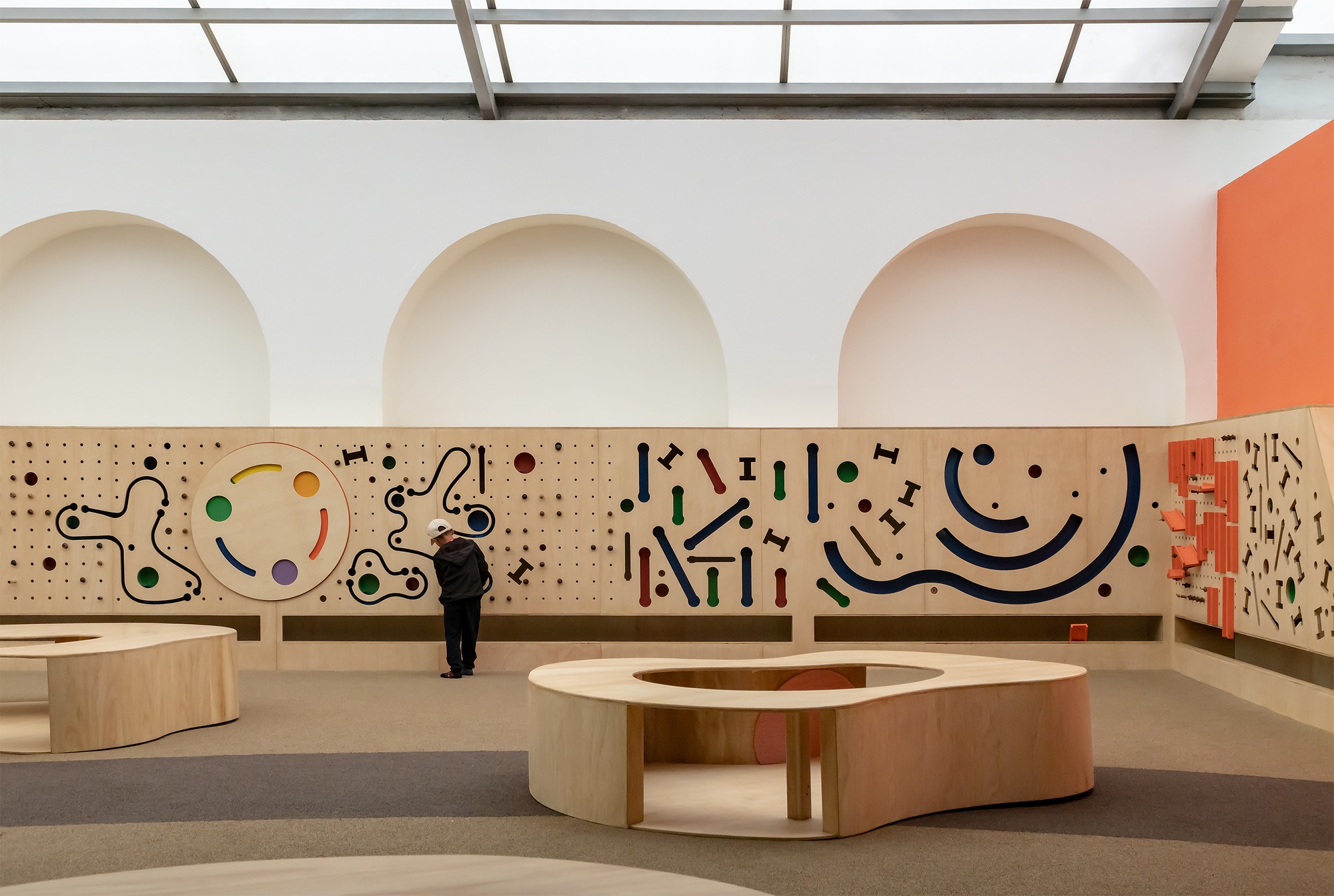
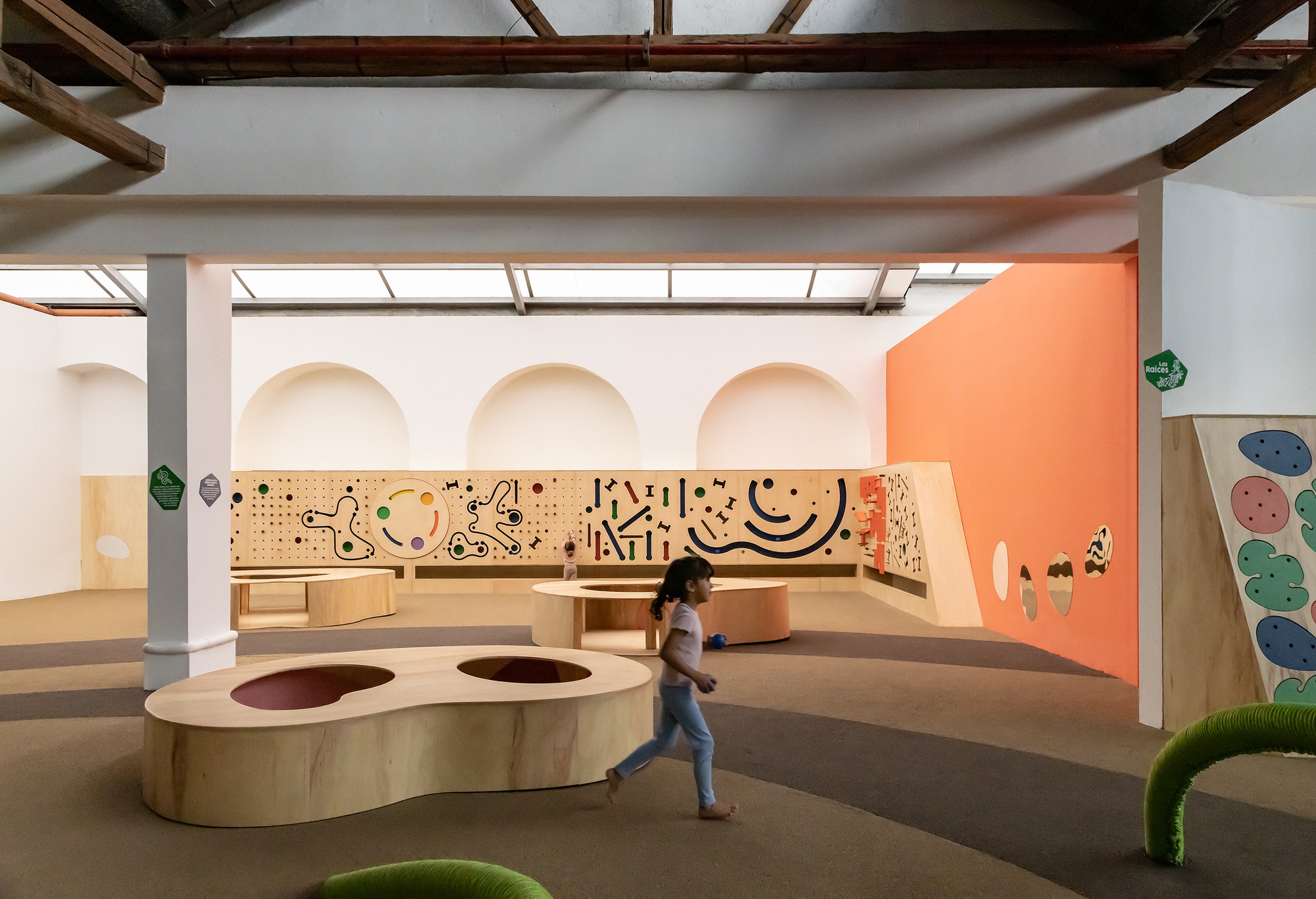
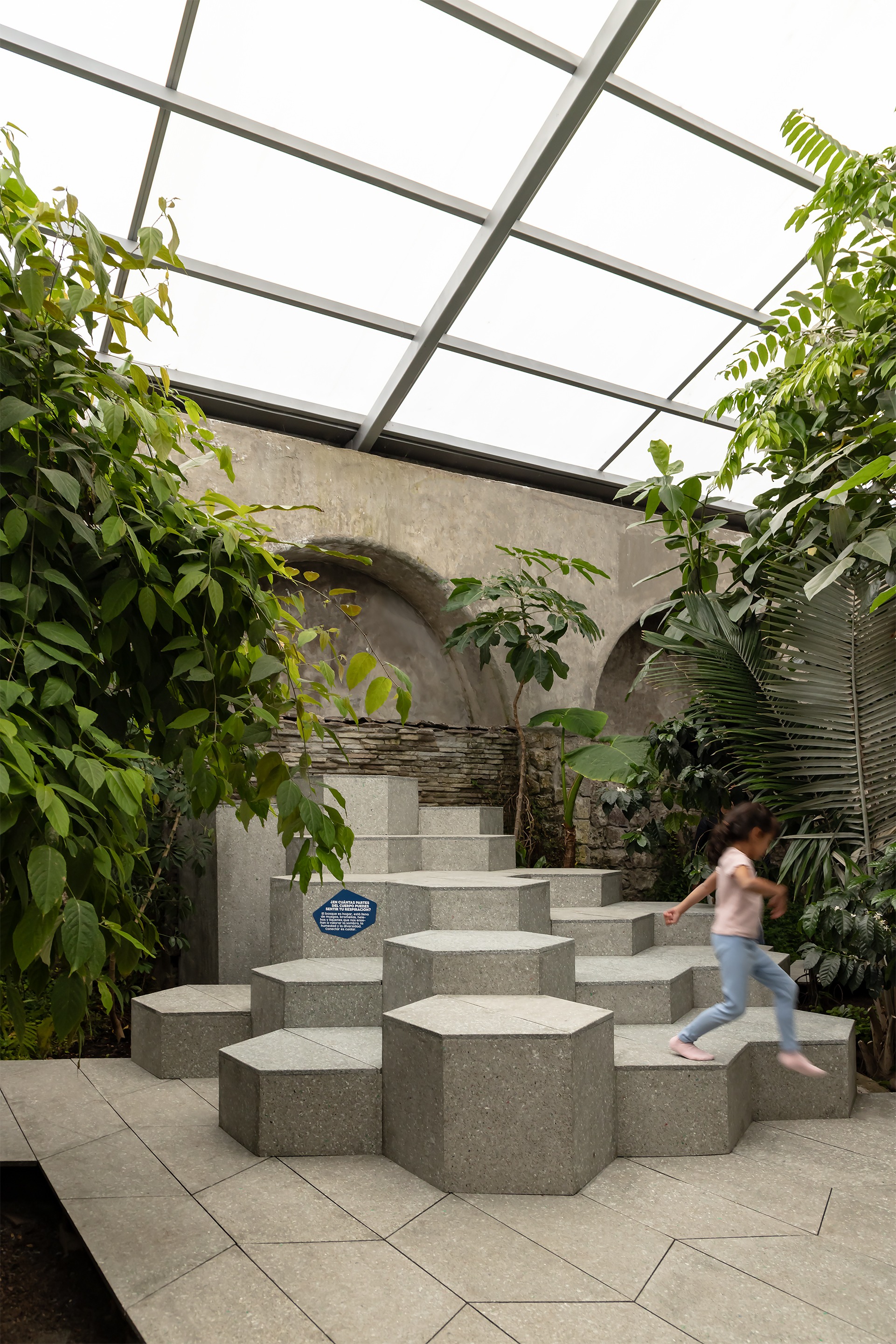
특히 '흰개미 집(The Termite Mound)'과 '뿌리(Roots)' 구역은 옛 공장의 부품을 놀이 요소로 재탄생시켜, 과거와 현재를 연결하는 독창적인 시도를 보여줍니다. 거대한 직조 놀이인 '나뭇잎(The Leaves)'과 실내 정원 '구름 숲(The Cloud Forest)'에 이르면, 아이들은 손끝으로 자연의 질감을 생생하게 느끼게 됩니다. 이 모든 공간은 벽면에 새겨진 신화적 이야기와 어우러져, 아이들 스스로 빈칸을 채워나가는 거대한 이야기책이 됩니다.
재료의 윤리: 지속 가능한 미래를 위한 약속
아이들이 주인공인 공간인 만큼, 재료의 선정 기준은 무엇보다 '환경적 윤리'와 '안전'이었습니다. 모든 목재 요소는 지속 가능한 숲에서 얻은 압착 목재(합판)를 사용하여 생태적 가치를 실현했습니다.
실내 바닥에는 충격을 최소화하는 바이오 고무(Biocaucho)를, 정원 구역에는 재활용 테트라팩과 압착 알루미늄 바닥재를 적용하여 내구성을 높였습니다. 또한 아이들의 연약한 피부가 닿는 로프와 클라이밍 홀드는 가장 부드러운 질감의 소재들로 엄선되었습니다.
오래된 공장의 뼈대 속에 심어진 이 새로운 '나무'는, 산업화 시대의 유산을 미래 세대를 위한 상상력의 토양으로 훌륭하게 변모시켰습니다. 아와와는 건축이 어떻게 과거를 존중하면서도 가장 현대적인 방식으로 미래인 아이들과 만날 수 있는지를 보여주는, 따뜻하고도 탁월한 해답입니다.
Write by Claude & Jean Browwn


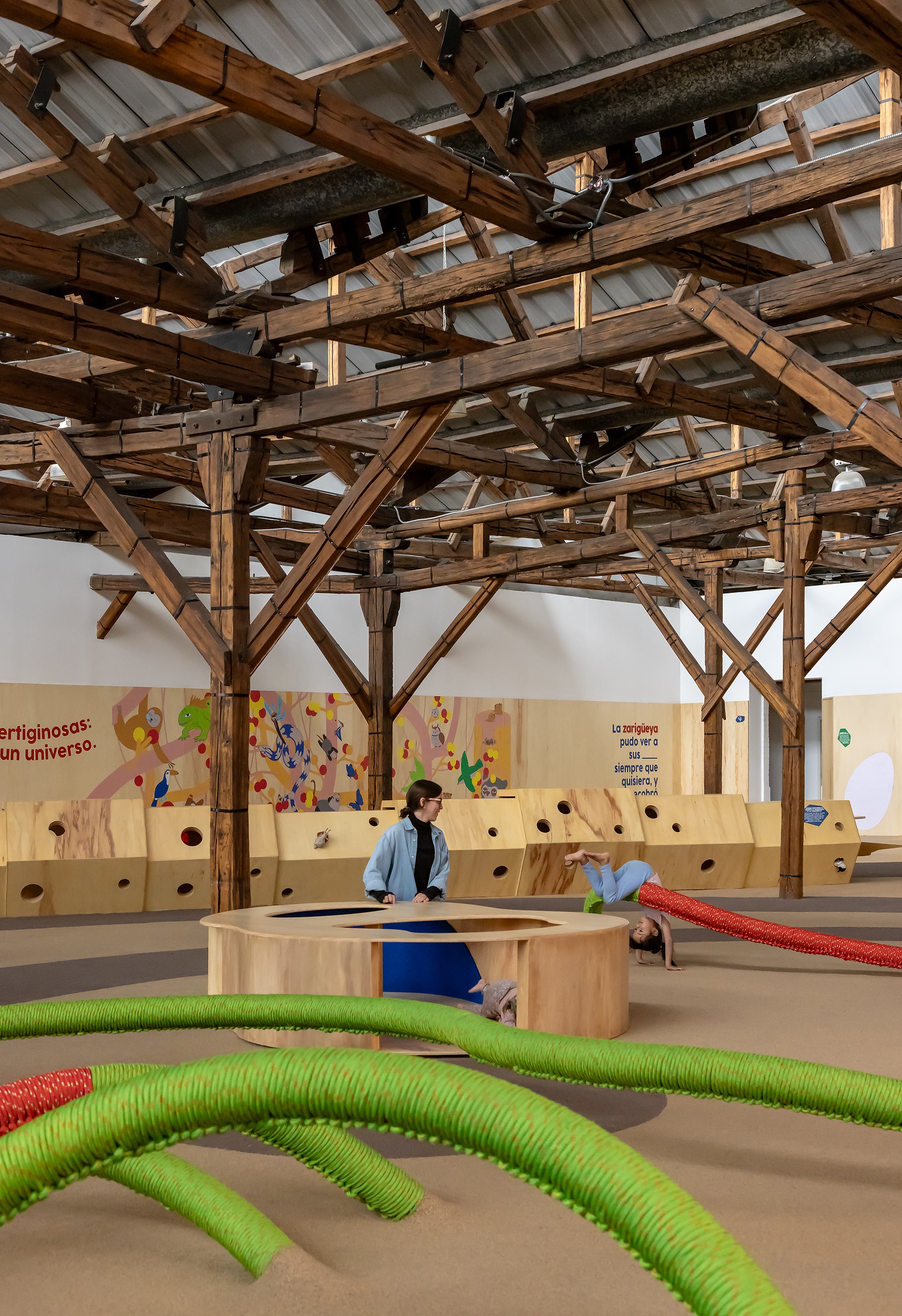



Historical Facts "La Industrial" Textile Factory - AWAWA is developed in the old factory "La Industrial." Built in the mid-20th century, the factory was one of the city's most prominent textile manufacturing complexes.
Architecturally, the building was organized through wide spans and warehouses structured by solid wood columns and trusses. Thick adobe walls supported and enclosed the production space. On the outside, large open spaces overlook the landscape of Quito's Historic Center. The transformation into cultural and educational facilities redefines the collective memory of the factory and the neighborhood. In this context, the AWAWA project finds an architectural support that transforms the industrial heritage into an active setting for imagination, play, education, and community building, while maintaining the historical connection with the building and its people.
Architectural Project AWAWA, a Kichwa word meaning: girl/boy. Located in the Interactive Science Museum (MIC), Awawa is a permanent room that, through play strategies and contemporary pedagogies, provides a playful, sensory, and exploratory space for early childhood.
Prior to the museum's intervention, the space was used as a fabric factory, which, with the city's growth and the process of industrialization, was abandoned and forgotten. Currently, the Museum Fund has rescued this space to function as a museum dedicated to school aged children and scientific dissemination. Thanks to this initiative and the need for innovation within the institution, Awawa was born.
Part of the project's intention is to approach and empathize with the relationship between children and nature. For this reason, two important narrative elements are used: the metaphor of the tree: a living being in nature that houses a complex and interconnected ecosystem, heterogeneous, ancient, from which there is much wisdom to learn; and stories that bring closer Amazonian worldviews, describing the importance of life in nature and the role each individual plays in their interrelationship with others.
Distribution and Materials Awawa attracts its users by itself. It is structured around free play and autonomous exploration, proposing spatial situations that stimulate curiosity, movement, sensory perception, and imagination, respecting the individual rhythms of each child.
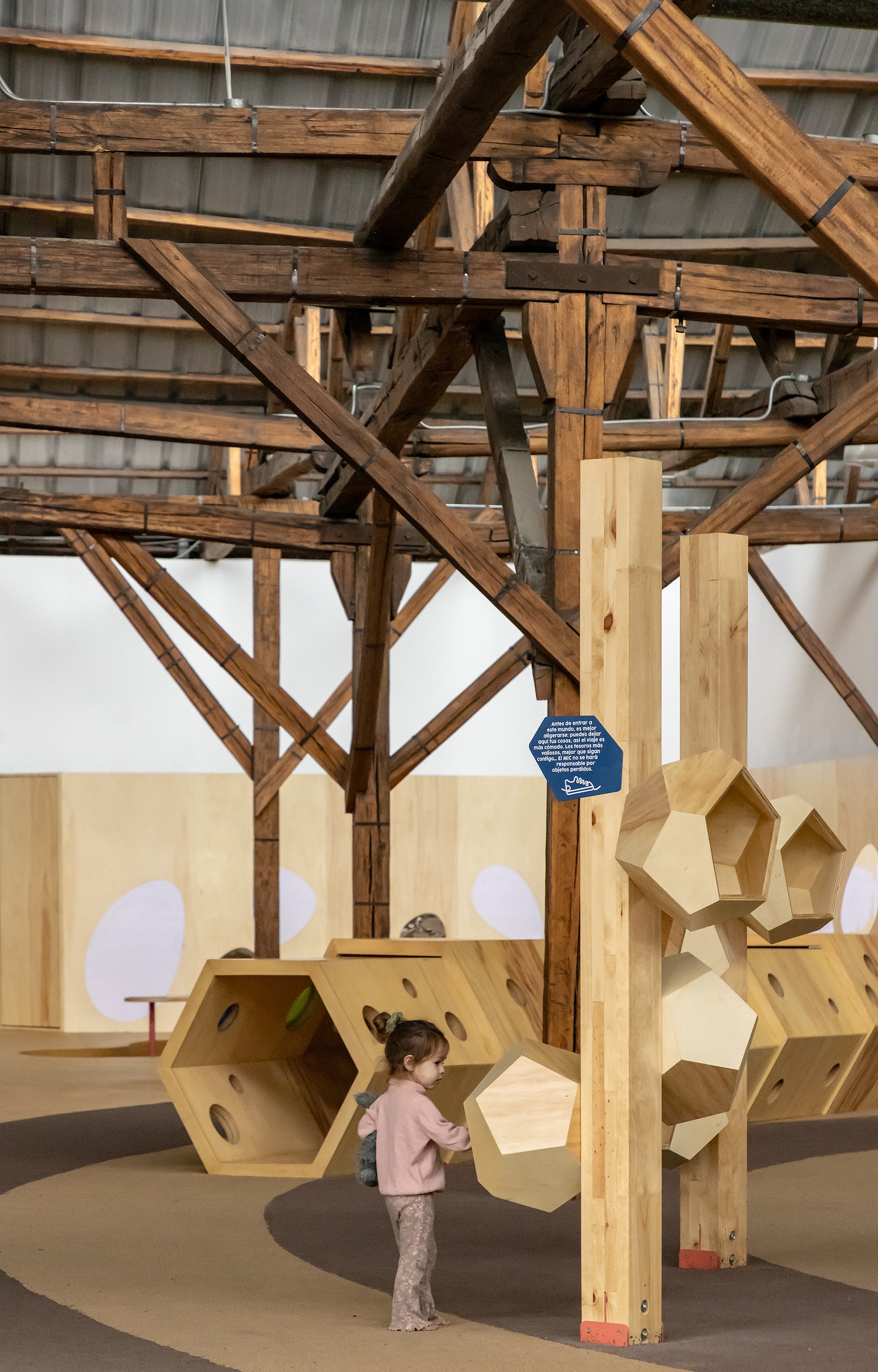
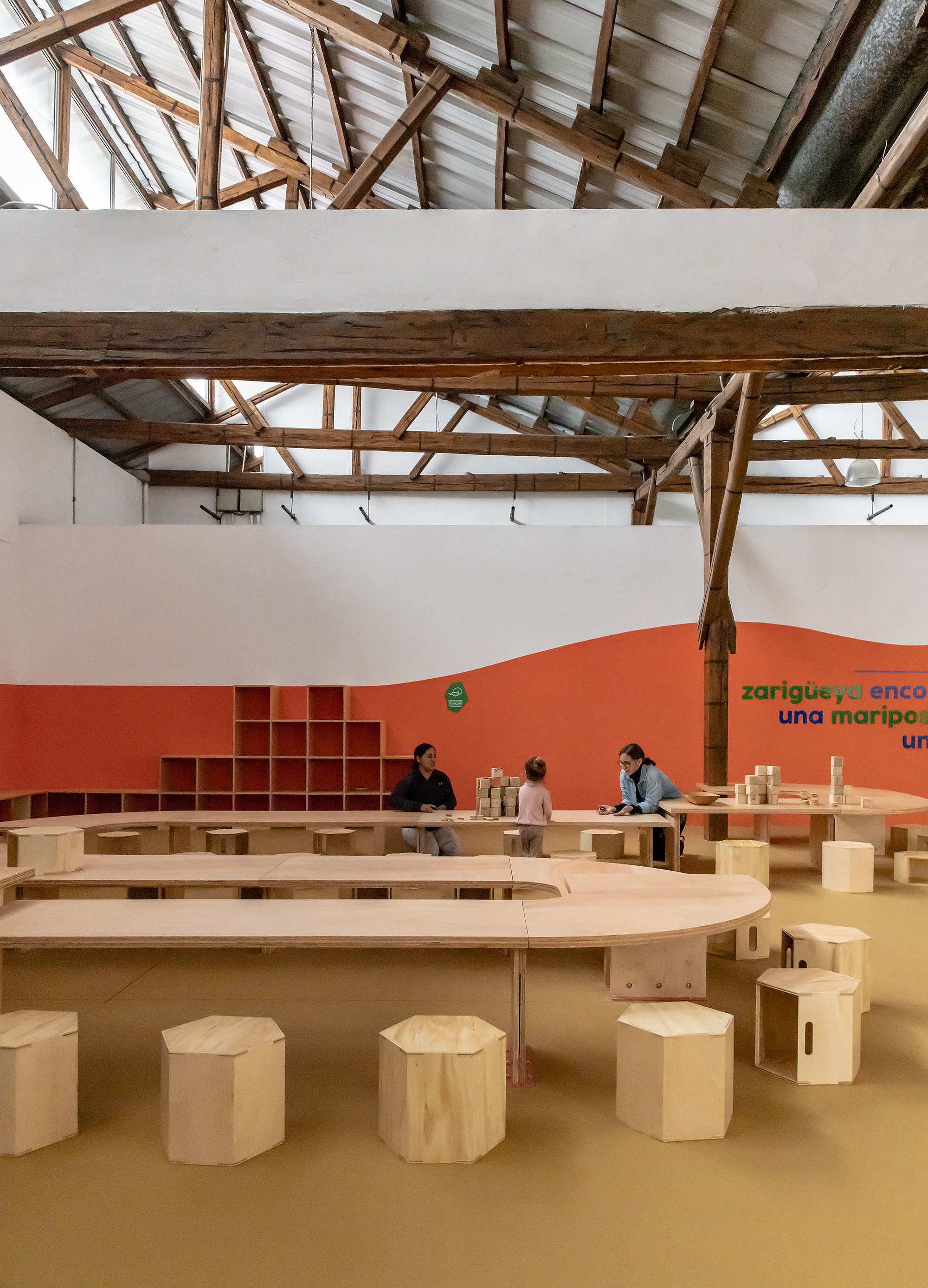
It accommodates a variety of interconnected, undelimited zones that suggest diverse uses: The Pollen, a welcoming space where users leave their belongings; The Night, a digital interaction room that uses light tables and screen projections through mediations; The Ant Hill, a world of materials where water and organic shapes are experimented with; The Nests, an ideal resting area for breastfeeding and reading; The Vines, spiral like elements and colorful ropes resembling a labyrinth, complemented with puzzle pieces that can become support surfaces for swings or rocking chairs; Roots, a balance play area with amoeba-like modules with colorful materials and reflections for younger ages and lower activity; The Termite Mound, an interactive wall with pieces from the old textile factory as complementary play elements; The Leaves, a large-scale weaving area; The Drops, an exploration area with painting on different materials; The Beehive, a climbing and sliding area accompanied by soft and mobile elements; The Trunk, a tunnel resembling a fallen trunk with holes and colors related to a mural of the myth; The Flower, an exploration space through ropes at different heights; The Cloud Forest, an indoor garden with exploratory and modular topographies.
Being an open and connected room, each zone links to another and creates unexpected moments of play. Thanks to the myth, there is a narrative accompaniment in the room that also becomes a game to freely complete what is expressed on the walls.
Consequently, in awareness of the environment and nature, the room uses ecologically friendly or recycled materials, suitable for children, minimizing the risk of falls. Among the most important materials are: pressed wood sourced from responsible forests used in all museum elements for direct use with children, as well as in walls; biocaucho, a material that minimizes impact with the floor, used in the indoor room; recycled tetrapack and pressed aluminum flooring, used for its durability in the indoor garden area; other elements are durable plastic materials with a soft texture that allow for prolonged use of the space, such as ropes, climbing holds, and colored acrylics.
from archdaily