"건축은 새로운 것을 만드는 것이 아니라, 사라져가는 것을 기억하는 방법이다."- 왕슈(Wang Shu), 프리츠커상 수상 건축가
땅이 기억하는 건축, 린판 속 두반 박물관 CSWADI-The Douban Museum
린판 속 박물관
두반 박물관은 두장옌의 주요 관개 지역인 안더 타운에 자리한다. 이곳은 전통 농경 문화와 현대 소스 제조업이 교차하는 지점이다. 이곳은 서부 쓰촨 특유의 린판(林盤) 안에 자리한다. 린판은 숲과 대나무, 농가가 어우러진 복합 생태계로, 한국의 마을숲과 유사한 개념이다. 산재한 농가들이 숲과 대나무에 둘러싸여 탄탄한 생태 기반을 만든다.
이 생태를 보존하는 것이 프로젝트의 첫 번째 원칙이 되었다. 설계 초기 단계에서 흉고직경 20cm 이상의 나무와 대나무 군락을 보존 대상으로 표시했다. 건물은 이 나무들 사이를 누비듯 자리 잡았고, 건축과 자연이 공생하는 "대나무 숲 속 집"의 풍경을 만들어냈다.
생태 우선의 설계
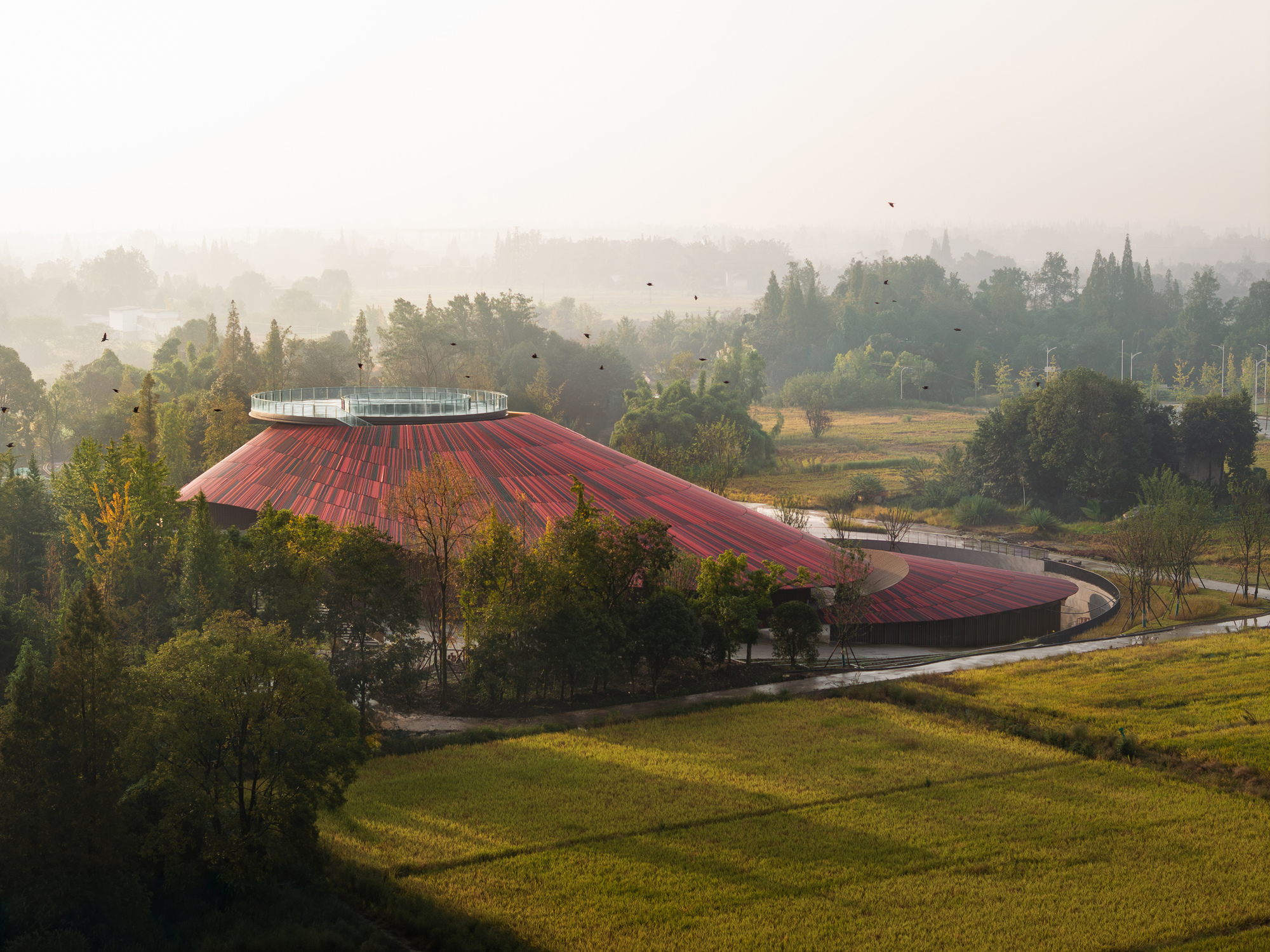
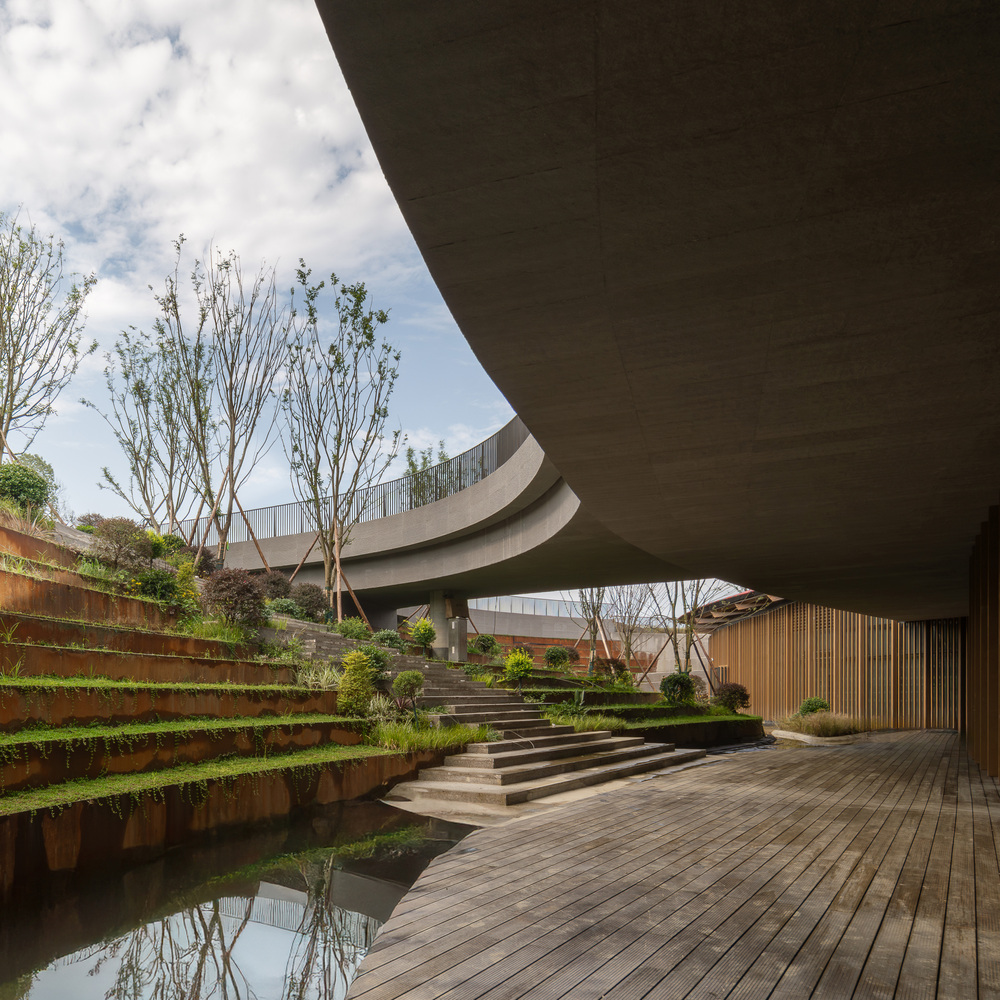
시각적 영향을 최소화하기 위해 주요 기능 공간을 지하에 배치했다. 전체 볼륨 중 약 3분의 1만 지상에 드러난다. 로비와 전시홀이 여기에 들어서고, 나머지는 땅 아래 자리한다. "큰 덩어리를 작게 쪼개어" 건물 높이는 15미터를 넘지 않는다. 주변 메타세쿼이아가 지붕 위로 솟아오르게 했다.
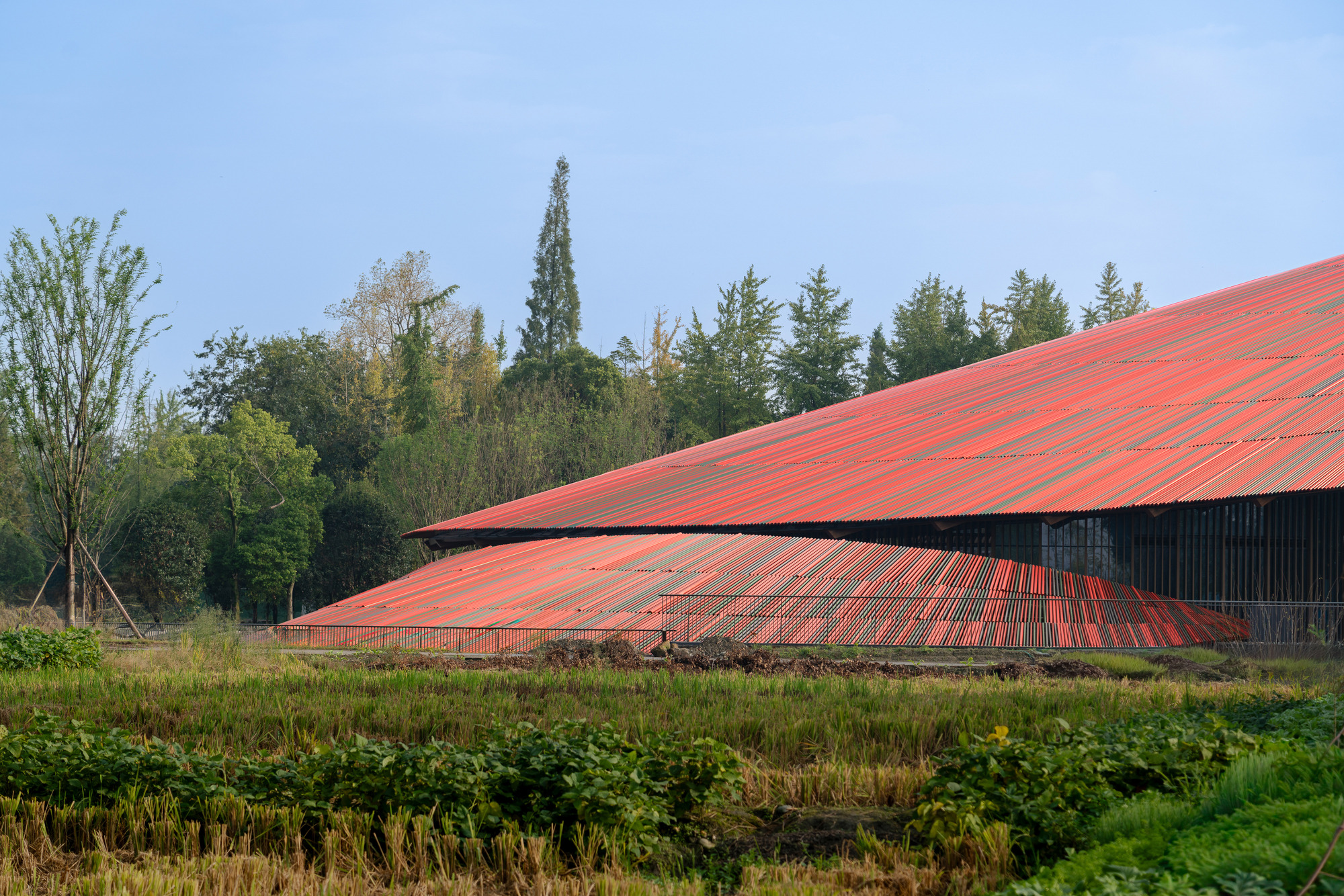
생태 우선 전략은 나무를 지키는 것 이상이다. 방문자가 논밭을 가로질러 다가올 때, 건물은 풍경 속에 겸손하게 녹아든다. 숲이 건축을 품고, 건축이 숲을 존중하는 관계가 형성된다.
지붕이 만드는 풍경
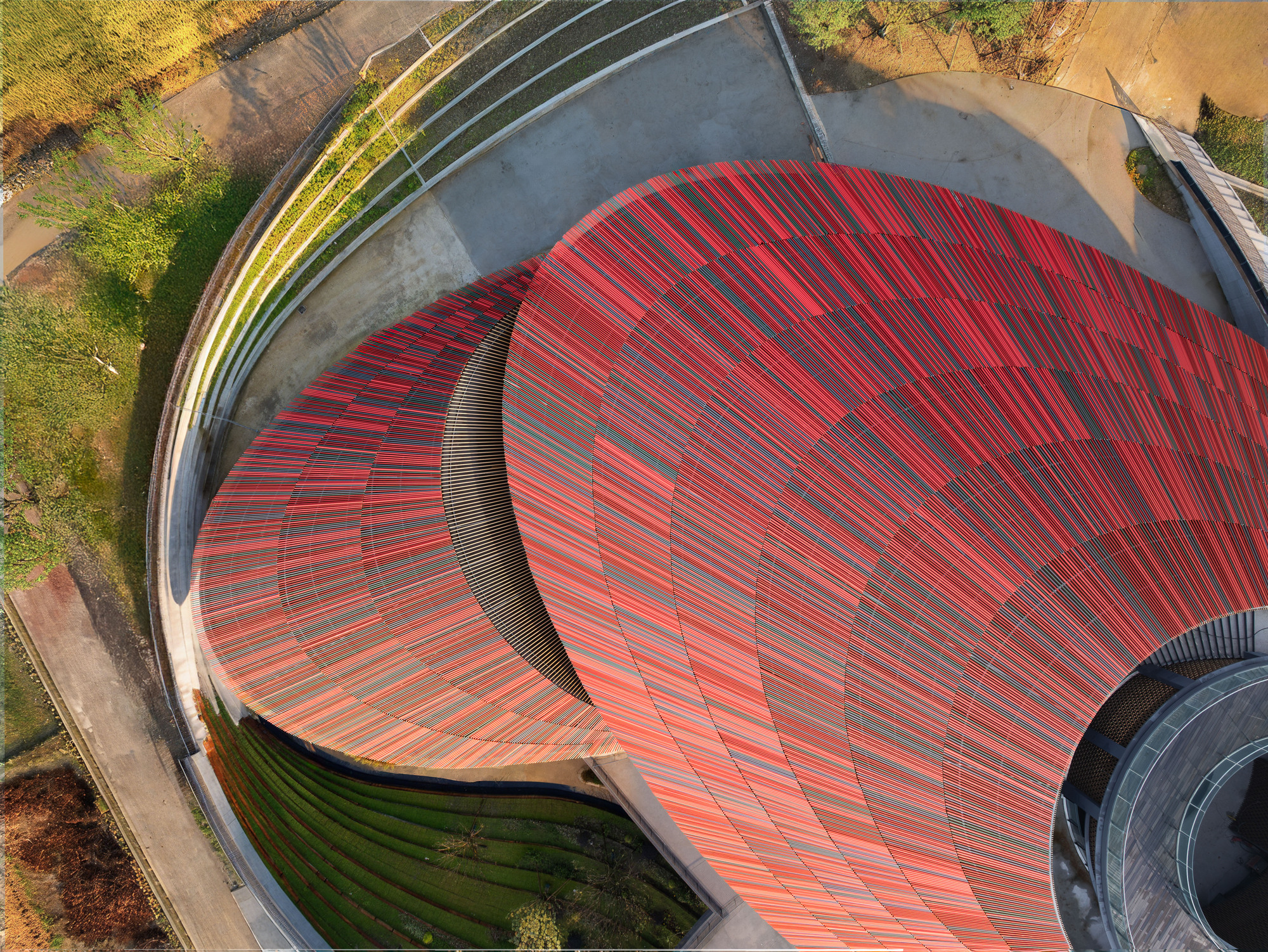
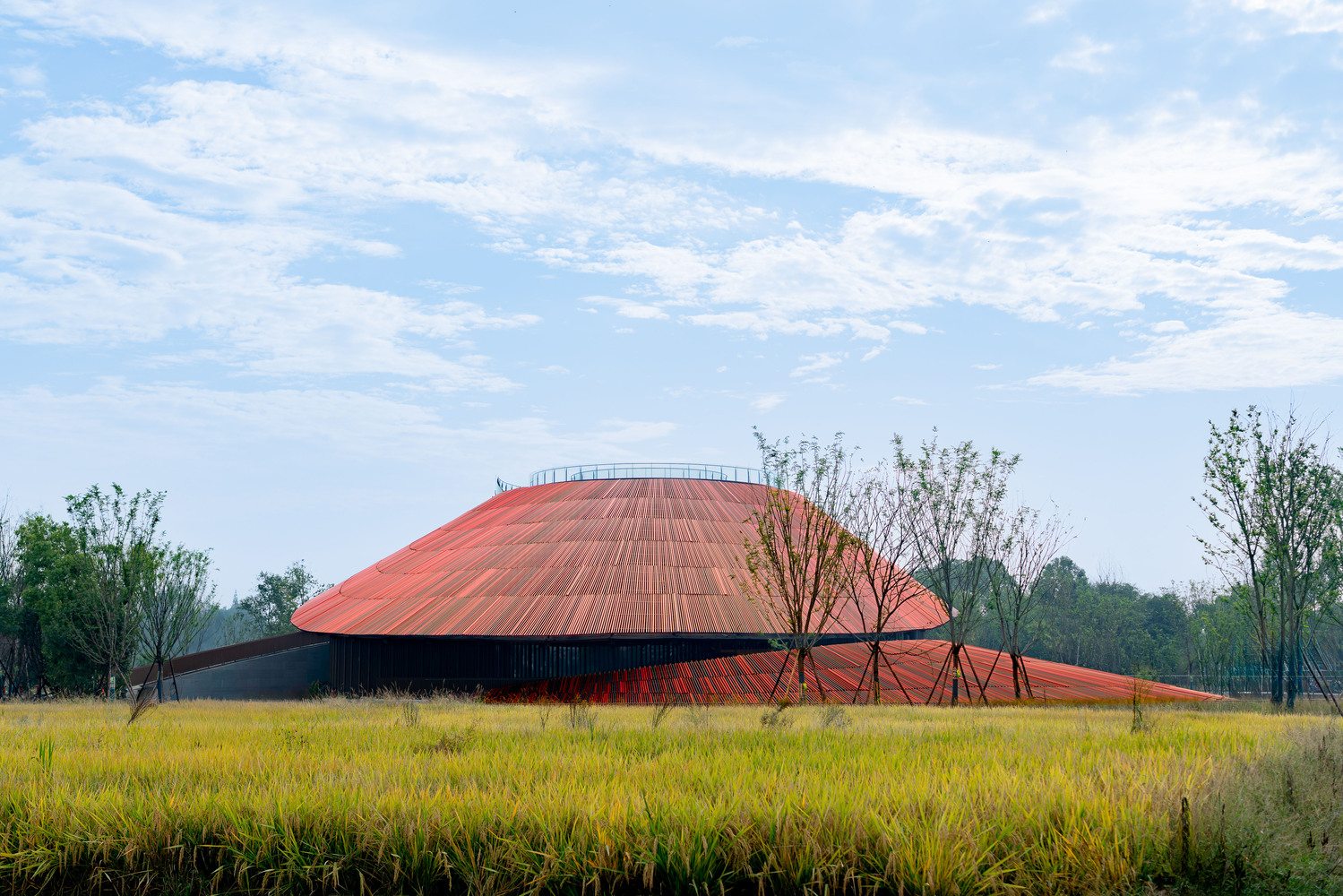
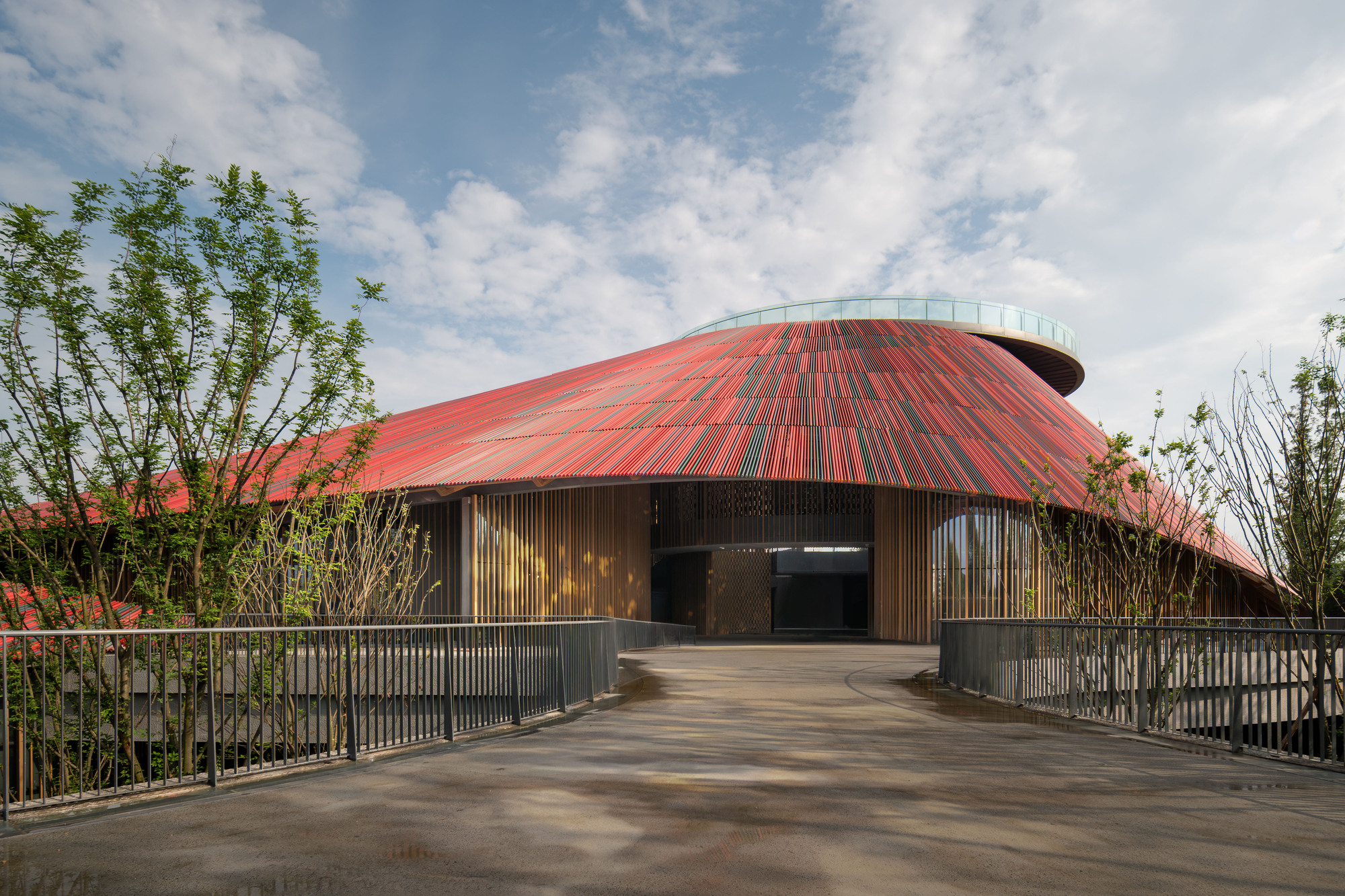
박물관은 청두 평원 주택의 건축 언어를 재해석한다. 이 지역 주택은 깊은 처마와 가느다란 처마 끝으로 알려져 있다. 한옥 처마와 같은 기능을 하는 이 요소는 가볍고 우아한 느낌을 준다. 남북으로 경사진 대지에 반응하여 주 지붕은 타원형의 곡선 형태를 취한다. 타원형 곡면의 이 지붕은 땅의 기울기를 따른다.
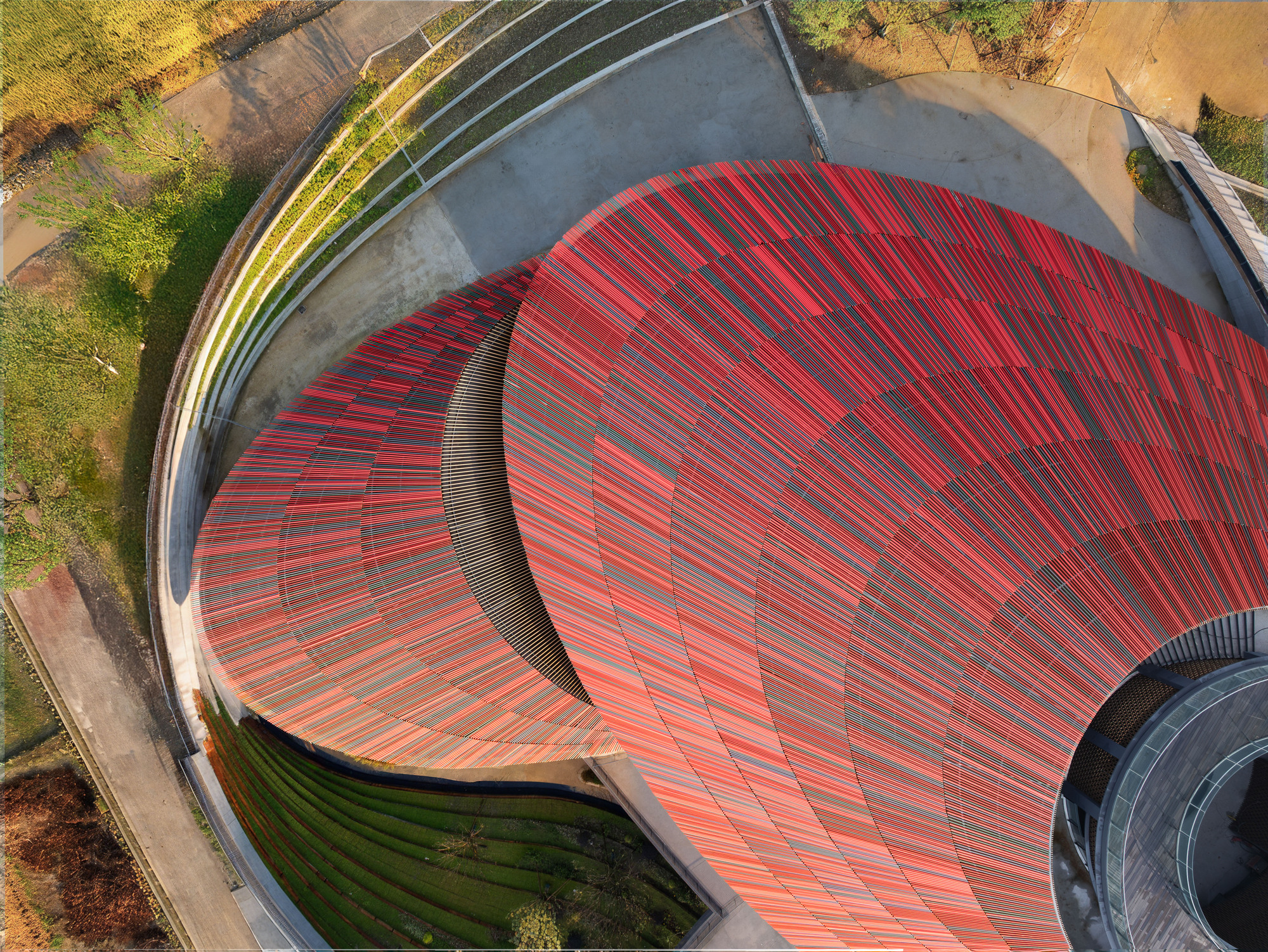
북쪽의 작은 지붕은 땅에서 솟아오르고, 남쪽 지붕은 침하 안뜰로 파고든다. 세 개의 지붕면이 겹치며 서부 쓰촨 건축 특유의 경쾌함을 드러낸다. 전통의 회색 기와는 혁신적인 "고추색 요소"로 대체되었다. 이는 건조 과정에서 고추가 녹색에서 빨강, 검은색으로 변하는 색 변화에서 영감을 받았다.
고추가 지붕이 되다
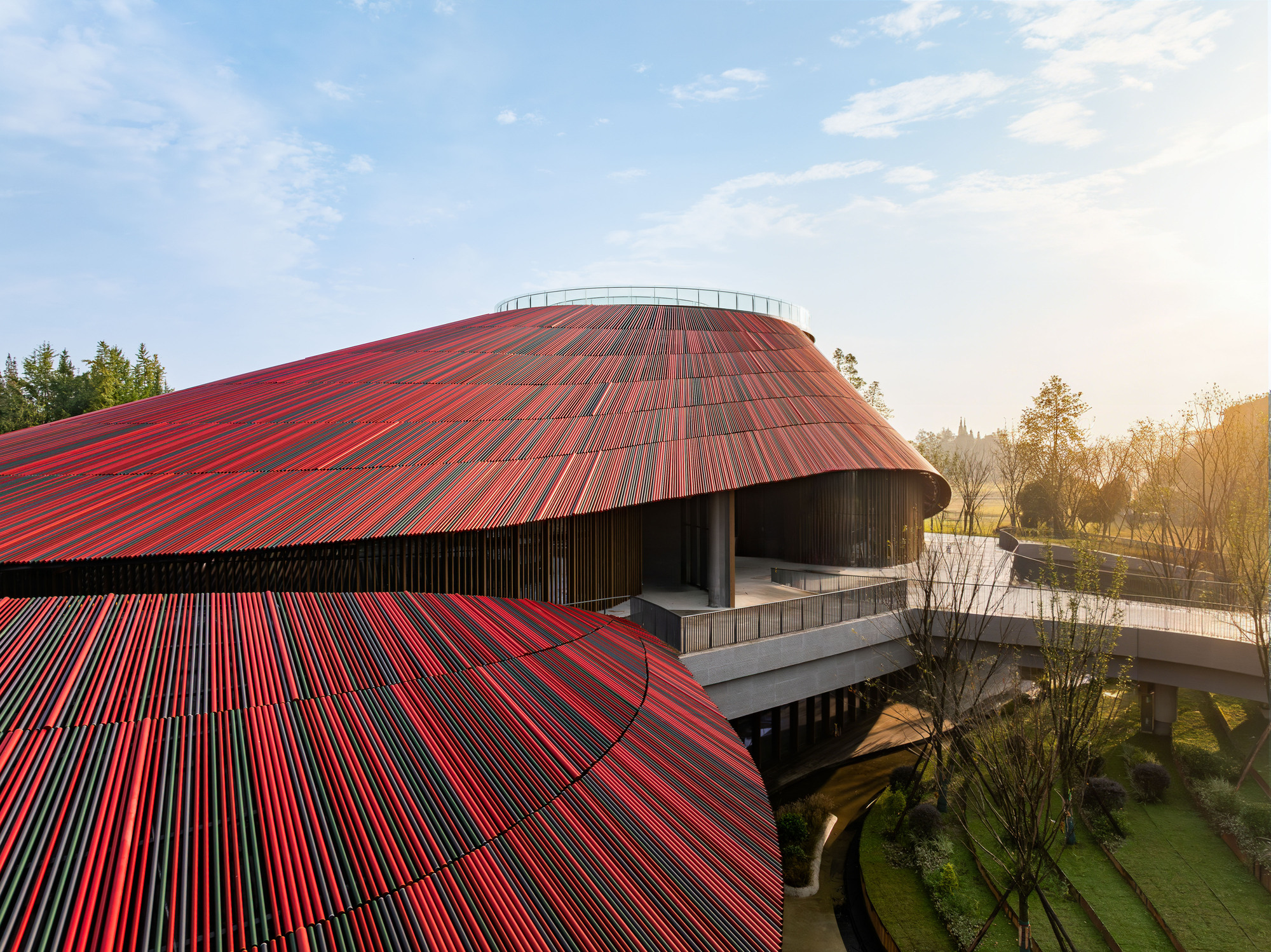
6개월간의 프로토타입 제작 끝에 네 가지 핵심 색을 선택했다. 빨강 30%, 진홍 36%, 짙은 녹색 14%, 짙은 회색 20%의 비율로 지붕 전체에 무작위로 배치했다. 멀리서 보면 붉은 지붕이 논밭 위에 떠 있는 듯하다. 가까이 다가서면 네 가지 색이 짜인 천처럼 섬세한 패턴을 보여준다. 햇빛 아래 빨강이 타오르고, 짙은 녹색이 그 사이를 누빈다.
이 붉은 지붕은 단순한 시각적 장치가 아니다. 지역의 주요 농산물인 고추를 건축 언어로 번역한 것이다. 건축이 땅의 이야기를 기억하는 방식이다.
나무와 강철의 만남
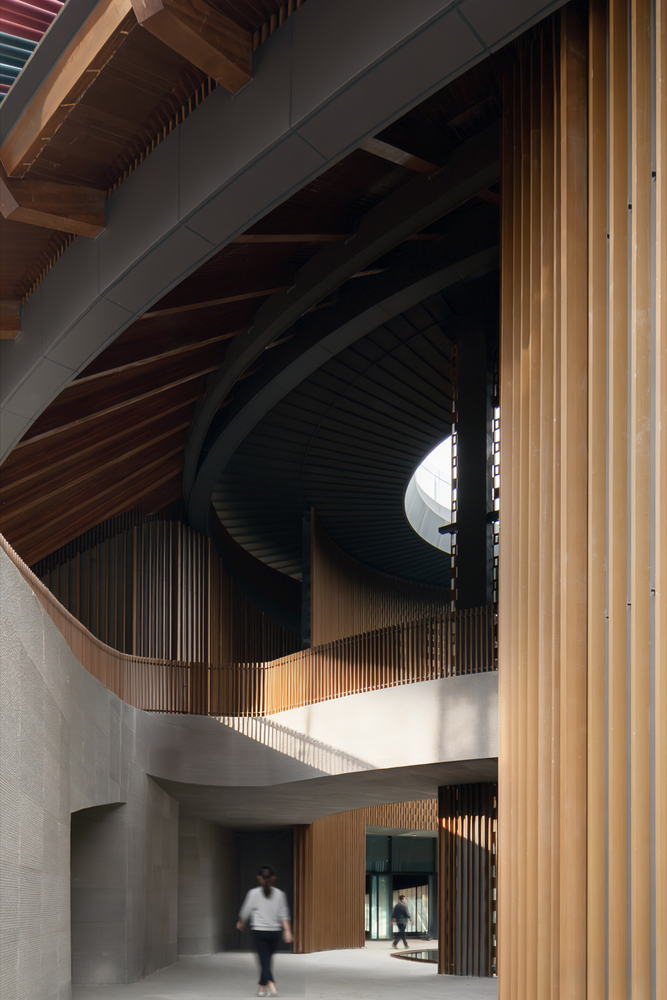
구조적으로 집성목 보가 전통 천두(穿斗) 목구조를 대체한다. 천두는 기둥과 보를 엮어 올리는 중국 전통 목구조다. 대나무와 목재 스트립을 지붕 밑판과 처마 끝 마감재로 사용하여 전통을 환기하면서도 현대 기준을 충족한다.
강재 기둥 위의 이중 곡선 강재 링 보가 목재 지붕을 지탱한다. 이 구조는 큰 스팬을 가능하게 하고 목재의 역학적 특성을 최적화한다. 나무의 온기와 강철의 힘이 만나 전통과 현대가 조화를 이룬다.
안뜰에서 펼쳐지는 이야기
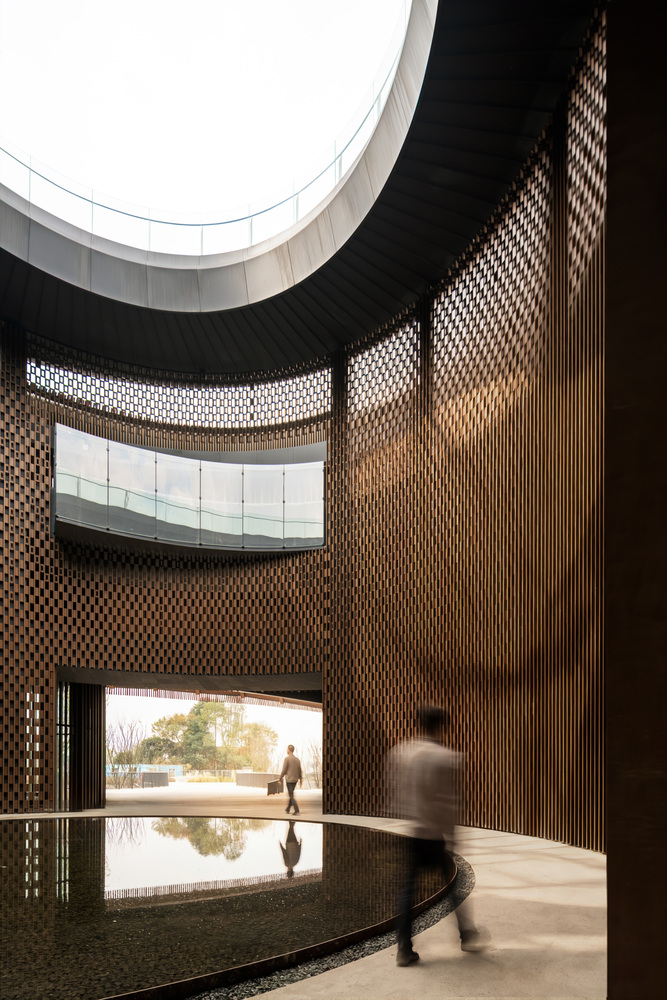
서부 쓰촨 린판 주택의 안뜰과 천창. 이는 단순히 사수귀당(四水歸堂, 네 방향 빗물이 안마당으로 모이는 형식)이라는 의례 장치가 아니다. 처마와 복도, 대청을 둘러싼 이 공간은 일상의 삶이 펼쳐지는 무대다. 중앙 영역은 린판의 안뜰 유형학을 이어간다.
사방이 둘러싸였지만 하늘로 열린 이 공간은 수평적 한계를 넘어 수직성을 만들어낸다. 순환 동선의 핵심이 된다. 방문자는 이 공간에 도착해 로비로 들어선다. 전시를 관람한 뒤 다시 이곳으로 돌아온다. 그리고 논밭을 향해 걸어 나간다.
중앙의 수경을 둘러싸고 앉아 대화를 나누면 쓰촨 안뜰 특유의 바이롱먼전(擺龍門陣, 마당에 둘러앉아 이야기 나누는 문화) 장면이 되살아난다. 이는 한옥 마당의 사교 기능과 유사하다. 건축이 문화를 기억하고, 공간이 사람을 모으고, 이야기가 계속된다.
Write by Claude & Jean Browwn
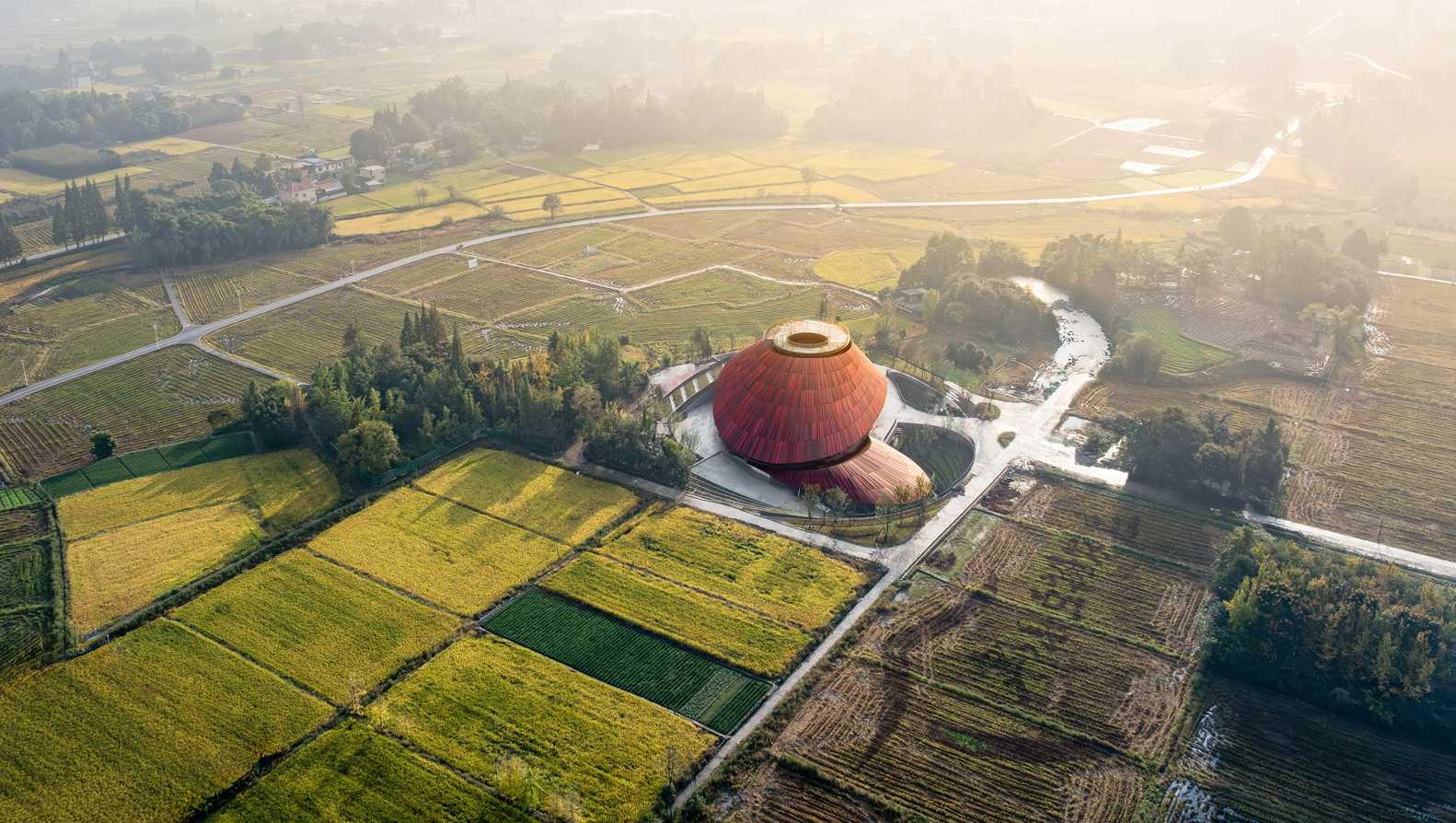
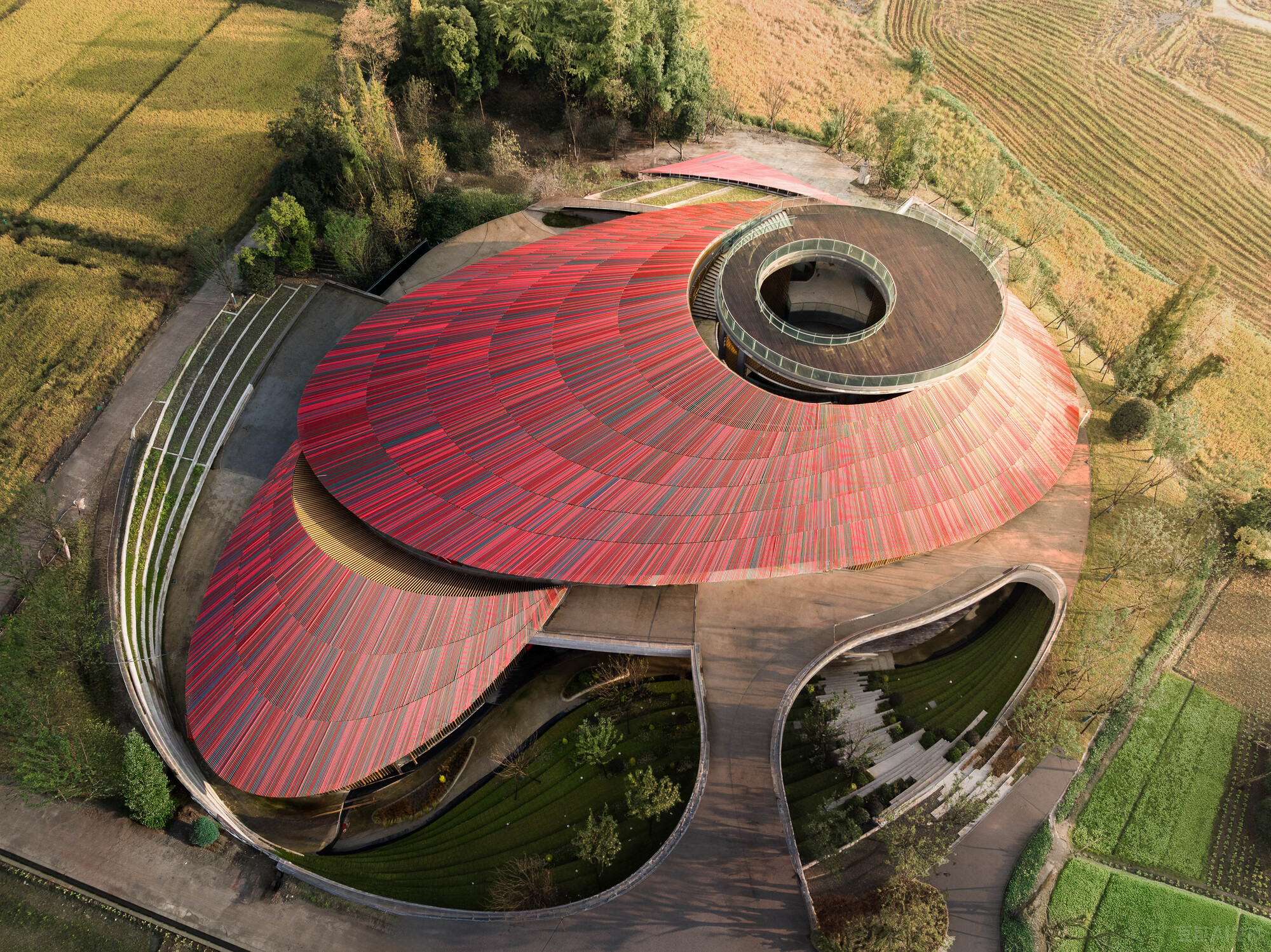

The Douban museum is located in Ande Town, within the prime irrigation area of Dujiangyan, where traditional farming culture intersects with modern sauce production, echoing the organic texture of the Western Sichuan Linpan. Surrounded by woodlands and bamboo with dotted farmhouses, it possesses a strong ecological foundation. Protecting this ecology became the project's guiding principle.
Initially, trees with DBH over 20cm and clumping bamboo were marked for preservation. The design weaves the building mass around them, creating a symbiotic "house amidst bamboo" scene. To minimize visual impact, main functional spaces are placed underground. Only about one-third of the volume—housing the lobby and exhibition halls remains above ground, "breaking down the large into small." The building height is kept under 15 meters, letting surrounding metasequoias crown the roof.
The museum reinterprets the lightweight, elegant pitched roofs of Chengdu Plain dwellings, known for "deep cantilevers and slender eaves." Responding to the north-south sloping terrain, the main roof takes an elliptical, bean-like curved form. A smaller northern roof rises from the ground, while a southern one embeds into a sunken courtyard. These three planes overlap, expressing the lightness of Western Sichuan architecture. Traditional grey tiles are replaced by innovative "colorful pepper" elements, inspired by chili peppers' color shift from green to red to black during drying. After six months of prototyping, four key colors were selected and distributed randomly across the roof: red (30%), deep red (36%), dark green (14%), and dark gray (20%),allowing the red roof to blend naturally with the surrounding environment.
Structurally, Glulam beams replace the traditional "Chuandou" timber frame. Bamboo wood strips are used for roof sheathing and fascia, recalling tradition while meeting modern standards. Double-curved steel ring beams on steel columns support the timber roof, accommodating large spans and optimizing wood's mechanical properties.
The courtyards and skywells of Western Sichuan Linpan dwellings are more than just the ritualistic "Si Shui Gui Tang" (Four Waters Returning to the Hall); the eaves, corridors, and main halls surrounding them are vital spaces for daily life. The central area continues the Linpan "courtyard" typology. Enclosed yet open to the sky, it breaks horizontal limits and creates verticality, serving as the circulatory core. Visitors arrive this space, enter the lobby, and after viewing the exhibitions, return here before walking out towards the fields. Gathering around the central water feature for conversation recreates the lively "Bai Longmenzhen" (social chatting) scene typical of Sichuan courtyards.
from archdaily