과거의 파편들은 단지 물리적으로 보존되는 것을 넘어, 오늘날의 일상과 빛 속에서 새롭게 숨 쉬어야 한다. - 카를로 스카르파 Carlo Scarpa

일상으로 스며든 천년의 궤적 Qing Studio-Jingzhou City Wall Archaeological Site Exhibition Pavilion
[도입] 발견의 의미: 층겹의 시간이 모습을 드러내다
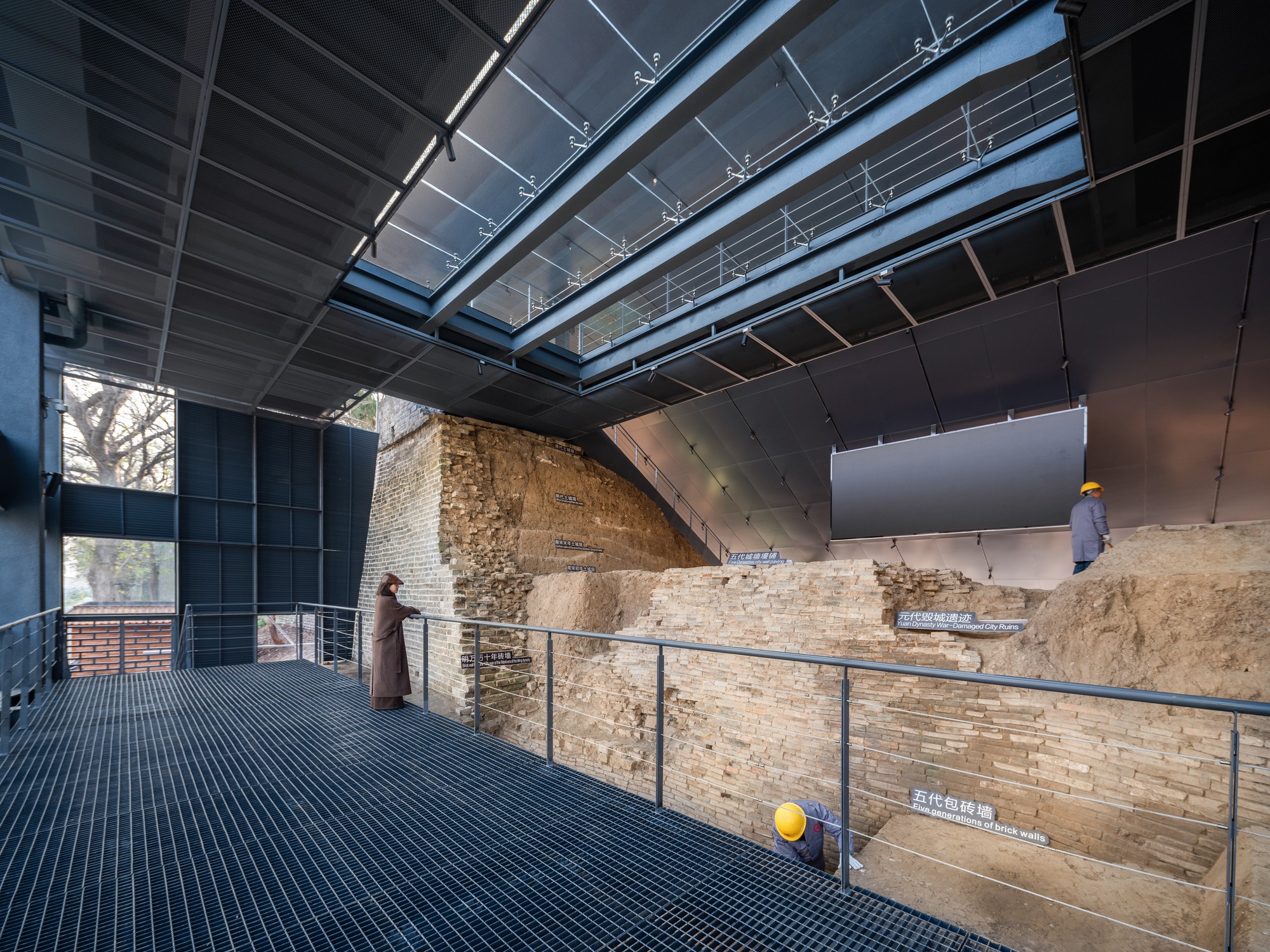
이 프로젝트는 징저우 성벽 11번 보루에서 이루어진 역사적인 고고학적 발견과 이를 보존하기 위한 치열한 고민에서 출발했다. 2016년부터 이 옛 성벽 구간은 지반 침하와 구조적 균열로 인해 긴급 보존 대상으로 지정된 바 있다. 이후 보수 작업 과정에서 오대십국부터 송, 명, 청나라에 이르기까지 시대별 성벽이 겹겹이 쌓인 지층이 세상에 드러났으며, 이를 계기로 국가문화유산국은 체계적인 고고학 발굴을 승인했다. 11번 보루에서의 발견은 징저우의 전돌 성벽이 오대십국 시대까지 거슬러 올라간다는 사실을 입증했다. 천년에 걸친 성벽의 축조와 활용 방식을 명확히 밝혀내며 고대 도시가 품은 역사의 깊이를 생생하게 증명한 것이다. 역사의 중요한 목격자인 이 유적지는 이제 우리에게 새로운 질문을 던진다. 마치 서울 한양도성의 성곽길이 시민의 숨결과 맞닿아 있듯, 발굴된 유적을 어떻게 죽은 표본이 아닌 생동감 있는 공간으로 전시하고 대중의 일상 속에 자연스럽게 스며들게 할 것인가.
[개입] 시각적 물러남: 경관에 순응하는 가벼운 지붕
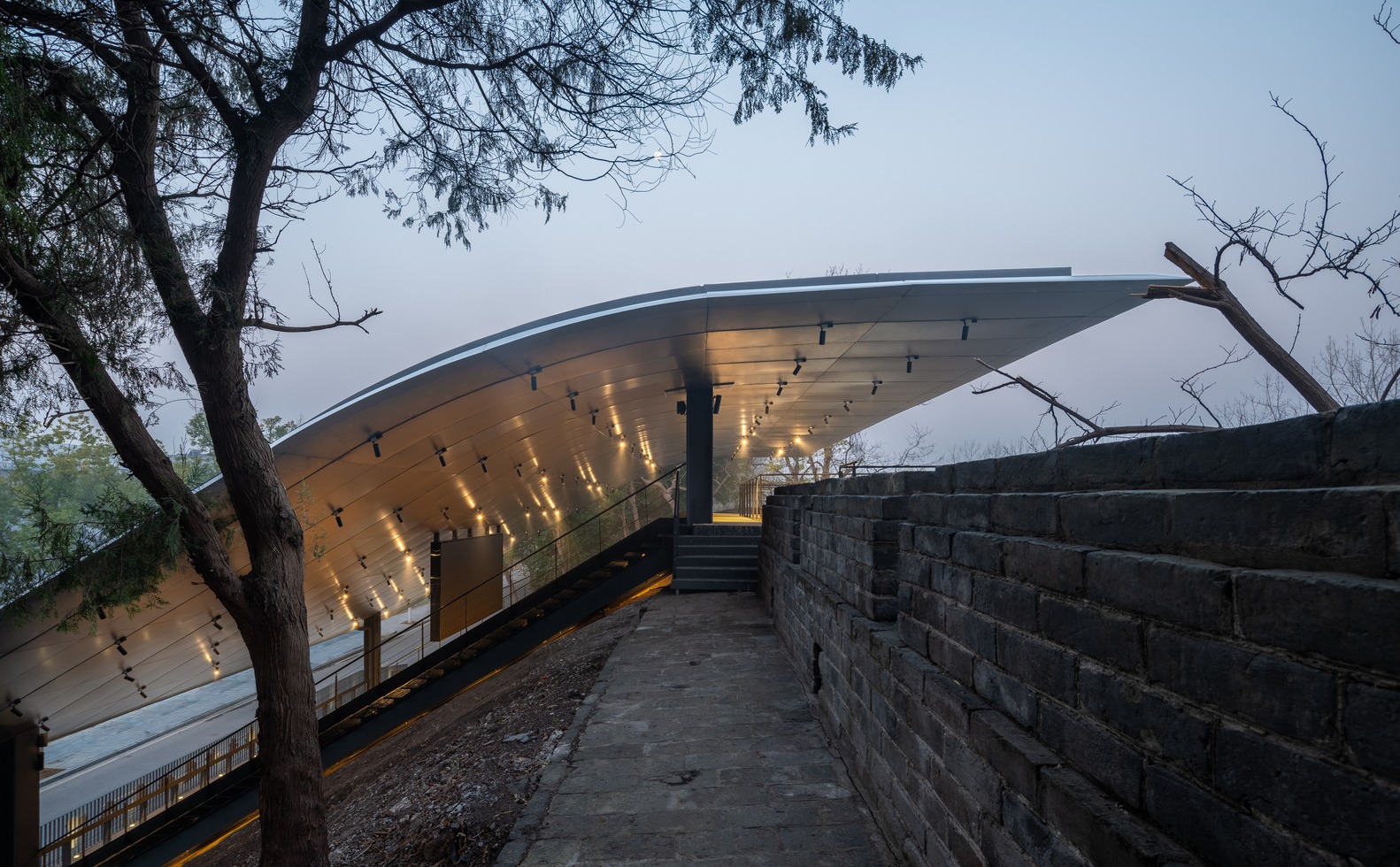
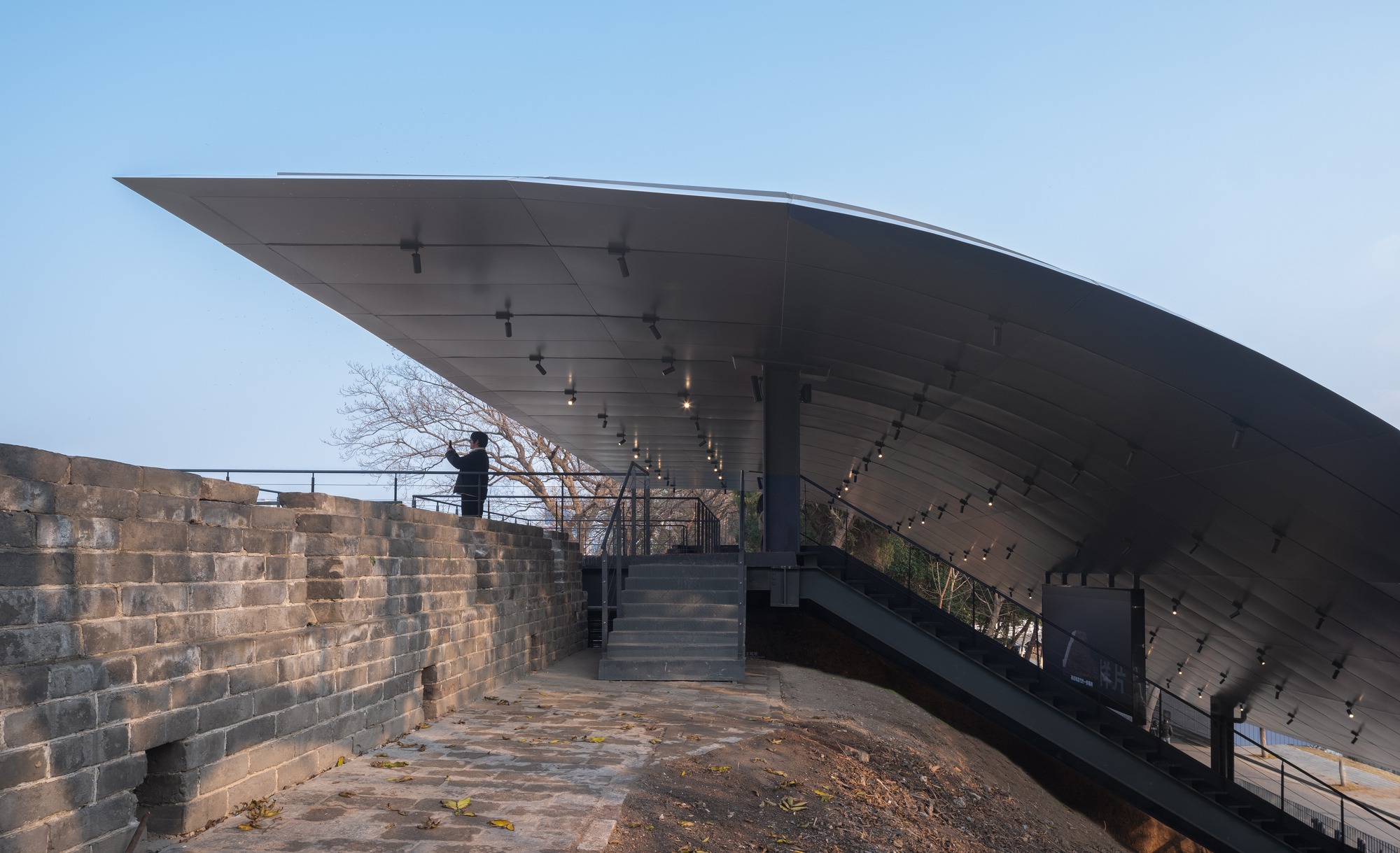
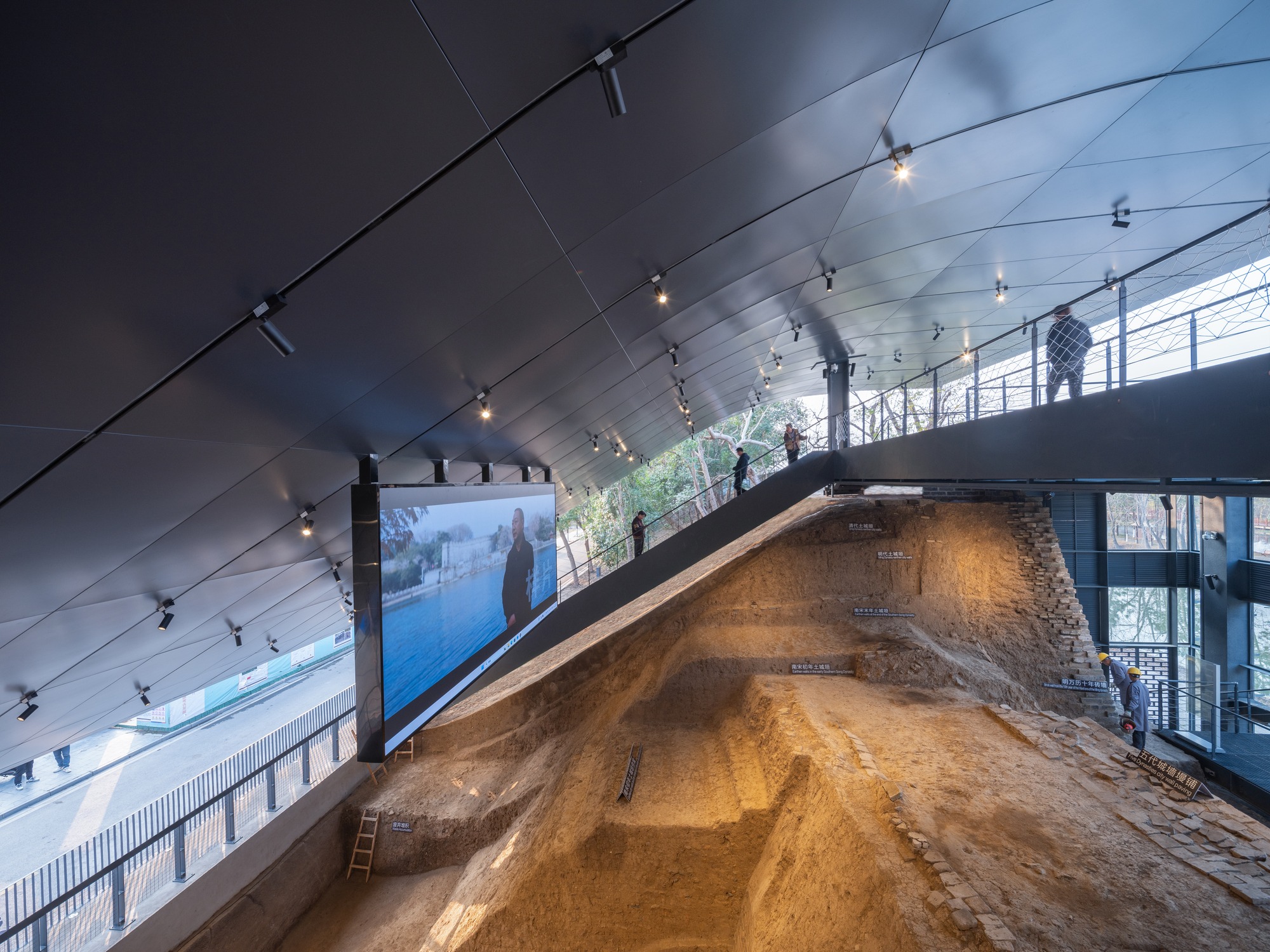
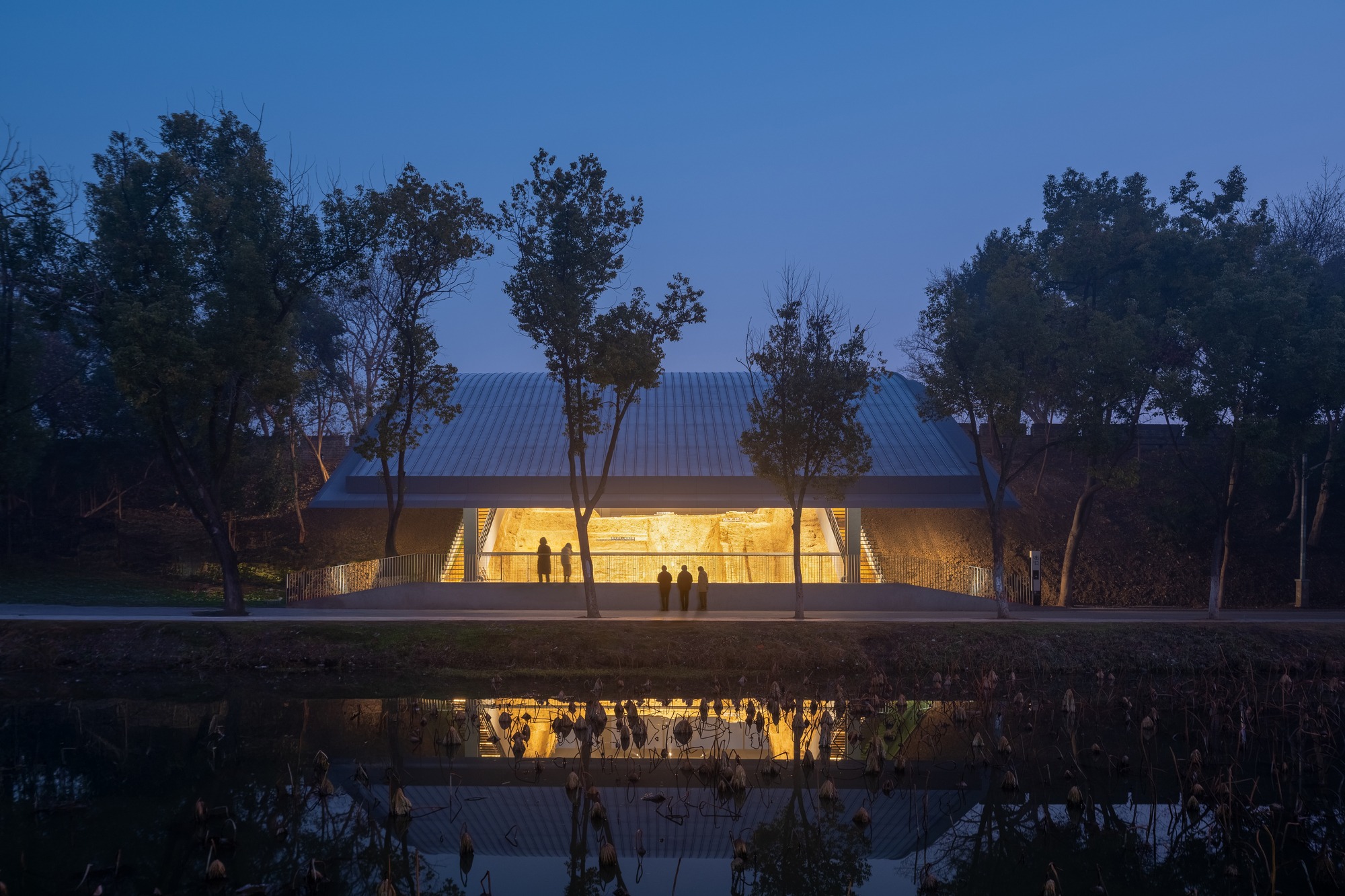
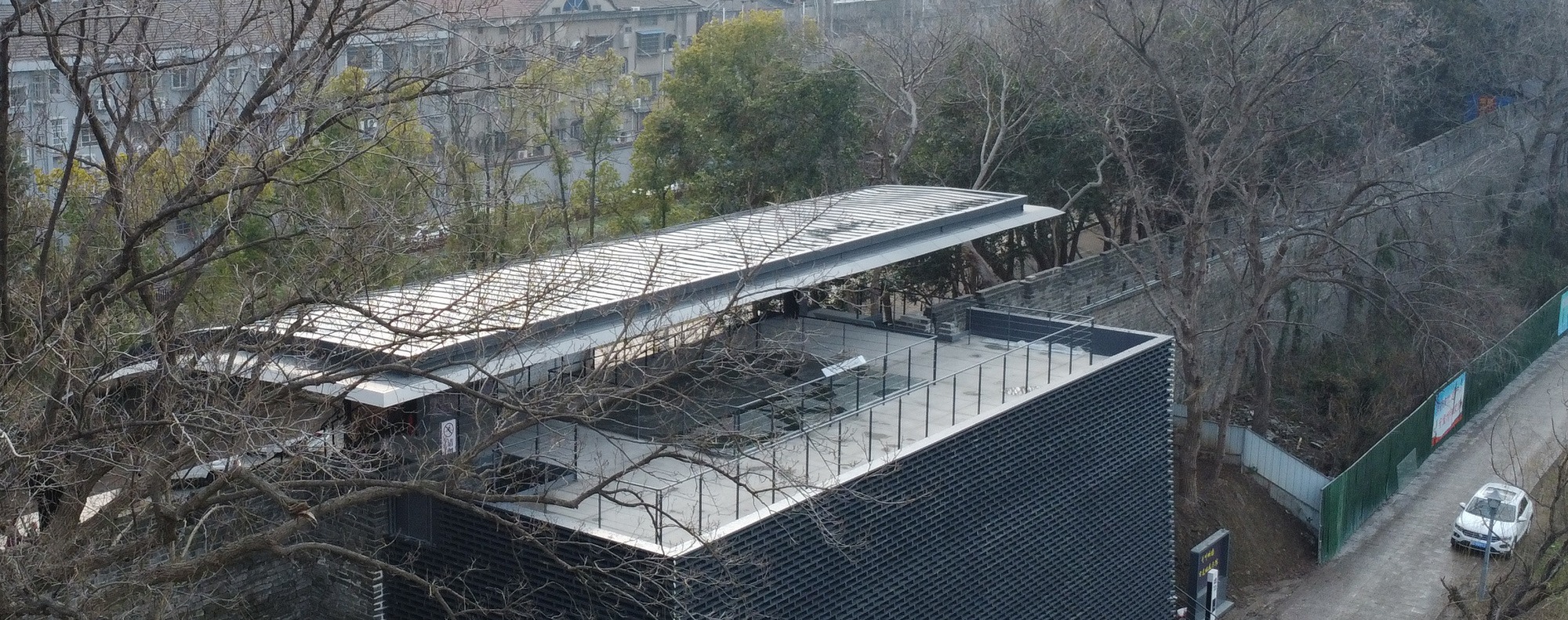
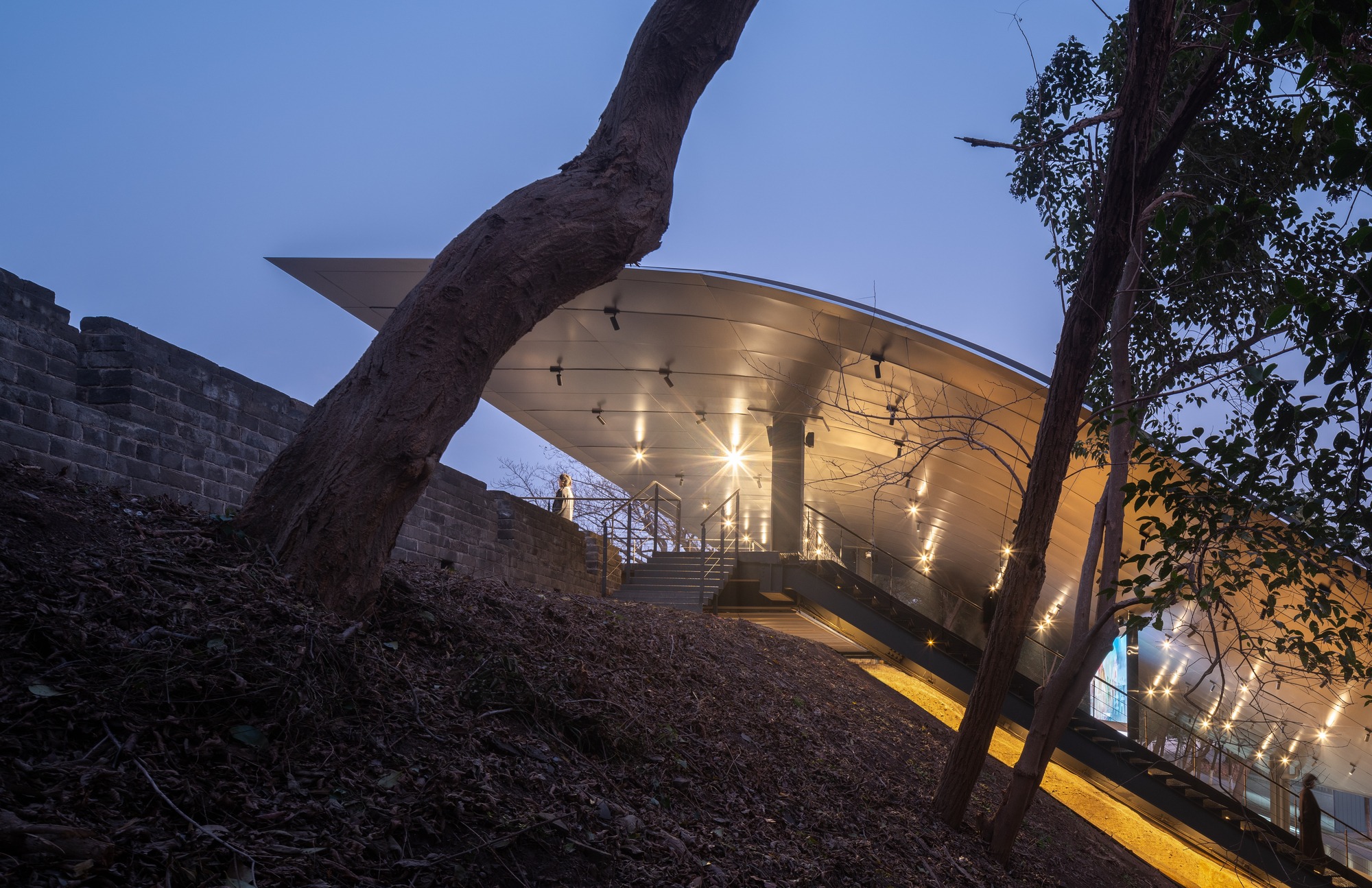
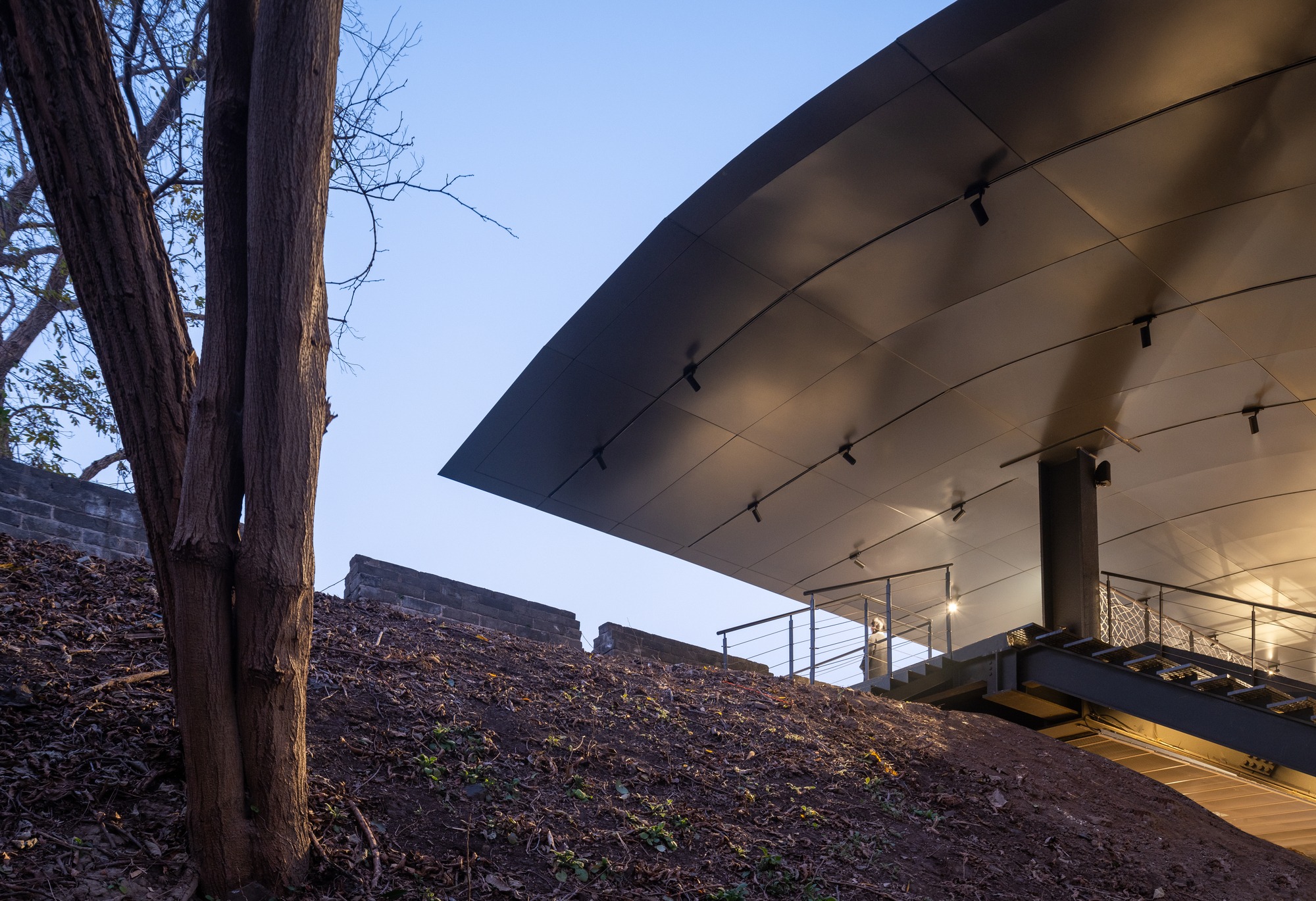
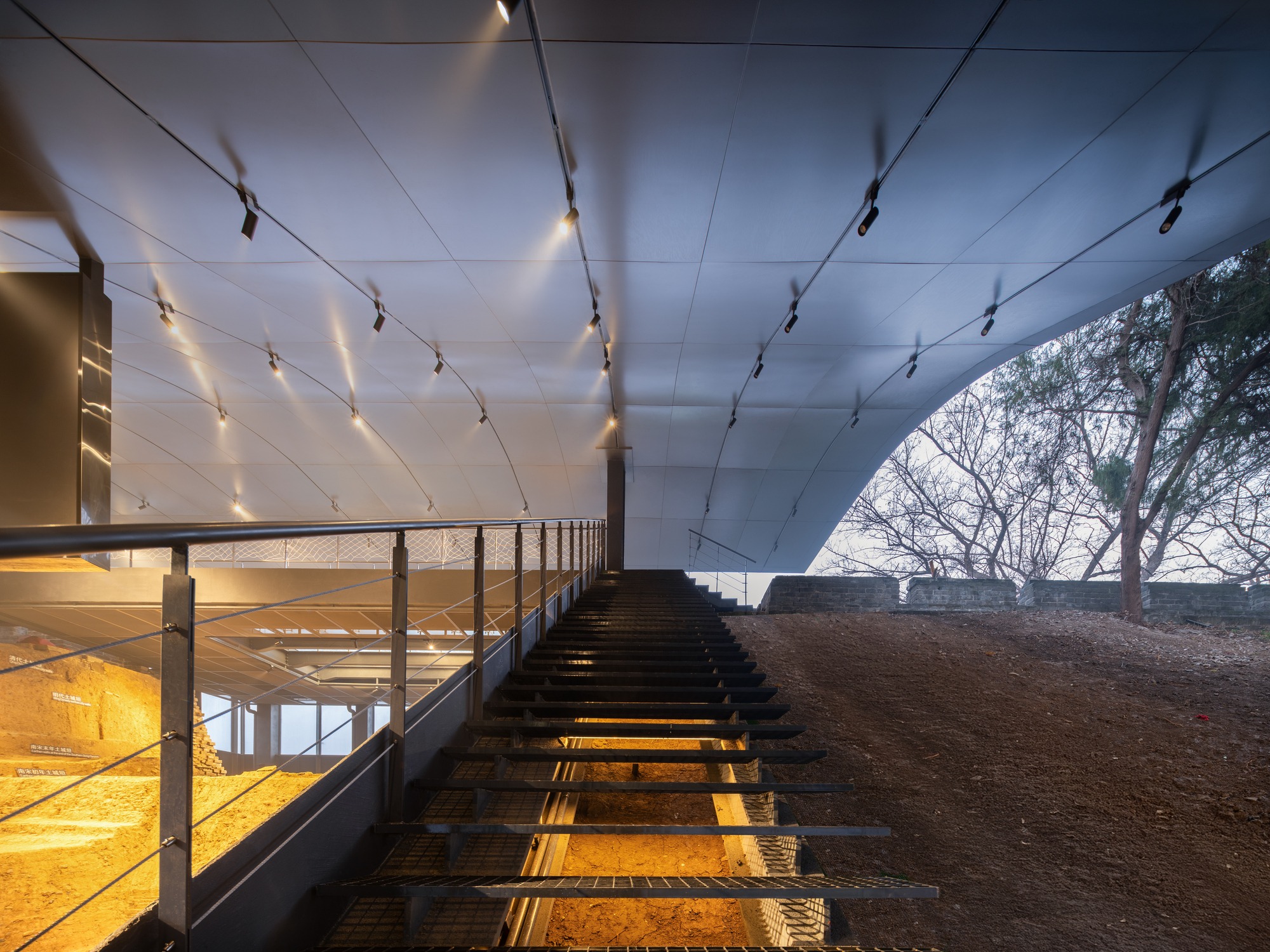
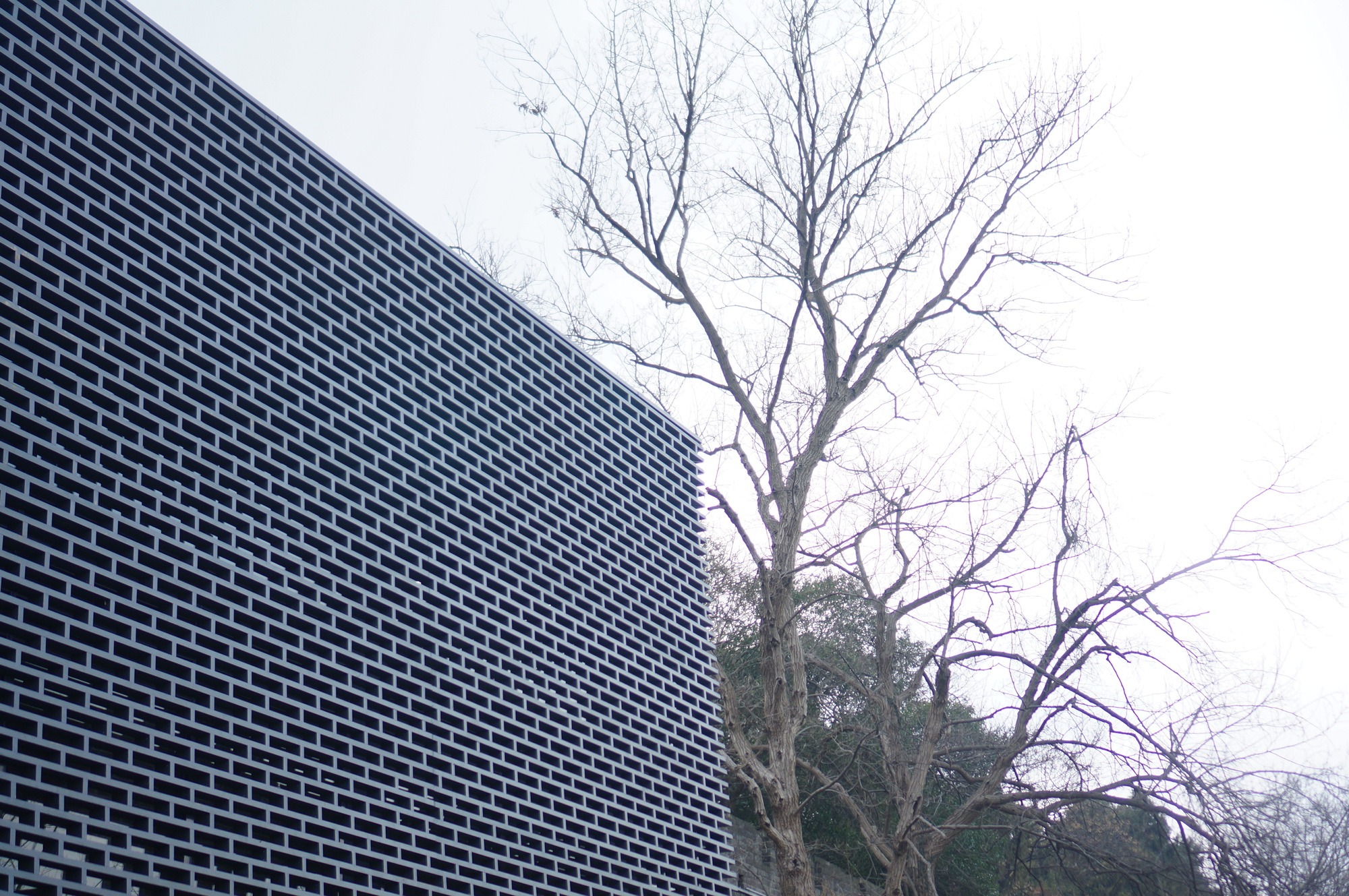
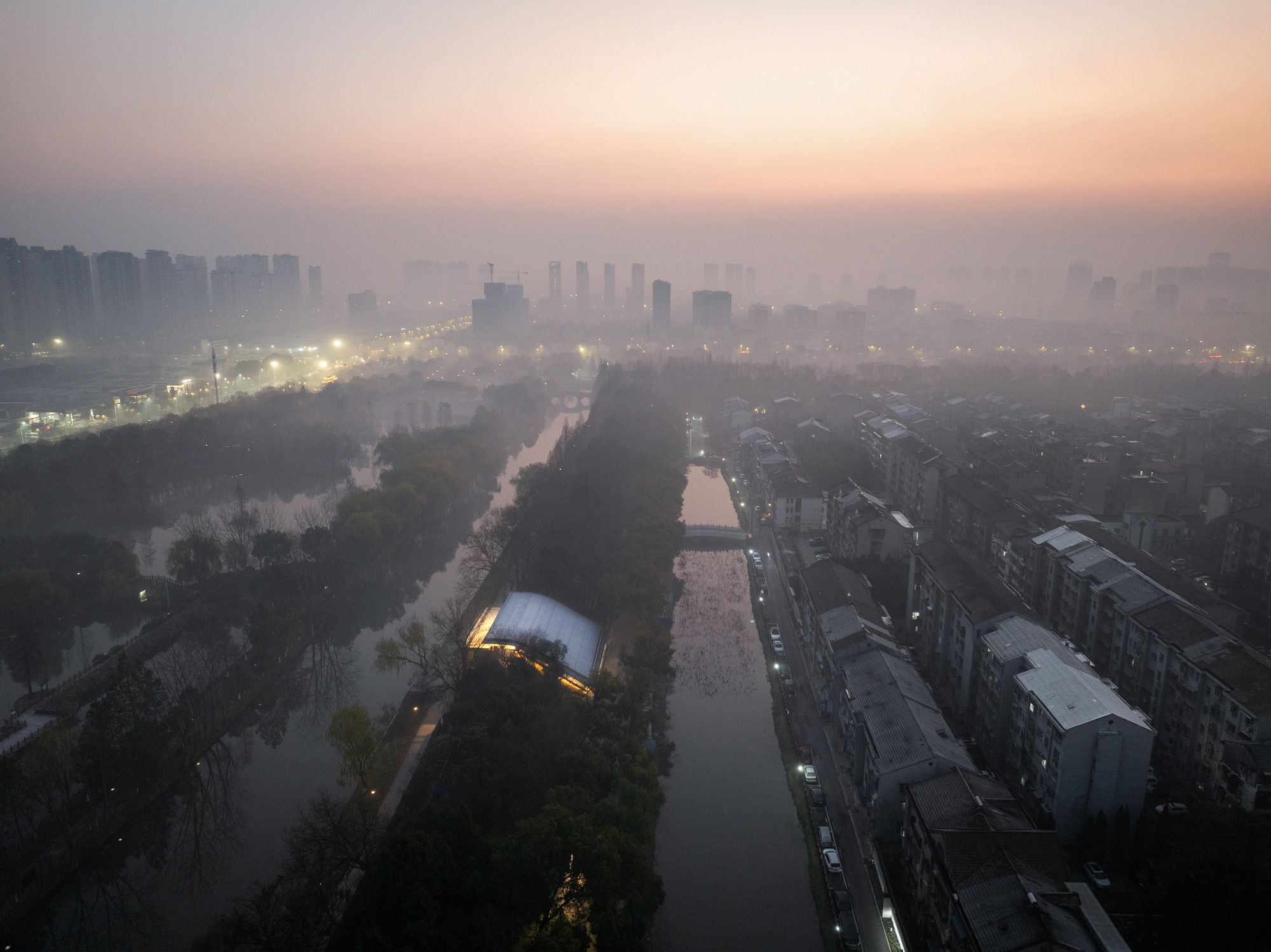
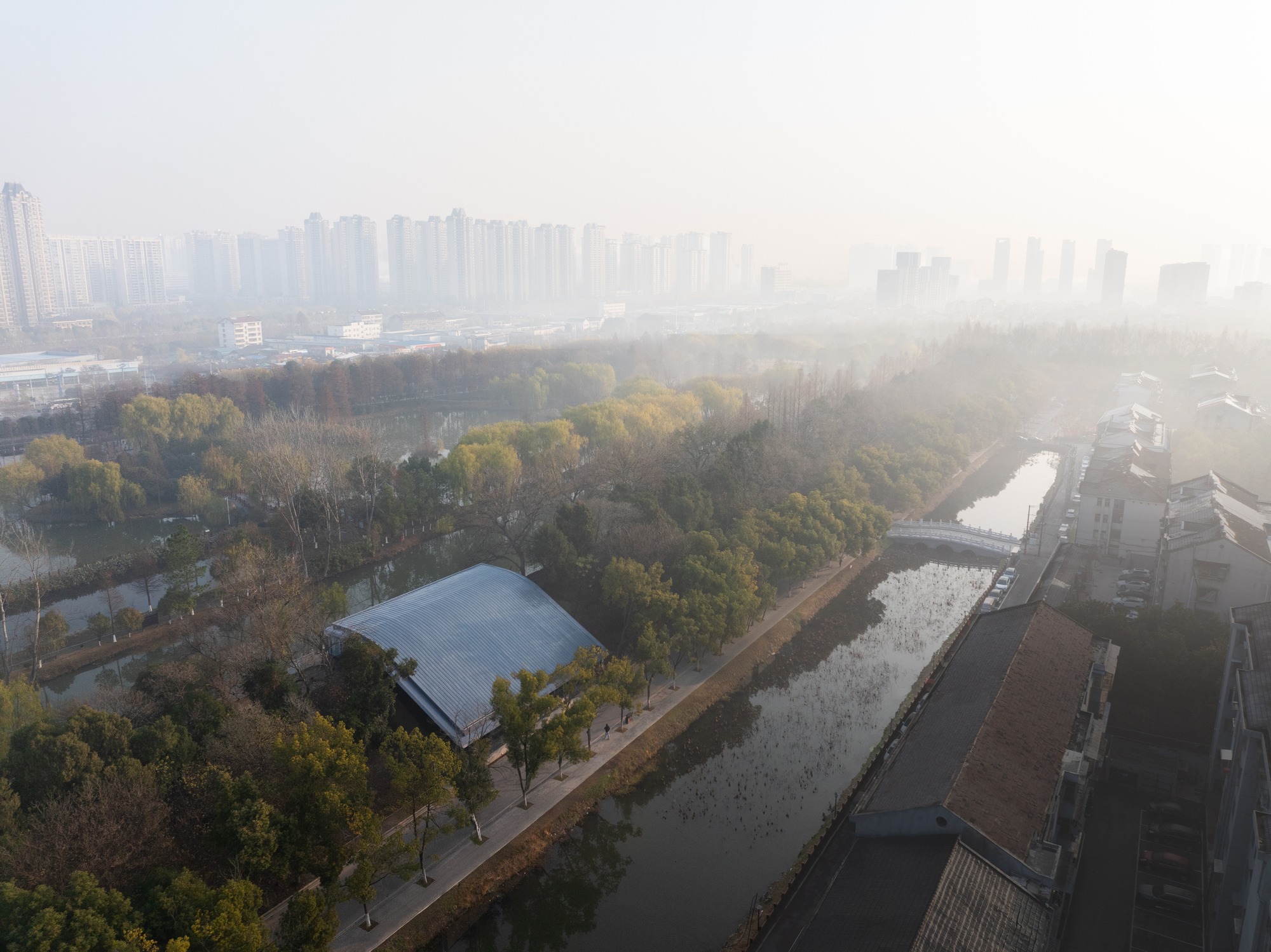
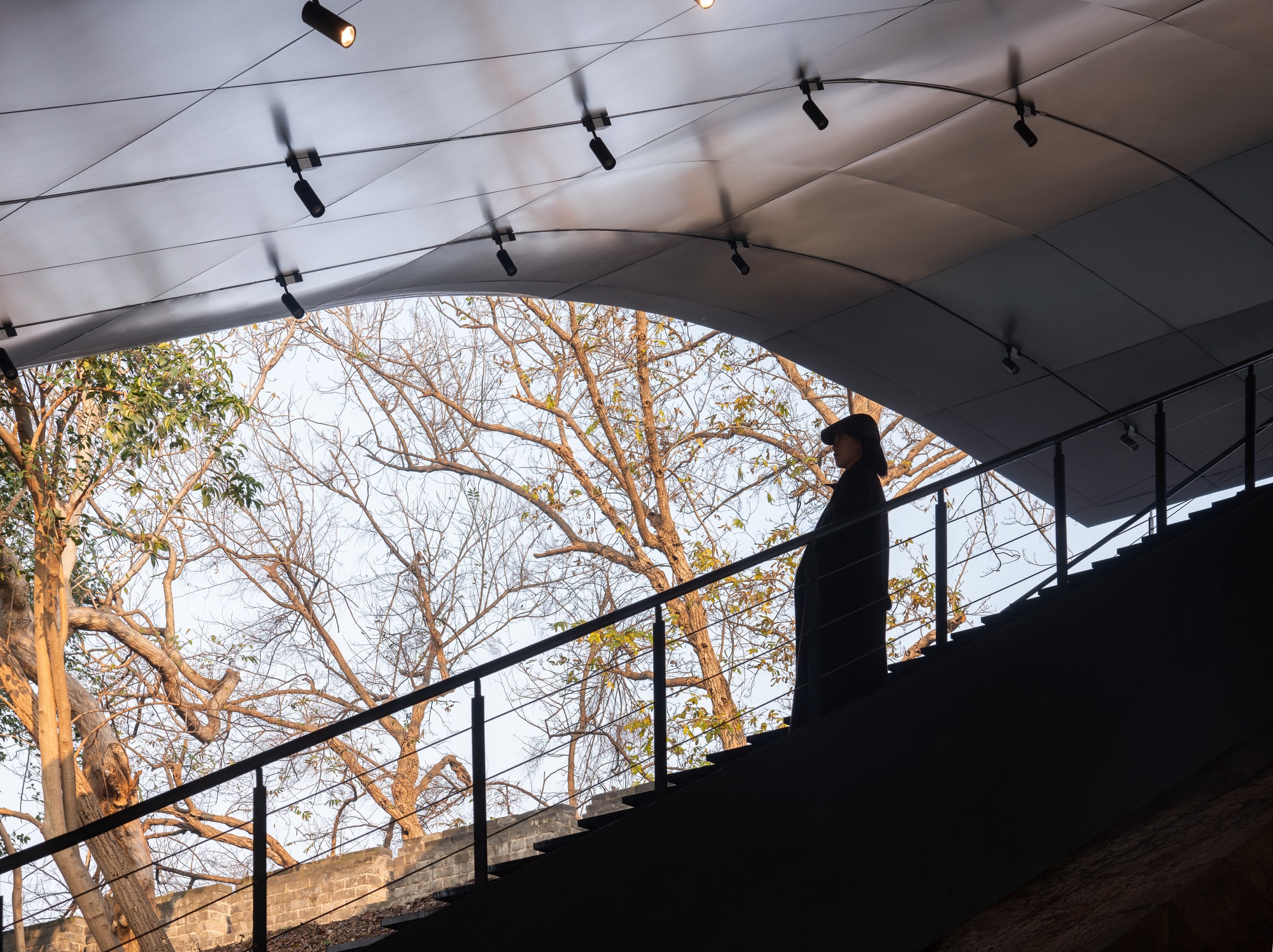
가장 시급한 과제는 비바람으로부터 고고학 유적을 보호할 지붕을 덮는 일이었다. 하지만 덩치가 크거나 과시적인 형태의 덮개는 고대 도시의 고즈넉한 스카이라인을 폭력적으로 훼손할 우려가 있었다. 이에 건축가는 형태를 분절하고 시각적으로 한발 물러나는 전략을 택했다. 보호용 지붕은 크게 두 구간으로 나뉜다. 남측 지붕은 내부 토성의 기울어진 윤곽을 부드럽게 따르고, 북측 지붕은 좁아지는 외부 보루 성벽의 방향성에 맞춰 정렬된다. 위에서 내리누르는 거대한 덩어리 대신, 기존 지형에서 가볍게 떠오르는 듯한 새로운 윤곽선을 제안한 것이다. 새롭게 추가된 강철 보와 기둥은 역사적인 성벽과 명확한 물리적 거리를 유지한다. 기존 임시 보호각이 차지했던 기초 지점을 최대한 재활용하여 유적과 성벽 기초에 가해지는 2차 훼손을 막고, 최소 개입의 원칙을 철저히 지켰다. 시각적인 거슬림을 최소화하기 위해 건축가는 지붕 처마에 변단면 설계를 적용했다. 외부 거리에서 바라보면 지붕의 모서리가 칼날처럼 얇게 파사드를 형성하여 고도성곽의 하늘 선에 스며들고, 유적 내부에서는 매끄럽게 휘어진 곡면 천장이 드러나며 유물과 관람객 모두에게 차분하고 아늑한 쉼터를 내어준다.
[동선] 시간의 교차: 허공을 걷는 고고학자의 시선
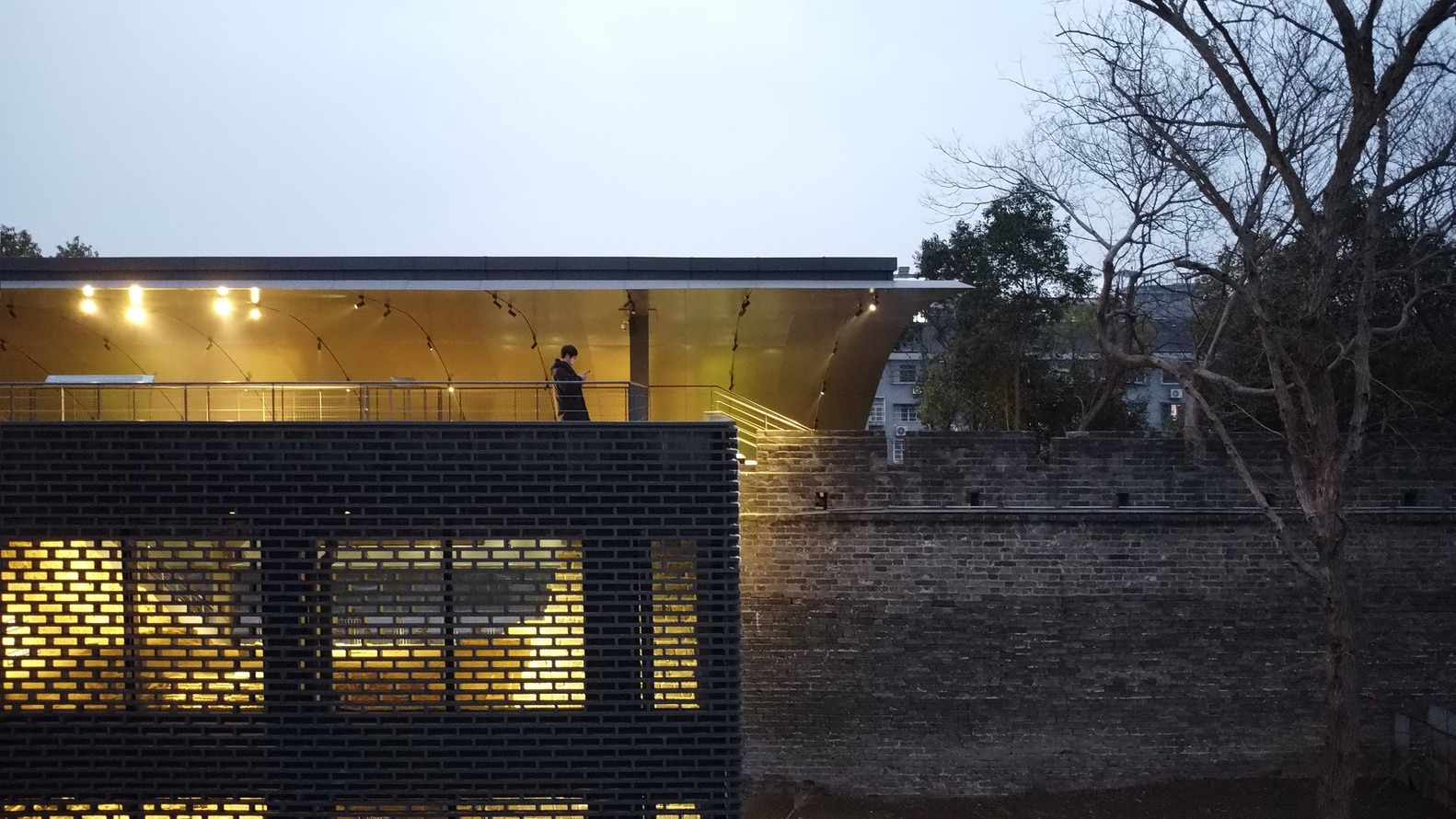
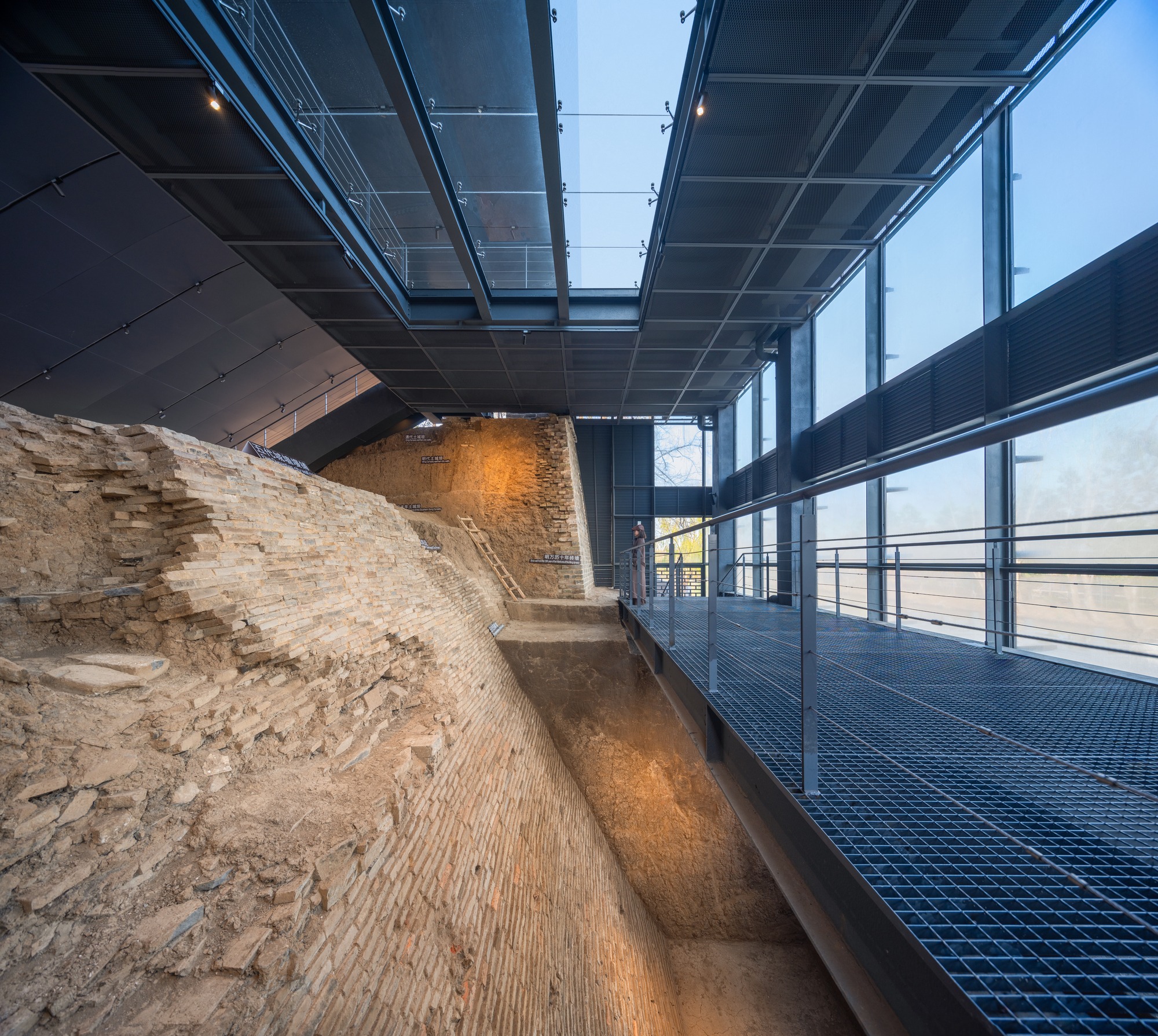
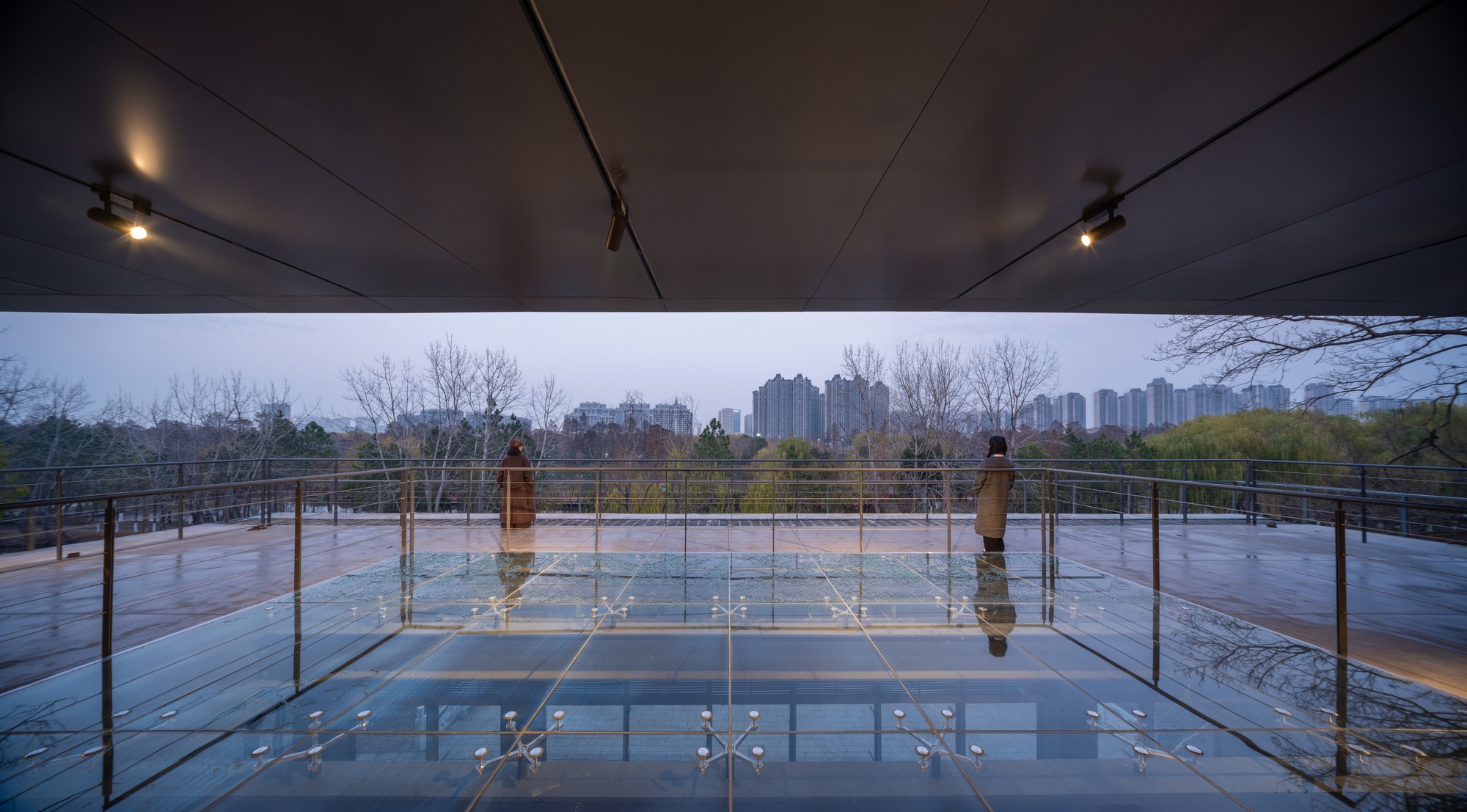
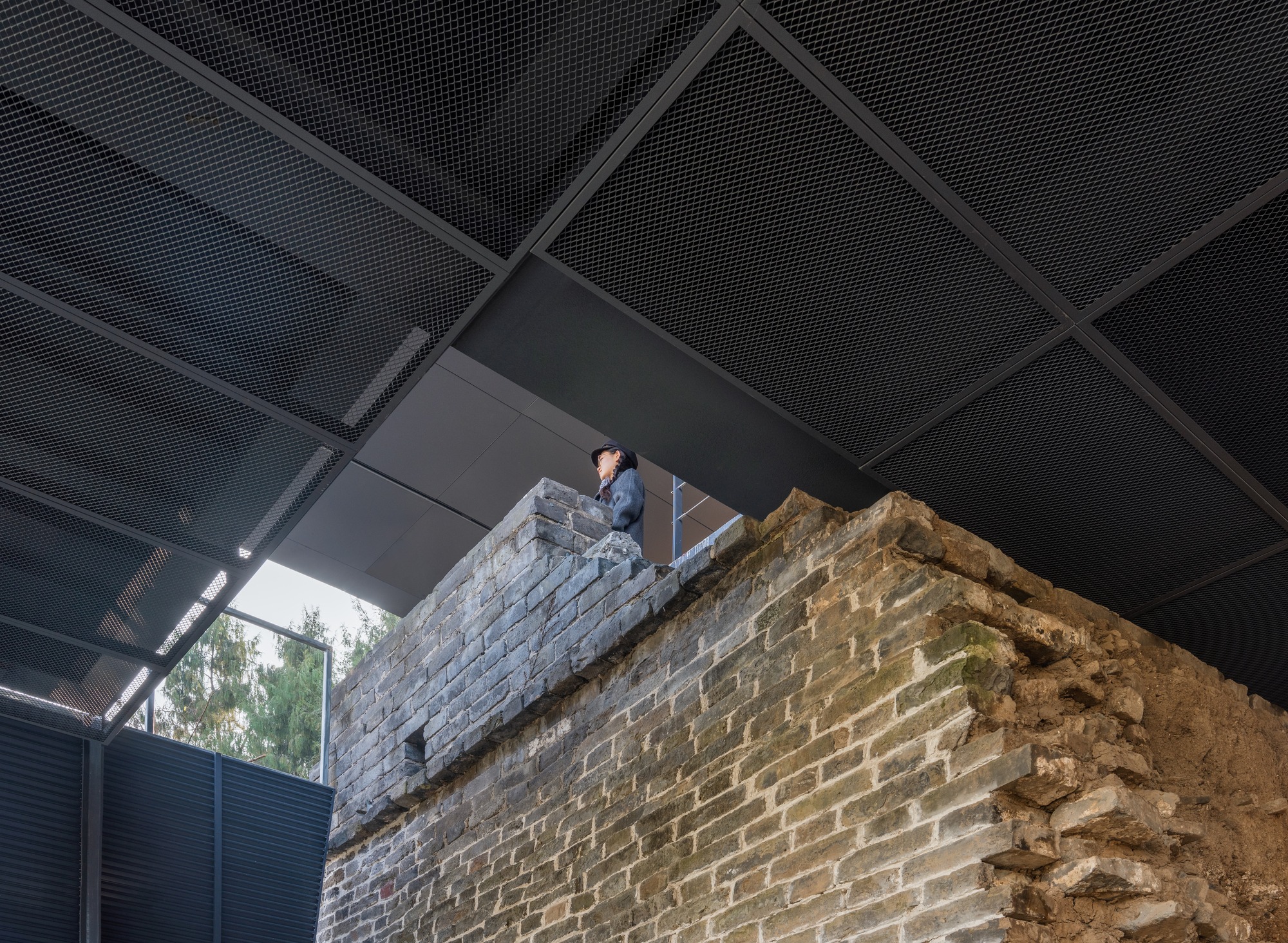
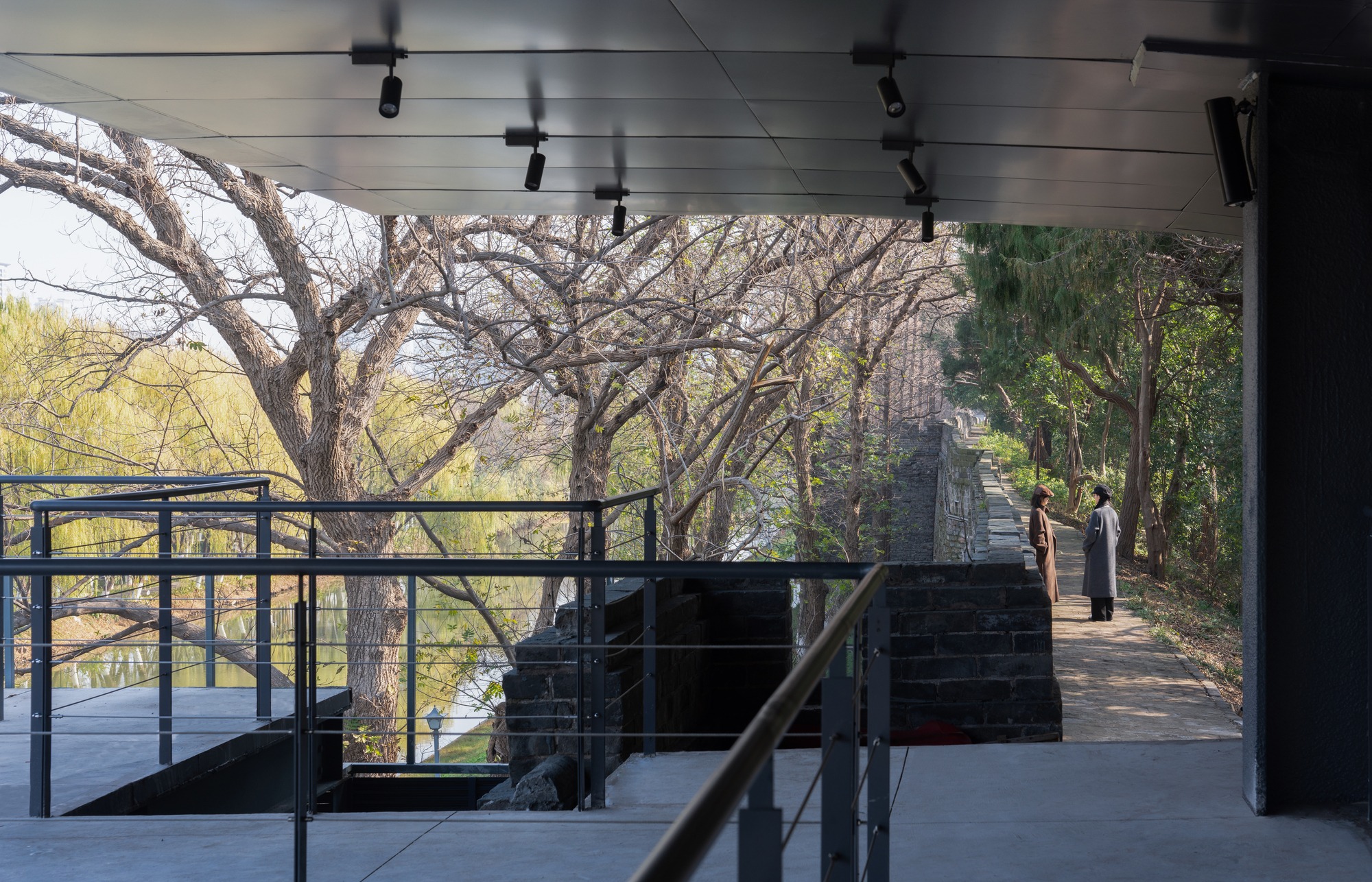
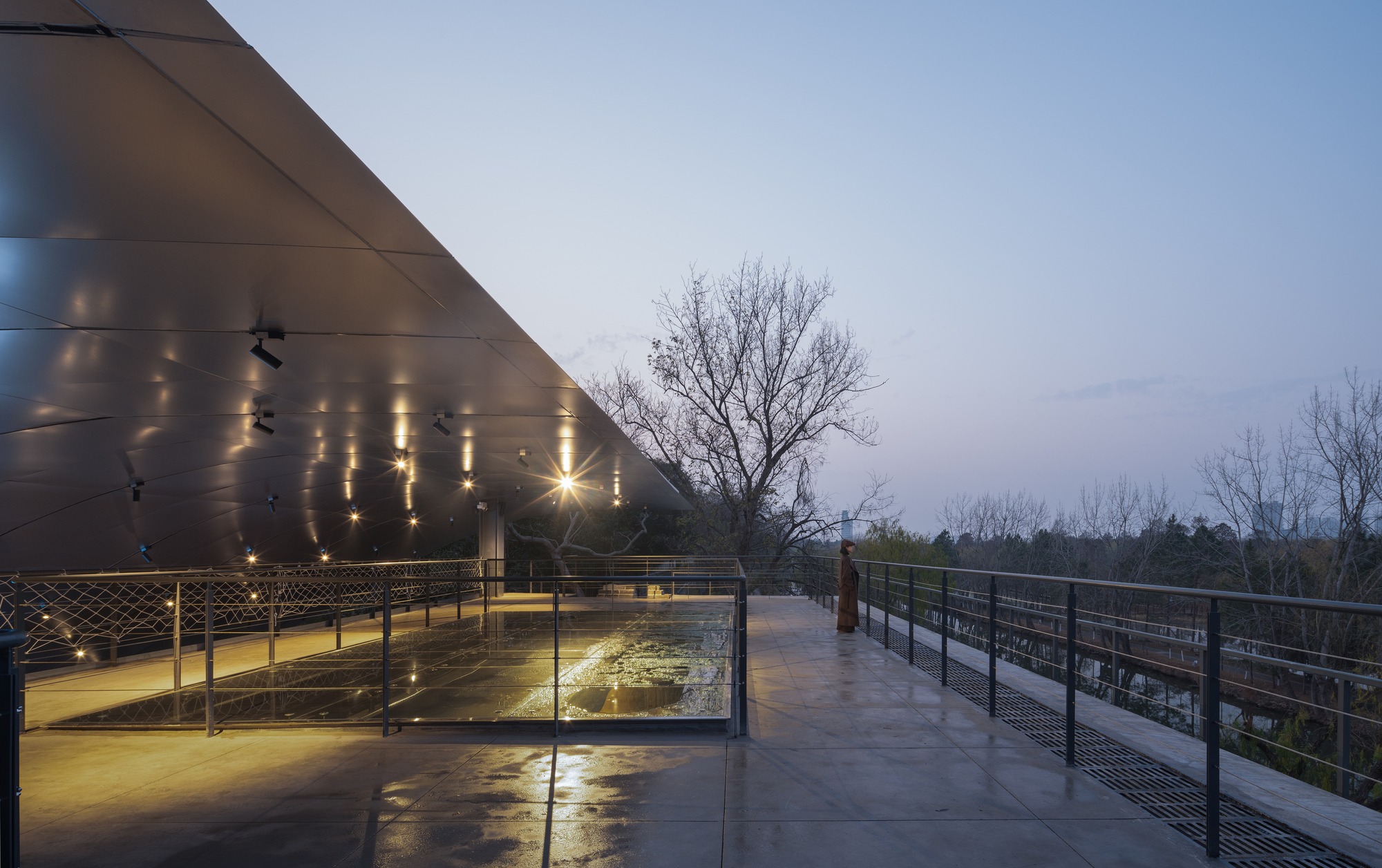
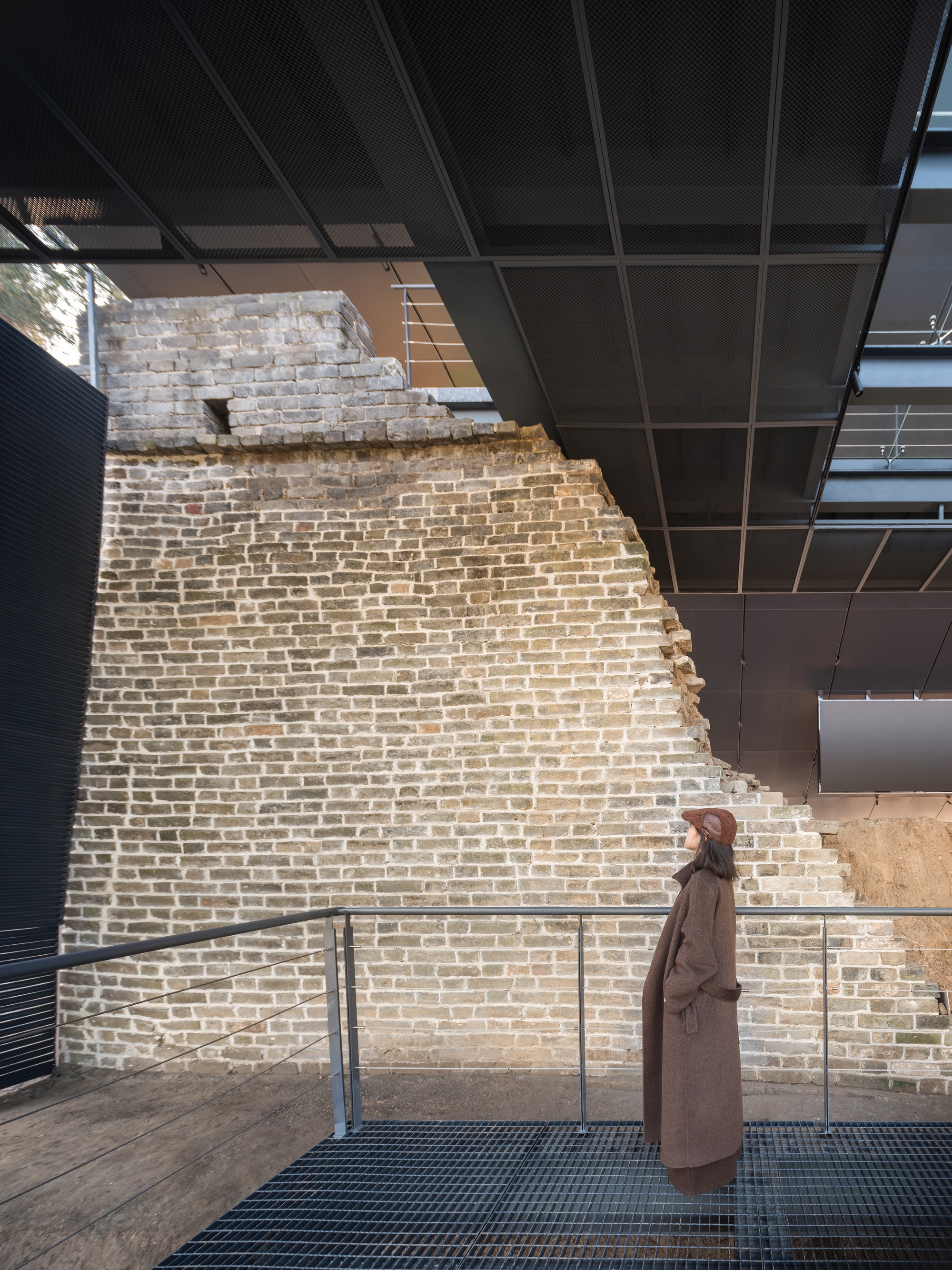
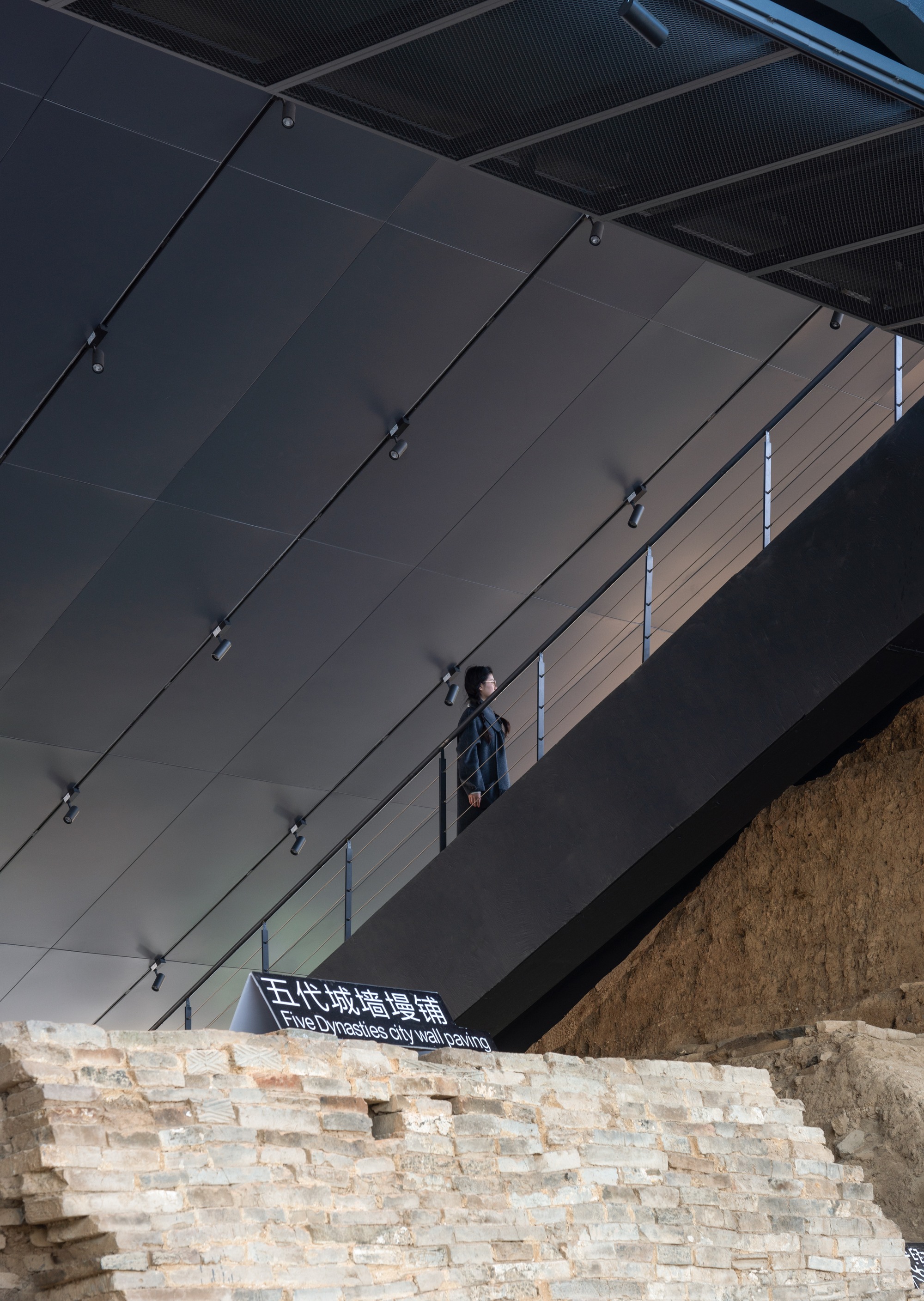
11번 보루는 징저우 성벽의 역사를 이해하는 핵심 거점이자 두 개의 시간축이 교차하는 장소다. 수직축이 오대십국부터 청나라까지 쌓인 시간의 지층이라면, 수평축은 오늘날까지 온전히 보존된 고대 성벽 그 자체다. 중국 남부를 넘어 전국적으로도 보존 상태가 가장 뛰어난 지방 단위 성벽 중 하나인 징저우 성벽의 진정한 가치는 끊어짐 없이 무려 11,281미터에 달하는 거대한 연속성에 있다. 이러한 맥락을 살려, 상층부 동선은 단절되었던 성벽 상단의 순환 경로를 복원하여 고대 도시의 공간적 흐름을 다시 잇고 유적과 주변 도시를 조망할 수 있는 시야를 열어준다. 반면 하층부에는 가벼운 타공 금속 패널로 제작된 플랫폼이 발굴 단면을 따라 아슬아슬하게 돌출되어 있다. 관람객은 이 길을 걸으며 고고학자의 시선으로 다져진 흙의 층위와 벽돌 디테일을 가까이서 관찰하게 된다. 건축가는 모든 전망대와 보행로의 크기를 구조적 한계 내에서 최소화하고, 어두운 무광 금속으로 마감해 배경으로 조용히 물러나게 했다. 사람들이 이 길을 걸을 때 시선은 자연스럽게 발아래 놓인 역사의 단면으로 향하며, 동선 구조물 스스로는 시야를 안내하는 조용한 틀로 남은 채 풍경 속으로 사라진다.
[경계] 일상의 결절점: 박물관의 벽을 허물다
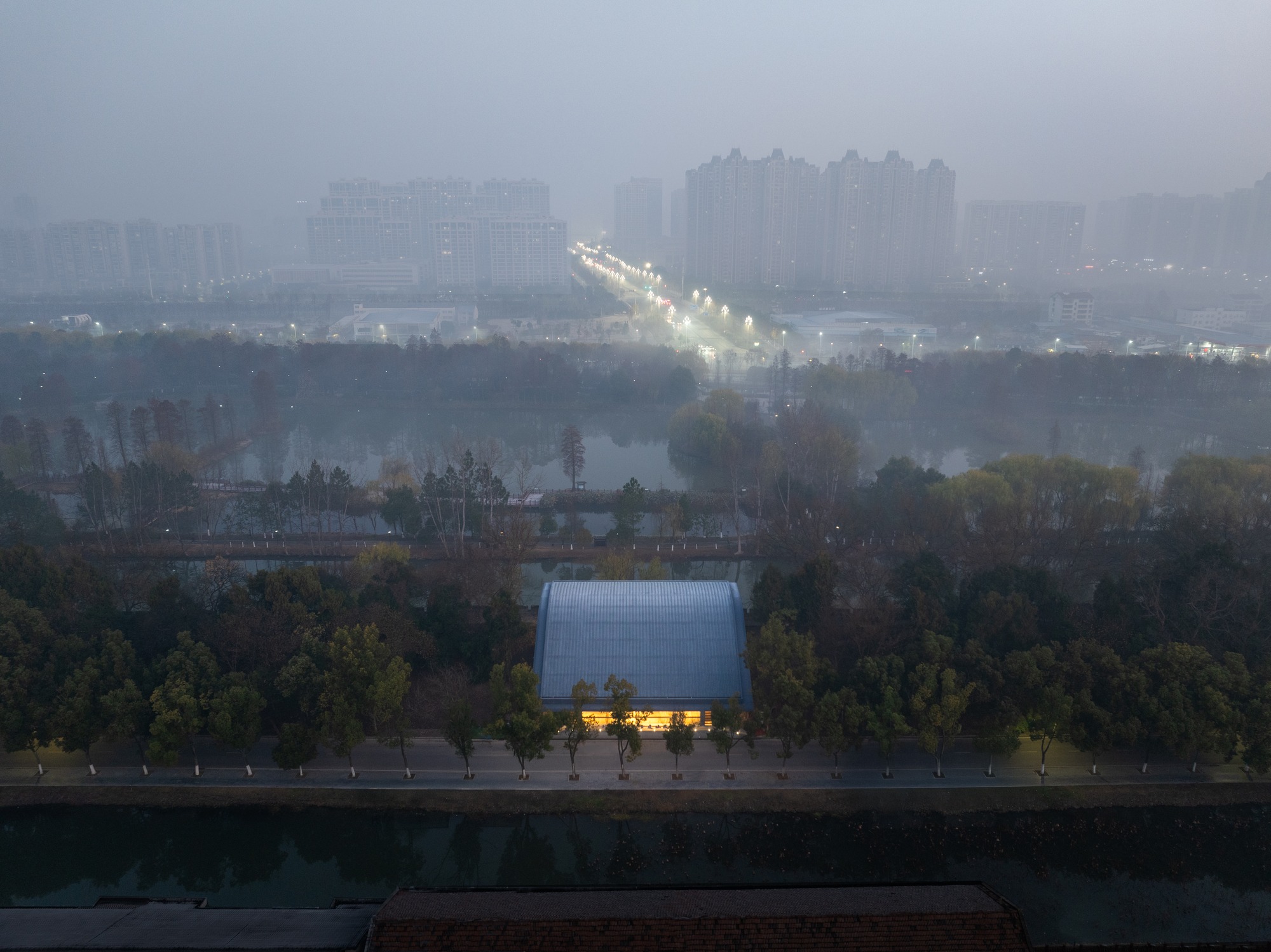
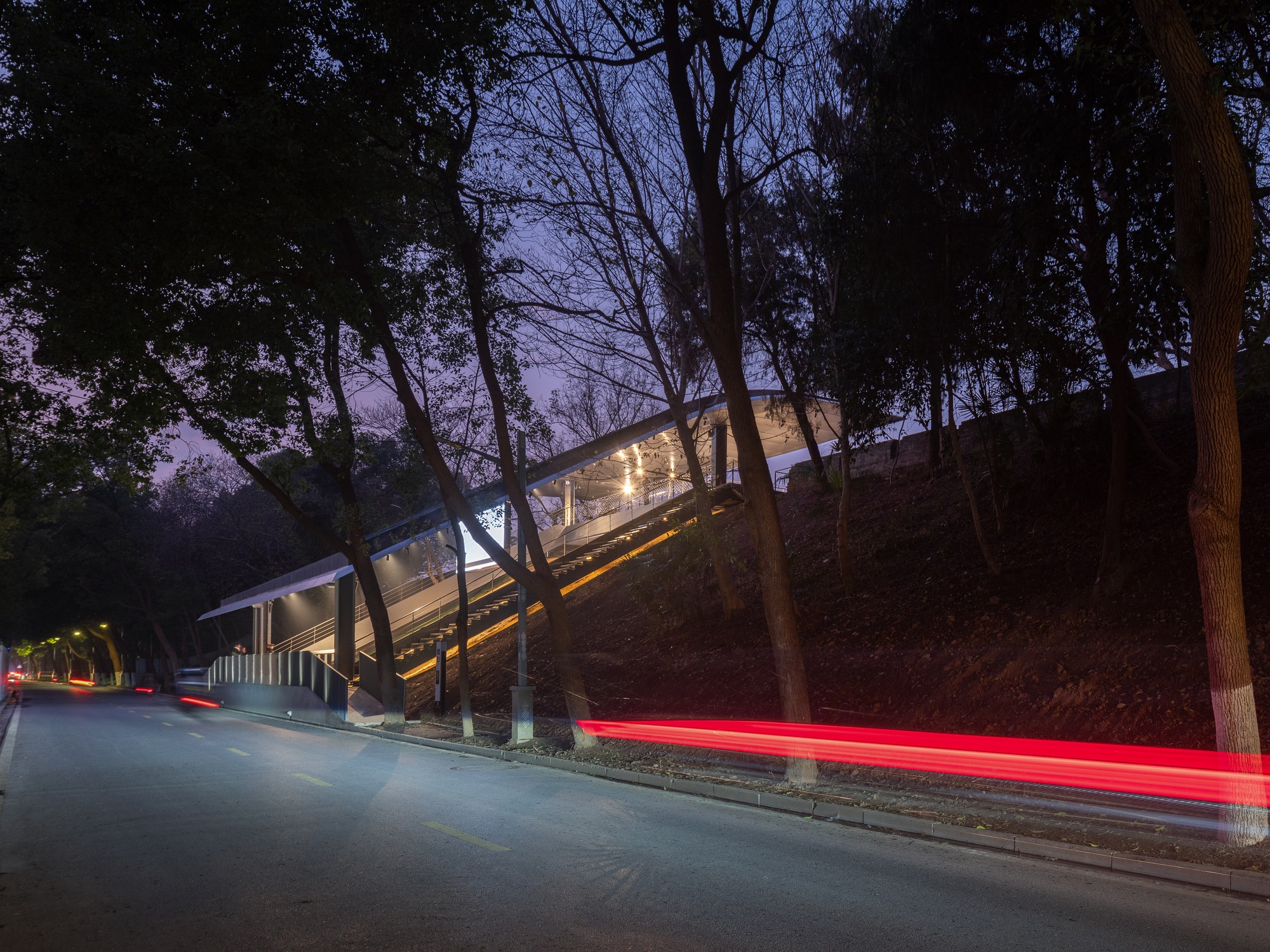
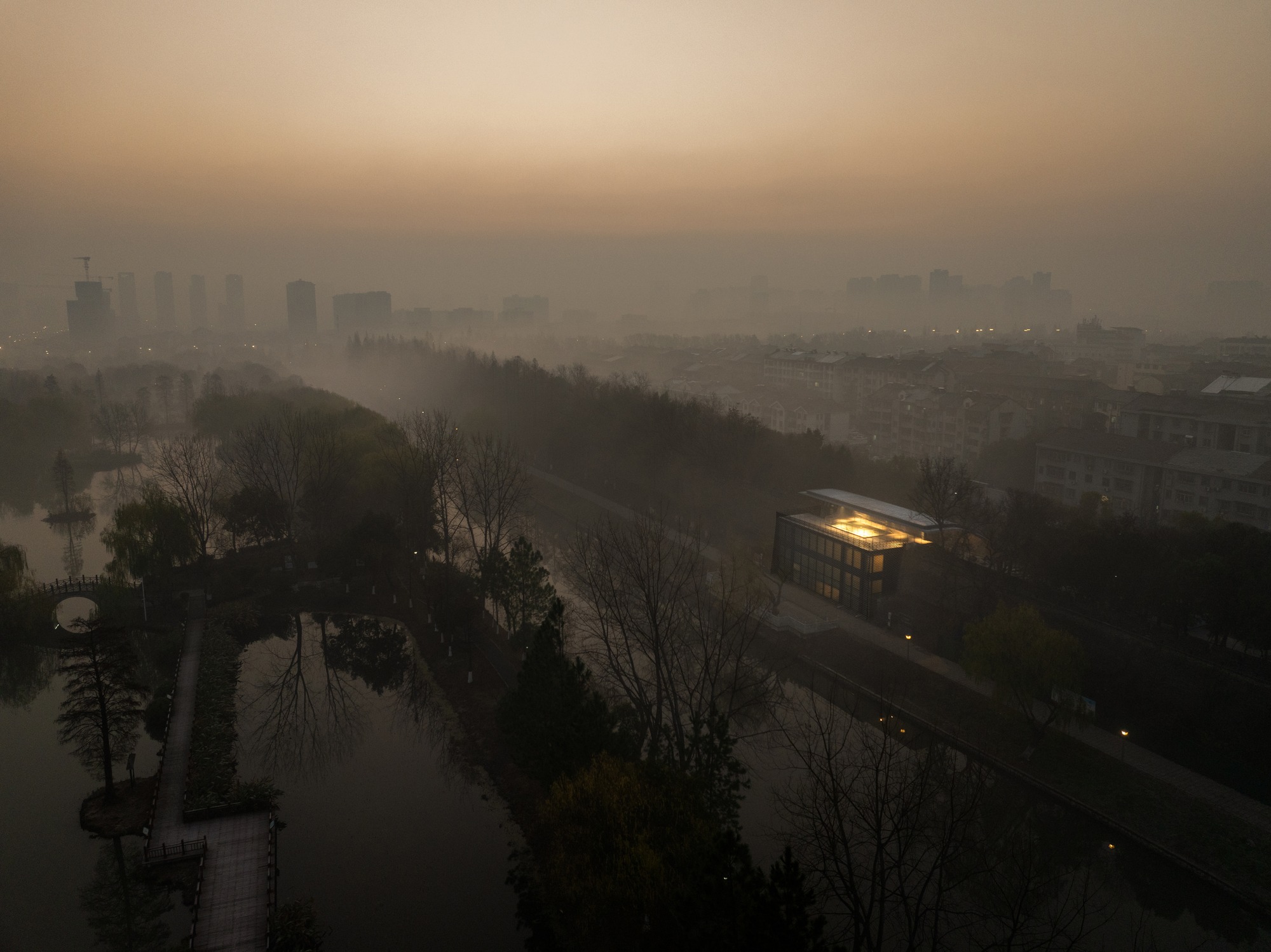
천년의 건축 역사를 품은 이 거대한 지질학적 단면은 외딴 황야에 숨겨져 있거나 보호 구역 안에 고립되어 있지 않다. 오히려 고대 도시 남쪽 가장자리의 활기찬 도로변에 완전히 노출되어 있어, 유산의 보존과 전시가 도시 공공 생활의 자연스러운 연장선이 되도록 이끈다. 이 전시관은 모든 물리적인 차단벽을 과감히 없앴다. 매표소도, 출입 통제선도 없이 완만한 경사로와 계단만이 거리와 유적을 매끄럽게 연결할 뿐이다. 번화한 순환도로에서 발길을 돌리면, 산책을 하거나 자전거를 타는 시민 누구나 이 장엄한 고고학적 단면을 자연스럽게 마주하게 된다. 역사는 더 이상 유리 진열장 너머의 박제된 표본이 아니라, 발걸음을 멈추고 사색하게 만드는 일상 속 풍경으로 재탄생했다. 관람객은 성벽 꼭대기의 산책로를 걸으며 옛 도시를 뒤돌아볼 수도 있고, 남쪽 거리에서 유적지로 곧장 걸어 들어올 수도 있으며, 북쪽에서 진입해 층층이 다져진 흙벽의 흔적을 깊이 탐구할 수도 있다. 이처럼 다채롭게 엮인 관람 동선은 박물관 특유의 권위적인 형식주의와 일방통행식 관람 구조를 가볍게 허문다. 징저우 성벽 고고학 유적지 전시관은 작정하고 방문해야 하는 무거운 목적지가 아니다. 누군가 장을 보러 가거나 아이를 데리러 가는 길에, 혹은 저녁 산책을 하다가 우연히 발걸음을 멈추고 머무는 일상의 결절점으로 기능한다. 이곳에서 역사 보존의 공간과 현대적 삶의 공간은 온전히 겹쳐지고 융합되며, 천년의 시간을 견뎌낸 흔적은 마침내 도시의 일상적인 호흡 속으로 조용히 귀환한다.
Write by Gemini & Jean Browwn

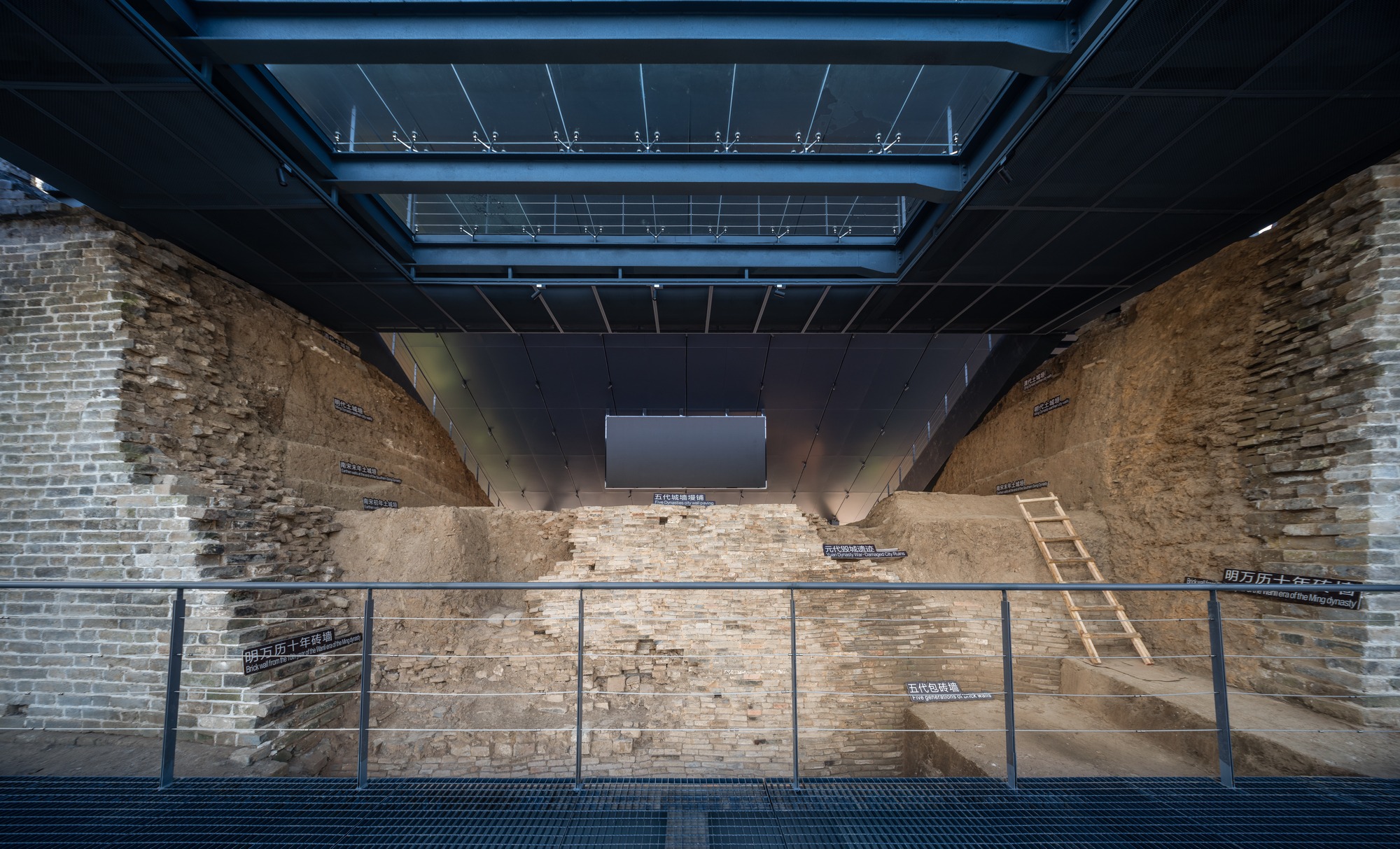

This project originates from a major breakthrough in the archaeological discovery and conservation practice at Bastion No. 11 of the Jingzhou City Wall. Since 2016, this section of the ancient wall had been listed for emergency conservation due to foundation settlement and structural cracking. During the repair process, a stratified structure of "walls built upon walls," spanning the Five Dynasties, Song, Ming, and Qing periods, was uncovered. This led to the approval by the National Cultural Heritage Administration for systematic archaeological excavation.
The discoveries at Bastion No. 11 confirmed that Jingzhou's brick city wall can be traced back to the Five Dynasties period, clarified the construction and use of the wall from the Five Dynasties through the Qing dynasty, and vividly revealed the historical and cultural depth of the ancient city. Serving as an important historical witness, the site also raises a new question: how can archaeological remains be displayed in a living manner and integrated into the everyday cultural life of the public?
The Canopy: A Light Intervention — The primary task was to shelter the archaeological remains from wind and rain. Yet any bulky or ostentatious covering would have brutally disrupted the silhouette of the ancient city. Our strategy was one of "decomposition" and "visual retreat." The protective canopy is divided into two segments: the southern segment follows the inclined profile of the inner earthen rampart, while the northern segment aligns with the direction and tapering angle of the remaining outer bastion wall. Rather than a massive object descending from above, the canopy appears as a new contour gently "floating up" from the existing terrain.
All newly added steel beams and columns maintain a clear physical distance from the historic wall. They lightly span over the site, with foundations largely reusing the points of the former temporary archaeological shelter, minimizing secondary disturbance to the remains and the wall's foundations, and adhering to the principle of minimal intervention. To achieve maximum visual subtlety, the eaves adopt a variable cross-section design: from the street outside, they read as a blade-thin edge, almost merging into the skyline of the ancient city; from within the site, the canopy reveals a complete and cleanly curved soffit, providing calm shelter for both the relics and visitors.
The Path: Suspended Reading — Bastion No. 11 is a critical node for understanding the history of the Jingzhou City Wall, where two intersecting "axes of time" converge. The vertical axis represents the stratified accumulation of remains from the Five Dynasties to the Qing dynasty; the horizontal axis is the intact ancient city wall preserved to this day. As one of the most complete prefectural-level city walls in southern China—and even nationwide its value lies in its uninterrupted circumference of 11,281 meters, continuous and intact.
At the upper level, the project restores the interrupted wall-top circulation route, re establishing the continuous spatial sequence of the ancient city and providing viewpoints overlooking the archaeological site and the surrounding city. At the lower level, a lightweight perforated platform cantilevers closely along the excavation wall, guiding visitors to observe the soil layers and masonry details from an almost archaeologist's bird's-eye perspective. All viewing platforms and pathways are reduced to the minimum dimensions permitted by structural requirements and are finished in dark-gray matte metal. As people walk along them, their attention is fully drawn to the historical section beneath their feet, while the paths themselves recede into discreet frameworks that guide vision and then disappear.
The Threshold: A Living Exhibition — This geological cross section revealing a millennium of construction history is not hidden in wilderness or isolated within a protected enclave. Instead, it is directly exposed alongside a living street on the southern edge of the ancient city, allowing conservation and display to become a natural extension of urban public life. The exhibition pavilion removes all enclosing walls: there is no ticketing, no turnstiles—only gentle ramps and steps seamlessly connected to the street. Turning in from the lively ring road, citizens and visitors strolling or cycling can effortlessly glimpse the profound archaeological section. History is no longer a distant specimen behind glass, but a compelling streetside scene that invites pause and contemplation.
The circulation system is woven into the existing urban fabric. Visitors may walk along the wall top loop and look back toward the ancient city; enter the site directly from the southern street; or slip in from the north into the interior of the wall to closely observe rammed earth and brickwork. This multiplicity of routes dissolves the formality and one-directionality typical of museums, allowing the exploration of history to be as free and incidental as wandering through a neighborhood. The Jingzhou City Wall Archaeological Site Exhibition Pavilion is not a destination that demands a deliberate visit. It is an everyday node—one that residents might pass by on their way to the market, while picking up children, or during an evening stroll, and then linger at by chance. Here, the space of historical preservation overlaps and merges with the space of contemporary life, allowing engineering remains that span a thousand years to quietly return as part of the city's everyday breathing.
from archdaily