건축은 공간을 점유하는 것이 아니라, 대지가 품은 시간과 관계를 맺는 일이다. 알바로 시자
 |
 |
 |
시간의 단절을 잇는 지형적 파빌리온 Domitianus Arquitectura-Ramalde Sports Park
[새로운 지형의 탄생: 복합 스포츠 공간으로의 재편]
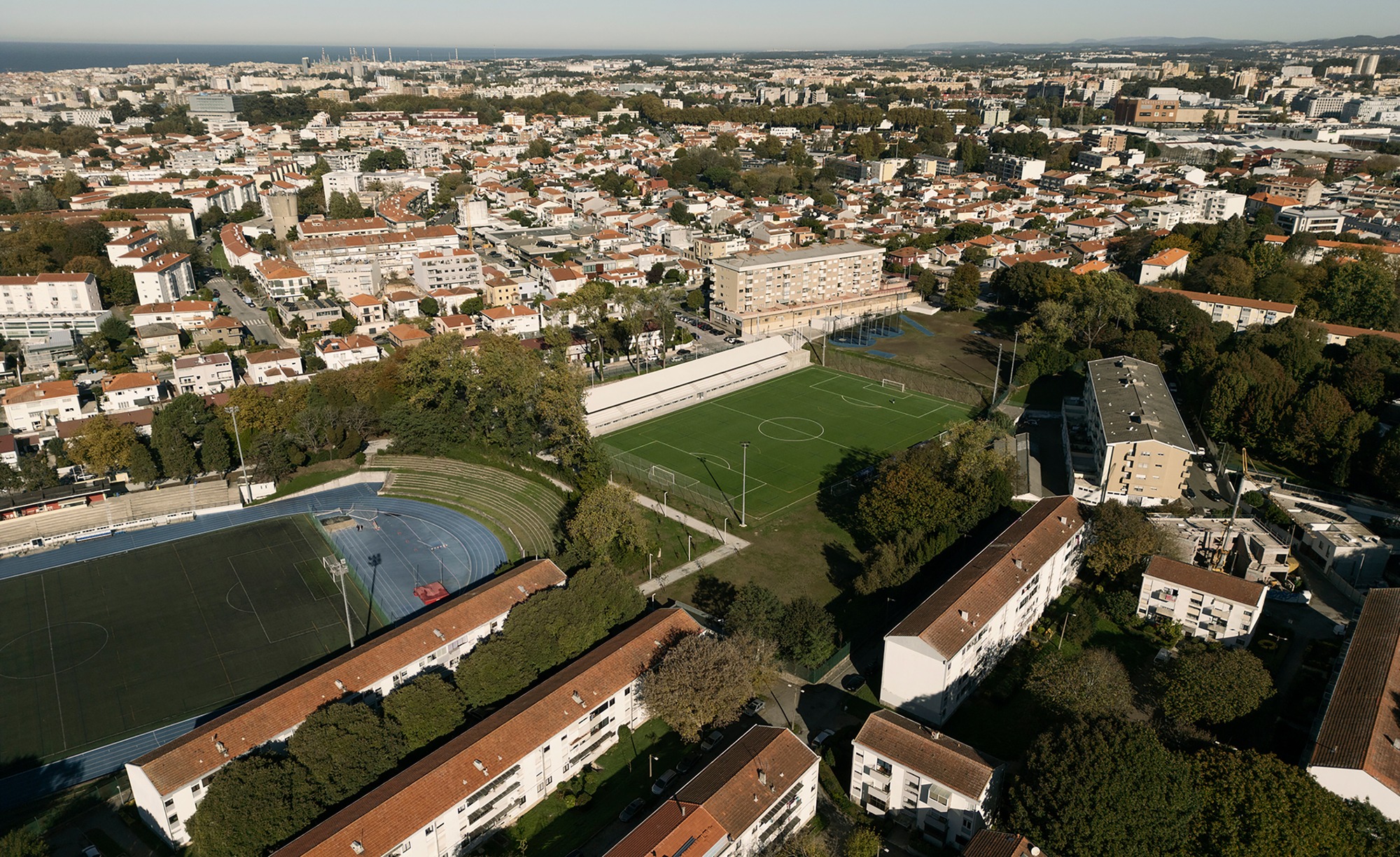
도미티아누스 아르키텍투라가 선보인 이번 프로젝트는 포르투갈 라말데 스포츠 공원의 북측 구역을 새롭게 탈바꿈한 작업입니다. 럭비와 축구를 동시에 수용하는 잔디 구장을 필두로, 라커룸과 지붕 덮인 관중석을 품은 지원 시설부터 육상 구역과 양궁장에 이르기까지 다채로운 스포츠 시설이 대지 위에 새롭게 들어섰습니다.
[미완의 공백을 채우는 시간의 연결]
5헥타르 규모에 달하는 이 거대한 공원은 라말데 주거 단지의 심장부에 자리하고 있습니다. 1952년에서 1960년 사이 포르투갈 건축의 거장 페르난도 타보라의 초기 설계로 그 역사가 시작되었으나, 이후 계획이 변경되면서 축구장과 테니스장만 먼저 들어서게 되었습니다. 그 결과 북쪽과 남쪽 구역은 오랜 시간 미완의 공백으로 남아있었지만, 이번 설계를 통해 멈춰있던 시간의 축을 다시 돌려놓는 뜻깊은 개입이 이루어졌습니다.
[단차를 품은 동선: 지형 순응형 구조]
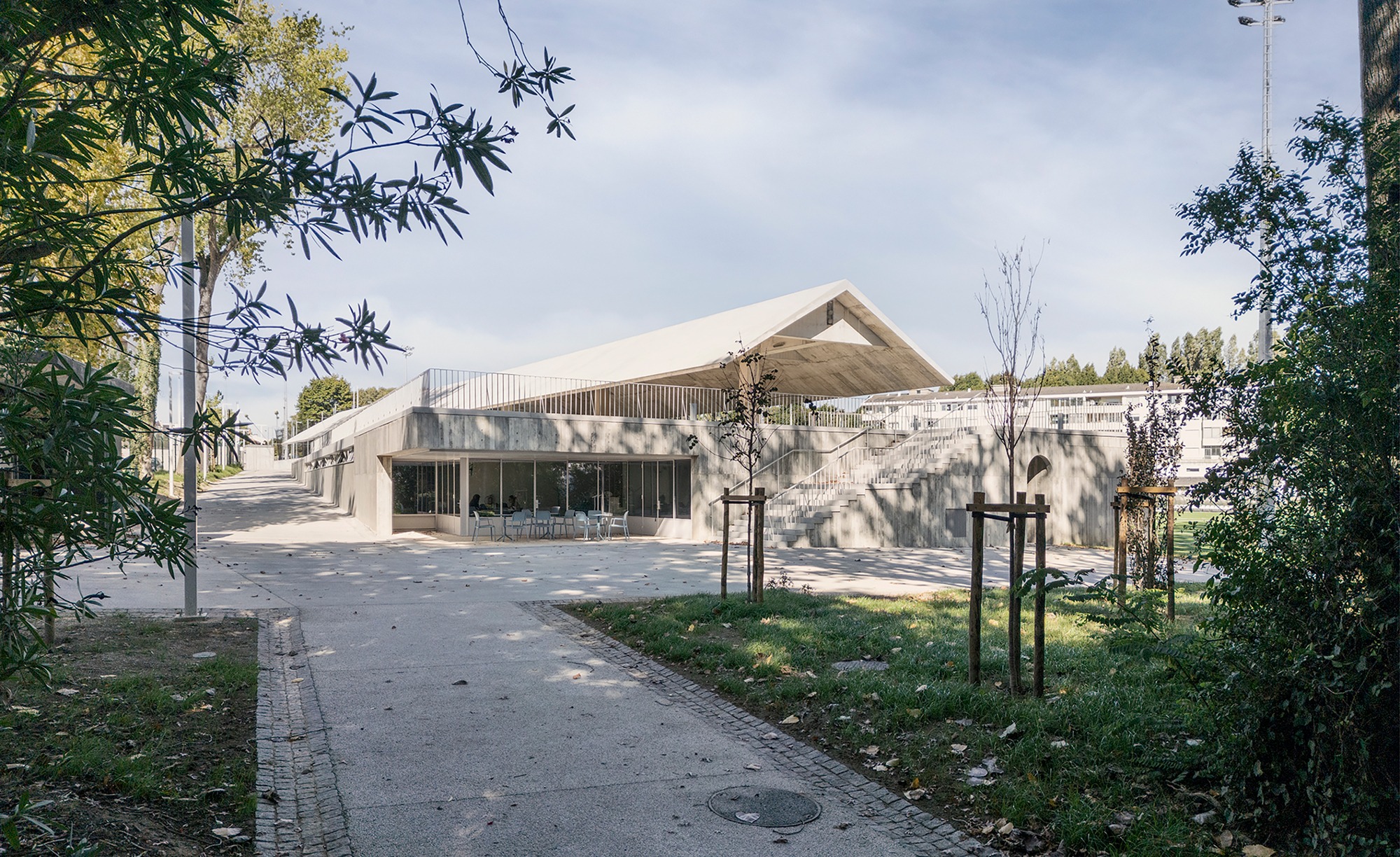
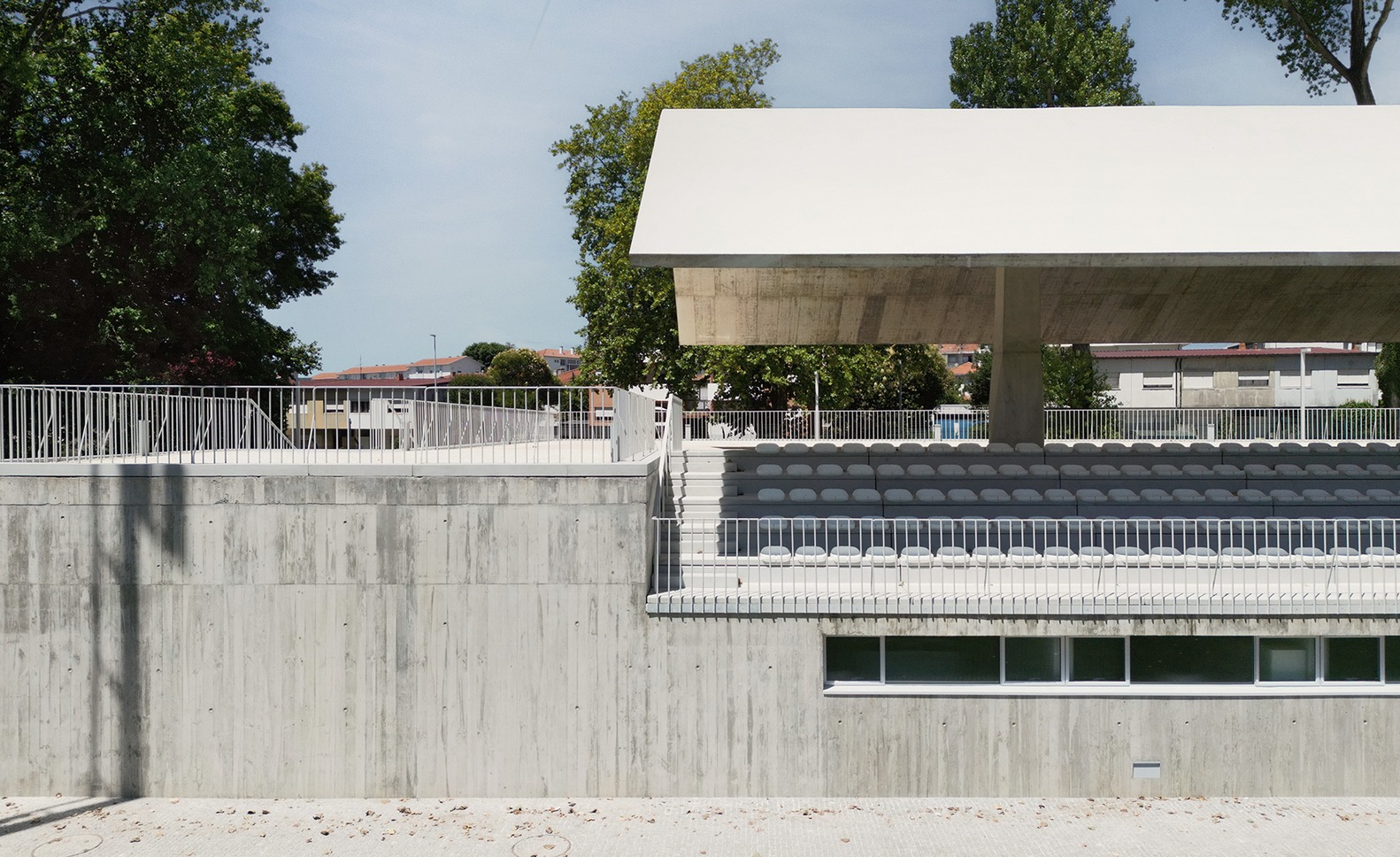
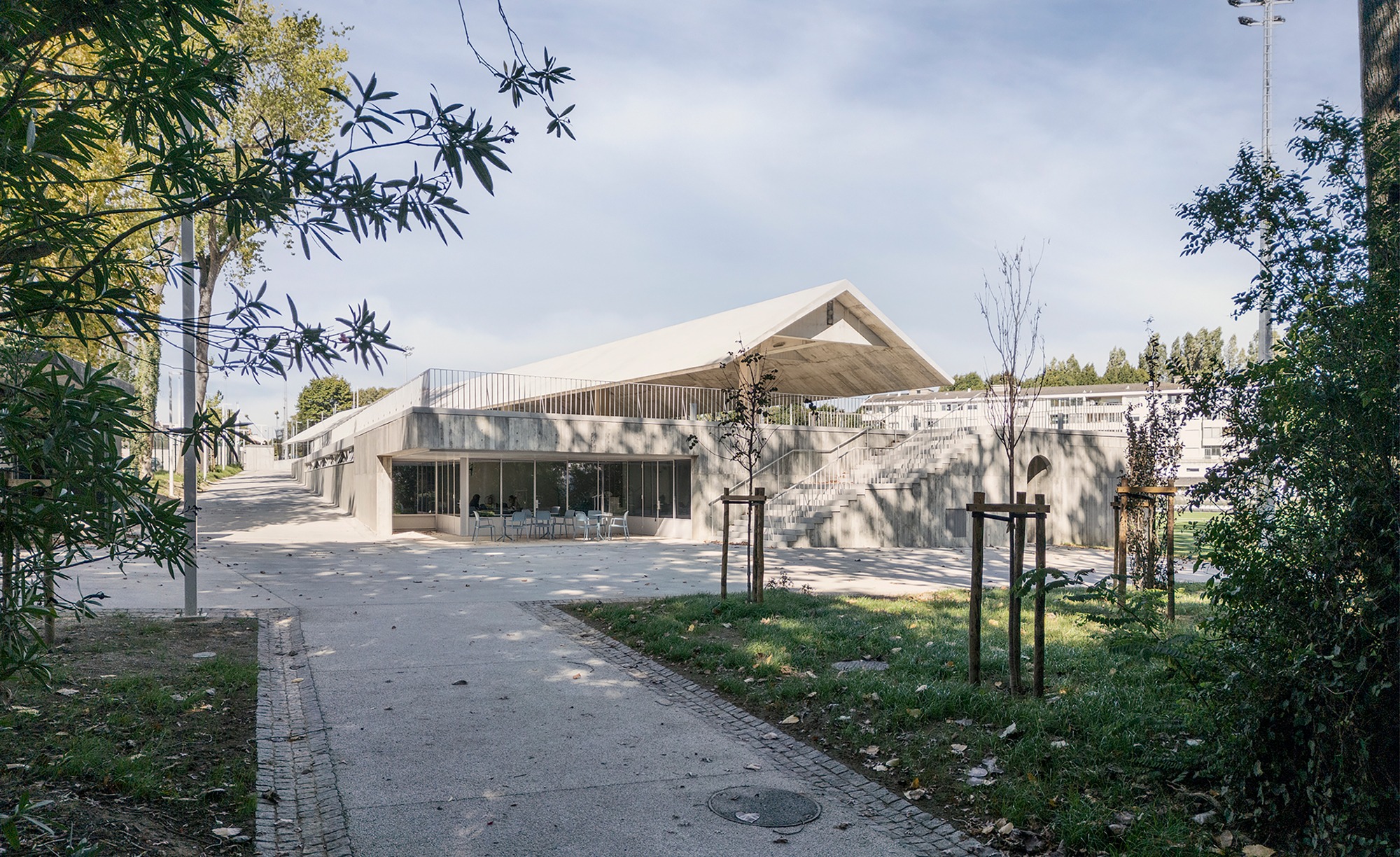
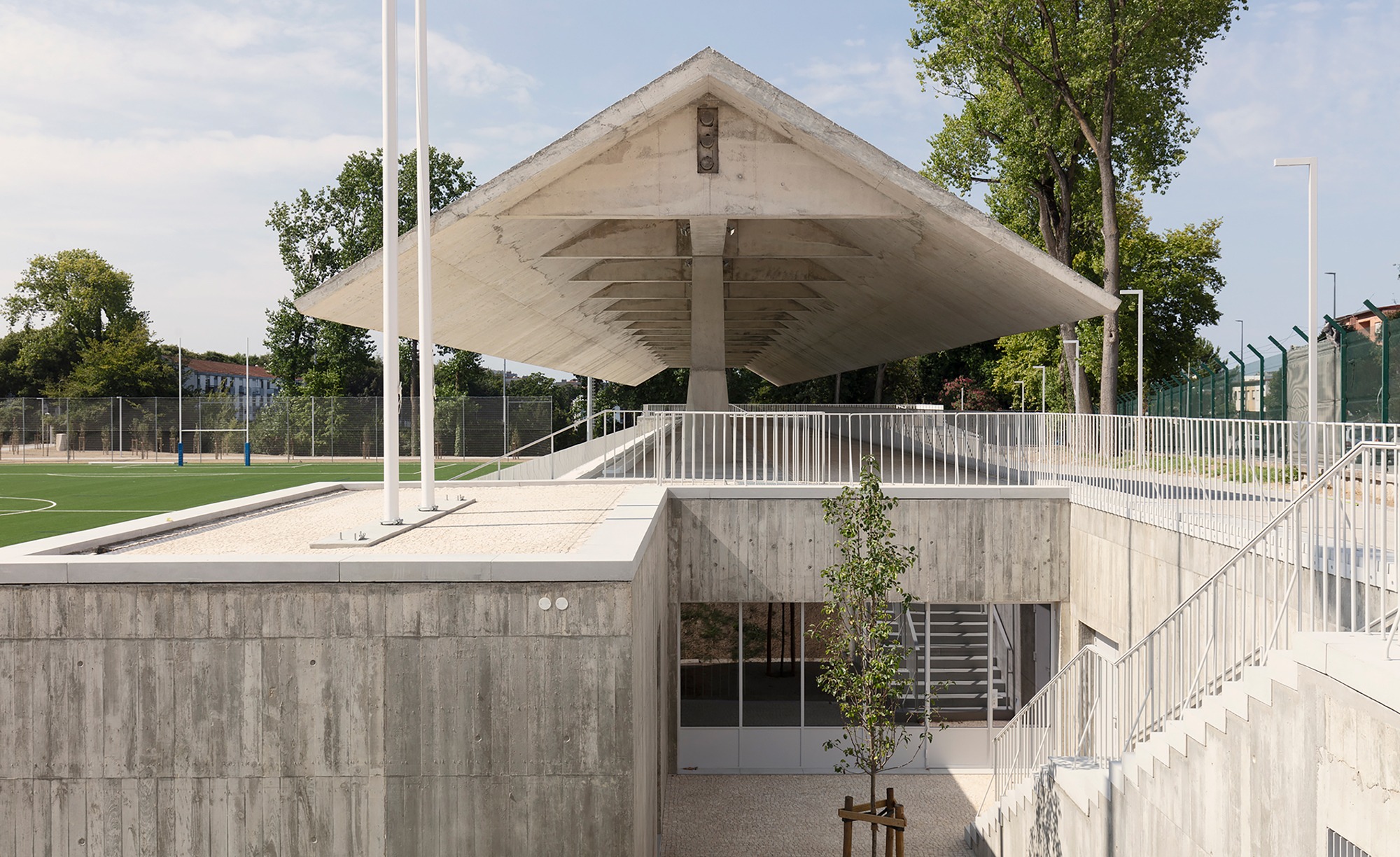
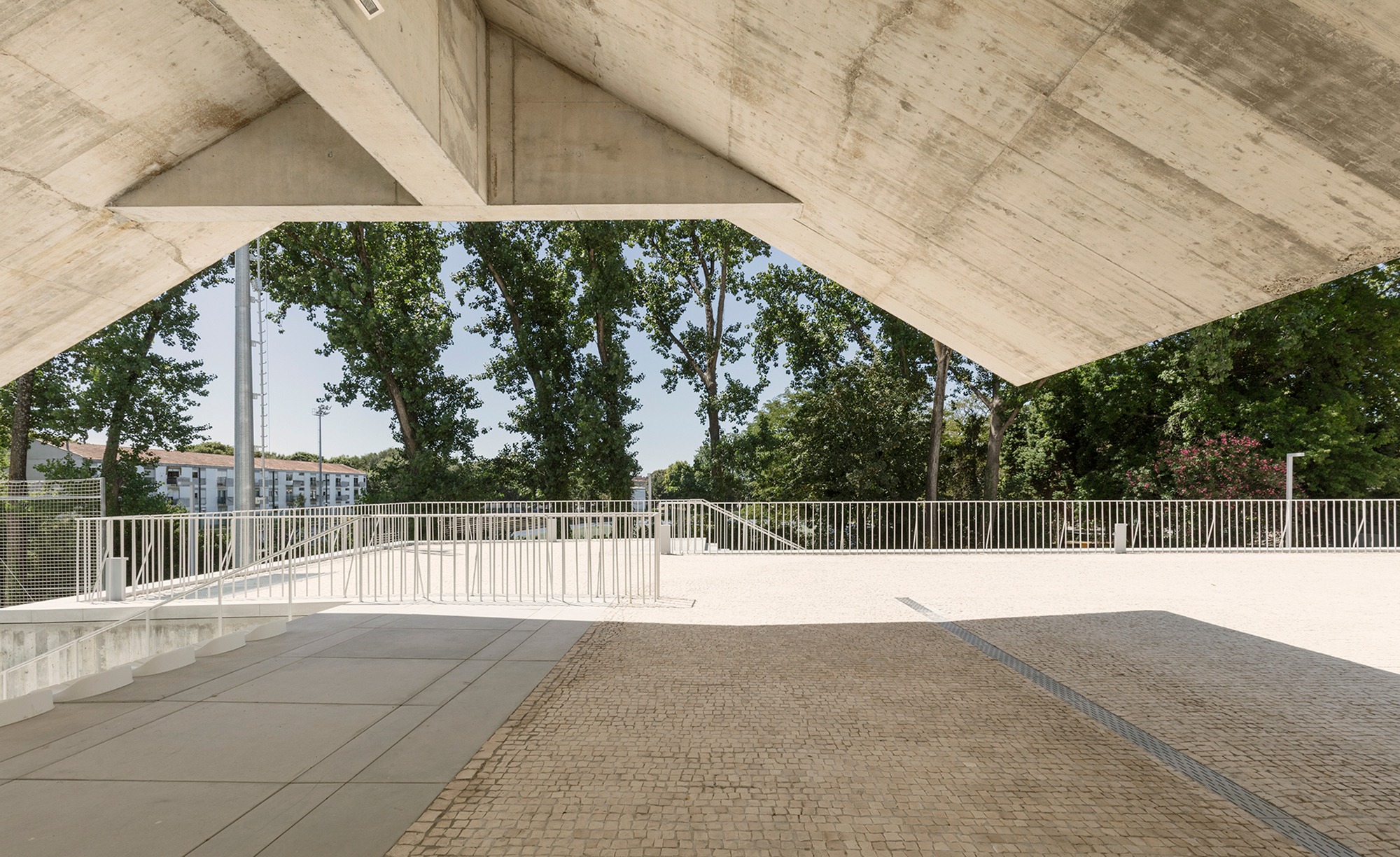
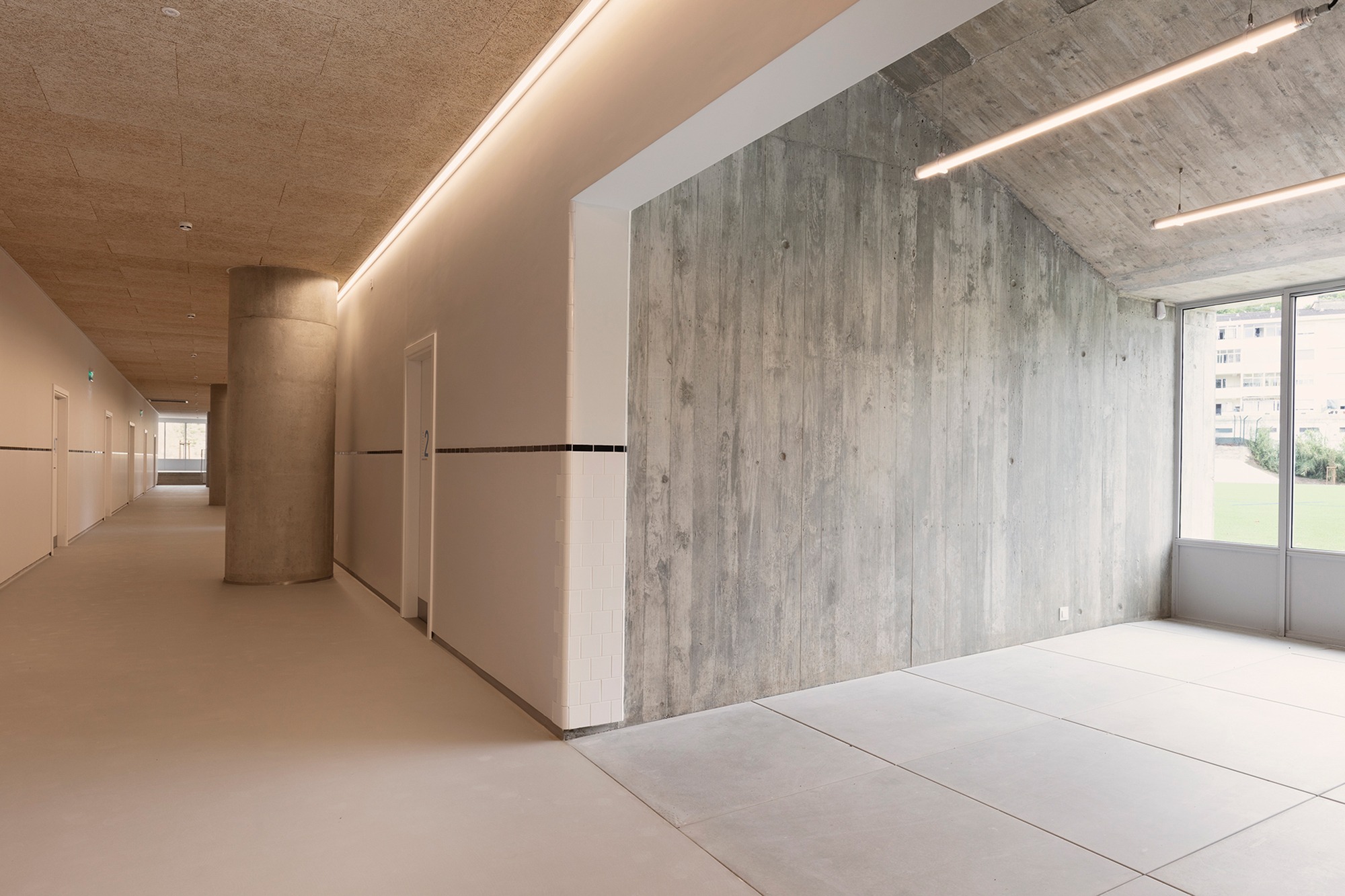
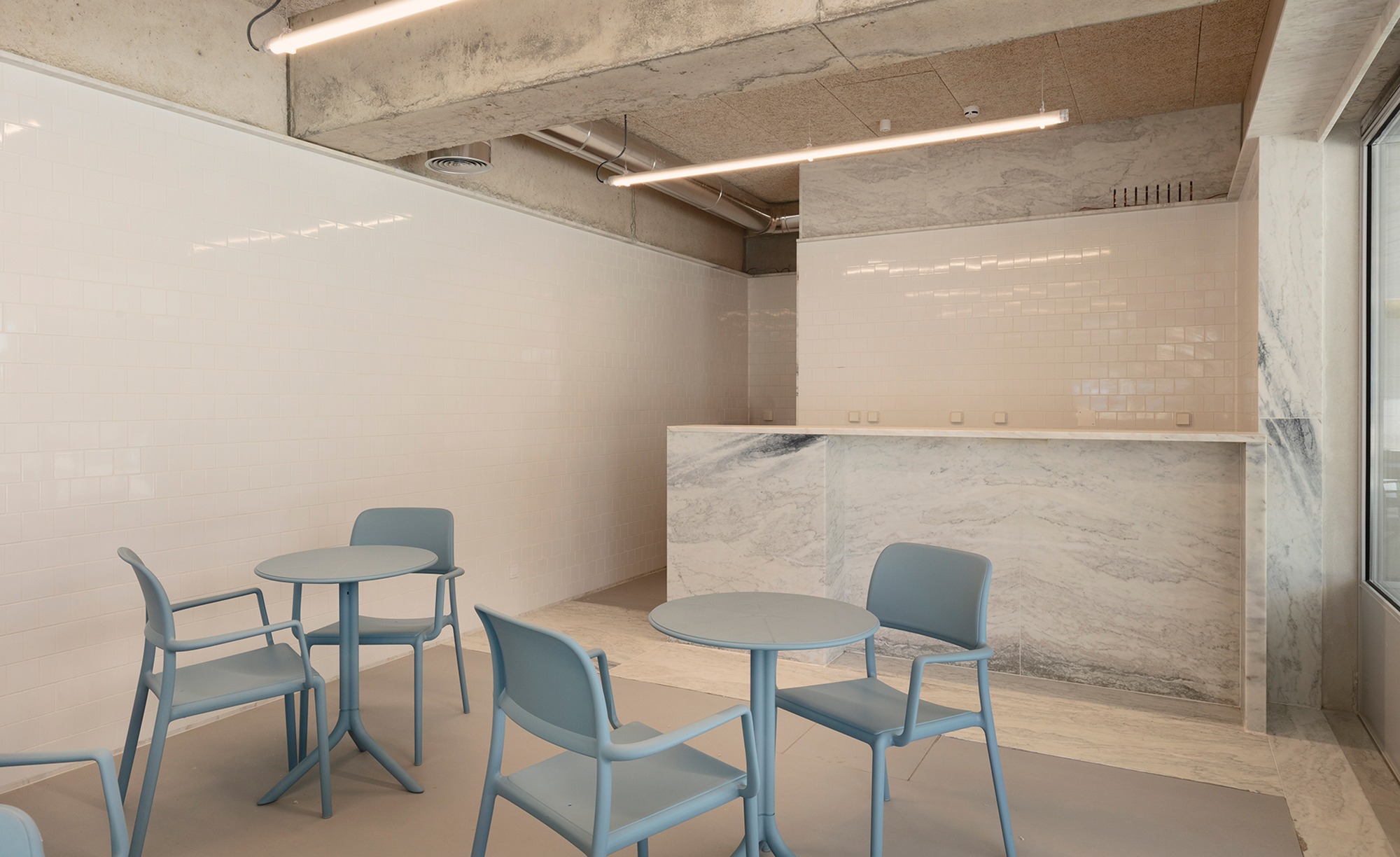
거대한 스케일과 명확한 기능성을 지닌 새로운 경기장이 이 장소의 뼈대이자 구조적 중심이 되며, 주변의 나머지 시설들은 이 중심 공간을 에워싸듯 유기적으로 자리 잡았습니다. 여기서 가장 시선을 사로잡는 요소는 대지가 가진 지형의 단차를 영리하게 흡수한 지원 건물의 존재감입니다. 노출 콘크리트로 마감된 건물의 웅장한 형태는 남쪽 주출입구로 향할수록 점진적으로 자태를 드러내며 방문객을 맞이합니다. 바와 연결된 개방형 현관을 지나면 건물 상단부에 펼쳐진 넓은 플랫폼이 나타나고, 이는 경기장과 평행하게 뻗은 관중석으로 사람들의 발걸음을 자연스럽게 안내합니다. 이러한 흐름은 자연의 지세를 거스르지 않고 단차를 활용해 공간을 켜켜이 쌓아 올리는 지형 순응형 건축 미학과도 깊이 맞닿아 있습니다.
[기하학적 교차점: 빛과 공간의 맞물림]
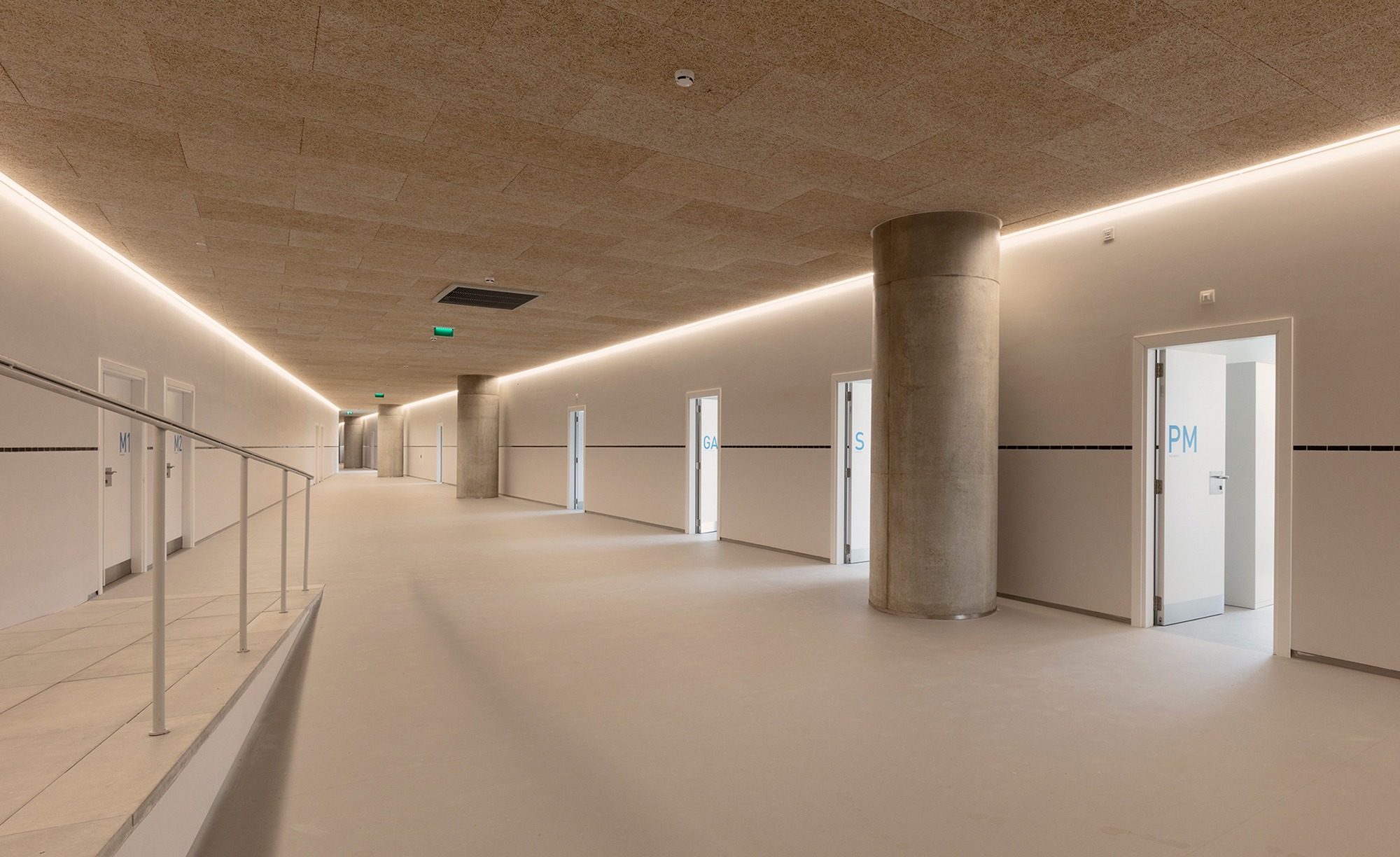
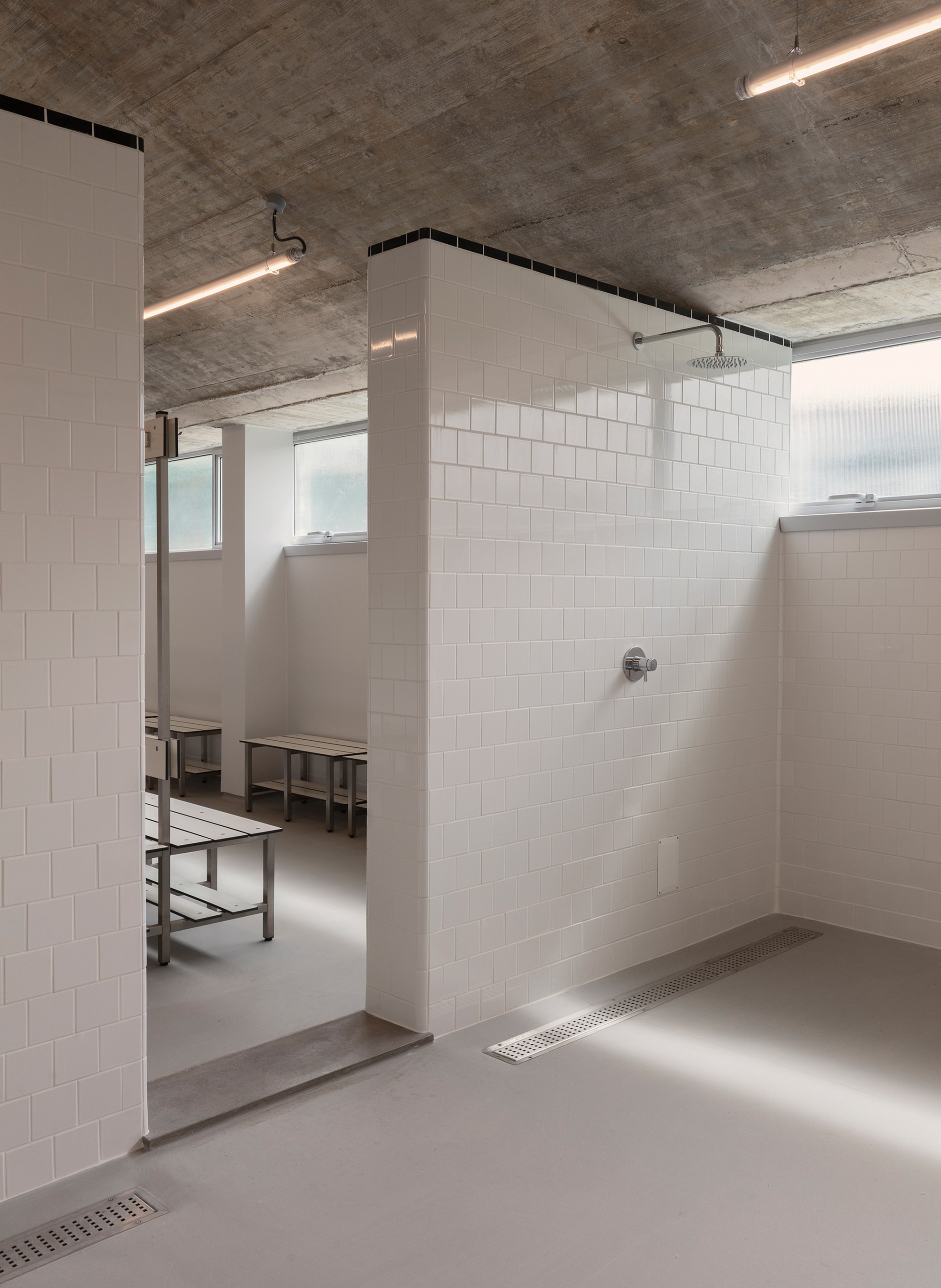
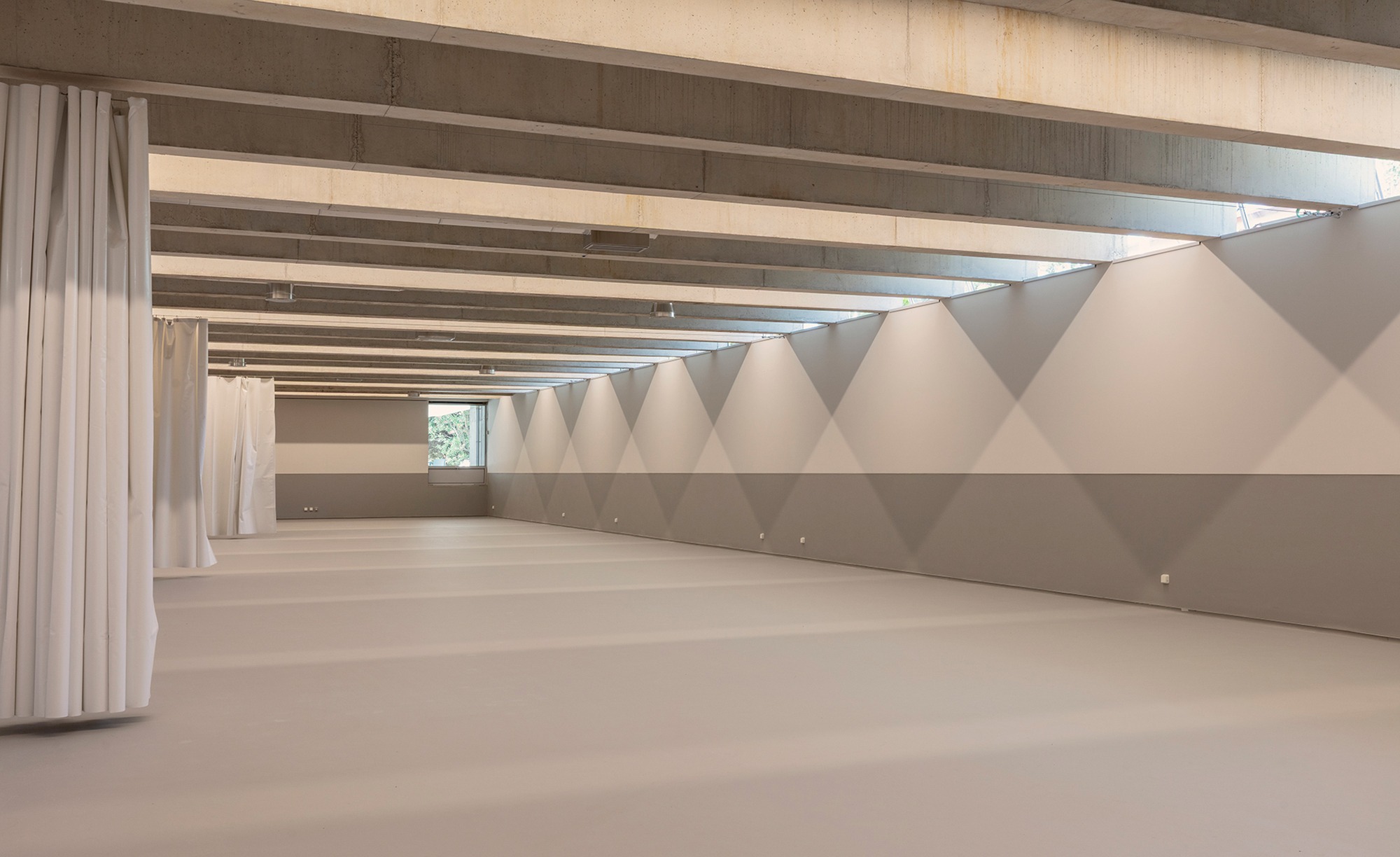
건물 내부로 들어서면 다채로운 동선들이 교차하는 기하학적 형태의 중앙 아트리움이 시원하게 펼쳐집니다. 이곳을 구심점 삼아 5개의 라커룸을 비롯해 다목적 홀, 행정실, 의무실 등 다양한 기능적 공간들이 치밀하면서도 유기적으로 연결되어 방문객의 편의를 높입니다.
[부유하는 파빌리온: 콘크리트와 자연의 호흡]
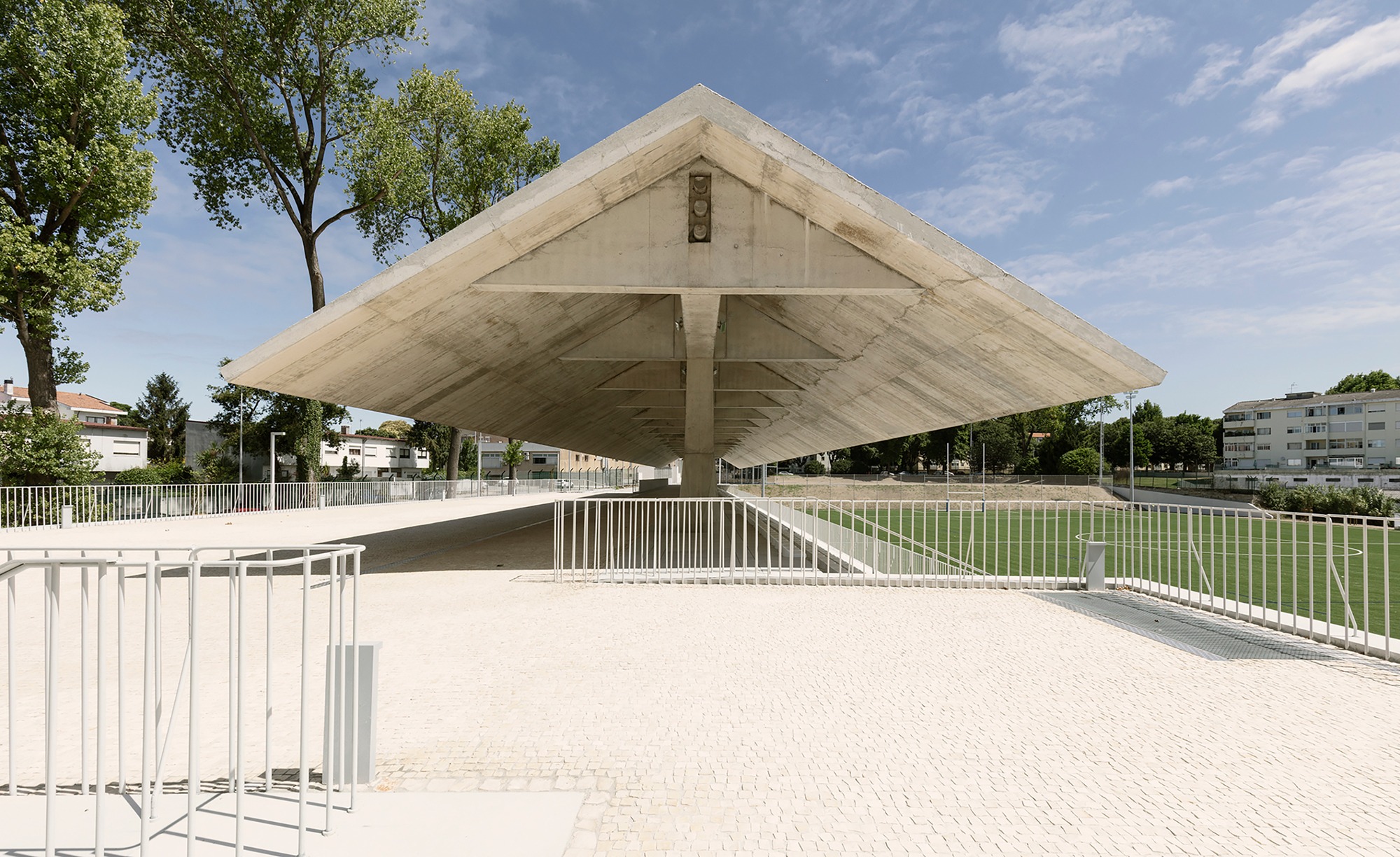
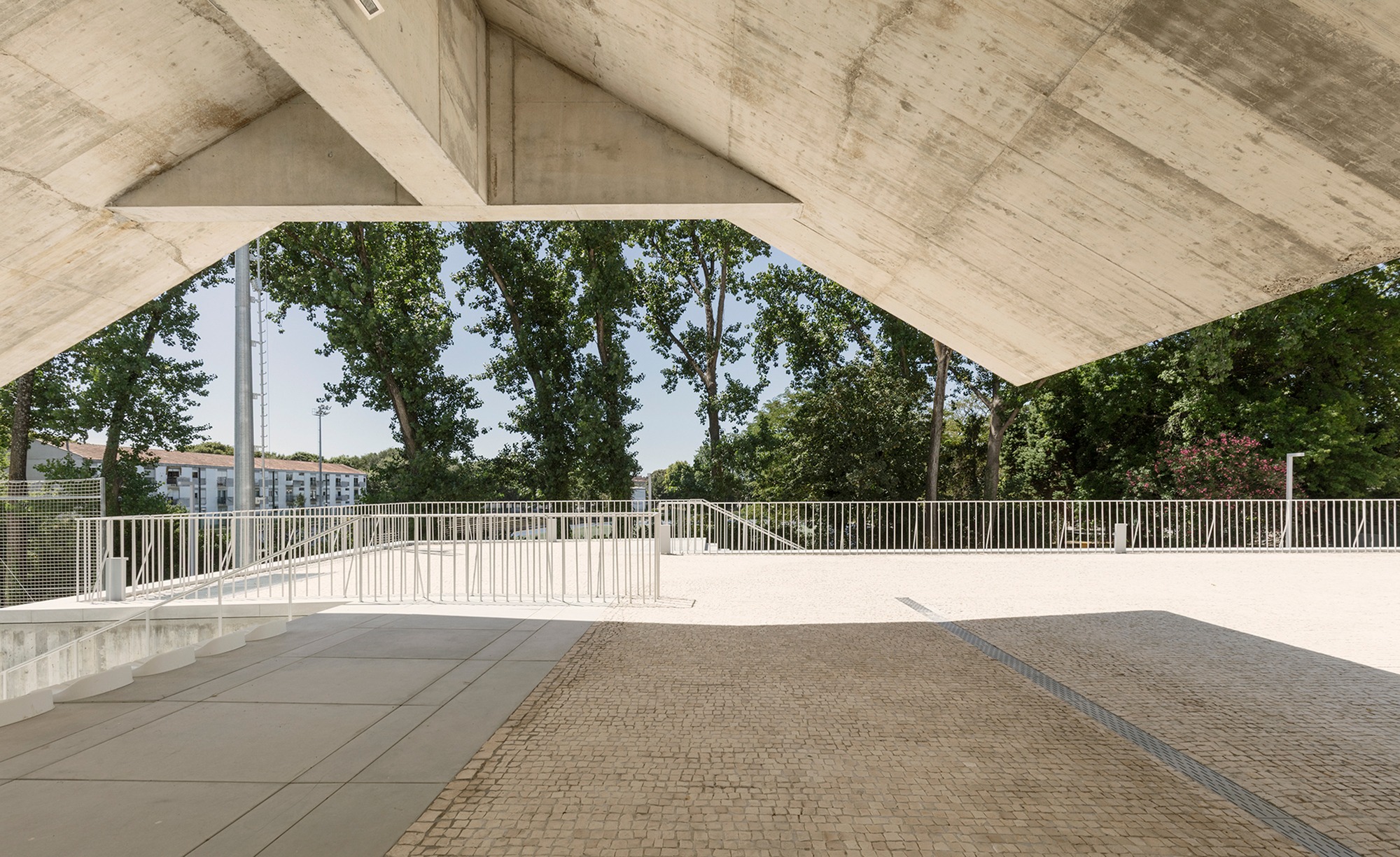
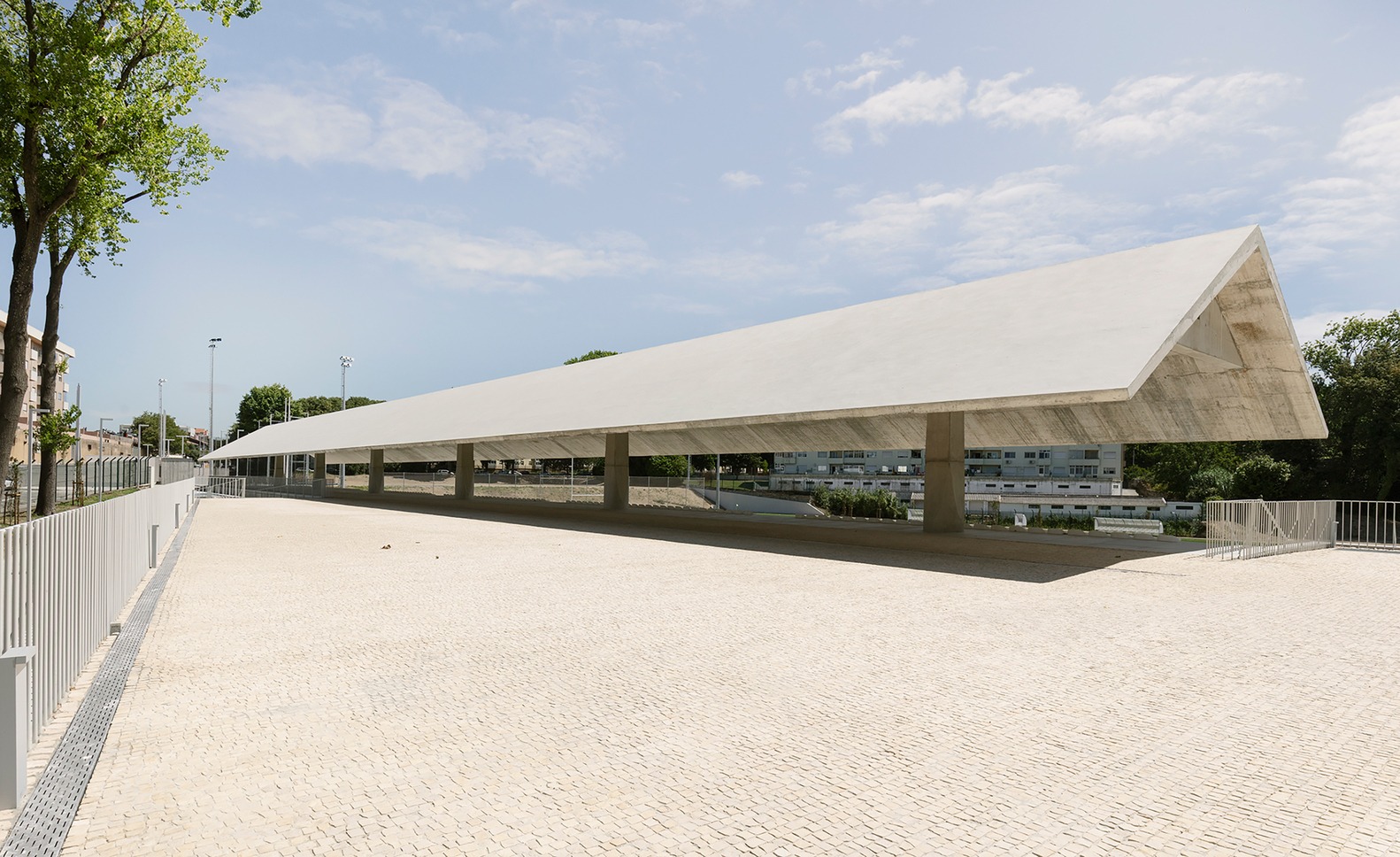
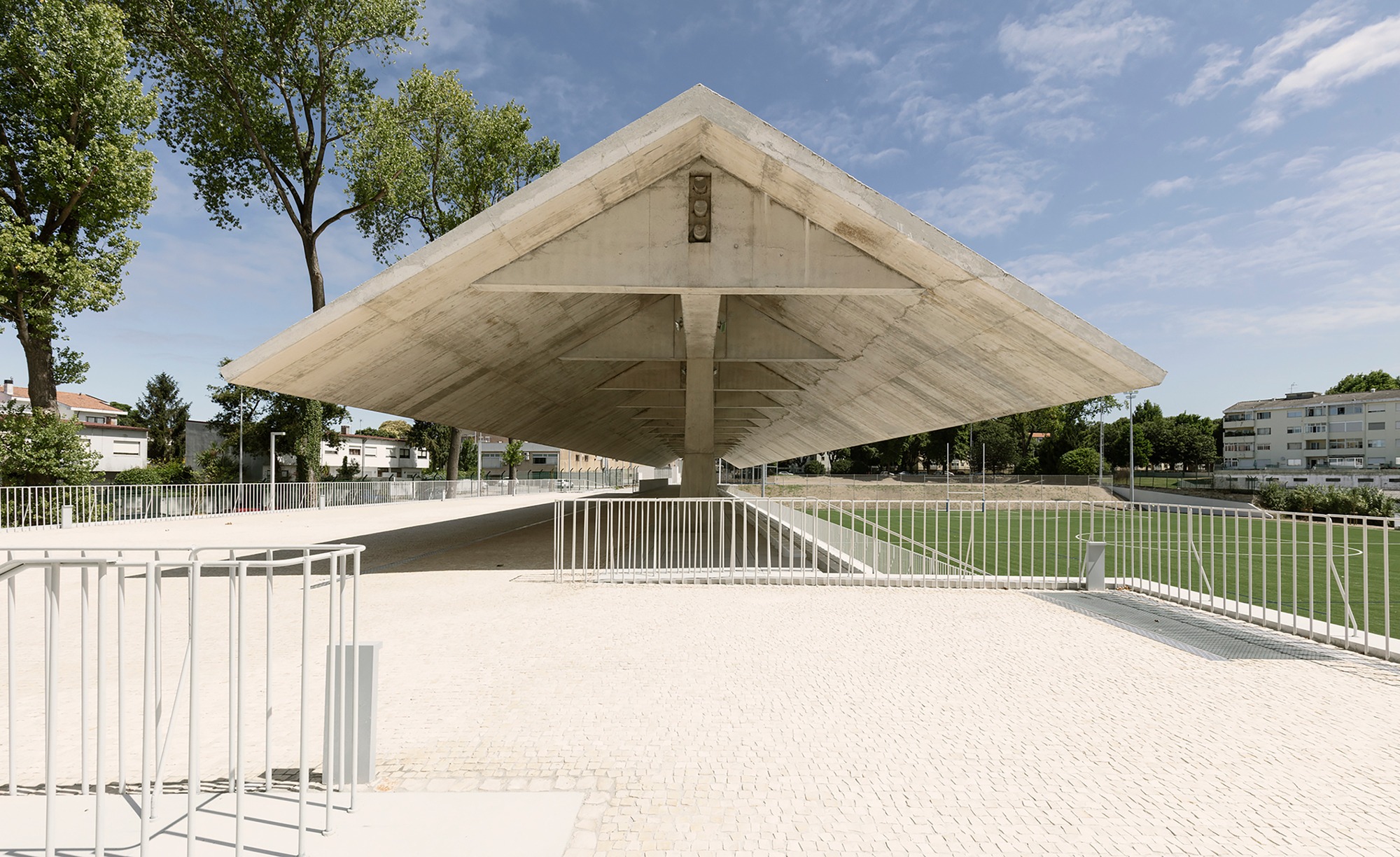
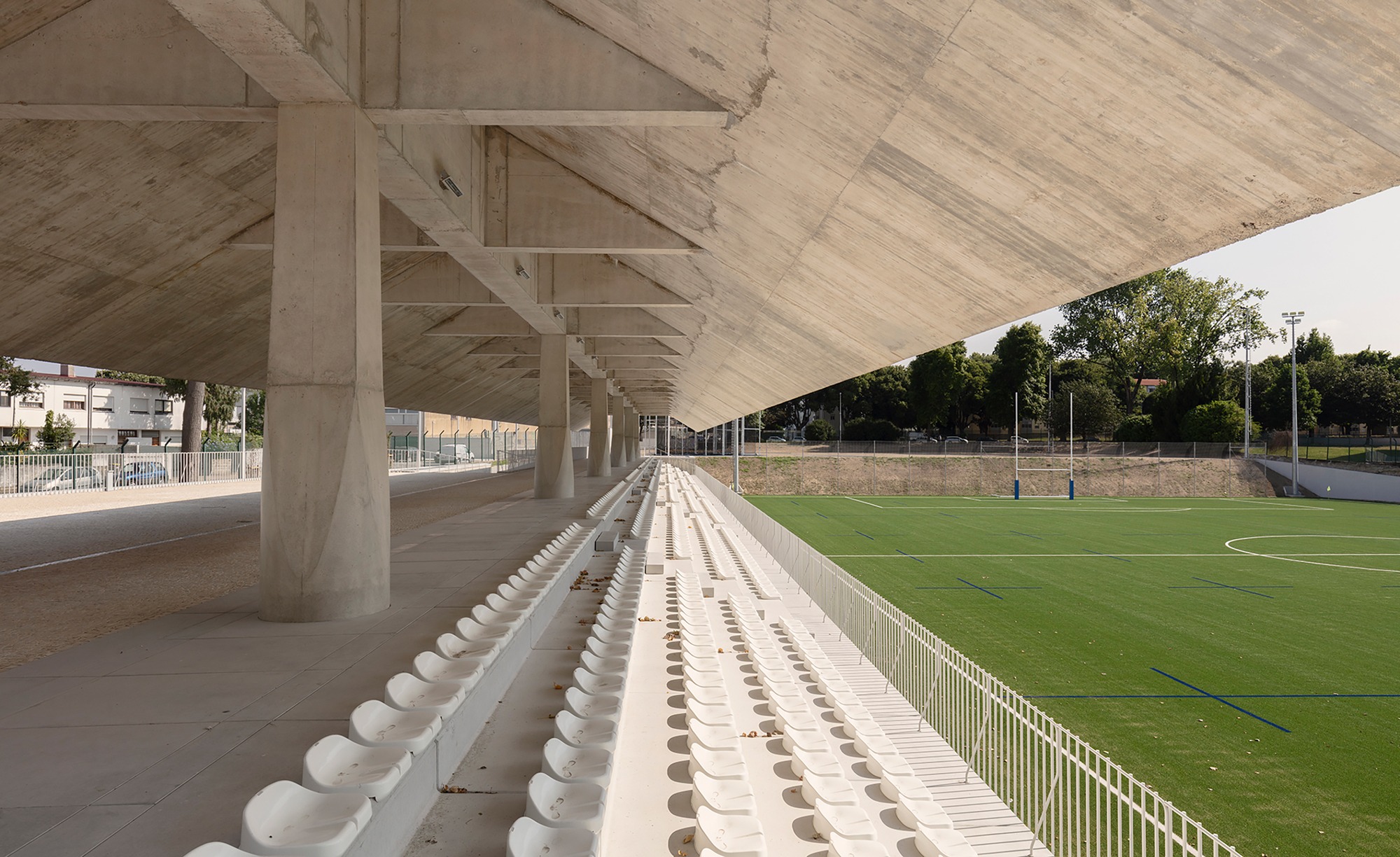
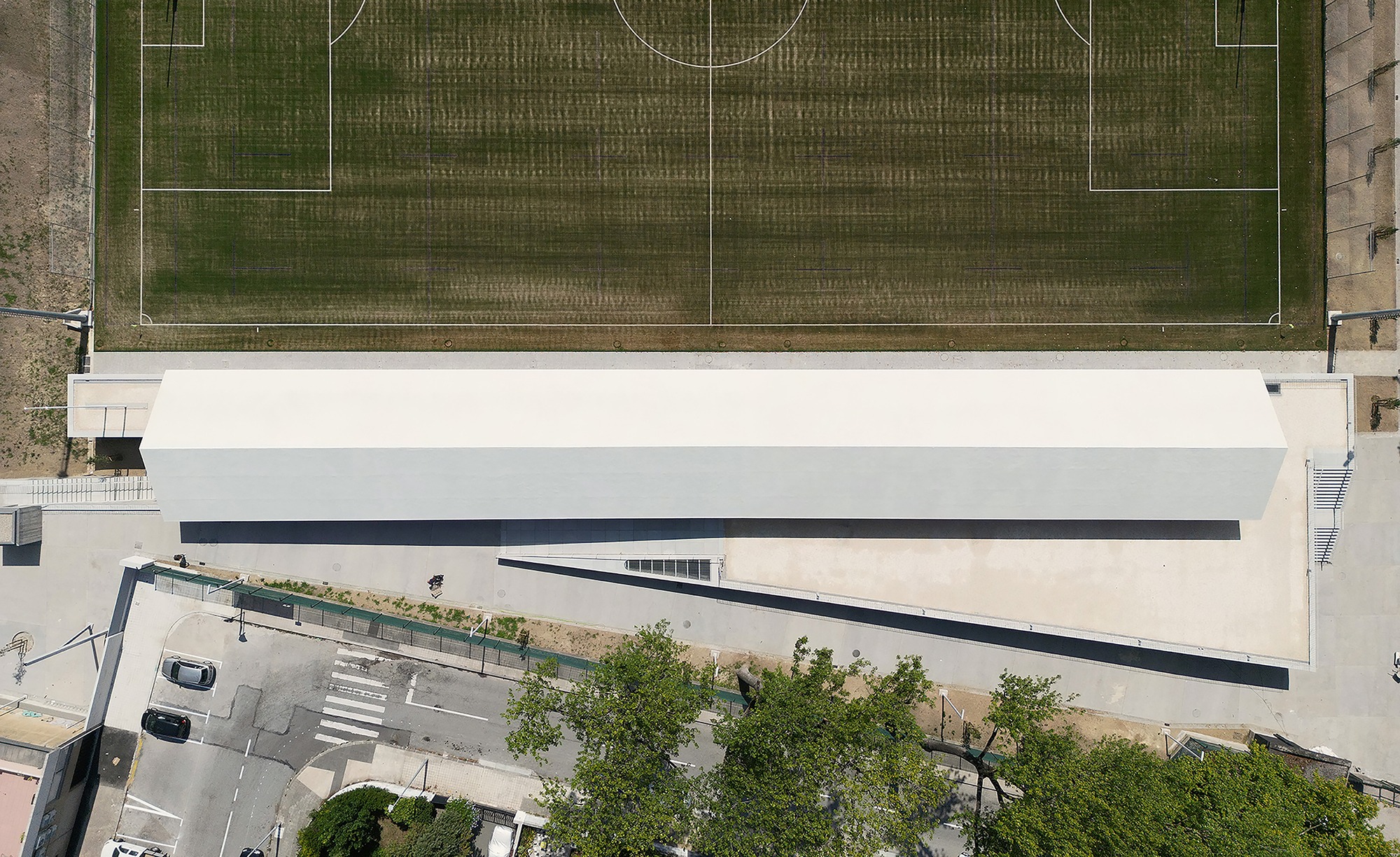
이 건축물의 백미는 단연 관중석을 덮고 있는 거대한 캔틸레버 지붕입니다. 일정한 간격으로 늘어선 콘크리트 기둥들이 연속된 프리스트레스트 보를 단단하게 지탱하고 있으며, 양쪽으로 날렵하게 기울어진 두 개의 경사면이 시각적인 긴장감을 더합니다. 덕분에 묵직한 콘크리트 물성에도 불구하고 마치 중력을 거스르며 공중에 부유하는 파빌리온처럼 경쾌한 조형미를 선사합니다. 나아가 거친 콘크리트 질감 위로 쏟아지는 빛의 변화는 공간에 깊이를 더해주고, 건물을 넉넉히 감싸고 있는 오래된 수목들은 자연의 입면이 되어 건축물과 긴밀하게 호흡합니다. 마침내 대지 위에 오랜 시간 머물러 있던 단절의 흔적들은 이 우아하고도 단단한 구조물을 통해 비로소 온전하게 치유됩니다.
Write by Gemini & Jean Browwn
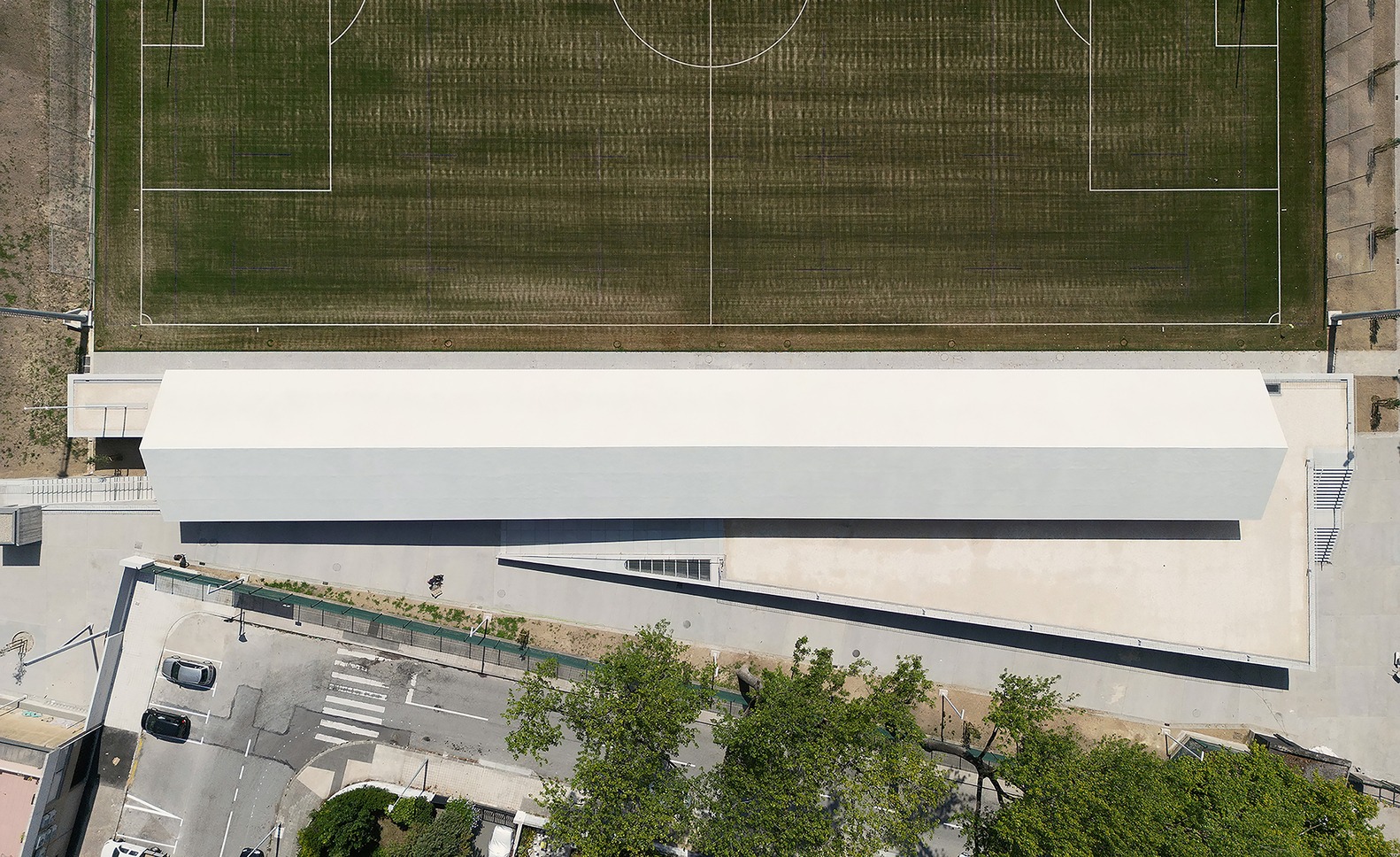
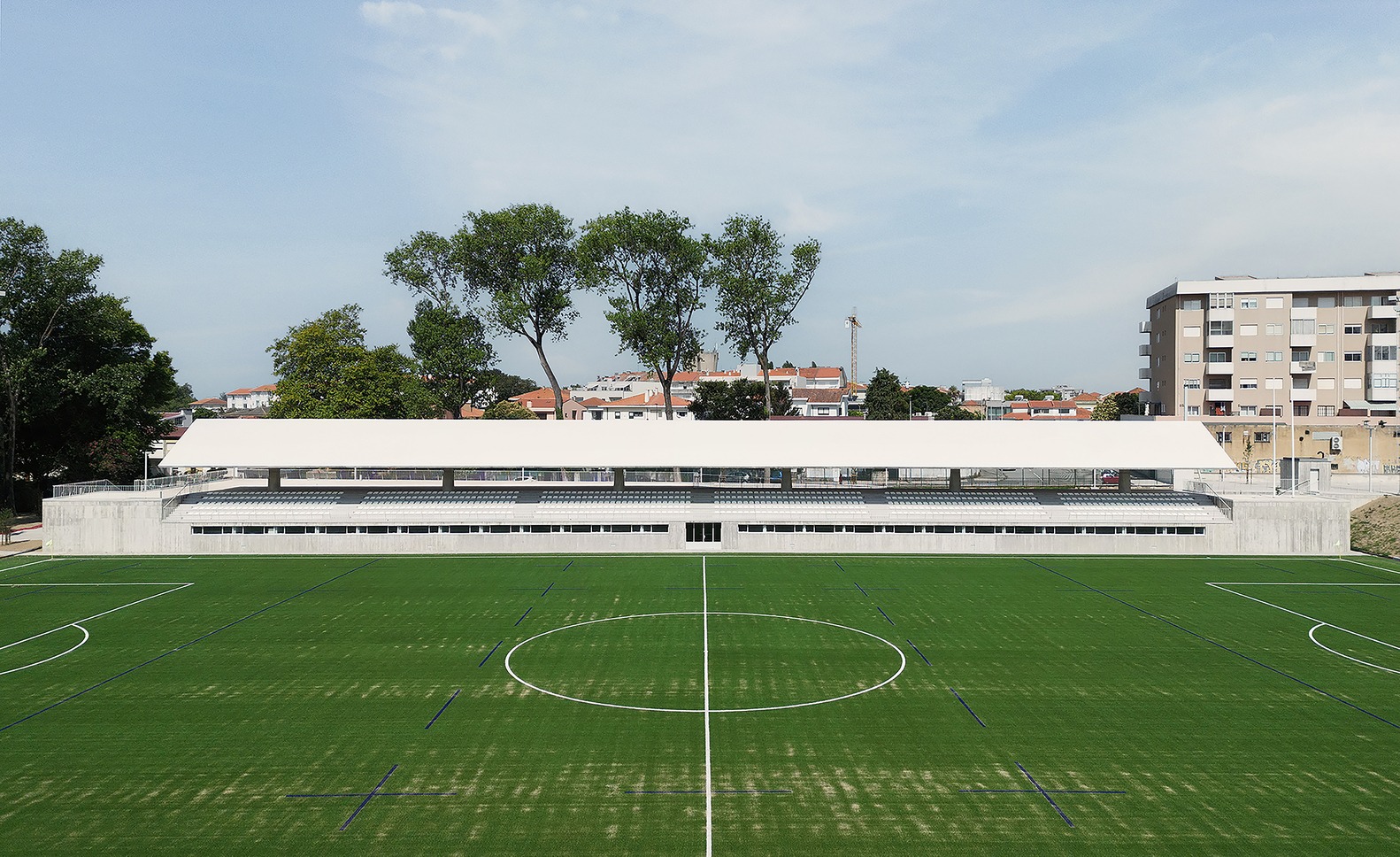
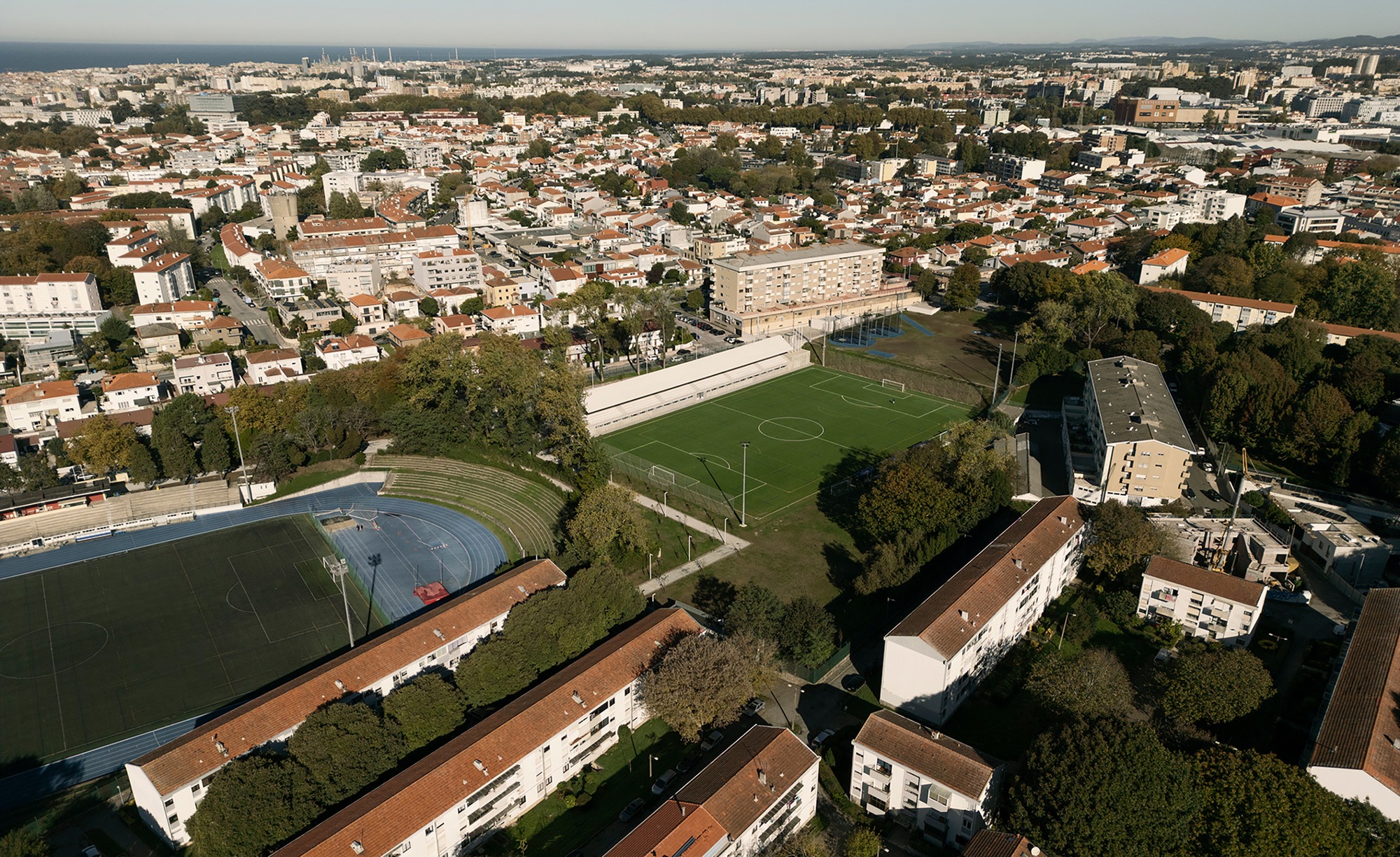
The intervention is located in the northern half of the Ramalde Sports Park, comprising the construction of a new field for rugby and football, a support building with locker rooms and a covered stand, an athletics area (for shot put, hammer throw, and javelin), and a space dedicated to archery.
The Ramalde Sports Park is situated in the heart of the Ramalde Residential Unit and occupies an area of 5 hectares. It was initially designed between 1952 and 1960 by the architect Fernando Távora, within the framework of the Ramalde Residential Unit project, promoted by the Federation of Social Security Funds. The original project was later modified by FNAT (Fundação Nacional para a Alegria no Trabalho), which outlined an ambitious plan for the construction of several sports facilities, of which only the football stadium and tennis courts were built. The areas to the north and south of this central core remained undeveloped.
The placement of the new playing field constitutes the structural element of the intervention, due to its size and functional requirements. The remaining program areas were organized around this central field. The new support building is directly related to the topographical intervention carried out for the installation of the playing field. Its volume is progressively revealed towards the southern end, where the main entrance is located, associated with a bar that opens onto a covered entrance porch. A large platform above the building provides access to the covered stand, positioned tangentially to the playing field.
Inside the building, several functional areas were incorporated, including five locker rooms, a multipurpose hall, administrative offices, a medical post, and sanitary facilities. The interior spaces are organized around a central atrium, resulting from the geometric articulation of the overall design.
The supporting structure of the stand's roof is built in reinforced concrete, composed of a continuous prestressed beam supported by pillars spaced approximately fifteen meters apart. The cantilevered roof, composed of two slopes, gives the complex a pavilion like architectural expression, in close harmony with the natural surroundings and existing trees, helping to mitigate the discontinuities that time has consolidated on the site.
from archdaily