건축의 가장 깊은 경험은 기억 속에 있다. - 페터 춤토르

 |
 |
 |
wulf architekten-Historical Oberamteistraße Museum
도시의 700년 역사를 마주하다
로이틀링겐 구도심, 오베람타이슈트라세 28번지부터 32번지에는 아주 오래된 가옥들이 늘어서 있습니다. 여기에 1972년에 철거된 34번지 석조 저택의 흔적이 더해져, 과거 자유 제국 도시의 가장 흥미로운 건축 유산으로 자리 잡았습니다. 13세기 도시가 처음 생겨나던 시절까지 거슬러 올라가는 이 옛집들은 남독일 지역에서 가장 오래된 주거 형태입니다. 수백 년 동안 사람들이 어떻게 집을 짓고 살아왔는지 그 진화 과정을 생생하게 보여줍니다.
무너지는 시간을 지탱하는 새로운 공간
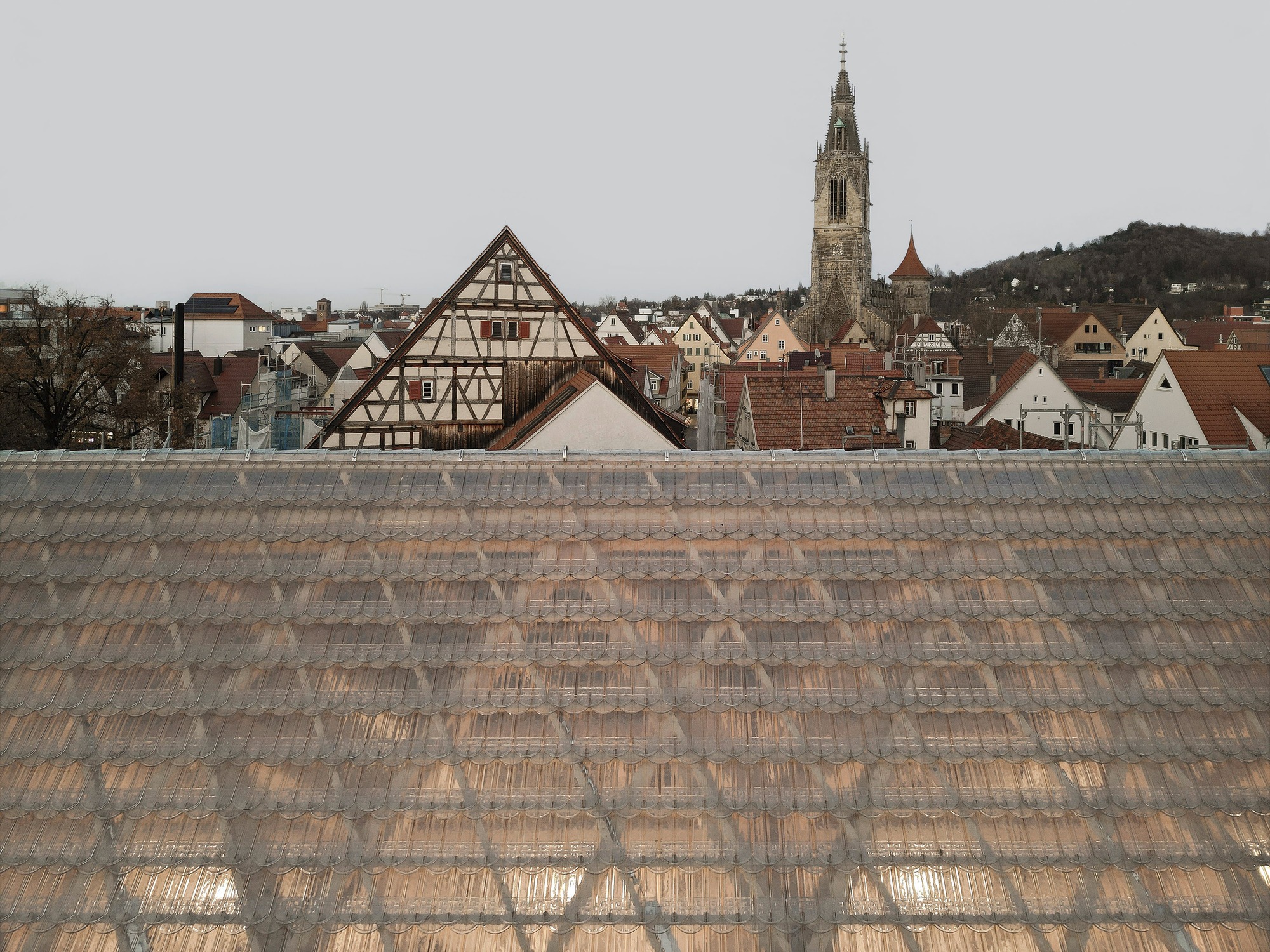
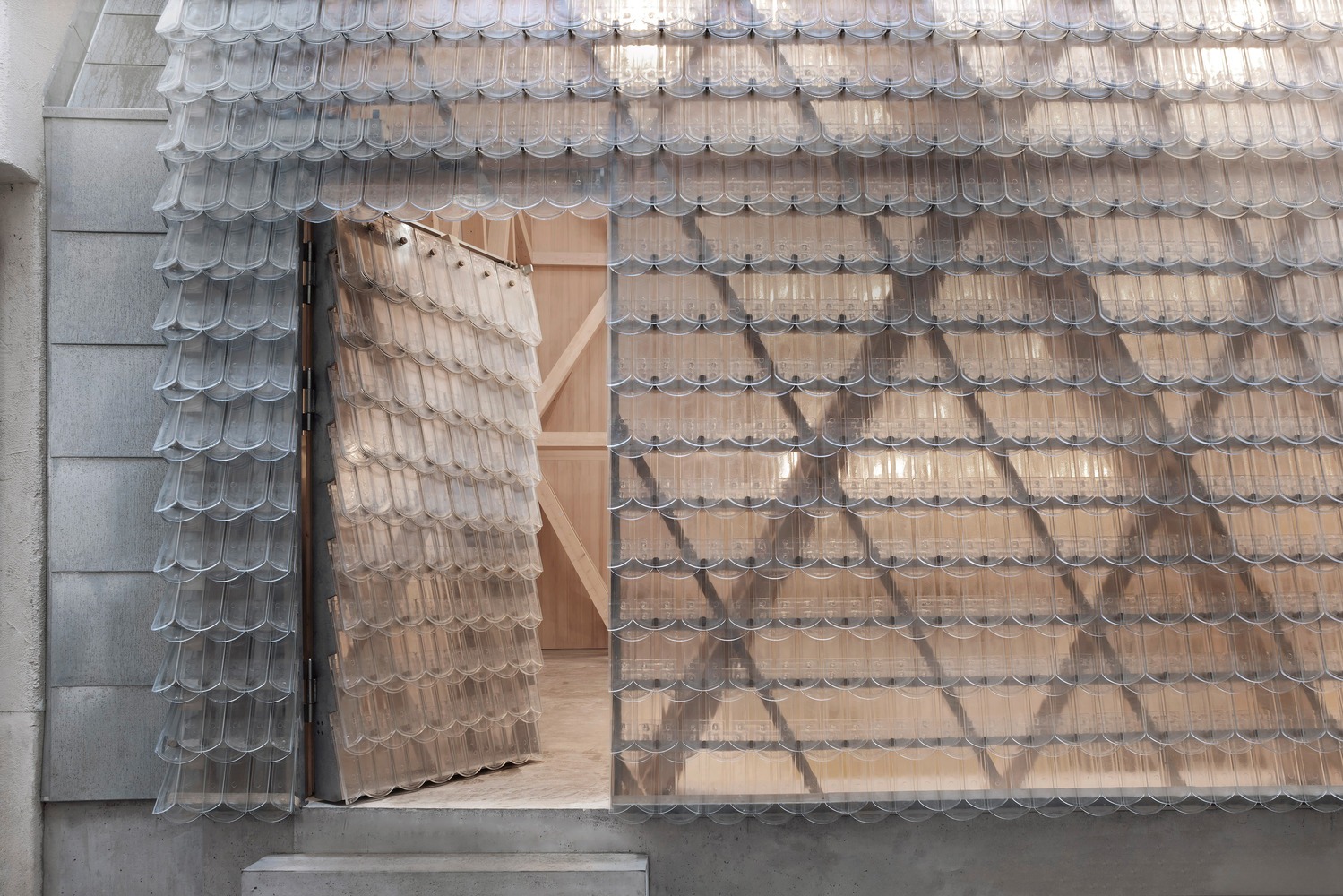
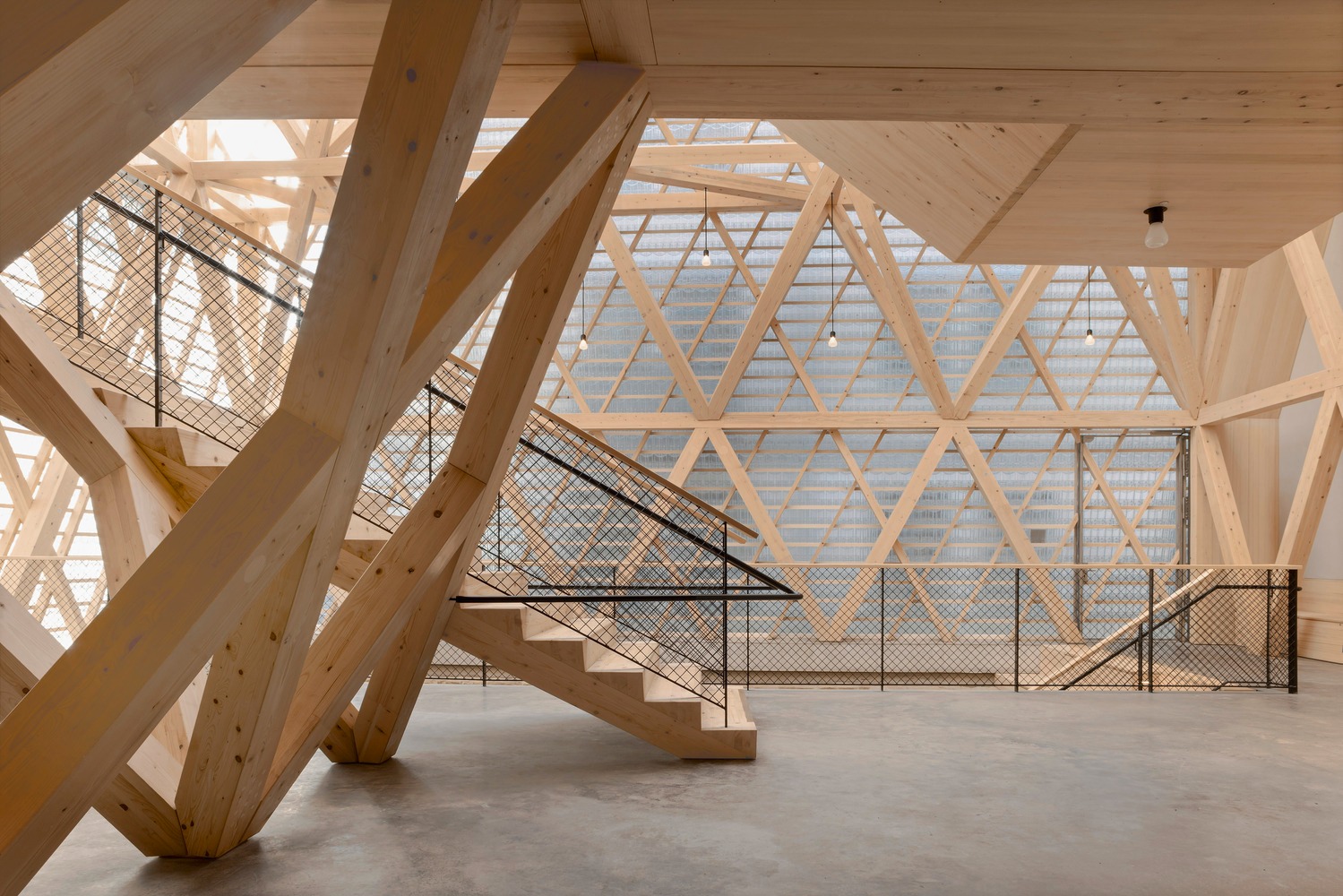
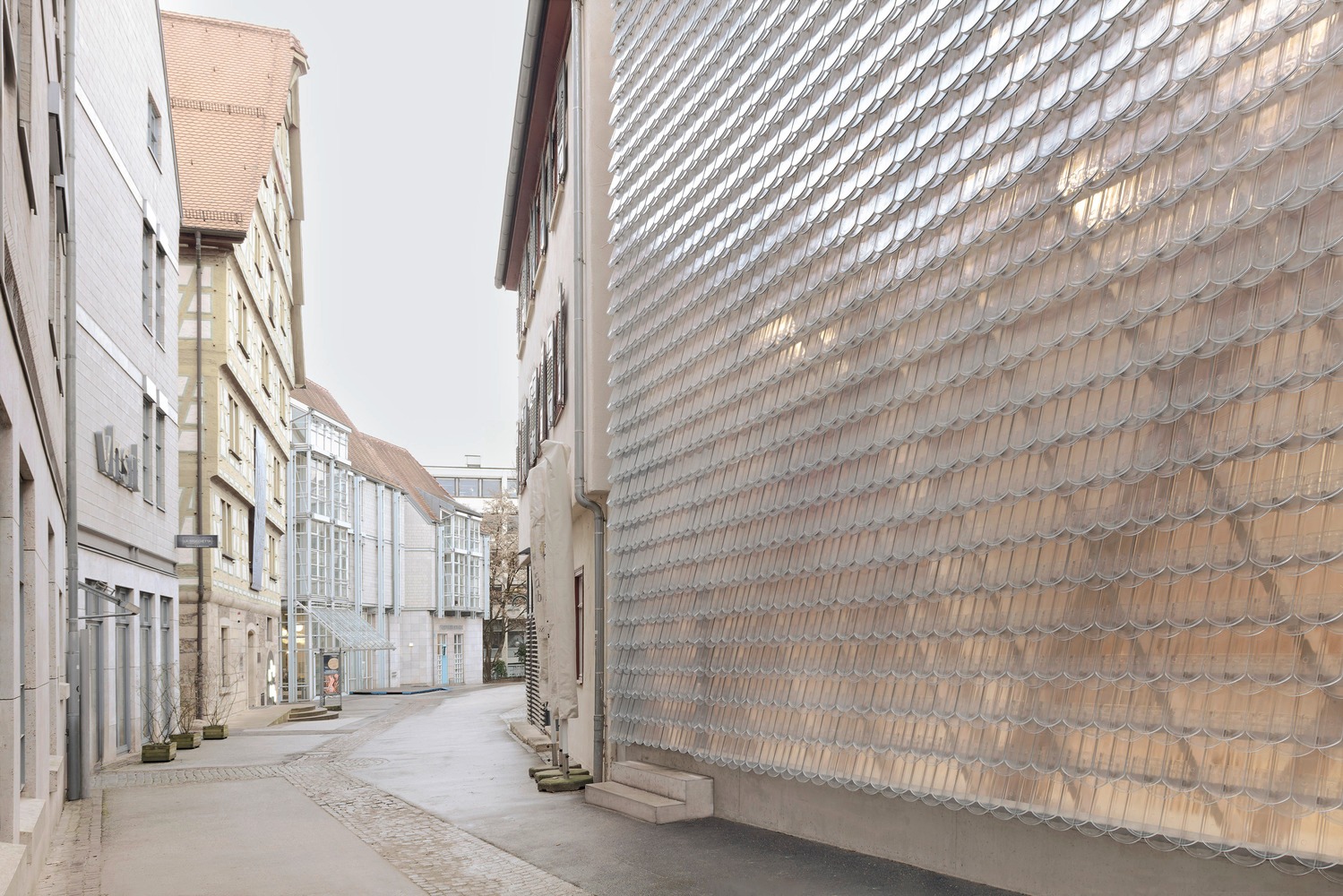
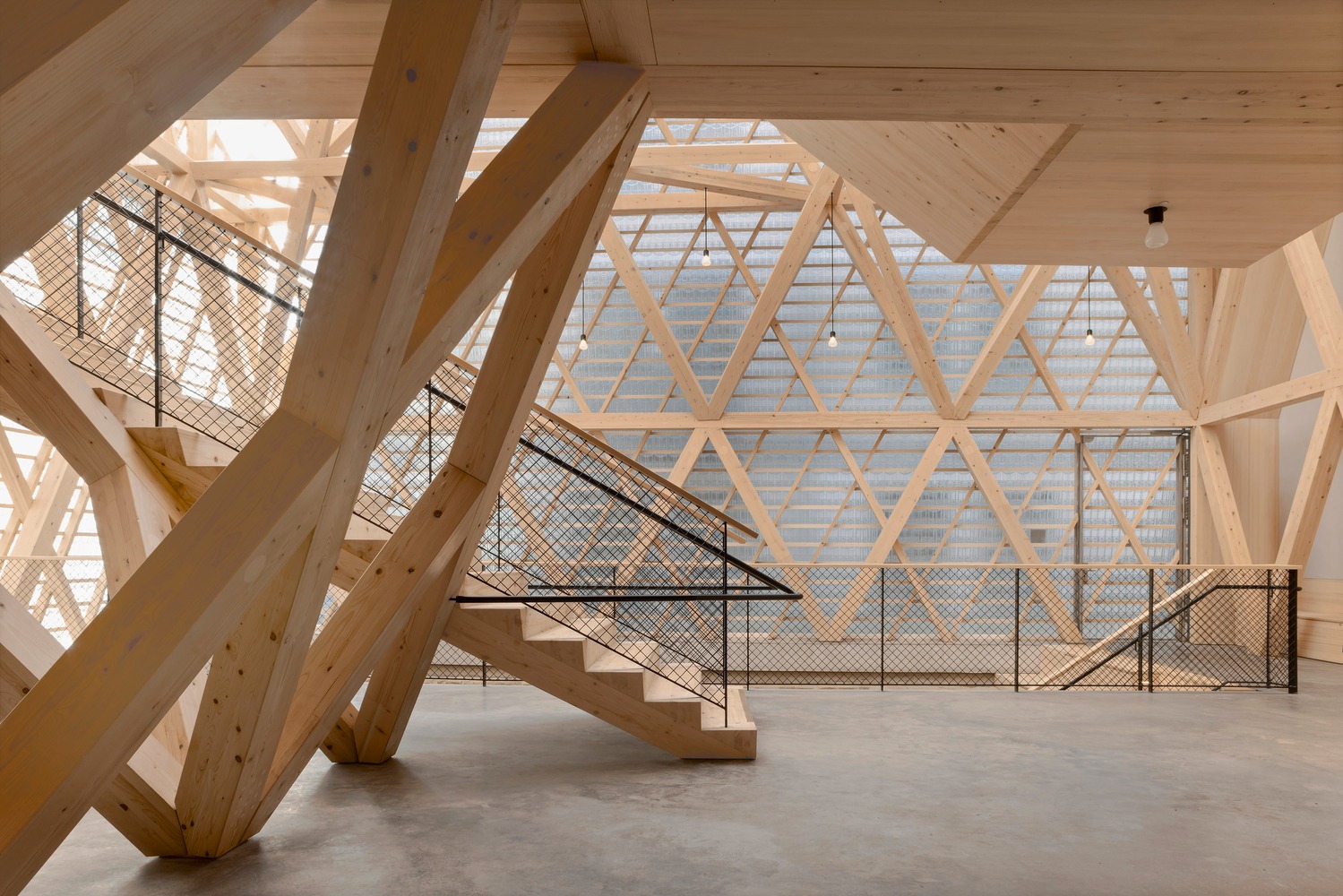
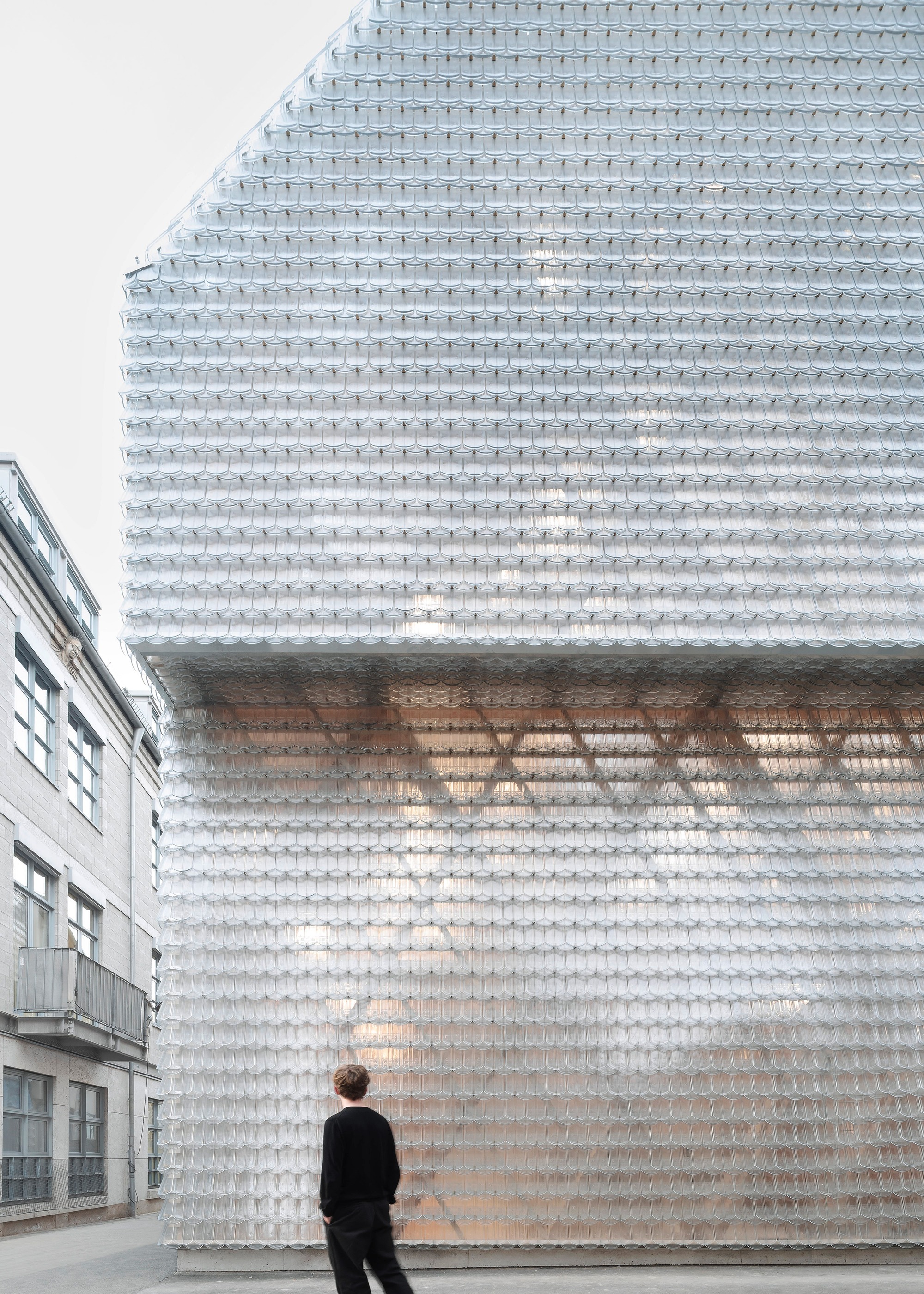
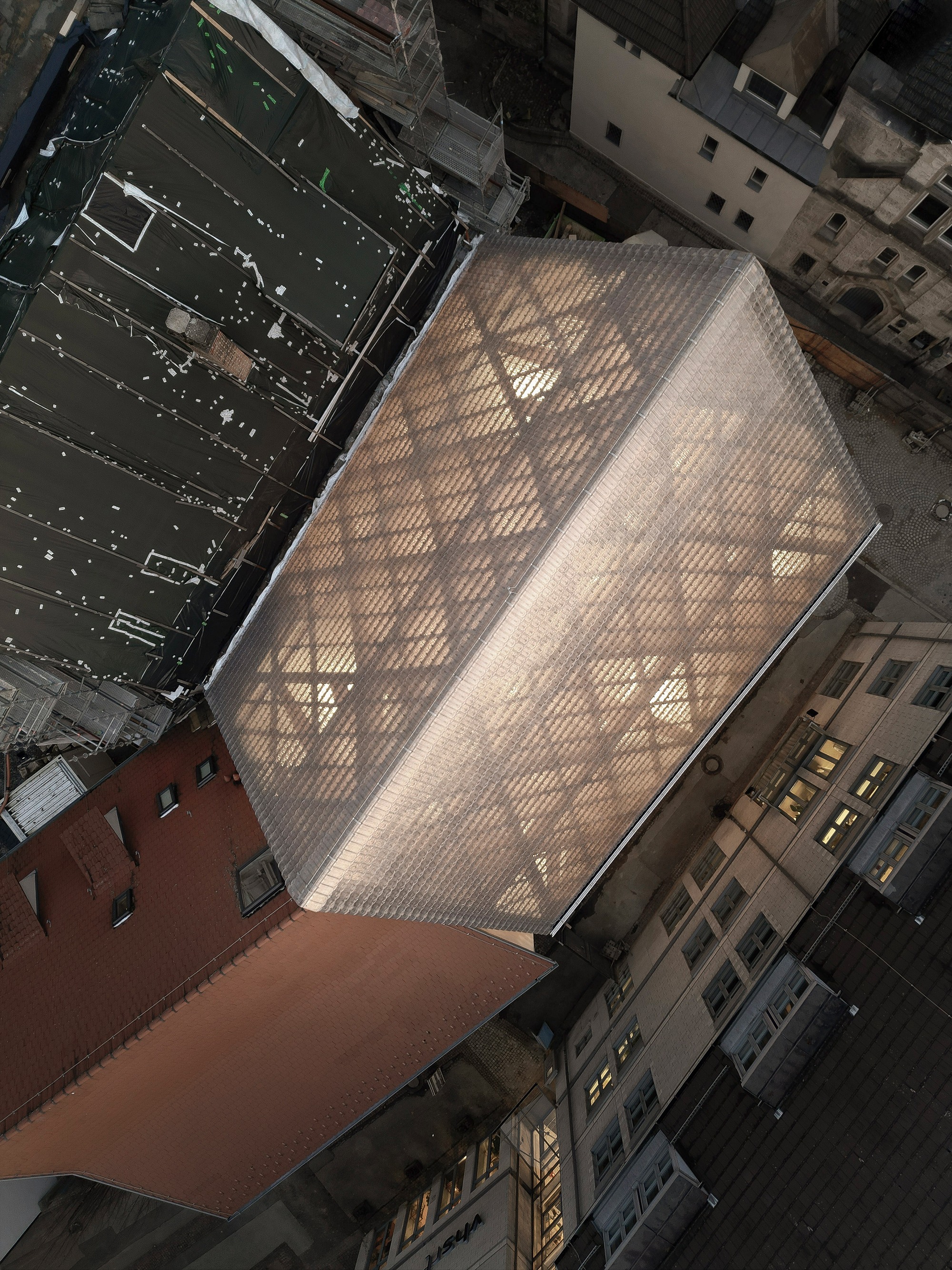
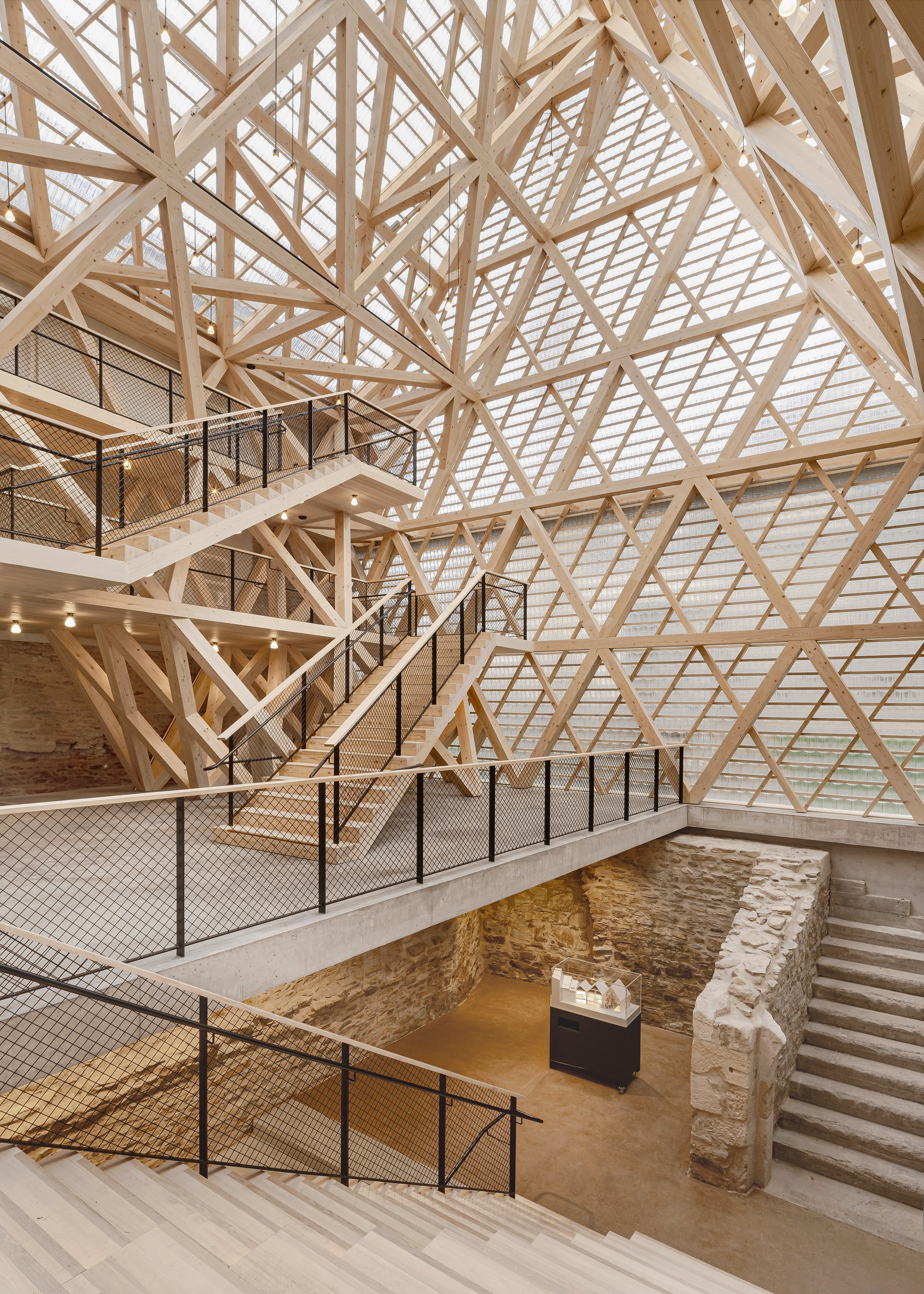
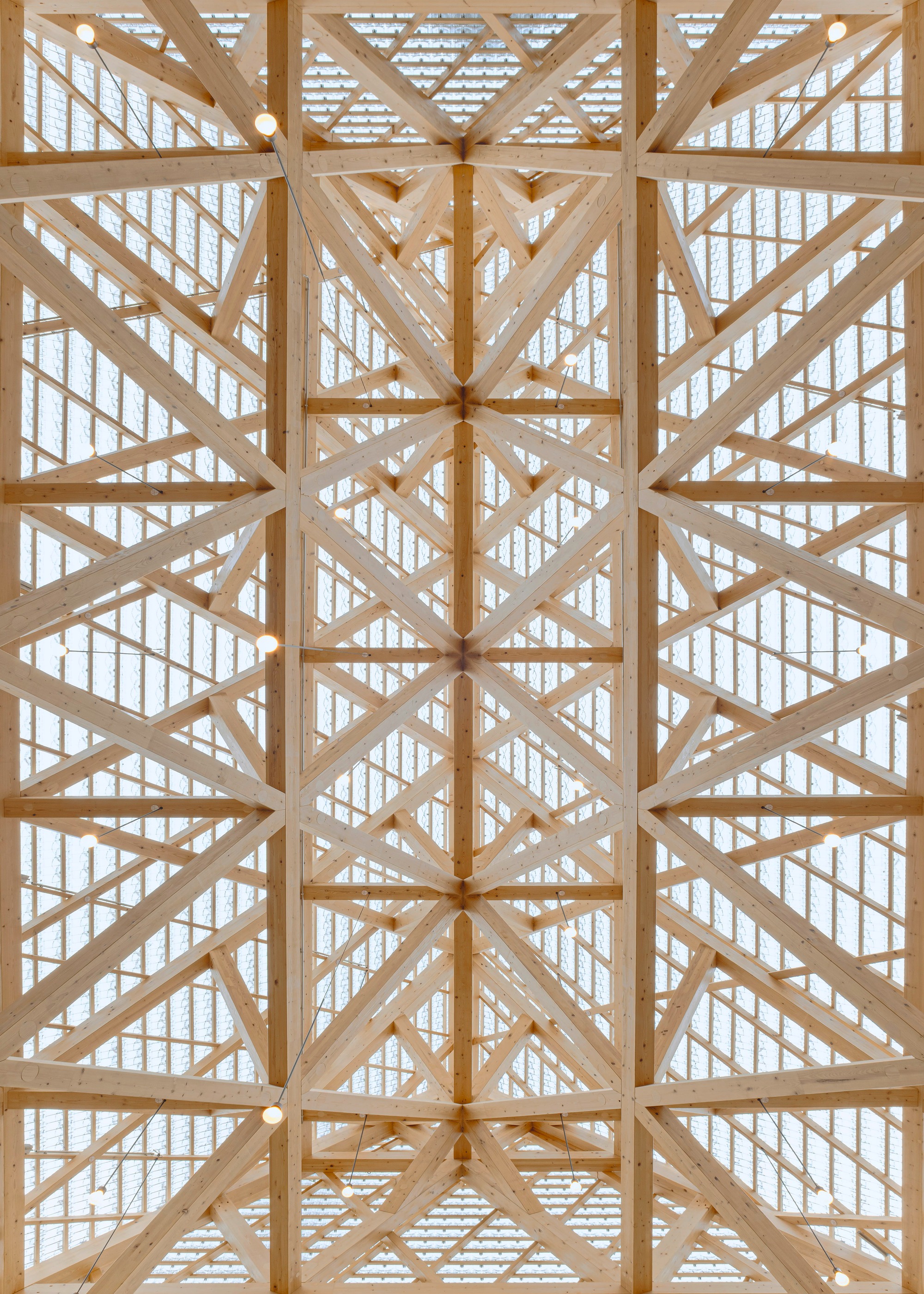
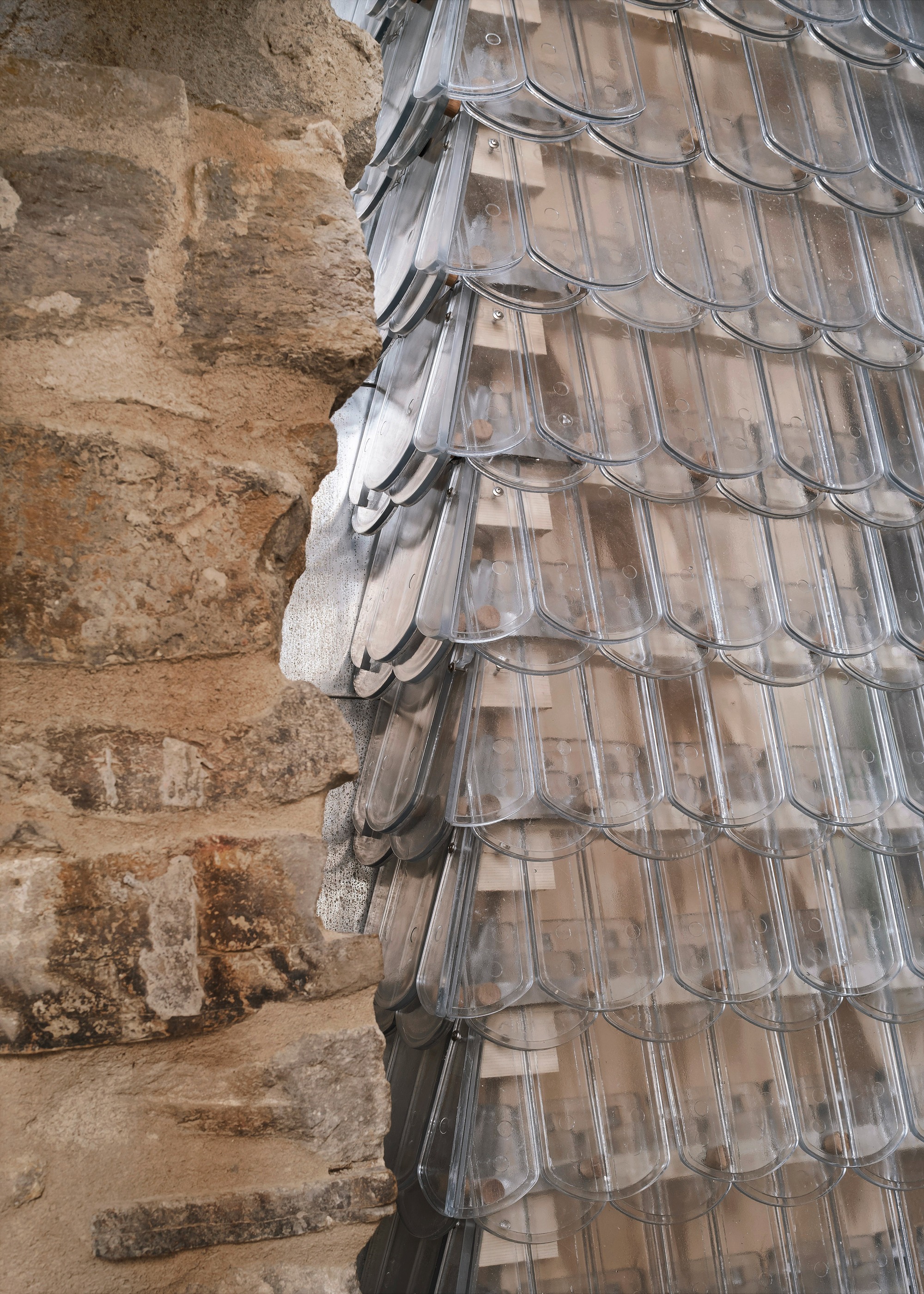
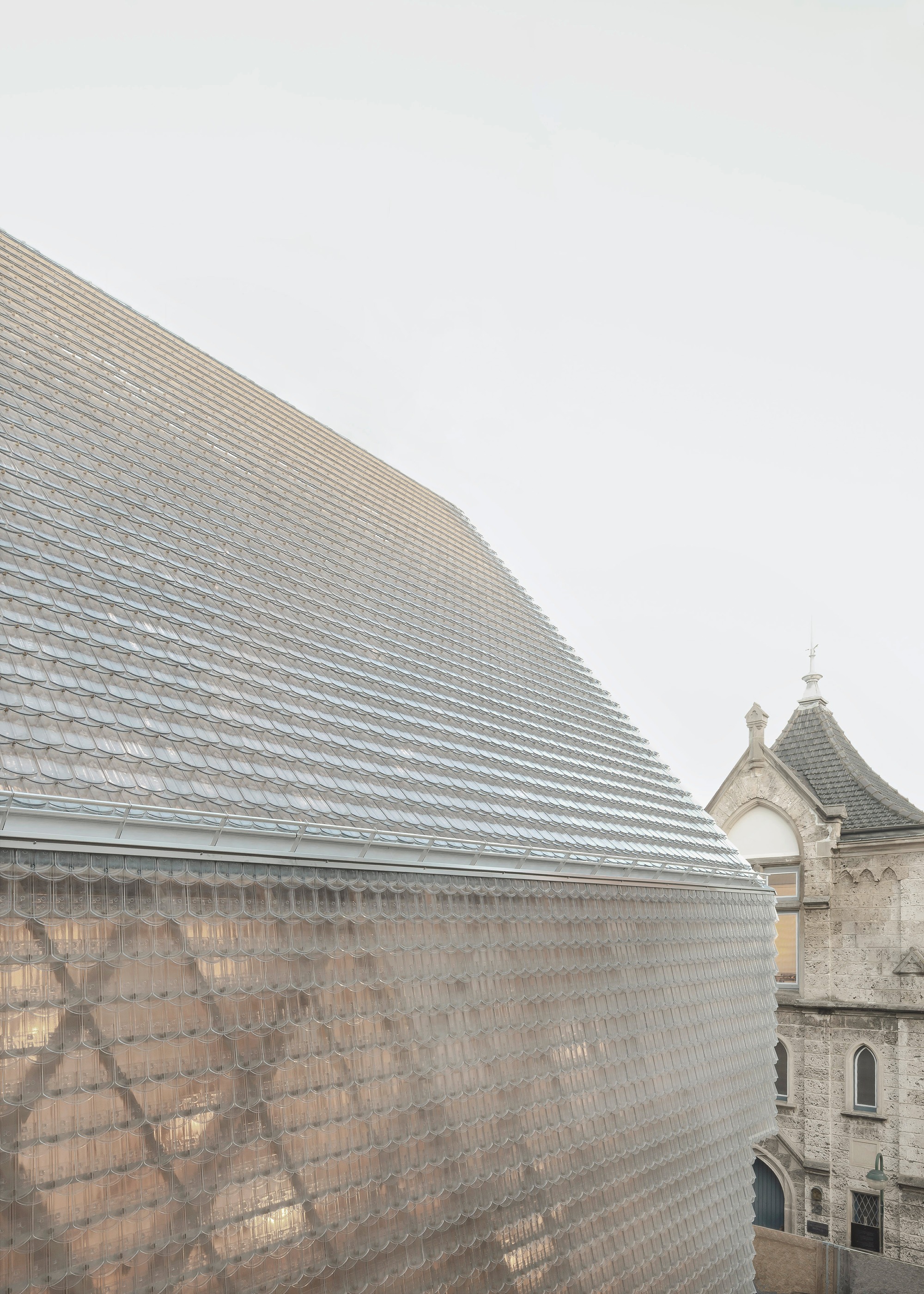
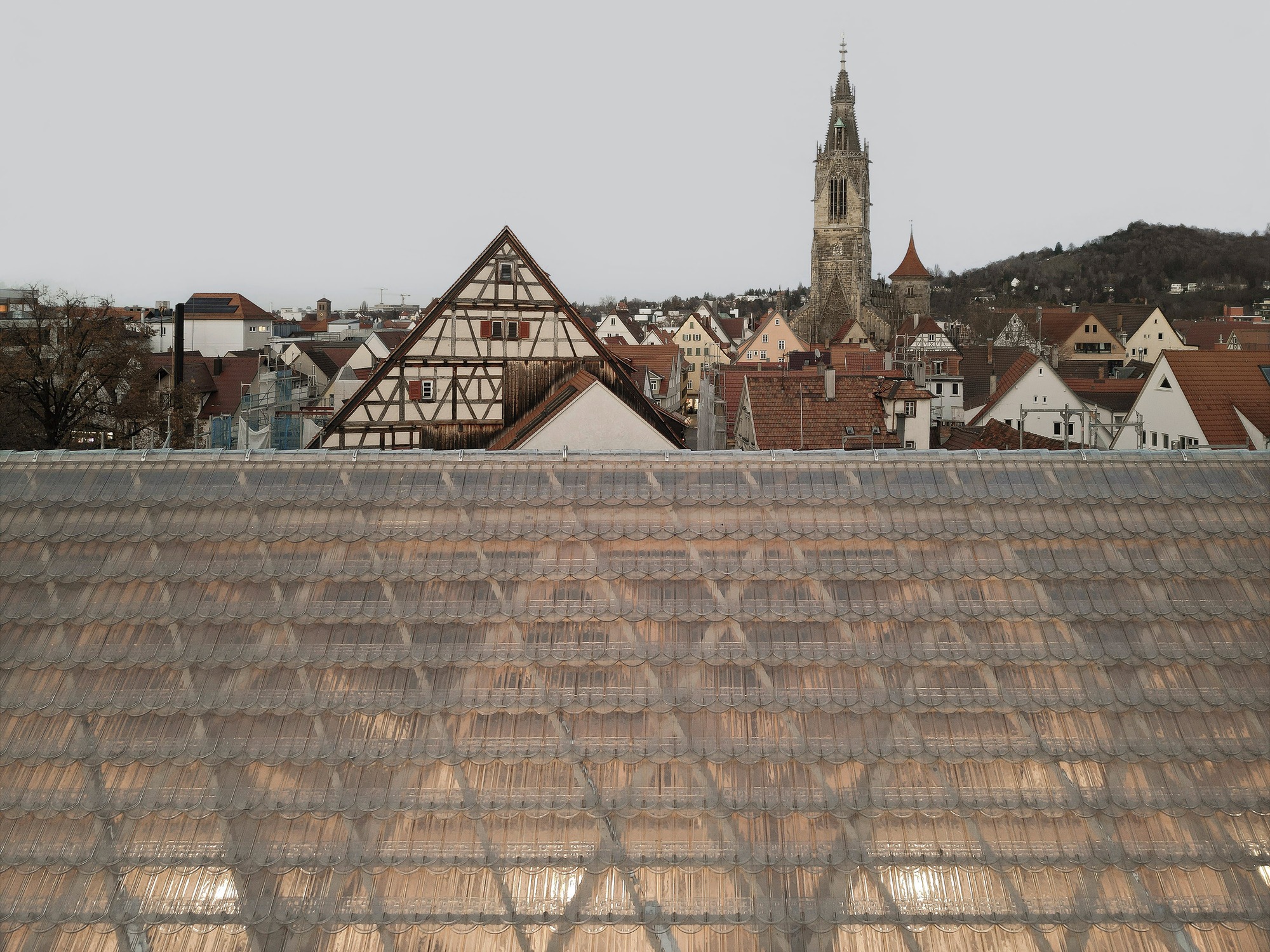
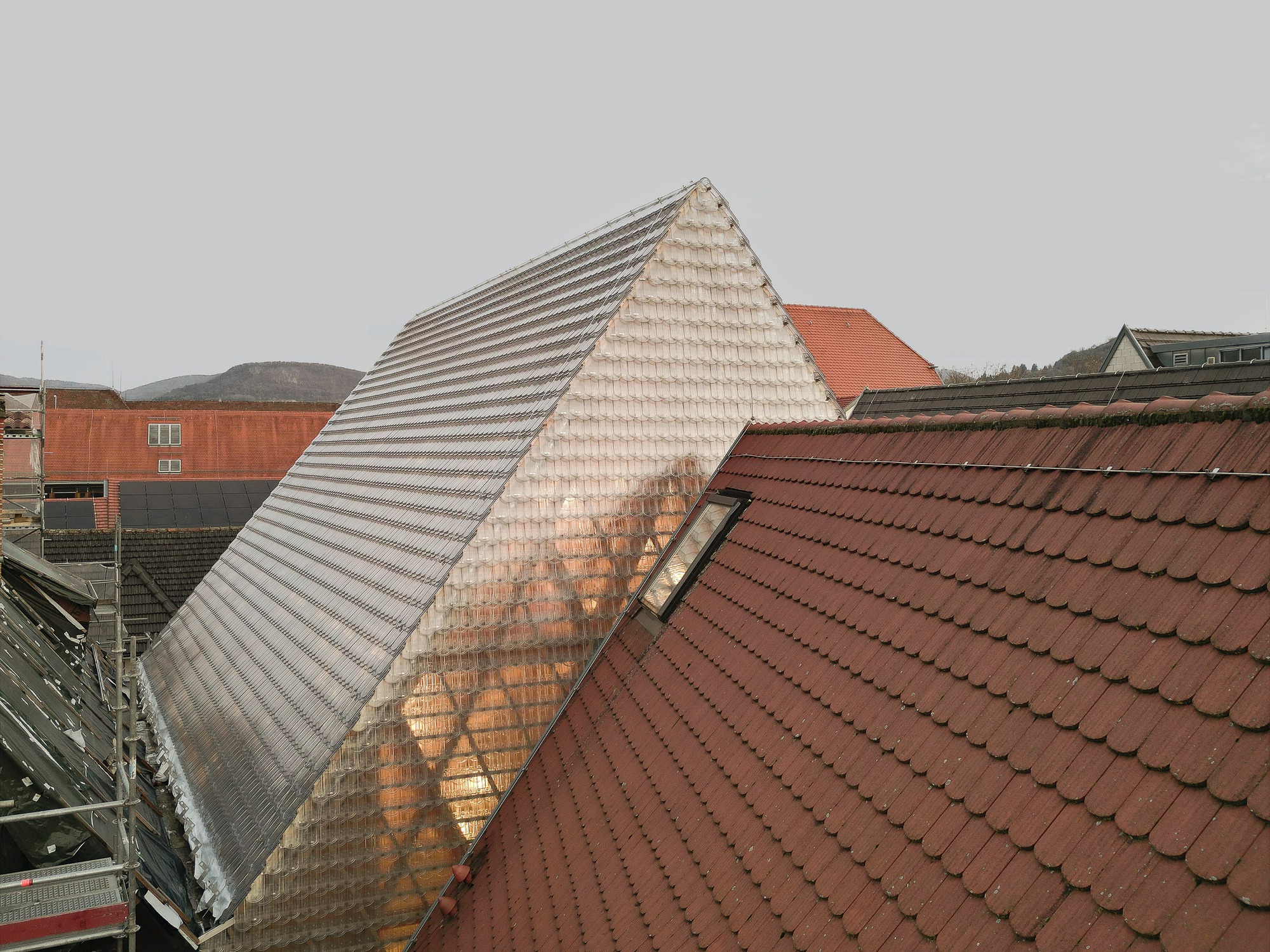
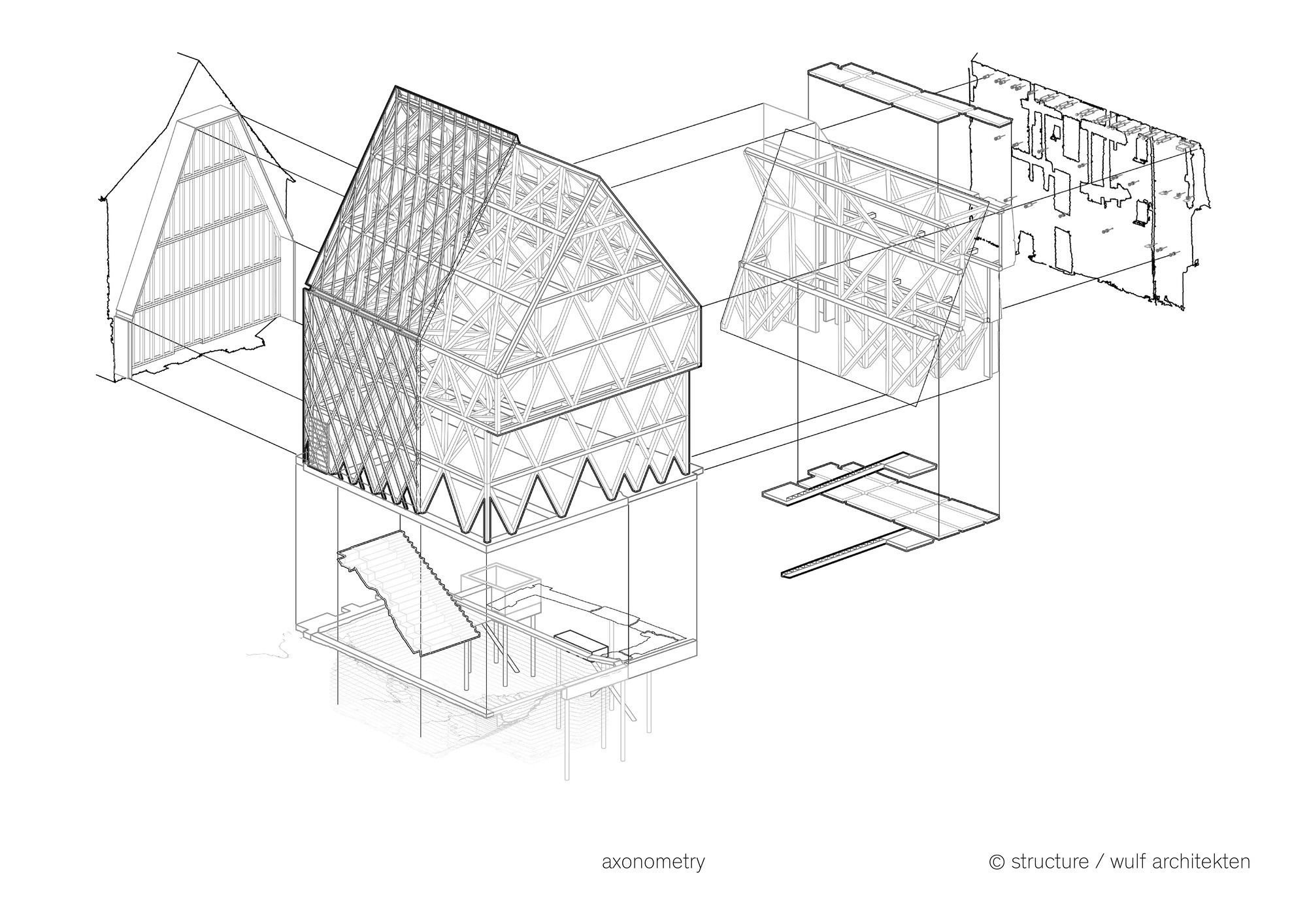
이번 재생 프로젝트는 엄격한 보존 기준을 따랐습니다. 과거 석조 저택이 있던 모퉁이에 새로운 건물을 세웠고, 이 신축 건물이 곁에 있는 위태로운 옛 가옥들을 무너지지 않게 단단히 지탱해 줍니다. 이제 낡은 옛집들은 그 자체로 700년의 도시와 건축의 역사를 증명하는 훌륭한 박물관이 되었습니다. 겉에서 바라본 새 건물의 모습은 차분하고 절제되어 있습니다. 하지만 주조 유리 비버테일 기와가 단정하게 덮인 외피 너머로는 거대한 목조 트러스 구조가 뼈대처럼 자리 잡고 있습니다. 이 뼈대가 잃어버린 과거의 형태를 되살리는 동시에 옛집을 지켜냅니다. 또한, 누구나 쉽게 지나다닐 수 있는 무장애 동선을 내어주고, 사람들이 모여 작은 행사를 열 수 있는 여백의 공간까지 마련해 줍니다.
은은하게 투영되는 공간의 기억
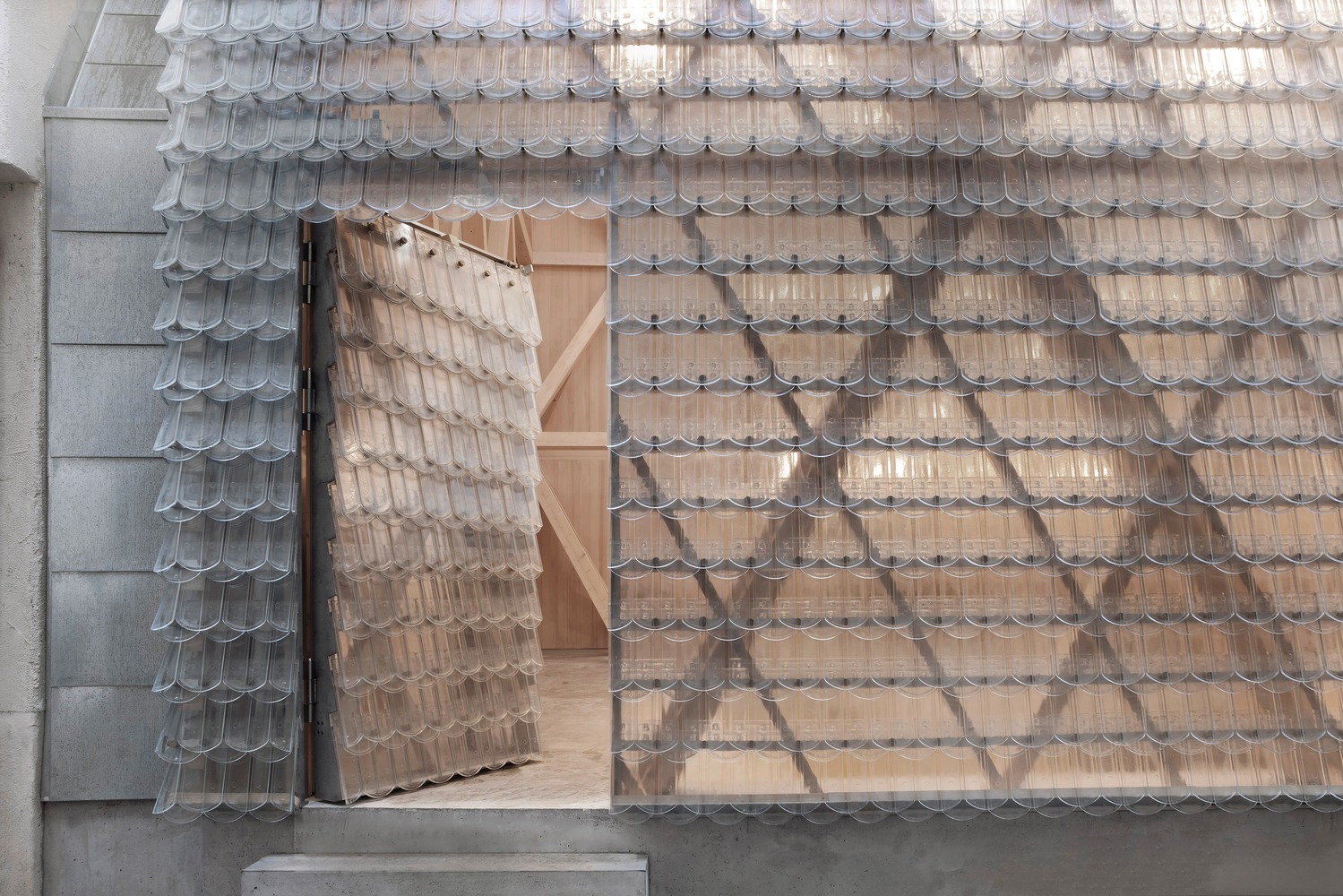
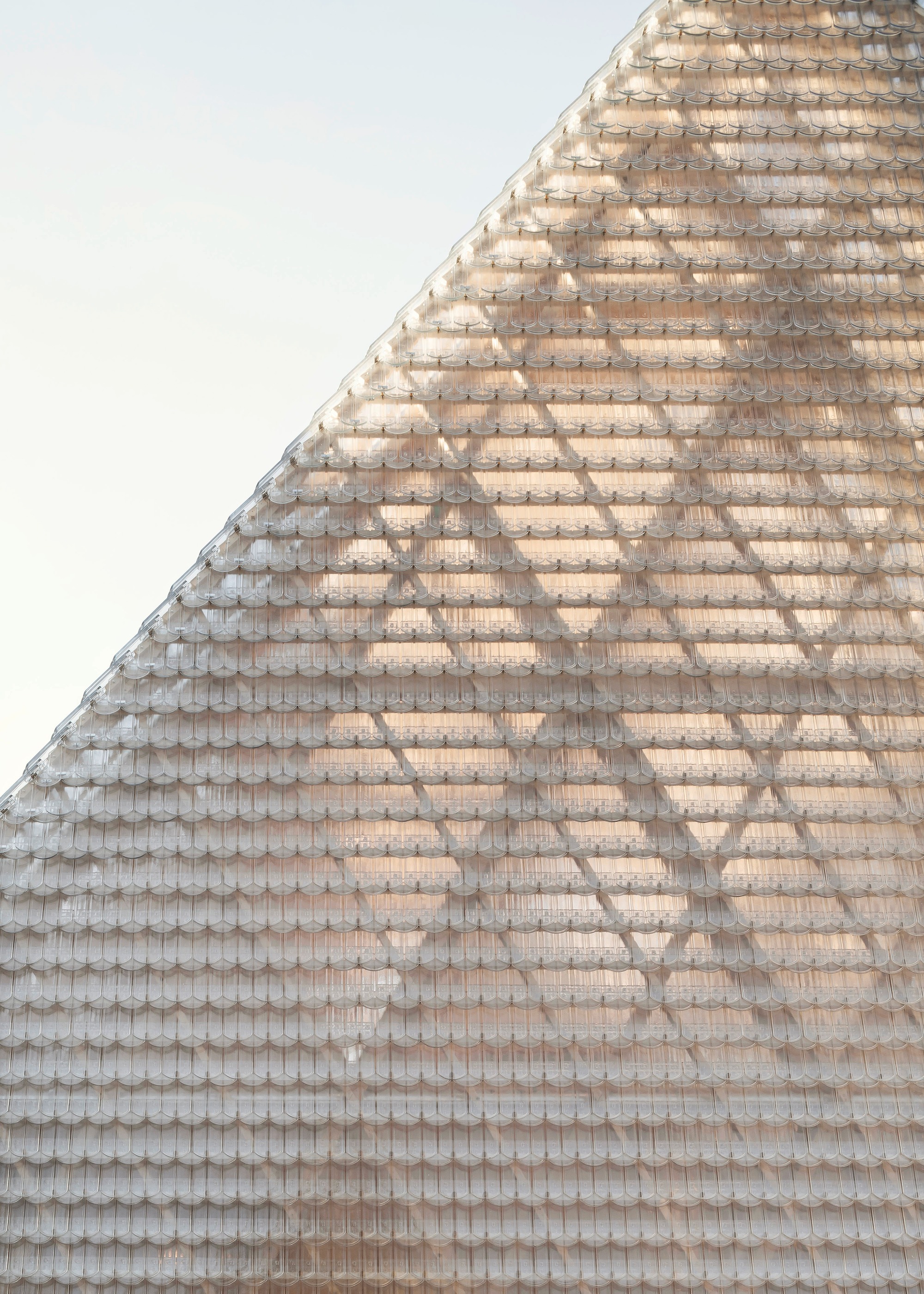
이 건축물이 지닌 진정한 매력은 빛을 통해 비로소 완성됩니다. 밖에서 스며드는 빛의 방향과 유리의 반사율, 그리고 내부 조명에 따라 얽히고설킨 목조 트러스의 실루엣은 시시각각 그 모습을 바꿉니다. 마치 우리 전통 창호지를 통과한 빛이 깊은 공간감을 만들어내듯, 투명하면서도 오묘한 신비로움을 자아냅니다. 새롭게 입힌 유리 외피는 건물 안의 풍경을 아스라한 기억처럼 흐릿하게 비춰줍니다. 옛 저택을 기억하던 사람들의 머릿속 풍경이 이제는 미래 세대의 눈앞에 다시 아련하게 떠오릅니다.
정교하게 짜인 나무와 순환의 철학
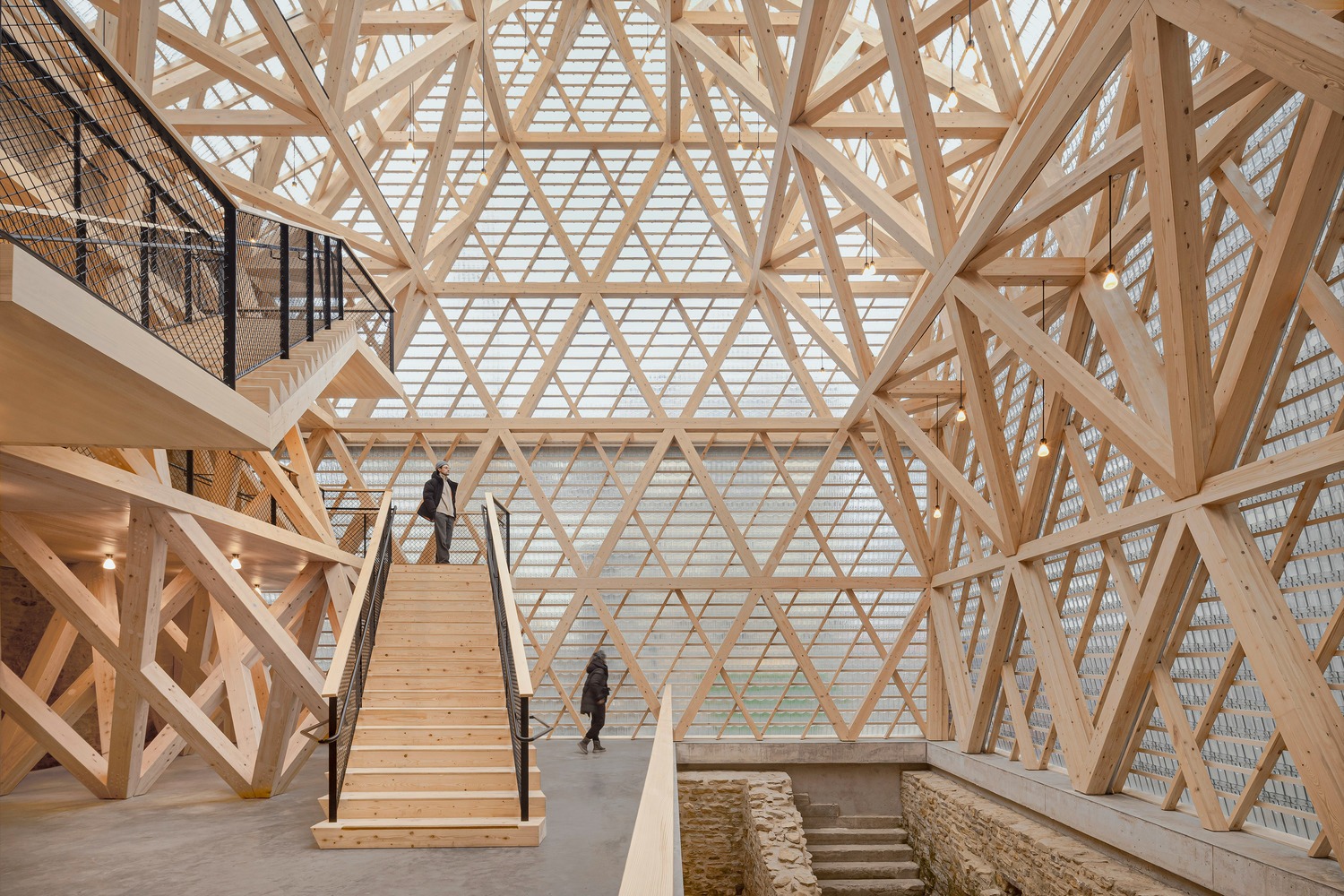
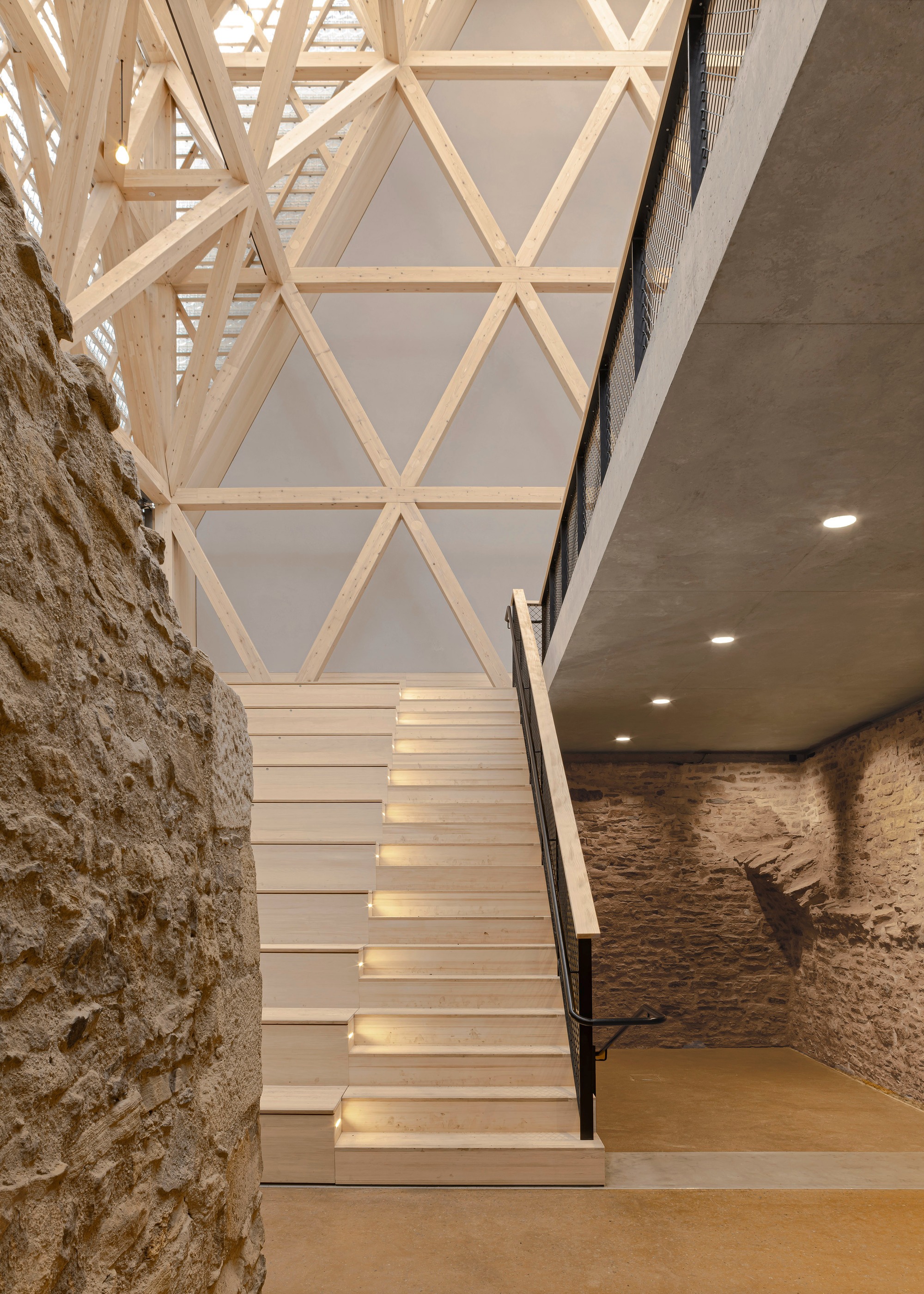
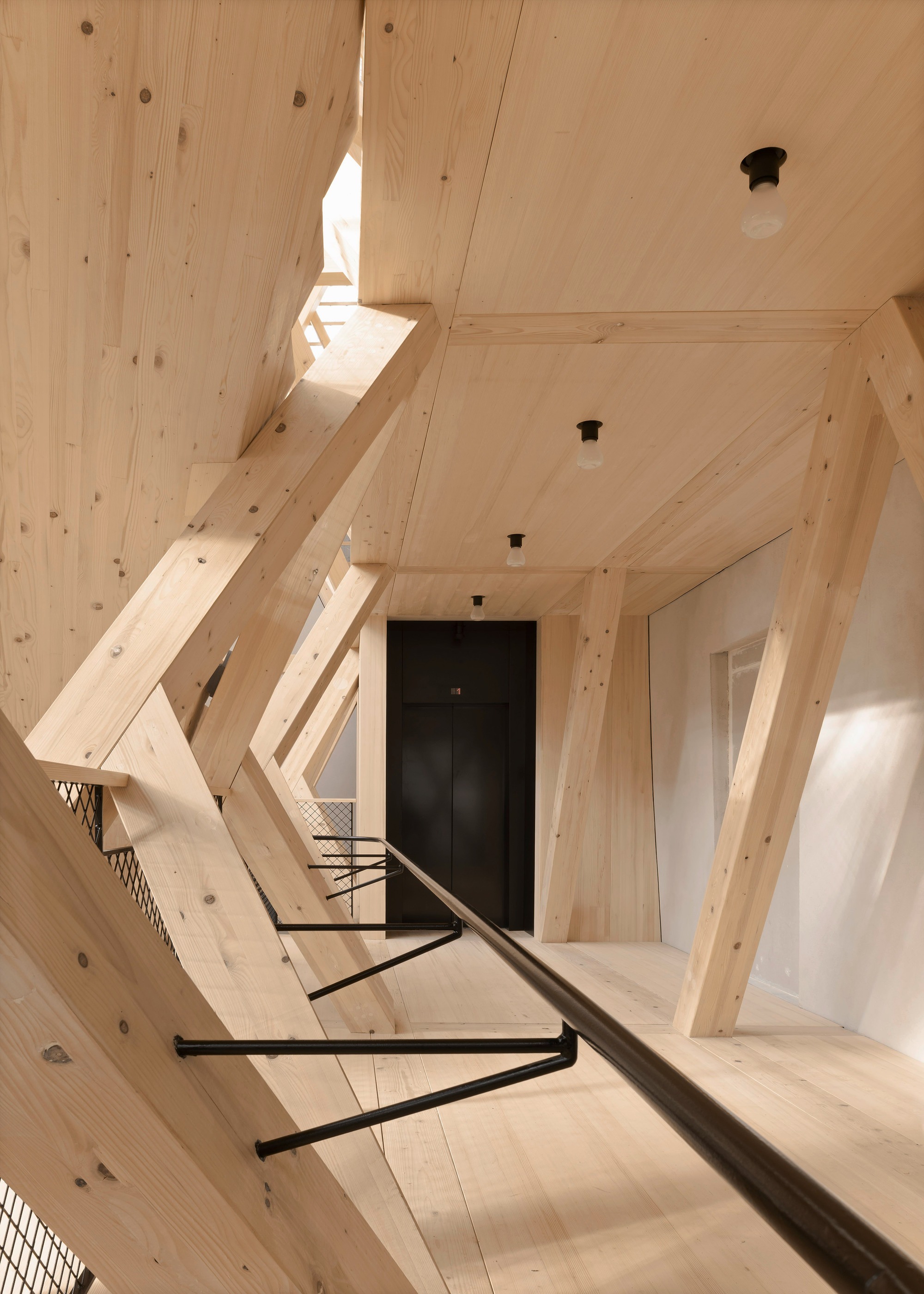
기하학적으로 복잡하게 얽힌 이 목조 뼈대는 철저한 파라메트릭 설계를 거쳐 완성되었습니다. 건물이 지닌 아름다움과 튼튼하게 버티는 구조적 논리가 한 치의 오차도 없이 딱 맞아떨어집니다. 대각선과 수평으로 촘촘하게 교차하며 점점 옅어지는 3중 하부 구조는, 바깥 날씨로부터 건물을 보호하는 유리 기와를 흔들림 없이 받쳐줍니다. 나아가 이 건물은 자연을 향한 짙은 배려를 담고 있습니다. 신축 건물 안에는 별도의 단열재나 억지스러운 냉난방 시설이 없습니다. 건물 자체가 지하에 남은 옛 석조 유구를 보호하는 거대한 덮개 역할을 하기 때문입니다. 파사드 곳곳에 열려 있는 틈새로 바람이 자연스럽게 드나들며 공기를 순환시킵니다. 언젠가 건물이 수명을 다하더라도 다시 자연으로 돌아갈 수 있도록, 모든 나무 부재는 쉽게 풀 수 있는 나사로만 조립했습니다. 환경을 지키기 위해 콘크리트의 사용은 건물을 버티게 하는 아주 기초적인 부분에만 꼭 필요한 만큼 썼습니다. 로이틀링겐의 옛 목조 가옥들을 지켜내고 현대의 언어로 아름답게 풀어낸 이 박물관은, 앞으로도 오래도록 가치 있는 건축적 성취로 기억될 것입니다.
Write by Gemini & Jean Browwn

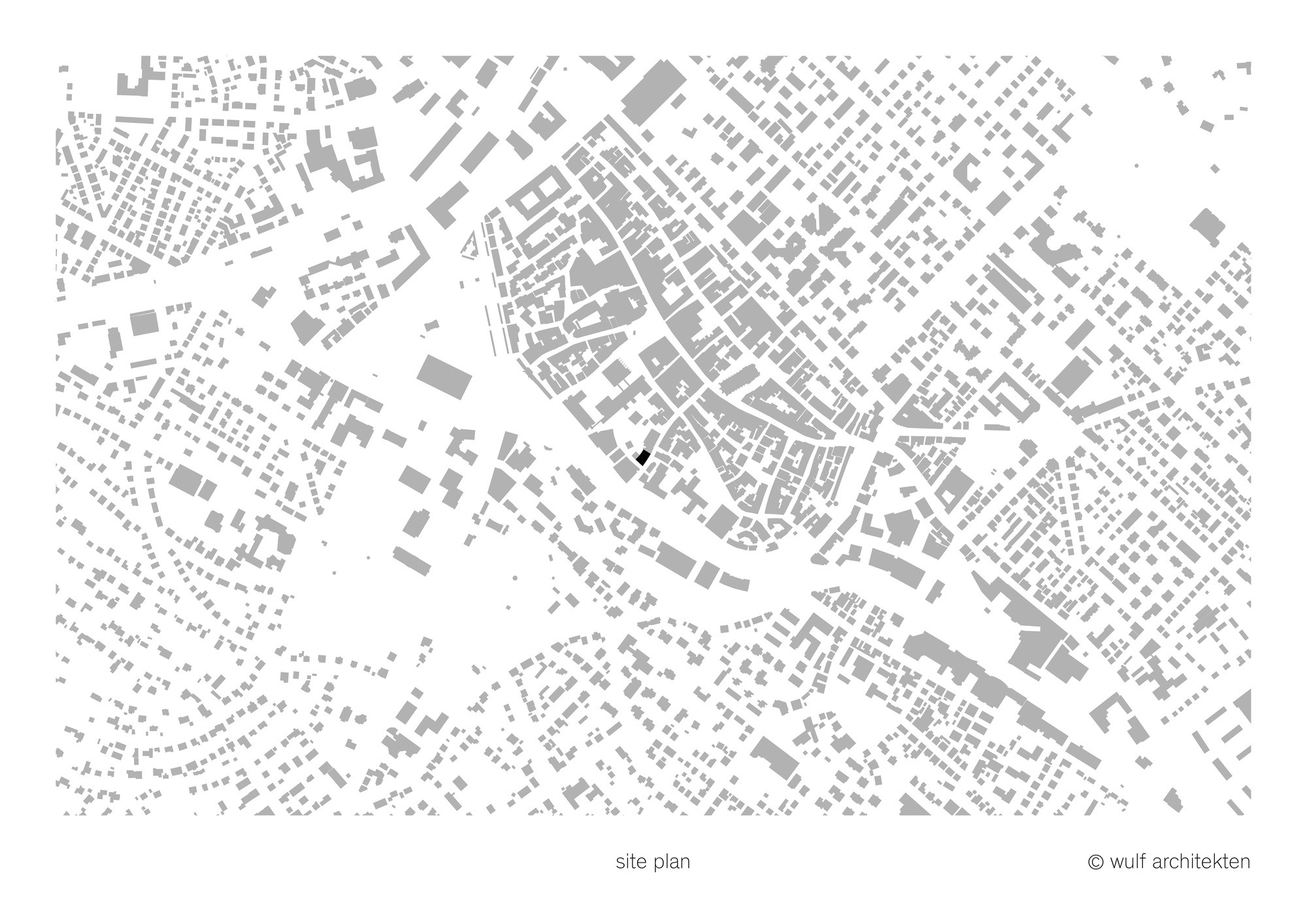
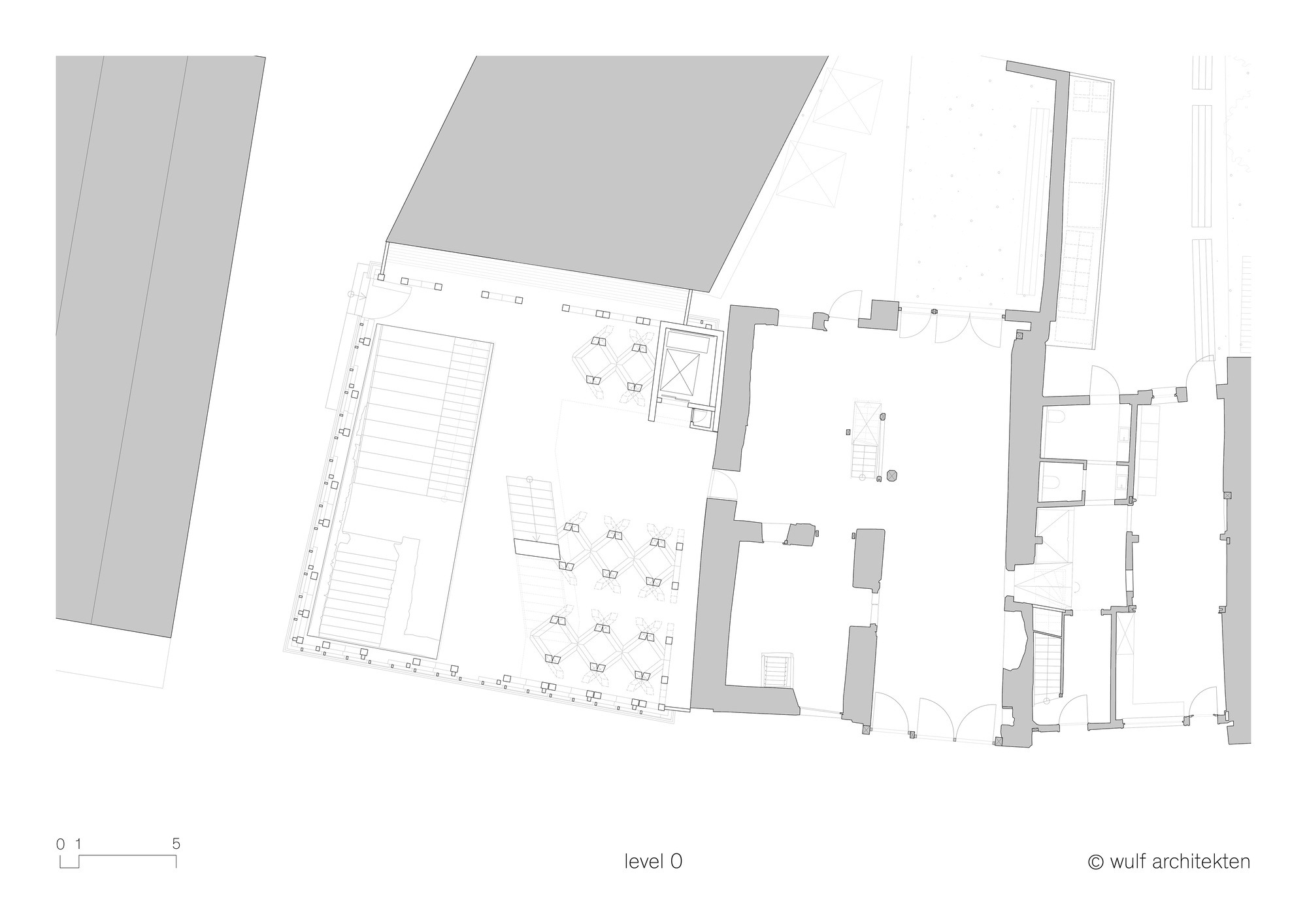
The historic row of houses at Oberamteistraße 28 32, along with the surviving basement of the "Stone House" that had occupied plot no. 34, but was demolished in 1972, are among the oldest and most interesting buildings in the former free imperial city of Reutlingen. These architectural artifacts date back to the 13th century, when the city of Reutlingen was founded. The ensemble is therefore one of the oldest rows of houses in southern Germany, authentically reflecting the development of building and living culture over the centuries.
The rehabilitation, which follows historic preservation criteria, has also required the construction of a new corner building where the former "Stone House" once stood, which shores up the surviving historic ensemble and protects it from collapse. The old buildings serve as a museum and are themselves exhibits, displaying over 700 years of urban, cultural, and architectural history.
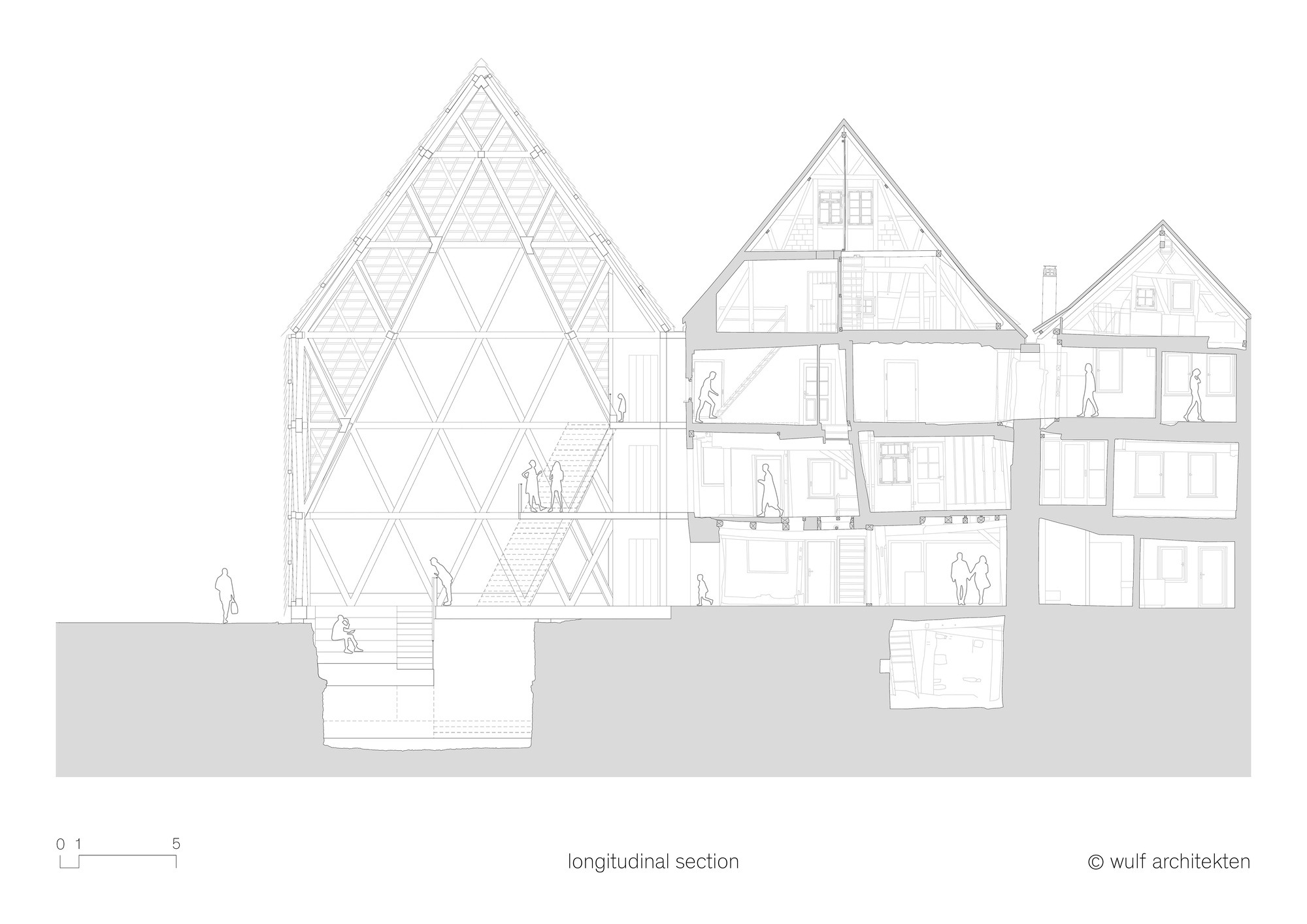
The new building's outward appearance is restrained. The internal structure consists of wooden trusswork that braces the adjoining row of houses and reestablishes the lost form of the historic house. The new building facilitates barrier-free access to the old buildings and provides space for small events. The roof and facades are clad with a homogeneous layer of cast-glass "beaver-tail" tiles.
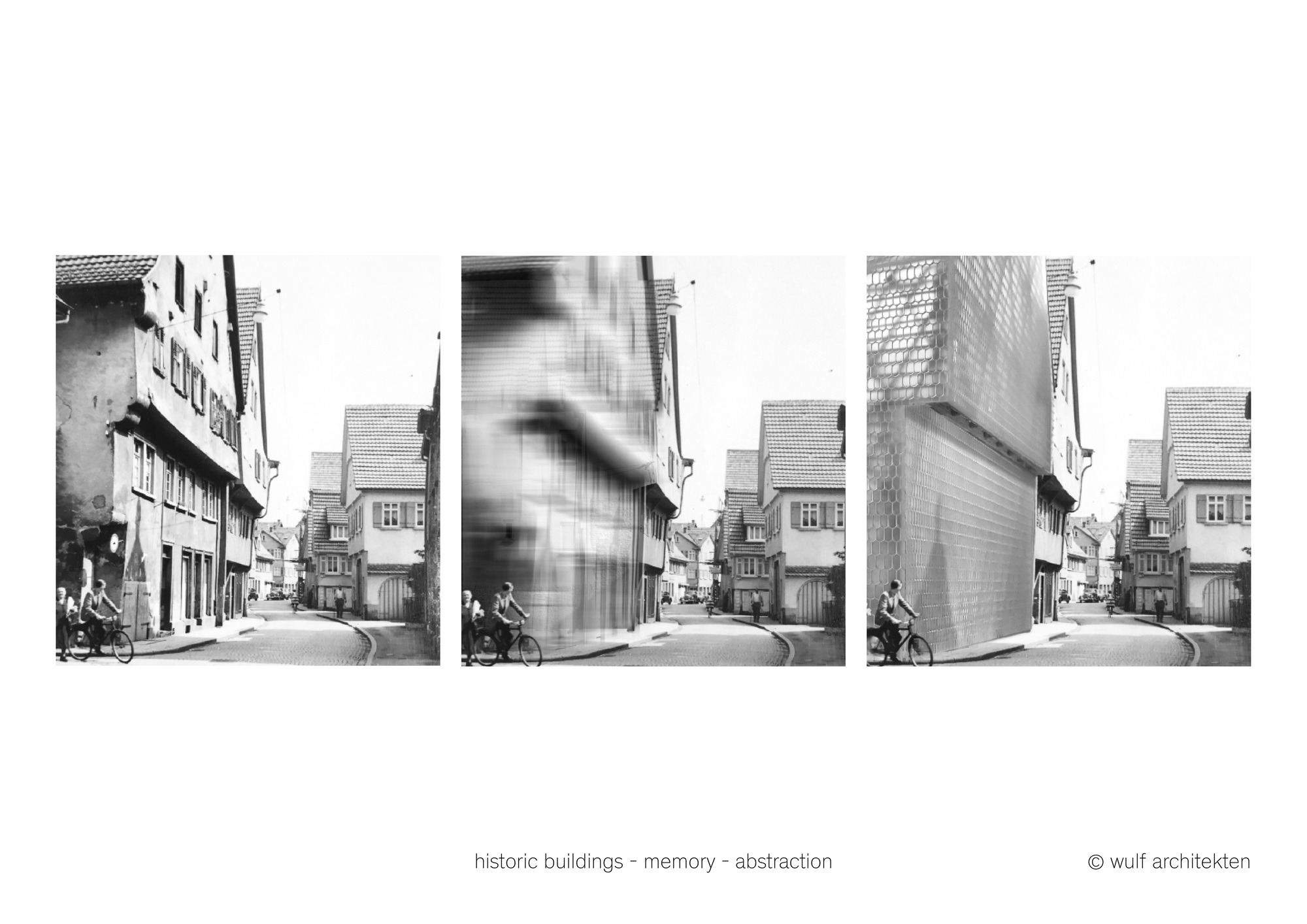
Depending on the conditions of incident light, reflection, and interior lighting, the wooden trusswork behind it is more or less visible, and the building appears diaphanous and iridescent – giving it a mysterious quality, like a chimera. The newly designed outer skin makes the interior seem blurry, like a distant memory. Something that persists in the memories of those who still knew the old house is made visible again for future generations.
The new building's geometrically complex, load bearing wooden structure was developed parametrically. The architectural requirements and constructive logic align precisely. A triple-layer, gradually dissipating substructure of diagonally and horizontally overlapping wooden members carries the glass beaver-tail tiles as external cladding for weather protection.
No thermal insulation or air conditioning is required in the new building, which also serves as a protective enclosure for the historic cellar. Open joints along the entire exterior of the building provide natural ventilation and smoke extraction. The building was designed for circularity in accordance with the Cradle to Cradle (C2C) design and sustainability concept. Thus, all connections are screwed together so they can be easily disassembled.
Concrete was generally avoided and only used where structurally necessary. The Historical Oberamteistraße Museum project is supported by the federal program "Nationale Projekte des Städtebaus" (National Urban Development Projects), enabling it to preserve and upgrade one of the oldest rows of half-timbered houses in southern Germany.
from archdaily