"예술가가 된다는 것은 삶을 믿는다는 것이다."— 헨리 무어 (Henry Moore)
 |
 |
 |
DSDHA prioritises "elegant frugality" in Henry Moore Studios gallery revamp
헛간이 간직한 시간
영국 헤르트퍼드셔(Hertfordshire)의 완만한 구릉 위, 28헥타르의 부지에는 20세기 영국을 대표하는 조각가 헨리 무어가 살며 작업했던 터전이 그대로 남아 있다. 이 땅에서 그는 돌과 청동을 깎고 다듬으며 유기적 형태의 언어를 완성했다. 그의 자택과 스튜디오를 관리하는 헨리 무어 재단(Henry Moore Foundation)은 그 유산을 오늘의 방문자들과 나누기 위해 오래된 헛간 하나를 갤러리로 바꾸는 작업을 1999년 처음 시도했다. 건축사무소 Hawkins\Brown이 맡았던 그 개조는 낡은 농업 건물에 전시의 숨결을 불어넣었고, 20여 년이 흐른 뒤 런던의 건축 스튜디오 DSDHA가 다시 이 건물 앞에 섰다.
절제라는 설계 언어
DSDHA에게 주어진 과제는 단순한 리노베이션이 아니었다. 재단은 학생과 가족, 학교 단체를 위한 창작 공간을 새로 마련하고, 건물 전체의 에너지 성능을 현대 갤러리 수준으로 끌어올리며, 동시에 무어의 작업 방식이 지닌 정신을 건축 언어로 구현해 달라 요청했다. DSDHA는 이 의뢰를 "우아한 절제(elegant frugality)"라는 한마디로 요약했다. 덧붙이지 않고, 버리지도 않으며, 있는 것을 다시 쓴다는 태도다.
DSDHA 대표 데보라 사운트(Deborah Saunt)는 이렇게 설명한다. "처음부터 분명했습니다. 어떤 개입이든 헨리 무어의 작업을 항상 전면에 내세워야 하고, 그의 작업 방식을 존중해야 한다고요." 새로운 공간을 통해 다음 세대 방문자들에게 무어의 삶과 작업을 탐험할 기회를 열어 주는 것, 그것이 이번 프로젝트의 출발점이었다.
들판을 향해 열리는 외피
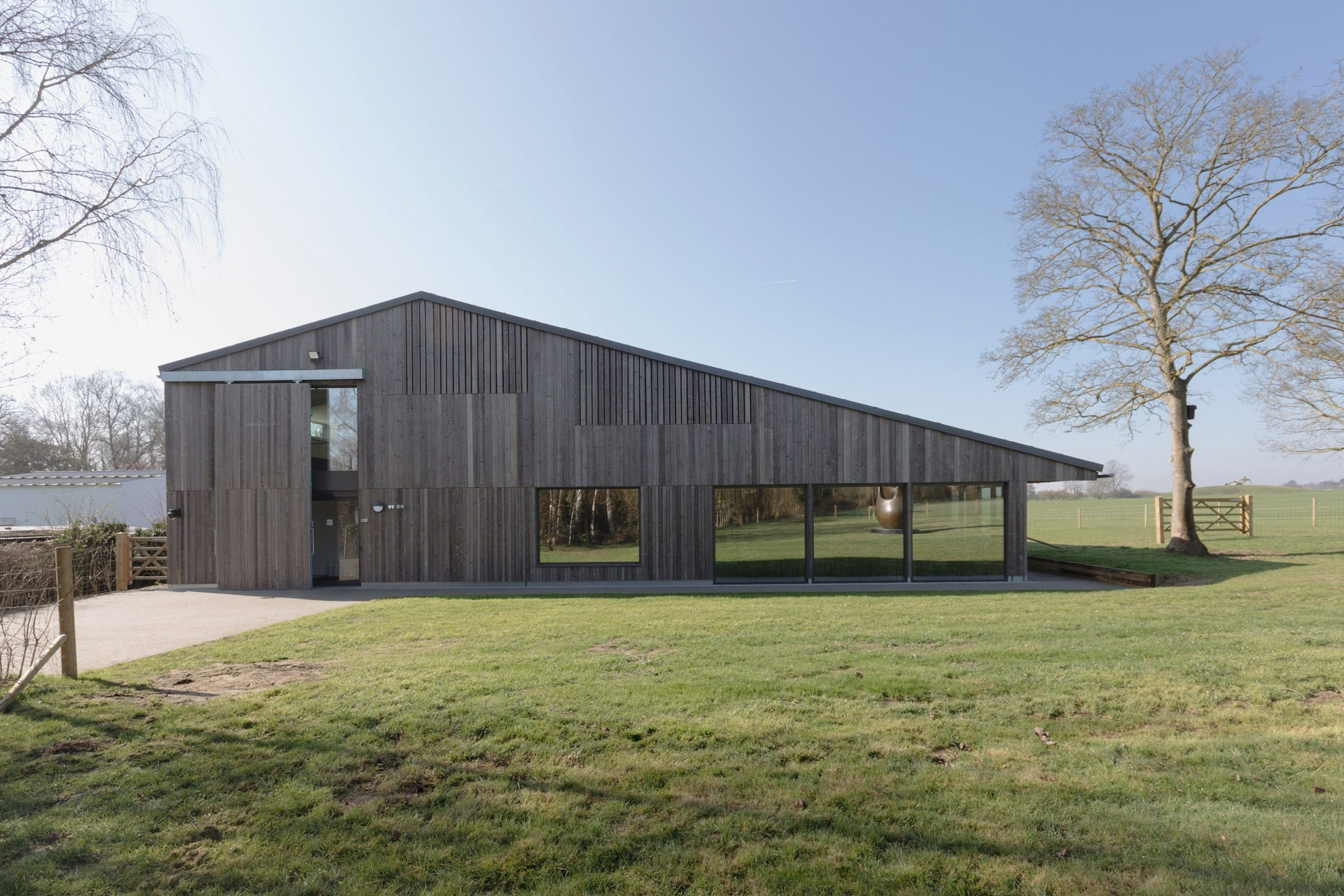
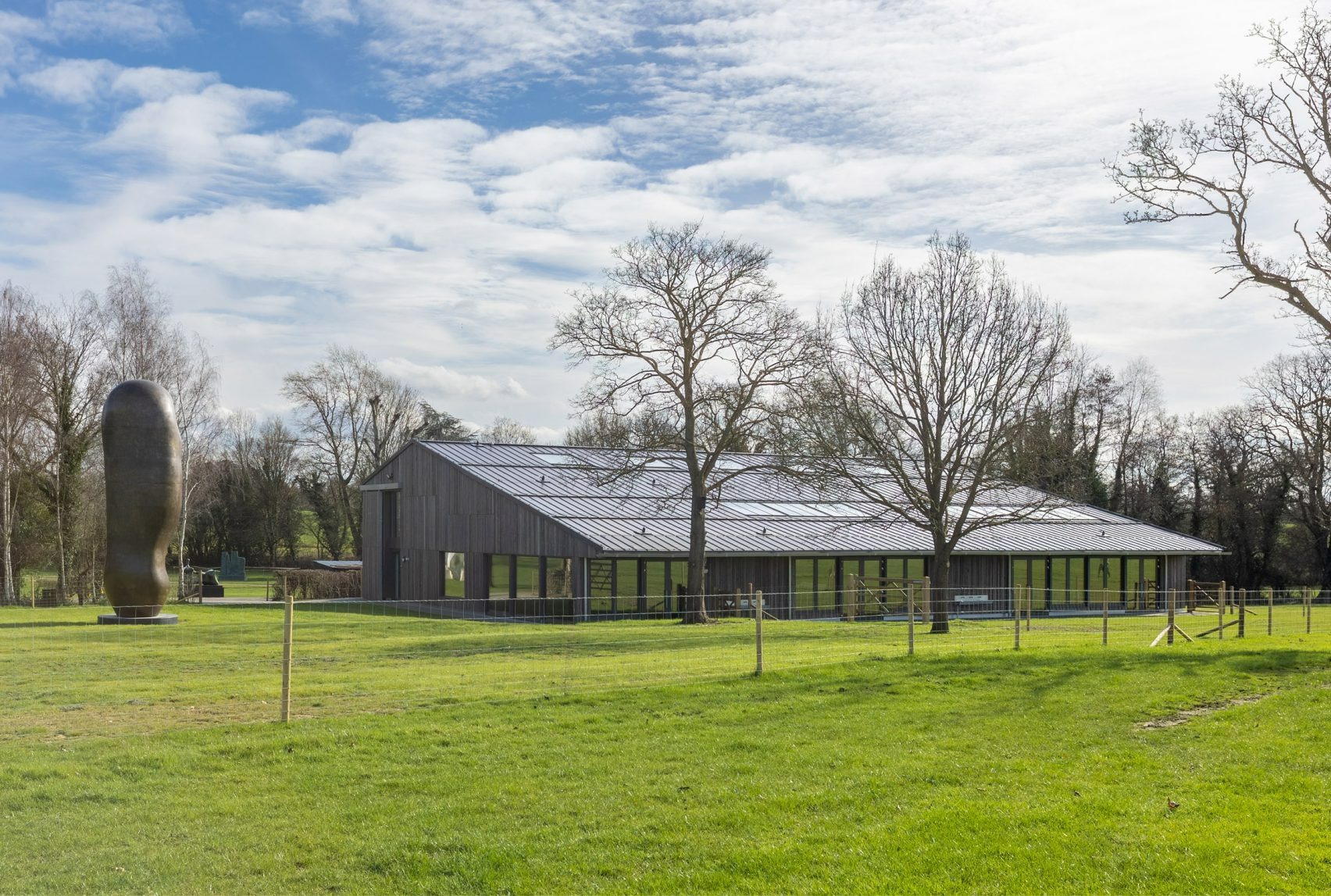
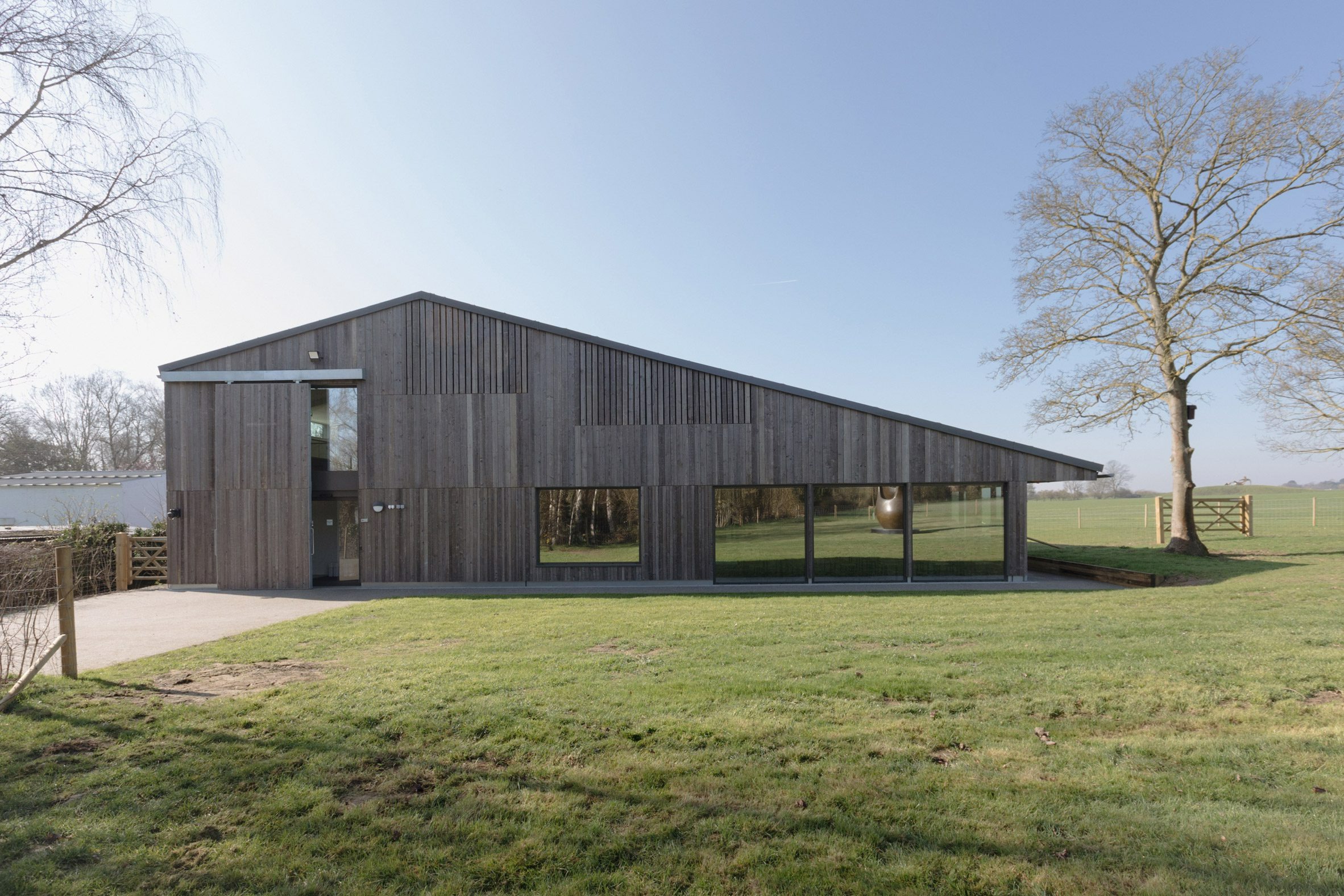
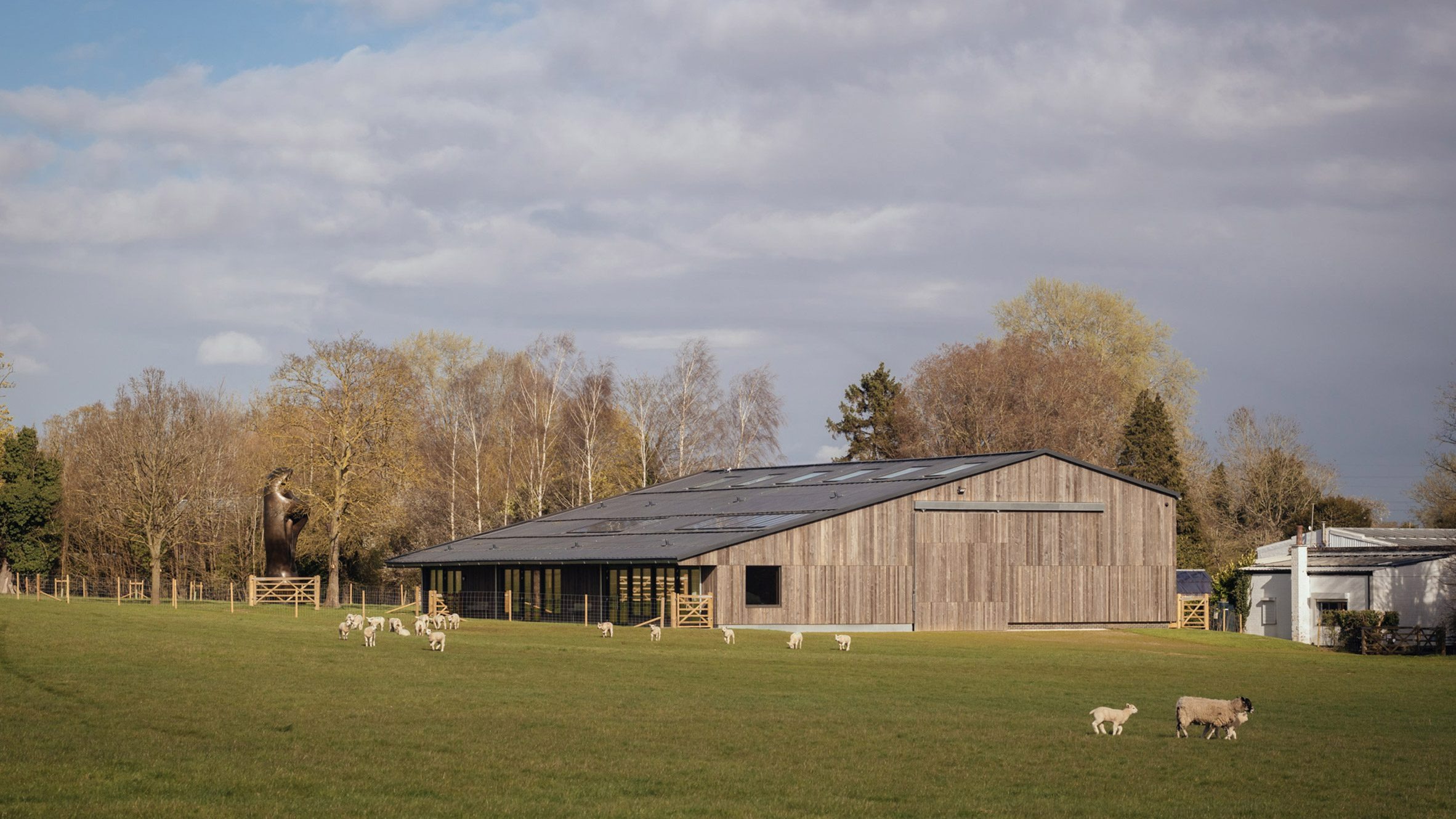
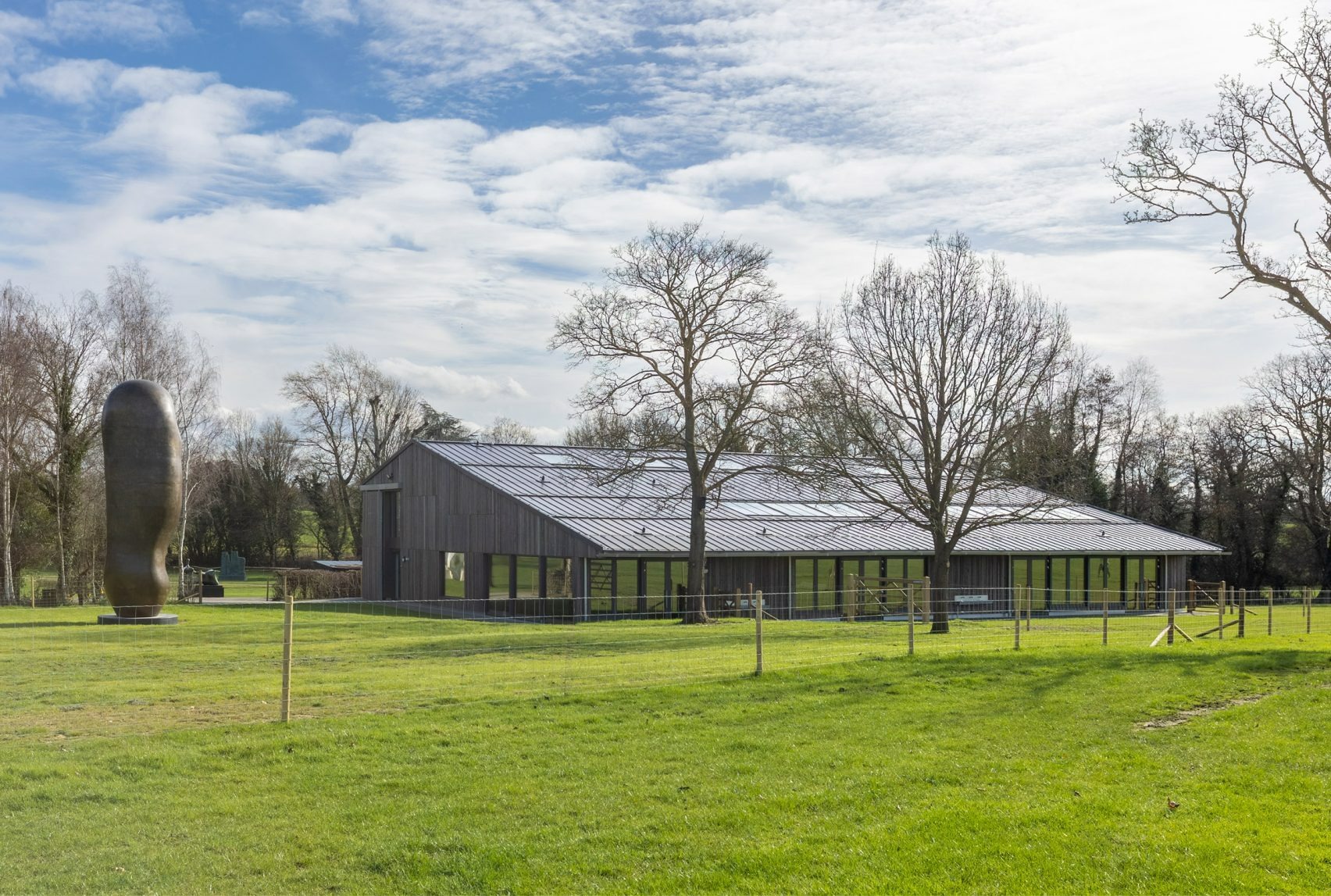
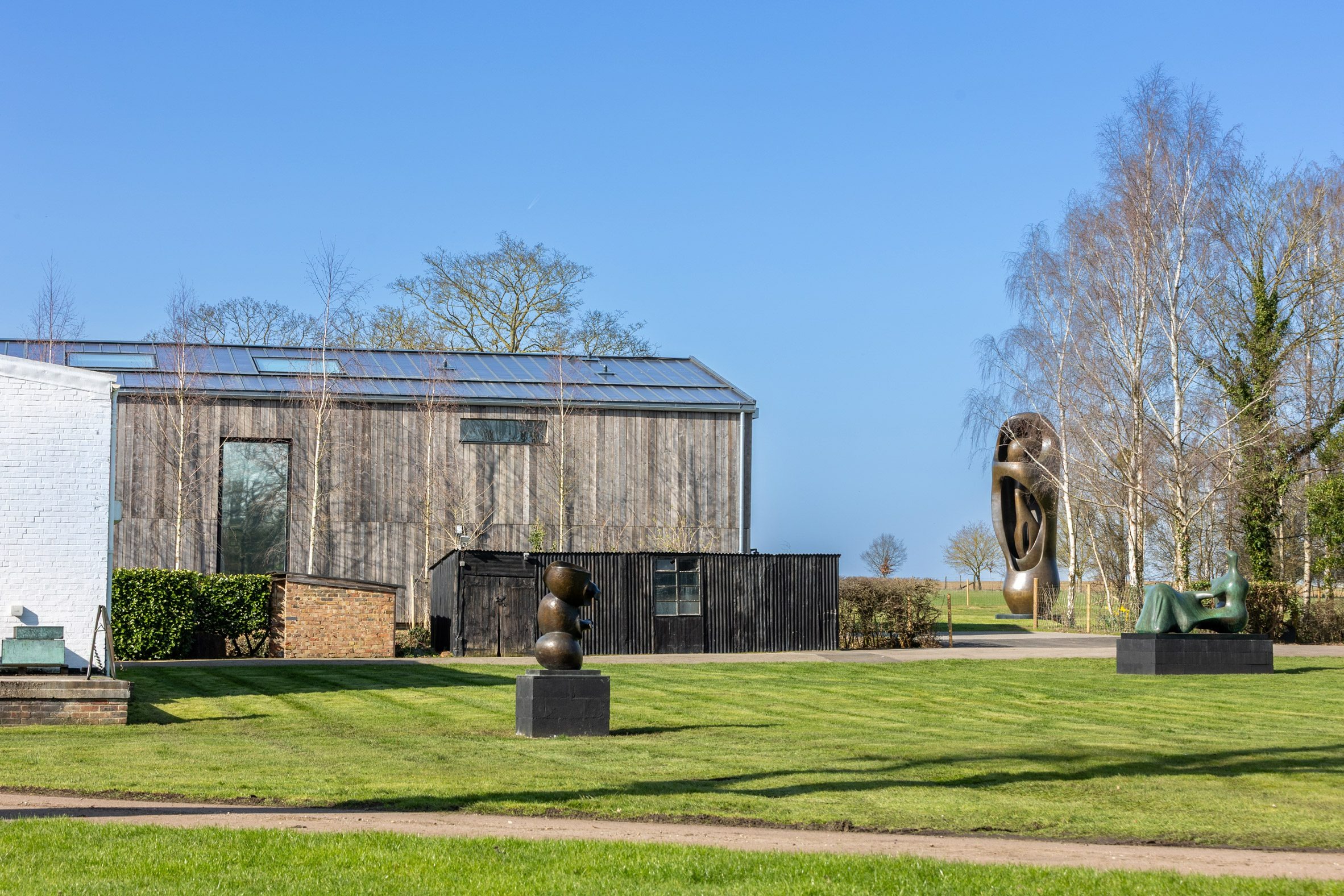
쉽 필드 반(Sheep Field Barn)에 다가서면 가장 먼저 어두운 빛의 목재 외장이 눈에 들어온다. 요크셔(Yorkshire) 각지의 헛간에서 수거한 가문비나무 판재는 세월의 풍화를 그대로 품은 채 건물 전체를 감싼다. 재활용 목재의 결은 건물을 새것이 아닌 '이미 여기 있었던 것'으로 만든다. 비대칭적으로 경사진 박공 지붕이 한쪽으로 낮게 흘러내리고, 그 아래 전면 유리창에는 들판과 무어의 조각들이 고스란히 반사된다. 건물은 풍경을 담은 거울이자, 그 자체로 풍경의 일부다.
진입은 증축동의 미닫이문을 통해 이루어진다. DSDHA는 이 확장 공간을 "기댄 증축동(lean-to cart shed)"이라 불렀다. 더글러스 퍼(Douglas fir) 프레임이 기존 철골 구조에 기대어 서고, 재사용 가능한 나사형 파일 기초 위에 얹힌 이 구조체는 처음부터 훗날의 해체와 순환 경제(circular economy)로의 재투입을 전제로 설계되었다. 세우기 위한 건축이 아니라, 쓰임을 다했을 때 다시 쓰일 수 있는 건축이다.
빛이 내려앉는 창작 실습실
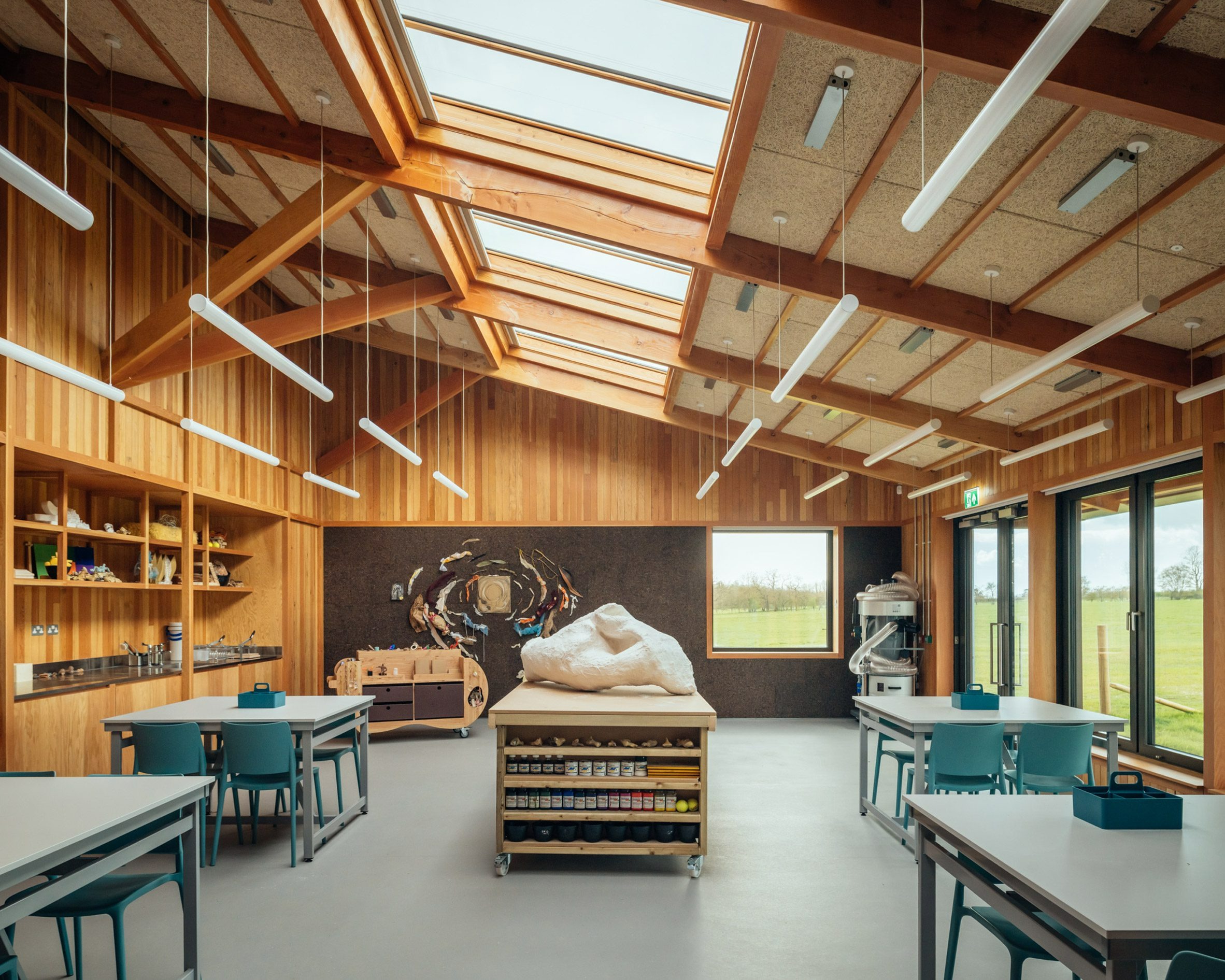
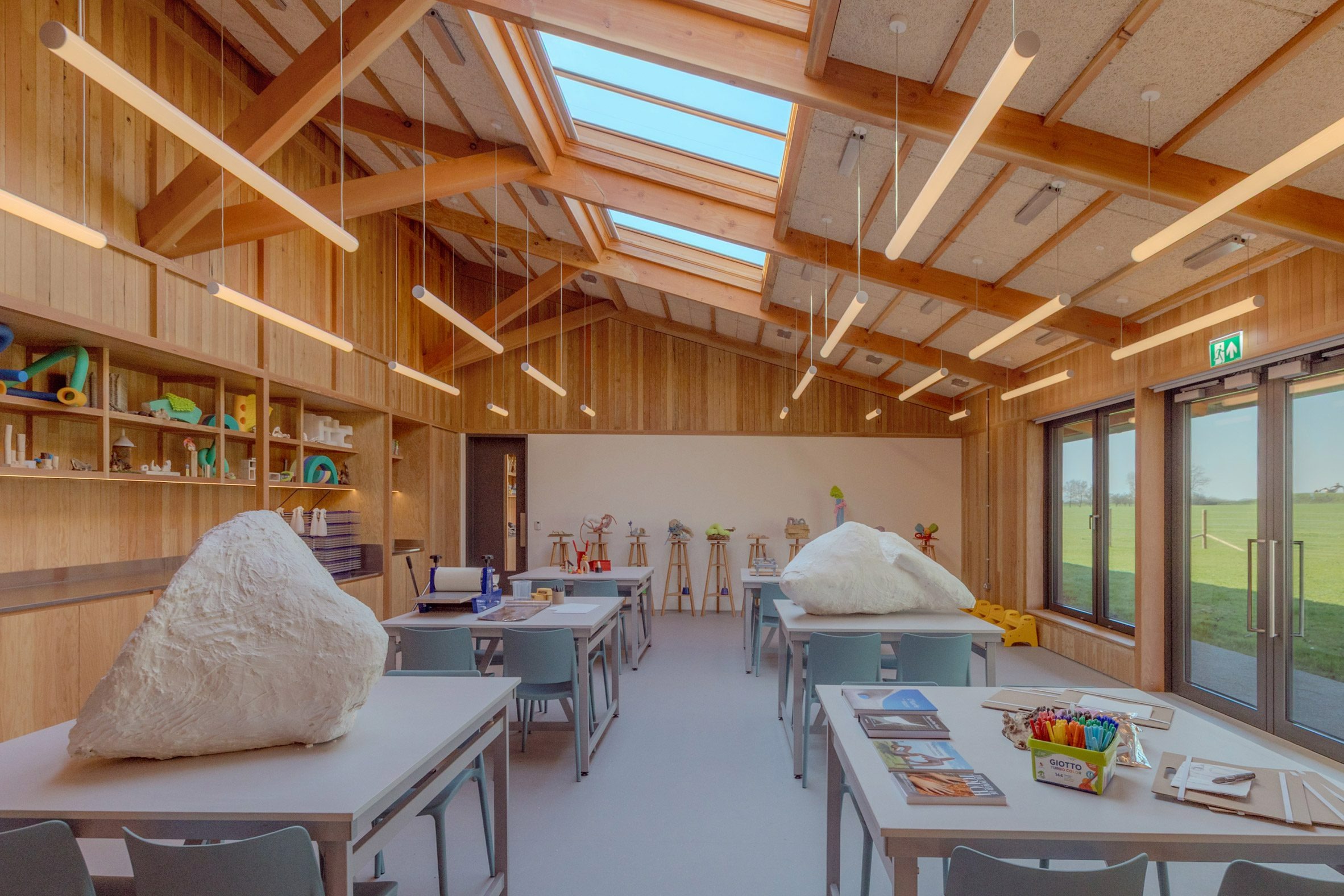
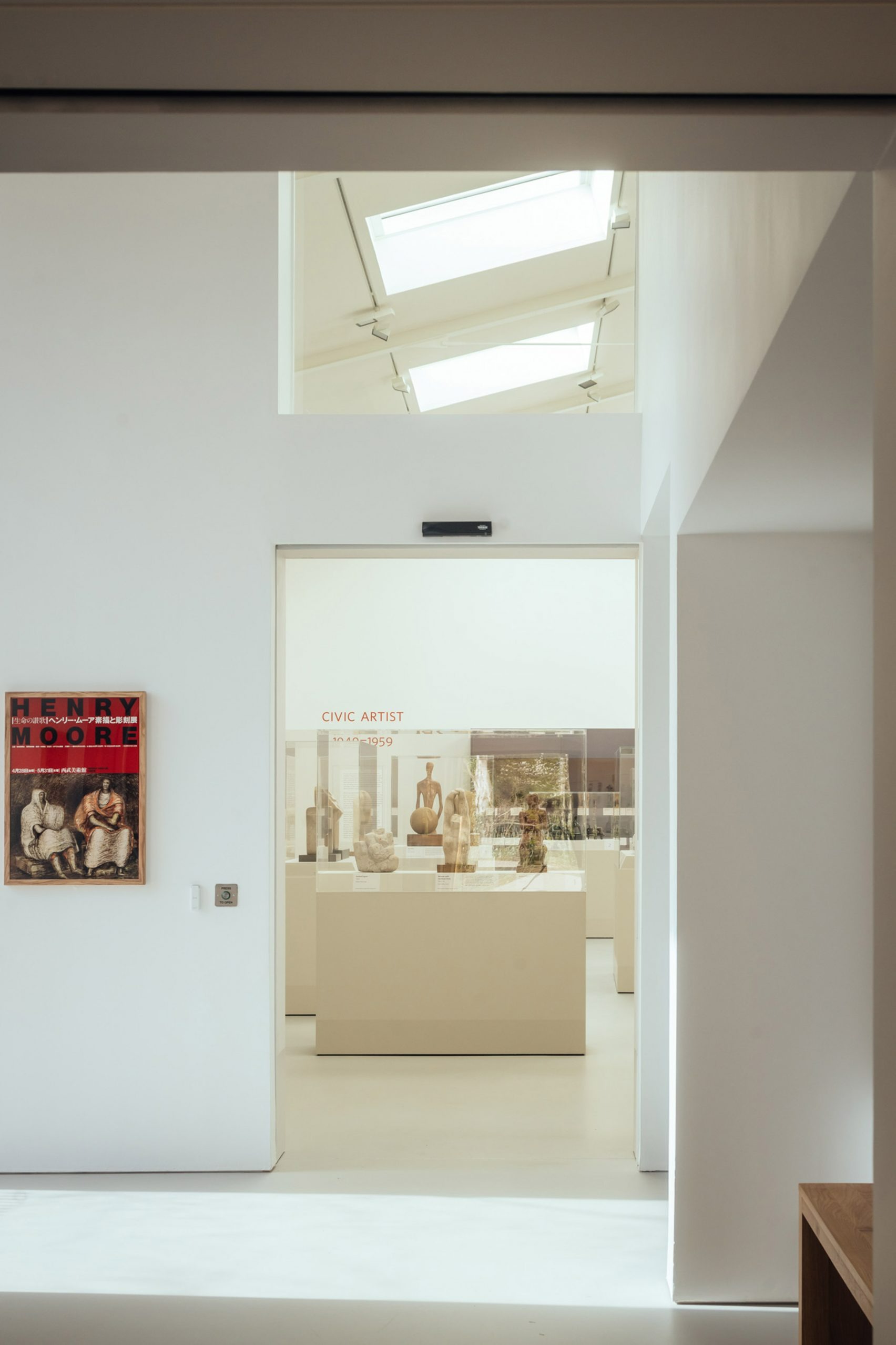
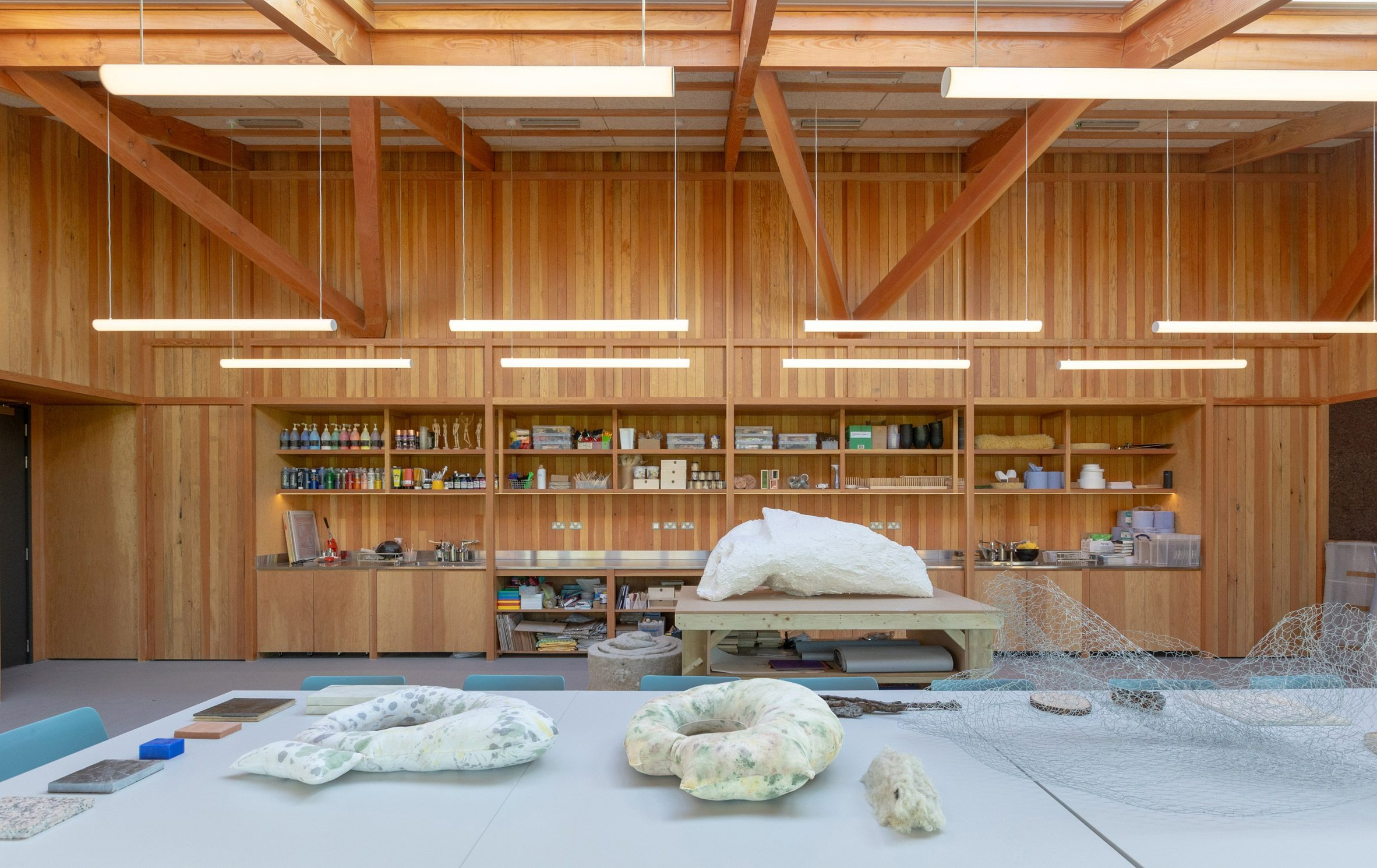
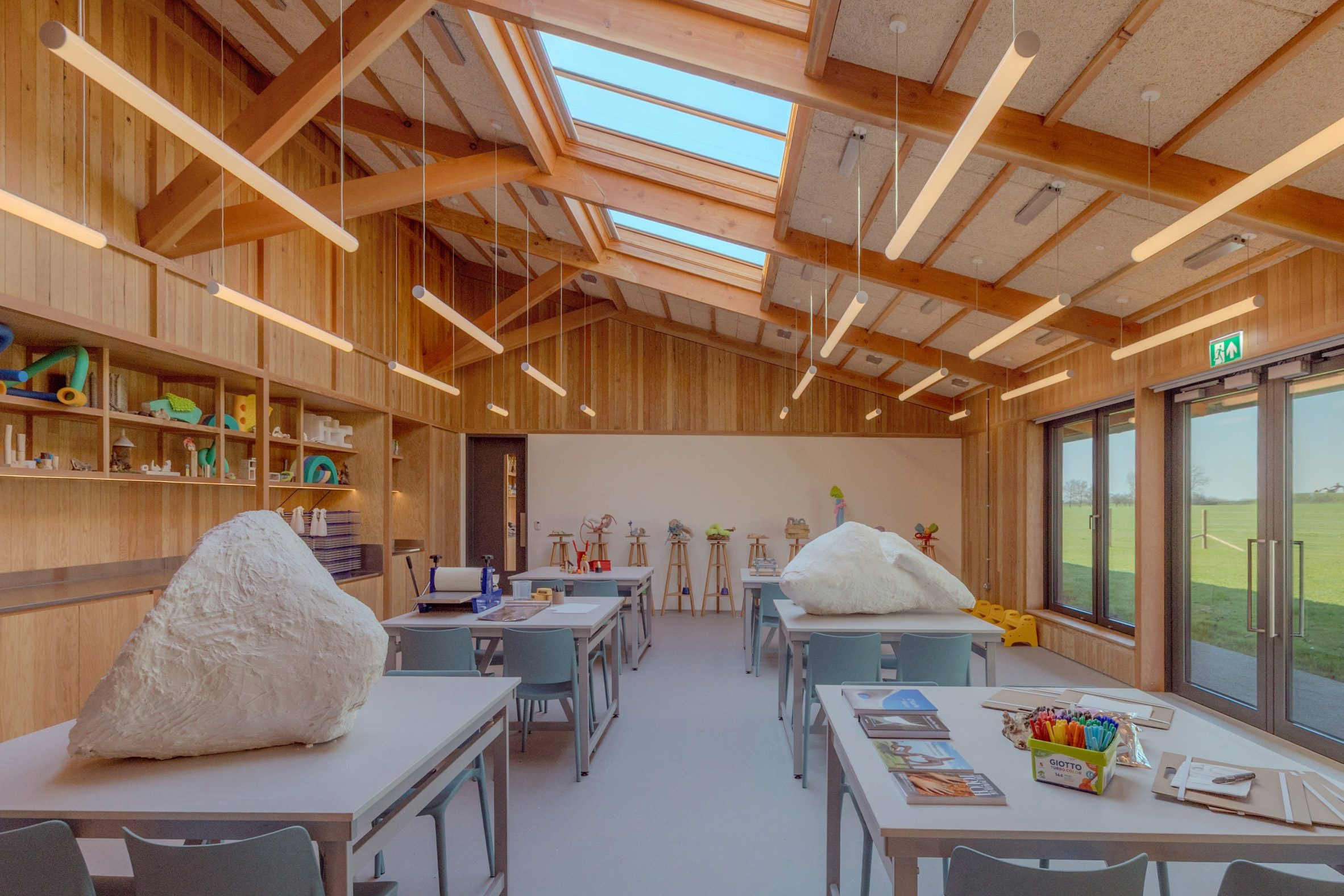
미닫이문을 열고 안으로 들어서면 이중 층고의 진입 공간이 방문자를 맞는다. 시선이 위로 향하면 더글러스 퍼 트러스가 교차하며 만들어 내는 지붕 구조가 한눈에 펼쳐진다. 그 위로 뚫린 천창에서 낮 동안의 빛이 끊임없이 쏟아진다.
8미터 폭의 증축동에는 두 개의 창작 실습실이 자리한다. 각 실습실마다 창문은 들판의 풍경을 액자처럼 끌어안고, 문을 열면 야외 피복 공간으로 수업이 자연스럽게 번져 나간다. 날씨가 허락하는 날이면 아이들은 실내와 실외의 경계 없이 작업한다. 실습실 내부를 채우는 이동식 수납 트롤리는 영국 디자인 스튜디오 Plaey가 맞춤 제작한 것으로, 무어의 조각 형태에서 영감을 받은 유기적 곡선이 실용적 기능 안에 조용히 숨어 있다.
원래 건물과 증축동을 잇는 복도는 수납 공간을 감추며 두 시간대를 매끄럽게 연결한다.
조각이 숨 쉬는 갤러리
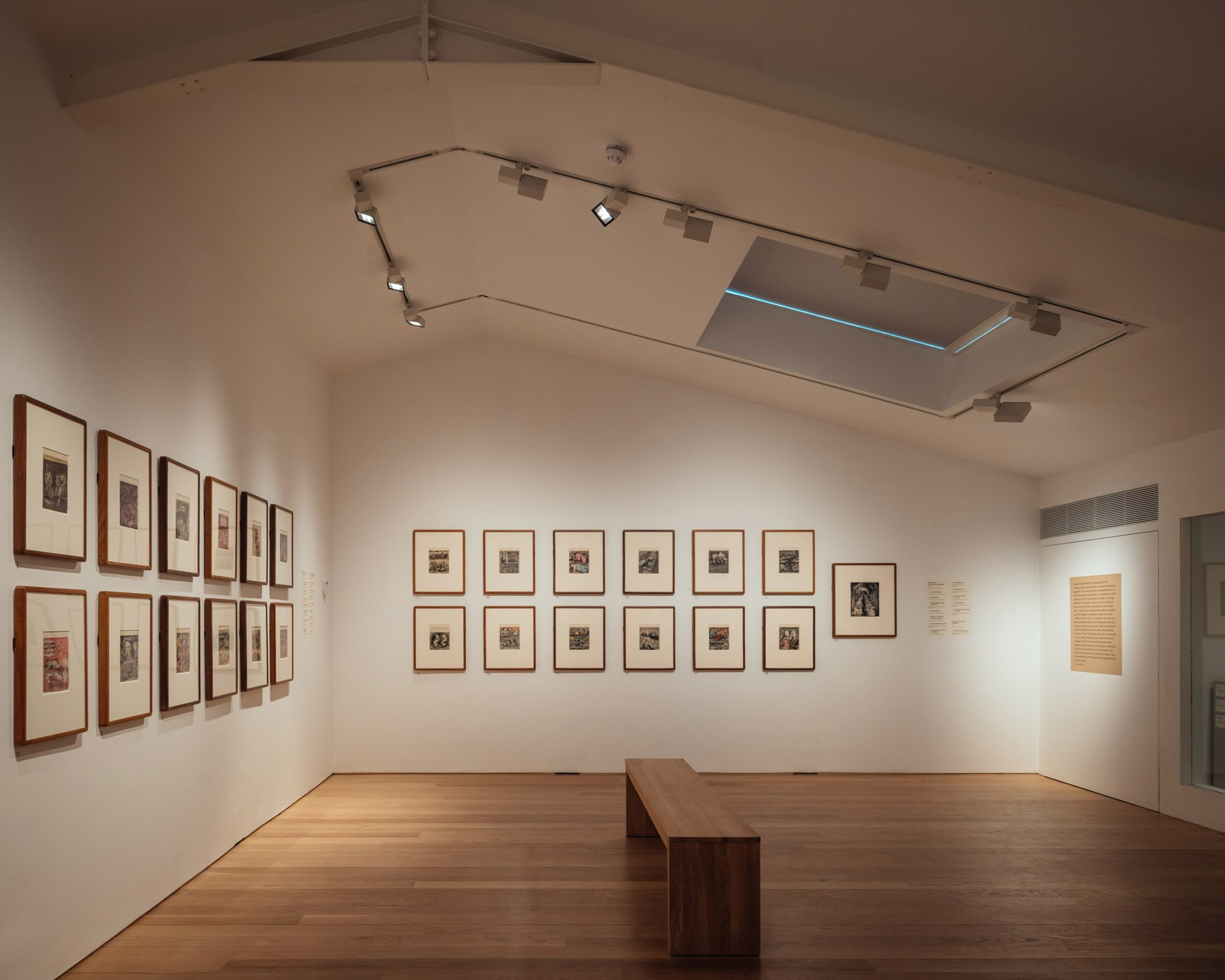
기존 건물 지상층에는 대형 작품을 위한 천창 갤러리가 자리한다. 흰 벽과 밝은 바닥이 만들어 내는 고요한 공간 속에서 헨리 무어의 조각들은 저마다의 무게와 형태로 서 있다. 변화하는 전시를 위한 갤러리는 1층에 따로 마련되어 있어, 방문자는 층을 오가며 서로 다른 밀도의 공간을 경험한다.
다시 쓰는 재료들
이번 프로젝트에서 가장 주목할 부분은 눈에 보이지 않는 곳에 있다. 새 개구부를 내기 위해 뜯어낸 블록은 부지 내 다른 곳에 그대로 재사용되었다. 낡은 철제 반입 도어는 인방(lintel)으로 새 생명을 얻었다. 기존 더글러스 퍼 외장재는 실내 벽 마감재와 목공 가구로 다시 태어났다. 버려지는 것은 없다. 무어가 작업실에서 폐기물 없이 재료를 다뤘듯, DSDHA는 건물 전체를 하나의 재료 순환 체계로 운영했다.
저탄소 갤러리를 위한 기준
DSDHA는 이번 프로젝트를 "저탄소 갤러리 환경의 기준점"으로 삼고자 했다. 재료 재사용과 해체 가능 구조를 원칙으로 삼으면서도, 지열 히트펌프와 태양광 패널을 도입하고 에너지 소비를 낮춘 새 공조 시스템을 설치했다. 건물의 환경 성능은 현대 갤러리가 요구하는 수준으로 끌어올려졌다.
쉽 필드 반은 이제 단순한 전시 공간이 아니다. 무어의 조각이 들판을 가득 채운 이 땅에서, 새 건물은 그 조각들처럼 풍경 속에 조용히 존재한다. 말을 아끼는 건축, 그러나 분명히 말하는 건축이다.
Write by Claude & Jean Browwn
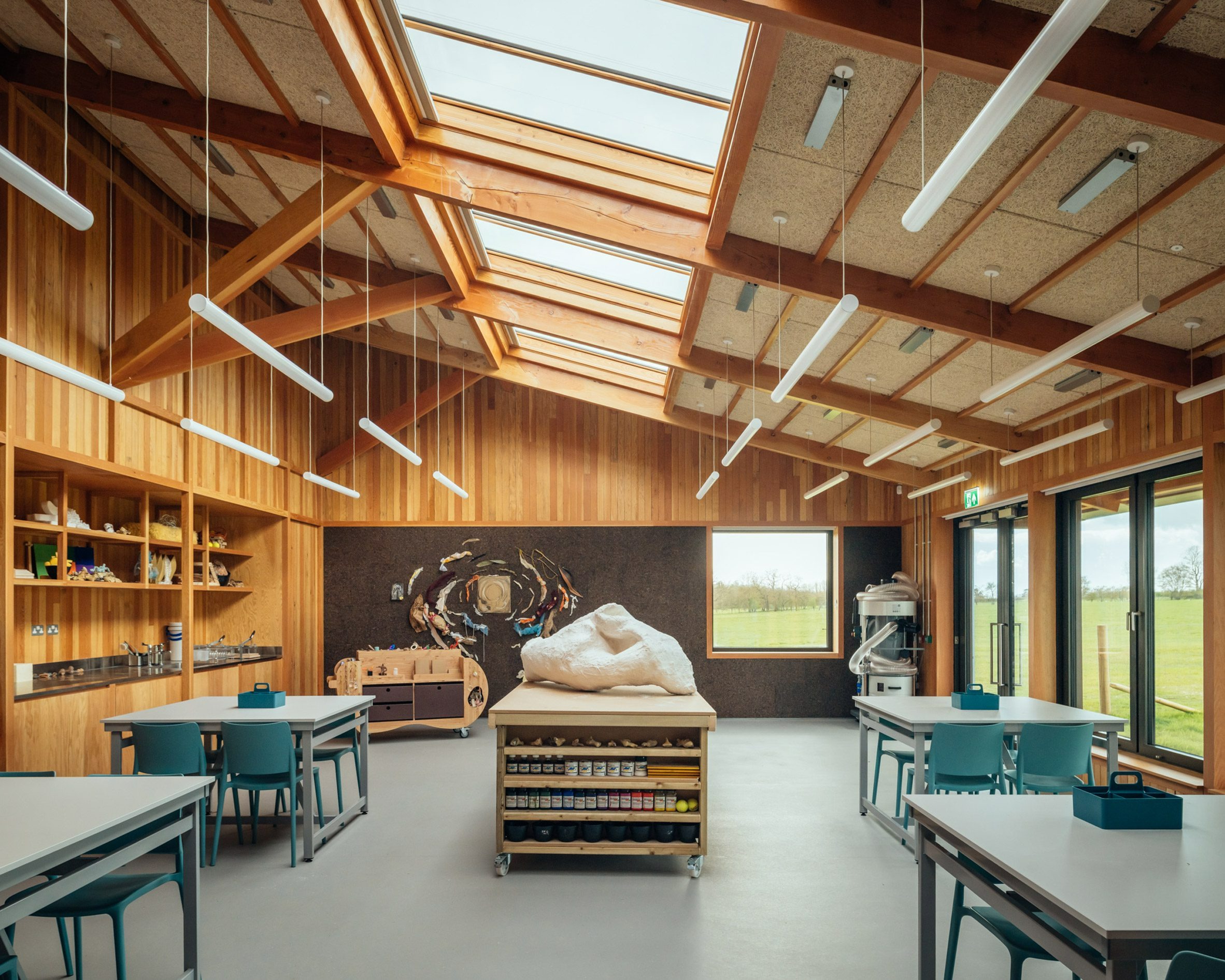
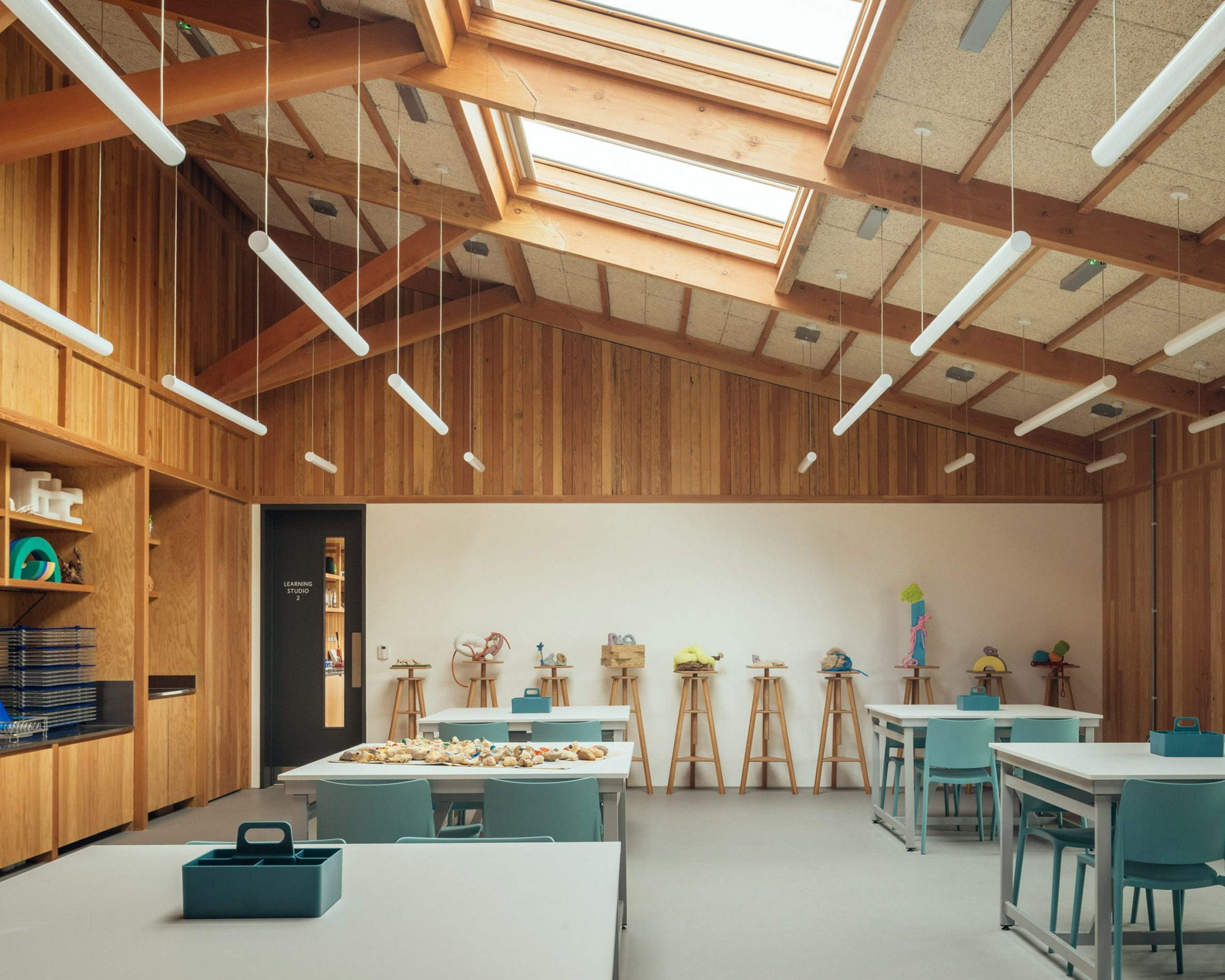
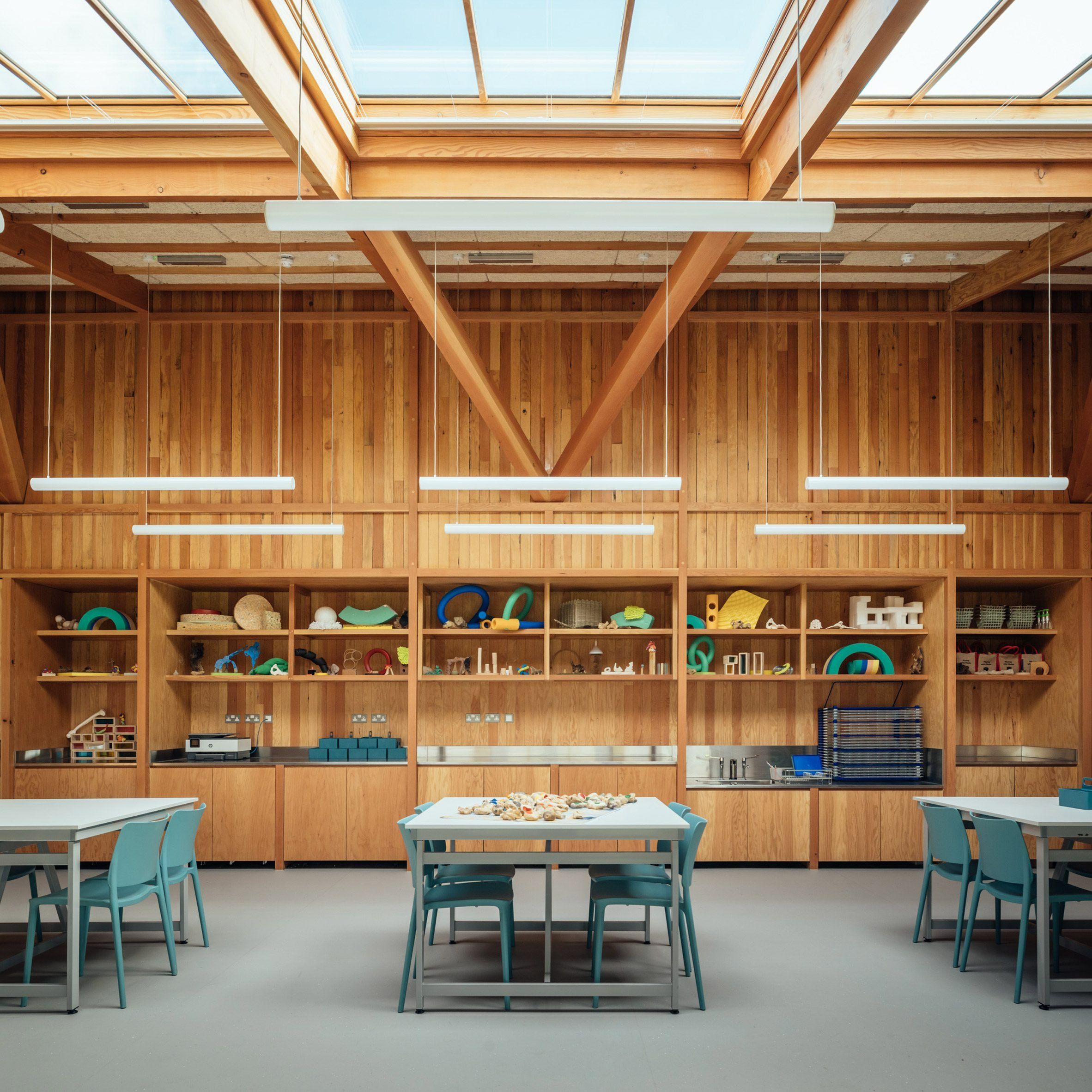
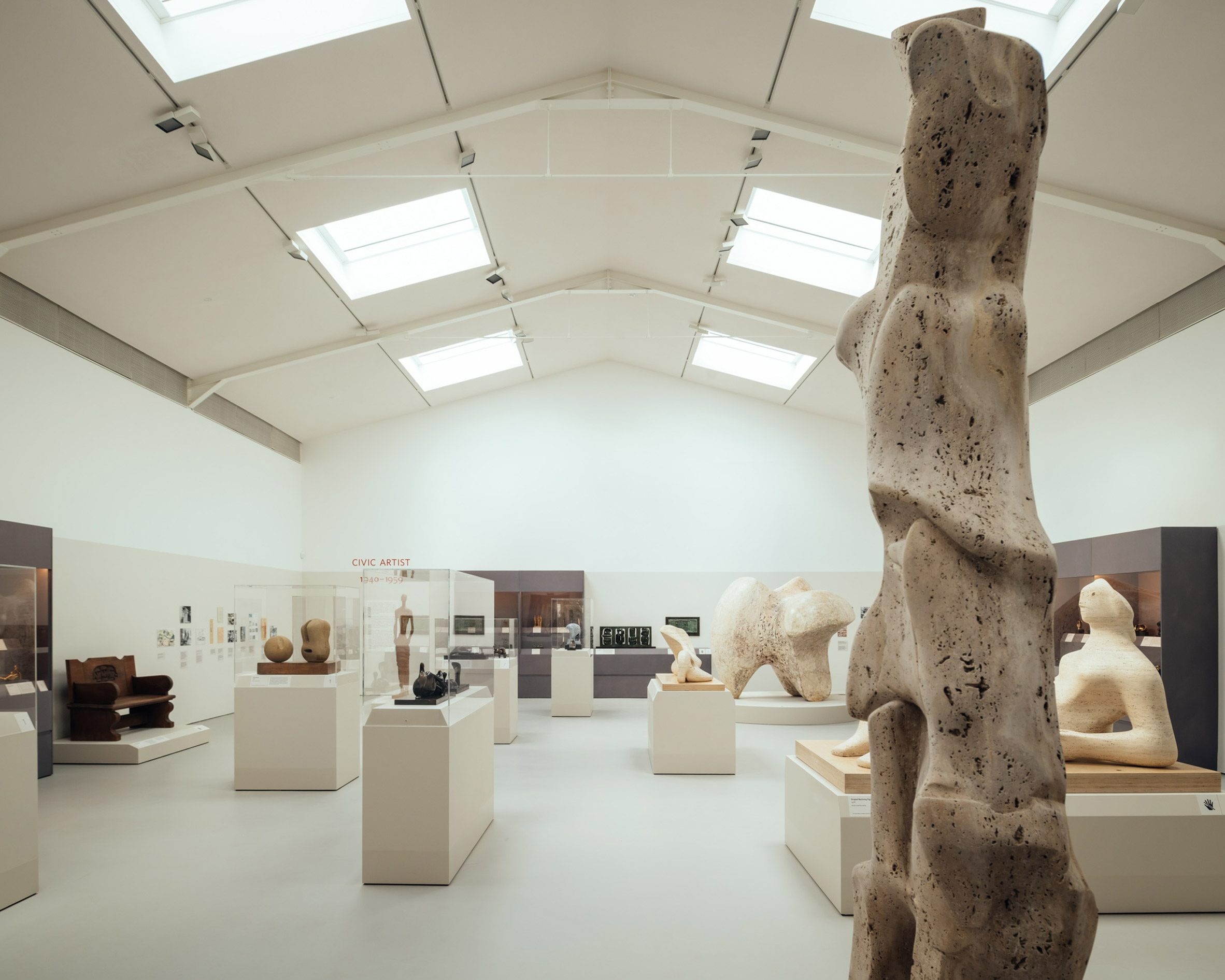
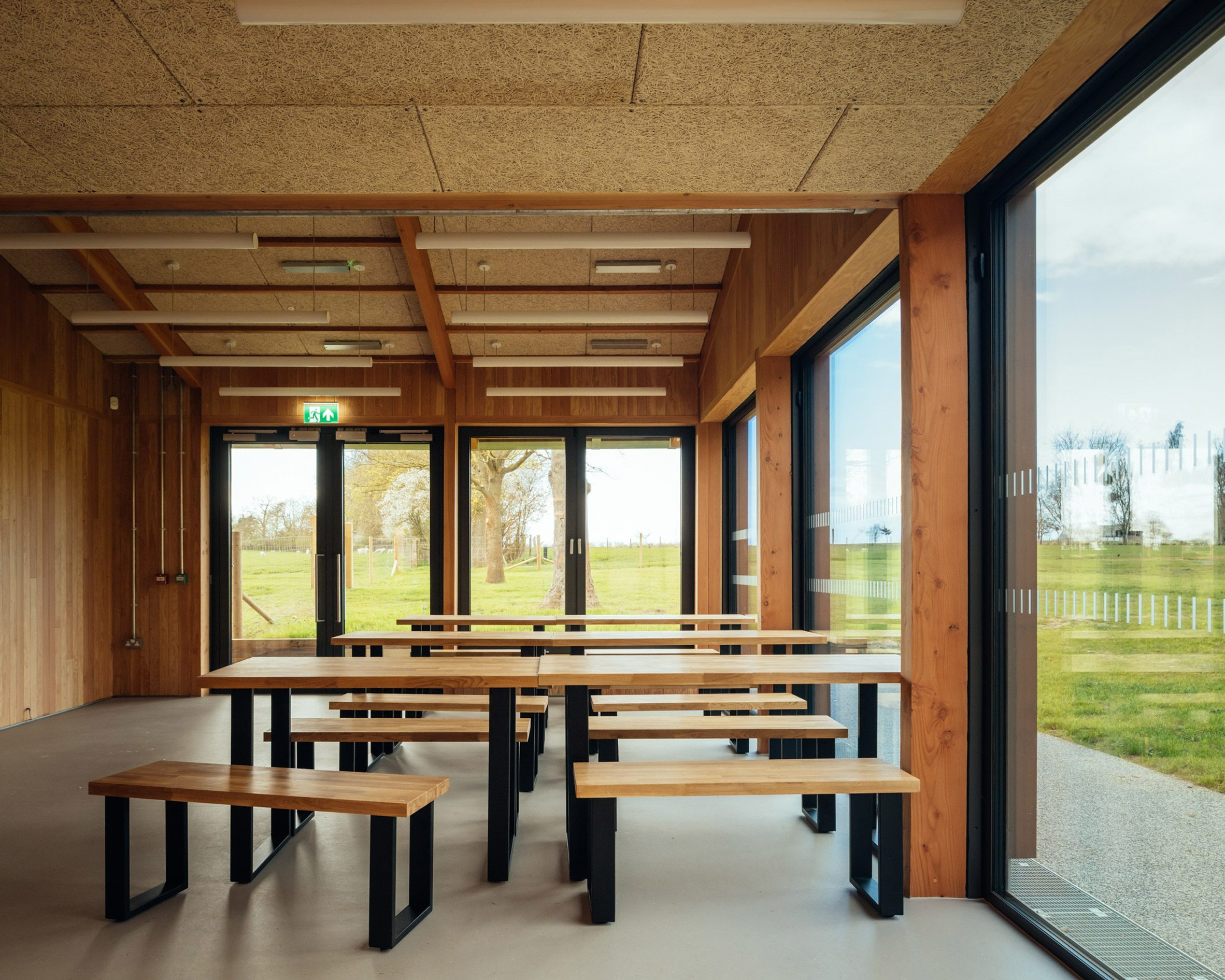
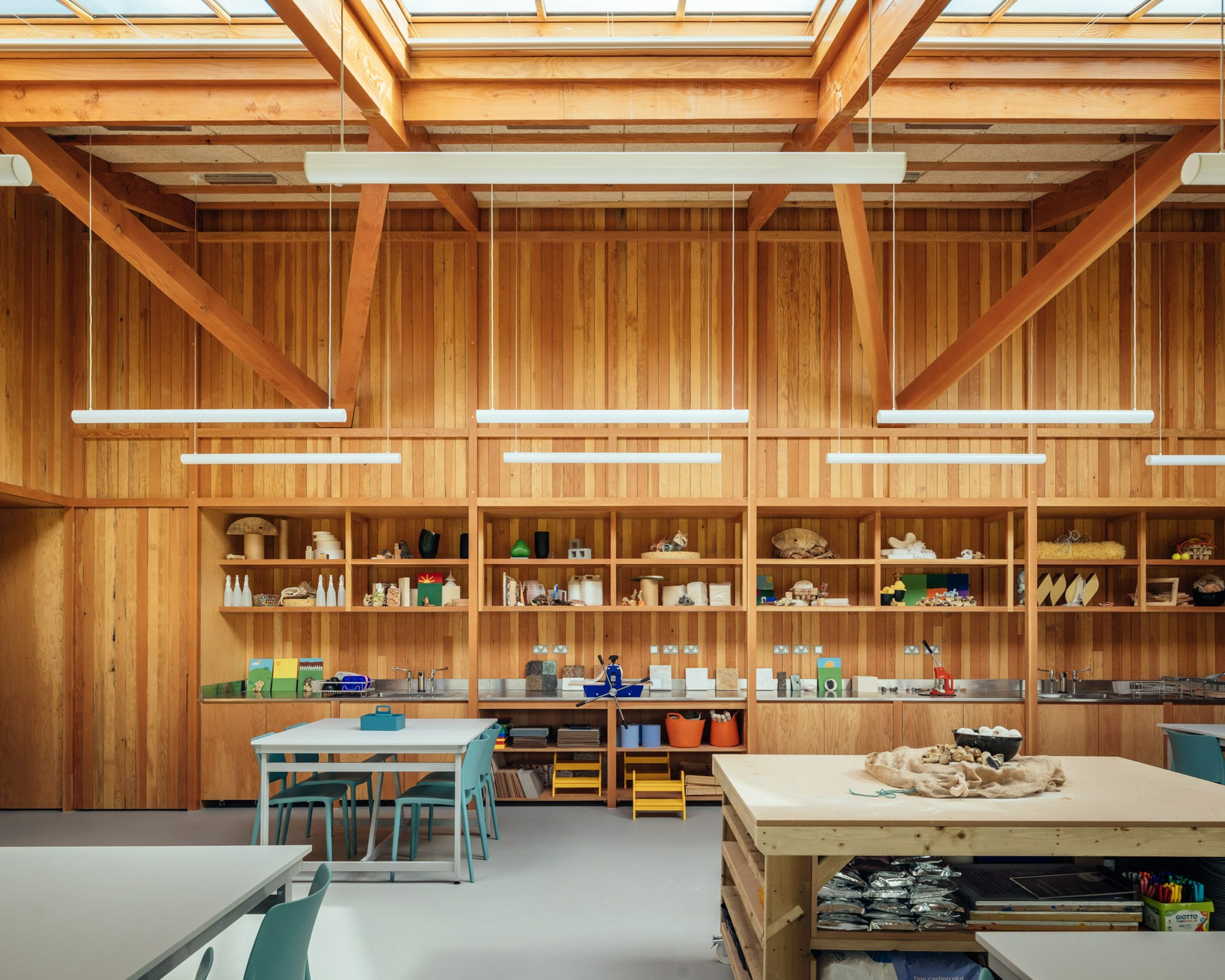
London studio DSDHA has renovated Sheep Field Barn, a gallery at Henry Moore Studios & Gardens in Hertfordshire, UK, updating its exhibition areas and introducing workshop spaces.
Sheep Field Barn is an old agricultural building, which architecture studio Hawkins\Brown converted into a gallery in 1999 on the 28-hectare site of the former home of 20th-century British sculptor Henry Moore.
Commissioned by the Henry Moore Foundation, the overhaul has doubled the building's footprint and introduced workshop spaces for students.
DSDHA has also improved circulation, revamped the gallery areas and enhanced the environmental performance of the building.
"There was a desire for new spaces for making and discovery, and a dedicated place for visitors to find out more about Moore's life and work by opening up the barn to new generations of visitors, families, and school groups," she continued.
"The previous building also needed updating to modern gallery conditions and had a poor energy performance."
Following its revamp, the Sheep Field Barn now doubles as both a gallery and an education and workshop space for students to learn about and create work inspired by Moore.
DSDHA described the extension as a "simple lean to cart shed". It has a Douglas fir frame, which is attached to the building's original steel structure and raised on reusable steel screw piles.
The studio said this is designed for eventual disassembly and reintroduction to the circular economy.
Externally, the building is wrapped in reclaimed silver spruce salvaged from Yorkshire barns, while the barn's interior features wall linings and joinery made from the building's original Douglas fir cladding.
Blockwork taken out for new openings has been reused elsewhere at the centre, while an old steel delivery door has been repurposed as lintels.
Sheep Field Barn's design is deliberately resourceful and restrained, according to DSDHA, in a bid to reflect Moore's way of working and also ensuring focus is retained on the farmland and the sculptures dotted within it.
"It was clear to us from the beginning that any intervention had to foreground Moore's work at all times and respect his way of working," said Saunt.
Access to the building is through a sliding door in the extension, leading into a double-height entrance space.
Sheep Field Barn contains a top lit gallery on the ground floor for large artworks, while a gallery for changing exhibitions sits on the first floor.
The eight-metre wide addition contains the learning areas and is linked to the original building by a corridor that conceals storage spaces.
There are two workshop rooms, each with windows that frame the landscape and access to an adjoining sheltered outdoor area for lessons to spill outside in warm weather. Tables fill the spaces, while a bespoke trolley by design studio Plaey references Moore's sculptures.
A large part of the project was to improve the building's environmental performance and set "a benchmark for low-carbon gallery environments", according to DSDHA.
While prioritising material reuse and a demountable structure, this involved introducing ground source heat pumps, solar panels and a new, less energy-intensive air conditioning system.
from dezeen
'Culture' 카테고리의 다른 글
| * 땅에서 솟아오른 기억 [ Safdie Architects ] Cherokee Heritage Center (0) | 2026.04.24 |
|---|---|
| * 폐허가 말을 걸다 [ Tengbom ] Stjärnorp Castle Ruin (0) | 2026.04.17 |
| * 세대를 잇는 교육의 풍경 [ Pedevilla Architects ] Education Center Kössen (0) | 2026.04.08 |
| * 과거와 현재가 교차하는 투영된 기억의 집 [ wulf architekten ] Historical Oberamteistraße Museum (0) | 2026.04.06 |
| * 대지의 기억을 품은 안식처 [ URLO Studio ] Pamba Bike Shelter (1) | 2026.04.01 |