"건축의 진정한 영광은 돌도 황금도 아닌, 오랜 세월이 새긴 깊은 흔적 속에 있다."— 존 러스킨 (John Ruskin)
 |
 |
 |
Tengbom -Stjärnorp Castle Ruin
링셰핑의 시간
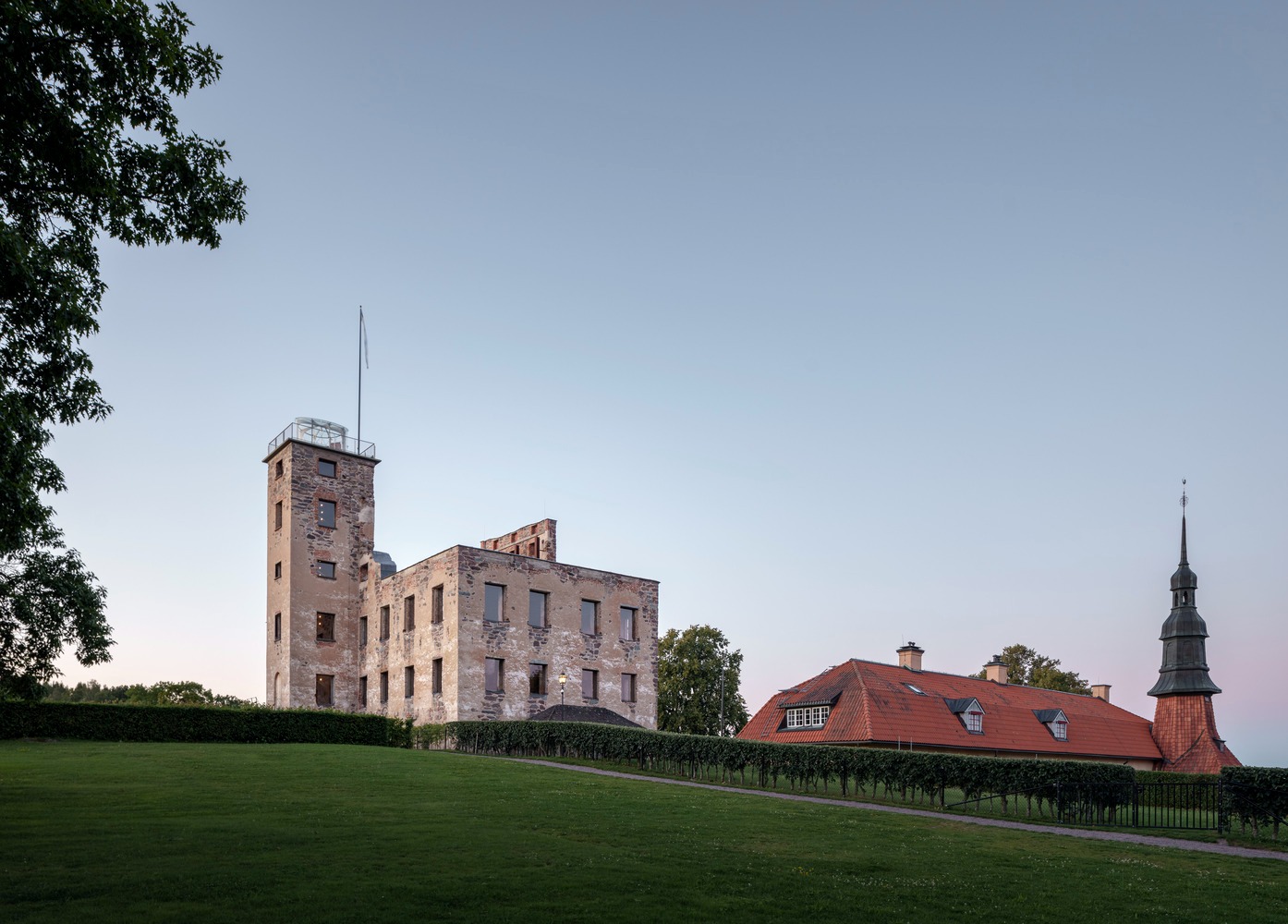
록센 호수 서편, 링셰핑 외곽에 스티에르노르프 성의 폐허가 서 있다. 1654년부터 1662년 사이에 지어진 이 성은 스웨덴 바로크 건축의 거장 니코데무스 테신 더 엘더의 작품으로 전해진다. 공원을 향해 서쪽으로 계단탑을 거느린 4층 규모의 석조 본관, 록센 호수를 바라보며 동쪽으로 뻗은 두 개의 날개 건물. 에리크 달베리가 1697년 편찬한 '스웨덴 고금지(Suecia Antiqua et Hodierna)'에도 이 성의 모습이 담겨 있어, 전성기의 위용을 짐작케 한다.
불꽃이 지나간 자리
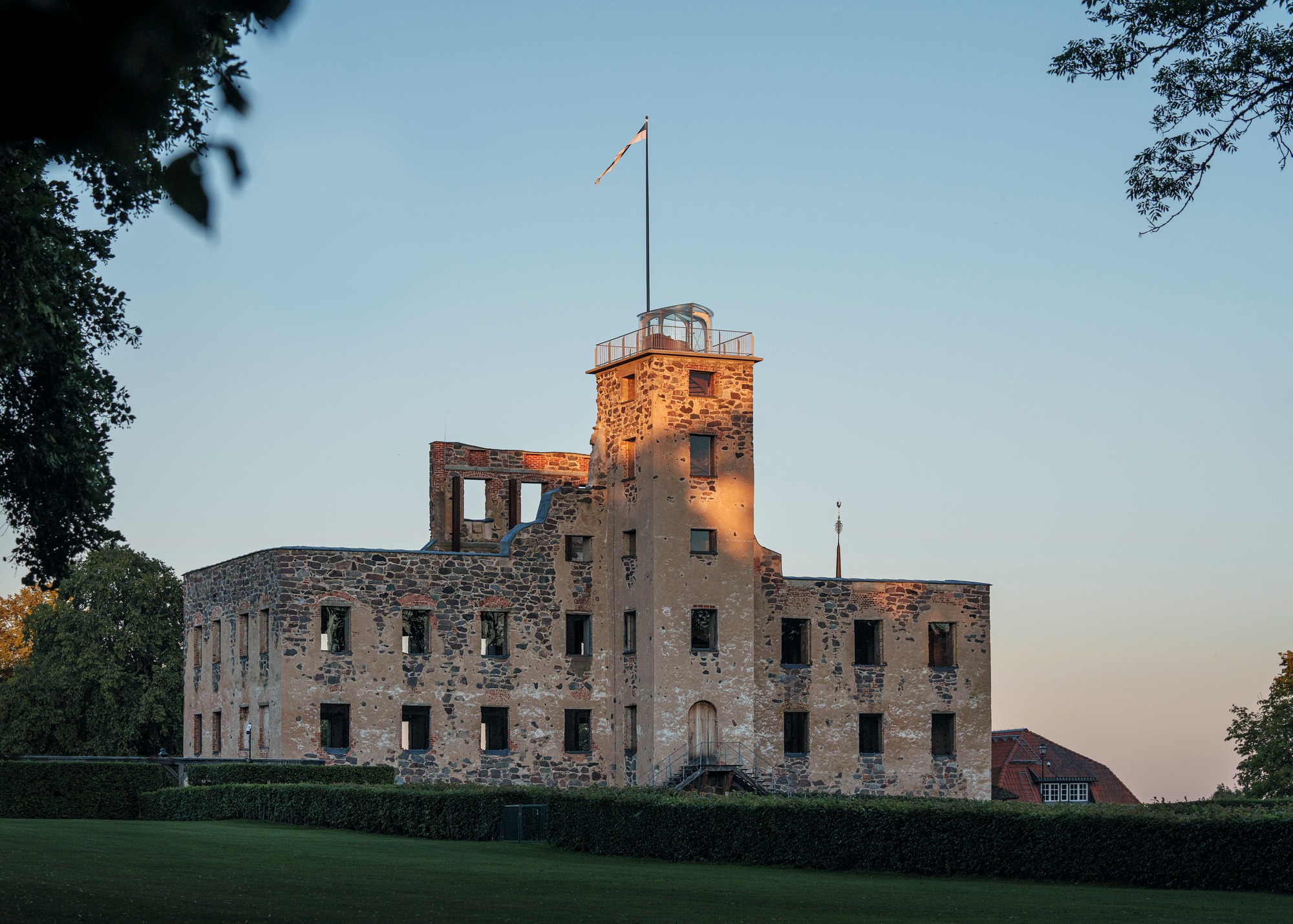
1789년, 대화재가 본관과 두 날개 건물 모두를 집어삼켰다. 성당이 자리했던 한쪽 날개는 복원됐지만, 본관은 그 자리에 폐허인 채로 남겨졌다. 그렇게 230년이 넘는 세월 동안, 이 석조 껍데기는 하늘을 향해 열린 채 바람과 비를 맞으며 서 있었다. 20세기에는 붕괴를 막는 최소한의 안정화 작업에 그쳤다. 오늘날 스티에르노르프 성 폐허는 국가 보호 문화재로 지정되어 있다.
조심스러운 개입
2012년, 스티에르노르프 영지 측은 폐허를 보존하면서 제한적인 접근을 허용할 방법을 찾기 위해 설계 경기를 열었다. 비케르스톨 아르키텍터(Wikerstål Arkitekter)가 최종 선정됐다. 이 사무소는 2017년 텡봄(Tengbom)에 인수된 이후에도 프로젝트를 이끌며 완성까지 나아갔다.
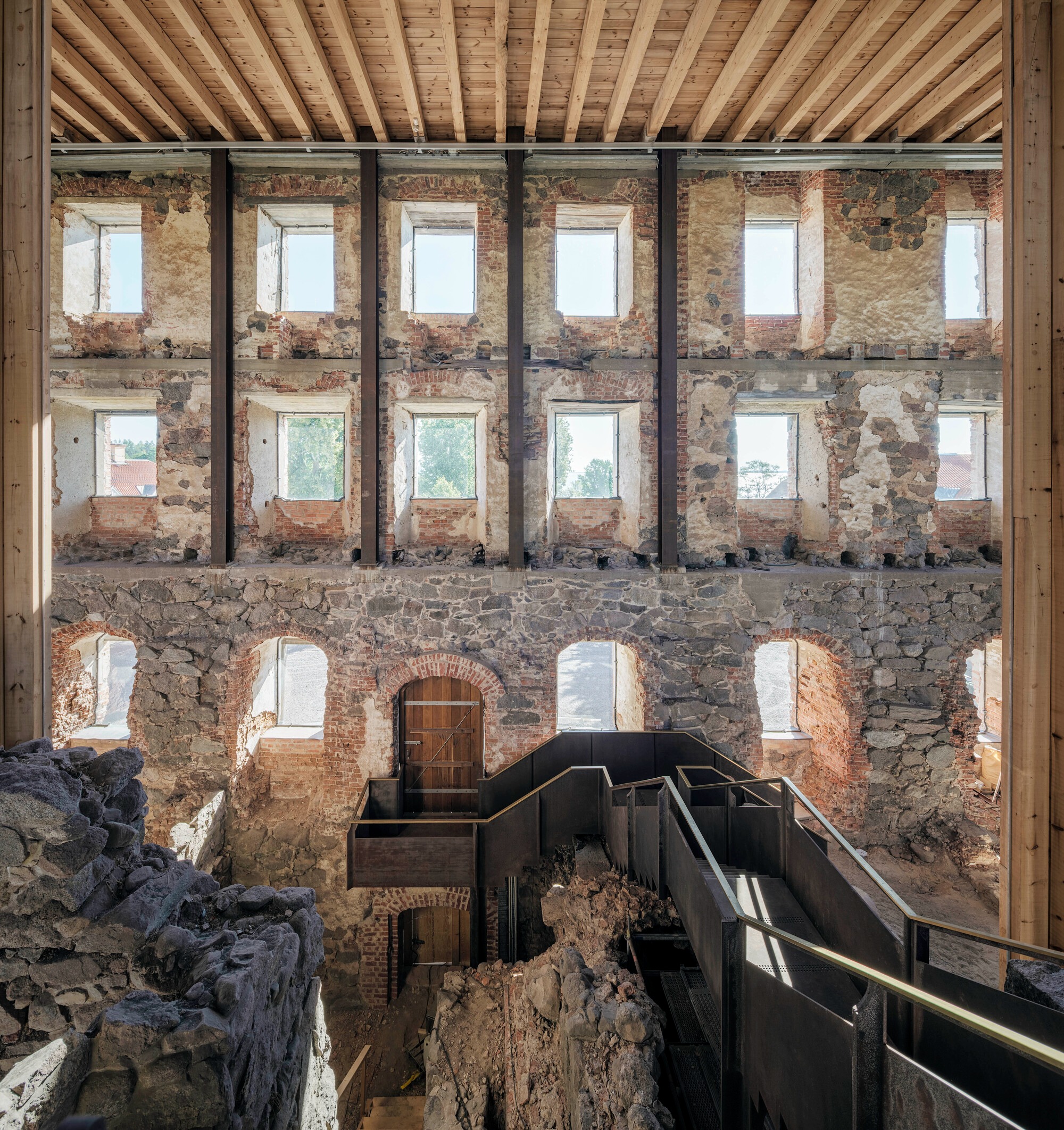
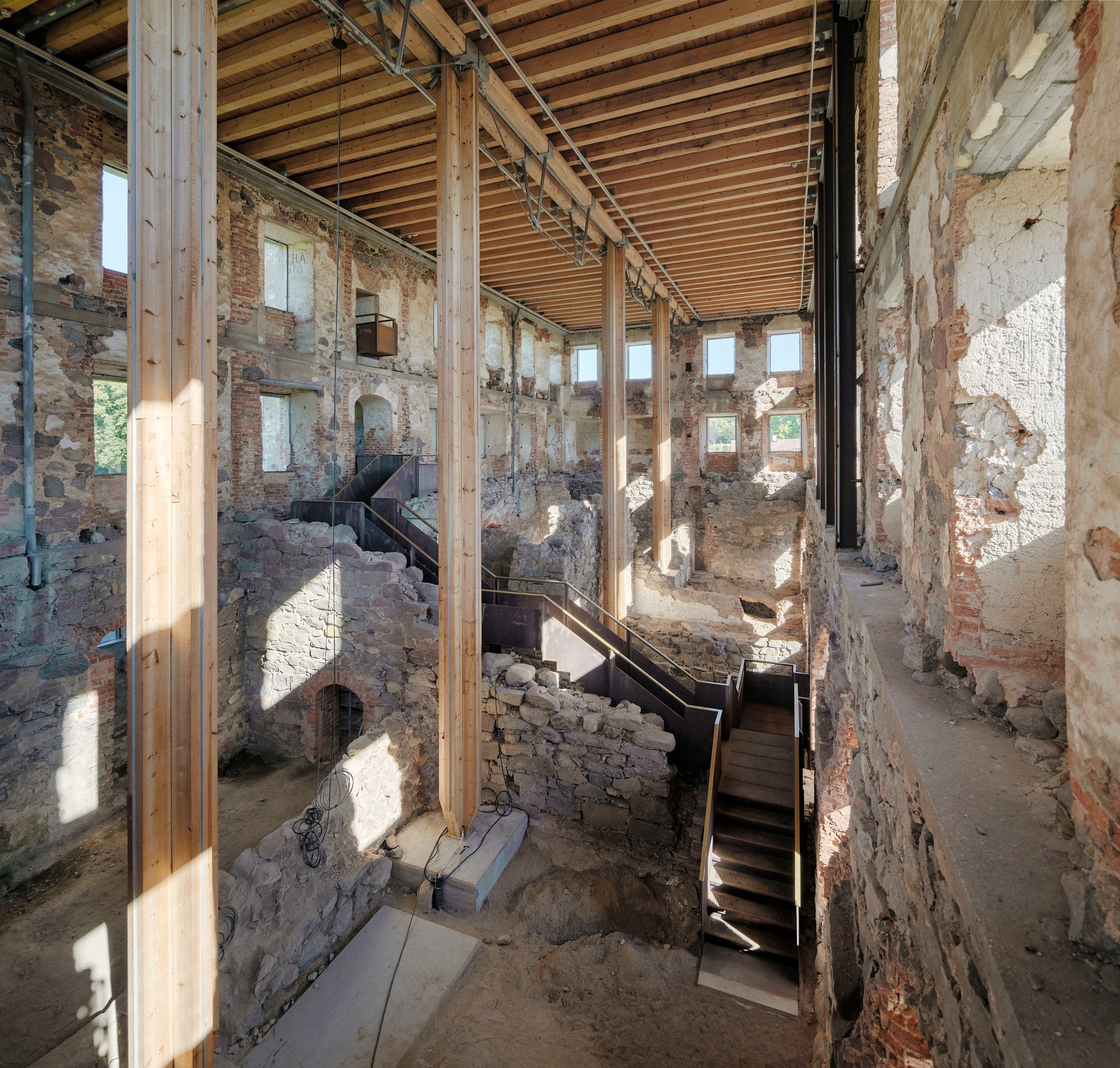
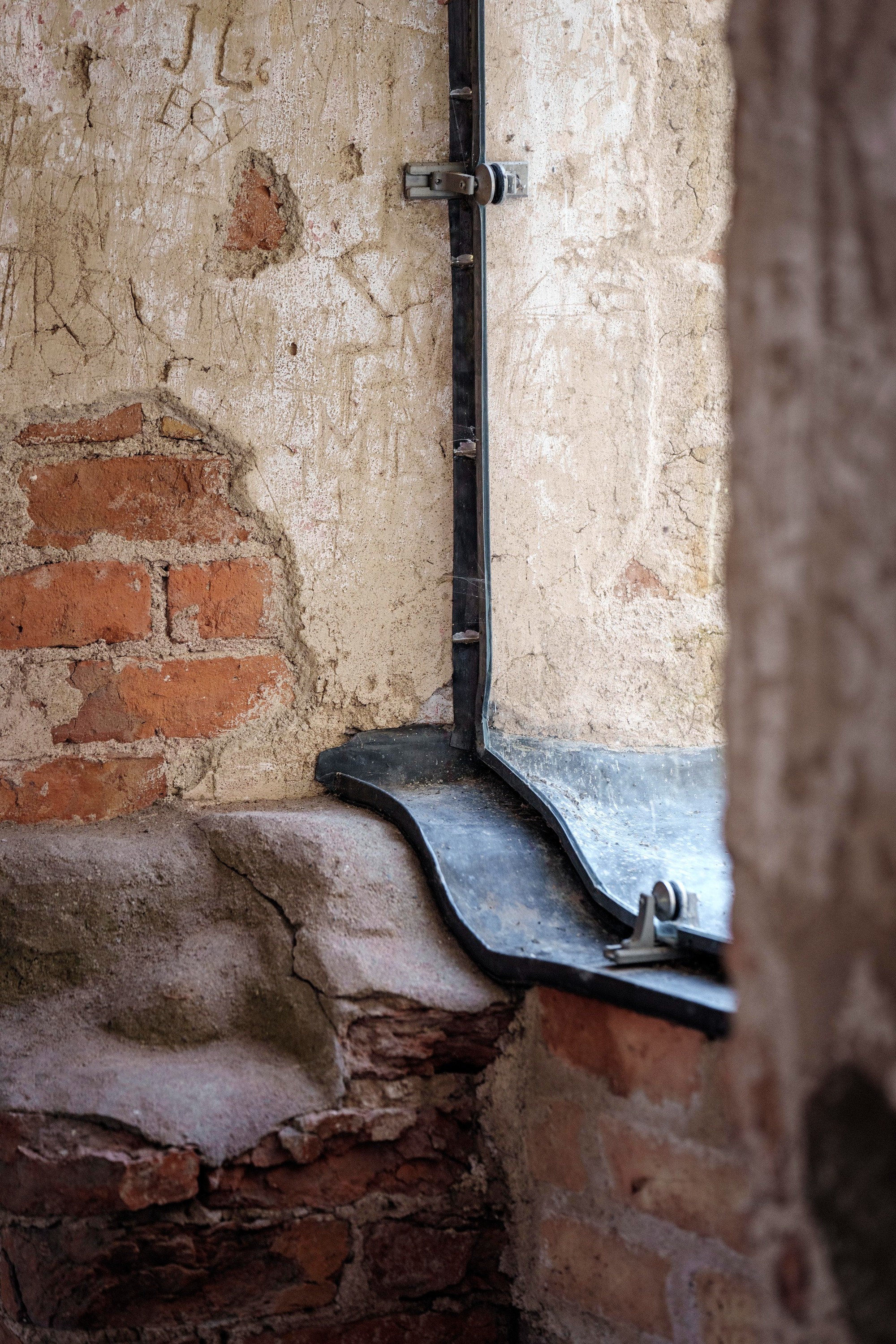
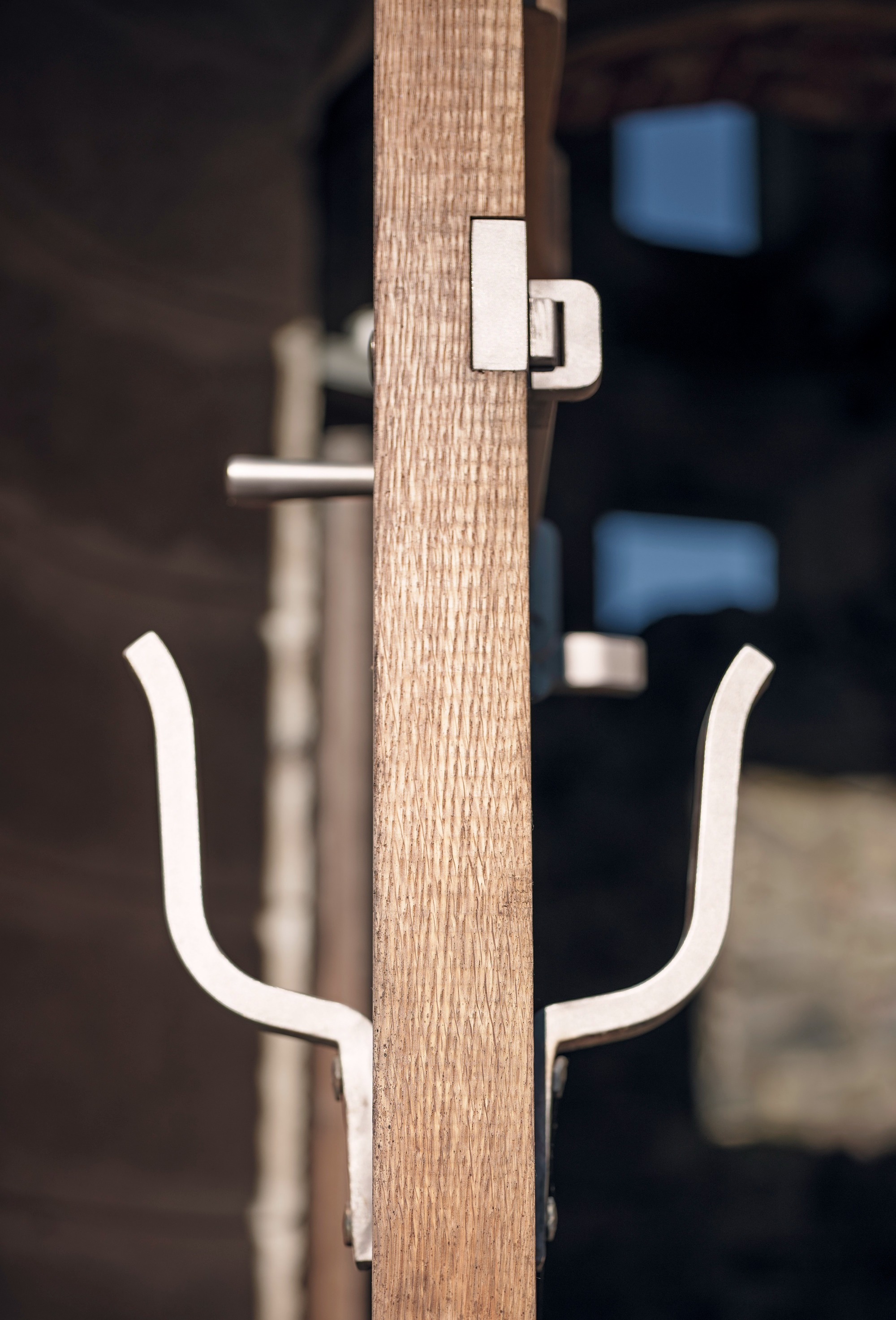
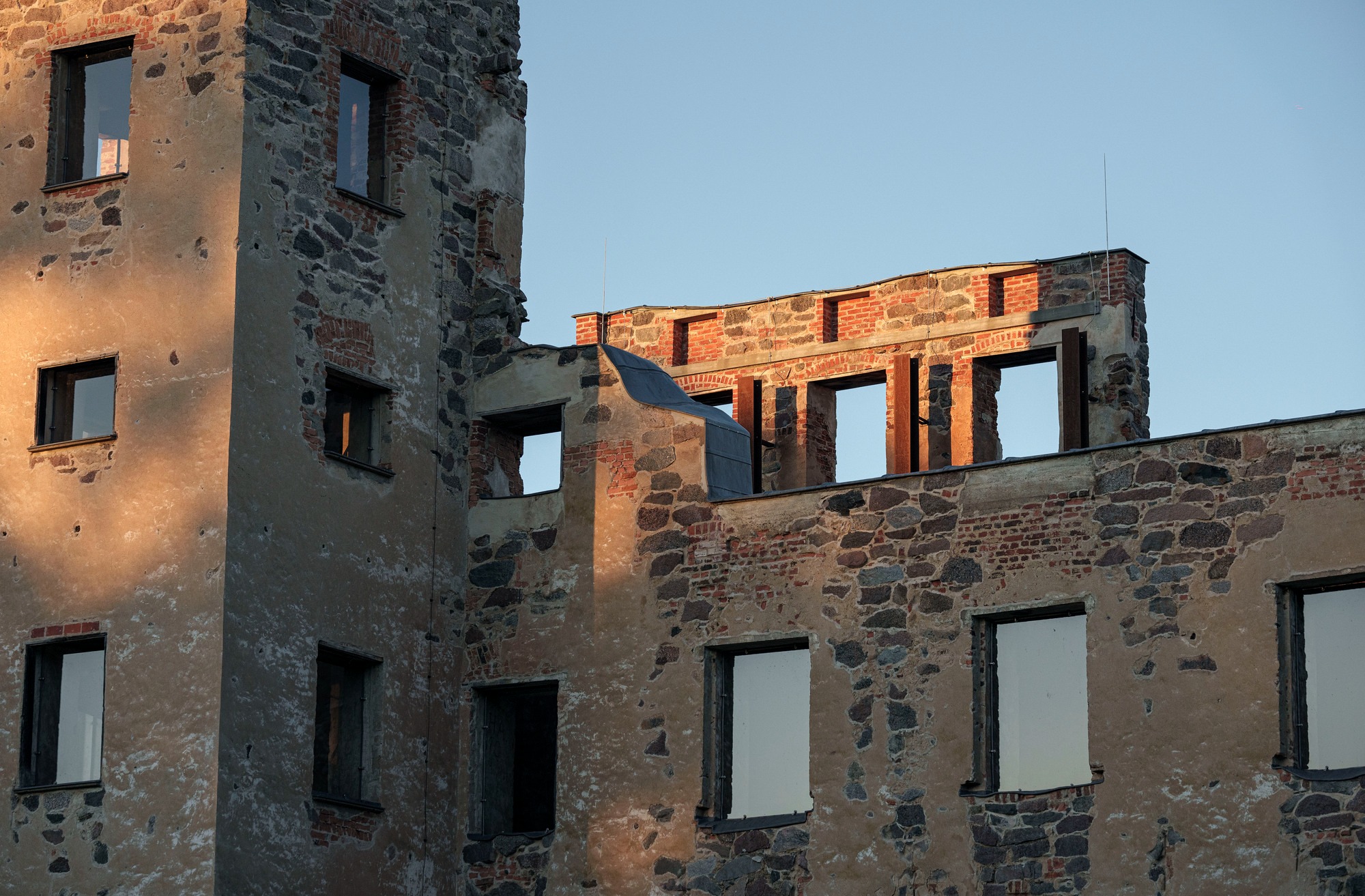
설계팀이 세운 원칙은 분명했다. 외부에서 바라보면 손대지 않은 폐허의 인상 그대로를 유지할 것. 내부에는 공간을 지키기 위한 최소한의 구조만을 더할 것. 이 원칙 아래 석조 보존 작업과 절제된 건축적 개입이 함께 진행됐다. 벽 상단과 창문 파라펫에는 윤곽에 맞게 성형한 납판을 씌웠고, 창문 개구부에는 맞춤 제작한 접합 유리를 끼워 넣었다. 참나무 판재로 만든 새 외부 문이 그 자리를 마무리했다.
숲에서 온 지붕
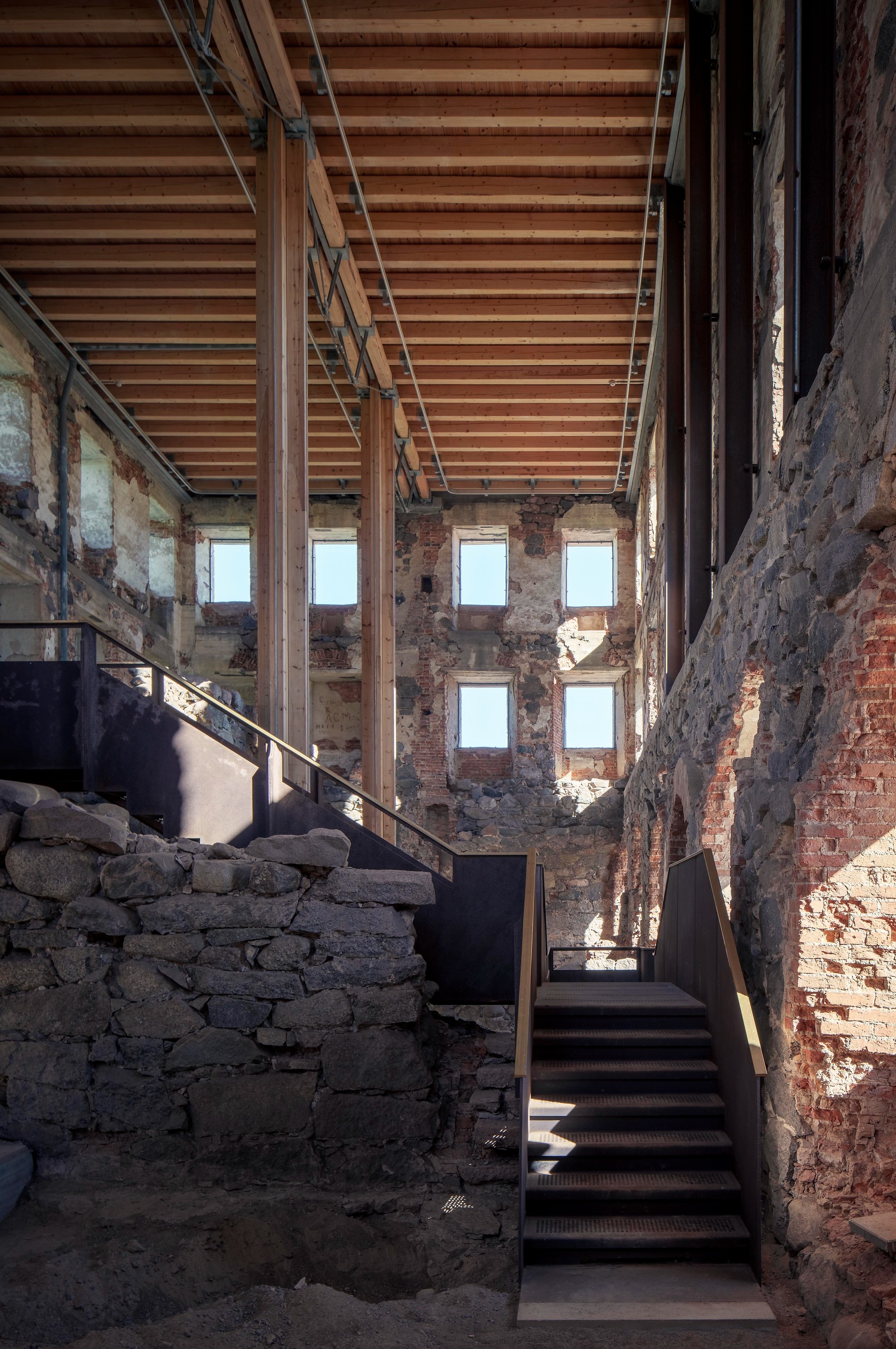
지붕을 떠받치는 보는 영지 내 숲에서 직접 벌채한 목재를 현장에서 켜내, 전체 길이 그대로 사용했다. 무너져 내린 중앙 벽 자리에는 방화 처리를 위해 목재로 감싼 철골 기둥이 들어섰고, 그 위를 이중 보가 가로지른다. 지붕 구조물은 원래의 하중 지점 그대로에 얹혀, 새것이 아닌 오래된 벽의 기억 위에 조용히 자리를 잡는다.
코르텐강의 나선
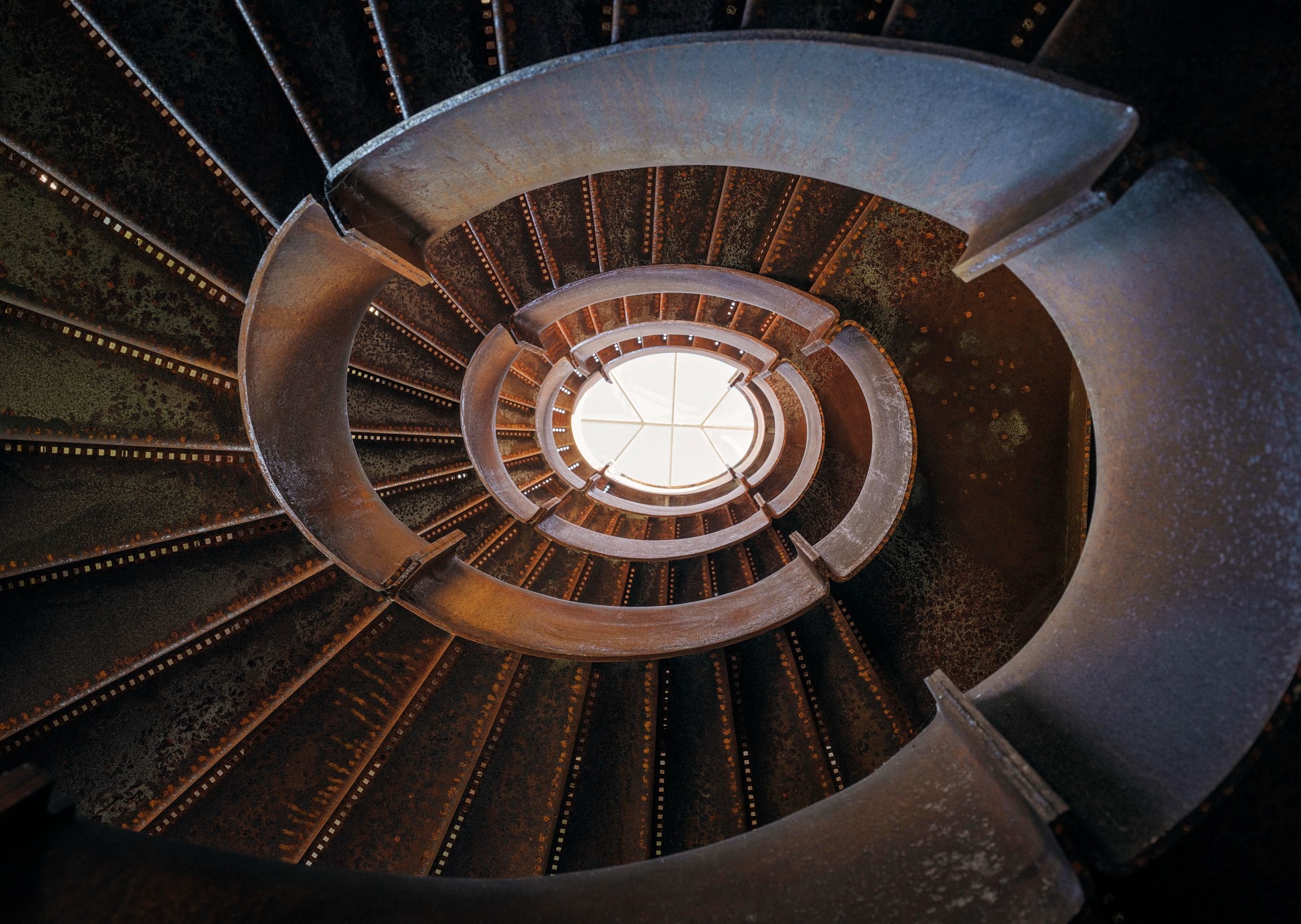
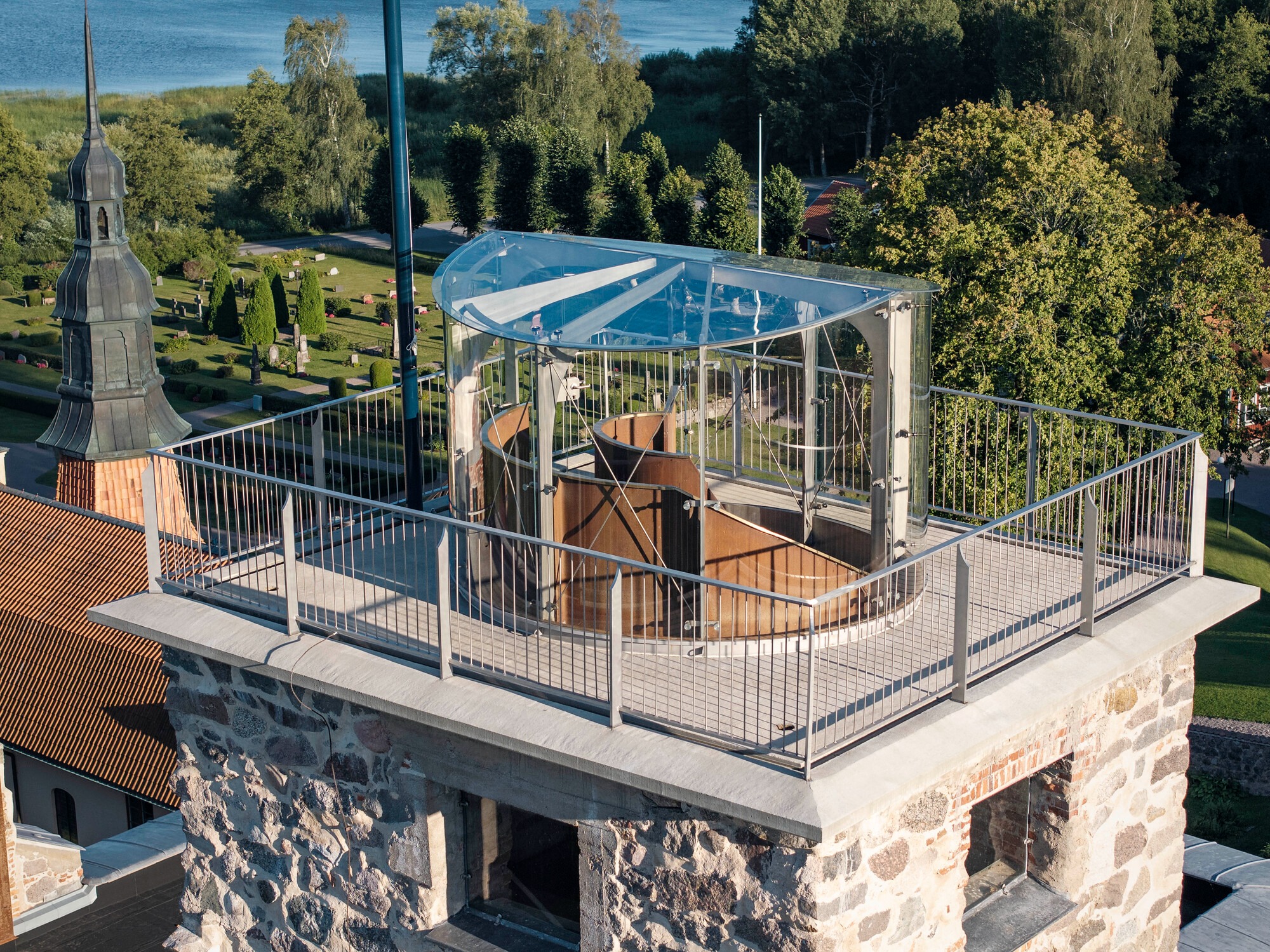
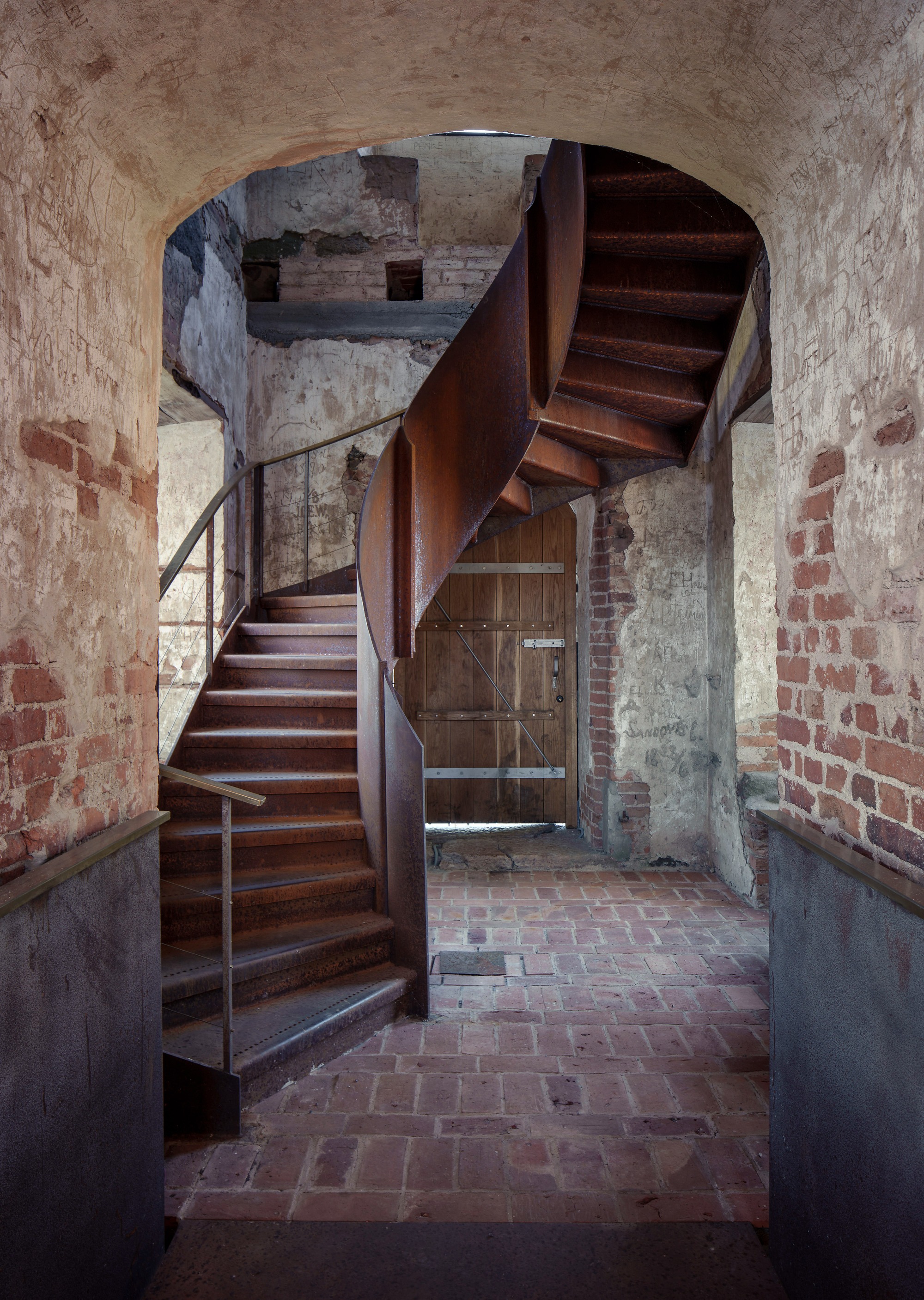
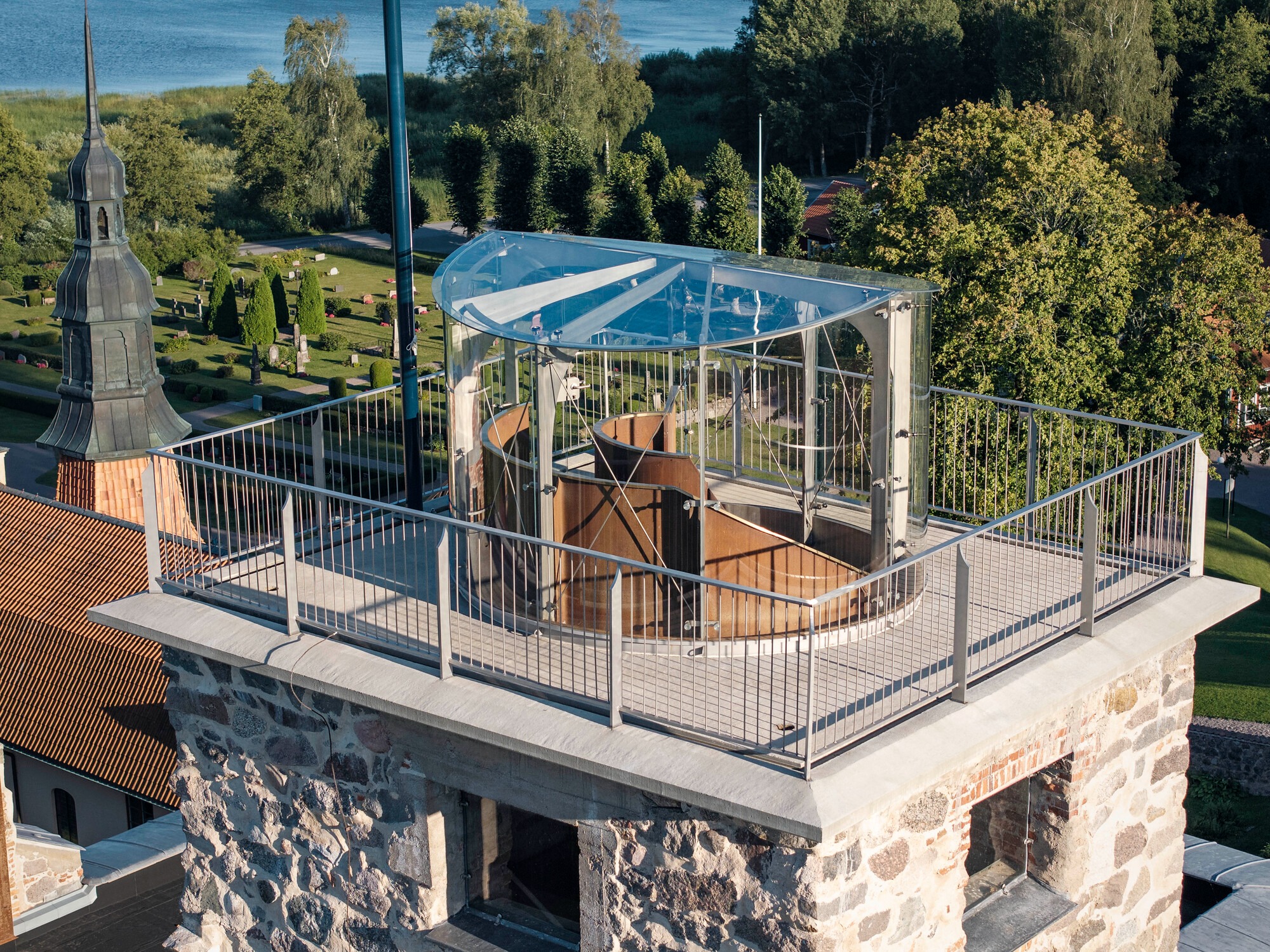
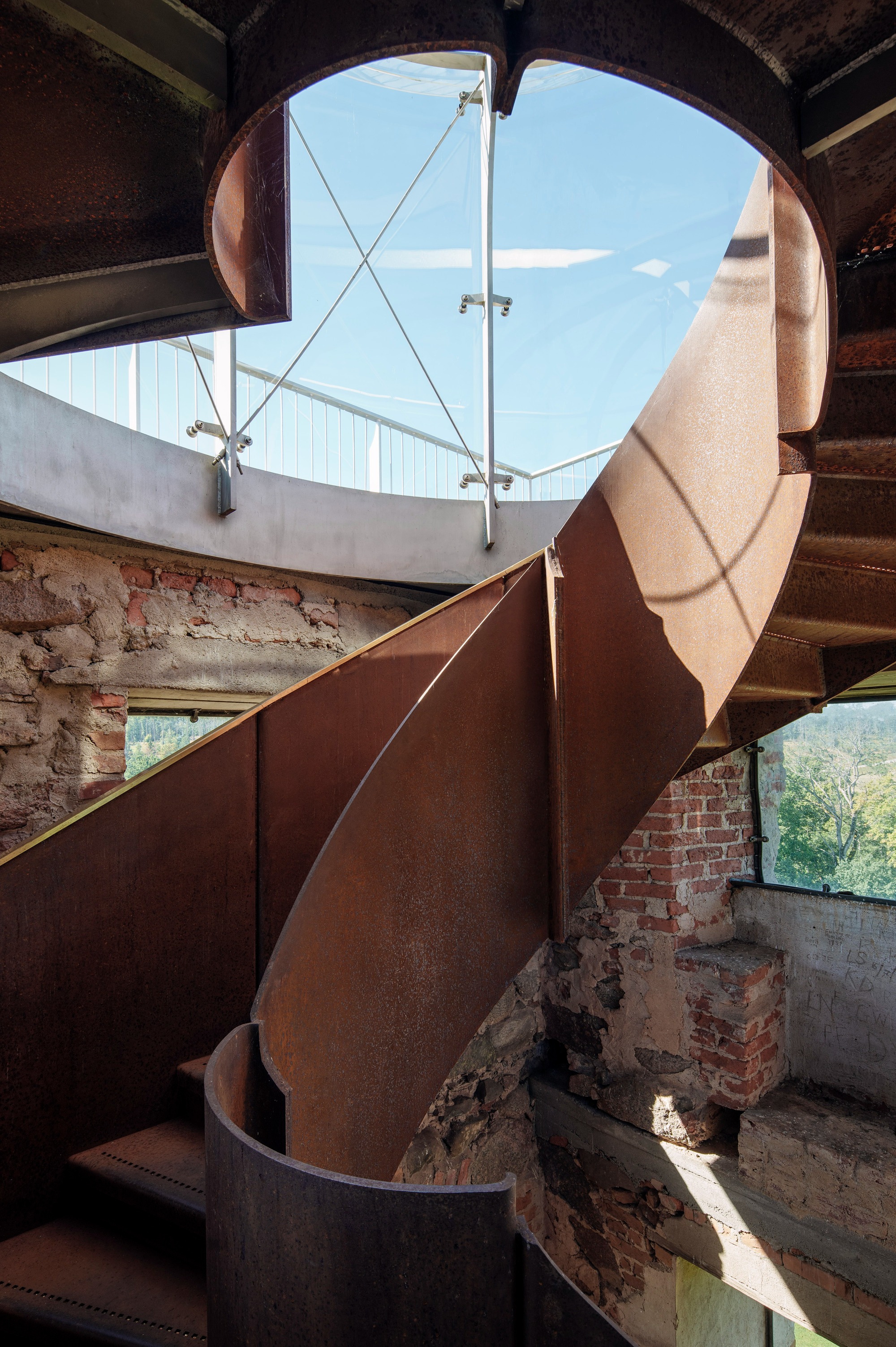
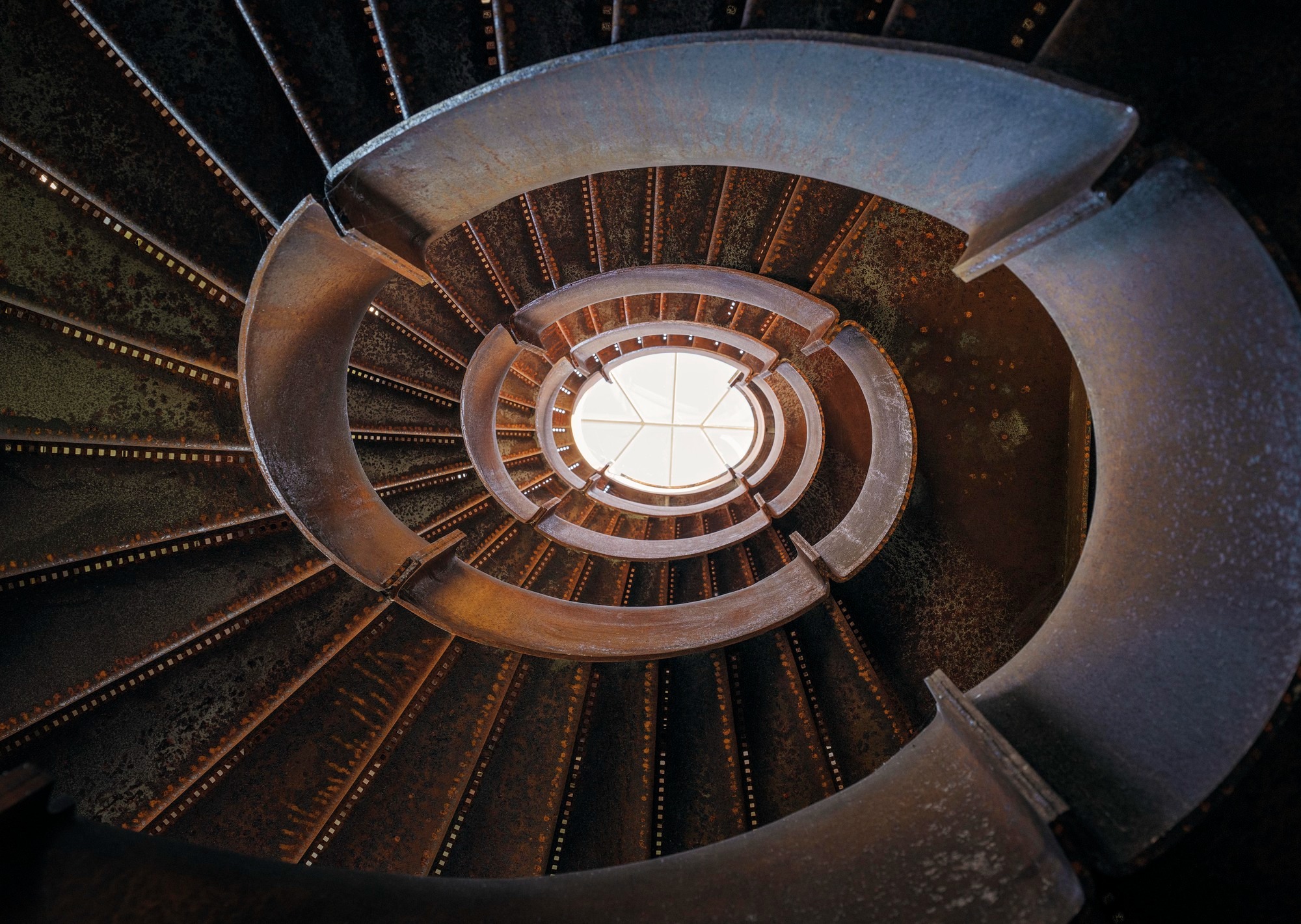
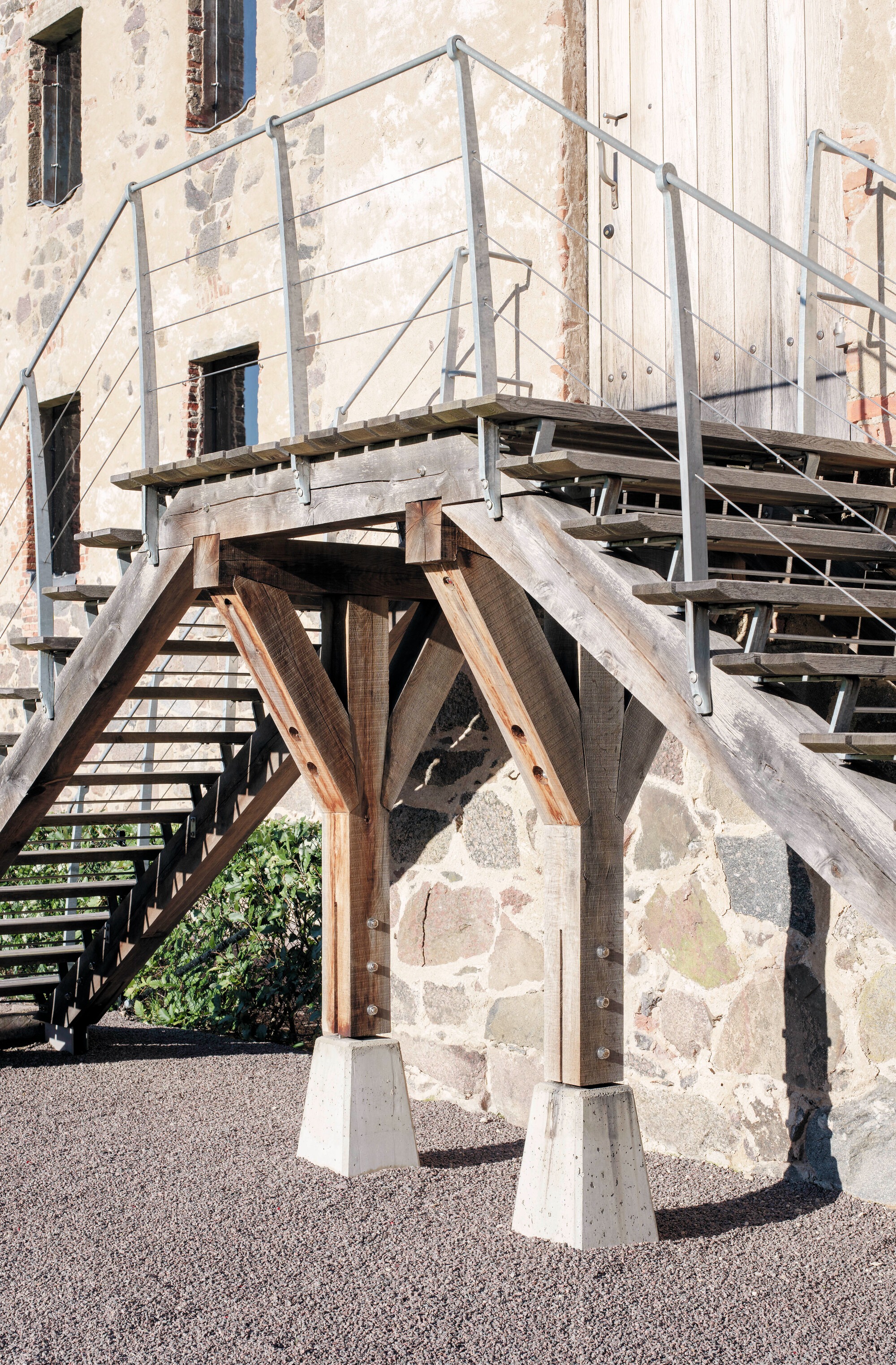
설계팀은 폐허 안의 동선을 두 가지 방식으로 새로 열었다. 대홀에는 지하 아치 공간 사이의 철골 기둥 위에 얹힌 자립식 계단이 놓였고, 계단탑 안에는 유리 랜턴 아래 매달린 타원형 나선 계단이 이어진다. 두 계단 모두 코르텐강(내후성 강재)으로 빚어졌으며, 황동 손잡이가 마감을 더했다. 수백 년 된 적벽돌과 석재 사이에서, 코르텐강 특유의 붉은 녹빛 표면은 낯선 이물감이 아니라 자연스러운 시간의 연속처럼 느껴진다. 진입 동선으로는 참나무 보 계단이 새로 마련됐으며, 안뜰 입구에는 바로크 양식의 석조 계단이 현재 공사 중이다.
Write by Claude & Jean Browwn
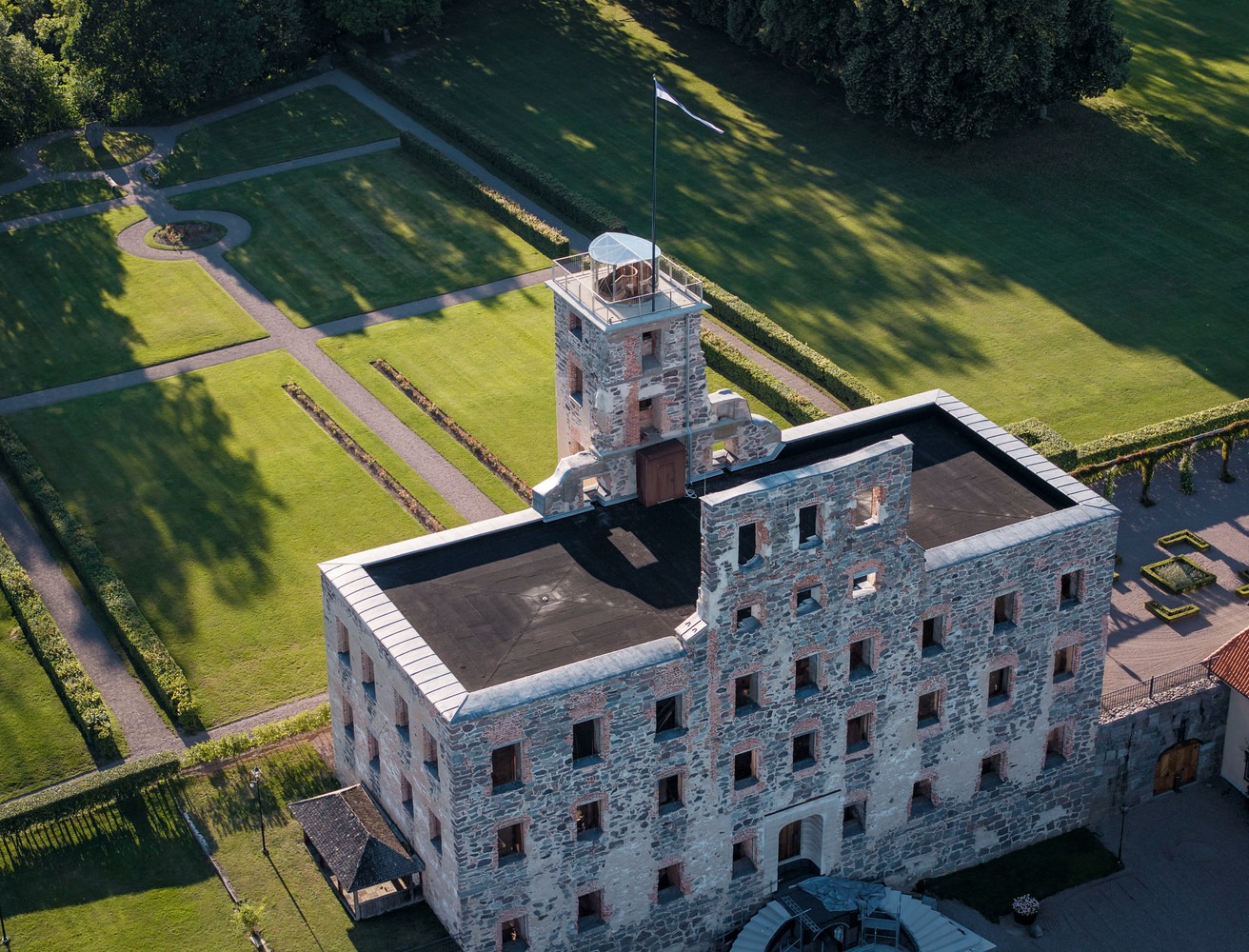
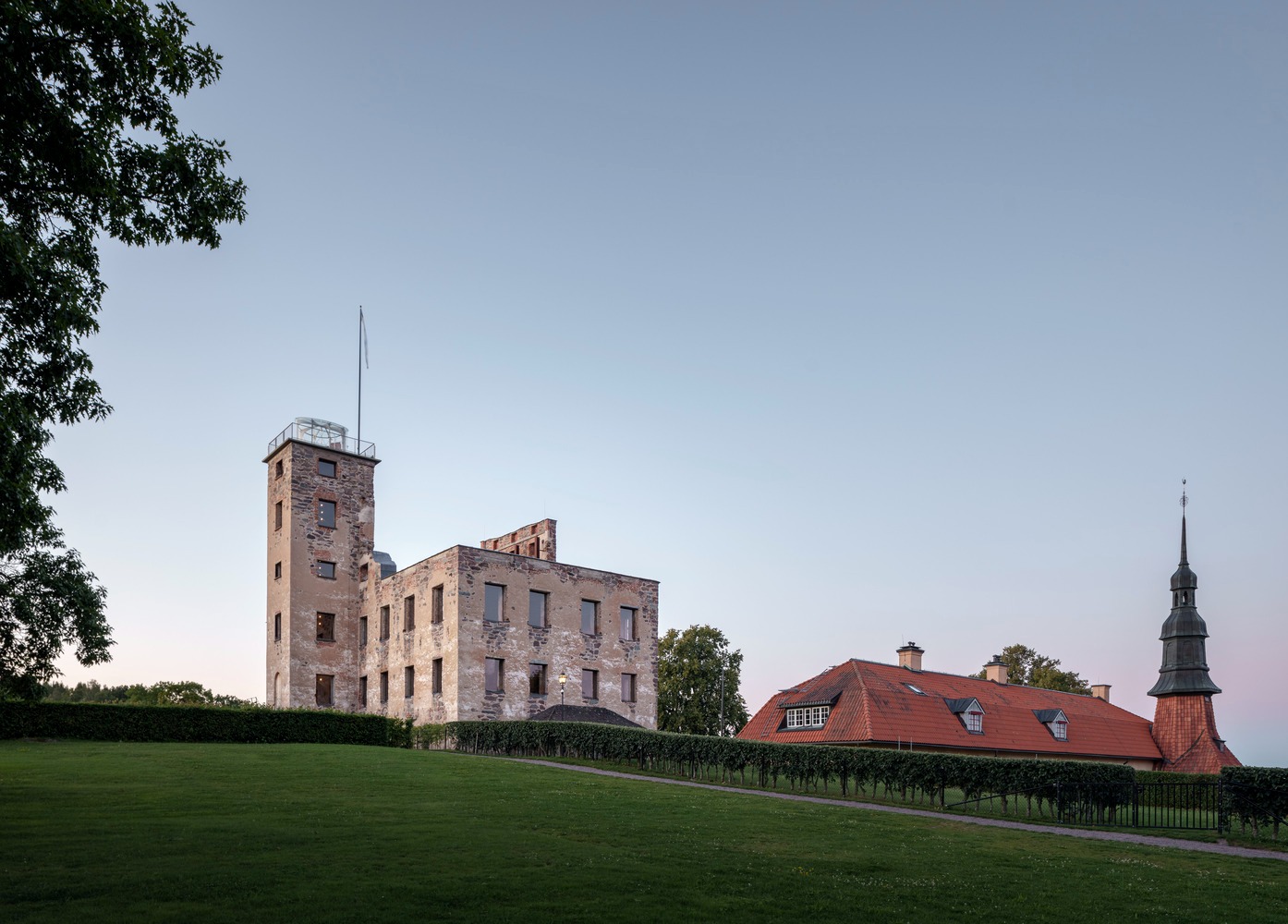

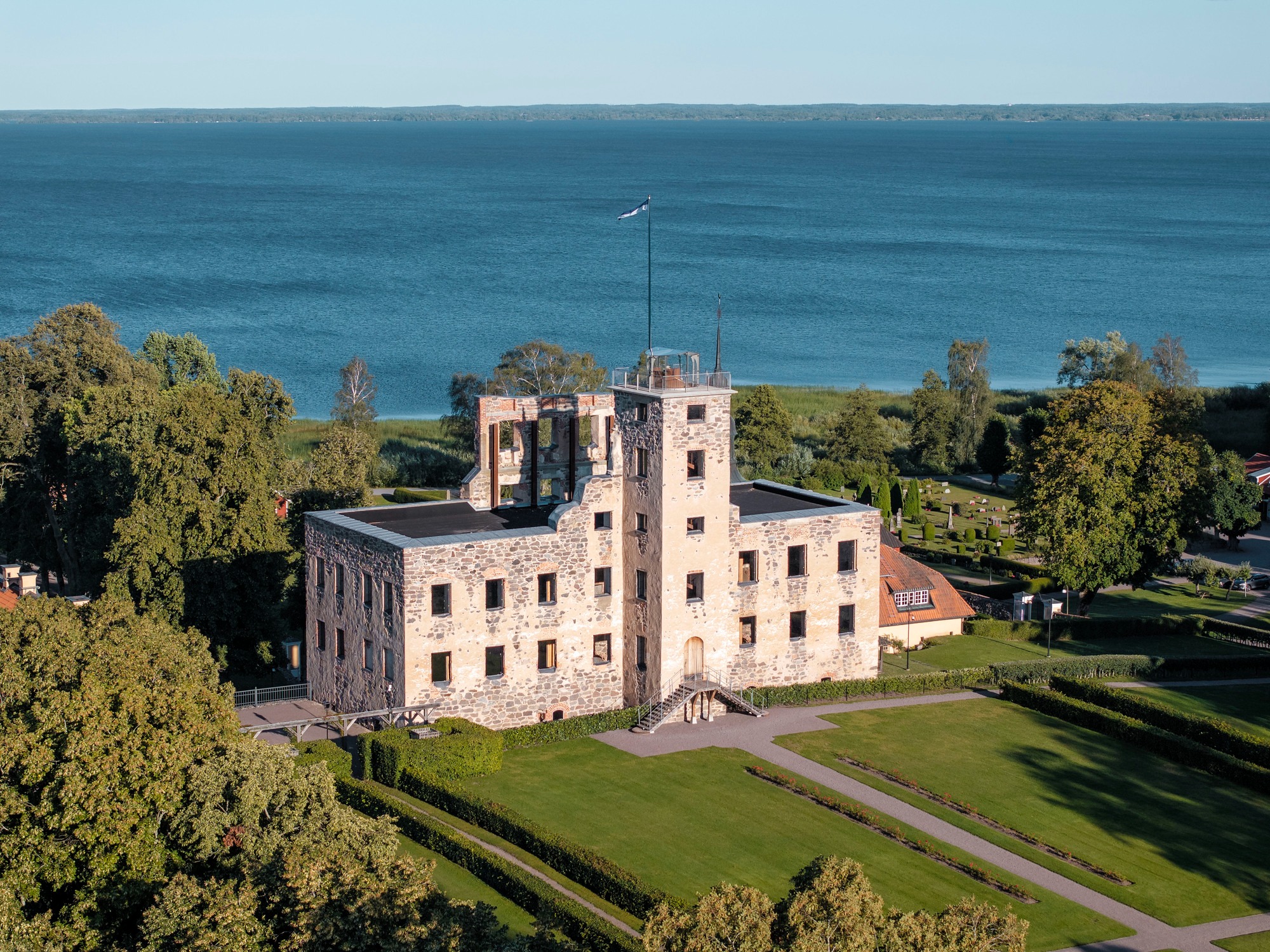
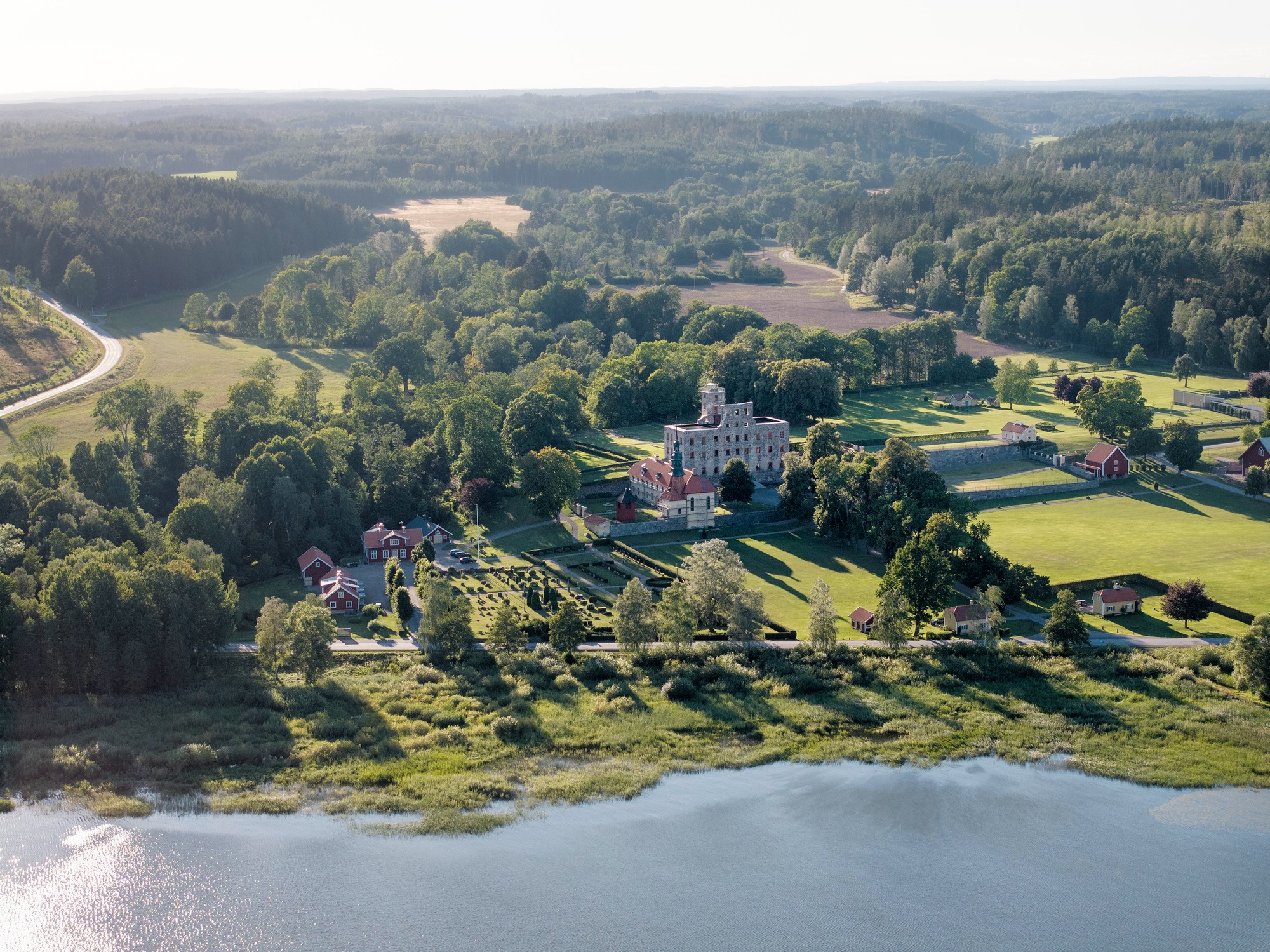

West of Lake Roxen, just outside Linköping, stands the ruin of Stjärnorp Castle, originally built between 1654 and 1662, most likely designed by Nicodemus Tessin the Elder. The estate comprised a four storey stone main building with a stair tower facing the park to the west, and two wings facing Lake Roxen to the east. The castle is depicted in Erik Dahlbergh's Suecia Antiqua et Hodierna from 1697.
A major fire in 1789 destroyed the main building and both wings. While the wings—one containing the castle chapel—were restored, the main building was left as a ruin and has remained exposed for over 230 years. During the 20th century, only minor stabilisation measures were carried out. Today, the ruin is a protected ancient monument.
In 2012, the Stjärnorp estate launched an architectural parallel commission to find ways to preserve the ruin while enabling limited access. Wikerstål Arkitekter, later acquired by Tengbom in 2017, was selected to develop and realise the proposal.
In recent years, a careful restoration has combined masonry conservation with restrained architectural additions. Externally, the aim was to maintain the impression of an untouched ruin. Internally, a protective roof structure has been added, supported at the original bearing points. Wall tops and window parapets have been capped with contoured sheet lead, and custom laminated glass panes have been installed in the window openings. New oak plank exterior doors have also been introduced.
The roof structure uses full length beams sawn on site from timber sourced from the estate's forest. The collapsed central wall has been replaced by double beams supported by steel columns clad in timber for fire protection.
To improve accessibility, new staircases have been added. A self supporting staircase in the great hall rests on steel columns between the cellar vaults, while an elliptical spiral staircase in the stair tower is suspended beneath a glass lantern. Both staircases are made of weathering steel with brass handrails. Access is provided by a new oak beam staircase, and a Baroque-style stone staircase is currently under construction at the courtyard entrance.
from archdaily