"건축이란 대지의 연장이다. 마치 식물이 뿌리로부터 자라나듯, 건물도 그 땅으로부터 솟아올라야 한다." — 프랭크 로이드 라이트 (Frank Lloyd Wright)
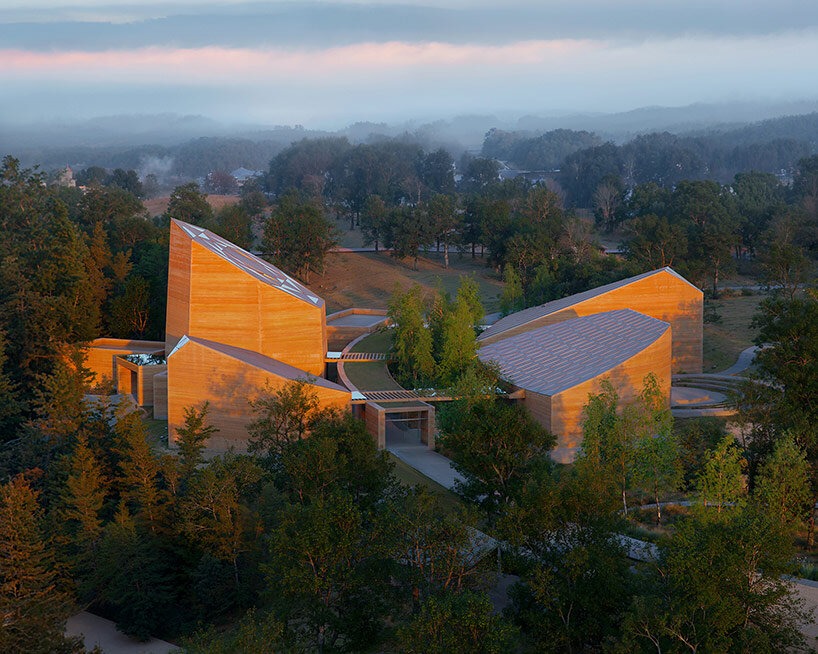
safdie architects plans cherokee heritage center as a cluster of earth-toned blocks
대지와 함께 낮게 엎드린 캠퍼스
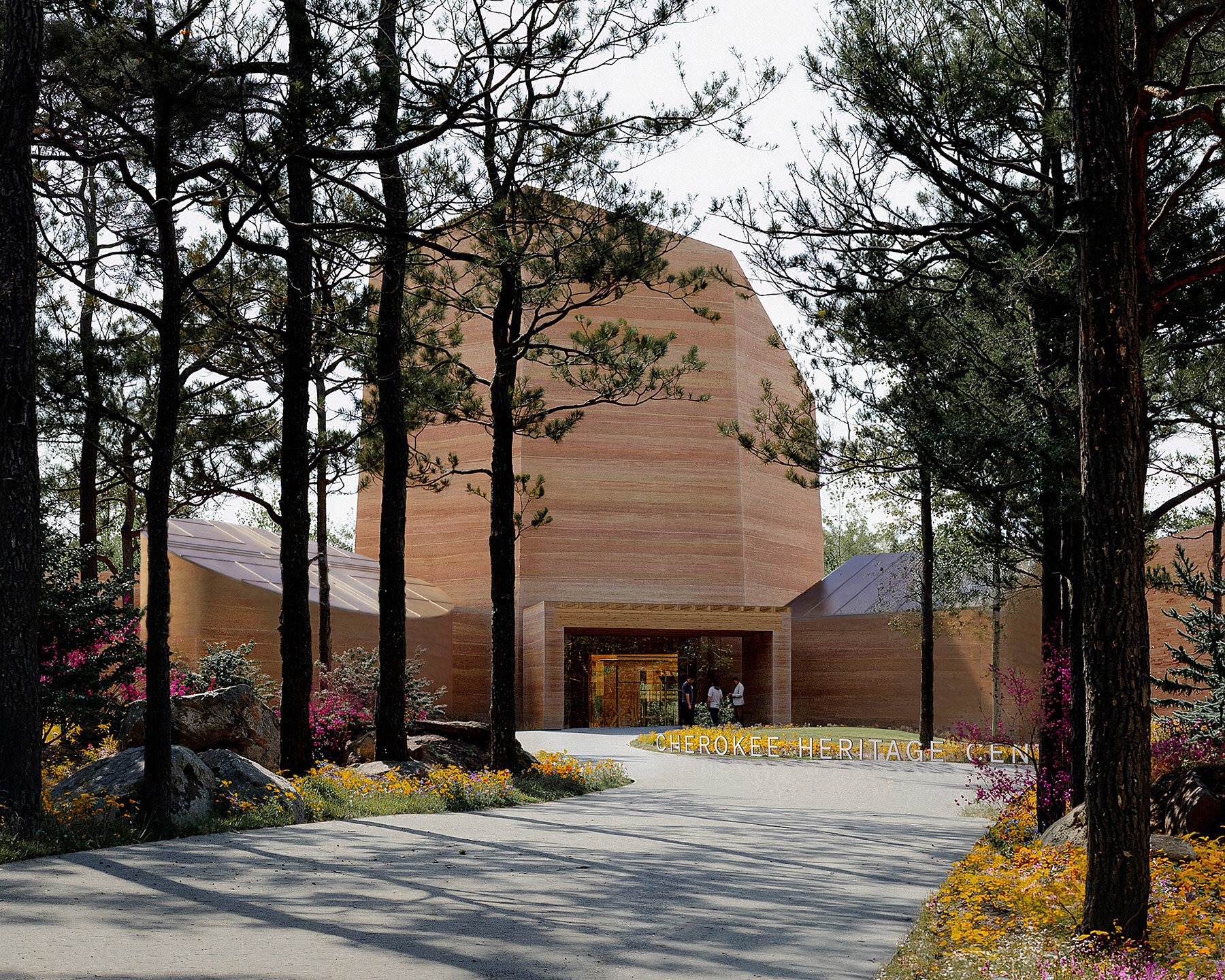
오클라호마 주 탈리쿼(Tahlequah)의 숲지대에 새피디 아키텍츠(Safdie Architects)가 설계한 체로키 헤리티지 센터(Cherokee Heritage Center)가 들어선다. 건물군은 대지 위에 군림하지 않는다. 지형의 굴곡을 따라 낮게 엎드린 채, 경사가 제각각인 지붕들은 햇빛을 저마다 다른 각도로 받아내며 숲의 수관(樹冠) 아래로 조용히 스며든다. 멀리서 바라보면 따뜻한 흙빛 매스들이 나무들 사이로 점점이 들어차, 이 건축이 대지로부터 자라나온 것처럼 느껴진다.
각각의 동(棟)은 저마다 기능을 품고 있지만 전체는 하나의 연속된 풍경처럼 읽힌다. 동과 동 사이로 난 길은 식재된 공터를 가로지르고 얕은 수면을 건너며 이어진다. 건물은 한꺼번에 드러나지 않는다. 방문자가 걸음을 옮길수록 조금씩, 단편적으로 모습을 열어 보인다.
흙으로 쌓아 올린 외벽
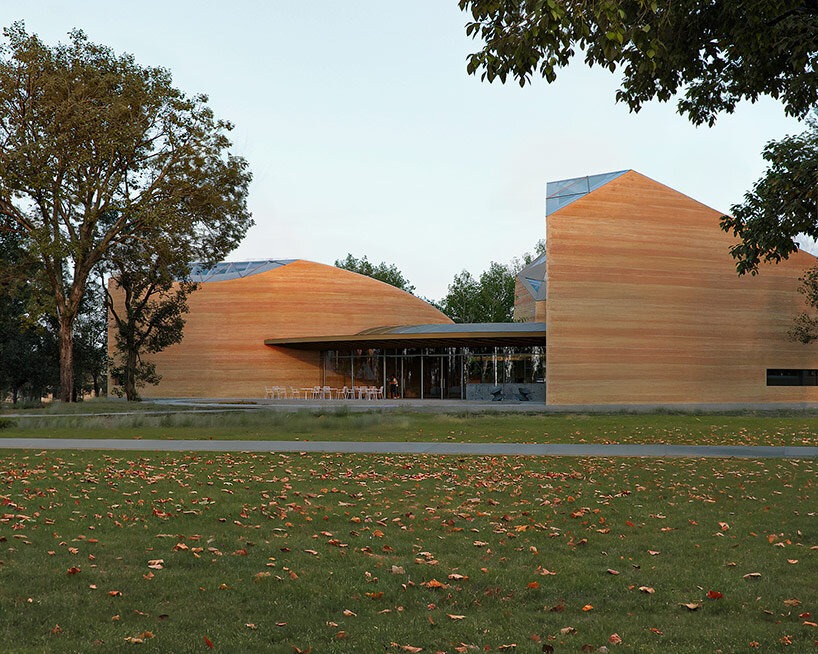
외벽은 수평으로 층층이 쌓인 흙빛 소재로 덮여 있다. 표면은 베이지빛 모래색에서 짙은 황토색까지 미묘한 결을 만들며 빛에 따라 색조를 바꾼다. 이 물성(物性)의 선택은 단순한 미학적 결정이 아니다. 건물을 주변 토양에 시각적으로도, 물리적으로도 단단히 묶어두는 방식이자, 각기 다른 기하학을 가진 매스들을 하나의 일관된 표면으로 묶어내는 힘이다.
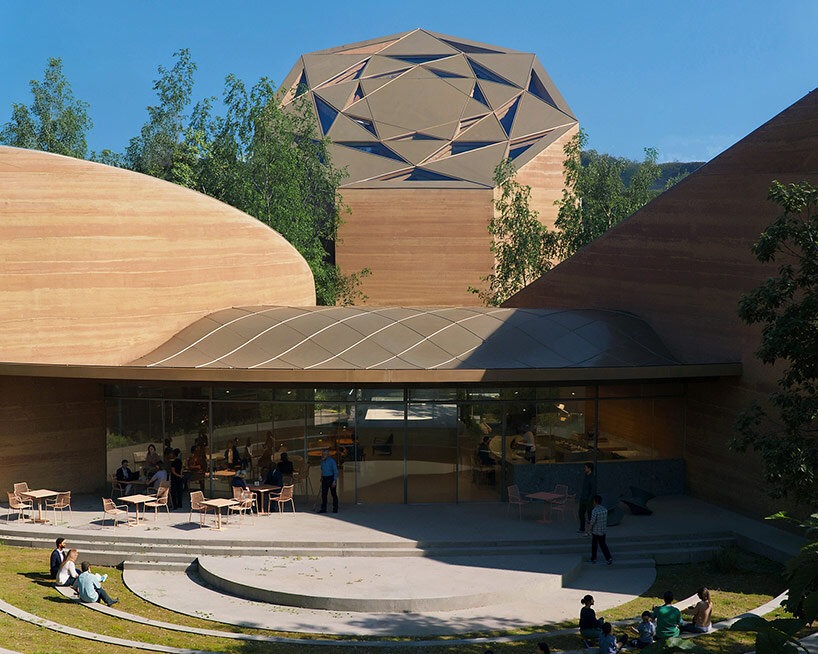
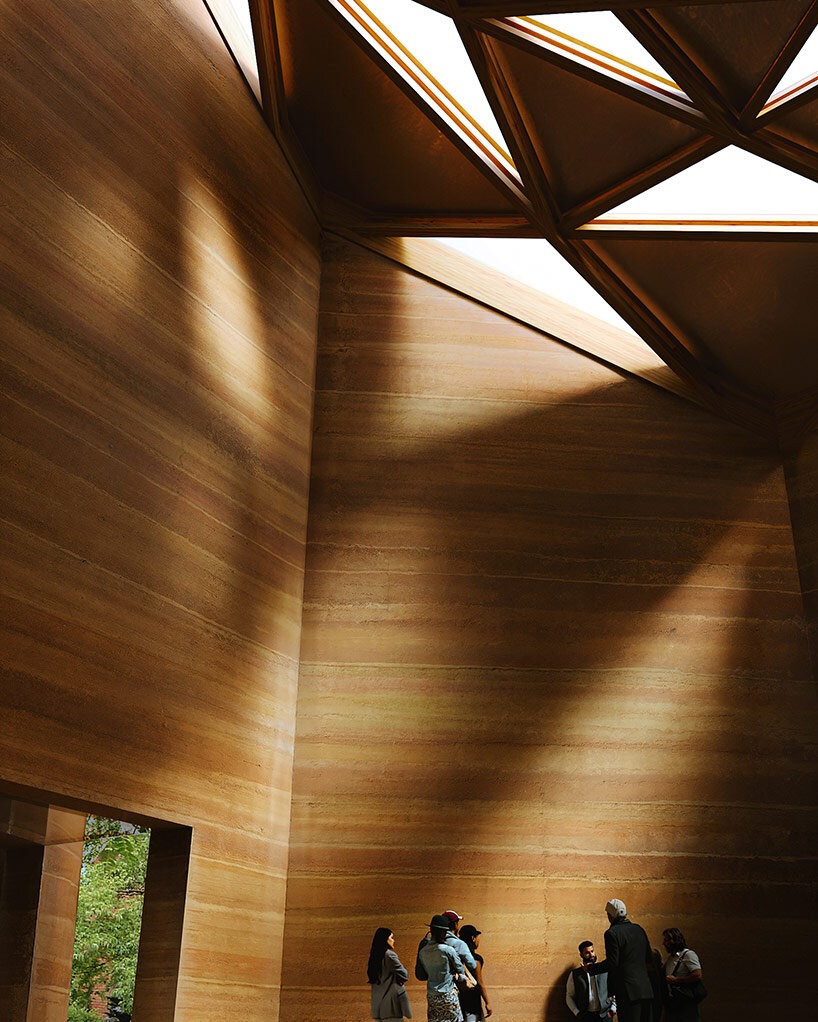
지붕은 또 다른 언어를 구사한다. 어떤 동은 날카롭고 각진 정점으로 솟구치고, 어떤 동은 완만한 곡면으로 부드럽게 내려앉는다. 다면체와 유선형이 교차하는 이 지붕들의 대화가 캠퍼스에 긴장감과 생동감을 함께 불어넣는다. 중심부 주요 동의 정상에는 삼각 분할된 채광창 집합체가 왕관처럼 앉아, 그 기하학으로 빛을 걸러 내부로 흘려보낸다.
빛이 이끄는 내부 공간
안으로 들어서면 빛이 공간의 주인공이 된다. 높은 갤러리 내부에서는 패턴화된 채광창을 통해 자연광이 위에서 쏟아져 내린다. 빛의 웅덩이가 질감 있는 흙벽 위를 천천히 이동하며 시간의 흐름을 공간에 새긴다. 개구부마다 두껍게 파인 벽 턱은 바깥 풍경을 액자처럼 담아내는 동시에 내부의 견고함과 아늑한 감싸임을 더해준다.
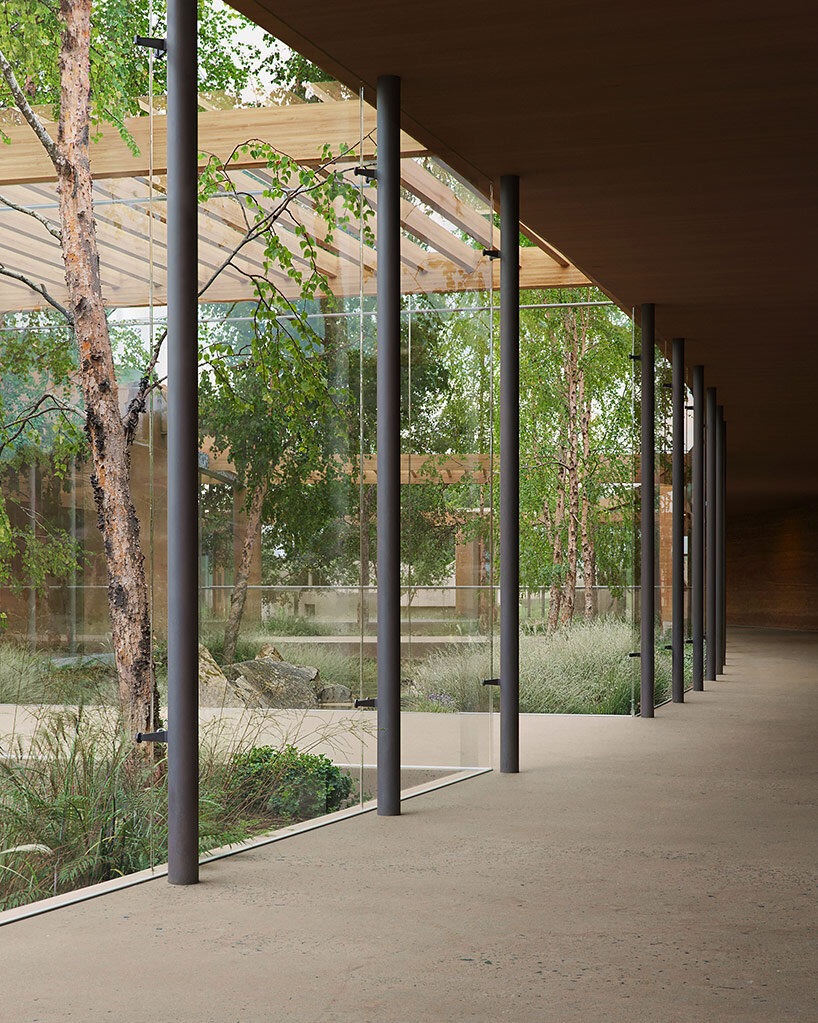
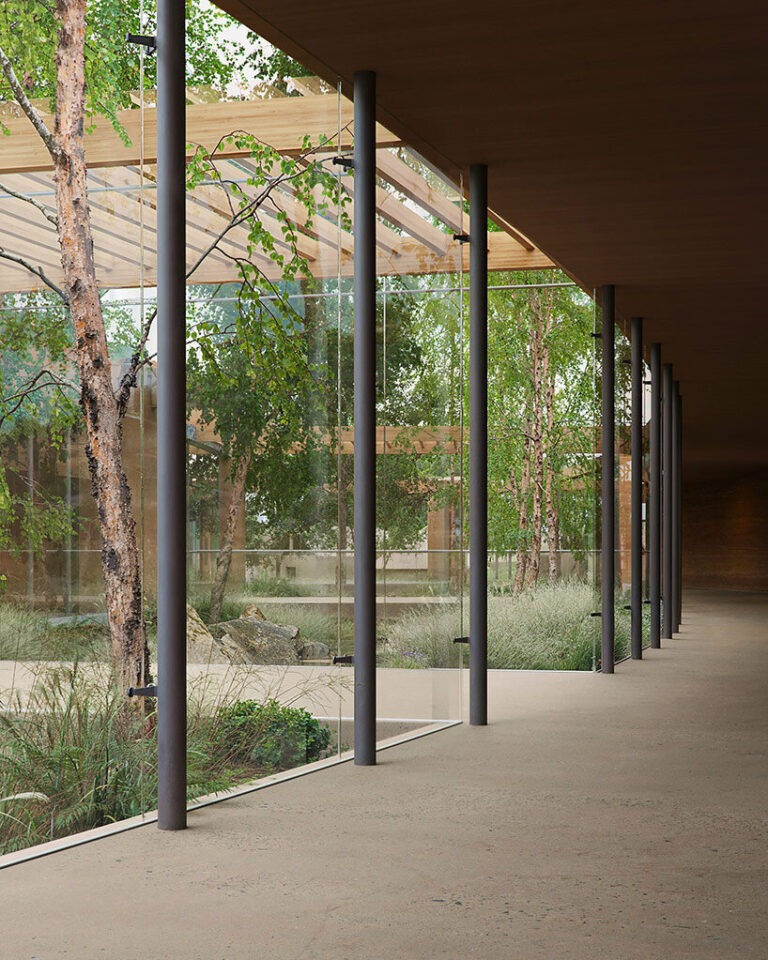
동선 공간은 넓고 명료하다. 저층부를 따라 이어지는 유리 벽은 내부와 외부를 가르지 않는다. 나무와 수면, 식재된 정원이 걸음마다 시야 안에 머문다. 가느다란 기둥들이 뻗어나간 처마를 받치며 그늘진 전이 공간을 만들어낸다. 이 전이 공간은 실내와 실외 사이의 완충지대이자, 자연으로 건너가는 문턱이다.
수면을 건너며 이어지는 동선
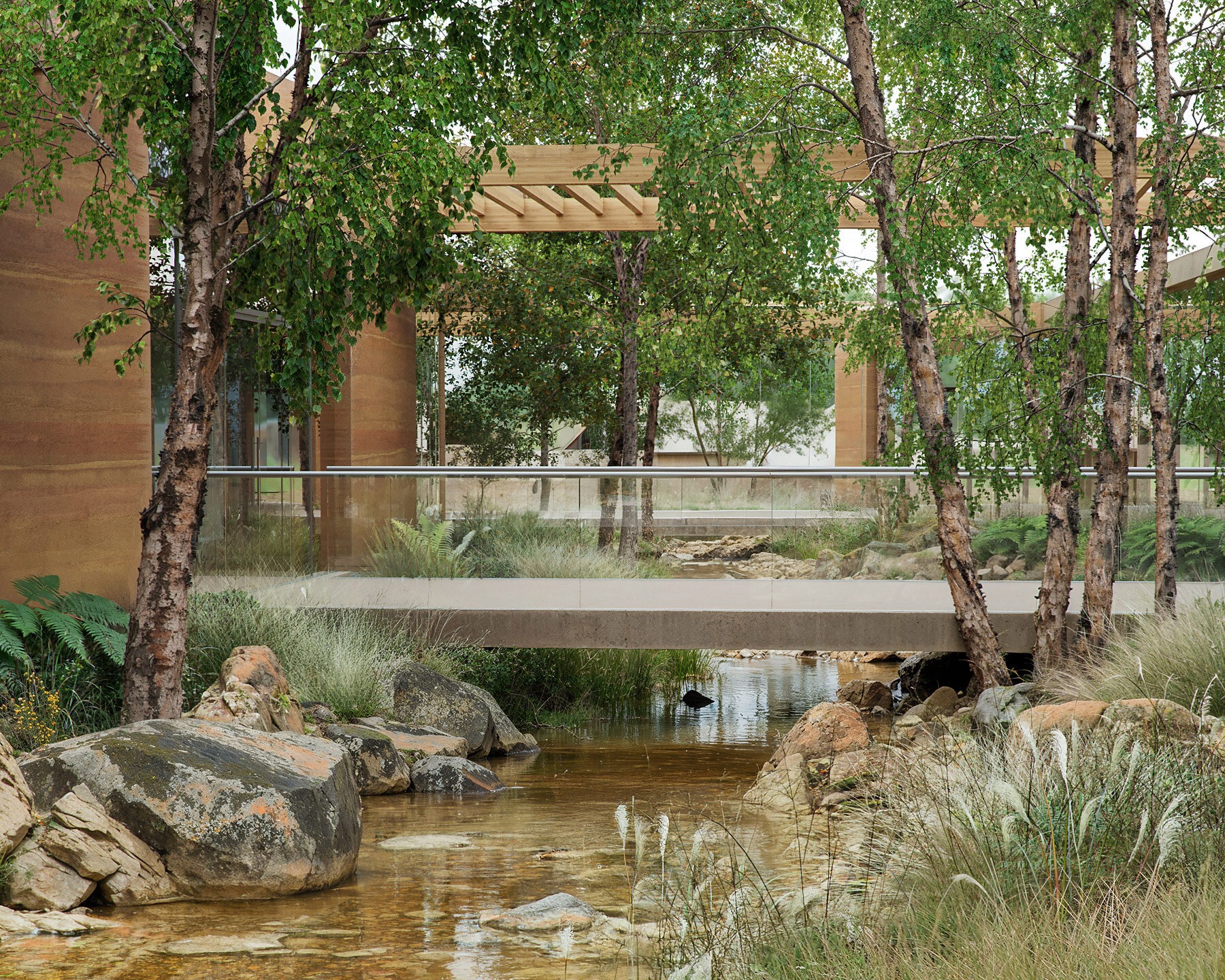
건물과 건물 사이는 교량과 지붕 달린 보행로로 연결된다. 풍경은 그 사이사이를 자유로이 관통한다. 얕은 개울을 가로지르는 보행 교량은 방문자를 물가와 초목 가까이로 끌어당겼다가 다시 건물 안으로 안내한다. 내부와 외부를 오가는 이 전환은 방문 내내 반복되며 건축과 대지 사이의 대화를 끊임없이 이어간다.
실외 공간은 건축의 연장선이다. 테라스는 실내 바닥에서 자연스럽게 이어지며 지형 속으로 완만히 녹아들고, 앉을 수 있는 자리는 지형과 함께 설계된다. 유리와 그늘 구조물, 식재가 중첩되는 경계에서 건물의 끝과 자연의 시작이 흐릿하게 섞인다.
모임의 장소, 카페와 공공 광장
동선이 교차하는 지점마다 카페와 모임 공간이 자리한다. 넓은 스팬의 구조와 개방된 유리창이 투명한 분위기를 만들어내고, 시선은 잔디밭과 숲 너머로 멀리 뻗어나간다. 카페 위를 덮은 완만한 곡면 지붕은 인근의 날카로운 매스들과 대비를 이루며 이 공간에 부드러운 제스처를 더한다. 사람들은 이 자리에서 잠시 걸음을 멈추고, 건축이 품어낸 풍경을 온몸으로 받아들인다.
Write by Claude & Jean Browwn
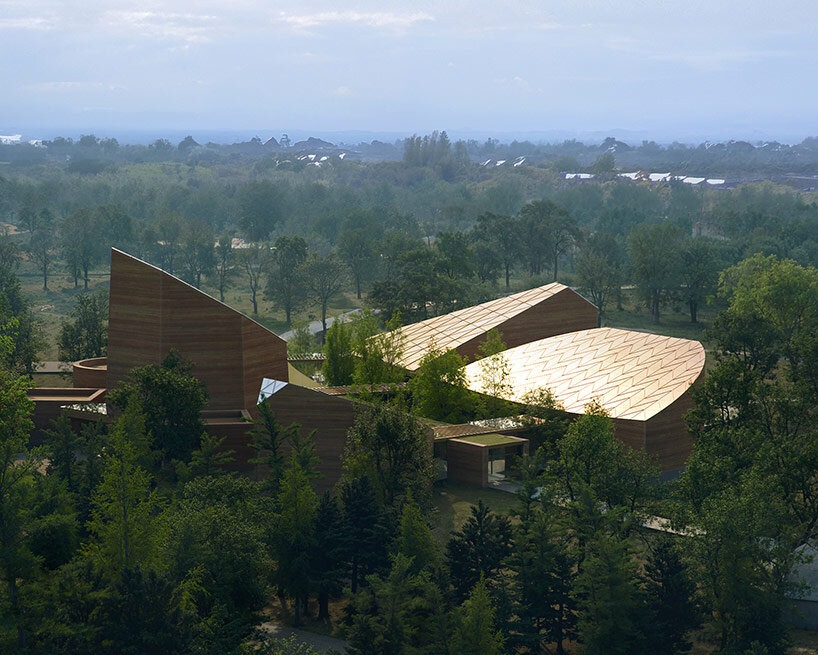
a campus set into the landscape
The new Cherokee Heritage Center in Oklahoma by Safdie Architects organizes a series of low, faceted volumes across a wooded site, forming a campus that sits close to the ground and follows the terrain. From a distance, the earth-toned buildings read as a cluster of warm, earth toned forms, their sloped roofs catching light at different angles while tree canopies soften their edges.
Each volume holds a distinct program, yet the composition feels continuous. Paths trace between the buildings, moving through planted clearings and across shallow water. The layout encourages a gradual approach, with the architecture revealing itself in fragments rather than as a single front-facing object.
a campus set into the landscap
The new Cherokee Heritage Center in Oklahoma by Safdie Architects organizes a series of low, faceted volumes across a wooded site, forming a campus that sits close to the ground and follows the terrain. From a distance, the earth-toned buildings read as a cluster of warm, earth toned forms, their sloped roofs catching light at different angles while tree canopies soften their edges.
Each volume holds a distinct program, yet the composition feels continuous. Paths trace between the buildings, moving through planted clearings and across shallow water. The layout encourages a gradual approach, with the architecture revealing itself in fragments rather than as a single front-facing object.
architecture built from the earth
The exterior of Safdie Architects’ Cherokee Heritage Center is defined by layered, horizontal bands of earth toned materials, giving the walls a subtle grain that shifts in color from sandy beige to deeper ochre. With this material choice, the architects ground the project visually and physically, and tie it to the surrounding soil while providing a consistent surface across the varied geometries
Roof forms introduce a different language. Some volumes taper into sharp, angular peaks, while others curve gently, creating a contrast between faceted and rounded profiles. In one of the central structures, a faceted skylight assembly crowns the space, its triangulated geometry filtering daylight into the interior below.
inside the upcoming cherokee heritage center
Along the interiors, light becomes the main spatial driver. In the taller galleries, daylight enters from above through patterned skylights, casting defined patches of brightness that move slowly across the textured walls. The thickness of the earthen-like walls is evident at openings, where deep reveals frame views outward and reinforce a sense of enclosure.
Circulation spaces remain open and legible. Glass walls along the ground level connect interior rooms to the surrounding landscape, allowing views of trees, water, and planted areas to remain present throughout the visit. Structural elements are kept minimal in these zones, with slender columns supporting extended rooflines that create shaded thresholds.
connections across the sit
Bridges and covered walkways link the buildings, maintaining continuity while allowing the landscape to pass through. One pedestrian bridge crosses a shallow stream, bringing visitors close to water and vegetation before re-entering the built fabric. These transitions between inside and outside occur frequently, keeping the experience in dialogue with the site.
Outdoor areas are treated as extensions of the architecture. Terraces step gently from interior floors, and seating is integrated into the topography. The project avoids a rigid boundary, instead allowing edges to blur where glass, shade structures, and planting overlap.
Public spaces, including a café and gathering areas, are found at the intersections of paths. Here, larger spans and open glazing create a more transparent condition, with views extending across lawns and into the trees beyond. The curved roof over the café introduces a softer profile, contrasting with the sharper volumes nearby.
name: Cherokee Heritage Center
architect: Safdie Architects | @safdiearchitects
location: Tahlequah, Oklahoma, USA
visualizations: © Mir | @mir.no
partners: Moshe Safdie, Jaron Lubin
design team: Belinda Valenti, Sam May, Tunch Gungor, Tess Lubin, Kristen Jackson, Yousun Nam
architect of record: Anishinabe Design Inc.
landscape: PWP Landscape Architecture
civil engineering: Wallace Design Collective
mechanical, electrical engineering: Buro Happold
mechanical engineer of record: HSA
from desingboom
'Culture' 카테고리의 다른 글
| * 질문하는 법을 가르치는 건물 [ MAD Architects ] Hainan Science Museum) (0) | 2026.05.18 |
|---|---|
| * 붉은 대지 위의 기억 [ Spaceworkers ] Vila do Bispo Museum, Portugal (0) | 2026.04.27 |
| * 폐허가 말을 걸다 [ Tengbom ] Stjärnorp Castle Ruin (0) | 2026.04.17 |
| * 절제가 만든 풍요 [ DSDHA ] Sheep Field Barn, Henry Moore Studios & Gardens (0) | 2026.04.16 |
| * 세대를 잇는 교육의 풍경 [ Pedevilla Architects ] Education Center Kössen (0) | 2026.04.08 |