대지를 가볍게 딛어라.-글렌 머컷(Glenn Murcutt)
 |
 |
 |
RipollTizon Estudio de Arquitectura-Social Housing in Ibiza
도시의 경계에서
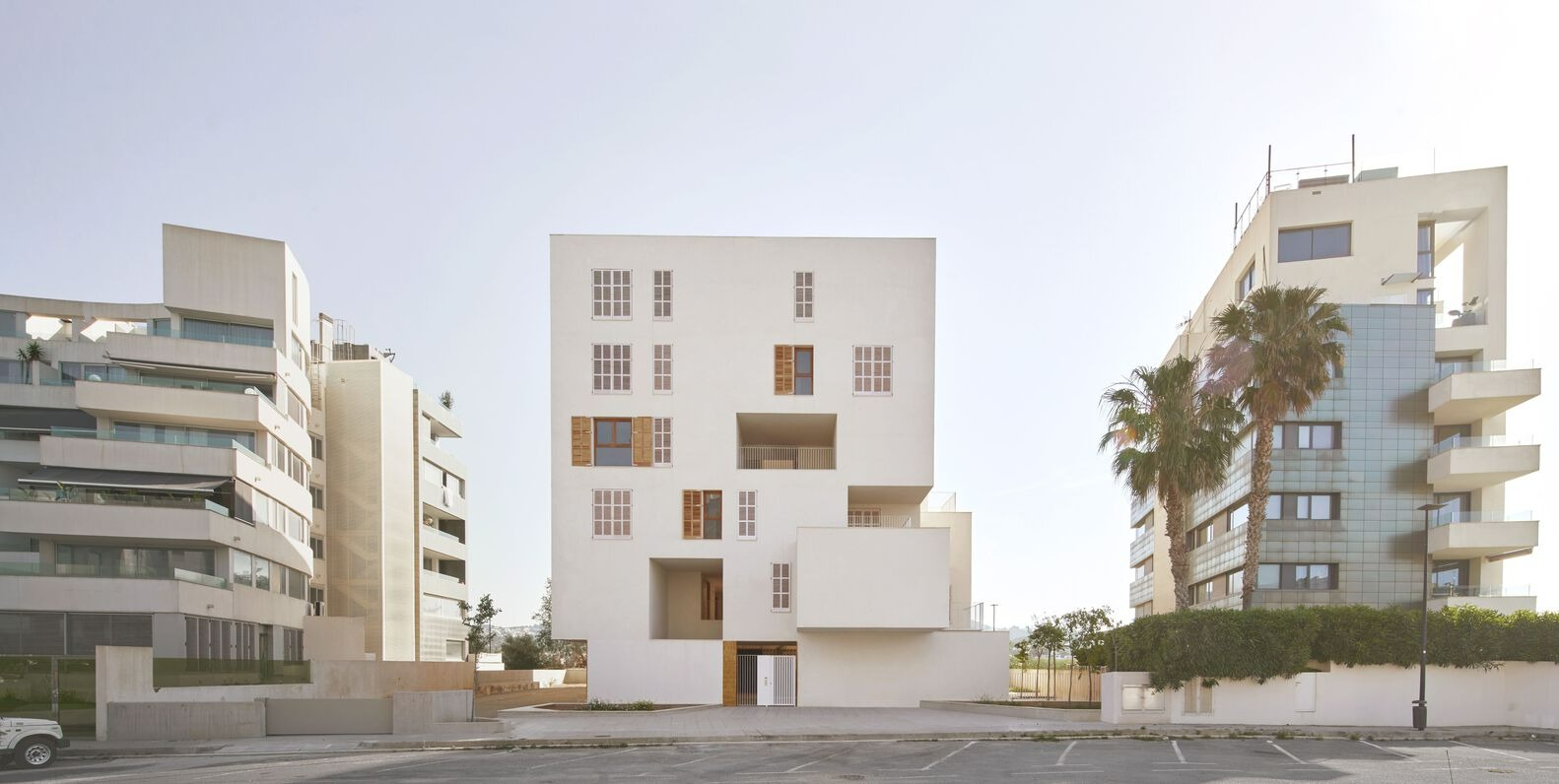
이 건물은 이비자 마리나의 주거지와 범람원 사이, 어느 쪽에도 완전히 속하지 않는 경계에 서 있다. 리조트와 휴양 시설, 아파트가 뒤섞인 주변 풍경은 뚜렷한 질서를 찾기 어렵고, 저마다 다른 얼굴을 한 건물들이 흩어져 있을 뿐이다. RipollTizon 건축사무소는 이 무질서한 배경에 스스로를 맞추는 대신, 전혀 다른 방향을 택했다. 주변을 닮기보다 이 섬의 기후와 생활 방식에 뿌리내린 건물을 짓기로 한 것이다.
파예사의 기억
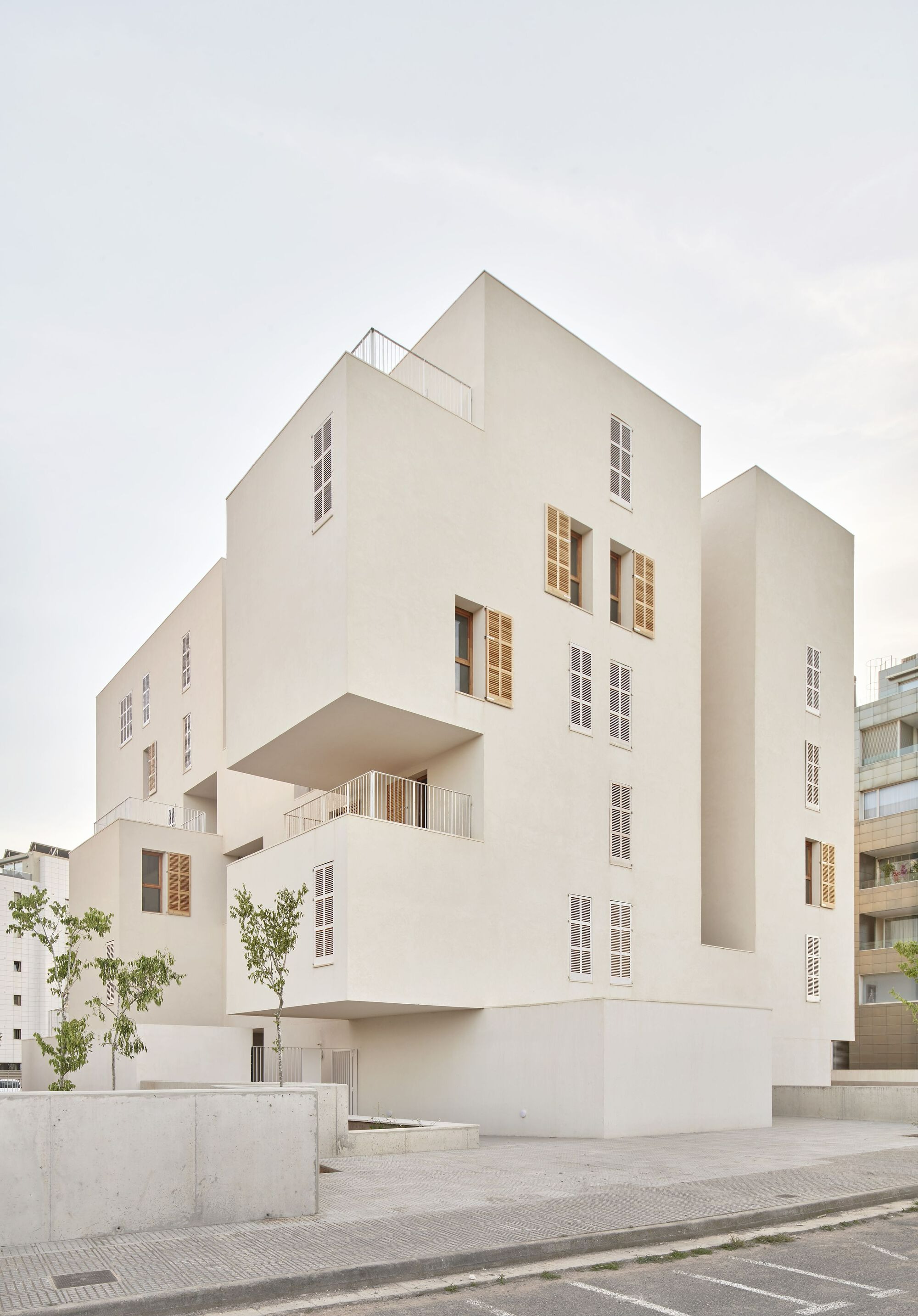
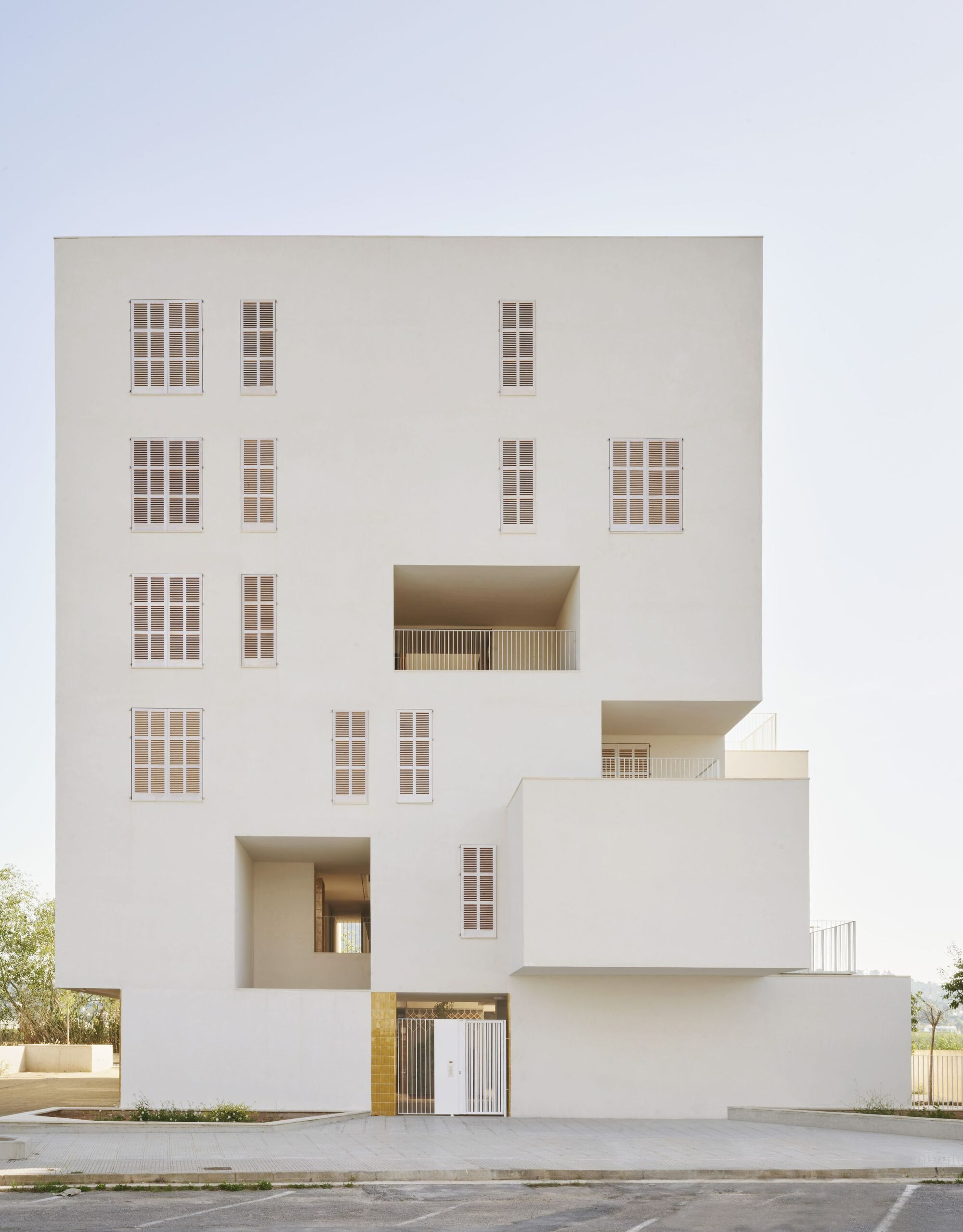
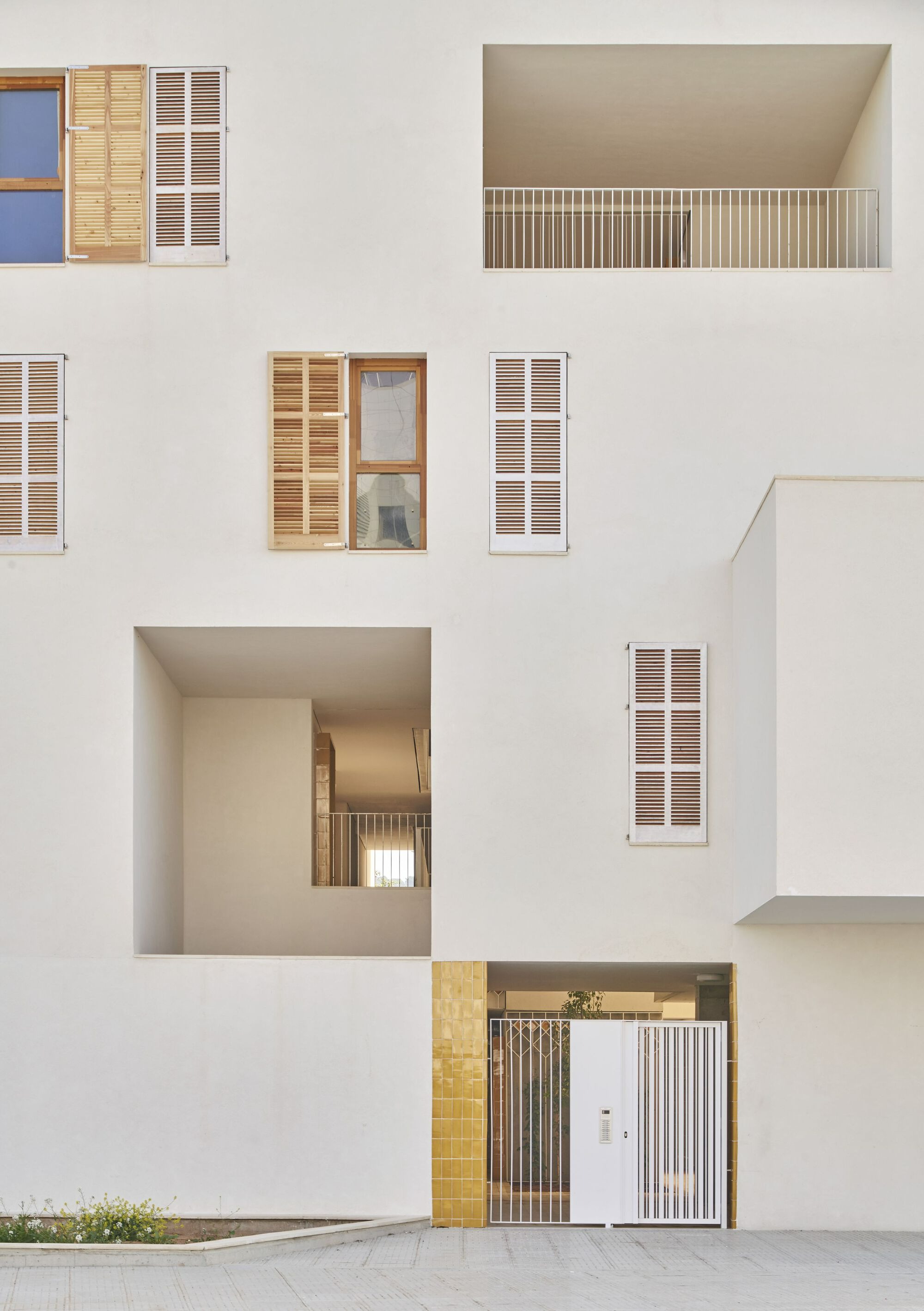
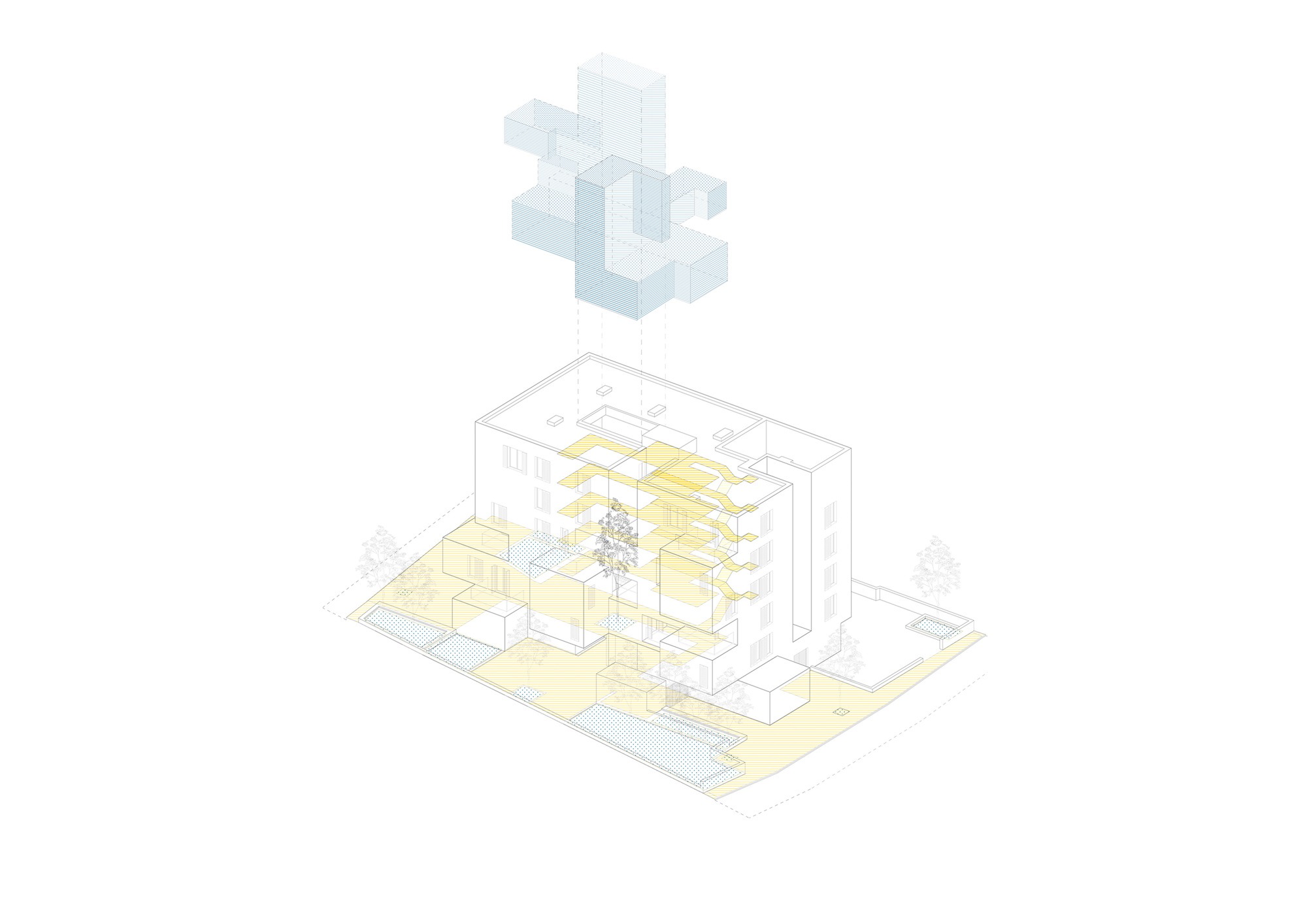
건축가들이 눈을 돌린 곳은 이비자의 오랜 농가, 파예사(payesa) 가옥이다. 흰 벽과 볕을 가려주는 작은 창, 그늘을 드리우는 포치는 이 섬 사람들이 오랫동안 다듬어 온 생존의 지혜였다. 파예사 가옥은 한 번에 완성되지 않는다. 가족이 늘고 필요가 생길 때마다 방 하나, 지붕 하나를 덧붙이며 자라난 결과, 여러 채의 작은 집이 이어 붙은 듯한 형상을 갖게 된다. 이 건물은 그 증축의 논리를 고스란히 물려받는다. 집을 짓는다기보다 집을 쌓아 올리고 덧댄다는 감각으로 전체를 구성한 것이다.
피라미드 속 빈 공간
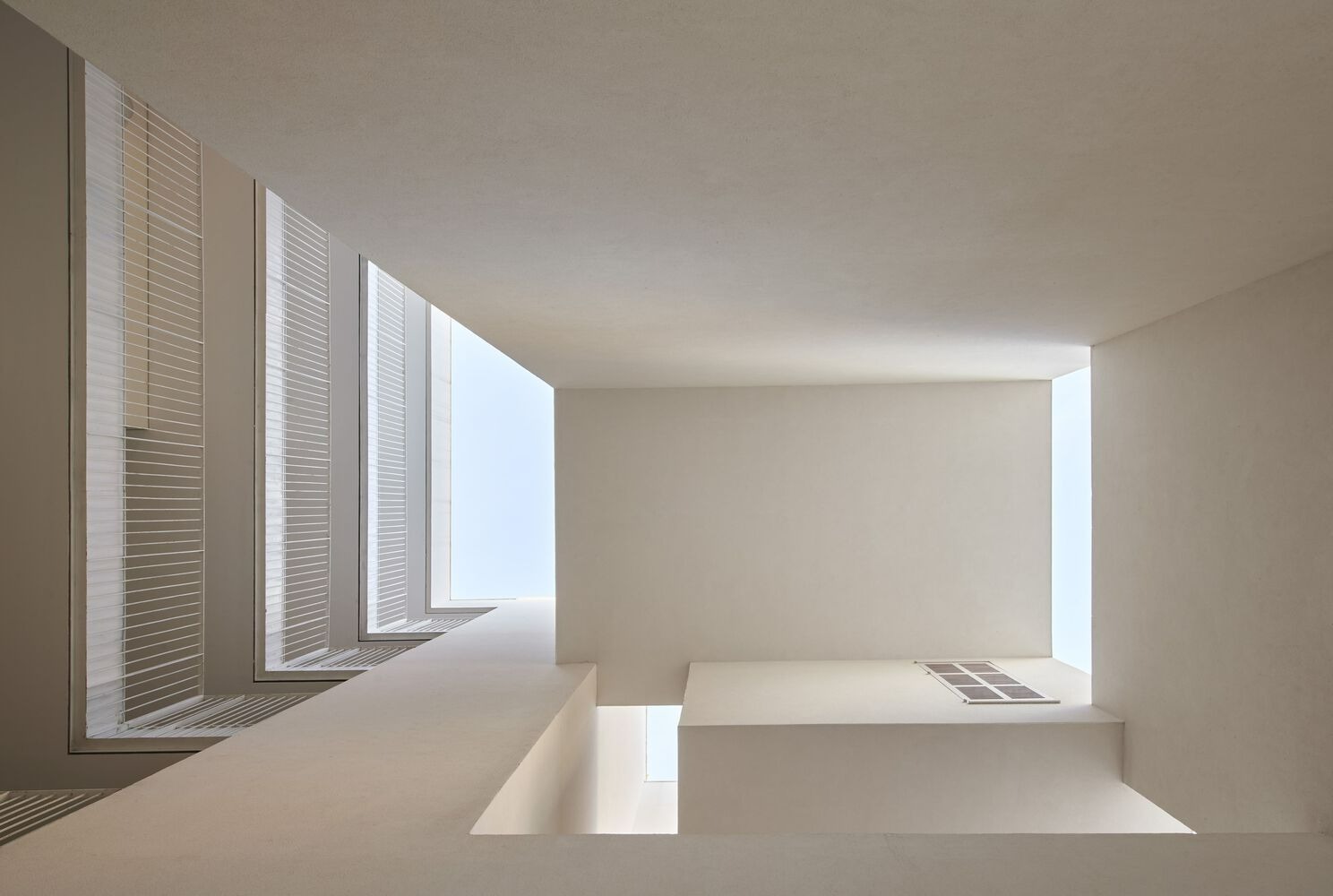
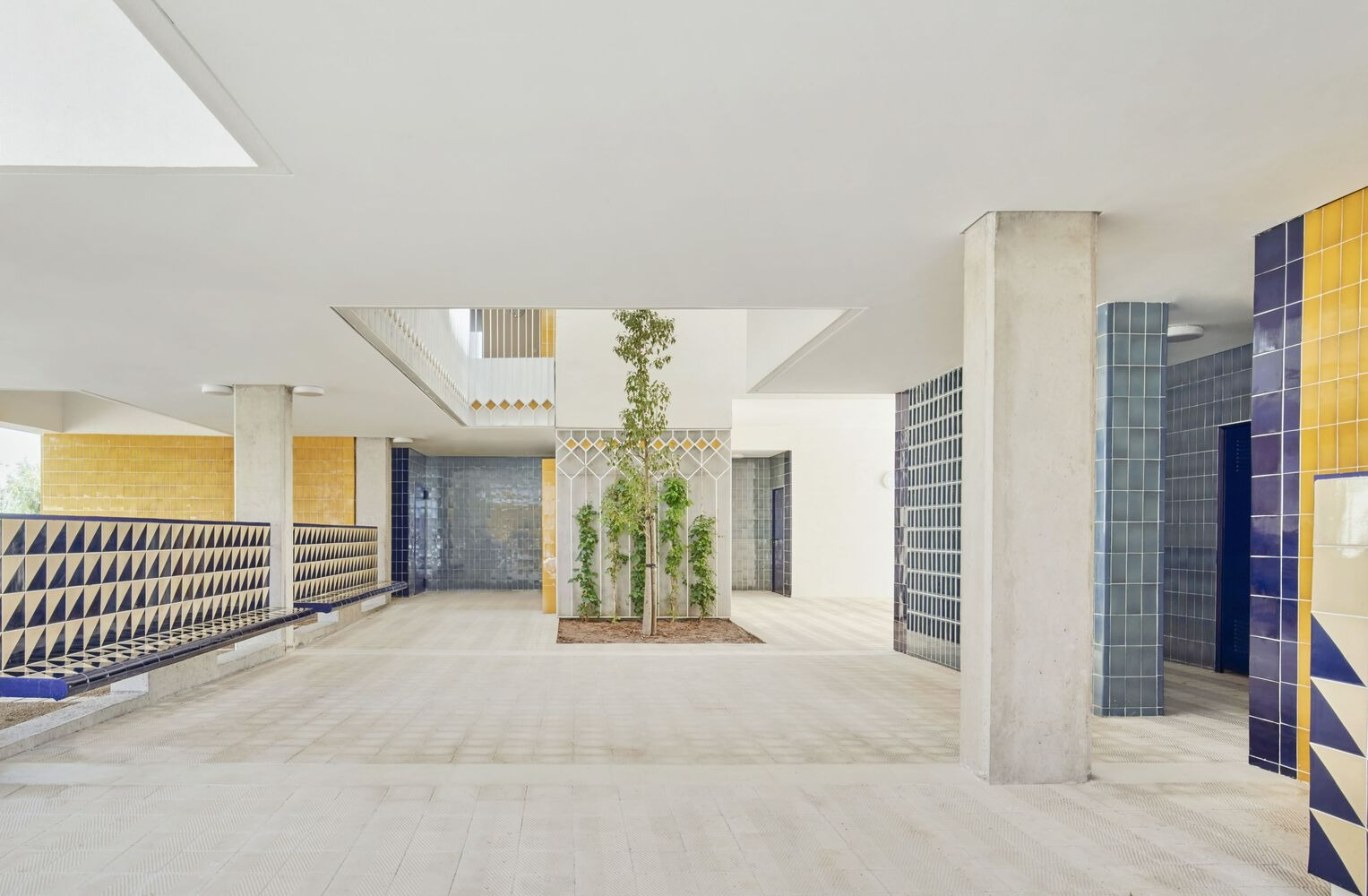
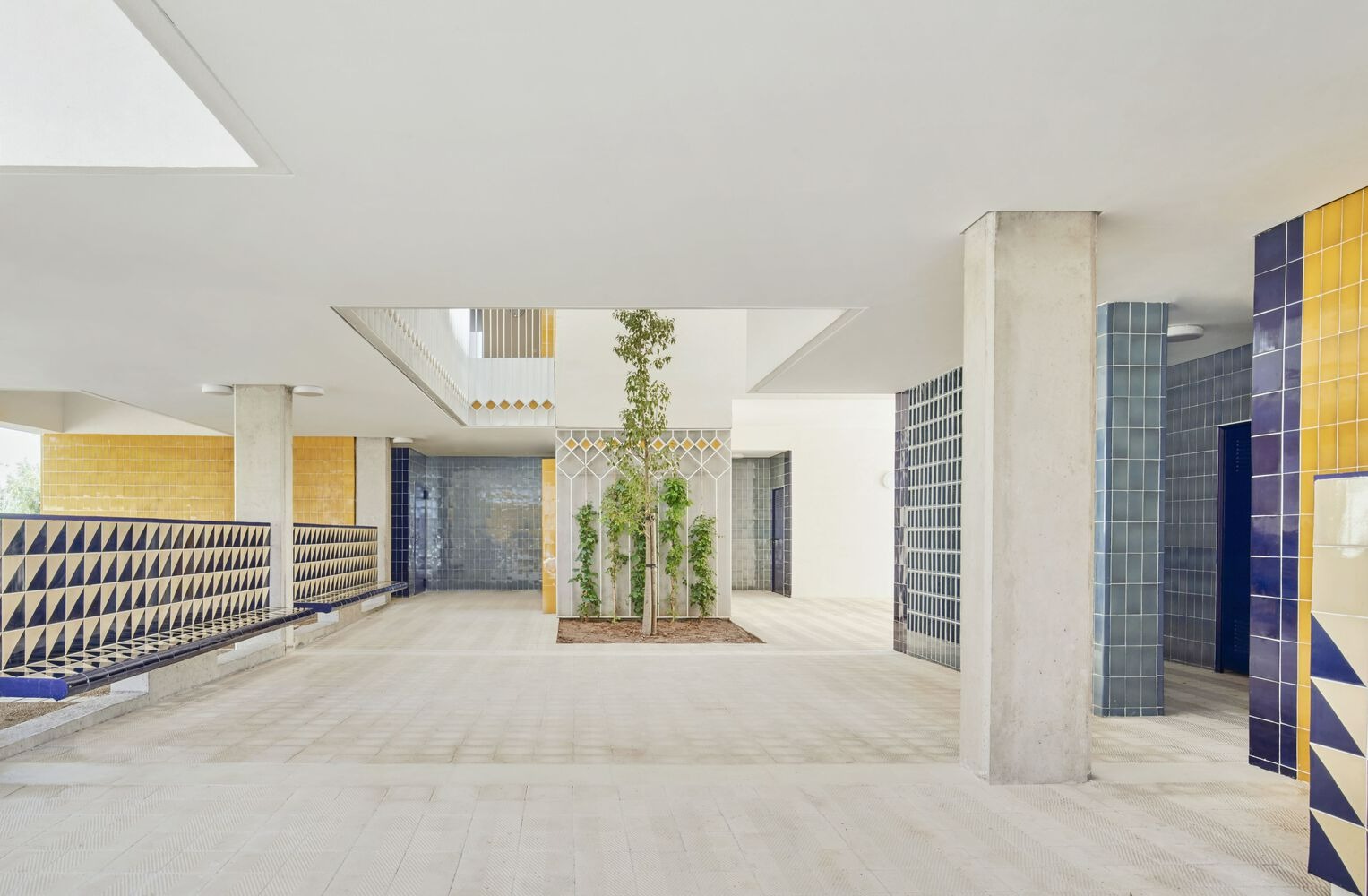
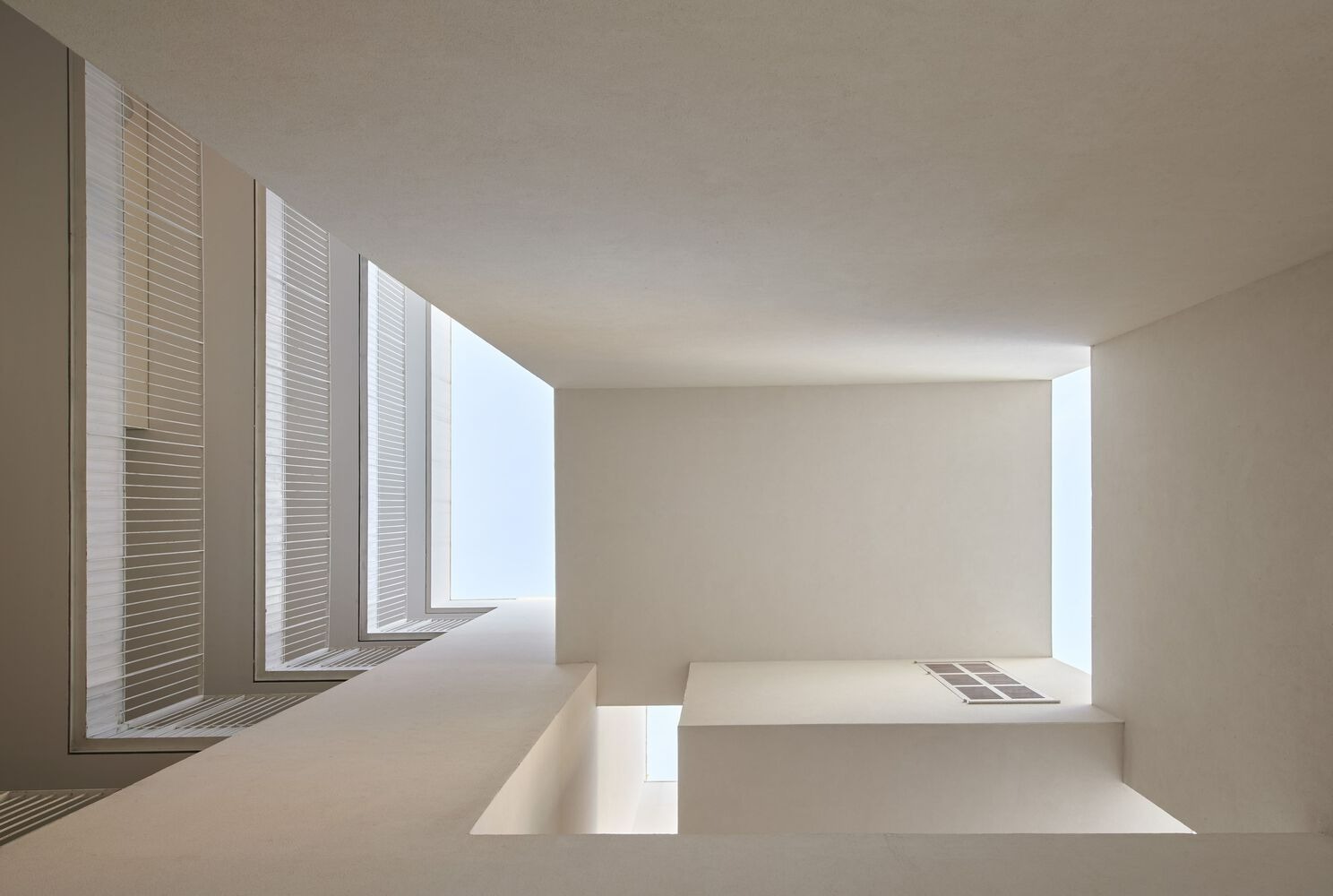
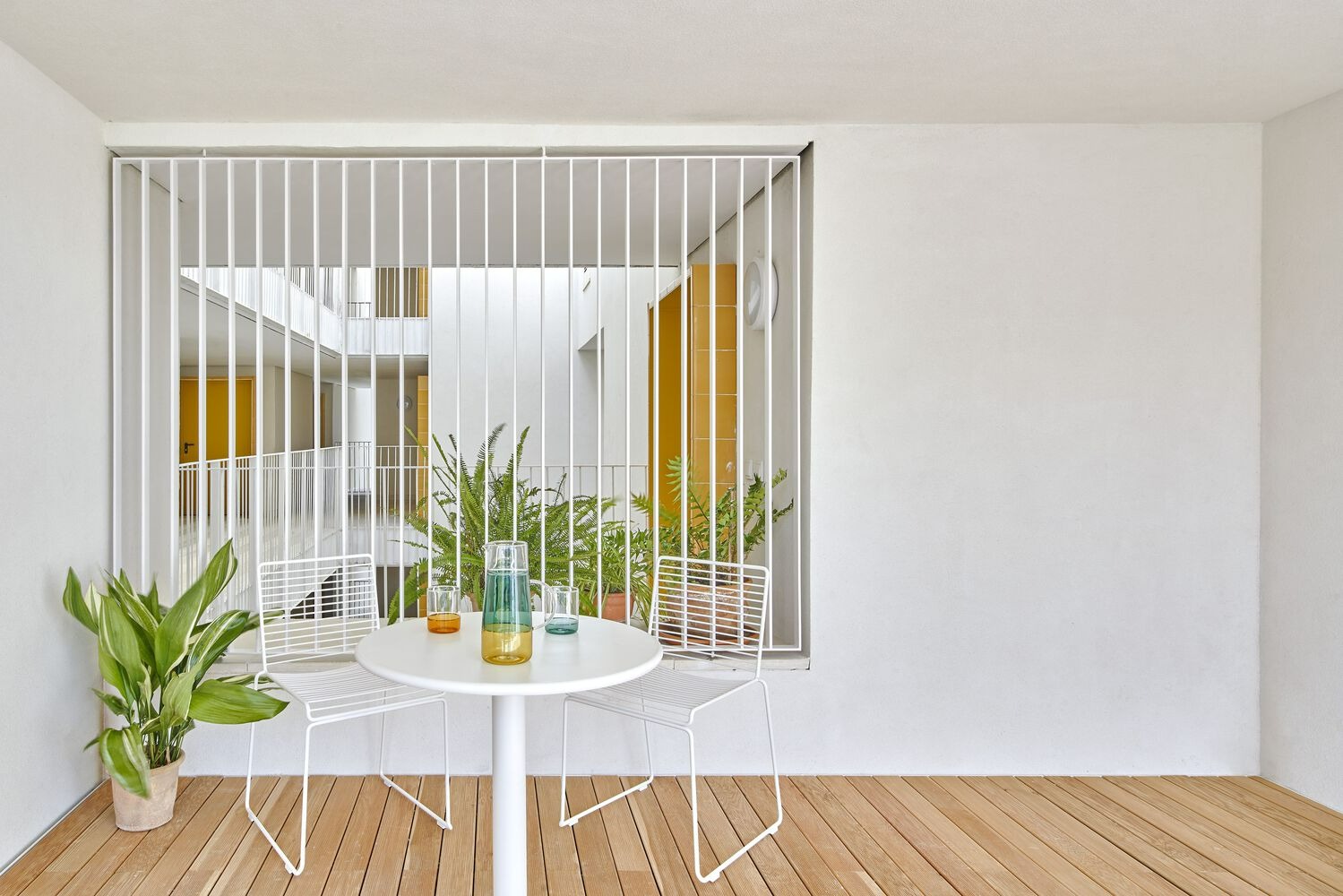
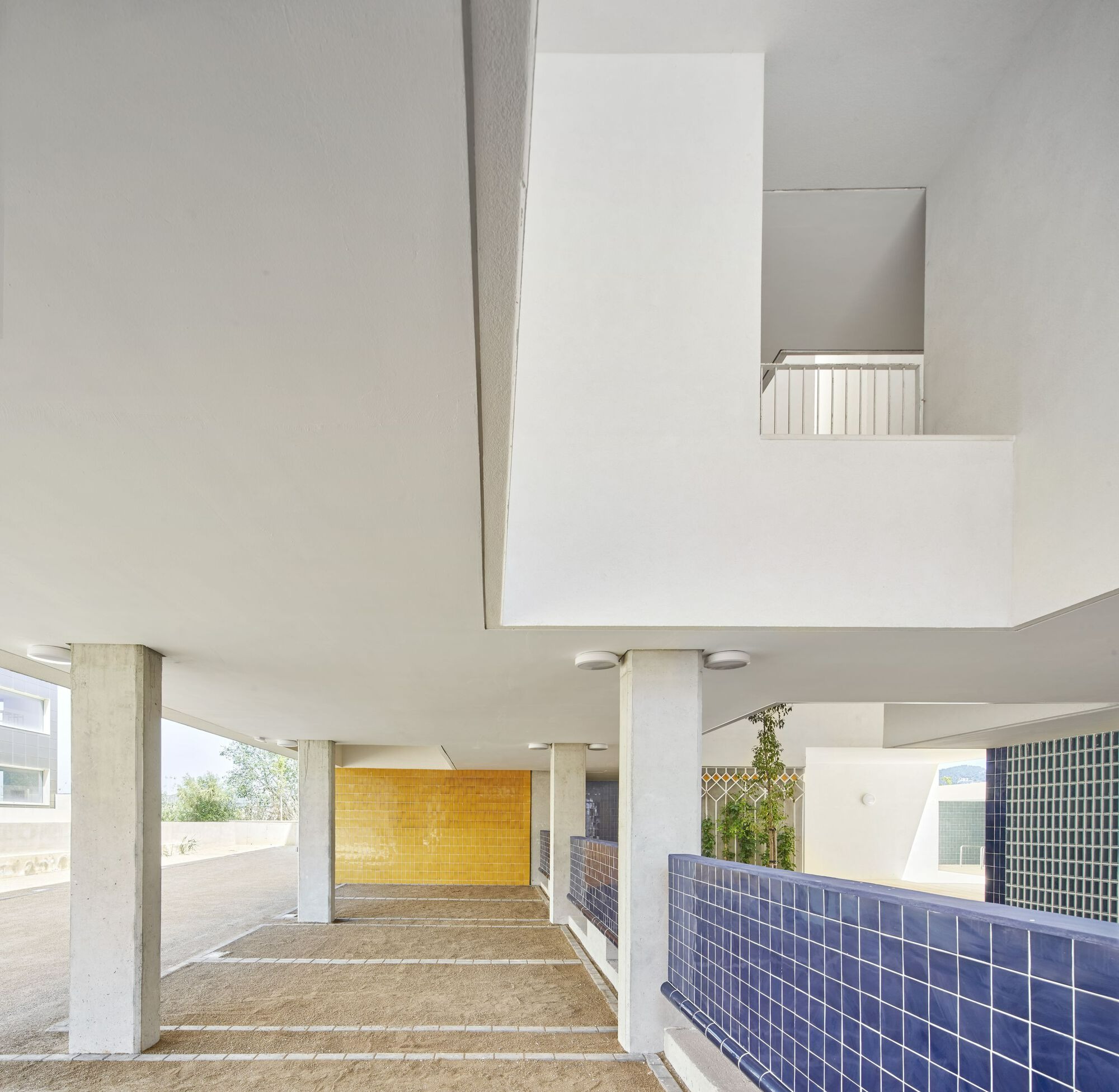
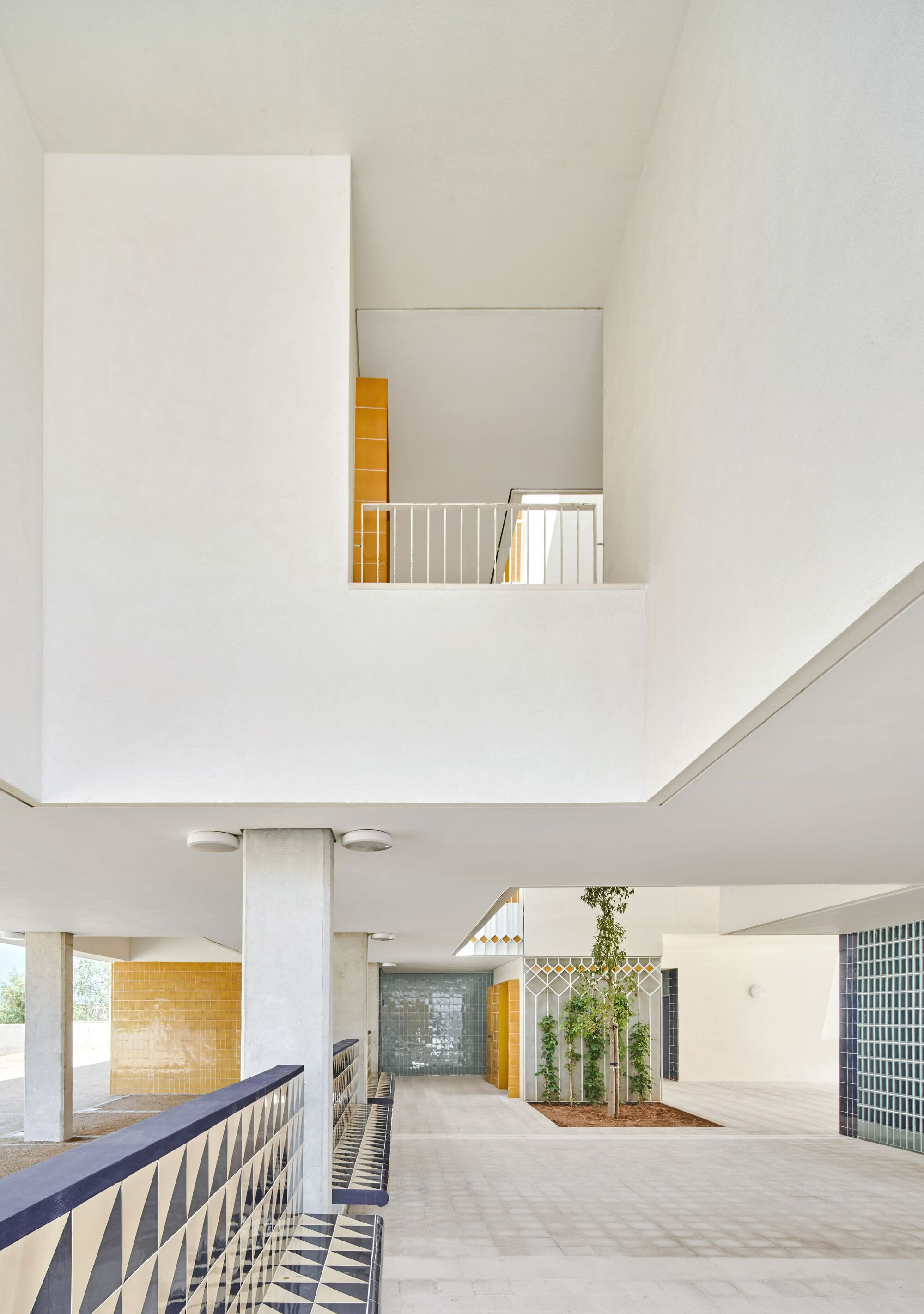
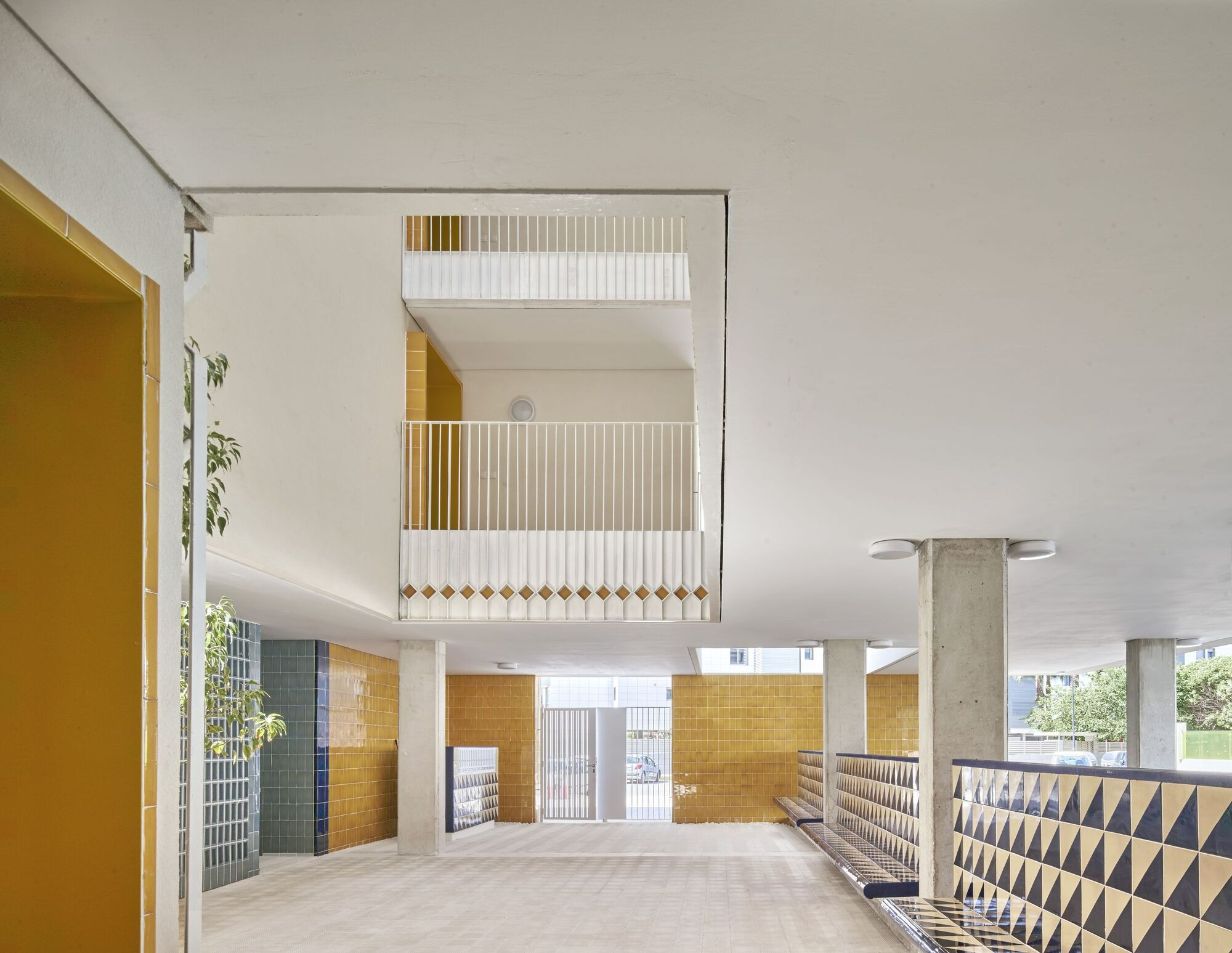
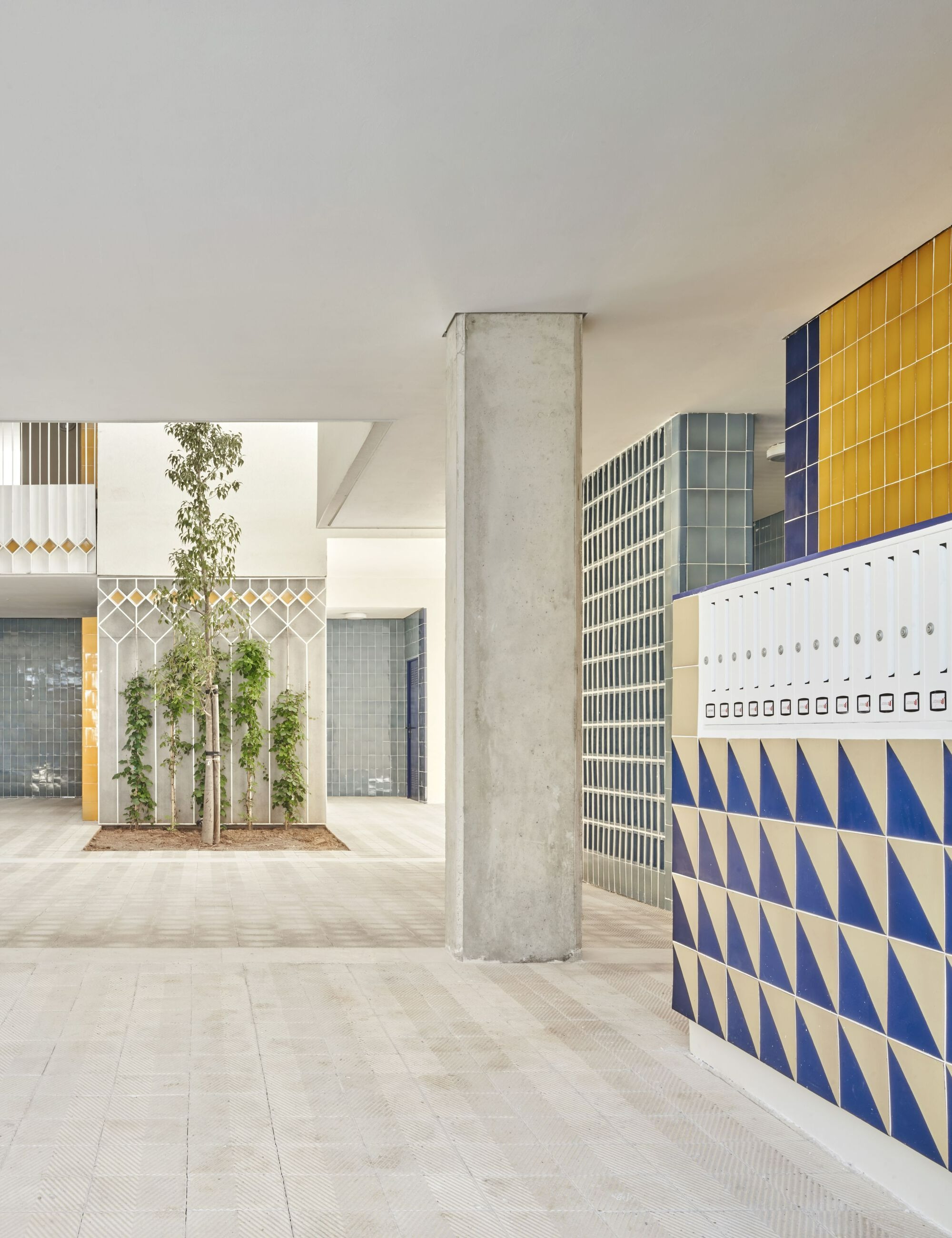
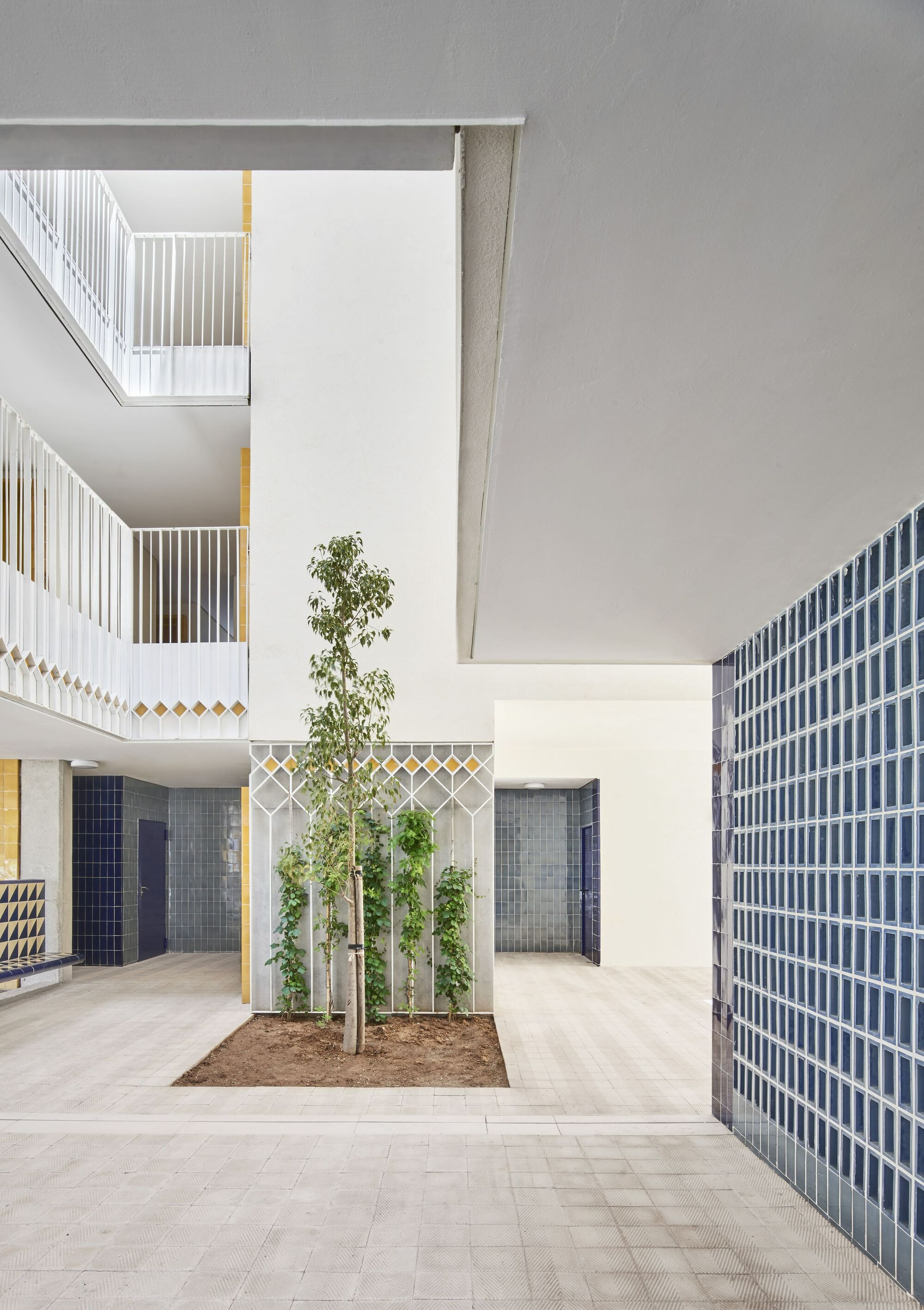
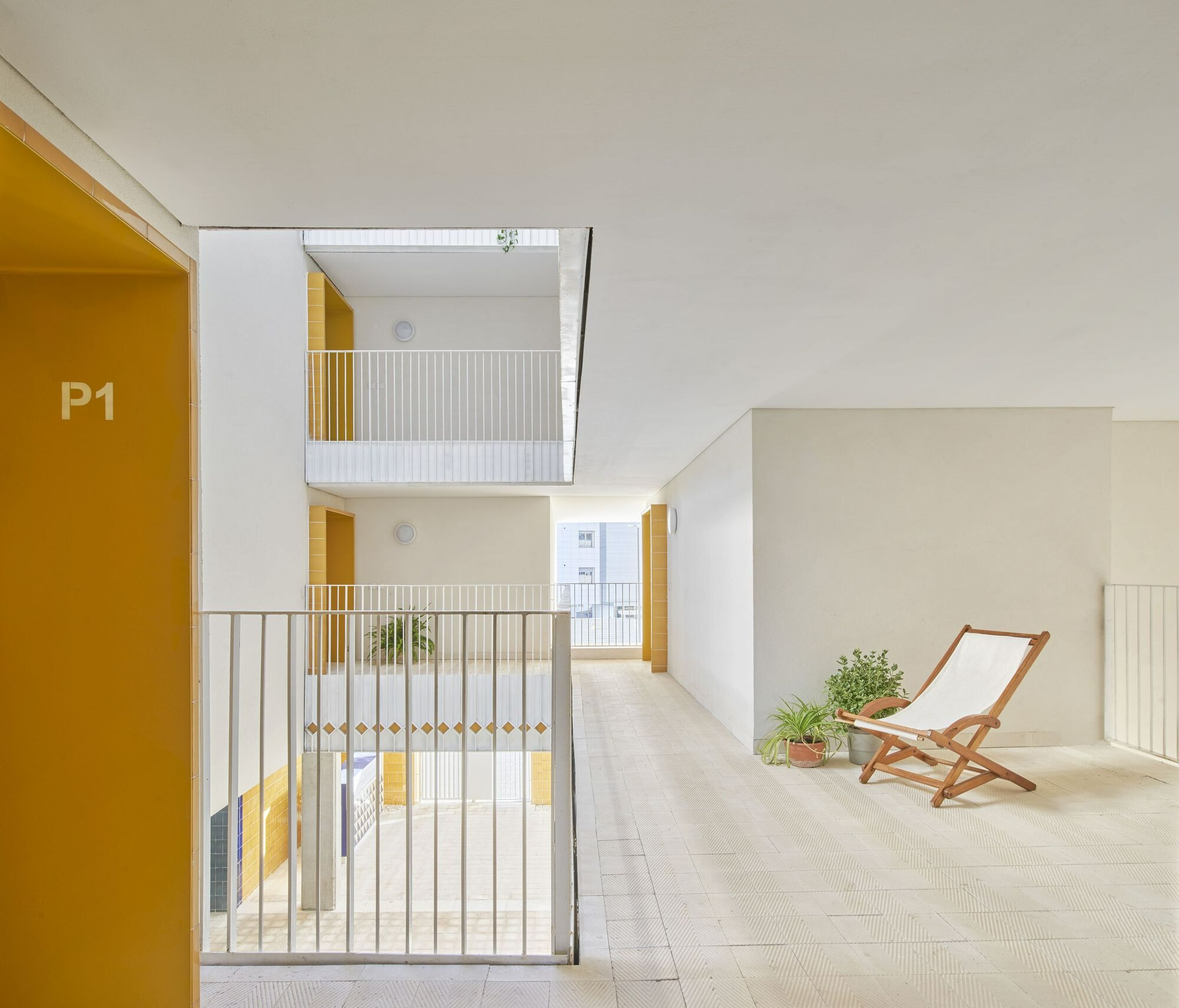
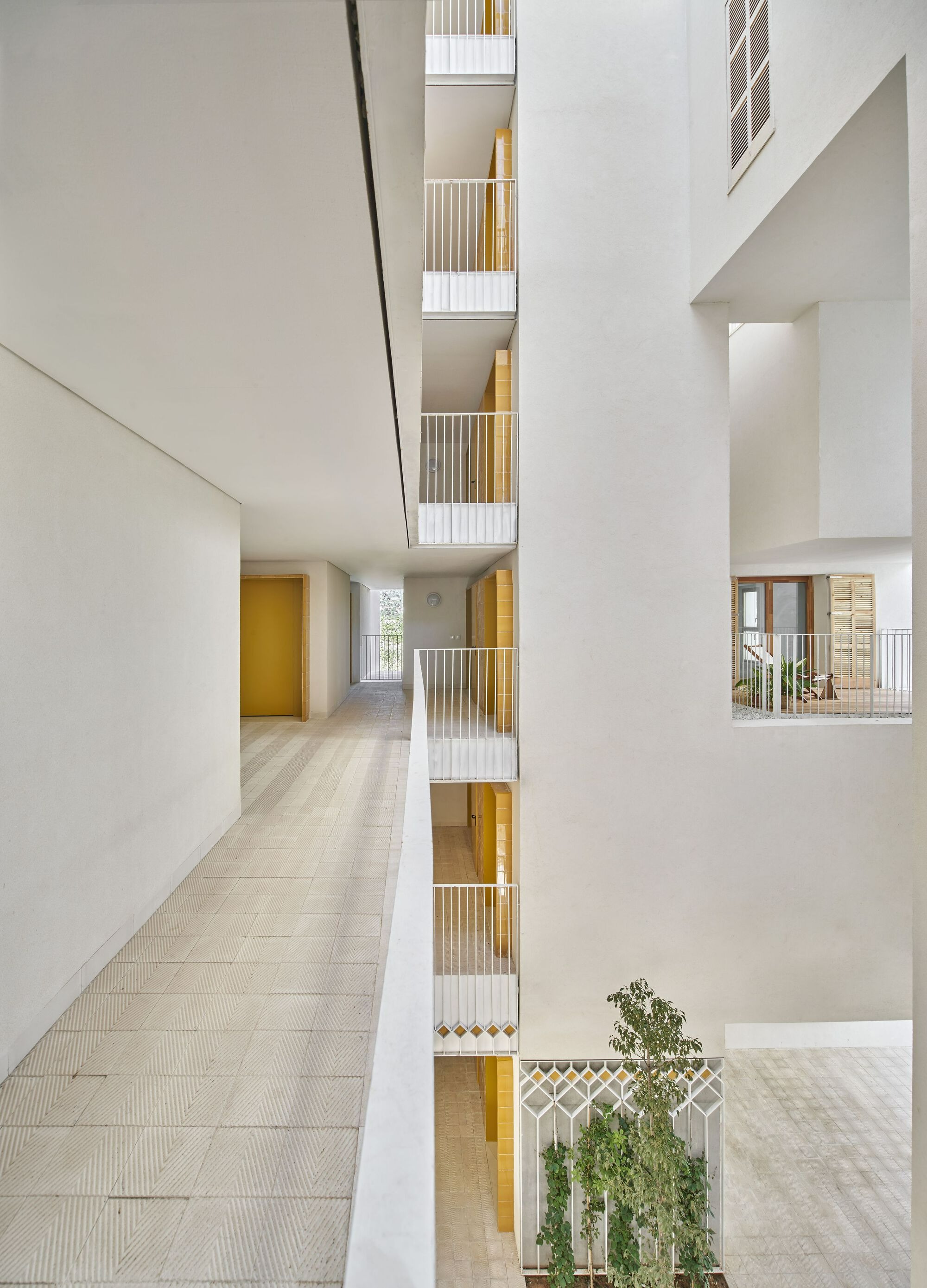
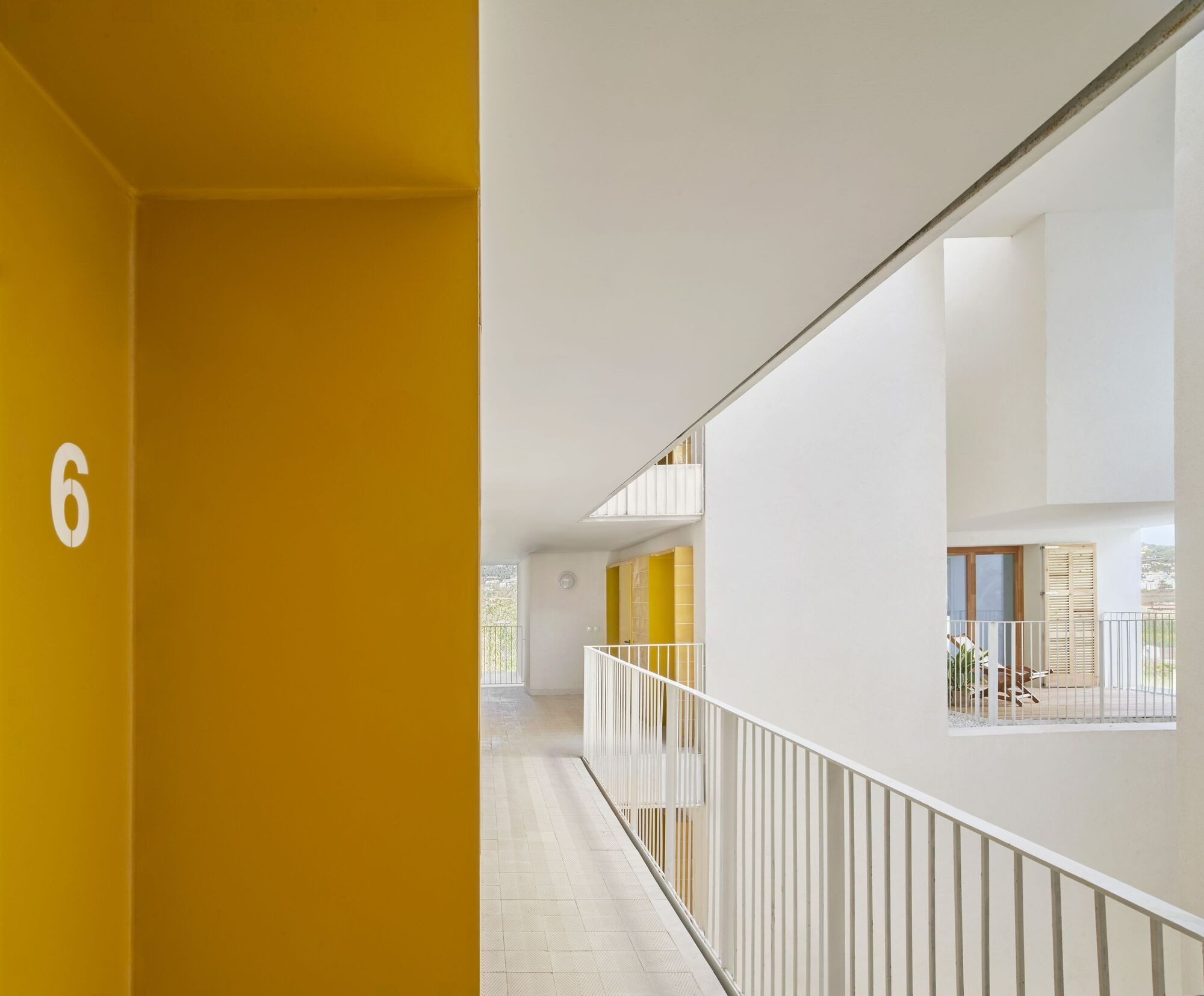
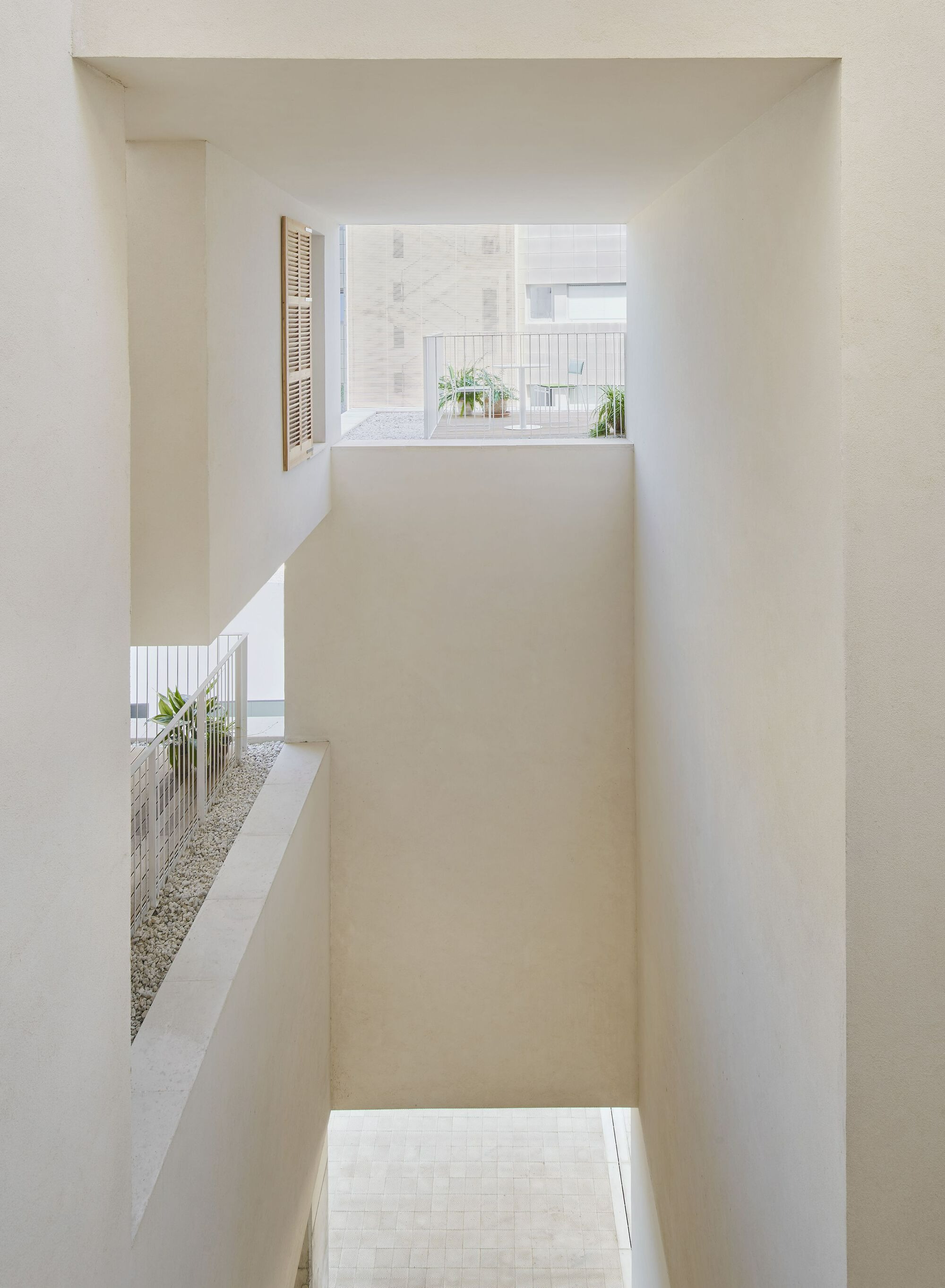
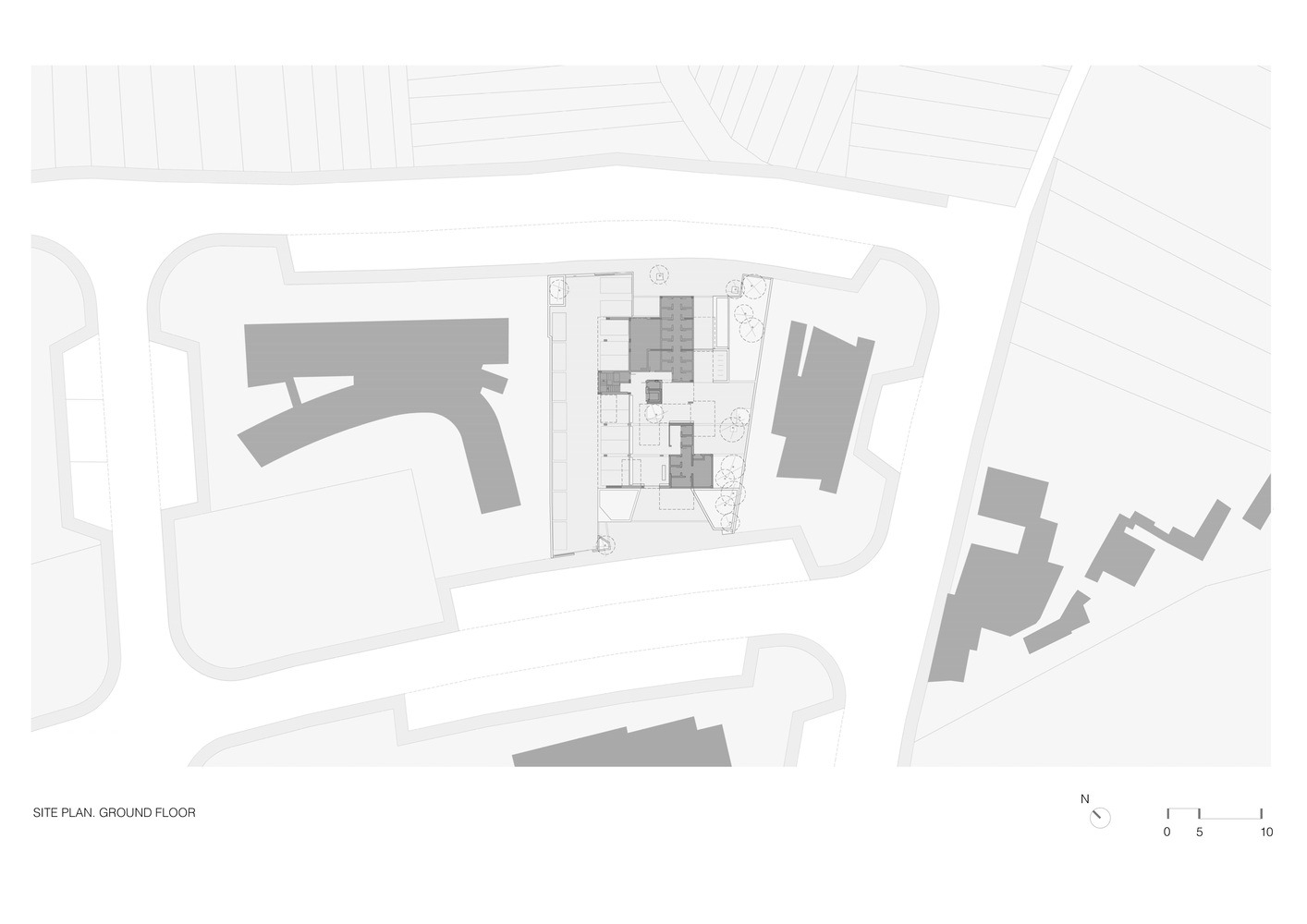
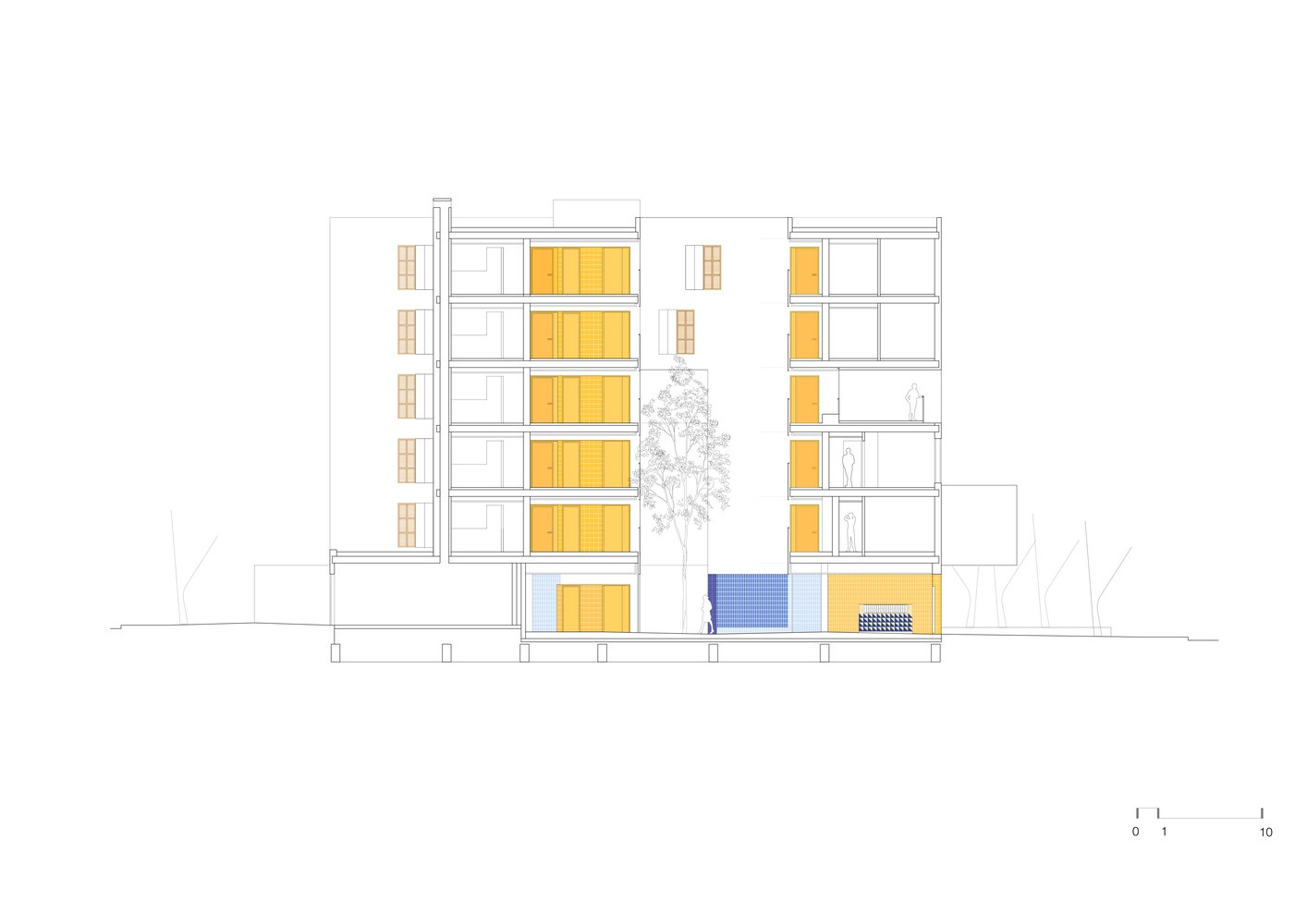
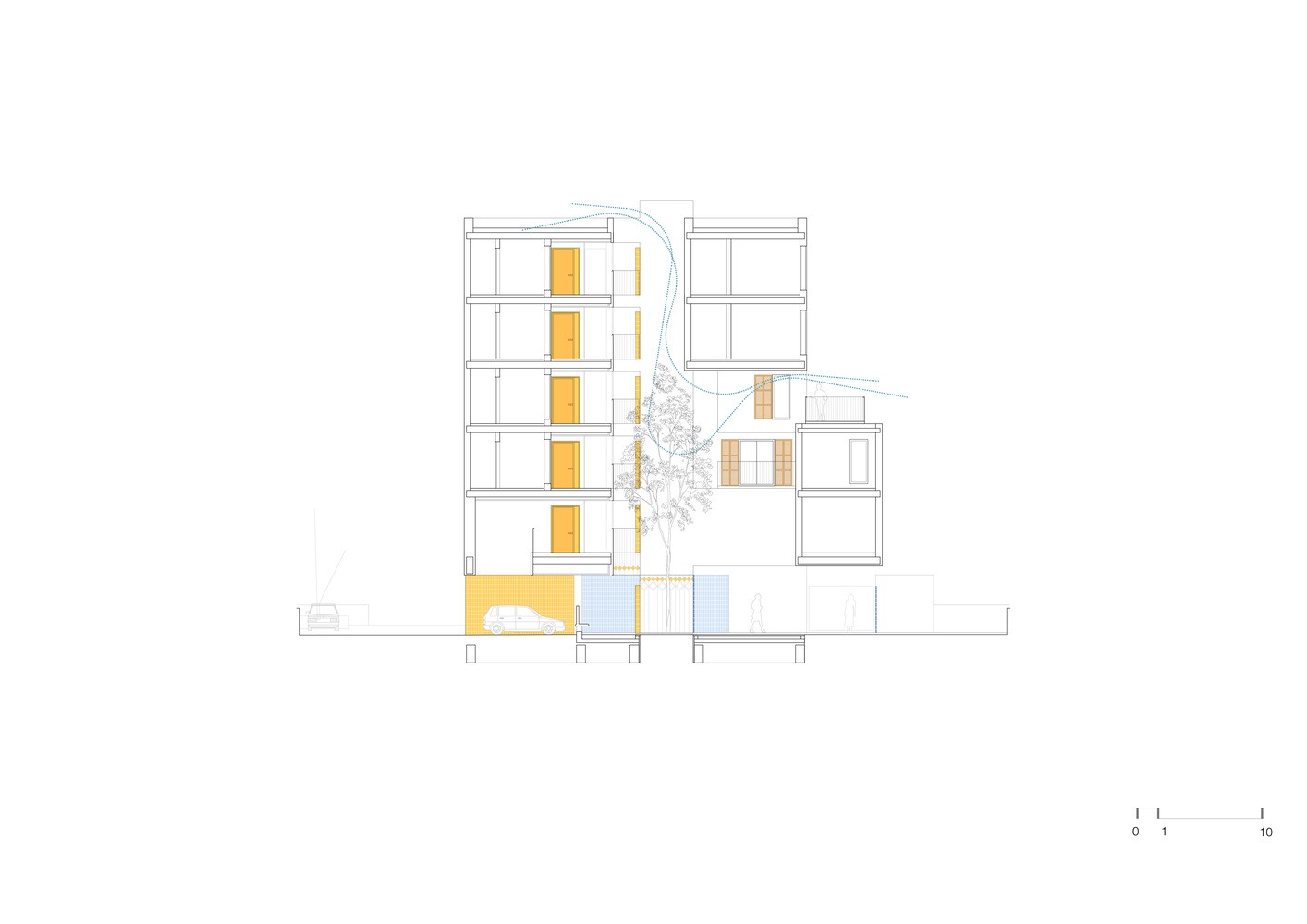
부지의 건축 규제는 높이와 인접 대지와의 거리에 따라 정해지는 피라미드형 매스 규제선을 따르도록 정하고 있다. 실제로 주변에는 이 규제선을 그대로 따라 지은 듯한 피라미드형 건물이 여럿 눈에 띈다. 이 건물은 그 한계선에 최대한 가까이 다가서면서도, 정작 그 중심부는 비워 둔다. 매스 한가운데 만들어진 이 보이드는 여러 방향으로 열린 창과 중정, 포치를 통해 건물 전체가 숨 쉬도록 돕는다. 입주민은 계단을 오르며 이 빈 공간을 가로지르고, 이웃과 마주치고, 각자의 현관에 다다른다. 공용 공간과 동선, 진입로 모두가 이 하나의 빈 곳을 중심으로 조직되어 있다.
쌓아 올린 집
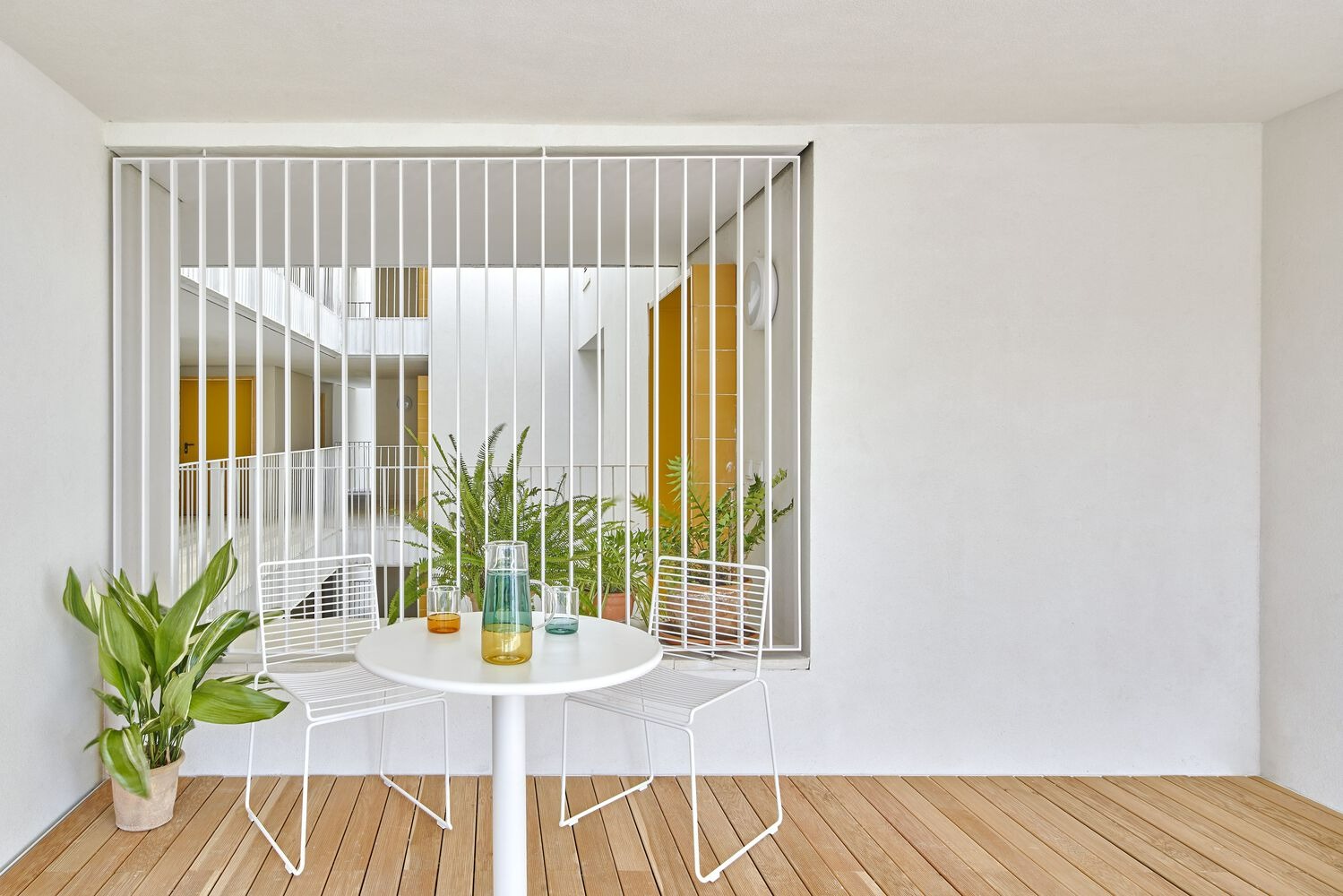
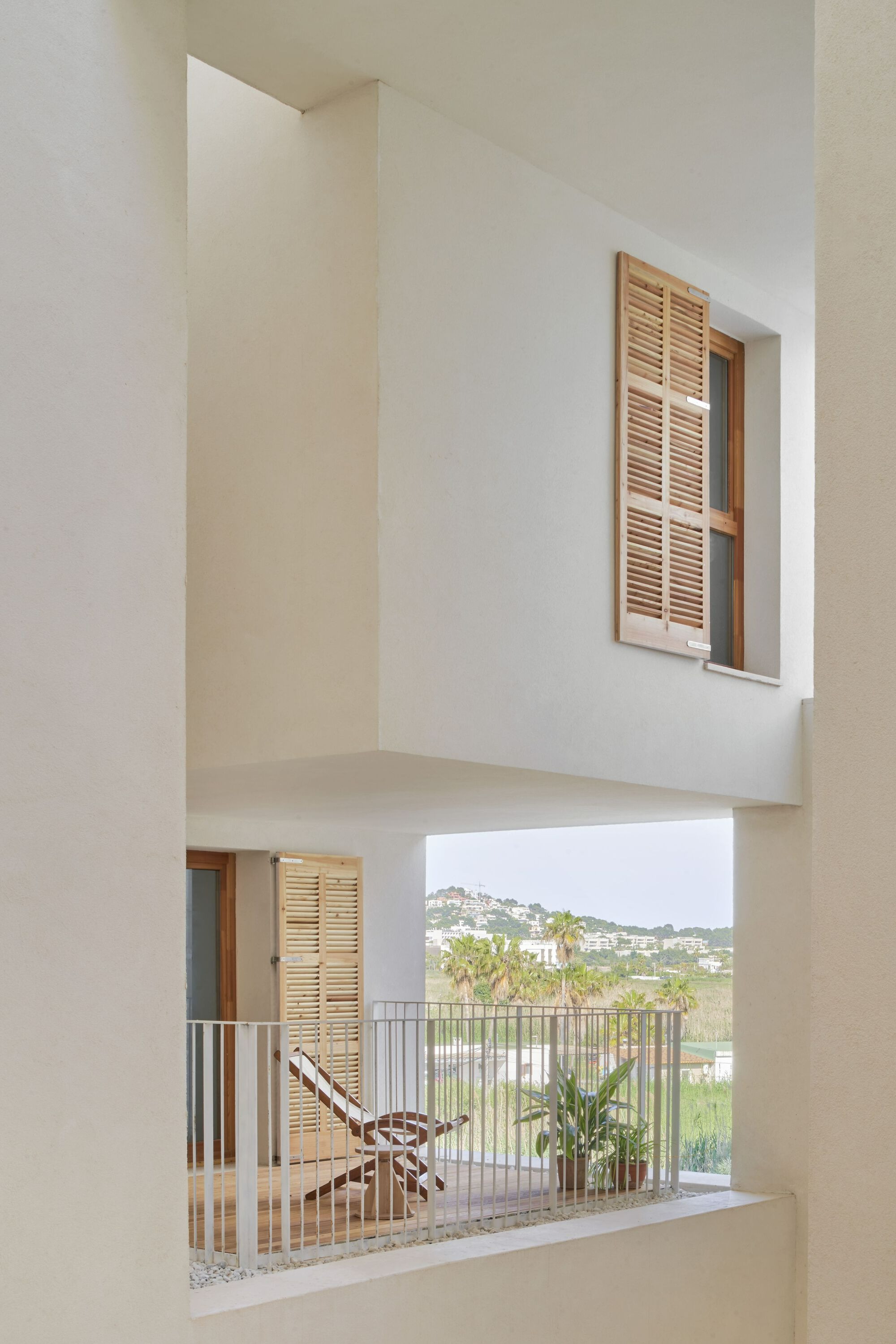
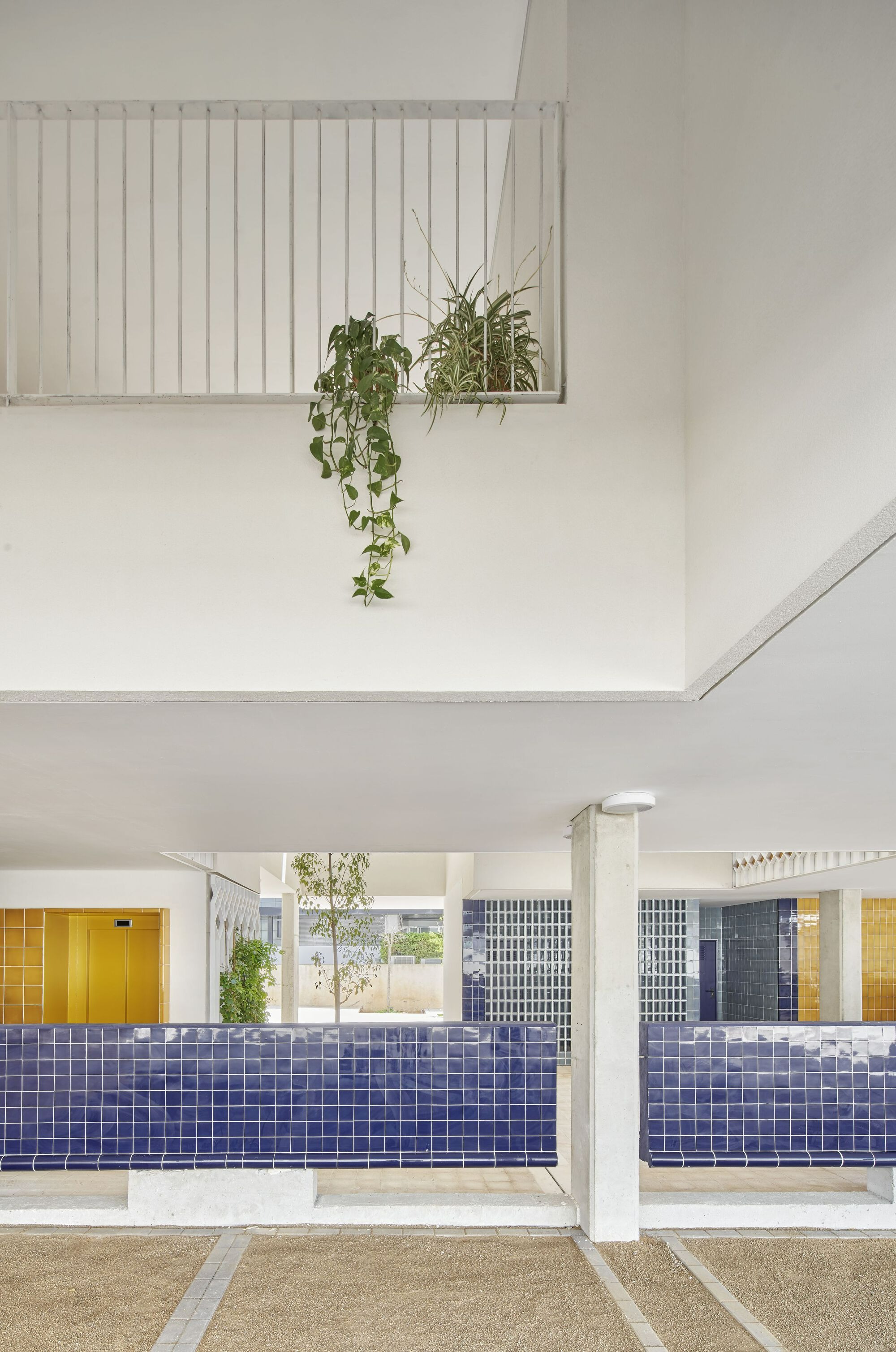
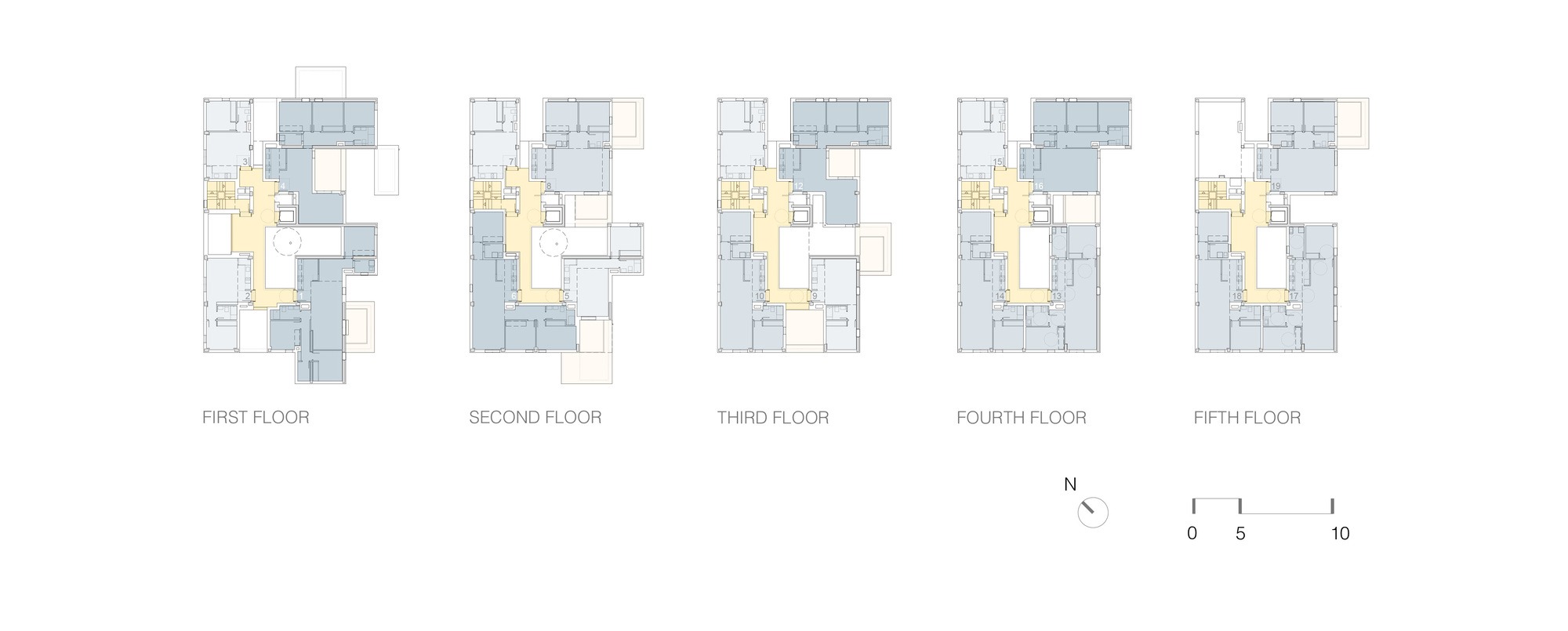
지하수위가 지표면 가까이 있는 부지 조건 탓에 지하 굴착은 애초에 선택지가 아니었다. 그래서 주차장은 지상층, 건물을 들어 올린 필로티 아래 자리한다. 그 위로 다섯 개 층에 걸쳐 열아홉 세대가 들어서고, 모든 세대는 최소 두 방향 이상을 향해 열려 있어 채광과 일조, 맞통풍(두 방향 이상에서 바람이 드나드는 자연 환기)을 동시에 확보한다. 이 건물의 에너지효율등급은 최고 등급인 A다. 세대 구성 역시 파예사 가옥의 증축 방식을 그대로 옮겨 온다. 거실과 식당, 주방을 품은 정사각형의 기본 모듈에 침실이나 욕실을 담은 작은 모듈, 거실을 넓히는 확장 모듈이 필요에 따라 덧붙는다. 이 기본 모듈들의 조합이 침실 수에 따라 서로 다른 세대 유형의 목록을 만들어내고, 엄격한 규칙 안에서도 각 세대가 저마다의 상황에 맞춰 유연하게 달라질 여지를 남겨 둔다. 사회주택에 요구되는 표준화를 포기하지 않으면서도, 획일적인 반복은 피해 간 셈이다.
빛과 바람이 드나드는 벽
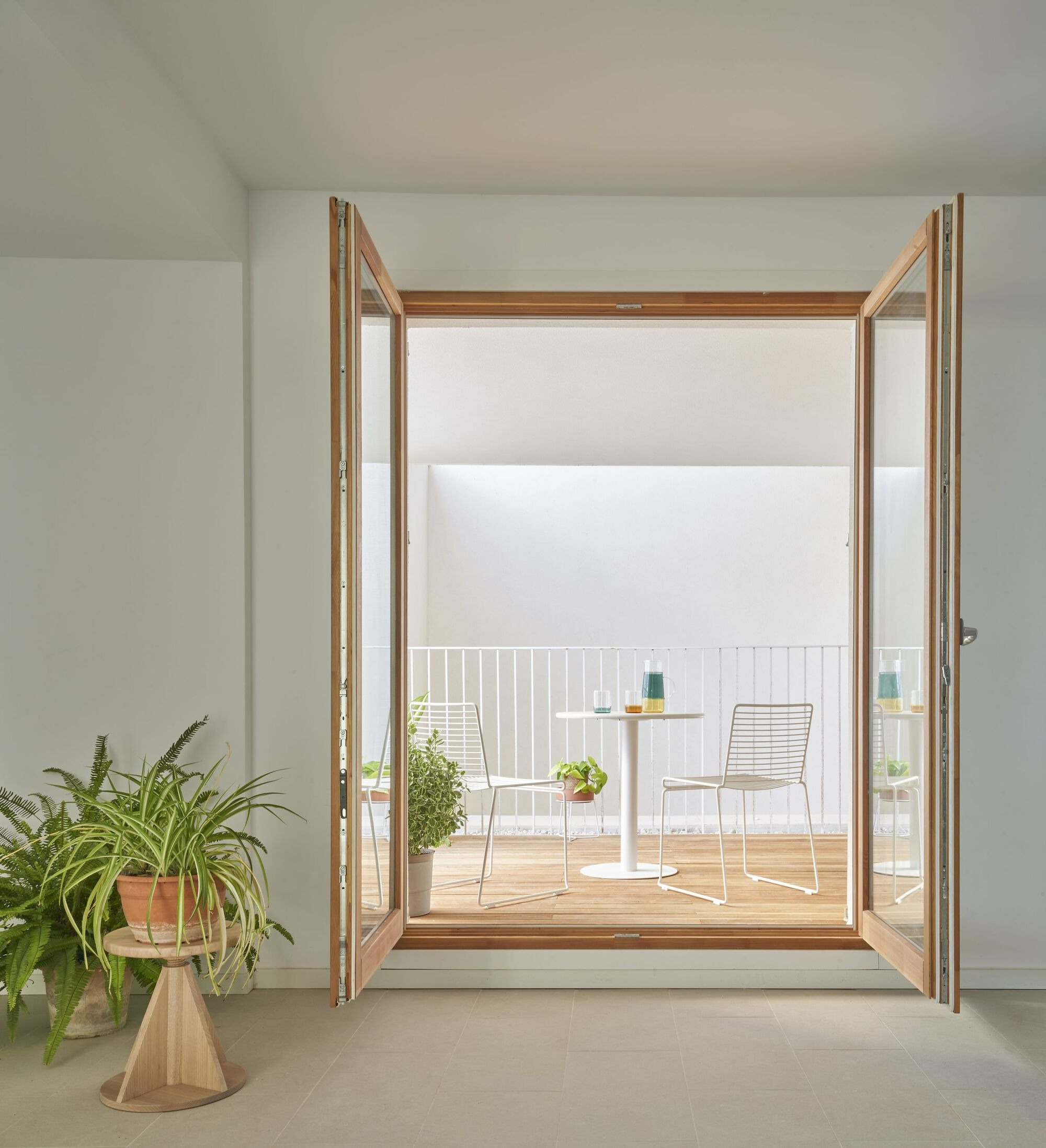
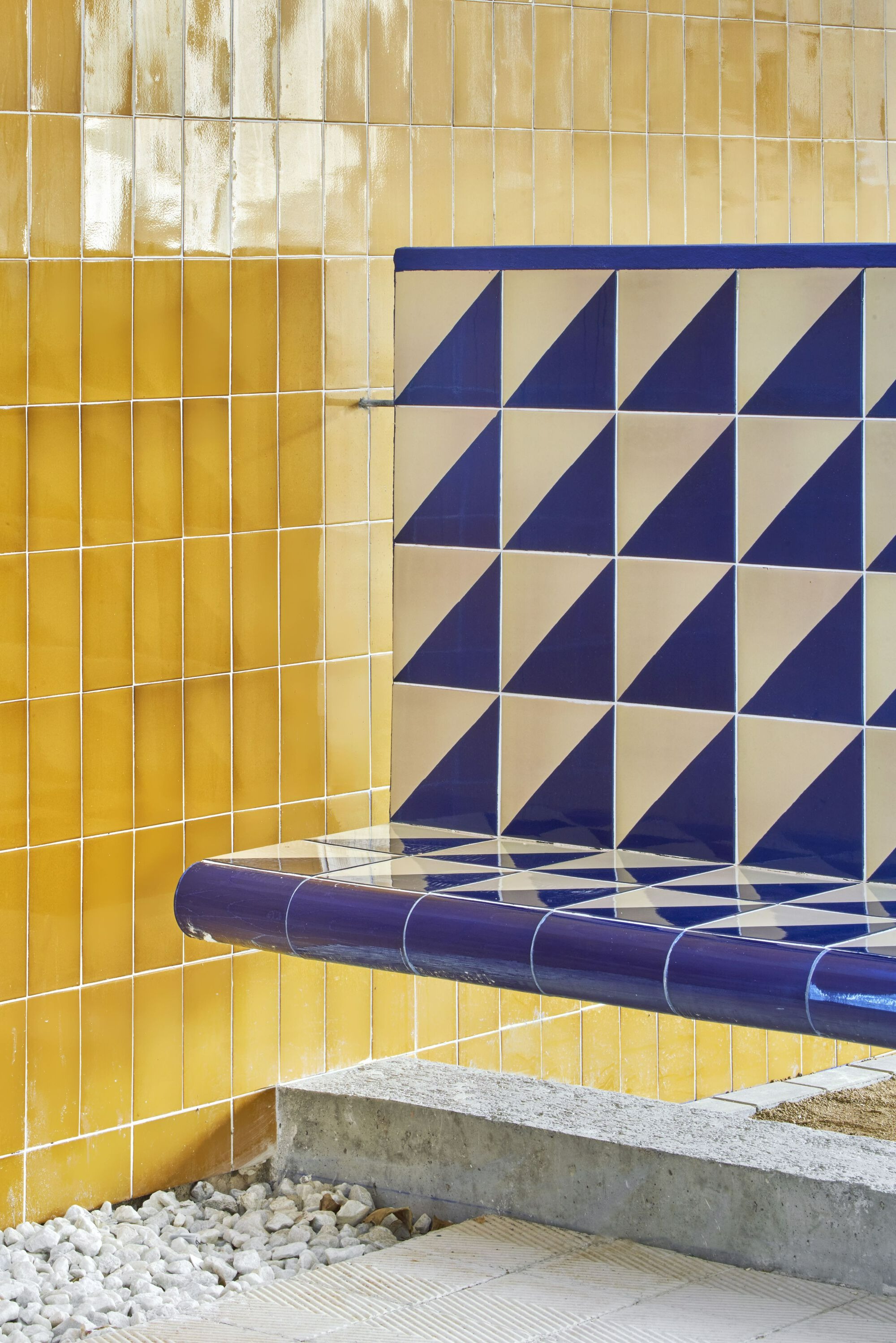
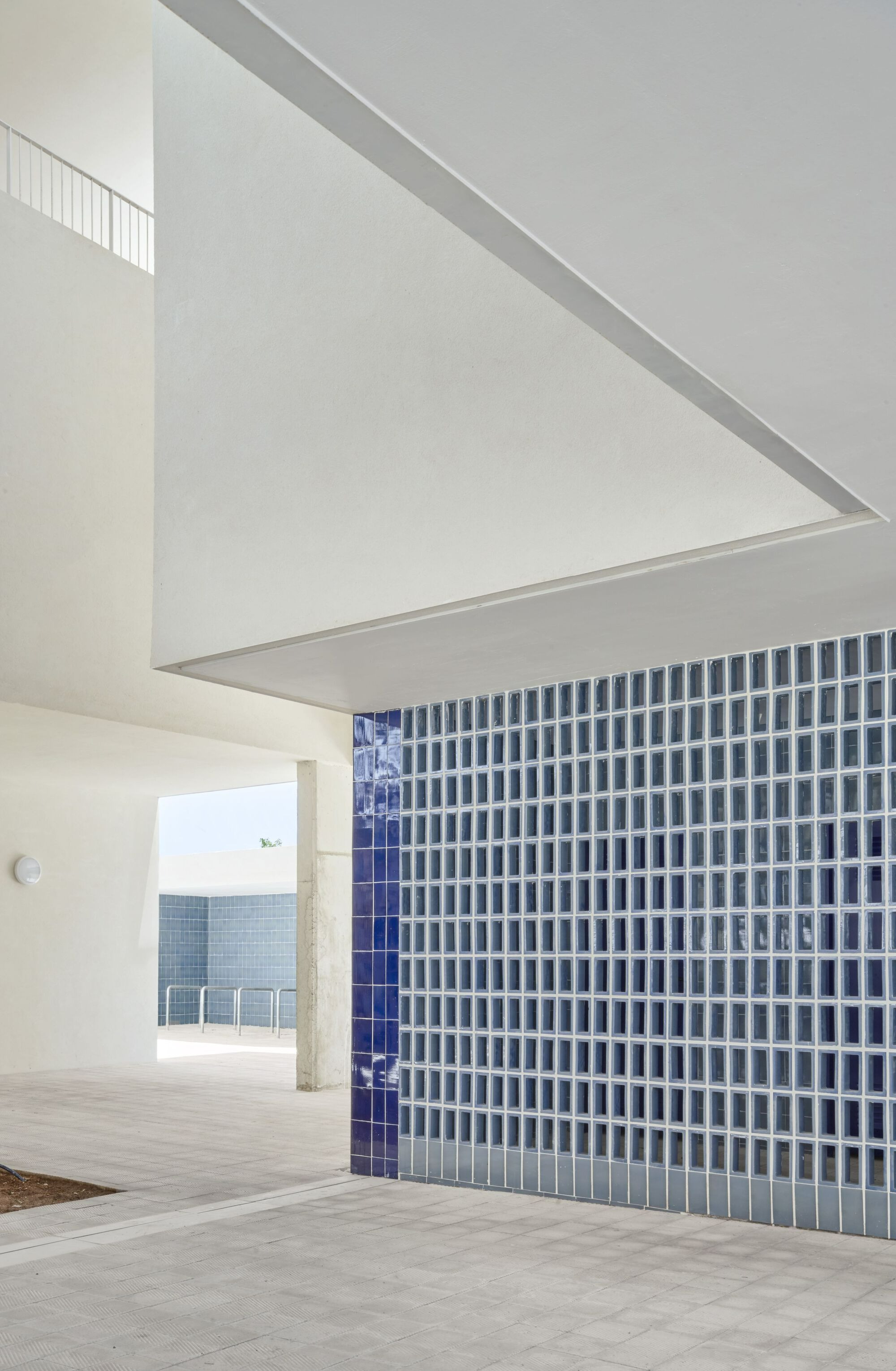
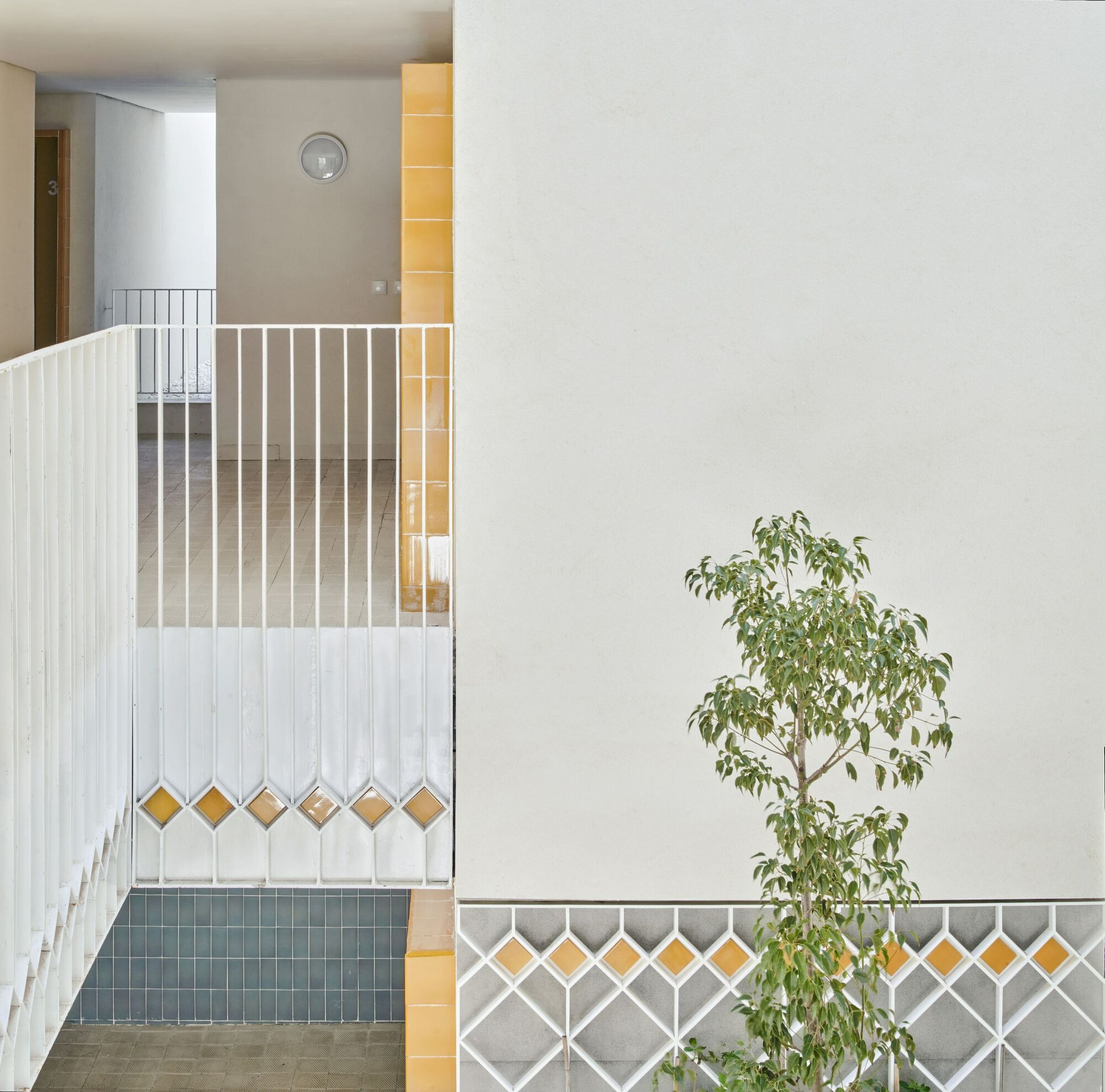
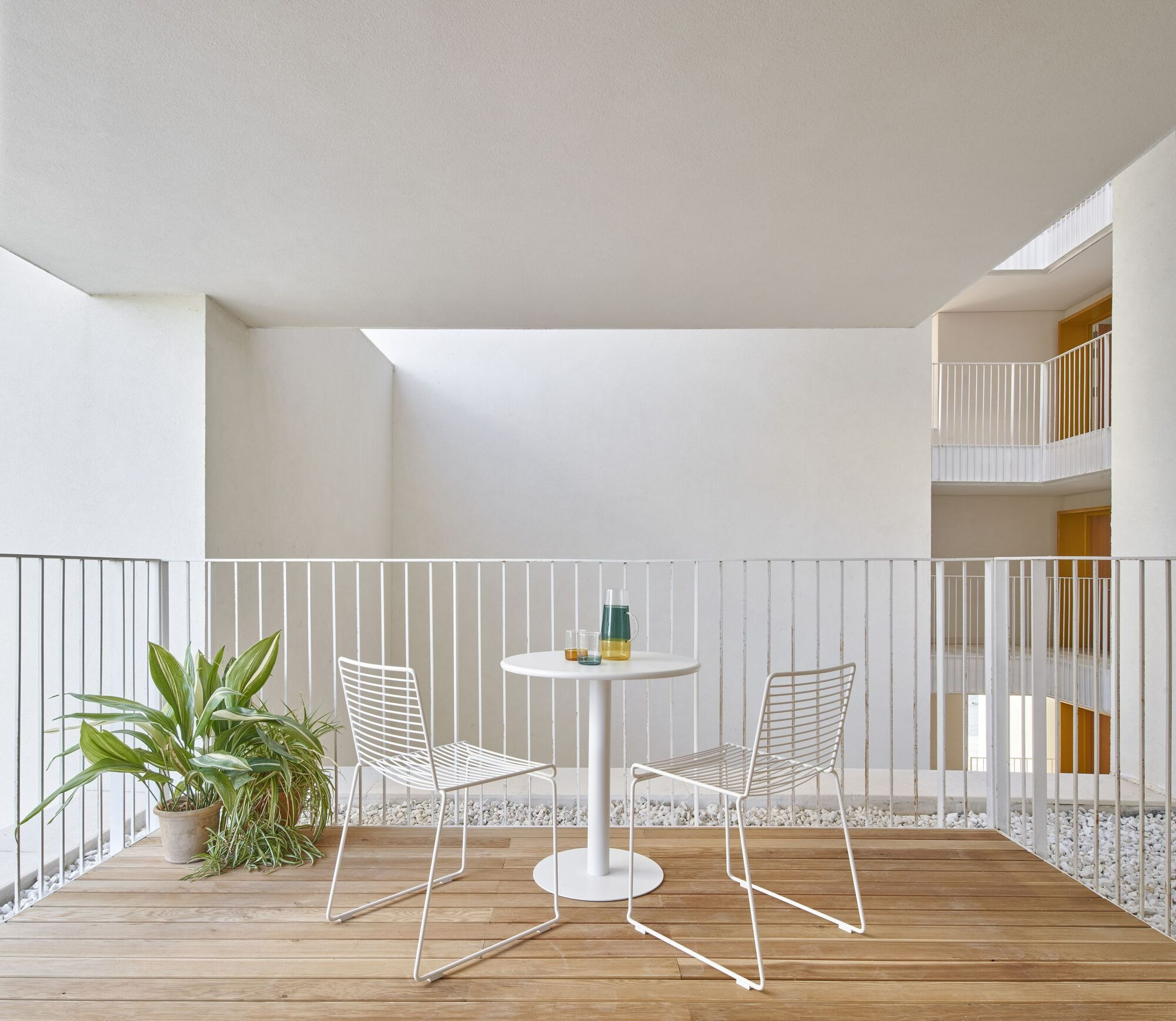
가까이 다가서면 이 건물의 표정은 한층 다채로워진다. 목재 셔터는 창마다 다른 각도로 열려 볕과 그늘의 경계를 그때그때 다시 그리고, 흰 스투코 벽은 시간과 날씨에 따라 미묘하게 다른 흰빛을 띤다. 지상층 필로티를 지나 중정으로 들어서면 황토빛과 감청빛 타일이 벽을 감싸고, 그 사이로 어린 나무 한 그루가 자란다. 발밑의 자갈과 목재 데크, 흰 철제 난간이 층마다 조금씩 다른 질감으로 이어지며, 볕이 깊숙이 들어오는 시간이면 콘크리트 기둥과 타일 벽 사이로 그림자가 길게 눕는다. 건물 자체보다 그 안을 걷는 사람이 느끼는 온도와 결이 이 건물의 진짜 얼굴에 가깝다.
사회주택의 새로운 가능성
이 프로젝트가 특별한 이유는 사회주택이라는 조건 안에서 이 모든 것을 이뤄냈다는 데 있다. 정해진 예산과 규제, 표준화의 압박 속에서도 RipollTizon은 지역의 기후와 생활 방식, 오래된 건축 전통을 끌어와 하나의 살아 있는 시스템으로 번역해냈다. 열아홉 세대가 저마다 다른 방식으로 빛과 바람을 맞아들이는 이 건물은, 사회주택이 반드시 획일적일 필요는 없다는 사실을 조용히 증명한다.
건축설계: RipollTizon Estudio de Arquitectura
프로젝트명: Social Housing in Ibiza
위치: 스페인 이비자
세대수: 19세대 (5개 층)
에너지효율등급: A
원문 출처: ArchDaily
Write by Claude & Jean Browwn
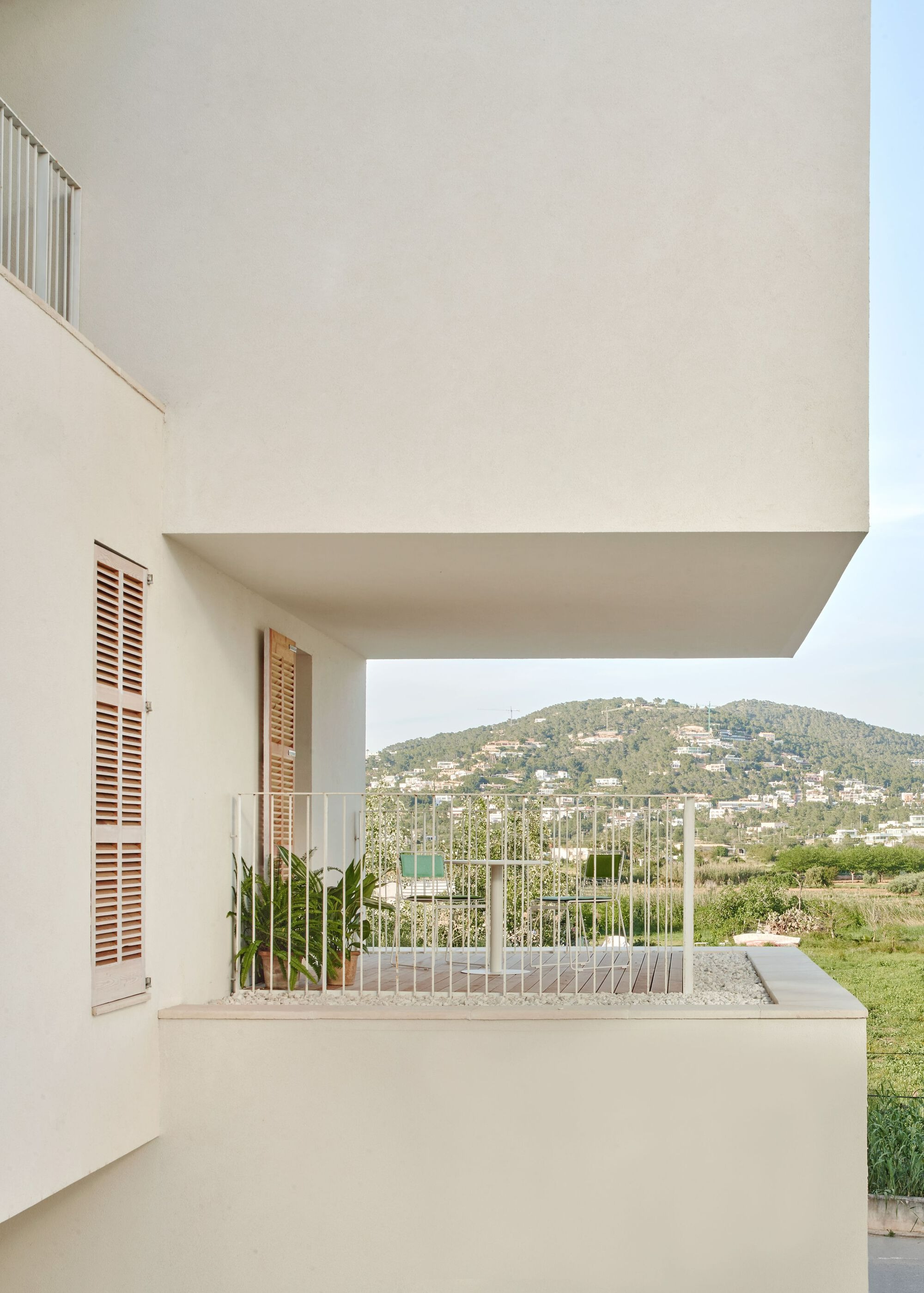
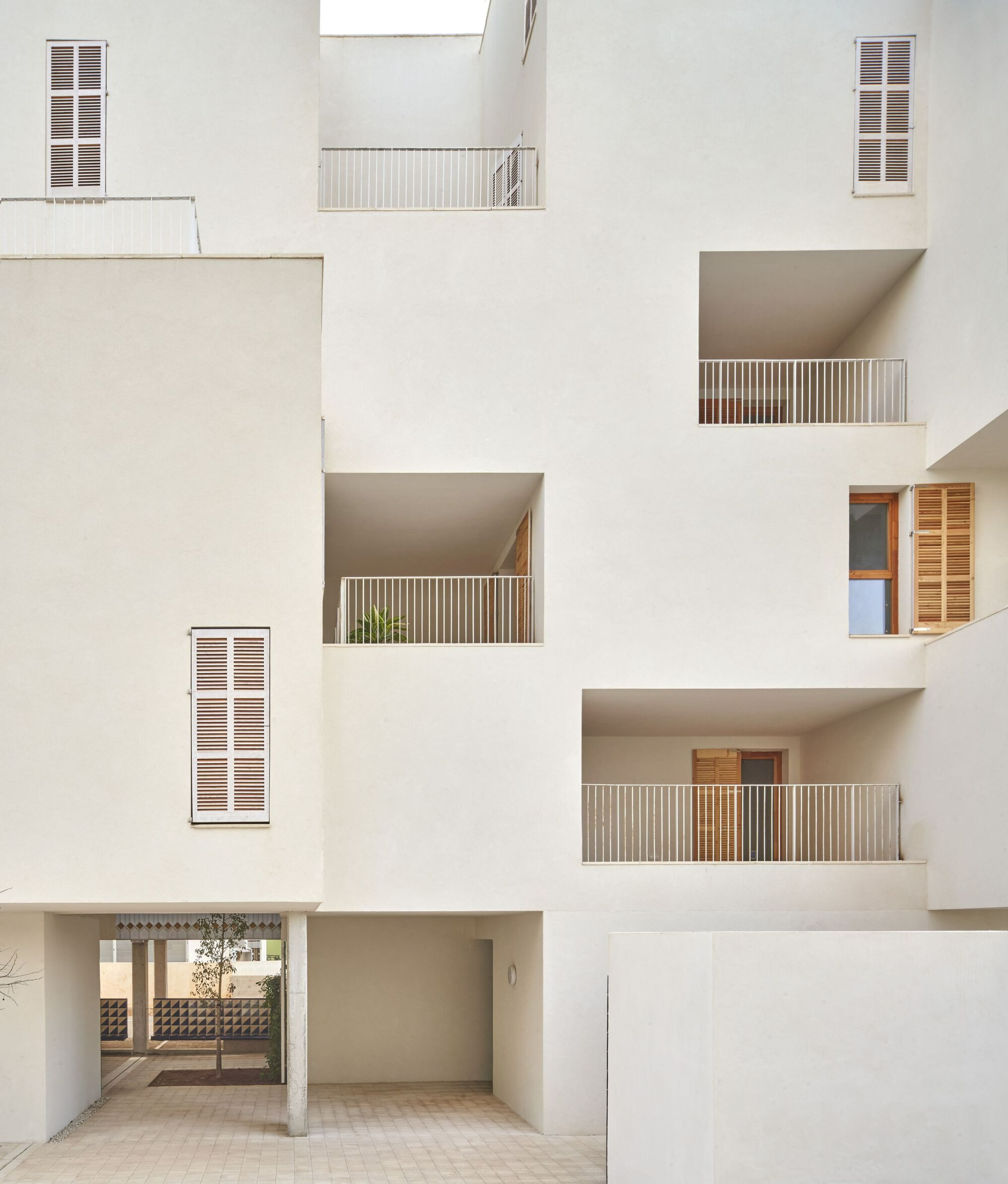

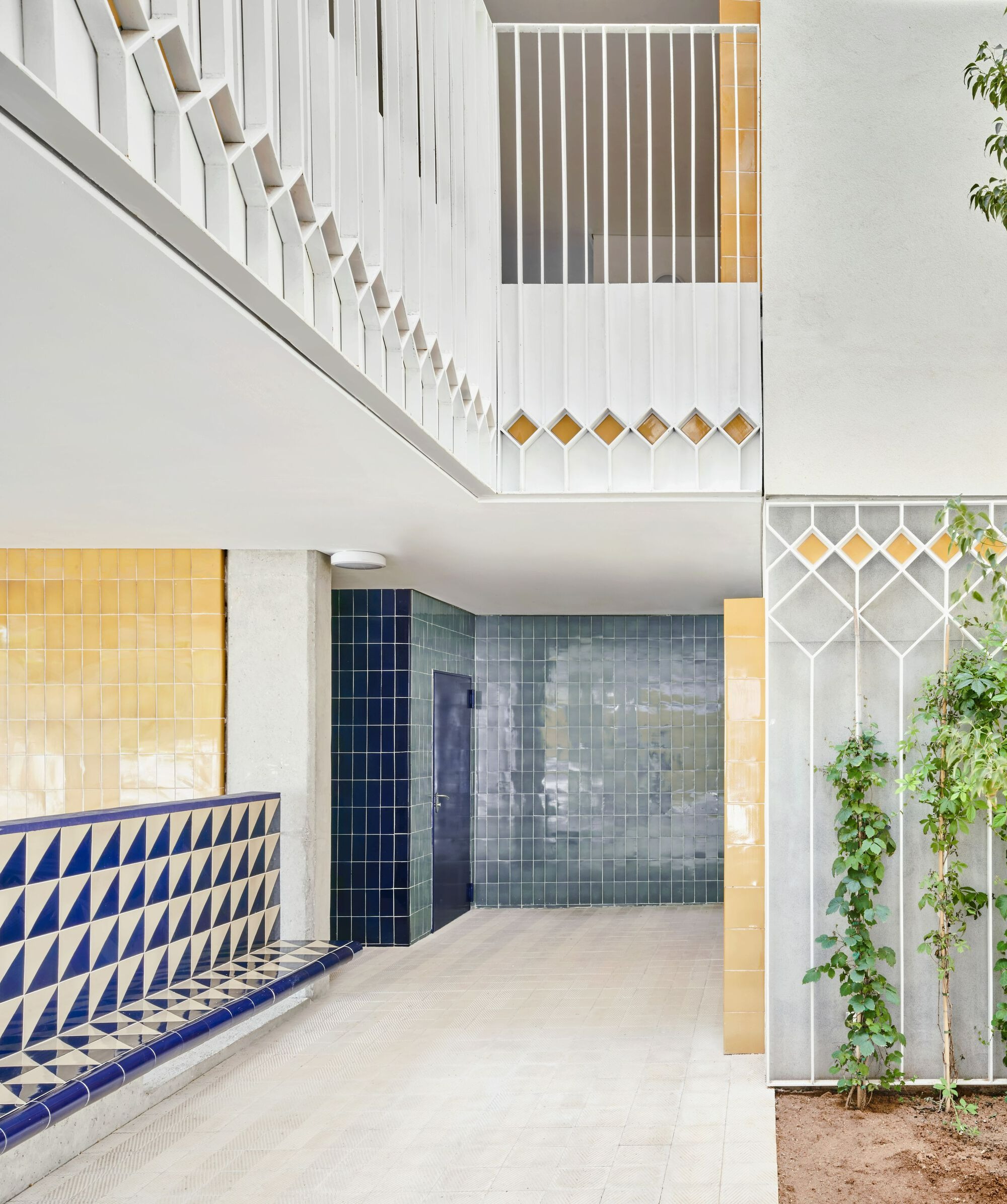

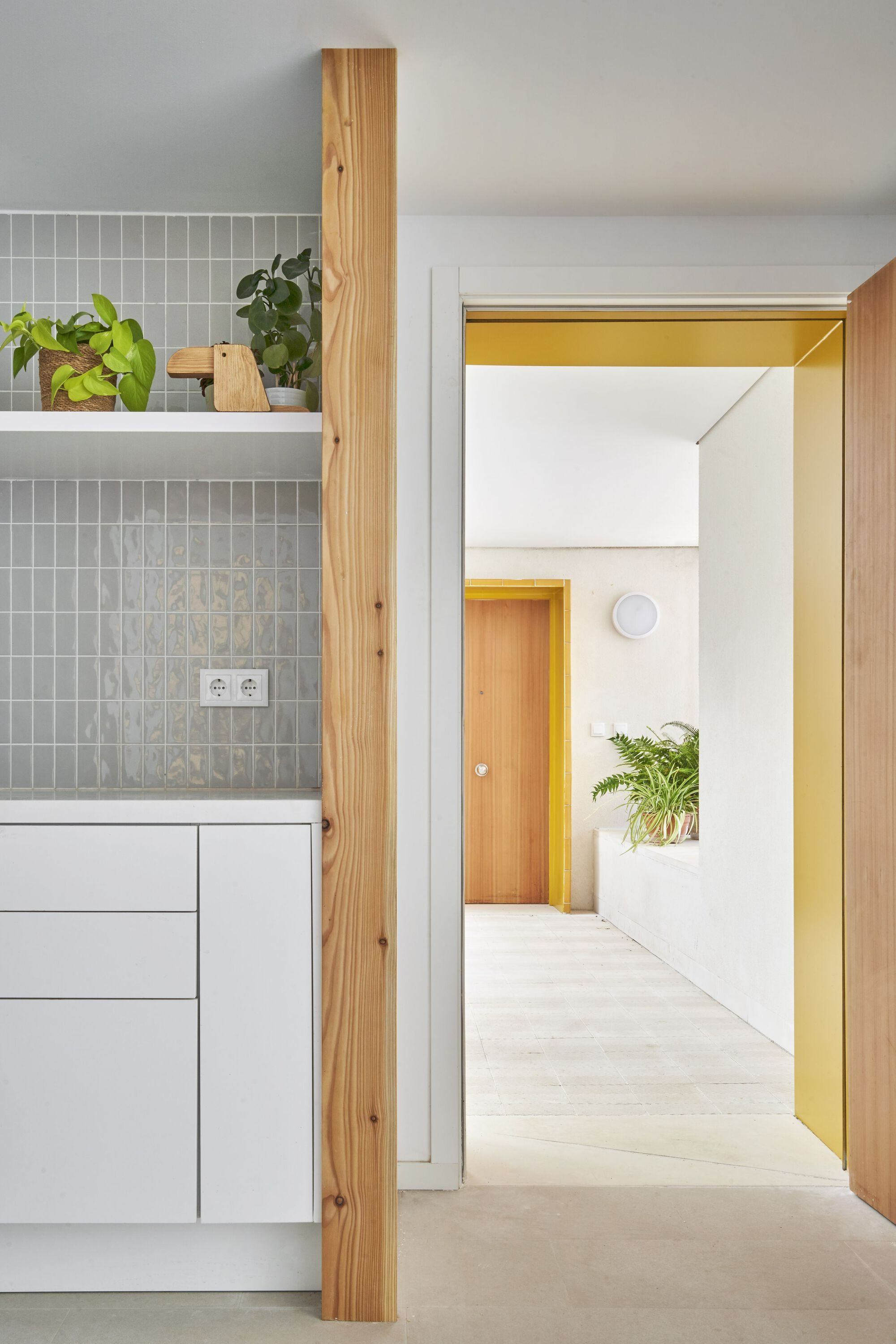
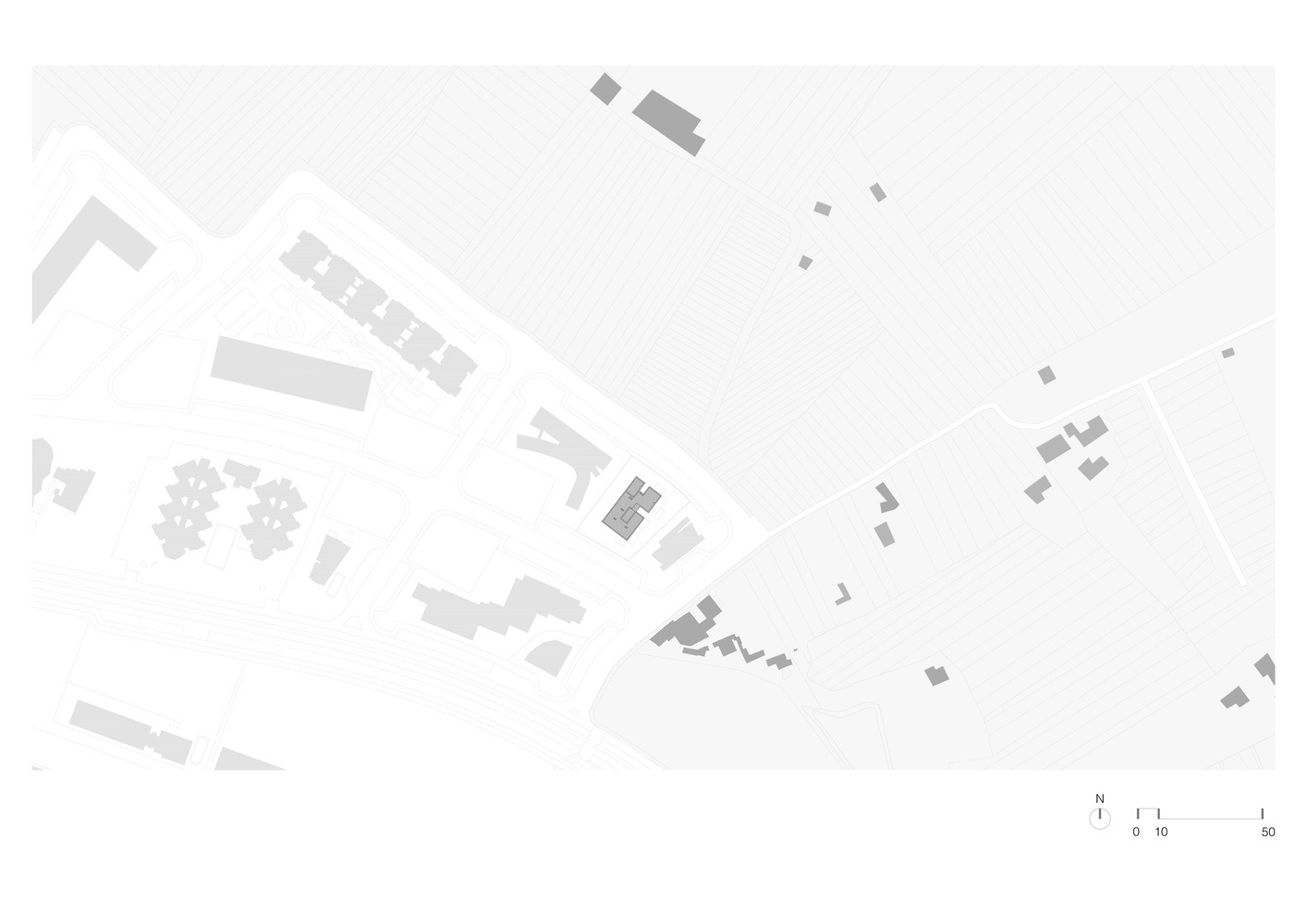

The building is located on the border between the residential area of the marina of Ibiza and an area of floodable and cultivated land. The urban context presents a heterogeneous and poorly characterized panorama, where leisure and tourist buildings coexist with residential blocks and holiday apartments. A landscape without apparent order resolved from isolated volumes of disparate images.
The aim is to escape from what the immediate surroundings represent and build a building whose identity is linked to the climate and way of life of the island, just like popular architecture does. We look at the Ibizan payesa houses as an example of architecture that responds to the place: white walls and controlled openings with sun protection, porches, and shaded spaces. Constructions that are perceived volumetrically as a sum of concatenated pavilions, due to their growth over time according to the spatial needs of those who inhabited them. This way of building by stacking, adding, and adding modules according to the programmatic needs of a house is taken as a reference and starting point for the development of the proposal.
To comply with the urban regulations, the building must be inscribed in a pyramidal envelope whose contour is determined by its height and distance from the party walls. Some of the pyramid shaped buildings in the area owe their existence to this. The built volume approximates as much as possible to that maximum envelope in order to create a void in the heart of the building. An interior space is generated that breathes in several directions through linked openings, courtyards, and porches while organizing the communal areas, circulation, relationships, and access to the surrounding homes.
Due to the existence of the water table, very close to the surface, and in order to avoid excavations and underground floors, the parking is located on the ground floor. A total of 19 homes are distributed among the 5 upper floors, all of them having a minimum of two different orientations, which guarantees proper lighting, sun exposure, and natural cross ventilation. The building has an excellent energy rating (A).
It is built by stacking, adding, and adding one home on top of another, seeking to obtain a final ensemble that is porous and permeable to light and breeze. A housing system is developed and a systematic grouping of rigid unit types is avoided. The housing typology is generated from a basic module of square measurements (living-dining kitchen), to which other smaller modules are attached (extension module for the living room or modules that contain bedrooms and wet areas).
The different combinations of these modules according to the number of required bedrooms generate the catalog of homes used to build the building. The proposed system, strict in the laws that govern it, gives rise to a versatile typology of homes that allows the different units to adapt to the intended particular situations without giving up the standardization of solutions required by the development of social housing.\
from archdaily
'House' 카테고리의 다른 글
| * 비워냄이 열어젖힌 집 [ Pascali Semerdjian Arquitetos ] Leblon Apartment (0) | 2026.07.14 |
|---|---|
| *페르마, 세리포스의 땅에 새긴 거처 [ MOLD Architects ] PERMA Serifos Retreat (0) | 2026.07.07 |
| * 중정주택 [ Physicalist ] Baan Salaya (0) | 2026.07.02 |
| * 더 핀들링, 오브 파서블 [ Of Possible ] The Findling (1) | 2026.07.02 |
| * 가볍게 뜬 숲, 트레슬 캐빈 [ Miller Hull Partnership ] Trestle Cabin (0) | 2026.06.30 |