"건축은 공간을 사려 깊게 만드는 행위다." — 루이스 칸

 |
 |
 |
MVRDV가 청두 남쪽 구릉 지대에 푸장 플랫폼을 완공했다. 아치형 목재 구조 위를 흙으로 덮은 이 전망대는 중국 중부의 장엄한 자연 경관 속에 자리 잡고 있다. 이곳은 관광 명소이자 이벤트 공간이다. 결혼식부터 정부 회의까지 다양한 행사를 열 수 있다. 자연과 조화를 이루면서도 평야에서 올려다볼 때는 뚜렷한 랜드마크로 기능한다. 망원경처럼 시선을 끌어당기는 형태의 목재 아치 구조는 방문자를 넓게 펼쳐진 전망 창과 경사면 위로 돌출된 발코니로 이끈다.
청두 남서쪽에 조성 중인 푸장 신도시는 주민들에게 고품질의 지속 가능한 라이프스타일을 제공하려는 목표로 개발되고 있다. 푸장 동쪽 언덕에는 단순한 전망대가 있었다. 이곳에서는 성장하는 도시와 그 너머 쫑라이 산맥을 한눈에 볼 수 있었다. 푸장현 계획자원국은 MVRDV에게 이 전망대를 업그레이드하여 매력적인 관광지이자 다목적 이벤트 공간으로 탈바꿈시키는 작업을 의뢰했다.
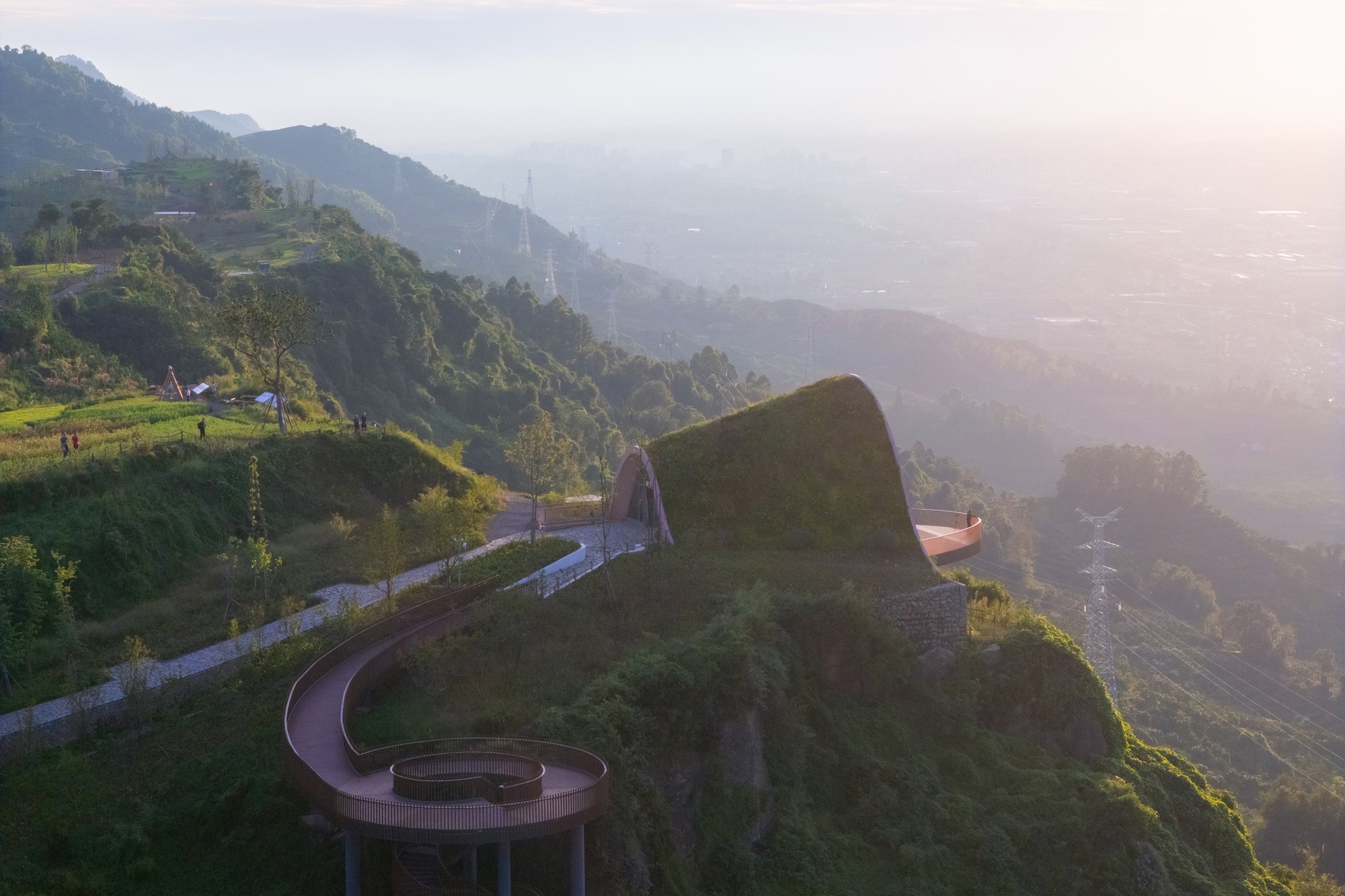
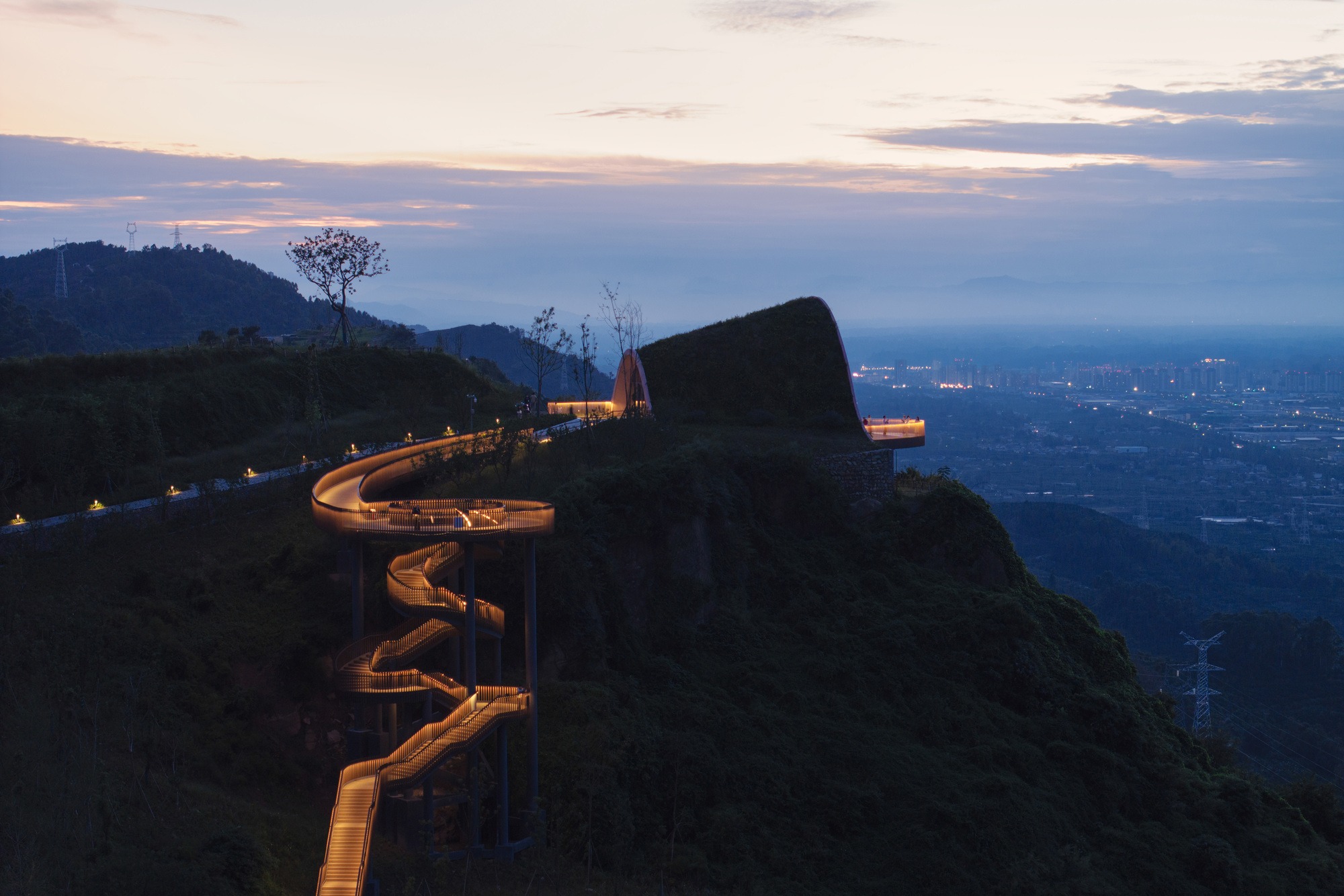
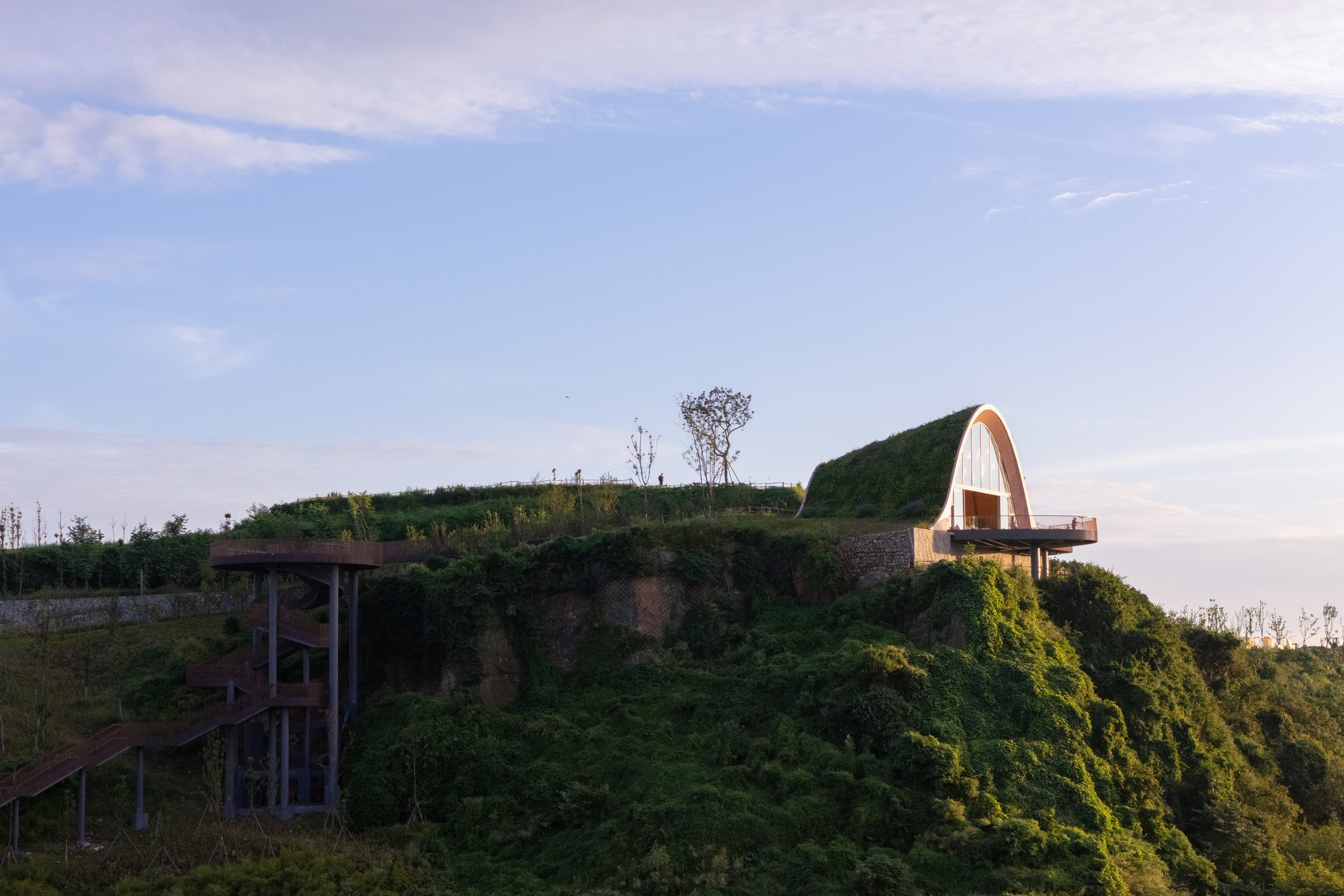
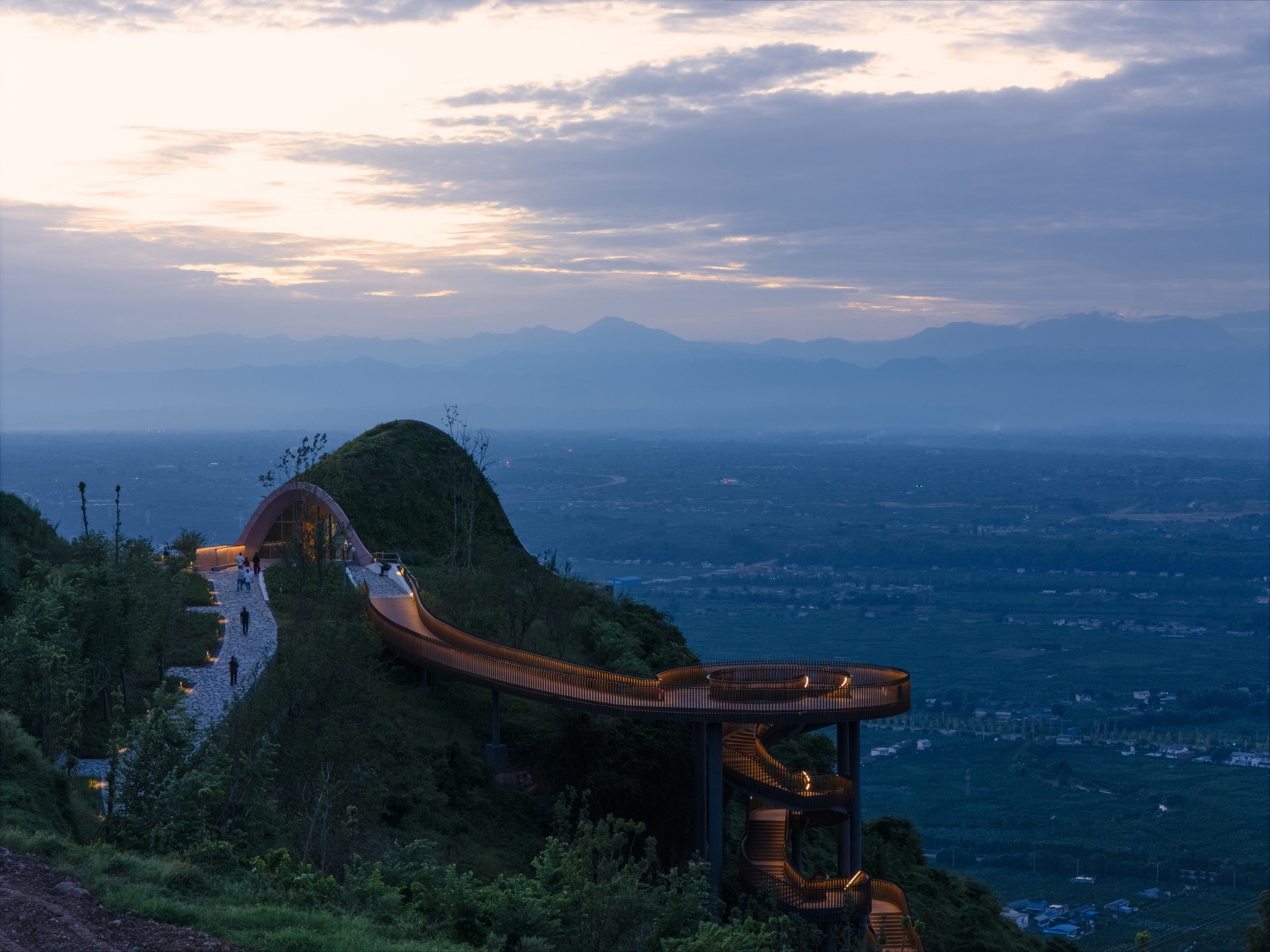
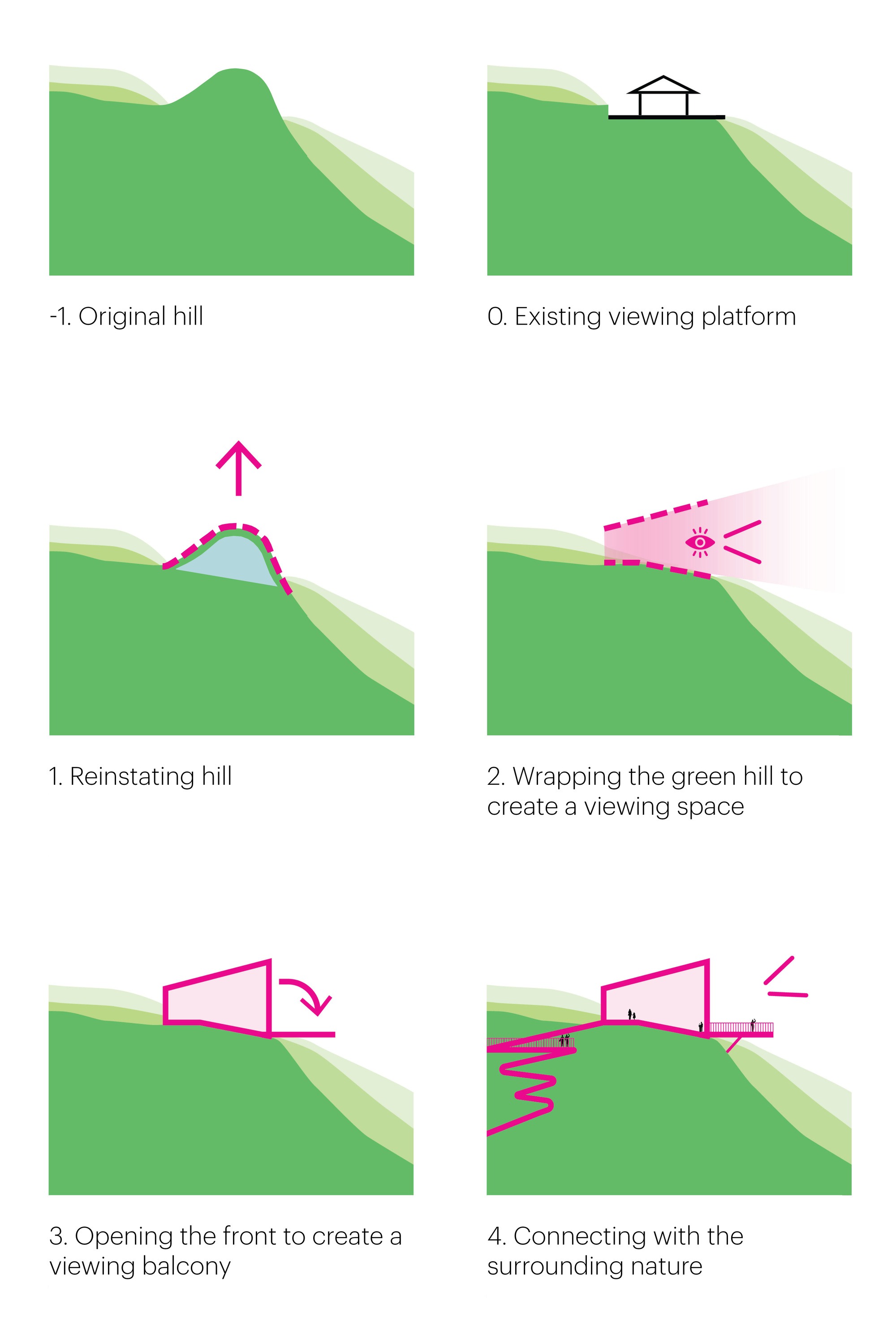
MVRDV의 설계는 하나의 발견에서 출발했다. 기존 전망대를 만들 때 언덕이 평탄화되었다는 사실이었다. 아치형 파빌리온을 흙으로 덮어 주변 경관과 조화를 이루도록 했다. 이 디자인은 과거 이곳에 존재했던 언덕의 모습을 되살렸다. 또한 여러 산책로를 연결하여 전망대로 이어지는 경로를 추가했고, 나선형 계단 구조에 보조 전망대를 통합했다. 파빌리온은 목재로 지었다. 이는 중국 건축 산업에서 목재 사용 확대를 장려하기 위한 시연이기도 하다. 목재가 탄소 배출 감소에 기여하는 이점에도 불구하고, 중국의 규제와 산업계는 여전히 이 재료를 대규모로 도입하는 데 주저하고 있다.
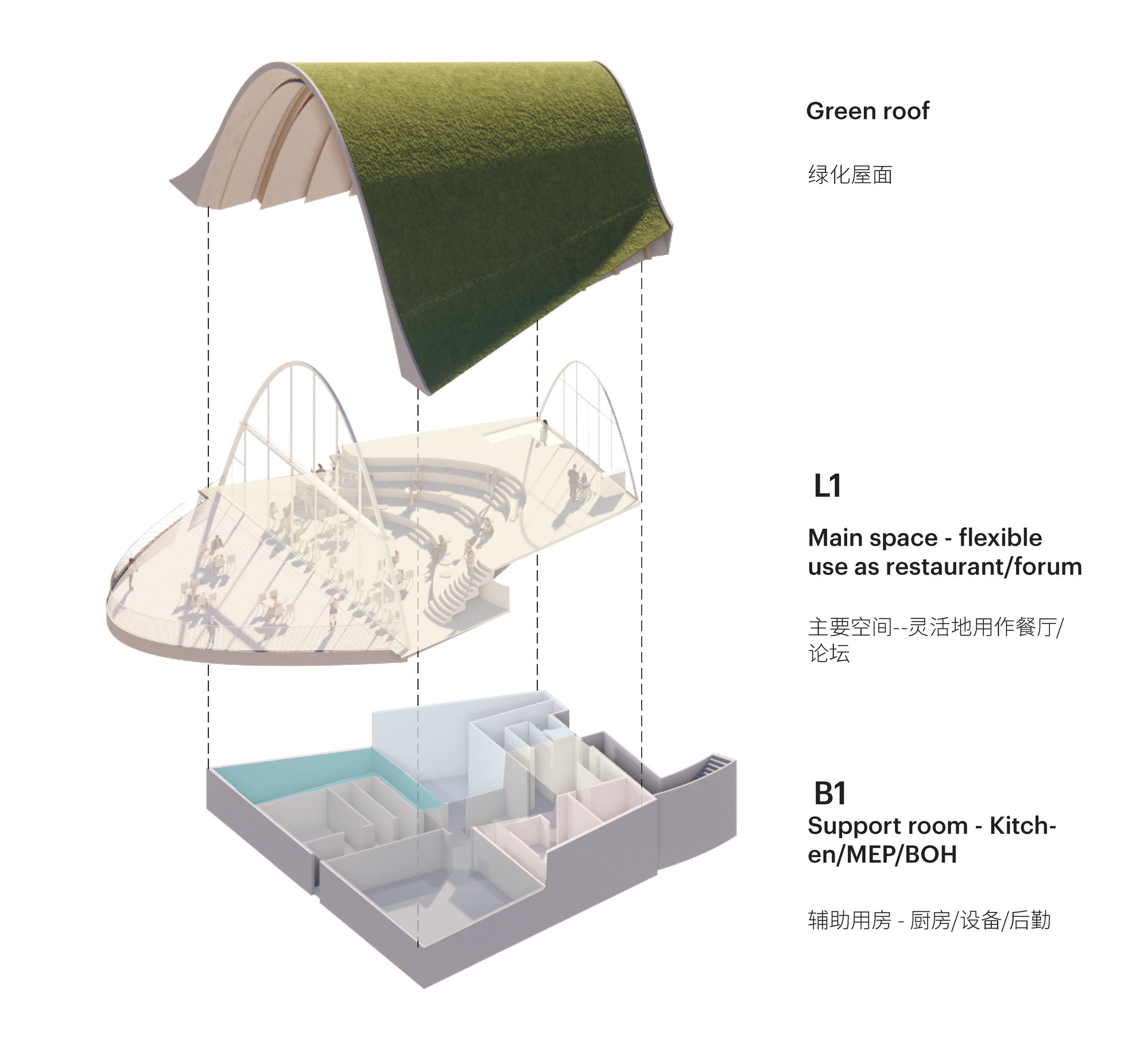
입구는 남동쪽 언덕면에 살짝 드러난 작은 유리 파사드다. 안으로 들어서면 천장은 점점 높아지고 바닥은 언덕의 경사를 따라 낮아진다. 이 경사진 바닥은 계단식 구조라 프레젠테이션에 적합하다. 그냥 앉아서 풍경을 바라보기에도 좋다. 반대편 끝의 10미터 높이 유리벽 너머로 경관이 펼쳐진다. 이 유리벽에는 한 쌍의 대형 미닫이문이 설치되어 있어, 내부를 바깥 전망 발코니와 연결한다. 문을 열면 안과 밖의 경계가 사라지고, 필요할 때 발코니가 실내 공간의 연장으로 기능한다.
MVRDV 창립 파트너 야콥 판 레이스는 말한다. "이 지역 언덕의 장엄함은 정말 놀라운 광경이다. 우리가 직면한 과제는 이 전망을 최대한 살리면서도 경관에 미치는 영향을 최소화하는 것이었다. 녹화 지붕이 덮인 언덕 형태의 파빌리온으로 우리는 자체적인 영향을 최소화했을 뿐 아니라 이전에 존재했던 언덕을 재현했다. 자연을 보존하고 존중하는 이러한 행위가 이 설계의 본질이며, 이는 목재와 같은 생물 기반 재료를 사용하는 시공 방식으로도 이어진다. 이러한 재료들은 더욱 지속 가능하며 따라서 이와 같은 자연 환경에 미치는 영향이 적다."
이 프로젝트의 조경 설계는 현장에 이미 존재하는 것을 강화하는 데 중점을 둔다. 조경에 사용한 식물들은 현장의 생물 다양성을 반영한다. 파빌리온 지붕 위 흙으로 덮인 언덕도 마찬가지다. 10센티미터 깊이의 토양은 다양한 풀, 꽃, 작은 관목을 수용할 수 있다. 한편 기존 수로는 빗물 수집과 관개에 활용된다.
MVRDV는 현장에 이미 있던 산책로를 통합하되, 계단을 추가하여 순환 경로로 연결했다. 계단 꼭대기에는 원형의 보조 전망대가 있어, 먼 산맥과 가까운 자연 환경을 360도로 조망할 수 있다.
목재 구조는 내재 탄소를 낮게 유지한다. 내재 탄소란 건축 과정에서 발생하는 탄소 배출량이다. 또한 설계에는 운영 단계의 배출량을 줄이기 위한 다양한 전략이 통합되어 있다. 흙으로 덮인 언덕과 녹화 식재는 상당한 단열 효과와 열질량을 제공하여 온도 변화의 영향을 줄인다. 천장은 층층이 구성해 자연 환기로 공간을 식힌다. 큰 창은 북향으로 내고, 지붕 처마와 주변 나무들이 작은 입구 벽을 직사광선으로부터 보호하여 일사 취득을 최소화한다. 한편 파빌리온의 에너지 수요 일부는 지열 히트펌프로 충당된다.
Write by Claude & Jean Browwn
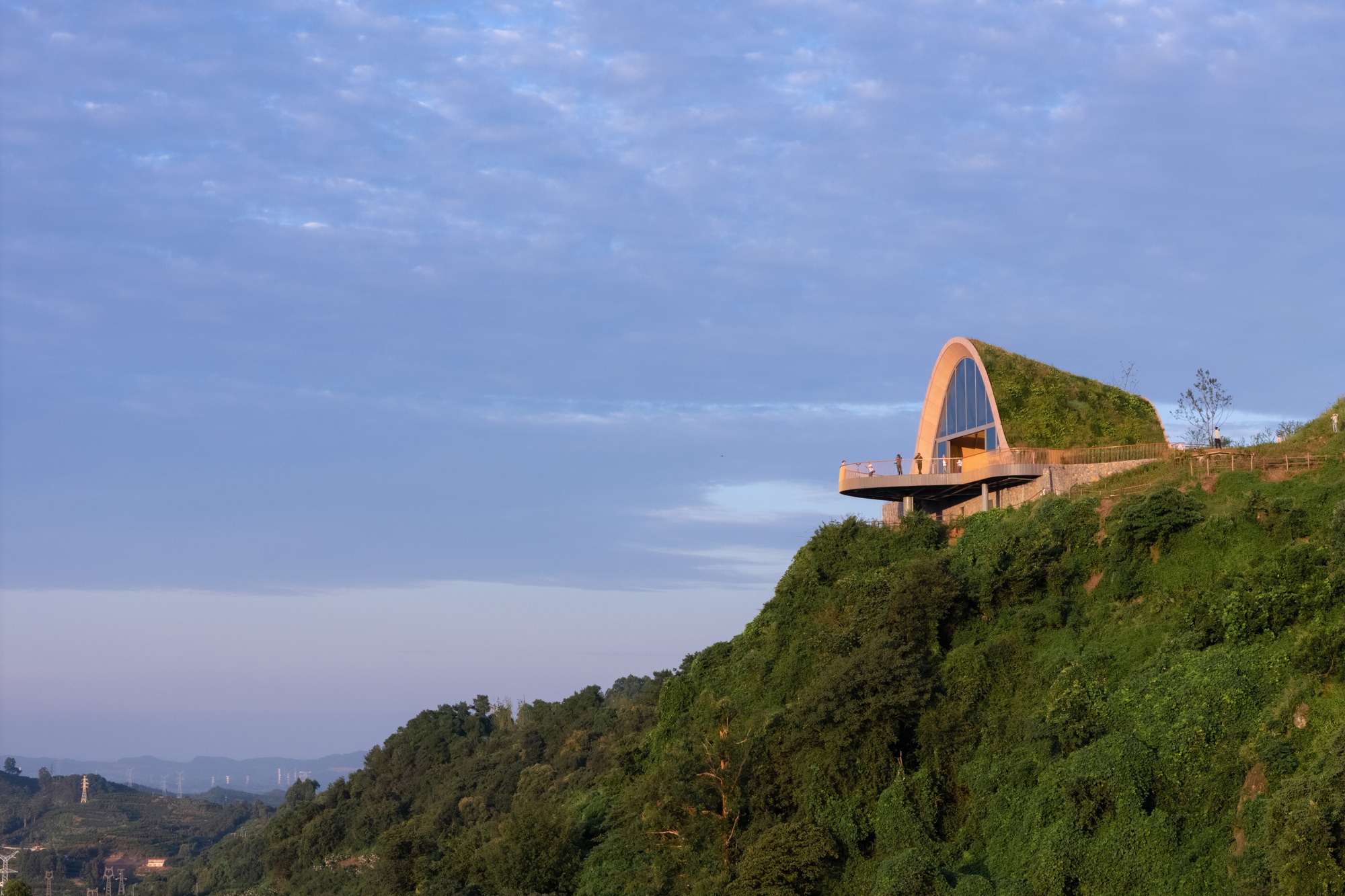


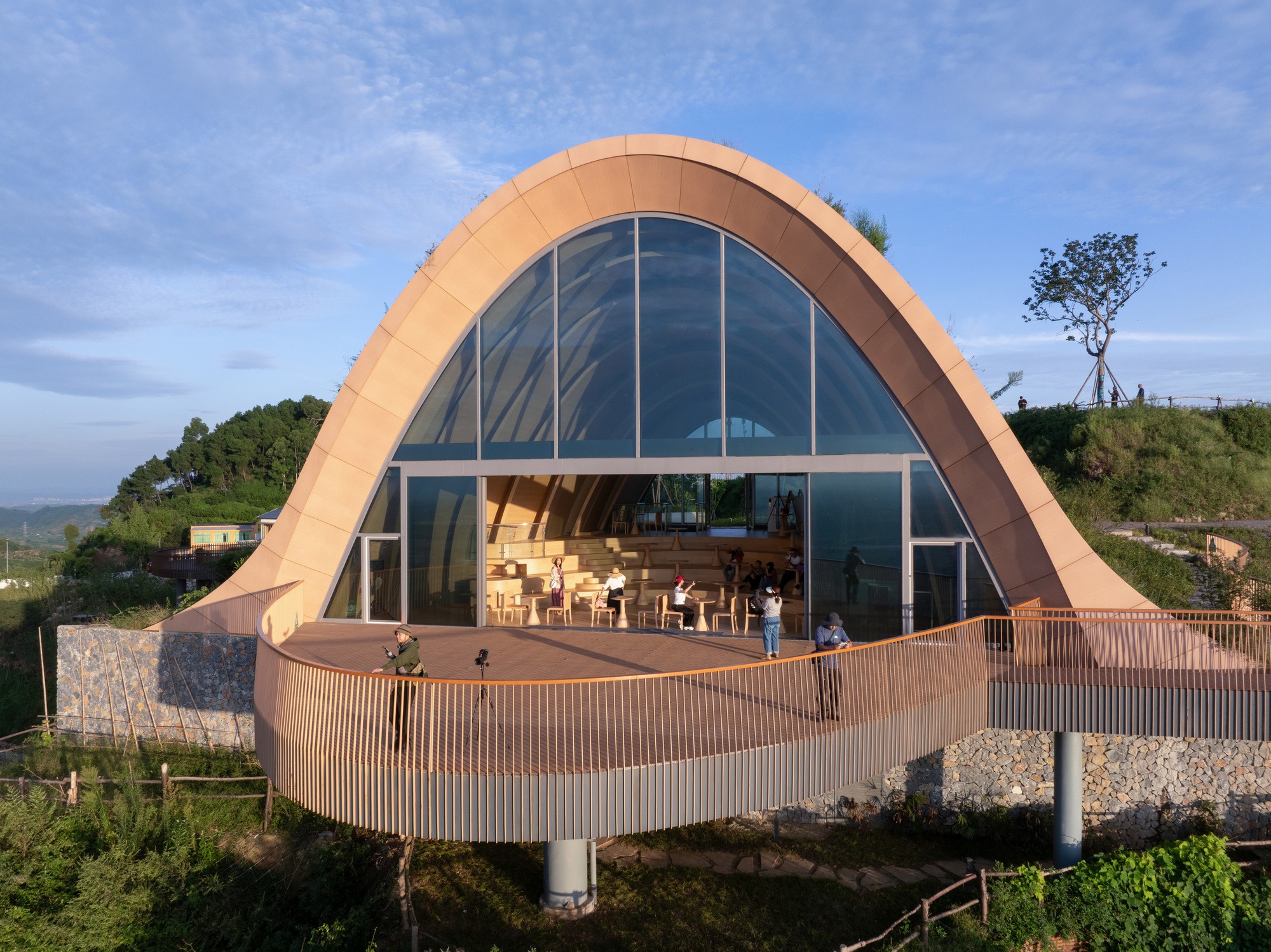
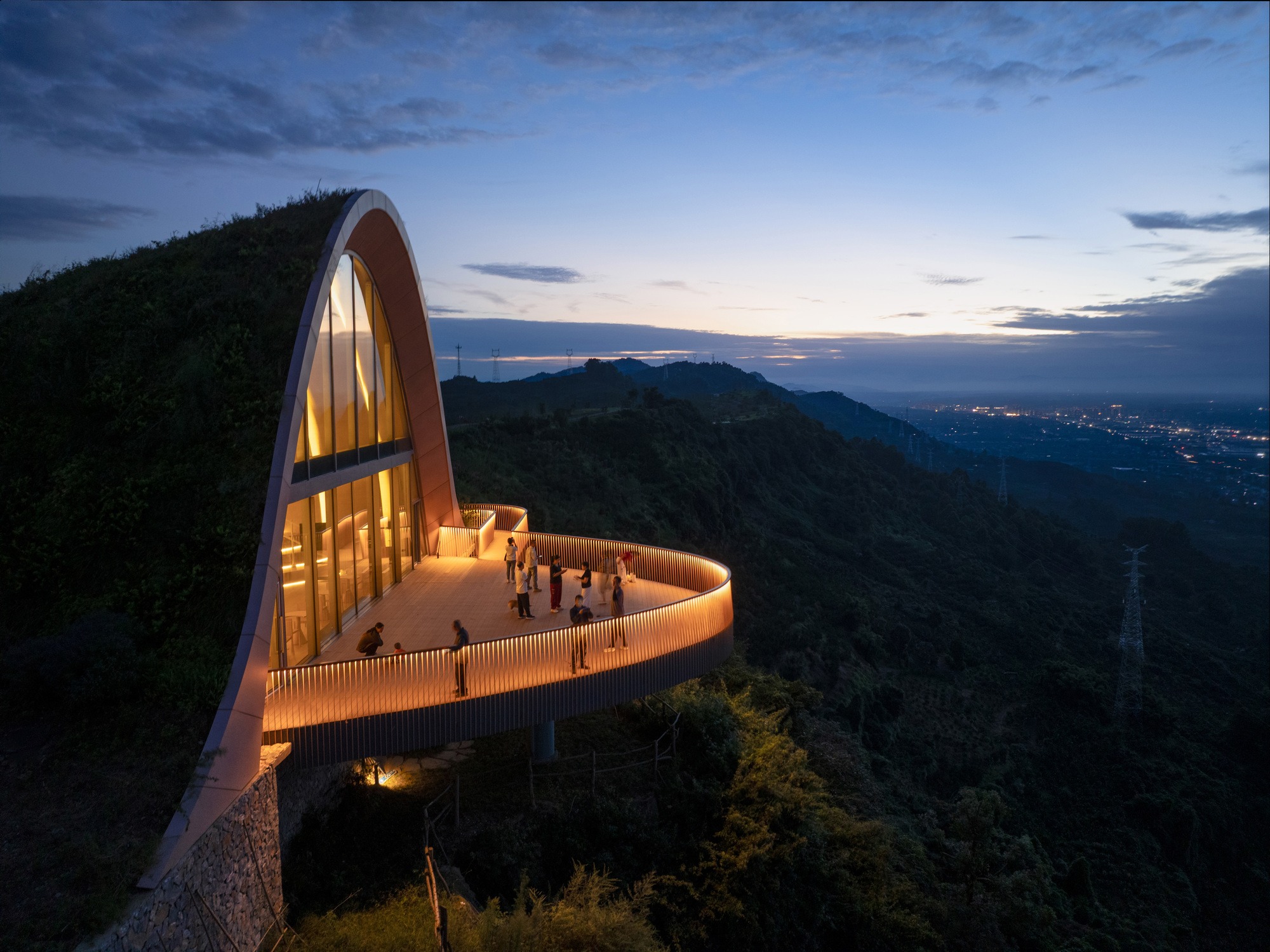

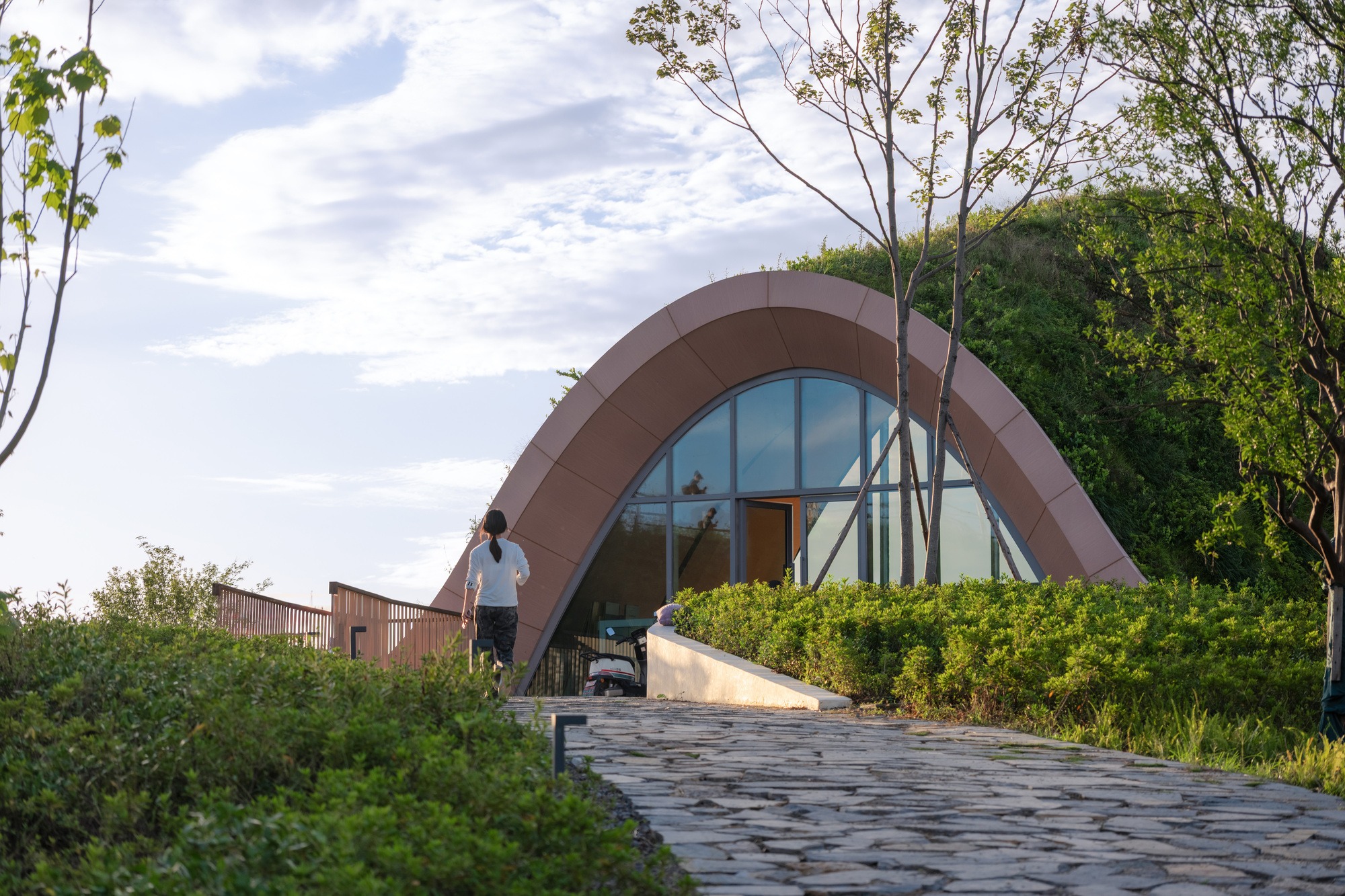


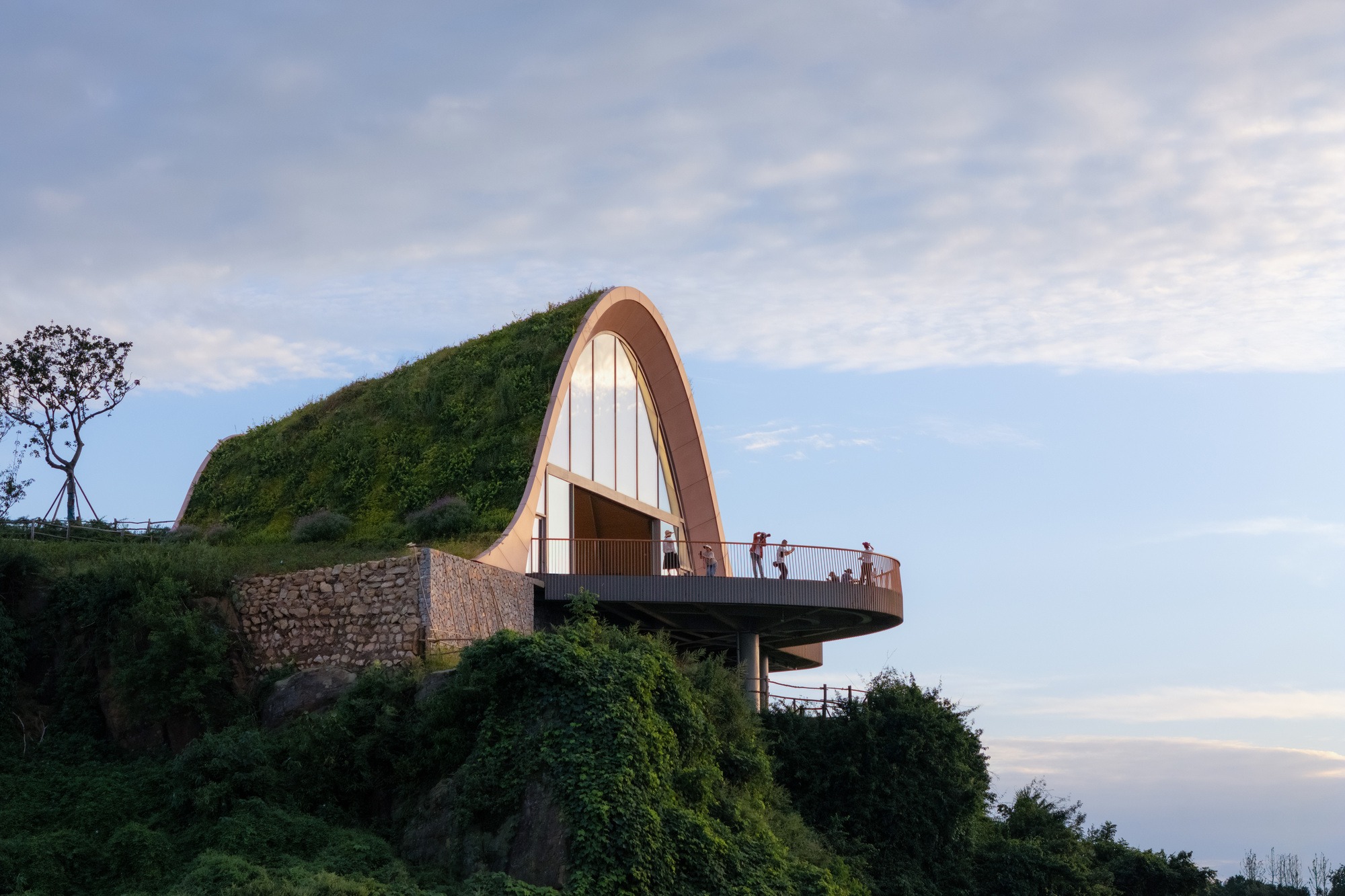




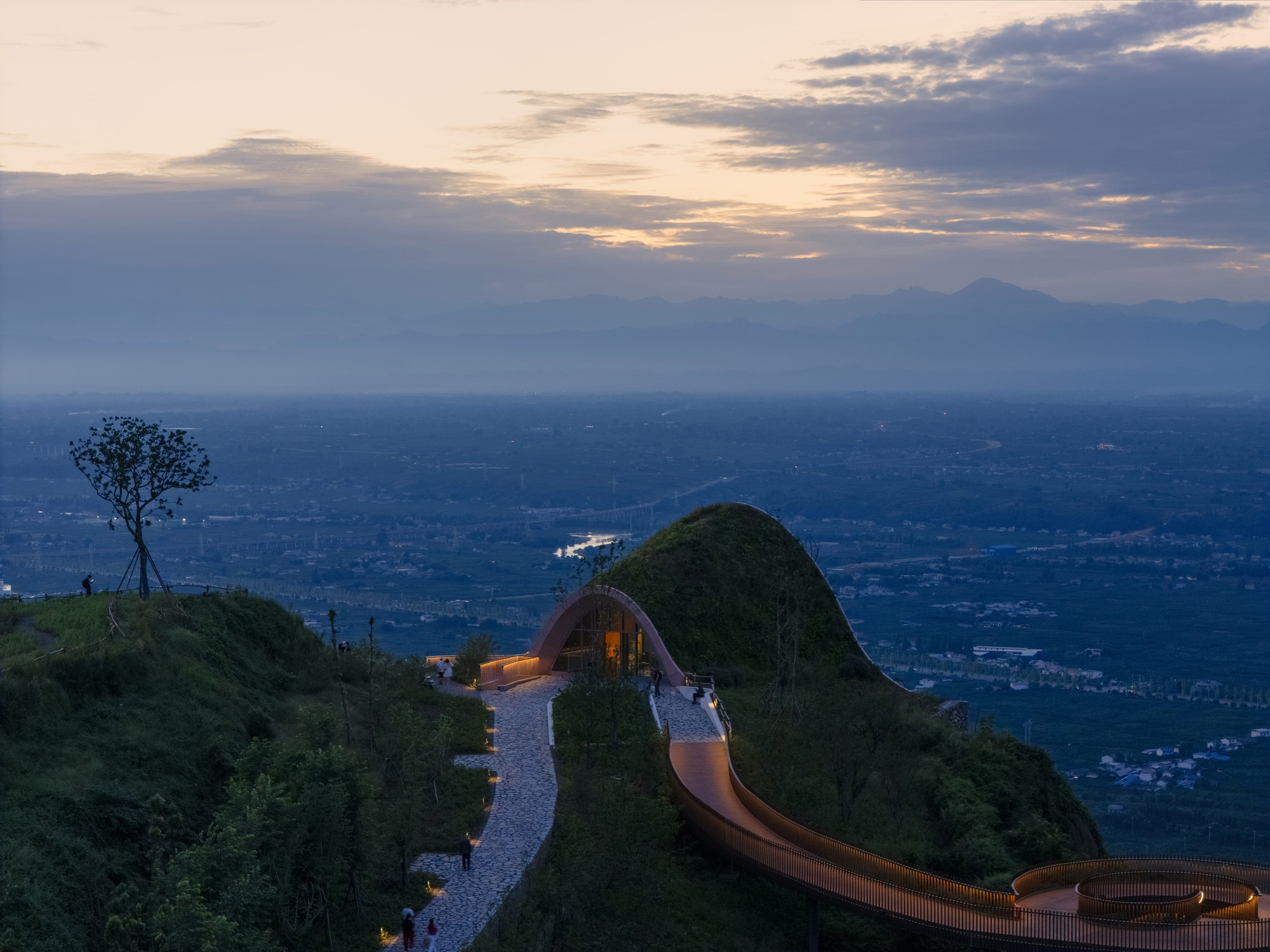
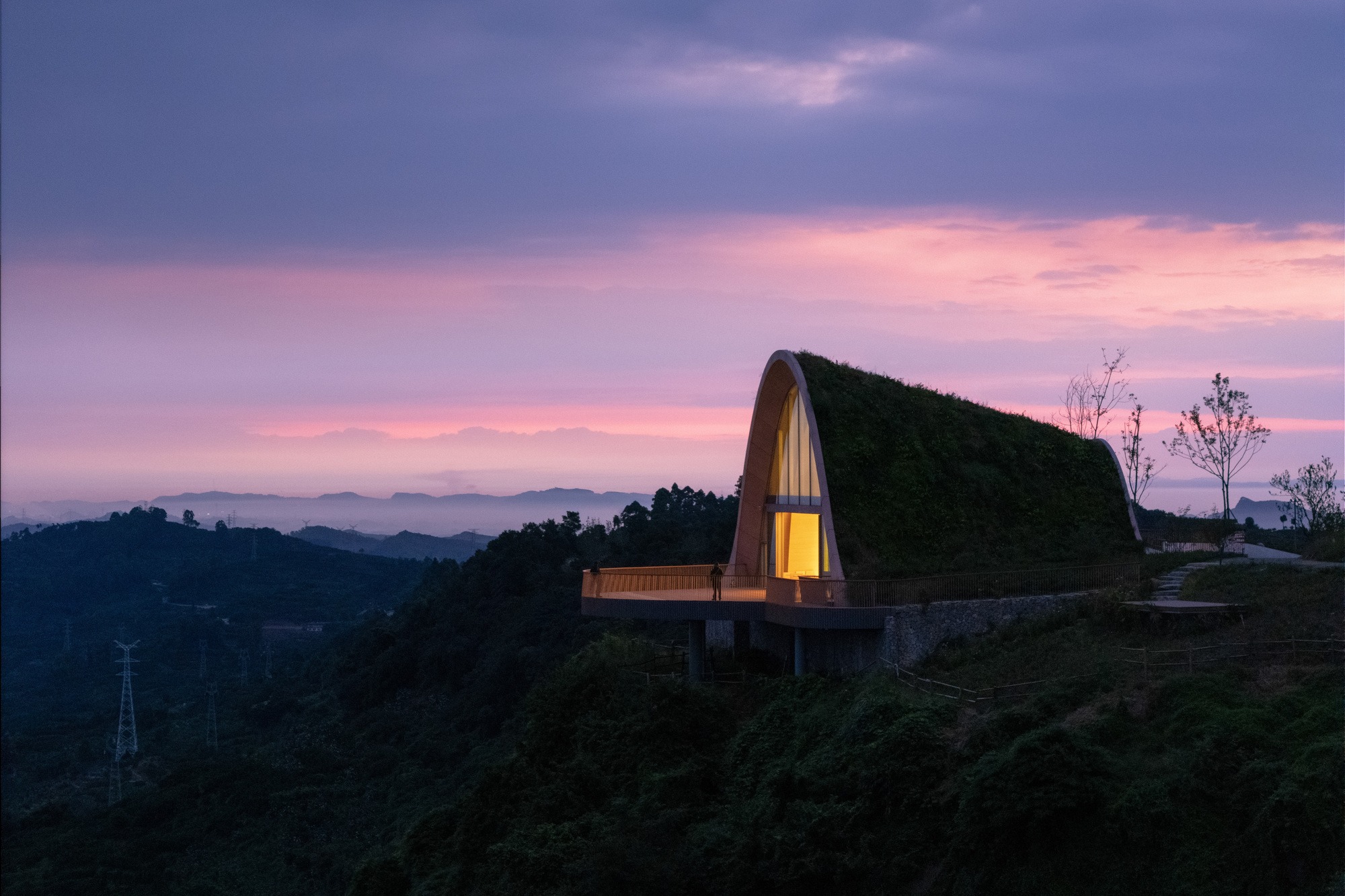
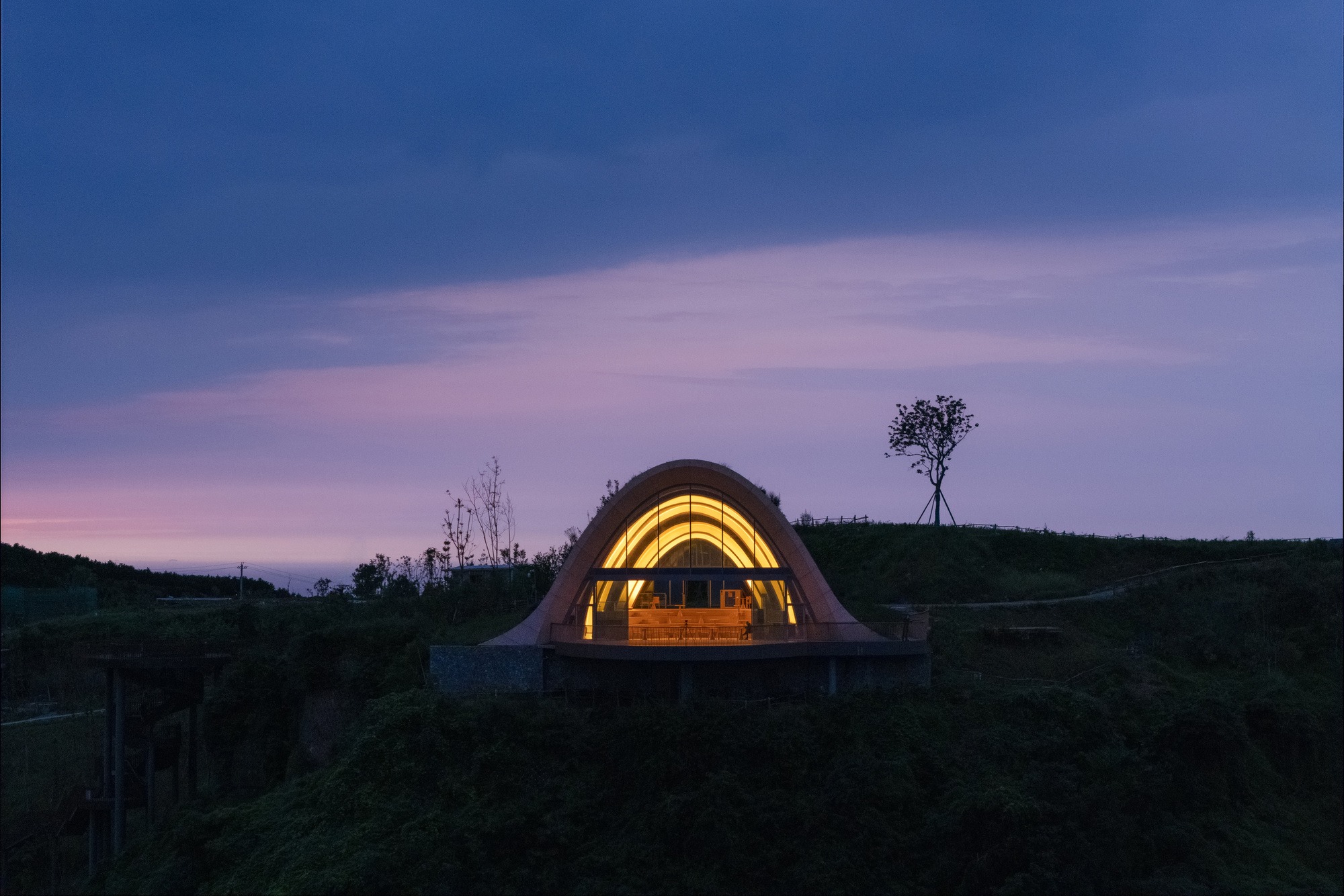
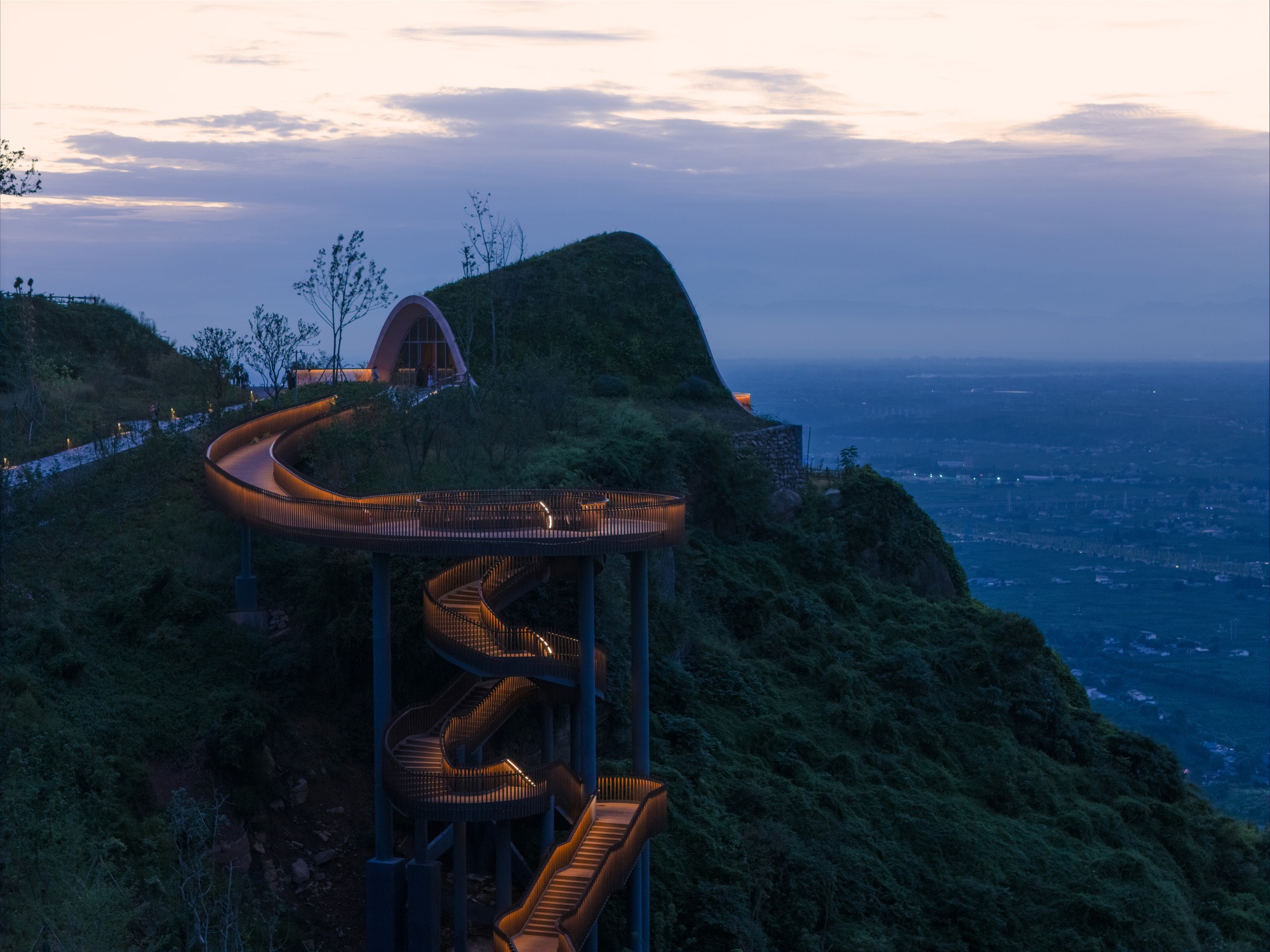

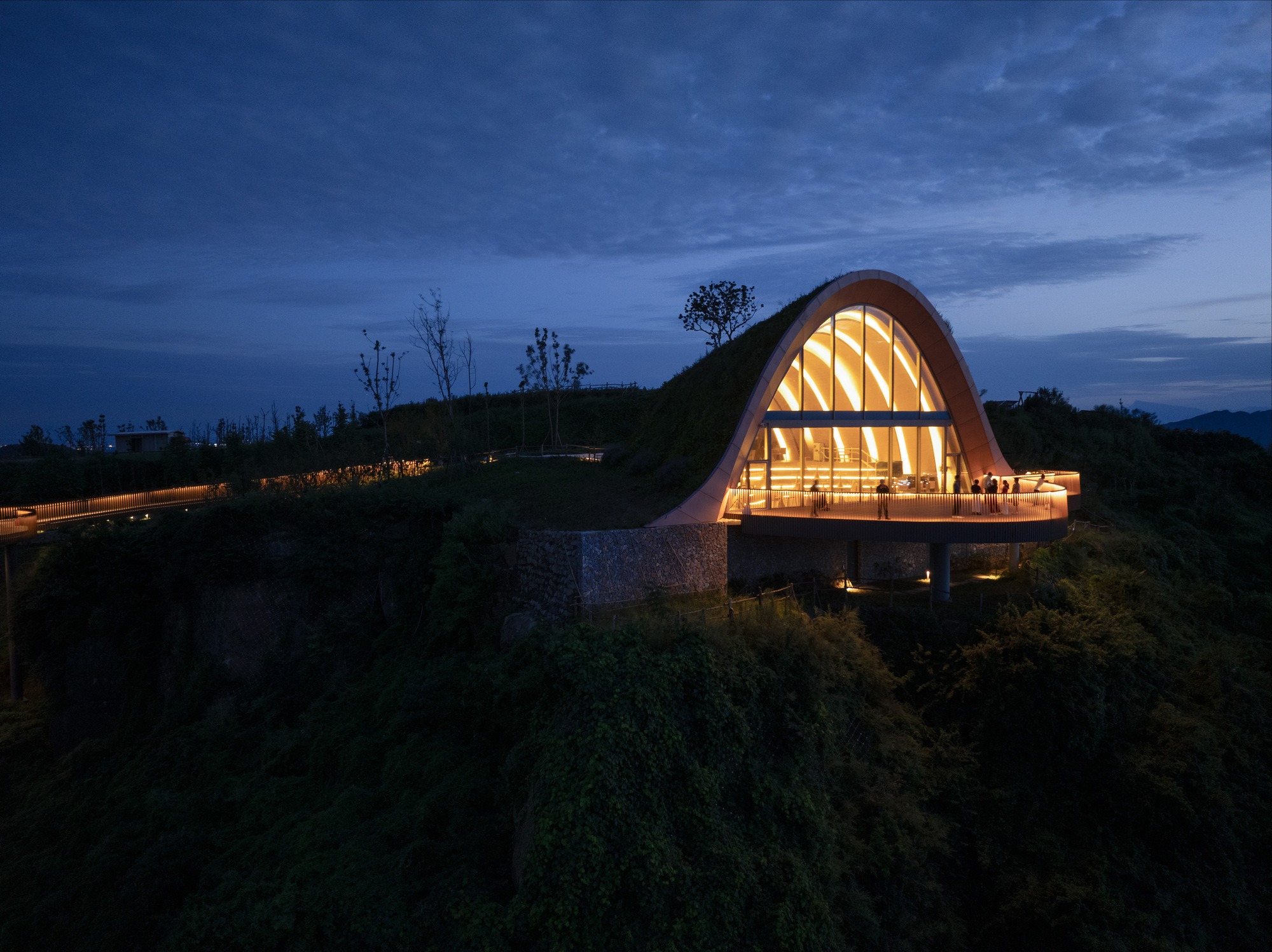




MVRDV has completed construction on the Pujiang Platform, a viewpoint comprising an arched, earth covered timber pavilion perched among the hills to the south of Chengdu. The project serves as both a visitor destination and an event space that takes advantage of the spectacular natural beauty of central China. Designed to blend into nature while also standing out as a beacon when seen from the plains below, the structure of earth-covered timber arches takes a telescopic shape, drawing visitors to the expansive viewing window and balcony that projects out over the slope.
The new town of Pujiang is currently under development to the southwest of Chengdu, with the intention of providing its residents a high quality, sustainable lifestyle. In the hills to the east of Pujiang, a simple existing viewpoint offered commanding views over the growing town and the panorama of the Qionglai Mountain range behind it. MVRDV was commissioned by Pujiang County Planning and Resources Bureau to upgrade this viewpoint, turning it into a desirable destination for tourists, as well as an event space capable of hosting everything from weddings to government meetings.
MVRDV's design started from the revelation that the hill was flattened during the construction of the pre existing viewing platform. By creating an arched pavilion covered with an earth berm that blends into the landscape, the design creates an echo of the hill that existed before. The design also improves the path network to add multiple routes to the viewpoint, including by adding a secondary viewing platform incorporated into a twisting staircase structure. The pavilion itself is made using a timber structure, serving as a demonstration to encourage greater adoption of wood in the Chinese construction industry; despite the benefits of wood in reducing the carbon emissions, Chinese regulations and industry at large remain hesitant to adopt the material at scale.
The pavilion is entered via a small glass façade set into the earth berm on the building's south east side. Inside, the roof slopes upwards as the floor slopes downward, conforming to the slope of the hill. This slope forms a tribune that is ideal for presentations, or simply for sitting to take in the landscape through the 10-metre-tall glass façade at the other end. This façade incorporates a pair of oversized sliding doors that open the interior to the viewing balcony outside, maximising the connection between inside and out and allowing the balcony to serve as an extension of the indoor space when required.
"The hills of this region are truly a spectacular sight, so one of the challenges we faced was to make the most of those views while reducing the impact on the landscape", says MVRDV founding partner Jacob van Rijs. "By adding a hill-shaped pavilion with a green roof we not only minimise our own impact, but we recreated the hill that was there before. This act of preserving and respecting nature is the essence of the design, which is continued in the construction approach, using bio based materials such as wood that are more sustainable and thus have less impact on natural environments such as this one."
The landscape design of the project aims to enhance what already exists at the site. The plants used reflect the site's current biodiversity including on the earth berm over the pavilion's roof which, with a soil depth of 10 centimetres, is capable of hosting a wide variety of grasses, flowers, and small bushes. Meanwhile, existing waterways are used for rainwater collection and irrigation.
The design incorporates the pathways that already existed on the site, adding a staircase to connect them into a loop. Atop the staircase is the circular secondary viewing platform, offering 360 degree views of both the distant mountains as well as the nearby natural environment.
In addition to the project's wood structure, which helps to keep its embodied carbon emissions low, the design incorporates a variety of strategies to reduce operational emissions. The earth berm and its greenery provide a significant amount of insulation and thermal mass, reducing the effect of temperature changes, while the ceiling is layered in a way that allows natural ventilation to cool the space. Solar gain is kept to a minimum, thanks to the north facing orientation of the large window, and the roof overhang and surrounding trees that protect the smaller entrance wall from direct sunlight. Meanwhile, a portion of the pavilion's energy requirements are provided by a geothermal heat pump.
from archdaily